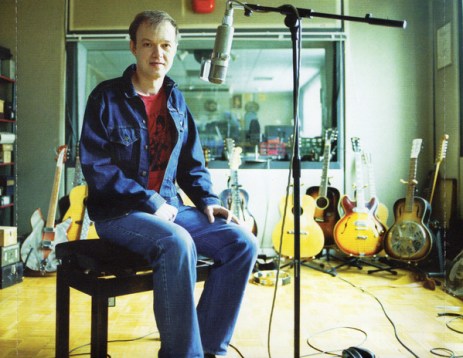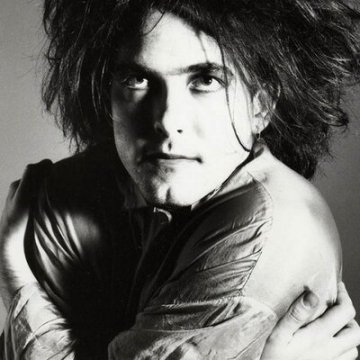

AN IMAGINARY COMPILATION ALBUM : #300: LLOYD COLE

He’s been all over this  and the old blog from the very beginning.  Indeed, going back to the old blog, it was a Lloyd Cole song which provided the material for the second ever post, away back on 1 October 2006.  Butterfly (the Planet Ann Charlotte mix) in case you were wondering.

I’ve long wanted to do this particular ICA as the companion piece to the Lloyd Cole & The Commotions effort which was #11 in the series back in April 2015.  I’ve been hesitant as there’s been so many references to the solo career both by myself and a few of the guest contributors, and in particular there was an 11-part weekly series back in 2018 looking in some depth at the solo albums.  Indeed, I’m going to rely in part on what was written during that series as maybe I can’t find a better way of expressing my thoughts, allied to the fact that it will prevent me from contradicting myself!!

So, without any further ado, I am delighted to offer up, ‘Old Enough To Know Better – an ICA of Lloyd Cole’s finest solo recordings’

SIDE A

1. Old Enough To Know Better (Etc. 2001)

Back in 1996, Lloyd had spent much of the year in a New York studio, carving out an album full of acoustic-driven songs, with a number of old friends, including ex-Commotion Neil Clark, flying in to lend a hand.  He handed in the album to his direct contacts at his then record label and all seemed well.  Record company politics then took over as the upstairs bosses felt that the timing was perfect for another compilation album, this time taking the old favourites from the Commotions era and throwing in some songs from the four solo albums released between 1990 and 1995.  Things got really messy and complicated.  The proposed new album was shelved and indeed Collection, as the new compilation would end up being named, was delayed until 1998.

It wasn’t until 2001 when he had finally extracted himself from the major label he had been with all his days that he was able to finally get many of the songs from 1996 out there to his fans, albeit in a re-recorded fashion. Etc. was made up of fully realised songs, demos and covers, and Lloyd’s voice has rarely sounded more impressive, It’s a beautiful record, one which reflected the way he was now earning his living as a live musician, touring solo with just a couple of guitars, coming along with no support acts, splitting his sets into two halves, keeping the big hits from the band days till the second sets.

I reckon the title track of ICA 300 is the perfect scene setter for what follows.

2. Sweetheart (Lloyd Cole, 1990)

Lloyd has never hidden his love for Marc Bolan/T.Rex, covering a number of songs over the years as well as writing his own tributes, such as 4MB which was a b-side on one of his singles from 1993. He’s also suggested in a newspaper interview that Telegram Sam is his favourite single of all time.  It was therefore hardly a surprise that his debut solo album, which was a conscious effort to make a rock record that would be quite different from the Commotions material, would contain at least one number leaning heavily on those riffs from the glam era.

3. Weeping Wine (Don’t Get Weird On Me Babe, 1991)

Lloyd’s second solo album is something of a lost gem.  It’s a record of two very distinct sides.  In the UK, the first side is packed with rich, expansive songs on which an orchestra features, unlike anything we had heard from him before, while the flip side contains guitar-led songs along the lines of what we were used to.  In the USA, the record label was still desperate to make a rock star out of our hero, and so the record was flipped over there.

My preference is very much for the orchestral material but in terms of the flow of the ICA, I think it makes sense to offer the most Commotion-sounding of all his early solo material.  It was released as a single here in the UK, but it flopped, getting absolutely no air play as the sort of miserable, whining sounding lyric over a tasteful guitar tune was so out of sync with all the dance music that was dominating the charts….oh and grunge!

4. The Young Idealists (Antidepressant, 2006)

As anyone who has ever been entertained at any of the solo gigs can testify, Lloyd Cole never really has been the miserable sod that the lazy journalists have portrayed him as throughout his career.  In 2006, he released Antidepressant, an album in which self-deprecating humour is very much on display, none more so than on the song which opened the album.

I’nm convinced that all long time fans on hearing this for the first time will have afforded themselves a wry and knowing smile. At the time, we were in our mid 40s, fighting hard to keep the same beliefs and core values as we did in our mid 20s, but shaping them a bit from the life lessons we had learned along the way.  I’d like to think, as we edge towards, or get beyond, bus pass age, we still remain true to them.

5. Women’s Studies (Standards, 2013)

Roy Wilkinson, a veteran music journalist here in the UK (and also the brother of two members of British Sea Power), gave Standards a 4-star review in Mojo magazine, with the following opening:-

The track Women’s Studies includes references to ‘Penguin Classics’ and an unfinished witticism about Josef K and the city of Prague.  It would, wouldn’t it? This is archetypal Cole, harking back to the honeyed country rock of second Commotions album Easy Pieces.

He ends the review with a one-word sentence. ‘Captivating.’

Which I think is as good a word to describe Lloyd Cole’s impact on me over the past 37 years.

SIDE B

1. Half Of Everything (Don’t Get Weird On Me Babe, 1991)

More than seven minutes in length, this one has the kitchen sink thrown at it.  It was a toss-up between this and the other fantastic songs on the first side of this album, but this makes the cut for the ICA as, unlike Butterfly and Margo’s Waltz, it wasn’t released as a single.

2. Like Lovers Do (Stephen Street Mix) (b-side, 1996)

The third solo album, Bad Vibes, had sold poorly. It sort of forced Lloyd into a rethink and ultimately led to his next album, Love Story, having a song that took him back into the singles charts. The downside of the Top 30 success of Like Lovers Do was that it led to the label executives having that idea of a further best of, referred to in the narrative for the first track of this ICA and the subsequent problems which transpired.

Like Lovers Do was a deserved success, a radio-friendly, intelligent and upbeat piece of pop, just outside the mainstream but far from indie. A slightly different mix was made available as a b-side to Baby, the fourth single to be lifted from Love Story, and it’s that version which has been sneaked onto the ICA.

3. Music In A Foreign Language (Music In A Foreign Language, 2003)

The early part of the 21st Century had seen Lloyd get out on the road performing shows that were almost entirely acoustic with storytelling thrown in for good measure.  The old songs always got the loudest cheers and applause in the live setting, but there was enough of a devotion from the fans that the new material was well received, enough for Lloyd to have a go at a really stripped down record not far removed from a home recording. The result was Music In A Foreign Language, and it has a number of very fine moments, not least the title track.

4. Undressed (Lloyd Cole, 1990)

The debut album rocks in many places, but some of my favourite moments on the record come from this whimsical quieter number, where the guitar, combined with the harmonica, reminds me in places of some of Johnny Marr‘s stuff with The Smiths.   I’m sure it’s also one of Lloyd’s favourite of his songs as it’s been a constant part of his sets over the years.

5. What’s Wrong With This Picture (The Negatives, 2000)

If you recall, from the opening gambit, an album from 1996 was sitting unreleased in the record company vaults and Lloyd’s career was seemingly on hold.  He was living and working in NYC and had hooked up with a band of talented local musicians with whom he was determined to write and record.   Pulling in a few favours in terms of funding and studio time, some of 1999 was spent working up songs with his new group, now known as The Negatives.  Some of these songs were from the 1996 album, but others were new material.

It turned out that a French-based label, XIII Bis Records, had the stomach for the legal battle over publishing and recording rights and this enable The Negatives to be released in November 2000.  In this long-time fan’s view, the album proved to be one of the most unexpectedly high points of Lloyd’s entire career, sort of retrospective in many ways, but it was full of defiance to the critics who all too often had written him off, and of course those record company executives who had made recent years such a misery.

BONUS COVERS 7″

Chelsea Hotel #2 (originally by Leonard Cohen)
The Slider (originally by T.Rex)
People Ain’t No Good (originally by Nick Cave & The Bad Seeds)

I really want to thank everyone who has contributed in any shape or form to the ICAs, either via the comments or as a guest contributor.  I never dreamed it would still be going strong after 300 editions, proving to be the most popular idea/feature I’ve managed to come up with.   #301 will, I’ve no doubt, be along shortly.

JC
 

SINCE I’M DOWN IN THIS NECK OF THE WOODS….

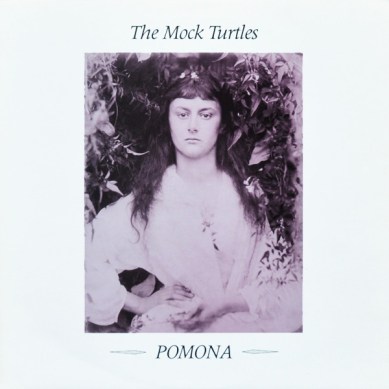
…..here’s a piece on The Mock Turtles, courtesy of the C88 box set.

This North Manchester band would enjoy a brief period in the sun with 1991’s ‘Can You Dig It?’, single (later resurrected for a Vodaphone ad, no less).  Back in 987, emerging from the ashes of Judge Happiness, they signed to Alan Duffy’s Imaginary label (later home of Cud and others), releasing the David Bowie-flavoured ‘Pomona EP’.

Martin Coogan (brother of comedian Steve) didn’t spare the horses – or budget – and the record featured a string section as well as the trademark ringing guitars present on ‘Mary’s Garden’, a stand-out track of the quartet which later graced debut album ‘Turtle Soup’ in 1990.  A string of singles followed, including the original version of ‘And Then She Smiles’ (now the theme tune to TV’s Stella) before the band moved to Siren and charted with their signature tune hit.

mp3: The Mock Turtles – John O’War
mp3: The Mock Turtles – Bathing In Blue
mp3: The Mock Turtles – Mary’s Garden
mp3: The Mock Turtles – The Waning Moon

This is the first time I’ve heard any of the above songs other than Mary’s Garden.

Thirty seconds into John O’War, and I’m picking up where Noel Gallagher night have found his inspiration for Wonderwall. Acoustic guitars and strings abound. And then the singing starts, and I think I’m listening to some sort of spoof of indie pop music of the late 80s as done in skits by the likes of Rob Newman and The Mary Whitehouse Experience.

Bathing In Blue is very earnest. Not really my sort of thing back in 1987 and not really my sort of thing now. I’m fearing this is turning into the sort of post I keep telling myself not to do, and that is – if you can’t find something positive to say then it’s best to say nothing at all.

Mary’s Garden is the song I did know from it being part of the C88 box set. It’s never particularly stood out, but then again there are a lot of excellent songs across the 71 songs spread across the 3xCDs. There is that Bowie-influenced vocal referenced earlier, and the guitars are typically indie of their time.

The Waning Moon sounds like Bauhaus, so there’s further evidence of the Bowie influence across the whole EP. As it turns out, this is the one which seems to have aged best of all….or so I thought until about 90 seconds in when it went all middle of the road rock.

All in all, a strange EP, offering up a mix of styles while giving no indication that a few years later, jumping on the baggy bandwagon would bring that smash hit.

JC

WHEN I WAKE UP, WELL I KNOW I’M GONNA BE….

…..in a hotel room in Manchester, having come down on the train yesterday.  It’s a three night stay, the purpose of which is to catch up with a few folk for the first time in years, including Swiss Adam.  There’s also a visit planned to the above building to take in what, by all accounts, is an excellent exhibition on the early years of Factory Records.

I did think about offering up a Factory band of some sorts today, but then I thought I’d go back to an old favourite.  A band who haven’t been featured on the blog since ICA 150 back in December 2017.  A band I no longer listen to at all, dating back to not long after that posting for very obvious reasons.  And while I really miss the brilliance of their songs, it really is a point of principle.  But, given that I am in their home city and the mode of transport used to get me here, and of course the very important fact that this song is an instrumental,  I’ll enjoy this today:-

mp3: The Smiths – The Draize Train

A few folk I know have emptied their collection of the singles and albums by The Smiths as well as the material issued throughout the singer’s solo career.   I haven’t quite been able to go that far.

JC

SOME SONGS MAKE GREAT SHORT STORIES (Chapters 52 & 53)

The Monday morning high-quality rip will return in seven days, with the slot being taken up by the return of The Affectionate Punch. The world of DIY home recordings is now offering a new EP, and as far as I’m concerned, two of its tracks make for ‘Great Short Stories’.

Somebody Sometimes features three songs, written by TAP, but recorded several months apart with different vocalists that all, coincidentally, have the same theme, Glasgow.

She was truly glamorous
At least that’s how I’ll always remember her
She’d tease and spray her bouffant with care
Before leaving for the afternoon
Pubs closed at three back then
Officially re-opening at five
But often as not there was a lock-in
Morphing afternoon, into evening, into night …

A stagger to the bus stop
My shame for all to see
Her bouffant flat and listless
Her trousers now holed in one knee

This could be perceived as a sad story
Of a woman losing herself to drink
But this woman was nobody’s victim
She would not be belittled or diminished
Nor browbeaten by duplicitous do-gooders
None of whom would ever do any good
No priest, no neighbour, no family or friends
Alone she survived her husband’s death

Goodbye 1970s
You really could be cruel
You Sectioned those bereaved
You treated grief with ECT
But I knew someone trapped in your game
She escaped
She won
She remained glamorous to the end

mp3: The Affectionate Punch – Glamorous To The End

Just another Friday night
Or so it seemed
We met at the Variety as usual
We were all suitably preened
Each of us with absent partners
But then again what did that matter
We can all look but we can’t touch
We’re always blurring real and imagined worlds

Too many drinks far too fast
But that’s the machismo we honour
I have to be home by eleven
Because I’ve commitments tomorrow

And like clockwork we stumble
Into the familiar Sleazy’s
Where we watch impudent pups with ageless guitars
Laughing and throwing their youth right in our faces

It’s doubles now
And they’re followed by doubles for chasers
Hours fly by, as they always do
It’s amid zombie-phone distractions
And nostalgic conversations

I remember someone being sick
Was that me? I’m not sure?
The again, what’s a Friday night
Without sick on your shoes?

I call it a night
And I make my excuses
Hey guys, I’ve got a train to catch
Remember guys, I promised …
What happened?
I don’t understand?
How did I get here?

My face pressed against the concrete
My view is a sea of shoes
In close-up, there’s a cigarette butt, alight and poisoning
It’s bright glow stamped out amid a rabble of voices

It’s Sauchiehall Street,
Saturday the 15th June,
4.16am
I was pronounced dead

mp3: The Affectionate Punch – Late Night Sauchiehall Street

The third track is largely an instrumental.

mp3: The Affectionate Punch – For Alice

The spoken vocal on Glamourous To The End is delivered, in the most wonderful hard-edged Glasgwegian accent, by G.

The spoken vocal on Late Night Sauchiehall Street takes a slightly different approach, leaning more on a sort of public address style of delivery.  It features yours truly.

In some ways, the posting is keeping true to what you would normally get on a Monday in that the mp3s are of a low(ish) resolution, with a higher quality free download available via Bandcamp.  All you have to do is click here.

My thanks to TAP for asking me to come back for a second contribution to his work, following my debut on the Scars EP in March 2020.

JC

THE WONDERFUL AND FRIGHTENING SERIES FOR SUNDAYS (Part 21)

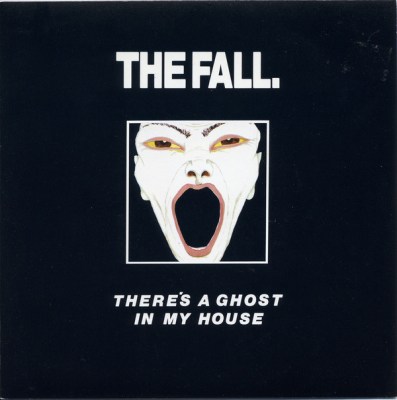
This weekly series has been running for almost six months.  When it started, I had no idea that Halloween 2021 would fall on a Sunday, far less that when the time came, it would provide the spooky coincidence of featuring the most successful chart hit for The Fall.  Here’s an extract from the book Hip Priest, written by Simon Ford, and published in 2003:-

Part of The Fall’s new commercial strategy included the release of carefully chosen cover versions, exemplified in April 1987 by ‘There’s A Ghost In My House’, an old Motown standard recommended by Beggars’ press officer Karen Ehlers. The combination of a classic song plus the added quirk of Smith coming close to singing stunned the critics. Don Watson made it NME’s single of the week, while James Brown in Sounds felt overwhelmed by the ‘forceful disco inferno’.

The critics’ positive reviews and a hilarious video of Smith and Brix pursued by poltergeists, helped it become the Fall’s most successful single, reaching number 30.  Normally a new entry at that level ensured an appearance on Top of The Pops, but the call never came and Brix was left bitterly disappointed: “The Fall were never asked, I mean that was one of the biggest crises in the history of the band…me and Marcia were going, “What will we wear, what will we wear?” It was like, failure, we didn’t get on”.

mp3: The Fall – There’s A Ghost In My House

The reference to ‘me and Marcia’ gives the game away that there had, in the five months since the release of Hey! Luciani, been another change in band personnel, with Simon Rogers taking his leave to be replaced on keyboards by Marcia Schofield.  The other players on this 7″, 12″ and cassette release were MES, Brix, Craig Scanlon, Steve Hanlon and Simon Wolstencroft.  The producer was the returning Grant Showbiz, last seen with The Fall at the time of Hex Enduction Hour, but who had busy since then as the live sound engineer for The Smiths.

Before turning to the b-sides, it’s worth mentioning that 1987 was a year when The Fall just about became mainstream.  The year had begun with a lengthy tour of Germany along with dates in the Netherlands and Belgium.  A UK tour was arranged to coincide with the release of the new single, and the set lists from the period indicating a level of consistency each night not normally associated with the band – they even threw in some old favourites!

In July 1997, The Fall played their biggest gig to date, as support to U2 at Elland Road, the home stadium of Leeds United FC. It should be pointed out that they were a late replacement for World Party, but there is no way that U2’s management would have asked for The Fall if they weren’t confident of a tight, consistent and upbeat set being delivered. A few weeks later, and they were playing at Finsbury Park, London, as the special guests of Siouxsie & The Banshees.

This was followed up with a return trip to Germany as part of two shows in Hamburg and Bonn where they shared a stage with Nick Cave & The Bad Seeds, Swans, Butthole Surfers, Die Haut, and Holy Toy, before being third top of the bill on the first day of the 1987 Reading Festival, with The Mission as the headliners.  It’s accurate to say that the band’s profile had never been higher, and yet it was their quietest ever in terms of new material, with no studio album and just one more single after Ghost (which I’ll look at next week).

As I mentioned earlier, the hits single came out on 7″, 12″ and cassette. Indeed, the 7″ came out in two different formats, with a limited edition hologram sleeve, while the 12″ gatefold had a totally different sleeve altogether.

mp3: The Fall – Haf Found Bormann

This was the b-side on the 7″, as well as being on the 12″ and cassette.  A rather bizarre offering, it had been written for, and performed during, the Hey! Luciani stage play.  It’s an MES composition, but the shouty vocals are delivered by Brix and Marcia.  In the play, the duo had played the roles of Israeli commandos tracking down Martin Bormann, Hitler’s personal secretary (don’t ask!!!).

mp3: The Fall – Sleep Debt Snatches

As found on the 12″ and cassette.  It’s more than six minutes long, and the first forty seconds lull listeners into a false sense of security as MES jauntily sings his lyrics over an upbeat but minimalist tune.  The rest is instrumental and, I’m being kind here, experimental.  Approach with caution.

mp3: The Fall – Mark’ll Sink Us

This absolute gem of a track was only made available via the 12″ single.   It’s an MES lyric over a tune co-written by Steve Hanley and Craig Hanlon. It’s a reflective and initially slow number, with an initial bassline very reminiscent of Joy Division, and before long there’s some prominent and occasionally jazzy piano being thrown in.  It’s a beguiling track from start to end, which speeds up with a chanted chorus of ‘Mark’ll Sink Us’ that fades out before the music, faster than ever, comes back in before coming to a halt a little short of five minutes.

Was MES sending out a coded message to the band members that they better be careful?  After all, as I said earlier, they were, in 1987, on the fringes of the mainstream, a position that Brix more than anyone wanted but which was anathema to MES.  It’s also been rumoured that, given how sparse the guitar work is on the song that Brix didn’t play on it…..

Any thoughts Fall fans??

Oh, I forgot to mention in the above narrative that the cassette version of the single did itself have four tracks, but Mark’ll Sink Us was replaced by Hey! Luciani.

JC

SATURDAY’S SCOTTISH SONG : #282: SCARS

From the archives of the Edinburgh Evening News, 27 October 2017:-

Scars were a post-punk quartet who briefly kissed the canopy of British pop at the dawn of the eighties. They formed in early ‘77, the brainchild of guitarist and bassist brothers Paul and John Mackie. A window ad in Hot Licks on Cockburn Street helped complete the line-up, with vocalist Robert King and original drummer Calumn Mackay entering the fray.

Intensive rehearsals followed and by autumn the teenage punks were ready to greet an audience. The gig took place at Balerno Scout Hall, close to where the Mackie brothers grew up.

“We performed in the place we rehearsed. We just put tickets on the door – that was the only difference,” explains King, now 56.

After their Balerno baptism the band explored Edinburgh’s gig circuit extensively. Paul Mackie – stage name Paul Research – recalls some of the venues:

“We played the Wig & Pen, The White Hart, The Nite Club, but Clouds in Tollcross was THE place at that time,” says Research, 57. “We played there with The Buzzcocks, Penetration, The Rezillos, The Skids

“Our defining moment, though, was at Craigmillar Castle Park for the Rock Against Racism gig, where we took our underground, glamish, punk stuff to the biggest possible audience you could imagine in Edinburgh.”

Scars eventually signed for fabled local indie label, Fast Product, notable for issuing early releases by the likes of The Human League, The Gang of Four, The Mekons and Joy Division.

The group cut their first single in 1979, “Adult/ery” backed by “Horrorshow”. The latter would later be described as “Scotland’s Anarchy In The UK”.

Following their 7” success, the band signed for PRE Records, a subsidiary of UK major Charisma. Their debut album, the outstanding “Author! Author!”, arrived in 1981. The album earned five stars in Sounds magazine and a rave review from the NME’s Paul Morley.

“The whole purpose of our lives at that moment was that album,” says Robert, wistfully. “Paul Morley called it ‘probably the greatest ever debut album ever made’, so how much can you fail?”

The album was classic Scars but with a noticeably more commercial edge than previous efforts. It was the sound of a band on the up and hungry for success. It was post-punk.

“I was never that idiotic that I thought punk rock was gonnae be the be all and end all of everything,” explains Robert, “I got into music because of Marc Bolan and David Bowie. They taught you to be yourself.”

And being yourself was vital to Robert King.

“I used to slag Davy (Henderson) from the Fire Engines because he sang in a fake American accent. That doesnae work for me. People think New York is cool, why can’t Leith be cool? Why should it be any different? I never got that.”

Side A begins with “Leave Me In Autumn”. Three minutes of post-punk perfection driven by John Mackie’s ballistic bass lines and some expert lead work from Paul Research are accompanied by some of the most beautifully-bleak lyrics ever written.

“I won the St Anne’s Jesuit prize for poetry for that when I was twelve,” Robert tells me, “I got eight pounds or something, bought me loads of books.”

Arguably the most cross-over track on “Author! Author!” is the single “All About You”, one of British music’s forgotten gems. Drummer Steve McLaughlin, replacement for Calumn Mackay, made the Scars danceable with his discotheque beats. And the song’s video – shot in Edinburgh in 1981 – has since become a fascinating artefact of the Capital as it was.

“We came out with this chorus and really nailed it with that rousing, anthemic kind of thing,” reveals Research. “The video cost a lot of money to make but at that time there was no MTV, no internet, or anything, so we made a promo film that no-one could see. We really did step up and out of the mould and everything like that but at the same time it was stupid because it was a waste of money. That said, it’s legendary within my family. If ever there’s a family wedding, or anything like that, it’s always the last song of the night.”

Robert King’s take on the track isn’t quite so positive.

“We had a gap in the album and they wanted a single. So Paul came up with the idea of a single. So I thought: ‘well, what’s a single? Sortae like The Beatles and s**** like that?’. So I wrote a song like The Beatles. Done in five minutes. It didnae make any sense either but it sounded like a pop song so we did it. People think it’s a love song. It’s not. It was written on the spot, so it’s unfair to even call it a Scars song.”

The album catapulted Scars into the mainstream. An appearance on the Old Grey Whistle Test, a brace of Peel Sessions and a slot on the cover of the NME marked their zenith.

But sadly, in spite of the very title “Author! Author!”, there would be no encore. Frontman Robert King quit, and, despite their best attempts to soldier on without him, the Scars disbanded in 1982. But their efforts had not been in vain. They had successfully bridged the gap between punk and new wave, and, crucially, inspired others.

“Without us there would be no Fire Engines or Josef K, Orange Juice, etc.,” asserts King, “None of that would’ve happened the way it happened. It never got to where it should have got,” he continues, “We could have been famous, but fame is not really important.”

Paul Research agrees the band never reached its full potential, nonetheless, he appears to be happy with his lot.

“Scars seems to be bigger now than it ever was back in the day. There’s more interest from a wider group of people than there ever was. I attribute that entirely to the rise of the internet and social media.”

The last few years have indeed witnessed Scars’ music undergo something of a renaissance. In 2007 “Author! Author!” was released on CD for the first time. The album sold out its first pressing in just three months.

Then came the moment an entire generation of fans had been aching for.

On December 29, 2010, Scars, boasting their original 1977 line-up, joined TV21, Malcolm Ross and special guests for a benefit gig at the HMV Picturehouse on Lothian Road.

It was quickly followed by an intimate show at nearby Citrus Club the same night.

The reunion would never be repeated, but, for a brief moment, there they were: the four of them on stage together in the city where the buzz began all those years ago.

Scars: Where are they now?

• Scars guitarist Paul Research continues to play music in Edinburgh and further afield as bassist for the UK’s fastest rising punk outfit The Heavy Drapes

• Robert King fronts two bands, Opium Kitchen and Groucho Handjob. A doctor of ancient languages, he lives in France but returns to Edinburgh regularly.

• John Mackie works as an artist in retail design and has his own band Bitter Moon

• Calumn Mackay lives in France where he works in hi-tech. He plays drums for a band called Garvin

• Steve McLaughlin lives in London as a film music producer

JC adds…..

Maybe it was a subconscious Glasgow/Edinburgh thing for me back in the day, but I never found Scars to my liking.  I did buy the debut album in 1981 but gave it away soon after in a swap with an old schoolmate for his copy of The Modern World by The Jam as my own copy of that record was scratched and jumpy.

The reference in the above newspaper article doesn’t mention that the story of Scars featured prominently in the documentary Big Gold Dream, released back in 2015, and to which I had the great privilege of attending the world premiere at the Edinburgh International Film Festival, as lovingly recounted in this blogpost.

I signed off with these words….

One thing the documentary did was make me realise and appreciate was just how important The Scars were to the development of the post-punk scene in Scotland. I’ve only ever been familiar with their one LP, Author Author, released in 1981 on Charisma Records and to be honest I’m not a fan of it. But it became quite clear from the film and the Q&A session afterwards that their one-off single for Fast Product back in March 1979 had lit the touch paper for many musicians, including the four boys that made up Josef K.

mp3: Scars – Adult-ery
mp3: Scars – Horror Show

It really was a classic 45 and more fool me for not acknowledging it for decades.

Feel free to make your mind upon the song on which the band members disagree…..

mp3: Scars – All About You

JC

CALLING KIRSTY…..

A short while back, I had a wee competition where one lucky reader could win an advance CD copy of Catastrophe Hits, the new album by Broken Chanter.

It was Kirsty whose name came out of the hat.

But here’s the thing…..I contacted Kirsty a few days back, via email, asking for an address to post the CD to, but had no reply. So, if you happen to be reading this Kirsty, I hope you can get back to me at thevinylvillain@hotmail.co.uk with the info. Fingers crossed.

If I don’t hear back with the next seven days, I’ll just have to make sure the CD goes to another of the competition entrants.

Cheers

JC

SURFAROUND

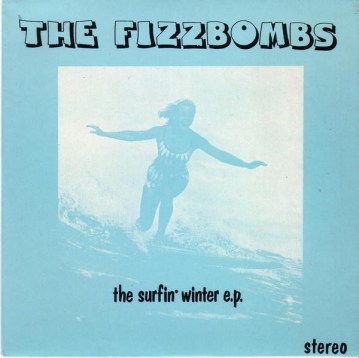
The Fizzbombs have featured on a couple of previous occasions, but each time it was with Sign On The Line, the debut single released on the Edinburgh-based Nardonik Records back in 1987.

The group was a very short-lived one, although its members would splinter off to other bands who were part of the Edinburgh scene at the time. Indeed, other than the debut single, there would be a shared flexidisc 7″ with fellow alumni Jesse Garon & The Desperadoes before one last effort in 1988, The Surfin’ Winter EP, on Calculus Records, a London label which issued only one other single and album, both by The Dog Faced Hermans, before going out of existence.

The lead track from the Surfin’ Winter EP was included on the C88 box-set issued a while back by Cherry Red, which is how I have a copy of the song.

mp3: Fizzbombs – Surfaround (7″ version)

Two minutes of distorted guitars and some fine melodies in homage to a sport which, back in the 80s, was only practised in lands many thousands of miles from Scotland. I’ve a feeling it’ll divide opinion.

But please, before you feel like casually dismissing it as a piece of noise that annoys, have a listen to the other four songs which made it onto the 12″ version of the EP, and you’ll surely come to the realisation that it contains a fairly decent set of tunes:-

mp3: Fizzbombs – Test Pilot
mp3: Fizzbombs – Blue Summer
mp3: Fizzbombs – Beach Party
mp3: Fizzbombs – Cherry Cherry

And yup, the final song is a cover of a Neil Diamond number, a single which back in 1966 had provided him with his own first-ever chart success.

JC

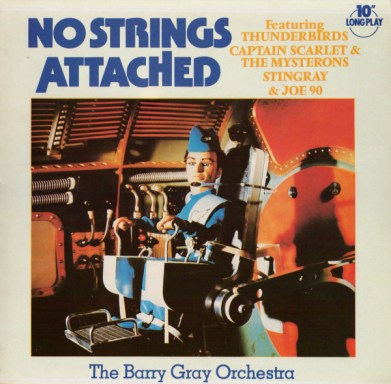
NO STRINGS ATTACHED


I thought I’d have a wee bit of fun today, with something quite different from the norm, and which might make a few of you smile in recognition of childhood memories.

From wiki:-

Barry Gray (born John Livesey Eccles, 18 July 1908 – 26 April 1984) was a British musician and composer best known for his collaborations with television and film producer Gerry Anderson.

In 1956 Gray joined Gerry Anderson’s AP Films and scored its first marionette puppet television series, The Adventures of Twizzle. This was followed by Torchy The Battery Boy and Four Feather Falls, a puppet Western based on a concept suggested by Gray. His association with Anderson lasted throughout the 1960s. Although best known for his score to Thunderbirds (in particular the “March of the Thunderbirds” title music), Gray’s work also included the themes to all the other “Supermarionation” productions, including Fireball XL5, Stingray, Captain Scarlet and the Mysterons and Joe 90.

Additionally, Gray is known as the composer for the Anderson live-action series of the 1970s, such as UFO and Space: 1999 (though he was not involved in scoring The Protectors). His work in cinema included the scores to the Thunderbirds feature films Thunderbirds Are Go (1966) and Thunderbird 6 (1968), and the live-action science-fiction drama Doppelgänger (1969). Gray’s professional association with Anderson and his career in TV and film scoring ended when he decided to leave the production of Space: 1999 after the completion of the first series.

I recently picked up a second-hand copy of a 10″ mini-album. Here’s all eight of its tracks, with a total running time of 20 minutes.

mp3: The Barry Gray Orchestra – Thunderbirds (Main Theme)
mp3: The Barry Gray Orchestra – Captain Scarlet Theme
mp3: The Barry Gray Orchestra – Hijacked
mp3: The Barry Gray Orchestra – Aqua Marina
mp3: The Barry Gray Orchestra – Stingray
mp3: The Barry Gray Orchestra – The Mysterons Theme
mp3: The Barry Gray Orchestra – Joe 90
mp3: The Barry Gray Orchestra – Parker Well Done

The last of these features vocal contributions from the actors who played Jeff Tracey, Lady Penelope and Aloysius Parker in Thunderbirds.

It’s back to the indie-schmindie tomorrow.

JC

AN IMAGINARY COMPILATION ALBUM : #299: IT’S IMMATERIAL

A GUEST POSTING by KHAYEM

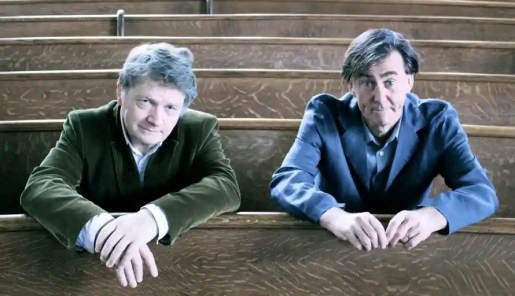
Jarvis Whitehead and John Campbell

Ah, Go On, Bring Me Joy: An It’s Immaterial ICA

It’s Immaterial originally formed in Liverpool as a four-piece in 1980, releasing several singles and recording a number of John Peel Sessions. By 1984, It’s Immaterial was a duo – founder member John Campbell and Jarvis Whitehead, who had joined in 1982 – and this partnership has continued to the present day. Albeit not without some adventures and misadventures along the way…

It’s Immaterial joined the ranks of one-hit wonders in 1986, when their single Driving Away From Home (Jim’s Tune) spent 8 weeks in the UK chart, attaining the dizzy heights of #18. My first memory of seeing and hearing them was on Channel 4’s The Tube, in one of the show’s home made video slots, performing Festival Time. The clip is on YouTube (naturally), less than a minute and a half, and it immediately reminded me of why It’s Immaterial made such an impression. I went on to buy the subsequent singles and debut album Life’s Hard And Then You Die, a commercial flop at the time but which I loved (of course). Many, many years later, I discovered the follow-up album, Song, in a secondhand record shop in Gloucester. However, that seemed to be it for the band.

The truth was that the duo had started work on a third It’s Immaterial album in the early 1990s before a series of events – the illness and passing of Campbell’s partner, the collapse of Pledge music and having to start again financially, the COVID pandemic – meant that it was 2020 before House For Sale finally saw the light of day. There’s a fascinating and moving God Is In The TV interview with John Campbell from last year that explains the three decade gap between albums and It’s Immaterial’s brief dalliance with fame in the mid-1980s.

It’s a remarkable story and a remarkable body of work. Keeping with the 10-track ICA format, I’ve reluctantly skipped the early singles and narrowed my focus to the three albums, a couple of ‘lost’ versions and one of the B-sides to the aforementioned big hit.

A happy accident: when finally settled on the tracklist, I realised that the first line of the first song is “It’s a little bleak around here…” and the final line of the final song is “Ah, go on, bring me joy”. Feels strangely apt.

Side One

1) The Better Idea (Album Version) (Life’s Hard And Then You Die, 1986)

They say the rats leave the sinking ship
I’ve witnessed them get on

This song originally appeared on the Fish Waltz EP the previous year and is apparently a comment on the various line-up changes that had reduced It’s Immaterial to a duo. Even without this context, the rich imagery is further enhanced by the album version’s atmospheric soundscape. Side 1, track 4 on the album but the uncontested opener for this ICA.

2) Kind Words (‘Lost’ Version) (Lost Album #1, 1992 / Record promo CD, 2001)

Take your new car home to your new wife
Take your whole life down that road

Guest vocals from fellow Liverpudlian Eva Petersen, who has previously collaborated with Miles Kane and Will Sergeant. This song was originally produced by Calum Malcolm, then completed by the band decades later for inclusion on the House For Sale album. I love this earlier version.

3) In The Neighbourhood (Song, 1990)

It’s just like living each day in the music hall
The jokes are on you until the curtain falls

There are a number of downtempo tunes on the second album, but this closes side 1 of the vinyl version in rousing style, with a sorry tale of suburban hell.

4) Just North Of Here (Album Version) (House For Sale, 2020)

Well, it’s a funny kind of question to come straight out and ask
But that’s exactly what he did
“Where’s heaven?”, just like that, “Where’s heaven?”

A chance encounter with an agitated stranger in a chop house prompts a reverie about a fishing trip and possibly the happiest time in the narrator’s life.

5) The Sweet Life (Life’s Hard And Then You Die, 1986)

I hear it’s love that turns the whole world round
As day drifts tonight and youth grows old
The seeds of doubt begin to grow…

Side 2’s opening song on the original album is flipped to close Side 1 here, an energetic, impassioned ditty entreating the listener to “enjoy your life while you can”. Deciding which songs not to include from Life’s Hard And Then You Die was a challenge, as all 10 were contenders.

Side Two

6) House For Sale (Start Over) (‘Lost’ Version) (Lost Album #2, 1992 / Record promo CD, 2001)

So pack your favourite song
The one that keeps you strong
And begin again

As the story goes, “whilst moving studios, Jarvis Whitehead and John Campbell discovered a neat cardboard box containing the original multi-track Tascam DA-88 tapes from [the 1992] sessions and decided to complete the project”. Despite giving the third album its name, this song didn’t make it unscathed, although musical elements were incorporated in the song Tell Me Why on the finally released version.

7) How Can I Tell You (Album Version) (House For Sale, 2020)

If that’s the crime I can’t repent
If that’s the sin, I’m innocent

It’s intentionally unclear what said crime is, as a female persistently asks “What exactly did you see?” in French, before the narrator belatedly claims, “I only ever did it once”.

8) Life On The Hill (Song, 1990)

I know it’s late but we could pass the time
I could tell you a story
Mine isn’t your common or garden life

The episode of Long Lost Family that you will never get to see, another It’s Immaterial contender for the Some Songs Make Great Short Stories series.

9) A Crooked Tune (Re-Recorded & Remixed) (Driving Away From Home B-side, 1986)

It sounds like something, something like a song
The part where everyone has gone, but you

This gem was tucked away as the bonus track on a 12” single, though at least it happened to be on the B-side to their one big hit in the UK. The song has a lovely little in-joke coda.

10) Festival Time (Rope B-side / Life’s Hard And Then You Die, 1986)

And I watch as they sway, clowns drinking their cares away
Is it fun? Is it joy? Are the grown-ups only boys?

I’ve missed off a number of personal favourites but if I could only pick one It’s Immaterial song, it would probably be this one. The first song of theirs that I heard and, whilst not the deepest or most evocative of their lyrics, the song’s just so much bloody fun. The memory of that video on The Tube (was it really only ever a minute and a half?) stuck with me and I love the sampled fade out, after John Campbell’s final words. Their craziest song and an absolute blast.

The good news is that It’s Immaterial announced in March that they were planning to write songs for a fourth album this year. Here’s hoping luck’s on their side and the album is completed and released before 2050. I don’t think I’ll make it otherwise…

KHAYEM


SOME IDEAS FOR CHRISTMAS 2021 (#2)

I really get a kick out of stumbling across something, taking a punt on it, and discovering that it has a real ‘wow’ factor.

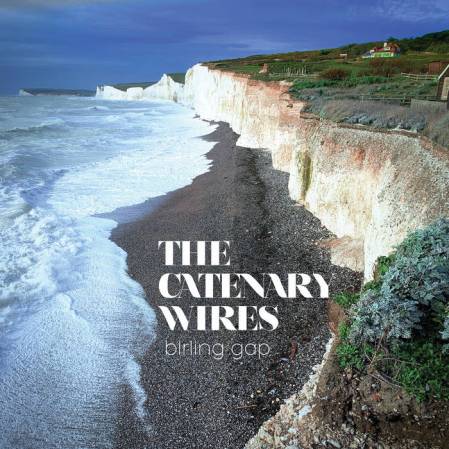
It was one of the regular updates from the Monorail store here in Glasgow that alerted me, some seven years after I should have known about such things, to the very existence of The Catenary Wires, drawing attention to a new album of theirs called Birling Gap.  For those of you who are perhaps scratching your heads, then let me quote from the band’s own website:-

The Catenary Wires’ third album, Birling Gap was released on 18 June 2021, preceded by 7″ single Mirrorball (a love song inspired by eighties discos). Both are released on Shelflife Records (US) and Skep Wax Records (UK and rest of world). The album is now available for pre-order from good record shops and via Bandcamp.

Birling Gap is a significant place. On the South Coast of England, it’s where steep chalk cliffs resist the rough seas of the English Channel. It’s where iconic images of England are created and re-created. On Birling Gap, the Catenary Wires have listened to the songs and stories England has comforted itself with over the decades and re-imagined them.

The Catenary Wires formed in 2014, initially as a duo. Amelia Fletcher and Rob Pursey had previously been in Talulah Gosh, Heavenly, Marine Research and Tender Trap. The first Catenary Wires album Red Red Skies (Elefant/Matinée Recordings, 2015) was a marked departure from the fuzzy girl-group pop of their earlier bands. It was sparse, emotive and melancholy. A one-off 7″ single What About The Rings? followed (WIAIWYA, 2018).

With the release of their second album Til The Morning (Tapete, 2019), the band expanded to include contributions from Andy Lewis on bass (ex-Spearmint/Weller Band), Fay Hallam on keyboards and backing vocals (ex-Makin’ Time) and Ian Button on drums (ex-Thrashing Doves/Death In Vegas). The sound was getting bigger, although the core of the band remained the dual vocals of Amelia and Rob. With the third album, everyone is involved and The Catenary Wires are a fully-fledged five-piece band.

The band’s name refers to the chain of curves made by the overhead cables seen suspended from pylons or above electric trains, cables that can seem to lead you off to somewhere different and unknown.

It was the mention of Amelia Fletcher and Rob Pursey that intrigued me.  I put in an order for Birling Gap and it arrived a few days later, on white vinyl and complete with a postcard that had been signed by the two of them.

I’ll cut to the chase.  It wasn’t anything along the lines of what I was expecting, which was, of course, some 21st century update on the C86 stuff.  To be fair to Amelia, that’s readily available if you go to bandcamp and listen to the rather excellent Swansea Sound, the band she and Rob are part of along with Huw Williams, formerly of Pooh Sticks.

The Catenary Wires are an altogether gentler musical experience, almost pastoral or chamber pop in places.  There are hints of XTC, The Divine Comedy, Pulp, Luke Haines, the Go-Betweens, 60s west coast pop, 70s English folk and the gentler side of The Kinks dotted throughout its ten tracks.  Birling Gap arrived at the height of the summer and seemed to be the perfect soundtrack for those hot days when I was out wandering through the parks and green spaces of the city.

Eventually, I sat down at home and gave the album a listen along with the lyric sheet (I’d have looked quite stupid carrying that around with me outside!).  There is a real sense of Englishness to many of the songs, but with a knowing nod to the state of the nation and indeed national identity in the 21st Century.  Other songs reflect that Amelia and Rob, like the rest of us, are not quite as young and vibrant as we used to be, but not in any dark or depressing way. They even find time to take the piss out of their old selves on Mirrorball, a song celebrating how a couple meet in a cheesy 80s-theme disco, and which pulls off the magic trick of a rhyming couplet including the words ‘Jason’ ‘Kylie’ ‘Wah! Heat!’ and ‘Wylie’.

The opening line of the review over at Louder Than War sums it all up way better than I’m capable of:-

This is unexpectedly fabulous. An album of the year for 50-Somethings with Attitude but sensible shoes.

Here’s the opening track:-

mp3: The Catenary Wires – Face On The Rail Line

Oh, and our dear friend Brian from Linear Tracking Lives was saying great things about the album when it was released back in June…..and we all know he is a man of impeccable taste.

Here’s the link to bandcamp where you can get digital or physical copies of this wonderful album.  It’s likely also available, or can be ordered, through any of the independent record stores close to your home.

JC

THE MONDAY MORNING HI-QUALITY VINYL RIP : Parts Thirty eight and nine: SOUTHERN MARK SMITH

Today’s offering is a tribute to the late Pat Fish, who passed away suddenly, at the age of 63, on 5 October 2021.

I can’t claim to be a huge expert on The Jazz Butcher. Indeed, most of what I have on the hard drive consists of songs included on compilation albums or box sets, although I do have a second-hand vinyl copy of an actual Jazz Butcher compilation – Bloody Nonsense, released in 1986 – which I picked up during one of my trips over to Canada, and while I can’t say that every song is a stand-out or has made a positive impression, there’s been enough to make me a casual fan.

This blog hosted an excellent guest ICA back in March 2018, courtesy of Friend of Rachel Worth.

“The Jazz Butcher in some ways are ideal for an ICA. No wild variations in style and a catalogue of LPs all of which are a bit patchy. Actually getting to grips with their discography is one of the biggest challenges, with various compilation LPs and some tracks appearing on more than one album. Then there is the slight variations of name, sometimes Jazz Butcher Conspiracy, sometimes just Jazz Butcher and sometimes something else entirely.

The line-up changes with the weather (same with record labels) with songwriter and singer Pat Fish being the only consistent factor. All in all they are a tough band to keep track of.

When they are good they are fantastic in a jangly guitar, smart lyrics way. However each LP also either has something that is head-scratchingly awful at best and annoyingly novelty record like at worst.”

Pat Fish was born as Patrick Hunrods in December 1957. As FORW pointed out, he was damn near impossible to pigeonhole as a musician, always looking for ways to challenge his fans and the critics.  He was writing and performing right up to his death, and indeed just two days prior, on 3 October, he had been scheduled to perform a web concert, only instead to appear on-screen at the scheduled time to make an apologetic announcement that he wasn’t feeling well and would re-schedule for about a week later. It is hardly a surprise that his death came as such a shock.

Of the song featuring today, FORW offered these words within the ICA:-

Probably if you know one song by the Jazz Butcher it will be this one. Pat Fish describes it as “The Albatross. A record, I feel, of its time. We were young(ish) and cocky and I think it shows. I still haven’t learned to sing on this one, which bugs me too. Still, it was cheap and cheerful, and it helped us to meet an awful lot of people”

It was actually the debut single, released on Glass Records in 1983.  The following year, it was re-recorded and included on the band’s second studio album, A Scandal In Bohemia, again on Glass Records.  The first version is fast and heavily reliant on keyboards to drive it forward.  It borders on manic in places but at all times it is toe-tappingly superb with a killer sing-along chorus.  The second version is markedly different, like a classy 80s pop song as the keyboards blend with acoustic guitars while Pat Fish sings in a melancholic manner, certainly to my ears, that in places isn’t a million miles removed from Lloyd Cole.  The lyrics are also slightly different, and it is just as equally brilliant in its own way as the original.  I can never make my mind up on which of the two versions I prefer, and that’s why both are on offer today:-

mp3: The Jazz Butcher – Southern Mark Smith
mp3: The Jazz Butcher – Southern Mark Smith (Big Return)

RIP Pat. There’s plenty who will miss you.

JC

THE WONDERFUL AND FRIGHTENING SERIES FOR SUNDAYS (Part 20)

From the closing sentence of last week’s entry in this series:-

“John Leckie was on production duties for The Fall on this occasion as he would be for the album Bend Sinister released just three weeks after Mr Pharmacist.  But by the time of the next single, he would have been usurped……”

…..as the next single by The Fall would end up being produced by Ian Broudie, lately mentioned on the blog via posts about Lightning Seeds.

But, as David Byrne might have said, how did we get here?

October 1986.  Bend Sinister, the band’s third album with John Leckie involved, is greeted with a degree of bemusement as it sounds like nothing else the producer had ever worked on over the years.  It was only years later that Leckie would reveal that Mark E Smith wanted the album to be mastered from a chrome cassette and had also insisted on having the final say when things were being mixed, often taking out contributions from members of the band which Leckie and indeed Brix Smith felt were crucial.  The reviews were mostly negative, with the producer coming in for a great deal of criticism, all of which led to the inevitable ending of the creative partnership.  Three years later, and Leckie was being lauded as a genius for his work on the debut album by Stone Roses.

The twisted way that MES’s mind works is that, having sabotaged the efforts of a slightly mainstream producer for the album, he would agree to have Ian Broudie come in to work on the next single, which was actually recorded before Bend Sinister was released and the critical savaging had taken place.  It was almost as if he’d planned the whole thing with the intention of coming back with a great pop song, almost to spite John Leckie.

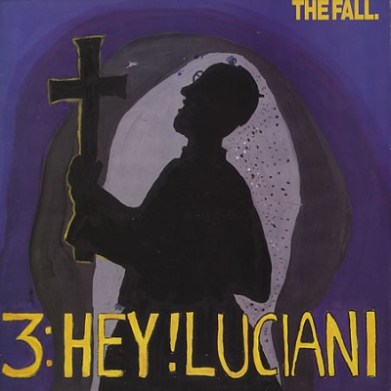
Hey! Luciani could have been included on Bend Sinister. It had been written in early 1986, and featured regularly in the live shows throughout that year, including UK, US and European tours.  Indeed, a version recorded with John Leckie would surface sometime later.

MES, however, was pursuing things beyond songwriting and was working throughout the year on completing a play about the death, in 1978, of Pope John Paul I, who had been born Albino Luciani, after a reign of just 33 days.  It was almost immediately after Pope John Paul II was chosen that the conspiracy theories started flying.  Hey! Luciani was therefore, and understandably, held back for inclusion in the play.

Hey! Luciani: The Life and Codex of John Paul I opened on 5 December 1986 and ran for two weeks at the Riverside Studios, London.  A mixture of established actors and creatives who were friends of MES, such as the dancer Michael Clark and the performance artist Leigh Bowery took to the stage, and there were parts for everyone in The Fall at the time, including  keyboardist Marcia Schofield who had come in to help on a short tour of Austria a couple of months earlier when Simon Rogers was unavailable.

The play itself was well-attended over the two weeks, despite some scathing reviews about it being impenetrable and badly acted. A few songs by The Fall featured during its 90-minute duration, including the song that had been held back from the previous album and instead re-recorded at Abbey Road Studios with Ian Brodie adding his touches of magic:-

mp3: The Fall – Hey! Luciani

It was released on 8 December 1986, timed to coincide with the opening of the play. It’s an absolute belter of a single, one that really should have received extensive daytime radio play, but the negativity surrounding the play, allied to the controversial nature of the subject matter, almost certainly played its part in it being ignored.  It didn’t help, mind you, that the single was released in the run-up to Christmas when the airwaves are filled with the perennials.  But I’m thinking it was all part of MES’s master plan to deliver another flop.

Hey! Luciani was released on 7″ and 12″ vinyl. It reached #59, which was easily the best chart position of all the singles to date.

mp3: The Fall – Entitled
mp3: The Fall – Shoulder Pads #1B

Both of these were produced by John Leckie and date from the Bend Sinister sessions. Entitled, a slow, ambling gentle song appears on both the 7″ and 12″. Shoulder Pads #1B was the bonus track on the 12″

Shoulder Pads had originally appeared on Bend Sinister, spilt into two, with #1 fading out at just under the three-minute point early on the album and #2 fading in as the album closer, and coming to a gradual halt after less than two minutes. The version on the Hey! Luciani single is an alternative take and runs to over five minutes in length with a few additional lyrics. The contrast in production values between the A-side and the two songs on the B-side are quite marked.

The next single wouldn’t appear until April 1987, and I’ll look at that in the next instalment of this series. But in February 1987, thanks to a 7″ single giveaway with Sounds, one of the UK’s main music weeklies, everyone got the chance to hear the John Leckie take on the single from the play:-

mp3: The Fall – Hey! Luciani (original version)

Quite different in many ways…far less polished and nowhere near as obvious as a potential hit single. But still well worth a listen.

JC

SATURDAY’S SCOTTISH SONG : #281: SAINT JUDE’S INFIRMARY

I’m quite bemused that I’ve never featured Saint Jude’s Infirmary on the blog before.  I was sure I had done, but I’m guessing it was over at the old place pre-2013.

In summary, the group emerged around 2006/07, with an astonishing debut Happy Healthy Lucky Month on Edinburgh-based SL Records, the label which had been responsible for bringing Ballboy to wider attention.  The initial members were Grant Campbell (bass, guitar and vocals), Ashley Campbell (vocals, guitar, percussion), Emma Jane (vocals and percussion), Mark Francis (Drums, Percussion, Vocals, Guitar) and Andy Dempster (keyboards).

They were championed by the acclaimed painter Jack Vettriano, and indeed he went as far to say that he found their music ‘inspiring’. This had come about after he learned that the group had composed a track called Goodbye Jack Vettriano,  written by Grant Campbell while he was living abroad and feeling homesick saw a Vettriano print on the wall of a pub in Rotterdam.  The painter would work with the band on a video for the song and later would create a new self-portrait which was later used as the cover for the band’s second album, This Has Been The Death Of Us, which followed in 2009.  The latter album also featured contributions from the author Ian Rankin (who I know is a favourite of JTFL over there in Santa Monica).

The music?  It’s actually quite hard to pin down.  They described themselves in an interview back in 2007 as ‘noisy, modern European folk music’, in which they also cited their influences  as being The Velvet Underground, The Jesus and Mary Chain, The Replacements and Tom Waits, along with stoner rock and krautrock, which really is a helluva melting pot.

They were always a complex band to try and get to grips with.  The live shows were often excellent, but at other times were tense and difficult affairs with very little on-stage chemistry despite the fact Grant and Ashley were siblings, and Emma was a cousin to both of them.

Mike from Manic Pop Thrills was someone who got right behind the group from the very earliest days, going as far as promoting a show in 2009. He obtained a wonderful interview just prior to that….and I’m reproducing some of it here:-

Q – If people don’t know you, what can they expect from the gig?

We are from Edinburgh and play slow and brutal poetry. The songs are of sad eyed remorse sung by throats cried hoarse. The girls sing sweet, the boys sing coarse, the girls weave honey, the boys pick sores.

Q – What’s happening with the band just now?

Mark: After a tortuous and seemingly endless wait, we’ve just released our second album. We’re taking a big collective sigh of relief, and rounding the year off with gigs in Liverpool, Dundee and Edinburgh.

Q – How would you describe the difference between the new LP and the first one?

Grant: If the first album was us caught on a train platform desperately trying to convince a lover to stay, then the second album is us trying to write the great Scottish novel in 5 chords and a wall of reverb, or else die trying. We wanted a record that would be as Scottish and as poetic as Rabbie Burns, Hugh McDiarmid or Kenny Dalglish. We want each song to sound like a silver bullet in the revolver of the album. Bang! Bang! Bang! It’s art and poetry and hope and dreams drilled and filled into deadly munition. We have built a gun to hold to our head and are daring the world to shout fire.

—–

The admitted to difficulties with the recording process for the second album boiled over to the subsequent promotional tour and indeed the band split-up after that Liverpool gig. There was a comeback of sorts in 2016 with a gig in Edinburgh, and at the time suggestions were made that new material was likely to be recorded in the near future. But nothing transpired.  Who knows what lies ahead……..

And in an effort to make up for the previous absence from the blog, here’s a handful of tunes:-

mp3: Saint Jude’s Infirmary – The Church of John Coltrane (from Happy Healthy Lucky Month)
mp3: Saint Jude’s Infirmary – All My Rowdy Friends Are Dead (from Happy Healthy Lucky Month)
mp3: Saint Jude’s Infirmary – Goodbye Jack Vettriano (from Happy Healthy Lucky Month)
mp3: Saint Jude’s Infirmary – Little Sparta (from This Has Been The Death Of Us)
mp3: Saint Jude’s Infirmary – Foot Of The Walk (featuring Ian Rankin) (from This Has Been The Death Of Us)

JC

INSPIRED BY ECHORICH (THIS TIME WITH LINKS)

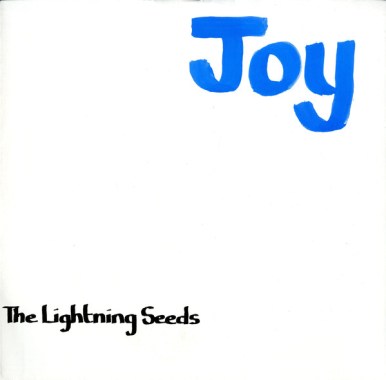
Just over two weeks ago, I posted Pure, the debut single by The Lightning Seeds.  It went down well with most of you, and  I was particularly struck by the comment left behind by Echorich:-

Pure is a great song, but I have always been partial to Joy. Broudie’s writing partner on some of the early tracks was Lotus Eater, Peter Coyle – a genius move really. Broudie would bring on heavyweight songwriter (IMO) Terry Hall to collaborate on the brilliant Sense single and album. As an artist he was a very, very smart producer…

Which led me to dig out my lesser-played 12″ early Lightning Seeds single.

And to write up this post on Friday 15 October with my thoughts on Pure, its-b-sides and a further track on Cloudcuckooland, the debut album by the band.

The stupid thing was that I forgot to post the links.

Sorry.

mp3: The Lightning Seeds – Joy
mp3: The Lightning Seeds – Frenzy
mp3: The Lightning Seeds – Control The Flame
mp3: The Lightning Seeds – Sweet Dreams

My head has been hanging in shame for a week.

JC

22 YEARS IN A MOBILE HOME

A  GUEST POSTING by FRASER P

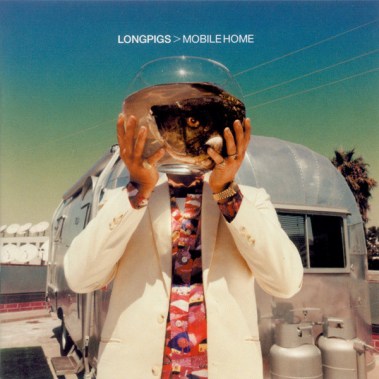
A worthwhile album sees its vinyl release on October 29, a little after the CD came out. Well, 22 years after the CD actually…

The story of Longpigs is the story of the unluckiest band in rock history. It’s a tale of bad timing and bad faith. It tells of a music industry that took their early promise and then spat on its fulfilment after holding it back until everyone’s goodwill was exhausted. And the final nail was an epidemic of shoddy journalism that denied us all the proper chance to appreciate one of the great lost albums of the 1990s.

Longpigs signed first to Elektra in 1993 after only a few months of live appearances. The Sheffield foursome were on their way to releasing their first single when frontman Crispin Hunt was injured in a car crash and spent three days in a coma. Before he had recovered long enough to rearrange a release plan, Elektra’s UK operation was closed down and Warner‘s, the US parent company, demanded £375,000 from anyone wanting to buy out their contract.

Faced with such a demand, it was well into 1994 before U2’s Mother label stepped forward to free them from their bondage and things finally seemed to be heading in the right direction. Extensive gigging through 1995 pushed their fourth single ‘On And On’ into the Top 20, followed there by a re-release of their first single ‘She Said’. The debut album The Sun is Often Out was released in April 1996 and reached 26 in the album charts, with a further single from the album, ‘Lost Myself’ making it to 22 in July.

Normal practice would see a band touring for a few months to promote the album before settling down to generate material for its follow up. For Longpigs instead, 1997 saw them still on the road, but now across the Atlantic, bending their shoulder to the fabled task of ‘breaking America’. Support slots with Echo and the Bunnymen, The Dandy Warhols and U2 pushed ‘On And On’ into the US Alternative Top 20, and after a Glastonbury appearance they were finally able to start work on the second album in early 1998.

By this time however, the band was shredded after more or less five years of constant gigging. As Hunt later said, touring starts out like a great idea but eventually the strain shows: “You go on to the tour bus and it starts like Summer Holiday, but two weeks later it’s like Das Boot.” Drummer Dee Boyle was jettisoned before work on the album began. He later repaid Hunt at a chance meeting by smashing a beer glass into his face.

They were under pressure to produce the new work, and Hunt himself is not particularly complimentary about it now. Nevertheless, despite Hunt’s sense that it wasn’t as melodically engaging as his lyrics deserved, it should have been recognised as one of the finest LPs to come out of the decade. But once again, record company mismanagement delayed its release and all the while Mother Records was secretly struggling to survive.

It wasn’t until September of 1999 that Mobile Home finally saw the light of day, but Mother put absolutely no effort into promoting it, and a few months later the label itself folded. The patience of the music press had been stretched and when the follow up to The Sun is Often Out failed to satisfy the hacks who expected and wanted another chapter in their own contrived narrative of Britpop, they dismissed it in a slew of petulant and dismissive reviews that read as though they had hardly even bothered to listen beyond the first couple of tracks.

Music journalists are like any other branch of the profession. There are a few competent and diligent practitioners and a mass of journeyman hacks whose expertise in the field of music may be liminal. When I look back to the days when I used to read Sounds and the NME regularly, from the late 70s to early 80s, I realise what a bunch of pretentious adolescents were filling their pages with copy, drunk on the heady elixir of an audience. Self-publicists on the make like Julie Burchill, Tony Parsons and Danny Baker pontificated weekly in their contrarian or smart-arsed fashions, their future careers shaped by the repeated indulgence of their auto-inflated egos.

So I shouldn’t be so surprised or disappointed that the response to Mobile Home from the journalist Class of 1999 was as ignorant, petulant and dismissive as it was. They had been kept waiting a long time, Longpigs were hardly The Stone Roses promising the Second Coming, and when Mobile Home finally arrived it committed the cardinal sin of not fitting neatly into the juvenile reviewers’ pre-prepared pigeonhole. In other words, it didn’t breathe new life into the rapidly decomposing corpse of Britpop, that Frankenstein’s monster stitched together from disparate parts and originally animated by the necrophile music press itself.

Nevertheless, the cursory attention paid to the record shone through in contemporary reviews, and in one case the sheer stupidity of the assessment has done lasting damage to its reputation.

I know that Allmusic.com is a pompous farrago of a website, but in the absence of readily accessible archives from other media it forms an unmerited critical reference point for a great many people. Their imbecile reviewer Jason Damas, for he shall not remain nameless, still seems happy to lay claim to this gem of an insight 20 years on: “Longpigs have also picked up on the slower side of trip-hop and techno, letting it rule, rather than accentuate, their material.” As a result of this enduring record of one man’s aesthetic disability, I have seen more than one classification of Mobile Home as ‘trip-hop’. Even now I can scarcely prevent my jaw from dropping and my eyes from rolling painfully in their sockets. God alone knows what Crispin Hunt thinks of it, though if you asked him he’d probably tell you.

Jason Damas is a prick, that much I can tell you, and once you listen to Mobile Home you will quickly discern why his entire brief dismissal of the album is a testament to his boundless ignorance. There is a brief moment at the beginning of the song ‘Baby Blue’ where an introductory synthetic figure hints momentarily at the kind of ‘scratching’ effects found plentifully in the work of Portishead. And that’s it. That is the entire sum of ‘trip-hop’ influence in Mobile Home. No matter that tracks such as ‘Blue Skies’ could be straight out-takes from The Sun is Often Out with its raucous grungy guitar attack, or that ‘Dance Baby Dance’ is as great a slice of rock-disco crossover as you’ll hear, or that no fewer than three songs on the album employ a waltz rhythm. By rights that should make Mobile Home, by Jason Damas’s stunted frame of reference, either a carbon copy of their first album, or a disco album, or perhaps a collection of folk dances, or a ballroom compilation.

It’s almost as if Damas was too busy making his tea when he was supposed to be listening to the album, stuck his head round the door at the start of ‘Baby Blue’ and composed his review while waiting for his pot noodle to steep. In consequence, anyone ever since looking for a critical evaluation of Mobile Home is directed by Google to his retarded misjudgement, effectively obscuring the thrilling diversity of styles and poignant melodic beauty that it actually contains. What should be cited as one of the best albums of the decade saw out its final months in obscurity thanks to Mother Records’ inability to do its job properly, and has languished ever since in the garbage bin of posterity thanks to the grave unsuitability of one reviewer for his job.

So now, after twenty-two years suffering the cultural equivalent of living in a caravan park, Mobile Home is finally released on vinyl for the first time. Typically, it comes on transparent vinyl, and is housed, apparently, in a ‘glossy UV Sleeve’ whatever the fuck that is. If you stare at it too long, do you get sunburnt? I might buy a copy, though by the time it arrives in New Zealand it’ll probably be twenty-four years since I bought the CD. And the 180gsm clear vinyl and UV sleeve will probably push the price up to about the sum total that Longpigs ever saw from the original release.

The band, exhausted and riven by the tortuous journey of getting it made, broke up shortly after the album was released, further ensuring its descent into utter obscurity. It all makes you wonder what the point is in re-releasing it now. Richard Hawley doesn’t need the money. Crispin Hunt has a day job these days. I don’t know about the other two, but they’ll get nothing in royalties since they didn’t write any of it. All the same, somehow I’m pleased it’s seeing the light of day again, if only to give me the opportunity to sing its praises and help to right the wrongs done to it in 1999. If you were around at the time and revelled in the sounds of Suede and Mansun and Super Furry Animals and heard The Sun is Often Out and liked it, but then understandably missed out on Mobile Home… well, it’s probably about time you rectified that oversight, and I promise you, you won’t be disappointed.

mp3: Longpigs – Baby Blue

the offending (to Mr J Damas) ‘trip-hop’ track. Judge for yourself – just how ‘trip-hop’ do YOU think it is?

mp3: Longpigs – Blue Skies

the most ‘first-album outtake’ track, shouty, art-grunge, as Crispin Hunt described the band’s early style.

mp3: Longpigs – Dance Baby Dance

the disco-rock crossover track. This must be what J Damas thinks is ‘techno’. Dance music is really not his strong point. Fortunately Longpigs had a stronger grasp.

mp3: Longpigs – Free Toy

gentle major key intro sucks you in and then stabs you in the heart with a delicious change to minor for the verse. ‘Should have changed the world by now, but I’m too busy milking the Holy Cow…’

mp3: Longpigs – Dog Is Dead

best of the waltz-time songs, a bit of knackered bar-room piano, echoes of choral evensong, poignant, beautiful. A song about his dead dog, as far as I can make out.

FRASER P

SOME IDEAS FOR CHRISTMAS 2021 (#1)

I don’t really like posting up links to songs that are relatively new – and by that I tend to think of as having been released in the previous 12 months – but for this occasional and temporary series, I’m going to make exceptions on the grounds that the mp3s will be low-res and if anyone giving them a listen happens to like then, then there’s every possibility that they will go out of their way to make a purchase.

If, like me, you’re already beginning to think of some items to put on a list for Santa to leave in your stocking on the morning of 25 December, then I’ll be offering up a few suggestions for your consideration, consisting of albums that have been released during 2021.  Oh, and it’s a series that I really want to open to guest contributors who themselves might have some brilliant ideas.

You really shouldn’t be all that surprised to find that The Wedding Present are first up.

It was back in February that Locked Down And Stripped Back was made available.

It’s an album recorded during lock-down in the summer of 2020, with each band member playing, and indeed, filming their parts at home under the restrictions in place at the time.  David Gedge has said that the recording process was far from easy, but ultimately proved to be rewarding.

The album consists of 12 tracks, of which ten are re-recordings of classic Wedding Present tracks of old, along with two completely new songs.  The project began with long time band member Terry De Castro heavily involved, sending her guitar contributions over from her Los Angeles home, before everyone reluctantly accepted how particularly difficult it was to co-ordinate and arrange.  David Gedge then asked an old friend, Jon Stewart, formerly of Sleeper, to come on board.   The finished album has four songs on which Terry plays and eight which feature Jon.

More than that, however, is that Jon Stewart has got involved in the songwriting process, with one of the new songs, You’re Just A Habit That I’m Trying To Break, being credited to Gedge/Stewart/Howard/Hardwick, with Melanie Howard being the bassist/keyboardist/vocalist throughout the project, and Chris Hardwick being the drummer.

The other new song is credited to Wener/MacLure/Stewart.  In other words, it’s a song written by Sleeper, one which was fairly new, being included on This Time Tomorrow, an album released in December 2020.

mp3: The Wedding Present – We Should Be Together

And yup, Louise Wener has come on board for a guest co-vocal, and in doing so, helped to create one of my favourite musical moments of recent years.  This is pop, and perfect pop at that.

As if having the opportunity to hear some wonderful new versions of songs such as A Million Miles, California, Blonde, Crawl, You Should Always Keep In Touch With Your Friends and My Favourite Dress wasn’t a good enough reason to want to pick up a copy of Locked Down And Stripped Back, then surely having the ability to put the needle into the groove of We Should Be Together should be the clincher.

Interestingly, The Wedding Present are not, currently, offering the album via their own website, and instead are encouraging would-be purchasers to do so from a local record shop.

You know the script……………………….

JC

AN IMAGINARY COMPILATION ALBUM : #298: EDWYN COLLINS (Vol 2)

It’s been more than seven years since Volume 1, so I think it’s fair to say that this is long overdue. Indeed, the first Edwyn Collins ICA was #2 in the series, and here we are fast approaching #300.

I think everyone who visits this corner of t’internet knows the backstory, but just in case, here’s the abridged version.

Edwyn Stephen Collins, born on 23 August 1959, first came to fame as the lead singer with Orange Juice, who began life as the Nu-Sonics in 1975, changing their name in 1979 and disbanding in 1985. Edwyn would later embark on a solo career which, until 1994, was a commercial failure in terms of hitting the charts, albeit his loyal fanbase ensured his records sold in reasonable enough numbers, all the while supporting his live shows. All that changed with the worldwide success of the single A Girl Like You, which went Top 10 in almost every European country as well as selling very well in Australia, Canada and the USA. The proceeds from the hit allowed Edwyn to invest in a studio of his own, from where he would sporadically release further new material while also embarking on a parallel career as a producer. He even found his songs appearing on the soundtracks of major Hollywood movies.

In February 2005, at the age of 45, he was in hospital, after two cerebral haemorrhages in quick succession. He suffered a stroke, was in a coma and required major brain surgery to stop internal bleeding which threatened to kill him. His recovery was then hampered by him contracting MRSA. All this was followed by a lengthy programme of neurological rehabilitation owing to right-sided weakness and difficulty with speech. The aphasia he suffered allowed him to repeat only four phrases, over and over again: “yes”, “no”, “Grace Maxwell” (his wife’s name) and “the possibilities are endless”.

Somehow, he made a remarkable recovery to the extent that he was able to take to the stage again in late 2007 and to go on tour in the summer of 2008 to promote Home Again, an album he had recorded largely in the winter of 2004 but whose mixing and completion had to await him getting over the very worst of his illness.

Since then, with the help and support of his family, not to mention the huge number of friends he has made through his work as a musician and producer, Edwyn went on to release three more albums between 2010 and 2019, including the most recent two on a new label which he owns, runs and manages. He and his wife also returned to Scotland after decades in London, making their home in Helmsdale, a coastal village about an hour’s drive from John O’ Groats, the most northerly point in the country, and where he has built a new studio and where he recorded his most recent album, Badbea, which was released in 2019.

Like many others, he’s been quiet in recent times, but he’s already announced plans to play shows in Glasgow and Edinburgh in 2022. And who know, there might well be plans in place to release some new songs written during lockdown.

These were the songs selected for ICA#2 all those years ago.

A Girl Like You; The Beatle$; In Your Eyes; If You Could Love Me; Don’t Shilly Shally; Judas In Blue Jeans; Means To An End; Keep On Burning; 31 Years; and Searching For The Truth (b-side version)

None were considered for this volume.  And what follows aren’t necessarily the very best of the rest….but I do think, like some of the very best ICAs, it holds together as a stand-alone record.

SIDE A

1. 50 Shades of Blue

Edwyn’s post-Orange Juice career began with a couple of collaborations with Paul Quinn, released on Swamplands, a label run by Alan Horne, his old sparring partner from the Postcard days, via a partnership with the major label, London Records. He was then signed by Alan McGhee to the short-lived Elevation, a joint venture between Creation Records and WEA which only lasted a year before WEA pulled the plug due to poor sales of the six singles that had been issued, two each by The Weather Prophets, Primal Scream and Edwyn. The better of these two efforts was Don’t Shilly Shally which was on the previous ICA.

So it makes sense to kick this one off with his first release for Demon Records, a label that had been founded back in 1980 by Jake Riviera, Andrew Lauder and Elvis Costello, and on which most of the latter’s 80s singles and albums had been issued (do you see what I mean about how many friends the incredibly affable and easy-going Edwyn was able to make in the music industry?)

50 Shades of Blue is a great pop song which bound along at a fair pace. Released in October 1989, it was recorded in Koln, Germany and produced by Phil Thornalley, known best at the time as a producer but past member of The Cure, playing on and producing their most unusual pop hit The Lovecats.

2. Won’t Turn Back

One of Edwyn’s oldest friends in the business is Vic Godard, who is a veteran of the punk and post-punk scene going all the way back to the late 70s with Subway Sect. Alan Horne briefly resurrected Postcard Records in the early 90s, and one of the albums to come out was The End Of The Surrey People, a solo album by Vic which was produced by Edwyn. The flop single from the album was the toe-tapping Won’t Turn Back, a song which Edwyn would later record himself as a b-side in 1996.

3. Losing Sleep

Losing Sleep was Edwyn’s seventh studio album, released in 2010 on Heavenly Records. It was the first completely new album after his illness and while it was magical and amazing to be able to see and hear him again, there was an acceptance that the brain injury meant he was now singing a bit differently than before. There is no doubt that the process of going back into the studio again was a difficult time, especially as Edwyn was no longer able to play his guitar due to a paralysis, but many friends and contemporaries offered their services to help make sure the album would be a triumph.

It was recorded in West Heath Studio, the place owned and run by Edwyn in London. The mainstay of his band were musicians who had been with him for decades, including ex-Sex Pistol Paul Cook on drums. Roddy Frame had been part of the touring band in 2007/8 and he made a guest appearance on the new album, as too did Alex Kapranos and Nick McCarthy (Franz Ferdinand), Johnny Marr, Ryan Jarman (The Cribs), Romeo Stoddart (The Magic Numbers) and Jacob Graham, Connor Hanwick and Jonathan Pierce, all members of The Drums and whose work on In Your Eyes was included on the previous ICA.

The title track was also released as the advance single, and it is another foot-stomper, with a great backbeat, complete with a lyric referring to all his been through but without an iota of self-pity, which is how Edwyn has gone about his life this past decade and a half.

4. Love’s Been Good To Me

Casual listeners might be surprised at just how many slower songs Edwyn has written throughout his career. Sometimes they are out-and-out ballads or love songs, while at other times there’s a quirk or two, such as in North of Heaven from the 1994 album Gorgeous George in which the acoustic tale of a singer down on his luck, contains lines in which there’s a sweary dig at Guns’n’Roses.

This one is a much more straightforward effort, taken from Understated, his eighth solo album, released in 2013. It closes the album, and the guitar work is courtesy of Carwyn Ellis, who is more or less Edwyn’s right-hand man in the studio these days. The lyric? It tells of past love affairs but comes round to the fact that the protagonist is happy with his life nowadays; it really does seem to be his public thank you to his wife Grace Maxwell, who nursed him back through those very dark, difficult and painful years, and without whom there would have been no comeback.

5. Glasgow to London

From Badbea, the ninth and most recent album. Edwyn’s illness robbed him of so many memories, and he’s had to rebuild things in a painstaking way, often through reading old press cuttings and watching old TV appearances. He would have seen a great deal about the Orange Juice days when he and all who were part of the Postcard scene, the Sound of Young Scotland, were prepared to take on the world with youthful exuberance and supreme self-confidence. These days?

Now I note I must admit
I couldn’t give a fuck

A very autobiographical song, in which he says ‘look at the state of me’ before immediately adding ‘but I don’t mind’ and accepting that it’s all in the past.

SIDE B

1. Liberteenage Rag

The previous side closed with a track taken from the three most recent albums.  You can get a sense of the more fragile nature nowadays of Edwyn’s voice when you compare it to the way he sounded on one of the songs recorded a few weeks before his illness.   The image at the top of this posting is taken from the inner sleeve of the album Home Again, released on Heavenly Records in 2007, a full three years after most of the work had been done.  It’s inside the studio at West Heath and if you look closely you’ll see Edwyn’s right fist balled up as he’s unable to straighten the arm and hand.  Now look at all his guitars sitting behind him…..how hard must it have been for him to realise that he’d never be able to play any of them again nor use any of them to write songs like this.

2. Make Me Feel Again

From his most successful album, Gorgeous George, released in 1994 on Setanta.  It was, of course, propelled into the charts from it having A Girl Like You on it, but aside from that, it is a consistently excellent record. The allmusic review captures it well:-

A consolidation of Collins’ skills as a songwriter, demonstrating both his vicious wit and his effortless melodicism. Working with former Sex Pistols drummer Paul Cook and bassist Claire Kenny, he develops the hardest-hitting musical attack of his career, but it’s also surprisingly versatile, capable not only of glam rock, but also jangle pop, folk-rock and blue-eyed soul.

I could have included any number of tracks from it, but Make Me Feel Again I reckon works best at this juncture. Great guitar work and a vocal which lives on the edge of his range….I’ve never claimed Edwyn to be one of the truly great singers of the Scottish pop world, but for some reason, even going back to the Orange Juice days, it’s when he appear to be in danger of losing it that I seem to most enjoy.

3. Seventies Night

The hit single changed everything.  It led to a much increased budget from Setanat for the next album, I’m Not Following You, which came out in 1997, the delay being down to Edwyn globetropping the planet to cash in on his unexpected ‘overnight’ success.  He threw the kitchen sink at the new record, with brass, flutes and strings popping up in the most unexpected and delightful ways. He also paid homage to 70s disco with this appropriately named effort.  Oh, and it has Mark E Smith on lead vocal while Edwyn decides to put his own voice through a vocoder.  Funktastic stuff.

4. Outside

Edwyn was fast approaching his 60th birthday when he was recording Badbea.  It’s a very reflective album in many places, with Outside really being just the one fast-paced number – and coming in at just about bang on the two-minute mark, it’s almost the most punk thing he’s done since the era of the Nu Sonics.

5. Take Care Of Yourself

Hellbent on Compromise, the second solo album released back in 1990, sold dismally.  No singles were taken from it and two of its eleven tracks were cover versions.  A further song, A Means To An End (included on the previous ICA), was Edwyn’s take on a tune co-written with Paul Quinn who himself would slow it right down, retain part of the chorus and add his mighty vocal talents to create A Passing Thought.

So, it’s fair to say Edwyn was struggling a bit for tunes and inspiration and yet the album has some tremendous moments, including the acoustic ballad Graciously which I really should have found space for, as well as Take Care Of Yourself, a near seven-minute number in which Edwyn pleads with folk to be careful with their lives.  Part anti-drugs song, part warning about AIDS, it’s a moving number in a number of ways, not least in what lay ahead for Edwyn some 15 years down the line, where even the cleanest of living couldn’t prevent a near-death experience.

I do hope you enjoy this latest ICA.  It brought me great joy in that I spent days listening to the entire back catalogue again, but it also brought a great deal of angst as I anguished over what to include and how best to complete the running order.  It provided a reminder as to why I don’t do so many ICAs nowadays.

JC


THE MONDAY MORNING HI-QUALITY VINYL RIP : Parts Thirty six and seven: TWO FROM THE CURE

So, I went into the cupboard to pull out the 12″ single that I was going to put onto the turntable and do the whole ripping at 320kpbs for this series.

But the single was sort of sticking to the one sitting next to in the cupboard and the two of them kind of came out together, and thus I found myself in a dilemma as I now wanted to feature both of them.

Dilemma solved.  Two for the price of one today.

Some words written previously back in April 2015:-

The Cure have released 41 singles going back to Killing An Arab in 1978 right through to The Perfect Boy exactly 30 years later. But I would never have guessed that Lullaby was the one that performed the best in the UK singles chart when it crawled its way up to #5 in 1989.

I would have put a fair amount of money that The Lovecats was the holder of that title, but it only scratched its way to #7 in 1983, although I’m guessing that in terms of actual sales it in fact outsold Lullaby.

And even if you told me that the biggest success wasn’t The Lovecats, I’d have then placed whatever was left of my cash on Friday I’m In Love, but this only swooned its way to #6 in 1992.

So the best performing 45 turns out to be the one about the creepy and haunting tale of an eight-legged creature which frightened Robert Smith is in his nightmares as a youngster. Or, is in fact the song, as has been suggested in some places, really about drug addiction and dependency but written in such a way that it gets past the censors at the BBC for the all important airplay?

Either way, I think it’s one of the most inventive arrangements to feature on any record by The Cure.

mp3: The Cure – Lullaby (extended version)

And from December 2013:-

The Best New Order song that Bernard, Hooky, Stephen and Gillian never wrote??

It can’t be denied can it?

mp3 : The Cure – In Between Days

Quite possibly my favourite few minutes from The Cure.  And yes, it is because it so reminds me of Lowlife era New Order. A #15 hit in the UK back in the summer of 1985. Still sounds gorgeous after all this time.

Apologies for the use of repeat postings for the words. I’d like to think you’ll forgive me, given how good the songs are.

JC

THE WONDERFUL AND FRIGHTENING SERIES FOR SUNDAYS (Part 19)

This week, a single that made it into the Top 75 in September 1986, thanks to a song that could and did pack the floor at indie-discos.

mp3: The Fall – Mr Pharmacist

The first Fall song which Mrs Villain ever admitted she liked, thanks to me constantly including it on all the mix taped we would pack into a suitcase to take with us when we went away on holiday.  It’s amazing to think back and realise how much space was needed for a box of 24 cassettes, and how often the batteries would need replaced on whatever cheap version of the Sony Walkman was being taken down to a beach or pool.   I don’t miss those days now that there’s almost 50,000 songs each on a couple of i-pods which quickly charge up in a matter of hours overnight.

Enough of me wallowing in nostalgia. Here’s the press release issued by Beggars Banquet:-

The 1st of September heralds the release of The Fall’s version of MR PHARMACIST, a superb break-in taster for, and from their next LP.

Recorded straight onto master tape at Abbey Road Studios, MR PHARMACIST is the first record by THE FALL to contain new ingredient ‘JOHN’ S. WOLSENCROFT (ex-Weeds) on the drums who replaces much loved Karl Burns (now of the group ‘Thirst’).

MR PHARMACIST was an afterthought during the recording, being one of Mark E. Smith’s FAVOURITE songs by The Other Half – coincidentally, M.E.S. was ill with a chest infection during part of the recording.

HEAR live bass of Super Hanley on vinyl! NOTE phlegm vocal rattle! WITNESS earscorch of Brix Guitar, unfettered by tedious modern mixing methods. If only all cover versions were like this.

Companion track ‘LUCIFER OVER LANCASHIRE’ would not fit onto (blank space) but it is too good to store. The subject of much debate, ‘LUCIFER OVER LANCASHIRE’could refer to:-

A. Recent Commie cloud and complaints of aching bones in the health-conscious Fall camp.
B. The Erasure of good manners and good groups in that holy county or
C. A trailer for Pashion Religious Whodunnit due December
‘I tell you no lies.
Completely blind/are the Sentinels
Eyes/At the back of his mind/
This demon’s hip.

Bonus track ‘AUTO TECH PILOT’ features horror machine FX by Simon Rogers, and offers weirder territory in THE FALL legacy – where delirious commentary meets modern classical at the Eighties Trash-Gate.

Get It.

Regards,
Edward M. Cohort II
Hotel Cohesion
Hampstead
M/CR

There’s no point in adding anything to that is there??

mp3: The Fall – Lucifer Over Lancashire
mp3: The Fall – Auto Tech Pilot

I love Lucifer Over Lancashire. Another example of the weird and wonderful stuff that was stuck away on b-sides over the year (and yes, I’m thinking that’s a subject matter for a future ICA….). Auto Tech Pilot, on the other hand, I can happily live without.

Mr Pharmacist entered the charts at #75.  It dropped out after one week.  The song was, in due course, played more than 400 times at Fall gigs, the first being on 9 November 1986 in Birmingham and the last being on 23 October 2017 in Newcastle, the second to last show they ever played, and was, by far the song most aired. Maybe an indication that MES wished he had written it?

For those who are interested, The Other Half was an American psychedleic/garage band from San Francisco in the mid-late 60s.  They were largely unknown at the time, but the inclusion of Mr Pharmacist, a single back in 1966, on a Nuggets compilation in 1985 from which it is likely that MES picked up on it, finally got them noticed.

mp3: The Other Half – Mr Pharmacist

John Leckie was on production duties for The Fall on this occasion, as he would be for the album Bend Sinister released just three weeks after Mr Pharmacist.  But by the time of the next single, he would have been usurped……

JC