AN IMAGINARY COMPILATION ALBUM : #206 : SLAPP HAPPY

A GUEST POSTING BY ALEX G
From We Will Have Salad blog
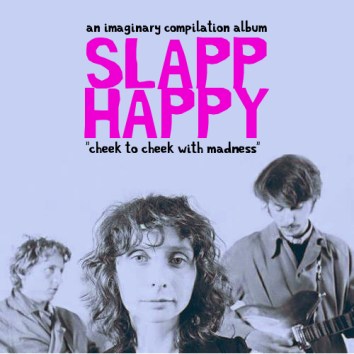
How to describe Slapp Happy? Literate yet playful might be a start. Or you could go with Wikipedia’s description of the band as “a self-described ‘naive rock’ group which mixed simple pop structures with obfuscatory lyrics drawing equally from semiotic and symbolist traditions”, a description which seems a bit obfuscatory in itself. Asking the internet for bands who sound like them, you just find posts saying nobody does – or listing so many disparate acts that it stops being a useful comparison at all. All of which makes them sound rather more outré than they actually are, though they certainly did always go their own way, and that way was by no means a straight path.

The Slapp Happy story starts in Hamburg in the early 1970s, where English composer Anthony Moore was writing music for films, and releasing albums of a minimalist, modern-classical bent, along the lines of Terry Riley or Steve Reich – very a la mode, but not the sort of thing that set cash registers ringing. If the likes of Riley and Reich were cult artists, Moore was downright obscure, and Polydor Germany were losing patience with their wunderkind signing. Couldn’t he, they suggested, go away and write something that would, you know… sell?

Slapp Happy were Moore’s attempt to comply with that request. Recruiting his German girlfriend Dagmar Krause as vocalist and American schoolfriend Peter Blegvad on guitar, with Moore himself playing keyboards, the three avant-gardists determined to make a pop record. Were they successful in this? That question is answered by the title of their 1972 debut album: “Sort Of”. It was the start of a career that packed in plenty of twists, turns and sideways lurches before the group split just three years later, followed by four decades of on-off reunions.

Slapp Happy have a relatively small catalogue with some fairly jarring stylistic shifts from album to album, making it quite a challenge to pull together a reasonably cohesive compilation. This may explain why they’ve never done it themselves. At a basic level, you can split their career into four phases according to who their backing musicians were at each point: there are two albums (1972-3) on which they were backed by members of krautrock innovators Faust, one proto-chamber pop album (1974) with session musicians, two albums (1975) credited jointly to Slapp Happy and jazz-proggers Henry Cow, then intermittent reunions with essentially just the basic trio, which cover a long period (1982 to present) but have produced only one proper studio album, 1998’s Ça Va. For this ICA I’ve featured two tracks from each phase plus two wildcards, which as it turns out are both from the “reunited trio” phase, but sixteen years apart. If you want to explore further, at least this should give you a pretty good idea of which albums you’re likely to enjoy… and which ones you probably won’t!

Side One

Casablanca Moon (from “Slapp Happy” a.k.a. “Casablanca Moon”, 1974)

Slapp Happy recorded their debut album Sort Of (which we’ll get to later) in Hamburg with help from members of Polydor labelmates Faust, and returned to the studio thereafter to make a second LP with the same style and line-up. Which, as it turned out, didn’t please Polydor one bit. The first album had been slightly more successful than Moore’s solo LPs, but still not a huge seller, so when presented with more of the same (albeit with, in my opinion, considerably stronger songwriting), they rejected the second album and dropped the group.

It didn’t stop Slapp Happy for long; they quickly fell in with the then experimentally-focused Virgin label, relocated to London and set about re-recording the album at Virgin’s own studio The Manor with more polished arrangements played by session musicians. The result was a self-titled LP from which this was the lead track and only single: one of the group’s most accessible and catchy numbers, and with its espionage theme it also features one of Peter Blegvad’s more straightforward lyrics. For the parent album’s 2010 reissue (as a twofer with follow-up Desperate Straights, which is an excellent deal), the album has even been retitled after this song.

Europa (from “Desperate Straights” with Henry Cow, 1975)

For the follow-up, Slapp Happy invited Virgin labelmates Henry Cow to fill the role previously taken by Faust. The collaboration generated two albums, Desperate Straights and In Praise Of Learning – the first essentially a Slapp Happy album with Henry Cow participating, the second vice versa.

The Desperate Straights tracks were by far the hardest to fit onto the ICA, but it would be a shame not to have the album represented somehow. Desperate Straights has much more of a Berlin cabaret feel to it, and is a stepping stone toward Krause’s more idiosyncratic recordings with Henry Cow splinter group Art Bears. You get the impression that Moore was rather relishing the chance to go a bit more avant garde again, but this particular song has a pleasing daftness to it and some nice use of brass.

Child Then (from “Ça Va”, 1998)

Having returned to his native New York and lost touch with the UK art-pop scene, Peter Blegvad had never heard of XTC frontman Andy Partridge before Virgin suggested him as producer for Blegvad’s 1983 album The Naked Shakespeare, but their working collaboration proved so fruitful that it has continued on and off ever since. This Blegvad/Partridge composition found its way onto Slapp Happy’s 1998 reunion album Ça Va. Having made their previous LPs in their mid-20s, the group were now approaching 50 and like much of the album, this song finds them in reflective mood, but an arrangement with some unexpected Indian touches stops it from getting too maudlin.

Everybody’s Slimmin’ (Even Men And Women!) (single, 1982)

Nothing maudlin about this one! A one-off single on something called “Half Cat Records”, which never released anything else and which I therefore assume was their own label, this synthpop outing was just too much fun to leave out. Peter Blegvad’s lyrics always tended toward the humorous (“I am to my bones a flippant individual” he declared in a 1996 interview) but this one is outright jokey. You could imagine this becoming a novelty hit in the musical climate of 1982, which is an interesting idea. It didn’t, though.

The Unborn Byron (from “Ça Va”, 1998)

Following the release of “Everybody’s Slimmin’”, Slapp Happy belatedly made their live debut with a one-off show at the London Institute of Contemporary Arts, but after that, nothing was heard from the trio until 1991, when Blegvad and Moore were commisioned to write an opera, Camera (as in room, not imaging device) for German TV, and brought in Krause to play the lead role. It came out on CD a few years later and it’s pretty cool but I’m not including anything from it here as it’s not really a group release, nor very amenable to having songs taken out of context.

Nevertheless it led… eventually… to a proper reunion, and what is to date their last studio album, Ça Va. For this one they decided to do without backing musicians and used a lot of electronics instead. Another change is that although Blegvad had lost none of his delight in the sound of words, his lyrics were generally less flippant and for the most part you could actually tell what the songs were about. You certainly won’t have any difficulty deciphering this one, and since I’m a bit of a Byron fanboy anyway, this charming fantasy was an easy choice.

Side Two

A Worm is At Work (from “Desperate Straights”, 1975)

My second and last selection from the Henry Cow collaboration. I’ve skipped over the second Happy/Cow LP In Praise Of Learning as it’s clearly more a Henry Cow project with long proggy instrumentals and only one Blegvad/Moore song, “War” (later covered – after a fashion – by The Fall).

Although the Happy/Cow pairing was reasonably successful (certainly by the standards of the two groups involved, both having rather a “cult” following at best), it also sowed the seeds of the dissolution of both groups. Slapp Happy’s Blegvad and Moore found their humorous approach at odds with Henry Cow’s more politically-engaged outlook, and left the collaboration, only for Krause to stay behind. The depleted duo issued only one single, with Moore on vocals, before going their separate ways. Henry Cow themselves splintered soon afterward, with one camp becoming the Krause-led Art Bears, considerably less accessible but worth investigating if you like the Desperate Straights tracks. On the other hand, if you dislike the Desperate Straights tracks, I can promise you’ll absolutely hate Art Bears!

Charlie ‘n Charlie (from “Slapphappy or Slapphappy” a.k.a. “Acnalbasac Noom”, recorded 1973, released 1980)

This track begins a run of three songs on the ICA that I first heard as covers. In fact, Charlie ‘n Charlie was probably the first Slapp Happy song I ever heard, courtesy of an early 90s cover by Leicester art-pop supergroup Ruth’s Refrigerator. Their version isn’t much different to the original – even Slapp Happy’s version sounds like a janglepop song that could just as easily have come out in 1993 as 1973.

As to its origin… remember that album which Polydor rejected? Well, in 1980 Henry Cow’s Chris Cutler had it rescued from the vaults and issued on his own Recommended Records label, initially in a limited run as Slapphappy Or Slapphappy [sic] and then on general release as Acnalbasac Noom (under which title it remains on Recommended’s catalogue to this day). Personally, I tend to prefer the re-recorded album issued by Virgin, though I know a lot of people, including both Blegvad and Moore, favour the original recording. But hey, why not have both? In any case, this song – a vocal version of the instrumental title track from Sort Of – didn’t appear on the remake, so Acnalbasac Noom is the only place you’ll find a studio recording.

Blue Flower (from “Sort Of”, 1973)

A mere eight tracks in, we finally go all the way back to the start. Sort Of is very much an album of two halves: side one is mainly blues rock pastiches sung by Blegvad and Moore, with Krause only coming into full voice on side two’s stronger, folkier material. I would suggest it’s a “finding their feet” album. This Velvet Underground-influenced track is probably the album’s – and maybe the group’s – best known song, thanks to a couple of early nineties dreampop covers by Mazzy Star and Pale Saints.

The Drum (from “Slapp Happy”, 1974)

In the corner of the blogosphere I tend to visit, the 1991 cover of this song by Edinburgh duo The Impossibles seems to be considered a bit of a minor classic, due in part to a 12” mix by Andrew Weatherall. That cover is based on the 1989 version by US experimentalists Bongwater, but this is the original… well no, strictly speaking the version on Acnalbasac Noom is the original and this is a remake, but this was the first version released. Slapp Happy’s catalogue gets confusing like that. The Drum is basically a bit of a nonsense song, but it’s nonsense that sounds good.

Scarred For Life (from “Ça Va”, 1998)

Scarred For Life is actually the first track on Ça Va, but it seems more like a natural closing number, and thus, here it is. Perhaps the closest thing to a conventional pop song on the ICA (it only took them a quarter of a century!), but still with a clever lyrical conceit. We’re unlikely to ever hear anything new from Slapp Happy again (they still play the odd live show, but haven’t debuted any new material in over twenty years) but this isn’t a bad way to go out.
ALEX G

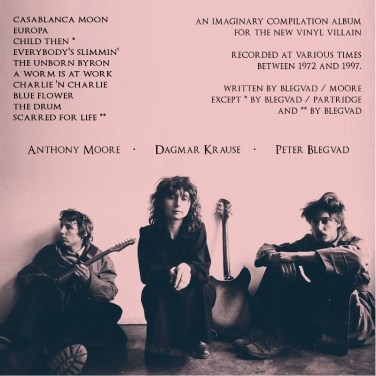
PS : Alex does such an incredible job with his ICAs, providing high quality copies of the tracks as well as the unique artwork for the front and back of the imaginary record cover.  It’s only fair that I make these available as one file for downloading in addition to the individual tracks above.  Click here for the package.

JC

LIMOGES

Limoges – an historic and picturesque city of around 140,000 residents, located in west/central France. Not a place that I was ever familiar with until the early 80s by which time I was in my 20s. In fact, if quizzed, I’d have struggled to identify it as being in France. Things might have been different in the city had been home to a decent football side, plying their trade against the likes of St Etienne, Bordeaux, Strasbourg , Souchaux and Nantes, places that I would never have been able to pick out on any map but which I could tell you were located in France thanks to the exploits of their teams in the one or other of the three competitions played out each season by European club sides.

It all changed when Paddy McAloon came into my life.

One of the biggest legacies of Postcard Records was that it demonstrated it was very possible, in the UK, to build up a scene and a record label around the music being played in a particular locality. The north-east of England, and in particular the area around Newcastle, was particularly blessed with talent in the early 80s and it was no surprise that two locally based club promoters – Keith Armstrong and Paul Ludford – decided to start up Kitchenware Records to which they then signed a number of popular, locally based acts. One of these was Prefab Sprout, a band who were fronted by a superb wordsmith and musician who drew immediate comparisons to Roddy Frame.

The band’s first single for the label was in 1983 and it was one which, the previous year, they had self-released on Candle Records, copies of which are ridiculously rare and therefore very valuable. It was the strangely named Lions In My Own Garden (Exit Someone), a gentle mid-paced ballad built around acoustic guitars, soft drumming and a harmonica. It feels like and it sounds like a love song, but one in which love seems to have been lost and yet the protagonist remains hopeful. The lyric is remorseful but far from desperate. Indeed it is a song which carries an air of optimism and hope. But what, exactly was it about?

Limoges was the answer. Or to be more precise, the fact that Paddy McAloon was missing his girlfriend as she had left Newcastle and moved to west-central France.

Lions
In
My
Own
Garden
Exit
Someone

Utter genius. And a helluva love song for Valentine’s Day.

mp3 : Prefab Sprout – Lions In My Own Garden (Exit Someone)

Kitchenware, in collaboration with Rough Trade, had two stabs at making this a hit single, trying again in 1984. It’s still beyond me that it was never picked up and given any sort of decent listing by BBC Radio 1 and was restricted to being played in the evenings. This should have been a huge hit.

It also came with a very listenable b-side.

mp3 : Prefab Sprout – Radio Love

It is a gem of a debut and there are times when, despite many subsequent superb releases, I often think Prefab Sprout never bettered it.


JC

IT REALLY WAS A CRACKING DEBUT SINGLE (27)

MOD LIFE IS RUBBISH???

Today’s offering is for my mate DJ Kenno, who I’m trying to persuade to offer up a few guest postings.

DJ Kenno is a sound lad. He’s a mod at heart, even as a 50-something getting out and about on the country roads of the East of Scotland on his faithful scooter, albeit not as often or as carefree as days of yonder. I know that others who know him, including Jacques the Kipper, do their best to try to educate him in the ways of modern music but they are somewhat fighting a losing battle.

A few weeks ago, he used the words ‘not bad’ to describe this little corner of t’internet, adding the jibe that it didn’t have enough features on mods or mod music. I suppose it’s all down to personal tastes and however you want to define mod. There’s certainly been plenty of postings about The Jam, but they’re a beat combo I would classify under new wave/post punk rather than the category that first came into being in the late 50s and reached its commercial peak in the mid-60s. There certainly hasn’t ever been anything about the band most closely associated with the mod movement, but that’s changing today.

The Who are a group I’ve never really given any time to and this is on the basis of 1977 being ground zero and any bands from the 60s could be dismissed out of hand. I now accept that was a very stupid outlook to take but, hey, I was just a daft teenager who thought he knew best….I was no different from any other 14-year-old at the time or any 14-year-old who had gone before me or who have come since. I have, as regular readers know, softened my stance somewhat and have some sort of appreciation for music from my very formative years.

But not The Who.

I think this can be down to two things – Roger Daltrey’s long hair – which made him look like a member of the hard rockin’ bands that I couldn’t then and still can’t abide – and that the band loved to boast about how loud their live performances were, akin to standing next to a jet plane as it gets airborne. Loudness = hard rock = shit. Oh and they also had recorded a ‘rock opera’, the sort of things that were openly boasted about by prog rockers like Rick Wakeman, sad men in capes who thought nothing of playing 25 minute keyboard solos for long-haired fans dressed in combat jackets and flared jeans.

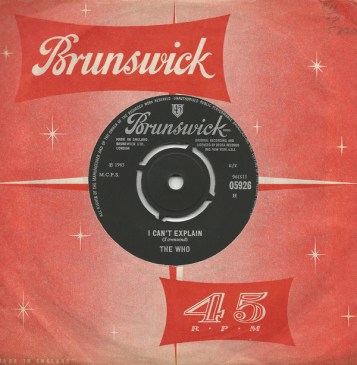
And while I still couldn’t today try to give you a ten-track ICA, I am more than happy to offer a chance to listen to their January 1965 debut single, which got to #8 in the UK charts:-

mp3 : The Who – I Can’t Explain

Ah….but all is not what it seems. This may have been the first 45 under the moniker of The Who, but six months earlier all involved had, as The High Numbers, recorded a track called Zoot Suit which had been written by their then manager Peter Meaden. It flopped and led to them deciding to go back to calling themselves The Who and concentrating on songs penned by guitarist Pete Townsend.

As I mentioned in a previous post, the riff for I Can’t Explain was used a couple of times by The Clash, on Clash City Rockers and Guns On The Roof, not something I was aware of in the late 70s.

JC

A REVIEW FROM 20 YEARS AGO (2)

As mentioned before, the idea of this lazy new series was inspired by the fact that I was struggling for inspiration for new ideas for 2019. Twenty years ago, we were on the cusp of a new millennium. It’s a period which already feels like a lifetime ago but, when you turn to the music, seems to have been just the day before yesterday. This new series celebrates those circumstances by delving into the archives to re-post a review from the period, to be followed by some thoughts of my own a full two decades on.

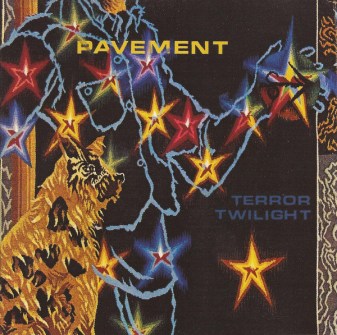
#2 : TERROR TWILIGHT by PAVEMENT (NME, 3 June 1999 – John Robinson)

They have the truth for you every time, Pavement. Have the same slouch, the same superbly articulate shrug, sure, but it’s the truth, the open-palmed, idly-tossed jewel in the esoteric fog that gets you. When they played in London last month, the group chiefly performed songs from this LP, and this is why. The songs may change. The essential thinking behind them doesn’t.

Stephen Malkmus’ truth walks, hands in pockets, through ‘Terror Twilight’ as it has through the greatest Pavement records, and pulls up to ‘Crooked Rain, Crooked Rain’ and ‘Wowee Zowee!’ standing tall. He drawls it like he means it, throughout. “Architecture students are like virgins with an itch they cannot scratch”, he muses on ‘The Hexx’. “Never build a building till you’re 50/What kind of life is that?” Well, y’know. Exactly.

It’s this kind of thing that keeps Pavement completely essential. No radical overhauls have been made: their titles oblique, their instrumentation out there, their singer so lackadaisical about his lyric composition (most of the vocals on the record weren’t put on until the mixing stage). The beauty on ‘Terror Twilight’ is more striking because it sounds like it’s been stumbled on while walking out to buy coffee, trainers or tofu.

All of which might seem a bit unlikely. Pre-publicity for the album in America had hinted that this was the band’s third crack at recording their fifth studio album, that if it didn’t work, they’d have considered packing it in, which didn’t sound like a promising prologue to what has turned out to be a wily but consistent album. Instead this is Another Very Good Pavement Album, where the only real surprise – and though fantastic, filled with giddying disorientation it is not – is that its producer is Nigel Godrich, whose technique chiefly consists of weaving a coherent production narrative out of seemingly accidental noise. Pavement were doing that, y’know, anyway.

But hey. Or, as Malkmus shrugs on ‘Major Leagues’, “Relationships, hey, hey, hey…”. The important tone he cuts on ‘Terror Twilight’ is an early-30s equanimity with life’s vicissitudes, fallen off it a few times, but still riding a skateboard, amused and never frightened. He’s been “tired of the best years of my life”. Knows that, “Time is a one-way track/I’m never going back”. He could just be freestyling, and Pavement songs might not be saddled with the most orthodox of songwriting techniques, but off the Malkmus cuff is copious wisdom thrown.

The group crackles with the same kind of insight and intelligence. Though there are songs on here (‘Major Leagues’, ‘Ann Don’t Cry’) which rely on a slightly formulaic countrified mode Pavement have made their own, the odd places the group go musically (to The Groundhogs’ ‘Split’ LP on ‘Platform Blues’, Pink Floyd on ‘The Hexx’, The Jackson 5 on latest single ‘…And Carrot Rope’) and their slack, unhurried handling of the whole procedure make it sound completely ingenuous. They’ve got a quality you can’t buy, and that’s personality.

Irish folk tales scare the shit out of you. You’ve not looked hard at a foetus in a jar. Don’t drink from the tainted flute. This is Pavement’s truth: it’s probably yours too.

JC writes……

First up, it’s quite frightening to realise it’s now been 20 years since Pavement split up, with their last ever gig being in London in November 1999, albeit there was a touring reunion 10 years later. It’s been fairly well-documented that the recording of Terror Twilight and the subsequent world tour to promote it was very much the catalyst for the break-up.

It’s an album that I found very underwhelming at the time of release. It didn’t sound or feel like any other Pavement record which I put down to the songs being universally those of Stephen Malkmus with Spiral Stairs (aka Scott Kannberg) being left out on the fringes of things, so it was perhaps more akin to a solo project than a genuine band effort. I was expecting and hoping for more stuff that sounded like Stereo or Shady Lane and that the album would enable Pavement to somehow re-ignite indie guitar-pop after a prolonged spell in the doldrums after Britpop had imploded in such spectacular fashion. Instead, I found myself thinking it was akin in places to easy-paced country rock, (Major Leagues is a Tom Petty song in waiting), and, even worse, there were numerous tracks in which it was hard to discern any differences, wholly lacking hooks and riffs, which sounded like an art school project gone wrong.

In short, my views and thoughts couldn’t be further away from Mr Robinson at the NME.

A year or so later, some of it actually made sense when the next Radiohead album, Kid A, was released. It and Terror Twilight shared a producer in Nigel Godrich and it does now seem that much of the experimentation in sounds he deployed with Pavement would be utilised on his next project with Thom Yorke & co…..and it’s worth remembering that Kid A caused a lot of head-scratching at the time of its release.

A few weeks back, I listened again in full to Terror Twilight for the first time in a very long while….well at least I tried to. If anything, it is even more disappointing to listen to than when it first came out, failing to hold my attention span much and the FF button was utilised a fair bit, often in mid-song and then later to skip certain tracks altogether. There is some merit in album opener Spit on a Stranger while the closer, Carrot Rope, is one that I’d probably find room for if I was to compose an ICA of my own (Tim Badger pulled together a superb ICA in September 2015 – click here for a reminder. Interesting that he didn’t include anything from the farewell album).

mp3 : Pavement – Carrot Rope

As ever, feel free to argue otherwise.

Oh and if anyone feels like contributing a guest posting for this 20 years look back series, then feel free to drop me a line. All contributions are welcome and I never turn anything down (unless you happen to be suggesting something that’s already in the can!).

JC

MONDAY MORNING…COMING DOWN (3)

Week 3, and hopefully by now you’ll know the script. If not, go back 14 days for an explanation and 7 days to see who else has been in the series.

Going with a cover today:-

mp3 : Everything But The Girl – English Rose

From All Mod Cons, but I think Tracey Thorn and Ben Watt‘s version, which was recorded for NME compilation tape Racket Packet in 1983, beats it hands down. Paul Weller may well have thought so too, given his approach to EBTG to record The Paris Match when he got The Style Council underway.

JC

THE SINGULAR ADVENTURES OF PAUL HAIG (Part 15)

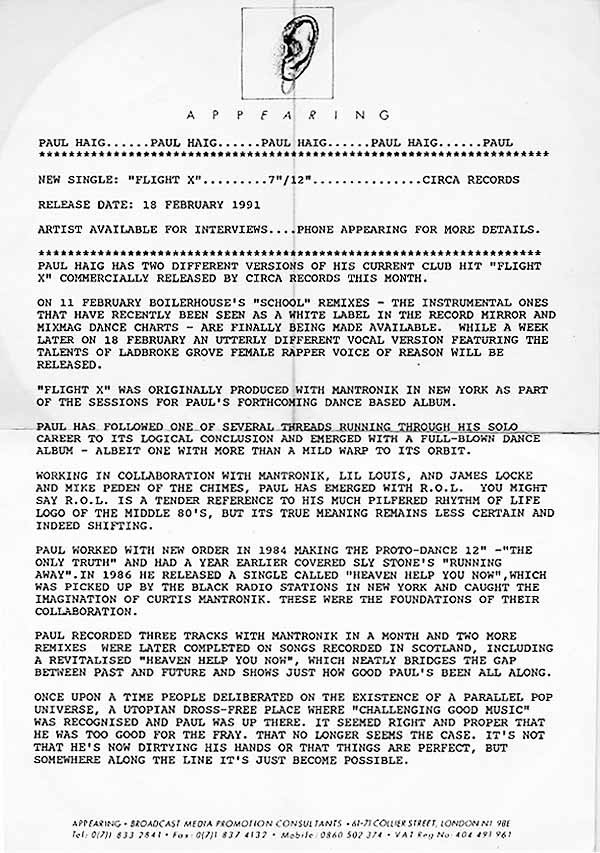
So much promise within the press notes to accompany the release of the single….but when it failed to shift copies in any significant numbers, Circa took the decision to cut Paul Haig adrift, and in doing so chose not to release the album, despite Paul and many others thinking it was as good as anything in his career

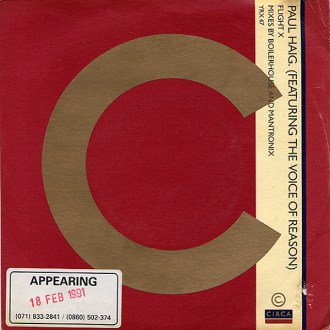
All I’ve got to offer today is the 18 Feb release with the vocals provided by Voice of Reason:-

mp3 : Paul Haig – Flight X (New School Mix)
mp3 : Paul Haig – Flight X (Music School Instrumental)
mp3 : Paul Haig – Flight X (Mantronik Mix)

The decison to put the album on the shelf really was the lowest point in a career which had promised much but inexplicably never ignited with the general public.

Some old friends did,however, come to his rescue……as next week’s edition will show.

JC

SATURDAY’S SCOTTISH SONG : #147 : JACK BUTLER

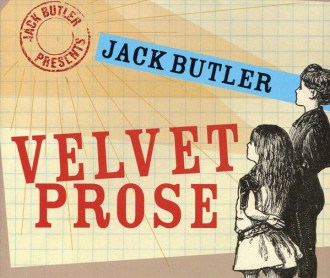
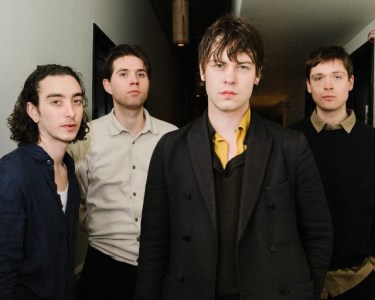
Hailing from Stirling (a town in Central Scotland about equidistant from Glasgow and Edinburgh), Jack Butler were a four-piece consisting of Liam Kelly (vocals and guitar), Chris Lowdon (guitar), Allan Conroy (bass) and Greg Moodie (drums).

They released a debut 3-track CD single in 2006 on Whimsical Records, and as I said when I featured the band on the blog back in November 2013, lead track Velvet Prose did have a wee bit of the standard indie-pop sound that was all over the charts at the time but I was more taken by the two b-sides which took me back a fair bit to some of the best bits of the 80s. Candles seems influenced by the early Zoo Records stuff of the Teardrop Explodes and the Bunnymen with the angular guitar work found on Josef K songs. But it’s He Got No Game! which is by far the standout – it sounds as if the early Associates had reformed with Alan Rankine to the fore and a reasonable impression of Billy Mackenzie too….

mp3 : Jack Butler – Velvet Prose
mp3 : Jack Butler – Candles
mp3 : Jack Butler – He Got No Game!

A debut album would eventually surface in 2009, for which a writer with one Scottish-based tabloid paper went nuts, but it wasn’t enough to propel the boys to fame and fortune.

JC

GREAT DANES

The boys at The Sound of Being OK, and in particular SWC, have been extolling the virtues of Iceage for quite a few years.

Some of you might well be asking who? Well, the fact of the matter is that SWC is a rather talented writer, so much so that he once held a gig with Melody Maker before growing up and joining the real world, getting married, having kids and embarking on a career in which every day is a true-life adventure.

Oh you mean Iceage? Sorry…………….

Iceage are a Danish punk rock band from Copenhagen. They were formed in 2008, when the members of the band averaged 17 years old. Elias Bender Rønnenfelt does vocals and guitar, Johan Surrballe Wieth plays guitar and provides backing vocals, Jakob Tvilling Pless plucks the bass and Dan Kjær Nielsen bangs the drums.

Debut album New Brigade was issued by Danish label Tambourhinoceros and by Dais Records in the United States in early 2011. They created a bit of a buzz, leading to them signing with Matador Records for whom they have released a further three albums, including Beyondless which made a number of ‘best of’ lists at the end of 2018.

I took the plunge and bought a CD copy of Beyondless with some of my Santa money. It wasn’t quite what I expected, being something of a curate’s egg with, once or twice, the bombast coming across a bit like Scandic Kasabian (which sounds like a condition for which you should go seek advice from your doctor).

On the other hand, it is quite special in other places, bringing to mind the ambition and variety of early Bad Seeds, but with increased levels of power and energy, thanks in part to a crisp production, but mainly as a result of the sonic vocal delivery from Rønnenfelt, whose influences feel like many – I could, at varying times, detect, Iggy Pop, Ian Curtis, Peter Murphy and Andrew Eldritch. But I have to quickly say that Beyondless is not a gloom-laden gothic record….how can it be when so many moments are lit up with horns, piano, strings and impish percussion?

The album opens with two jaunty and, dare I say it, danceable, tracks that I’m willing to now rate as among my favourite bits of music from 2018:-

mp3 : Iceage – Hurrah
mp3 : Iceage – Pain Killer

The latter is one of those on which the horns are used to great effect, as is the guest backing vocal from American starlet Sky Ferreira (and yes, I had to look her up to find out more…..if I had teenage kids, I could have just asked them).

Things don’t quite match the 1-2 pounding that comes straight from the bell, and indeed Under The Sun, the third track on the album, proves to be one of the weakest and least memorable moments, not even providing that annoying Kasabian-style hook to hang something upon (such as ill-defined and inexplicable prejudice), leading to a what I initially felt was a bit of a mid-album dip.

But….here’s the thing…..it’s an album with a number of songs that, on the first few listens, don’t seem to amount to all that much but ultimately prove to be pieces of music which provide an enormous amount of satisfaction.  I think my initial issue was that I kept waiting on something as ‘light’ and accessible as the opening couple of songs, but that never quite happened. Instead, there’s an ever-changing tempo, groove and mood throughout which had an initially unsettling effect, especially as the band was more or less new to me, but which proved to be a strength on the fourth, fifth and successive listens. It can be difficult nowadays, what with trying to write a daily blog and lead a busy life at work and play, to afford an album the time and space it sometimes needs to make the impact. I’m glad I did it with this one.

There is one other genuinely jaw dropping part of Beyondless anmd it’s when they go all cabaret on us:-

mp3 : Iceage – Thieves Like Us

Great fun.  And I will more than likely get round to getting the earlier albums.  In the meantime….

“Dear SWC

How about an ICA?

Yours most sincerely

JC”

AN IMAGINARY COMPILATION ALBUM : #205 : ELECTRONIC

WE DON’T NEED TO ARGUE, WE JUST NEED EACH OTHER

An Electronic ICA

An abridged potted history.

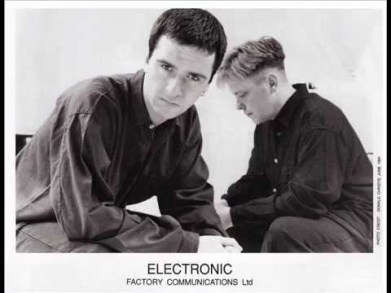
Johnny Marr and Bernard Sumner first worked together when the man from The Smiths/The The contributed guitar to Atom Rock/Triangle, a single on Factory Records by Quando Quango which the man from New Order was co-producing.

Five years on and the increasing tensions within New Order led to Bernard contemplating a solo record but instead he called on Johnny and they came up with the idea of Electronic, thinking of issuing instrumental house music for clubs via white labels only. Next thing you know, they’re talking to Neil Tennant and found that he was interested in helping out…but with his distinctive vocal delivery, there was no chance of anonymity.

First single Getting Away With It was released in 1989, going to #12 in the UK charts but more importantly in terms of the developement of the band, it was a hit in the USA and led to them being invited to support Depeche Mode on a stadium tour in 1990.

By the following year, the initial ideas had crystalized into a self-titled debut LP which really showcased their talents and abilities, with a largely upbeat package, from which two more chart singles – Get The Message and Feel Every Beat were lifted. It was an album filled with catchy melodies and choruses, with plenty for fans of the old bands to acknowledge and love.

They then went off and did things with their bands, getting back together in 1992 for Disappointed, a single which again utilised Neil Tennant.

The next burst of activity was in 1996/97 with the album Raise the Pressure (which spawned three hit singles) and then 1999 saw the release of Twisted Tenderness, an album which they made as a more conventional 4-piece band thanks to contributions from Jimi Goodwin of Doves and Ged Lynch of Black Grape on bass and drums respectively.

Three albums worth of top-class material has made for a few tough choices for this ICA….it’s packed with singles but that’s because the boys and their record labels (Factory for album #1 and Parlophone thereafter) knew what would sound huge blasting out of the radio.

SIDE A

1. Getting Away With It

The debut. One reviewer said “It’s nothing shocking, nothing that surprising, it’s just that every time you think you’re tired of it you can’t help flipping back the stylus to catch that chorus”. And that’s what makes it such a work of genius and a timeless piece of art.

2. Tighten Up

The third track on the debut album. One reviewer said “..the devastating marriage of Smiths guitars and New Order technology that nervously excited fans the globe over were anticipating from Electronic. Imagine a sublime splicing of ‘Bigmouth Strikes Again’ and ‘Dream Attack’, then multiply by 12” Indeed.

3. Forbidden City

The comeback 45 in 1996…quite different in sound to what had come before with Johnny very much recreating the guitar sounds of his first band at a time when his old mucker’s solo career was in a bit of disarray after the panning given to Southpaw Grammar. It felt like a two-fingered salute in many ways…and it sounded sublime.

4. Lucky Bag

The b-side to the debut single….and the only time that they came close to realising the initial idea of Italian house music. It’s unlike any other Electronic track, and while I won’t make any claims about it being among their ten best, it just seems to fit into the ICA at this stage quite perfectly. Little-known fact…Lucky Bag was used, for a couple of years, as the theme tune for a weekly showing of Scottish football highlights on the BBC.

5. Get The Message

From the debut album and the long-awaited follow-up single to Getting Away With It. It’s been said that Johnny was reluctant to layer multiple guitar parts as he was really unsure of recreating old stuff when he was so keen to move on, but persuaded otherwise by Bernard for which we should all be hugely grateful. Backing vocals are courtesy of Denise Johnson, probably best known for her work with Primal Scream

SIDE B

1. Disappointed (7″ mix)

The involvement of Neil Tennant in the early days led to the inevitable christening of Electronic as a super-group, which was used in a derogatory way by those who didn’t like them. This was the stand alone single from 1996 and in reaching #6, gave them their biggest UK hit. I’m thinking most casual listeners just thought it was a Pet Shop Boys effort.

2. Vivid (radio edit)

If, more than occasionally, the songs were reminiscent of the other bands they were all involved in, then there’s little doubt that the lead-off single from Twisted Tenderness is more than a nod to The The, with Jonny hitting the harmonica early doors. Again, not necessarily one of their best ten songs, but important to have it in an ICA to demonstrate what it was all about.

3. Idiot Country two

The original Idiot Country provided an adrenalin-filled rush to open the debut album….a couple of years later, it was given the remix treatment with some added dialogue and backing vocals as well as an extra 80-odd seconds. It was provided as the b-side to Disappointed and went some way to lessening the pain of paying £4 for a CD single!

4. Gangster

Track six on the debut album and the one which provides a reminder of Technique, the last truly indispensable album ever released by New Order, complete with a lyric in which Bernard makes a number of torturous rhymes.

5. Feel Every Beat (7″ mix)

A five-minute version of this closes the debut album and tempting as it was to use that here, I have to bow to the remixing skills of Stephen Hague who chops about a minute off the original and helps deliver something which captures perfectly what Jonny and Bernard wanted Electronic to sound like and what they wanted a band to be….’we don’t need to argue, we just need each other’

JC


SOME SONGS ARE GREAT SHORT STORIES (Chapter 19)

A GUEST POSTING by SWC

from The Sound of Being OK

Hamilton Leithauser has been in two of the greatest bands that have ever been. Firsty he was in The Recoys and then when they disintegrated into ashes he formed The Walkmen and changed rock music for ever.

Then in 2013 he announced that the Walkmen were going on an indefinite hiatus (this was November 2013). Leithauser was never one to rest upon his laurels and decided to record some solo material. Then a few years back he teamed up with Rostam Batmanglij from Vampire Weekend (another band seemingly on a hiatus) to make an album of lofi torch songs. This appears to be a marriage made in indie heaven. One of the one side you have Rostam, who is one of the most talented and innovative musicians around. On the other hand you have Hamilton Leithauser, one of the greatest lyricists of the modern age. He writes tremendous songs, in his early days they were bitter and angry tales of rejection (see ‘The Rat’), isolation (See ‘While I Shovel the Snow’) and love (see most of the ‘Lisbon’ album).

The album Hamilton made with Rostam is called ‘I Had a Dream That You Were Mine’ which is utterly wonderful. It has brilliant songs written in Rostam’s bedroom (the same one he has had since he was a teenager). The plan was simple to take Hamilton’s voice, that distinctive raw croon of his and his incredible lyrics and set them loose on a range new styles. It has songs that are sad, songs with characters, songs that are happy, songs about love, songs about life. The pick of the bunch if you ask me is ‘You Ain’t That Young Kid’. A song so steeped in storytelling that you may as well put a cowboy hat on it and call it ‘Dylanesque’. You get a harmonica, then a slide guitar, then a choir of voices, then a harpsichord and a steel drum. Its utterly marvellous, and it tells a story that is highly visual and full of sentimental filters.

‘You Ain’t That Young Kid’ tells a story about a man and a woman whose relationship has just ended. The man is with a band and he is struggling to perform a certain song that he wrote for his girl

On the first night in June
In a very crowded room
The band was going on
When you told me we were done
So I couldn’t play that song
Cause I wrote it about you
Yeah it always seems to come back to you

(You see, here within seconds of the song starting there are strands forming. We know its June, the year is unknown. They are in a crowded room and a band is coming on – his band – but she has just told him that they are over and now that song, probably their best song or most popular song is meaningless.)

But I don’t have to tell you
Cause you’ve heard it all by now
I’m just one single voice in a choir
You won’t hear me anymore
Just a bassist thumbing a tune
But that rumble reminds me of you

(There’s the rejection and loneliness I spoke of, but that line about the ‘bassist thumbing a tune’, man that’s evocative, and even then the ‘rumble’ reminds him of everything that has been lost).

All the flash, all the fire
All the foggy drinks perspired
We were tucked into a booth
In a far corner of the room
And the music is loud
And it’s just bringing me down
Cause I know that I lost you

(and then we are in the corner of the room, the music is loud, so they are in a booth – I mean I can see them, I can see the bar, I can see hear the music, I smell the smoke, and the taste the foggy drinks. The mood of our hero is getting worse, everything is getting him down. So he does the only thing he can – he leaves).

The parking lot was dark
And I walked out of the bar
Found some folks hanging around
And we’re on some highway now
And the windows are down
And I never felt so sad
So I just tried not to think about you

(so he is out into the parking lot – that’s a car park – and into his car – and now I’m thinking should he even be driving? His drinks have been foggy. But hang on, ‘we’re on some highway…’. Who is he with. Has he hooked up with the folks he found hanging around. What has become a song about a break up is now all about something totally different. This is about forgetting everything. At least we know now he isn’t driving.)

Oh the final spot of sunlight
Is dying on the dash
On some way too long road with some way too young folks
If the man that you knew
Honestly wasn’t me
Tell me honey: who could that be?

(That line about the final spot of sunlight is wonderful, you can see it. The horizon with the speck of sun, you can picture him, probably in a 4×4 or a truck, him in the back with people who he doesn’t feel comfortable there is probably some beer in cans of course. The road to reflection via rejection. )

There’s a letter I wrote
That I’ll never send
Where I admit my weakness
And I ask to see you again
Yeah I heard you were sorry
By someone you call a friend
In a letter I wrote
That I’ll never send

(The song sort of takes a different route here, even the singing is different, the beat is slower – we are going into memory territory here, dreamlike almost. He’s reflecting about the past and previous mistakes – but here’s the clever thing – he sounds like he is drunk when he’s singing it. That’s really clever because we’ve all sat down and written drunken letters to lost loves and the ripped them up again in the morning)

Cause there’s ash in my heart
Where I used to burn
The young voices have vanished
The old whispers return
But there’s no one to hurt me
And there’s no one to hurt
Cause there’s ash in my heart
Where I used to burn

(The little mandolin (is it a mandolin?) that tinkles away through this bit is marvellous, as Hamilton continues to croon away, about voices and whispers, I think this is just a metaphor for the flame of love dying or something but the significant thing here is the drum and the way that pounds in, like the dreamlike bit is finished )

Pictures of us dancing
From a lifetime, a lifetime ago
You in a green dress and I in a tweed vest
In a blurry gang of ghosts
Pictures of us dancing
From a thousand years ago
Late enough to kiss you
Still too early to go

(I see an attic and Hamilton hunched over an old suitcase and sunshine fills a bit of the room through a small window which is probably cracked. We get this scene of him holding a picture when the lady is wearing a green dress and he is wearing (and its wonderfully rhymed) a tweed vest, in much happier times).

mp3 : Hamilton Leithauser and Rostam Batmanglij – You Ain’t That Young Kid

Outstanding.

SWC

CLAP YOUR HANDS, CLAP YOUR HANDS

There are days when I just want to wake up to something upbeat and glorious…..something which makes me think of sunshine and summertime and not the bleak midwinter that I’m looking out onto when I pull back the curtain, wondering whether I’m going to get down the hill to the railway station with falling over and possibly breaking my ankle, all the while wondering how late and overcrowded the train will be.

I played this on such a day last week and felt a whole lot better:-

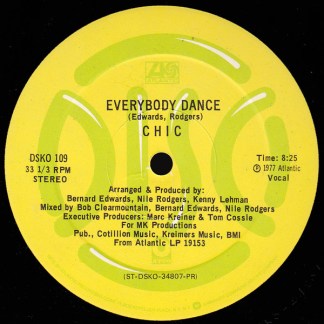
mp3 : Chic – Everybody Dance (12” mix)

Takes me back to Sunday nights in a draughty church hall. I might have been happier in the bedroom that I shared with my brothers listening to my new wave 45s, but you had to get yourself down and on the floor of St Joe’s if you wanted the girls to take notice of you.

I didn’t know until gathering some background info that the tune had supposedly been borrowed somewhat by a Welsh beat combo on a single released in 2010:-

mp3 : Manic Street Preachers – (It’s Not War) Just the End of Love

Hmmm…there is a bit at the start where it can’t be denied, but it’s not a blatant rip-off is it?

JC

MONDAY MORNING…COMING DOWN (2)

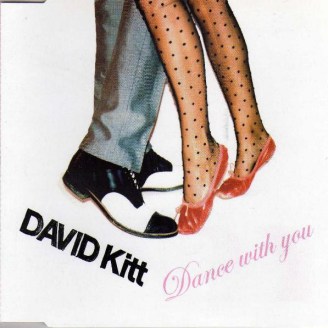
David Kitt was born in Dublin in 1975 and he graduated from the famous Trinity College in his home city after a course in music technology during which he recorded and mixed the songs for his debut release, Small Moments, on a digital eight-track in his bedroom.

His next two albums, The Big Romance (2001) and Square One (2003) were absolutely massive in Ireland, and it was while I was visiting Dublin just after the release of the latter that I first came upon him, with friends absolutely raving about him.

I kept an eye on him for the remainder of the decade, catching him live a few times, including shows where he was the support act for Tindersticks, a band he would later become a full member of between 2010 and 2013. I haven’t followed him much since then, but if he is still in the business, then I’m sure he’ll still have a broad fanbase in his homeland.

This is a lovely, fragile and wonderfully-scored ballad from Square One and a Top 10 single for him in 2003:-

mp3 : David Kitt – Dance With You

JC

THE SINGULAR ADVENTURES OF PAUL HAIG (Part 14)

The lack of sales for Chain didn’t perturb Circa Records too much as they were happy enough to provide funding for Paul Haig a return to the studio to make a new album, scheduled for release in 1991.

The new material was being worked up in New York and Chicago with help from Mantronik and Lil’ Louis, along with contributions from The Chimes, whose drummer James Locke had been pals with Paul for years. In an interview given to Melody Maker at the time, Paul said:-

“This is essentially a dance album, but it has a lot of different elements in there that you don’t normally hear on dance albums. There’s a lot of hooks and pop influences, but no rock influences – thank God! The whole idea was to work with different producers and let them get on with it, which was a departure since I’d produced myself for so long.”

“We recorded the stuff with Mantronik at his Sound Factory studio. He works very quickly, rattling stuff off in a couple of hours. He replaced all my beats with a combination of programming and breakbeats, mostly ’70s funk stuff. Louis took a completely different approach. He replaced the rhythm tracks on two of the songs and one we left as was. He works with much more basic equipment – he’s not as computerised as Mantronik. There was absolutely no sampling with Louis, he’s much more into the ‘real musician’ school of thinking.”

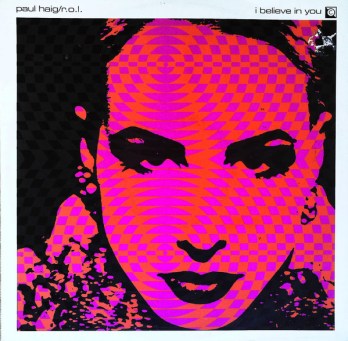
The first single in October 1990 gave an indication of what to expect:-

mp3 : Paul Haig – I Believe In You

Yup….incredibly similar to how the Pet Shop Boys would develop their sound in later years…..Paul Haig was, again, ahead of the curve and yet again failed to sell many copies.

Here’s the 12″ edition with b-sides:-

mp3 : Paul Haig – I Believe In You (Life in a Dolphinarium Mix)
mp3 : Paul Haig – Flight X (Long Flight Mix)
mp3 : Paul Haig – I Believe In You (Loop Mix)

JC

SATURDAY’S SCOTTISH SONG : #146 : ISOSCLES

Isoceles were given a big write-up in The Guardian newspaper back in April 2008:-

Hometown: Glasgow.

The lineup: Jack Valentine (vocals, guitar), William Aikman (keyboards, vocals), Bobby Duff (drums, vocals), Andrew Wilson (bass, vocals)

The background: A year is a long time in pop music. And so it is that art scruffs Isosceles, typical of The Glasgow School (see also: Orange Juice and Josef K), have homed in with laser precision on CBGB-era bands for inspiration. Not 1976 or 1978, but 1977. To be really specific, their jerky, nervy art attack (featuring the sort of yelping Robert Smith/Tom Verlaine-ish vocals currently popular among the youngsters) recalls the first Talking Heads album (ie the one before they discovered Eno and funk), the first Richard Hell & The Voidoids LP Blank Generation, and Television’s epochal debut Marquee Moon (only the short, sharp, shockingly concise three- and four-minute tracks such as See No Evil and Friction rather than, say, the 10-minute title track with its lengthy rhythmic extrapolation of the central riff-motif)

Isosceles, featuring former mountain bike champion/music technology student/Belle & Sebastian LP cover star Valentine and maths prodigy Duff, only formed last year. They played their first gig at a rain-soaked DIY music festival cobbled together at a friend’s farm in the wilds of Scotland, the keyboards resting on bales of hay as electric fences buzzed menacingly in the background. The four-piece stunned the drenched revellers with titles such as Kitch (sic) Bitch, Get Your Hands Off and their eponymous theme song with its handclaps and wry, humorous self-aggrandising (“Look at what we’ve done, aren’t we having fun? Cos we’re marching…”). Suddenly the rain stopped falling, the clouds parted and the cows in the nearby field mooed as one. This was followed by a slot supporting Franz Ferdinand on their mini-tour of the highlands and islands in autumn 2007 after Alex Kapranos caught them live in a Clydeside warehouse. It was on this jaunt that Isosceles involved the audience by handing out triangles, at which point they decided they’d done the right thing by not calling themselves Parallelogram.

Their debut burst of ramshackle guitar pop, Get Your Hands Off, came out last autumn. Possibly the world’s first indie single to accuse women – drunk girls, rich girls – of being sex pests, its unlikely mix of Beefheart thrills and Modern Lovers drone augurs well for their self-produced second single, Kitch Bitch, which does a Common People by taking potshots at ladies who slum it. Good luck, fellas.

The buzz: “It’s no wonder Isosceles have been tipped as The Next Big Thing.”

The truth: So long as their female-baiting doesn’t repel half their potential audience, indie success is assured.

Most likely to: Make sub-editors sic (sic) with their misspellings.

Least likely to: Be played back-to-back with Hall & Oates’ Rich Girl on xfm.

What to buy: Kitch Bitch/Watertight is released by Art Goes Pop on May 5.

File next to: Talking Heads, Television, Scars, Kaiser Chiefs

As it turned out, they never got beyond releasing that second 45, seemingly fading away completely by the end of 2008.  I’ve a live version of the debut single, courtesy of its inclusion on a compilation CD picked up back in the day, but I thought I’d do a wee bit of villainous digging and come up with both sides of the debut single and the promo whch was made for the follow-up:-

mp3 : Isoceles – Get Your Hands Off
mp3 : Isoceles – I Go

Don’t know how the hell the Guardian writer invoked Talking Heads, Television and Scars…..but they are indeed as annoying as Kaiser Chiefs.

JC

NOT HAD ONE OF THESE FOR A WHILE….

mp3 : Various – The Fourteen of February

aka Songs of Love from me to you

Track Listing

There’s A Girl In The Corner – Robert Smith
I/m Not Here – The Twilight Sad
Thieves Like Us – New Order
Party In The Dark – Mogwai
Alex Discord – Port Sulphur
Trees and Flowers – Strawberry Switchblade
F.U.U. – Dream Wife (feat. Fever Dream)
Lazy Day (version) – The Boo Radleys
Eject (over zealous mix) – Senser
The Rubettes – The Auteurs
Sparky’s Dream – Teenage Fanclub
Jack In Titanic – Bodega
Emotional Haircut – LCD Soundsystem
Fresher Than the Sweetness in Water – Gorky’s Zygotic Mynci

Oh and there’s also a hidden track at the very end to take it all way up to 59:59.

Sets things up for something of a crazy weekend….young brother is flying over from Florida for a four-day stay (and isn’t he in for a massive shock to his system with the near 30 degree Centigrade drop in temperature), as we have a family bash to celebrate mum’s 80th birthday.  I’ve also got the Rovers on Saturday where I’ll be playing the pre-match tunes and talking gibberish in between catching up with a mate who is coming up from England to watch it.

Happy Listening

JC

I LOVE A MAN IN A UNIFORM….AMERICAN STYLE

Gang Of Four had wowed the critics with the albums Entertainment in 1979 and Solid Gold in 1981 without ever really translating the column inches into sales and familiarity with the general public. Things weren’t helped by an hard-headed and uncompromising attitude towards their art, with one example being them eschewing the opportunity to appear on Top of The Pops after the show’s producer asked that the word ‘rubbers’ be replaced by ‘rubbish’; it’s worth recalling that someone like Paul Weller was more than OK to change the occasional lyric to appear on the show, and so maybe Go4 were just a bit too precious about things, given that getting their message(s) across to a wider audience would have paid dividends in different ways.

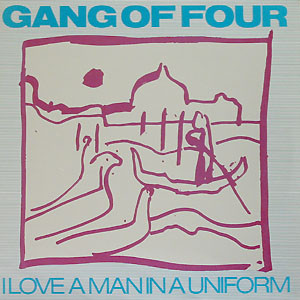
The third album, Songs of The Free, was released in 1982. It was preceded by an absolute belter of a single, one which could be said to be the perfect hybrid of punk and disco:-

mp3 : Gang of Four – I Love A Man In A Uniform

The use of the female backing vocals to shriek out the song’s title over the catchiest of bass lines and riffs on the back of the innuendo-laden line ‘The girls, they love to see you shoot’, made it ideal for shaking your stuff on the dance floor…..and easy enough to pay no attention to the rest of the lyrics that referred to the inadequacies of men who signed up for the army life and the fact they ran the risk of an early death.

The song stood every chance of hitting the charts and this time there wouldn’t be a word which would be of concern to the TOTP censors…..and then Argentina and the UK went to war over the Falkland Islands and a large number of songs, old and new alike, were banned from radio play for fear of causing offence. I Love A Man In A Uniform had no chance of surviving that cull……

Just the other week, as part of a wider on-line purchase of some second-hand vinyl from a shop in Berlin, I picked up a 12” copy of this single, one that had originally been issued in the USA by Warner Brothers, and which featured an extended remix and dub version of the song, along with a far from throwaway track which I’m not sure ever saw the light of day in any other format:-

mp3 : Gang of Four – I Love A Man In A Uniform (remix)
mp3 : Gang of Four – Producer
mp3 : Gang of Four – I Love A Man In A Uniform (dub version)

One listen and you’ll recognise just how many 21st Century bands, on both sides of the Atlantic, have been influenced by Gang of Four.

JC

REASONS WHY I SHOULD PAY MORE ATTENTION (4)

I’ve read a lot about IDLES over the past couple of years. It’s all been very positive stuff, whether in the mainstream media or in blogworld. And yet, until last Christmas, I hadn’t bothered lending them my ears to see what all the fuss was about.

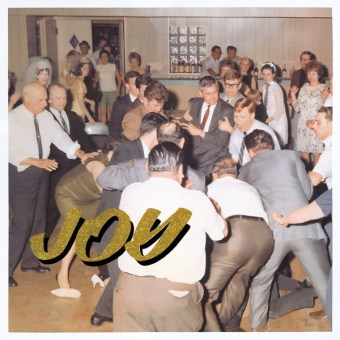
Santa brought me a CD copy of Joy as an Act of Resistance, the band’s second album which was released in August 2018, some eighteen months after their debut. I could no longer ignore an act that had been described as Britain’s most necessary band’ and whose music has been described as the taking the best elements of old-fashioned punk and hardcore and giving them a 21st century twist. Nor could I feign disinterest when a band is prepared to write and record song which address and attack subject matters such as homophobia, racism, Brexit and the right-wing tabloid press so beloved, sales wise, here in the UK.

And having become acquainted with IDLES, I found myself thinking of John Lydon, who once, very memorably screamed that ‘anger is an energy’. If so, then I’d wager that Joe Talbot, lead vocalist and main songwriter with IDLES, is capable of single-handedly powering up a small town.

It took three or four listens to fully appreciate this album. The opening track, Colossus, starts off feeling a bit grandiose and OTT, almost as if it was a parody of the sounds and styles the band had been influenced by. About three-quarters of the way through, it changes tempo and after a Ramones-style ‘1,2,3,4’ count-in, it dazzles into life and, if you happen to be listening via headphones, will do unexpected damage to your hearing.

This blistering tempo, for the most part, continues throughout the album. It is often difficult to make out all that is being sung/shouted above the noise, but there’s certainly enough catchy headline-style sing-along chants to grab any listener’s immediate attention. It’s the repeated listens that show up the more nuanced and telling lyrics, revealing Joy as an Act of Resistance to be a truly remarkable piece of work, with as much humour, pathos and tragedy on display as there is out-and-out anger.

All too often, those on the left, certainly when it comes to music and art, voice their views and opinions when opposing something through a prism of pacifism. Not this lot. And the world, somehow, feels a better place for it.

I’m an old bloke….fat, middle-aged, middle-class and well beyond those whom IDLES would most likely be aiming to influence. I’m also the type who, if lucky enough to snare a ticket for a live show, would stand meekly at the back or the side while the majority of the audience moshed away to the point of exhaustion. The music is tribal, brutal, immediate and compelling. I’m in.

mp3 : IDLES – Danny Nedelko
mp3 : IDLES – Television

JC

AN IMAGINARY COMPILATION ALBUM : #204 : THE DREAM SYNDICATE

A GUEST POSTING by HYBRID SOC PROF,

our Michigan Correspondent

In the Spring of 1981, I completed my time playing classical music in the morning on WSRN-FM, and took on the Saturday evening 60s show. I was barely 18 and loved the early 70s art rock of ELO, Genesis and the like… Searching around the shelves, I happened upon Lenny Kaye’s Nuggets collection. These were not the ‘60s I’d been raised on. I mentioned this “discovery” to the station’s music direction and he pointed me to the 10 LP Pebbles series… that was it. No more art rock, and punk finally made sense! Capping it off, the Fleshtones played our campus. The volume, charisma, joy, dancing, sweat and exhaustion. Nuggets and Pebbles were alive in 1982?! I discovered Ace, Stiff, Arf Arf, and Rough Trade Records and then the Warfrat Tales collection and a series of reviews by Robert Palmer in the NY Times introduced me to LA’s poorly named Paisley Underground.

The Dream Syndicate weren’t on Warfrat Tales but they were mentioned in Palmer’s review of a Green on Red show in NYC. By the summer of ’83, I saw the Feelies at Maxwell’s in Hoboken but missed the Dream Syndicate tour, despite having fallen in love with The Days of Wine and Roses (1982, Ruby/Slash) , I didn’t get to see them until the tour for Medicine Show (1984, A&M) . The show, “Burn” is selected from it in this Imaginary Album, was again at Maxwell’s – a tiny little venue behind a tightly packed little corner bar – on a hot July night. Chris Cutler was on guitar (Carl Precoda had left the band for grad school in English) and Mark Walton on bass (Kendra Smith had left for the Northern California woods) but they the blew the roof of the place… my ears rang for days afterward.

Playing ultimate frisbee seriously, and then starting grad school myself, I missed the next few tours and, while I liked Out of the Grey (1986, Chrysalis) , and Ghost Stories (1988, Enigma) – and they each have notable songs – they weren’t as consistent, as explosive, or as impactful, so I also didn’t make the effort to see them before they broke up in ‘89.

Going back to 1985’s LP, The Lost Weekend (A&M), put out as Danny and Dusty, I think it’s fairly clear that Steve Wynn, the primary songwriter for the Dream Syndicate, should never be allowed to sit with his songs or produce his own music. The Danny and Dusty record was put together with Dan Stuart of Green on Red and members or The Dream Syndicate, Green on Red and The Long Ryders all played on it. It’s great. Similarly, Wynn’s quick and dirty solo work, and his album recorded really fast with Thalia Zedek and the members of Come are really strong…the things he spends too much time on generally don’t pack much of a wallop.

I had hoped that they might reform for the 20th anniversary of the Hotel Congress venue in Tucson, Arizona,in 2005 but it wasn’t until 2012 that it happened and I was able to see them in 2013 on my birthday, in Chicago during the tour celebrating the 30th anniversary of the release of The Days of Wine and Roses. They’re still loud as heck.

In sticking with the idea of Imagined Albums, I’ve tried to generate a coherent album rather than a list of favorites, though there’s a great deal of overlap.

1. Kendra’s Dream, from 2017’s How Did I Find Myself Here?
2. When You Smile (Live), from 1994’s The Day Before Wine and Roses
3. The Lonely Bull (Live), Syndicated Dreams Vol 6 – Roskilde 7-5-86
4. The Medicine Show, from 2010’s The Medicine Show (remastered)
5. Black, from 1988’s Ghost Stories
6. That’s What You Always Say, from 1982’s The Days of Wine and Roses
7. Out of My Head, from 2017’s How Did I Find Myself Here?
8. The John Coltrane Stereo Blues, from 2010’s The Medicine Show (remastered)
9. When the Curtain Falls, from 1988’s Ghost Stories
10. Burn, from The Steve Wynn Archive, Live at Maxwell’s 1985-07-13

HSP

MONDAY MORNING…COMING DOWN (1)

I was too late to join the party with the great bloggers who are offering up long songs for Mondays and so I’m thinking I might be best served by starting off a fresh theme of my own. It might take off or it might fade away altogether after a short period, who knows?

I’ve decided that Monday mornings need to be kicked off in a gentle fashion from now on and so the songs here will be gentle on the ear, not all the far removed from what you might hear on easy listening radio stations. It might not, on paper, sound all that appealing, but I’m hopeful the quality of the tracks will keep you on board.

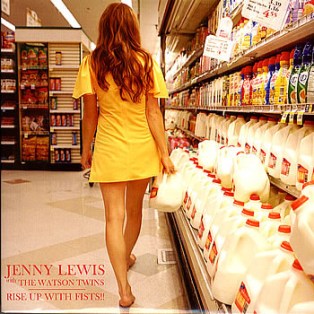
Today’s offering is from 2006 and was the debut single from Jenny Lewis and The Watson Twins. The former first came to musical prominence in the late 90s with LA-based indie band Rilo Kiley while the latter, whose forenames are Chandra and Leigh, emerged just after the turn of the century as singers whose harmonising talents seemed perfectly suited for any blend of country, folk or indie and thus perfect for Jenny’s first solo spin-off project.

Despite having an aggressive sounding title, this is a very sweet number, just perfect for car karaoke with your friends:-

mp3 : Jenny Lewis & The Watson Twins – Rise Up With Fists!!!

The b-side was one which didn’t make it onto the parent album Rabbit Fur Coat. It’s worthy of a listen, if a bit more folk/country than indie and has a more low-key contribution from the twins:-

mp3 : Jenny Lewis & The Watson Twins – Paradise

JC

THE SINGULAR ADVENTURES OF PAUL HAIG (Part 13)

In 1988, Paul Haig took a very bold and brave step by fully financing the recording of his next album himself without the safety net of a guaranteed release. He again worked with Alan Rankine and thankfully for all concerned, it was picked up by Circa Records, an offshoot of Virgin.

Hopes were high, particularly for the release of an oustanding and poptastic lead off single:-

mp3 : Paul Haig – Something Good

Released in 7″, 12″ and 12″ remix form and tailor-made for radio play and an appearance on Top of The Pops. But….once again, Paul was denied by the pop gods with him again being in the wrong place at the wrong time with Madchester all the rage and synth-pop well out of fashion. And yet, when you listen to Something Good (especially the remix version), and indeed some of other tracks on parent album Chain, it’s not a million miles away from some of the less clubby tracks on Technique by New Order (e.g. Run).

Here’s the two other versions of the single:-

mp3 : Paul Haig – Something Good (12 inch)
mp3 : Paul Haig – Something Good (remix)

Here’s some b-sides:-

mp3 : Paul Haig – Over You
mp3 : Paul Haig – Free To Go (Public)
mp3 : Paul Haig – The Last Kiss

It was a really bitter blow for all concerned.

JC