I’m willing to be corrected, as I know there’s a few of you out there who know far more about the band than I ever will, but here’s my stab at a bio for The Darling Buds, drawn and compiled from a few sources.
They formed in South Wales in 1986 – in Caerleon to be precise, a fact I’m well aware of as I was previously advised by a Welsh friend that Caerleon is most certainly distinct from Newport. Consisting of the 19-year-old Andrea Lewis, billed simply as “Andrea”, guitarist Geraint Farr, billed as “Harley”, and a bassist known simply as Simon, the drumming was originally performed by a machine, which may indeed have been manufactured by Eko, but I can’t say for certain.
The group’s debut single, “If I Said”, was self-released in February 1987 and was well-received. The group moved to Native Records, during which time the line-up was re-organised, with Andrea and Harley being joined by new bassist Chris McDonagh and drummer Richard Gray (billed as “Bloss”) and two singles were released.
Signing with Epic Records (part of the Sony Group) in 1988, they cracked the charts with Burst (#50) and Hit The Ground (#27) in advance of a Top 30 debut LP, Pop Said in January 1989. Two further singles from the album – Let’s Go Round There (#49) and You’ve Got To Choose (#45) were minor hits, much to the disappointment of the label who really had high hopes, probably much of them pinned on the looks of the young, blonde singer.
In advance of the follow-up album, drummer Bloss left the band and was replaced by Jimmy Hughes from Black. Released in September 1990, Crawdaddy, proved to be a flop, as did the singles lifted from it. Undaunted, and still with Epic, the band released a third album, Erotica, in September 1992, just a matter of weeks before Madonna‘s album of the same name.
One of the tracks from the album, Long Day in the Universe, which was featured on the soundtrack for the Mike Myers film, So I Married an Axe Murderer which helped give some additional exposure in the USA in particular. The band toured the States in support of the album but, like many others, grew increasingly frustrated by their lack of commercial success and disbanded before the year was out.
Fast-forward to July 2010. The band came together for a one-off tribute concert in their native Newport in memory of John Sicolo, the owner of the music venue TJ’s who died earlier in the year; only Andrea of the original members was part of the reunion. Four years later, reacting to calls from fans, a London show was arranged after which there were appearances at various festivals, including Indietracks in 2015, an occasion when my good mate and sidekick Aldo would likely have seen them. This would later lead to the recording of an EP, Evergreen, issued by Oddbox Records in April 2017, and the first new material by The Darling Buds in 25 years.
The band is still on the go, with an active Facebook page, which advises that, if restrictions are lifted, they are scheduled to play a show in Newport on 15 May 2021.
Here’s a handful of tracks, all from the earliest days, from a greatly underrated band:-
mp3: The Darling Buds – If I Said
mp3: The Darling Buds – Burst
mp3: The Darling Buds – Shame On You
And from a compilation album featuring the bands that appeared at Indietracks 2015:-
mp3: The Darling Buds – Sure Thing
This was originally released on Erotica back in 1995.
As far as I can work out, it was as far back as 1995 that Bernard Butler and Edwyn Collins started collaborating, with the initial fruits being the co-writing of some songs which would find their way onto Edwyn’s singles as extra tracks, together with Bernard taking on production duties. This would be just a year or so after he had left Suede and immediately after work had been completed on promoting the McAlmont & Butler early singles and debut album.
I recall seeing the two of them appearing on The White Room, a music programme on Channel 4 which was hosted by Mark Radcliffe in which they covered a Python Lee Jackson number, one which had been recorded in the late 60s but only became a hit in 1972 thanks to the fact that the unknown session singer they had used, Rod Stewart, was riding very high both as a solo star and the frontman of The Faces
Edwyn would put his version of In A Broken Dream on CD1 of If You Could Love Me, his follow-up single to A Girl Like You.
Fast-forward to 2001. And the release of this single on Setanta Records, the label which to which Edwyn had been signed since the early 90s:-
mp3: Bernard & Edwyn – Message For Jojo
It didn’t get anywhere near the charts….I’m not sure how many folk in addition to myself bought it (the sticker on the front of the CD case tells me I paid £2.99 from Tower Records). It’s a pleasant enough single without being ground-breaking…..the lead vocal is taken by Bernard when it undoubtedly would have been better handled by Edwyn. But believe me, it is a song that gets better with repeated listens…..and the chorus does become quite infectious after a while.
There were two other tracks on the CD single:-
mp3 : Bernard & Edwyn – Can’t Do That (The Hoover)
mp3 : Bernard & Edwyn – Clean
The former is a very bizarre but immensely likeable five and a bit minutes. There’s a hint of the sort of dance music played by Air about it. I reckon if it was played to you for the first time with no hint who was involved, you would have got long odds on guessing it was a collaboration between the former guitarist in Suede and the former frontman of Orange Juice.
The latter is a bit disappointing after what has gone before. It’s a bit of a nondescript ballad if truth be told…..but you may have a different viewpoint. Again, I feel it might have benefited from Edwyn taking lead vocal…….
Album: Porcupine – Echo & The Bunnymen Review: NME, 22 January 1983 Author: Barney Hoskyns
Perhaps it was inevitable, even decreed in some heaven up “there”. Maybe it’s just the third time unlucky. But if Porcupine isn’t good it isn’t because it lets you down. It fails, aggressively and bitterly it fails.
Porcupine is the distressing occasion of an important and exciting rock group becoming ensnared by its own strongest points, a dynamic force striving fruitlessly to escape the brilliant track that trails behind it.
Out of confusion or compulsion, the Bunnymen in Porcupine are turning on their own greatest “hits” and savaging them. In the name of what – pain? doubt? – Heaven Up Here said Yes We Have No Dark Things; now every former whisper of sickness returns in full volume. What one hears is a group which cannot flee its own echo. Porcupine is obviously deficient in vital unquantifiables but it’s just as obviously obsessive in its refusal of them. One feels it is the painful struggle to begin anew – and not from ashes either – that has determined the profound stasis, the agonising frustration of this record.
From the very beginning, the single ‘The Cutter’, Porcupine uses all the group’s key hooks, all the inimitable beats and bridges of ‘Crocodiles’ and ‘Heaven’, but ruthlessly strips them of the fervour that has so often bristled this reviewer’s quills. For starters, commercially ‘The Cutter’ isn’t so much as lined up for the TOTP race. Apart from an exaggeratedly Bowiesque bridge passage – a pastiche of ‘Heroes’ – the song (which may or may not be concerned with death’s scythe) is hopelessly lacking in the poppy intensity of ‘The Back Of Love’. And aside from the sitar introduction (which like the Bowie interlude crops up again in ‘Heads Will Roll’) the sound is striking only in its ordinariness.
Most people would have taken the chords of ‘The Back Of Love’ at half the speed the Bunnymen do. I thought it one of 1982’s best crude blowouts but it has little to do with Porcupine and sticks out almost obtrusively as an isolated moment of affirmation. From thereon-in, the album is non-stop anxiety. The remaining eight songs are really one long staggered obsequy to Heaven Up Here.
To begin with, Ian McCulloch’s poetry has grown oppressively more vague and difficult, although (again) you wonder whether simpler musical frameworks might not have inspired simpler, more direct lyrics. I’d like to think ‘My White Devil’ was a song of obsession and cruelty, but its opening lines rather dampen one’s enthusiasm: “John Webster was one of the best there was/He was the author of two major tragedies…” Very succinctly put, but what the intention behind this bald statement is I haven’t the faintest clue. One great moment rears up out of the “mist of error” when the song’s sense of panic rises to a claustrophobic climax of overlapping voices only to fall back into the lifeless refrain it escaped, but this is not enough to salvage the song in one’s memory. If I could make out more of what McCulloch was singing I’d probably unearth a few extra burial metaphors from ‘The Duchess Of Malfior’ (sic).
‘Clay’ continues in the same vein, with another torture-chamber opening and a discordant clash between Mac’s diffident vocal and Sargeant’s guitar twisting below like a knife in the stomach. But as we hit lines like “When I fell apart, I wasn’t made of sand/When you came apart, clay crumbled in my hand”, or “oh isn’t it nice, when your heart is made out of ice?”, the Jacobean psychedelia gets a little heavy-handed.
It’s as though the group had denied itself the luxury of simplicity, of what they perhaps take to be some too transparent “power” of rock. The firmly grounded structures of ‘Show Of Strength’ and ‘With A Hip’ are subverted, undermined by melodies that, like Webster’s “ship in a black storm”, know not whither they go. This Echo is less upfront, shorn of its poise and confidence. Ian Broudie’s production introduces more background activity – more keyboard, more percussive embellishment; in place of synthesisers, warped, sliding strings recall The White Album or Their Satanic Majesties Request; grating, ghostly effects hearken back to Walter Carlos’s ‘Clockwork Orange’; guitars backfire as though in a fit. Yet while all these random contingencies are part of the same drive to transcend, they succeed only in calling attention to that drive’s failure: the songs themselves remain fundamentally dead.
Only on ‘Porcupine’ itself do the various strains of despair coalesce. A kind of ‘All My Colours’ on a bad trip, its final exhausted throes are as draining (and as moving) as the bleakest moments of ‘Hex Enduction Hour’ but devoid of The Fall’s humour: just a voice crying against nothing, a beat banging on into the void. As the sound fades into darkness, a slight voice claims to have “seen the light”.
“Missing the point of our mission” , sings McCulloch dolefully, “will we become misshapen?” – the somewhat forced alliteration aside, that is probably the most candidly revealing line on the record. But if the song ‘Porcupine’ is the most shockingly dispirited thing Echo And The Bunnymen have ever done, Side Two horrifies the more for its uniform lack of inspiration, for the fact that every number cops direct from earlier songs without preserving anything of their energy or invention. Traits such as Mac’s trick of singing a line in one octave and then repeating it in a higher one have become stale and predictable trademarks.
Webster’s worms may wriggle in the intestines of these songs but to the ear it is music which sounds destitute of first-hand feeling. ‘Heads Will Roll’ commences like a Mamas And Papas drug song before plunging like ‘The Cutter’ into an enervated echo of Bowie. “If we ever met in a private place” , sings Mac, referring perhaps to Andrew Marvell’s “fine and private place” (i.e. the grave), “I would stare you into the ground/That’s how I articulate…” So now you know. Another very probable lit. ref. lies in ‘Ripeness’ (Porcupine’s bloodletting of ‘A Promise’), this time to Keats and King Lear, as in the bursting of Joy’s grape, men enduring their going hence as their coming hither, etc. “How will we recall the ripeness when it’s over?” Is McCulloch’s plaintive phrasing of the theme, but since this song has already burst its skin one might almost read it as a lament for the loss of the group’s own ripeness.
‘Higher Hell’, ‘Gods Will Be Gods’, and ‘In Bluer Skies’ drift yet further into a subliminal state of suspension whose every measure has already been worn to the bone (“bones will be bones” , goes ‘Gods’). “Just like my lower heaven, you know so well my higher hell” . Here it’s all but confessed that what was once their heaven has turned into a hellish mire of their own making, the damnation of a style from which they cannot break free. They can only struggle from side to side, wearing away what was once a perfectly fit abode for their sound.
Porcupine takes the Bunnymen as far as beyond the Doors-meet-Television happy death pop of ‘Crocodiles’ as is either conceivable or desirable. It makes ‘All That Jazz’ and ‘Villiers Terrace’ look like nursery rhymes. I wonder if they’ll ever again write such a formidable youth song as ‘Pride’: that marvellous probing of the rock quartet’s limits, that rich, vigorous economy, all that may have gone for good.
Did they perhaps always mistake their hell for a heaven, or is this album, originally titled “Higher Hell”, the conscious obverse of Heaven Up Here? Are their deaths too high or did they aim too low?
Porcupine groans behind bars, an animal trapped by its own defences. Where the Banshees, always in danger of the same stagnation, can still amaze with a ‘Cocoon’ or a ‘Slowdive’, Echo And The Bunnymen are stuck in their grooves, polarised between ‘Pornography’ and ‘Movement’. They must haul themselves out. Instead of panicking at the approach of doubt they must celebrate it. To Mac must I say, as was said to the Duchess herself, “End your groan and come away.”
JC adds…….
It’s fair enough to argue that Porcupine is a lesser album than Crocodiles or Heaven Up Here, but this is a ridiculous hatchet job from the then 23-year-old Barney Hoskyns whose career as a music writer was beginning to take off. Would you be surprised to hear that he entered the profession on the back of a first-class honours degree in English from Oxford University? He certainly uses enough big words and the confidence in his views and opinions ooze from each barbed paragraph.
It’s another example of the music press turning on a former darling(s) for having the cheek to seek out mainstream success by penning hit singles and bringing in a new producer to add a bit of pop sprinkle to the sound. The band did have the last laugh, with Porcupine hitting #2 in the charts (still their best success in that regard), and spawning two top 20 hit singles, as well as laying the foundations for the release of Never Stop, a non-album single which also went Top 20. Oh, and the NME in its critics poll at the end of the year had it the album at #32….I’m assuming Mr Hoskyns had his dissent recorded in the minutes of the meeting.
My own reaction back in 1983 was that Porcupine was a bit of a strange beast. The Cutter and The Back of Love remain two of the most definitive songs from the whole decade by any singer or band, but other than Heads Will Roll (and perhaps Clay to a lesser extent) none of the other eight tracks on the album are really anything like them. That’s not to say that they felt truly disappointing or second-rate, but the difficulty is that the quality of the songs on the first two albums had been so high that, even with a two-year gap since Heaven Up Here, it was going to be very tough to keep such high standards.
I could go on, dissecting the review on a line-by-line basis, but I’ll leave it there, taking comfort in the knowledge that the ‘build ’em up, knock ’em down culture’ on show here has always been part of the cultural landscape in the UK and often is a knee-jerk reaction from snobs who hate commercial success.
I picked up a second-hand copy of Porcupine a few months ago – it was an album that a flatmate had bought on the day of its release and I never got round to buying my own copy, although it would become an early CD purchase in later years. These are from the vinyl:-
mp3: Echo & The Bunnymen – Clay
mp3: Echo & The Bunnymen – Gods Will Be Gods
mp3: Echo & The Bunnymen – Heads Will Roll
mp3: Echo & The Bunnymen – In Bluer Skies
The thing is, having got the vinyl and given it a spin, I found myself actually enjoying the album much more than I did back in 1983…..but then again, that was a year when The Smiths, Aztec Camera, Orange Juice, Altered Images, Elvis Costello & The Attractions, The Style Council, The Go-Betweens, New Order, The Cure Billy Bragg, PiL, The The, Cocteau Twins, The Fall and Paul Haig, to name but a few, released immense singles and/or albums, so it was a crowded market with very few records on repeated play…especially in a shared flat!
Everything But The Girl have featured here on quite a few occasions before, and there have been very welcome words, thoughts and opinions from a number of contributors, but I think this is the first time there has been a look specifically at Each and Every One, a significant single for a number of reasons.
The duo had previously released their debut 45, a cover of the Cole Porter classic Night and Day, on Cherry Red Records in the summer of 1982, following which the label released solo albums by both Tracey Thorn and Ben Watt.
While this was all happening, Geoff Travis of Rough Trade and Mike Alway of Cherry Red were busy talking to WEA Records in which they presented an idea of how an indie-label could be set-up, managed and most importantly of all, financed by a major label without the singers/bands being accused of selling-out. Here’s an extract from an interview given by Travis back in 1996:-
Q: How did you create the Blanco Y Negro label with Warner Brothers?
A: A friend of mine, Mike Alway, was the head of the Cherry Red label. He was fed up with his bosses- he thought they weren’t backing his judgment. I said “why don’t you start your own label?” I couldn’t really integrate him into Rough Trade. What I was thinking was we’d start an indepedent label but what he was thinking of was starting a label but doing it with a major (record label). I wanted to work with Mike so I said OK. We went to the head of Warner Brothers with the idea. We got Tracey Thorn and about thirteen other acts. That taught me about how the corporates work and what it meant to be on the inside. What it really meant was we could really sign the bands we wanted to. Some bands wanted to work with us but we didn’t have the resources for them before that.
Q: When making the deal with Warner Brothers, did you have any misgivings about working with a major label?
A: I didn’t really. People always said that we discovered hundreds of bands but we never kept them. We felt terrible about that because we knew what we were doing. One of the things that made me take this seriously was when Scritti Politti left us and signed to Virgin. Aztec Camera left us and signed to Warners. They said, in so many ways, that if they had known what we were going to do (with Blanco Y Negro), they would have stayed with us. It would have been nice to keep them but financial restraints made it impossible for them to stay. There has to be a balance- people have to make a living. That’s very important. I think that you can have your cake and eat it in the sense that you can do what you want to do without compromising.
I have the philosophy that it’s interesting to see what happens on the other side of the fence. The Jesus and Mary Chain had been on Creation and they didn’t enjoy that. They wanted to sign to a major. Have we been tainted and corrupted by our association with Warners? I don’t know. You’d have to ask the people we work with.
Everything But The Girl had the honour of being the first to issue anything on the new label, in April 1984, with the 7″ having the catalogue number NEG1.
The 12″, from which these have been ripped, has NEG1-T stamped on the inner label:-
mp3: Everything But The Girl – Each and Everyone
mp3: Everything But The Girl – Laugh You Out The House
mp3: Everything But The Girl – Never Could Have Been Worse
Apologies for the fact that the recordings are a bit hissy and sub-standard in places…blame it on the poor pressing and the age of the vinyl.
All three songs are well worth your time, but I’ve a really soft spot for the last of them as it is so reminiscent of The Smiths who, at this point in time, had not long released their debut album with the next 45 Heaven Knows I’m Miserable Now, about to take them to new heights.
Each and Everyone got as high as #28 in the UK singles charts, but to almost everyone’s disbelief did not provide the springboard for future hits with none of the next nine singles making the Top 40 – indeed only one made the Top 50 – and it wasn’t until the summer of 1988, and their cover of I Don’t Want To Talk About It, before they became more familiar faces to the record buying public.
It occurred to me, as I was typing up a few words for the PS to Jonny’s ICA on Clearlake, that the first few years after the millennium coincided with a revival of guitar-led ‘indie-pop’ style music in the UK. It was probably more closely aligned to the Britpop era than to any part of the 80s, although it was evident that many of the singers and musicians were happy to declare their influences from both decades when talking to the media, be that print or digital.
There’s a school of thought that the immense success and popularity of the likes of The Strokes, The Libertines and Bloc Party had record company execs scrambling around for the next big thing, leading to far too many ordinary bands being signed up, only to be dropped after one or two albums, with the CDs ending up primarily in charity shops or being thrown out in the rubbish. These groups and bands went on to attract, from some, the derogatory term ‘landfill indie.’ It seems that the phrase was coined by Andrew Harrison in an article of his that was published in The Word, a monthly music magazine, back in 2008.
There was a wee bit of an on-line debate last year in which some folk ridiculed all the bands from the era, on the grounds that none of what emerged was original nor has it proven to have had any longevity or sustainability. Others, taking less of a highfalutin view, were quick to point out that quite a few of the bands, and their songs, were more than decent.
So, the idea of this new series – and again I’m happy to have guest contributions come in for inclusion – is to pick out a song from the era and to pose the question, should it be cast into the landfill site, or does it have enough merit to warrant saving?’
Feel free to join in or ignore as you see fit.
First up is a band from Victoria in British Columbia, Canada.
Hot Hot Heat are one of those who are more akin to the 80s, and indeed earlier, less likely from their geography to be influenced by Britpop. They were a hard working, touring band back in the day, a situation that led to Sub Pop Records signing them in 2001.
Debut album Make Up the Breakdown came out the following year, scoring high among the critics on the increasingly-influential blogs and websites, helped in no short measure by the fact they were on a label still thought to be hip a full decade after Nirvana had helped bring it to wider attention. It was given a 4-star review by the music critic of the Guardian newspaper over here:-
While most Canadian bands look south of the 49th parallel for inspiration, the Victoria, British Columbia quartet have more anglophile tastes, from XTC and Elvis Costello to the Clash and the Cure.
Every song appears to conform to some post-punk code of practice: cities are always scary, girls are always confusing and there’s always room for a spot of reggae skanking.
Crucially, Hot Hot Heat have also learned the art of the three-minute pop song. Make Up the Breakdown zips by in a giddy blur of taut punk-funk grooves and insanely catchy choruses.
Highlights such as Bandages and Get In or Get Out sound like lost classics buried in 1982 and only recently disinterred.
Dorian Lynskey, 28 March 2003
The lead single from the album, is one, I would argue is worth retaining and not being added to the landfill.
mp3: Hot Hot Heat – Bandages
It entered the charts at #25 in the first week of April 2003. But then it was removed from radio in the UK, from the playlist at BBC Radio 1, in the light of the war in the Middle East. Within two weeks, it was out of the Top 100….understandable since there was nowhere to actually hear it unless you had bought it!
The success of the debut album, which also spawned one further Top 40 hit in the UK – No Not Now (#38, August 2003) led to the band being offered and signing a contract with Warner Brothers. It took until 2005 until the next album was released, by which time the original guitarist, Dante de Carlo, had left albeit he appeared on the album but choosing to vacate things in advance of the promotional tour.
Hot Hot Heat kind of disappeared off the radar in the UK after 2005, but there were another three albums between 2007 and 2016 (one on Warners, one on a Californian-indie and the last being self-financed), before they called it a day.
Up is an album unlike anything R.E.M. ever made before or would ever make again. It was certainly their most experimental with all kinds of things going on. You won’t find a more diverse mix of styles on any of their records like you get in the first six songs on Up. Some of those styles were never revisited (in the case of Hope, that’s such a shame) while others became the R.E.M. sound of the early noughties.
It’s certainly an odd one, and whereas the album’s first single gave us something we might have expected from R.E.M. a few years earlier, the next track was a one-off. Lotus appears as track two on Up, immediately following the ethereal, ambient electronica of Airportman, surely one of the most un-R.E.M. songs they ever made. But then, Lotus is also rather off-kilter. Built around a funky groove led by Mike Mills’ organ, Lotus is somewhat restrained in its arrangement while at the same time flaunting its glitzy, glammy sexiness for all to see. It screams: “I’m a hit single! Release me, release me!”
That is until you get to grips with Michael Stipe’s lyrics. The song’s protagonist is a troubled soul, struggling with depression, longing for a more peaceful state of mind. The second verse illustrates this best of all:
Storefront window, I reflect Just last week I was merely heck Tip the scale, I was hell It picked me up, then I fell Who’s this stranger? Crowbar spine Dot, dot, dot, and I feel fine Let it rain, rain, rain Bring my happy back again
The Lotus of the title may therefore be a reference to the lotus flower, believed to produce calming, psychoactive properties when ingested. In Homer’s Odyssey, Odysseus inadvertently lands on an island where the primary food is the fruit and flower of the lotus plant. It caused the inhabitants to sleep peacefully and forget everything. Stipe’s lotus eater may be trying to reach that state in order to relieve his torment. The lotus here, therefore, may be anti-depressant medication, or illegal narcotics like heroin or meth. I’m not hopeful for the poor wretch, either way.
There’s all sorts of things going on in Lotus that you don’t necessarily pick up on straightaway. Buck’s guitars are laced with swirling psychedelic effects, Stipe’s vocals are delivered rhythmically as opposed to melodically, and there are lots of little bleeps and buzzes on the backing tracks that perhaps fill the sound out more than you think they would. Grab your headphones and turn the volume up for this one. And of course, you’ll have noticed the reference to an old classic in those lyrics too…
mp3: R.E.M. – Lotus
Lotus opened more or less every show on the subsequent Up tour. It was released as a single on 7th December 1998 and reached a disappointing #26 in the UK charts. As much as it screamed and screamed, it clearly wasn’t as big or important as it thought it was. There were three formats; the cassette and standard CD included a throwaway instrumental like those they always insisted on including on such releases.
mp3: R.E.M. – Surfing The Ganges
The CD also gave us a remix of the title track. I’m not quite sure what anyone hoped to achieve here, but this remix doesn’t really offer a great deal more than the original does. Sure, it sounds quite different in places, but it’s ultimately the same song with some bits turned up, some bits turned down, a couple of extra effects thrown in here and there… Am I being unkind here, or could Lotus have yielded something so much better from a remix?
mp3: R.E.M. – Lotus [weird mix]
The collectible 3” CD contained the title track and a live, in the studio take, of another song from Up, Suspicion, the track which follows Lotus on the album. As you’ll find out in a couple of weeks, this is not my favourite R.E.M. moment.
mp3: R.E.M. – Suspicion [live in the studio]
From a purely personal point of view, I’ve always liked Lotus. In fact, the first time I heard it I grinned from ear to ear. While it’s not the novelty some previous singles have shown themselves to be, I can’t say it has aged terribly well – it’s very late-90s. It also wasn’t the best track from Up. In fact, the next single would prove to be one of the finest of R.E.M.’s entire career…
Pocket Knife are an electrifying synth-pop duo, based in Glasgow
When Louise Connor first moved to Glasgow from her native France, she got that bug that many folk first visiting the city get. She decided that she wanted to start a band. After sticking up posters around the city emblazoned with “Got Skills? That’s okay, we don’t either. Wanna start a band anyway?”. Only two people replied, one of whom was bassist Michael Nimmo and from there, Pocket Knife was born. For completeness, the other person to reply to the posters was Stuart Murdoch, of Belle & Sebastian fame, who in the end decided not to join the band, but did end up coming round to Louise’s for a cup of tea and a flapjack. That’s a story for another day.
With a whole host of super catchy pop tunes that ooze joy and rattle with a fizzing energy, their live shows (often featuring dancing sub-aquatic life) have become the thing of local legend in Glasgow. Citing influences as diverse as The Shangri-Las to Shonen Knife, the duo describe their music as “synth-pop to dance limply to”.
Their new Archipelago Volume 3 EP, is the follow-up to their debut single, ‘Fish Song’ which caused quite a stir on its release in late 2018, seeing the band going on to play a number of festivals in the summer of 2019.
The combination of Connor’s witty, deadpan vocals with Nimmo ‘s slinky fuzz bass makes listening to Pocket Knife like receiving a jugular shot of joviality, akin to a hug from a stranger. Swaying between dreamy and bouncy, irreverent and stern, lead track ‘No Benefits’, lets you into Connor’s world of disappointment with an ex-boyfriend and her hope that ”I’ll always make your new girlfriends uncomfortable”, whilst Custard Cream is an upbeat rumination on a libido unchecked. Manger Constructeur, on which Connor sings in her native language, roughly translates to ‘Eating Builder’, is a reflection on an eccentric cook from Marseille. This is an EP that slips tenderness and rage into an envelope of insouciance, nestling musically somewhere between dance-punk and french yéyé. Pocket Knife’s catchy synth-pop rhythms, tongue-in-cheek lyrics, demonstrate why they are a band that you need in your life right now.
mp3: Pocket Knife – No Benefits
JC adds…..
Pocket Knife are one of twelve acts who have contributed to Get Into The Grove, an album released late last year to mark the 10th Anniversary of Olive Grove Records, one of the finest labels to emerge out of Scotland in recent times.
The label is run by Lloyd Meredith, someone I’m proud to call a friend, and who I got to know in many years back when he was also a music blogger. He had the vision and courage to take things to a different level, and 2021 will hopefully see the label continue to thrive despite the challenges and difficulties it has faced from the COVID crisis, not least that there have been no live gigs for almost a full year.
I’m delighted to say that I’ve shelled out for copies of the album, on vinyl, to offer for free to three lucky TVV readers. All you have to do, no later than Sunday 28 February, is email
thevinylvillain@hotmail.co.uk
with the answer to the following question (the answer to which can be found at said bandcamp page):-
“What was the precise date for the release of Get Into The Grove?”
All correct entries will be put into a hat, with three names drawn out at the end of the month. The idea is to give each winner a vinyl copy of the record, but if you’d prefer a digital copy, please indicate this in your e-mail entry.
I don’t do this every year, but I’m giving a birthday shout out to S.C. ,pictured above a few seconds after he’s read a posting by SWC (only kiddin’…… he’s a huge fan!)
My young brother turns 55 today, which is fast approaching the era of the bus pass, although I’m not sure if there is such a thing called public transport in the neighbourhood of Oviedo, Florida where he has resided for a few years now.
I think he’ll approve of these tunes.
mp3: U2 – Gloria
mp3: The Bluebells – Young At Heart
mp3: Simple Minds – Waterfront
mp3: Spear of Destiny – Liberator
mp3: Lloyd Cole & The Commotions – Lost Weekend
Have a great day bro. Hopefully, I’ll see you at some point soon after all this COVID stuff blows over.
The opening notes of Sunlight Bathed The Golden Glow, a cult single by Felt do, it surely has to be admitted, carry more than a passing resemblance to Just Like Heaven, a huge hit single by The Cure:-
mp3: Felt – Sunlight Bathed The Golden Glow
The thing is, the Felt single pre-dates that from The Cure by three years…..did Mr Smith indulge in a little touch of plagiarism or is it mere coincidence?
Sunlight…was the fifth of the ten singles released by Felt between 1981 and 1988. The band also released ten albums in the time they were together and yes, the symmetry was deliberate. It dates from 1984, a tremendous year for sophisticated jingly-jangly indie pop songs, with The Smiths, Go-Betweens, Orange Juice, Aztec Camera, Lloyd Cole and The Commotions and Prefab Sprout (just to mention a few!!) all at the top of their game.
Lawrence is joined on vocals by Rose McDowall of Strawberry Switchblade, to the extent that she overpowers him in many places – it doesn’t quite work as well for me as the collaboration with Liz Fraser of Cocteau Twins on the band’s sixth single, Primitive Painters, which came out in 1985.
My preference is for the re-recorded version which appeared later on the album The Strange Idols Pattern and Other Short Stories, released towards the end of 1984. But then again, that’s probably because it is closer in sound to the other bands who were around that year.
mp3: Felt – Sunlight Bathed The Golden Glow (album version)
The words ‘Sunlight Bathed The Golden Glow’ had actually been used as part of the opening couplet to a 1983 single, one which I have featured previously on the blog, but this gives me the perfect excuse to share it again.
mp3: Felt – Penelope Tree
Oh, and if any of you perhaps wish to cast doubt on the fact that Robert Smith ripped off Lawrence, then have a listen to the instrumental track on the b-side of Sunlight…
Almost 20 years ago I was at The El Rey Theatre here in LA.
GTFP and I were there to see Ben Folds 5, who were about as popular as they were ever going to get. While waiting for the band to come on the house DJ played a song I didn’t recognize that really grabbed my attention. The booth is in the middle of the floor so I rolled up and asked what it was. “‘Almost the Same’ by Clearlake.” Who? “Clearlake.” Where are they from? “I don’t know.” What album is it on? “I don’t know.” Do they have any other records? “I don’t know.”
Alrighty then. I soon found the album ‘Cedars’ from which the song came, and also bought the first album, ‘Lido.’ Both were released on Domino Records. I learned the band was from Brighton. A couple of years later Clearlake’s third album, ‘Amber’, was released, also on Domino. I have now disclosed everything I know about Clearlake.
So, three albums: Lido (2001), Cedars (2003), and Amber (2006). No official releases after those. No idea what became of the band. Wiki says they recorded a fourth LP that was never released. Apparently, they put out a couple of online-only singles, but I never heard them. The band website is offline. They do not have a social media presence. Not one of my friends has ever heard of them. I included a Clearlake song on an ICA a few months back (Sunday Evening, from Lido); it might have been the only time the band featured on TVV.
I wish I knew more about Clearlake because I really love the songs. They’re clever, in an English way, and they’re well-constructed, recorded and produced. The lyrics can be really funny. The playing is tight and tasteful, whether it’s a slow tune or a rocking number. But, I got nothing. So, here’s an ICA. Since I have no context or memories attached to the band it’s just 10 of my favorite Clearlake songs in alphabetical order, starting with the one I heard at the El Rey.
Almost The Same
I Want To Live In A Dream
It’s Getting Light Outside
Jumble Sailing
Just Off The Coast
Keep Smiling
No Kind Of Life
Something To Look Forward To
Wonder If The Snow Will Settle
You Can’t Have Me
(1, 5, 6, 9 from Cedars; 2, 4, 8 from Lido; 3, 7, 10 from Amber.)
Anyone heard them? Anyone seen them? If somebody in the TVV crowd knows anything about Clearlake please say so. I feel like I should get their photo printed on milk cartons…
JONNY
JC adds…..Jonny is correct in saying that Clearlake haven’t featured, in their own right, on the blog before. But, from my perspective, that’s because I operate on the basis that if you can’t say anything good or positive about a singer or a band, then you should say nothing at all (which is why I take great delight when guest contributors fill in gaps through ICAs and/or other thoughts, views and opinions.).
I have copies of Lido and Cedars on CD. I picked them up as one of the record shops was doing a special deal with releases on Domino Records and Clearlake was a band who had been talked up a fair bit in the monthly music magazines, along with the occasional broadsheet newspaper article. I maybe listened to the CDs two or three times before deciding they weren’t my cup of tea (which these days, if anyone is interested, is made with these, no milk and no sugar).
Domino Records website describes Clearlake’s output as ‘poignant and atmospheric’. Being signed to an indie rather than a major label meant that Clearlake were given a bit more time to eke out their sound and weren’t under pressure to have hit singles, but it always felt to me that Domino hoped they would prove to make the sort of breakthrough that Doves and Elbow both managed, with the critics staying on board while the CDs flew off the shelves. I don’t think the songs were strong enough, nor distinct enough, to allow that to happen.
But, as mentioned earlier, I love that Jonny has pulled this together – I’m sure there’s a few folk out there who have some fond memories of Clearlake.
I’ve previously been effusive about Say Sue Me, a band from Busan, South Korea, and I stitched together this ICA back in October 2019. As I said at the time, I shied away from the ICA including any of the four newest songs the band had then just issued on two 7” singles and I encouraged readers to go and make a purchase from the appropriate bandcamp page.
I’m hopeful that some of you did just that, and perhaps, after this latest posting, more will do so going forward as the band, like so many others, have endured a tough 2020 with COVID preventing the realisation of plans for more tours in Europe and the USA, including a further appearance at the prestigious and important SXSW festival in Austin, Texas.
Say Sue Me have been announced, along with another of TVV’s Asian-based favourites, Otoboke Beaver, as participating in what will be SXSW Online 2021, which is going ahead from 16-20 March. It’s not quite the same as being there in person, but hopefully they will make a significant splash.
Here’s the two sides of the single from September 2019.
mp3: Say Sue Me – Your Book
mp3: Say Sue Me – Good People
It’s a continuation of the band’s gradual shift away from the surf rock of the earliest days to a more refined indie pop/rock sound. The a-side is a bit mid-paced and reminds me in many places of The Cardigans in the pomp of their mega-fame period. It’s a decent effort but I’m more enchanted by the b-side as it’s one which would inspire me to throw shapes on the indie-disco dance floor.
Album: Singles Going Steady – Buzzcocks Review: Record Collector, May 2019 Author: David Quantick
When this compilation of Buzzcocks’ singles – A-sides and B-sides from Orgasm Addict to Something’s Gone Wrong Again – was released in the US in 1981, most reviewers took the angle that here was a great singles act, best represented by its 45s, whose succinctness and excellence made Singles Going Steady the only really essential Buzzcocks album.
And while this is a perfectly valid viewpoint, based on the complete and utter lack of bad songs contained herein, it’s also a load of rubbish, as every Buzzcocks album – even the patchy Love Bites – is excellent.
That said, you can see where the reviewers were coming from. Ever since its release – both in its original form and the upgraded CD version which features the six songs brought out as singles towards the end of the band’s career – Singles Going Steady has been an ideal introduction to Buzzcocks’ work. You put it on and you marvel at the sheer hurtling rush of their work, from 1977’s Orgasm Addict with its teasing, snarky Howard Devoto lyric, to the brevity and excitement of Love You More (last line “until the razor cuts”), the droll romance and perfect catchiness of the one that should have been No 1, What Do I Get, the absolute pop song perfection of I Don’t Mind (even its opening drum burst suggests that producer Martin Rushent knew it deserved to be a hit)… every song is a step forward, a manifesto and a thrill ride.
No other band at the time was evolving as fast while at the same time retaining its identity: even the wide-eyed brilliance of Ever Fallen In Love was only a little more excellent than Diggle’s daffy Promises, or Everybody’s Happy Nowadays, or Harmony In My Head (and while the Martin Hannett-produced finale singles can be gawky and uncertain, there are moments of brilliance, from Steve’s Why She’s A Girl From A Chainstore to the Rushent return of the brass-powered What Do You Know?).
And that’s just the A-sides: there’s no better tribute to the band’s desire to experiment and change than the flipsides of these amazing singles. Whatever Happened To? and Oh Shit! are almost conventional punk. Noise Annoys is androgynous art-pop. Lipstick is the sexy cousin to its riff sister Shot By Both Sides. Why Can’t I Touch It? is The Hollies doing Krautrock. Something’s Gone Wrong Again is Waiting For My Man via Alan Bennett (“go to the pub/but the bugger’s shut”). And so on, and so on.
Singles Going Steady is a masterpiece, probably the best singles-only collection of all time. It may not be Buzzcocks’ greatest LP, but it would be anyone else’s best album.
JC adds…….
I’ve previously shone a light on the various singles with a 13-part weekly series between August-November 2016; my look included the songs on the Spiral Scratch EP which have always been absent from Singles Going Steady as it predated the contract with United Artists.
The above review was celebrating a fresh release on Domino Records. My vinyl copy from 1981 is long missing – loaned out and not returned in all likelihood – and these days I rely on a CD version from 1990 which mirrors the original release with its sixteen tracks consisting of just the first eight singles and their b-sides or a 2001 re-mastered version which has twelve singles and their b-sides.
I think it’s fair to say that the collection provides a ridiculous adrenalin rush from start to finish, although the inclusion of the singles from 1980, with their slight dip in tempo, in the middle of the expanded version does jar a wee bit when the brain is so attuned to the order of songs on the original release. It’s a minor quibble but it does now mean that I always put the album on random shuffle when listening to it these days on the i-pod as this offers up something fresh, and I have a bit of fun trying to guess what song will actually come up next. For what it’s worth, I rarely get two in a row correct!
The above review is a bit sloppy in places, which given that David Quantick is usually an excellent writer, is most likely down to some shabby editing. But……
“Singles Going Steady is a masterpiece, probably the best singles-only collection of all time. It may not be Buzzcocks’ greatest LP, but it would be anyone else’s best album.”
…..is bang on the money.
mp3: Buzzcocks – I Don’t Mind
mp3: Buzzcocks – You Say You Don’t Love Me
mp3: Buzzcocks – Something’s Gone Wrong Again
mp3: Buzzcocks – What Do You Know?
And so we reach what can be described as R.E.M.’s “difficult period”. Sessions began on the band’s 11th album in 1997, but during the early rehearsals, drummer Bill Berry quit. Bill had fallen seriously ill during the Monster tour and no longer wanted to travel. He retired and became a farmer, leaving Buck, Mills and Stipe to continue as a trio. But Berry wasn’t just R.E.M.’s drummer – his part in the band’s overall sound and creative process was just as important as that of the other members, and many feel his departure signalled the start of a downward spiral for the band.
Apparently though, the early Up sessions already incorporated the electronic elements that were embedded in the finished record’s sound. The band have stated that even if Bill had stayed, Up would have sounded much the same. But despite this shift in dynamic, the album’s lead single sounded familiar and warm.
mp3: R.E.M – Daysleeper (single edit)
Daysleeper revolves around Peter Buck’s acoustic guitar and Mike Mills’ harmonium (or synth with a harmonium setting), and is a song about someone who sleeps during the day. Whoever said Michael Stipe’s lyrics were esoteric? “I was in New York… walking down the steps of this building. I come to a door and there’s a sign on it that says ‘Daysleeper’, and I walked a lot more quietly down the steps, thinking about that poor person who’s trying to sleep, and me and my big old boots interrupting her sleep. So I wrote this song about a daysleeper that’s working an 11–7 shift and how furious the balance is between the life that you live and the work that you have to do in order to support the life that you live.”
My initial reaction was one of indifference – it was pretty much R.E.M. by numbers as far as I was concerned – but repeated listening paid dividends. Having recently revisited the song, I think it really is a bit of a gem melodically and one of Up’s more memorable moments. It even yielded a prequel; the band’s next album Reveal opened with The Lifting which features the same character.
Released on 12th October 1998, Daysleeper became R.E.M.’s sixth Top 10 hit, peaking at number 6 one week after its release. It came in three official formats, all of which contained the single edit of the title track (basically it was the album version with the few seconds of intro at the very beginning cut). The cassette and CD single included the instrumental track Emphysema, a light, bossanova rhythm with keyboards and badly-played accordion over the top. Another of those disposable b-sides you really don’t need.
mp3: R.E.M – Emphysema
The CD also contained a version of another of Up’s highlights, Why Not Smile. This version is much shorter, more sparsely arranged, and is utterly gorgeous. Buck’s acoustic arpeggios and Mills’ organ hold it together while Stipe sings to someone so utterly despondent, he feels his words just cannot get through. Regardless, he reassures this person that he is there for them. That snarly feedback bit that comes in at the second verse is apparently Stipe’s debut on guitar! This version of Why Not Smile originally featured a few months earlier on a sampler CD with the southern literary magazine Oxford American, hence the title.
mp3: R.E.M – Why Not Smile [Oxford American version]
The third format was, sadly, not vinyl (though as had been the trend with the previous album, jukebox editions were pressed) but a 3” collectible CD. As well as Daysleeper, it included a live, in the studio take, on another Up track Sad Professor, an altogether cleaner-sounding version than the feedback-drenched album track. I much prefer the album version personally, but it’s never been a big fave.
mp3: R.E.M – Sad Professor [live in the studio]
Up sounded nothing like any other R.E.M. album. Stylistically it was all over the place, but that’s not to say it doesn’t have some great, great moments on it. Its main fault is its length. There are too many songs on it in my opinion and a third of them are average at best. I have my own 10-track alternative version which I really like much better than the real thing. And yes, Daysleeper is included.
Glasgow indie-popsters The Plimptons have finally decided to call it a day after 13 years together. The band originally hail from deepest, darkest Lanarkshire; given their skewed social commentary and sardonic wit, you would believe was a post-industrial teenage wasteland that could give Bruce Springsteen’s provincial struggle a run for its money.
The band eventually relocated to what, in comparison, seemed like the bourgeois backdrop of Glasgow, often loitering around the West End. This cosmopolitan milieu let them rub shoulders with some of the great cultural minds of our time including John Cooper Clarke, almost as a reaction to the preppy Americana student lifestyle that was dominating much of the city’s landscape at the time. Their debut album The Songs of Ignorance and of Inexperience, featuring an iconic image of William Blake on its front cover, hinted at an irony and self-awareness which turned the prevalent working class agenda on its head. With its finger placed firmly on the pulse of popular culture it strayed from the elitist view and perceptions surrounding attitudes towards pre-existing cultural traits.
The central pairing of Martin and Adam Smith was The Plimptons’ strong point. Adam presented a shambolic stream of consciousness that mused on life’s absurdities, while Martin’s response was often delivered in a Nick Cave-esque baritone hinting at the monotony and anti-climactic nature of our own mortality (albeit with tongue firmly placed in cheek). Having gone on to work with Brendan O’Hare at the helm (Teenage Fanclub, Mogwai) on second album Pomp, they were pulled further into the ‘melodic sunshine pop’ slipstream. This was the perfect antidote to their raw DIY ethic previously reminiscent of The Fall and Half Man Half Biscuit; it simultaneously instilled a sense of working class nobility not seen since the advent of Pulp and The Specials.
To coincide with their forthcoming farewell gig at Stereo on the 30th March, the band are releasing a retrospective compilation titled The Life and Death of Colonel Plimp, which spans the length of their career. Notable stand-out tracks include ‘Drink Y’Self Sober’, which comes across as a wistful lament to the headiest of hangovers soundtracked by Buzzcocks; and ‘Could I Be Loved’, a hilarious attempt at teenage angst, contrasting a plaintive desire to be of value to society with a sense of entitlement (‘World debt it cannot be cleared / I need the money to subsidise beer’). With the additional 4 tracks from their final EP, ‘The Plimptons Are Dead’, also included, this is a great introduction to a band who sadly basked in the shadows too long before the next John Peel could fall in love all over again.
JC adds…
Many of The Plimptons subsequently went on to form GUMS!, a combo I’ve mentioned a couple of times previously, commenting that in the live setting at a gig back in 2016, they delivered a set which musically reminded me of my teenage love for the sorts of fast and energetic post-punk/new wave pop that came from the likes of Buzzcocks and The Undertones but that lyrically was as amusing and enthralling as the great Aidan Moffat at his most playful and wistful best.
The Plimptons, as you’d expect, are cut from a similar cloth. The debut album contained a song about politics and with which they closed their final show back in 2013:-
mp3: The Plimptons – John Major
Here’s the opening track from the same debut album, and you can get a good idea why folk always come out of their live shows with a smile on their face:-
I made mention, when pulling together ICA 250, that Manifesto had been the first Roxy Music album I’d bought at the time of its release, having really been too young to do so when the band had been in their early 70s pomp.
It’s an album I took to quite quickly, but then again having spent hard-earned cash from the paper round on a full-priced LP, there was no way I wasn’t going to sing its merits. The critics, on the other hand, were a bit less enthralled:-
“Ultimately, I found it hard to work up much enthusiasm for Manifesto….the band have come full circle without evolving anything dramatically new – at least – not according to those initial standards … Perhaps greater familiarity with Manifesto will reveal hidden magic. At present, it merely comes across over like an assured modern dip into friendly territory – an entertaining, pleasant album.” (Max Bell, NME)
“This isn’t Roxy at its most innovative, just its most listenable – the entire “West Side” sustains the relaxed, pleasantly funky groove it intends, and the difficulties of the “East Side” are hardly prohibitive. At last Ferry’s vision seems firsthand even in its distancing – he’s paid enough dues to deserve to keep his distance. And the title track is well-named, apparent contradictions and all.” (Robert Christgau, Village Voice)
“So the record has its moments – moments few bands even know about – but as with the brazenly (and meaninglessly) titled “Manifesto,” they add up to little. Ferry announces he’s for the guy “who’d rather die than be tied down”; he’s rarely traded on such banality, and he mouths the lyrics as if he hopes no one will hear them. The sound may be alive, but the story is almost silent.” (Greil Marcus, Rolling Stone)
It was interesting that the second and third singles taken from the album – Dance Away and Angel Eyes – were completely different mixes from those on the album, at least to begin with. The singles were far more poppy and danceable and the fact they were chart hits led to the label bosses choosing to have the second pressings of the album come instead with the remix of Dance Away with even later pressings then seeing the remix of Angel Eyes replace its original version. As I said, they are quite different in style and substance, particularly Angel Eyes:-
mp3: Roxy Music – Dance Away
mp3: Roxy Music – Angel Eyes
mp3: Roxy Music – Dance Away (single mix)
mp3: Roxy Music – Angel Eyes (single mix)
The other thing that struck me, many years later, was that Roxy Music album sleeves had been notorious for featuring scantily-clad models but Manifesto’s sleeve consisted of mannequins under disco lights, albeit very stylishly dressed.
There was also a picture disk version of the album made available in which the mannequins kept the same pose but were unclothed, and at first glance, it looked like a group of naked clubgoers. I’m sure this would have caused untold confusion in the record section of those chains that had a policy of no nudes or offensive sleeves to be on public display within their stores.
The Secret Vampire Soundtrack – Bis (1996, Chemikal Underground)
SWC writes……..
Believe it or not I first heard this record whilst standing in a telephone kiosk in a country lane in Devon whilst Mrs SWC smoked a Marlboro cigarette on the lane outside with her brother. It remains one of the most bizarre ways I have ever reviewed a record. It was the summer of 1996 and it starts with me making a phone call to a lady called Nicky, who at the time was the Reviews Editor of Select Magazine….
Every Thursday morning I phone Nicky on the off chance that there is some random pieces of writing that can be done or if I am very lucky a gig that needs reviewing. I got free tickets to a secret warmup Wu Tang Clan gig a couple of weeks ago at a place in Ladbroke Grove in London so my technique works every now and again. I’ve been told by a guy called Ian, who is one of the few writers to actually have a contract with Select (or the parent company at least) that there are Reading Festival Passes on offer so I thought I’d chance my arm. It wasn’t going well though.
“Have you done that review of the new Bis single?” she says to me with a sniff.
“What Bis single? Actually come to think of it, who are Bis?” I say jovially, hiding my disappointment that she wasn’t going to give me free tickets to the Reading Festivals and not a single by a band I have never heard of…
There is a sigh…
“We sent you the CD and a note attached to it on Friday, should have arrived by now, what with it being Thursday…”there is a pause, probably a pregnant one.
“Ah….”I say doing some quick thinking…”Oh yes…that Bis single, I think it’s at the bottom of the pile underneath the new U2 remix that I got sent….you’ll have it by the end of today, couple of hundred words ok…?”
“4 o’clock no later, there are plenty of other people who can review this shit you know, if its any good we may have some Reading Passes available, we need a team on the New Band Stage and Ian recommended you…so lets see what you can do…don’t fuck it up”.Another sniff, Charlie must have visited the offices that morning.
I put the phone down and punch the air. Reading here I come I think, all I have to do is review this record by Bis, which will be a piece of piss. Or at least it would be if I actually had the record by Bis.
You see one thing that I failed to mention to Nicky was that I am in Devon, at the house of Mrs SWC’s mother. I am on holiday, sort of, Mrs SWC has been poorly and we hot footed it down to Devon at the weekend to allow her to recuperate by the sea instead of in a grotty student house in Guildford, which I am going to guess is where the Bis record is currently sitting unopened and unloved.
I make another quick call, this time to my student house, the phone rings and rings, and no one answers. I curse my luck. Two minutes later Mrs SWC comes into the lounge and tells me that we are going for a walk, fresh air is good for the soul apparently. I try in vain to argue that this is not a good time, but I quickly realise that I won’t win that argument.
On the walk I tell Mrs SWC about the Bis record and about the Reading Festival Tickets, she tells me that Reading is a shit festival held in a shit town full of shit people and not to worry about it. She adds that Bis sound rubbish as well. I laugh but I also can’t afford to turn down the 200 word review.
Which is why fifteen minutes later I am standing next to a public telephone in a country lane waiting for Johnny my housemate to phone.
“Shall I put the phone next to the player, mate?”.
“Yeah go ahead”
mp3: bis – Kandy Pop
And with that the tinny strains of ‘Kandy Pop’ by Bis are made even tinnier by being played down a landline phone in Guildford to a public phone box in a lane three miles from the nearest record shop. I stand there, phone welded between my shoulder and ear, whilst I write notes about it. I definitely write the words, ‘yelping’, ‘cartoon’, ‘childlike vocals’ and ‘DIY’.
An hour later, Bill, Mrs SWCs brother has dropped me off at Newton Abbot library and I file my review to the magazine. I recall likening Manda Rin’s vocals to the sort of noise you hear at a school disco near the girls toilets. I also recall hearing the song on Radio One about an hour after posting my email and thinking, “that sounds nothing like the record I have just reviewed’, which possibly explains why I never got any free Reading Festival Passes. I never once thought, I know I’ll switch on Radio One, if Bis are any good 1FM will be all over it like a rash.
I’ve just spent a good thirty minutes trying to find my piece from the clippings I have in the loft, with no luck. I definitely have a clipping somewhere it because it was (unsurprisingly) the last thing of mine that they ever published.
All of which technological masterclasses bring us to Badger’s version of ‘The Secret Vampire Soundtrack’ which serves as the fourth in our series of five of Lost EP’s, and is perhaps the second one of the four so far that could have stayed lost.
His copy appears to be a promo, the sleeve is plain red and the only thing to tell us that it is Bis is a cheap looking sticker hastily stuck about the cut out hole. The vinyl itself has an ‘A’ drawn on one side and amazingly a ‘B’ on the other. It looks like it has barely ever been played, which is perhaps understandable, its not a record that I think has aged very well.
Here are the other three tracks, none of them are particularly amazing, if I had to pick a standout track it would be ‘Secret Vampires’
mp3: bis – Secret Vampires
mp3: bis – Teen-C Power
mp3: bis – Diska
SWC
JC adds……
For the record, I’m disagreeing with our esteemed author today, his first knowledge of which will be when he reads the post!!
I have a 7″ copy of The Secret Vampire Soundtrack (from which all of today’s mp3s have been taken), and love each of them for the DIY approach. It’s also to do with the fact that bis are great fun in the live setting…..we can’t all be as polished or as perfect as Muse…..
Here’s something I wrote back in September 2010, that I’ve been able to salvage from the wreckage of the old blog: (worth mentioning that bis have subsequently reformed since this posting, and further albums were released in 2014 and 2019)-
“This lot are famed for being, in March 1996, the first ‘unsigned’ band to appear on Top Of The Pops when they performed Kandy Pop, a track on their Secret Vampire Soundtrack EP.
The band comprised Manda Rin (vocals & keyboards), Sci-Fi Steven (vocals & synthesisers) and John Disko (guitars) – their real names were Amanda MacKinnon and bothers Steven & John Clark. At the time of the TOTP appearance they were were 18, 19 and 17 years of age respectively.
But the truth was that while technically unsigned, Bis had the comfort of knowing their records would be released by Chemikal Underground, the label formed by members of The Delgados. Furthermore, The Secret Vampire Soundtrack was in fact their third release, so its not as if they were total novices.
They soon signed to Grand Royal, a label run by the Beastie Boys, allegedly after turning down 50 other options. But the hype around Bis did create a huge backlash in the UK and while the EP did eventually reach #26 in the singles charts, it was the most success they would ever enjoy in their native land. But it was a totally different story in Japan where their 1997 debut LP The New Transistor Heroes shifted well in excess of 100,000 copies.
Subsequent singles and LPs didn’t do all that well and most folk dismissed the band as something of a one-trick pony capable only of nonsensical shouty lyrics over the top of seemingly out-of-tune synth tracks.
So it all turned very sour quickly for bis and it was no real surprise that they called it a day in 2003 – and not one of the band was close to being 30 years of age.
There have been a couple of efforts to reform since then, most notably in 2007 to commemorate the 10th Anniversary of the release of the debut LP, but these were not met with any huge acclaim outside the cult following the band latterly cultivated.
But while there may have been some disappointing stuff released in the latter part of their recording career, there’s no escaping the fun and frolics of the hit EP. It’s kind of a cross between Altered Images and the post-punk sounds of bands such as Swell Maps”
I thought I’d illustrate my own effort with the sleeve of the debut album by The Fun Boy Three – which you can see is signed. It actually belongs to Mrs Villain but when I asked her what it was like to actually meet Terry Hall, she told me that she had actually gone into HMV in Glasgow a few minutes after the band had left (she had no idea a signing session had been organised on the day), but as there were still a few extra signed copies on sale, she decided to get her hands on one of them.
Without further ado, this is meant merely as a companion piece to Khayem‘s impeccable offering from yesterday, and as I haven’t restricted myself to just one song from each strand of the career, it’s a bit of a lazy effort in places….
Side One
1) The Lunatics Have Taken Over The Asylum – The Fun Boy Three (single and debut album, 1982)
It’s almost 40 years old and its sentiments, arguably, are more relevant today than when the lyrics reflected the fear that our political leaders would lead us into a nuclear war.
2) Thinking Of You – The Colourfield (single and the album Virgin and Philistines 1985)
A #12 hit, and the prototype for all sorts of smash hits years later by The Beautiful South.
3) Music To Watch Girls By – Terry Hall (b-side, 1997)
Laugh, released in 1997, was the second solo-album, following on from Home, which came out in 1994. Terry wrote most of the songs on both albums with Craig Gannon, probably best known for his stints in The Smiths and Aztec Camera. Others who contributed to Laugh included Stephen ‘Tin Tin’ Duffy, and Sean O’Hagan (ex-Microdisney). It’s an album with much to enjoy and it sounds as if Terry had a fair bit of fun making it, as exemplified by this cover of the cheesy 60’s number made famous by Andy Williams.
4) Fishbones and Scaredy Cats – Terry, Blair and Anouchka (Ultra Modern Nursery Rhymes 1990)
Terry, Blair & Anouchka consisted of Mr Hall, Blair Booth and Anouchka Grose, the former being an American singer and the latter an Australian who is nowadays a well-known psychoanalyst but back in 1990 was an arts graduate from Goldsmith College in London. Two flop singles and one album was the outcome of the partnership – the group did push the label hard, but to no avail, for Fishbones to be a third single. Strikes me that the record company really missed the chance to have something that could have been a bit of a novelty hit…..
5) Our Lips Are Sealed – The Fun Boy Three (single and from the album Waiting, 1983)
This majestic piece of pop, co-written by Terry Hall and Jane Wiedlen, is the legacy of what was a brief affair between the couple, in 1980 when The Specials and The Go-Gos toured together. Credit must be given for the superb production brought to the studio by David Byrne and not forgetting the fabulous backing vocal by Julie Miles Kingston, who also added her considerable drumming skills.
Side Two
6) Gangsters – The Specials (single, and from the album, The Specials, 1979)
One of THE great debut singles of all time. I still find it hard to believe that it was a cover version
7) Do Nothing – The Specials (single 1981, and from the album, More Specials, 1980)
Ghost Town is, without question, a genuine classic (as indeed is b-side Friday Night, Saturday Morning as featured in Khayem’s ICA). As such, it overshadows the earlier hit from the same year, one which also captures perfectly how shit life was for many young people living in the UK in 1981. It was penned by Lynval Goulding and paved the way, more than any other, for how The Fun Boy Three would harmonise to great effect..
8) The Alibi (12″ version) – The Fun Boy Three (b-side of The Telephone Always Rings, 1982)
Sometimes, and not just with Terry Hall/Fun Boy Three, the best songs are tucked away on the back of singles that didn’t sell all that well and as such, they are hidden gems.
9) Too Much Too Young – The Specials (from the album, The Specials, 1979)
The live version, recorded in their home city of Coventry, went to #1. It was a frantic, energetic blast-through that was little more than two minutes in length when the much more sedate but, in my view far more powerful message-wise album version does much more to deliver its sentiments,
10) A Room Full Of Nothing – Terry Hall (from the album Laugh, 1997)
The one name I missed when mentioning the musicians who worked on or helped with Laugh was Damon Albarn. This unusual almost music-hall type of tune, complete with a dark almost soul-searching lyric, was co-written by Hall/Albarn and the way it fades out just made it the ideal way closer for this companion ICA.
I love that the ICAs have not just been straightforward ’best of’ collections and each contribution has set a personal challenge or criteria. Personally, it’s been the only way to avoid madness and indecision and Terry Hall is no exception. The ‘rules’ this time are pretty simple: collaborations and guest spots are in, but only one song per act. Initially, choosing just one song by The Specials or Fun Boy Three was so daunting, I considered leaving them out altogether. Admittedly, there’s nothing from Terry, Blair & Anouchka. Much as I like the songs, the production seemed too jarring wherever I placed them, so unfortunately they didn’t make the final cut. The Lightning Seeds are also conspicuous by their absence. The final selection may be controversial, and like my previous ICAs don’t necessarily include my favourite songs, but I think the album works as a whole.
As for the ICA title…Whilst The Undertones’ 1980 song clearly isn’t about Terry Hall, the title chimed with my memory of the media’s view of Terry Hall during the 1980s and 1990s as a miserable git who needed to ‘cheer up’. A more empathetic and rounded portrayal thankfully emerged in the 21st century with the disclosure of his bipolar diagnosis and childhood trauma. Personally, I’ve had a deep love of Terry Hall as a singer and songwriter since I first started buying records and this ICA hopefully reflects that.
A final thanks to Echorich, as it was Terry Hall’s inclusion on his recent Fine Young Men ICA that encouraged me to finally finish this one! Enjoy.
Side One
1) All Kinds Of Everything: Terry Hall & Sinéad O’Connor (A Song For Eurotrash, 1998)
Eurotrash was a long-running late night TV programme on the UK’s Channel 4, which was fronted by idiosyncratic Antoine de Caunes and co-hosted in the early years with Jean-Paul Gaultier. It was a wonderfully tongue-in-cheek look at life in Europe and beyond. Perhaps inevitably, when the UK hosted the Eurovision Song Contest in 1998, Channel 4 screened a TV special, A Song for Eurotrash, with an accompanying compilation of the same name. Both comprised covers of previous Eurovision ‘hits’ by Edwyn Collins, Saint Etienne, Shane MacGowan, Bananarama and 808 State. This version of Dana’s 1970 winner is a highlight of the TV show and album, Terry and Sinéad’s voices perfectly complementing one another.
2) Forever J (Pulp Mix): Terry Hall (single, 1994)
I think Terry Hall’s solo career has been under appreciated and I could easily have focussed an ICA on this alone. However, rules are rules and I eventually came to decide between this and a B-side from the same EP, the possibly too obvious Guess It’s Not A Great Day To Be Me. I think Echorich said it all when including this track in his ICA, and it remains one of my favourite Terry Hall songs, full stop. To avoid duplication, I’ve gone for the remix, which sounds exactly like Terry performing with Pulp as his backing band.
3) Cruel Circus: The Colourfield (Virgins And Philistines, 1985)
I won’t pretend that I faithfully followed Terry from Fun Boy Three to The Colourfield, although I enjoyed their debut single, Thinking Of You. I first discovered this song in the early 1990s on the Animal Liberation compilation, released in 1987, which eventually led me back to its parent album, Virgins And Philistines. A biting commentary on animal cruelty, Terry’s lyrics and vocal delivery have lost none of their power and relevance in the subsequent three decades.
4) If You Kill My Cat I’ll Kill Your Dog: Vegas (She B-side, 1992)
I think I groaned inwardly when I initially read that Terry Hall had teamed up with Eurythmics’ David A. Stewart. Much as I loved the latter’s early work, I had been turned off by his high-gloss, (over) produced music and couldn’t see how this could possibly work. It turned out to be a one-off/short-lived project, with one album and three singles that I had to admit were actually pretty good. Of course, Terry’s songwriting was a strong as ever and, on this B-side, the production is understated and allows Terry room to breathe.
5) Friday Night, Saturday Morning: The Specials (Ghost Town B-side, 1981)
Possibly the biggest challenge of the entire ICA. I mean, how to choose? Eventually, it was this or Do Nothing, but as I started playing around the ICA sequence, there was really no other song that could be the closer to Side One. This is one of Terry’s finest lyrics, with a bleak and resigned picture of a weekend cycle that a few years later, resonated even more as it became my lived experience. Incredible to believe that at the time of its release in 1981, it was merely a bonus track on their swansong single.
Side Two
6) Bubbles: Nearly God (Nearly God, 1996)
Following the massive impact of Tricky’s debut album, Maxinquaye, and it’s inextricable association with trip hop and the Bristol sound, I loved the fact that he chose to immediately follow up with two aliases/side projects, firstly the ‘I Be The Prophet’ EP as Starving Souls and then Nearly God. Terry also appeared on Nearly God’s lead single, Poems, but I think over the years and repeated listening, I prefer this song. On the original vinyl, it’s placed midway through Side Two, but I think it makes for a good opening track. Again, Terry’s lyrics are on top form:
The first hundred years are the toughest I’m getting smothered And life is just one bloody thing After another
As with the Vegas side project, another inward groan when I initially saw this. Terry has been no stranger to an unexpected and ultimately rewarding cover version (this ICA opener, She, Running Away, Summertime), but Rapture? Really? Thankfully, Terry forgoes the falsetto and rap and the version is so much better than I initially feared, striking the right balance between familiarity with the original and an individual interpretation.
8) Ten Eleven: Terry Hall & Mushtaq (The Hour Of Two Lights, 2003)
Gorillaz & D12’s 911 was in the original long list for this ICA, but I decided to drop the song as it appeared in JC’s post in November. This comes from an album issued a couple of years later, but retains the Gorillaz connection as it was released on Honest Jon’s Records and features label owner Damon Albarn on vocals. Rapper Mushtaq (former member of Fun-Da-Mental) is more prominent on this track, but Terry’s contribution on the ‘chorus’ is essential and, aurally, there are pleasing nods back to The Specials.
9) Time To Blow: Leila (Blood, Looms & Blooms, 2008)
Leila’s third album was a remarkable return, following personal loss and a withdrawal from releasing new music for several years. The album also provided a (probably) accidental link to Tricky’s Nearly God project by reuniting Terry Hall and Martina Topley-Bird, who collaborate on the album’s closing song. Typically, I’ve opted for Terry’s other contribution, where his is the sole voice and the lyrics include the possibly autobiographical line, ‘Each time I open my mouth I regret it’.
10) Well Fancy That!: Fun Boy Three (Waiting, 1983)
The final song on 1983’s Waiting, produced by David Byrne, was always going to the closer to this ICA. I bought the album on cassette from HMV in Bristol and it blew my 12-year old mind. Whilst I generally got the meaning behind The Farmyard Connection and The More I See (The Less I Believe), I didn’t grasp the full horror of this song until years later, when I read interviews with Terry Hall.
My naive, pre-teen mind had always interpreted the song as a third-person narrative involving a female teacher. To later read that this is an autobiographical account of Terry’s abduction and abuse by a paedophile ring in France, and the traumatic impact on his subsequent life and mental health was a shock. Terry later reflected, “The only way I could deal with the experience was to write about it, in a song. It was very difficult for me to write, but I wanted to communicate my feelings.”As for the song itself, it’s a perfect example of Terry Hall’s brilliance, balancing a sweet, almost nursery-rhyme melody with lyrics that challenge, disturb and reward repeated reading.
Covid-19 permitting, Terry will be back on tour with The Specials in 2021, following their successful album Encore. Whilst there’s less prospect of another solo album, I for one am glad that Terry’s continuing to write and perform and I’m looking forward to what comes next.
KHAYEM
JC adds…..I had long been thinking of a Terry Hall ICA, and driven on by Khayem’s superb offering, I’m going to offer up a Volume 2 tomorrow, but without the tight restrictions used today!!
A GUEST POSTING FROM TWO MORE COOL DUDES IN CALIFORNIA
Jonny the Friendly Lawyer writes: – It was fun talking with Vincent Landay about his work on REM’s ‘Crush With Eyeliner’ video with Spike Jonze. I knew Spike was involved with the video for ‘Electrolite’, too, so I thought we’d give it another go. But when I asked Vince about it he said, “I had nothing to do with that one and Spike was only second camera. Peter Care directed that video.”Vince, being Vince, knows everyone in the business and connected me with Peter straightaway.
Vince described Peter as “a friendly and charming Brit—you’ll love him.”Of course, Vince was spot on. Peter and I chatted for nearly an hour and the interview went like this:
JTFL: How’d you first meet REM?
Peter: I’d done a number of music videos earlier in my career but had gone on to make tv commercials. I hit a brick wall with that and wanted to get back to more interesting work. I knew Warner Bros.’ video commissioner so I called to ask her if there were any bands I might work with. She suggested REM and, after some excruciating phone tag with Michael Stipe, we ended up working together on ‘Radio Song.’ It was a fantastic experience that began a long and rewarding friendship with the band.
J: What do you like about working with them?
P: REM have a certain sophistication about film-making and culture. They also always had a lot of ideas, or kernels of ideas to run with.
J: For example?
P: Doing a crowd surfing video for “Drive,” and doing “What’s the Frequency, Kenneth?” as a straight performance, things like that.
J: Is that different from the other acts you’ve worked with?
P: Every band is different. Some are just concerned about how much screen time they’re going to get. Or, they might come up with ideas that are so over budget there’d be no way to do them. Other bands were just not as interested in the craft of making videos. Then there are artists who know how to work with a director to get what’s best for the music. Tina Turner, for example, was a joy to work with.
REM are unique in that they’re highly professional about filmmaking and understood and enjoyed the process. Something really clicked between me and the band. We developed a sort of shorthand way of communicating and there was a lot of trust between us. We were comfortable critiquing each other’s ideas.
J: What was the thinking behind ‘Electrolite’?
P: We’d done a number of different things by that point. Highly stylized black and white videos like ‘Man on the Moon’ and so on. This time they just wanted to do something stupid. “Stupid” is the actual word we used.
J: Is that why there are several seemingly incongruous scenes?
P: No. The reason for that is I was a little off guard when Michael called me up about doing a new video. It was very bad timing because I had just finished a commercial shoot and was exhausted. So I proposed splitting the video up into four or five different pieces, each of which would be done by a different director, with no continuity between them. I was working with a production company called Satellite then, and asked if any of the people there were interested. In the end Spike agreed, so we did it together.
J: Where was it shot?
P: The opening scene was shot in the lobby and coffee shop of the Ambassador Hotel.
[Jonny notes: check out The Ambassador. A legendary LA hotel opened in 1921. Home of the famous Cocoanut Grove nightclub where Hollywood icons (Chaplin, Monroe, Fonda, Sinatra, Hepburn etc.) hung out. The Oscars were held there once. It featured in lots of big budget films, too (Forrest Gump, Almost Famous, The Italian Job, etc.). It was also where Robert Kennedy was assassinated in 1968. Sadly, it was demolished in 2005.]
The other interiors were shot on a soundstage. The folks in chains were passersby we filmed in the street or wherever we found them. We shot the dune buggy scene out in the desert. Spike’s scene at the end, with all the special effects, was shot on a giant green screen and green floor in the parking lot of the Ambassador.
J: Spike’s scene?
P: Yes, that’s one of the most popular parts of the video and Spike did it. I’d asked him to get involved and I wanted to give him a lot of room to do what he wanted. So a lot of the budget was reserved for that part. That’s why it’s the one section that’s like its own little film. It has an independent structure within itself.
J: I thought Spike was “second camera” on the shoot.
P: No, he was the co-director and should be credited that way. It’s true that he and I did some of the ‘guerilla’ scenes of the people in chains, which were shot with 16mm cameras. But he directed the parking lot scene at the end.
J: Were any of the chained folks cast?
P: No. Our production assistant just asked whoever happened to be walking by if they’d like to be in an REM video, draped with chains. Completely random. Most people said yes, and that’s who’s in the video.
J: What else was “stupid” about the shoot?
P: Everything. Filming a scene upside down, rubber reindeer suspended from the ceiling. There’s a part where the band appear in silly outfits, as if they’re being interviewed. They weren’t—they were just gibbering on about nothing.
J: The costumes are excellent. Who did you work with?
P: A brilliant costumer called Debra LeClair. I worked with Debra on I can’t remember how many projects, but definitely some high profile ones. Videos for Tom Petty and Bruce Springsteen and several others.
J: Who else worked with you on the video?
P: The editor was Angus Wall, who was also brilliant. He totally understood what we were after. We deliberately set up ‘bad’ edits that were the complete opposite of what you’d do in a typical music video. So, for example, we keep recutting incongruously back to the same shot of Bill over and over at the beginning. It doesn’t fit the song at all.
J: Why have I heard of Angus Wall?
P: Because he went on to become a highly sought-after film editor. He worked a lot with David Fincher and won Oscars for his editing in The Social Network and The Girl With The Dragon Tattoo.
J: Oh, that Angus Wall.
P: Yes, that one.
J: I’ve read that the song is sort of an homage to Los Angeles, or to Michael Stipe’s experience of it. He mentions famous actors and Mulholland Drive in the lyrics. Did that have any influence on the video?
P: Not at all.
J: How long did it take to make it?
P: Oh, a couple of days talking with the band, 5-6 days to prep, 3 days of shooting with conventional cameras (and some more time for the handheld camera scenes), 4-5 days to edit. So, about three weeks?
J: What was most fun for you?
P: When I was a young filmmaker I had a fantasy of working with Roger Corman. I never got to do that but I did see some production stills from one of the last films he worked on. The images were of armored knights jousting on dune buggies in the desert. It was such a crazy idea, and that’s how we ended up with the dune buggy scene.
J: Who was in the suit of armor? It’s not one of the band.
P: The guy in the suit of armor was Bono.
J: Are you kidding? That was never Bono!
P: REM shoots always had major celebs visiting.
J: Wow. I wonder how he got the visor down over his shades!
P: *polite silence*
J: Er, lastly, one of the esteemed contributors to this venerable blog wrote about REM that “Mills is an okay bassist and a crap singer. Berry is at best a passable drummer.” Would you agr—
P: That is one of the stupidest things I’ve ever heard.
JC adds.…..This really is beyond any call of duty. Jonny had no idea how much the song means to me, nor the fact I’ve always loved the video, so when he floated the idea of getting in touch with Peter, I was excited and hopeful in equal measures, but deep down I thought it was a long shot. I’m still in shock and awe a few days after the email dropped into my inbox.
Peter Care is actually a legend when it comes to making music videos – as far back as 2005, he received a Lifetime Achievement Award for his work in the field from the Music Video Production Association. He got noticed primarily through his early pioneering work with Cabaret Voltaire and between 1983 and 2004, he worked with almost 30 different singers/bands, many of whom are no strangers to the pages of this little corner of t’internet. If you like these songs, then go and visit YouTube or the likes and have a look at Peter’s outstanding work
mp3: Cabaret Voltaire – Sensoria
mp3: It’s Immaterial – Ed’s Funky Diner
mp3: PiL – Rise
mp3: Bananarama – Venus
mp3: New Order – Regret
mp3: James – Say Something
As far as R.E.M. goes, Peter has directed seven music videos along with the excellent Road Movie, the 90-minute documentary/concert film recorded in Atlanta, Georgia in 1995 at the end of the band’s world-wide tour to promote Monster.
As I said, he’s a legend, so a huge thanks to Vince for helping out with the initial contact, and of course to Peter for being so generous with his time when Jonny connected with him.
Up until now, both myself and The Robster have been pulling these pieces together weeks and sometimes months in advance. It’s been an absolute joy to have embarked on this particular adventure in hi-fi and having been lucky enough to read what’s coming up over the next few weeks, all lovingly composed by my better half, the quality is going to be maintained.
It would have been last October or November when I would have insisted that the look back at the 31st UK single from R.E.M. would be my responsibility. At which point I got writer’s block that I’ve only managed to overcome as a result of an impending deadline.
Cards on the table.
Electrolite is my favourite single of them all. Back in 2008, when I pulled together my 45 45s at 45 series, nothing from R.E.M. made the cut, but as a preface to the actual series I did say that the five songs which would have taken things up to #50 were, in alphabetical order, :-
Billy Bragg – Levi Stubbs’ Tears Morrissey – November Spawned A Monster REM – Electrolite Stereolab – Ping Pong Violent Femmes – Blister In The Sun
This was done to demonstrate just how hard it had been to come up with the final list of 45 singles, all bought at the time of their original release, with only one song per singer/band.
So why do I have such a love for Electrolite?
The writer’s block I feel is an illustration that I have a real difficulty putting it into words.
The first time I heard it was as the closing track to the album. I got a real sense of melancholy as the tune and lyrics just seemed to capture a frame of mind I was in…looking back it was a wee crisis of confidence more than anything, but for the first time in my life I actually felt I was about to take a mighty tumble, with hopes and aspirations for my career suffering a setback. There were also a few things going on with friends that were a bit of a concern, although thankfully Rachel (aka Mrs Villain) was proving to be a rock.
New Adventures In Hi-Fi helped me immensely at the tail end of 1996 – a sprawling, ambitious and hugely unexpected record requiring a high degree of dedication to be fully appreciated. Over an hour in length, it was a diverse and, at times, audacious listen, constantly shifting direction and pace. It was a demanding listen, best appreciated through a set of headphones, whether for the loud rock-out moments or the beauty of the quieter songs, some of which, if developed fully, could easily have delivered another hit as monster as Everybody Hurts.
By the time the album rolled around to track 14, the album closer, I’d often be exhausted and exhilarated in equal measures. And then the sound of what I later learned was a guiro would kick in and the song I cannot but think of as a companion piece to (Don’t Go Back To) Rockville would start to wash over me:-
mp3: R.E.M. – Electrolite
A few years short of the millennium and Stipe has composed his farewell to the 20th Century, name checking three of the coolest lead men in Hollywood history, backed mainly by a magnificent piece of piano magic from Mike Mills, but on which there is also the most perfect playing of a banjo, a violin and various pieces of percussion to be found on any CD/record that I’ve ever owned.
I think it’s fair to say that I immediately put this song on a pedestal. Any thoughts that it might ever be removed dissipated around a year later when Bill Berry announced he was leaving R.E.M., which means that this holds its special place in history as the last song on the last album recorded by the four-piece.
Here’s another thing I need to mention.
The series of ICAs that this blog has become ‘best known’ for has long given me a real sense of pride. I don’t know how the other composers go about their work, but with almost every ICA I’ve ever written, I think to myself ‘Is this as good a closer as Electrolite?’ Is it a song that makes me want to immediately go back and listen all the way through the album again?’
Electrolite, like the two other 45s taken from the album, came out in cassette form as well as a standard and ‘Collectors Edition’ CD (the only difference being the packaging) on which you could find two live tracks taken from a gig in Atlanta on 18 November 1995:-
mp3: R.E.M. – The Wake-Up Bomb (live)
mp3: R.E.M. – Binky The Doormat (live)
As The Robster mentioned last week, the former had been the song the record label most wanted as the follow-up to E-Bow The Letter and the live version does demonstrate both how well it would have sounded coming out of radios and how much it would likely appeal to those whose interest in the band was beginning to diminish.
The latter is one of those tracks on New Adventures that grew on me with each listen. I can give it no higher compliment than it wouldn’t have been out of place on Monster, and the live version captures the band at their best, albeit a long way removed from the Murmur/Reckoning/Fables era of less than 15 years previously.
The fourth track was a remix of one of my own favourites from Monster:-
mp3: R.E.M. – King Of Comedy (808 State Remix)
It was wholly unexpected to read of the collaboration on the sleeve notes of the CD single. I went in with a bit of fear and expecting the worst, but came out with a smile on my face. As Bones might have said in the early days of Star Trek, ‘it’s R.E.M., but not as we know it, Jim.’
And in this case, that’s something to enjoy and appreciate.
Stats wise, Electrolite reached #29 in the UK singles chart in December 1996. It would be almost two full years before the next 45. The Robster will take your hand and guide you through it, as he will with all four singles from Up.
I’ll see you all again in due course. Thanks for your continued support, and hopefully enjoyment, of the series.
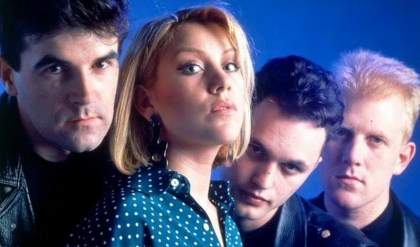

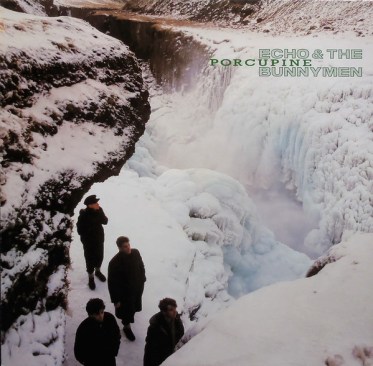
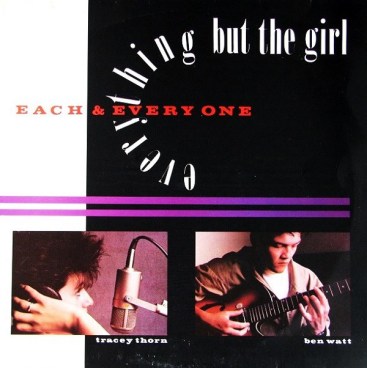
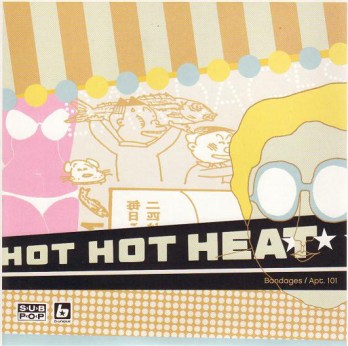
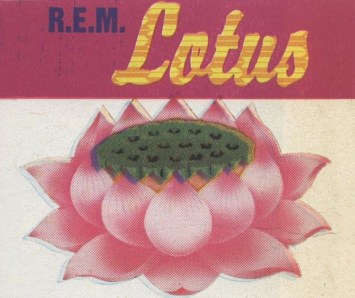

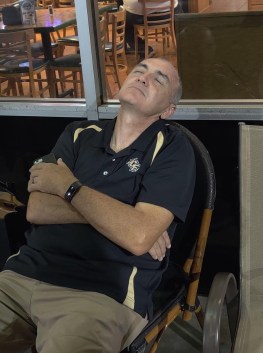
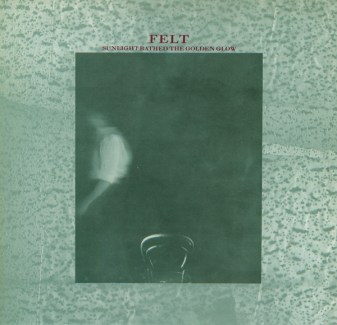


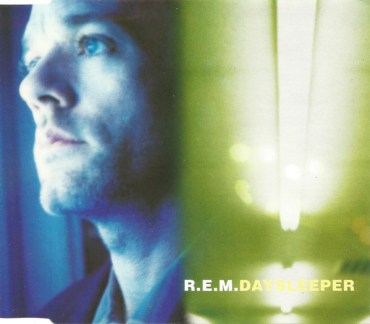

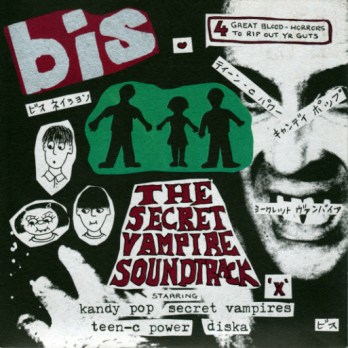

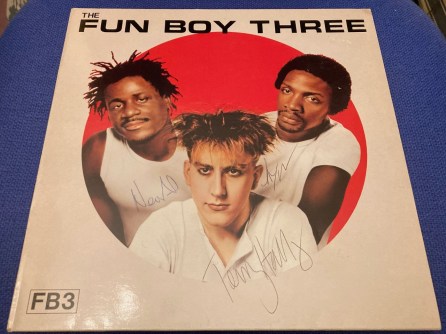

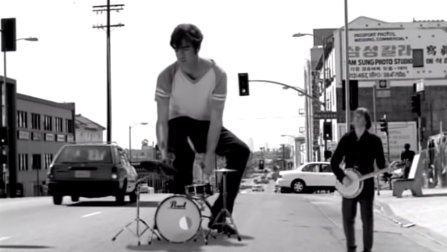
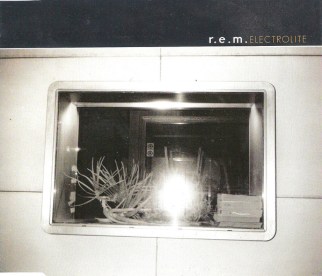
 THE NEW VINYL VILLAIN