
A RANDOM A-Z OF SINGLES : GOOD FOR SOME REASON

The traffic to the blog slows up over the Festive period, and it’s therefore something of an opportunity to take a bit of a breather.

Over a period of 26 days, I’ll be posting a single never previously featured on its own before – it might have sneaked in as part of an ICA or within a piece looking at various tracks – with the idea of an edited cut’n’paste from somewhere (most likely wiki) and then all the songs from either the vinyl or CD.

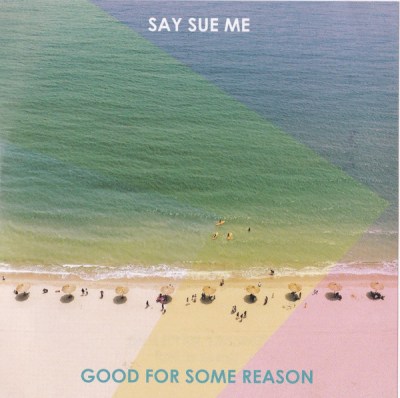
G is for Good For Some Reason recorded by Say Sue Me and released as one-half of a split single by Damnably Records in December 2017.

Say Sue Me are from Busan, South Korea, forming in 2012 since when they have recorded two full-lengths albums, along with four EPs, three stand-alone 7” singles, one digital single and one split 7” single. The band members nowadays are Sumi Choi (vocals), Byunggyu Kim (guitar),  Jaeyoung Ha (bass) and Changwon Kim (drums).

They came to prominence after debut album We’ve Sobered Up (2014) and the subsequent EP, Big Summer Night (2015), were moderate chart successes in South Korea, released on the  independent label, Electric Muse.   The music, which blended elements of surf-rock with the sort of sounds associated with the mid-80s golden era of UK indie-pop, came to the attention of the London-based Damnably Records, and deal was signed, with the first release, in 2017, being a self-titled compilation pairing the two Korean releases together as an 18-track CD in 2017.

In December 2017, a 7″ single was issued, with a run of just 400 copies to mark Damnably’s 11th birthday. It was a spilt single with Say Sue Me on one side, while the other was taken up by Otoboke Beaver, an all-female Japanese hardcore punk who were, at the time, being nurtured by Damnably, and indeed later signed with the label:-

mp3: Say Sue Me – Good For Some Reason
mp3: Otokobe Beaver – S’Il Vous Plait

Say Sue Me released a second album, Where We Were Together (2018) on which their indie-pop and indie-rock tendencies came to the fore as the earlier surf-rock sounds took a bit of a back seat, best exemplified by the song Old Town, which gathered a lot of radio play back home and also became a bit of a favourite among a number of DJs on BBC Radio 6. The new album was followed soon after by the Record Store Day release for 2018, It’s Just a Short Walk!, which was an EP comprising covers of songs by Blondie, The Ramones, The Velvet Underground, and one made famous here in the UK by Cliff Richard and in the USA initially by Bobby Freeman and later by The Beach Boys. A triumphant year was rounded off with two further releases – a stand-alone single of a track that hadn’t quite been finished in time for the album followed by an EP, Christmas, It’s Not a Biggie, of four new songs with a festive theme.

2019 got off to a tremendous start at home with nominations in five categories at the Korean Music Awards – Album of the Year, Song of the Year, Modern Rock Album of the Year, Best Modern Rock Song of the Year and Artist of the Year – something quite unprecedented for a band on a small label and from a city other than Seoul. They were winners in two categories – Best Modern Rock Album for Where We Were Together, while Old Town was named Best Modern Rock Song. These accolades were followed by a hugely successful return visit to SXSW in Austin, Texas at which they performed one of the best-received sets of the entire festival, and after a short time back home in Busan, they embarked on a European tour.

The onset of COVID could not have come at a worse possible time for Say Sue Me, and indeed Otokobe Beaver whose own career was also on an upwards trajectory. Planned visits to Europe and the USA had to be cancelled, and the momentum from the hard work of the previous three years has been lost.

It’ll be interesting to see what emerges from both bands in 2022, with both bands having spent much of the past year trying to deliver on-line shows for their fans outside of South Korea and Japan.

JC

A RANDOM A-Z OF SINGLES : FAIRYTALE OF NEW YORK

The traffic to the blog slows up over the Festive period, and it’s therefore something of an opportunity to take a bit of a breather.

Over a period of 26 days, I’ll be posting a single never previously featured on its own before – it might have sneaked in as part of an ICA or within a piece looking at various tracks – with the idea of an edited cut’n’paste from somewhere (most likely wiki) and then all the songs from either the vinyl or CD.

F is for Fairytale of New York, released by The Pogues as a single in November 1987.

Fairytale of New York is a song written by Jem Finer and Shane MacGowan and featuring Kirsty MacColl on vocals. The song is an Irish folk-style ballad and was written as a duet, with the Pogues‘ singer MacGowan taking the role of the male character and MacColl the female character. It was originally released as a single on 23 November 1987 and later featured on the Pogues’ 1988 album If I Should Fall from Grace with God.

Originally begun in 1985, the song had a troubled two-year development history, undergoing rewrites and aborted attempts at recording, and losing its original female vocalist along the way, before finally being completed in August 1987. Although the single has never been the UK Christmas number one, being kept at number two on its original release in 1987 by the Pet Shop Boys’ cover of Always on My Mind, it has proved enduringly popular with both music critics and the public: to date the song has reached the UK Top 20 on 17 separate occasions since its original release in 1987, including every year at Christmas since 2005. As of September 2017 it had sold 1,217,112 copies in the UK, with an additional 249,626 streaming equivalent sales, for a total of 1,466,738 combined sales. In December 2020, the song was certified quadruple platinum in the UK for 2,400,000 combined sales.

mp3: The Pogues – Fairytale of New York
mp3: The Pogues – The Battle March Medley
mp3: The Pogues – Shanne Bradley

These were the songs included on the 1987 12″ single.

Merry Christmas Everyone.

JC

A RANDOM A-Z OF SINGLES : EUROPE

The traffic to the blog slows up over the Festive period, and it’s therefore something of an opportunity to take a bit of a breather.

Over a period of 26 days, I’ll be posting a single never previously featured on its own before – it might have sneaked in as part of an ICA or within a piece looking at various tracks – with the idea of an edited cut’n’paste from somewhere (most likely wiki) and then all the songs from either the vinyl or CD.

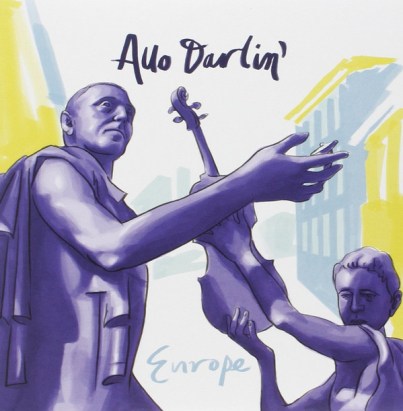
E is for Europe, released by Allo Darlin’ as a single in June 2012.

It’s a much delayed first appearance from Allo Darlin’ on this blog.  There’s actually a possibility of an ICA sometime in 2022, but for now here’s the intro for anyone not familiar:-

Allo Darlin’ began as a vehicle for the solo songwriting exploits of Elizabeth Morris.

Australian by birth, Morris moved to London in 2005, where she began making recordings under the name the Darlings. Morris would only release one disc under this name, a three-track affair called The Photo EP, which came out on the U.K.-based indie pop label WeePOP! in late 2007. Morris changed the project’s name to Allo Darlin’ the following year, releasing a  Christmas-themed EP, Merry Christmas from Allo Darlin’, shortly before 2008 came to a close.

A few months later the lineup of Allo Darlin’ expanded to become a permanent line-up of guitarist Paul Rains, drummer Michael Collins, and bassist Bill Botting.

The quartet released its first single, Henry Rollins Don’t Dance  in the summer of 2009.   Fortuna Pop signed the band soon after, and aftertwo more singles, The Polaroid Song and Dreaming, the band’s self-titled debut full-length was released in the summer of 2010. The reception for the album was very favourable, garnering praise from, among others,  Robert Forster.

After a fairly quiet 2011 that saw only the self-release of the Darren/The Wu-Tang Clan single, they returned with a new album, Europe, in the spring of 2012, released by Fortuna Pop in the U.K. and Slumberland in the U.S.

The band spent much of the next year on the road, building up a decent sized following among indie-music fans across the world, before a third album, We Come from the Same Place, was released in October of 2014 again via Fortuna Pop and Slumberland.

Two years later, and after one further new single, Allo’ Darlin’ called it a day, in very amicable circumstances….which I might cover if I do that ICA!

The song which gave its name to the title of the second album was the third and last 45 taken from it.  It was released only as a 7″, with some copies being on blue vinyl.

Like all the singles, it sold in small quantities, but that was never the point.

mp3: Allo Darlin’ – Europe
mp3: Allo Darlin’ – Some People Say (alternate version)

The original version of the b-side can be found on the album, Europe.

JC

A RANDOM A-Z OF SINGLES : DEAD LEAVES AND THE DIRTY GROUND

The traffic to the blog slows up over the Festive period, and it’s therefore something of an opportunity to take a bit of a breather.

Over a period of 26 days, I’ll be posting a single never previously featured on its own before – it might have sneaked in as part of an ICA or within a piece looking at various tracks – with the idea of an edited cut’n’paste from somewhere (most likely wiki) and then all the songs from either the vinyl or CD.

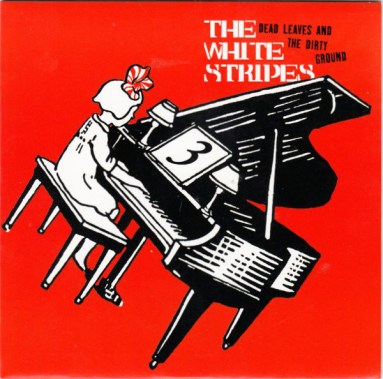
D is for Dead Leaves and The Dirty Ground, released by The White Stripes as a single in August 2002.

From allmusic:-

The White Stripes open their third album, the stellar White Blood Cells, with the grimy rocker “Dead Leaves and the Dirty Ground.” The dynamic duo’s lead singer/guitarist kicks off the record with a savage, downward spiral riff, accompanied by drummer Meg White‘s pounding, mid-tempo stomp. The pair waste no time in displaying a keen understanding of musical dynamics, promptly reining in the assault for Jack White‘s slightly warbling vocal as he offers his own unique vision of loneliness and devotion with quivering sneer, “Dead leaves and the dirty ground/When I know you’re not around/Shiny tops and soda pops/When I hear your lips make a sound/Thirty notes in the mailbox/Will tell you that I’m coming home/And I think I’m gonna stick around for a while so you’re not alone.”

The music then dramatically launches into exploding interludes of smashing chords and brutally stomping rhythms that would make AC/DC proud. Jack White also has a knack for showing a softer side amongst all the bashing as he observes with poetic sweetness in a later verse, “Soft hair and a velvet tongue/I want to give you what you give to me/And every breath that is in your lungs is a tiny little gift to me.” This self-produced album’s improved sound quality, compared to the group’s past efforts, also makes a striking first impression, bringing out the song’s brilliant use of dynamics and increasing the textures of the band’s simple instrumentation without limiting clarity or sacrificing power.

mp3: The White Stripes – Dead Leaves and The Dirty Ground
mp3: The White Stripes – Suzy Lee (live at the BBC Studios Maida Vale)
mp3: The White Stripes – Stop Breaking Down (live at the BBC Studios Maida Vale)

The BBC recordings are of two tracks, originally recorded for the duo’s self-titled debut album, released in 1999.  Suzy Lee is an original, while Stop Breaking Down is a cover of a Robert Johnson song, written back in 1937.

Dead Leaves and The Dirty Ground reached #25 in the UK singles chart. This was fairly similar to the previous two singles, Hotel Yorba (#26) and Fell In Love With A Girl (#21).  It would take until the following year for the bigger commercial breakthrough, when Seven Nation Army went Top 10 .

JC

A RANDOM A-Z OF SINGLES : CHEMICAL WORLD

The traffic to the blog slows up over the Festive period, and it’s therefore something of an opportunity to take a bit of a breather.

Over a period of 26 days, I’ll be posting a single never previously featured on its own before – it might have sneaked in as part of an ICA or within a piece looking at various tracks – with the idea of an edited cut’n’paste from somewhere (most likely wiki) and then all the songs from either the vinyl or CD.

C is for Chemical World, released by Blur as a single in June 1993.

It was the second single from the album, Modern Life Is Rubbish. It was issued on 7″ and 12″ vinyl and two CDs. Here are the tracks from the vinyl versions.

mp3: Blur – Chemical World (single edit)  (7″ and CD2)
mp3: Blur – Maggie May (7″)

mp3: Blur – Chemical World (Reworked) (12″ and CD1)
mp3: Blur – Es Schmecht (12″ and CD2)
mp3: Blur – Young And Lovely (12″ and CD2)
mp3: Blur – My Ark (12″ and CD2)

Maggie May had originally been made available on Ruby Trax – The NME’s Roaring Forty, a compilation album released in September 1992 to commemorate 40 years of publication of the paper, featuring 40 cover versions of Number 1 songs.

The tracks not featured today on CD1 were all taken from the set performed at Glastonbury the previous year.

Es Schmecht, Young And Lovely, and My Ark have a review on the allmusic website:-

“Young and Lovely” fits in perfectly with Modern Life Is Rubbish’s general aesthetic of psych/pop anthems, betraying the often unremarked upon XTC influence that clearly directed much of the band’s work at the time. Andy Partridge could easily sing Albarn’s chorus as he delivers it, for one thing. “Es Schmecht” is Blur in slightly obtuse mode, aiming for Wire-style angularity and detachment and finding it, somewhat uncomfortably. The addition of distorted keyboard-as-horn parts does make it more weirdly compelling towards the end, though. “My Ark” concludes the disc, a slightly heavier funk take on the indie dance moves with which Blur first came to attention — it’s okay enough, but not one of the band’s strong points. More an exercise in previous styles.

Chemical World reached #28 in the UK singles chart, the same position as reached previously by lead-off single, For Tomorrow.

JC

A RANDOM A-Z OF SINGLES : BABY’S ON FIRE

The traffic to the blog slows up over the Festive period, and it’s therefore something of an opportunity to take a bit of a breather.

Over a period of 26 days, I’ll be posting a single never previously featured on its own before – it might have sneaked in as part of an ICA or within a piece looking at various tracks – with the idea of an edited cut’n’paste from somewhere (most likely wiki) and then all the songs from either the vinyl or CD.

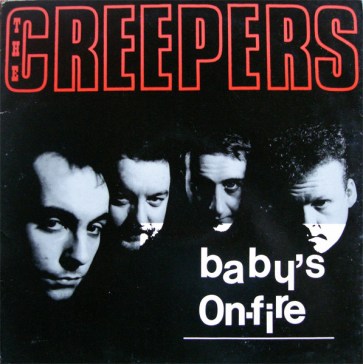
B is for Baby’s On Fire, released by The Creepers in 1986.

Marc Riley formed his own record label – In-Tape – and his own band, following his dismissal from The Fall, recruiting, in due course, Paul Fletcher (guitar), Pete Keogh (bass) and Eddie Fenn (drums), while Riley sang and played keyboards.  The band initially went by the name of Marc Riley and The Creepers, and later as Marc Riley with The Creepers.

The first single Favourite Sister (which featured his former bandmates Steve Hanley, Craig Scanlon and Paul Hanley) came out in July 1983 was followed up in October 1983 with Jumper Clown, which poked fun at Mark E Smith. A Peel Session was the source of the next release, with a compilation of all these early releases, Cull, being issued in April 1984

First album proper, Gross Out, appeared in June 1984, while the following year saw the release of the second album Fancy Meeting God as well as a live album Warts ‘n’ All.

In 1986, Mark Tilton and Phil Roberts came in as replacements for Fletcher and Keogh, with the combo now going under the name The Creepers.

The first release under this name was a 7″ single, Baby’s On Fire, a cover of a Brian Eno song

mp3: The Creepers – Baby’s On Fire
mp3: The Creepers – Another Song About Motorbikes

The album Miserable Sinners following later the same year. The band then added Simon Taylor as an extra guitarist and signed to Red Rhino, on which a further single, Brute, and an album, Rock ‘n’ Roll Liquorice Flavour, appeared in 1987 and 1988 respectively.

JC

A RANDOM A-Z OF SINGLES : ARMY OF ME

The traffic to the blog slows up over the Festive period, and it’s therefore something of an opportunity to take a bit of a breather.

Over a period of 26 days, I’ll be posting a single never previously featured on its own before – it might have sneaked in as part of an ICA or within a piece looking at various tracks – with the idea of an edited cut’n’paste from somewhere (most likely wiki) and then all the songs from either the vinyl or CD.

A is for Army Of Me, a song recorded by Björk for her second studio album Post.

The single was released in the United Kingdom on 24 April 1995 as a cassette and two-CD single. The first CD contained the Icelandic version of You’ve Been Flirting Again and the cave version of Cover Me, both from Post. The latter was recorded in a cave in the Bahamas, and sounds of flying bats can be heard in the background. The single also contained Sweet Intuition. The second CD contained, among other remixes, a version which features Skunk Anansie.

Army of Me was notable for the fact that, in contrast to the sweetness and lightness to be found on Debut, it features Björk making heavy use of screaming vocals.

Björk, in a contemporary press interview, explained what the song was about:-

It’s a song for the movie “Tank Girl”, but it is actually about my brother. He is pretty lazy and likes things like food, sex, sleep – very basic needs. It’s just that he does it more than others.

Then he started smoking, well, not cigarettes. It felt as if he was in a coma. He just sat on his butt complaining, “the worlds stinks, I can’t get a job, there are no good albums to buy and even if I wanted to buy them, I don’t have any money to buy them with. Blah blah blah.”

Self-pity from morning to night, which really pisses me off. You can stand a whining brother to a limit, but for ten years, from he was 14 to that he turned 24. I simply had enough. That’s it. Stand on your own legs, get a job, get a life. And if you complain once more, you’ll meet an “Army Of Me”.

mp3: Bjork – Army Of Me
mp3: Bjork – Cover Me (Cave version)
mp3: Bjork – You’ve Been Flirting Again (Icelandic Version)
mp3: Bjork – Sweet Intuition
mp3: Bjork – Army Of Me (ABA All-Stars Mix)
mp3: Bjork – Army Of Me (Masseymix)
mp3: Bjork – Army Of Me (featuring Skunk Anansie)
mp3: Bjork – Army Of Me (Instrumental ABA All-Stars Mix)

Army Of Me entered the UK singles chart at #10. Björk went on Top of The Pops and chose to offer up the Skunk Anansie version of the song. It’s one of the greatest moments in the history of the show.

It dropped to #21 the following week…..

JC (with thanks to Scottish Tee Vee for such a great quality clip)

THE WONDERFUL AND FRIGHTENING SERIES FOR SUNDAYS (Parts 28 & 29)


There’s going to be two for the price of one this week, as doing so neatly takes our story to the end of 1990.  But as such, it’s a lengthy one as there’s a lot to cover.

The next single was issued in August 1990.  The period between the previous single and the latest 45 had seen The Fall travel the world on what can only be looked upon as a gruelling tour in support of Extricate:-

1 March – 26 March : a 20-date tour of the UK
29 March – 21 April : a 19-date tour taking in the Netherlands, Belgium, Germany, Switzerland, Yugoslavia and Austria
26 April : a one-off gig in Paris
18 May : a one-off gig in New York
21 May : a one-off gig in Los Angeles
20 June – 30 June : a 7-date tour of Australia
5 July : a one-off gig in Auckland
10 July – 14 July : a 4-date tour of Australia
23 July – 25 July : a 3-date tour of Japan
26 August : an appearance at the Reading Festival

Looking at the above schedule, it is likely that the time between the Paris and New York gigs was spent in the studio recording the tracks which would make up the next single.

The reason I’m deducing this is that Marcia Schofield, on returning from Los Angeles, had a huge fall-out with MES and made her mind up to leave the band. A lot of her anger was based on the fact that MES didn’t want her recording or working with other musicians, a position she felt was hypocritical given that he had previously worked with Coldcut and more recently had gone into a studio with Tackhead.

She was persuaded to come back for the Australian/New Zealand/Japan gigs, perhaps influenced in part by the fact that she and Martin Bramah had recently embarked on a relationship and not going on the tour would have meant a considerable period apart.

The gig on 14 July was in Sydney. Afterwards, the band’s manager told Schofield and Bramah they would not be accompanying The Fall to Japan, and were instead given plane tickets back to the UK. In other words, they had been sacked…..

The thing was, the artwork and promotional material for the next single was already signed off, and a limited edition 12″ version contained a poster in which the sacked duo were featured:-
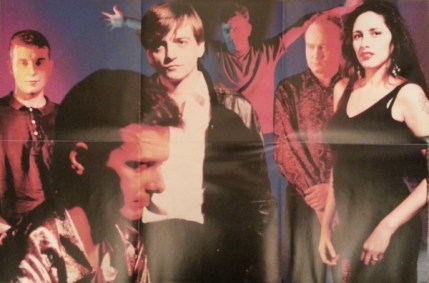
By the time the new single was in the shops, the news of the sackings had been made public, with a brutally worded press release saying that they had been fired ‘because they wanted to pursue other projects, and it was pointless them remaining in the band any longer”.  No words of thanks or best wishes for the future.

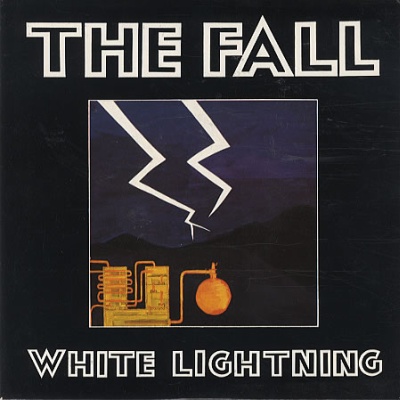
And so, White Lightning/The Dredger EP* became the last thing that the latest line-up of The Fall would ever make.

mp3: The Fall – White Lightning (7″, 12″, 12″ Limited Edition and CD)
mp3: The Fall – Blood Outta Stone (7″, 12″, 12″ Limited Edition and CD)
mp3: The Fall – Zagreb (Movement II) (12″ only)
mp3: The Fall – The Funeral Mix (12″ only)
mp3: The Fall – Zagreb (Movements I+II+III) (12″ Limited Edition and CD)
mp3: The Fall – Life Just Bounces (12″ Limited Edition and CD)

* White Lightning was the name given to the 7″ and 12″ singles, while The Dredger EP was the name given to the other two versions.

The a-side was yet another cover, of a song written in 1958 and which became a #1 hit for country singer George Jones in April 1959.   The song’s writer was J.P Richardson, better known as The Big Bopper and who was killed in the same plane crash as that involving Buddy Holly and Richie Valens in February 1959.  Jones’ take on the song was more rock’n’roll than country, and The Fall’s interpretation is reasonably faithful and not all that far removed from some of the earlier self-penned material from the early 80s.  It is also, in my opinion, is far from the most interesting of the tracks on the EP……

Blood Outta Stone, a co-composition with M.Beddington (aka Martin Bramah) is a very fine guitar-driven number, and another of the great lost songs stuck away on b-sides.  Bramah has since said he thought it would have made for a better single than Whie Lightning, and I’m inclined to agree with him.

Turning now to Zagreb.  This one is credited to MES and Marcia Schofield.  Movement I is an instrumental, lasting just over 30 seconds.  The riff, Schofield later confirmed, is based on Higher Ground by Stevie Wonder, as she and Simon Wolstencroft were fond of playing it live in soundchecks, with it eventually forming its way into a fully formed tune by The Fall, Movement II is the substantial part of the piece, some 4 mins 40 seconds in length, in which the opening riff leads to a lyric, written after the Yugoslavia gigs in April 1990, with MES wanting to try and capture the tension everyone felt during their visit.  History records that just over a year later, a very bloody civil war saw Yugoslavia tear itself apart into a number of nations. Movement III is another short instrumental piece, very much electronic in nature, only some 40 seconds in length.

As it turns out, Movement III is the opening section of The Funeral Mix which dates back to the sessions that MES had done with Coldcut in 1989.  It’s an instrumental and a real curiosity piece.

Life Just Bounces is a fun track.  It’s an MES/Craig Scanlon co-composition.  If the opening few bars sound vaguely familiar, then that’ll be down to the fact that it borrows heavily from Don’t Go Breaking My Heart, the #1 hit for Elton John & Kiki Dee back in 1976.  MES admitted as much in a lengthy interview in Melody Maker just a few weeks after the EP was released.  Oh, and Life Just Bounces would be re-recorded by The Fall some four years later…….

White Lightning/The Dredger EP was nearly a hit in that it got to #56.    Looking back on things, the fact that there are great tunes on the b-sides courtesy of the two recently sacked band members can only again lead to the conclusion that MES wanted to again self-sabotage just in case mainstream success was threatening to come the way of The Fall.

After the Reading Festival gig, which itself was reported by the press as being a triumph, the quarter of Smith, Scanlon, Hanley and Wolsencroft went into the studio, the fruits of which led to a new single in December 1990.
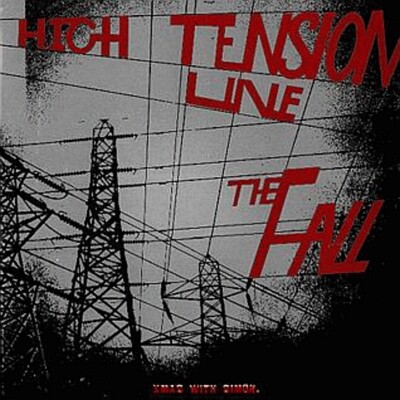
High Tension Line is a fast, frantic offering, albeit a strange song for a single, certainly in the way it was recorded thanks to it being faded-in

mp3: The Fall – High Tension Line

It was released in December 1990, and as if to demonstrate that The Fall, collectively, had a sense of humour and were willing to laugh at themselves, the b-side common to both the 7″ and 12″ releases was their first ever festive offering:-

mp3: The Fall – Xmas With Simon

The reason for the title is that Funky Si offers up some fairly basic but essential keyboards……with MES perhaps thumbing his nose at the recently departed Ms. Schofield?  As Xmas songs go, it won’t give sleepless nights to Slade, Shakey, Wizzard or Mariah….but it does have some good whistling on it.

The extra track on the 12″ is far better than a look at its title would indicate

mp3: The Fall – Don’t Take The Pizza

The thing that can be most taken from Don’t Take The Pizza is the sound of a stripped-back band, returning to basics in many ways.  I’m also, surely, not the only one who thinks MES is not singing ‘Don’t Take The Pizza Off Me’……………

Released without much fanfare into a crowded singles market, and without the backing of limited edition or CD versions to boost sales, High Tension Line was a flop, failing to make the Top 75.

The Fall wouldn’t release any singles in 1991, but there would be a well-received album, Shift-Work, in which the fiddle player Kenny Brady would be added to the four regular members, released in April 1991.  In an era when CD was beginning to become increasingly more important than vinyl in terms of sales, it’s worth mentioning that both White Lightning and High Tension Line were included on Shift-Work, albeit as bonus tracks at the end of the album, again a departure from previous norms.

There were three tours during 1991.  The first, in May/June was largely centred around Germany with additional dates in Prague, Vienna and Rotterdam. Kenny Brady was part of the live band for that tour.

The later tours, in August and December, were both exclusive to England. Kenny Brady was not involved, but both featured a new member of The Fall with Dave Bush coming in on keyboards, having initially helped out in the studio during some of the sessions for Shift-Work.  His involvement, going forward, would see another significant change in the sound of The Fall heading into 1992, but that’s for the next instalment.

As the festive period is fast approaching, this series will now go into hibernation for a few weeks, as indeed, will the blog itself.  I’ll still be posting each day, but the usual features will be taking a break.

JC
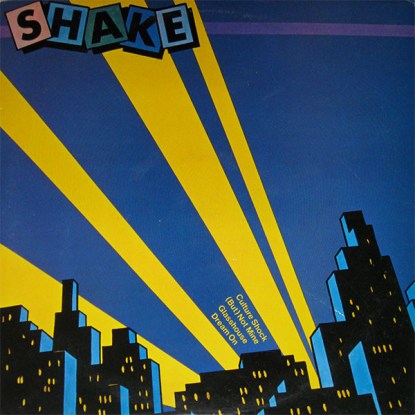
SATURDAY’S SCOTTISH SONG : #289: SHAKE

From the booklet accompanying the boxset, Big Gold Dreams : A Story of Scottish Independent Music 1977 – 1989

When The Rezillos split in 1978, Eugene Reynolds, Fay Fife and Hi-Fi Harris formed the similarly trashy Revillos, while songwriter Jo Callis, bassist Simon Templar and drummer Angel Paterson, plus future Teardrop Explodes guitarist Troy Tate, became Shake.

Released as the lead number on a 10″ EP, their exuberant debut highlighted a Callis-penned song that had originally been part of The Rezillos live set – indeed it can be heard on Callis’ former band’s Mission Accomplished…But The Beat Goes On live swansong recorded at the Glasgow Apollo. 

After a second single, Invasion of The Gamma Men, Callis embarked on a pop voyage that would ultimately lead to global domination with The Human League.

As I’ve previously featured the songs on that 10″ EP, I’ve gone digging to come up with the follow-up single:-

mp3: Shake – Invasion Of The Gamma Men

It’s a long way removed, musically, from Don’t You Want Me and yet with it being released in early 1980, it was just over a year prior to Callis penning songs which would appear on Dare.


JC

TODAY

Isaac’s funeral is taking place today.

I’m catching an early train out of Glasgow so that I can head down to pay respect on behalf of everyone who is part of the TVV community.

I’ve thought long and hard about a song and haven’t found it easy.  I know that Adam, Lou and Eliza want today to be a celebration of a remarkable life, and it wouldn’t be right to put something sad and teary on here.  Or try to be philosophical.

So, what I’m doing is going back to a posting on the old blog, back on 10 April 2011, when Ctel, from Acid Ted, took over this place for about a month while I was coming to terms with the death of my best friend, hard on the heels of my young brother a short time previously.

Ctel had asked readers if they would like to offer some words on the subjects of ‘sadness’ or ‘happiness’, with an appropriate song.  The response was truly overwhelming, and this is what Adam provided:-.

There are a ton of songs that help me get through bad times, and plenty that echo melancholy and the small hours when it all seems dark. But this is The Ramones. Da Brudders’ 1978 song We’re A Happy Family is full of squalor and urban misery – ‘sitting here in Queens, eating refried beans, we ain’t got no friends, our troubles never end, no Christmas Cards to send, Daddy likes men, Daddy’s likes men, Daddy’s telling lies, baby’s eating flies, Mommy’s on pills, baby’s got the chills, selling daddy’s dope’ etc – but there’s something about it that never fails to cheer me up. Thanks Joey, Dee Dee, Johnny and Tommy.

mp3: The Ramones – We’re A Happy Family

Isaac provided so many incredible times, and there is no doubt that he will stir countless happy memories going forward.

JC

THE LOST ART OF THE A & AA SIDED-SINGLE (2)

INTRO

It was back in February 2015 that I penned/lifted these words.

———-

From wiki:-

A “double A-side” is a single where both sides are designated the A-side; there is no B-side on such a single.

The double A-sided single was invented in December 1965 by the Beatles for their single of “Day Tripper” and “We Can Work It Out”, where both were designated A-sides. Other groups followed suit thereafter, notably the Rolling Stones in early 1967 with “Let’s Spend the Night Together” and “Ruby Tuesday” as a double-A single.

In the UK, before the advent of digital downloads, both A-sides were accredited with the same chart position, as the singles chart was compiled entirely from physical sales. In the UK, the biggest-selling non-charity single of all time was a double A-side, Wings’ 1977 release “Mull of Kintyre”/”Girls’ School”, which sold over two million copies.

Occasionally double-A-sided singles were released with each side targeting a different market. During the late 1970s, for example, Dolly Parton released a number of double-A-sided singles, in which one side was released to pop radio, and the other side to country, including “Two Doors Down”/”It’s All Wrong, But It’s All Right” and “Baby I’m Burning”/”I Really Got the Feeling”. In 1978, the Bee Gees also used this method when they released “Too Much Heaven” for the pop market and the flip side, “Rest Your Love on Me”, which was aimed toward country stations.

Many artists continue to release double A-side singles outside of the US where it is seen as more popular. Examples of this include Oasis’s “Little by Little”/”She Is Love” (2002), Bloc Party’s “So Here We Are”/”Positive Tension” (2005) and Gorillaz’s “El Mañana”/”Kids with Guns” (2006).

———-

I went on to feature Join Our Club/People Get Real, a single by Saint Etienne that reached #21 in 1992.

It wasn’t until The Robster pulled together a Saint Etienne ICA did it hit me that this wasn’t even the best example of a double A side by that band.  Here’s what he had to say:-

“Who Do You Think You Are (1993, double a-side single) : Originally recorded by Candlewick Green, this wonderful, wonderful song was updated some 20 years later by Saint Etienne. It’s definitely one of my fave tracks of theirs, and it makes up possibly their best single as a double-A with…

Hobart Paving [single version] (1993, double a-side single) : Stops me in my tracks this one. This version beats the album version hands down thanks to that lovely, mournful French horn solo. As close to perfection as it’s possible for a pop song to get.”

mp3: Saint Etienne – Who Do You Think You Are
mp3: Saint Etienne – Hobart Paving

It’s incredible to think that such a fine pop single stalled at #23 on its release in May 1993, especially when another cover version was all over the radio and sitting at #2 the very same week, namely the rather appalling take on Can’t Help Falling In Love by UB40. I’ll spare your ears.

JC

A FOLLOW-ON FROM YESTERDAY’S POSTING

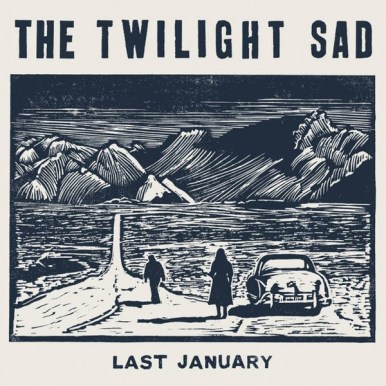
I mentioned yesterday that The Twilight Sad are often very good when they re-imagine and strip back some of their best-loved songs.

This is from the 2013 album, Nobody Wants To Be Here And Nobody Wants To Leave:-

mp3: The Twilight Sad – Last January

The following year, Òran Mór Session, a hand-numbered tour-only CD was made available, consisting of stripped-down recordings of songs from the 2013 album, as well as a cover song not previously available in any shape or form:-
mp3: The Twilight Sad – Last January (Òran Mór Session)
Both are quite special in their own different ways.

JC

A VERY MIXED BAG

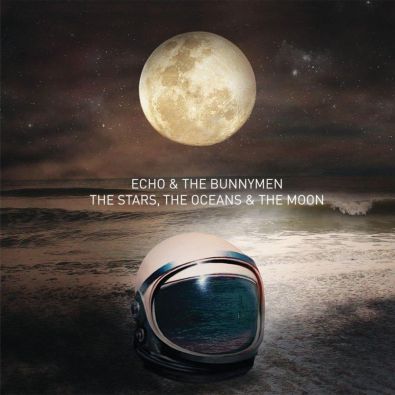
It was just over three years ago that Echo & The Bunnymen released The Stars, The Oceans & The Moon.  The idea, apart from two completely new songs, was to re-record and re-imagine some of their best-known older material, primarily leaning on strings, synths and orchestration.  The reviews weren’t that great, and so I gave it a body swerve.

It has stayed that way until a few weeks ago when I, ahem, acquired, a digital copy of the album.

I’ll try and be a bit positive by saying that a couple of the new versions are interesting, if a bit clichéd, almost as if they’ve been done with one eye on being picked up by the folk compiling the soundtrack to a Hollywood movie or as mood music as the credits roll on the latest episode of a ‘must-see’ TV series.

Overall, however, the album is a real letdown, not only failing to add anything genuinely appealing to some great songs but going beyond that and somehow making something that was previously good become something that borders on the criminal.

The opening notes of album opener Bring On The Dancing Horses sound as if it’s about to be sung by John Shuttleworth.

Lips Like Sugar is like a version you’d find on an old Top of The Pops budget album where the session musicians came in for the original players.  Well, that was my view on first hearing….later listens made me think it was Coldplay covering the Bunnymen.

And please, just spare us The Cutter.  It’s an absolute shocker, with all the originality replaced by a pub band.

Two songs do save it from being thrown into the recycle bin.

mp3: Echo & The Bunnymen – Zimbo (transformed)
mp3: Echo & The Bunnymen – The Killing Moon (transformed)

I give the former pass marks for the fact that they take a song which had been a tour de force thanks to the drumming of the late Pete de Freitas, and strip it back to not much more than a vocal and electric guitar/piano. It’s something which many bands, such as Arab Strap and The Twilight Sad, do very well in the live environment, and Zimbo is one that I’d very much like to hear done that way in an intimate environment.

The Killing Moon is such an epic song that the only way it could have been transformed was in a totally stripped back way.  It does suffer from Mac’s voice no longer being the powerful tool it was in the mid 80s. And yes, it has that soundtrack feel to it, but pop and rock stars have got to make a crust in any way possible these days.  But despite all this, it is one that I’ve been able to listen to on repeated occasions without hitting any fast-forward buttons.

I make no apologies for not offering you the opportunity to listen today to some of the ones that I think stink the place out.  You’re all smart enough to go digging elsewhere and find them for yourselves.

JC

THE TRAIN SET


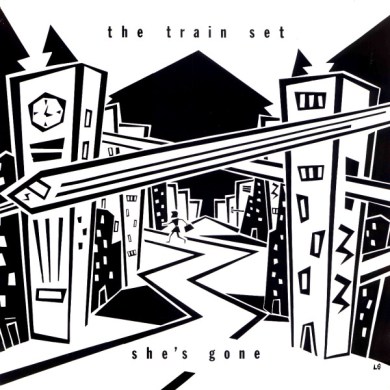
The debut single by The Train Set, was released in September 1988, but I only became aware of it, and them, through the release of the 3x CD C88 box set on Cherry Red Records back in 2017.

mp3: The Train Set – She’s Gone

Here’s the blurb from the accompanying booklet;-

The Train Set’s ‘She’s Gone’ made Single of The Week in NME and was the highest entry of the week in the indie charts upon release – not bad for a debut offering. Hailing from Crewe (the band chose the name to cryptically reference Crewe’s legendary train station) and rehearsing om a small farm in Cheshire, The Train Set quickly found itself touring with the Happy Mondays and James among others. With a sound falling somewhere between that of the guitar work of Johnny Marr and the vocals of Ian McCulloch, ‘She’s Gone’ was followed up by 1989’s ‘Hold On’. Additional tracks weren’t unveiled until Firestation Records curated the well-received compilation, Never California (2015).

I was surprised to easily find an official website devoted to The Train Set, but then again, I didn’t know the band had reformed shortly before the C88 box set had come out.  From the info on the website, I can add that the band consisted of Clive Jones (vocals), Andy Boote (guitars), Mark Shaw (bass), Adam Halford (drums) and Dave Hassall (keyboards).  Many hours of rehearsing and writing paid off when after a demo tape led to them being signed by the Manchester-based label, Play Hard.

The debut single, which was pressed up only on 12″ vinyl,  was indeed given rapturous praise in the NME:-

“The Train Set have done their growing up in private and will now have no trouble copping off with the entire teenage nation of orphaned Smiths fans. Anyone who can rhyme ‘Avignon’ with ‘Warrington’ deserves the last of the Blue Peter badges. Puts every other debut single release this week in the shade.”

An interview with the Louder Than War website in 2017 provides the info on what happened next.

“It was great to get such fantastic reviews for our first single. It was also great to hear John Peel play it and say very positive things about it. One minute nobody had heard of us, the next we had sold out of all our initial pressings in one week. It was a great single.

Then the bad news – nobody else could get hold of She’s Gone. It sold out of the first run of pressings in five days so we needed more and when Play Hard rang up the pressing plant to print more copies to meet demand they were told that they could not press anymore. When asked why, they were told to contact Red Rhino (the distributors) who then told Play Hard that they had gone into liquidation that week. So there we were promoting a single nobody could get their hands on.”

The second single ended up being delayed and that initial burst of energy and momentum, which included those shows with James and Happy Mondays in October 1993, was wasted.

Straight after the second single the bass player decided to quit, and by the time a nee recruit was found, the band had lost contact with their label.  There was some interest from other labels, but before anything could happen, the drummer called it a day and the singer decided to go to university, thus bringing an end to the band, until their revival in 2016 to capitalise on the hugely positive reviews for the Firestation compilation, with some live gigs, culminating in the Shiiine On Weekender festival in November 2016.

Here’s the two other tracks from the debut single:-

mp3: The Train Set – Stop Stallling (Sob Stories)
mp3: The Train Set – Beautiful Monster

It was, I’d like to think you’ll agree, a very fine debut. It’s a 45 that, if the unfortunate circumstances around the collapse of Red Rhino hadn’t occurred, would likely have been something of a minor hit.

JC

THE WONDERFUL AND FRIGHTENING SERIES FOR SUNDAYS (Part 27)

Extricate, the band’s first album of the new decade, was released to almost universal critical acclaim in February 1990.  Brix Smith was no more but the return of Martin Bramah had seemingly reignited MES and the rest of The Fall.  The live shows were also going well, and it looked as if the band was going through a stable and happy period, in complete contrast to the previous eighteen months.

It’s worth mentioning in passing that the live shows now occasionally involved an expanded version of the group as Charlotte Bill (oboe and flute) and Kenny Brady (fiddle), both of whom had made contributions to songs on Extricate, were involved in some of the tours in 1990.

The relationship with Phonogram seemed to have got off to a good start, and evidence of MES perhaps softening his attitude towards record company bosses can be seen from the fact that the next single, was a track that had been part of the recently released album, and added to the fact that Telephone Thing was also to be found on Extricate, made this (by my reckoning) the first Fall album from which two 45s had been lifted.

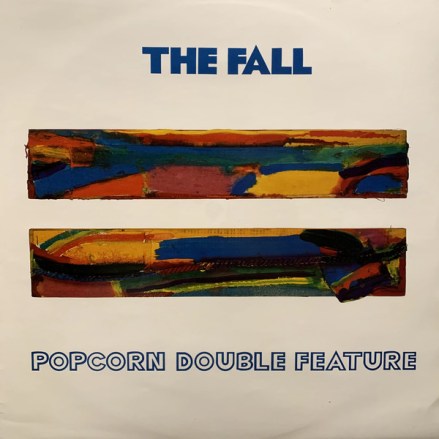
mp3: The Fall – Popcorn Double Attraction

Released in early March 1990, Popcorn Double Attraction would be left off many of the later compilations, such as 50,000 Fall Fans Can’t Be Wrong (2004), and with it not breaking into the Top 75, means that it is all to easy to forget it was released as a single.  It was a strange choice for a 45, but then again with all the previous evidence of The Fall only being able to enjoy hits when they did covers, then maybe it was the obvious one.

Yup, the original dates back to 1967, a flop single by The Searchers, a Merseybeat band who had enjoyed great success between 1963 and 1965, most often through cover versions of R’nB numbers previously recorded by American singers or bands.  MES at the time of the single paid tribute to The Searchers, saying he preferred them to The Beatles.

The single was released on 7″, 12″ and CD.  There was an additional limited edition version, of just 3,000 copies each, on 7″ and 12″ with different artwork and different b-sides.

mp3: The Fall – Butterflies 4 Brains (7″, 12″ and CD)
mp3: The Fall – Arms Control Poseur (12″ and CD)
mp3: The Fall – Zandra (7″ and 12″ limited editions)
mp3: The Fall – Black Monk Theme Part 2 (12″ limited edition)

This is a rather strange collection of songs, and in some ways of more merit than the actual single.  Butterflies 4 Brains, or least the opening minute or so, reminds me of the sound of  Inspiral Carpets….or maybe that’s just the strange wiring of my brain as MES would join with the band a few years later in creating a hit single, leading to his one and only appearance on Top of The Pops.

Arms Control Poseur was included on the CD edition of Extricate (it had four more tracks than the vinyl version) but it was a slightly longer, marginally faster and in some ways more commercially produced version which was included on the single.  I don’t think it’s as good as the album version, which has a brilliant guitar piece, reminiscent of Robert Fripp on Bowie’s Scary Monsters album, to the forefront, and which is tucked away on the single version.  See what you think….

mp3: The Fall – Arms Control Poseur (album version)

Zandra, which remember was only available on the limited edition singles, is a short number.  Almost upbeat in nature, and unusually for a Fall song, is named after and about a woman.  It seems kind of throwaway, as perhaps can be evidenced by the fact it was never played live.  The writing credits on this one are Smith/Beddington, but it is widely known that Beddington was a pseudonym used by Martin Bramah.

Black Monk Theme Part 2 can also be found on the CD version of Extricate, while Black Monk Theme Part 1 can be found on the vinyl version (as well as the CD version).  Unusually, these aren’t two takes on the same song…..

The Monks were an American garage rock band from the 60s.  Part 1, as done by The Fall, was in fact a cover of the song I Hate You, while Part 2 was a cover of Oh, How To Do Now, both of which had been released in 1966 on the album Black Monk Time.   More examples of MES being a human jukebox of the most obscure and occasionally magnificent type.

JC

SATURDAY’S SCOTTISH SONG : #288: THE SEXUAL OBJECTS

Davy Henderson‘s reputation as a maverick genius seems to be growing with each passing year. Some folk love him primarily for what he achieved in the early 80s with the angular post-punk of Fire Engines, while others pine for the super-pop era and near-chart success of Win. Next up was his ten-plus years with Nectarine No.9, part of which was with the resurrected Postcard Records in the mid-90s; this brought about six albums that I think can be best be accurately described as being a mixed-bag, but having said that, when Nectarine No.9 did produce the goods, they were an essential listen.

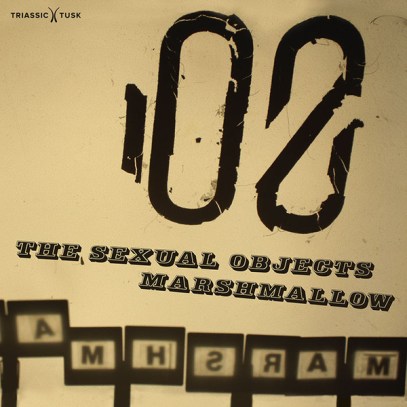
Next out of the blocks was The Sexual Objects, whose discography consists of a handful of singles and albums, more often than not in limited editions. The first single, Full Penetration, dates back to 2007 on Creeping Bent Records while the most recent album, Marshmallow, was issued in 2017 on Triassic Tusk Records, a very small label based on the east coast of Scotland. The album had a pressing of just 300 copies, but even that was something of a bonus.

Here’s the wonderful folk at Monorail, the best record store in Glasgow, Scotland, the entire world, to tell you all:-

Upon completion of a record that is one of the very best in a career that runs spectacularly all the way from The Dirty Reds to The Fire Engines to Nectarine Number 9 to The Sexual Objects, Davy Henderson, frustrated at the conventions of record releases, decided to play a high risk strategy with the master copy by putting it up for auction.It was a punk move that out Bill Drummonded Bill Drummond.

By taking something most artists and musicians would consider more important and precious than money – their new work, years in the making – he threw down a fragile gauntlet. As the auction became publicised many of us wondered who might buy it (an art collector, a punk snob, Bob Last?) and if we’d ever get to hear the record (admission: some of us had heard a handful of tracks and loved them). Fortunately the record fell into very safe hands by way of the noble guys at Triassic Tusk, and we’re so happy to come in as special partners on this, the first (only) vinyl edition.

Ok, so what’s it like? It’s everything you’d dare hope for from a Sexual Objects record – rundown glam, budget Bowie, an unreleased pop Brian Eno record, it’s Davy Henderson and his brilliant band delivering the strange news. You want pop, you want scuzz, you want pop scuzz from someone who talks it and walks it with an oddball swagger. Not about to run out of tunes anytime soon, this is the perfect band for Davy Henderson to be fronting at this stage of his career, this is the perfect record for him to be making. Love it.

Yup.  Marshmallow has been completed in 2014, ready for release in January 2015. The idea of the auction was that whoever was the highest bidder would win the rights to the recordings, and it would be their decision to release as many or as few copies of Marshmallow as they chose. In an interview at the time, Henderson said he was thinking of the record as being like a painting with just the one owner, but that owner then having the freedom to do anything they liked, even if the decision was to keep it to themselves with no further public consumption.

But as can be seen from above, there ended up being 300 copies pressed up, on sale for £20 each. I missed out on it, for the simple fact that I wasn’t paying attention. I’d like a copy and just now there is one via Discogs for £55 which is actually well below what it normally goes for, but I’ve decided not to bother as I have got my hands on a digital copy, thanks to it having been, temporarily, available via bandcamp (i think it cost £15 for the download).

One of the songs on the album was also made available as a 10″ single, and I did manage to pick up a copy of that.

mp3: The Sexual Objects – Sometimes

The single came with a few remixes.  Here’s the one that is likely of most interest:-

mp3: The Sexual Objects – Sometimes (Weatherall Dub)

In more recent ears, Davy Henderson has been associated with Port Sulphur, the collective which is co-ordinated and directed by Douglas MacIntyre, the talent and brains behind Creeping Bent Records and who was also a guitarist with each of The Nectarine No9 and The Sexual Objects.

I’ve sat down a few times a tried to pull together a Davy Henderson ICA, but it’s proved an impossible task. But now that just about all of his previous bands have now featured in this long-running series, I can perhaps try and do something covering his entire career, with perhaps no more than two or three songs from each of them. Might be something to do during the short break I’ll be taking from the blog over the festive period.

JC

STEVE BRONSKI

Flimflamfan added this to his comment to today’s earlier posting about 10,000 Maniacs:-

“Can I hijack this post. To add my enduring thanks to Steve Bronski who died recently. Without courageous people like Steve many young LGB peoole (as they were known at the time) may have forever led hidden, oppressed lives. The Age of Consent is a landmark LP in agit-pop. Three openly gay men heralding their rights-led manifesto via the LP art work. Momentus. Thanks, Steve.

It got me thinking that it might be  a nice tribute to re-post something from 19 September 2019. It’s up there with some of the pieces I’m most proud of in all the years I’ve been writing stuff for this blog:-

MIXING POP AND POLITICS, THEY ASK ME WHAT THE USE IS

Billy Bragg famously related the tale of him being asked said question, by a cynical fanzine writer, within the lyric of Waiting For The Great Leap Forward. If only the writer had been brave enough to ask a similar question of Jimmy Somerville…….

It will be 35 years next month since Age of Consent, the debut LP by Bronski Beat was released. The trio of Somerville, Steve Bronski and Larry Steinbachek had already tasted chart success earlier in the year with their first two singles, Smalltown Boy and Why?, going Top 10 in many countries across Europe. They weren’t the first to make wonderfully catchy synth-pop that was aimed at the dance floor, nor were they the first to link the genre with gay culture; but they were the first pop stars to get up on a soapbox and demand that folk listened and took action on the inequalities of life that had to be endured if you were of a gay persuasion.

Nobody should be in any doubt that the band took huge risks with such an agenda. The early 1980s was not the most tolerant of periods, with some of the most right-wing and conservative political administrations governing the UK and the USA. It was a period when the cultural world of performing and visual artists did voice their concerns in a concerted way about some injustices happening within society, not least the horrors of the apartheid system in South Africa, but nobody was willing to really stand up and shout about homophobia and the dangers faced daily by, in particular, young people the world over. The promo video to Smalltown Boy had been a revelation, being, in effect, a short film that showed a gay man seemingly finding some happiness, only to have it ruined, firstly by the vicious fists and boots of a violent mob and secondly by the vicious rejection of his family. The line ‘mother will never understand why you had to leave’ is one of the saddest lyrics you’re likely to find in any uptempo tune.

The single certainly raised awareness of the fact that attitudes, particularly among those living in traditional working-class communities, had much to do with the fact that young gay people felt the need to run away from the security of their home and upbringing. Many parents felt stigmatised and regarded themselves as failures if their son or daughter had turned out to be queer, with the situation exacerbated by the shame of knowing their offspring was breaking the law. (I should, and indeed must, point out that Jimmy Somerville’s own Glaswegian parents did not disown their son at any point in time, albeit he did indeed leave home and head to London, but only as a result of frustration he felt at the narrowness and limited appeal of a ‘gay scene’ in his home city and elsewhere in Scotland)

The hit singles had created the circumstances that the Bronski Beat debut album was likely to enjoy a fair amount of commercial success. It offered the perfect platform to say and do something of huge significance and to the delight of what seemed like the entire gay community, and those standing outside who were appalled by homophobia, the band didn’t disappoint.

Forget, for a moment, that the vinyl contained ten tracks of high-class music, some of which burst and bristled with energy while others were mournful and thought-provoking. Forget too, that one of its highlights introduced the work of the Gershwin brothers to a whole new audience and instead take a few minutes to study the artwork.

The inner sleeve and the label on the vinyl is dominated by a pink triangle, the symbol used by the Nazis in concentration camps to identify homosexual prisoners. Originally conceived as a badge of shame, the pink triangle had, from the 70s onwards, began to be reclaimed as a positive symbol of self-identity. The inner sleeve also set out, plainly and simply, the different international ages of consent for males to engage in gay sex, drawing attention to, and ridiculing, the fact that there were huge inconsistencies, with the UK being amongst the worst examples in declaring the age to be 21.

The so-called swinging 60s has been an era in which the UK establishment began to relax its attitudes across a whole swathe of societal issues with new and more liberal laws covering divorce, abortion, race relations and fairness in the workplace. Homosexuality had gone from being wholly illegal but was still seen as a huge taboo, causing all sorts of outcries and scaremongering within the powerful media circles, particularly across tabloid newspapers where so many agendas were set and led to millions of readers forming opinions and holding attitudes. Oh, and the churches didn’t help things either, choosing to focus on very narrow and literal interpretations of scriptures as an excuse to uphold bigotry, hatred and prejudices.

Nothing had changed much in the best part of 20 years and indeed there was a feeling at large that the right-wing nature of the Thatcher government was going to make things worse. Indeed, in 1988, things did take a turn for the worse with the passing of the outrageous and scandalous ‘Section 28 Amendment’ to local government legislation that made it illegal for schools and teachers to promote the idea that homosexuality could be a stable and harmonious way for a family relationship.

The thing was, for many people, this was closing the stable door long after the horse had bolted as attitudes, particularly among young people had changed dramatically. Bronski Beat had shown up the insanity of the UK’s approach to homosexuality and had done so with grace, dignity and some fabulous music. In their wake followed many, not least The Pet Shop Boys, Erasure, Culture Club, Holly Johnson and, of course, Communards, the group formed by Jimmy Somerville just a year after the success of Bronski Beat, all of whom not only enjoyed #1 hits and sell-out tours, but did so to an incredibly mixed audience.

The social and political outcomes of The Age of Consent must never be underestimated, but I’ve no doubt in my mind that it needed the music to be of top quality and mass appeal to succeed on these fronts. Indeed, if the album had been duff, there would have been a danger of setting things back somewhat, giving strength to those (and there were many) who felt that dance music was only good for clubs and discos and not for promoting any meaningful messages.

Bronski Beat would enjoy two more hit singles lifted from the album, both of which were covers. Indeed, for the final hit single, they revamped the closing song of the album by introducing a guest singer, Marc Almond, who had to overcome all sorts of homophobic media coverage as his fame increased to before himself, and his attitudes, were accepted increasingly by the mainstream.

No embarrassment or the usual excuses. A copy of The Age of Consent should be in every pop fan’s collection.

JC

A LITTLE BIT OF R.E.M AND A LITTLE BIT OF VAMPIRE WEEKEND

10,000 Maniacs, from Jamestown in the state of New York, came to prominence in 1983 after the self-recording of a debut album which they released on their own label.   The following year, having made something of a buzz in the UK after being championed by John Peel, the band was signed to Elektra, part of the Warner Bros. empire. The early part of 1985 saw them in London recording their debut album, released a few months later as The Wishing Chair, with veteran producer Joe Boyd enlisted to help.  Boyd had just finished working with R.E.M. on Fables of The Reconstruction, and I think it’s fair to say he ensured the sound of the Athens, GA band would have an influence on the new album he was assisting with, as best can be heard on the first single lifted from it:-

mp3: 10,000 Maniacs – Can’t Ignore The Train

It’s just under three minutes of shimmering and wonderful indie-pop, thanks in particular to the tremendous guitar playing of the late Robert Buck.  I’d actually forgotten just how great this single sounded until it was aired recently at the Little League night in Glasgow a few weeks back, and this led me to digging into Discogs to pick up another copy as a very belated replacement for the one that was lost many years ago.

I played the b-side, which I can’t remember doing so back in 1985, although I must have done so on at least one occasion.  Listening now, I reckon I must have dismissed it on the grounds that it was too quirky and too different from the majestic a-side.  The thing is, I now have almost an additional 40 years of reference points, and so can confidently say that the lads in Vampire Weekend must have found a copy in some second hand store as they went about writing their own material in the first decade of the 21st century.

mp3: 10,000 Maniacs – Daktari

All in all, it’s a fairly decent debut 45 for the major label who must have been bemused that it didn’t make any inroads into the charts.  Having said that, R.E.M. were also being largely ignored in 1985.

JC

WHAT A DIFFERENCE A YEAR MADE

September/October 1992. The promo poster at the top of this posting shows the extent of the UK tour undertaken by Radiohead, as part of the promotional activity to support the release of Creep.  You’ll note that they were supporting The Frank and Walters, an indie-pop band from Cork, Ireland who, on the surface at least, didn’t take themselves too seriously.

It’s a period when dance/house music was all the rage and when guitar-music was again largely out of fashion, unless your band came from America.  There were exceptions, with the likes of Manic Street Preachers, Ride, PJ Harvey and Teenage Fanclub all on the bill at the Reading festival the previous month (The Wonder Stuff, Public Enemy and Nirvana had been the respective headliners on the Friday, Saturday and Sunday).

I was at the Frank and Walters shows in both Edinburgh and Glasgow in 1992.  I recall enjoying the support act, but not being entirely convinced they had quite enough about them to ensure some fame and fortune. Maybe the fact that their hard-edged guitars, use of profanity and downright moodiness being so out of sync with all almost that was going on among UK musicians at the time that ensured it would be a total flop. I was in my very late 20s, and it really was still all about going out, with either my new partner or with a group of friends, having a good time before getting home safely with a smile on your face. My days of angst-ridden music were firmly in the rearview mirror, so that’s my excuse for not going out and picking up a copy of Creep.

But I wasn’t alone.  Very few folk bought it. It seems around 6,000 copies, mostly on CD, were shifted in September 1992. Those who sought out the 12″ vinyl, can now get £200 on the second-hand market if they were now inclined to sell. The follow-ups, Anyone Can Play Guitar and Pop Is Dead, each spent two weeks in the Top 75, albeit the former sold enough copies in the first week of release in February 1993, to enter at #32.

By the middle of 1993, Creep had become an underground hit in the USA, thanks to MTV and a number of alt-rock/student radio stations putting it on heavy rotation.  It even got to the stage where Radiohead performed it on Late Night with Conan O’Brien, the main talk show to be broadcast across the country by NBC.

In September 1993, EMI reissued Creep in the UK. It went to #7 and provided Radiohead with the first step to megastardom.  The band hadn’t been terribly keen to have the single reissued, feeling that it totally overshadowed anything else they had written or released to this point.  I actually saw for myself what they meant as on 1 December 1993, I caught them as the support for James at Glasgow Barrowlands, a gig where their performance, to my ears, blew away the headliners, but which was met with huge indifference until they performed Creep. But as soon as they got onto the next song, the audience’s attention had again drifted….this was James at the beginning of their stadium rock era and Radiohead’s more artful and less accessible music wasn’t what most folk wanted to hear.

It’s really hard to get my head around the fact that next year will mark the 30th anniversary of those shows supporting The Frank & Walters.  As I said, I’d love to be able to claim that I latched on immediately, but I’d be lying.  It was that Barrowlands performance just over a year on that made me acknowledge that Radiohead were, as the song goes, so fucking special.

mp3: Radiohead – Creep

Here’s the other songs from the 1992 release:-

mp3: Radiohead – Lurgee
mp3: Radiohead – Inside My Head
mp3: Radiohead – Million Dollar Question

Fun Fact.

Some of you night know this, but I wasn’t aware until doing a wee bit of research for this post.

Creep had quickly become a song hated by Radiohead, but there was an acceptance that it had to be played live at every show in order to keep things sweet with the label bosses and their fanbase.  The band then wrote My Iron Lung, purposely about their hatred of Creep.

The next time I went to see Radiohead was March 1995 at the Garage in Glasgow, on their own headlining tour to promote the release of The Bends. I was sure, despite the claims that they hated the song by then, that Creep was played that night.  A check of the set list indicates that it was…..followed immediately by My Iron Lung.  It must have designed that way to provide a sort of therapy for everyone involved.

JC

EVERYBODY BE COOL, THIS IS A ROBBERY!

I watched Pulp Fiction again the other night, for the first time in at least 20 years.  It still stands up as a great piece of entertainment and a hugely enjoyable, and indeed, classic movie.

Afterwards, I played this at high volume.

mp3: Tim Roth & Amanda Plummer – Pumpkin and Honey Bunney AND Dick Dale & The Del-Tones – Miserlou

I bet that makes you want to go and watch the film again!!

JC