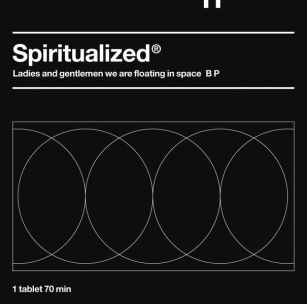
mp3 : Spiritualized – Ladies and Gentlemen We Are Floating in Space (I Can’t Help Falling in Love)
I’ve said before that I never quite get the fuss over Spritualized.
But this is jaw-droppingly magnificent.
mp3 : Spiritualized – Ladies and Gentlemen We Are Floating in Space (I Can’t Help Falling in Love)
I’ve said before that I never quite get the fuss over Spritualized.
But this is jaw-droppingly magnificent.
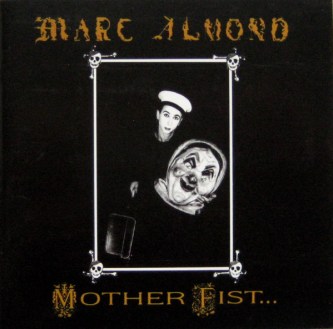
The third solo album was released in April 1987.
Again, it is attributed to Marc Almond and The Willing Sinners. It’s full title is Mother Fist and Her Five Daughters although it is often shortened to Mother Fist. The title was taken from a shorty story written by Truman Capote. Of its 12 tracks, eight were fully written by Marc and the remaining four were credited jointly to him and Annie Hogan.
No cover versions on the album and there were three 45s lifted from it, all in advance of the album’s release:-
(8) Ruby Red b/w I’m Sick of You Tasting of Somebody Else (October 1986 – #47 in the UK charts)
(9) Melancholy Rose b/w Gyp The Blood (February 1987 – #71 in the UK charts)
(10) Mother Fist b/w Two Sailors on The Beach b/w The Hustler (April 1987 – #93 in the UK charts)
The last of these was a 12″ only single. The Hustler was also to be found on the parent album while Two Sailors… finds Marc and Annie setting an English translation of a poem by Frederico García Lorca to music.
It’s an album that confounded a few folk – it was his poorest selling solo album to date with perhaps it being just too ‘in your face’ in its sordidness – it certainly wasn’t tailor made for daytime listening. Meanwhile, the promo videos, with all sorts of camp and gay imagery very much to the fore, were unlikely to appeal to the producers.
There’s a very glowing review from Ned Raggett at allmusic, who declares it ‘an all round triumph’, on the back of the following words:-
Following up both Stories and his fine covers EP A Woman’s Story, Almond took a turn for the more challenging on Mother Fist, to be rewarded with the loss of his contract and a search for a new label. Quite why that should have happened is all the more surprising when upon listening, it becomes clear that Mother Fist was and still is the best Almond album of original material to date.
With Hedges once again producing and the Willing Sinners still producing instrumental magic — the great work of Hogan on keyboards, McCarrick on cello and accordion, and McGee on bass and orchestrations simply can’t be overstated here — Almond created a generally sparer and more theatrical album that embraces classic European cabaret to wonderful effect, more so than any American or English “rock” album since Bowie’s Aladdin Sane or Lou Reed’s Berlin.
The b-sides were very much in the style of the album…and in Gyp The Blood, you get a seven minute plus epic which would have made for a great entry in the songs as short series series.
As the review indicates, it led to Virgin Records dropping the singer but as will be shown next week, he knew exactly how to bounce right back and put himself back into the mainstream.
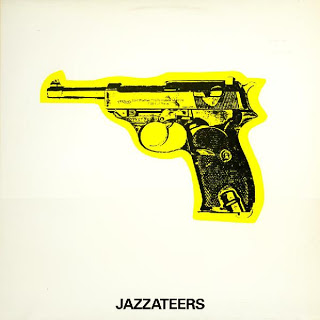
Here’s a repost of one of the last things to be published on the old blog before it was wiped out by Google. It dates from June 2013:-
The 2013 Glasgow International Jazz Festival runs from 26-30 June. Years ago, it used to be a grand affair attracting all sorts of big names to major venues over something like a 10-day period, but a lack of resources and dwindling sponsorship has seen it really scale back over the past decade.
Jazz is a form of music I have no inclination for at all and I’d normally show no interest at all in any of the gigs at the 2013 Festival except that this is happening on Thursday 27 June at Stereo:-
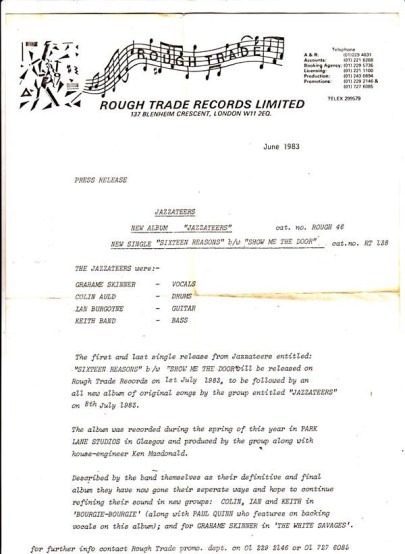
Signed by the legendary Postcard Records, and managed by the label boss Alan Horne, Jazzateers debut 1983 LP “Rough 46” was released 30 years ago on Rough Trade. The album was critically acclaimed but never performed live. The band dispersed (perversely just as media interest was at its most fervid), until reforming now, for one night only. ‘Rough 46′ will be reissued as a redux / deluxe vinyl package by The Creeping Bent Organisation later in the year. One of Jazzateers’ main inspirations Vic Godard will open the evening as special guest, performing with members from former Postcard label-mates the Independent Group, playing a set of jazz standards plus a few surprises.
Technically, the story that appears in the Jazz Festival programme isn’t 100% accuarate but why quibble when the fact is that the band are reforming for one night AND some of the greatest musicians ever to come out of Glasgow will also be on stage as part of the support act.
It’s all quite unbelievable in many ways.
The real Jazzateers story can be ascertained from the way there were ever-changing line-ups:-
JAZZATEERS 1 (1980-1981)
Alison Gourlay (vocals)
Ian Burgoyne (guitar)
Keith Band (bass)
Colin Auld (drums)
Jazzateers 1 signed to Postcard and were managed by Alan Horne. Several tracks were recorded for singles and a debut album, Some tracks were produced by Edwyn Collins, including a version of Donna Summers‘ ‘Wasted’ which was scheduled to be a Postcard single. Another (unreleased) version of Wasted was produced by Pete Bellote.
JAZZATEERS 2 (1982)
Paul Quinn (vocals)
Dee Rutkowski (vocals)
Louise Rutkowski (vocals)
Ian Burgoyne (guitar, vocals)
Keith Band (bass)
Colin Auld (drums)
Jazzateers 2 recorded an album called Lee produced by Alan Horne which was due to be released on Postcard – it’s still unreleased. At this point Alan Horne decided to reposition the group (Quinn, Burgoyne, Band, Auld) and presented them to major labels. They were renamed Bourgie Bourgie and recorded several demos. Eventually Horne decided that Quinn should embark on a solo career and they both moved to London to try and get a deal.
JAZZATEERS 3 (1983)
Grahame Skinner (vocals)
Ian Burgoyne (guitar)
Keith Band (bass)
Colin Auld (drums)
Jazzateers 3 reconfigured with Grahame Skinner on vocals and signed to Rough Trade. Label mogul Geoff Travis had signed them on the basis of the tracks he had heard that the Jazzateers had previously recorded for Postcard. However Jazzateers 3 recorded and delivered an album to Rough Trade that sounded more like the New York Dolls… Travis wasn’t too impressed.
Show Me The Door / 16 Reasons was released as a single swiftly followed by the eponymously titled album, which received excellent reviews. Shortly afterwards Paul Quinn split from Alan Horne and returned to Glasgow from London, and rejoined Band, Burgoyne and Auld. At this point they were joined by Mick Slaven on lead guitar and reverted to the name Bourgie Bourgie, whilst Skinner started a new group with Douglas MacIntyre called White Savages.
The Jazzateers had been booked to appear on a UK television show The Switch on back of the press acclaim the group were getting for their Rough Trade album. However, instead they did the Switch as Bourgie Bourgie (performing Show Me The Door and 16 Reasons), and shortly afterwards were being courted by every major label in the UK. Bourgie Bourgie eventually signed to MCA (with Kenny MacDonald replacing Colin Auld on drums) and released two singles, Breaking Point and Careless, while an album was recorded (unreleased). Paul Quinn left Bourgie Bourgie and rejoined Alan Horne at his new Swamplands label releasing a couple of singles in cahoots with Edwyn Collins.
JAZZATEERS 4 (1985-1986)
Matthew Wilcox (vocals)
Ian Burgoyne (guitar, keyboards)
Keith Band (bass)
Mick Slaven (guitar)
Douglas MacIntyre (guitar)
Stephen Lironi (drums, keyboards)
Jazzateers 4 released a single called Pressing On for the Stampede label. An album – Blood Is Sweeter Than Honey – was recorded but predictably not released. The group felt tired and burned out, even changing their name briefly to Wild Angels in an attempt to shake off the past. Eventually, after a shambolic gig where a broken bass string resulted in a dreadful version of Garageland by The Clash, the group gave up the ghost and walked off stage to mass indifference.
All of the above was pulled from a number of sources – some of which will no doubt be more accurate than others – but it gives you an idea of how hard and how often folk tried to get Jazzateers into the mainstream.
It’s Jazzateers 3 who are reforming for the gig on 27 June and that alone would make this a very special night. The fact that members of the legendary Independent Group will be on stage with the equally legendary Vic Godard makes this a night that just cannot be missed.
2019 update
It was a gig beyond my wildest dreams. James Kirk joined in at one stage and the band played Felicity with Vic Godard on lead vocal.
Jazzateers more than matched the opening act, with Skinner proving he really still had all the moves and could ht all the notes many years beyond his prime. It’s up there as one of my all-abiding memories.
Here’s both sides of the 1983 Rough Trade vinyl single:-
mp3 : Jazzateers – Show Me The Door
mp3 : Jazzateers – Sixteen Reasons
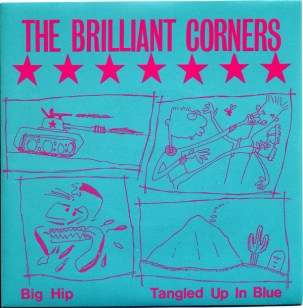
January 2018 was when I posted Delilah Sands by The Brilliant Corners. It was my introduction to the band and at the end of the piece I made a plea for an ICA on account of how much I had enjoyed this initial exposure.
The challenge was taken up by Eric from Oakland. He began what was an outstanding effort with the following words:-
I really struggled between two concepts on this one. Career retrospective, or just my favorite songs? The first record I have is Growing Up Absurd, so I never really listened to the first 3 singles (She’s Got a Fever, Big Hip, and My Baby in Black) before this week. Then there is a clear point in 1989 when the sound changes considerably (most notably by the absence of trumpet). While there are some good post-trumpet songs, none of it would make it into my top 10. In the end I decided that this ICA would be the ICA of The Brilliant Corners as I remember them – ‘85-88′.
A while back, I found while browsing the second-hand record store a slightly tattered copy of one of the early singles that Eric hadn’t really listened to. It was the band’s sophomore effort, on their very own SS20 Records. The reverse of the sleeve makes for a fun read (although I have no idea what line three is referring to!!):-
Well here we are again, four red-eyed gookies with treats galore!
Here to speculate and emancipate (an unhappy pastime if ever there was)
Here to shake the coxa, bong the breeble, and go-go C.P
Trash it!!
BIG HIP hands helping (ho hum) ‘trust me’ he says.
Rasping, violent, beautiful, incoherent.
And for diversity a chocolate head Everly TANGLED UP IN BLUE.
Let lovers lie (dead) said the boy
But remember, if these grooves fail you,
take it and throw it at the fanatical diplomat,
and be sure we are happy!
Keep close to the pavement.
CHIEF IRONSIDE, April 1984
mp3 : The Brilliant Corners – Big Hip
mp3 : The Brilliant Corners – Tangled Up In Blue
The two tracks, between them, last a combined 4 mins and 21 seconds. which means a fraction just under a pound per minute for my tattered copy. Still decent value if you want my opinion.
I’m quite bad for buying records with the intention of posting on the blog and then forgetting all about it.
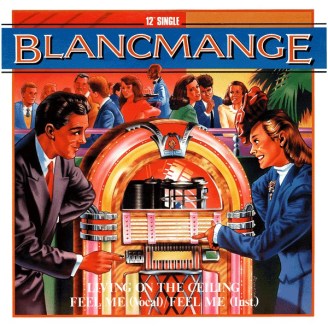
It was way back in September 2018 that I last visited Toronto, and I did come home with a few bits of second-hand vinyl, one of which was a 12″ Blancmange single, with b-sides that were sort-of unique to the North American market.
mp3 : Blancmange – Living On The Ceiling (extended version)
mp3 : Blancmange – Feel Me (extended vocal version)
mp3 : Blancmange – Feel Me (instrumental)
I know from the one previous occasion when the duo featured on the blog that there’s a fair bit of love, particularly for the early material.
Living On The Ceiling was the huge hit over here, reaching #7 in the singles chart. It was the band’s third 45. with Feel Me having been their second (it had reached #46)
Over in the States and Canada, it appears that Catalogue# LDSX202, from which these three tracks are lifted, was the first single by the band.
Doing a bit of research, it does seem that this version of Living On The Ceiling is the same as the UK 12″ and the two versions of Feel Me are those which were on the UK 12″….but it’s handy to have them rolled up on to one piece of plastic.
The apology is for the delay, and also that there are slight skips on occasion towards the end of the lead track (not too surprising given the vinyl is 37 years old!!). I hope it doesn’t detract too much from your enjoyment.
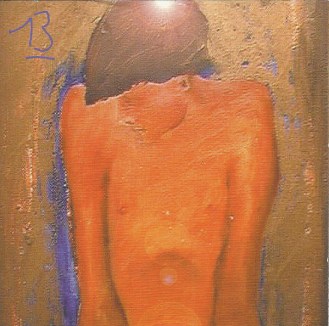
Six albums into their envious career, Blur have finally found a sound to match their name. I’m sure the name initially came from the donut- stuffed mouth of Virgin A&R; reps who feared selling a band called “Seymour” to the Teens UK. “Blur” fits the mold of the monosyllabic, schwa- voweled noun system of Brit-rock nomenclature– Pulp, Bush, Lush, Suede. Now, after nearly a decade, Blur have grown comfortable with their image and talents. From now on, it’s their mission to make ears and speakers uncomfortable. With producer William Orbit spreading gobs of digital fuzz, guitar wash, and deep- space bleeps in heavy strokes with William De Kooning- esque glee, the tracks on 13 bounce between studio walls, planets, and effects pedals until slowly unraveling and releasing with mercurian flashes and cherubic keyboard. It all… well… blurs.
The more Guitar God status fans and critics throw on Graham Coxon, the more Coxon attempts to vigorously destroy such notions with feedback, drilling, and controlled crust, which in turn just makes the fans and critics swoon even more. From the wandering melodies that twang and fall apart in “Tender” to the tongue- in- cheek metal- solo, vacuum theremin freakout, and surf- boogie ending in “Bugman,” to the crescendoing strums of “1992,” Coxon drops creative brain- blowers all over 13. Yet, the album sounds nothing like the band’s last self- titled LP. These days, Coxon’s guitars are manipulated to sound unlike guitars. Plus, layers of organs and loops balance out the intoxicating mix. But it’s Orbit’s UFO studio tricks make 13 a much more cohesive and consistant record than the eponymous LP.
Despite Graham Coxon’s fingerprints, 13 is Damon Albarn’s record from start to finish. From the opening epic, “Tender,” in which Albarn delivers the line “Love’s the greatest thing that we have” with a sarcastic croon after admiting that his heart screwed up his life, to the beautiful, stripped closer, “No Distance Left to Run,” in which he sighs with resignation, “It’s over/ You don’t need to tell me/ I hope you’re with someone who makes you feel safe in your sleep,” Albarn opens his veins over 13’s DAT tapes. Sort of. On “Swamp Song,” though, he goes all Iggy Pop, grabbing the mic with sass and pose. And “B.L.U.R.E.M.I.” could be a Brainiac song, the closest tune here to attaining the backlashed “Whoo-Hoo!”
Despite all the knob- twiddling and pedal- kicking, 13 contains several surprisingly subtle songs. “Trim Tramm” bobs along to quiet chords before kicking in the jets, and “Mellow Song” lets dainty moon- cocktail piano lines and hollow chimes swirl around lovely acoustic plucking. Each song is unique, yet fits perfectly into the overall hungover, psychedelic, 2001 mood. Once again, Blur has kept one step ahead of expectations (well, okay, they didn’t with The Great Escape, but that was still a great record) and continued to impress. In a way, Blur is one of the last big old- school “album” bands, a band more concerned with their entire career than radio singles, more concerned with “album” than “song.” The Beatles made a dozen albums in the ’60s and continually progressed. The reason why is simple: when a band is really, really good, they consistently make good records. Duh.
I’ve always had more than a soft spot for Blur. I liked the baggy-era beginnings but there was nothing at the time that really indicated they would not only be able to stand out from the crowd but enjoy a near 30-year career that would see them sell out stadiums in the UK and arenas in many other places. I fell for them big time in the run-up to and release of the sophomore album, Modern Life Is Rubbish before Parklife and The Great Escape turned them into massive stars, achieving what had long seemed impossible with gaggles of screaming teenybop fans at gigs alongside chin-stroking musos and those of us who just wanted to do whatever dance was appropriate. I stuck by them and was rewarded in 1997 with the self-titled fifth album, one which I feel contains or leads to many of their best moments thanks to the remixes which sneaked out under the cover of the Japanese-only release Bustin’ and Dronin’ the following year.
William Orbit had contributed four of the nine remixes and this, as much as his work with others, led to him being taken on to work on what would become 13, recorded from June to October 1998 in London and Reykjavík.
I think it’s fair to say that 13 was unlike any of the band’s previous efforts but in this instance it proved to be an immediate strength; indeed the diversity of songs and sounds on offer make it an album which is still a joy to listen to, not burdened down by familiarity. I contrast it with Parklife, another excellent record with many diverse songs and sounds but one I can’t but help associate with the time and place of its release and success and the fact that Blur gigs, out of the blue, became gigantic sing-alongs.
In terms of the songs, I really don’t have much to add to what Brent DiCresenzo said all those years ago when he awarded the album a 9.1 rating. There are beautiful and heart-felt ballads, there are tracks which would be nigh-on impossible to reproduce in the live setting and there’s also the most wonderful and radio friendly pop-song on which Graham Coxon took centre stage, assisted ably on backing vocals and harmonies by Damon Albarn:-
mp3 : Blur – Coffee and TV
In later years, it would be revealed that 13 was made at a time of real stress for the band:-
William Orbit – “There was a battle between Damon’s more experimental direction, and Graham’s punk one, and Graham prevailed. If that tension had been growing on previous LPs, it came to a head here”
Dave Rowntree – “Things were starting to fall apart between the four of us; It was quite a sad process making it. People were not turning up to the sessions, or turning up drunk, being abusive and storming off.”
Alex James – “I had songs; I played them to William. He liked them. But I was sulking. I didn’t play them to the others… Now I know how George Harrison felt.”
Graham Coxon – “I was really out there around 13, which made for some pretty great noise but I was probably a bit of a crap to be around.”
Coxon is bang on the money:-
mp3 : Blur – B.L.U.R.E.M.I
mp3 : Blur – Trimm Trabb
13, in summary, is a noisy, abstract and rather experimental album, one which challenged everyone, long-time fans and casual listeners alike. Twenty years on, it’s the album I would contend has proven to be their masterpiece – not the one that most remember above all others, but the one which really does stand repeated listens.
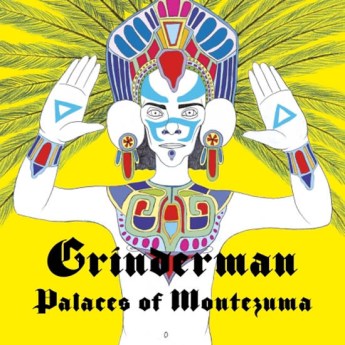
My unwillingness to get involved in the shenanigans around Record Store Day means that this is the only physical copy of a Grinderman single not in the collection. There are copies available via Discogs, but it’s daft money that’s being asked for.
Palaces of Montezuma was one of the softer tracks on Grinderman 2, which had been released in September 2010. The band announced, in early 2011, that it would be issued, with new mixes, as a digital download and then as a ‘limited to 1000 copies’ 12″ release as part of Record Store Day on 16 April 2011.
It turned out there were two new mixes added in along with the album version and a remix of a further track from Grinderman 2:-
mp3 : Grinderman – Palaces of Montezuma (Cenzo mix)
mp3 : Grinderman – Palaces of Montezuma (Barry Adamson remix)
mp3 : Grinderman – Palaces of Montezuma (album mix)
mp3 : Grinderman – When My Baby Comes (Cat’s Eyes remix)
The Barry Adamson remix is the one that does it for me on this occasion. It was great to see how he and Nick Cave could still work so well together after so many years.
The remix of When My Baby Comes is of real interest.
Cat’s Eyes are a duo comprising Faris Badwan, lead vocalist with The Horrors, and Rachel Zeffira, a Canadian-born Canadian soprano, composer and multi-instrumentalist. The duo are quite unconventional but have gained ever-increasing critical acclaim in recent years, culminating in awards for their film score for the 2014 art-house release The Duke of Burgundy.
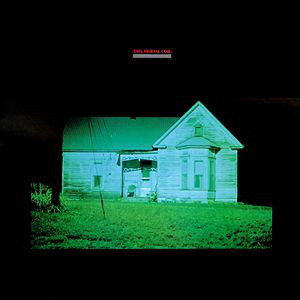
mp3 : This Mortal Coil – Song to the Siren
Here’s a clip made by Channel 4 and shown on The Tube back in the day:-
Sublime. Utterly sublime
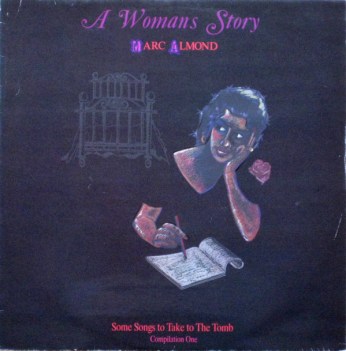
In June 1986, Marc Almond, backed as usual by his Willing Sinners released a seven-track EP consisting entirely of cover versions. The lead track, which had originally been recorded in the mid 70s by Cher, having been penned by Nino Tempo, April Stephens and Phil Spector, was also released as a stand-alone 7″ single:-
mp3 : Marc Almond – A Woman’s Story
The full title of the EP was A Woman’s Story (Some Songs To Take To The Tomb – Compilation One). Sadly, Compilation Two was never released.
The single reached #41 in the charts. I haven’t heard the original, but going by Marc’s vocal delivery, I’m guessing it won’t be too dissimilar. If it had been a hit, it would be a karaoke klassik…..
The b-side of the single was also taken from the EP and it’s one originally written and recorded by Lee Hazelwood:-
mp3 : Marc Almond – For One Moment

It’s just over four years since the only previous occasion The Jasmine Minks featured – it was a reasonably comprehensive feature as part of the look at the tracks on CD86…..I’ll just cu’n’paste from it:-
One of the best tracks on CD86 is Cut Me Deep by The Jasmine Minks. However, it is a bit of a cheat that it is included as the song wasn’t released until 1988 as a track on Another Age, an LP that came out on Creation Records which was of course a central part of the C86 movement.
By this point in time, the band – originally from Aberdeen – had been with the label for four years and in an effort to become pop stars had relocated to London. Sadly, they were just one of many talented bands from the era who never made the breakthrough and they disbanded before the decade was over, suffering in part from Alan McGhee‘s preoccupation with the Jesus and Mary Chain which meant all the other bands on his roster took a seat away at the very back of the room.
The lead vocal on Cut Me Deep is courtesy of Jim Shepherd who had only taken on that role on the departure in 1986 of one of the other founder-members of the band Adam Sanderson. It was Sanderson who sang on what turned out to be the band’s best-selling single, Cold Heart, released in April 1986 and also available on their self-titled debut LP released a couple of months later.
The Jasmine Minks reunited in 2000, releasing the album Veritas, before the band signed to McGee’s Poptones label for the release of Popartglory (2001) and then after another lengthy hiatus, 4 track EP, Poppy White, was released on the Oatcake Records label in 2012 the same year they appeared at the 2012 Indietracks festival in the original 1984 lineup.
In 2014, the band celebrated their 30th anniversary with the release of Cut Me Deep – The Anthology 1984 – 2014 with 48 tracks spread over 2 x CDs.
2019 update
Unsurprisingly, The Jasmine Minks are one of the 115 acts to be include on the recently issued Big Gold Dreams boxset, courtesy of Cherry Red Record. The words ‘a frenetic roar of intent’ were used to describe this, their 1984 debut on Creation Records:-
mp3 : The Jasmine Minks – Think!
I was waiting on either Edwyn Collins or James Kirk to start singing after that inital 20-second burst of energy. Can’t understand why I can’t recall hearing this back in the day and why I didn’t seek it out.
I’ve tracked down the more than decent b-side:-
mp3 : The Jasmine Minks – Work For Nothing

My parents were too young to be beatniks and too old to be hippies, too serious for rock, and had no connection to surf or Motown so, there in the late 50s and early 60s, what they had was folk. From The Kingston Trio to Pete Seeger, Woody Guthrie to Joan Baez. I’m sure it was the combination of my birth in late November of their senior year of college; moving from Portland, Oregon, to Cambridge, Massachusetts, for graduate school; the rigors of grad school at Harvard and Brandeis; then having to leave for St Louis, Missouri, to finish their graduate work at Washington University; and the birth of my brother that meant Bob Dylan, the Beatles, the Byrds, Crosby, Still and Nash, etc. never found a purchase. So, I was raised on 1930s and 50s American folk, at least until I got my own small red round Panasonic AM/FM radio (on a chain) in ’69. We’d moved to New Jersey that summer after my dad finished his PhD and got a job at the AT&T Bell Labs, and I quickly got lost in the insane diversity of popular music available on AM, and FM, radio out of New York City.
But there was always folk… and the best political songs were always folk-ish, and we were a political family in a political time. Now, while my mom grew up the oldest daughter of an MD and a PhD psychologist (rare thing for a woman to earn a PhD in the 30s), both of old New England Quaker stock, my dad grew up in a small post-coal, post-rail, post-paper mill town in the Appalachian Hills of central Pennsylvania. Feminist, race and class politics – in social democratic/reformist varieties – along with anti-war activities and environmental activism ran through our household. All of which is to say that I was 6 and 7 when Martin Luther King, and Bobby Kennedy and Malcolm X and lord knows how many Black Panthers were killed and the long hot summers of urban rioting followed. I was 9 when the Ohio National Guard and Mississippi State Police shot and killed college students. I was 10 for Woodstock (and Altamont) – no, we didn’t go, 12 and 13 for Watergate and the first oil crisis, 15 for the Church Committee investigations into the staggeringly global illegality of the CIA, 16 and 17 for the second oil crisis and the deepening of stagflation and the Three Mile Island nuclear meltdown, and then 18 for the hostages held at the US Embassy in Iran.
But the “folk” music I was getting – I was a in elementary and then high school, right? – was Genesis’s appropriation of pastoral poetry, Led Zepplin’s elves and shit, Dylan’s electric Christianity and, of course, Neil Young. There was sexual politics – Bowie and glam, disco and (homo)sexuality, the questions about Elton John and Rod Stewart’s sexuality, and the Rolling Stone’s Some Girls and Marianne Faithful’s Broken English (slightly different politics there, eh?), but otherwise my friends and I were listening to arena rock, art rock, southern rock (the staple of soccer team parties), bands still active after the 60s like the Kinks, ELO and – for a few – Black Sabbath… and there was Queen and Tom Petty and Boston and Fleetwood Mac and, lord save us, Supertramp and Styx… and Springsteen (I was in New Jersey, after all) and the Grateful Dead. Two people in my high school listened to reggae and one to punk.
As I noted in the Son Volt ICA, there was folk and folk-influenced stuff but, for most kids my age, after there was Neil, there was nothing… nothing from England, Scotland or Ireland resonated, even Fairport Convention was invisible. Post-punk, the paisley underground, and college radio brought it back in dribs and drabs but I think commentators are right that the first Uncle Tupelo record marks the qualitative transformation of people here and there doing this and that to the invention of the genre many now call Americana.
Thinking more about it, on the basis of Robert Christgau’s annual Pazz and Jop polls in The Village Voice, I bought Fear and Whiskey, by The Mekons, and Rum, Sodomy & the Lash, by The Pogues, when I was working in New York and they – each in their own singular fashion – presaged the blending of class politics, folk traditions and punk attitude of Uncle Tupelo…
Here’s the line-up:
The first cut, Moonshiner – from March 16-20, 1992 – is a traditional folk song – at least 75 years old – of contested origin… possibly Irish, possibly American, doesn’t matter. There are other great versions of the song – most first heard it from Dylan and more recently Cat Power and Charlie Parr have recorded excellent versions. But Jay Farrar’s voice exudes weariness, not to the point of mourning, but bone deep, inches from worn out, holding on by a thread magnificence… and unlike Dylan’s version the harmonica is searing without wrecking the mix. If you can’t see the hills, the stills, the poverty, the church’s, bars and mines, I can’t help ya.
Screen Door, from No Depression, is sung by Jeff Tweedy, shifts register just a little. The setting is less the mountains and more rural Illinois, it’s heat, sweat, porches, poverty but celebrating the parochial, the intimacy of equal poverty, the human connection when money doesn’t mediate all activities. There’s an insular populism to the tune but also a deep resilience and sense of place. It’s wholly different from Reagan’s “Morning in America” or the reactionary politics of Kevin Costner’s take on Field of Dreams in that it comes from the Midwest rather than projecting onto it.
Jay’s back in the beautiful, Still Be Around – from Still Feel Gone. The lyrics are simple but, and I can’t point to what it is, intimate that the lyrical complexity of his later work in Son Volt is coming. It’s always struck me as a song about alcoholism and those who love and alcoholic. There’s a richness of feeling and a depth of worry but also an inescapable fatalism about lives tied to the Bible being a bottle.
Black Eye – from March 16-20, 1992 – is a working class tune, a song about all that can be lost when you stay in place, playing the role assigned you, being who everyone knows you to be, releasing your dreams and doing your job. Anything that breaks the flow of the mundane, under such conditions, can be a badge of pride… but if it, too, becomes mundane, there’s hopelessness nearby. It’s about the closest Jeff gets to singing a Jay tune… all the songs the band released were credited to all the band members but it doesn’t take much to identify – sonically and lyrically – who was at the core of which song.
Belleville, Illinois, where Uncle Tupelo are from is, or was, a coal mining area east of St Louis. Coal Miner, by Sarah Ogan Gunning, was originally published in 1937 from the perspective of a coal miner’s wife. Also, from March 16-20, 1992, the original title was “Come on All You Coal Miners.” If you’re looking for anti-capitalism, you’ve found a home, here. I first heard this by Pete Seeger long ago and, while Seeger’s was rousing, there’s a mournful fury in Jay’s voice I prefer… it completely belies his age at the time, how someone with fewer than 25 years under their belt has that depth of feeling, I’ll never know.
Steal the Crumbs, from Anodyne, is a pulsing stroll of a song without a real chorus… harkening back to Still Be Around, it keeps walking, rolling on, the poetry and movement building to:
No more will I see you,
So long since I’ve seen you,
Haven’t we both been living the high life,
It flows on the bottom…
No more,
no more will I see you,
no more will I see you,
no more will I see you.
Whiskey Bottle, from No Depression. I listened to Jeff Tweedy on Marc Maron’s WTF podcast a few weeks back. Tweedy has a new book out about his life in music and there’s a good bit on growing up in Belleville and Uncle Tupelo. True or not, Belleville was long rumored to have the most bars per capita of any community in the US and a comedian once described the main street as the longest bar rail in America… All of which is to say that a song about a whisky bottle, over Jesus, not forever, just for now makes a good bit of sense for a band from a place of that kind.
I mentioned on the Son Volt IC that Uncle Tupelo blended punk and folk… and, while it’s not included here, they even titled a song D. Boon after the lead guitarist and singer of The Minutemen, one of LA’s greatest punk bands. Boon died in an auto accident in 1985. Along those lines, they’d often cover punk and post-punk songs during live performances and I Wanna Be Your Dog – from 89/93, An Anthology – is their blending of Iggy and the The Stooges and the Bottle Rockets (good friends of the band from a town south across the Mississippi River.)
Another cover, a bit more rocking and with better production, is CCR’s Effigy, from 1993’s No Alternative compilation put together as part of the Red Hot AIDS Benefit series. This starts off once again mournful and quiet and then accelerates and intensifies into an explosion of raw guitar fury after about two minutes. They did this live when I saw then in San Francisco in 1992 and it was glorious. I think it’s far superior to Creedence’s original.
And, just to prove that they had punk rock chops – that don’t quite escape the rest of their acoustic sensibilities – I’ve ended the compilation with Postcard – from Still Feel Gone… and other drinking song but one where I hear escape pending, which they clearly did.
Some facts and stats.
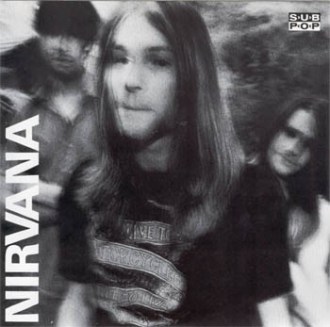
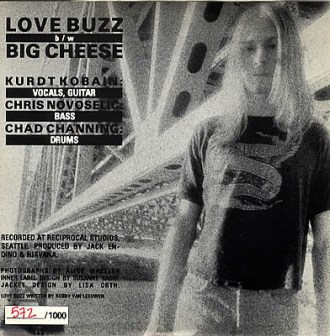
The debut 45 by Nirvana, in November 1988, had a limited run of just 1200, of which 1000 were hand-numbered in red ink and the remainder unnumbered.
It was the very first release of what is now referred to as the first volume of the Sub Pop Singles Club, a monthly subscription service run by the label. Volume 1 ran from November 1988 till December 1993 and issued one single per month to its subscribers, always in limited editions.
The a-side of the 45 was a cover of a song, originally released in 1969, by the Dutch band Shocking Blue. The b-side was an original Nirvana song.
The trip of players on the single are listed as Kurdt Kobain (vocals, guitar), Chris Novoselic (bass) and Chad Channing (drums). It was recorded at Reciprocal Studios in Seattle and production is credit to Jack Endino and Nirvana.
A slightly different mix of the song would also appear on the band’s debut album, Bleach as well as featuring on the Blew EP, released on license by the Tupelo Recording Company in the UK in December 1989.
There are currently two copies of the single up for sale on Discogs. One is from a UK dealer – it is #765. The dealer has graded it as ‘Very Good Plus’ in terms of the vinyl and the condition of the sleeve and is asking for £2,500. A bit of a bargain when you consider that the only other copy, from an American dealer will set you back over £3,600 depending on the exchange rate, although to be fair, this dealer states that the sleeve is near mint and that the vinyl, ‘is super clean with the exception of the tiniest hairline scuff, barely noticeable that does not affect play’ – oh and this copy is #115.
mp3 : Nirvana – Love Buzz
mp3 : Nirvana – Big Cheese
As debut singles go, it is of the raaaaaawk variety with hardly an indication that a revamped Nirvana, with a different drummer, would become the biggest band on the planet.
But you wouldn’t catch me paying anything like the above sums of money for a piece of black plastic just seven inches in diameter.
Imagine, though, if you did happen to have one and had persuaded the lead singer to autograph it……there’s someone on e-bay selling a copy of the single along with an accompanying letter from Kurt Cobain in which he extols the virtues of the debut to a close friend. The single itself isn’t signed but obviously the value is in the letter. The asking price is $39,999.
Bonkers.
I suppose I could have waited a few more months for the Saturday series to go through the letters J,K,L,M and N before getting round to this, but quality calls.
There’s a tremendously informative bio on The Orchids over at LTM Recordings, an independent record label which specialises in reissuing specialising in reissues of what are often long-deleted back catalogues (and whose website has been useful in pulling together info for the Paul Haig series currently appearing on Sundays)
The entry for The Orchids goes into some depth about the formation of the band in 1985, and how a number of DIY recording efforts eventually led to them being one of the first bands to be signed up by the fledgling Sarah Records in 1988. My excuse for not knowing all that much about the label, or indeed ever owning any original releases, is related to the period coinciding with a time when I temporarily lost interest in music, finding time only to keep an eye and ear on, for the most part, mainstream and chart stuff.
Almost all of The Orchids’ back catalogue from this golden era was re-issued on three compilation albums a few years back. I picked up copies of each of them and found myself loving a fair bit of it, although some of the material felt a bit sub-standard, just a bit too jarring on occasions, while other times there was little semblance of a memorable tune.
One of my favourites of theirs is Defy The Law, a fabulous sub-two minute piece of pop that sounds very much like Felt, and was part of the EP that came out as their second release for Sarah. Over to Alistair at LTM:-
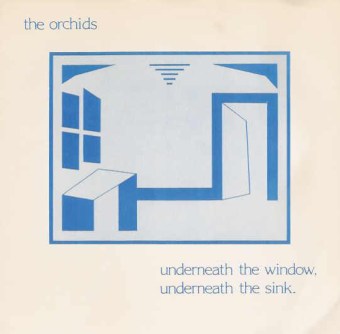
The second Orchids single, in November 1988, was the four track ‘Underneath The Window, Underneath The Sink’ 7″. This was the first Orchids records to be recorded at the legendary Toad Hall, and the first to be produced by Ian Carmichael, unofficial sixth member of The Orchids. Carmichael of course later found some kind of fame with One Dove, although really The Orchids pretty much laid down the blueprint for much of their sound, and were given a thanks on the sleeve of that hit One Dove album. But let’s not get ahead of ourselves.
The ‘Underneath The Window’ single was recorded and released in the midst of the UK’s Poll Tax conflict, and came with a poster featuring a collage of anti-Poll Tax material adorned with the message ‘The Orchids say don’t pay the Poll Tax’. There was more on the record itself, with the blunt song ‘Defy The Law’ (never did revolt sound so sprightly and gorgeously weightless as this) and a blatant ‘FUCK THE POLL TAX’ etched in the run-off groove. And whilst maybe it’s just my snobbery that prefers the initial print-sun sleeve of shades of blue over the starker blue and white later version, it was nevertheless another fairly horrid sleeve housing a fantastic record.
I hadn’t actually equated the song with the popular anti-authority movement, which very much took shape here in Scotland as the poll tax was introduced here before any other part of the UK and went a long way to entrenching a new generation’s worth of hatred for the Tories. If I’d only owned the vinyl, I’d have been much wiser.
It’s a fabulous EP all told, with the four songs displaying different facets of the band, but all adding up to being able to make a case for them being the new kings of indie-pop; only problem was, they were ascending to the throne at a point in time when very few actually cared…..it was now all e’s, dancing and baggy dungarees. Foppish haircuts and a devotion to jangly guitars was soooooooooo yesterday:-
mp3 : The Orchids – Defy The Law
mp3 : The Orchids – Underneath The Window, Underneath The Sink
mp3 : The Orchids – Tiny Words
mp3 : The Orchids – Walter
I now live reasonably close to where Toad Hall Studios were located having been completely unaware of their existence in the decade or so that they were in use.
The recent posting on The Suede Crocodiles made reference to the establishment of No Strings Records in 1983 and the release of the first ever single by Del Amitri.
The brains behind the label were two Glaswegians – Nick Low and Graham Cochrane, and in a parallel universe they will be every bit as feted and celebrated as the likes of Alan Horne and Bob Last. It was Nick who, in 1985, would add The Incredible Blondes to the label’s roster.
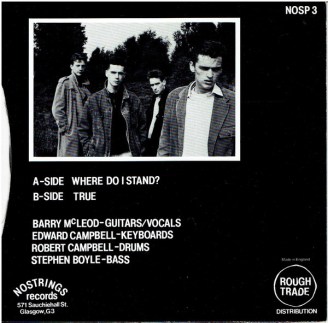
This Glasgow four-piece, consisting of Barry McLeod (vocal, guitar), Robert Campbell (drums), Stephen Boyle (bass) and Eddie Campbell (keyboards) were yet another highly tipped outfit beginning to get noticed on what was a lively and thriving local scene. Although unsigned, they were invited to record a session for the Janice Long Show on BBC Radio 1 which, when aired caught the ear of Nick Low who immediately realised it was the same band which was rehearsing in an adjacent studio to the one he was working in. He introduced himself, talked a bit about the label and before the evening was over, had persuaded The Incredible Blondes to allow No Strings to release a single.
A few months later, Janice Long was among a number of DJs to give this a spin:-
mp3 : The Incredible Blondes – Where Do I Stand?
I’d love to be able to tell you that I had a copy of this single and that I saw the band play live. But I can’t. The Incredible Blondes emerged just as I left Glasgow to live and work in Edinburgh and at a time when I sort of lost contact with all that was happening in the Scottish music scene, save from going to gigs and buying singles and albums by bands that I was already familiar with. The first time I got to hear the single was through its inclusion on the Big Gold Dreams box set.
It turns out that band called it a day when the debut single failed to chart.
The best part of 20 years later found Nic Lowe and Barry McLeod bumping into one another and reminiscing a bit. They realised that this one-off single was still highly sought-after by collectors, particularly in Japan where the band still enjoyed cult status among fans of indie-pop. This led to the two of them delving into the vaults and deciding to give a belated release to a debut album by The Incredible Blondes on the resurrected No Strings Records.
Where Do I Stand? was the name given to the album – and a new version of the song was recorded with a lyric translated into and sung in Japanese by Aya Matsumoto, a waitress living in Glasgow at the time.
mp3 : The Incredible Blondes – Where Do I Stand? (Japanese version)
The album was a mix of old recordings from the 80s and songs penned more recently by Barry. It was launched in March 2005 with the band reforming again for a one-off gig in their home city.
I’m pleased to advise that copies of the album are still available by mail order, on CD and vinyl. Click here for details (and it’s part of the same website from where I’ve pinched much of the info for today’s posting).

From the album Moon Safari and featuring a vocal from Beth Hirsch, perfectly complementing the composition by Nicolas Godin and Jean-Benoît Duncke.
mp3 : Air – All I Need
A #29 hit in the UK charts in late 1998. Utterly sublime.
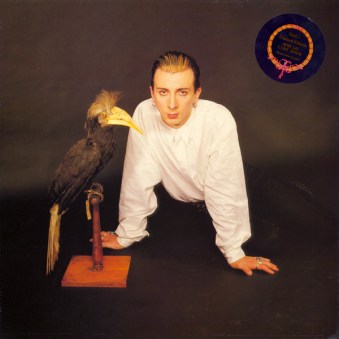
The second solo album was released in September 1985, less than a year after the debut, and indication that Marc Almond was enjoying a particularly bountiful period of creativity. Once again, it was attributed to Marc Almond and The Willing Sinners and contained three singles, one of which pre-dated the album release.
The lead-off single carried the same name as the album, which in itself was a signal from all concerned that they felt it was the strongest of the new material. It reached #23 in the UK singles chart which was the first time Marc had enjoyed a Top 30 hit since his time with Soft Cell.
(4) Stories of Johnny b/w Stories of Johnny (with The Westminster City School Choir) (August 1985 – #23 in the UK charts)
(5) Love Letter b/w Love Letter (with The Westminster City School Choir) (October 1985 – #68 in the UK charts)
(6) The House is Haunted by the Echo of Your Last Goodbye b/w Broken Bracelets (January 1986 – #55 in the UK charts)
One review of the LP was effusive about the tracks chosen as 45s:-
“The troika of brilliant singles from the album’s first half makes the album a keeper alone: the tender title track (written about a young friend of Almond’s who OD’ed), a sassy remake of Mel Tormé’s “The House Is Haunted,” and “Love Letter,” where electronics resurface to a degree not seen since Soft Cell’s collapse.”
The House is Haunted by the Echo of Your Last Goodbye dates from 1934, written by Billy Rose and Basil Adlam. A bit of digging around t-internet reveals that it was first recorded by Paul Whiteman, the leader of one of the most popular dance bands in the United States during the 1920s and 30s, with vocals from cabaret star, Ramona Davies. The best known version was probably that by Mel Tormé who included it as one of the songs on his Tormé LP, released in 1958.
One of the most unusual but most enjoyable shows I went to last year was Glasgow Garden Festival ’18 at which an album of the same name was launched by Jamie Scott.
Here’s an article from The List magazine previewing what I was privileged to later witness:-
An evocation of the International Exhibitions of Victorian times, the Glasgow Garden Festival of 1988 was a turning point in Glasgow’s history, a celebration which was part history lesson, part theme park and part exercise in urban renewal, all taking place on the cleared banks of the River Clyde where the city’s shipbuilding industry used to reside. Within a short period of time, the 1990 European City of Culture festival took place throughout the city, and Glasgow’s recent past as a beacon of flourishing post-industrial art, music and culture has only grown.
Thirty years on, as the regeneration process intensifies and cranes spring up across the city, it seems like a sensible point not just to look back on happy memories of the summer of ’88 (a time which has somewhat different connotations if you’re aware of the history of club music, for which it was the Year Zero ‘Second Summer of Love’) but to consider its implications. With this new themed concept record, producer and rapper Jamie Scott (of Conquering Animal Sound, CARBS and the Save As Collective) has done a bit of both, blending hazy recollections of futurist urban utopia with sober reflection upon the social conditions the Garden Festival was never going to change.
The record begins with a cheerful televised introduction from the period of the Festival’s ‘royal beginning’ in ‘the heart of the rainbow city’ (it was Prince Charles and Princess Diana in happier times, which dates proceedings), and advances through the cheekily-named ‘Make Scotland Shite Again’, which doesn’t quite deliver upon the cynicism of its title. Over a light electronic beat and the sound of steel drums, Scott begins by imagining that ‘when I grow up I wanna be Tom Devine / authority writ upon a thousand spines’, reflecting finally that ‘we are too young to have dug up the garden’; in between, he perfectly captures the confluence of political determinism, misty-eyed optimism and lack of social mobility which characterises Glasgow, the city where ‘we passed the land from laird to brand’.
It’s a warm and contemporary record, buoyed by Scott’s accessible production, his eloquently-formed storytelling raps and some gorgeous pop hooks. ‘The Tower’ is hard-edged, told from the point of view of life lived high up in a tower block, cut off from the city and ‘defined by its limits’; ‘Another World’ is a blissed-out ambient reflection upon place, belonging and nationality, singing ‘these streets criss-cross / with slave trader street names we should have long ago disowned… can the free state halt the rush of the Dear Green Place’s rot?’; and there’s a meditative, halcyon quality to ‘Glasgow Garden Festival ’88’, which is at odds with the sharp-edged and forceful contemporary pop of its companion piece ‘Glasgow Garden Festival ’18’.
The lightness of touch to this music counteracts the force and the honesty of Scott’s lyrics, modern folk tales relating the sense of impermanence he raps of amid ‘(Don’t You) Forget About Me’ (no relation to the Simple Minds song, title aside) and a yearning for a sense of community and halcyon good times which might not even have existed in the past. ‘If all we’re left with are our memories,’ he sings, tellingly, ‘why wouldn’t we make them great?’ Drawing in references to history and the world we live amid today, he’s created one of the definitive albums on the subject of the city of Glasgow.
It was very much a one-off and while a tad bonkers at times, was well worth going along to. I picked up a digital copy of the album (and commemorative t-shirt).
The show closed with a cover version not available on the album, but which was later made available to purchase via bandcamp – a rather poignant cover of Somewhere In My Heart by Aztec Camera (click here for more details).
Jamie did make one of the tracks reasonably widely available in advance of the show….I hope he doesn’t mind me linking a lo-fi version of it here today….again, you can still get a digital copy of Glasgow Garden Festival ’18 right here.
mp3 : Jamie Scott – Another World!

In New York on one of my occasional Stateside trips to visit relatives, I was walking on The Bowery one balmy evening in 2005, zigzagging across the street between the gridlocked traffic. ‘Hey man…’ a voice called out from an open car window, ‘..hey…Robyn Hitchcock…I love your music…’
At the time my greying hair was fairly unkempt and I was wearing a black & white polka dot shirt. I’m also quite tall, so I guess it’s a plausible mistake, not to mention a flattering one. I half-smiled in the guy’s direction as the traffic moved on, then noticed a small spring in my step. It was the first time I’d ever been mistaken for someone even slightly well-known, let alone someone whose music I’ve been a huge fan of since The Soft Boys‘ debut LP ‘A Can of Bees’ way back in 1979. Incidentally, I’d actually met Robyn Hitchcock ten years before my New York moment, in a room above a pub in Cambridge and neither he, I, nor anyone else in the room, remarked upon any physical similarities between the two of us!
Here are ten choice cuts from the great man.
——————–
If you want to dip your toe in with just one Soft Boys record, make it their second LP ‘Underwater Moonlight’ – influenced by equal parts Syd Barrett & Roger McGuinn and in turn hugely influential on the host of jangly US bands that emerged throughout the early 1980s. Out-takes and otherwise unreleased material have stretched and contorted the re-issued album over the years, but the original 10 song running order is virtually impeccable. Robyn still performs ‘Kingdom of Love’ onstage to this day. If he just so happens to be performing it somewhere in the East of England, then there’s a fighting chance that original Soft Boys guitar-slinger (later to become one of Katrina’s Waves) Kimberly Rew will join him on stage…and that’s when real magic happens.
‘…I would ramble all through time and space, just to have a butcher’s at your face…’
1) Kingdom of Love (1980)
Robyn’s debut solo LP actually featured contributions from all of his former Soft Boys band-mates in addition to saxophonist Gary Barnacle, Thomas Dolby plus members of The Vibrators and Psychedelic Furs.
‘Acid Bird’ became a live favourite following the formation of Robyn Hitchcock & the Egyptians and 4 years later an equally terrific version appeared their live LP ‘Gotta Let This Hen Out’.
‘…cutting out a silhouette between, everything is older than it seems…’
2) Acid Bird (1981)
In a just and proper world, ‘Heaven’ would’ve been a massive hit single and seen Robyn appearing on Top of the Pops for weeks on end. Of course, the world is neither just nor proper, but Robyn and The Egyptians did give a memorable live performance of the song during an appearance on the Old Grey Whistle Test in support of the ‘Fegmania’ LP.
‘…and when you seek for it you peak for it all day, and when you choose for it you’ll ooze for it, I’ll say…’
3) Heaven (1985)
Hitchcock has long hailed ‘Visions of Johanna’ as being a key inspiration – ‘…the reason I started writing songs…’. He’s covered Dylan‘s masterpiece in concert many times over the years and there are two separate recordings of the song on his 2002 album ‘Robyn Sings’ alone.
‘Ghost Ship’, bafflingly tucked away on the b-side of the US ‘Balloon Man’ single, is where Robyn truly channels his inner Bob – with utterly magnificent results. A slightly inferior version of ‘Ghost Ship’ turned up on the 1995 odds & sods compilation ‘You & Oblivion’, but this is the one to seek out.
‘…across the wrinkled sea so vast…’
4) Ghost Ship (1988)
In the midst of his tenure fronting The Egyptians, Robyn released the almost totally solo ‘Eye’.
‘Queen Elvis’ appeared in two separate versions on the extended CD version of the album and is still performed regularly in concert, these days often as a duet with his partner, the singer/songwriter Emma Swift.
‘…people get what they deserve, time is round and space is curved…’
5) Queen Elvis (1990)
Sometimes Robyn wraps his songs in delightfully dense lyrical conundrums and other times he gives it to you so straight that it hurts. ‘She Doesn’t Exist’ is a beautiful example of the latter.
‘…I let her go like the fool that I was, thought I’d get over her soon, I smell her perfume when my eyes are closed, and I see her face in the moon…’
6) She Doesn’t Exist (1991)
1991’s ‘Perspex Island’ was released in the UK on Go! Discs and features guest performances from Peter Buck and Michael Stipe. Robyn & the Egyptians toured extensively to promote the LP, including a major trek supporting Billy Bragg. This period was as close as Robyn ever came to crossing over to the mainstream.
‘…I take off my clothes with you, but I’m not naked underneath, I was born with trousers on, just about like everyone…’
7) Birds In Perspex (1991)
His father, the author Raymond Hitchcock, died in 1992 and Robyn’s previously prodigious work rate ceased completely for a full three years. When he returned with 1996’s ‘Moss Elixir’, it was without The Egyptians. ‘
The Speed of Things’ ruminates on the passage of time and contains lyrics as moving as any I’ve heard in popular music.
‘…you held my hand when I was crying, you were allergic to bee stings, I threw some earth onto your coffin, and thought about the speed of things…’
8) The Speed of Things (1996)
In 2006 Robyn formally teamed up with Peter Buck of R.E.M., Scott McCaughey of Young Fresh Fellows, and Bill Rieflin of Ministry, recording three albums and touring for the next four years as Robyn Hitchcock and The Venus 3. Other collaborators during this period included former Soft Boys Morris Windsor and Kimberley Rew, John Paul Jones, Johnny Marr, Nick Lowe and, on the fun-packed ‘Saturday Groovers’, Colin Meloy of The Decemberists.
‘…I heard you cleaned your act up you old trout…’
9) Saturday Groovers (2009)
The first glimpse of ‘Be Still’ came courtesy of an informal pub rehearsal video that appeared online towards the end of 2012, where Robyn was backed by the likes of Terry Edwards, Stephen Irvine from The Commotions, Green Gartside of Scritti Politti, Bedders from Madness and a host of other friends. Here though, is the finished studio recording that appeared on ‘Love From London’ the following year. A really wonderful song, as strong as any from throughout his career.
‘…to where the night is falling on a lover or a friend, somebody’s beginning is just someone else’s end…’
10) Be Still (2013)
I’ve merely scratched the surface here. I feel a Volume 2 coming on.
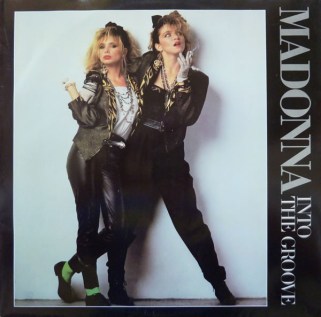
From the outset, I had pigeon-holed Madonna as someone who was very capable of offering up pop fodder, either in the form of catchy but lightweight upbeat songs or moody ballads that wouldn’t have been out-of-place on albums by the poodle-rock brigade. I had every belief she was someone who would disappear off the radar just as quickly and unexpectedly as she had come to the wider attention, cast aside by the record label moguls as soon as the next sex-kitten emerged.
And then I heard this:-
mp3 : Madonna – Into The Groove
Long-time readers won’t be shocked by the revelation that I’m a huge fan of this song. It ticks all the boxes when it comes to disco-pop in terms of its simple lyrics over a killer tune that’s filled with hooks and little bits going on in the background that you don’t appreciate on initial listens. OK, it has what can be accurately described as a very mid-80s production, but it’s done in such a way that it transcends the mediocre and becomes memorable and more than capable of repeated listens. It’s aged way better than almost all of its contemporaries.
The other thing that I found quite remarkable was that Madonna was the co-author of the song, along with Stephen Bray, a Detroit-born musician she had met in the late 70s when she was studying dance at the University of Michigan. I had assumed, wrongly, that she was the type of singer for whom all the songs would be written by others – in other words, that she was a performer rather than a talented artiste in her own right.
I think it is fair to say that Madonna’s audience expanded as a result of the success of Into The Groove, helped also by the fact it was closely associated with the film Desperately Seeking Susan in which she gave an assured screen performance in a production that was as much a critical hit as it was a commercial success. What I hadn’t appreciated until doing a wee bit of background research for this piece is that while it was a #1 hit in many countries (her first here in the UK), it was ineligible for the Billboard charts in the USA as it had previously featured as a b-side to the hit single Angel. Someone at Warner Bros must have got their backside booted for that basic error…….
I love the fact that the song can be interpreted in a couple of ways. On the surface, it is really just a girl thoroughly enjoying herself on the dance floor but wanting a handsome boy in the room to start strutting his stuff right beside her – and more than likely being careful not to tread on her white handbag! But it’s also a lyric with a fair bit of innuendo and undertones – not least the line ‘Live out your fantasies here with me’
More than 30 years on and it’s still a piece of music that attracts critical acclaim. It’s been described as the ultimate 80s song which is maybe stretching things but understandable (for what it’s worth, not that I’m a fan of it, but Do They Know It’s Christmas? surely has to be given that accolade). A writer in Rolling Stone magazine points out that Into The Groove has an amazing bassline, which harks back to my own earlier point about it having things going on in the background that you don’t appreciate at first.
And of course it led to the most unexpected of tributes from Thurston Moore and Co:-
mp3 : Ciccone Youth – Into The Groove(y)
This was one of the tracks played by Stewart Braithwaite at our recent Simply Thrilled evening – it was received rapturously.
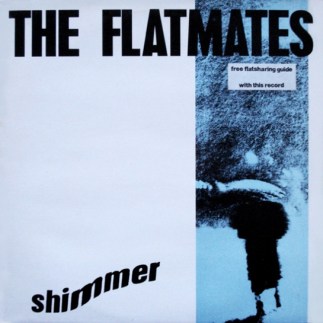
It was back in October 2015 that I previously featured The Flatmates on the blog. It was part of a year-long series looking at bands who had featured on the C86 triple-CD issued by Cherry Red Records in which I gave as much of a bio as I could from what I’d been able to glean while saying lots of positive things about their debut single I Could Be In Heaven.
There were a few very welcome comments added by readers, with some folk taking the opportunity to update the story I’d given with info that the band had, of sorts, reformed. Brian, from Linear Tracking Lives, is a huge fan of the C86 genre and he simply said “The band’s best moment… although Shimmer was pretty damn good too.”
I picked up a 12″ copy of Shimmer a wee while back. And as the heading of the post indicates, my great friend from Seattle was, yet again, on the money:-
mp3 : The Flatmates – Shimmer
Another Buzzcocks meets Shangri-Las type of song. Great fun.
Three tracks on the b-side:-
mp3 : The Flatmates – On My Mind
mp3 : The Flatmates – If Not For You
mp3 : The Flatmates – Bad
The middle track is a cover of a Bob Dylan track….one which actually means a lot to me.
It was back in 2000 when my young brother Stevie got married over in Orlando where he’d been living for about six years. The whole family and a number of his close friends went over for the occasion and I was asked, in advance, if I could read something appropriate which nodded to America, but nothing religious (Stevie is all too aware of my atheist tendencies).
I spoke to a few friends over here about it, including someone who had a huge knowledge of folk music as I thought that might be where I’d find inspiration, and it was he who said the words to If Not For You would work well.
And he was right.
If not for you
Babe, I couldn’t find the door
Couldn’t even see the floor
I’d be sad and blue
If not for you
If not for you
Babe, I’d lay awake all night
Wait for the mornin’ light
To shine in through
But it would not be new
If not for you
If not for you
My sky would fall
Rain would gather too
Without your love I’d be nowhere at all
I’d be lost if not for you
And you know it’s true
If not for you
My sky would fall
Rain would gather too
Without your love I’d be nowhere at all
Oh! what would I do
If not for you
If not for you
Winter would have no spring
Couldn’t hear the robin sing
I just wouldn’t have a clue
Anyway it wouldn’t ring true
If not for you
The Flatmates version is far more danceable mind you….and they make it sound like one of their own!
Oh, and because it was a second-hand copy of the single, I didn’t get to read the ‘free flatsharing guide’ given away back in the day.
 THE NEW VINYL VILLAIN