With Up yielding not just one, but TWO top 10 hits, and a sold-out World tour in full swing, Warners decided to capitalise with the release of a fourth single from Up. They really shouldn’t have bothered – to say it backfired is an understatement.
While Up may not be described as the most ‘user-friendly’ record in R.E.M.’s discography, it nonetheless had some wonderful songs on it. For a fourth single, how about the uplifting Walk Unafraid, without a doubt one of the Up Tour’s live highlights? (here, here!!! – JC)
Or The Apologist with its “I’m sorry” refrain referencing the early classic So. Central Rain? Or even, as a real curveball, Up’s best moment in my opinion, the Krautrock-inspired Leonard Cohen pastiche Hope? (agreed….the best song on the album, but so unlike R.E.M. -JC)
But Warners thought “No, what we need is an utterly forgettable 5½-minute dirge that no one will play on radio and no fans will feel the need to buy again.”
And that’s exactly what transpired. Released on 28th June 1999, Suspicion became the first R.E.M. single in more than a decade not to chart in the UK. That is perhaps the only significant thing I can say about it. Both formats (for there were only two) contained the full-length album version of Suspicion
mp3: R.E.M. – Suspicion
Not even the b-sides can save this one. More live tracks I’m afraid. In this case, more from that Jools Holland special from the previous Autumn. The main CD release included these:
mp3: R.E.M. – Electrolite [live on Later… With Jools Holland]
mp3: R.E.M. – Man On The Moon [live on Later… With Jools Holland]
The collectible 3” CD contained a live in the studio take of Suspicion (though not the same one that appeared on the Lotus single), plus an early fave taken from that Jools show.
mp3: R.E.M. – Suspicion [live at Ealing Studios]
mp3: R.E.M. – Perfect Circle [live on Later… With Jools Holland]
Not the most inspiring way to sign off the Up era, but perhaps in some way fitting considering what was to come over the next few years…
R.E.M.’s songs have provoked a lot of discussions over the years as to their meaning and inspirations. At My Most Beautiful has been interpreted in various ways, but for perhaps the only time in the band’s entire catalogue, there is nothing at all to interpret here – it’s just so blindingly obvious.
mp3: R.E.M. – At My Most Beautiful [radio remix]
At My Most Beautiful is a love song, pure and simple. Lyrically, for the first time, Stipe wrote from the point of view of being head over heels in love with someone who is also in love with him. It all started when the line “I’ve found a way to make you smile” popped into his head. “I just thought that’s the most beautiful thing in the world”. It took him a year to finish the lyrics while he tried to figure out what those ways to “make you smile” were. After a conversation with Patti Smith one morning, he eventually completed the lyrics in 45 minutes. He had grown tired of writing what he termed “ironic love songs” and set out to pen “the most romantic song I’d ever written”. And he did, the resulting lyric being playful and – dare I say it – “cute” (ugh! Pass the sick bucket), but devoid of the usual horrid clichés such songs usually resort to.
The word ‘smile’ wasn’t lost on Stipe either. “All I knew was The Beach Boys had a record called Smile so I was like, ‘Well, this will be my gift to Peter, Mike and Bill’ [who were all Beach Boys fans].”Mike Mills wrote the basic piano track and immediately thought it sounded like something Brian Wilson might have written. When Peter Buck heard it, he thought the same. So they deliberately set about creating a Beach Boys homage. And that’s a point worth making: there are no pretensions here; if you think it sounds derivative, it’s really meant to be. And it’s not just the piano and vocals that are referenced. Buck plays drums on At My Most Beautiful, using legendary session drummer (and BB collaborator) Hal Blaine as direct inspiration.
For me, despite all those Beach Boys allusions (and maybe, in some ways, because of them), this is one of R.E.M.’s very best songs. It’s so straight-forward and honest, and beautifully arranged, it’s almost impossible to find fault with. Those vocal harmonies are absolutely divine. It would always make an R.E.M. mixtape/playlist where many other singles would not. I knew this from the first time I heard it and that’s not changed in 25 years.
For the single a remix of sorts was devised. However, you’d be hard-pressed to spot the differences. I think (to my ears, anyway) that as the intention was for the song to gain radio play, it was mixed so all the sounds were consolidated to be heard across both channels simultaneously. For instance, if you listen on a good pair of headphones, you may be able to notice that on the album version, the bass guitar is mainly on the left, while in the right ear you can hear bells. That distinction isn’t quite so clear on the so-called ‘radio remix’. But now I’m beginning to sound rather nerdy…
Released on 8th March 1999, At My Most Beautiful became the second top 10 hit off Up (the band’s 7th overall in the UK) when it landed squarely at #10 the following week. The usual three formats were on offer but the well was dry in terms of unreleased songs, so the live archives were plundered. Around the time of Up’s release, R.E.M. were the subject of a special episode of Later… With Jools Holland on the BBC in which they were the only band appearing. They played a set of 13 songs featuring 6 from Up, another half dozen from their back catalogue plus a cover version. For the b-sides of the final singles from Up, this show was sourced. So the cassette and standard CD included that cover, the second Iggy Pop song the band had issued in recent years:
mp3: R.E.M. – The Passenger [live on Later… With Jools Holland]
The CD also included a version of my all-time favourite R.E.M. song. I don’t actually care how often Country Feedback has been put out, you can never have too many versions of it!
mp3: R.E.M. – Country Feedback [live on Later… With Jools Holland]
The collector’s 3” CD eschewed the single version of the title track in favour of a version recorded just two days prior to the Jools show as part of a BBC radio session for none other than John Peel. It also included a classic oldie from the Jools Holland performance.
mp3: R.E.M. – At My Most Beautiful [live Peel Session, BBC Radio One]
mp3: R.E.M. – So. Central Rain [live on Later… With Jools Holland]
In spite of the commercial success of At My Most Beautiful, and the fact it was such a good song, sales of Up continued to falter, becoming the band’s least successful record since Document. The signs were that R.E.M. had not just reached their peak, but that they had begun their descent…
Up is an album unlike anything R.E.M. ever made before or would ever make again. It was certainly their most experimental with all kinds of things going on. You won’t find a more diverse mix of styles on any of their records like you get in the first six songs on Up. Some of those styles were never revisited (in the case of Hope, that’s such a shame) while others became the R.E.M. sound of the early noughties.
It’s certainly an odd one, and whereas the album’s first single gave us something we might have expected from R.E.M. a few years earlier, the next track was a one-off. Lotus appears as track two on Up, immediately following the ethereal, ambient electronica of Airportman, surely one of the most un-R.E.M. songs they ever made. But then, Lotus is also rather off-kilter. Built around a funky groove led by Mike Mills’ organ, Lotus is somewhat restrained in its arrangement while at the same time flaunting its glitzy, glammy sexiness for all to see. It screams: “I’m a hit single! Release me, release me!”
That is until you get to grips with Michael Stipe’s lyrics. The song’s protagonist is a troubled soul, struggling with depression, longing for a more peaceful state of mind. The second verse illustrates this best of all:
Storefront window, I reflect Just last week I was merely heck Tip the scale, I was hell It picked me up, then I fell Who’s this stranger? Crowbar spine Dot, dot, dot, and I feel fine Let it rain, rain, rain Bring my happy back again
The Lotus of the title may therefore be a reference to the lotus flower, believed to produce calming, psychoactive properties when ingested. In Homer’s Odyssey, Odysseus inadvertently lands on an island where the primary food is the fruit and flower of the lotus plant. It caused the inhabitants to sleep peacefully and forget everything. Stipe’s lotus eater may be trying to reach that state in order to relieve his torment. The lotus here, therefore, may be anti-depressant medication, or illegal narcotics like heroin or meth. I’m not hopeful for the poor wretch, either way.
There’s all sorts of things going on in Lotus that you don’t necessarily pick up on straightaway. Buck’s guitars are laced with swirling psychedelic effects, Stipe’s vocals are delivered rhythmically as opposed to melodically, and there are lots of little bleeps and buzzes on the backing tracks that perhaps fill the sound out more than you think they would. Grab your headphones and turn the volume up for this one. And of course, you’ll have noticed the reference to an old classic in those lyrics too…
mp3: R.E.M. – Lotus
Lotus opened more or less every show on the subsequent Up tour. It was released as a single on 7th December 1998 and reached a disappointing #26 in the UK charts. As much as it screamed and screamed, it clearly wasn’t as big or important as it thought it was. There were three formats; the cassette and standard CD included a throwaway instrumental like those they always insisted on including on such releases.
mp3: R.E.M. – Surfing The Ganges
The CD also gave us a remix of the title track. I’m not quite sure what anyone hoped to achieve here, but this remix doesn’t really offer a great deal more than the original does. Sure, it sounds quite different in places, but it’s ultimately the same song with some bits turned up, some bits turned down, a couple of extra effects thrown in here and there… Am I being unkind here, or could Lotus have yielded something so much better from a remix?
mp3: R.E.M. – Lotus [weird mix]
The collectible 3” CD contained the title track and a live, in the studio take, of another song from Up, Suspicion, the track which follows Lotus on the album. As you’ll find out in a couple of weeks, this is not my favourite R.E.M. moment.
mp3: R.E.M. – Suspicion [live in the studio]
From a purely personal point of view, I’ve always liked Lotus. In fact, the first time I heard it I grinned from ear to ear. While it’s not the novelty some previous singles have shown themselves to be, I can’t say it has aged terribly well – it’s very late-90s. It also wasn’t the best track from Up. In fact, the next single would prove to be one of the finest of R.E.M.’s entire career…
And so we reach what can be described as R.E.M.’s “difficult period”. Sessions began on the band’s 11th album in 1997, but during the early rehearsals, drummer Bill Berry quit. Bill had fallen seriously ill during the Monster tour and no longer wanted to travel. He retired and became a farmer, leaving Buck, Mills and Stipe to continue as a trio. But Berry wasn’t just R.E.M.’s drummer – his part in the band’s overall sound and creative process was just as important as that of the other members, and many feel his departure signalled the start of a downward spiral for the band.
Apparently though, the early Up sessions already incorporated the electronic elements that were embedded in the finished record’s sound. The band have stated that even if Bill had stayed, Up would have sounded much the same. But despite this shift in dynamic, the album’s lead single sounded familiar and warm.
mp3: R.E.M – Daysleeper (single edit)
Daysleeper revolves around Peter Buck’s acoustic guitar and Mike Mills’ harmonium (or synth with a harmonium setting), and is a song about someone who sleeps during the day. Whoever said Michael Stipe’s lyrics were esoteric? “I was in New York… walking down the steps of this building. I come to a door and there’s a sign on it that says ‘Daysleeper’, and I walked a lot more quietly down the steps, thinking about that poor person who’s trying to sleep, and me and my big old boots interrupting her sleep. So I wrote this song about a daysleeper that’s working an 11–7 shift and how furious the balance is between the life that you live and the work that you have to do in order to support the life that you live.”
My initial reaction was one of indifference – it was pretty much R.E.M. by numbers as far as I was concerned – but repeated listening paid dividends. Having recently revisited the song, I think it really is a bit of a gem melodically and one of Up’s more memorable moments. It even yielded a prequel; the band’s next album Reveal opened with The Lifting which features the same character.
Released on 12th October 1998, Daysleeper became R.E.M.’s sixth Top 10 hit, peaking at number 6 one week after its release. It came in three official formats, all of which contained the single edit of the title track (basically it was the album version with the few seconds of intro at the very beginning cut). The cassette and CD single included the instrumental track Emphysema, a light, bossanova rhythm with keyboards and badly-played accordion over the top. Another of those disposable b-sides you really don’t need.
mp3: R.E.M – Emphysema
The CD also contained a version of another of Up’s highlights, Why Not Smile. This version is much shorter, more sparsely arranged, and is utterly gorgeous. Buck’s acoustic arpeggios and Mills’ organ hold it together while Stipe sings to someone so utterly despondent, he feels his words just cannot get through. Regardless, he reassures this person that he is there for them. That snarly feedback bit that comes in at the second verse is apparently Stipe’s debut on guitar! This version of Why Not Smile originally featured a few months earlier on a sampler CD with the southern literary magazine Oxford American, hence the title.
mp3: R.E.M – Why Not Smile [Oxford American version]
The third format was, sadly, not vinyl (though as had been the trend with the previous album, jukebox editions were pressed) but a 3” collectible CD. As well as Daysleeper, it included a live, in the studio take, on another Up track Sad Professor, an altogether cleaner-sounding version than the feedback-drenched album track. I much prefer the album version personally, but it’s never been a big fave.
mp3: R.E.M – Sad Professor [live in the studio]
Up sounded nothing like any other R.E.M. album. Stylistically it was all over the place, but that’s not to say it doesn’t have some great, great moments on it. Its main fault is its length. There are too many songs on it in my opinion and a third of them are average at best. I have my own 10-track alternative version which I really like much better than the real thing. And yes, Daysleeper is included.
A GUEST POSTING FROM TWO MORE COOL DUDES IN CALIFORNIA
Jonny the Friendly Lawyer writes: – It was fun talking with Vincent Landay about his work on REM’s ‘Crush With Eyeliner’ video with Spike Jonze. I knew Spike was involved with the video for ‘Electrolite’, too, so I thought we’d give it another go. But when I asked Vince about it he said, “I had nothing to do with that one and Spike was only second camera. Peter Care directed that video.”Vince, being Vince, knows everyone in the business and connected me with Peter straightaway.
Vince described Peter as “a friendly and charming Brit—you’ll love him.”Of course, Vince was spot on. Peter and I chatted for nearly an hour and the interview went like this:
JTFL: How’d you first meet REM?
Peter: I’d done a number of music videos earlier in my career but had gone on to make tv commercials. I hit a brick wall with that and wanted to get back to more interesting work. I knew Warner Bros.’ video commissioner so I called to ask her if there were any bands I might work with. She suggested REM and, after some excruciating phone tag with Michael Stipe, we ended up working together on ‘Radio Song.’ It was a fantastic experience that began a long and rewarding friendship with the band.
J: What do you like about working with them?
P: REM have a certain sophistication about film-making and culture. They also always had a lot of ideas, or kernels of ideas to run with.
J: For example?
P: Doing a crowd surfing video for “Drive,” and doing “What’s the Frequency, Kenneth?” as a straight performance, things like that.
J: Is that different from the other acts you’ve worked with?
P: Every band is different. Some are just concerned about how much screen time they’re going to get. Or, they might come up with ideas that are so over budget there’d be no way to do them. Other bands were just not as interested in the craft of making videos. Then there are artists who know how to work with a director to get what’s best for the music. Tina Turner, for example, was a joy to work with.
REM are unique in that they’re highly professional about filmmaking and understood and enjoyed the process. Something really clicked between me and the band. We developed a sort of shorthand way of communicating and there was a lot of trust between us. We were comfortable critiquing each other’s ideas.
J: What was the thinking behind ‘Electrolite’?
P: We’d done a number of different things by that point. Highly stylized black and white videos like ‘Man on the Moon’ and so on. This time they just wanted to do something stupid. “Stupid” is the actual word we used.
J: Is that why there are several seemingly incongruous scenes?
P: No. The reason for that is I was a little off guard when Michael called me up about doing a new video. It was very bad timing because I had just finished a commercial shoot and was exhausted. So I proposed splitting the video up into four or five different pieces, each of which would be done by a different director, with no continuity between them. I was working with a production company called Satellite then, and asked if any of the people there were interested. In the end Spike agreed, so we did it together.
J: Where was it shot?
P: The opening scene was shot in the lobby and coffee shop of the Ambassador Hotel.
[Jonny notes: check out The Ambassador. A legendary LA hotel opened in 1921. Home of the famous Cocoanut Grove nightclub where Hollywood icons (Chaplin, Monroe, Fonda, Sinatra, Hepburn etc.) hung out. The Oscars were held there once. It featured in lots of big budget films, too (Forrest Gump, Almost Famous, The Italian Job, etc.). It was also where Robert Kennedy was assassinated in 1968. Sadly, it was demolished in 2005.]
The other interiors were shot on a soundstage. The folks in chains were passersby we filmed in the street or wherever we found them. We shot the dune buggy scene out in the desert. Spike’s scene at the end, with all the special effects, was shot on a giant green screen and green floor in the parking lot of the Ambassador.
J: Spike’s scene?
P: Yes, that’s one of the most popular parts of the video and Spike did it. I’d asked him to get involved and I wanted to give him a lot of room to do what he wanted. So a lot of the budget was reserved for that part. That’s why it’s the one section that’s like its own little film. It has an independent structure within itself.
J: I thought Spike was “second camera” on the shoot.
P: No, he was the co-director and should be credited that way. It’s true that he and I did some of the ‘guerilla’ scenes of the people in chains, which were shot with 16mm cameras. But he directed the parking lot scene at the end.
J: Were any of the chained folks cast?
P: No. Our production assistant just asked whoever happened to be walking by if they’d like to be in an REM video, draped with chains. Completely random. Most people said yes, and that’s who’s in the video.
J: What else was “stupid” about the shoot?
P: Everything. Filming a scene upside down, rubber reindeer suspended from the ceiling. There’s a part where the band appear in silly outfits, as if they’re being interviewed. They weren’t—they were just gibbering on about nothing.
J: The costumes are excellent. Who did you work with?
P: A brilliant costumer called Debra LeClair. I worked with Debra on I can’t remember how many projects, but definitely some high profile ones. Videos for Tom Petty and Bruce Springsteen and several others.
J: Who else worked with you on the video?
P: The editor was Angus Wall, who was also brilliant. He totally understood what we were after. We deliberately set up ‘bad’ edits that were the complete opposite of what you’d do in a typical music video. So, for example, we keep recutting incongruously back to the same shot of Bill over and over at the beginning. It doesn’t fit the song at all.
J: Why have I heard of Angus Wall?
P: Because he went on to become a highly sought-after film editor. He worked a lot with David Fincher and won Oscars for his editing in The Social Network and The Girl With The Dragon Tattoo.
J: Oh, that Angus Wall.
P: Yes, that one.
J: I’ve read that the song is sort of an homage to Los Angeles, or to Michael Stipe’s experience of it. He mentions famous actors and Mulholland Drive in the lyrics. Did that have any influence on the video?
P: Not at all.
J: How long did it take to make it?
P: Oh, a couple of days talking with the band, 5-6 days to prep, 3 days of shooting with conventional cameras (and some more time for the handheld camera scenes), 4-5 days to edit. So, about three weeks?
J: What was most fun for you?
P: When I was a young filmmaker I had a fantasy of working with Roger Corman. I never got to do that but I did see some production stills from one of the last films he worked on. The images were of armored knights jousting on dune buggies in the desert. It was such a crazy idea, and that’s how we ended up with the dune buggy scene.
J: Who was in the suit of armor? It’s not one of the band.
P: The guy in the suit of armor was Bono.
J: Are you kidding? That was never Bono!
P: REM shoots always had major celebs visiting.
J: Wow. I wonder how he got the visor down over his shades!
P: *polite silence*
J: Er, lastly, one of the esteemed contributors to this venerable blog wrote about REM that “Mills is an okay bassist and a crap singer. Berry is at best a passable drummer.” Would you agr—
P: That is one of the stupidest things I’ve ever heard.
JC adds.…..This really is beyond any call of duty. Jonny had no idea how much the song means to me, nor the fact I’ve always loved the video, so when he floated the idea of getting in touch with Peter, I was excited and hopeful in equal measures, but deep down I thought it was a long shot. I’m still in shock and awe a few days after the email dropped into my inbox.
Peter Care is actually a legend when it comes to making music videos – as far back as 2005, he received a Lifetime Achievement Award for his work in the field from the Music Video Production Association. He got noticed primarily through his early pioneering work with Cabaret Voltaire and between 1983 and 2004, he worked with almost 30 different singers/bands, many of whom are no strangers to the pages of this little corner of t’internet. If you like these songs, then go and visit YouTube or the likes and have a look at Peter’s outstanding work
mp3: Cabaret Voltaire – Sensoria
mp3: It’s Immaterial – Ed’s Funky Diner
mp3: PiL – Rise
mp3: Bananarama – Venus
mp3: New Order – Regret
mp3: James – Say Something
As far as R.E.M. goes, Peter has directed seven music videos along with the excellent Road Movie, the 90-minute documentary/concert film recorded in Atlanta, Georgia in 1995 at the end of the band’s world-wide tour to promote Monster.
As I said, he’s a legend, so a huge thanks to Vince for helping out with the initial contact, and of course to Peter for being so generous with his time when Jonny connected with him.
Up until now, both myself and The Robster have been pulling these pieces together weeks and sometimes months in advance. It’s been an absolute joy to have embarked on this particular adventure in hi-fi and having been lucky enough to read what’s coming up over the next few weeks, all lovingly composed by my better half, the quality is going to be maintained.
It would have been last October or November when I would have insisted that the look back at the 31st UK single from R.E.M. would be my responsibility. At which point I got writer’s block that I’ve only managed to overcome as a result of an impending deadline.
Cards on the table.
Electrolite is my favourite single of them all. Back in 2008, when I pulled together my 45 45s at 45 series, nothing from R.E.M. made the cut, but as a preface to the actual series I did say that the five songs which would have taken things up to #50 were, in alphabetical order, :-
Billy Bragg – Levi Stubbs’ Tears Morrissey – November Spawned A Monster REM – Electrolite Stereolab – Ping Pong Violent Femmes – Blister In The Sun
This was done to demonstrate just how hard it had been to come up with the final list of 45 singles, all bought at the time of their original release, with only one song per singer/band.
So why do I have such a love for Electrolite?
The writer’s block I feel is an illustration that I have a real difficulty putting it into words.
The first time I heard it was as the closing track to the album. I got a real sense of melancholy as the tune and lyrics just seemed to capture a frame of mind I was in…looking back it was a wee crisis of confidence more than anything, but for the first time in my life I actually felt I was about to take a mighty tumble, with hopes and aspirations for my career suffering a setback. There were also a few things going on with friends that were a bit of a concern, although thankfully Rachel (aka Mrs Villain) was proving to be a rock.
New Adventures In Hi-Fi helped me immensely at the tail end of 1996 – a sprawling, ambitious and hugely unexpected record requiring a high degree of dedication to be fully appreciated. Over an hour in length, it was a diverse and, at times, audacious listen, constantly shifting direction and pace. It was a demanding listen, best appreciated through a set of headphones, whether for the loud rock-out moments or the beauty of the quieter songs, some of which, if developed fully, could easily have delivered another hit as monster as Everybody Hurts.
By the time the album rolled around to track 14, the album closer, I’d often be exhausted and exhilarated in equal measures. And then the sound of what I later learned was a guiro would kick in and the song I cannot but think of as a companion piece to (Don’t Go Back To) Rockville would start to wash over me:-
mp3: R.E.M. – Electrolite
A few years short of the millennium and Stipe has composed his farewell to the 20th Century, name checking three of the coolest lead men in Hollywood history, backed mainly by a magnificent piece of piano magic from Mike Mills, but on which there is also the most perfect playing of a banjo, a violin and various pieces of percussion to be found on any CD/record that I’ve ever owned.
I think it’s fair to say that I immediately put this song on a pedestal. Any thoughts that it might ever be removed dissipated around a year later when Bill Berry announced he was leaving R.E.M., which means that this holds its special place in history as the last song on the last album recorded by the four-piece.
Here’s another thing I need to mention.
The series of ICAs that this blog has become ‘best known’ for has long given me a real sense of pride. I don’t know how the other composers go about their work, but with almost every ICA I’ve ever written, I think to myself ‘Is this as good a closer as Electrolite?’ Is it a song that makes me want to immediately go back and listen all the way through the album again?’
Electrolite, like the two other 45s taken from the album, came out in cassette form as well as a standard and ‘Collectors Edition’ CD (the only difference being the packaging) on which you could find two live tracks taken from a gig in Atlanta on 18 November 1995:-
mp3: R.E.M. – The Wake-Up Bomb (live)
mp3: R.E.M. – Binky The Doormat (live)
As The Robster mentioned last week, the former had been the song the record label most wanted as the follow-up to E-Bow The Letter and the live version does demonstrate both how well it would have sounded coming out of radios and how much it would likely appeal to those whose interest in the band was beginning to diminish.
The latter is one of those tracks on New Adventures that grew on me with each listen. I can give it no higher compliment than it wouldn’t have been out of place on Monster, and the live version captures the band at their best, albeit a long way removed from the Murmur/Reckoning/Fables era of less than 15 years previously.
The fourth track was a remix of one of my own favourites from Monster:-
mp3: R.E.M. – King Of Comedy (808 State Remix)
It was wholly unexpected to read of the collaboration on the sleeve notes of the CD single. I went in with a bit of fear and expecting the worst, but came out with a smile on my face. As Bones might have said in the early days of Star Trek, ‘it’s R.E.M., but not as we know it, Jim.’
And in this case, that’s something to enjoy and appreciate.
Stats wise, Electrolite reached #29 in the UK singles chart in December 1996. It would be almost two full years before the next 45. The Robster will take your hand and guide you through it, as he will with all four singles from Up.
I’ll see you all again in due course. Thanks for your continued support, and hopefully enjoyment, of the series.
A couple of days ago, the latest instalment of the R.E.M. singles series made reference to the acoustic version of New Test Leper that had featured as one of the b-sides to Bittersweet Me.
I got thinking that perhaps not everyone will be familiar with the songs which appeared on New Adventures In Hi-Fi, and given that the original version of New Test Leper is such an outstanding piece of work, I’ve decided to feature it as part of this series:-
I can’t say that I love Jesus That would be a hollow claim He did make some observations And I’m quoting them today “Judge not, lest ye be judged” What a beautiful refrain The studio audience disagrees Have his lambs all gone astray?
Call me a leper Call me a leper Call me a leper
“You are lost and disillusioned” What an awful thing to say I know this show doesn’t flatter It means nothing to me I thought I might help them understand What an ugly thing to see “I am not an animal” Subtitled under the screen
Call me a leper Call me a leper Call me a leper
When I tried to tell my story They cut me off to take a break I sat silent five commercials I had nothing left to say The talk show host was index-carded All organized and blank The other guests were scared and hardened What a sad parade What a sad parade
Call me a leper Call me a leper Call me a leper Mmmm Mmmm
mp3: R.E.M. – New Test Leper
There’s a whole page on wiki devoted to the song:-
“It was recorded at Bad Animals Studio in Seattle, Washington, in March 1996, four months after R.E.M. completed their 1995 world tour in support of their previous album, Monster. On the track, Bill Berry plays drums and shaker; Peter Buck plays guitar; Mike Mills, bass and organ; and Michael Stipe provides the vocals, which were penned during moments of downtime at the studio.
The following month, on April 19, the band recorded an acoustic version of the song at the same location. That version was released as a B-side to the “Bittersweet Me” single. The video of the performance, directed by Lance Bangs, was used as the video to the album version of the song in the Bonus Videos section on the band’s In View DVD, released in 2003.
The first line of the song contains the lyrics “I can’t say that I love Jesus”, attracting some controversy. Peter Buck clarified the matter to Q magazine’s Tom Doyle in 1996: “It’s written from the perspective of a character that Michael saw on TV on a talk show. But are people going to think Michael’s talking about himself not liking Jesus? I don’t think that people will take us that seriously. It’s not like we’re tearing up a picture of the Pope on television.”He was referring to Sinéad O’Connor‘s 1992 Saturday Night Live incident.
“‘New Test Leper’ is something that we only played at soundcheck, like, twice,” Buck explained in another interview, this time to Addicted to Noise’s Michael Goldberg, also in 1996. “And for some reason, we just forgot about it and never really played it. I don’t know why. Michael just happened to luckily enough have it on tape. He says, ‘I’ve got this great stuff for that song and none of us even remember playing it.’ So we cut it here in Seattle when we did the record. I think it’s probably the most R.E.M.-ish sounding thing on the record. Literally, Michael was watching one of those talk shows and I think the subject was ‘People judge me by the way I look’ or something. Whereas I, when I have the misfortune to look for two minutes at one of those Oprah, Geraldo things, I just get revolted at everyone concerned: the audience, me. Michael actually looked at it and felt like, ‘Gosh, what if someone’s actually trying to communicate something to these people and this person who’s in this awful, tacky, degrading situation?’ So it’s written from that perspective. And I think probably having done press conferences in the past and being in those kinds of situations, there might be a little empathy from experience that we’ve had.”
According to Darryl White’s R.E.M. Timeline, “New Test Leper” received its first live airing on May 31, 1997, at the Variety Playhouse in Atlanta during the final show of The Magnificent 7 vs. The United States’ tour. The “Magnificent 7” was composed of Peter Buck, Mark Eitzel, Justin Harwood, Dan Pearson, Barrett Martin, Scott McCaughey and Skerik Walton, with other people performing occasionally. Buck’s R.E.M. bandmates were present, and the guitarist left Eitzel to perform the last encore to go backstage and talk with the trio. Berry, however, had already departed and was on his way home. “Bill phoned me after the show to tell me he’d loved it,” explained Buck. “But he had to leave halfway through because he was scared he’d be asked to play. It had taken him two hours to drive there; he stayed for forty minutes, and then drove home so he wouldn’t be asked to play one R.E.M. song.” The remaining threesome put together a short set and took to the stage.
During R.E.M.’s performance on VH1 Storytellers in 1998, Stipe explained the background of the song he described as his “crowning achievement”: how he initially (and, thankfully for him, erroneously) thought he’d stolen the song’s “biggest line” – What a sad parade – from his friend Vic Chesnutt; how he wanted to write a follow-up to the only other song he knew that contained the word Jesus in the first line – namely Patti Smith‘s re-working of Van Morrison‘s “Gloria” (“Jesus died for somebody’s sins but not mine”); how he “wanted to write a song that was in the 6/8 polka kind of thing, but wanted the vocal to be contrapuntal; and how he quoted his favorite movie in the second verse (“I am not an animal,” from The Elephant Man, a movie that Stipe says also inspired R.E.M.’s “Carnival of Sorts (Box Cars)”, amongst others).”
And, just to round things off……
I reckon this illustrates perfectly just what The Robster has been saying this past couple of weeks about how different NAiHF would have been regarded if certain other songs had been released as singles.
Continuing on from last week’s theme of New Adventures In Hi-Fi being R.E.M.’s most overlooked record – commercially, the backlash started here. It was becoming clear there wasn’t going to be another Losing My Religion anytime soon, and commercial radio stations and bandwagon-jumping casual fans were not going to be playing new R.E.M. records like they had for the previous few years (despite the fact the band had existed for 10 years and released 6 albums before LMR came out).
One theory about New Adventures’ failure to capture the general public’s imagination is that it was entirely deliberate, that the band was beginning to tire of the fame. The story goes that following the esoteric choice of first single E-Bow The Letter, Warners were pressing hard for The Wake-Up Bomb to be the follow-up. And they had a good point. It was one of the strongest, hardest-hitting songs on the album, one that the critics had almost universally picked up on as a highlight. Fans loved it too. It really was an obvious choice. But the band dug their heels in – they wanted a different track and they got their way. Bittersweet Me was released on 27th October 1996 to a general malaise.
mp3: R.E.M. – Bittersweet Me
I was nonplussed by the decision to release Bittersweet Me. I can name, off the top of my head, at least four songs that would have made better singles – the aforementioned Wake-Up Bomb, New Test Leper, Be Mine, and my favourite track from the album So Fast So Numb. Of the album’s 14 songs, Bittersweet Me would probably have been my 10th or 11th choice. To be fair, it’s not a terrible song like Sidewinder or some of the guff they would conjure up over the next decade, it’s just a bit, well… meh. Unremarkable. Pretty standard quietLOUDquiet 90s alt rock.
Throughout this series we’ve bitched and moaned about the choice of singles from albums, often directing our disdain at the labels. But in this case, it seemed the band was deliberately sabotaging their own career. It’s not even as though they loved the song that much themselves – Bittersweet Me was never played live other than during soundchecks on the Monster Tour (one of which, recorded in Memphis, formed the backing track for the eventual album track/single).
In the UK, it charted in its first week at #19 before plummeting to #53 the following week and out of the Top 100 altogether after that. Proof, if any were needed, that the general public had lost interest by now, with only the true fans keeping the band’s chart profile alive. Those of us who did buy it however, were rewarded with some cracking b-sides. No vinyl again, but a pesky cassette single was put out with another fully live version of an album track. Undertow is one of New Adventures in Hi-Fi’s strongest songs, and here it’s even more raucous and dirty than the album version. It’s this version that features in the concert film Road Movie.
mp3: R.E.M. – Undertow [live – Atlanta]
Like last time, two CDs were released, both identical in content, but the so-called ‘Collector’s Edition’ had slightly different packaging. But whatever version you bought, you were in for a real treat. After the first two songs came what was at the time, and remains, a very sad track that makes me enormously happy and glad to be alive. R.E.M.’s take on Jimmy Webb’s classic Wichita Lineman is, frankly, beyond words. I love it so much, probably my favourite of the band’s covers. Just wonderful.
mp3: R.E.M. – Wichita Lineman [live – Houston]
Finally, another live version of a track from the album, but this time recorded acoustically in the studio. New Test Leper really is a highlight, not just on NAiHF, but of the band’s career. An immensely sad tale of character assassination via a TV talk show. You know – the kind that gave us Jeremy Kyle and Jerry Springer. Stipe’s lyrics are so poignant and tragic. This version doesn’t top the album take, but it’s still a bit of a gem. (JC adds….I think both versions are equally magnificent. If you don’t know the album version, I do recommend you acquaint yourself with it as soon as you can).
mp3: R.E.M. – New Test Leper [acoustic – Seattle studio]
As the casual listener turned its back on the band, the fans took New Adventures In Hi-Fi to their hearts. It really is one of R.E.M.’s career highs and would have been perfect if it were a bit shorter, and more successful if better songs were released from it. There was to be one last single from New Adventures (making it their first album of the decade to contain fewer than four singles), and next week JC has the honour of talking you through it.
If any album in modern history has been let down by the choice of singles released from it, it is ‘New Adventures In Hi-Fi’. Here’s a record which, in hindsight, has become something of a cult favourite. Michael Stipe says it’s his favourite of all R.E.M. albums, Mike Mills includes it in his top 3. Retrospective reviewers of it regularly speak of it extremely favourably, even more so than those at the time of release did, and even then it received more than its fair share of praise. It’s right up there on my personal list of faves too. Over the intervening 25 years, I’ve become even more fond of it. (JC adds……I’ve long-named it as my favourite of all the R.E.M. albums)
And yet, to many, it’s a forgotten album. Well, forgotten to those who knew about it at the time, anyway. Why? Well, in my view, it was chronically undersold. OK, it’s a tad long, but that aside, it has some of the band’s finest songs of their Warner Bros. period. Yet when it came to promotion, it was left floundering. There was never going to be a tour – the Monster tour completely drained the band, to the extent that it nearly killed one of its members and the band came very close to breaking up in its aftermath. So it was left to radio play to help sell it. And with so many great songs, that would be a piece of cake right? So what happened?
I should point out, lead single E-Bow The Letter is a fabulous track, for a number of reasons. Firstly, it doesn’t sound like anything else the band ever made, despite sounding exactly how an R.E.M. song should sound. Secondly, it featured long-time friend (and major influence on both Stipe and Buck) Patti Smith on vocals. That latter point is enough in itself to make E-Bow a classic. But can anyone honestly, honestly say that E-Bow The Letter, as brilliant as it is, is really a single? And the lead single from a new album at that? Honestly?
mp3: R.E.M. – E-Bow The Letter
Lyrically, the song is about what Stipe describes as a “letter never sent” to his recently deceased friend River Phoenix. It’s full of dark imagery and tension; yearning and regret. There are references to fame, drugs, alcohol, fear. On the surface, it sounds like stream-of-consciousness, but study those words and you can tell they are very carefully constructed. It‘s beautiful, but heavily doused in horror and sorrow.
But it’s the backing track that really makes E-Bow so special. There’s a lot of praise for Mike Mills’ bassline with many citing it as one of his very best. Buck’s use of the e-bow to create the ominous drone that drives the song is the big selling point here. It’s one of his most unique contributions, setting the mood for the song and allowing the emotion of Stipe’s vocal to become highlighted when set against it. To me, this song sounds a bit like a cross between two of Out Of Time’s best songs – Belong and Country Feedback. It actually sounds like neither, yet you can’t deny the similarities. But, sadly, New Adventures would never receive the commercial acclaim of that earlier record.
Perhaps rather incongruously, E-Bow The Letter became the band’s highest-charting single at the time, entering the UK charts at #4 in its first week (it also made top 10 in Ireland, Iceland, Canada, Norway and Poland). A feat perhaps, but by week two it plummeted out of the top 20 altogether, proof if any were needed that the fans were buying it in droves, but few others were interested.
In the UK, vinyl was practically dead by this time, so no 7” or 12” formats were commercially issued here (though I do have a 7” produced for jukeboxes). Instead there was a two-track cassette featuring this instrumental recorded, like many of NAIHF’s tracks, live during a soundcheck whilst on the Monster tour:
mp3: R.E.M. – Tricycle
It’s a surfy guitar-led track in the vein of Rotary 10 and Rotary 11, and in total contrast to the a-side is upbeat. Certainly not the worst instrumental b-side of the band’s career, but nothing to write home about either.
There were also two CD singles issued, one of which was labelled as a “collector’s edition”. Bizarrely, both had identical content, the differences purely being the packaging (the collector’s edition was housed in a jewel case with a four-page insert as opposed to the standard slim case and j-card insert). As well as E-Bow and Tricycle, two additional tracks were included. Departure was to appear on the then-forthcoming album, but the single included a rollicking live version which I really like.
mp3: R.E.M. – Departure (Rome Soundcheck)
A cover of Richard & Linda Thompson’s Wall Of Death rounded things off. Originally released on the Richard Thompson tribute album Beat The Retreat in 1994, it kind of languished unnoticed by most until this single. I really do like the original, but (and I know I’m risking a thumping from the folkie purists here) I actually prefer R.E.M.’s countrified version here. One of their better covers I reckon.
mp3: R.E.M. – Wall of Death
The release of ‘New Adventures In Hi-Fi’ revealed R.E.M. had probably made one of their very best albums, bursting at the seams with good songs. Obviously, they were saving its best track for the next single, right?
Sometimes, no matter how much it pisses you off that they came up with a new ploy to find ways of having fans part with money, you have to admire the way the marketing gurus at Warner Bros went about things when it came to R.E.M.
The Robster mentioned a few weeks back that Find The River, a sixth single lifted from Automatic…, had bombed by only reaching #54, the first such failure since the release of Losing My Religion. Such an outcome would surely have stopped the idea of a fifth single being lifted from Monster, especially when so many critics and fans were failing to really warm to the album; but on 17 July 1995, just as the band was about to arrive in the UK for a week of outdoor stadium gigs they pulled off a masterstroke by branding the 7″ edition of Tongue as a ‘Limited Edition 1995 Tour Souvenir’, complete with a 12-page booklet of photos and quotes from all the band members about how much of a joy it was to be playing live again.
It led to plenty of fans, including many without a turntable on which to play the single, going out and making a purchase, thus helping to propel it to #13 in a week where it was impossible to escape REM-mania across the UK media in all its forms.
Before turning to the single, it’s worth mentioning, in passing, the bands who were on the undercard for these shows as it’s almost a full house in the emerging Britpop stakes, along with a couple of alt acts from the States:-
23 July: Cardiff – Del Amitri, Belly, The Cranberries 25 July: Huddersfield – The Beautiful South, Belly, Magnapop 26 July: Huddersfield – Echobelly, Terrorvision, The Beautiful South 27 July: Edinburgh – Belly, Spearhead, The Cranberries 29 July: Milton Keynes – Magnapop, Belly, Blur 30 July: Milton Keynes – Sleeper, The Cranberries, Radiohead
But what of Tongue itself?
It’s the slowest slow song on Monster, but it is as far removed from the ballads that had gone down a storm on Automatic. It’s sung in a falsetto, very unlike any other Michael Stipe delivery prior to this. It’s sung over a very slow, almost soulful tune with both a piano and organ being most prominent – there’s barely a hint of any guitars for the most part.
It is, without any question, one of the most disturbing lyrics that he has ever penned, particularly the opening verse:-
Call my name, here I come 90 to nothing, watch me run You call I am ashamed to say Ugly girls know their fate Anybody can get laid You want a room with a fire escape I want to tell you how much I hate this
Stipe has faced a lot of questions regarding the song over the years, and while he has often been reluctant to go into much detail about any of his compositions, he wanted to make sure nobody got ambiguous with this one. It is from the perspective of someone who recognises that they are in an abusive relationship in which they would, without hesitation, meet up for casual and, what always turned out to be, unfulfilling sex. I don’t think he has ever said it was specifically from the perspective of a woman but I think Peter Buck once said that it was, which is why the vocal was delivered falsetto.
The lyrics don’t get any easier as the song progresses – listeners can use their imagination about how messy the sex is and can draw their own conclusions about why it has the title of Tongue when the word isn’t used in the song.
Despite all this, the song was one of the first that I thought could be considered memorable on the initial listens of the album, primarily as it was so unlike any other R.E.M. song, allied to the fact that it was a fabulous and understated tune. But, I’d never have imagined it being issued as a single…..
mp3: R.E.M. – Tongue
As you’ll have seen from the most recent entries in this series, the previous singles from Monster had all been filled with instrumental versions on the b-side of the 7″ vinyl while the CD versions contained live tracks taken from the Greenpeace benefit concert held at the 40 Watt Club in Athens, Georgia in November 1992. The problem for the CD of Tongue, and this is another reason why I think it was never a long-term plan to issue it as a single, was that all the songs from that gig had now been used. In other words, the well was dry. But Warner Bros had friends in the entertainment industry who proved willing to help out:-
mp3: R.E.M. – Tongue (instrumental)
mp3: R.E.M. – What’s The Frequency Kenneth (Saturday Night Live)
mp3: R.E.M. – Bang and Blame (Saturday Night Live)
mp3: R.E.M. – I Don’t Sleep, I Dream (Saturday Night Live)
The band had appeared on the iconic show on Saturday 12 November 1994, as part of the initial promotion of Monster, the first time they had played live together, in public, in over a year.
As for the bonus remix…..well Scott Litt didn’t really have too much to play with given how little was going on with the original version. But he makes the sound a bit less muddy and brings the guitar notes higher up in the mix, as well as adding some backing vocals as if to emphasise that, deep down, Tongue is a soul number at heart, albeit a very sad one:-
mp3: R.E.M. – Tongue (remix)
The end result is a lovely and enjoyable listen which I find myself preferring to the original, possibly as it sounds as if could have fitted perfectly onto New Adventures In H-Fi, the next album that would be released by R.E.M. and which, if pushed, I’d say was my particular favourite, which often seems to surprise folk when I say that.
Robster is back next week with a brief overview of the album along with the first of its singles.
The more I listen to these songs from ‘Monster’, the more I love them. 26 years have passed since its release, but I don’t find myself tiring of them one little bit, unlike many of those on the preceding two R.E.M. records. This week’s track was the fourth single from ‘Monster’ and arguably the album’s most obvious single.
On first listen, you could be forgiven for thinking that Strange Currencies is essentially a re-working of Everybody Hurts. Indeed, it nearly didn’t make the cut for ‘Monster’ owing to its similarity to the former hit. But Stipe’s melody was deemed to be too good to eschew, so the rhythm section was redone. There are still obvious parallels – the 6/8 time signature, and Buck’s arpeggios, but if you listen hard enough, there’s a lot more going on here. There’s swathes of feedback floating in and out of the background, the guitars are dirtier, and of course, the emotion of the vocal and subject of the lyrics, couldn’t make this song more different than EH.
Here, Stipe sings of a longing for someone he simply cannot reconcile. His role is ambiguous – is his would-be paramour aware of his adoration, but unwilling to reciprocate? Or is there something more sinister afoot? There’s an air of desperation in his words, and his emotions seem to be getting the better of him. He’s pleading for a sign – “I need a chance, a second chance, a third chance, a fourth chance, a word, a signal, a nod, a little breath, just to fool myself, catch myself, to make it real”. It’s a beautiful line, one of Stipe’s best in my view. But… Peter Buck once explained the song is sung from the point of view of a stalker, which obviously puts a completely different spin on things. The opening line “I don’t know why you’re mean to me / When I call on the telephone” makes complete sense in that regard. In both cases though, it’s a song of (unhealthy?) obsession, and as such, it’s very much a Monster song, and nothing whatsoever like Everybody Hurts.
Musically, it actually sounds like a classic doo-wop or Motown ballad. Listen to the chorus – the syncopation between the vocal and the bass/drums, especially – and you can easily hear a group like the Temptations performing it. (By the way, I can’t take credit for that observation – I read it in a fan forum once, but it stuck with me because it surprised me how true it was.) I also love the bridge – so simple, but oh-so effective in lifting us to a near-crescendo before dropping us back to earth for the final verse.
There will always those who cannot hear beyond the Everybody Hurts comparisons. That’s fine. But to me, Strange Currencies is one of the band’s finest moments, a complex mix of beauty and ugliness, gentleness and brutality, subtlety and brazenness.
While Strange Currencies was played live at every show on the massive Monster Tour, it was then laid off until 2003 when it made occasional appearances. As a single though, it reached #9 in the UK charts, the band’s fourth Top Ten hit. It was released on three formats. The 7” was a numbered limited edition on rather lurid fluorescent green (almost yellow) vinyl and came packaged with a Monster bear-head tie pin-type badge. Along with the cassette, it included an instrumental version of the a-side.
The CD single continued the solar-powered concert for Greenpeace that the previous three singles started. I mentioned a couple of weeks ago that Drive was performed twice so that a good recording could be provided for a Greenpeace charity album. The version that opened the show was not put out as one of these b-sides, so what you’re hearing here is the second version, which is ever so slightly better. Both are radically different to the album version on ‘Automatic For The People’.
Funtime is, of course, the Iggy Pop/David Bowie song that R.E.M. originally recorded for the b-side of Get Up in the States. And Radio Free Europe needs nothing written about it, other than this is a terrific, loud version which closed the show with a bang! And, perhaps as expected, Stipe really cannot remember the words…
mp3: R.E.M. – Drive (live, Greenpeace)
mp3: R.E.M. – Funtime (live, Greenpeace)
mp3: R.E.M. – Radio Free Europe (live, Greenpeace)
And here’s your bonus remix, probably the best of the entire Monster Remix project. This is utterly, utterly gorgeous. Yes, it’s very similar to the original, but my goodness, how the subtle differences transform it! The keyboard part in the final verse is brought closer to the foreground, and Stipe’s vocal is actually a different take than the one used for the original, and it floors me! Without a doubt, Monster [2019 Remix]’s finest moment…..
The posting from last Sunday should have given you all the backstory you need, but I should add that the singles usually came with a few other things in a special package. For instance, the 1996 Fan Club Package included a 7″ single, a greetings card in an envelope, a 1997 Fan Club calendar, a New Adventures In Hi-Fi sticker & beer mat, all in a specially designed cardboard envelope.
1993 (black vinyl): pressing of 6,000
A: Silver Bells
a song associated with Christmas, popularised in the United States by Bing Crosby‘s duet with Carol Richards (1950)
B: Christmas Time Is Here
an instrumental version of a song from the TV show A Charlie Brown Christmas, first aired in 1965
1994 (black vinyl) : pressing unknown, but it did come in three different-coloured sleeves
A: Sex Bomb
a cover of a song by San Francisco-based hardcore punk band Flipper from their album, Generic (1982)
B: Christmas In Tunisia
a track written by R.E.M., described as a Middle-Eastern influenced instrumental
1995 (black vinyl): pressing unknown, but it did come in two different-coloured sleeves
NB: The first of the giveaways NOT to have a Christmas-themed song on at least one side of the vinyl and thus, setting the theme for the next few years
A: Wicked Game
cover of the 1990 hit single by Chris Isaak
B: Java
cover of a 1963 hit instrumental single for Floyd Cramer, originally written by New Orleans writer and producer Allen Toussaint
1996 (black vinyl): pressing unknown
A: Only In America
originally recorded by Jay & The Americans in 1963; written by legendary songwriters Jerry Leiber, Mike Stoller, BarryMann, and Cynthia Weil.
B: I Will Survive
Yup. The very song as made famous by Gloria Gaynor (and which was covered by your humble scribe, live at the Glasgow Pavilion in 1990 – as recalled here)
1997 (black vinyl): pressing unknown
A: Live For Today
previously unreleased original R.E.M. song
B: Happy When I’m Crying
previously unreleased original song written and performed by Pearl Jam
Yup. A further move away from tradition, with just one side of the vinyl coming from R.E.M. and the other from Eddie Vedder and co. in what, I’m sure is their first-ever appearance on the blog
It’s back to normal next Sunday with Part 27 of the R.E.M. singles series as released here in the UK. We’re still in the era of Monster……
It was back in 1988 that R.E.M. hit upon the idea of doing what The Beatles had done back in the 60s and giving out something a bit special for free to members of the official fan club. In what would become a great tradition, a gift, most often a 7″ single, was sent out every Christmas some of which have become among the most sought-after pieces of vinyl in the back catalogue.
The gifts went out for 24 years in a row. The first ten releases, from 1988 – 1997, were 7″ singles. The 1998 gift was a VHS video featuring two joint performances with Radiohead, while the following year it was a CD with two joint performances with Neil Young. The vinyl made a one-off comeback in 2000 before the final eleven gifts between 2001 and 2011 were CDs or DVDs.
It was a fabulous gesture, but please don’t go thinking that the songs on offer, certainly in the early years, were among their very best or had been afforded top-level production values. Indeed, what they did, for the most part, was offer a unique take on a song/carol/piece of music closely associated with Christmas and on the flip side offered a cover from the punk/new wave era.
Over the next two Sundays, I’m going to bring you all the songs released up to, and including 1997. I don’t actually have any of the singles, but I have picked up at some point a CD bootleg with all of them….(and please note, I’ve taken the numbers of pressings from Discogs and hav no idea how accurate the figures actually are!)
1988 (green vinyl): pressing of 3,000
A: Parade Of The Wooden Soldiers
a song associated with Christmas, popularised in the United States by bandleaders Paul Whiteman (1923) and Larry Clinton (1939)
B: See No Evil
cover of a song from New York-based new wave band Television‘s 1977 debut, Marquee Moon
1989 (black vinyl) : pressing of 4,500
A: Good King Wenceslas
traditional holiday song about St. Stephen’s Day (December 26)
B: Academy Fight Song
cover of a song by Boston band Mission of Burma
1990 (black vinyl): pressing of 6,000
A: Ghost Reindeer In The Sky
adaptation of Ghost Riders In The Sky, made famous at various times by the likes of Peggy Lee, Bing Crosby, Burl Ives and Gene Autry.
B: Summertime
cover of the George & Ira Gershwin song from the opera Porgy & Bess
1991 (black vinyl): pressing of 4,000
A: Baby Baby
cover of a song by UK punk band The Vibrators from their album, Pure Mania (1977)
B: Christmas Griping
a track written by R.E.M., but it’s hardly a stab at making something that would air among the festive perennials….
1992 (black vinyl): pressing of 6,000
A: Where’s Captain Kirk?
cover of 1979 single by UK new wave band Spizzenergi.
B: Toyland
another song associated with Christmas, popularised in the United States by Doris Day (1964).
I’ll be back next week with the next 5 years worth of Christmas ‘Crackers’.
A GUEST POSTING FROM TWO COOL DUDES IN SANTA MONICA
Jonny the Friendly Lawyer writes: – As part of the popular REM singles series I asked JC if it would be okay for TVV-supporter and Hollywood good guy Vincent Landay to offer some thoughts about the video for ‘Crush With Eyeliner’, which Vincent worked on with his friend Spike Jonze.
JC responded, “You have asked a very daft question.” I took that to mean yes, so here’s what Vincent had to say about it over a beer in my backyard (garden).
JTFL: What was the general idea for the video?
Vincent: Spike had the idea that there’d be a teenage band performing a song. It’s supposed to be set in Asia and it’s supposed to be their song. They were to perform the song as if it was their own, not REM’s.
J: Where was it shot?
V: The interiors were mostly shot in the Japanese restaurant Yamato in the Century City Plaza Hotel in Los Angeles. Then other scenes were shot in downtown LA, little Tokyo, and the subway, which was pretty new at the time and didn’t have many passengers yet. We had no permits so the cop who shows up in the video was actually on the job; he came up to say we’re not allowed to film in the subway. There are also several scenes of the kids driving at night in the Second Street tunnel, which just feels like a modern Asian city.
J: Where did those kids come from?
V: They were individually cast. They weren’t an actual band. I don’t know if any of them knew each other before the shoot. They’re local LA kids, and almost all were about 17 at the time.
J: How long was the shoot?
V: One full day in the restaurant and another night with the kids running around town.
J: How involved were REM?
V: They were super supportive of the idea. They loved it and the fact that they only had cameo appearances. They liked playing the roles of people at a club watching another band. It’s probably one of the most understated appearances by a band in their own video—other than the Oasis video we shot in London but never quite finished.(Ed.: It is featured on the Spike Jonze Director’s Label DVD compilation as “The Oasis Video That Never Happened”).
J: What did the band have to say about the video after it was finished?
V: They loved it or they wouldn’t have let it out. They bought into the idea, and that’s what makes them so cool. Other bands need to be front and center all over the place, and instead they were cool with the idea of totally unknown teenagers starring in a video of their song, as if it was the kids’ song. They looked at their brief appearances like Alfred Hitchcock showing up in his own films. This was back in 1994 – the cameos were like “Easter Eggs” before there was such a thing.
Afterwards Michael Stipe got really interested in filmmaking and formed a production company. His producing partner, Sandy Stern, would frequently send scripts to Spike but none that Spike was especially into. After he had turned down a number of scripts, Sandy told Spike that Michael really wanted to do a film with him; was there anything he was actually interested in? In fact, Spike liked a Charlie Kaufman script for “Being John Malkovich.” It was a spec script, meaning that it was simply intended to show that Kaufman could write a screenplay as he had only written for television up to that point. Charlie didn’t think anyone would ever make it. But Michael and Sandy found out that it hadn’t been optioned yet and obtained the rights. The rest is history, as the saying goes.
J: Anything crazy or surprising about the shoot?
V: It was low budget and guerilla, like it was the kids themselves making the movie. It was shot on super 8, which is a risky format to use because we were shipping Kodachrome film to somewhere in Dallas to be processed. That’s not what you do when you make a video for a major artist. We had no idea how the footage would look until it was developed. And that’s the feel we were going for, that it was coming from the kids.
J: Super 8 handheld cameras?
V: They were actually like my parents’ cameras, the ones they used to make home movies. I remember sitting in our living room at home watching our family movies projected on the wall. I wondered, is that what we’re going to get back?
J: Who else was on the shoot?
V: Lance Acord was the cinematographer and he put together a great lighting team. Lance went on to become a director and his team are now all really successful cinematographers, working on major American shows: Jim Frohna on Transparent, Kris Kachikis on The Unicorn and Shane Hurlbut on big features like Terminator Salvation.
J: Terminator Salvation? Is Shane Hurlbut that guy who Christian Bale infamously threw a tantrum at on set?
V: Same guy. Nothing like that happened on our shoot.
J: Lastly, one of the esteemed contributors to this venerable blog wrote about REM that “Mills is an okay bassist and a crap singer. Berry is at best a passable drummer.” Would you agree?
V: No. Whoever wrote that is an idiot.
JC adds.…..It was so good of Jonny to come up with the idea of asking Vincent if he wanted to come on board, and I’m really thrilled that he did so. It offers a great and unique insight into R.E.M. when they were at the height of their fame.
I do recall that here in the UK, the video wasn’t aired on Top of the Pops in February 1995. Instead, we were treated to the band, ‘live’ from Tokyo (the latest location on the world tour) in which everyone paid homage to the video and the image that adorned the sleeve of Monster:-
The folk inside the dancing bears costumes were none other than the members of Grant Lee Buffalo, the support act for the initial part of the world tour. And, as I always like to have a least one song per day on the blog, here’s a very fine track from the album Mighty Joe Moon, released in 1994:-
I’m with The Robster on the things he’s written about Monster these past two weeks. It’s worth remembering that it was released at a time when R.E.M. were the biggest contemporary musical act on the planet and its contents were greeted by some with a sense of disbelief. Some music critics were scathing of what had been written, recorded and put out into the shops:-
Monster is so much of a reaction to its predecessors that it can’t help but come across as something of an academic exercise in having fun. It’s this that distinguishes Monster from recent REM opuses. That, and the steak of disingenuity, make it a hard album to love unreservedly.
The words of Keith Cameron, reviewing the album for NME in September 1994. (It’s worth noting that the same writer had given Automatic for The People a 10/10 review in Vox magazine a few years earlier).
The thing is, from the perspective of the label, it really didn’t matter what the critics thought as the tickets for the world tour shows during 1995 sold out within minutes of being made available – old and new fans alike couldn’t wait to see the band again after such a long hiatus and Monster went straight in at #1 on the back of the mania.
Thinking back to its release, my first listen did bemuse me greatly. I had assumed the lead-off single to be something of a curveball, a comeback single to throw folk off-guard, and that the album would offer a blend of this was the occasional nod to the recent back catalogue. Not one bit of it, as it proved to be an all-out attack on the senses. Even when the tempo slowed to ballad time, the results left the listener feeling a tad unclean and uneasy (but I’ll come to that in Part 28 of this series in the new year!!).
As ever, with any new record, initial listens are accompanied by reading the sleeve notes, although in the era of CDs, the joy was diminished somewhat by the way things were now printed up. Indeed, so little info was contained with Monster that it could be consumed in the time it took to listen to the opening track which just happened to be the lead-off single, What’s The Frequency, Kenneth? but what caught my attention was this under the heading of additional players
Thurston Moore (Crush W.Eyeliner)
The appearance of the joint-leader of Sonic Youth was genuinely one to look forward to. Just two years earlier, they had come up from the underground in the UK thanks to the album Dirty which had gone Top 10 and had been much played during my daily commute between Glasgow and Edinburgh (one which came to an end a few weeks after the release of Monster as I landed a new job in my home city). And while Sonic Youth’s own 1994 album, Experimental Jet Set, Trash and No Star, hadn’t quite provided the same sort of impact, I was thrilled that the second track on Monster was sure to pay a nod to loud guitars
mp3: R.E.M. – Crush With Eyeliner
I was quite blown away by it, to the extent that I was waiting for the rest of the songs to live up to it, all of which meant I was left bemused as it felt the album had opened with two great songs that the rest hadn’t quite matched. But, as with so many genuinely great albums, the reward comes from repeated listens, and while it might have taken maybe six months or so (the change of job and circumstances meant that I wasn’t quite listening to music as much as I would have liked as the new job also meant that myself and Rachel could now go house-hunting!), by the summer of 95 I was smitten……but not enough to overcome my adversity to outdoor gigs and go see the band at Murrayfield Stadium in Edinburgh when the tour eventually reached Scotland for a sole date.
The thing is, I never thought of Crush With Eyeliner as being an obvious single. Indeed, I didn’t see there being too many singles on the album, but the fact that they were proving to be such big hits only goes to show what little I know….or perhaps fans really just wanted to get their hands on yet more live tracks from the Greenpeace benefit show, as well as the instrumental version of the single made available on 7″ orange-coloured vinyl:-
mp3: R.E.M. – Crush With Eyeliner (instrumental)
mp3: R.E.M. – Fall On Me (live)
mp3: R.E.M. – Me In Honey (live. Greenpeace)
mp3: R.E.M. – Finest Worksong (live, Greenpeace)
At least with Me In Honey, something a bit different was made available as a b-side and to be fair, the band does sound in very good form on all three tracks.
And finally to the 2019 remix.
I’m not a fan when bands do this sort of thing and I avoided going out and purchasing the 25th-anniversary reissue of Monster until I saw a vinyl copy on sale a few months ago, not long after I got myself the new turntable, amp and speakers. I was very pleasantly surprised by everything, to the extent that it actually felt like a whole new, perhaps previously ‘lost’, REM album had emerged blinking in the sunlight from the vaults.
The mix of Crush is one of those which is quite different…..the harsh edge has been removed and the lyric is much easier to pick up. Indeed, it is quite radio-friendly and kind of loses something as a result.
mp3: R.E.M. – Crush With Eyeliner (remix)
It was actually one of the few disappointments on the remix album, but it’s a disappointment of a very mild kind.
Please tune in tomorrow for a special companion piece to this one. That’s all I’m prepared to say for now, but I reckon you’ll all like it….
Bang And Blame was the first song that really jumped out at me on ‘Monster’. It’s no surprise it was a single considering the album doesn’t have any of those horrid novelty songs I’ve bemoaned throughout this series. It has the quietLOUDquiet dynamic like every American alternative rock song of the period, which of course made it very MTV-friendly, but being R.E.M. it was somewhat restrained.
The song’s subject matter is debated. Some say it was written by Stipe as a lament to his relationship with actor River Phoenix who died the year before. Others have said it’s about domestic violence, with Stipe’s character trying to stand up for himself while being aware of his passivity and likelihood of being abused once more. One of the best summations I’ve come across is by a fan who wrote:
“…simmering rage and disgust mixed with two-faced empathy and sly manipulation laced with guilt. Sonically, it all explodes and then calms down panting with sexual grief. Then a teaser at the end, like a feather against your skin.”
I’ve no idea if any of these are right, or even close, but it is worth noting that River Phoenix’s sister Rain is one of the voices singing backing vocals in the chorus (along with Stipe’s own sister Lynda), so maybe that’s a hint? Whatever, as far as the music goes, the delay effect on the guitars give the song its identity, and there are some interesting layers among the overall recording. The aforementioned backing vocals, for instance. Short, sharp bursts of “bang”and, wait for it… “blame” don’t so much echo Stipe’s repeating of the words, to me they are scornful, taunting, a disparaging retort to the protagonist’s accusation. “Bang? Waddya mean ‘bang’? I don’t ‘bang’!” The sort of thing an arrogant abuser might use as a flimsy defence. I might have got completely the wrong end of the stick, mind. “And if I blame you it’s because it’s your own fault!”
Bang And Blame was one of the band’s most successful singles globally, making the top 40 in many countries, even becoming their only number one in Canada. In the UK it reached number 15. In spite of its chart success, it was not included on either of the band’s compilation albums ‘In Time’ or ‘Part Lies, Part Heart, Part Truth, Part Garbage’. In fact, each only contain a solitary track from ‘Monster’ – What’s The Frequency, Kenneth? – which remains a tragedy. It was also a favourite during the Monster Tour in 1995, being played at nearly every show, but was never played again thereafter.
Anyway, in the UK, it was released in just three formats. All contained an ‘edit’ of the a-side, although in reality, it was actually the album version shorn of the short instrumental interlude tacked onto the end. The 7” and cassette contained the instrumental version (or the K Version as it was billed).
mp3: R.E.M. – Bang and Blame (edit)
mp3: R.E.M. – Bang and Blame (K version)
The CD had the next three tracks from the Greenpeace benefit show as mentioned last week. The first one is, well, it is what it is – the third live version of Losing My Religion to feature as a b-side. It wouldn’t be the last. Country Feedback is my favourite R.E.M. song and I’ve yet to hear a poor version of it. And Begin The Begin has some nice guitar sounds in it, maybe thanks to guest member John Keane, a long-time friend of the band and studio engineer. He played the pedal-steel on Country Feedback.
mp3: R.E.M. – Losing My Religion (live, Greenpeace)
mp3: R.E.M. – Country Feedback (live, Greenpeace)
mp3: R.E.M. – Begin the Begin (live, Greenpeace)
Last week we mentioned that we’d be including the 2019 remixes of the singles. The new mix of Bang And Blame isn’t radically different to the original (bar the backing vocals gaining way more prominence) until about halfway, after the bridge. Here, Scott Litt has made the bass and percussion the focus of attention, Bill Berry’s bongos especially. In the latter half of the song, the keyboard sound that flutters away almost unheard in the original is turned up. The overall mix is just that little bit brighter, I think. It is a little shorter too, even with the added interlude. I like it. Better than the original? Hmm, the jury is out…
When it was announced that R.E.M.’s ninth album was going to see a return to the rock guitar sound of their mid-late 80s period, I breathed a sigh of relief. Not that I didn’t like the acoustic-led format of the previous two records, but I craved something more from them this time, something different. Little did I know that Monster would be a very different-sounding R.E.M. record – loud, distorted and effects-swathed guitars in abundance, and Michael Stipe sounding more confident than he’d ever been before.
To introduce us to the new album, What’s The Frequency, Kenneth? was released as the lead single on 27th September 1994. The opening chords put a smile on my face when I first heard it. This was exactly what I’d been hoping for. It also helped that the song was immediately catchy, but lyrically obscure as hell. Stipe’s explanation is that it’s about the Generation X phenomenon in contemporary mass media, sung in character as an older critic whose information consists exclusively of media products.
“I wrote that protagonist as a guy who’s desperately trying to understand what motivates the younger generation, who has gone to great lengths to try and figure them out, and at the end of the song it’s completely fucking bogus. He got nowhere.”
The song’s title – quoted in the opening line – is inspired by an incident involving US news anchor Dan Rather. In 1986, while walking to his apartment in Manhattan, Rather was attacked and punched from behind by a man who demanded to know “Kenneth, what is the frequency?”while a second assailant chased and beat him. As the assailant pummeled and kicked Rather, he kept repeating the question.
If you listen carefully, you may notice the song slowing down as it approaches its conclusion. For years, I thought there was a fault with the CD pressing, but I’ve since realised it’s present in all subsequent issues and formats. The reason, according to Peter Buck?
“The truth is, Mike [Mills] slowed down the pace and we all followed, and then I noticed he looked strange. It turned out he had appendicitis and we had to rush him to the hospital. So we never wound up redoing it.”
The song became one of the band’s biggest worldwide hits, and their third top 10 single in the UK, peaking at #9. It was issued in three formats – 7”, cassette and CD (though a 12” was put out overseas). All formats contained a radio edit of Kenneth, which is identical to the album version save the very last line which replaces the lyric “Don’t fuck with me” with “the frequency”. The 7” and cassette both featured a ‘K version’ of the a-side. The ‘K’ stands for that dreaded word Karaoke, so, therefore, it’s an instrumental version!
mp3: R.E.M. – What’s The Frequency, Kenneth? (radio version)
mp3: R.E.M. – What’s The Frequency, Kenneth? (K Version)
As you’ll discover, all the singles from Monster contained live songs on the CDs. Many of them were recorded at the same concert which, when compiled, create the almost full set of a show the band played for Greenpeace at the 40 Watt Club in the band’s hometown of Athens, GA. on 19 November1992. I say “almost” as the set opener was played twice and one of the versions appears on a later release, which means for this single, tracks 2, 3 and 4 from the set make up the CD. The originals all appeared on the then current LP ‘Automatic For The People’.
mp3: R.E.M. – Monty Got A Raw Deal (live – Greenpeace)
mp3: R.E.M. – Everybody Hurts (live – Greenpeace)
mp3: R.E.M. – Man On The Moon (live – Greenpeace)
It’s worth noting that fans like myself already had the full concert in bootleg form. Such good quality it was that the same source recording was used for the official release on these singles, as well as the (almost) complete show’s official album release in 2017.
Last year, Monster was reissued as a 25th Anniversary edition which included brand new mixes of every song.
JC and I decided that we would include the new remixes of the singles as bonus tracks in this series. Scott Litt did the remix honours, having long been dissatisfied with the job he did on the original. Some of the new mixes are incredible, and you’ll hear a couple of them in due course. But some don’t quite do it for me. The new version of Kenneth, for instance, removes some of the guitars and takes away some of the original’s uniqueness. Stipe’s vocals have been pushed out front and overall it has more of a live feel. In fact, it wouldn’t sound out of place on the follow-up album New Adventures In Hi-Fi, but I still prefer the original. It’s also 20 seconds shorter, with the closing refrain clipped.
mp3: R.E.M. – What’s The Frequency, Kenneth? (remix)
I remember back in either 1999 or 2000, when I was active on newsgroups (remember them?) the rec.music.rem group ran a readers poll of the best R.E.M. song. The winner was Find The River. I was a bit miffed. I never disliked Find The River, but it never struck me as being among the band’s very best work.
October 1993: a year after ‘Automatic For The People’ came out, Warners were still releasing singles from it. Find The River, the album’s closing track, was single number six. SIX! I used to balk at four singles being released off an album, but six? Talk about milking it. If I’m being honest, I don’t think Automatic has six singles on it. Maybe three, four at a real stretch. But never six.
What Find The River has going for it is its chorus, in particular the backing vocals. They are stunning, and probably the last great group vocal on an R.E.M. record. Well, until At My Most Beautiful any way. It was, apparently influenced by a much earlier song. “Harborcoat has got me and Michael and Bill all doing completely unrelated things, and yet it works together,”explained Mike Mills. “We tried it again on Find The River. I had the idea that Bill and I would go in and do some harmonies without listening to each other. It’s great because mine is this incredibly angst-ridden emotional thing, and Bill’s is this really low-key sort of ambling part. They’re two opposite ends of the spectrum but they’re both on there, and it’s a beautiful thing.”
He’s so right. Stipe’s lead is good, but he’s completely overshadowed by Mills and Berry, the former’s high vocal at the back, with the latter’s deeper voice nearer the front. That’s what makes Find The River for me, particularly from the second chorus on. It’s what makes Find The River one of Automatic’s better tracks, and a wonderful album closer. A single though? Hmm, still not convinced.
mp3: R.E.M. – Find The River
It’s clear the record-buying public weren’t convinced either. That or they’d just had enough of the record by then. It peaked at a lowly #54 in the UK, the band’s least successful single for more than four years. To be fair, there wasn’t much to entice fans to buy it. The 7” and cassette featured a live version of Everybody Hurts recorded just the month before the single’s release at the 1993 MTV Awards. It’s actually a more than decent performance which features a French Horn. But for some reason, it fades out. I have no idea why. So we don’t even get the full track!
mp3: R.E.M. – Everybody Hurts (live – MTV Awards)
The only other format was a CD single which added, for some bizarre reason, an instrumental version of Orange Crush.
mp3: R.E.M. – Orange Crush (instrumental)
As good a song as Find The River is, it was a completely unnecessary single. No one wanted it, it certainly wasn’t needed to promote the album, and there was nothing on it to sell it to anyone but the most hardcore fans. It signaled the end of the Automatic For The People Era. The next time we heard from R.E.M. they’d taken an altogether different path, but a not unwelcome one.
There’s been a few lengthy articles in recent weeks. I want to keep this one short(ish) and simple.
I wrote these words when offering some thoughts re Man On The Moon:-
Stipe was now in his early 30s, held up by many, in the American music press in particular, as the most important lyricist of his time and this was his very conscious effort to compose something which acknowledged his days of carefree youth were behind him…
Here’s surely another example.
mp3: R.E.M. – Nightswimming
The fifth(!!) single to be lifted from Automatic. It’s a beautiful piece of music with a lyric that could easily qualify for the Songs as Great Short Stories series. It is, arguably, the stand-out track on Automatic For The People but I don’t believe that anyone ever imagined it would make for a single, and it wasn’t released in that format in America.
But, as Jonny has pointed out previously, the UK and European markets put a much higher importance on that format and so, from the record company’s perspective, it was important to have some product on the back of Everybody Hurts, which was still getting loads of airplay months after its release as a single, and so why not another soft-ballad that would possibly appeal to the as yet not fully committed admirers of R.E.M.?
You’ll have picked up that the b-sides were proving to be problematic with all the studio snippets of jammed pieces of music having been used up and a real unwillingness of Warner Bros, to offer up songs from the IRS era. It was inevitable that, yet again, live songs would be forced into use.
The b-side to the 7″ and the cassette delivered this
mp3: R.E.M. – Losing My Religion (live – Charleston)
Yup…..give the people exactly what they are looking for!! Not the first time the breakthrough single had been pressed into service as a b-side, nor would it prove to be the last. This version was recorded at the 800-capacity Capital Plaza Theatre in Charleston, West Virginia on 28 April 1991, in a show that was akin to the London Borderline shows from Match 1991, that have been mentioned in previous editions of this series. It’s worth mentioning in passing that a few days later, various members of R.E.M. would go into a studio back home in Athens, Georgia, along with Billy Bragg, for songs that would later appear on his album, Don’t Try This At Home.
There was just the one CD single to pick up this time, with a further three songs taken from the same show in Charleston:-
In saying that, I’m indebted to The Robster for the info that a 12″ picture disc of Nightswimming was released in the UK, with all four songs playing at 33.33 rpm on one-side. It was the first 12″ release since Radio Song and it proved to be their last, certainly here in the UK.
I’ve just had a look back at the chart stats for the band back in 1992/93. Drive entered the UK singles chart at #14 on 3 October 1992. Nightswimming left the chart on 28 August 1993. That was a total of 46 weeks, and Warner Bros. must have been happy that 38 of those weeks had seen an R.E.M. single in the Top 75; The parent album had entered the charts at #1 on 10 October 1992 and 46 weeks later it was still sitting at #6 in the album charts, having spent only three of those weeks outside the Top 10.
Clearly, the marketing strategy was working, and you shouldn’t, therefore, be shocked that a sixth single (from an album with 12 tracks including an instrumental) would be issued. The Robster will be back next week with that one.
Something different this week. The main part of the post, in italics, will consist solely of phrases which I have cut’n’pasted from different articles or reviews associated with Everybody Hurts.
It was released as a single in the UK in April 1993, and in reaching #7, provided R.E.M. with their then biggest chart success outside of Shiny Happy People. It is a track that, in 2003, was ranked by Q magazine at #31 in its list of the 1001 Best Songs Ever.
It is worth mentioning that credit for the song, musically, lies with Bill Berry, which is ironic given the beat is largely kept by a drum machine. The strings, which are very much at the heart of the completed version were arranged by John Paul Jones, best known as the bass player with Led Zeppelin.
“Everybody Hurts has a comforting melancholy, benefitting from a smoothly caressing guitar. It has been lauded as the best song on Automatic for The People and, as the Q ranking suggests, one of the band’s best songs ever. It is emotionally moving and deeply affecting, but a ballad that would stray into the maudlin if it wasn’t sung with such conviction. The string arrangements complement the vocal delivery, with the song being held up as the Bridge Over Troubled Water for the ’90s with Michael Stipe as Simon & Garfunkel rolled into one. It is virtually beyond words. It will have non-REM maniacs in hysterics with its delicate Spector structure and childlike message (“everybody hurts, everybody cries…when you think you’ve had too much of this life, hang on…”). It will make everyone else cry. It really is that straightforward.”
I won’t swim against the tide. I’m not a huge fan of ballads, but the very best of them have always been at the heart of popular music going back centuries before rock’n’roll was invented. Sad songs are remembered and loved by billions of people for all sorts of different reasons. Perhaps it can be traced back to the very early days of the most basic and traditional of music, running ever since through history – for instance, the best bits of opera always seem to centre on tragedy, and it is those folk songs recalling sad or unhappy events that have more often been passed down through the generations.
Everybody Hurts is an absolute classic of its kind. It might not be what any early fan of R.E.M. would ever have anticipated, but songs of this nature and tempo were inevitable when the loud instruments had been put aside, temporarily, for a while.
As with Man on The Moon, it was a slightly edited version of the song that was issued on the 7″:-
mp3: R.E.M. – Everybody Hurts (single version)
As with the previous singles from Automatic, the b-side of the UK 7” and cassette was a track from ‘Green’. This time it was the most ridiculously upbeat number, one which had been a flop single in the US:-
mp3: R.E.M. – Pop Song ’89
Talk about ying and yang on two sides of a piece of plastic. It was also the fourth occasion that a version of Pop Song ’89 had been used as a b-side to a single…..
Again there were two versions put out on CD. You’ll have picked up that the barrel was already being scraped with what was being added to the earlier singles from the album. It got worse with this, the fourth 45 lifted from Automatic, with both CDs now being labelled as ‘Collector’s Editions’. No wonder many were despairing at how Warner Bros were trying to extract as much from fans as possible – these CD singles retailed at £3 or £4 a pop and the titles of the two tracks on CD1 say it all:-
The marketing folk had the cheek and nerve to state that the latter was ‘previously unreleased’. One listen is all you need to understand why that should be.
CD2 was another con in that it included Dark Globe, the Syd Barrett cover that had previously been issued on the 12″ of Orange Crush back in 1989. The blurb from the marketing people for CD2 was that ‘it was currently not available on any other CD’ The other track is another oddity.
mp3: R.E.M. – Dark Globe
mp3: R.E.M. – Chance (dub)
An electronic number with a part-spoken, part-sung lyric. I kind of like it, but I hate it. I kind of like it because it is a bit different, but I hate it as it’s clearly a work in progress that shouldn’t have really seen the light of day, far less been the one bit of music which forced completists to fork out a fair amount of money for – it’s only right, however, to point out that I am far from a completist when it comes to R.E.M. – it’s not like they are The Twilight Sad or anything – and I’ve relied partly on The Robster for some of the tracks while others have been tracked down and sourced from other blogs.
Michael Stipe’s final words at the end of Chance are “Guys, this is very tedious. Stop”
Which seems a good place to sign off this week. But we’ll be back, as usual, next Sunday.

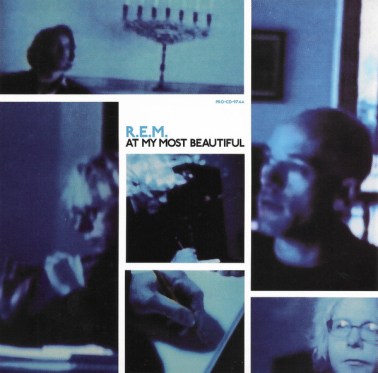
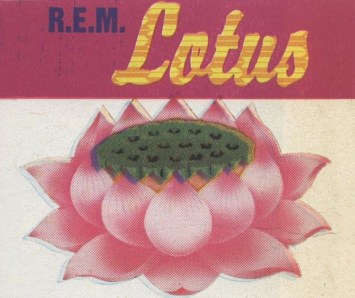
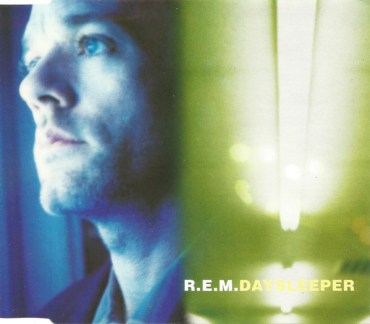
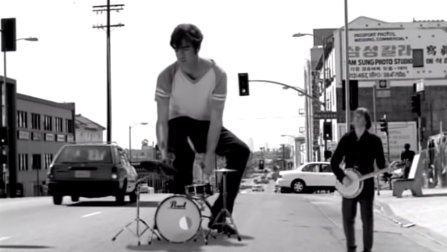
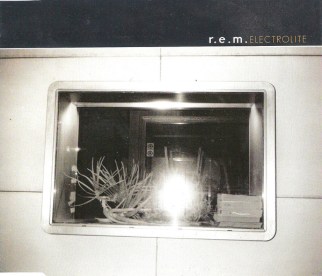
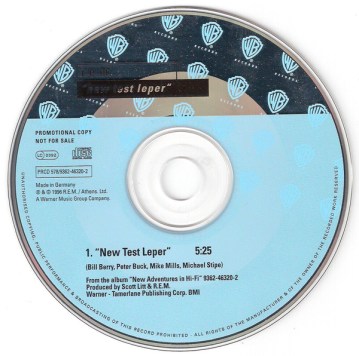
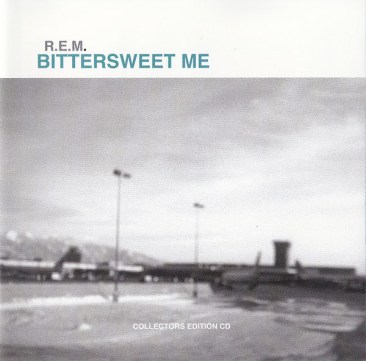
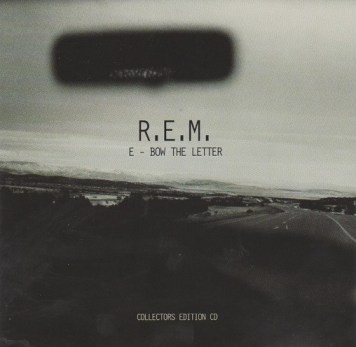

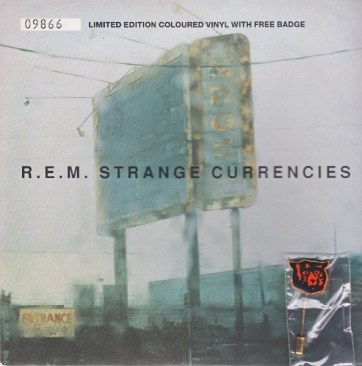

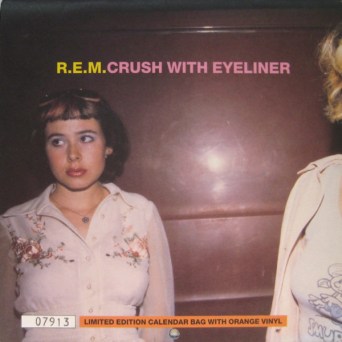

 THE NEW VINYL VILLAIN