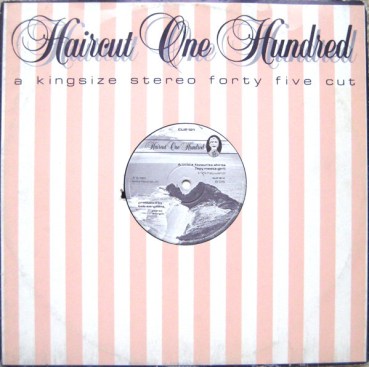
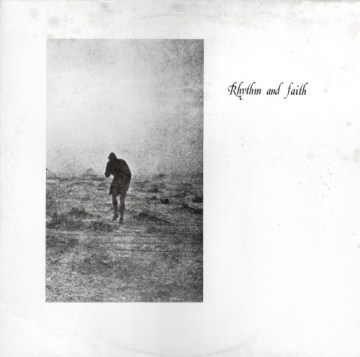
THE WONDERFUL AND FRIGHTENING SERIES FOR SUNDAYS (Part 11)*

Taking up the story from where it ended last week with the release of Look, Now in the early summer of 1982.

The Fall were about to head over to Australia and New Zealand in July/August 1982 for a month-long tour.  MES pulled everyone back into Cargo Studios in Rochdale for what the rest of the band thought would be a new single, intended to keep up a bit of profile in the UK while they were gone. It turned out that the frontman actually wanted a full album out of the sessions, but one which would be in a totally different way from Hex Enduction Hour. The songs were all new, very few had been performed live beforehand (which was unusual), and furthermore MES kept everyone on their toes by using the occasional guest musician and arranging for recording sessions without telling key members of his band and keeping them off the actual record. Paul Hanley has since described the time in Cargo as “a fucking nightmare. You’d turn up and find Smith had only invited half the band, or brought in other musicians without telling anyone!”.

Room To Live was released on Kamera Records in September 1982 to less than enthusiastic reviews, with its seven songs seen as way inferior to the material from earlier in the year.  The tour down under had, unsurprisingly, been a difficult one for all concerned, with many fall-outs, particularly between Marc Riley and MES, with the former still smarting from being heavily excluded from the Room To Live recording sessions (it would later transpire that he played on just two of its tracks).

There were also rumours that Kamera was in a bit of bother, which may be why there was a decision, taken by the label, to release a single to accompany the album, consisting of two of its tracks – Marquis Cha Cha, backed with Papal Visit.  This wasn’t to MES’s liking and the single was withdrawn (there’s a postscript to this, which I’ll come to in a future edition of this series).

So, 1982 ended with a whimper, with a tour of some student venues in England….and as you’ll recall from the previous two editions of the series, not even much enthusiasm for The Fall among Peel listeners with just one track in the Festive 50.

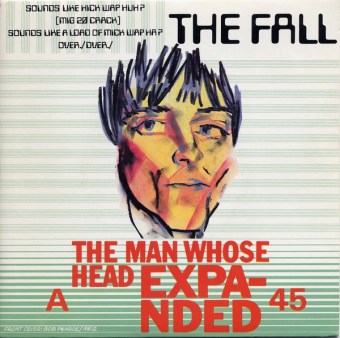
MES’s solution?  To sack Mark Riley from the band, which he did in the first week of 1983 (and not, according to legend, on Riley’s wedding day which was 24 December 1982).  Oh, and to take his leave of Kamera.  Once again, having no label to call home, fate kindly intervened in the shape of Geoff Travis at Rough Trade who, despite having been ridiculed by MES some 18 months previously, re-signed The Fall.  The first new 45 of the post-Riley era appeared in June 1983, with its title, on the surface, being a dig at the departed musician:-

mp3: The Fall – The Man Whose Head Expanded

We’re back with the Casio intro again, but this time it goes into a wonderful bass-line intro which sets the tempo, initially for one of the most upbeat and easily danceable (at this point of time) of songs by The Fall….except it had a bonkers, almost ad-libbed lyric, which ensured nobody on radio (except the usual suspect) would play it.  Oh, and just as you might be getting into a groove on that dance floor, it slows down dramatically for a minute or so, at which point MES goes all shouty, before suddenly it switched back to the fast tempo.

It’s a real tour de force, driven along by the duo drumming of Paul Hanley and Karl Burns, with Steve Hanley on bass and Craig Scanlon on guitars and keyboards.  The song was credited to Smith/S. Hanley/Scanlon/Seaberg.  It seems that the latter was Sol Seaberg, a part-time van driver for The Fall; whether he actually came up with something for the song or not is unknown – it may well have been MES’s way of saying to Riley that anyone can write songs.

The b-side is just two-and-a-half minutes long, and in some ways is a throwback to the earlier rough’n’ready material, with pounding drums at the centre of a cacophony of noise and shouty vocals:-

mp3: The Fall – The Ludd Gang

But hidden away, at the exact halfway mark of the song, is one of the funniest lyrics anyone has ever penned:-

I hate the guts of Shakin’ Stevens
For what he has done
The massacre of “Blue Christmas”
On him I’d like to land one on

The Man Whose Head Expanded reached #3 in the UK indie charts. It had been released on 27 June 1983.  Three weeks later, Mark E Smith married his American-born girlfriend whom he had met just a couple of months previously, in Chicago, while The Fall were on tour in the States.  I think you all know what comes next….

JC

*With thanks to JTFL-Ahh for prompting the change to the name of this series…

SATURDAY’S SCOTTISH SONG : #272: RICHARD JOBSON

Just because something appears on this blog, especially in this very long-running series, doesn’t necessarily mean it has the TVV stamp of approval.

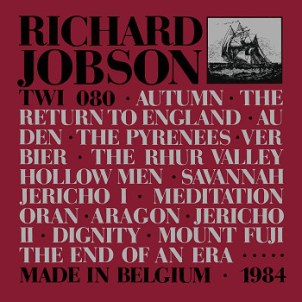
Back in 1983, the Belgian-based Les Disques du Crépuscule released 10.30 On A Summer’s Night, a spoken word album by Richard Jobson (yup, that Richard Jobson who had been lead singer of The Skids), consisting of his adaptation of texts from the book of the same name by French author Marguerite Duras. The readings were accompanied by Belgian pianist Cecile Bruynoghe.

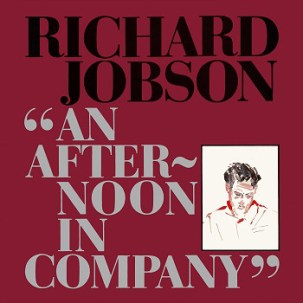
The following year, the same label issued An Afternoon In Company, which consisted  of original poems written by Jobson, with musical backing by the likes of Vini Reilly, Blaine L. Reininger, and Virginia Astley.

Some folk liked it, as evidenced by this review in Melody Maker:-

“An Afternoon… is Jobson’s most assured attempt yet at drawing the desired effect from the uneasy relationship between his stupendously threatening Scots brogue and the finer nuances of the good Queen’s English. While his poetry is perhaps too private and fanciful to communicate on paper, when he is roaring and hissing over calm piano pieces from Satie beautifully played by Cecile Bruynoghe, Jobson assumes a certain atmosphere of strength and striving which at its peak can be positively uplifting. Godlike” (Melody Maker, 10/1984)

Maybe the reviewer was taking the piss. It’s not how I would have written it up.

mp3: Richard Jobson – Autumn

Its appearance round these parts today is courtesy of its inclusion on a CD compilation I have covering the releases on Les Disques du Crépuscule between 1980 and 1985, and of course the fact that Richard Jobson is Scottish and it has come round to him on the alphabetical run through.

JC

SOME SONGS MAKE GREAT SHORT STORIES (Chapter 49)

So….this one opens with a ba-ba-ba-ba-ba-ba refrain that Julian Cope would have been proud of.  It then has the little burst of jingly-jangly guitar that will have you bursting with joy before the blackest of tales unfolds.

Albert Parker played with trains
The centre of his life
His junctions and his signal box
Took precedence over his wife

He strokes the tiny rails
And took care of the little station
Rarely saw his family
And knew nothing of the state of the nation

In his tiny railway room
He spent most of the day
A pity his wife with the promise of bed
Could not drag him away

Oh, No, Albert Parker
Your future is getting very much darker

The Albert Parker life rattled on
Night and day and night
Obsessed and staring in his dream
He never saw the sunlight

This went on until one day
His wife could stand no more
She grabbed the old garden hammer
And broke in through the door

Oh, No, Albert Parker
Your future is getting very much darker

She smashed his little junctions
His gradients and his trains
She smashed every single piece
Into bent and twisted remains

Now Betty stood cracked and shaking
And driven completely insane
Albert was still slowly sobbing
As a hammer demolished his brain

Oh, No, Albert Parker
Your future is getting very much darker

Goodbye, Albert Parker, Goodbye.
So long, farewell, bon voyage.

mp3: Gol Gappas – Albert Parker

I’ve got this one, which was released in 1986, courtesy of it being track 4 on disc 4 of the Scared To Be Happy retrospective box set. From the accompanying notes:-

“Another mysterious el Records signing by Mike Alway, Gol Gappas were named after a popular Indian snack.  They issued just two singles. The ‘Dinner With Nougat’ 12″ EP boasted the whimsical, Robin Hithcock-ish psychedelia of ‘Albert Parker’ and the vaguely Mary Chain-like fuzziness of ‘Saint Lucy’. Second single ‘West 14@ was more straightforward yet poignant pop. Its B-side, ‘Roman’, was remixed for a French-only single (backed again by ‘Albert Parker’) on Vogue in 1987.  Amazingly, ‘Dinner..’ was issued as a CD EP in Japan. The band were formed by singer Nick East and guitarist Colin Roxborough, both previously with Hounslow post-punk outfit Scissor Fits (for whom Alway was an occasional writer), who released two singles back in 1978/79.”

As it turns out, the Saint Lucy track was included in the Cherry Red C87 box set:-

mp3 : Gol Gappas – Saint Lucy

The C87 booklet adds the snippet that Saint Lucy is a tribute to a medieval, Sicilian virgin who allegedly married God.

So there you have it.

JC

AN IMAGINARY COMPILATION ALBUM : #293: “CATH/KATH etc'”

Strangeways said yesterday afternoon, in respect of the Jims, Jimmys and James’ICA:-

“A very fine idea for an ICA – and a lovely post. I wonder which female name could make up a companion piece?”

SIDE 1:

CATH – The Bluebells

This ICA was hurriedly put together after seeing the comment from my good friend Strangeways, which I took as a challenge, although he’s such a nice bloke that he certainly didn’t throw it down as one.  Warning, it may well lead you up the garden path (woah-woah).

KATHLEEN – Tindersticks

As featured not too long ago on the blog. Tindersticks have made a few live versions available over the years, this is taken from the CD single Bathtime and was recorded at the London Institute for Contemporary Arts (ICA) in November 1996.

KATE – Johnny Cash

Written by Marty Robbins, this version was released in March 1972 as the third single from Johnny Cash‘s album A Thing Called Love. It reached #2 on the Billboard Hot Country Singles chart. (a thing I never knew existed until putting this ICA together). It was originally recorded by Rex Allen in 1961 with  the title “You Put Me Here (Sure as Your Name’s Kate)” issued as a single on San Antonio-based Hacienda Records. Which sort of provides a link to the next track….

I LIVE AT CATHY’S NOW – Graham Fellows

From 1985 and the album Love At The Hacienda. He used to be Jilted John, and later in life he became John Suttleworth.

KATY – The Boy Who Trapped The Sun

I’ve got this on the hard drive courtesy of Jacques The Kipper shoving a home-made compilation CD my way back in 2011. The Boy Who Trapped The Sun was the stage name of Colin MacLeod, who is from the rather remote Isle of Lewis in the Outer Hebrides. He was discovered, in just his early 20s, singing and playing in a bar in Aberdeen and offered a recording contract by Polydor/Geffen Records. He made one album, Fireplace (2010), but when the hoped for sales didn’t materialise, he was dropped soon after. It appears that Colin has sporadically released singles and albums under his own name over the past few years, with the latest Hold Fast, being released in June 2021. He clearly still has a lot of famous admirers, as none other than Sheryl Crow sings alongside him on two of its songs.

SIDE 2:

KATE MOSS – Arab Strap

“Don’t try and tell me Kate Moss ain’t pretty. Don’t try and make me believe. Don’t try to force me into letting you boss me. When I’m pretending to leave. I knew that you could ruin my good mood. That’s exactly what you’ve done. We sat there silent and you got violent. Going out with you used to be fun. You’re getting colder. No doubt you’ve told her I’ve just become a pest. Does she know maybe, you’re having a baby? I think it’s about time you did that test. You know I’ll miss you, when I can’t kiss you. You know I don’t want us to split. Now I must say, it’s going that way. You’re always bored and full of shit.”

Originally on the debut album, The Week Never Starts Here (released all of 25 years ago), this is taken from the band’s first ever live show at King Tut’s in October 1996.

CATHERINE 1956 – PAWS

The opening track from Cokefloat, the debut album by PAWS, released on Fat Cat Records in 2013. A remarkably upbeat tune given that it’s about the death of singer and frontman Phillip Taylor’s mother, but then again it really is a celebration of her life and the way she wanted him to pursue his dream of making it in the music industry.

COMPLAINTE POUR STE. CATHERINE – Kirsty MacColl

From wiki:-

“Complainte pour Ste. Catherine” is a song written by Canadians Philippe Tatartcheff and Anna McGarrigle. It was originally used as a B-side to another single,”Hommage à Henri Richard”, which was written by McGarrigle and Richard Baker, and released in April 1974. It was intended to coincide with the Montreal Canadiens entry into the 1974 NHL playoffs, but failed to succeed commercially after the Canadiens lost to the New York Rangers.

Kate & Anna McGarrigle then reused it for their eponymous debut album in December 1975.  Kirsty MacColl put it on as the extra b-side on the 12″ version of her single from 1990, Don’t Come The Cowboy With Me, Sunny Jim (which could, of course, have fitted in yesterday).

A few years later, in 2001, I would have the pleasure of seeing Kate & Anna McGarrigle on stage in Glasgow, when they brought their vocal talents to Nick Cave & The Bad Seeds, initially on the album No More Shall We Part, and then during the world tour which followed.

Which leads to another natural link…..

KATHY’S KISSES – The Birthday Party

Back in the days before Nick Cave got all sophisticated and became a darling of the chattering classes. From 1981. It’s everything you’d expect from something that was originally released as the bonus track of a 12″ single and until the CD re-release of the album Prayers on Fire in 1990 had been all but forgotten. Unlikely to be aired at a gig with a £100 ticket price in the near or indeed distant future.

CATH CARROL – Unrest

Unrest was an indie band from Washington DC. Some of their later material was issued by 4AD Records, including the 1993 album Perfect Teeth from which this tribute to the music writer turned performer is taken. Worth mentioning that the album cover was a photograph of Cath Carroll, as taken by the late Robert Mapplethorpe, so she was clearly happy with it all.

ICA 293.  Bashed out in an hour.  The things that can be achieved when there’s no longer a need to work for a living.

ICA 294 will return to its roots, being devoted to one singer or band.  And it’s going to be a guest posting.

JC

AN IMAGINARY COMPILATION ALBUM : #292 : “JIM’S, JIMMYS AND JAMES'”

A GUEST POSTING by jimdoes

Hey JC

Hope all is well with you – this one has been a long time coming, but I finally put a bit of time aside to finish it.

Here’s another sort of random ICA – Jim, I’m sure you will approve! And I hope I haven’t missed a Jim song that is one of your favourites – and I hope there’s a couple you’ve not heard before. We’re lucky – there’s loads of songs with Jims, Jimmys and James’s in their titles – i’m not sure if it would be possible to do an ICA with any other names. Perhaps someone else could try?

I’ve kept it to five tracks per side but added in a little interlude that isn’t really a song but is great nonetheless (and a bonus track because why not?) – so without further ado:

HOW WAS IT FOR YOU? – AN ICA OF JIMS, JIMMYS AND JAMES’

SIDE 1:

JIMMY JAMES – BEASTIE BOYS (From LP Check Your Head)

THIS NEXT ONE IS THE FIRST SONG ETC ETC….

Apparently a tribute to Jimi Hendrix – but who cares about that? Opening track on my favourite Beastie Boys album – and if I was ever to get round to doing an opening track ICA, this would be in contention. And it doesn’t even say Jimmy, James or anything like that – yet as a bonus the title features both names!

JIMMY THE EXPLODER – WHITE STRIPES (From LP The White Stripes)

Track one on their first album – I’m not cool enough to say it was the first White Stripes song I ever heard – like a lot of people, that would be Hotel Yorba. But when I discovered them I bought everything I could and was blown away by this track – it remains one of my favourite White Stripes songs. I always used to put it first on compilations I’d do, as it’s such a good opener – you can’t help whooping along. But saying that, it’s relegated to track two on this ICA!!

JIMMY JIMMY – THE UNDERTONES (From LP The Undertones)

I can’t even begin to count the amount of times I’ve had Jimmy Jimmy shouted at me in bars/clubs etc – one of those songs I guess.

JIMMY JAZZ – THE CLASH (From LP London Calling)

There can’t be many readers of TVV that don’t know this song. If I was to have a favourite Jim song it would probably be this (or it is when I write this, tomorrow might be a different Jim song). I never heard this till I went to college aged 19 (I was late to The Clash) – my two best friends were huge Clash fans and they always called me Jimmy Jazz – which they still do to this day. Anyway, it has a certain wasted quality to it that I love.

HEAR ME JAMES – THE WOODENTOPS

So many Jimmy/James songs to choose from. This one is from my in between Smiths/Wedding Present stage – and was probably a taster to dancing a bit more in indie discos. Breathless. Sums up being young and giddy perfectly.

Interlude:

BIG JIM – IVOR CUTLER (From LP Jammy Smears)

HELP! I’m not sure that Ivor Cutler has ever been included on an ICA but here’s a tale of a drowning man. It’s weird and perfect in his choice of words – no matter how many times I’ve heard it, I can’t suppress a smile. John Peel was a big Ivor Cutler fan, recording 22 sessions for his show – only The Fall recorded more, apparently.

SIDE 2:

MY ONE AND ONLY JIMMY BOY – THE GIRLFRIENDS (Single)

I’d never have listened to this song if I’d not seen the title, but I love it – it makes you want to hug a Jimmy right? Or just dance with one at least! Released in 1964 this song is a bit of a lost gem – it reached no 49 on the US charts and was the only song The Girlfriends ever released.

JAMES AND THE COLD GUN – KATE BUSH (From LP The Kick Inside)

Who could resist Kate Bush singing and screaming their name? This isn’t about any James in particular but “James was the right name” apparently. The record company wanted this to be her debut single but Kate Bush wisely insisted on it being Wuthering Heights – this would’ve sounded equally striking and out of time for 1977 – but her career might’ve been different if she hadn’t got her own way. The live version from The Tour of Life is equally great – and the video is worth checking out on YouTube – what a performance – prowling around with rifles and handguns!

JAMES – BANGLES (From LP All Over The Place)

Aren’t the Bangles great? Poppy, dancey, Jamesy. Obviously I’m biased, but this is a great pop record – although if it was called Dave I’d still love it (but not quite as much).

JAMES – LLOYD COLE & THE COMMOTIONS (From LP Easy Pieces)

It’s strange how two songs with the same title can have such different atmosphere’s – from an uplifting James to a more downbeat James. I’ve only included this because it was the first song I was aware of with my name in its title. Not the best Lloyd Cole song, and certainly not the best song with James in its title. I never liked it as a youngster, and it’s a song I never listen to now, only digging it out to listen to for this ICA and my opinion of it hasn’t changed. You can’t help thinking any song with your name in the title is sort of about you, and it annoyed me (as a teenager) that the James of this song has so many negative traits. I’m glad that I’ve since discovered many other great songs with my name in the title! Anyway, compared to much of the upbeat nature of Easy Pieces, this song seems a bit miserable and maudlin – especially as it follows Lost Weekend on the tracklisting.

BROTHER JAMES – SONIC YOUTH (From EP Kill Yr Idols)

Guitar freak out where they sound like they are playing with drumsticks? CHECK. Kim Gordon screaming unintelligible lyrics? CHECK. Sonic Youth perfection.

Bonus track:

FIRE SO CLOSE – JAMES (Single)

And we even get the bonus of a band called James who have made one or two great records(!) It might be cheating to include them – hence it’s a hidden bonus track!

jimdoes

BA BA BA-BA BA 006

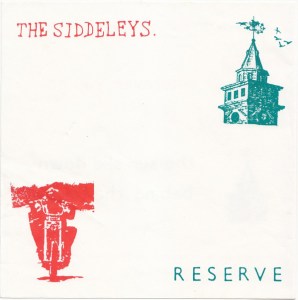
It was while scrolling through the hard drive the other week, sorting out the posting on Restricted Code for the Saturday series, that I gave another long-overdue listen to the one, rather excellent, song I have by Reserve, courtesy of it being part of the C88 boxset compiled by Cherry Red Records a few years ago:-

mp3: Reserve – The Sun Slid Behind The Tower

As the notes in the accompanying booklet explain:-

The Tower in question is within All Saints Church, Notting Hill, just around the corner from the Rough Trade shop where singer/songwriter Torquil Macleod placed ads to form Reserve. He worked initially helping Jonny Johnson (The Siddeleys) on her songs before Reserve were born in autumn 1986.

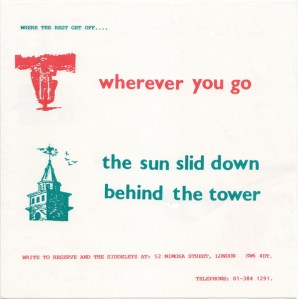
Band members came (from Bob) and went (to James Dean Driving Experience) before the luminous ‘The Sun Slid Down Behind The Tower’ appeared on a Sha La La flexi in 1987 (shared with The Siddleys), given away with Trout Fishing in Leytonstone fanzine. It then appeared again on Reserve’s only stand-alone release, 1988’s Two Hearts Beat In A Hole EP.

Given that I’m quite fond of the song within the boxset, I had a look online to see if there was any availability for the sole EP, which was released on the short-lived Sombrero Records, suspecting there wasn’t. It turned out I was almost right, in that there’s a couple of copies via Discogs, going for £50 (from Spain) and £75 (from Japan). Much better value is to be had from the CD compilation, Beneath The London Sky, compiled and issued by Berlin-based Firestation Records back in 2013, but alas, nobody is selling a copy just now. It contains 23 tracks, so I’m assuming that’s everything the label could get its hands on, including demos and live material.

The most expensive artefact is, however, the flexi issued with the fanzine back in 1987. One of eight such efforts to come out on Sha La La records, with the catalogue number of Ba Ba Ba-Ba Ba 006, and the asking price, including a copy of the fanzine, is £145! One for collectors only, methinks.

Some of you will recall that last October, there was a Siddeleys ICA, courtesy of Strangeways. He included the track which can be found on the flexi disc, offering this as his observation:-

It seems that back in the day The Siddeleys were dogged/blessed by comparisons with Talulah Gosh. Whilst, round these parts, this is pretty much the ultimate in accolades, it’s not really that accurate. This track could be the culprit. It does actually sound like Talulah. It’s a blast. But it’s not representative of the wider Siddeleys sound.

mp3: The Siddeleys – Wherever You Go

If anyone out there wants to offer up some thoughts on any of the other Sha La La flexidiscs, then there will certainly be space made for a guest posting(s).

JC

THE MONDAY MORNING HI-QUALITY VINYL RIP : Part Twenty Seven : HUMBLE

It was SWC who introduced me to Kendrick Lamar, in fact it was via a recommendation in an e-mail a few years ago, in which he said the 2015 album To Pimp A Butterfly was a bona-fide classic. I was intrigued enough to go seek out a few tunes on-line, and from that impressed enough to pick up a copy of it, along with its predecessor, Good Kid, M.A.A.D. City from 2012.

I had no idea that the young man was a true multi-million selling superstar of the hip-hop/rap genre with a huge following back in the USA and whose name was being increasingly dropped by those who saw themselves as influencers across the media here in the UK.  I was just enjoying his music in the same way that I can with many contemporary black musicians, without me having any deep understanding of what he was singing about.

Come 2017, and I read that he was about to release new material.  It was something I really looked forward to as it would my first opportunity to pick up on something at the time of its release instead of me looking back.  The first of his new songs which was unleashed on a listening public was this:-

mp3: Kendrick Lamar – Humble

Tremendous tune, but……………………..

I was, initially, very shocked.  It sounded like an old-fashioned misogynist rant – the sort of stuff that I thought had been driven out of the rap scene, for the most part, in the 21st Century.  And from a rapper who had a reputation for dealing with all sorts of injustices and prejudices?  Something was totally wrong.

And then, having given myself a shake, aided by grabbing a few views of the promo video, I breathed that almighty sigh of relief.

There’s a review out there by Bianca Giulione which, I think, nails it:-

“….he’s audacious yet self-aware, and just the right level of smug. With just two verses of lyrical invocation at his disposal, Kendrick makes the few hundred words feel like a manifesto.”

DAMN….I wish I could sum up music like that.

JC

THE WONDERFUL AND FRIGHTENING NEW SERIES FOR SUNDAYS (Part 10)

As mentioned last week, none of the tracks on Hex Enduction Hour made it onto Peel’s Festive rundown at the end of 1982, although this later single did scrape in at #58 (one place ahead of Happy Talk by Captain Sensible).

The second 45 to come out on Kamera Records was released some five weeks after Hex.  I mentioned in a previous edition of this series that Mark E Smith had a tendency to get any finished songs down on tape in a recording studio almost as soon as he’d written the final word and hated hoarding or stockpiling material for the future.  Look, Know was no different, although its eventual release would be some seven months after its recording…..and while it would find its way into the Peel Festive 50 of 1982, it had in fact had its very first airing back on 15 September 1981 as part of a Peel Session:-

mp3: The Fall – Look, Now (Peel Session Version)

This was broadcast while the band were in Iceland, initially playing a few gigs and then recording some tracks intended for what would become Hex Enduction Hour. It was while in Iceland that a rather different version of the song emerged from a studio session, seemingly in one take which MES decided wouldn’t be improved on.  From the same Casio-keyboard intro that would soon make temporary superstars of the German group Trio, into giving space for other members of the band to take the mic up front, it was unlike any other Fall song in their canon at this point in time:-

mp3: The Fall – Look, Now

Steve Hanley has since said that there was a sense of astonishment when MES decided to go with the first take and that nobody knew at that point whether it would appear on the album.  There was also a belief that they might return to it again, perhaps looking to record it in a way similar in style to the Peel Session, for future use as a b-side.  There was certainly never any thought that it would be suggested as an actual single, especially on the back of Hex Enduction Hour, as its sound was very much at odds with the tracks which made the cut for that album.

Listening now, and I say this as someone who quite likes the single, but this was just another curveball thrown by MES, partly to ensure the label was sticking to its agreement to issue material in the shape and form he wanted, but also to further confound the writers on the music weekly papers, who were surely bemused when they played their promotional copy on the office stereo system.  It could almost be regarded as a novelty single, of sorts.

As for the b-side:-

mp3: The Fall – I’m Into C.B.!

It’s one of the funniest and most entertaining of the early(ish) songs by The Fall.   The writing credits are given solely to MES and one can just imagine him manically and frantically directing things in the studio – it was recorded at the Hitchin Cinema in December 1981 at the same time as much of Hex.

The subject matter may, on the face of it, seem a strange one for MES to take any great interest, but it shouldn’t be forgotten that, until late 1981, CB Radio was always an illegal form of broadcasting in the UK. There was no licensed frequency and its users were often referred to in the media as ‘bandits’ with the suggestion that they were lawless.  It surely would have appealed to MES’s sense of humour, not to mention justice, that a harmless individual, sitting at home with a form of self-entertainment, would be facing the full brunt of the law bearing down on them when there were real criminals out there getting away with all sorts of high jinks.

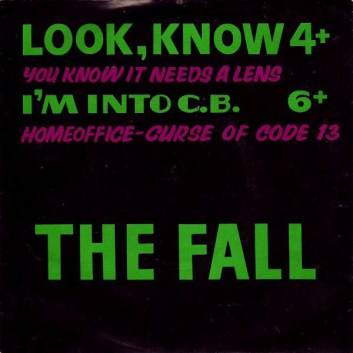
Oh, and with the fear of stating the bleedin’ obvious, the 4+ and 6+ on the front of the sleeve refer to the running times of the two songs.

Look, Now was another 45 which hit the top end of the Indie Charts, reaching #4.   The Fall, in 1982, remained a band not recognised by anyone who didn’t read music weeklies or listen to John Peel.

JC

SATURDAY’S SCOTTISH SONG : #271: RHYTHM OF LIFE

REPEAT POSTING FROM 7 OCTOBER 2018

I’ve decided that Paul Haig should be the next subject for the Sunday singles series. I realise that many of you won’t be that bothered over the next few weeks and months given that he’s far from a household name and indeed could almost be the perfect definition of a cult artist; but I’m a huge fan and feel that his body of solo work, now stretching back the best part of 40 years in which he has continually tinkered and altered his sound, is very worthy of being put under the spotlight.

Paul first came to prominence as the lead vocalist of Josef K, one of the four bands to release material on Postcard Records. They split up in August 1981 and it is fair to say that, like many others, their legacy and impact was only fully realised many years after when the next generation of musicians began to name check them as key influences. His solo career began almost immediately, but not in any straightforward fashion, signing to a Belgian-based label – Les Disques Du Crepuscule – while opting to also adopt the moniker Rhythm of Life Organisation (RoL) under which he intended to release experimental material, much of which would be far removed from the post-punk, angular guitar sounds associated with his former band.

Indeed, it was as RoL that the first solo 45 was issued, and not on the label to which he had signed.

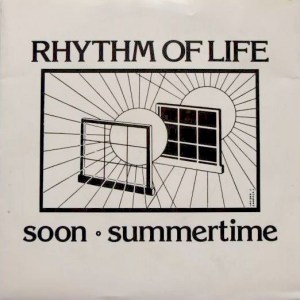
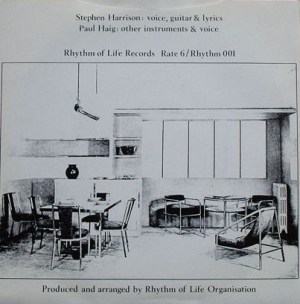
mp3 : RoL – Soon

Ok….the pedants among you might argue this is NOT a Paul Haig solo record, given that the credits are:-

Stephen Harrison : voice, guitar & lyrics
Paul Haig : other instruments & voice

But it’s an important staging post for what would follow in the succeeding years which is why I’m using it to open the new series.

Soon was issued jointly via Rational Records and Rhythm of Life Records and given two catalogue numbers – RATE 6 and RHYTHM 1 (these things were really important to those of us smitten by how Factory Records were keeping stock of the things they were involved in). Rational was a short-lived label, owned and run by Allan Campbell, who had been the manager of Josef K and would remain a key player in the Edinburgh music scene for a long while to come. The label would release eight pieces of plastic all told, including the follow-up by RoL, a double-sided single entitled Uncle Sam/Portrait of Heart, both written and performed by the late Sebastian Horsley with Paul’s role restricted to keyboards, bass and second guitar; as such I’m not intending to include it in the series.

Here’s yer b-side of Soon, and it isn’t a cover:-

mp3 : RoL – Summertime

Both songs are a tad on the light side, very pop-orientated with a sound that wouldn’t have been out of place a short while later on Zoo Records, the label which would launch the careers of so many 80s musicians in Liverpool.

JC

ANOTHER ‘BETTER LATE THAN NEVER’ RECOMMENDATION

You all know by now that I rarely post up my thoughts on newly-released material.  TVV is very much a retro-blog or one which reeks of nostalgia rather than looking to be part of the here and now.

This sometimes extends itself into how I go about buying albums.  I’m not the greatest at listening to the radio and I no longer buy, on a regular basis, any music monthlies. More often than not, the only way I know that someone has released a new record is if it gets reviewed on the website of The Guardian or I see it mentioned by a fellow blogger, failing which I do get a monthly newsletter from Monorail, one of the indie stores here in Glasgow.  Even then, I don’t always rush out to pick up something just because a few critics have provided positive coverage – I’ve had my fingers burned far too many times for that.

So, when lots of folk said that Jarvis Cocker‘s new album in 2020 was a huge return to form, I didn’t pay attention.  When a few folk had it in their ‘best of’ lists last December, I did then make an effort to check out some of the promo videos across t’internet.  I still didn’t rush out and order the record in these COVID-ravaged times; but a short time ago, when the shops finally did re-open, I decided, on a whim, to add it as the final part of the bundle I was putting together from a browse through the shelves of Monorail.

I was glad that I did, for Beyond The Pale, by Jarv Is.., is a very fine listen, up there with some of the best things he ever did as part of Pulp.  I was really surprised as neither of his solo albums in 2006 and 2009 really did it for me, and I was disappointed with the live show he performed in Glasgow back in 2007, when he ended proceedings with a thoroughly underwhelming cover of Sidewalking by the Jesus and Mary Chain. But these seven new tracks really hang well together, and it does seem as if Jarv Is.. is really more of a working, breathing band than a lanky singer backed by session musicians.

So….there you are…..the TVV seal of approval to an album, which was released in July 2020, but preceded by the single Must I Evolve as far back as May 2019.

mp3: Jarv Is..- House Music All Night Long

Maybe I should start to pay a bit more attention…..

JC

AN IMAGINARY COMPILATION ALBUM : #291 : “GOTH – THE BEST OPENING TRACKS”

A GUEST POSTING by ECHORICH
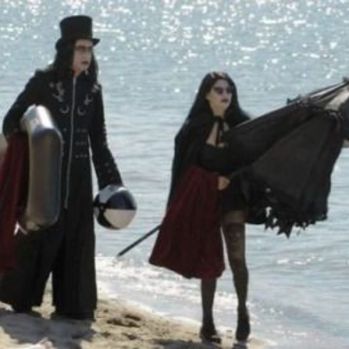
AN ICA OF OPENING TRACKS – OR MUSINGS FROM A PART TIME GOTH

I am obviously late to the Goth ICA Party, I blame the Florida sun, the Florida rain and, well Florida.

I created this ICA almost within a day of JC’s challenge, but then, well, life…AND FLORIDA.

Here is my take, if JC isn’t already completely done with trawling through Goth songs to find the songs to link here… I decided to take a different approach and challenge my albums to an ICA OF OPENING TRACKS. Surprisingly, it works really well to my ears.

I decided to limit my Goth parameters to the imperial period of Early 80s and I tried not to include any bands that are Post Punk first and possibly Goth second. There is one, well two, exceptions and I get them out of the way right up front.

So get out a torch (flashlight for any less Anglophile Americans that may be reading) and throw some shapes on the walls of your front room…

1. Spellbound – Siouxsie And The Banshees (from Juju)

On The Banshees’ fourth album, Juju, what was already angry and twisted before, took on a darker, more mysterious mood. I would never really describe Siouxsie And The Banshees as Goth. They were Punks that were Post Punks before Paul Morley or Nick Kent could fight over who coined the term.

Juju opens with one of the most dark and thrilling songs I have ever heard – Spellbound.

John McGeoch’s crystalline electric and franticly strummed acoustic guitars dance and run across a bed of Budgie’s martial drums and Severin’s heart adjusting bass. But it’s Siouxsie that commands your attention throughout. She’s singing a cautionary tale that, well it’s too late to escape from. Her nightmare is worse than anything Chuckie ever got up to on screen.

2. One Hundred Years – The Cure (from Pornography)

Robert Smith seemed to be on a similar musical journey with The Cure around the same time as The Banshees. The goal of Pornography was to make music that was dense and dark…it succeeds. Again, were The Cure Goth, or did Goth need The Cure to give it some lineage. I think the latter.

Pornography opens with One Hundred Years, a fan favorite for 40 years now (damn 40 years!), it is frantic and scary. It deals with the horrors of war over the prior 100 years, so Robert Smith can be surprisingly political, but darkly political.

3. The Fatal Impact – Dead Can Dance (from Dead Can Dance)

Dead Can Dance are possibly one of the purest expressions of Goth Music. The musical vision of Brendan Perry and Lisa Gerard was global and included influences of Middle Eastern music, African rhythms and Polynesian mysticism and even Gaelic folk. But there’s was a dark musical world filled with incantations and intense meditations.

The Fatal Impact leads off their debut eponymous album and mixes tribal chants with a repetitive bass and guitar instrumental. Every time I listen to it I want it to be twice as long as it is. It’s ghostly and intimidating, but you will find your body moving to the rhythms.

4. Black Planet – The Sisters Of Mercy (from First And Last And Always)

There are many versions of The Sisters Of Mercy, but all of them start and end with the mind and ambitions of Andrew Eldritch I love the dark, discontent of their debut album, First And Last And Always, but I also equally love the the very deliberate musical exuberance and nihilism of Floodland.

Black Planet opens First And Last And Always and it doesn’t disappoint with its Hammer Film single guitar cord opening. Eldritch is almost recites the song’s lyrics. Even the chorus is seems like a literary device to tie his verses together. Black Planet is a song about a world that’s done and never coming back, but one we have to live through.

5. A Way – The Bolshoi (from Friends)

A great Goth song is one you can dance too while you sing along, proving that Goths could do more than one thing at a time. The Bolshoi belong to that second string of Goth, bands who rode the wave of band like The Sisters and Bauhaus into the offices of record companies wanting a piece of the action.

A Way is hella-catchy and a great album opener. Trevor Tanner uses just the right mix of Goth lead vocal tricks and more than capable ability to carry a tune. And A Way is a tune. There may never have been a more radio friendly Goth song. It’s obvious the members of The Bolshoi knew how to play their instruments and Mick Glossop acquits himself very well behind the mixing and production desk.

6. All Night Long – Peter Murphy (from Love Hysteria)

Goth’s Elder Statesman. Yeah, he really is. I know your wondering where Bauhaus is in this list – they aren’t. Two reasons, one picking an opening track from a Bauhaus album wasn’t satisfying and two, as obvious as selections one and two were on this ICA, I had to stop myself.

Murphy’s debut solo effort Should The World Fail To Fall Apart is a good album, but it lack cohesion. He hit pay dirt with Love Hysteria. 9 songs that build, one upon the other, to haunt the listener. All Night Long opens the album with a lush, dark, almost forbidden sound. It’s Murphy invading a beautiful dream and gaining control of you.

7. Wasteland – The Mission (from God’s Own Medicine)

Don’t pick a fight with Andrew Eldritch, you will lose. Wayne Hussey learned this the hard way – but maybe in the end, since The Mission managed to play some of the largest venues in the world and The Sisters Of Mercy never really broke out, he really won. The Mission/Sisters Of Mercy drama is it’s own Goth Soap Opera.
It took Hussey and The Mission a few years after leaving The Sisters, and a lawsuit or two to finally get an album out. He followed The Sisters pattern of releasing a few singles to gather an audience and then finally in late 1986, God’s Own Medicine came out.

Wasteland opens the album in true Goth Anthem style. You can’t help singing along with the chorus and if you have ever heard the song live you know what it does to an audience. Hussey sings about many things in his songs, but there is always a woman and a very sexual undercurrent. As The Mission progressed, they lost me because they were turning into Goth’s Led Zeppelin…and there are even signs here on Wasteland in my opinion.

8. Horse Nation – The Cult (from Dreamtime)

Ian Astbury took his time getting to The Cult’s debut album Dreamtime. After leaving Positive Punk band, Southern Death Cult, which was really more a collective than a band, but possibly more than any other band, showed what Goth could be, he hooked up with ex Theatre of Hate guitarist Billy Duffy and the rest is Goth history. A few singles and and EP as Death Cult, established the band as the next big thing within the growing genre. Their debut album Dreamtime is filed with Spaghetti Western guitars, Native American mysticism and most of all mystery.

Horse Nation opens the album with swagger and a cautionary warning that what has been done against the indigenous people will be avenged. It’s The Cult’s arrow shot into the cloudy blue sky.

9. Upstairs – Gene Loves Jezebel (from Promise)

Goth from Wales. GLJ (as the fans called them back in the day) began releasing music at about the time the Positive Punk scene was morphing into the Goth scene in the UK. They were signed to Beggars Banquet’s Goth sub-label, Situation Two and the debut Promise did well in the indie charts. Their sound was aggressive and I would describe it further as more creepy than scary, but absolutely dark in their earliest incarnations.

Upstairs leads off Promise and has a lot of influence from The Banshees and Bauhaus to my mind but the aggression is much more in your face than with their forebears. It can really get your blood flowing. Upstairs was a favorite of mine live and they usually saved it for the encore.

10. Nothing Wrong – Red Lorry Yellow Lorry (from Nothing Wrong)

The Lorries never got their due, in my opinion. They were more developed than most of their contemporaries and had many influences from the artier side of Post Punk as from anywhere else. On Nothing Wrong, I love the gatling gun intensity of the opening percussion sets the track up to build. It’s dense, dark and verging on the industrial. I am a fan of Chris Reed’s almost mumbled vocals. They blend into the music rather than tower over it.

11. Dreamland – The Rose Of Avalanche (from In Rock)

Possibly the most obscure band on this ICA playlist, The Rose Of Avalanche, like Red Lorry Yellow Lorry , hailed from Leeds and came to the attention of John Peel after heavily gigging around The UK. They self produced a number of singles, in true Goth tradition and ultimately signed with Fire Records, which, I’ll be honest, never knew what to do with the band.

Dreamland leads off their first proper album, In Rock, and has lots of influences from Post Punk, but gets it’s darkness from LA Psychedelia. There’s a bit of a Jim Morrison swagger in lead singer Phil Morris and the guitar work reminds me of Arthur Lee’s Love.

12. A Day – Clan Of Xymox (from Clan Of Xymox)

We have left the UK shores to the Netherlands for just a few minutes to include Clan Of Xymox. They were so very much a 4AD band in my mind. They pushed the boundaries of Goth into industrial and at time ambient territories. They had a knack for orchestrated openings that would get darker and darker as the song progressed.

A Day, which open their self titled debut, is a perfect example of what makes a 4AD Goth band. Like label mates Modern English, they tried to elevate or at least mess around with the established Goth sounds. A Day is heavy with synths and drum patterns and the song seems to swallow up singer Ronny Moorings, forcing him to fight his way out over and over. Their Goth is on the edge and seems like it could leap of that edge at any moment.

13. All I Want – Danse Society (from Looking Through)

Let’s finish this dark and moody ICA with a band I consider Goth Standard Bearers.

Danse Society was one of the earliest Goth bands and released singles even earlier than The Sisters Of Mercy – in fact you could be forgiven for mixing the two bands up in those earliest days – in my opinion.

By 1986, Danse Society had gained a good deal of attention with their second album Heaven Is Waiting – mostly because of their take on the Rolling Stones2000 Light Years From Home. Singer Steve Rawlings had a rock star swagger and certainly must have really believed his own press as he managed to alienate the entire band who left him high and dry after recording the follow up, Looking Through.

All I Want opens the album and relies on a lot of moody synths to drive the atmosphere of the song. Rawlings is another singer that was certainly influenced by Jim Morrison and to a lesser extent Mick Jagger. I remember when seeing the band that I was one of the only guys upfront in a sea of black crimped hair, patchouli wearing and clove cigarette smoking Goth Girls. Steve was a Goth Pinup. Having said that, it’s his vocal delivery that help propel the song.

ECHORICH
SUNDAY MORNING/FEMME FATALE

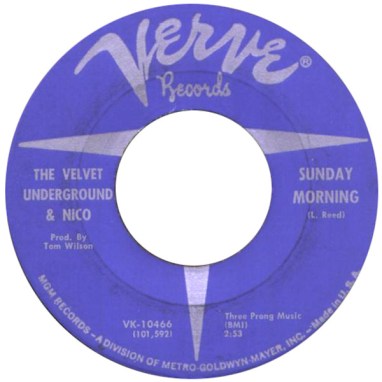
Recorded in November 1966, and issued as a single on Verve Records in the USA the following month.  It’s b-side was Femme Fatale.

Nobody really paid that much attention to it.  It’s a different story nowadays, with a copy of this particular artefact certain to fetch any would-be seller a handsome sum, especially given the continued mania around vinyl.

As wiki explains:-

In late 1966, “Sunday Morning” was the final song to be recorded for The Velvet Underground & Nico. It was requested by Tom Wilson, who thought the album needed another song with lead vocals by Nico with the potential to be a successful single. The final master tape of side one of the album shows “Sunday Morning” only penciled in before “I’m Waiting for the Man”.

In November 1966, Wilson brought the band into Mayfair Recording Studios in Manhattan. The song was written with Nico’s voice in mind by Lou Reed and John Cale on a Sunday morning. The band previously performed it live with Nico singing lead, but when it came time to record it, Lou Reed sang the lead vocal. Nico would instead sing backing vocals on the song.

A look at Discogs will reveal that just three copies have changed hands via that particular market since 2018, but the prices paid reflect the situation I referred to above:-

September 2018: £730
August 2019 : £866.66
March 2021 : £1717.65

And no, I wasn’t a buyer…..as I’ve said before, I was late to the Velvet Underground.

The single was released in mono. As it turns out, the 2002 reissue of the banana album provided two CDs, one with a stereo remaster and one with the original mono version, with the bonus of the mono singles tacked on at the end. So, if you want a listen to what almost two grand gets you these days:-

mp3: The Velvet Underground & Nico – Sunday Morning
mp3: The Velvet Underground & Nico – Femme Fatale

No need to thank me (insert winking emoji).  It all part of the villainous service offered round these parts.

JC

PURE UNCONTROLLED MAYHEM! HYSTERIA AND MISBEHAVIOUR! MOB RULE!

A DEBUT GUEST POSTING by FRASER PETTIGREW

There’s an archive clip in the unmissable new Sparks Brothers documentary that captures a moment of pure 1970s pop culture. During a live Sparks performance, sometime in 1974, the stage is being gradually invaded by the crowd, with security overwhelmed and unable to stem the tide. The band gamely strive to play on and at one point Russell Mael, with trademark energy, strides buoyantly across the stage belting out ‘This Town Ain’t Big Enough For the Both of Us’ only to be completely floored as he runs straight into an advancing phalanx of teenage girls.

YES! I thought, this is EXACTLY what gigs were like when I started going in the late 1970s! Pure uncontrolled mayhem! Hysteria and misbehaviour! Mob rule!

At some point many years later in my gig-going life I recall seeing kids literally queuing by the side of the stage during a performance, waiting to be ushered up and fed delicately onto the outstretched hands of the crowd, thence to ‘surf’ gently to the back, where they were deposited onto the floor like five year-olds on a boogie-board washing up in the shallows. Where, I asked myself, had it all gone wrong?

One of the first gigs I ever went to was The Clash at Edinburgh’s Odeon cinema in November 1978. From a balcony seat at my first gig, The Boomtown Rats a few months earlier, I had learned straight away that the place to be was down in the stalls, where a boiling mass of teenage ferment was seemingly connected by direct current to the frantic charge of ‘Looking After Number One’ and ‘Mary of the 4th Form’.

Accordingly for The Clash gig, my friends and I queued before the box office opened and secured stalls seats, quite far back, but wisely located on the aisle. When The Clash took the stage on the night we were well placed to bomb down the aisle into the explosion of human energy at the front just as the stage lights blazed and the band smashed into ‘Safe European Home’.

As I duly boiled in the teenage ferment I became aware that the row of seats into which I had insinuated myself was no longer fully attached to the floor and was moving back and forth with the surging crowd. Between me and the stage the fans were gleefully pogoing up and down on top of the remnants of the first half dozen rows of stalls, which must have succumbed within seconds to the rampaging punks.

Pretty soon my row of seats resigned itself to fate and capsized gracefully into the sea of legs in front of me. I was compressed in a bouncing, sweaty fug as The Clash continued their breakneck set. Had there been any rows left I would have been about three or four from the front, close enough to see the idiots who still seemed to think that gobbing was punk style in late 1978. Strummer was splattered by a steady stream of saliva that slithered down the body of his guitar, a translucent slime of pure stupidity.

During the encore The Clash attempted to play ‘White Riot’ but, Sparks-like, the stage quickly filled with fans, dodging the bouncers with side-steps worthy of a Welsh stand-off. Most of the song was smothered as people crowded around Strummer and Jones, making it impossible for them to play their guitars. Paul Simonon managed to escape onto the drum podium from where he and Topper Headon kept the bassline and rhythm going to guide the massed chorus of ‘White riot, I wanna riot, white riot, wanna riot of my own’, yelled tunelessly into the mikes by everyone on the stage. I saw someone grab a stand and inadvertently whack Strummer in the mouth with the mike. I wondered if that was the origin of his famously cracked incisor or if it had always been like that.

Bouncers vainly tried to throw people back into the crowd and intercept new interlopers. In the midst of it all Viv Albertine and Ari Up of support band The Slits skipped merrily from one side of the stage to the other, after the fashion of Eric Morecambe and Ernie Wise.

The recklessness of punk crowds was legendary in those days, matched only by the ferocity of bouncers. Some other friends who went through to Glasgow’s Apollo Theatre to see Siouxsie and the Banshees told me they saw one bouncer literally punch a fan in the face, knocking them right off the (rather high) stage. Had it not been for the packed crowd onto which they fell it might have ended more tragically, but then it wouldn’t have been the first time at a rock gig that the security turned out to be the biggest threat to people’s safety.

From subsequent gigs by The Jam and even Elvis Costello I realised that the seat-trashing thing was pretty much standard procedure. The theatres must have been creaming in so much profit that they could factor in the repairs to their break-even calculations, otherwise why the hell did they ever book bands?

And therein, my friends, lies the clue to the present age of sanitised, stage-managed, emasculated rock and roll. It’s a business – no shit Sherlock, it always was – but like every other sphere of business since the 1980s it’s been modernised, commodified and globalised until it’s just as much a part of everyday life as a Big Mac, an alco-pop, an iPhone and a pair of dropped-crotch jobby-catchers. ‘They got brand new suits – huh, you think it’s funny, turning rebellion into money,’ sang Joe Strummer that night in 1978. We thought it was a challenge, not a prophecy.

Which is not to say I’m pining for the days of uncontrolled violence at gigs. I know that if I was a parent now I’d be absolutely shitting myself at the thought of my kids going to events like that. My parents, coming from the generation before rock’n’roll, were blissfully ignorant of what I was up to, despite the media’s moral panic over punk rock.

The worst it got was when they picked me up after seeing The Rezillos at Clouds Ballroom in August 1978. Living out of town as we did, I could make a late bus home after a gig at the Odeon, but I knew shows at Clouds were a different matter. My parents agreed to pick me up when I told them disingenuously that it would likely finish ‘about 11 or 11.30’. When I finally emerged at 1.30am they were far from amused, not least from having sat for two hours watching the human debris floating around Tollcross at that time of night and the state of Edinburgh’s punk proletariat disgorging from the ballroom alongside me.

Thankfully the gig was well worth it. The memory of a wee boy, no more than 10, extricated from the molten crush at the front, riding piggy-back on lead singer Fay Fife while squirting the crowd with a water pistol will never be erased, least of all for that kid, I hope.

At a couple of points in The Sparks Brothers film, reference to the Mael’s early captivation by rock’n’roll is visualised by the same black and white footage of wrecked theatre chairs being aggressively thrown into a pile at some 1950s Jerry Lee Lewis gig. The Killer pounds his piano while lines of nightstick-wielding police officers try to protect the stage from the riotous assembly before them. It’s a stock image of rock’n’roll carnage, its threat to order, its dangerous ability to induce frenzy in the young. The intention is ironic in Sparks’ case, but still, you get my point. Those chairs.

From its emergence as a truly mass popular music genre, rock’n’roll was barely much more than 20 years old by the time I started going to gigs, and the punk revolution had reinvigorated its disruptive, rebellious character for my generation. Looking back now, more than 40 years after I trampled the Odeon’s seats underfoot, it almost seems as though that time was already rock’n’roll’s last fling as a spontaneous transformative force in cultural and social norms.

You might think I’m about to deliver some piercing cultural insight about rock’n’roll, globalised capitalism, social and cultural revolution, and the pivotal role of theatre seats in it all. Or maybe I’m just another old Gen-Xer, rolling out the nostalgia for the liberating moments of our adolescence. Wonderful in young life. It was a glorious experience. Kids today will never know, etc. And neither they will, but maybe they’ll know things we never can and music will change their lives in different ways to how our music changed us.

The truth is that between 1955 and 1985 our social world changed more than in almost any other 30 year period in peacetime history. Rock’n’roll was as much a symptom of that change as a cause, and we kid ourselves if we think it was the other way round. The mayhem of music’s performative rituals during those three decades was like the ground cracking and buckling in an earthquake. Social and intergenerational relations were being remade and it was a rough ride for a while.

But since the 1990s there has been little remaking to be done. Now the parents of teenagers are people who have grown up through those social changes themselves. They’re not the monolithic conservative and conformist generation born before the war, before rock’n’roll. They accept the end of deference, the notion of social mobility, the reality of sexual liberation. They don’t really care whether people are gay, or unmarried mothers, or wear their hair long, or smoke a bit of dope now and then. Those things don’t threaten anything in their lives anymore. They’re people like me, who went to Clash gigs when they were 15.

The revolution is over. It’s been televised, and you can watch it all again on those decade nostalgia programmes produced by Tom Hanks. There is no wild rock’n’roll mayhem anymore because there’s no need. There are still revolutions to be had, but they’re not of the kind that pitted kids against their parents. Rock’n’roll is just music now. So you can stop, flip down the cinema seat and sit quietly watching for the rest of your life, and if you live long enough the ground will start to shake again.

FRASER P

JC adds…….

First of all, a huge thanks to Fraser for a wonderfully written debut piece for the blog.   I really hope it’s the first of many, and again I realise just how lucky I am to have so many talented folk out there so willing to give freely of their time.

Secondly…..I’ll echo Fraser’s words on the Sparks documentary.  I had prepared a review of it, having gone along to see it on 30 July when it was followed by a Q&A with the Brothers Mael, hosted by Pete Paphides, but I pulled it when I saw that Fraser had opened up his piece with a reference to it.  If it is still playing in a cinema near you, then I’d recommend you get yourself along.

Thirdly…the incident at the Glasgow Apollo mentioned by Fraser was quite rare, for the simple fact that the stage there was at least 15 feet, which meant you couldn’t clamber up from the stalls and it would take a death-defying leap from the balcony to reach your idols….but it did, occasionally happen, most likely thanks to a combination of booze and speed making the bloke (and it was always a bloke) thinking he was Superman.

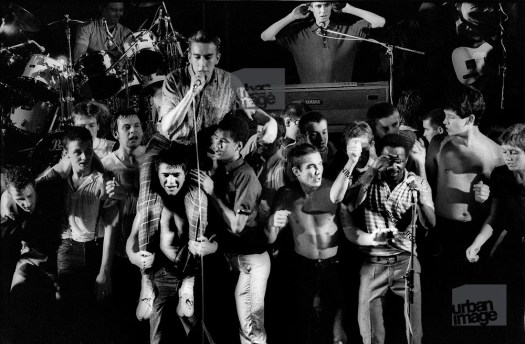
Fourthly….I couldn’t find a good or clear photo of any invasions at punk gigs, and the one use above is from the Specials playing in Brighton in 1979.  It’s maybe a bit more friendly and less confrontational than the punk invasions of the era, but it certainly captures the chaos.

Finally….Fraser didn’t offer up any music to go with his words, so I’ve picked out a few based on what he’s written:-

mp3: Sparks – This Town Ain’t Big Enough For Both Of Us
mp3: Boomtown Rats – Mary of The 4th Form
mp3: The Clash – White Riot

Again, huge thanks to you, Fraser. Keep ’em coming.

HERE IS THE NEWS. GOODBYE BRITISH SEA POWER………

From the website : https://www.seapowerband.com/

“After much reflection and soul-searching, the band formerly known as British Sea Power have modified their name to simply Sea Power.

We’ve been British Sea Power for 20 years – an amazing 20 years, when we’ve been able to continually traverse the British Isles, to travel the world, encountering many friendly faces, not least in the band’s remarkable audience. But the name British Sea Power had come to feel constricting, like an ancient legacy we were carrying with us.

When we came up with the name British Sea Power there were at least two different lines of thought behind it. There was, literally, sea power – the elementary power of the oceans. Alongside this was the historical idea of “British sea power” – Britannia ruling the waves; the naval power that once allowed Britain to dominate the world. When we came up with the original band name, Britain no longer ruled the seas. The band name was intended with a kind of wry humour. The idea of British sea power in the historical sense was an obsolete thing. It was now just the name of a rock band…

Now, 20 years later, we’re recasting the name. In recent times there’s been a rise in a certain kind of nationalism in this world – an isolationist, antagonistic nationalism that we don’t want to run any risk of being confused with. It’s become apparent that it’s possible to misapprehend the name British Sea Power, particularly if someone isn’t familiar with the band or their recordings. We’ve always been internationalist in our mindset, something made clear in songs like Waving Flags, an anthem to pan-European idealism. We always wanted to be an internationalist band but maybe having a specific nation state in our name wasn’t the cleverest way to demonstrate that.

We very much hope the band’s audience won’t be affronted by this adjustment to the name. We’d like to make it clear that removing the word “British” does NOT indicate any aversion to the British Isles whatsoever. We all feel immensely fortunate to have grown up in these islands. Several or our songs are filled with love and awe for this place. We do love these lands. We all still live within the British Isles, but we are now just Sea Power. We feel the name change comes in part from the band’s audience – who at a good show will shout out, “Sea Power! Sea Power!” Maybe this name change has been there for years, shouted in our ears. It’s just taken us this long to realise – to hear what was there in front of us…”

JC adds….

This long-time fan is far from affronted.  Indeed, this long time fan punched the air in delight when hearing of the change.  The songs will still mean the same.

mp3: British Sea Power – Waving Flags

The name change has been accompanied by with a further announcement that a new album, ‘Everything Was Forever’ will be released on February 11, 2022, and that the first single to be lifted from it is ‘Two Fingers’, which they describe as having “strong hopeful intent, a desire to start anew” amid contrasting observations about racism and the social fabric of the UK.

Our late and much-missed friend, Tim Badger, really loved British Sea Power. I’m 100% certain that he is looking down on all of this with a big daft grin on his face.

JC

THE MONDAY MORNING HI-QUALITY VINYL RIP : Part Twenty Six : ANGEL

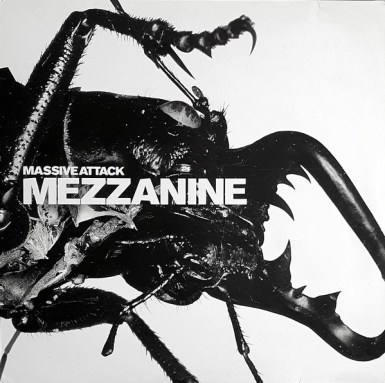
I’m well aware that today’s track came out as a single, but I don’t have that particular piece of vinyl.  I do have, however, the 2013 repress of Mezzanine, and it’s from there that I’ve ripped today’s 320kpbs offering:-

mp3: Massive Attack – Angel

Of the many thousands of albums I have on vinyl or CD, this is up there among my favourite of all opening tracks.  Indeed, there are occasions when I think it might well be my very favourite, setting the perfect tone and mood for an album which astonished me on its release back in April 1998.  I had enjoyed much of what Massive Attack had done up till that point in time, but the first two albums hadn’t quite fully hung together for me.

Mezzanine was a whole new ball game.   It sounded like no other trip hop album (albeit my knowledge of the genre was limited), on which elements of the dark sides of earlier period new wave and alternative music were fused to a wholly modern production in which everyone involved seemed to want to scare the shit out of the listener.  It is a very dark album, (I hesitate to us the word gothic, but……) with every note in some songs, such as Angel, seeming to warn of imminent danger.

And, as if to prove this very point, the music would be used to astonishing effect in series four of the TV series The West Wing, in 2003, when the character of Zoey Bartlett, the daughter of the President, is drugged and kidnapped while out with some friends in a Washington nightclub. Real edge of the seats stuff to deliver a cliffhanger into the next episode…as someone else has written elsewhere in a review of that episode, the visuals and the background music were equally creepy, tense and trippy.

JC

THE WONDERFUL AND FRIGHTENING NEW SERIES FOR SUNDAYS (Part 9)


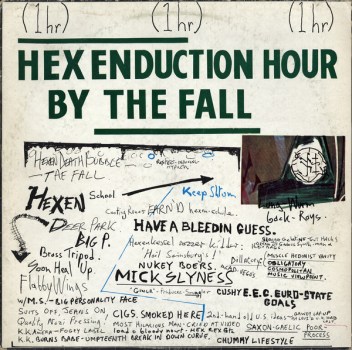
I think it’s only fair that Hex Enduction Hour, released in March 1982, features as part of this series as it enables me to get a bit personal and nostalgic. It doesn’t actually show me in that great a light to be honest…..

The thing is, The Fall were coming to Glasgow on 1 April 1982, for a gig at Night Moves (the club recently referenced in flimflanfan’s wonderful ICA on Goth music). A really good friend at the time, and someone who I went to a lot of gigs with, was determined to go, partly on the basis of him liking what he had heard on the John Peel show, but also from the fact that the support band was an up and coming band from Scotland called Cocteau Twins.

My mate went out and bought the new Fall album and taped a copy for me onto a C90 cassette.

I listened to it. I really liked the opening couple of tracks, but then thought it became a bit of a droning dirge. It also sounded as if my mate had cocked up the recording as the tape faded out mid-song before halting altogether, but when I turned it over to Side B, the song which had faded out started up again. Both tunes appeared to be called Winter. Side B was a tough listen as the singer asked questions but seemed to give no answers about Nazis, while the final two songs were long-drawn-out affairs that were unlistenable.

My expectations for the gig weren’t high. But as my mate had seen a few bands that weren’t his cup of tea, it was only fair that I went along with him.

As it turned out, the support band were fine, albeit they didn’t play for long, with the incredibly shy and possibly terrified singer seeming as if she just wanted the experience to end. The Fall were very strange. There didn’t seem to be all that many songs in their set from the new album, and the lead singer seemed at his happiest when he was provoking a reaction from the audience. We had been down near the front to begin with, but we edged back in due course, worried about getting caught up in something we wanted no part of. The musicians seemed to be a decent lot, but it was hard to tell as the sound was quite muddied. The gig ended and we kind of shrugged our shoulders.

The next day, I taped over the C90.  Probably a mix for my then first serious girlfriend, who had just left school for a job/career as a trainee with one of our major banks.  Her tastes were quite conservative…..I didn’t know it then, but the writing was on the wall, and we would go our separate ways by the summer….and it’s quite likely that the tape would have been filled with ‘mood’ music for those few occasions when her parents weren’t home.

Now, looking back at things.  I was 18 years old.  I had been going to gigs for around two years, mostly at the Glasgow Apollo where the established acts with chart hits rocked up, although I’d been to a few smaller shows in other venues including the various student unions in the city.  I knew little of The Fall beyond some early singles, most of which I had enjoyed…..but the album just didn’t resonate for the most part.  I quickly dismissed The Fall, and it would take a couple more years before I took them seriously again, thanks to their songs being played every now and again at the alternative disco in the students union of Strathclyde University, my regular haunt in 1984/85.

Forty years on, and having all sorts of different reference points on which to now draw, none of which were the least bit familiar to me back then, I can appreciate that Hex Enduction Hour is a wonderful piece of work, probably my favourite of all the studio albums. I now have a copy on vinyl, not the original version, but a 2019 re-press by Cherry Red Records in which three slabs of 12″ vinyl contain the album along with live recordings and Peel Sessions from September 1981, with a bonus 7″ single also thrown in.  Oh, and it all comes on a fabulously eye-catching green and white splattered vinyl…

Some background if you’re not aware. Mark E Smith thought this would be the band’s final album before the band totally imploded. Two tracks were initially recorded in Iceland, in September 1981, as part of a trip to play three gigs in that country, The remainder came from sessions in a disused cinema in Hitchin, some 38 miles north of London, in December 1981. The band had the same line-up as had played on Lie Dream Of A Casino Soul, and following on from the success of the sessions for that 45, Richard Mazda was in the producer’s chair in Hitchin.

It came out on Korova Records to fairly enthusiastic reviews, and thanks to the band’s increasing popularity, became their first single or album to make the official as opposed to indie charts, peaking at #71. Rather incredibly, none of its tracks made it onto Peel’s Festive rundown, as voted by listeners, at the end of the year, although a later single (and subject of the next edition of this series) did scrape in at #58.

But returning to the subject matter in hand.

Hex Enduction Hour has many wonderful moments, including loads I despised back in 1982. Like this:-

mp3: The Fall – Hip Priest

Seriously, how was I meant to get this in 1982 when I was enjoying and dancing to New Order, The Jam, Scritti Politti, Associates, The Clash, The Cure, Simple Minds, Blancmange, Yazoo, Echo & The Bunnymen and Aztec Camera – all of whom feature prominently and regularly in the ’82 Peel rundown, whereas these songs are nowhere to be seen:-

mp3: The Fall – Jawbone and The Air Rifle
mp3: The Fall – Mere Pseud Mag Ed
mp3: The Fall – Just Step S’ways

Looking back at the Night Moves set list on 1 April 1982, all the tracks on offer today, except for Jawbone, were aired, which is at odds with my recollection that the gig was mostly stuff that I didn’t know. Which just shows that I really didn’t do my pre-gig preparations properly.

The joke is on me. I should be still been dining out on the fact that I had seen an astonishing double-bill, for probably less than £3, of a band from Scotland set to soon take the indie music world by storm, and a tremendous line-up of The Fall at the height of their early powers.

If I could find a time travel machine, and offered a fresh opportunity, I’d certainly approach things very differently. I’d still have that C90 tape, for one……..

JC

SATURDAY’S SCOTTISH SONG : #270: THE REZILLOS

This is an alphabetical run through of singers and groups from Scotland from whom there is at least one song on my collection of vinyl and CDs, failing which there will be something located on the hard drive of the Villain Towers laptop.  The fact there was nothing previously by The Revillos tells you all you need to know in that regard…..

The Rezillos, a coming together of students attending the Edinburgh College of Art, were in existence between 1976 and 1978.  The break-up was initially very messy, but their record company allowed two key members – Eugene Reynolds and Fay Fife – to be released from their contract with the proviso that they couldn’t use the band name.  Thus, The Revillos came into being, staying together until 1996 (!!).  Fast forward another five years, and The Rezillos reformed, still going strong today.

From the band’s website:-

The Rezillos ripped into the rock scene through a shared love of Sixties Garage Rock, the Spectoresque Girl Group voice of The Shangri Las injected with their inimitable molten attitude and created their unique left-field brand of punk rock and roll. The speed at which they gathered a following took the band by surprise.

The Rezillos off-kilter three minute sparkling pop gems and a unique visual style was steeped in a culture of bad boys, bad girls, bad movies and great rock and roll. Their independent debut single, “I Can’t Stand My Baby” shot them to underground fame initially via airings on John Peel’s radio show. Their follow-up classic singles “My Baby Does Good Sculptures”, “Top of the Pops” and “Destination Venus” signalled critically acclaimed milestones for the band. The Rezillos recorded their landmark album “Can’t Stand the Rezillos” in New York’s fabled Power Station studio, immersed themselves in the local music scene and dropped in during downtime to play a gig at CBGB’s, the hub of Punk Rock music. The album reached the top 10 in the UK album chart and is lauded as a punk classic.

The Rezillos gave two legendary performances on “The Old Grey Whistle Test” and did the same on the music showcase programme “Top of the Pops” where in keeping with band’s ironic take on pop culture, they played their hit single of the same name satirising the show. The Rezillos single hit the Top Twenty and their album charted alongside. The same year they released a live album; “Mission Accomplished… But the Beat Goes On”.

The band had a meteoric rise, made a seminal album and stamped their unique identity on an unsuspecting public. Much to their fan’s anguish, The Rezillos had hit the too much too soon button and abruptly ceased.

As I don’t have anything by the band post that first break-up, nor anything from the 21st Century reincarnation, I’ll stop right there.  I will say that Can’t Stand The Rezillos, a mint condition second-hand copy of which I picked up a few years ago for a bargain price, remains a fun listen and a great reminder of the fast nature of much of the music I was listening to in great quantities in my mid-teens. I’ve also got this non-album single on 7″ vinyl, the follow-up to Top Of The Pops; I was sure it was also a chart hit, but it seems it stalled just outside The Top 40:-

mp3: The Rezillos – Destination Venus

It’s that much loved mesh of the sound and look of B-52s, The Cramps and Devo, but with broad Scottish accents and a less-stylish fashion sense.

Fun fact.  Fay Fife’s real name is Sheilagh Hynd, and her stage name is the answer to a question…….

Fay (but with the spelling of ‘Fae’) is the local dialect version of ‘from’ while her home town of Dunfermline lies in the historical Kingdom of Fife, located on the other side of the Forth Estuary, north and east of Edinburgh.

JC

BONUS POST : THE LATEST SIMPLY THRILLED MIXTAPE

Simply Thrilled Mixtape #4 Poster Paints

Poster Paints, in their own words, are Simon Liddell (Olympic Swimmers, Frightened Rabbit) and Carla J Easton (TeenCanteen and Ette) who have changed their way of working and embraced the “new normal” to make art. Their debut single ‘Number 1’ is an instant anthem. Teenage love, feeling invincible and long hot summers. It’s the sound of two people exploring. Glasgow indie pop, dream pop and shoegaze – the bands they grew up listening to, and are passionate about.

Number 1 came out in a limited edition physical form back in May, and I’m happy to say that I was able to procure a copy via Monorail in Glasgow.  You can have a listen and then pick up a copy from bandcamp for just £1….all you have to do is click here.

The Simply Thrilled mob are, understandably, simply thrilled that Poster Paints have created the latest of our mixtapes which we are pulling together in lieu of us not being able, just yet, to have any of our regular nights at The Admiral Bar in Glasgow.

It’s a mix which gleefully swerves from soul to indie to 80’s pop with reckless abandon, and it is utterly joyful!

1. Heaven Is A Place On Earth – Belinda Carlisle
2. I Can’t Let Go – Evie Sands
3. Straight To Hell – The Clash
4. Freak Like Me – Sugababes
5. Summertime – The Sundays
6. Nobody Sees Me Like You Do – Yoko Ono
7. Don’t Say Nothin’ Bad (About My Baby) – The Cookies
8. I Met Him On A Sunday – Laura Nyro
9. Love Is Like An Itching In My Heart – The Supremes
10. La La Lie – Basia Bulet
11. The Abandoned Hospital Ship – The Flaming Lips
12. Something Big – Burt Bacharach
13. 90% Of Me Is You – Gwen McCrae
14. Neil Jung – Teenage Fanclub
15. I Can’t Stand The Rain – Ann Peebles
16. Sometimes Always – Jesus and Mary Chain
17. 1 Thing – Amerie
18. The One To Wait – CCFX
19. I Follow You – Melody’s Echo Chamber
20. Sound and Vision – David Bowie
21. Alison – Slowdive
22. Velocity Girl – Primal Scream
23. Different Now – Chastity Belt
24. The Opener – Camp Cope
25. The Greater Times – Electrelane
26. Crawl Babies – The Pastels

JC

IT REALLY WAS A CRACKING DEBUT SINGLE (58)

I never did, and never will, get annoyed by Haircut 100.  Their songs were too good and too enjoyable to dwell and get hung up on the fact that they got the hits, fame, money and kudos that could (or should) easily have come the way of Orange Juice.  Besides, when you look back and see what the impact of being a pop star had on the health and well-being of Nick Heyward, it’s maybe just as well that other than with Rip It Up, the efforts of Edwyn & co didn’t make much of an impression on the record buying public here in the UK.

It kind of felt that they came out of nowhere when they hit the charts with the debut single in October 1981, but as it turned out, they had done as much an apprenticeship as any other, with Nick Heyward (20 years old when success came calling) and bassist Les Nemes (21) having been in various groups going back to 1977.  It was Echorich, in a comment he made when I featured the single Love Plus One, who nailed it:-

The first Haircut 100 album was never meant, at least from the band’s perspective, to be a teen pop phenomenon. But the timing was right for those slightly latin tinged funk and breezy pop songs to take the charts by storm way back when. They were good-looking and Smash Hits took that and ran with it, the same way they did with Spandau Ballet – thus they could never have been positively reviewed in NME.

So….the consensus is that, in a parallel universe, Haircut 100 struggled from the outset, got no radio play or media coverage, but those of us with decent musical taste think of their debut being one of the great long-lost and largely forgotten gems from the 80s:-

mp3: Haircut 100 – Favourite Shirts (Boy Meets Girl)

Here’s the rather half-decent b-side:-

mp3: Haircut 100 – Boat Party

Worth mentioning in passing that Boat Party was an earlier name used by Haircut 100…….

Favourite Shirts spent 14 weeks in the Top 75, between October 81 and February 82.  It’s follow-up, the afore-mentioed Love Plus One, came into the charts the week after the debut dropped out.  It would spend 12 weeks in the Top 75, meaning that Haircut 100 enjoyed a full six months when their 45s were all over the shops.  Debut album, Pelican West, which has aged better than anyone night have expected, reached #2 in the charts, denied the top spot by Barbara Streisand……

JC

THE LAST WORD ON GOTH….FOR THIS WEEK, ANYWAY

That’s been two excellent Goth ICAs in recent weeks that I’m sure had the double-hit of bringing back memories as well as introducing a few new bands to some readers.  Here’s another one for you, a combo that I know nothing about other than what is contained in the notes for the 4-disc boxset, Make More Noise! : Women In Independent UK Music 1977-1987, which was released last year by Cherry Red Records.

“Led by Anna Di Stefano and Stefano Curti, Rhythm and Faith were a London based gothic rock group formed from the remnants of a couple of Italian Bands, namely TM Spa and Style Sindrome. Having relocated to London and discovered drummer Rab Fae Beith, Curti and Stefano brought the dark essence of those previous groups to a burgeoning goth scene in the capital, and issued their sole vinyl outing, the ‘Time To Run’ EP pn Future Records in 1983. The band still exists today, having reverted to the Style Sindrome moniker, and still showcases the vocal capabilities of the wonderful Anna Di Stefano.”

And here’s the track made available on the boxset:-

mp3: Rhythm and Faith – Young Too Young Girl

I think it’s rather splendid and would have been a worthy inclusion on either of flimflamfan’s or middle-aged man’s ICA.

JC