THE MONDAY MORNING HI-QUALITY VINYL RIP : Part Thirty : MONKEY GONE TO HEAVEN

It’s featured before on the blog, with a backstory about how hearing it for the first time in a record shop was a big step in me changing a lot about my life……but that’s not for today.

Playing this 12″ piece of vinyl for the first time in lord knows how long, and certainly for the first time since I got the upgraded turntable and amp just over a year ago, was a real treat as Kim Deal‘s bass, Joey Santiago‘s guitar, David Lovering‘s drums and Black Francis‘ screams combined to make a sound that is beyond my vocabulary to properly do it justice.

It’s a new wave epic, groundbreaking in the way that the harsh, near industrial sounds of the traditional instruments deployed by this particular four-piece combo are enhanced in unimaginable ways by two cellos and two violins.   It still remains one of the few songs that have ever stopped me dead in my tracks on my first listen while I’ve been browsing in a record store, and hearing it played so loudly again today, thanks to Villain Towers, temporarily, having no neighbours, took me back to 1989.

It also has a couple of top-notch b-sides and another which is above average. So here they are, ripped direct and at as high a quality for an mp3 as my equipment will allow:-

mp3: Pixies – Monkey Gone To Heaven
mp3: Pixies – Manta Ray
mp3: Pixies – Weird At My School
mp3: Pixies – Dancing The Manta Ray

Melody Maker, here in the UK, made Monkey Gone To Heaven its #1 single come the end of the year rundown. Rolling Stone, over in the USA, had it at #5, the same position it reached in the John Peel Festive 50, one of five entries from Pixies in that particular rundown. The record buying public weren’t so enamoured, as it only reached #60 in the singles chart

JC

THE WONDERFUL AND FRIGHTENING NEW SERIES FOR SUNDAYS (Part 13)

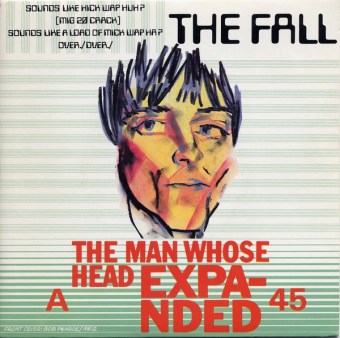
Do you remember a few weeks back when I highlighted that The Fall had just one entry in the Peel Festive 60 (as was) of 1982, and that none of the tracks from Hex Enduction Hour had gathered enough votes?  Well, 1983 was significantly better in that both of the year’s 45s, The Man Whose Head Expanded and Kicker Conspiracy, along with its b-side, Wings, were prominent, but pride of place went to a Peel Session version of Eat Y’Self Fitter, the track which had opened the album, Perverted By Language, with it being voted in at #8, headed only by songs from Billy Bragg, The Smiths, Cocteau Twins, This Mortal Coil and New Order.

MES, however, was disillusioned at Rough Trade, and he began 1984 on the look-out for a new home.  Some major labels were taking notice of the increasingly positive press coming the way of The Fall, and, let’s not pretend otherwise, the addition of an attractive female member made the band a much more marketable proposition.  The music weeklies, in the first week of May 1984, announced that the band had signed a deal with Beggars Banquet, and were currently holed up in a studio with producer John Leckie who had brought success to a number of other bands including Magazine, Simple Minds, XTC, The Skids and Public Image Limited.

One month later, and the first fruits of the new labour were unleashed on the listening public.

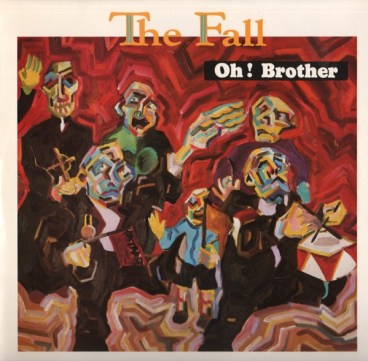
mp3: The Fall – Oh! Brother

It was The Fall, but not as we, or indeed anyone, knew them.

It was a pop song, one which would have sat easily alongside those that were being released on a regular basis by Rough Trade.  I’m sure that Geoff Travis would have been scratching his head and wondering just what he had ever done to upset MES to the extent that the thrawn bastard continuously refused to contemplate anything akin to radio friendly songs, only for him to come up with this absolute monster once he’d moved to a major label.

Right away, the music press suggested that it was the pop sensibilities of Brix Smith that had led the band down this particular path. After all, the line-up was still the same as it had been since the departure of Marc Riley, but with the addition of this American guitarist and vocalist who might have been a fan but had not been part of the rough and ready apprenticeship going back what was now six studio albums, an EP, ten singles and many hundreds of gigs in toilets all across the UK and further afield.

But……why let the facts get in the way of a good story?  It turned out that Oh! Brother, or at least a version of it, dated back to 1977/78, and had been resurrected as being a tune that Brix Smith could quickly get to grips with in the live setting and in the studio.   The person who was really most responsible for bringing about this change in sound and dynamics was John Leckie as his production techniques and fingerprints are all over the 45.

Suffice to say, some fans were horrified.  But at the same time, the Leckie name being attached to the band likely opened The Fall up to a whole new audience – I can vouch for that as, not withstanding the home recording of Hex Enduction Hour in advance of the 1982 gig in Glasgow, this was the first single of The Fall that I bought at the time of its actual release.  On 12″ vinyl, and I was completely unaware that this was the first single by the band that had been issued on that format, with everything previous being on 7″ only.  My copy from back in 1984 didn’t survive being constantly played on record players with needles in less than perfect condition, nor a few moves across student and workplace flats across the remainder of the decade.  But I’m pleased to say I’ve since picked up a second-hand copy in decent nick:-

mp3: The Fall – God-Box
mp3: The Fall – Oh! Brother (12″ mix)

God-Box was the first song on which Brix Smith received a writing credit for The Fall. In fact, it goes well beyond that with the lyrics attributed jointly to Mark E Smith and Brix Smith, but with the music and arrangement being solely in the hand of Brix. It was almost as if MES was announcing that she was here to stay, and far from being just a pretty face, was going to bring something concrete and meaningful to bring to the band.

Oh! Brother did what no other previous single had done in that entered the mainstream singles chart at #93. Thanks to it being on a major label, it didn’t qualify for the indie singles chart.

JC

SATURDAY’S SCOTTISH SONG : #274: RM HUBBERT

From wiki:

“RM Hubbert (Robert McArthur Hubbert, born 12 May 1974 in Glasgow, Scotland), commonly known as Hubby, is a Scottish guitarist and singer. Best known for his solo work and as a member of Scottish post rock band El Hombre Trajeado, he has been an active member of the Glaswegian DIY music scene since 1991.

Hubbert’s first band was formed in 1991 under the name Me, Hubby & Thom. The band’s drummer, Thom Falls, also played drums for Glasgow band The Blisters, notable as the first band of future Franz Ferdinand guitarist and singer Alex Kapranos.

Kapranos and Hubbert became friends whilst running The Kazoo Club at The 13th Note in Glasgow after the original promoter quit. Hubbert later joined The Blisters on second guitar. He then joined Glaswegian hardcore band Glue in 1992 until the group split in 1995.

El Hombre Trajeado formed in 1995 with Stevie Jones, Ben Jones and Stef Sinclair, releasing three albums; Skipafone (Guided Missile Recordings, GUIDE33CD, 1998), Saccade (Human Condition Records, HCCD0031, 2001) and Shlap (Lost Dog Recordings, ARFF004, 2004) before disbanding in 2005. lthough the band rarely toured, they supported artists such as Nick Cave, Sebadoh, Tortoise, Mike Watt and The Delgados around the UK. They recorded three radio sessions for John Peel on BBC Radio One between 1998 and 2001.

Originally planned as a distraction to take his mind off of the death of his parents, the nine solo guitar pieces that make up Hubbert’s debut album First & Last are based on flamenco structures and techniques, albeit with a modern approach to melody. Hubbert self-released First & Last as a limited edition hand bound book with CD on the DIY label Ubisano in 2009. The release garnered good reviews, leading to the long-running influential Scottish record label Chemikal Underground signing him in late 2010.

Hubbert (credited as Robert Hubbert) also played electric guitar on Alasdair Roberts‘s 2010 album Too Long in This Condition. Chemikal Underground reissued First & Last on 12″ vinyl and CD in early 2011.

Hubbert’s second album for Chemikal Underground, Thirteen Lost & Found (2012), is predominately made up of collaborations with other Scottish musicians such as Aidan Moffat, Emma Pollock and Alasdair Roberts. The album was conceived as a way of reconnecting with old friends whilst getting to know newer ones better. This album also saw Hubbert work again with Alex Kapranos, who acted as producer.

A prolific live performer, Hubbert has toured extensively around the UK and mainland Europe both on his own and in support slots for the likes of Mogwai, Godspeed You! Black Emperor, The Twilight Sad, Franz Ferdinand, Bill Wells & Aidan Moffat, King Creosote, Emma Pollock and Thee Silver Mt. Zion.

Thirteen Lost & Found won the Scottish Album of the Year Award in 2013, beating albums by Emeli Sande, Calvin Harris, Django Django and The Twilight Sad amongst others, and picking up the £20,000 prize.

Breaks & Bone, Hubbert’s third solo album – and the first on which he also sings – was released on Chemikal Underground in September 2013. It was shortlisted for the 2014 Scottish Album of the Year Award alongside albums by Biffy Clyro, Chvrches, Mogwai and Boards of Canada amongst others.

Ampersand Extras, consisting of unreleased recordings, b-sides and rarities, was released in September 2014 through Chemikal Underground.

In April 2016, Hubbert released his fifth album for Chemikal Underground, Telling the Trees. Envisaged as a companion piece to Thirteen Lost & Found, Hubbert went about writing and recording Telling the Trees in as opposite a manner as possible. Collaborators were chosen that he did not previously know and the songs were written remotely and in isolation. It was shortlisted for the 2016 Scottish Album of the Year Award alongside Mogwai, Honeyblood, Ela Orleans and the eventual winners, Sacred Paws.

In May 2018 Hubbert released a joint album with long-time friend and collaborator Aidan Moffat titled Here Lies the Body. Its lead single, Cockcrow, featured Siobhan Wilson on vocals along with Moffat. The track was playlisted by BBC 6 Music, as was a further single, Quantum Theory Love Story. Here Lies the Body entered the Scottish Album Chart at number 15and was shortlisted for the 2019 Scottish Album of the Year Award.

Another album quickly followed in December 2019, again alongside Moffat – Ghost Stories for Christmas. This collection of Christmas themed songs entered the UK Record Store Chart at number 1.

Record Store Day 2019 saw the third full-length release with Aidan Moffat within a year, What the Night Bestows Us. Recorded live on tour in England in November 2018, the duo were joined by Jenny Reeve on violin and vocals for a set of stripped back arrangements from the duo’s previous two collaborations.

Cut to Black, the final release by Moffat & Hubbert, was released on 7″ in August 2019. It debuted at number 9 in the UK Vinyl Singles Chart.

JC adds…..

Hubby is, as the wiki page indicates, one of the great stalwarts of the indie (in the truest sense of the word) scene in Scotland, and his unexpected win of the SAY Award in 2013 was immensely popular amongst his peers.  He has never hidden from the fact that he suffers terribly from mental illness, often referring to his difficulties when talking to the media about his music, his achievements and his live shows, all of which are substantial.

He has, unsurprisingly, been very quiet these past 18 months as the world has had to come to terms with all the changes wrought on it by COVID, but there are many of us who really hope that, as things slowly return to a less chaotic situation, RM Hubbert will soon be back doing what he does best.

Here’s a track from the album Thirteen Lost and Found.  Regular visitors will recognise the vocalist:-

mp3: RM Hubbert – Car Song

And here’s a link to his official website, where you can enjoy much more (including a video featuring his and Aidan Moffat’s cover version of Only You by Yazoo)

ALL FOUR SINGLES FROM THE WISHING STONES?

A few months back, I devoted some space to the magnificence of Up The Hill and Down The Slope, a single released by The Loft back in 1985.

Bill Prince, bass player with The Loft, quickly formed a new band which he named The Wishing Stones, seemingly inspired by two diamond-shaped stones set beneath a Devon sea wall. That’s the story told in the booklet accompanying the retrospective C87 box set issued by Cherry Red Records a few years back, which also goes on to state:-

Debut single ‘Beat Girl’, with its classic rolling chord structure, appeared on Jeff Barrett’s Head label and was followed in 1987 by ‘New Ways’ on Sub Aqua (Head renamed after The Monkees representatives threatened to sue). Two final singles ‘Dead Man’s Look’ and ‘The Old Road Out Of Town’ (both 1988) continued their Creedence/Band/Voidoids approach.  The Wishing Stones’ album Wildwood was prepared that same year but after the band acrimoniously split, it was shelved until Barrett received money to set up Heavenly and finally released it in 1991.

Here’s the song from the C87 box set, followed by the other single which came out on the Head label:-

mp3: The Wishing Stones – Beat Girl
mp3: The Wishing Stones – New Ways

While quite derivative of the era, I reckon both are rather catchy and enjoyable.

A wee bit more info about the band.

Bill Prince played guitar and sang. John Niven was on guitar, while the rhythm section consisted of Stuart Garden (bass) and Andrew Kerr (drums).

If the name John Niven seems familiar, then it might well be that you’ve read one of the eight novels he has written since 2008. I’m a huge fan of his, and I particularly recommend his debut effort, Kill Your Friends, which is set against a background of the music industry at the height of Britpop.

But here’s the thing.    Cherry Red Records later issued a further retrospective box set entitled C88 in which the same bio outlined above was reproduced. The song included in the box set, as the 15th track on CD3 is said to be The Old Road Out Of Town (12″ edit). The thing is, it isn’t…..instead it is the other single released on Sub Aqua:-

mp3: The Wishing Stones – Dead Man’s Look

And, try as I can, I’ve been unable to find any song out there called The Old Road Out Of Town. But I did come across something which had a similar sort of title on the Wildwood album:-

mp3: The Wishing Stones – Long Road Out Of Town

Now….who gave this a listen and didn’t immediately think of Lloyd Cole & The Commotions???????

All in all, it’s a wee bit of a mystery. Cherry Red are normally so good at providing the background bio info, and it really does seem very strange that they got the name of the track on the C88 box set wrong.

JC

THE HURTING

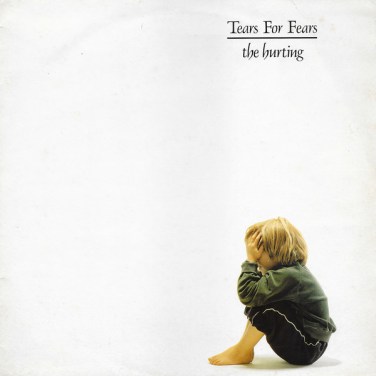
I hadn’t spotted till now that that Tears For Fears haven’t ever featured specifically on the blog before, and that this post will provide their first ever entry into the big index.

Today’s effort was inspired by me picking up, at a reasonable price, a second-hand vinyl copy of the 1983 debut album, The Hurting.  It’s a record I bought back in the day, but for whatever reason has been missing from the collection for decades. I might have loaned it to someone and never got it back, but equally, I could have given it away on the basis that I really didn’t take to its follow-up, Songs From The Big Chair (1985) which went in a rather different direction – more bombastic yet more instantly accessible – that didn’t resonate with me at all.  It’s the hit singles from the latter, and in particular Everybody Wants To Rule The World, which are a staple product of shows looking back at the 80s, and it’s a sound which hasn’t aged well at all.

Tears For Fears were not liked by many of the music writers back in 1983, as can be evidenced by this scathing review in the NME:-

“This record and others like it are a terrible, useless sort of art that makes self-pity and futility a commercial proposition, Tears for Fears and their listeners sound like they’ve given up completely, retreating from the practical world into a fantasy. The music is just the sort of doom-laden dross you’d expect from the lyrics: rehashed and reheated hollow doom with a bit of Ultravox here, diluted Joy Division poured everywhere, and the title track sounding suspiciously like one of the old pompous outfits with a welter of mellotrons – Barclay James Harvest per chance?” (Gavin Martin, NME 12 March 1983)

Miaow.

The interesting thing for me is that a new generation of writers, picking up on the 30th Anniversary edition back in 2013, were happy to reflect on it in much the same manner as I had back in the day, albeit I didn’t fully comprehend how deep and dark it really was, subject wise.  In summary, and my recent re-connection with the record confirmed it, this is a work in which quite serious, difficult and often uncomfortably personal subject matters manage to somehow resonate with a willing audience while finding its way into the pop charts as a result of the music, certainly for the songs selected as singles, being so instantly catchy.

There is also a belated recognition that this particular album proved to be a big influence on many who would follow years later.  I’m not all that familiar with the work of Trent Reznor and Nine Inch Nails, but from what I’ve read, it’s almost as if he took the template of The Hurting and made a huge and successful career out of it.

It was certainly a very interesting and enjoyable experience listening to The Hurting in its entirety again after a gap of at least 30 years.  I really can’t hear too many Joy Division comparisons, but there are occasional reminders that Peter Gabriel‘s third solo album from 1980 was a huge influence on the way synth-pop/rock would evolve in the 80s, not least on the opening title track:-

mp3: Tears For Fears – The Hurting

This is followed by two of the hit singles – Mad World (#3) and Pale Shelter (#5) – with the former becoming even more well-known in 2003 when a dark, broody, piano-led ballad version by Gary Jules, from the soundtrack to the film Donnie Darko, went to #1, thanks to the film becoming a success when it was released on DVD two years after it had more or less flopped at the cinema box office.   The original version of Mad World is a tremendously deceptive song – it is packed with the sort of music that gets you throwing shapes on the dance floor but has a lyric that, when you sit down and read/analyse it, is very much a cry for help in coping with a very severe depression and feelings of helplessness.  It’s a genuinely astonishing work of art, all things considered.

mp3 : Tears For Fears – Mad World

Side One of the album closes on a couple of downbeat numbers, as can be evidenced from their titles – Ideas As Opiates, and Memories Fade.   Given that so many debut albums often feature material drawn from personal circumstances, you have to wonder what sort of fucked up life had been endured by songwriter Roland Orzabal, who was just 21 years old when these songs were recorded.  Let’s just say, I reflected on these songs, and indeed many of the others, in a way that I couldn’t possibly have done as a carefree, relatively happy-go-lucky, boy about town in the early 80s.

mp3: Tears For Fears – Memories Fade

The upbeat music which opens side two again acts as something of a disguise for the subject matters at hand in the songs Suffer The Children and Watch Me Bleed.  And again, I found myself wondering why I hadn’t picked up just how dark an album this is.  And then, almost out of the blue, the most instantly accessible, almost disposable track starts to come out of the speakers:-

mp3: Tears For Fears – Change

Another of the hit singles – a #4 hit around the time that the album came out.  I hadn’t actually realised this was the case until doing a bit of fact-checking for this post, and had always assumed Mad World had been the single to promote the album.  Turns out that it had actually been an earlier hit in late 1982, meaning that fans were already on the look-out for Change as its follow-up before a long-player hit the shops.

All of which goes to show that the record label and the duo were pulling a neat trick on the pop world at the time.  The cute one, Curt Smith, was the vocalist and who got most attention.  The first two singles were tailor-made for radio, but then the album, which turns out to be having been written entirely by the other bloke in the band, has loads of tunes that the pop kids wouldn’t enjoy, nor would daytime radio be comfortable playing them.  This is especially the case with its final two songs – The Prisoner and Start Of The Breakdown – with the former sounding like the sort of thing which would bring sleepless nights to the early-teen readers of Smash Hits and then, a few years later, trigger off some sort of psychoticly violent incident that they can’t explain to their despairing parents….or the authorties who have just locked them up.

mp3: Tears For Fears – The Prisoner

All in all, I thoroughly enjoyed my trip down memory lane with The Hurting.  It’s an album I liked in 1983, and it’s one I can really better understand and appreciate more in 2021.  But you’ll never convince me that I should be devoting any time to its follow-up.

JC

AN IMAGINARY COMPILATION ALBUM : #295 : SWEDISH GIRLS : A COLLECTION OF NAMES

A GUEST POSTING by MARTIN ELLIOT

(our Swedish Correspondent)

Hi Jim,

The recent name-centered ICA’s gave me the idea of a Swedish Girls ICA – not in the sense the expression Swedish Girls was made world famous in the 50’s and 60’s but songs in Swedish named after girls.

I’ve kept to only songs in Swedish, my apologies for 10 songs with little meaning to the rest of the TVV community, but still. If for no other reason, it amused me putting this collection together, and it was an afternoon’s work rather than 3 months of constant changes.

Swedish Girls, a collection of names.

(Contrary to what you might think, Helene is far from the most common female name in Sweden, it’s Alice and has been so for many years.)

A1 Ebba Grön – Mona Tumbas slim club

Ebba Grön was one of the first Swedish punk bands, and the one that grew biggest. Mona Tumba was the wife of hockey pro, and later golf pro, Sven Tumba and she started her own fitness studio complete with a range of products and video courses. Our version of Jane Fonda. According to Ebba Grön we don’t need her slim club…

A2 Kent – Bianca

Kent, probably the biggest (indie) rock band we had within our borders. They also had quite a following in our Nordic neighbours, especially Norway, but by and large they were a Swedish concern. Lyrics often cryptic and hard to decipher, sometimes labelled emo – I would go for dark.

A3 Reeperbahn – Sång till Helene

Reeperbahn was one of the most important “new wave” bands that surfaced in the wave of music post punk-era. This is an early single, released 1979.

A4 Olle Ljungström – Alice

Olle Ljungström was the singer in Reeperbahn, after the band disbanded he had sorts of a solo career and in the 90’s he released a handful of brilliant records, but then disappeared in drugs, illness and isolation. He had almost recovered, was clean, when he died 2016 with a come-back album almost finished. It was posthumously finalized and released in 2017, so almost 40 years after the previous track here now is Alice, also sung by Olle.

A5 Thåström – Linnea

Joachim Thåström was the singer of Ebba Grön and has since then been in Imperiet (basically an evolution of Ebba Grön) and noise outfit Peace & Love & Pitbulls. Solo I would say he’s our Nick Cave, moving between rock and almost crooning, reading his lyrics more than singing. Always dark, moody. One of the greatest Swedish artists in modern time.

B1 Magnus Carlsson – Elin

Magnus Carlsson is the lead singer of Weeping Willows, band known for making middle aged men cry at their concerts with their 60’s-drenched pop with lyrics brim-full of lonely men and broken hearts. Solo Magnus leans more towards Northern Soul, and I had to include this since as at the time I had just met a woman named Elin – the chorus goes “Elin, you are, you are mine” – I played the song frequently. (She is now Mrs.)

B2 Tant Strul – Rosa

Tant Strul was the female version of Ebba Grön and singer Kajsa Grytt our version of Siouxsie, albeit blond. Apart from their debut album I wouldn’t say their music was punk, but they had the punk DIY attitude and at the time as an all female rock band they likely had to fight a mountain of stupidity from the recording business. Among the best we had at the time, and singer Kajsa is still active as a (very good) solo artist.

B3 Commando M Pigg – L Marlene

New Wave band from Stockholm, started out as Commando Musse Pigg (Commando Mickey Mouse) but the big American movie company didn’t appreciate the connection and they shortened their name to Commando M Pigg, and later just to Commando. Excellent band live, probably my best live experience.

B4 Webstrarna – För guds skull Helene

From their self-released rather quirky debut album. Webstrarna polished their sound moving on but became the band a bit inbetween – too pop for the indie kids and too strange (“left field”?) for the pop kids. They were big fans of Reeperbahn (see track A3).

B5 Anna Järvinen – Lilla Anna

Part Swedish, part Finish, but since she lives and works in Sweden I count her in. Dreamlike, fluffy like white clouds, her music is light, with room for less. Somewhat a lyricist I guess she can be harder to appreciate when you don’t understand the language, but I thought this pretty little piece would make a nice album closer. For the album this is lifted off she also made a cover of Cocteau TwinsFootzepoletic, but the week the album was released the band changed their mind and withdrew their approval of the song so the album got withdrawn – I was lucky to buy it early, so I have the original LP.

I salute those who cared to read this far, and if you even took the step to listen to some of the tracks I hope there were some Swedish Girls to your liking!

Tack och hej,

Martin

ALL OUR YESTERDAYS : THE AFFECTIONATE PUNCH

Album: The Affectionate Punch – Associates
Review: NME, 16 August 1980
Author: Paul Morley

RUMOURS have been dripping down from Scotland about a diverse horde of determined post Skids/S. Minds/Scars groups all ready to shift our attention. Positive Noise, Altered Images, Josef K, Orange Juice . . . the newest rumours centred around The Associates, who it seems were refining the vision of Station To Station, who it seems had a singer who sang like that particular Bowie. He wasn’t copying, that’s how he really sang – from deep inside, neo-operatically.

It sounded ponderous, but The Affectionate Punch is too good, too spectacular to be merely the work of yet another group set to make a career out of one of Bowie’s stops. The Associates have further defined Station’s eerie combination of vitality and disorientation, drawn from is melancholia, and share its European feel. It’s a debut almost as sensational as Real Life – The Associates have things in common with Magazine worth talking about.

That European feel for a start, which basically stems from their liberating remoteness from standard r’n’r influences: the logic and out of the blue maturity of their sound: a Kurt Weill caught up with John Barry cabaret tension: and a respect for the irrational.

Billy Mackenzie is vocally reminiscent of Bowie: but Bowie has never sung with so much delightful range and subtlety, never really had to. Mackenzie’s soul singing is in the pained, proud tradition of Holiday and Garland. He’d be comfortable and do a great job singing ‘Windmills Of My Mind’ (he almost does on ‘Even Dogs In The Wild’). An artist at communication, he takes intense care over enunciation – the shape of words and the space between them. His vocals are either a folly or something very special: I reckon a little of the former, a lot of the latter.
The Associates sound is somewhere between evocative Cure and dramatic Magazine: a passionate cabaret soul music, a fulfillment of the European white dance music Bowie was flirting with back then. It is a fabulist (as opposed to surrealist) entertainment vitiated by a cool sense of art.

Billy Mackenzie and Alan Rankine write the music; Mackenzie the words. Rankine appears to play all instruments with remarkable skill except drums (Nigel Glockler). The ten songs are consistently inventive, ironic, irreverent, written with a light sometimes self-mocking restraint, arranged from a post-Eno, point of view.

The opening two songs are immediately impressive: the stylish cynical title track, typically laced with incidental delights; the almost atomised, light-headed ‘Amused As Always’ – Mackenzie’s singing here at is most absorbed and absorbing. The side’s closer, ‘Transport To Central’, forgoes obvious percussion and is formed around bitter, hedonistic guitars. The guitar sound on the LP is of the Manzanera/Levene/Smith line, lyrical, splintered, very anti-formal.

Individually, Mackenzie’s songs don’t say anything in particular (you could say they’re fashionably vague, but I’m not going to). Nervy, inward-looking images are repeated, reviewed, suggesting a feeling or an action, a mood or a moment. Effectively simplistic, songs about chance, confusion, absurdity, failure, suspense, that never degenerate into the precious.

‘A Matter Of Gender’ is a lush example of The Associates’ private desperation and public drama. ‘Even Dogs In The Wild’ is decadent cabaret, feeling for warmth; a typically clipped swing, finger clickings, a lone whistler in the dark. Mackenzie goes right over the top on ‘Would I… Bounce Back’ but still doesn’t seem to be stretching himself; ‘A’ drags out the group’s amoralism from its usual corner.
Don’t look for message or moral – the songs affect a dreamlike incompleteness but are not unprincipled or uncaring. They develop an account of the various mechanisms by which people remain trapped in boredom, abstraction, essence.

With Mackenzie’s obsessive flamboyance, the invariably plangent melodies, the richly fragmented detail of the songs, The Associates are undoubtedly theatrical. But their sense of theatre is natural, even profound, not the usual pop flash-trivia. The Associates are real performers.

At their worst they are engagingly supra-whimsical, at their best they are potently sophisticated and sensitive. Their well-ordered flair and melodrama seems right for the times: decay music.

The Affectionate Punch is a kind of masterpiece.

JC adds…….

It was in 1980, that my tastes began to develop and widen, thanks in part to Joy Division, Magazine, Echo & The Bunnymen and the Bowie of Ashes to Ashes/Fashion/Scary Monsters (and Super Creeps), all of which I felt were a cut above the norm, although there was still no question that The Jam were the singularly most important band ever to have graced the planet at any point in musical history.

I’d love to tell you that I raced out the next day after reading this review and bought The Affectionate Punch, but I’d be lying.  It would take me until the following year, when I had started university, and hearing White Car In Germany for the first time that totally stopped me in my tracks, thanks to it being included on a compilation tape made by a new mate I’d met at university that led to me buying a copy of Fourth Drawer Down, the compilation released in late 1981 bringing together all the singles which Alan and Billy had released that particular year.

I’d love to tell you at the purchase of Fourth Drawer Down then led to me going back to the shop to buy the debut album from the previous year, but again I’d be lying.  I’d not too long fallen in love for the first time with someone who I’d been at school with and her musical tastes were very much on the conservative side, and so I was spending money and time trying to get her to appreciate the more pop-orientated elements of my weird vinyl, which meant anything that didn’t chart stood very little chance of being bought.  But as I started to spend more time with my new pals from uni, and she with her new friends at the bank where she had been taken on as a school-leaver, the relationship withered; it broke my heart at the time, but the consolation was that I threw myself deeper than ever into music.

Fourth Drawer Down wasn’t bought until after the Associates had become famous; even then, it was from someone who, having rich parents and a bulky wallet, bought loads of records on a whim and had found that early Associates was nothing like the pop-era Associates of 1982.  He more or less gave it away to me…..

mp3: The Associates – The Affectionate Punch
mp3: The Associates – Amused As Always
mp3: The Associates – Transport To Central
mp3: The Associates – Even Dogs In The Wild

Paul Morley was right to say that The Affectionate Punch is a kind of masterpiece.  It sounded like nothing else back in 1980. Sadly, most folk only know of it through the 1982 remix, released by Warner Brothers after the success of Party Fears Two/Club Country/18 Carat Love Affair/Sulk, in which the songs were given a fairly radical makeover in terms of production and from Billy being asked, nay forced, to re-record some vocals.  It was a fatal mistake as it found no favour with those who had liked The Associates from the outset and, despite the tweaks, it was ignored by those who wanted a repeat of the chart hits.

And, of course, the album has given its name to a Glasgow-based collective who have featured a few times on this blog over the past two years.  Things have been a wee bit quiet of late with the collective, but watch this space for developments…..

JC

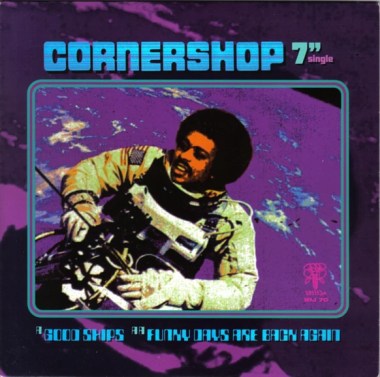
THE MONDAY MORNING HI-QUALITY VINYL RIP : Part Twenty nine : GOOD SHIPS

It’s a repost from 8 December 2014….one which got no comments, and so I’m not holding my breath today!  The difference being that seven years ago, it was the CD single which was used, while today’s has the recently picked up second-hand vinyl from a charity shop.

“I am of the opinion that When I Was Born For The 7th Time, released by Cornershop back in 1997 is a tremendous record. It is the best known of all the band’s LPs thanks to it having the original version of Brimful of Asha which, thanks to a remix from Norman Cook, stormed to the top of the singles chart.

It was an album which received great acclaim on its initial release but for a time, not long after the remix was such a hit, it did seem that many critics, having watched on as the band moved from cult status into commercial success, felt they could have a bit of a go at Cornershop’s particular mix of pop, dance, funk and politics, underpinned by a sub-continental groove. It certainly caught the band on the hop and caused a bit of a rethink on whether the fame and fortune was really worth the hassle, and it would be five years before the next record was released.

Despite having all the hallmarks of a great single, Brimful of Asha wasn’t selected as the first single from the LP. That honour went to the ridiculously catchy Good Shit. Except that it didn’t quite….everyone involved knew that releasing a song with that title and a chorus of ‘Good Shit’s all around good people’ was doomed to an instant ban. So with the change of one little letter and taking it to the plural:-

mp3 : Cornershop – Good Ships

It still of course for the most part sounds as if nothing has been altered, which is probably why it hardly got any radio play and was the latest in a run of flop 45s.”

Back in December 2014, I featured all four songs on the CD single, and mentioned its third track turned out to be a straight lift of something which would appear unaltered on the LP when it was released some three months later.  I made the observation that, on first listen, it really felt like a tremendous b-side:-

mp3 : Cornershop – Funky Days Are Back Again

I now know, from having the 7″, whose sleeve is at the top of today’s posting, is that it was in fact a double-A side effort.  One which deserved to do a lot better than one miserable week in the charts at #92.

JC

THE WONDERFUL AND FRIGHTENING NEW SERIES FOR SUNDAYS (Part 12)

The summer of 1983.  The Fall are signed to Rough Trade.  Their label mates included The Smiths, Aztec Camera, The Go-Betweens, Jazzateers and Violent Femmes, all of whom were recording and issuing what Mark E Smith regarded as bog-standard tuneful indie-pop, often with jangly guitars at the centre of the sound.  Rough Trade did not feel like a natural home, but hey-ho, a contract is a contract, and a single and album are required by the end of 1983.

The current five-man line-up of MES, Craig Scanlon, Paul Hanley, Steve Hanley and Karl Burns convene in a London studio to record the contractual new single. It’s a song they have played a great deal while touring throughout the previous six months, mainly in Europe, but also over in the USA on the tour when MES had first met Brix Salenger after a gig in Chicago. Brix had followed MES back to England, and as recounted in last week’s tale, the couple had married in July 1983.

It’s a song about football.  A sport which was at something of a low in England (and indeed Scotland) in 1983.  It was often a brutal watch, with skilful players all too often at the mercy of no-nonsense defenders, played in front of hostile and aggressive crowds.  Hooliganism was rife.   Fighting broke out on the terraces, in the surrounding streets, on public transport, at motorway service stations and was often at its worst when English clubs or the England national team played in European competitions.

It was as far from trendy as could be imagined, so there’s no real surprise that MES spent months crafting lyrics which had a go at those in charge of the sport, who were all too often and willing to do it down instead of looking for ways to bring about positive change. Oh, and as a reminder to Rough Trade that music wasn’t and shouldn’t always be instantly accessible and appealing to the masses, he came up with a tune which, for the early verses, leans on that rockabilly rift the band had used to great effect so often, but is mixed in with a degree of brutalism around the chorus and middle section of the song:-

mp3: The Fall – Kicker Conspiracy

It came out in September 1983 as a 2×7″ package with an original track on the b-side of Kicker Conspiracy, with the bonus 7″ having two songs taken from a John Peel session dating back to 1980:-

mp3: The Fall – Wings
mp3: The Fall – Container Drivers (Peel Session)
mp3: The Fall – New Puritan (Peel Session)

The writing credits on Wings are given to the Hanley brothers and MES. It’s one of those tracks which quite likely delighted most long-standing fans, but confirmed the prejudices held by the haters. I’ll hold my hands up…..it’s a song I didn’t discover until many years later and my first thought was that this was the sort of hard-to-take-in music I had experienced at the Glasgow Night Moves gig in April 1982, as mentioned a couple of weeks back. And sure enough, I’ve since been able to check and confirm that it was on the set-list that night, seemingly just the fourth time it had ever been aired. I’ve still never really taken to it……

Kicker Conspiracy reached #5 in the Indie Charts. MES wasn’t happy at how little promotional support was offered, despite it being the first Fall song to have an accompanying video, part of which was filmed at Turf Moor, the home of Burnley FC. He likely had a point in that Rough Trade was devoting resources to the charts and would-be chart bands, and not pressing enough copies of the records by other acts, which is why it is one of the rarer 45s of the era to track down with second-hand copies starting at £30 and going all the way up to £75 for a mint condition offering.

A few postscripts.

There are many fans out there who reckon that the Peel Sessions brought out the best in The Fall, and there’s plenty of evidence to back this up when you listen to the tracks collected on the compilation box set released back in 2005.  Marc Riley, in a radio interview in 1999 had this to say, specifically about the third Peel Session from which Container Drivers and New Puritan are taken:-

“The thing about recording a John Peel session is that you get in the van in the morning, in our case you drive two hundred miles, get out, unload the gear, and record everything in a pretty quick time.  I mean you would do four songs for a session. Now normally, even for band like The Fall, you would have to take two or three days to record four tunes.  In this case you have to get it all done and dusted by ten o’clock at night. So you would get into the studio, wheel everything down into the catacombs in Maida Vale, set up and do the deed. And I remember, I think it was the third session we did, we recorded the first track, made a right old racket, as we did, went in to start listening back to it, make sure we were happy with it, and I turned round to see the producer (John Sparrow), and his pipe had gone out. This is the truth, his pipe had actually gone out and he was asleep.”

As a bonus, here’s the other two tracks from that same session, recorded on 16 September 1980 and first broadcast 24 September 1980:-

mp3: The Fall – Jawbone and The Air-Rifle (Peel Session)
mp3: The Fall – New Face In Hell (Peel Session)

Mark E Smith – vocals; Marc Riley – guitar; Craig Scanlon – guitar; Steve Hanley – bass; Paul Hanley – drums

I made mention last week that Kamera Records had hoped, in late 1982, to issue a 7″ single containing two tracks from the album Room To Live. The label was in its dying days when it arranged for the pressing and issuing of this single in September 1983 only to find itself in a position that it couldn’t afford to do so. My understanding is that just 200 copies ever found their way into some shops, and even then, it was a real peculiarity. It had which had Marquis Cha Cha on its a-side, and Room To Live on its b-side, but the sleeve and the actual info on the vinyl for the b-side states the track is Papal Visit. All of which means I’m not inclined to include it in this series.

Finally, the contractually obligatory album for Rough Trade was also recorded in the summer of 1983. Perverted By Language was released on 5 December 1983 and its credits revealed that The Fall had undergone another line-up change. The five who had made Kicker Conspiracy had been joined, on two of the album tracks, by an additional guitarist and vocalist.

Welcome to The Fall, Brix Smith. Things weren’t quite ever the same after you joined, were they?

JC

SATURDAY’S SCOTTISH SONG : #273: RICK REDBEARD

From wiki:-

Rick Anthony (born 11 February 1979) is a Scottish musician, singer and songwriter originally from Aberdeenshire and now based in Glasgow. He is the lead singer and guitarist in the alternative rock band The Phantom Band and also performs as a solo act and releases music under the pseudonym Rick Redbeard.

Anthony began performing solo shows sometime in the mid-2000s, assuming the name Rick Redbeard due partly to its pirate connotations. A notable show during this early period was an appearance at the 2007 Connect Music Festival on the Yoursound Bandstand alongside other emerging Scottish acts such as Frightened Rabbit and The Twilight Sad. His music is generally categorised as alternative country or alternative folk music and has been likened in sound to Leonard Cohen, Bill Callahan and Will Oldham among others.

As The Phantom Band gained popularity after the release of their debut album Checkmate Savage in 2009, his solo work remained in the background until June 2012 when Anthony released the track ‘Now We’re Dancing’ as a split 7” single Now We’re Dancing/Vanishing Tanks with Adam Stafford on the Gerry Loves Records micro-label in Edinburgh. This was the first release of any kind under the Rick Redbeard name and was followed by a small joint headline tour of Scotland.

In January 2013 Chemikal Underground records released the debut Rick Redbeard album No Selfish Heart. This release was followed by a headline tour of the UK in March including sold out shows in Aberdeen’s Peacock Visual Arts Centre and Glasgow’s Centre for Contemporary Arts.

In July 2014, shortly after the release of The Phantom Band’s third record Strange Friend, Kingfisher Bluez, a Vancouver-based micro-label, released a 7″ Rick Redbeard single Dreams of the Trees featuring the title track and two other previously unreleased songs.

In 2015, Anthony recorded music for the short documentary The Third Dad which premiered at the Edinburgh International Film Festival in 2015.

In April 2016, the release of a compilation album called Refugee was announced. Organised by Glasgow-based musician Robin Adams and inspired by the ongoing refugee crisis in the Mediterranean, the record will be released in June 2016 with proceeds from the sale going to the Migrant Offshore Aid Station in Malta. It features a previously unreleased Rick Redbeard song called ‘Postcards’ along with new material from Bonnie ‘Prince’ Billy, Alasdair Roberts, Linda Thompson and others.

The second Rick Redbeard album Awake Unto was released by Chemikal Underground records on 17 June 2016.

As mentioned a while back when this series featured The Phantom Band, I’m really not sure if they are still an entity, While I don’t think there’s ever been any formal announcement of a break-up, the official website is no longer active.

I am, however, able to point you in the direction of a bandcamp site for Rick Redbeard, one in which you can listen to and pick up some of his earliest and later songs.

This is from the Awake Unto album:-

mp3: Rick Redbeard – The Night Is All Yours

While this is from the split single with Adam Stafford back in 2012 (and later made available on the album No Selfish Heart):-

mp3: Rick Redbeard – Now We’re Dancing

Here’s hoping, with live music finally making a comeback, that Rick will get the opportunity to play a few shows, as I’ve always enjoyed going along to see and listen to him. He has a wonderful voice.

JC

IT REALLY WAS A CRACKING DEBUT SINGLE (59)

I mentioned yesterday how little reggae I had in the collection. Today, I’m turning my attention to a band of whom I have no physical product, either on vinyl or CD.

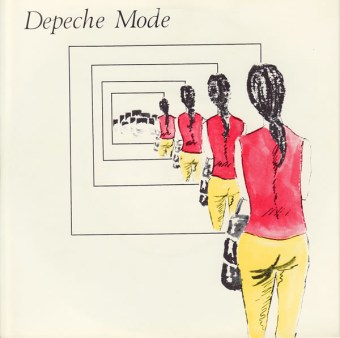
It’s not that I dislike Depeche Mode, it’s more that I’ve never really taken to them.  Actually, that’s not true as I did buy their first three hit singles, initially from the period when Vince Clarke was involved and then the first after he took his leave of the band.  All of them were lost back in the disastrous midnight evacuation of an Edinburgh flat in the mid 80s, and I’ve never had an inclination to replace them.

I lost interest early on, thinking they weren’t as innovative or enjoyable as the other synth-acts dominating the pop charts and certainly felt that Yazoo, whom Vince Clarke had formed with Alison Moyet, was a much more interesting proposition.  I certainly had no time at all for the later changes in sound and look, but I was clearly in a minority as the group became international superstars.

The debut single was recorded in December 1980 and released by Mute Records in February 1981 to little acclaim, stalling at #57.  I didn’t buy it at the time, but I became more familiar with it in a later period as a flatmate in my student era had a copy:-

mp3: Depeche Mode – Dreaming Of Me
mp3: Depeche Mode – Ice Machine

Dreaming Of Me, in some places, is reminiscent of New Life which, just five months later, provided Depeche Mode with their breakthrough UK hit. It’s a song which many bands, and indeed labels, would have looked to re-release once the initial success has been achieved, so fair play to all concerned for not doing so. As such, it is a single with a degree of rarity, and second-hand copies in decent condition, and in a picture sleeve which has somehow managed not to badly age, can cost you in the region of £20 if you’re on the lookout.

This is the first I’ve listened to Ice Machine for well over 30 years. It is certainly less immediate or poppy than many of the songs with which early Depeche Mode are associated, which is no bad thing.

As debut singles so, it was a decent effort. It was worthy of being a bigger hit than #57, but it really was quite hard for synth-pop to get daytime radio play back in early 1981. The emergence of the New Romantic scene would change all that…..

JC

PAYING A BELATED TRIBUTE WITH THE ORIGINAL

A couple of weeks ago, I pulled together some words on Angel by Massive Attack.

It was only when Swiss Adam later left the comment about it being “like a late 20th c Joy Division with Horace Andy on vox”, did it hit me that I should have said something about the original version.

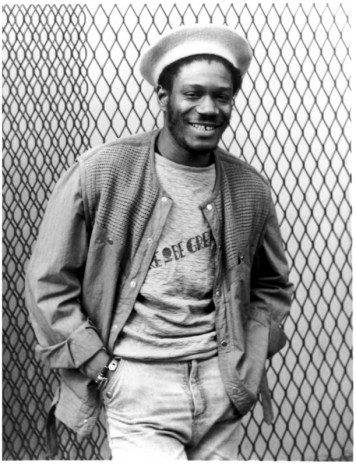
Horace Hinds was born in Kingston, Jamaica in 1951. He was the younger cousin of Justin Hinds, one of the biggest recording stars in Jamaica in the 1960s. At the age of 16, Horace embarked on a recording career, but initially without much success. Some three years later, and taking the advice of a veteran producer that a change of name would be of benefit so that he wasn’t in his cousin’s shadow, the newly-christened Horace Andy had a hit single in his homeland, after which he was rarely out of the charts the rest of the decade, even after he moved to the USA in 1977, where he became a pioneer of dancehall reggae.

He’s long been a superstar in the Caribbean, but he really only became well-known in the UK in the 90s as a result of his collaborations with Massive Attack. The Bristol trip-hoppers didn’t just see Horace Andy as a voice for hire, involving him in the creative process. Angel, for instance, saw Horace Andy undertake a massive (pun intended) re-take of a song he’d originally written and released back in 1973:-

mp3: Horace Andy – You Are My Angel

The lack of reggae on this blog over the years is an indication of how little I know about the genre, and indeed how little of it has crept into the collection. I have a couple more Horace Andy tracks on the hard drive, including one which is a cover of a song I only knew from the Associates version, many years after Diana Ross had taken it to #1 on the US Billboard charts:-

mp3: Horace Andy – Love Hangover

I think it’s fair to say that Horace’s version is a tad more faithful than the magnificently manic take on things offered up by Billy Mackenzie and Alan Rankine.

JC

SOME SONGS MAKE GREAT SHORT STORIES (Chapter 50)

A GUEST POSTING by STRANGEWAYS

“And then my mind just walked away… “

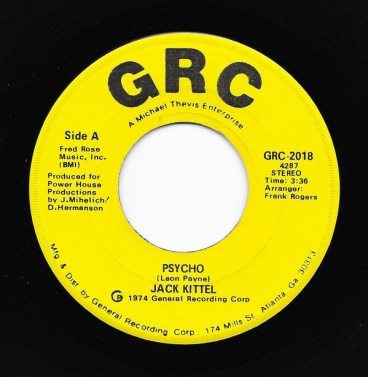
A quick-fire response to JC’s recent Gol Gappas post for this series. Here’s another dark tale of murder: Psycho, as recorded by Jack Kittel in 1973.

Kittel didn’t write Psycho – that was country singer and songwriter Leon Payne, a man whose work was covered by the likes of Hank Williams, two Elvises (Presley and Costello – the latter of whom in fact also recorded Psycho), Bob Dylan, Merle Haggard, Vinyl Villain blog pals The Mekons… and the list goes on. Find it on Wikipedia (I sure did).

It’s Kittel’s version of the track though that is pretty much the go-to incarnation.

I’m not going to wing it any further, other than to say the inspiration for the song is debated out on the internet and is worth a research for interested parties.

Last thing: I can’t decide whether those unfamiliar with Psycho should listen to it prior to reading the words or vice-versa. Either way – and paraphrasing slightly – as the tag line for Black Christmas (1974) advised, ‘If this doesn’t make your skin crawl… it’s on too tight!’.

mp3: Jack Kittel – Psycho

Can Mary fry some fish, Mama?
I’m as hungry as can be
Oh lordy, how I wish, Mama
That you could keep the baby quiet ’cause my head is killing me

I saw my ex again last night, Mama
She was at the dance at Miller’s store
She was with that Jackie White, Mama
I killed them both, and they’re buried under Jenkins’ sycamore

You think I’m psycho, don’t you, Mama?
Mama, pour me a cup
You think I’m psycho, don’t you, Mama?
You’d better let ’em lock me up

Don’t hand me Johnny’s pup, Mama
Cause I might squeeze him too tight
I’m having crazy dreams again, Mama
So let me tell you ’bout last night

I woke up in Johnny’s room, Mama
Standing right there by his bed
With my hands around his throat, Mama
Wishing both of us were dead

You think I’m psycho don’t you, Mama?
I just killed Johnny’s pup
You think I’m psycho don’t you, Mama?
You’d better let ’em lock me up

You know that little girl next door, Mama
I believe her name was Betty Clark
Oh, don’t tell me that she’s dead, Mama
Cause I just saw her in the park

We were sitting on a bench, Mama
Thinking up a game to play
Seems I was holding a wrench, Mama
And then my mind just walked away

You think I’m psycho don’t you, Mama?
I didn’t mean to break your cup
You think I’m psycho don’t you, Mama?
Oh, Mama, why don’t you get up?

strangeways

AN IMAGINARY COMPILATION ALBUM : #294 : THE CHAMELEONS

A GUEST POSTING by ECHORICH
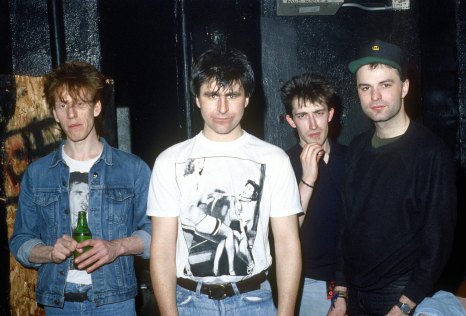
ICA OF THE CHAMELEONS – BUT IS THIS THE STUFF DREAMS ARE MADE OF?

There is a set of Post Punk bands that came out of the North of England which are among my most treasured artists. Many of them flirted with the charts, gained radio acceptability, to a point, and managed to release a number of amazing albums. But there are some bands that I love from this area that really never got the radio airplay, or the attention of the buying public, that they deserved.

This is an ICA, with a bonus, of possibly the most underrated of all those Post Punk artists, The Chameleons.

The Chameleons gained the admiration of John Peel from a cassette of three songs the band sent him, which led to a lot of gigs and a deal with CBS/Epic. A single was recorded with Steve Lillywhite but when they saw that the label wanted to repackage the band and change their sound they rebelled, were dropped and were once again, on their own. Virgin picked up The Chameleons through their “Northern” sub-label Statik where they would release their first two albums and a number of singles.

But being on Virgin didn’t really result in the exposure The Chameleons deserved. Releases on Virgin/Statik didn’t qualify for Independent Charts listing which impacted Music Press coverage at the time. Virgin didn’t really push The Chameleons towards radio either.

Touring ended up being the band’s real weapon. The Chameleons gained a loyal fanbase early on at home, while College and Alternative Rock Radio airplay began opening the band up to a growing audience in the US. This radio exposure made it possible to tour in 1983 and later a fuller tour in 1987.

It was on one of these tours that I really fell hard for The Chameleons. They were on the bill as opening act for a feature night of the annual New Music Seminar in NYC in August 83. They opened for two other young and hungry bands Danse Society and Sisters Of Mercy. I had purchased Up The Down Escalator earlier in the year and Don’t Fall got a good deal of College Radio Airplay, but they hadn’t made a huge impression on me prior to that night. When they opened the evening’s show I was caught completely off guard and was down the front before halfway through their opener. It was a short set, but I was hooked. Mark Burgess sang with a passion I wasn’t really prepared for. The twin guitars of Reg Smithies and Dave Fielding were massive and John Lever’s drumming cut through everything. To this day I only remember that Danse Society’s singer did a lot of hip gyrating and The Sisters drum machine kept failing at the opening of their songs to the point of being a joke. But there was a vibe and the connection was made with The Chameleons – I wanted more. I learned they would play Danceteria a few nights later and I made sure I was there, front and center.

I quickly caught up with all that the band released to that point and their debut Script Of The Bridge became one of those albums that was always leaning up against a speaker waiting to be played again and again. It seemed like ages before the band released new music in the summer of 1985.

What Does Anything Mean? Basically saw the band expand their sound. Like so many bands of their time, synthesizers were brought onboard to provide mood and an expansion of their sound. But where some of their contemporaries work was diluted by synths, The Chameleons seemed to understand the power they had to nuance their established sound. Interestingly, the word synthesizer appears nowhere on the album credits, instead it is listed as “strings”… WDAM?B was dense and heavy in comparison to Script Of the Bridge, making it less immediate for me, but it actually contains two of my very favorite Chameleons songs. It did grow on me, of course, and became as vital as their debut. A year later they were on US giant Geffen with, what is for me, The Chameleon’s masterpiece. That album, Strange Times is emotionally charged, musically poetic, attention commanding and at times devastatingly beautiful. I would get to see them live one last time, promoting Strange Times in 1987 at The Ritz, in NYC and it’s a concert that has stuck with me ever since.

Being on Geffen should have been the band’s “chance.” Geffen signed them after their A&R scout from The States saw them play at The Haçienda. Years later it came out that said record company flack was actually in Manchester to secure The Stone Roses to a contract – something that would still take a few years to accomplish. Strange Time did reasonably well in Europe and on College and Modern Rock radio in the US. The relationship with Geffen was a good one and it was made possible by their “fifth member” manager Tony Fletcher. But fate was not to allow the band to grab that brass ring. Fletcher died suddenly in 1987 and the band never emotionally came back from it as a unit. They broke up acrimoniously before year’s end.

Band members would break into separate units, Mark Burgess and John Lever became The Sun And The Moon. Reg Smithies and Dave Fielding became The Reegs. Both units presented music that hinted at what it was that made The Chameleons so great, but there wasn’t the same spark.

2000 saw us enter a millennium and the members of The Chameleons bury the hatchet and record an album of acoustic interpretations of some great Chameleons songs, Strip. They toured the album and it prompted them to get back in the studio for one last album of new music, Why Call It Anything. It showed The Chameleons as they had matured with time but still had much of the DNA of their magical first three albums. A further album of acoustic reworked songs was the last work they would complete as the original unit in 2002, before the members again went their separate ways.

I’ll leave this rather long winded look back at the band by saying that The Chameleons are one of a handful of bands that have stayed quite close to me over time. They represent a genre of Rock and Roll that I hold dear and I hope I am able to convey just why with this ICA.

1. In Shreds – Debut Single Version

I have to start where it all started. Wide-eyed young musicians, working hard and getting the chance with producer of the moment Steve Lillywhite and the backing of a record label. In Shreds is raw, powerful and ridden with angst. It’s the stuff of real teen dreams, real teen reality. In Shreds is uncompromising and Lillywhite must have recognized that this was the magic of the track. If CBS thought it was getting another U2 out of the deal, I don’t think Lillywhite was on board with that anymore that The Chameleons were. JC – Here’s a candidate for Cracking Debut…

2. Up The Down Escalator – from Script Of The Bridge

Script Of The Bridge is such a fully realized album for me. It gives so much, you’d be right in thinking The Chameleons would spend their career chasing after its magic. Thankfully they had much more to offer of equal and possibly more impressive standards. Up The Down Escalator is the track that I heard regularly on college radio station WNYU afternoons after classes at University and when I could force it on my co-workers. The opening guitars are like a herald and John Lever’s drums come racing up to get the proceedings started. It spoke to me with it’s lyrics about not being understood or being under the thumb of other’s expectations – that feeling you are being told how to be, but being taken for granted all the same. Up The Down Escalator was my gateway into the lyrical brilliance of Mark Burgess.

3. Return Of The Roughnecks – from What Does Anything Mean? Basically

If WDAM?B is considered the difficult Sophomore Album, I think The Chameleons gave us exactly what they wanted to. The themes of being disenfranchised, misunderstood, searching for love are all still present and nothing sounds like a retread. Return Of The Roughnecks actually amps up these themes with a more palpable aggression and distain. The sound is big and bold, Fielding and Smithies drive the song from the front with a buzz of guitars that exemplify how well they can weave in and out of each other.

4. Don’t Fall – from Script Of The Bridge

Middle Aged Man included Don’t Fall in his powerful ICA of Opening Tracks back at the end of January and it fit like a glove into his ICA narrative. Don’t Fall, as an opening track, is nothing less than genius. It set the tone – confident and outspoken, lyrically and musically. Rock and Roll is full of axemen playing riffs, but The Chameleons took that riff-ology and slowed it down, gave it gravity and emotion. Lever and Burgess lay down a heavy rhythm bed for the guitars to announce themselves and carry their message. Burgess manages to be heard above the music crying out for the listeners attention. Song one and you are already trying to catch your breath.

5. Soul In Isolation – from Strange Times

I could spend pages talking about how important an album Strange Times is to me. I will boil it down to this…In 1986/87 the rock and roll I loved, Post Punk, was on the wane. Most of the artists I had grown to love and respect over the prior 8 or 9 years were either gone or had sold themselves to the devil to break through in America. Strange Times stands as one of the most uncompromising albums of that era.

Soul In Isolation is poetry, it is prose, it is a universal declaration of life through adversity, both outward and inward. It is a seven and a half minute catharsis of frustrations, sorrow, anger and a desperation to be heard, to be seen, to be recognized. There is a wonderful homage to psychedelia, the reference material certainly being The Beatles Tomorrow Never Knows, but they don’t just impose that sound on their own, they take it to another place. When I saw them in 1987, the audience, which had been loud and raucous, stood in awe throughout the song. Favorite Chameleons song…quite possibly.

6. Swamp Thing – from Strange Times

To open side two of Strange Times, The Chameleons chose the album’s other jaw dropping moment. The liquid opening guitar line is unmistakeable and the bass drive of the song is a thing of wonder. Synths are used to enhance the atmosphere rather than take over the sound of this guitar, bass and drums outfit. Swamp Thing is a majestic tale of emotional Jekyll and Hyde. But underlying all that majesty is a darkness, a finality. The mid song coda propels the song into one of the great song endings for me.…Mark Burgess leaves the listener to decide if his protagonist survives the night, the storm of his emotions, into daylight, or meet’s his end at the hands of the monster of his own making.

7. Intrigue In Tangiers – from What Does Anything Mean? Basically

When I create an ICA, I can agonize over the song placement, the programing. But sometimes the songs just fall into place. That’s the case with Intrigue In Tangiers. Following Swamp Thing the next track needed to be able to stand on its own but also keep the music at a similar elevation. Intrigue In Tangiers does all of that. The song is a rollercoaster of emotions and sound. It builds to a great crescendo and then puts the brakes on and takes a well earned breath as it end.

8. Second Skin – from Script Of The Bridge

It would have been easy to begin this ICA with Second Skin. It has opening track written all over it. Yet The Chameleons programmed the track midway through side one. Their debut was that rich with music that they could. Second Skin is the track that audiences couldn’t help but sing along to in unison. It’s dreamy, questioning, vita with themes of growing up and all the fears and joys that brings.

9. One Flesh – from What Does Anything Mean? Basically

One Flesh has breakthrough single written all over it. Polydor France even considered releasing it for Europe (promos go for stupid money). The back and forth from uplifting to dark in the sound makes for a fast paced journey through the track. Burgess’ lyric deal with the false face we put on to get from day to night and the doubts that creep in after dark but must leave in the morning. The final verse, repeated, is a very political observation…ok, maybe it’s not a great choice for a single…just a great song.

10. Lufthansa – from Why Call It Anything

2001 found a reformed Chameleons back in the studio to record a new album with Producer John A. Rivers, Why Call It Anything. The album proves that the band still had the magic when working together but had all grown over the 25 years since they recorded Strange Times. Lufthansa is my favorite example of the melding of that magic with maturity.

11. Mad Jack – from Strange Times

Strange Times’ opener, Mad Jack has always seemed like a love letter to late 60’s Psychedelia. This is The Chameleons almost jamming, almost having fun. The chaos builds and builds and then the realities of The Chameleon’s sound crashed down not the song at the end. Brilliant!

12. Thursday’s Child – from Script Of The Bridge

In college, I took a good deal of English Literature electives (no, looking back, I’m not sure why either) and the theme of Thursday’s Child is one of the child who is destined to take a long journey to development, both spiritually and physically ending in a successful life without limitations. Mark Burgess obviously had issue with this construct and and his Thursday’s Child had to weather obstacles and set backs just to make it to a place of peace. The track opens with spiritual, crystalline guitars but quickly takes on a Motorik sound to reflect the drudgery of living a life. Thursday’s Child is brittle and flows from dense to thin throughout thanks to the interplay of the guitars and bass.

13. In Answer – from Strange Thing

As In Answer begins, it sound like the perfect song to end this ICA with, because it is muted, almost serene, but then…the band comes in full bore and on a mission. Fielding and Smithies switch from lockstep interplay to dueling guitars and Burgess plays his bass to finger bleeding excess. Lever ties everything together like a metronome. In Answer builds and builds into something too big to contain and Burgess frees himself vocally, like a man who has finally snapped. In Answer is all the joys of being a Chameleons fan distilled into 4:55. It is also one song I have always yearned to hear live.

For the following I’m taking a leaf out of The Chameleon’s own playbook. This ICA comes with a…

LIMITED EDITION FREE BONUS ICA

1. Perfumed Garden – from The Peel Sessions

Originally found on What Does Anything Mean? Basically, Perfumed Garden has grown over the years to be one of the essential Chameleons songs for me. This is due to this Peel Sessions version from 1984. This version has a bit more emotional impact for me. I love feeling or reminiscence which is matched by a sort of timeless musical bed which follows and enhances Burgess’ storytelling.

2. Home Is Where The Heart Is – from This Never Ending Now

After the surprise “success” of their collection of acoustic versions in 2000, Strip – and the happy experience of creating Why Call It Anything, The Chameleons got back in the studio for one more go at reinterpreting some more of their canon in a more acoustic vein.

Home Is Where The Heart Is was a track from Script Of The Bridge which was both a critics and fan favorite. Acoustically, the song amps up the mysterious and unknown. They might not be “plugged in” but Fielding and Smithies still perform with razor sharp precision, making acoustic guitars sound dense.

3. Is It Any Wonder? – from Tony Fletcher Walked On Water, La La La, La La La

This is part of the collection of songs that The Chameleons had worked up beyond the demo stage for the follow up to Strange Times before the sudden death of their “fifth member,” manager Tony Fletcher. The band never recovered from the grief and were basically adrift as a unit. Without Fletcher to hold them together, acrimony set in and The Chameleons called it a day just as Geffen was ready to put energy into getting The Chameleons the recognition they deserved. Is It Any Wonder? shows a confident band ready for what was next. There’s a constancy as well as a maturing of their sound, but not in a way that breaks from their past. These days, the songs from this EP can be found on the compilation Return Of The Roughnecks which was released on Dead Dead Good Records in 1997.

4. Tears – from This Never Ending Now

Yes, not as “acoustic” in parts as say an “unplugged” performance, but there is a gentle brittle nuance to this version from 2002. If any Chameleons song could be considered pastoral, it’s this version of Tears. Reg Smithies guitar takes on an almost Flamenco style at the end.

5. Nostalgia – from The Peel Sessions

Nostalgia can be found on the reissued version of In Shreds as well as the expanded CD of What Does It Mean? Basically. It doesn’t necessarily hail from as far back as the debut single as it was recorded for a mid 1983 Peel Session. This Peel session version was the first time I ever heard Nostalgia and it has always held up as my preferred version.

6. Fan And The Bellows – from The Peel Sessions

Now here we have a nugget from the earliest recordings of The Chameleons. Fan And The Bellows is a great song about how love can trip you up. There’s a youthful exuberance on the song. It’s uncluttered Post Punk with minor chord hooks and angst ridden lyrics.

7. Paradiso – Strange Times Free Bonus Album

Paradiso shows just how rich and deep the song selection for Strange Times was and at the same time hints at what could have come next for the band. It was played regularly on their US Tour in 1987 and is a song that would get the audience moving in as one to its infectious beat. When I saw Mark Burgess and his current line up for a ChameleonVox performance in a tiny bar in Tampa in November 2019 – the last show I saw pre Pandemic – Paradiso was still an audience grabber and you could tell Burgess and his band was having a ball playing it.

ECHORICH
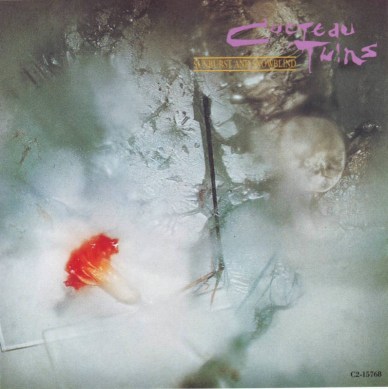
THE MONDAY MORNING HI-QUALITY VINYL RIP : Part Twenty Eight : SUNBURST AND SNOWBLIND EP

Inspired, in part, by the recent run of Goth ICAs; but to be fair, it was always on the list of pieces of vinyl that should be taken out of the cupboard, dusted down and given the 320kpbs treatment via Audacity for distribution on a Monday morning.

1983 was the year that I really ‘got’ Cocteau Twins.  As mentioned a few weeks ago, I caught them opening for The Fall in Glasgow in April 1982 and thought them OK, thinking in the main that the lead singer had been a bit overwhelmed by the occasion.  But my mate who was at the gig with me that night went all in on the band, and he pushed hard for me to give them a try, and so I did.

I was prepared to admit that the debut album Garlands had its moments, but it didn’t fully click.  Looking back, I wonder if the fact that I didn’t have, at the time, anything beyond the most basic of stereos meant I didn’t really appreciate it – my mate was listening to the band through his older brother’s equipment and, yes, it did seem to sound better, fuller and more powerful when I was in his house rather than mine.

I moved into shared student accommodation in the summer of 1983.  One of my flatmates had an even better stereo set up than my mate’s brother, and he also had a ridiculously extensive record collection, courtesy of always having had a decent amount of disposable income vis his well-off parents.  He was also a fan of Cocteau Twins and he picked up a copy of Head Over Heels, the new album, on its release in October 1983.  He played it as the three of us who shared the flat, together with one other bloke who was rarely away from our place, listened on in awe.  The sounds coming from the speakers were astonishing, almost unwordly at times.  It felt like a quantum leap from what had come before, and it certainly did not sound like the sort of music you associated with bands living and working in Scotland.

I bought my own copy of Head Over Heels a few days later and played it on my cheap stereo.  It sounded good, but not as majestic as it did on the equipment sitting in the bedroom through the wall.  It was then that I vowed to save to get myself a bigger, better and more powerful set-up, which I achieved some nine months later, thanks to the generosity of my parents on the occasion of my 21st birthday… and the timing couldn’t have been better as I was soon to take leave of that first shared flat and move to a bigger premises with six of us sharing a multi-occupancy in a very spacious tenement flat, with the bonus of a shared living room in which my new system, along with a telly and a VHS recorder, took pride of place.

All of which has been a bit diversionary in respect of today’s music.  It does come from Cocteau Twins and it’s in the shape of the EP which was released just a few weeks after Head Over Heels.  It came as the band, now just a duo of Elizabeth Fraser and Robin Guthrie, were getting to grips with things and were even prepared to put themselves on the telly as part of the promotional activities.  So it was that they appeared on the second series of The Tube, performing live and also as This Mortal Coil, in a promo video for their cover of Song To The Siren.  The VHS tape on which I had captured these performances was very much in danger of wearing out in my new abode….and it was incredibly satisfying that, to a man and woman, even though we had different and varting tastes across alll genres of music, we were in agreement that Cocteau Twins were something out of the ordinary, the likes of which we were lucky to be able to appreciate.

Our collective night out, on a Sunday night in December 1984, was a trip to the Pavilion Theatre, not to see the annual pantomime, but to be part of the audience for what, at that point, was surely the band’s biggest headlining gig in their career.  The set opened with From The Flagstones.  It also closed with the same song….the band didn’t expect to be afforded an encore and had nothing left on the drum machine to offer that hadn’t been used before, so the solution was to rewind and hit the start button one more time.

mp3: Cocteau Twins – Sugar Hiccup
mp3: Cocteau Twins – From The Flagstones
mp3: Cocteau Twins – Hitherto
mp3: Cocteau Twins – Because of Whirl-Jack

These are taken from the 12″ vinyl, which means the version of Sugar Hiccup is slightly longer and differently mixed from that which was found on the album.

It’s worth mentioning that not everyone was enamoured by Cocteau Twins. Ian Pye, reviewing this EP for Melody Maker back in December 1983, for one:-

“When the Cocteau Twins perfected their impersonation of Joy Division nobody liked them much; now they’ve learnt another act—The Banshees’ gothic wall of sound—it seems suddenly they’re very desirable.

Yet this four-track EP only serves to underline that the Twins still prefer artifice to substance. Everything about their music appears to have been chosen because of its superficial immediacy: the grandiose guitar lines, the fake majesty of the frequently incomprehensible lyrics, even the fatuous song title: ‘Sugar Hiccup’ and ‘Because of Whirl-Jack’! This is music for people who want to play at being serious young persons but lack the resolve to see it through to the bitter/positive end”

That last sentence in particular is bullshit of the worst type.

JC

THE WONDERFUL AND FRIGHTENING SERIES FOR SUNDAYS (Part 11)*

Taking up the story from where it ended last week with the release of Look, Now in the early summer of 1982.

The Fall were about to head over to Australia and New Zealand in July/August 1982 for a month-long tour.  MES pulled everyone back into Cargo Studios in Rochdale for what the rest of the band thought would be a new single, intended to keep up a bit of profile in the UK while they were gone. It turned out that the frontman actually wanted a full album out of the sessions, but one which would be in a totally different way from Hex Enduction Hour. The songs were all new, very few had been performed live beforehand (which was unusual), and furthermore MES kept everyone on their toes by using the occasional guest musician and arranging for recording sessions without telling key members of his band and keeping them off the actual record. Paul Hanley has since described the time in Cargo as “a fucking nightmare. You’d turn up and find Smith had only invited half the band, or brought in other musicians without telling anyone!”.

Room To Live was released on Kamera Records in September 1982 to less than enthusiastic reviews, with its seven songs seen as way inferior to the material from earlier in the year.  The tour down under had, unsurprisingly, been a difficult one for all concerned, with many fall-outs, particularly between Marc Riley and MES, with the former still smarting from being heavily excluded from the Room To Live recording sessions (it would later transpire that he played on just two of its tracks).

There were also rumours that Kamera was in a bit of bother, which may be why there was a decision, taken by the label, to release a single to accompany the album, consisting of two of its tracks – Marquis Cha Cha, backed with Papal Visit.  This wasn’t to MES’s liking and the single was withdrawn (there’s a postscript to this, which I’ll come to in a future edition of this series).

So, 1982 ended with a whimper, with a tour of some student venues in England….and as you’ll recall from the previous two editions of the series, not even much enthusiasm for The Fall among Peel listeners with just one track in the Festive 50.

MES’s solution?  To sack Mark Riley from the band, which he did in the first week of 1983 (and not, according to legend, on Riley’s wedding day which was 24 December 1982).  Oh, and to take his leave of Kamera.  Once again, having no label to call home, fate kindly intervened in the shape of Geoff Travis at Rough Trade who, despite having been ridiculed by MES some 18 months previously, re-signed The Fall.  The first new 45 of the post-Riley era appeared in June 1983, with its title, on the surface, being a dig at the departed musician:-

mp3: The Fall – The Man Whose Head Expanded

We’re back with the Casio intro again, but this time it goes into a wonderful bass-line intro which sets the tempo, initially for one of the most upbeat and easily danceable (at this point of time) of songs by The Fall….except it had a bonkers, almost ad-libbed lyric, which ensured nobody on radio (except the usual suspect) would play it.  Oh, and just as you might be getting into a groove on that dance floor, it slows down dramatically for a minute or so, at which point MES goes all shouty, before suddenly it switched back to the fast tempo.

It’s a real tour de force, driven along by the duo drumming of Paul Hanley and Karl Burns, with Steve Hanley on bass and Craig Scanlon on guitars and keyboards.  The song was credited to Smith/S. Hanley/Scanlon/Seaberg.  It seems that the latter was Sol Seaberg, a part-time van driver for The Fall; whether he actually came up with something for the song or not is unknown – it may well have been MES’s way of saying to Riley that anyone can write songs.

The b-side is just two-and-a-half minutes long, and in some ways is a throwback to the earlier rough’n’ready material, with pounding drums at the centre of a cacophony of noise and shouty vocals:-

mp3: The Fall – The Ludd Gang

But hidden away, at the exact halfway mark of the song, is one of the funniest lyrics anyone has ever penned:-

I hate the guts of Shakin’ Stevens
For what he has done
The massacre of “Blue Christmas”
On him I’d like to land one on

The Man Whose Head Expanded reached #3 in the UK indie charts. It had been released on 27 June 1983.  Three weeks later, Mark E Smith married his American-born girlfriend whom he had met just a couple of months previously, in Chicago, while The Fall were on tour in the States.  I think you all know what comes next….

JC

*With thanks to JTFL-Ahh for prompting the change to the name of this series…

SATURDAY’S SCOTTISH SONG : #272: RICHARD JOBSON

Just because something appears on this blog, especially in this very long-running series, doesn’t necessarily mean it has the TVV stamp of approval.

Back in 1983, the Belgian-based Les Disques du Crépuscule released 10.30 On A Summer’s Night, a spoken word album by Richard Jobson (yup, that Richard Jobson who had been lead singer of The Skids), consisting of his adaptation of texts from the book of the same name by French author Marguerite Duras. The readings were accompanied by Belgian pianist Cecile Bruynoghe.

The following year, the same label issued An Afternoon In Company, which consisted  of original poems written by Jobson, with musical backing by the likes of Vini Reilly, Blaine L. Reininger, and Virginia Astley.

Some folk liked it, as evidenced by this review in Melody Maker:-

“An Afternoon… is Jobson’s most assured attempt yet at drawing the desired effect from the uneasy relationship between his stupendously threatening Scots brogue and the finer nuances of the good Queen’s English. While his poetry is perhaps too private and fanciful to communicate on paper, when he is roaring and hissing over calm piano pieces from Satie beautifully played by Cecile Bruynoghe, Jobson assumes a certain atmosphere of strength and striving which at its peak can be positively uplifting. Godlike” (Melody Maker, 10/1984)

Maybe the reviewer was taking the piss. It’s not how I would have written it up.

mp3: Richard Jobson – Autumn

Its appearance round these parts today is courtesy of its inclusion on a CD compilation I have covering the releases on Les Disques du Crépuscule between 1980 and 1985, and of course the fact that Richard Jobson is Scottish and it has come round to him on the alphabetical run through.

JC

SOME SONGS MAKE GREAT SHORT STORIES (Chapter 49)

So….this one opens with a ba-ba-ba-ba-ba-ba refrain that Julian Cope would have been proud of.  It then has the little burst of jingly-jangly guitar that will have you bursting with joy before the blackest of tales unfolds.

Albert Parker played with trains
The centre of his life
His junctions and his signal box
Took precedence over his wife

He strokes the tiny rails
And took care of the little station
Rarely saw his family
And knew nothing of the state of the nation

In his tiny railway room
He spent most of the day
A pity his wife with the promise of bed
Could not drag him away

Oh, No, Albert Parker
Your future is getting very much darker

The Albert Parker life rattled on
Night and day and night
Obsessed and staring in his dream
He never saw the sunlight

This went on until one day
His wife could stand no more
She grabbed the old garden hammer
And broke in through the door

Oh, No, Albert Parker
Your future is getting very much darker

She smashed his little junctions
His gradients and his trains
She smashed every single piece
Into bent and twisted remains

Now Betty stood cracked and shaking
And driven completely insane
Albert was still slowly sobbing
As a hammer demolished his brain

Oh, No, Albert Parker
Your future is getting very much darker

Goodbye, Albert Parker, Goodbye.
So long, farewell, bon voyage.

mp3: Gol Gappas – Albert Parker

I’ve got this one, which was released in 1986, courtesy of it being track 4 on disc 4 of the Scared To Be Happy retrospective box set. From the accompanying notes:-

“Another mysterious el Records signing by Mike Alway, Gol Gappas were named after a popular Indian snack.  They issued just two singles. The ‘Dinner With Nougat’ 12″ EP boasted the whimsical, Robin Hithcock-ish psychedelia of ‘Albert Parker’ and the vaguely Mary Chain-like fuzziness of ‘Saint Lucy’. Second single ‘West 14@ was more straightforward yet poignant pop. Its B-side, ‘Roman’, was remixed for a French-only single (backed again by ‘Albert Parker’) on Vogue in 1987.  Amazingly, ‘Dinner..’ was issued as a CD EP in Japan. The band were formed by singer Nick East and guitarist Colin Roxborough, both previously with Hounslow post-punk outfit Scissor Fits (for whom Alway was an occasional writer), who released two singles back in 1978/79.”

As it turns out, the Saint Lucy track was included in the Cherry Red C87 box set:-

mp3 : Gol Gappas – Saint Lucy

The C87 booklet adds the snippet that Saint Lucy is a tribute to a medieval, Sicilian virgin who allegedly married God.

So there you have it.

JC

AN IMAGINARY COMPILATION ALBUM : #293: “CATH/KATH etc'”

Strangeways said yesterday afternoon, in respect of the Jims, Jimmys and James’ICA:-

“A very fine idea for an ICA – and a lovely post. I wonder which female name could make up a companion piece?”

SIDE 1:

CATH – The Bluebells

This ICA was hurriedly put together after seeing the comment from my good friend Strangeways, which I took as a challenge, although he’s such a nice bloke that he certainly didn’t throw it down as one.  Warning, it may well lead you up the garden path (woah-woah).

KATHLEEN – Tindersticks

As featured not too long ago on the blog. Tindersticks have made a few live versions available over the years, this is taken from the CD single Bathtime and was recorded at the London Institute for Contemporary Arts (ICA) in November 1996.

KATE – Johnny Cash

Written by Marty Robbins, this version was released in March 1972 as the third single from Johnny Cash‘s album A Thing Called Love. It reached #2 on the Billboard Hot Country Singles chart. (a thing I never knew existed until putting this ICA together). It was originally recorded by Rex Allen in 1961 with  the title “You Put Me Here (Sure as Your Name’s Kate)” issued as a single on San Antonio-based Hacienda Records. Which sort of provides a link to the next track….

I LIVE AT CATHY’S NOW – Graham Fellows

From 1985 and the album Love At The Hacienda. He used to be Jilted John, and later in life he became John Suttleworth.

KATY – The Boy Who Trapped The Sun

I’ve got this on the hard drive courtesy of Jacques The Kipper shoving a home-made compilation CD my way back in 2011. The Boy Who Trapped The Sun was the stage name of Colin MacLeod, who is from the rather remote Isle of Lewis in the Outer Hebrides. He was discovered, in just his early 20s, singing and playing in a bar in Aberdeen and offered a recording contract by Polydor/Geffen Records. He made one album, Fireplace (2010), but when the hoped for sales didn’t materialise, he was dropped soon after. It appears that Colin has sporadically released singles and albums under his own name over the past few years, with the latest Hold Fast, being released in June 2021. He clearly still has a lot of famous admirers, as none other than Sheryl Crow sings alongside him on two of its songs.

SIDE 2:

KATE MOSS – Arab Strap

“Don’t try and tell me Kate Moss ain’t pretty. Don’t try and make me believe. Don’t try to force me into letting you boss me. When I’m pretending to leave. I knew that you could ruin my good mood. That’s exactly what you’ve done. We sat there silent and you got violent. Going out with you used to be fun. You’re getting colder. No doubt you’ve told her I’ve just become a pest. Does she know maybe, you’re having a baby? I think it’s about time you did that test. You know I’ll miss you, when I can’t kiss you. You know I don’t want us to split. Now I must say, it’s going that way. You’re always bored and full of shit.”

Originally on the debut album, The Week Never Starts Here (released all of 25 years ago), this is taken from the band’s first ever live show at King Tut’s in October 1996.

CATHERINE 1956 – PAWS

The opening track from Cokefloat, the debut album by PAWS, released on Fat Cat Records in 2013. A remarkably upbeat tune given that it’s about the death of singer and frontman Phillip Taylor’s mother, but then again it really is a celebration of her life and the way she wanted him to pursue his dream of making it in the music industry.

COMPLAINTE POUR STE. CATHERINE – Kirsty MacColl

From wiki:-

“Complainte pour Ste. Catherine” is a song written by Canadians Philippe Tatartcheff and Anna McGarrigle. It was originally used as a B-side to another single,”Hommage à Henri Richard”, which was written by McGarrigle and Richard Baker, and released in April 1974. It was intended to coincide with the Montreal Canadiens entry into the 1974 NHL playoffs, but failed to succeed commercially after the Canadiens lost to the New York Rangers.

Kate & Anna McGarrigle then reused it for their eponymous debut album in December 1975.  Kirsty MacColl put it on as the extra b-side on the 12″ version of her single from 1990, Don’t Come The Cowboy With Me, Sunny Jim (which could, of course, have fitted in yesterday).

A few years later, in 2001, I would have the pleasure of seeing Kate & Anna McGarrigle on stage in Glasgow, when they brought their vocal talents to Nick Cave & The Bad Seeds, initially on the album No More Shall We Part, and then during the world tour which followed.

Which leads to another natural link…..

KATHY’S KISSES – The Birthday Party

Back in the days before Nick Cave got all sophisticated and became a darling of the chattering classes. From 1981. It’s everything you’d expect from something that was originally released as the bonus track of a 12″ single and until the CD re-release of the album Prayers on Fire in 1990 had been all but forgotten. Unlikely to be aired at a gig with a £100 ticket price in the near or indeed distant future.

CATH CARROL – Unrest

Unrest was an indie band from Washington DC. Some of their later material was issued by 4AD Records, including the 1993 album Perfect Teeth from which this tribute to the music writer turned performer is taken. Worth mentioning that the album cover was a photograph of Cath Carroll, as taken by the late Robert Mapplethorpe, so she was clearly happy with it all.

ICA 293.  Bashed out in an hour.  The things that can be achieved when there’s no longer a need to work for a living.

ICA 294 will return to its roots, being devoted to one singer or band.  And it’s going to be a guest posting.

JC

AN IMAGINARY COMPILATION ALBUM : #292 : “JIM’S, JIMMYS AND JAMES'”

A GUEST POSTING by jimdoes

Hey JC

Hope all is well with you – this one has been a long time coming, but I finally put a bit of time aside to finish it.

Here’s another sort of random ICA – Jim, I’m sure you will approve! And I hope I haven’t missed a Jim song that is one of your favourites – and I hope there’s a couple you’ve not heard before. We’re lucky – there’s loads of songs with Jims, Jimmys and James’s in their titles – i’m not sure if it would be possible to do an ICA with any other names. Perhaps someone else could try?

I’ve kept it to five tracks per side but added in a little interlude that isn’t really a song but is great nonetheless (and a bonus track because why not?) – so without further ado:

HOW WAS IT FOR YOU? – AN ICA OF JIMS, JIMMYS AND JAMES’

SIDE 1:

JIMMY JAMES – BEASTIE BOYS (From LP Check Your Head)

THIS NEXT ONE IS THE FIRST SONG ETC ETC….

Apparently a tribute to Jimi Hendrix – but who cares about that? Opening track on my favourite Beastie Boys album – and if I was ever to get round to doing an opening track ICA, this would be in contention. And it doesn’t even say Jimmy, James or anything like that – yet as a bonus the title features both names!

JIMMY THE EXPLODER – WHITE STRIPES (From LP The White Stripes)

Track one on their first album – I’m not cool enough to say it was the first White Stripes song I ever heard – like a lot of people, that would be Hotel Yorba. But when I discovered them I bought everything I could and was blown away by this track – it remains one of my favourite White Stripes songs. I always used to put it first on compilations I’d do, as it’s such a good opener – you can’t help whooping along. But saying that, it’s relegated to track two on this ICA!!

JIMMY JIMMY – THE UNDERTONES (From LP The Undertones)

I can’t even begin to count the amount of times I’ve had Jimmy Jimmy shouted at me in bars/clubs etc – one of those songs I guess.

JIMMY JAZZ – THE CLASH (From LP London Calling)

There can’t be many readers of TVV that don’t know this song. If I was to have a favourite Jim song it would probably be this (or it is when I write this, tomorrow might be a different Jim song). I never heard this till I went to college aged 19 (I was late to The Clash) – my two best friends were huge Clash fans and they always called me Jimmy Jazz – which they still do to this day. Anyway, it has a certain wasted quality to it that I love.

HEAR ME JAMES – THE WOODENTOPS

So many Jimmy/James songs to choose from. This one is from my in between Smiths/Wedding Present stage – and was probably a taster to dancing a bit more in indie discos. Breathless. Sums up being young and giddy perfectly.

Interlude:

BIG JIM – IVOR CUTLER (From LP Jammy Smears)

HELP! I’m not sure that Ivor Cutler has ever been included on an ICA but here’s a tale of a drowning man. It’s weird and perfect in his choice of words – no matter how many times I’ve heard it, I can’t suppress a smile. John Peel was a big Ivor Cutler fan, recording 22 sessions for his show – only The Fall recorded more, apparently.

SIDE 2:

MY ONE AND ONLY JIMMY BOY – THE GIRLFRIENDS (Single)

I’d never have listened to this song if I’d not seen the title, but I love it – it makes you want to hug a Jimmy right? Or just dance with one at least! Released in 1964 this song is a bit of a lost gem – it reached no 49 on the US charts and was the only song The Girlfriends ever released.

JAMES AND THE COLD GUN – KATE BUSH (From LP The Kick Inside)

Who could resist Kate Bush singing and screaming their name? This isn’t about any James in particular but “James was the right name” apparently. The record company wanted this to be her debut single but Kate Bush wisely insisted on it being Wuthering Heights – this would’ve sounded equally striking and out of time for 1977 – but her career might’ve been different if she hadn’t got her own way. The live version from The Tour of Life is equally great – and the video is worth checking out on YouTube – what a performance – prowling around with rifles and handguns!

JAMES – BANGLES (From LP All Over The Place)

Aren’t the Bangles great? Poppy, dancey, Jamesy. Obviously I’m biased, but this is a great pop record – although if it was called Dave I’d still love it (but not quite as much).

JAMES – LLOYD COLE & THE COMMOTIONS (From LP Easy Pieces)

It’s strange how two songs with the same title can have such different atmosphere’s – from an uplifting James to a more downbeat James. I’ve only included this because it was the first song I was aware of with my name in its title. Not the best Lloyd Cole song, and certainly not the best song with James in its title. I never liked it as a youngster, and it’s a song I never listen to now, only digging it out to listen to for this ICA and my opinion of it hasn’t changed. You can’t help thinking any song with your name in the title is sort of about you, and it annoyed me (as a teenager) that the James of this song has so many negative traits. I’m glad that I’ve since discovered many other great songs with my name in the title! Anyway, compared to much of the upbeat nature of Easy Pieces, this song seems a bit miserable and maudlin – especially as it follows Lost Weekend on the tracklisting.

BROTHER JAMES – SONIC YOUTH (From EP Kill Yr Idols)

Guitar freak out where they sound like they are playing with drumsticks? CHECK. Kim Gordon screaming unintelligible lyrics? CHECK. Sonic Youth perfection.

Bonus track:

FIRE SO CLOSE – JAMES (Single)

And we even get the bonus of a band called James who have made one or two great records(!) It might be cheating to include them – hence it’s a hidden bonus track!

jimdoes