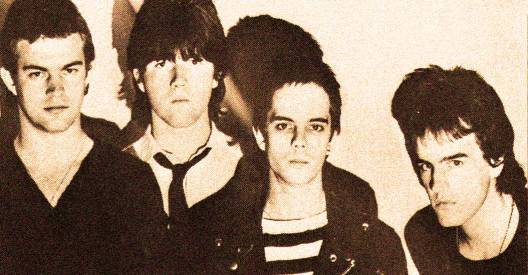
THE XTC SINGLES (Part 31)

Give thanks to the internet for the remaining few weeks of this series as I know absolutely nothing about what happened to XTC after their departure from Virgin Records. From wiki:-

After leaving Virgin, Partridge had the band’s accounts audited and it was discovered that the company had withheld substantial royalty payments from them. The settlement of the accounts provided the group with much-needed cash flow, allowing Partridge and Moulding to install fully equipped studios and work comfortably at home.

Though able to record the majority of their work themselves, they also used major commercial studios (including Abbey Road Studios in London) for some sessions. Finally released from Virgin, they formed their own label, Idea Records, and embarked on the recording of the ambitious “Apple Venus” project, a collection of the best material written during the band’s dispute with Virgin. The band’s initial plan had been to record a double album, featuring one disc of acoustic and orchestral songs and one of electric songs. Financial constraints forced the band to abandon the double album plan and finish and release the first volume (released 1999) before completing the second (2000).

During the recording sessions for Apple Venus Volume 1, Dave Gregory left the band after 20 years’ service. Ostensibly, this was due to “musical differences”—Gregory was unhappy with the plan to record an album whose arrangements relied largely upon orchestral instruments and keyboards rather than guitars

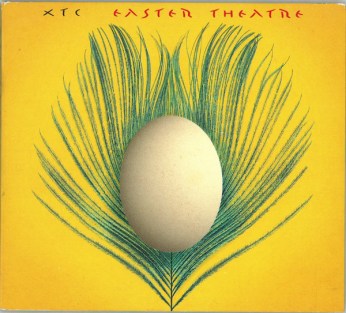
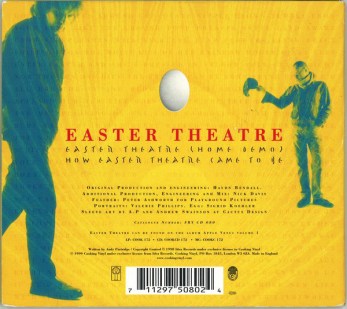
There were two singles lifted from Apple Venus Volume 1, the first of them in April 1999 on CD single only. It didn’t chart:-

mp3 : XTC – Easter Theatre
mp3 : XTC – Easter Theatre (home demo)
mp3 : XTC – How Easter Theatre Came To Be

The single has its charms, but it isn’t really XTC is it?

The demo is incredibly Beatles-eqsue if you like that sort of thing.

The last of the tracks is 13 minutes long, and it’s simply a spoken-track in which Andy Partridge provides a very detailed explanation of the song…incredible to think part of it dates back to 1986!!

JC

SATURDAY’S SCOTTISH SONG : #96 : FINGERPRINTZ

This is another one that I wasn’t sure about including, but having decided that the Scottish frontman of this English-based band was such a key factor in their songs and sound that I’m edging them in.

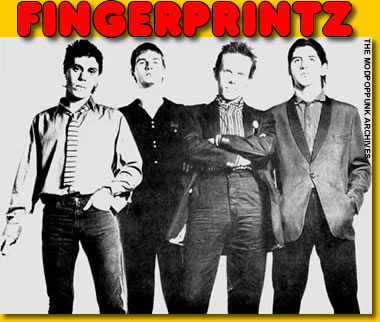
Jimmie O’Neill and the late Cha (Charles) Burns are best known as being part of The Silencers, a band formed in Glasgow in the 80s and still going strong today. Prior to that, they had been half of Fingerprintz, a new wave band from London who released eight singles and three albums between 1979 and 1981, all on Virgin Records. Most of the songs were written by O’Neill, including this rather splendid debut 45 (albeit it is very much of its time and place):-

mp3 : Fingerprintz – Dancing With Myself

It didn’t trouble the charts; nor indeed did any of the band’s releases.

JC


SOME SONGS ARE GREAT SHORT STORIES (Chapter 5)

The last night of the fair
By the big wheel generator
A boy is stabbed, his money is grabbed
And the air hangs heavy like a dulling wine

The last night of the fair
She is famous, she is funny
An engagement ring doesn’t mean a thing
To a mind consumed by brass(money)

And though I walk home alone
Though I walk home alone
My faith in love is still devout
Though I walk home alone
My faith in love is still devout

The last night of the fair
From a seat on a whirling waltzer
Her skirt ascends for a watching eye
It’s a hideous trait on her mother’s side

The last night of the fair
From a seat on a whirling waltzer
Her skirt ascends for a watching eye
It’s a hideous trait on her mother’s side

And though I walk home alone
Though I walk home alone
My faith in love is still devout
I may walk home alone
My faith in love is still devout

Then someone falls in love and and someone’s beaten up
Someone falls in love
The pulses being beat are mine

And someone falls in love
And someone’s beaten up, someone’s beaten up
And the senses being dulled are mine

And tonight I will walk home alone
I will walk home alone
But still my faith in love is still devout
Though I woke home alone
I may walk home alone
My faith in love is still devout

This the last night of the fair
And by the big wheel generator
A boy is stabbed and his money is grabbed
And the air hangs heavy like a dulling wine

She is famous, she is funny
An engagement ring doesn’t mean a thing
To a mind consumed by brass(money)

Though I walk home alone
Yes I might walk home alone
Sill, my faith in love is still devout
I might walk home alone tonight
My faith in love is still devout

So scratch my name on your arm with a fountain pen
This means you really love me
Scratch my name on your arm with a fountain pen
This means you really love me

And then… I might walk home alone
I might walk home alone
But my faith in love is still devout
My faith in love is still devout

This is the last night of the fair
And the grease in the hair of the speedway operator
Is it all a tremulous heart requires?
A girl is denied
She said: “How quickly would I die if I jumped from the top of the parachutes?”

This is the last night of the fair
And the grease in the hair of a speedway operator
Is all a tremulous heart requires
A girl who is denied says
“How quickly would I if I jumped from the top of the parachutes?”

Please….scratch my name on your arm with a fountain pen
And this means you really love me
Scratch my name on your arm with a fountain pen
And this means you really love me

And yes, I walk home alone
I might walk home alone
But still, my faith in love is still devout

mp3 : The Smiths – Rusholme Ruffians (early version)

Indeed.

JC

IT REALLY WAS A CRACKING DEBUT SINGLE (8)

There’s enough been praise heaped on Teenage Fanclub over the years within this little corner of the internet that I don’t feel I can add anything fresh or new.

The debut single was on Paperhouse Records back in 1990. There were just 1500 copies pressed on 7” vinyl although it, and its b-sides, would become more readily available the following year when it was issued as a CD single. It didn’t make the mainstream charts nor hit #1 in the indie charts in a year dominated by a handful of bands – Happy Mondays, Stone Roses and The Charlatans held down the top spot for a combined 32 weeks – but it did set down an incredible marker for a career that is still going strong all these years later.

mp3 : Teenage Fanclub – Everything Flows
mp3 : Teenage Fanclub – Primary Education
mp3 : Teenage Fanclub – Speeder

Worth mentioning that you can expect to pay £90-£100 for a mint copy of the vinyl if you so desire. For that price you could also pick up a 5 x vinyl LP box set of 50 Song Memoir by Magnetic Fields. You can determine what is the better value.

Is it the best ever TFC single? That all depends on what day of the week and time of day it is. It can be….but so too can Sparky’s Dream, God Knows It’s True, Ain’t That Enough, Star Sign and I Don’t Want Control Of You.

JC

HAD IT. LOST IT. (Part 9)

A GUEST POSTING by DAVE GLICKMAN

When this new series was first introduced, T(n)VV readers shared a plethora of excellent suggestions. Yet, the first band that came to mind for me was nowhere to be found. Such a definitive example that I began to wonder why others didn’t share my view. I began to run through possible hypotheses:

1. Was the band too obscure?

Hard to believe. Their first five albums were all in the top 30 in the UK and they have been featured at least once on this very site, admittedly with lukewarm praise, at best, from our resident blogger.

2. Did no one remember the period when they “had it”?

I suppose this is possible for some, but I know for sure that, recreational drug use notwithstanding, there are plenty of us 50+ old sods for whom 1980 was smack in the middle of our formative musical listening years.

3. Did readers think that this band never “lost it”?

No, can’t be…

mp3 : The Psychedelic Furs – Heaven

4. Was it actually possible that no one thought they ever “had it”?

Well, I guess that is the case I need to make.

A bit of background cobbled together from the wiki:

The Psychedelic Furs are an English rock band founded in London in February 1977. The band initially consisted of Richard Butler (vocals), Tim Butler (bass guitar), Duncan Kilburn (saxophone), Paul Wilson (drums) and Roger Morris (guitars). By 1979, this line-up had expanded to a sextet with Vince Ely replacing Wilson on drums and John Ashton being added on guitar.

The Psychedelic Furs’ debut, a self-titled album from 1980, was produced by Steve Lillywhite. The LP quickly established the band on radio in Europe and was a No. 18 hit in the UK Albums Chart. The album also found success in Germany, Italy, France, Spain and Australia. The US version of the album was re-sequenced, but failed to have a strong commercial impact. The Furs did find success in the US with their next release, 1981’s Talk Talk Talk, which saw the band making its debut on the US Billboard 200 chart. In the UK, the album spun off two charting singles, “Dumb Waiters” and the original version of “Pretty in Pink”.

In 1982, the band was reduced to a four-piece with the departures of Morris and Kilburn…

…and subsequently went completely to shit.

Ah, but for two glorious years at the beginning of the 1980’s, at least among my circle of friends at University, the Furs were discussed in the same breath as Joy Division, Gang of Four, and The Cure as seminal bands in the post-punk movement.

mp3 : The Psychedelic Furs – India

You could certainly have waited years for a crooner from Manchester to tell you about the drawbacks of societal conventions like marriage or you could have listened to this:

Marry me and be my wife
You can have me all your life
Our love will never end
Parties for our stupid friends….

We will be a part of structure
You will have a face of structure
We will make ourselves a scene
We will live our stupid dream

I am you and you are me
Tie me down I will be free
Our love will have no end

mp3 : The Psychedelic Furs – Fall

And while the commonsense view is that the early Furs sound was driven by Richard Butler’s gravely, atonal vocals, I am of the opinion that Duncan Kilburn was often the key. That’s right, the saxophone player! Now I know that many of you are not big fans of the sax in rock music, but this is not your father’s saxophone. For lack of a better term, I contend that the Furs represented the pinnacle (if not the only) example of Post-Punk Sax.

mp3 : The Psychedelic Furs – Dumb Waiters

It was just a fleeting moment for sure, but for me, The Psychedelic Furs absolutely “had it” before, in pursuit of greater fame and fortune, they threw it all away. Have I convinced you?

DAVE

MARGINALLY MORE THAN ONE-HIT WONDERS

Lifting the band bio from the allmusic site:-

Led by vocalist/guitarist Dave Fenton, the Vapors were a short-lived new wave guitar group that is best known for the spiky pop single “Turning Japanese.” Fenton formed the first version of the Vapors in 1978, yet he was the only member to survive that lineup; in 1979, former Ellery Bops members Ed Bazalgette (lead guitar) and Howard Smith (drums) joined the band, and bassist Steve Smith came aboard shortly afterward. One of the band’s first concerts was seen by the Jam’s Bruce Foxton, who asked them to perform on his group’s Setting Sons tour. Before long, the Vapors were managed by Foxton and John Weller, the manager of the Jam, as well as the father of the group’s leader, Paul Weller.

The Vapors signed to United Artists, releasing their first single, “Prisoners,” at the end of 1979; it failed to chart. “Turning Japanese,” the band’s second single, became a major hit, reaching number three on the U.K. charts in March of 1980. New Clear Days, the band’s debut album, was released two months later, which didn’t sell as well as the single. In 1981, the Vapors released the more ambitious Magnets, yet it received lukewarm reviews and poor sales; the group disbanded shortly after its release.

A couple of further facts on Turning Japanese. It hit the heights of #3 at a time when Going Underground was #1, meaning producer Vic Coppersmith-Heaven had two of the top three in the charts in the week of 29 March 1980 (the song sandwiched in-between was the saccharine Together We Are Beautiful by Fern Kenney). Also, and this was something I didn’t know, the single reached the the top 40 in the US, something The Jam never ever managed to achieve. Not bad for a song that is clearly about wanking oneself into a crazed frenzy….

mp3 : The Vapors – Turning Japanese

I quite liked the follow-up single News At Ten, a more ambitious effort that was musically and subject matter in debt to The Jam with the song’s protagonist having left school for a dead end job and finding life at home with the folks to be somewhat stifling. It stalled at #44 in the charts.

mp3 : The Vapors – News At Ten

I thought I’d round off today’s burst of nostalgia with two further offerings – the debut single:-

mp3 : The Vapors – Prisoners

….and their sixth and final single in 1981 that also stalled at #44 in the charts

mp3 : The Vapors – Jimmie Jones

A little postscript lifted from wiki:-

After 34 years of inactivity, on 30 April 2016, Dave Fenton, Ed Bazelgette and Steve Smith took to the stage at the Half Moon in Putney. With a guest drummer standing in for Howard Smith they played Turning Japanese and then left the stage. Rumours of a reunion were rife and on 10 June a short four-date tour in October and November was announced on the band’s new Facebook page. With Howard Smith unable to tour, Michael Bowes stepped in on drums.

Following the success of the shows in Dublin, London, Liverpool and Wolverhampton further dates were announced for 2017, including an appearance at the Rebellion Festival in Blackpool. During the 2016 dates, the band alluded to a forthcoming album, potentially to be released in 2017.

JC

CHARGED PARTICLES (16)

THE GUEST SERIES FROM JONNY THE FRIENDLY LAWYER


Charged Particle Covers

Isolation – Mercury Rev.  This would be the John Lennon tune, not the Joy Division one.  I’m not the biggest Mercury Rev fan, truth be told, but I like this cover more than the original.  I think it’s the brushed drums, the relaxed vibe, and the extra instrumentation (Lennon’s version was just him on piano with Ringo purporting to be a drummer and Klaus Voorman’s bass mixed so low you can’t hear it).  The acoustic guitar “solo” is kind of funny, too.

Satisfaction – Devo.  Bending the rules here to exclude the (I Can’t Get No) from the title to qualify this song.  In America during the late 70’s everyone dropped whatever they were doing promptly at 11 pm on Saturday to watch Saturday Night Live.  (You’re all familiar with SNL across the pond, right?)  When DEVO played this song in 1978 I was at some suburban party with a bunch of other teenagers.  We had absolutely no idea what to make of them.  YouTube the video — it’s still remarkable.


Depression – Dirty Projectors.  My son turned me on to Dirty Projectors when he was in high school.  At the time he was getting into vocal music and found the technique of “hocketing” really intriguing (example: ‘Remade Horizon’ from DP’s LP ‘Bitte Orca’).  Dirty Projectors were really capable at that type of singing, and were generally really interesting, creative and unique.  One of the interesting, creative and unique things they did was reinterpret the whole of Black Flag’s album Damaged, without having listened to it for a period of years.  Suffice to say, it doesn’t sound anything like Black Flag – or anyone else for that matter.

JTFL


THE XTC SINGLES (Part 30)

The single that never was.

I mentioned last week that the spelling of War Dance as Wardance on the b-side of The Ballad of Peter Pumpkinhead was an indication of how little regard there was for XTC at Virgin Records in the early 90s. What happened next was truly appalling and was the catalyst for the band grinding to a halt for a considerable period of time.

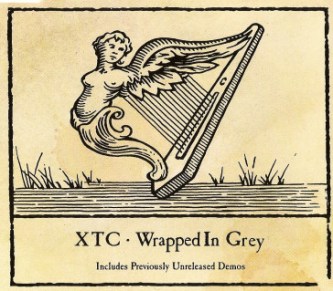
It was agreed that a third single should be lifted from Nonsuch and released in September 1992. It was to be Wrapped in Grey, one of the best-received tracks from the album. A slower than usual number with an emphasis on piano and strings, it was a very different sort of XTC, but there’s no doubt it was a song that everyone was proud of.

Artwork was produced, b-sides identified and in due course, some 7″ and CD singles were pressed only for them to be recalled and destroyed by the label, who had unilaterally decided it had no prospect of charting. The very few copies that got out into circulation are now worth a fortune – the CD single goes for £200 upwards and the even rarer vinyl for at least double that.

mp3 : XTC – Wrapped In Grey

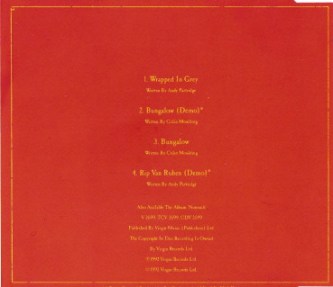
The other songs slated for the single were Bungalow, a track from Nonsuch and another example of a song that none of us who had grown up with the post-punk material would ever have imagined being recorded by XTC; the demo version of Bungalow and a demo of a previously unreleased song called Rip Van Ruben.

The pulping of this 45 was the last straw for XTC and they asked to be released from their contract. Virgin Records refused to do so. No new material was recorded but the label happily issued some compilations to keep the money coming in. The impasse would last for a number of years.

JC

SATURDAY’S SCOTTISH SONG : #95 : FFS

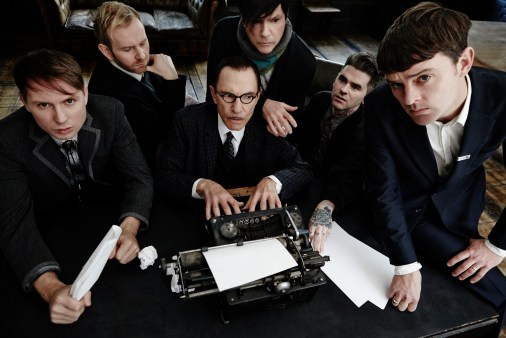
That the Franz Ferdinand/Sparks ‘supergroup’ was included on the shortlist for Scottish Album of The Year in 2016 is good enough for them to be quickly featured in this ongoing weekly series.

From the Domino Records website:-

The seed of FFS was sown around the time of Franz’s debut album when word got back to the Maels that the band were big Sparks fans. “We thought ‘Take Me Out’ was very cool, and wouldn’t it be nice to say hello when they came to Los Angeles?” recalls Russell Mael. “We met and decided then it would be great to do something together. We put forward a couple demos, one was ‘Piss Off’. But they got swept up by everything, and it didn’t happen at that time.”

Fast-forward to 2013 when both Sparks and Franz Ferdinand appeared at Coachella. On the day of Sparks’ warm-up show in San Francisco, Kapranos was in the city trying to locate a dentist when he heard a voice behind him: “’Alex, is that you?’ It was Ron and Russell. They invited us down to see them play that night. We said hello after, and everyone agreed that the 10-year gestation period for this idea was long enough——- we should try and make it happen now.”

FFS was recorded during an intense 15-day period in late 2014. “We approached it the way bands do with their first record,” says Kapranos. “We had the songs first, rehearsed them and then recorded it all together, in a room. So no hanging around or fannying about.”

Very much a ‘new’ project, FFS doesn’t truly sound like either band, but a striking and fascinating mutation. “The real motivation was to make something new, not ‘Franz featuring Russell Mael’, or ‘Sparks with Franz Ferdinand backing them,” says Alex Kapranos.

“You can’t chart what is Sparks and what is Franz Ferdinand,” suggests Ron Mael. “I think each band unconsciously relinquished a little of who they were in order to enter new territory.”

It turned out to be a very fine record, but even better were the live shows that followed, with the gig at Glasgow Barrowlands a couple of years back being one that I thoroughly enjoyed and will always recall with much fondness. Rarely have I seen a group of musicians get such a genuine thrill from being in front of an appreciative audience and responding fully in kind.

mp3 : FFS – Johnny Delusional

JC

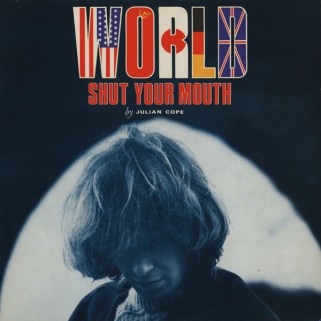
WORLD SHUT YOUR MOUTH

Picture the scene.

A radio station is churning out some classic 80s hits, one of which causes a listener to recall how much he (for it is inevitably a ‘he’) adored it back in the day and that he would love to get his hands on a copy. He’s one of those blokes who is bigging-up the vinyl revival of the second decade of the 21st century, rueing the day 25 years ago when he threw his records in a skip having spent a fortune buying much of it again on CD format.

He spends much of his spare time these days roaming around second-hand stores, hoping for bargains but happy to pay whatever the asking price is for a record he is fond of. He spies this album and smiles as it was the song he’d heard the other day on the radio.

The only problem for our ‘hero’ is that while the album may be called World Shut Your Mouth, the hit single of the same name is nowhere to be found. Indeed, the music on the album bears absolutely no resemblance to the hit single and sounds like the work of a madman rather than a pop star. He feels conned and cheated.

By the way, that’s all just an imaginary scene in my head. I don’t think it ever actually happened…….

It’s fair to say that very few, if any, of the material from Julian Cope’s 1984 debut LP gets aired much on mainstream radio stations nowadays. Indeed, I’d be surprised if anything other than his 1987 smash single, which can be found on the highly accessible Saint Julien LP, gets much of a spin. WSYM is one of those brilliant, dance-floor filling pop songs that offers the killer combination of memorable tune and chorus with a wonderful production which prevents it dating. Believe me, if you click on this mp3 download, it will stick in your brain for hours on end. You’ll end up thinking that Julian should update the lyric and re-release it by substituting the word ‘Trump’ for ‘World’

mp3 : Julian Cope – World Shut Your Mouth

A #19 hit here in the UK, it also enjoyed a #22 placing on the Billboard Mainstream Rock Tracks chart, a fact on its own that would have given Julian some food for thought as there’s no way he ever wanted to be described as either mainstream or rock.

His subsequent solo career never spanned those heights again, although a few more of his 45s did creep into the lower end of the UK charts, a situation I’m sure he was more than comfortable about, much to the chagrin of his label bosses.

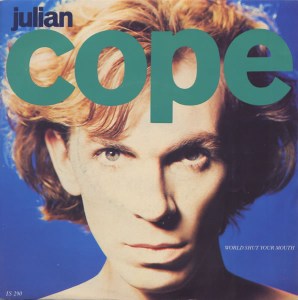
WSYM was issued in 7” and 12” format, in this sleeve.

The 12” offered up four very interesting and diverse b-sides, including a couple of covers:-

mp3 : Julian Cope – I’ve Got Levitation
mp3 : Julian Cope – Umpteenth Unnatural Blues
mp3 : Julian Cope – Non-Alignment Pact
mp3 : Julian Cope – Transporting

The first track of these was written and recorded by cult 60s American psychedelic outfit The 13th Floor Elevators, a band that Julian had been championing since way back in his days with The Teardrop Explodes. The other cover is the third track, this time of a song by Pere Ubu, a group who christened themselves ‘avant-garage’ as an explanation that the foundations of their music can be found in avant-garde and the very raw garage rock. They were another group much quoted by Julian Cope but I’ve certainly always found them to be just too acquired for my own tastes. Maybe there’s an ICA from someone out there…..

Worth mentioning that production and engineering credits for the b-sides sit with an individual by the name of Double DeHarrison…..which is just one of a number of aliases adopted by Julian Cope over the past near 40 years in the music business.

JC

HAD IT. LOST IT (Part 8)

A GUEST POSTING by ADRIAN MAHON

Dear Mr Villain,

Surely close to the top of anyone’s list is UB40?

Starting out with the name; that 80’s icon of alienated youth. They had all the right black/white/industrial background and certainly delivered the goods on the first few singles and albums.

That first album was a blinder: great singles that had a real social message. Listen to ‘King’ and ‘Food for Thought’: great reggae sounds with a real social message to all.

mp3 : UB40 – King
mp3 : UB40 – Food For Thought

The later offerings still had real merit even if the sound had changed for commercial success. Listen to the soft beauty of ‘Don’t Break My Heart’ from ’85.

mp3 : UB40 – Don’t Break My Heart

Then….it all went a bit crap. No one believed that they had an infestation of rodents in the kitchen. The ‘bankruptcy’ just looked like a tax dodge and the fact that there are now two different versions of the band suggests lawyer differences rather than musical ones.

Regards,

Adrian

JC adds…..

I did mention in reply to Adrian that I was never a huge fan to begin with but there were plenty of folk at school and uni whose tastes I admired who had time for early UB40. Maybe it all went began to go wrong from getting to #1 with an appalling cover of Red Red Wine in 1983, but as Adrian has pointed out, there were some good songs still to come later on. Worth mentioning just how successful a band they were – twenty-three singles made the Top 20 between 1980 and 1998, three of which went to #1; it’s telling, however, that all the #1s were cover versions.

IT REALLY WAS A CRACKING DEBUT SINGLE (7)

Today’s debut 45 launched a label as well as a band:-

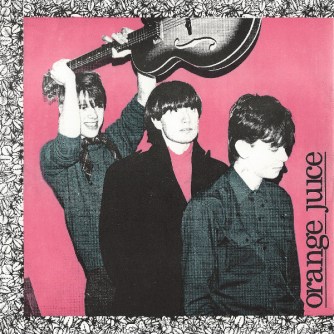
mp3 : Orange Juice – Falling and Laughing

I really don’t think I can add all that much to the praise I’ve heaped on Orange Juice and Postcard Records on previous occasions.

One thing I have observed is that the reputation of the band and the label seems to grow with each passing year, possibly from the legacy in that they seemed to create templates for many to follow in their footsteps. I do find this somewhat amusing as everyone, and in particular Edwyn Collins and Alan Horne, were regarded as joke figures by many of their contemporaries, including here in Glasgow. The first sign of change of attitude can be traced to the mid-80s and the emergence of a new breed of writers, particularly those who served their apprenticeships with fanzines before landing proper media jobs, and the explosion of performers whose teen and adolescent years were spent listening to the records and similar sounding songs on other small independently run labels such as Rough Trade.

This new cognoscenti were fulsome and consistent in their praise of the Postcard rota and for the Postcard way of doing things. All of a sudden, it was fashionable and hip to drop 185 West Princes Street into conversation and music press interviews. It may have dropped off again in the early 90s when grunge took over, but it rose back up in the middle of that decade when Edwyn enjoyed his world-wide solo hit and then even higher again a decade or so later when he suffered his life-threatening illnesses; this second wave of praise and enthusiasm wasn’t out of sympathy, but instead was the recognition of just how unique and different it had all been from the beginning.

But was Falling & Laughing the best ever Orange Juice single? My opinion, and I’ve expressed this on the pages of the blog before, is that honour should be bestowed on another 45 from the Polydor years.

But………..and here’s the kicker in today’s post, I want to change my mind. I still think Felicity is the Orange Juice song I most enjoy listening to and I don’t see that changing. But without Falling and Laughing there wouldn’t have been Felicity or Blue Boy or I Can’t Help Myself or What Presence. There would unlikely have been many other great indie and pop bands to emerge out of the shadows here in Scotland and further afield if it wasn’t for the fact that Postcard Records got up and running, albeit it never really got all that far at the time. And so, for all sorts of reasons, I have to now say that Falling and Laughing is the greatest 45 ever released by Orange Juice.

JC

AN IMAGINARY COMPILATION ALBUM : #143 : MALCOLM ROSS

Here’s an ICA that is devoted to the only man who has recording credits on all three of the Scottish bands who signed to the original Postcard Records.

Malcolm Ross first came to prominence as guitarist-extraordinaire with Edinburgh band Josef K, whose spiky and angular material, combined with a rough and ready production, laid out the template for so many indie groups who would later come to some level of prominence in the middle part of the 80s. Josef K messily broke up in 1982, but Malcolm was never short of work thanks to all sorts of offers from his contemporaries across the Scottish music scene. Edwyn Collins made him an integral part of Orange Juice after the initial line-up of that band had imploded, (by intergral, that includes songwriting and lead vocal contributions), while Roddy Frame, having recognised that, despite his own unique talents, a second guitarist was essential for the live setting drafted him into Aztec Camera initially for touring purposes and later into the studio. Malcolm also continued to work with David Weddell and Ronnie Torrance, the rhythm section of his old band and contributed on the song-writing side to the short-lived The Happy Family whose vocalist Nick Currie would go on to later enjoy a lengthy solo career under the name of Momus.

He spent the latter half of the 80s and much of the 90s as a musician for hire, including stints with Barry Adamson, Edwyn Collins, Blancmange and Paul Haig, as well as contributing to a number of films either in an advisory or performance capacity. He also found time to record some solo material or as part of combos under the name of The Stone Rangers, The Magic Clan and The Delancey Street Group, releasing a handful of singles and albums on a number of different indie labels based in Germany and America. He’s seemingly been less busy in the 21st century but his name can be found on releases by Nectarine No.9 and The Low Miffs, always bringing a touch of class and quality to the recordings.

He was one of the key folk involved in telling the story of Big Gold Dream, the first of the documentaries about the Scottish indie scene made by Grant McPhee. This was a work that received its world premiere in Edinburgh in June 2015, after which there was a live performance by a specially convened ‘super-group’ consisting of past members of Subway Sect, Fire Engines and The Rezillos along with Malcolm Ross who raced through a hugely enjoyable 10-song set from the era, all of which only demonstrated juts how great a guitarist he still is. He’s no longer a full-time musician, instead making his living as a taxi driver in the city that he has called home for so much of his life. Another example of how the music industry failing to recognise and reward its greatest talents. Here’s his ICA:-

Side A

1. Josef K – Radio Drill Time (single, Postcard Records 1980)
2. Malcolm Ross – Another Year, Another Town (single, The Bus Stop Label, 1993)
3. Orange Juice – Turn Away (album track, Polydor , 1982)
4. The Low Miffs and Malcolm Ross – The Man Who Took On Love (and Won) (album track, Re-Action Recordings, 2009)
5. Malcolm Ross – Lowshot (single, spinART Records, 1993)

Side B

1. Aztec Camera – Still On Fire (single, WEA, 1984)
2. Malcolm Ross – Happy Boy (album track, Marina Records, 1998)
3. The Magic Clan – My Avenger (album track, Marina Records 1998)
4. Orange Juice – Punch Drunk (album track, Polydor 1984)
5. Malcolm Ross –  Tried So Hard (album track, Marina Records, 1998)

The final track is a cover of the song written by Gene Clark and recorded by him alongside the Gosdin Brothers in 1967.  I’ll dedicate it to JTFL…..

JC

30, 20, 10 (Part 6)

The latest installment in the monthly series looking back at the songs which were #1 in the indie charts on the first day of the month 30, 20 and 10 years ago.

Last month I threatened to call a premature halt to this series if it continued to throw up anomalies such as Elvis Presley gaining top spot in September 2007.  So what do we have this time round?

1 October 1987 : mp3 : M/A/R/R/S/ – Pump Up The Volume

Absolute class.  A bona-fide indie-hit and indeed regular chart hit, giving 4AD a hugely unexpected and welcome injection of cash.

1 October 1997 : mp3 : Blur – M.O.R.

The fourth song from the album 13 to hit #1 in the indie charts that year.  It’s easy to forget just how much was riding on that album given how much of a panning that The Great Escape had endured two years previously.

1 October 2007 : Jack Penate : Second, Minute or Hour

I mentioned Jack Penate back in July. I’ve no wish to go over old ground.

Two out of three….the series lives to fight another day!


JC

THE XTC SINGLES (Part 29)

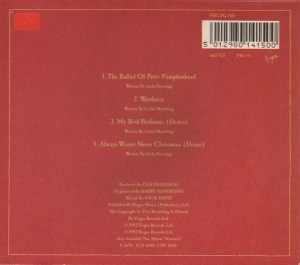
Wiki actually gives The Ballad of Peter Pumpkinhead an entry of its own:-

The song follows the story of Peter Pumpkinhead, a man who comes to an unspecified town, “spreading wisdom and cash around.” He is extremely popular with the people of the town, but extremely unpopular with government figures. In the end, Peter Pumpkinhead is killed by his enemies and, “nailed to a chunk of wood.”

The name Peter Pumpkinhead came about by Andy Partridge having carved out a Halloween jack o’lantern and, following the October festival, sticking it on one of the fence posts in his garden. Partridge walked past the pumpkin each day on the way to his composing shed and, feeling sorry for the increasingly decaying fruit head, decided to write a song about him.

Released in March 1992, it stuck at #71 in the UK charts, but did better in the USA, reaching #1 in Billboard’s Modern Rock Chart, just as King For A Day had achieved three years previously.

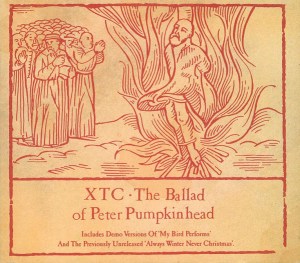
mp3 : XTC – The Ballad of Peter Pumpkinhead

The wiki entry, however, is more likely down to the fact that the song was given the cover treatment in 1994 by Crash Test Dummies for inclusion on the soundtrack to the hit comedy Dumb and Dumber.

As for the original XTC single, again it is nothing along the lines I expected from being so particularly acquainted with their late 70s/early 80s output. It’s a tune that reminds me of the sort of upbeat songs The The included on Dusk, and so I’m happy to give it a thumbs-up.

Now to your b-sides. This from the 7″ vinyl:-

mp3 : XTC – War Dance

A Colin Moulding composition. It’s another that reminds me of The The, thanks this time to the ambitious arrangement and the very clear anti-war sentiments contained in the lyric. Hugely enjoyable and far too good to be wasted simply on a b-side, so I was glad to see it was also included on the parent LP Nonsuch.

The fact that the song title does seem to have consisted of two words and yet the sleeve to the 45 has it as one word is perhaps an indication of how little care and attention was given to XTC by Virgin Records at this point in time.

Two more tracks were on the CD single:-

mp3 : XTC – My Bird Performs (Demo)
mp3 : XTC – Always Winter Never Christmas (demo)

The former is the early version of a song that I’m informed was recorded by the entire band and included on Nonsuch. It’s pleasant enough without being one that I’d go overboard about…mind ypu, there’s good bass playing on it as you’d expect.

The latter is more worked up than I imagined a demo could be which would indicate the band were on the verge of recoding it properly, either for the album or a ‘proper’ b-side. I’m hearing it as a sort of hybrid….there’s a touch of Faron Young by Prefab Sprout in the rhythm and beat…..but there’s also something akin to an afro-beat kicking around in there. It’s all just a bit too busy and undistinguished for my liking, but hey, it is a bonus b-side on a CD single from 1992 so nobody was ever making grandiose claims on its behalf.

JC

SATURDAY’S SCOTTISH SONG : #94 : FAKE EYELASHES

Creeping Bent, aka The Creeping Bent Organisation is an independent record label set up by avant provocateur Douglas MacIntyre in 1994, based in Glasgow, Scotland. Creeping Bent was officially launched with a maxi–media event at Glasgow’s Tramway Theatre on 12 December 1994. The event was called A Leap Into The Void (BENT 001), in homage to Yves Klein, and featured film / theatre / pop ….made – up by a variety of artists.

Over the years Creeping Bent has focused on audio & visual stimulation, releasing music by an eclectic array of artists operating across multiple genres. Here is an example of some of the artists who have worked with Creeping Bent over the years; The Nectarine No9, Appendix Out, Found, The Secret Goldfish, Bill Wells & Isobel Campbell, Alan Vega / RCTJ, Adventures in Stereo, Bricolage, Future Pilot AKA, The Sexual Objects, Monica Queen, Fire Engines … There have been several highlights along the way, perhaps the most prestigious was being chosen by John Peel as the featured label when he curated the Meltdown Festival at the Royal Festival Hall… perhaps having Creeping Bent artists record 20 sessions for Peel’s BBC Radio 1 show comes a close second.

(as lifted from http://www.creepingbent.net/contact.htm)

I’ve mentioned Douglas MacIntyre a few times previously at this little corner of the internet, sometimes as the pop label boss but more often as a playing musician in all sorts of capacities and guises.  What I didn’t know until a newspaper feature a few years ago that had nothing at all to do with music, was that his wife is none other than Katy McCullars (aka Katy Lironi) who was part of the semi-legendary Fizzbombs in the C86 era, as featured here back in June 2015.

Katy would later be part of The Secret Goldfish, a band that released a number of intriguing and occasionally brilliant records in the 90s.  Fast forward to 2011, and she is the lead singer with Fake Eyelashes who released what I think was a download only album entitled A Little Bit Of Bread And No Cheers, via Creeping Bent.  There’s a wonderfully worded review to be found on-line from the archives of The List, a Scottish magazine that features all aspects of the performing and visual arts:-

Katy Lironi’s pedigree as a chanteuse dates back to C-86 swoonsters Fizzbombs followed by a stint fronting bubblegum stompers The Secret Goldfish. This latest vehicle for Ms L’s sublime cooing is an infinitely more laidback affair. Think Saint Etienne-style ballads without London-centric reference points but with a melancholy worthy of bedsit-era Tracy Thorn. This solitary, gal-in-exile feel is fleshed out on a still lugubrious ‘If You Made It Easy For Me by a mellowed out band arrangement, while electronic skitters underscore the equally plaintive ‘If I Could Only Cry’ on a late-night affair that sounds in need of a cuddle.I’ve one of the songs on the laptop – courtesy again of Phil Hogarth who I mentioned in the posting in this series last week. It’s one mentioned in the above review.  And it’s rather wonderful to listen to, although the vocal is a bit on the fragile side:-

mp3 : Fake Eyelashes – If You Made It Easy On MeSublime, and reminiscent musically of The Independent Group back in the 90s,

JC


AND NOW WE’RE GONNA DANCE TO A DIFFERENT SONG

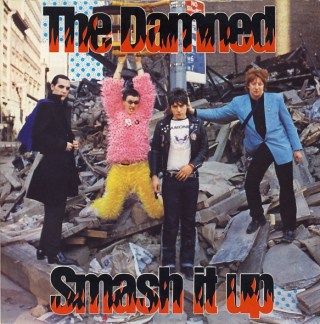
The Damned, thanks to New Rose on Stiff Records in October 1976, may have released the first punk rock single in the UK but to many they were regarded as a bit of a joke band and never given the same kudos as many of their peers.

If you look back at their history, they do appear to have been a half-decent pop/rock band who were in the right place at the right time to jump on the bandwagon with enough savvy among certain band members to adopt the look and feel of punk, including adopting silly monikers, to get noticed and written about.

I hadn’t fully realised that they had broken up for a bit after their second album had been panned, undergoing various changes in personnel including having Jon Moss, later to find huge pop fame/infamy as part of Culture Club, on drums for a short spell. They were absent for much of 1978 but came back with a bang in 1979 with the occasionally tuneful Machine Gun Etiquette from which this classic 45 was lifted:-

mp3 : The Damned – Smash It Up

It was banned by the BBC on the basis of its title despite it not really being an anarchistic call to arms. Still made #35 in the charts but deserved better.

Here’s your b-side

mp3 : The Damned – Burglar

Comic-book punk rock indeed. The sort of stuff that Kenny Everett parodied in his TV shows of the time

JC

AN IMAGINARY COMPILATION ALBUM : #142 : SUPERGRASS

One of the many great singles released by Supergrass emerged out of nowhere the other day, courtesy of i-pod random shuffle. It got me thinking that while they are a group I haven’t listened to in much detail for about ten years now, theirs was a career than more than merits a stab at an ICA. I’ll warn you now though, this is one that leans very heavily on singles….they did after all release 26 of them over a fourteen-year period.

SIDE A

1. Caught By The Fuzz (debut single, 1994 and I Should Coco LP, 1995)

This vibrant, catchy and fast-paced ditty, detailing the story of Gaz Coombes’ run in with the law for possession of cannabis at the age of 15, might well have been the debut appearance of Supergrass but two-thirds of the band were already veterans of the local music scene in Oxford.

Gaz, together with drummer Danny Coffey had been part of The Jennifers who had been signed by Nude Records in 1992. Only one single was released before the band fell out with the label and split-up. Gaz and Danny hooked up with bassist Mick Quinn to form Supergrass in February 1993 at which point in time Gaz was one month shy of his 17th birthday, Danny was 19 and Mick was positively ancient at 22.

The debut came out on local label Backbeat Records; one of its early champions was John Peel and the song was a hit with his listeners who voted it in at #5 in the Festive Fifty rundown of 1994. The attention that it, and follow-up single Manzsize Rooster, brought on the band led to them being courted by a number of major labels with them deciding to sign to Parlophone Records with who they would go on to record for the next fourteen years.

This was the song that popped up on the i-phone and I thought immediately that it should be part of the debut singles series that I’ve just got going, but as I said, further thoughts led to this ICA.

2. Alright (I Should Coco LP; single, 1995)

This, along with Common People by Pulp, is the song I most associate with the rise of Britpop.

It’s a song that really could only have been written by a young, carefree and happy songwriter, celebrating the fact that he is young, carefree and happy. It’s actually quite hard to imagine that it lay ‘unrecognised’ on the album for so long – it was the fifth and final single to be lifted from I Should Coco, but then again I suppose timing was everything. It came out in July 1995 and such a rousing and anthemic number was tailor-made for the summer. There will be millions of folk out there in this world whose holiday memories of that particular year will include a drunken sing-a-long at some location or other.

It’s often the case that over-exposure to a tune can make a listener grow sick and tired of it. Alright hung around the charts gaining airplay for months on end, as well as having a brilliant, funny and memorable video that was on heavy rotation, but somehow avoided every becoming annoying. Still great to listen to all these years later, albeit I can’t imagine its one that Gaz is comfortable playing these days now he’d middle-aged.

3. Grace (single; Life On Other Planets LP 2002)

One of things that gives Alright such a memorable hook is the piano part which was played by Rob Coombes, older brother of the band’s frontman. Indeed, Rob’s contributions in the studio and on-stage were always an essential part of the band’s sound but it wasn’t until the release of the time of the release of Life On Other Planets, their fourth album in 2002, that he officially became the fourth member.

It was long-overdue recognition but it did run the risk of perhaps turning the band into just another plodding four-piece going through the motions, especially given that their LP, released in 1999, had been a bit of a let-down to many, (despite harvesting a couple of excellent 45s). Nothing had been heard of the band for the best part of three years until a deliberately low-key and very limited edition 7” single, Never Done Anything Like That Before, was issued in July 2002 that came and went before most folk knew the band were back. As such, Grace was the comeback songs in advance of the new LP. It proved to be a superb return to form, allaying any fears of them becoming as dull, plodding and irrelevant as so many of their peers from the Britpop era.

4. Jesus Came From Outta Space (from Supergrass LP 1999)

It’s not that Supergrass was a poor album but it did have the unenviable task of following up two of the best received LPs released that decade. I’m a huge fan of the single Pumping On Your Stereo and it was a candidate to open up Side 2 of this ICA, but in the end it didn’t even make the cut. Certain things just had to give to accommodate other memorable pieces of music, not least this album track that is a wonderful blend of Blur, Violent Femmes and Super Furry Animals and yet is still recognisably 100% Gaz & co. A lyric that can be interpreted in a number of ways, I don’t see it as an attack on religion as such but it does such suggest that nobody should listen to fundamentalists or zealots. Would have made for a great single but would have likely suffered from a lack of airplay as cautious/conservative radio bosses would fear a backlash.

5. Low C (Road to Rouen LP; single, 2005)

The music on Road to Rouen is a very long way removed from the carefree attitude of the band’s origins and it does have the feel of the work of middle-aged musicians which is strange as Supergrass consisted of men who were in their late 20s or early 30s and still of a an age where fun was there to be had and recovery times from having such fun should be short.

It was a few years later, in the promotional activities around the next album, that Mick Quinn revealed the introspective nature of Road to Rouen was related to the death of Gaz and Rob’s mum, as well as the tensions in the band around Danny Goffey recovering after an extended period in which his life had somewhat spiralled out of control, thanks to him being part of a socially hedonistic London-based scene that revolved around people who were of huge interest to the UK tabloid newspapers – model Kate Moss and singer Liam Gallacher being prime examples. The music, and the lyrics, were inevitable given the sombre and serious place everyone found themselves in. It’s an album of just nine songs, none of which were obvious singles and yet it contains some of their finest work. There’s more to come on Side B…..

SIDE B

1. Richard III (single; In It For The Money LP, 1997)

The momentum from the debut album was maintained in early 1996 by the release of the single Going Out, a song that was, without any question, a sideways swipe at Danny Goffey who was just beginning to show signs of enjoying life a bit too much and not wanting to contribute to the band.

It took a year before anything else was released, but it was well worth it thanks to this near hard-rock production that I’m sure had a big influence on Matt Bellamy as he tried to work out where to position his band, Muse. It’s an absolute belter of a pop/rock hybrid in which the drummer was given his place to show how important he was to them. Worth mentioning that the name of the song comes from its working title in which all the new tunes were given people’s names. This just happened to be the third song called Richard and has nothing to do with the real-life kings and the famous play by Shakespeare.

2. Moving (single, Supergrass LP, 1999)

This was the 45 released on the eve of the third album. The glam-rock influenced and slightly silly but hugely enjoyable Pumping On Your Stereo had already been a hit earlier in the summer and most folk were probably expecting something similar as the follow-up. Once again, Supergrass did the unexpected with a mid-tempo, sad sounding number that is a commentary on how tedious, dull and repetitive life as musician out on the road could be. It was hardly an original topic for a songwriter to turn their attention to, but it’s done here in such a clever way, with the melancholy verses always giving way to a foot-stomping and catchy chorus that in a sense, is a guarantee of future success and further condemning the band to more time out there belting it out from stages the world over.

3. Diamond Hoo Ha Man (single, Diamond Hoo Ha LP, 2008)

The final Supergrass songs came and went without much fanfare in 2008. This was initially as much to do with the band releasing the first single via just a limited edition 7” vinyl single and latterly from the record label not wanting to spend too much in promotion. It was a sad and bitter end to what had been a long and successful involvement with Parlophone Records – it wasn’t actually supposed to be the band’s final album as come 2010 they were set to get going again, with indie label Cooking Vinyl announced as their new home. This single, the first new music since the downbeat and melancholy material found on Road to Rouen, was a very welcome return to the dynamic sounds of yesteryear. The pity is that much of the rest of the subsequent album didn’t match it.

4. Mansize Rooster (single, 1994 and I Should Coco LP, 1995)

And so the ICA goes from near the very end all the way back to the near beginning. It’s a great indication of what was to follow and listening again, more than two decades on, it’s no real surprise given the quality of this, the band’s second single, and their debut (as featured at outset of this ICA), that so many labels wanted to sign them and so many music lovers were quick to pledge their allegiance. Just don’t ask me to try to offer any logical explanation as to what Mansize Rooster is all about. Just enjoy the tune. And just enjoy how brilliant Supergrass were. All that’s left to say is this…………

5. Fin (Road to Rouen LP; single, 2005)

Sigh.

JC
HAD IT. LOST IT. (Part 7)

The debut pioneering single, as featured yesterday, was August 1972. Ten years later, Roxy Music released the utterly unlistenable AOR album Avalon. It’s another great demonstration of having it and losing it, but depending on your viewpoint, the band had perhaps long passed their sell-by date sometime previously.

For all that there was a run of classic singles in the early-mid 70s, Roxy Music were always judged on the contents of their albums. The self-titled debut was followed quickly by two albums in 1973 – For Your Pleasure and Stranded, and Country Life (1974) and Siren (1975). It really is astonishing to look back and see that five full studio albums were issued in a period of just forty months, all of which went Top 10 in the UK. The other thing to factor into this achievement is that, as a consequence of him being unhappy with the media focus seemingly all being on the frontman, Brian Eno left the band shortly after the release of the sophomore album. Any concerns that Eno’s departure would see Roxy Music’s popularity plummet were soon put to be bed; indeed Stranded, the first post-Eno LP became the band’s first ever #1 LP.

It wasn’t as if the band were wedded to the studio as each release was accompanied by live tours. A little bit of research reveals that Roxy Music played the major Glasgow venue (Green’s Playhouse/Apollo) in April 1973, November 1973, October 1974 (three nights) and October 1975 (three nights) which indicates this was a band that worked incredibly hard at all aspects of their trade.

They broke up in 1976, essentially as Bryan Ferry wanted to pursue a solo career. I was only 12/13 years old at that time and to be honest, was aware of the band less from their music (outside of their singles) and more from their evocative record sleeves in which you got to look at beautiful and scantily clad women in full colour at a time when such images were found only on top-shelf magazines. But this coincided with a time when I made new friends at secondary school, one of whom, Tam, was a huge Roxy Music fan as a result of his older twin sisters liking the band and playing their music non-stop, and through visits to his house I got to know the songs beyond the hit singles.

Fast forward to 1979. It’s Tam’s last year at school as he has already decided he’s going determined to leave as early as possible to get a job while I was set on staying on to University. We hear that Roxy Music have reformed and we both rush out and buy the comeback single Trash and later on the comeback LP Manifesto. We like what we hear but are shocked at the vitriol poured on the records by his older sisters. It’s the first time I can ever recall anyone who was such a huge and devoted fan of someone really being savage about their music – at that stage I’m in my musical development I was sure that once you were a fan, that was you for life.

Maybe what myself and Tam liked most about this era Roxy Music was that the new singles were being remixed and re-recorded for the disco markets and we were weekly regulars at a few church halls where you would turn up to receive your weekly humiliation at the hands of more confident, street-wise and sassy members of the opposite sex at the end of the night when the slow songs came on. But prior to that, you spent time in their company, not necessarily talking to them, but making awkward an unusual shapes with your body to the likes of Angel Eyes and Dance Away.

To those who were in their 20s and older, Roxy Music had already lost it. To us teens, they still had it in spades and more so in 1980 when Flesh + Blood spawned not only more dance singles but allowed Tam and myself to go see them at the Glasgow Apollo in July 1980 – the tickets given to us by his twin sisters for whom the latest LP was a step too far.

Not long after, Roxy Music enjoyed their biggest selling hit in the UK when their cover of Jealous Guy, released in the wake of the murder of John Lennon, went to #1. I didn’t like the single – I thought it bland, dull and unlistenable. In April 1982, Roxy Music released More Than This, another Top 10 hit single that I thought was appalling. By now, I cared little for the band and could finally understand why Tam’s sisters had disowned them three years previous when they too had left their teenage years.

So, I won’t argue that you can date Roxy Music losing it to when they reformed in 1979 as I was a huge fan for a while thereafter. But what I will say is, that if I was to piece together an ICA all these years later, it would almost certainly be made up of music that was recorded and released in the period 72-75.

I think we can all agree these demonstrate they had it:-

mp3 : Roxy Music – Pyjamarama
mp3 : Roxy Music – Out Of The Blue

These will satisfy fans of a certain age:-

mp3 : Roxy Music – Dance Away (12” version)
mp3 : Roxy Music – Over You

These, however, are shockers:-

JC

IT WAS A CRACKING DEBUT SINGLE (6)

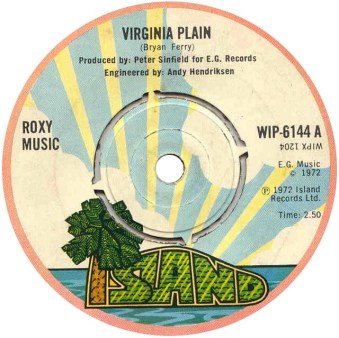
I’d have been just nine years old when today’s featured debut 45 stormed into the UK charts all the way up to #4. I do vaguely recall hearing it on the radio at the time but then again that might be my memory playing tricks on me and in fact I only became hugely familiar with it in the ensuing years.

By any account, this is a remarkable debut single. For one, it wasn’t the song that introduced Roxy Music to the general public as the debut album had already been in the shops for two months, an indication that the band and their record label were content to concentrate on that market and not worry about appearances on Top of the Pops.

For two, it’s a single that broke so many rules, particularly back in 1972. There’s a fade-in and gradual intro that would have confused DJs and there’s a dead-stop ending that would catch so many of them out. But most noticeably, there’s no chorus. Oh and the title of the song is only uttered once – and that’s with its closing two words.

mp3 : Roxy Music – Virginia Plain

Phil Manzanera provided a fascinating explanation in an interview many years later in that the debut album, which had sold I more than decent numbers, was full of songs that had no chorus and rarely referenced their titles, so when it was suggested that Roxy Music should cut a new song as a single nobody in the band knew how to write or record any differently.

The song developed from what was essentially a series of jamming sessions after Bryan Ferry had played three simple chords on the piano. The fact that the band were prepared to go a bit bonkers and throw in a studio effect of a motorbike revving as well as ask Andy McKay to go with an oboe solo rather than a sax solo merely made what would become Virginia Plain all the more unique and memorable.

It was also helped by a memorable and seemingly oblique opening verse:-

Make me a deal, and make it straight, all signed and sealed, I’ll take it
To Robert E. Lee I’ll show it, I hope and pray he don’t blow it ’cos
We’ve been around a long time
Tryin’, just tryin’, just tryin’, to make the big time!’

Why did the band namecheck the (in)famous Confederate general from the American Civil War? Turns out they didn’t….this particular Robert E Lee was the name of the band’s lawyer, so the lyric was in fact very literal.

One final thing worth mentioning. Virginia Plain was not some glamourous or alluring female with who the band had a connection. It was simply the title of a pop-art painting that Bryan Ferry had produced a few years earlier when he was an art student; Virginia Plain was a cigarette packet……….

But is it Roxy’s finest ever 45? There will be some who will say Oh Yeah to that question (but only to confirm Virginia Plain and not to make a case for a 1980 single); I’d personally have to toss a coin between Do The Strand and Love Is The Drug.

The b-side was an instrumental in which Eno and McKay feature prominently:-

mp3 : Roxy Music – The Numberer

JC