Aside, that is, from the bonus post I shoved up on a whim to celebrate the release of Weirdo by Carla J Easton.
I am very conscious that the strength of this particular blog is that it has an almost exclusively retro feel, but there is sometimes a need to draw attention to contemporary music. So, here are two videos for singles lifted from albums I’ve really enjoyed this year.
Neither are new bands.
Dream Wife, a London-based trio consisting of Rakel Mjöll (lead vocals), Alice Go (guitar, vocals), and Bella Podpadec (bass, vocals) have been together since 2016. Their eponymous debut album, released in 2018, was a frantically fabulous mix of punk, indie, and pop, and I’m delighted to much report that it is much the same on the 2020 follow-up So When You Gonna….
I’m told they are an explosive live act, akin to the sorts of shows the bands you would enjoy from the bands who were lumped under the Riot Grrrl ‘movement’ in the early 90s. I was busy at the football last year when they turned up for a day long festival in Glasgow and so had been hoping to catch them this time around, but COVID-19 has put those plans to one side. All being well, they are due in Glasgow next April and I’ve a couple of tickets on order.
Hinds have been around for even longer, forming in Madrid back in 2011 (initially as Deers before being forced, via legal action, to change their name). Another all-female line-up with Carlotta Cosials (vocals, guitar), Ana Perrote (vocals, guitar), Ade Martin (bass, backing vocals) and Amber Grimbergen (drums). Their first studio album, Leave Me Alone, appeared in the shops in January 2016, and its follow-up I Don’t Run, was released in April 2018. Aldo and Comrade Colin are among those who have been raving about Hinds for a number of years and it has been remiss of me not to have featured them before now.
Hinds are less obviously confrontational and punky than Dream Wide with the music occasionally veering into the charming territory of The Modern Lovers, and at other times the spiky and punchy material of early Libertines seems to be a close cousin, especially on the first two albums. There’s other times they remind of early We’ve Got A Fuzzbox….., probably from the way the harmonies pan out as Carlotta and Ana share lead vocal duties.
The new record, however, leans much more towards pop, recorded in New York with producer Jennifer Decilveo, who has worked with Bat for Lashes, and The Wombats among others. It’s a short album – its ten tracks take under 33 minutes to listen to – and is packed with all sorts of hooks, riffs and melodies that stick with you. It’s certainly been on heavy rotation in Villain Towers in this strange summer of 2020.
Here’s a couple of the older songs, both of which were released as singles
mp3: Dream Wife – Let’s Make Out
mp3: Hinds – Chili Town
Finally, here’s one that Hinds did, initially as a song for a flexidisc for a limited edition version of the new album, but has since been made available in digital form.
“No band has dominated a 12-month period like Frankie ruled 1984, with three singles all at No 1. Yet today they rarely get cited by other musicians.”
That was the opening gambit to a piece on Frankie Goes To Hollywood that appeared in The Guardian almost exactly six years ago. It was followed with these words:-
It is August 1984 and Frankie Goes To Hollywood are in their pomp. They have just spent their ninth week at No 1 with Two Tribes, that ultimate cold war-era document with the annihilating bassline that sounds, in the words of Capital Radio DJ Roger Scott, “like the end of the world”. To celebrate their final performance of it on Top of the Pops they are wearing matching white wedding jackets with black trousers and bow ties. After all the controversy surrounding Frankie – their previous No 1, Relax, was banned for its “obscene” content, and the video for Two Tribes was banned for being indecent – even this choice of outfit seems like a provocative gesture.
To further playfully mark the occasion, drummer Peter “Ped” Gill and bassist Mark O’Toole have swapped instruments, while singer Holly Johnson, to the bemusement of the BBC cameramen, prefaces his performance – with a mixture of relish and disgust – by tearing up a copy of the Sun, the newspaper that has been doorstepping his parents in Liverpool for quotes about their gay son.
Meanwhile, Relax has just climbed back up the charts to No 2, making this the first time anyone has occupied the top two slots since Hello Goodbye and the Magical Mystery Tour EP in January 1968. It’s official: Frankie are the most scandalous affront to decency since the Sex Pistols and the biggest band, Liverpudlian or otherwise, since the Beatles. “It was more than we imagined it could be,” marvels Paul Rutherford, Frankie’s co-frontman and dancing clone, of their 1984 heyday. “We just couldn’t see it coming at all. But God, we rode it. There’s been nothing like it since.”
FGTH burned very brightly and intensely for a short period. A third number one, at Christmas 1984, would be followed by the multi-million selling debut album, Welcome To The Pleasuredome. Very little was heard of them, musically, in 1985 and much of 1986 until new single Rage Hard was released. It marked a new sound, one that leaned more towards a rock sound than pop/electronica, and the critics panned it and the subsequent album, Liverpool. The band split within six months.
One of the reasons that FGTH don’t get quoted much is that the debut album and hit singles are really seen as the work of uber-producer Trevor Horn rather than the musicians, while there is also a great deal of cynicism around the way that Paul Morley, a journalist and writer who was as much reviled as he was admired, had proven to been part of the band’s rise to fame with the way he had hyped things up and devised a range of shock tactics, including the radio and video bans. Horn had nothing to do with the second album and Morley had eased himself away from everyday activities at ZTT Records. Indeed, nobody was denying that the FGTH musicians hadn’t played much on the debut but were rectifying matters on the follow-up, enabling everyone to draw a clear line in the sand if they so wanted.
It may have largely been hype, but there surely can’t be any arguement that the two initial #1 singles were trailblazing in so many ways and still have the capacity to sound great when blasted loudly through a decent set of speakers.
mp3: Frankie Goes To Hollywood – Relax (Sex Mix)
mp3: Frankie Goes To Hollywood – Two Tribes (annihilation)
Both taken from the 12″ singles. The former is 7:25 in length and the latter extends to more than nine minutes, complete with dialogue that mimicked the advice given in the UK government’s propaganda film about what to do in the event of a nuclear attack (as well as comedian Chris Barrie doing a tremendous impression of President Ronald Reagan). As such it requires an interested listener to make some considerable time to take it all in. But trust me, it’ll be worth it.
I’m still battered and bruised from the kicking I got last month when I dismissed the merits of a number of songs, and in particular Hardcore Uproar by Together, which came into the charts at #24 in the last week of July 1990. As Drew so succinctly put it,
“HU has stood the test of time…(and it is) a signpost in the direction that music was taking; fuck your guitars – 808s and 303s are where the fun lies”
Now, to be fair, I did indicate that the UK singles charts would begin to increasingly reflect what was going on out there in the fields but given that I never once set foot in one, nor for that matter in any clubs where the dance music explosion was happening, then this nostalgic look back will still concentrate on the areas where the fun didn’t lie, for the simple reason that I won’t be familiar with many of the new entry singles. But I’ll refrain from ever suggesting that they should be passed over. And, now that we’ve got that pathetic attempt at an apology and excuse out of the way, here’s a look at some of the singles which entered the charts in August 1990.
I always have a look at what held down the #1 spot in any given month as it offers up an indication of the overall tastes of the great British public. July and ended with a tune called Turtle Power by Partners in Kryme sitting at the top of the pile where it would remain for the first two charts of August. But just in case you thought this was the nadir of the year…..it would be replaced by Itsy Bitsy Teeny Weeny Yellow Polka Dot Bikini by Bombalurina, continuing the historical trend of the summer months providing the most horrific of novelty #1s. This one, however, was particularly horrific…….
The new entries for the chart of 5 August were quite low key….some stinkers from the likes of Roxette, Sting, Wet Wet Wet, and Tina Turner were all that could be found in the new Top 50 along with these two:-
What Time Is Love? – KLF (#34)
Where Are You Baby? – Betty Boo (#35)
KLF had, under the guise of The Timelords, enjoyed a #1 with Doctorin’ The Tardis in 1988, and indeed the follow-up to that track had been the original trance version of What Time Is Love?. The new version was subtitled “Live at Trancentral”, the first of what would become a trilogy of upbeat house songs that would make superstars of Bill Drummond and Jimmy Cauty, before the trail of destruction that would accompany their demise after the Brit Awards acknowledged their success. This particular single would spend more than three months in the chart, peaking at #5.
Where Are You Baby? was the second big hit of the year for 20-year old Alison Clarkson, aka Betty Boo, following on from Doing The Do which was mentioned in the May 2020 edition of this feature. This one went all the way to #3 in due course and remains the most successful single that she would release.
Only one other song from the new entries this week is worth highlighting in that it provided a very minor hit for one the co-vocalists in Propaganda, who had enjoyed some hits a few years previous when they were on ZTT Records alongside Frankie Goes To Hollywood
Absolut(e) – Clauia Brucken
It came in at #71 and dropped back out again. And it shouldn’t be confused with the song of a similar name by Scritti Politti as recently featured.
August is traditionally a quietish month for new releases as most folk in England go off on holiday at that time and sales do tend to drop off. Creation Records, however, weren’t for holding back, especially when they had something on their hands that would provide both the perfect follow-up to Loaded and the song that would capture much of the mood of what was happening out in the fields
Come Together – Primal Scream
Of course, the extended versions are far superior, but this is the version that got daytime radio play and helped generate the sales that saw it come into charts at #26 on 12 August.
Slightly further down, a new hip-hop act from America was enjoying the first taste of chart success in the UK
Bonita Applebum – A Tribe Called Quest
Over the years, there has been more critical acclaim than sales for Tribe, with this #47 entry (which proved to be its highest position) just one of five hit singles during the decade, the biggest of which would be Can I Kick It?, in 1991.
Perhaps the most interesting of the new entries this week sneaked it at #60, from where it would go on to enjoy a 13-week stay, including two successive weeks at #2:-
Groove Is In The Heart – Dee-Lite
A close cousin to Betty Boo, this was the sort of dance music with a pop touch that was proving to be popular with much of the record-buying public. It still, thirty years on, sounds fresh enough to get young folk on the dancefloors these days.
George Michael had the highest new entry in the chart of 19 August with Praying For Time coming in at #8. Just behind him at #11 was one that I hadn’t appreciated had been such a massive hit with Deacon Blue’s new four-song EP of Bacharach and David songs entering at #11 and eventually reaching #2. It was one of just three singles that went Top 10 for the band albeit there were sixteen top 40 hits between 1988 and 1994.
I think I’m on safe ground by dissing and not featuring most of the remainder of the new entries of the 19 August chart:-
Can Can You Party – Jive Bunny and The Mastermixer (#14) Silhouttes – Cliff Richard (#17) End of The World – Sonia (#37) Now You’re Gone – Whitesnake (#39) Dive! Dive! Dive! – Bruce Dickinson (#45) Don’t Be A Fool – Loose Ends (#48) Heartbroke and Busted – Magnum (#53) In The Back Of My Mind – Fleetwood Mac (#66)
Down at #67 there was a little bit of indie, from a band riding the coattails of Madchester (Stone Roses version) via a release on London Records
Up and Down – The High
while a little bit higher, at #54, there was a minor hit for Prefab Sprout with the single that had been issued in advance of the much anticipated new album, Jordan: The Comeback which was creating a real buzz among critics who had been privy to an advanced listen
Looking For Atlantis – Prefab Sprout
That always seemed to be the thing with Prefab Sprout. This was the band’s fourteenth single (including re-issues) of which all but two hadn’t reached the Top 40, with the huge exception being the #7 hit enjoyed by The King Of Rock’n’Roll in 1988.
And with that, we reach the chart of 26 August.
Betty Boo is up there at #4 surrounded by Yellow Polka Dot Bikinis, Bacharach & David covers, New Kids on The Block, Jive Bunny, Roxette and Cliff Richard, The edition of Top of The Pops aired that week must have been a true horror show.
There was further evidence of Madchester’s impact with a new entry at #40:-
Groovy Train – The Farm
As was mentioned in the May edition of this feature, nobody took much notice of The Farm and they were seen as something of a joke band. But they then recorded and released Groovy Train, a song that would bring them fame and a little bit of fortune, going on to eventually reach #6 and lay the foundation for an even bigger hit come Christmas-time.
Nothing else is worth featuring other than that. I’ll wake you all up again in September.
If you head over to Discogs, you’ll find some info on a song called Down At The Mission, the would-be debut single from Lloyd Cole & The Commotions.
This was intended to be self-released as the band’s first 45; after it was manufactured, they never put it out, as they got signed to a major label.
“Down At The Mission” is an entirely different song than “Down On Mission Street” from the debut album, Rattlesnakes.
It was due to be issued on a label called Welcome To Las Vegas and it had the catalogue number of LCC 001. The reverse of the sleeve advises that the Commotions consisted of just two other musicians – Neil Clark and Blair Cowan – which means Steven Irvine and Lawrence Donegan became the rhythm section at a later date. The aborted single was recorded at Park Lane Studios on the south side of Glasgow (not that far from Villain Towers and a very short walk from Aldo’s Maisonette). The drums on the recording were, if the info on the runout groove is to be believed, came courtesy of Kenny MacDonald, one of the engineers at the studio and who would later play drums for Bourgie Bourgie.
While Down At The Mission was never seen again during the time the Commotions were together on Polydor Records, its b-side was re-recorded and became one of their most popular songs:-
mp3: Lloyd Cole & The Commotions – Down At The Mission
mp3: Lloyd Cole & The Commotions – Are You Ready To Be Heartbroken (early version)
I’ve called this posting ‘Just As Well It Wasn’t…..’ as the very first entry in the ‘Cracking Debut Singles series’ just happened to be Perfect Skin.
As mentioned last week, first heard on the radio and the clincher to me asking for Document to be a Xmas present in 1987.
At the time It’s The End Of The World….was sinking without a trace in the UK, the release over in America the same week in August 1987 of The One I Love was a game-changer. It took the band into the Top 10 and paved the way for the major labels to come looking to entice R.E.M. with a mega-sized contract.
It made sense to give the single a release here in the UK and across Europe, which duly happened in November 1987. The release of Document had been to near-universal acclaim from the critics, and indeed all four of the UK’s main music papers were talking up R.E.M. as the saviours of guitar music. It got some airplay, but not a huge amount on the daytime shows – maybe producers had cottoned onto the fact that this was not the straightforward love story that it first appeared from hearing the refrain of it going out to the one who was loved.
It reached #51 in the UK charts which was progress but not as much as perhaps was hoped for given the success it had enjoyed back home. Indeed, despite the praise heaped on Document, it had spent only three weeks in the album charts before falling out, and so for all that the critics talked the band and the songs up, the sales weren’t really being generated over here.
mp3: R.E.M. – The One I Love
I won’t waste time going on about how The One I Love is among the most misunderstood lyrics ever penned, I think we all know that.
Instead, I’ll get to the b-sides, again from a second-hand copy of the 12″ (which wasn’t in the greatest condition as you’ll soon spot)
mp3: R.E.M. – Last Date
mp3: R.E.M. – Disturbance At The Heron House (live)
Last Date is an instrumental, written in 1960 by Floyd Cramer, one of the pioneers of piano playing in country music. It’s worth remembering that Document had been recorded in Nashville and this tune, which has been covered by dozens of performers over the years, was probably heard on numerous occasions when the band was out relaxing in bars away from the studio. It wasn’t, however, recorded during the Document sessions, dating instead to early September 87 when they convened in a studio back home in Athens, to rehearse for the upcoming tour of four European dates followed by two exhausting months on the road to all parts of America.
You’d be hard pushed to identify it as a performance by R.E.M. without knowing in advance, but it does demonstrate the abilities of Berry/Buck/Mills as musicians capable of turning their hand to a multitude of genres. Last Date would enjoy an American release in January 1988 as the b-side to It’s The End of The World….which was selected as the follow-up to The One I Love.
Disturbance At The Heron House became the third track to receive an official release from the McCabe’s Guitar Shop show. Again, it was one of the tracks performed across both sets – this is taken from the first set with just Peter Buck on acoustic guitar while Michael Stipe sings. It’s worth remembering that it was a new and unreleased song at the time of this performance (May 87) and that is a reasonable excuse for a couple of bum notes, singing and playing.
Eleven months later, and with R.E.M. having left I.R.S. for a new home at Warner Bros, their old label re-issued The One I Love in the UK, with a different sleeve and featuring two old singles – Fall On Me and So. Central Rain – as the b-sides on the 12″. It was an attempted cash-in but the single failed to chart.
Fast forward to September 1991 and R.E.M. are at a new peak of popularity with the record-buying public in the UK. The old label went for another cash-in, releasing The One I Love for the third time. No 12″ release this time, but it was put out on 7″ and in CD format, with two versions of the latter.
The wording inside the first CD, which also came with a detailed bio of the band, stated:-
THIS IS THE FIRST IN A SERIES OF TWO LIMITED EDITION CD’S TO BE RELEASED FOR ‘THE ONE I LOVE’ SINGLE. EACH ONE INCLUDES TWO LIVE SONGS NEVER PREVIOUSLY AVAILABLE ON COMPACT-DISC. TOGETHER THEY WILL FORM A UNIQUE RECORD OF R.E.M. LIVE
The only thing, however, is that all of the live performances collected on the 2xCDs had been made available before on vinyl across various singles and so there was nothing new for the long-term fans to experience. But the ploy worked as the 1991 release of The One I Love went to #16, which was three places higher than had been achieved by Losing My Religion seven months earlier.
Tune in next week for something different on the third and final single to be lifted from Document.
Nyah Fearties were a Scottish music band from the village of Lugton, Scotland, that created a near-unique brand of anarchic modern folk between 1982 and 1995. Combining the rich traditional music and storytelling culture of its native Ayrshire, with a jarring punk ethos, madcap humour and improvised acoustic instrumentation (though usually amplified), the band made a significant contribution to the British folk-punk scene of the 1980s and 1990s.
It often tested live audiences with a feedback-laced aural assault, more akin to experimental rock groups like Velvet Underground or The Jesus and Mary Chain, than an acoustic folk act. In addition, Nyah Fearties were known for utilising all manner of improvised and imaginative musical paraphernalia. Examples of the latter included bashing upturned metal dustbins to create percussion, and the use of an archaic gramophone upon which Andy Stewart records were ‘scratched’ in the style of a hip-hop DJ.
Nyah Fearties have been described as a kind of hybrid between Celtic folk-punk outfit The Pogues, and Glasgow-based industrial music band Test Dept. Yet this is a somewhat misleading analogy. As Stuart Cosgrove noted in the NME (March 14, 1987): “The Fearties are more critical than The Pogues, their Scotland is not a place to be eulogised… it’s a home whose myths are savagely demolished…they use found percussion but stripped of Test Dept’s artiness…”
Nyah Fearties had at its core the brothers Stephen Wiseman and David Wiseman, although the pair were often joined – both in recorded and live performance – by a wide and varying ad hoc circle of guest musicians, friends and acquaintances.
During a 13-year career Nyah Fearties barely emerged from its underground roots, enjoying little or no commercial success while maintaining a loyal cult following. The band did, however, make a live appearance on primetime British television music programme The Tube and hosted a one-off Lugton Loonie Show for BBC Radio Scotland.
I caught them live on a couple of occasions but never took to them. Maybe I was in a bad mood or something for many others out there, including many regular readers, have more fond memories. I’ve pinched some words penned by Craig over at Plain Or Pan as long ago as 2012:-
Nyah Fearties were a brilliant, brilliant 2-man folk/punk band from Lugton in Ayrshire, a place so small and insignificant that Google are still looking for it on one of their own maps, even if The Fearties did their best to put their wee toun there. They had a sound that had obvious reference points in The Pogues and The Men They Couldn’t Hang, but there was a rough and raggedyarsedness to their sound, more no-fi than lo-fi, that made MacGowan and co. sound like a slick jazz funk band from 1982 by comparison. The Fearties were very parochial. Not for them a Scottishness that reeked of purple heather and proud images of Edinburgh Castle, they sang of what they knew. Lugton Junction. Bible John. Sawney Bean. Red Kola. A Sair Erse.
This is part of a tremendously funny tale of a gig back in the very early days in which the author wakes up the following morning with a hangover and the discovery of an injury from being a tad too enthusiastic in the mosh pit. It’s the best thing you’ll read (or re-read) all day.
I’ve one song by Nyah Fearties and it’s thanks to it being included as part of the Big Gold Dreams boxset:-
mp3: Nyah Fearties – Hills O’ New Galloway
There’s more stuff out there waiting to be discovered if you so fancy.
There was a very intriguing final comment after the epic Kylie ICA that was so lovingly crafted by Swiss Adam:-
Tom W says: August 13, 2020 at 9:37 am
I largely approve of your Kylie compilation, but I assume you didn’t include the monolith of beauty that is Where Is The Feeling (Brothers In Rhythm Soundtrack mix) because, like so many, you’ve not heard it. Honestly, you should remedy that ASAP. Thought it was just me who loved it for years, then discovered it had a sizeable cult following, then by chance heard Kylie herself talking about how much she loved it on the radio this year. It’s not on streaming, I could send you the mp3 but I’m not in the UK at the moment. Confident no-one will regret checking it out. It’s a journey.
I then received this e-mail from Khayem:-
I just read Tom W’s comment re: the Kylie/Brothers In Rhythm remix and I’d heartily concur! I am in the UK and I do have an MP3 but wasn’t sure if it’s okay to post links directly in the comments, so I thought I’d send it via TVV email instead.
And with that, here’s a bonus song for a Friday afternoon
mp3: Kylie Minogue – Where Is The Feeling (Brothers In Rhythm Soundtrack mix)
Where Is the Feeling? was released as a single in July 1995. Technically, it was the third single to be lifted from the eponymous album that had been released the previous year but the 45 involved a very substantial remix making it almost unrecognisable from the album version.
It’s worth mentioning that Where Is The Feeling was a cover of a song that had been a 1993 club hit for an act called Within a Dream in 1993. By the time it came to release a third single from the album, Kylie was moving to a position where she wanted to contribute more on the writing side and as part of that journey she wrote some additional lyrics for the remix.
Brothers in Rhythm, who at the time comprised Dave Seaman and Steve Anderson, had produced much of the album but they really went to town with the opportunity to do something with the single release, creating three mixes of which the version suggested by Tom W and kindly supplied by Khayem, is the longest at thirteen plus minutes. There’s a really substantial build-up to the track with Kylie’s vocal contribution not appearing until four minutes in…and even then you’d be hard pushed to initially recognise her. It then visits all sorts of places, displaying a wide range of pop/electronic/dance sounds. It’s one that demands and deserves to be played loud. It’ll make (some of) you happy…….
Despite being extremely prolific, this Liverpool band remained a best-kept secret, overshadowed by the city’s more visible cousins Echo & The Bunnymen and The Teardrop Explodes. Fronted by Dave Jackson, they made two moody homegrown singles for own label Box in 1980/81, ‘Waiting Room’ and ‘Bated Breath’, plus a cassette album ‘Bitter Reaction’, attracting comparisons with Joy Division.
By 1982 a move to Red Flame coincided with more melodic songs, epitomised by the epic, uplifting tones of ‘Things Have Learned To Walk That Ought To Crawl’ and album ‘Indoor Fireworks’. After mini-LP ‘Clear! (1983), The Room collaborated with Tom Verlaine on final album ‘In Evil Hour’.
Jackson later founded Benny Profane with Room bassist Becky Stringer before playing with Dust and The Dead Cowboys. His 2010 solo album, ‘Cathedral Mountain’ was recorded with John Head (Pale Fountains, Shack) and Tim O’Shea (Send No Flowers).
mp3: The Room – Things Have Learnt To Walk That Ought To Crawl
This is another great find from the boxset. Dave Jackson has the sort of voice that makes my ears prick up and the song bounces along at a great pace. It’s not ground-breaking or anything, but it’s a fine example of the stuff I was dancing to in the students union back in 1982 – and what about those wonderful ‘la-la-la-las’ just before the instrumental break which is Bunnyesque in so many ways.
I’ve dug deep to come up with the b-side.
mp3: The Room – Dream Of Flying
I was listening to a great deal of fine music in 1982 and by the sounds of it, The Room should have found their way into the collection. It just goes to show how much stuff is still out there lying undiscovered.
Songs To Remember, the 1982 album from Scritti Politti, is and always will be one of my all-time favourites. I’ve written about it a couple of times previously, on both this and the old blog that was so brutally and callously murdered by google.
I haven’t ever focussed on the follow-up, Cupid and Psyche 85 but am intending to rectify that today.
It’s not that I didn’t like the album when it was released in June 1985, which was exactly as I was putting my student days behind me and getting set to start my first job that involved a salary rather than a wage. It’s an album that seemed to have a long gestation given that it hit the shops after four hit singles in a row, and when it did, it caused a bit of consternation as it only had nine tracks, and of these, only five were new tunes as all the singles had been included. Songs To Remember had seemed the perfect fit to how I imagined I was living my student life and the songs didn’t sound out of place on compilation tapes alongside tunes by The Smiths, The Bunnymen, The The, Talking Heads, New Order or countless other post-punk/new wave acts that made up the majority of the record collection.
The singles that had brought fame and fortune to Scritti Politti didn’t fit in comfortably with such sounds, although they didn’t sound out of place with the big new, brash pop sounds that were beginning to dominate the charts in the middle of the decade, and I’ve never been ashamed to admit of having a love for such music, albeit a lot of it has dated badly.
Cupid & Psyche 85 somehow manages to pull off something akin to a magic trick. One listen, even if you didn’t know the title of the album and you wouldn’t fail to notice it dates from the 80s given its production in which the latest technology of the day is harnessed to full effect. It has big synths and it has big drums (often of a synthetic nature). It has bass lines slapped over the tunes and the vocals are often multi-tracked. Sparse it most certainly is not. Low budget it most certainly is not. It’s an album that would likely have bankrupted Rough Trade if Scritti Politti hadn’t been allowed to take up the offer dangled in front of them by Virgin Records. T
It’s an album that most certainly was aimed at the mass-market rather than bedsit land. It’s an album of pop at its purest and its finest…..but it was hard for this particular to admit a pure love for at the time of release.
In saying that, hearing the first new song post-Songs To Remember was a real joy.
Wood Beez (Pray Like Aretha Franklin) still sounds astonishingly good all these years later. Released in February 1984, it was accompanied by a stunning and glossy video that featured Michael Clark, the new superstar of modern ballet who had previously worked with The Fall. It sounded immense coming out of crackly radios and beyond belief when played over the sound system in the student union. It deservedly went Top 10 and enabled Green Gartside, with his new haircut that seemed to pay equal tribute to George Michael and Princess Diana, onto Top of The Pops.
The follow-up, released while Wood Beez was still hanging around the lower reached of the Top 75 some four months on, was Absolute. It didn’t do quite as well as Wood Beez, but still went Top 20 which was perhaps a reflection that while it was a more than decent enough sounding record and had the occasional moment of magic, especially around Green’s vocal harmonies with the backing singers, it didn’t have the same immediate or lasting impact.
The third single in a year was issued in November 1984. To be honest, until the following year and the eventual release of the album, I hadn’t realised that Hypnotize had been given a release as I couldn’t ever recall hearing it or indeed seeing it on sale in any record shops. It was a flop, only reaching #68 which was less than had been managed by any of the three singles from Songs To Remember. Maybe there was some thought that the Scritti Politti bubble had burst already.
It was a full six months before anything else was heard and this time around, Green & co. managed to again silence the doubters thanks to The Word Girl. It had been the slow, meandering and stylish sound of The ‘Sweetest’ Girl that had led many people to fall for charms of Scritti Politti back in 1981, myself included, and here it was four years on that history was repeating with a lovers-rock effort that was nigh on perfect for the times. The record-buying public loved it and bought enough copies to take it to #6 in mid-June 1985, providing the final building block for the release of the parent album which itself went top 5 on the week of its release where it stayed for a month.
And, if you want to look at the exalted company who were also near the top of the album charts that month, you’ll find Bryan Ferry, Bruce Springsteen, Dire Straits, Sting, and Tears for Fears. It was payola time and the album would eventually be certified as Gold with at least 500,000 sales in the UK.
The fact that there were only five new songs on the album did restrict the opportunities to further promote it through another single, but Perfect Way was issued in that format in August 1985. It did scrape into the Top 50 but given it didn’t prove to be a smash, any further thoughts to perhaps give Hypnotize the re-release treatment were put to one side.
As the years have passed, I’ve mellowed out a bit on Cupid & Psyche 85 and am not quite as hostile as I was back in the day. It did help that I’ve long had a love for Wood Beez and The Word Girl, but it remains an album, a bit like Our Favourite Shop by The Style Council (which came out around the same time), that I enjoy listening in full only every now and again, but have a lot of time for a number of the component parts.
I normally break up my longs posts with bits of music but there’s a reason I’ve not done so today. I’ve mentioned how the songs all have that big production and, as such they need to be played on a decent turntable with a good amp and speakers to get the best effect – which is why I have hunted down in recent weeks, as pristine a copy as I could of all the 12″ singles lifted from the album. And here they are:-
Finally, it was brought to my attention that Green Gartside had, earlier this year released a 7″ single, on Rough Trade, the first under his own name. The two tracks on the release are both covers of songs originally recorded by Anne Briggs, regarded by many who follow the genre as one of the great British folk singers. It was a new name to and all I can say, having picked up the single, Ms. Briggs was a very fine writer.
If you click onto the website of Carla J. Easton, the first words that you read are:-
SINGER/SONGWRITER dreamy, addictive, POP music
It’s as accurate a description as you could apply to someone who, in recent years, has established herself as something of a national treasure up here in Scotland, a standing that will only increase from the imminent release of her new LP, Weirdo, which is officially set for Friday 28 August but with copies already delivered to those who pre-ordered through her record label.
It’s worth giving a bit of background to anyone who may not be familiar with the name (and apologies to those of you who already know all this!)
Carla has been part of the scene around these parts since 2006, initially as a member of Futuristic Retro Champions, one of those many indie-bands whose activity was mainly around My Space and gigging rather than physical releases. My first encounter with Carla was through the next band she was part of, TeenCanteen, an all-female four-piece whom my mate Aldo had caught very early on in 2013 and raved about to anyone willing to listen. I gave them a couple of mentions previously on TVV, referencing that their indie-pop music was the sort that made you want to just dance and sing along but that they really came to life in the live setting where the shimmering harmonies over a sound that meshed electronica and guitars showed their true individual and collective talents.
Teen Canteen were still going strong when Carla released her debut solo album in July 2016. She took the name Ette for this particular project, teaming up with multi-instrumentalist, arranger and producer Joe Kane for Homemade Lemonade, an album recorded in just five days. I named it as my favourite release of 2016, describing its ten tunes as memorably catchy akin to the girl-groups so beloved of Phil Ramone mixing it up with Clare Grogan, Kate Bush, Kylie, 80s synth bands, bubblegum, rap and the occasional hint of folk-rock that so many bands from Scotland are proving so adept at.
There was a 10″ EP from Teen Canteen in 2017 before seemingly going their separate ways but Carla remained very active on the live scene and in the studio and the following year, using her own name, she released Impossible Stuff, an album recorded in Montreal with the help of producer Howard Bilerman who, among others, had worked previously with Arcade Fire, Leonard Cohen and, closer to home, British Sea Power. It was a fairly radical shift from the previous material and I fell for it, hook, line and sinker. I do have to say, however, that it’s an album that plateaued with me fairly early on and after maybe six months or so I didn’t return to all that much, certainly in comparison to the Ette record.
It’s taken a couple of years for Carla to come up with the twelve new songs for Weirdo and the wait has been more than worth it as this is, easily, her best work yet.
It is a full-on upbeat, joyous and exhilarating, electronic pop record with Carla aided and abetted by a few of her friends from the Scottish music industry including Scott Paterson (ex-Sons and Daughters) who co-wrote and co-produced four of the tracks. Stina Tweeddale of Honeyblood provides a couple of guest vocal contributions, while Solareye, one of Scotland’s best-known and best-loved hip-hop/rap artists duets with Carla on a fabulous track they wrote together.
Maybe it’s the fact that the album arrived in the post the day before the blog was turned over to a lengthy and brilliant guest post about Kylie Minogue, but listening to Weirdo back-to-back for the first, second and third times seemed to be the perfect accompaniment to the long-time princess of pop. It’s a genuinely astounding record, one whose songs wouldn’t sound out of place among the chart-fodder you hear on Radio 1 nor on BBC Radio 6 where the hipsters like to hang around alongside the many presenters who used to make a living writing, recording and performing music, and who tend to know a good thing when they hear it. It’s no real shock to find that Marc Riley has long been a champion of Carla and I’m sure he’ll be among many who will big up this tremendous album.
I’ve read someone else describe the lead-off single, Get Lost, as 3 minutes of deliciously sugary escapism – Carly Rae Jepsen with a dash of New Order. Judge for yourself:-
It’s also the track that opens the album – one of the songs co-written with Scott Paterson – and the pace, quality and energy never lets up over the entire 43minutes.
The follow-up single is one of defiance. It’s one that, dare I say it, wouldn’t sound out of place on a Taylor Swift record
The precarious nature of the music industry, especially in these troubled times when money is at a premium, led to Carla and the great folk who run Olive Grove Records, the label to which she is attached, deciding to restrict the initial print run of Weirdo on the strawberry and cream vinyl pictured above, to just 200 copies. It looks as if a further pressing might be on the cards, such has been the reaction from those of us lucky enough to have got a copy through the pre-order. I hope this is the case as Carla and Olive Grove deserve to have a really big success story on their hands with this.
For now, you can get a hold of Weirdo on CD or as a digital download over here at Bandcamp. You can also enjoy a listen to the track Over You, which just screams to be played full blast over the speakers at the nightclubs/discos whenever they eventually re-open.
Next up for Carla seems to be the release in the next week or so, of a third single from the album, this time the title track. The video seems to be a re-imagination of Thelma and Louise with a Scottish music scene cast. I promise I’ll post a link as when I see it……
In the meantime, I’m away to listen to the album again. It’s been a while since I’ve had something this non-stop on the turntable.
The inclusion of The Nightingales on the Scared To Get Happy compilation allows me to finally find a reason to get my finger out of my backside and feature them on the blog for the first time. I’m actually a wee bit surprised nobody has ever come up with the suggestion of an ICA for a band that, over the years, has released eleven studio albums, (three in the 80s and the others since they reformed in 2004), either as a stand-alone effort or incorporating the short-lived solo career of frontman Robert Lloyd.
One of the purposes of this series is to enable me to go to other websites to cut’n’paste bios to save me thinking for myself. This is from the official website of The Nightingales:-
Birmingham’s original punk group The Prefects had been part of The Clash’s ‘White Riot Tour’, recorded a couple of Peel sessions, released a 45 on Rough Trade and, years after splitting up, had a retrospective CD released by NY label Acute Records to all-round glowing reviews – from Rolling Stone to webzines.
The Nightingales was formed by a few members of The Prefects following that band’s demise in 1979.
Described in John Robb’s definitive book on post-punk (“Death To Trad Rock”) as “The misfits’ misfits” and comprising an ever-fluctuating line up, based around lyricist/singer Robert Lloyd, the Nightingales enjoyed cult status in the early ’80s as darlings of the credible music scene and were championed by John Peel, who said of them – “Their performances will serve to confirm their excellence when we are far enough distanced from the 1980s to look at the period rationally and other, infinitely better known, bands stand revealed as charlatans”.
The group recorded a bunch of critically acclaimed singles – pretty much always ‘Single Of The Week’ in the music press – and three albums, plus many radio sessions for their great supporter Peel. They also regularly toured the UK and Northern Europe, as headliners and supporting acts as diverse as Bo Diddley and Nico.
In the late Eighties, the Nightingales stopped working but, following the occasional gig between times, they re-grouped in 2004.
After fucking about with various part-timers, starry-eyed wastrels, precious sorts and mercenaries the group arrived at the current line up, which features Lloyd, Andreas Schmid from Faust on bass, ex Violet Violet drummer Fliss Kitson and on guitar James Smith, who Lloyd had spotted playing with Damo Suzuki.
Since restarting the group have been more productive than ever – releasing six 7″ vinyl singles, two 10″ EPs and eight studio albums, touring England, mainland Europe and USA numerous times, playing various festivals and recording many radio sessions along the way.
The band continued and continue to operate with no manager, booking agent, publisher, et al, but they get by. And they work equally well with pop musicians, rock n rollers and the avant-garde. The group is independent, maverick, diligent, daft, blah blah.
Until recent times the Nightingales made one record for a label and then, by choice or otherwise, moved on. But since 2017 they have been going steady with Tiny Global Productions.
The first TGP release was a 10” EP, followed in 2018 by a 45rpm collaboration with Vic Godard – “Commercial Suicide Man”- and another critically acclaimed ‘Gales album “Perish The Thought”.
To support “Perish The Thought” the group toured Europe extensively, from Scotland to Serbia.
2019 saw the filming of a feature-length Nightingales documentary film, “King Rocker” -written by brilliant stand up comedian Stewart Lee, directed by Michael Cumming (‘Brass Eye’, ‘Toast Of London’, etc) – and the recording of a new album.
The album, “Four Against Fate”, was released in May 2020 but the accompanying UK and Euro tours had to be postponed until 2021.
Plans for “King Rocker” were also disrupted but the film will have theatrical & TV premiers later this year.
Before too long there will be assorted reissues and records of previously unreleased material. Plus a bunch of other stuff, maybe? Either way, by hook or by crook, more adventures will follow.
Paraffin Brain is the track included on Scared To Get Happy. It was the band’s third single, released in 1982 on Cherry Red but not included on debut album Pigs on Purpose, released the very same year – indeed the album was originally issued minus any of the four singles from that same era, very much in keeping with the punk ethos, although a subsequent re-issue on CD in 2004 included the 2nd, 3rd and 4th singles, plus b-sides.
mp3: The Nightingales – Paraffin Brain
mp3: The Nightingales – Elvis, The Last Ten Days
Both are reminiscent in places of The Fall and the angular guitar sounds of Fire Engines/Josef K. The single did make a very small dent on the indie charts but deserved better. The b-side gives an insight into what, for many, made The Nightingales stand out from the crowd, namely the way that Robert Lloyd conceived his ideas and lyrics. This particular effort is him imagining what the final ten entries in the diary of Elvis Presley might have looked liked as he grew increasingly disillusioned and tired of everything going on around him. Day 10, the final entry, is witty and sad in equal measures.
I mentioned Robert Lloyd’s short-lived solo career which consisted of two singles on an indie-label before Virgin Records took a chance on him in 1989. There would be two singles and the brilliantly-named Me and My Mouth album, released in 1990 before he retired from music for just over a decade. I don’t have a copy of the album*, although I do have the two singles on 12″ vinyl:-
mp3: Robert Lloyd – Funeral Stomp
mp3: Robert Lloyd – Nothing Matters
And finally, a track which Jacques once included on a tape for me. It’s a song that was included on Me and My Mouth and it’s taken from a Peel Session.
mp3: Robert Lloyd – The Part of The Anchor
The Nightingales are a band I should have followed more closely, especially since the reformation, but I can only spin so many plates at the one time. If anyone reading all this wants to offer up a guest posting or two, then you would be very welcome.
JC
*I didn’t have a copy of the album when I typed this up about a week or so back, but I’ve since picked one up – it’s waiting on me finding time to give it a listen!
I’ve submitted several ICAs to The Vinyl Villain before: a 20 track double album attempting to summarise the career and spirit of Andrew Weatherall; the adventures of Mick Jones post- Clash in Big Audio Dynamite; the SST years of US punks Husker Du; a short in length but long in love appreciation of San Pedro’s Minutemen; a follow up to Echorich’s A Certain Ratio ICA, ten more songs from Manchester’s most underrated post- punk/ punk- funk pioneers; a 10 song compilation fleshing out Iggy Pop’s solo career.
Since the Iggy one I’ve started but not finished several ICAs including a sketchy outline of a Spacemen 3 ICA, a Primal Scream one (which essentially turned into another Weatherall one), thought about writing a Durutti Column one to follow the first one from years ago, sketched out an ICA for Factory Records (one without New Order or Joy Division) and had some vague ideas about a Creation Records one. I part wrote an Aphex Twin one but struggled to commit. I haven’t managed to get any of these finished for one reason or another. Flicking through the TV channels the other night and I happened upon a Top Of The Pops special and suddenly it became clear who my next ICA should be about…
The Locomotion
In 1987 Kylie and the cast of Neighbours performed the Little Eva song at half time at an Aussie rules football game. This led the young Kylie to a recording contract with Mushroom Records and a cover of the song being released the same year in Australia. In the UK, PWL picked it up, re-recorded it and sent it to the top of the charts. Well, very near the top, it stalled at number 2 where it sat for four weeks.
I’m sure you, like me, were not a fan of PWL in 1987- 88. PWL were the antithesis of what we listened to, conveyor belt pop designed to part teenagers and their pocket money. Even more annoyingly they were an independent label so their singles would top the indie charts with ease, beating our indie heroes in the only chart they could be winning in. We, of course, were listening to The Wedding Present, The Primitives, The Smiths final lp, The Mary Chain’s Darklands, Public Enemy’s debut, Sonic Youth, Pet Shop Boys maybe if you nodded towards chart music, S’Express maybe or Bomb The Bass if you were into the new sounds, The Housemartins, R.E.M.’s Document, That Petrol Emotion, Billy Bragg’s great leap forward, anything but not PWL.
But to deny the brilliance of Kylie’s version of The Locomotion is to deny Kylie. Totally disposable, utterly efficient, cheap pop music. Which is exactly what pop music should be, you might argue. Kylie’s Top of The Pops performance to promote the single is peak early Kylie, her in a red body con dress skipping about the stage like it’s the only thing in the world, and four male backing dancers with the biggest grins and none-more-1988 stage clothes, 501s, Doc shoes and white t-shirts.
Better The Devil You Know
Some of Kylie’s PWL singles were throwaway, functional, and forgettable. Many in fact. The ones they gave to their lesser artists were even worse. But occasionally, with Kylie, they could hit the mark. Better The Devil You Know is a 70s disco throwback and catchy AF. Her cover of Chairman of the Board’s Give Me Just A Little More Time is similarly good.
JC adds (with apologies for interrupting the flow of the ICA)
Nick Cave is a huge fan of Better The Devil You Know. In 1998, he delivered a lecture entitled ‘The Secret Life of The Love Song’ at the Vienna Poetry Festival in which he waxed very eloquently about the lyrics
Say you won’t leave me no more I’ll take you back again No more excuses, no, no ‘Cause I’ve heard them all before A hundred times or more I’ll forgive and forget If you say you’ll never go ‘Cause it’s true what they say Better the devil you know
Our love wasn’t perfect I know, I think I know the score You say you love me, O boy I can’t ask for more I’ll come if you should call I’ll be here every day Waiting for your love to show ‘Cause it’s true what they say It’s better the devil you know I’ll take you back I’ll take you back again
“When Kylie sings these words, there is an innocence to her voice that makes the horror of the chilling lyric all the more compelling. The idea presented within this song, dark and sinister and sad, that love relationships are by nature abusive, and that this abuse, be it physical or psychological, is welcomed and encouraged, shows how even the most seemingly harmless of love songs has the potential to hide terrible human truths.
Like Prometheus chained to his rock, the eagle eating his liver night after night, Kylie becomes Love’s sacrificial lamb, bleating an earnest invitation to the drooling, ravenous wolf to devour her time and time again, all to a groovy techno beat. “I’ll take you back, I’ll take you back again.” Indeed, here the love song becomes a vehicle for a harrowing portrait of humanity, not dissimilar to the Old Testament psalms. Both are messages to God that cry out into the yawning void, in anguish and self-loathing, for deliverance.”
Quite……I’ll hand back now to Adam. JC
Confide In Me
In 1994 Kylie signed to DeConstruction, Mike Pickering’s label that had massive hits with K-Klass and Bassheads but wanted someone who was a name signing. Kylie wanted some credibility and to work with different songwriters. The result was this, a superb adult pop song, Kylie with Brothers In Rhythm on production, some trip-hop drums, Middle Eastern melodies, a didgeridoo and a string section. The strings are seriously giving the song gravitas and sexiness, there’s a moody undertow and she sings of being hurt, of bearing crosses and sharing secrets. The breakdown part where she whispers ‘stick or twist/ the choice is yours’ is Kylie grown up, the PWL years consigned to the past.
The video, dayglo and comic strip-like, gives us 6 Kylies, one in camouflage, one in black PVC, one in a babydoll dress and so on. Pills flash on the screen and messages to ‘call now for salvation’. It’s knowing and clever and very mid- 90s and gave her the new nickname SexKylie. Confide In Me is her best song, a genuine mid- 90s peak.
Breathe
Kylie’s 1997 album, titled Impossible Princess then untitled in the wake of the death of Diana and renamed ‘97, was another wide-ranging, more adult album, taking in trip-hop, indie and house. The Manic Street Preachers were on co-writing duties on two songs and Dave Ball from Soft Cell and the Grid on Breathe. Electronic pop, floating on a groove, experimental and open and Kylie singing about meditation, stopping and letting go. The album sank a little bit and she moved on but this song is, like Confide In Me, a genuine highlight of the time.
All The Lovers
All The Lovers was a comeback in 2010, produced by Stuart Price who was the in-vogue producer a decade ago. Euphoric mid-tempo pop with synthesisers buzzing and wobbling and Kylie declaring and swooning in a killer chorus ‘all the lovers/ that have gone before/ they don’t compare to you’.
By this point Kylie was achieving that elder stateswoman status the media confer on someone who has been around for a few decades. She was older, wiser, several public breakups down the line (not least her very public time with Michael Hutchence). She was also post-treatment for cancer which inevitably put her career on the ropes for a while. Thankfully she recovered fully and her postponed Glastonbury performance in 2019 showed the warmth of feeling people have for her.
Incidentally, not so long ago I watched a documentary about Michael Hutchence, which is well worth catching even if you think you’ve got little interest in INXS, Hutchence, or Kylie. In the middle, it dealt with his relationship with Kylie and had some amazing home video footage of the pair of them on holiday and on a sleeper train, clearly a period of their lives that affected both of them deeply.
Slow
Slow is hot, full-on Mediterranean, being in the sun all day hot, the sort of heat where you have a shower at teatime, get dressed, step outside and start sweating again. Hot hot heat.
Co-written by Emeliana Torrini, it is three and a half minutes of that kind of hot, synth bass, pattering drums and Kylie’s voice, decorated with a minimalist synth topline, pure electro- pop. ‘Slow down and dance with me’she purrs. A perfect slice of how pop music sounded in 2003.
The Chemical Brothers remix is a blast, an intense bleep- ridden ride which takes off in the second half, all breakdowns and lift offs and eyes closed tight under the strobe light.
In Your Eyes
Dance-pop from 2002, slightly moody, more jerky robotic dancing and a dash of Europop with a heart-stopping sweep into the chorus and the song’s title.
Love At First Sight
All build up and release, dance-pop that shows the influence of French house and disco. Daft Punk without the helmets. Another eye- catching video, supposedly shot in one take and with a slightly disorientating effect and geometric shapes spinning around.
Where The Wild Roses Grow
In 1995 Kylie duetted with Nick Cave on this murder ballad, a grim tale sweetly sung by Kylie and with Nick well out of tune at least twice, where Nick smashes Elisa Day’s head in with a rock in the third verse and then puts a rose between her teeth. Kylie makes the step up to serious rock singing with ease. Nick wrote it with her in mind and sent it to her parent’s house, a cassette with Blixa Bargeld singing her lines (that version was eventually released on a Bad Seeds B- sides compilation). In a year of Britpop, parochial flag-waving and media storms about the race for the number 1 slot between two distinctly average guitar pop singles, Where The Wild Roses Grow stands out as both pop and art. It remains The Bad Seeds most successful single worldwide.
Can’t Get You Out Of My Head
The perfect start of the 21st-century pop song – a sleek, modern, hook laden monster, peak synthesis of music and video. Kylie in a science fiction sports car zooming around the city of the future. Kylie in a hooded robe, almost revealing everything, striking poses and doing the dance. Red shirt and black tie clad male dancers in red visors, so 2020, marching in a Kraftwerkian homage. Slow-motion Kylie on the roof of a skyscraper in a post-modern city, hips swinging from high to low in a panelled metallic mini- dress, surrounded by light bulbs flashing and dancers now dressed in black. And beneath the sheer surface and the obsession of the chorus there’s something darker, ‘a dark secret within me’, which gives the song an edge. You know this song inside out and it’s one of those rare occasions where familiarity doesn’t breed contempt.
At the Brit Awards she mashed it up with Blue Monday, New Order’s stuttering drum machine announcing Kylie’s entry on to the stage, a nod and a wink to one of the previous century’s sleekest, most hook-laden monsters.
In his book Words And MusicPaul Morley sees all of pop music’s forward progression since 1955 leading towards this song and Kylie in her yellow sports car to ‘the city of sound and ideas’ and while I usually find Paul Morley pretty irritating, he’s got a point. Can’t Get You Out Of My Head is the sound of pop music in the 21st century, a lighter than air bouncing robot bassline, some la la las, Kraftwerk and New Order’s synths and an Australian pop star merged together playing on a screen somewhere near you right now.
Bonus Tracks
4 songs to make up an indie-friendly bonus disc, just in case the above (Nick Cave excepted) is too pop for the purists.
Slow (Chemical Brothers remix)
Go Home Productions: Begging Kylie (Kylie v The Stone Roses)
Nothing Can Stop Us Now (St Etienne cover)
Can’t Get Blue Monday Out Of My Head (Kylie v New Order)
ADAM
JC adds an additional bonus
Nick Cave & The Bad Seeds – Where The Wild Roses Grow (Blixa co-vocal)
I recently treated myself to a copy of Scared to Get Happy: A Story of Indie-Pop 1980–1989. It was released back in June 2013 by Cherry Red Records and consists of five CDs with more than songs from indie bands and singers from the decade. It doesn’t claim to be the full story as there are a number of key elements missing due to licensing issues – nothing for instance from Orange Juice, Felt, The Smiths, The Vaselines, The Pastels or My Bloody Valentine – but it’s a damn fine effort.
I already had the majority of the songs in one shape or other – either the original vinyl or via other CD compilations issued by Cherry Red or Rough Trade – but there’s a good number that were new to me and therefore will be new to the blog. Such as today’s effort:-
mp3: Art Objects – Showing Off To Impress The Girls
The bio from all music advises:-
The Art Objects were an offbeat British group whose embrace of noisy, non-melodic guitar figures and strong psychedelic influences paved the way for post-punk acts such as Echo & the Bunnymen and the Teardrop Explodes. Formed in Bristol in the southwest of Great Britain, the Art Objects began in mid-1978 as an eccentric three-piece featuring spoken vocals from poet Gerard Langley, fractured guitar accompaniment from Jonathan J. Key (aka Jonjo), and dancing by Wojtek Dmochowski. They adopted a more conventional lineup in the summer of 1979 when drummer John Langley joined the band, soon followed by bassist Bill Stair and second guitarist Robin Key (Jonathan’s brother).
In 1980, the Art Objects released a three-song single for the Fried Egg label, featuring the tracks “Hard Objects,” “Biblioteque,” and “Fit of Pique”; the record was a modest success on the independent charts, and a second single soon followed, “Showing Off (To Impress the Girls)” and “Our Silver Sister.” Heartbeat Records, which released the group’s second single, wanted an album from the Art Objects, and Bagpipe Music was recorded during five days of sessions in the summer of 1980. It was nearly a year before Bagpipe Music was finally released, and shortly after it reached stores, the group split up, with Gerard Langley, Wojtek Dmochowski, and John Langley soon forming a new group, the Blue Aeroplanes; most of the songs of the Blue Aeroplanes’ debut album, Bop Art, began as Art Objects tunes, and Bill Stair, Jonathan J. Key, and Robin Key helped out during the recording. In 2007, an expanded reissue of Bagpipe Music was released by British indie label Cherry Red.
I know there’s a few fans of The Blue Aeroplanes out there who probably knew all this already but, as I mentioned earlier, it was all new to me.
Showing Off To Impress The Girls is a very fine sounding sub-three-minute single, with a lead vocal that is almost spoken rather than sung….and reminds me of the way that Robert Forster delivered his vocals in the early days of The Go-Betweens. The tune has a lot going on in the background too, changing pace and tempo a couple of times, with the hint of a Tom Verlaine-style guitar break towards the end being a particular highlight.
I couldn’t find a copy of the b-side anywhere, short of looking to grab a hold of the original vinyl on the second-hand market, so here instead is the lead track from the debut EP:-
mp3: Art Objects – Hard Objects
Keep tuning in this week some more instalments from Scared To Get Happy.
That’s great, it starts with an earthquake Birds and snakes, and aeroplanes And Lenny Bruce is not afraid
Eye of a hurricane, listen to yourself churn World serves its own needs Don’t mis-serve your own needs Speed it up a notch, speed, grunt, no, strength, The ladder starts to clatter With a fear of height, down, height Wire in a fire, represent the seven games And a government for hire and a combat site Left her, wasn’t coming in a hurry With the Furies breathing down your neck
Team by team, reporters baffled, trumped, tethered, cropped Look at that low plane, fine, then Uh oh, overflow, population, common group But it’ll do, save yourself, serve yourself World serves its own needs, listen to your heart bleed Tell me with the Rapture and the reverent in the right, right You vitriolic, patriotic, slam fight, bright light Feeling pretty psyched
It’s the end of the world as we know it It’s the end of the world as we know it It’s the end of the world as we know it and I feel fine
Six o’clock, T.V. hour, don’t get caught in foreign tower Slash and burn, return, listen to yourself churn Lock him in uniform, book burning, bloodletting Every motive escalate, automotive incinerate Light a candle, light a motive, step down, step down Watch your heel crush, crush, uh oh This means no fear, cavalier, renegade and steering clear A tournament, a tournament, a tournament of lies Offer me solutions, offer me alternatives and I decline
It’s the end of the world as we know it (I had some time alone) It’s the end of the world as we know it (I had some time alone) It’s the end of the world as we know it and I feel fine (time I had some time alone) I feel fine (I feel fine) It’s the end of the world as we know it (time I had some time alone) It’s the end of the world as we know it (time I had some time alone) It’s the end of the world as we know it and I feel fine (time I had some time alone)
The other night I drifted nice continental drift divide Mountains sit in a line, Leonard Bernstein Leonid Brezhnev, Lenny Bruce and Lester Bangs Birthday party, cheesecake, jellybean, boom You symbiotic, patriotic, slam but neck, right, right
It’s the end of the world as we know it (time I had some time alone) It’s the end of the world as we know it (time I had some time alone) It’s the end of the world as we know it and I feel fine (time I had some time alone) It’s the end of the world as we know it It’s the end of the world as we know it It’s the end of the world as we know it and I feel fine (time I had some time alone) It’s the end of the world as we know it (time I had some time alone) It’s the end of the world as we know it (time I had some time alone) It’s the end of the world as we know it and I feel fine (time I had some time alone) It’s the end of the world as we know it (time I had some time alone) It’s the end of the world as we know it (time I had some time alone) It’s the end of the world as we know it and I feel fine (time I had some time alone)
And when played live, the audience to a man, woman and child take great delight in chanting, on cue and in time, ‘Leonard Bernstein’.
A song that has always been one of the most-loved and most popular in the entire back catalogue. It appealed immediately to the fans of old (or so I understand from reading contemporary reviews) and it has always found favour with those who would discover R.E.M. in later years. And it’s the song that got me interested in the band.
I wasn’t doing much in terms of music in 1987. My personal life had been falling to bits in some ways and my drastic solution was to look to settle down and get married. Looking back with the benefit of hindsight it was doomed from the outset as we had, outside of a similar sense of humour, not a great deal in common – and most obviously when it came to music. So, I was going through a period of trying to fit in with the mainstream and not paying attention to what was happening out there – the subsequent gaps in my education would later be filled by the efforts of a few people, but mainly Jacques the Kipper, a work colleague at the time and now a lifelong and valued friend.
The radio was playing in the kitchen of Sunday evening when I was sitting in the house where my fiance lived with her parents – everyone else was watching a TV drama and I was catching up on some reading of papers for a meeting at work the following day. All of a sudden, I’m distracted by an upbeat tune accompanied by the delivery of a nonsensical lyric at breakneck speed. The DJ, Annie Nightingale, then said she had just played the new single by R.E.M. that had been requested by someone from somewhere I’ve forgotten. I hadn’t quite caught the name of the song but assumed it was called And I Feel Fine.
A couple of months later and I hear another song by R.E.M. on the radio. It’s a love song, of that I’m sure, but it’s played again at a breakneck speed with a memorable guitar riff and solo. I’m not buying much in the way of new music but I decide I’m going to get my hands on the new album, which I’ve seen in the shops, but as it’s now not that long till Christmas, I decide to wait and add it to the list of presents from Santa.
25 December 1987. The first time I ever owned anything by R.E.M. You never forget your first time which is why Document will always be my favourite album of theirs, without question.
Years later, I’m long divorced, re-married (happily!!) and I’ve got this new music blog going that has rekindled a love for vinyl. I’m constantly in and out of second-hand shops seeking out, in the main, the sort of stuff I missed out on in the late 80s. Any R.E.M. singles, especially on 12″ are grabbed without hesitation – and that’s why I have a number of them now sitting proudly in the cupboard (all the while kicking myself that I went down the CD singles route in the early 90s for the later releases).
It was still a huge thrill to get my hands on the vinyl and I couldn’t wait to get home and give it a spin. It was originally released in the UK in August 1987 but once again proved to be a failure in terms of sales. I don’t think anyone at IRS was too worried as the different single that had been released over in the USA in August 1987 was proving to be a monster hit and was making stars out of the band members – and that’s me setting up the scenario for the next installment of this series!! But let’s return to today, as there’s still quite a back story to be told.
It’s The End Of The World.……was issued in 7″ and 12″ format. It wasn’t changed or edited from the album version.
mp3: R.E.M. – It’s The End Of The World As We Know It (And I Feel Fine)
The b-side of the 7″ had one live song and the 12″ had two-live songs, both taken from an acoustic set played at Mccabe’s Guitar Shop in Santa Monica on 24 May 1987. This particular show happened while the new album was being mixed in Los Angeles (it has been recorded in Nashville); it was seen, at the time, as a one-off, organised to raise funds for a friend who was fighting a costly legal battle. R.E.M were billed at the top but it was very much a collective effort involving a number of kindred spirits and friends – Steve Wynn and Kendra Smith (The Dream Syndicate), Natalie Merchant (10,000 Maniacs), Jenny Homer (Downey Mildew), Peter Case (ex-The Nerves) and David Roback (The Rain Parade, and later, Mazzy Star). Indeed, it was Steve Wynn who opened the show, playing his own material and covers, followed by Natalie Merchant and eventually one or more of Stipe, Mills or Buck would join the revolving cast- being an acoustic show in a tiny venue, Bill Berry’s talents weren’t able to be utilised.
The show was bootlegged and cassette copies were soon readily available. The band liked what they heard and decided that part of it should be given an official release via b-sides, which happened on both sides of the Atlantic, thereby creating an unusual situation that the b-sides were the same but the a-sides were different!
mp3: R.E.M. – This One Goes Out (live – McCabe’s Record Shop)
mp3: R.E.M. – Maps and Legends (live – McCabe’s Record Shop)
Yup, the first of the songs was carrying that title in May 1987 – it would become The One I Love later on in the process as the band completed the mixing and began to pull the artwork together. It was the seventh song to be aired at McCabes and the first in which Michael Stipe took lead vocal. Oh, and the guitar part is not the work of Peter Buck, but is played by Geoff Gans who was the art department boss at I.R.S. Records who, prior to establishing himself in graphics, had played guitar with local bands in LA.
It was the only song on which Gans played at the show, with Buck coming on board right after.
Here’s the other thing worth mentioning – McCabes was actually two sets in the one show. The first set closed with the ensemble getting together for a bunch of covers played back-to-back, and following an interval, a second set followed a similar format with Steve Wynn opening proceedings in advance of the members of R.E.M. taking to the stage. I only mention this as this new song. This One Goes Out, was aired again during the second set but this time with Peter Buck on guitar – and yet, the decision was taken to go with the version from the first set.
Maps and Legends was aired during the first set with just Stipe and Buck on stage at the time.
Apologies for the length of today’s post, but there was just so much to write about in connection with this particular single, both from a personal standpoint and from the fact that this, at the time, unheralded live show in a guitar shop, would point the way for R.E.M. in later years.
It’s me again next week with some thoughts on The One I Love.
The hard drive contains a couple of songs attributed solely (as such!) to Norman Blake, both courtesy of compilations:-
mp3: Norman Blake – Only With You
mp3: Norman Blake & John Burnside – Girl
The former is from this CD marking 25 years of the wonderful and excellent Marina Records, based in Hamburg but with a lot of connections to the Scottish music scene, often via Douglas Macintyre and Creeping Bent Records.
The latter is from this CD in which various Scottish singers/bands hooked up with poets to create new songs.
Today’s post is dedicated to my dear friend Andrea Peviani (Conventional Records) who, from living close to Milan, has had to deal longer with the dreadful impact and consequences of COVID-19 than most of the rest of us.
It was June 2015 when Don’t Talk To Me About Love featured as part of the short series looking back at the singles released by Altered Images. There was initially a fair bit of confusion on that I had been really lazy in posting up what I described as the ‘Extended Version’ as being from the 12″ single when it had in fact been taken from the version made available on the reissued edition of the album, Bite.
The fact that the CD version came in at 7 mins in length, as opposed to the 3:49 version on the 7″ (not forgetting the just under 5 mins version on the album) was the reason I made the initial mistake, which was pointed out quite quickly in one of the first comments offered up that day. I did try and rectify things quickly but amid all the panic and confusion, I’m not really sure if I did.
So…. five years on, and while I still don’t have the world at my feet, I do have the opportunity to pull out the 12″ from the cupboard and do a fresh digital recording via the new turntable. The fact that the 12″ came in a completely differently designed sleeve from the 7″, albeit both were the work of the late and deservedly acclaimed David Band, should have clicked with my brain all those years ago.
mp3: Altered Images – Don’t Talk To Me About Love (12″ version)
That’s all 8 and a half minutes of it, complete with the little bits of wizardry deployed in the studio,
I air the 7″ version, without fail, at every Simply Thrilled night and it inevitably fills the floor, no matter how early it is. There was a tremendously succinct but memorable description of the song offered up by For Malcontents Only back in June 2015:-
“The Scottish Heart of Glass!”
Which provides the perfect excuse, and again re-recorded using the new turntable:-
mp3: Blondie – Heart of Glass (12″ version)
Now, if listening to these two songs doesn’t put a smile on your face and simultaneously gets your hips swaying, then you are an unwell person. My advice to you is…. seek professional help!!
And that’s to have a 12-inch effort by The Fall pop up out of nowhere so that some of you will be smiling while others will shake their heads with some dismay.
I’ve written previously about Free Range and the fact it is up there among my favourite 45s by the band. Free Range actually reached #40 in the singles chart which was the best ever-showing for a track that wasn’t a cover version. Its follow-up appeared in the shops in June 1992 and despite being another catchy number that had something of a singalong or at least hummable refrain, it didn’t come close to cracking the Top 75:-
mp3: The Fall – Ed’s Babe
The line-up at the time, in addition to Mark E Smith, consisted of Craig Scanlon (guitar), Steve Hanley (bass), Dave Bush (keyboards) and Simon Wolstencroft (drums) and the track is credited to Scanlon/Smith. It’s one that wouldn’t have sounded out of place during the Brix-era, being almost pop-orientated with the keyboards at the heart of the things. It’s certainly one of the most danceable of the band’s numbers.
It was released only on 12″ and CD with the former offering up a misprint on the label which perhaps indicates a late change of mind to ensure there was just the requisite number of songs (four) to have it qualify as a single and not the five that appear on the label, albeit just four songs are listed on the reverse of the sleeve. This was the track on the same side as the single:-
mp3: The Fall – Pumpkin Head Xscapes
Another danceable number, quite baggy in sound that certainly wouldn’t have sounded out of place as a tune on an Inspiral Carpets single or album. But it also comes with much use of the vocal being sung through a megaphone and then ends with a spoken outro by someone who isn’t MES which places it firmly in the camp of The Fall and nobody else. This one was written by Scanlon/Smith/Hanley.
Flipping the record over and there’s these two tracks:-
mp3: The Fall – The Knight The Devil and Death
mp3: The Fall – Free Ranger
If I was to play the former to you without any hints or clues, I reckon you’d need probably a thousand tries before coming up with it being a song by The Fall, mainly as there’s no vocal contribution from MES and indeed given that he wasn’t credited with any instruments, other than tapes, for any of the sessions of the songs that made up the sessions for the album Code: Selfish and the various b-sides to the singles, then he may not have contributed to this track, albeit he does get a writing credit (Wolsencraft/Smith/Scanlon).
It’s also a very different sort of tune than normal, with the initial reliance on an acoustic guitar giving it something of a folky sort of feel at times. Although not credited on the sleeve of the 12″, the spoken/sung vocal is the work of Cassell Webb, an American-born singer whose career dates back to the late 60s and has encompassed a wide range of genres. Her husband is a name that should be familiar to Jonny and Echorich (among others) as Craig Leon was a major part of the NYC scene, on the production side, in the late 70s/early 80s, working with the likes of The Ramones, Talking Heads, Blondie, Richard Hell and Suicide. He was the producer of Code: Selfish and his other half was drafted in to provide some backing vocals as well as take the lead on this, rather intriguing track. It’s also down on the label as being track three of the a-side.
The latter is, as the title indicates, a remix of the previous single. It’s not as immediate or powerful as the original but it remains on the few Fall songs ever given the remix treatment and is well worth a listen for that alone.
I’ve mentioned that a fifth track appears on the label of the 12″, slated as the second track on Side-B to follow on from Free Ranger. It eventually saw the light of day via an edition of Volume which was 1990s publication consisting of a CD (usually containing around 20-24 tracks) and a near-200 page booklet with information on the singers and bands on the CD. Volume One appeared in September 1991 and stopped at Volume Seventeen in January 1997. I’m sure it retailed for around £10 – I only ever bought three of them, including Volume Four which has this on it:-
mp3: The Fall – Arid Al’s Dream
This one also has a contribution from Kenny Brady on violin and all-told it makes for the sort of weird and wonderful world that many associate with The Fall, fans and detractors alike.
This one is a sad short story. The country-style tune propelled the single all the way to #4 in 1981. It was the third, and thus far last, time the last time Squeeze would enjoy a Top 10 hit in the UK. The parent album, East Side Story, is one of my all-time favourites from any era. I’ll get round to praising its merits sometime in the future.
She unscrews the top of her new whisky bottle And shuffles around in her candle-lit hovel Like some kind of witch with blue fingers in mittens She smells like the cat and the neighbours she sickens The black and white T.V. has long seen a picture The cross on the wall is a permanent fixture The postman delivers the final reminders She sells off her silver and poodles in China
Drinks to remember I, me and myself And winds up the clock and knocks dust from the shelf Home is a love that I miss very much So the past has been bottled and labelled with love
During the wartime, an American pilot Made every air raid a time of excitement She moved to his prairie and married the Texan She learnt from a distance how love was a lesson He became drinker and she became mother She knew that one day she’d be one or the other He ate himself older, drunk himself dizzy Proud of her features, she kept herself pretty
Drinks to remember I, me and myself And winds up the clock and knocks dust from the shelf Home is a love that I miss very much So the past has been bottled and labelled with love
He, like a cowboy, died drunk in a slumber Out on the porch in the middle of summer She crossed the ocean back home to her family But they had retired to roads that were sandy She moved home alone without friends or relations Lived in a world full of age reservations On moth-eaten armchairs, she’d say that she’d sod all The friends who had left her to drink from the bottle
Drinks to remember I, me and myself And winds up the clock and knocks dust from the shelf Home is a love that I miss very much So the past has been bottled and labelled with love
Drinks to remember I, me and myself Winds up the clock and knocks dust from the shelf Home is a love that I miss very much So the past has been bottled and labelled with love The past has been bottled and labelled with love The past has been bottled and labelled with love
mp3: Squeeze – Labelled With Love
The b-side saw the band offer their own take on the then-popular Stars on 45 things that had been flooding the charts that year.
mp3: Squeeze – Squabs on 45
And yes, I know I featured both these songs back in 2017, but in my defence, I wasn’t offering up the lyric as an example of a short story.
From an article in The Quietus, back in 2011, penned by Jim Keoghan:-
“As soon as a jingly-jangly indie band appears today, the C86 tag isn’t far behind. And yet, this wasn’t always the case. Over time we seem to have diminished a scene that was far more musically and culturally complex that is often assumed. For all its janglyness, C86 was about much more than just that.
Looking back 25 years to the original C86 era, the Britain of then might be unrecognisable to us today. Unemployment into the millions, rising inflation, an unrepentant Tory Government; it’s difficult to comprehend, but that’s what life really was like. Musically, Live Aid (which had taken place a year earlier) perfectly exemplified the landscape of the time with a rosta of bands so irredeemably anodyne they managed to make Queen look interesting.
Against this background, a musical rebellion was fermenting. At first it began in isolated pockets around the country, in places like Bristol and Glasgow but would soon coalesce to produce one of the most eclectic scenes in the short history of independent music.
One of the earliest people to really pick up on this change was Roy Carr, then a journalist with the NME.
“During the mid 80s, a few of us at the paper were starting to hear and see a load of bands coming through with a different sound to that which had dominated the independent scene for much of the earlier part of the decade. You got the feeling that something was happening, like the ground was shifting slightly.”
At the time, the NME was fond of putting together and releasing mix-tapes covering any number of different genres. It might sound quaint today in an age of unfettered access to anything ever recorded, but in those far off days a simple mix-tape could be one of the best chances for its readers to get hold of something new.
“We thought we’d do one of these for what was happening in indie music at the time. I’d done it for the paper before in 1981 – the imaginatively titled C81 – and that had been quite popular. So a few of us got together and started picking the bands we wanted to go on the tape.”
The tape did well, selling thousands of copies via mail order and eventually being released as an LP a year later by Rough Trade. According to Sean Dickson, former lead singer with The Soup Dragons, this success acted as something of a catalyst – not just on the 22 bands featured, but on the scene as a whole.
“The tape was the key to the whole C86 thing taking off,” he says. “Aside from its impact on our profile, which was big, its release threw a spotlight on everything. I think what you can say is that it made what was underground suddenly over-ground. It took all these little scenes from around the country and pushed them together into the limelight – scenes like mine in Glasgow, where bands like us and Primal Scream had been knocking around for a few years; going to the same gigs, enjoying the same taste in music and sharing a similar attitude in the way that we made music.”
What’s striking about the bands both on the tape and those associated with the scene is the lack of a defining sound. If you listen to it today, the NME tape alone sounds like a load of bands with very little in common.
“We sounded nothing like a lot of the groups,” says Kev Hopper, bassist at the time with Stump. “Our song, ‘Buffalo’, is totally different to something like ‘Breaking Lines’ by The Pastels. When people today think of C86 it’s the bands with the fey melodies and jangly guitars that come to mind. But there were many other groups that were loud and energetic, such as Big Flame and The Wedding Present, and then people like us and Bogshed who were quite experimental. Listen to the tape today and it’s clear that the scene was about much more than just indie-pop.”
It is possible to pick your way through C86 and find several bands whose music did share bits in common. Many of those from Glasgow, such as The Pastels and Primal Scream, indulged in the more classically fey sound normally associated with C86, whereas on the Ron Johnson label, acts like The Shrubs, Big Flame and A Witness released songs that were fast and furious. But these connections were limited, and overall there is little to unite all the groups together, beyond a certain under-produced quality that characterised much of what was released during this period.
“The thing about music round then is that the people making it were drawing their influences from so many different places,” says John Robb, whose book Death to Trad Rock catalogues many of the bands around at the time. “Yes, there were bands that were heavily into the Velvet Underground and producing jangly pop, but there were others who were taking ideas from punk, blues, jazz, funk, rock & roll, ska, dub and anything else they could get their hands on and then twisting it all into something new.”
And yet to say that these groups had nothing at all to unite them would be wrong. One of the strongest shared characteristics evident in the scene was the rediscovery of punk’s DIY ethic. “This was all about bands doing it for themselves,”says John Robb. “This aspect of the scene isn’t always appreciated. There was no grovelling to major labels. Bands pressed their own records, put on their own gigs, designed their own record sleeves and published their own fanzines. It could often come across as quite amateurish but most of the time that was because those involved didn’t care about being slick. This wasn’t corporate rock; these bands didn’t have to sell millions. They were making music their own way. This was independent music in the truest sense of the word. Anti-establishment and everything that trad-rock wasn’t.”
Yet despite its obvious musical and cultural complexity, over time C86 has been reduced to just one thing: journalistic short-hand for indie-pop. Its role in the creation of this genre is certainly an important one; the jingly-jangly sound we all know so well was formed during the mid-to-late 80s. C86 bands played a huge part in this, building on the foundations laid by Postcard Records at the beginning of the decade. Indie pop, in all its various forms since, owes a debt to bands such as The Pastels, The Shop Assistants and The Bodines.
But this shouldn’t be the only recognised legacy of C86. Some of its more abrasive groups have been quoted as influences by bands as diverse as the Manic Street Preachers, Lambchop and Franz Ferdinand. What’s more, its success stories included groups like The Wedding Present, who reflected the energetic side of the scene. And a few years after C86 had fizzled out, its cultural dimension was also a clear spiritual influence on Riot Grrrl – something acknowledged by bands who possessed the same DIY ethic, such as Bikini Kill and Bratmobile.
C86 as a scene and a tag is a more complex beast than we give it credit for. In the spirit of the DIY ethic this is my attempt to get off my arse and do something to right the wrong that has been done to C86 over the last thirty years. Spread the word dear reader; C86 was jangly, C86 was fey but C86 was also about much more than that too.”
——————–
Here, as promised yesterday, is Side 2.
The Shop Assistants – It’s Up to You
The Close Lobsters – Firestation Towers
Miaow – Sport Most Royal
Half Man Half Biscuit – I Hate Nerys Hughes (From The Heart)
The Servants – Transparent
Mackenzies – Big Jim (There’s No Pubs In Heaven)
Big Flame – New Way (Quick Wash And Brush Up With Liberation Theology)
We’ve Got A Fuzzbox and We’re Gonna Use It – Console Me
McCarthy – Celestial City
The Shrubs – Bullfighter’s Bones
The Wedding Present – This Boy Can Wait (A Bit Longer!)
Once again, individual tracks are available from clicking each of the above links. Here’s everything as one continuous listen if that’s your preference:-
C86 is a cassette compilation released by the British music magazine NME in 1986, featuring new bands licensed from British independent record labels of the time.As a term, C86 quickly evolved into shorthand for a guitar-based musical genre characterized by jangling guitars and melodic power pop song structures, although other musical styles were represented on the tape. In its time, it became a pejorative term for its associations with so-called “shambling” (a John Peel-coined description celebrating the self-conscious primitive approach of some of the music and underachievement. The C86 scene is now recognized as a pivotal moment for independent music in the UK.
The C86 name was a play on the labelling and length of blank compact cassette, commonly C60, C90 and C120, combined with 1986. The tape was a belated follow-up to C81, a more eclectic collection of new bands, released by the NME in 1981 in conjunction with Rough Trade. C86 was similarly designed to reflect the new music scene of the time. It was the twenty-third NME tape, although its catalogue number was NME022 (C81 had been dubbed COPY001).
It was about a year later that Rough Trade issued a vinyl copy of C86, with the catalogue number of Rough 100 and on sale at a pre-determined price of £4.49.
My copy is at least second-hand, possibly more. I found it in a charity shop in Glasgow some five years ago, and paid £2 for it. It has the £4.49 sticker but also a second sticker for the same price from the independent chain in which it was first purchased – Andy’s Records – this wiki page explains the story behind its rise and fall.
I’ve now made copies of all the tracks from the original vinyl, which is in surprisingly good condition given its age and that the sleeve is rather tattered and tired-looking. Side 1 today. Side 2 tomorrow. Along with a lengthy critique that I’ve ripped from elsewhere.
Primal Scream – Velocity Girl
The Mighty Lemon Drops – Happy Head
The Soup Dragons – Pleasantly Surprised
The Wolfhounds – Feeling So Strange Again
The Bodines – Therese
Mighty Mighty – Law
Stump – Buffalo
Bogshed – Run To The Temple
A Witness – Sharpened Sticks
The Pastels – Breaking Lines
The Age of Chance – From Now On, This Will Be Your God
Individual songs are available from clicking each of the above links. Here’s everything as one continuous listen if that’s your preference:-
mp3: Various – C86 NME/Rough Trade 100 (Side One – vinyl version)
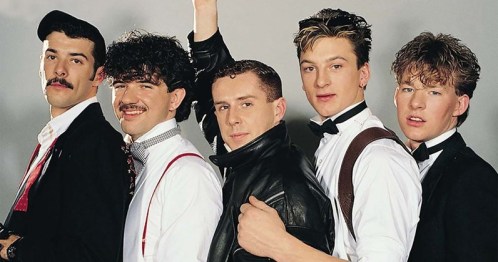

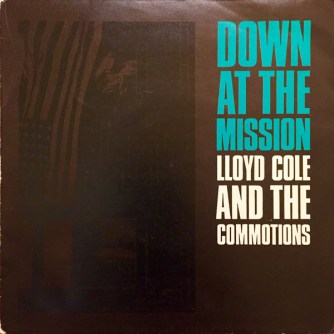
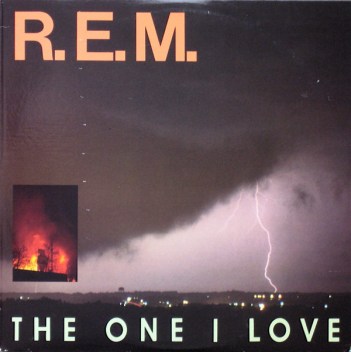
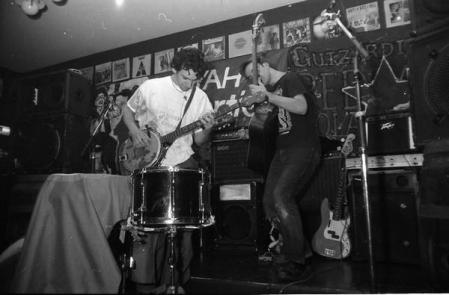

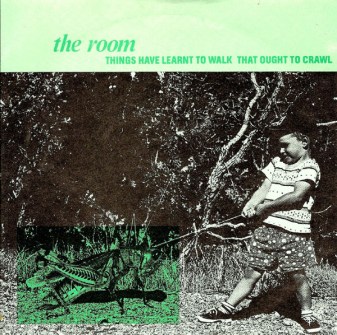

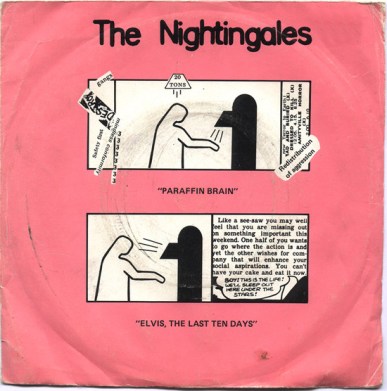

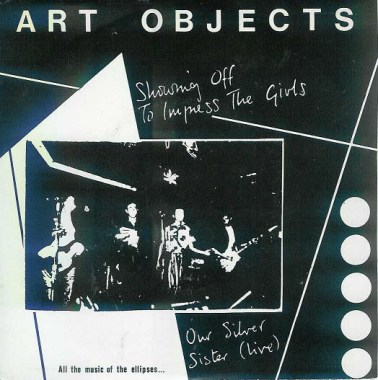
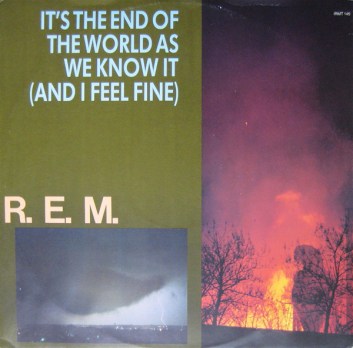


 THE NEW VINYL VILLAIN