SUNDAY MORNING/FEMME FATALE

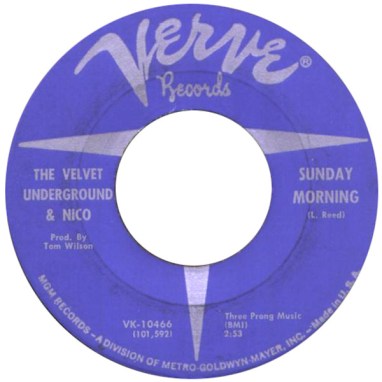
Recorded in November 1966, and issued as a single on Verve Records in the USA the following month.  It’s b-side was Femme Fatale.

Nobody really paid that much attention to it.  It’s a different story nowadays, with a copy of this particular artefact certain to fetch any would-be seller a handsome sum, especially given the continued mania around vinyl.

As wiki explains:-

In late 1966, “Sunday Morning” was the final song to be recorded for The Velvet Underground & Nico. It was requested by Tom Wilson, who thought the album needed another song with lead vocals by Nico with the potential to be a successful single. The final master tape of side one of the album shows “Sunday Morning” only penciled in before “I’m Waiting for the Man”.

In November 1966, Wilson brought the band into Mayfair Recording Studios in Manhattan. The song was written with Nico’s voice in mind by Lou Reed and John Cale on a Sunday morning. The band previously performed it live with Nico singing lead, but when it came time to record it, Lou Reed sang the lead vocal. Nico would instead sing backing vocals on the song.

A look at Discogs will reveal that just three copies have changed hands via that particular market since 2018, but the prices paid reflect the situation I referred to above:-

September 2018: £730
August 2019 : £866.66
March 2021 : £1717.65

And no, I wasn’t a buyer…..as I’ve said before, I was late to the Velvet Underground.

The single was released in mono. As it turns out, the 2002 reissue of the banana album provided two CDs, one with a stereo remaster and one with the original mono version, with the bonus of the mono singles tacked on at the end. So, if you want a listen to what almost two grand gets you these days:-

mp3: The Velvet Underground & Nico – Sunday Morning
mp3: The Velvet Underground & Nico – Femme Fatale

No need to thank me (insert winking emoji).  It all part of the villainous service offered round these parts.

JC

PURE UNCONTROLLED MAYHEM! HYSTERIA AND MISBEHAVIOUR! MOB RULE!

A DEBUT GUEST POSTING by FRASER PETTIGREW
There’s an archive clip in the unmissable new Sparks Brothers documentary that captures a moment of pure 1970s pop culture. During a live Sparks performance, sometime in 1974, the stage is being gradually invaded by the crowd, with security overwhelmed and unable to stem the tide. The band gamely strive to play on and at one point Russell Mael, with trademark energy, strides buoyantly across the stage belting out ‘This Town Ain’t Big Enough For the Both of Us’ only to be completely floored as he runs straight into an advancing phalanx of teenage girls.

YES! I thought, this is EXACTLY what gigs were like when I started going in the late 1970s! Pure uncontrolled mayhem! Hysteria and misbehaviour! Mob rule!

At some point many years later in my gig-going life I recall seeing kids literally queuing by the side of the stage during a performance, waiting to be ushered up and fed delicately onto the outstretched hands of the crowd, thence to ‘surf’ gently to the back, where they were deposited onto the floor like five year-olds on a boogie-board washing up in the shallows. Where, I asked myself, had it all gone wrong?

One of the first gigs I ever went to was The Clash at Edinburgh’s Odeon cinema in November 1978. From a balcony seat at my first gig, The Boomtown Rats a few months earlier, I had learned straight away that the place to be was down in the stalls, where a boiling mass of teenage ferment was seemingly connected by direct current to the frantic charge of ‘Looking After Number One’ and ‘Mary of the 4th Form’.

Accordingly for The Clash gig, my friends and I queued before the box office opened and secured stalls seats, quite far back, but wisely located on the aisle. When The Clash took the stage on the night we were well placed to bomb down the aisle into the explosion of human energy at the front just as the stage lights blazed and the band smashed into ‘Safe European Home’.

As I duly boiled in the teenage ferment I became aware that the row of seats into which I had insinuated myself was no longer fully attached to the floor and was moving back and forth with the surging crowd. Between me and the stage the fans were gleefully pogoing up and down on top of the remnants of the first half dozen rows of stalls, which must have succumbed within seconds to the rampaging punks.

Pretty soon my row of seats resigned itself to fate and capsized gracefully into the sea of legs in front of me. I was compressed in a bouncing, sweaty fug as The Clash continued their breakneck set. Had there been any rows left I would have been about three or four from the front, close enough to see the idiots who still seemed to think that gobbing was punk style in late 1978. Strummer was splattered by a steady stream of saliva that slithered down the body of his guitar, a translucent slime of pure stupidity.

During the encore The Clash attempted to play ‘White Riot’ but, Sparks-like, the stage quickly filled with fans, dodging the bouncers with side-steps worthy of a Welsh stand-off. Most of the song was smothered as people crowded around Strummer and Jones, making it impossible for them to play their guitars. Paul Simonon managed to escape onto the drum podium from where he and Topper Headon kept the bassline and rhythm going to guide the massed chorus of ‘White riot, I wanna riot, white riot, wanna riot of my own’, yelled tunelessly into the mikes by everyone on the stage. I saw someone grab a stand and inadvertently whack Strummer in the mouth with the mike. I wondered if that was the origin of his famously cracked incisor or if it had always been like that.

Bouncers vainly tried to throw people back into the crowd and intercept new interlopers. In the midst of it all Viv Albertine and Ari Up of support band The Slits skipped merrily from one side of the stage to the other, after the fashion of Eric Morecambe and Ernie Wise.

The recklessness of punk crowds was legendary in those days, matched only by the ferocity of bouncers. Some other friends who went through to Glasgow’s Apollo Theatre to see Siouxsie and the Banshees told me they saw one bouncer literally punch a fan in the face, knocking them right off the (rather high) stage. Had it not been for the packed crowd onto which they fell it might have ended more tragically, but then it wouldn’t have been the first time at a rock gig that the security turned out to be the biggest threat to people’s safety.

From subsequent gigs by The Jam and even Elvis Costello I realised that the seat-trashing thing was pretty much standard procedure. The theatres must have been creaming in so much profit that they could factor in the repairs to their break-even calculations, otherwise why the hell did they ever book bands?

And therein, my friends, lies the clue to the present age of sanitised, stage-managed, emasculated rock and roll. It’s a business – no shit Sherlock, it always was – but like every other sphere of business since the 1980s it’s been modernised, commodified and globalised until it’s just as much a part of everyday life as a Big Mac, an alco-pop, an iPhone and a pair of dropped-crotch jobby-catchers. ‘They got brand new suits – huh, you think it’s funny, turning rebellion into money,’ sang Joe Strummer that night in 1978. We thought it was a challenge, not a prophecy.

Which is not to say I’m pining for the days of uncontrolled violence at gigs. I know that if I was a parent now I’d be absolutely shitting myself at the thought of my kids going to events like that. My parents, coming from the generation before rock’n’roll, were blissfully ignorant of what I was up to, despite the media’s moral panic over punk rock.

The worst it got was when they picked me up after seeing The Rezillos at Clouds Ballroom in August 1978. Living out of town as we did, I could make a late bus home after a gig at the Odeon, but I knew shows at Clouds were a different matter. My parents agreed to pick me up when I told them disingenuously that it would likely finish ‘about 11 or 11.30’. When I finally emerged at 1.30am they were far from amused, not least from having sat for two hours watching the human debris floating around Tollcross at that time of night and the state of Edinburgh’s punk proletariat disgorging from the ballroom alongside me.

Thankfully the gig was well worth it. The memory of a wee boy, no more than 10, extricated from the molten crush at the front, riding piggy-back on lead singer Fay Fife while squirting the crowd with a water pistol will never be erased, least of all for that kid, I hope.

At a couple of points in The Sparks Brothers film, reference to the Mael’s early captivation by rock’n’roll is visualised by the same black and white footage of wrecked theatre chairs being aggressively thrown into a pile at some 1950s Jerry Lee Lewis gig. The Killer pounds his piano while lines of nightstick-wielding police officers try to protect the stage from the riotous assembly before them. It’s a stock image of rock’n’roll carnage, its threat to order, its dangerous ability to induce frenzy in the young. The intention is ironic in Sparks’ case, but still, you get my point. Those chairs.

From its emergence as a truly mass popular music genre, rock’n’roll was barely much more than 20 years old by the time I started going to gigs, and the punk revolution had reinvigorated its disruptive, rebellious character for my generation. Looking back now, more than 40 years after I trampled the Odeon’s seats underfoot, it almost seems as though that time was already rock’n’roll’s last fling as a spontaneous transformative force in cultural and social norms.

You might think I’m about to deliver some piercing cultural insight about rock’n’roll, globalised capitalism, social and cultural revolution, and the pivotal role of theatre seats in it all. Or maybe I’m just another old Gen-Xer, rolling out the nostalgia for the liberating moments of our adolescence. Wonderful in young life. It was a glorious experience. Kids today will never know, etc. And neither they will, but maybe they’ll know things we never can and music will change their lives in different ways to how our music changed us.

The truth is that between 1955 and 1985 our social world changed more than in almost any other 30 year period in peacetime history. Rock’n’roll was as much a symptom of that change as a cause, and we kid ourselves if we think it was the other way round. The mayhem of music’s performative rituals during those three decades was like the ground cracking and buckling in an earthquake. Social and intergenerational relations were being remade and it was a rough ride for a while.

But since the 1990s there has been little remaking to be done. Now the parents of teenagers are people who have grown up through those social changes themselves. They’re not the monolithic conservative and conformist generation born before the war, before rock’n’roll. They accept the end of deference, the notion of social mobility, the reality of sexual liberation. They don’t really care whether people are gay, or unmarried mothers, or wear their hair long, or smoke a bit of dope now and then. Those things don’t threaten anything in their lives anymore. They’re people like me, who went to Clash gigs when they were 15.

The revolution is over. It’s been televised, and you can watch it all again on those decade nostalgia programmes produced by Tom Hanks. There is no wild rock’n’roll mayhem anymore because there’s no need. There are still revolutions to be had, but they’re not of the kind that pitted kids against their parents. Rock’n’roll is just music now. So you can stop, flip down the cinema seat and sit quietly watching for the rest of your life, and if you live long enough the ground will start to shake again.

FRASER P

JC adds…….

First of all, a huge thanks to Fraser for a wonderfully written debut piece for the blog.   I really hope it’s the first of many, and again I realise just how lucky I am to have so many talented folk out there so willing to give freely of their time.

Secondly…..I’ll echo Fraser’s words on the Sparks documentary.  I had prepared a review of it, having gone along to see it on 30 July when it was followed by a Q&A with the Brothers Mael, hosted by Pete Paphides, but I pulled it when I saw that Fraser had opened up his piece with a reference to it.  If it is still playing in a cinema near you, then I’d recommend you get yourself along.

Thirdly…the incident at the Glasgow Apollo mentioned by Fraser was quite rare, for the simple fact that the stage there was at least 15 feet, which meant you couldn’t clamber up from the stalls and it would take a death-defying leap from the balcony to reach your idols….but it did, occasionally happen, most likely thanks to a combination of booze and speed making the bloke (and it was always a bloke) thinking he was Superman.

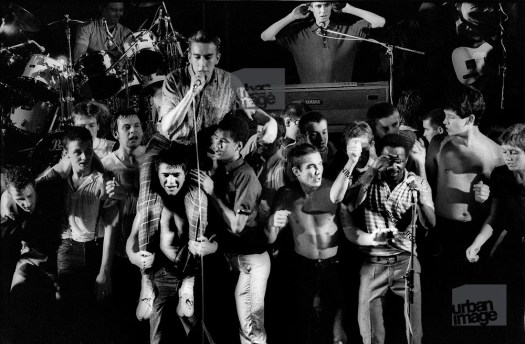
Fourthly….I couldn’t find a good or clear photo of any invasions at punk gigs, and the one use above is from the Specials playing in Brighton in 1979.  It’s maybe a bit more friendly and less confrontational than the punk invasions of the era, but it certainly captures the chaos.

Finally….Fraser didn’t offer up any music to go with his words, so I’ve picked out a few based on what he’s written:-

mp3: Sparks – This Town Ain’t Big Enough For Both Of Us
mp3: Boomtown Rats – Mary of The 4th Form
mp3: The Clash – White Riot

Again, huge thanks to you, Fraser. Keep ’em coming.
HERE IS THE NEWS. GOODBYE BRITISH SEA POWER………

From the website : https://www.seapowerband.com/

“After much reflection and soul-searching, the band formerly known as British Sea Power have modified their name to simply Sea Power.

We’ve been British Sea Power for 20 years – an amazing 20 years, when we’ve been able to continually traverse the British Isles, to travel the world, encountering many friendly faces, not least in the band’s remarkable audience. But the name British Sea Power had come to feel constricting, like an ancient legacy we were carrying with us.

When we came up with the name British Sea Power there were at least two different lines of thought behind it. There was, literally, sea power – the elementary power of the oceans. Alongside this was the historical idea of “British sea power” – Britannia ruling the waves; the naval power that once allowed Britain to dominate the world. When we came up with the original band name, Britain no longer ruled the seas. The band name was intended with a kind of wry humour. The idea of British sea power in the historical sense was an obsolete thing. It was now just the name of a rock band…

Now, 20 years later, we’re recasting the name. In recent times there’s been a rise in a certain kind of nationalism in this world – an isolationist, antagonistic nationalism that we don’t want to run any risk of being confused with. It’s become apparent that it’s possible to misapprehend the name British Sea Power, particularly if someone isn’t familiar with the band or their recordings. We’ve always been internationalist in our mindset, something made clear in songs like Waving Flags, an anthem to pan-European idealism. We always wanted to be an internationalist band but maybe having a specific nation state in our name wasn’t the cleverest way to demonstrate that.

We very much hope the band’s audience won’t be affronted by this adjustment to the name. We’d like to make it clear that removing the word “British” does NOT indicate any aversion to the British Isles whatsoever. We all feel immensely fortunate to have grown up in these islands. Several or our songs are filled with love and awe for this place. We do love these lands. We all still live within the British Isles, but we are now just Sea Power. We feel the name change comes in part from the band’s audience – who at a good show will shout out, “Sea Power! Sea Power!” Maybe this name change has been there for years, shouted in our ears. It’s just taken us this long to realise – to hear what was there in front of us…”

JC adds….

This long-time fan is far from affronted.  Indeed, this long time fan punched the air in delight when hearing of the change.  The songs will still mean the same.

mp3: British Sea Power – Waving Flags

The name change has been accompanied by with a further announcement that a new album, ‘Everything Was Forever’ will be released on February 11, 2022, and that the first single to be lifted from it is ‘Two Fingers’, which they describe as having “strong hopeful intent, a desire to start anew” amid contrasting observations about racism and the social fabric of the UK.

Our late and much-missed friend, Tim Badger, really loved British Sea Power. I’m 100% certain that he is looking down on all of this with a big daft grin on his face.

JC

THE MONDAY MORNING HI-QUALITY VINYL RIP : Part Twenty Six : ANGEL

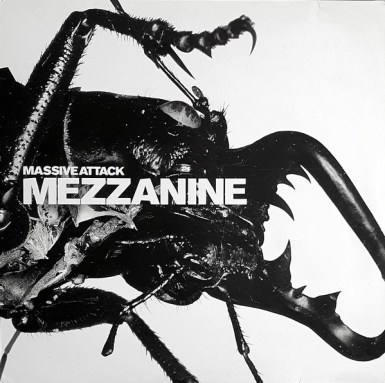
I’m well aware that today’s track came out as a single, but I don’t have that particular piece of vinyl.  I do have, however, the 2013 repress of Mezzanine, and it’s from there that I’ve ripped today’s 320kpbs offering:-

mp3: Massive Attack – Angel

Of the many thousands of albums I have on vinyl or CD, this is up there among my favourite of all opening tracks.  Indeed, there are occasions when I think it might well be my very favourite, setting the perfect tone and mood for an album which astonished me on its release back in April 1998.  I had enjoyed much of what Massive Attack had done up till that point in time, but the first two albums hadn’t quite fully hung together for me.

Mezzanine was a whole new ball game.   It sounded like no other trip hop album (albeit my knowledge of the genre was limited), on which elements of the dark sides of earlier period new wave and alternative music were fused to a wholly modern production in which everyone involved seemed to want to scare the shit out of the listener.  It is a very dark album, (I hesitate to us the word gothic, but……) with every note in some songs, such as Angel, seeming to warn of imminent danger.

And, as if to prove this very point, the music would be used to astonishing effect in series four of the TV series The West Wing, in 2003, when the character of Zoey Bartlett, the daughter of the President, is drugged and kidnapped while out with some friends in a Washington nightclub. Real edge of the seats stuff to deliver a cliffhanger into the next episode…as someone else has written elsewhere in a review of that episode, the visuals and the background music were equally creepy, tense and trippy.

JC

THE WONDERFUL AND FRIGHTENING NEW SERIES FOR SUNDAYS (Part 9)


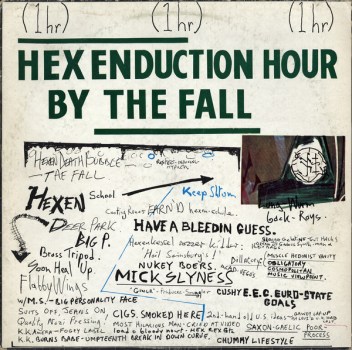
I think it’s only fair that Hex Enduction Hour, released in March 1982, features as part of this series as it enables me to get a bit personal and nostalgic. It doesn’t actually show me in that great a light to be honest…..

The thing is, The Fall were coming to Glasgow on 1 April 1982, for a gig at Night Moves (the club recently referenced in flimflanfan’s wonderful ICA on Goth music). A really good friend at the time, and someone who I went to a lot of gigs with, was determined to go, partly on the basis of him liking what he had heard on the John Peel show, but also from the fact that the support band was an up and coming band from Scotland called Cocteau Twins.

My mate went out and bought the new Fall album and taped a copy for me onto a C90 cassette.

I listened to it. I really liked the opening couple of tracks, but then thought it became a bit of a droning dirge. It also sounded as if my mate had cocked up the recording as the tape faded out mid-song before halting altogether, but when I turned it over to Side B, the song which had faded out started up again. Both tunes appeared to be called Winter. Side B was a tough listen as the singer asked questions but seemed to give no answers about Nazis, while the final two songs were long-drawn-out affairs that were unlistenable.

My expectations for the gig weren’t high. But as my mate had seen a few bands that weren’t his cup of tea, it was only fair that I went along with him.

As it turned out, the support band were fine, albeit they didn’t play for long, with the incredibly shy and possibly terrified singer seeming as if she just wanted the experience to end. The Fall were very strange. There didn’t seem to be all that many songs in their set from the new album, and the lead singer seemed at his happiest when he was provoking a reaction from the audience. We had been down near the front to begin with, but we edged back in due course, worried about getting caught up in something we wanted no part of. The musicians seemed to be a decent lot, but it was hard to tell as the sound was quite muddied. The gig ended and we kind of shrugged our shoulders.

The next day, I taped over the C90.  Probably a mix for my then first serious girlfriend, who had just left school for a job/career as a trainee with one of our major banks.  Her tastes were quite conservative…..I didn’t know it then, but the writing was on the wall, and we would go our separate ways by the summer….and it’s quite likely that the tape would have been filled with ‘mood’ music for those few occasions when her parents weren’t home.

Now, looking back at things.  I was 18 years old.  I had been going to gigs for around two years, mostly at the Glasgow Apollo where the established acts with chart hits rocked up, although I’d been to a few smaller shows in other venues including the various student unions in the city.  I knew little of The Fall beyond some early singles, most of which I had enjoyed…..but the album just didn’t resonate for the most part.  I quickly dismissed The Fall, and it would take a couple more years before I took them seriously again, thanks to their songs being played every now and again at the alternative disco in the students union of Strathclyde University, my regular haunt in 1984/85.

Forty years on, and having all sorts of different reference points on which to now draw, none of which were the least bit familiar to me back then, I can appreciate that Hex Enduction Hour is a wonderful piece of work, probably my favourite of all the studio albums. I now have a copy on vinyl, not the original version, but a 2019 re-press by Cherry Red Records in which three slabs of 12″ vinyl contain the album along with live recordings and Peel Sessions from September 1981, with a bonus 7″ single also thrown in.  Oh, and it all comes on a fabulously eye-catching green and white splattered vinyl…

Some background if you’re not aware. Mark E Smith thought this would be the band’s final album before the band totally imploded. Two tracks were initially recorded in Iceland, in September 1981, as part of a trip to play three gigs in that country, The remainder came from sessions in a disused cinema in Hitchin, some 38 miles north of London, in December 1981. The band had the same line-up as had played on Lie Dream Of A Casino Soul, and following on from the success of the sessions for that 45, Richard Mazda was in the producer’s chair in Hitchin.

It came out on Korova Records to fairly enthusiastic reviews, and thanks to the band’s increasing popularity, became their first single or album to make the official as opposed to indie charts, peaking at #71. Rather incredibly, none of its tracks made it onto Peel’s Festive rundown, as voted by listeners, at the end of the year, although a later single (and subject of the next edition of this series) did scrape in at #58.

But returning to the subject matter in hand.

Hex Enduction Hour has many wonderful moments, including loads I despised back in 1982. Like this:-

mp3: The Fall – Hip Priest

Seriously, how was I meant to get this in 1982 when I was enjoying and dancing to New Order, The Jam, Scritti Politti, Associates, The Clash, The Cure, Simple Minds, Blancmange, Yazoo, Echo & The Bunnymen and Aztec Camera – all of whom feature prominently and regularly in the ’82 Peel rundown, whereas these songs are nowhere to be seen:-

mp3: The Fall – Jawbone and The Air Rifle
mp3: The Fall – Mere Pseud Mag Ed
mp3: The Fall – Just Step S’ways

Looking back at the Night Moves set list on 1 April 1982, all the tracks on offer today, except for Jawbone, were aired, which is at odds with my recollection that the gig was mostly stuff that I didn’t know. Which just shows that I really didn’t do my pre-gig preparations properly.

The joke is on me. I should be still been dining out on the fact that I had seen an astonishing double-bill, for probably less than £3, of a band from Scotland set to soon take the indie music world by storm, and a tremendous line-up of The Fall at the height of their early powers.

If I could find a time travel machine, and offered a fresh opportunity, I’d certainly approach things very differently. I’d still have that C90 tape, for one……..

JC

SATURDAY’S SCOTTISH SONG : #270: THE REZILLOS

This is an alphabetical run through of singers and groups from Scotland from whom there is at least one song on my collection of vinyl and CDs, failing which there will be something located on the hard drive of the Villain Towers laptop.  The fact there was nothing previously by The Revillos tells you all you need to know in that regard…..

The Rezillos, a coming together of students attending the Edinburgh College of Art, were in existence between 1976 and 1978.  The break-up was initially very messy, but their record company allowed two key members – Eugene Reynolds and Fay Fife – to be released from their contract with the proviso that they couldn’t use the band name.  Thus, The Revillos came into being, staying together until 1996 (!!).  Fast forward another five years, and The Rezillos reformed, still going strong today.

From the band’s website:-

The Rezillos ripped into the rock scene through a shared love of Sixties Garage Rock, the Spectoresque Girl Group voice of The Shangri Las injected with their inimitable molten attitude and created their unique left-field brand of punk rock and roll. The speed at which they gathered a following took the band by surprise.

The Rezillos off-kilter three minute sparkling pop gems and a unique visual style was steeped in a culture of bad boys, bad girls, bad movies and great rock and roll. Their independent debut single, “I Can’t Stand My Baby” shot them to underground fame initially via airings on John Peel’s radio show. Their follow-up classic singles “My Baby Does Good Sculptures”, “Top of the Pops” and “Destination Venus” signalled critically acclaimed milestones for the band. The Rezillos recorded their landmark album “Can’t Stand the Rezillos” in New York’s fabled Power Station studio, immersed themselves in the local music scene and dropped in during downtime to play a gig at CBGB’s, the hub of Punk Rock music. The album reached the top 10 in the UK album chart and is lauded as a punk classic.

The Rezillos gave two legendary performances on “The Old Grey Whistle Test” and did the same on the music showcase programme “Top of the Pops” where in keeping with band’s ironic take on pop culture, they played their hit single of the same name satirising the show. The Rezillos single hit the Top Twenty and their album charted alongside. The same year they released a live album; “Mission Accomplished… But the Beat Goes On”.

The band had a meteoric rise, made a seminal album and stamped their unique identity on an unsuspecting public. Much to their fan’s anguish, The Rezillos had hit the too much too soon button and abruptly ceased.

As I don’t have anything by the band post that first break-up, nor anything from the 21st Century reincarnation, I’ll stop right there.  I will say that Can’t Stand The Rezillos, a mint condition second-hand copy of which I picked up a few years ago for a bargain price, remains a fun listen and a great reminder of the fast nature of much of the music I was listening to in great quantities in my mid-teens. I’ve also got this non-album single on 7″ vinyl, the follow-up to Top Of The Pops; I was sure it was also a chart hit, but it seems it stalled just outside The Top 40:-

mp3: The Rezillos – Destination Venus

It’s that much loved mesh of the sound and look of B-52s, The Cramps and Devo, but with broad Scottish accents and a less-stylish fashion sense.

Fun fact.  Fay Fife’s real name is Sheilagh Hynd, and her stage name is the answer to a question…….

Fay (but with the spelling of ‘Fae’) is the local dialect version of ‘from’ while her home town of Dunfermline lies in the historical Kingdom of Fife, located on the other side of the Forth Estuary, north and east of Edinburgh.

JC

BONUS POST : THE LATEST SIMPLY THRILLED MIXTAPE

Simply Thrilled Mixtape #4 Poster Paints

Poster Paints, in their own words, are Simon Liddell (Olympic Swimmers, Frightened Rabbit) and Carla J Easton (TeenCanteen and Ette) who have changed their way of working and embraced the “new normal” to make art. Their debut single ‘Number 1’ is an instant anthem. Teenage love, feeling invincible and long hot summers. It’s the sound of two people exploring. Glasgow indie pop, dream pop and shoegaze – the bands they grew up listening to, and are passionate about.

Number 1 came out in a limited edition physical form back in May, and I’m happy to say that I was able to procure a copy via Monorail in Glasgow.  You can have a listen and then pick up a copy from bandcamp for just £1….all you have to do is click here.

The Simply Thrilled mob are, understandably, simply thrilled that Poster Paints have created the latest of our mixtapes which we are pulling together in lieu of us not being able, just yet, to have any of our regular nights at The Admiral Bar in Glasgow.

It’s a mix which gleefully swerves from soul to indie to 80’s pop with reckless abandon, and it is utterly joyful!

1. Heaven Is A Place On Earth – Belinda Carlisle
2. I Can’t Let Go – Evie Sands
3. Straight To Hell – The Clash
4. Freak Like Me – Sugababes
5. Summertime – The Sundays
6. Nobody Sees Me Like You Do – Yoko Ono
7. Don’t Say Nothin’ Bad (About My Baby) – The Cookies
8. I Met Him On A Sunday – Laura Nyro
9. Love Is Like An Itching In My Heart – The Supremes
10. La La Lie – Basia Bulet
11. The Abandoned Hospital Ship – The Flaming Lips
12. Something Big – Burt Bacharach
13. 90% Of Me Is You – Gwen McCrae
14. Neil Jung – Teenage Fanclub
15. I Can’t Stand The Rain – Ann Peebles
16. Sometimes Always – Jesus and Mary Chain
17. 1 Thing – Amerie
18. The One To Wait – CCFX
19. I Follow You – Melody’s Echo Chamber
20. Sound and Vision – David Bowie
21. Alison – Slowdive
22. Velocity Girl – Primal Scream
23. Different Now – Chastity Belt
24. The Opener – Camp Cope
25. The Greater Times – Electrelane
26. Crawl Babies – The Pastels

JC

IT REALLY WAS A CRACKING DEBUT SINGLE (58)

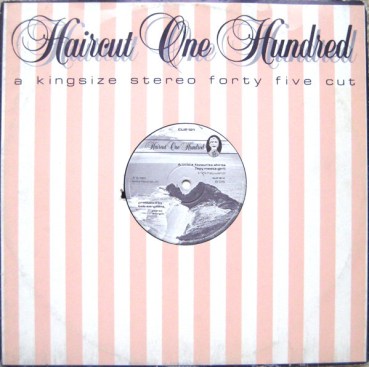
I never did, and never will, get annoyed by Haircut 100.  Their songs were too good and too enjoyable to dwell and get hung up on the fact that they got the hits, fame, money and kudos that could (or should) easily have come the way of Orange Juice.  Besides, when you look back and see what the impact of being a pop star had on the health and well-being of Nick Heyward, it’s maybe just as well that other than with Rip It Up, the efforts of Edwyn & co didn’t make much of an impression on the record buying public here in the UK.

It kind of felt that they came out of nowhere when they hit the charts with the debut single in October 1981, but as it turned out, they had done as much an apprenticeship as any other, with Nick Heyward (20 years old when success came calling) and bassist Les Nemes (21) having been in various groups going back to 1977.  It was Echorich, in a comment he made when I featured the single Love Plus One, who nailed it:-

The first Haircut 100 album was never meant, at least from the band’s perspective, to be a teen pop phenomenon. But the timing was right for those slightly latin tinged funk and breezy pop songs to take the charts by storm way back when. They were good-looking and Smash Hits took that and ran with it, the same way they did with Spandau Ballet – thus they could never have been positively reviewed in NME.

So….the consensus is that, in a parallel universe, Haircut 100 struggled from the outset, got no radio play or media coverage, but those of us with decent musical taste think of their debut being one of the great long-lost and largely forgotten gems from the 80s:-

mp3: Haircut 100 – Favourite Shirts (Boy Meets Girl)

Here’s the rather half-decent b-side:-

mp3: Haircut 100 – Boat Party

Worth mentioning in passing that Boat Party was an earlier name used by Haircut 100…….

Favourite Shirts spent 14 weeks in the Top 75, between October 81 and February 82.  It’s follow-up, the afore-mentioed Love Plus One, came into the charts the week after the debut dropped out.  It would spend 12 weeks in the Top 75, meaning that Haircut 100 enjoyed a full six months when their 45s were all over the shops.  Debut album, Pelican West, which has aged better than anyone night have expected, reached #2 in the charts, denied the top spot by Barbara Streisand……

JC

THE LAST WORD ON GOTH….FOR THIS WEEK, ANYWAY

That’s been two excellent Goth ICAs in recent weeks that I’m sure had the double-hit of bringing back memories as well as introducing a few new bands to some readers.  Here’s another one for you, a combo that I know nothing about other than what is contained in the notes for the 4-disc boxset, Make More Noise! : Women In Independent UK Music 1977-1987, which was released last year by Cherry Red Records.

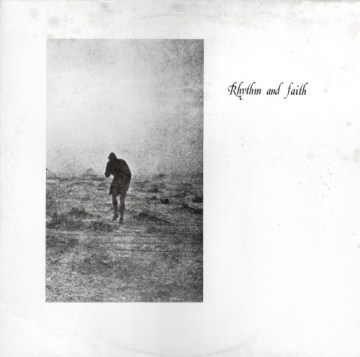
“Led by Anna Di Stefano and Stefano Curti, Rhythm and Faith were a London based gothic rock group formed from the remnants of a couple of Italian Bands, namely TM Spa and Style Sindrome. Having relocated to London and discovered drummer Rab Fae Beith, Curti and Stefano brought the dark essence of those previous groups to a burgeoning goth scene in the capital, and issued their sole vinyl outing, the ‘Time To Run’ EP pn Future Records in 1983. The band still exists today, having reverted to the Style Sindrome moniker, and still showcases the vocal capabilities of the wonderful Anna Di Stefano.”

And here’s the track made available on the boxset:-

mp3: Rhythm and Faith – Young Too Young Girl

I think it’s rather splendid and would have been a worthy inclusion on either of flimflamfan’s or middle-aged man’s ICA.

JC

AN IMAGINARY COMPILATION ALBUM : #290 : “THE NON-GOTH’S GOTH ICA”

A GUEST POSTING by MIDDLE-AGED MAN

I feel a bit of a fraud writing this – I don’t have black hair, I haven’t ever dyed my hair black, I’ve never worn black leather trousers, I’ve never back-combed my hair. But I do like the music so here goes – I should say given my complete lack of appropriate dress sense some of the bands (and they are all bands) do not follow the dress code but to my ears sound goth.

Siouxsie & The Banshees – Playground Twist

And to start with the band which to my mind started the goth movement both musically and as a fashion choice. They may have started out as a ‘punk’ band but very quickly moved on to create their own sound and led the way.

Joy Division – Dead Souls

A band who visually don’t fit but musically – with pronounced bass, picked out guitar notes and a deep male voice coupled with a suitably morose subject matter. Its still hard to believe 40 years later than this was released as a ‘B’ side on an obscure French label with an extremely limited pressing.

Southern Death Cult – Fatman

A very short lived band who only released one single during their existence, but made a stunning TV appearance on The Tube, which was the first time a band described in the weeklies as Goth made it onto the little screen. Of course, the singer Ian Astbury went on to form the (death) Cult .

X Mal Deutschland – Incubus Succubus II

I was surprised how many of my favourite early goth songs were on the 4AD label. This is the first single released by this German band on 4AD- a firm favourite of John Peel at the time and one where the influence of Siouxsie is strong.

The Twilight Sad – Reflection of the Television

I’d never thought of Twilight Sad as Goth, but this stunner ( my fav from Forget the Night Ahead) fits the bill perfectly

Play Dead – The Tenant

Back to classic Goth – I really thought this had been released as a single, but no it was the second track on their first album ‘The First Flower’ , it should have been.

Cocteau Twins – Wax and Wane

Back to 4AD and a great track from their debut album ‘Garlands’ which barely hints at their future lighter musical path .

Danse Society – Heaven is Waiting

The Yorkshire role can not be ignored and was larger than just the Sisters of Mercy band/label- this is a great example from Barnsley. The Zig Zag magazine had by this point become the strongest printed supporter of the Goth movement and the Danse Society (from memory) were regularly featured. Released in 1983 it has a slightly softer tone and more pronounced keyboard than many of its contemporaries and is better for it.

Tanit – Can An Actor Bleed

The joys of the internet- Tanit were a French band who released this as the title track of an EP in 1983- It was probably around 2018 that I first heard it- and its brilliant – very powerful female singer (Elsa Drezner) over a bass led backing.

Killing Joke – The Raven King

Killing Joke were for me just a bit too aggressive to be truly Goth during their first incarnation but had all the required elements, having disbanded and then reformed the album ‘Absolute Dissent’ was released in 2010, this track is a celebration of Paul Raven, a band member who had passed away in 2007 from a heart attack.

Esben and the Witch- Marching Song

Released as a single in 2010 as the lead off track from their first album ‘Violet Cries’– which was described by the NME as “gothic but not goth” which to be honest is a fair description of this haunting track.

Sisters of Mercy – Amphetamine Logic

Obviously no goth selection is complete without the Sisters of Mercy who are set the tone and style for so many who followed- remember its not goth without dry ice

MIDDLE AGED MAN

THE ONLY LIVING BOY IN NEW CROSS

This came up on the i-pod the other day.  I’d almost forgotten how brilliant a song it is.  I’ve written about it before, when I pulled together a Carter the Unstoppable Sex Machine ICA (#229) back in October 2019  – it was actually the second ICA devoted to the duo, as SWC and Badger had done the business for ICA #50 as long ago as November 2015.

The Only Living Boy In New Cross (single, 1992)

Carter USM thrived on puns and lyrics that reflected the late 80s and early 90s culture. Their biggest hit single clearly gave a knowing wink to Simon and Garfunkel’s ballad, The Only Living Boy in New York.

For the uninitiated, New Cross is an area in south-east London, in the community from where Carter USM had emerged. It was on the unfashionable side of the river in the capital, poorly served by public transport and in the late 70s and early 80s had become somewhat notorious as a place where far-right and racist politics were thriving, albeit the majority of local people were appalled by such developments. London is a city which has long inspired songwriters to compose words and music to fit in with their surroundings, but few, if any had previously celebrated life in the SE14 postcode district. Until now.

I thought I had come up with a decent enough piece of writing…..but I should have known better.  Here is a far more detailed offering. I’ve edited it from a fabulous piece written, in November 2014, by the rather talented Andrew Collins:-

——

“Hello, good evening, welcome, to nothing much …

Quite why a band called Carter The Unstoppable Sex Machine weren’t taken seriously is beyond me. Jim Bob and Les “Fruitbat” Carter were men of serious intent and righteous late-Thatcher discontent. Their place in history has long been denied them. Amid a whole wave of alternative British bands that came through at the end of the 80s and were signed by funky-vicar major labels desperate to get a piece of the independent action, Carter epitomised that quiet revolution. Not literally quiet, of course. They made a proper racket.

Much has been written about the comfort and the joy of Jim Bob’s punning titles and lyrics. Most of it by me. But a keen mind and an ear for wordplay are not a prerequisite for writing memorable power-pop songs, and if he and Fruitbat had written only instrumentals, they would have been a pretty tasty double-act. That said, it was Jim’s droll eloquence that elevated Carter to the top tier. Though it has improved like a fine port over the years and into his more thoughtful, less punny solo incarnation, his singing voice began as a can of Special Brew. Perfect for the inner-city rage within him, and as effective an outlet as Fruitbat’s squalling guitar.

The Only Living Boy In New Cross, the first single from their third album and their first Top 20 hit, its very title a hallmark of quality (you had to be old enough to know Simon and Garfunkel and metropolitan enough to know the London Underground map to get the joke), is the favourite Carter song of many Carter fans. Including me. It’s not the one that landed them with a lawsuit from the Rolling Stones, or earned them their first go at Top Of The Pops, or got them banned by the BBC during the first Gulf War…..

It may be the definitive Carter song. Think about it. It begins with a slow, quiet, contemplative passage, a moving piano prelude to earth-moving punk rock. It explodes into sequenced life with a throbbing synth line, raucous, wagon-train guitar and – that Carter building block – a joyous fanfare. Rarely has a band provided itself with so many internal reveilles. The drum pattern is one that a real drummer would never attempt in real life, and, suitably stroked by Fruitbat, adds to the urgency of the engine. Lyrically, it begins with a pun – again, one that requires you to be as old as Jim and Les, as it’s David Frost’s trademark greeting from the 70s – and quickly arrests your ears.

A no holds barred half nelson
And the loving touch

Such affection for the way the English language slots together, juxtaposing a wrestling move with something tender, and rhyming the whole thing with “nothing much”. I’ve said it before and I’ll say it again: poetry. It would be just that without the tip-top tune, whose epic scope requires Jim to hold a note for 12 seconds at the end of the second sort-of-chorus (“New Crooooooooo-ooooooooo-oooo-ooooss!”). I like the fact that the line after “Fill another suitcase” is perpetually mis-transcribed as “with another hall”, when it’s actually “another haul.” Such is the beguiling nature of the imagery, either would work.

Then wipe the lipstick hearts and flowers
From the glass and chrome
Take five or six hot showers
And come on home

It’s rare that a single song surveys the cultural and tribal landscape of the day, but The Only Living Boy, with its hidden-in-plain-sight HIV-panic subject line (check the condom-packet inner sleeve), does just that, with the gypsies, travellers, thieves, grebos, crusties and goths, not to mention the more obtuse “butchered bakers, deaf and dumb waiters, Marble Arch criminals and Clause 28-ers, authors, authors, plastered outcasts, locked up daughters, rock and roll stars.” (Where was the Ivor Novello nomination for this song?)

In a rare moment of autobiography, Jim declares he’s “teamed up with the hippies now” and has his “fringe unfurled”, before delivering a heartfelt plea from a weary pacifist in a post-Gulf War world:

I want to give peace, love and kisses out
To this whole stinking world

We don’t know who Rudy, David, Rosie, Abraham and Julianne are, but we wish them farewell all the same, unable not to think back to After The Watershed, which expensively bid goodbye to Ruby Tuesday, while at the same time begging the “silly cow” to come home. This song welcomes and repels at the same time. It’s what happens when you live in a stinking world. It probably explains why Carter kept reforming, promising to retire and then reforming again. Jim writes for a living. Hello, good evening, welcome and goodbye.

———-

I was sort of tempted to head today’s effort as ‘A guest posting by Andrew Collins’ but it would likely get me into bother!!!

mp3: Carter USM – The Only Living Boy In New Cross

The CD single, came (ahem) in a plain brown wrapper so that the folk at Woolworth’s. WH Smith and the other big retailers wouldn’t get into a tizzy about the condom-wrapper rich sleeve it was really meant to have. There were two other tracks…..one of their own and, as per usual, a cover:-

mp3: Carter USM – Watching The Big Apple Turnover
mp3: Carter USM – Panic

It’s been an incredibly long time since anything to do with The Smiths made an appearance round these parts…..but as it’s not actually featuring the Manchester racist, I’m happy enough to offer it up for your aural pleasure.

JC

THE MONDAY MORNING HI-QUALITY VINYL RIP : Part Twenty Five : A PASSING THOUGHT

I’ve written many a time of my love for all things related to Paul Quinn, for my money, the greatest vocalist ever to come out of Scotland. While much of the stuff was on the old blog taken down by Google/Blogger, there’s a few things in the current archives which can be found using the index system or search facility. These posts   cover his entire recording career, whether as a member of The French Impressionists, Jazzateers, or Bourgie Bourgie, the collaborations with Edwyn Collins, and, best of all, as the frontman of Paul Quinn & The Independent Group.  I’ve been greatly helped along the way by Rob, the proprietor of The Punk Rock Hotel, an incredibly rich and informative on-line resource which has just about everything you ever wanted or needed to know.

One of my few regrets over the years in terms of how I’ve bought music was the timing of the emergence of the Independent Group, and indeed the second coming of Postcard Records. This was the early 90s, and it coincided with my decision to now concentrate largely on CDs instead of vinyl, mainly for affordability reasons. As such, everything from that period in time, unlike with Jazzateers, Bourgie Bourgie and Edwyn, came via the newish shiny metal/plastic creation, but I consoled myself with the thought that I could easily enjoy the albums, singles and collaborations till my heart was content.  In recent years, I’ve tried to pick up the vinyl versions of things, and in particular the two albums, The Phantoms & The Archetypes (1992) and Will I Ever Be Inside Of You (1994), but have balked at the cost and worried about the condition of the vinyl and/or sleeves. I certainly never came across either of them in any second-hand shops in Glasgow.

It was April 2020 when a few mysterious and cryptic tweets relating to Paul Quinn began to appear – I don’t do twitter, but someone kindly brought them to my attention. To cut a long story short, and to prevent you all losing your mind, it transpired that it was the beginning and continuation of a teaser campaign, involving Alan Horne of Postcard Records, which would ultimately lead to the revelation, at the end of the year, of plans and preparations for the release of a box set, covering the Independent Group years.

I immediately registered my interest and crossed my fingers that it would work out and that I’d be able to land a copy. In the meantime, I got in touch with Rob to see if he knew about it, and was delighted when he told me, on the QT, that he was in fact helping Alan and the other members of the production team out with a few things.  He also informed me that the end product was going to deliver something quite special, but he also advised that it would be limited in terms of production to just 300 copies, and so it was best to keep on top of things through social media channels.

Fast-forward to April 2021 and the sales launch of Unadulterated, the name given to the box set. I logged in as soon as the clock ticked round to the appointed time, and waited nervously for maybe 15 or so seconds to be connected – we’ve all been there when we’ve been desperate to land something on-line haven’t we? I got lucky…..

On Thursday 22 July, the parcel was delivered. Boxset #99 of 300.

It truly is a work of art beyond words. Four pieces of vinyl – both of the albums referred to above, a further album with other studio, unreleased and live recordings, and a 10″ single featuring a collaboration with Nectarine No. 9 and a previously unreleased version of Paul Blue Eyes with Edwyn Collins. There was also a 144-page hardback book, the size of a 12″ record, packed with previously unseen images, containing a career retrospective, written by Damien Love, a journalist of some note here in Scotland, mostly in the fields of music, film and television, all designed in association with the Duncan of Jordanstone College of Art & Design, from Paul’s home city of Dundee. Oh, and there was a fine print of one of the photo stills which was added in as a bonus, as a way of Postcard saying thank you to everyone who had waited so patiently.

Given that all copies sold within a few hours of going on sale, and that all the information about the box set was via closely controlled social media, the chances are that they have ended up in the hands of true fans and not those trying to make a quick buck. Those who were unlucky, can pick up a digital version of the music via bandcamp…….

Unadulterated is unlikely to be reviewed by any music magazines or newspapers, as nothing was supplied to them (to the best of my knowledge). As such, it won’t probably feature in any of the end-of-year lists that will begin to appear from November 2021 onwards, and there will be little wider public awareness of its release.  Which is a pity, for I’ll simply sum things up by saying, that across the more than 5,000 albums and CDs sitting in Villain Towers, the pride of place now goes to Unadulterated, and just as I never imagine that Temptation by New Order will ever be replaced as my all-time favourite single, so it will now be with this box set.

Part of this is down to finally having two much loved albums on vinyl, but there’s just something very special about the book. It is a magnificent design and is beautifully laid out. Damien Love’s text is word-perfect, capturing everything at the time I felt about the releases and the handful of live gigs in between 1993 and 1995; he also fills in a few gaps in my knowledge, completing the picture for me, and I imagine, quite a few other life-long fans. Oh, and Rob gets a wonderfully worded and well-earned ‘thank you’ from Alan Horne in the credits.

But most of all, it’s down to what can be found on the additional 12″ piece of vinyl, and in particular the music rescued from three gigs played in Glasgow in July 1993, October 1993 and October 1994. I was only at the last of these, but I’ve written about it before:-

“Glasgow Film Theatre – October 1994. A one-off gig in a cinema. The band played as movie montages unfolded behind them. A quite incredible night topped-off when a singer from Scottish Opera hotfooted it from her performance on stage some 500 yards around the corner and provided backing vocals, still dressed in her operatic outfit, for the title track of Paul Quinn & The Independent Group‘s second LP. Truly beautiful. Truly breathtaking. And the last time that I ever got to see Paul Quinn perform on the stage. Sigh.”

It’s up there as one of my all-time favourite life experiences. Jacques The Kipper was with me, and he thinks similar. But there’s always been this nagging doubt that maybe it wasn’t quite as brilliant as we had imagined – after all, no recording from the night was ever made available. The book explains why this was the case – the master tapes went missing and were long presumed lost. Years later, it has proved possible to salvage some of the material from that night, and six tracks have made it to the box set. Judge for yourself with this version of a song, originally recorded as a stand-alone single and later re-recorded for the second studio album:-

mp3: Paul Quinn & The Independent Group – A Passing Thought (live at the GFT, 27 October 1994)

It’s quite tempting to just suddenly make this the final ever TVV blogpost, for there won’t ever be a better piece of music posted.

But I know there are still a few things to be said and done, and this blog still has a way to go as it fast approaches the 15th anniversary of the first ever posting.

In the meantime, click here for the bandcamp downloads of Paul Quinn and The Independent Group.  If you don’t have physical copies of the releases, then the full five digital package is well worth an investment.  If you do have the albums but were unlucky enough not to pick up the box set, there is an option to download only the live/unreleased material.  Trust me, you won’t regret it.

JC

THE WONDERFUL AND FRIGHTENING NEW SERIES FOR SUNDAYS (Part 8)

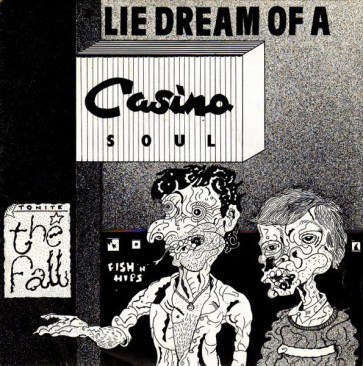
“We went into a studio in London just to do Lie Dream and Fantastic Life. This was the first thing we did with two drummers, though it’s mostly Karl on the single. I was demoted to percussion (both drummers were on Fantastic Life though). Lie Dream features Richard Mazda on saxophone, trying to emulate Dave Tucker’s clarinet part as per the Peel session.”

Paul Hanley, quoted in the booklet which accompanied The Fall boxset, released in 2007.

You’ll recall from Part 5 in this series that the then 16-year old Paul Hanley, brother of bassist Steve, had been brought into The Fall on drums to replace the Mike Leigh. One year on, and the latest change in the line-up didn’t involve any sackings or musicians walking off in a huff, but instead saw Mark E Smith decide the band would best be served by having two drummers.

The new bloke wasn’t actually new at all, as Karl Burns, who had been part of the band in 1977/78, became the first musician to return to the fold, and as you can see from Paul’s above recollection, was given a prominent role. I’ve occasionally wondered if MES had actually wanted to get rid of Paul altogether, but decided he couldn’t run the risk of antagonising Steve Hanley, whose contributions, on stage and in the studio, were becoming increasingly important.

Or maybe he was just being practical…..Karl Burns had answered an emergency call to help out the band when Paul Hanley, on the account of his age, was denied a working visa for a tour of the USA, and keeping him on afterwards was returning the favour.  In any event, the two-drummer line-up was cemented, for a short while anyway!

MES had cut ties with Rough Trade after the release of Slates in April 1981.  I can’t be entirely sure, but it may well have been the case that the band convened in the London studio to cut this new single in the summer of ’81 without having any record company deal in place.  I’m surmising this, as the next move was to a newly established indie label – Kamera Records – and that Lie Dream Of A Casino Soul/Fantastic Life was the first 45 to be issued on the label, in November 1981.

No matter what, it’s an absolute stomper of a song.  MES was at pains, a couple of years later in an interview with NME, to explain that far for ridiculing the Northern Soul scene and those involved in it, he was paying a tribute:-

“That song actually did create quite a bit of resentment in the North because people thought it was being snobby and horrible about the old soul boys, which it was never about anyway. Because I was brought up with people that were into Northern Soul five years before anybody down here (in London) had even heard about it. But they’ve all grown out of it, which is what the song is about, but it wasn’t putting them down at all. If anything, it was glorifying them, but not in the format of, where are those soul boys that used to be here?”

Richard Mazda, as well as contributing the saxophone parts, was also in the producer’s chair.  The other thing worth noting is that Marc Riley wasn’t required to contribute on guitar, being relegated somewhat to keyboards only.

mp3: The Fall – Lie Dream Of A Casino Soul

The b-side, Fantastic Life, has long been one of my favourite Fall tracks of them all.   It has both a rollocking tune and a funny, crazy and sing-a-long lyric, albeit it takes a fair bit of working out…..thankfully there are websites out there nowadays to confirm and/or correct things.   I’d never have worked out these lines, from just after the point in the song where it changes from the fantastic life stories to the fantastic lie boasts…..

The Siberian mushroom Santa
Was in fact Rasputin’s brother
And he didst walk round Whitechapel
To further the religion of forgiven sin murder
Fantastic lie!

It would, if you want my opinion, have been an excellent single of its own making, but MES wasn’t the type to hoard things for later on. Once it was recorded…bang….get it out there as quickly as possible and to hell with the commercial aspects of things.

mp3: The Fall – Fantastic Life

The previous single on Rough Trade had got to #2 in the Indie Charts, with MES firmly believing that the label didn’t work hard enough for the band.  Casino Soul got to #5. Would it have managed to crossover to mainstream success if he’d stayed put? We’ll never know…..

Next up for The Fall was album #4, released in March 1982 by Kamera Records.  Said album is going to feature in this series next week………

JC