A REQUEST FROM OUR CHILEAN READER

Now, it may well be that the blog attracts more than one reader from Chile, and if so, then I’m thrilled beyond belief. I do know that Ozzy (or Osvaldo to give him his ‘proper’ name) has been a regular for a few years, sending me the occasional e-mail with thoughts, observations, and the occasional request, such as just before Christmas when he said:-

“Any chance of uploading something by Biff Bang Pow!? I heard ” Hug Me Honey” on 80s forever (an online radio station from Switzerland). The album is Sad-eyed Girl (1990). I got the previous one The Acid House Album. It sounds good.”

I’m always happy to meet requests as best I can, but I only have five songs from Biff Bang Pow! on the hard drive, and all of them have through compilations. But I’m getting ahead of myself. Here’s wiki:-

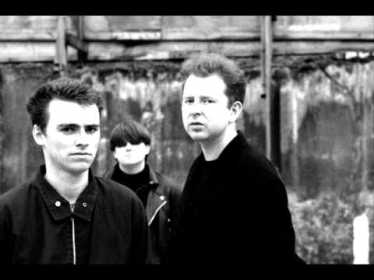
“Biff Bang Pow! were an indie pop band from London, England, active between 1983 and 1991, centering on Creation Records boss Alan McGee.

McGee had previously been in the band The Laughing Apple, who released three singles in 1981/82. After moving to London, he formed a new band, Biff Bang Pow!, taking their name from a song by one of his favourite bands, The Creation. The first release on Creation Records, “’73 in ’83” by The Legend! came with a flexi-disc featuring Laughing Apple’s “Wouldn’t You”, a song that would later appear on the first Biff Bang Pow! album.

The initial Biff Bang Pow! line-up was McGee on guitar and vocals, with Dick Green on guitar, Joe Foster on bass, and Ken Popple on drums, these recording the first 2 singles “50 Years of Fun” and “There Must Be A Better Life”.

Dave Evans then replaced Foster (who went solo as Slaughter Joe), and guitarist/organist Andrew Innes (later to join Primal Scream) joined on a part-time basis. Debut album Pass The Paintbrush…Honey was released in early 1985, displaying a mixture of mod, psychedelia, and new wave influences. 1986 saw arguably the band’s strongest album The Girl Who Runs The Beat Hotel, which expanded on the first album’s psychedelic and sixties pop influences, and featured collaborations with artist/painter JC Brouchard. This album coincided with the peak of the first wave of indie pop and as this gave way to shoegazing and grunge, Creation Records also moved in that direction, with the label increasingly being associated with artists such as My Bloody Valentine and Ride. With Biff Bang Pow!, however, McGee continued with guitar pop, becoming increasingly melancholy with releases such as Oblivion (1987), Love Is Forever (1988), Songs For The Sad Eyed Girl (1990), and Me (1991), which proved to be the last album proper by the band. Two compilations, L’Amour, Demure, Stenhousemuir and Debasement Tapes were subsequently released on Creation, with Bertula Bop released in 1994 on the Tristar label. A further collection, Waterbomb, compiled by Joe Foster, was released on Rev-Ola in 2003.”

Here’s four of what I have and where they were taken from:-

mp3: Biff Bang Pow! – The Chocolate Elephant Man (from Scared To Get Happy, 2013)
mp3: Biff Bang Pow! – She Paints (from Doing It For The Kids, 1988)
mp3: Biff Bang Pow! – In A Mourning Town (from C87, 2016)
mp3: Biff Bang Pow! – There Must Be A Better Life (from Big Gold Dreams, 2019)

The fifth track appears on a boxset I bought last year, Make More Noise – Women In Independent UK Music 1977-1987. And yet, the wiki bio of the band is exclusively male…..

Here’s the blurb in the boxset:-

Christine Wanless was a veteran of the scene which grew up around Creation Records in the mid-1980sby the time her self-penned ‘If I Die’ appeared on Biff Bang Pow’s The Girl Who Runs The Beat Hotel album in 1987. Having been part of the near mythical Formica Tops, Wanless, who was officially a member of Revolving Paint Dream (who shared members with Biff Bang Pow), had been present on the label’s second single, was involved with label mainstay Andrew Innes and would become Label Manager as the venture grew. if i die was a standout on an album many consider to be Biff Bang Pow’s finest:-

mp3: Biff Bang Pow! – If I Die

Hope that’s put a smile on your face, Ozzy.

JC

GIVING THE PEOPLE EXACTLY WHAT THEY WANT: ECHORICH (2)

A GUEST POSTING by ECHORICH

Fine Young Men – An ICA of Opening Tracks

Yup, I have set myself up. Loving the idea of this ICA series, I have to go and challenge myself to give my offerings some sort of thread or connection. This, of course, makes things just a bit more difficult. But on I will proceed…

This ICA of album openers is linked together by the fact that all the tracks included are by artists that have turned my head as solo artists at one time or another. In the case of one of the artists, I can honestly say I’m not really a fan, but the album in question quite impressed me in its audacity and genuine successful execution. Pop, a bit of Leftfield and Alt Rock are represented in here. I have to give myself some credit for not going the easy route, for me at least, and picking tracks by Post Punk artists from the early 80s. I think the oldest track included is from the mid 90s.

FINE YOUNG MEN

Side A:

1. Losing Sleep – Edwyn Collins – Losing Sleep

Five years on from a series of devastating strokes and brain hemorrhages that left him having to relearn how to basically function, a mixture of personal tenaciousness and the love of a good woman, Edwyn Collins returned with his first post-recovery album. Much of the album is autobiographical, but the essence of the album is centered in his innate ability to craft a great Pop song. The title track gets things off to a fast-paced, buzzy start. It’s like the albums manifesto or mission statement.

2. Life And Times – Bob Mould – Life And Times

Being the father of a sound that merged hardcore with Alt Rock, Bob Mould could be excused for not ever traveling far from what made his career in Husker Dü. But he’s never rested on any sort of laurels that were thrown his way. Sugar veered his attentions toward Power Pop and he has explored Electronica more than a bit over the years. Life And Times is my favorite solo Mould album and it gets off to an impressive start with the opening track that is full of personal angst and confusion over the love of another. It’s my favorite Mould solo song.

3. Forever J – Terry Hall – Home

It’s 1994. Rock + Roll has become a mystery to me. Bands I was really into in the late 80s and early 90s have either fallen by the wayside or changed their sound to survive, first Grunge and then Britpop. Shoegaze was my refuge from Grunge, but it was steady pushed aside or compromised by the new Britpop sound. I couldn’t manage any excitement for Blur and Oasis, Suede was maybe a bright spot in Britpop’s tainted, murky waters. Ian Broudie’s Lightning Seeds managed to hold my attention by not being “scenesters” and staying true to their Pop roots. 1992’s Sense included a number of collaborations with Terry Hall – including that album’s fantastic title track. So when in 1994, Hall released his first proper solo album Home, it was in my possession the day it arrived on this side of the Atlantic. It remains one of my favorite albums of the 90s and that is bolstered by this slightly sad, very reflective opening track.

4. Miami – Baxter Dury – Prince Of Tears

Baxter Dury’s musical persona is the equivalent of 007, 15 years on from his last assignment, still scraping by on a reputation as a lady’s man in an age when no one would ever dare use the term, having traded in the crisp black tux for an aging white linen suit. For me, he has released one smashing set of songs after another. 2017’s Prince of Tears might just be the best of the lot. Miami opens the album with a dirty groove that sets the scene while it closes in until right inside you.

5. Welcome To New York – Ryan Adams – 1989

Ryan Adams – hmmm I really can take him or leave him. When it was announced he was releasing a full album cover of Taylor Swift’s 1989 album, it seemed like an amusing idea and worth seeing just how unlistenable or twisted it might be. Well, shit if I was completely wrong! Adams teases the singer-songwriter quality right out of each and every track on the album. But the most astonishing interpretation is the opener, Welcome To New York. He has somehow turned the track into the song that’s been missing from every Bruce Springsteen album since The River.

Side B:

1. Gradually – Ben Watt – Fever Dream

After a good 15 years creating an producing some brilliant House Music, Ben Watt decided to return to writing and recording Rock based music. His first effort Hendra, in my opinion, was a triumph of very personal, singer/songwriter focused songs that seemed deeply personal, yet very approachable. The follow-up, Fever Dream, expanded on that sound while including some jazzier and familiar Everything But The Girl stylized tracks. The album’s opener, Gradually, is about the intensity of love as a positive and a destructive force. Watt sings with a particular honesty in his voice that gives the track an uncomfortable piercing edge.

2. Make Me An Offer I Can’t Refuse – Sufjan Stevens – The Ascension

The opening track of Sufjan Stevens’ latest album The Ascension is a triumph of melding Electronica with the singer/songwriter structure. The album is Stevens once again reinventing himself. It is a 180º turn from the almost harrowing beauty of 2015’s Carrie and Lowell. This opening track ebbs and flows, soars high, glides, and then dives like a magic carpet ride. The final section of the track builds and builds to a spectacular end.

3. Pale Green Ghosts John GrantPale Green Ghosts

I have a thing for idiosyncratic singer/songwriters, as if that’s not already apparent. John Grant might just be on the top of that list. You can’t pin his sound down and he certainly makes music for his satisfaction and our appreciation. He’s no stranger to a great Pop hook, a sleazy dance beat or a cinematic coda. That’s all here in spades on the title track opener of his 2013 album Pale Green Ghosts.

4. Sandriam – Perry Blake – Still Life

Perry Blake is a personal favorite of mine. He has worked with Steve Jansen of Japan, which is what brought him to my attention. But while Blake is obviously influenced by later Japan/Sylvian, Leonard Cohen and maybe even Nick Drake, there is a sort of grand and dulcet vocal approach that sets him apart. Sandriam opens his second album Still Life and feels like it should be accompanied by images of weather-beaten castles and abbeys or long shots of the sea off of grassy cliffs.

5. Black/Colin Verncombe – The Love Show – Blind Faith

We lost Colin Verncombe just 16 days after David Bowie, in January of 2016, that “annus horribilis” for music. He was a master of his craft who never gave up on his vocation, regardless of whether he had hits or misses. For his last album, Blind Faith, he had returned to his stage name Black. It is a beautiful collection of songs that shows off his adept touch at Pop, Crooning, and acoustic songs. The album opener, The Love Show, is simply a beautiful, intense, symphonic love song. Every time I hear it, the chorus stays with me for hours.

Echorich

And here, as before on Mondays, are both sides of the ICA as stand-alone listens.  70% of this ICA consisted of songs that were previously unkown to me…which meant I wasn’t aware most were opening tracks on albums. I really like the running order that Edchorich has come up with on both sides. (JC)

Fine Young Men: Side A (19:16)
Fine Young Men: Side B (26:32)

THE SINGULAR ADVENTURES OF R.E.M. (Part 27)

The more I listen to these songs from ‘Monster’, the more I love them. 26 years have passed since its release, but I don’t find myself tiring of them one little bit, unlike many of those on the preceding two R.E.M. records. This week’s track was the fourth single from ‘Monster’ and arguably the album’s most obvious single.

On first listen, you could be forgiven for thinking that Strange Currencies is essentially a re-working of Everybody Hurts. Indeed, it nearly didn’t make the cut for ‘Monster’ owing to its similarity to the former hit. But Stipe’s melody was deemed to be too good to eschew, so the rhythm section was redone. There are still obvious parallels – the 6/8 time signature, and Buck’s arpeggios, but if you listen hard enough, there’s a lot more going on here. There’s swathes of feedback floating in and out of the background, the guitars are dirtier, and of course, the emotion of the vocal and subject of the lyrics, couldn’t make this song more different than EH.

Here, Stipe sings of a longing for someone he simply cannot reconcile. His role is ambiguous – is his would-be paramour aware of his adoration, but unwilling to reciprocate? Or is there something more sinister afoot? There’s an air of desperation in his words, and his emotions seem to be getting the better of him. He’s pleading for a sign – “I need a chance, a second chance, a third chance, a fourth chance, a word, a signal, a nod, a little breath, just to fool myself, catch myself, to make it real”. It’s a beautiful line, one of Stipe’s best in my view. But… Peter Buck once explained the song is sung from the point of view of a stalker, which obviously puts a completely different spin on things. The opening line “I don’t know why you’re mean to me / When I call on the telephone” makes complete sense in that regard. In both cases though, it’s a song of (unhealthy?) obsession, and as such, it’s very much a Monster song, and nothing whatsoever like Everybody Hurts.

Musically, it actually sounds like a classic doo-wop or Motown ballad. Listen to the chorus – the syncopation between the vocal and the bass/drums, especially – and you can easily hear a group like the Temptations performing it. (By the way, I can’t take credit for that observation – I read it in a fan forum once, but it stuck with me because it surprised me how true it was.) I also love the bridge – so simple, but oh-so effective in lifting us to a near-crescendo before dropping us back to earth for the final verse.

There will always those who cannot hear beyond the Everybody Hurts comparisons. That’s fine. But to me, Strange Currencies is one of the band’s finest moments, a complex mix of beauty and ugliness, gentleness and brutality, subtlety and brazenness.

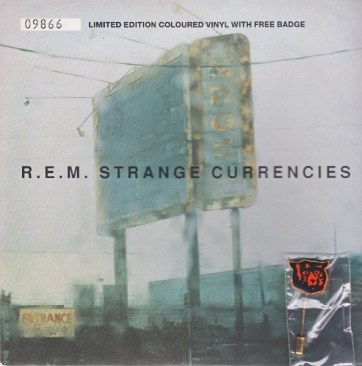
While Strange Currencies was played live at every show on the massive Monster Tour, it was then laid off until 2003 when it made occasional appearances. As a single though, it reached #9 in the UK charts, the band’s fourth Top Ten hit. It was released on three formats. The 7” was a numbered limited edition on rather lurid fluorescent green (almost yellow) vinyl and came packaged with a Monster bear-head tie pin-type badge. Along with the cassette, it included an instrumental version of the a-side.

mp3: R.E.M. – Strange Currencies
mp3: R.E.M. – Strange Currencies (instrumental)

The CD single continued the solar-powered concert for Greenpeace that the previous three singles started. I mentioned a couple of weeks ago that Drive was performed twice so that a good recording could be provided for a Greenpeace charity album. The version that opened the show was not put out as one of these b-sides, so what you’re hearing here is the second version, which is ever so slightly better. Both are radically different to the album version on ‘Automatic For The People’.

Funtime is, of course, the Iggy Pop/David Bowie song that R.E.M. originally recorded for the b-side of Get Up in the States. And Radio Free Europe needs nothing written about it, other than this is a terrific, loud version which closed the show with a bang! And, perhaps as expected, Stipe really cannot remember the words…

mp3: R.E.M. – Drive (live, Greenpeace)
mp3: R.E.M. – Funtime (live, Greenpeace)
mp3: R.E.M. – Radio Free Europe (live, Greenpeace)

And here’s your bonus remix, probably the best of the entire Monster Remix project. This is utterly, utterly gorgeous. Yes, it’s very similar to the original, but my goodness, how the subtle differences transform it! The keyboard part in the final verse is brought closer to the foreground, and Stipe’s vocal is actually a different take than the one used for the original, and it floors me! Without a doubt, Monster [2019 Remix]’s finest moment…..

mp3: R.E.M. – Strange Currencies (remix)

The Robster

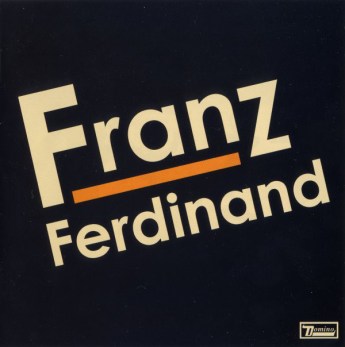
ALL OUR YESTERDAYS : (15/15) : FRANZ FERDINAND

Album: Franz Ferdinand – Franz Ferdinand
Review: NME, 12 December 2005
Author: Anthony Thornton

It’s the modest ones you’ve got to look out for. Franz Ferdinand‘s aim is to “make records that girls can dance to and to cut through postured crap”. Oh really? After all they sport art-school crops, stripey shirts and the moniker of the archduke whose assassination kick-started the First World War. In short, last time we checked they weren’t quite Jet. So Franz Ferdinand, then: Posturing? Yes. Crap? Well, we’ll get to that.

So they’re smart enough to play a little dumb. And certainly this debut fulfills their modest – but laudable – aim of making girls gyrate. Because, without doubt, this debut is an album packed with tunes that will make anyone with legs dance. At indie discos across the land their first two singles have been packing dancefloors. So, in essence, we have the band equivalent of the smart kid who shoplifts to get popular, who plays down their IQ to fit in.

And why not? There’s a great tradition of smart people at first confusing the world with the apparent simplicity of what they do: Iggy Pop, the Sex Pistols, even The Rolling Stones. Because, the single theme of British music of the last decade has remained constant: no one likes a smart-arse. We all have a giggle at the silly musicians pompously proclaiming their genius. Nothing makes us laugh as much as authors of rock operas, or Metallica‘s dabblings in classical music and, of course, everything that comes out of Brian Molko‘s mouth. Who wouldn’t want to avoid the trap of being seen to be clever-clever? After all, just look what happened to Blur.

But then, of course, it’s Oasis‘s fault that we find ourselves at this juncture. They beat Blur so comprehensively – so completely – that, to be in a band and be smart, to challenge assumptions, or go out on a limb became unthinkable. The amazing lineage of British art-school bands simply fizzled out: The Beatles, The Who, the Stones, Roxy Music, Sex Pistols, Wire, Blur and nothing. Since then, all the new big and important bands have been salt-of-the-earth types (Stereophonics) or sweeping romantics (Coldplay) and they dressed like neglected shelf-fillers.

Franz Ferdinand formed after meeting at Glasgow College of Art, signing in summer 2003 – so they’re settled into a noble and inescapable tradition. The problem is that, despite their self-effacing aims, their records are informed and driven by this tradition. This may be sad for them, but it’s great news for us. Because, however fantastically dancey or lose-yourself a track is, there remains at its core an intelligence that makes it as engaging for the brain as it is for the feet. From the guitar-dicing song arrangements to the cod-German anthemic end to ‘Darts Of Pleasure’, at the heart of Franz there’s an innate need to subvert those tunes and reject cliché.

As critics have noted even the crowd-pleasing top-three sounds they use owe themselves to the informed art-school political disco-assault of early ’80s post-punkers Gang Of Four and Josef K. But where the post-punkers’ caustic tunes were hemmed in by politics, ideology and sloganeering, Franz Ferdinand cloak themselves in love and ambiguity.

Ideas slide in and out of view as they refuse to get tied to anything. If there is one overriding theme it’s that of structure. They appear to have taken the tired grunge blueprint of quiet/loud/quiet/loud and breathed new life into it so that it becomes laconic/dance/laconic/dance.

For when they’re not dancing, they’re revelling in the detached passion of a voyeur. Alex Kapranos‘s attitudes are wrapped up in smudged passion. It’s arch, but revealing. (“I want this fantastic passion/We’ll have fantastic passion” he chimes charmingly in ‘Darts Of Pleasure’) – he’s a lothario with mean intent and knows exactly which buttons to press. But you half suspect that it’s another pose: if actually confronted with heaving passion he’d run a mile. How very British.

This teasing uncertainty lies at the heart of the album. ‘Michael’ may at first appear to be a frank exploration of homoeroticism (“Michael you’re dancing like a beautiful dance whore”) but really Alex is just playing at sexual roles in the same way Morrissey enjoyed 20 years ago.

Alex has two clear voices: a rich, warm, honeyed croon that he employs to devastating effect throughout the laconic sections and a more straight-ahead rock voice. It’s an unsettling effect – not quite Scott Walker playing vocal tag with a rock Bowie but not far off. It’s another example of the bountiful contradictions at the heart of Franz Ferdinand. Of course, on ‘Darts Of Pleasure’ the two voices almost meld as they battle for supremacy – it’s this struggle that makes the song so potent.

But Franz Ferdinand aren’t satisfied with just two voices though, indulging in the twisted absurdist yelp of ‘Tell Her Tonight’‘s verse, coupled with its mannered mid-section, and ‘Darts Of Pleasure’s cod-German energetic outro that’s designed to replicate the moment of orgasm. It’s preferable to screeching “Goal!”, but should your lover ever make the vinegar face and cry out “I’m super fantastic, I drink champagne and salmon” in any language it’s probably advisable to ditch them. Immediately.

What makes this all the more extraordinary is that ‘Take Me Out’ is a typical record executive’s idea of exactly what not to release as a single. It’s essentially two songs spot-welded together like one of those Robin Reliant/BMW conjunctions that Watchdog always gets so annoyed about. Sadly, the more cautious radio presenters have elected to play just the second half, missing that this is an inspired coupling that showcases all Franz Ferdinand’s strengths: staccato guitars, disco rhythms and arch lyrics.

A more pretentious writer would state that the moment the stuttering Strokesy guitars are replaced by the booty-shaking rhythm and disco guitar is the moment that the sun goes down on Julian Casablancas mob. Not me, though. But it’s an intriguing idea.

The two deviations from the messy subject of sex bookend the album. The opener, ‘Jacqueline’ is dazzling. Alex murmurs a tale of 17-year-old office girl exchanging glances, as a guitar hesitantly strums. It’s the most low-key opening of an album in recent memory, but suddenly the insistent bass intrudes, absurdly spiky guitars burst in, the focus pulls back and the remainder of the song is an advert for being on the dole. Alex sneers as though he hates work, but it’s an OK compromise. More importantly, it’s a compromise he’s chosen: “It’s always better on holiday/So much better on holiday/That’s why we only work when/We need the money”. Not quite a philosophy, but a pretty decent way of life.

Ironically the closer ’40 Ft’ with its veiled allusions to death is the song that look to the future. Its ominous references to blood congealing and 40 feet remaining seem transparent references to suicide. The band claim it’s more to do with flinging yourself into a difficult situation than off a railway bridge but its detached delivery and fractured elegance is creepy and mesmerising.

Rarely for a debut, there’s no crap – ‘Cheating On You’ is the closest to giving off the scent of ‘will-this-do?’ but only because its thrills are uncharacteristically one-dimensional. But there is still pleasure aplenty in the way they race through the pointed chorus (“Goodbye girl because it’s only love”) – as if the band member that finishes last is going to have to pick up the bar tab.

This album is the latest and most intoxicating example of the wonderful pushing its way up between the ugly slabs of Pop Idol, nu metal and Britons aping American bands. What these blossoming bands have in common is the absolute conviction that rock ‘n’ roll is more than a career option. They’re bringing an energy and inventiveness and a need to break the rules. From the Franz Ferdinand gigs at the warehouse The Chateau and their bootleg album through to The Libertines‘ constant guerrilla gigging and British Sea Power‘s onstage bear’n’branches antics new British music is exciting again. And although it’s early days there’s a huge bunch of new bands coming up giving two fingers to the man and making extraordinary music.

Emerging now are The ’80s Matchbox B-Line Disaster finally fulfilling their promise, The Duke Spirit whipping up dark pleasures, The Futureheads genetically-mutating rock and there’s a whole art rock scene based around the Angular Records compilation with Bloc Party and Art Brut leading the pack. Now is the greatest time for 25 years to form a band.

With Travis scraping into the charts at 48 while Franz Ferdinand breeze in nonchalantly at three with ‘Take Me Out’, it’s the biggest upheaval since Pulp turned heads when ‘Common People’ went to number two in 1995. It marks the dawning of an era of British music that isn’t just for the casual petrol shop consumer, but stuff so important that you can give yourself to it completely. This is the album that’s going kick open the door for all the great British bands that’ll sweep through in their wake.

And this is a great place to start. Despite what Franz Ferdinand say, this is an album as much about preening and posing as passion, that’ll have you poring over the lyrics for an age. The fear that they couldn’t match their first two singles has proved unfounded. They’ve done it. With style, wit and, well, great posture.

JC adds…….

That’s an awful lot of pressure to place on an album, never mind a debut.  It’s easy to mock now given how wide of the remark the prediction was in that the re-ignition of the interest in art-school, indie-guitar music was temporary, with very few of the bands making it beyond two or three years.

Here’s the thing.  When I turn my mind to the best albums to come out of Scotland in my lifetime, I inevitably go back in time to the previous century with the new wave/post punk of The Skids and The Rezillos, the early stuff from Simple Minds, the Postcard bands, The Associates, Teenage Fanclub, Cocteau Twins, Primal Scream, Close Lobsters, JAMC and Arab Strap; the individual talents of Edwyn, Roddy, Paul H and Paul Q; or else I think of the more recent loves such as Frightened Rabbit, The Twilight Sad and my very soft spot for the genius who is Adam Stafford.  I never factor Franz Ferdinand into the equation which is a huge oversight, as every time I play that debut album, I’m reminded of how damn-near perfect it is with not a duff note from start to end.

Oh, and you can just about always rely on one of their songs to fill the floor at a Simply Thrilled night.

mp3: Franz Ferdinand – Jacqueline
mp3: Franz Ferdinand – Take Me Out
mp3: Franz Ferdinand – Michael
mp3: Franz Ferdinand – Darts of Pleasure

 PS

Many thanks for all the comments over the past couple of weeks….the requests to keep this sort of thing have been duly noted and I’ll try my best to make it more of a regular feature in the weeks and months ahead.

It’s back to normal as of tomorrow beginning, as usual on Sundays, with the R.E.M. series.
ALL OUR YESTERDAYS : (14/15) : THE GIFT

Album: The Gift – The Jam
Review: Uncut, 19 November 2012
Author: John Lewis

The Gift remains a mysteriously unloved part of The Jam canon. For many Jam loyalists it’s a record that’s tainted by Paul Weller’s decision to split the band at the height of their popularity, the headstone to a premature burial.

It’s also a record that, for many, strays a little too far out of The Jam’s comfort zone. While the introductory chimes of the opening track “Happy Together” recall the fractured post-punk of Sound Affects, we’re quickly into the Motown beats, the wah-wah guitars, the big horn sections: the birth of what sneerier commentators later dubbed “soulcialism”.

Lyrically, The Gift does not have the cohesiveness of the two Jam LPs generally regarded as classics – All Mod Cons and Sound Affects – but it certainly has at least as many great songs as either of them. There’s no arguing with the singles “Town Called Malice” (effectively “You Can’t Hurry Love” reimagined by Ken Loach) or “Precious” (hypnotically itchy punk-funk, with a nod to Beggar & Co), but, for all Weller’s professed “anti-rock” agenda of this period, there is plenty here to please any element of The Jam’s fanbase. You want Ray Davies-style kitchen-sink realism? Try the militant vaudevillian turn “Just Who Is The 5 O’Clock Hero”. You want a stunningly poetic ballad with heart-wrenching chord changes? Try “Carnation” (“I am the greed and fear/and every ounce of hate in you”). You want haunting and graceful post-punk? Listen to “Ghosts”, with its elegant horns, fluid bassline and uplifting lyric (“there’s more inside you that you won’t show”).

The first CD contains all 11 LP tracks, along with a further 10 singles, B-sides or covers from this period which didn’t make it onto the album. Weller has always upheld the uniqueness of the flipside (“I always felt the shackles were off,” he says. “You can experiment a bit”), and all of the supplementary tracks on CD1 share that same spirit of adventure, creating a secondary album that’s almost as good as the primary one. Even the covers, which were approached as enthusiastic recreations of the band’s new favourite songs, add a twist to the originals. “Move On Up” replaces Curtis Mayfield’s sweet-voiced earnestness with punky urgency; The Chi-Lites’ “Stoned Out Of My Mind” benefits from Rick Buckler’s heavily syncopated, Afro-Cuban rhythm track.

As well as a riotous live CD, and an excellent DVD of promos and Top Of The Pops appearances, there’s a CD that comprises demos of most of the album tracks and B-sides. It includes early versions of some contemporary sides not included on CD1, such as “Tales From The Riverbank” (here titled “We’ve Only Started”), “Absolute Beginners” (titled “Skirt”), and a Northern soul-style re-reading of the Small Faces “Get Yourself Together”. All of them are multi-tracked solely by Weller on guitars, bass, piano, keyboards and even drums. Unfashionable though it might be to point this kind of thing out, Weller really is an extraordinarily accomplished musician; even his drumming has a certain wonky, Stevie Wonder-ish flair. Some of the demos are virtually identical to the finished versions, only without the horns: a couple (“The Planner’s Dream…”, “Shopping”) sound better. One gets the impression that three or four Wellers might have made a great stadium rock band.

The Jam’s studio versions of “A Solid Bond In Your Heart” (separate mixes of which have previously appeared on The Sound Of The Jam and Direction Reaction Creation) are notably absent from CD1 of this package, although Weller’s drumless original demo does appear on CD2, with a piano-led arrangement that’s almost identical to the version later recorded by The Style Council. There are certainly premonitions of The Style Council all over The Gift, be it the heavy-duty funk workout of “Precious”, the militant call-to-arms of “‘Trans-Global Express’”, or the insistent Northern soul drumbeats on at least half the tracks. And, with veteran Trinidadian percussionist Russ Henderson playing steelpan, “The Planner’s Dream Goes Wrong” is an early example of the outsourcing philosophy that Weller and Mick Talbot would later adopt (the song also shares the same lyrical territory as “Come To Milton Keynes”).

In fact it’s the 10 extra tracks on CD1 that seem to prefigure The Style Council’s revolving door policy. Most of the singles of this period are dominated by hired hands, not least the backing vocals of Jennie McKeown from The Belle Stars (on “The Bitterest Pill”) or future Respond starlet Tracie (who almost steals the show on “Beat Surrender”). “Bitterest Pill”, “Beat Surrender” and “Malice” are all dominated by Peter Wilson’s piano or organ lines; while “Precious” and the three soul covers are dominated by the horns of Steve Nichol and Keith Thomas. Other tracks point out the limitations of the three-piece. A jazz-waltz like “Shopping”, or the off-kilter “The Great Depression” are the kind of beats that Style Council drummer Steve White would breeze through; likewise you could imagine an early incarnation of the Council transforming “Pity Poor Alfie” into a more limber soul gem. And that maybe explains why The Gift rankles a little for certain Jam loyalists: it’s a reminder that Weller really did need to break up the biggest British band since The Beatles to pursue his musical vision.

JC adds…….

The first time around for this festive mini-series back in 2019/20 kicked off with All Mod Cons and I would have finished 2020/21 off with The Gift except for tomorrow being a Saturday and thus set aside for an album from a Scottish singer/band.

The above review is a reminder why Paul Weller, wary of being labelled as one-dimensional, had little option but to kill off The Jam at a time when they were, unarguably, the most popular band in the UK, with the fanbase growing with each album and each tour.

I was gutted when it happened, but as soon as I heard the debut single by The Style Council, I was fully on board with the new direction, albeit it was one that had been well sign-posted. It was a very brave thing to do – he was just 24 years old at the time – and it was an era when he couldn’t have just turned back and asked Foxton and Buckler to get back together again. He was very much all-in.

I liked The Gift at the time, more so in the live setting around the tours in early 82 when the album came out and the farewell shows later that year.  Some of its songs perhaps don’t sound so great almost 40 years on, but it has its fair share of classics:-

mp3: The Jam – Happy Together
mp3: The Jam – Town Called Malice
mp3: The Jam – Ghosts
mp3: The Jam – The Gift


ALL OUR YESTERDAYS : (13/15) : DUMMY

Album: Dummy – Portishead
Review: NME, 13 August 1994
Author: Stephen Dalton

Poor Portishead. The town, I mean, not the slo-mo sound sculptors who have made this innocuous seaside hideaway sound so relentlessly tragic. For this is, without question, a sublime debut album. But so very, very sad.

‘Dummy’ unspools with melancholic majesty. From one angle, its languid slowbeat blues clearly occupy similar terrain to soulmates Massive Attack and all of Bristol hip-hop’s extended family. But from another these are avant-garde ambient moonscapes of a ferociously experimental nature. In other words, seriously spooky shit. But terrific shit all the same. Geoff Barrow‘s hugely evocative compositions earn constant comparisons with soundtrack gods Ennio Morricone and John Barry, although this is no smartarse spot-the-reference sample show. Most of these dislocating noises are played directly onto vinyl and then scratched back into the mix, creating deep and textured ambience instead of second-hand special effects.

Besides, it is Beth Gibbons‘ soulful sobs which really put Portishead on the emotional map. She can be Bjork or Billie Holliday, but the numb heartbreak is her recurring theme, culminating in the almost unbearable refrain “nobody loves me” from funereal current single ‘Sour Times’. Both Barrow and Gibbons are products of lonely, loveless childhoods, so titles like ‘Mysterons’ and ‘Wandering Star’ as much products of other-wordly isolation knowing trash-culture obsessions – the shadowy underside of human behaviour distilled into weeping strings, spectral there vibrations and haunting silences.

Portishead’s post-ambient, timelessly organ blues are probably too left-field introspective and downright Bristolian to grab short-term glory as some kind of Next Big Thing. But remember what radical departures ‘Blue Lines’ ‘Ambient Works’ and ‘Debut’ were for the times and make sure you hear this unmissable album. This may not be the future, but it is a future – one where Portishead is a desolate exquisitely beautiful place to visit.

JC adds…….

It’s the fact that Portishead were complete unknowns at the time of the debut release, and also that nobody was fully prepared to tip them for huge success, which leads to what was a very short review in the NME.  It was the same in the other UK weeklies and monthlies, although almost all of the reviews were incredibly positive – it was only as the commercial success began to catch-up with the critical acclaim did Portishead begin to enjoy extensive media coverage, and indeed the album and Beth Gibbons was everywhere come the end of the calendar year and the look back at ‘the best of 94’.

So much of the music from that year and indeed era hasn’t dated all that well, but Dummy is a huge exception.  It remains a wonderful and essential listen, of appeal to fans whose main preferences span many genres, with a production and delivery that still sounds fresh more than 25 years on.  My only gripe is that having delivered something as near perfect as this, it was going to be a huge task to match it with subsequent albums, and Portishead never really kept my interest in later years, not helped much by the fact that having snagged a sought-after ticket for Portishead’s debut Scottish gig in May 1995, the event proved to be very underwhelming and disappointing, thanks in the main to a complete lack of audience interaction from the stage….we’d have been as well sitting at home and playing the album on a big stereo.

mp3: Portishead – Sour Times
mp3: Portishead – Wandering Star
mp3: Portishead – Roads
mp3: Portishead – Glory Box


ALL OUR YESTERDAYS : (12/15) : PAUL’S BOUTIQUE

Album: Paul’s Boutique – Beastie Boys
Review: Rolling Stone, 25 July 1989
Author: David Handelman

Like this summer’s block-buster movie sequels, the Beastie Boys’ second album was anticipated with some hope tempered by much dread. On their bratty 1986 debut, Licensed to Ill, the Beasties — Adam “Ad-Rock” Horovitz, Adam “MCA” Yauch and Michael “Mike D” Diamond — established themselves as the Sultans of Swagger. Thanks to the heavy-metallic single “Fight for Your Right (to Party),” the album went multiplatinum and helped bring rap to a wider (whiter) audience.

But Ill was often credited solely to scratch-meister producer Rick Rubin — and seemed destined for the one-shot-wonder bin. When the Boys weren’t being called Monkees for not playing instruments, they were being called Blues Brothers for plundering a black music form and making more louie off it. Compounding the usual pressure of a follow-up, the Beasties split from Rubin and his label, Def Jam, over a royalty dispute and set up shop in L.A., far from the urban blight of New York that fueled the pillage-and-anarchy lyrics of their debut.

Yet with the dense, crafty Paul’s Boutique (produced by the Dust Brothers, including Tone-Loc helmsman Matt Dike), the Beasties reinvent the turntable and prove they’re here to stay. Gone is Rubin’s wailing guitar (and with it, probably, the chance of a crossover hit single), but in its place is a nearly seamless set of provocative samples and rhymes — a rap opera, if you will, complete with an Abbey Road-like multisnippet medley called “B-boy Bouillabaisse.” If the misogyny, hedonism and violence of the first album bothered you, the sequel shows little remorse — merely replacing beer with cheeba — but it’s a much more intricate, less bludgeoning effort.

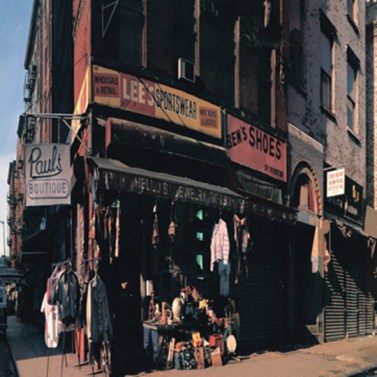
Paul’s Boutique — named after a Brooklyn store whose radio ad is tossed in the mix and whose picture graces the cover — surprises from the get-go. Instead of opening, as Ill did, with wall-to-wall drum wallops, it creeps up on you like an alley cat: A quiet organ and snare fade up as a mellow DJ voice dedicates the ensuing set to (who else?) the girls of the world. Then, of course, drums rat-a-tat, and we’re back in naughty-boy land. “I rock a house party at the drop of a hat/I beat a biter down with an aluminum bat,” snarls Horovitz on the opener, “Shake Your Rump.” But even in the midst of this obligatory strutting, the Boys slyly acknowledge their tarnished public image: I’m Mike D, and I’m back from the dead,” brags Diamond.

“A puppet on a string, I’m paid to sing or rhyme,” adds Yauch.

That out of the way, they’re back on the streets, dissing and snickering. The next song, “Johnny Ryall,” set against a blues-riff loop and dissonant guitar solo, spray-paints a wry, detailed portrait of a bum living on Mike D’s block. This runs into “Egg Man,” a nightmarish cartoon of shell-cracking hooliganism that starts with the slinky bass line from “Superfly,” features echoey shrieks on the choruses and closes with a slice of the theme from Psycho, which jarringly snaps off like a TV set. (In the midst of the vigilantism, the Boys do sneak in this tip: “You made the mistake you judge a man by his race/You go through life with egg on your face.”)

Each track brims with ideas and references too numerous to catalog, veering in new directions at every verse: “The Sounds of Science” builds from a casual, smartass schoolboy singsong to a breakneck chant against repeated guitar strums from “The End,” by the Beatles. Here and throughout, the songs are buoyed by the deft interplay of the three voices and a poetic tornado of imagery.

In terms of lyrics, the posturing that dominated Licensed to Ill is still in evidence — witness “High Plains Drifter” and “Car Thief” — but it’s been leavened by an approach that’s almost, well, literary. Sure, Paul’s Boutique is littered with bullshit tough-guy bravado, but it’s clever and hilarious bullshit: Who can be put off by claims like “I got more hits than Sadaharu Oh” and “I got more suits than Jacoby and Meyers”? In the catchy, Sly Stone-based “Shadrach,” this would-be terrible trio compares itself to biblical heroes Shadrach, Meshach and Abednego.

And while the Boys’ rap references range from Magilla Gorilla to Dickens, their musical samples are equally far-flung, including Johnny Cash, Hendrix and Jean Knight’s “Mr. Big Stuff.” (Acrostic-minded listeners should know that Jerry Garcia, Sweet and George Carlin are also allegedly in here somewhere.) Though the group seems most proud of the twelve-inch-vinyl version — the cover of the first pressing is an impressive eight-fold wraparound photo — Paul’s Boutique seems mixed especially for a Walkman. The voices shimmer around the listener’s head in an artful dance, and the musical “steals” effected by the Boys and Dust Brothers Matt Dike, John King and Mike Simpson are much more complicated than the first album’s, changing speeds, inverting or abstracting themes until they’re virtually new. If you can recognize them, fine, but they stand on their own; it’s no more thievery than Led Zep’s borrowing from Muddy Waters.

In the works for a year and meticulously constructed, Paul’s Boutique retains a loose, fun feel. The infectious “What Comes Around” (in which they taunt skinheads, rapping, “You’re all mixed up, like pasta primavera/Why’d you throw that chair at Geraldo Rivera?”) winds up with a wild Beastie version of scat humming. The Boys kick off side two by hollering at one another over a hillbilly hoedown called “5-Piece Chicken Dinner.” There are abundant inside jokes — a line delivered by a blow-hard New York TV weatherman, references to close friends and local events like Brooklyn’s Atlantic Antic — but they are never made in an off-putting way. The Boys are just being themselves, thrashing about in a reality ignored by too many mainstream white-rock acts.

In “Three Minute Rule,” Yauch says, “A lot of parents like to think I’m a villain/I’m just chillin’, like Bob Dylan.” May they stay forever def.

JC adds…….

And here was me always believing that Paul’s Boutique had been badly received and/or totally misunderstood back in 1989, only becoming acknowledged as a true classic by the passage of time.

mp3: Beastie Boys – Shake Your Rump
mp3: Beastie Boys – What Comes Around
mp3: Beastie Boys – 3-Minute Rule
mp3: Beastie Boys – Shadrach


ALL OUR YESTERDAYS : (11/15) : BUMMED

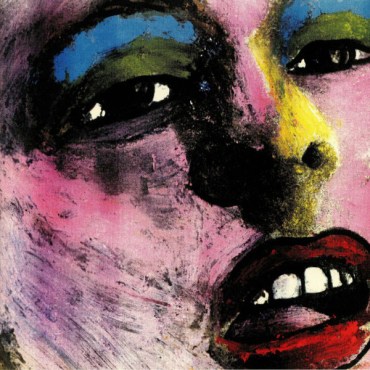
Album: Bummed – Happy Mondays
Review: Guardian, 14 December 2007
Author: Alex Petrides

Earlier this year, what’s left of Happy Mondays dutifully went on the road in support of a new album that limped to No 73 in the charts. Shaun Ryder sang the hits slumped on the drum riser, a man doomed to spend the rest of his days on the touring treadmill by the kind of business deals that people on too many drugs tend to make, his glory years a distant memory.

Listening to this expanded reissue of their breakthrough album, it seems remarkable that Happy Mondays had any glory years to start with, at least commercially. Almost 20 years on, Bummed sounds extraordinary, but wildly abstruse. If you were making a list of Happy Mondays’ inspirations, you would start with the clattering, syncopated drums and wayward vocals of Tago Mago-era Can, and the phantasmagorical, chemically altered view of northern working-class life found in the Fall‘s lyrics – to which Ryder added his own distinctive spin, not least an unerring ability to make sexual intercourse sound like the most repellent activity known to man. “Come on in, grease up yer skin, bring a friend,” he leers at one juncture.

Elsewhere, you can hear the damaged sprawl of early 70s Funkadelic, Captain Beefheart‘s angular riffs and jarring slide guitars and, buried deep in the mix, the gauche synthesised stabs of early house music. It’s a bizarre stew of influences that would normally have confined a band to a netherworld of Peel Sessions and tiny gigs. Happy Mondays ended up playing stadiums and Top of the Pops.

That they did may have been testament not merely to the quality of their songs, but to the anything-goes musical climate ushered in by ecstasy use: the album was recorded with the E-fuelled “second summer of love” in full swing. But if Bummed benefited from the summer of love’s open-mindedness, it certainly didn’t share its flower-power idealism.

The album is haunted by Nic Roeg‘s Performance, a film that caught the hippy dream curdling into a crepuscular world of violence and insanity. It’s not even Mick Jagger‘s faded rock star character Turner that the album identifies with, but the psychopathic gangsters who invade his home and murder him: Mad Cyril is named after one of them and samples their boss Harry Flowers, while the track Performance seems to be written through the eyes of Chas, the enforcer played by James Fox, whose psychedelic dabbling doesn’t stem his propensity for violence.

For a band usually depicted as troglodytes rendered mentally subnormal by their drug intake – perhaps a consequence of having a keyboard player called Knobhead – this seems a remarkably sharp and cynical take on the prevalent mood of saucer-eyed euphoria. Perhaps, having made his living dealing ecstasy, Ryder had a rather clearer idea of precisely what lurked further up the chain of supply than, say, the beatific denizens of London acid house club Shoom, who ended their evenings with an unironic singalong to Give Peace a Chance.

The album’s sound perfectly complements the mood. Befitting a man with a reputation as the Phil Spector of Manchester, producer Martin Hannett saturated Bummed in reverb and echo; as with Spector’s wall-of-sound productions, it’s almost impossible to make individual instruments out amid the dense swirl. The sound and the sessions that produced it were the result of the copious intake of ecstasy: Ryder later claimed that supplying the alcoholic producer with the drug was the simplest way to stop him drinking. What it captures, however, is not the hug-a-stranger euphoria of the perfect E experience, but the queasy, disorientating claustrophobia of overindulgence. Coupled with the ever-present sense of menace in the lyrics, it makes for an uneasy, but utterly gripping listen.

Among the extra tracks lurks the baffling Lazyitis (One Armed Boxer) a reworking of Bummed’s closing track featuring yodelling cabaret artist Karl Denver. The combination of his vibrato-heavy club-singer voice and Ryder’s hoarse bark makes for what you might politely call a deeply challenging listen. Those looking for evidence of Factory Records‘ celebrated maverick spirit might note that someone at the label thought this would make a good single.

Then again, the single that finally took Happy Mondays on to Top of the Pops is scarcely more radio-friendly, offering two and a half minutes of thundering Can-inspired drums and squealing guitars, a lead vocal that borders on a hoarse, desperate scream, and a variety of thumpingly unsubtle references to heroin in the lyrics. It’s a miracle that the BBC allowed Hallelujah, and the band who made it, past reception.

What happened when Happy Mondays reached the top was impossibly depressing: hard drugs, homophobia, inexorable decline. But, as Bummed proves in all its dark, weirdly prescient glory, the way they got there was unique and strangely magnificent.

JC adds…….

Alexis Petridis has long been a reviewer I’ve admired, not just for his fine taste in music but for the way he writes things up.  Bummed wasn’t ecstatically received at the time of its initial release, with far too many in the UK music press keen to sneer at the Happy Mondays and indeed the direction in which Factory Records was heading back in 1988.  It wouldn’t take that much longer, however, before everyone was proclaiming Madchester as being the greatest thing since the last musical ‘movement’ to get folk awfully excited.

mp3: Happy Mondays – Mad Cyril
mp3: Happy Mondays – Performance
mp3: Happy Mondays – Wrote For Luck
mp3: Happy Mondays – Lazy Itis

ALL OUR YESTERDAYS : (10/15) : MONDAY AT THE HUG AND PINT

Album: Monday at the Hug & Pint – Arab Strap
Review: Pitchfork – 8 May 2003
Author: Chris Ott

Only The Pogues invite more and lazier booze analogies than Arab Strap, so I won’t insult your intelligence by forestalling mine: if their career is the musical equivalent of an alcoholic life – and in all likelihood it is – Monday at the Hug & Pint is Arab Strap’s moment of clarity. It’s an album dominated by regret, frustrated reflection and a desire to move forward, the least bullshitting, most accomplished and first consistently great release from Aidan Moffat and Malcolm Middleton.

Arab Strap enjoyed undue praise for their intrinsic gait, their hollow tunes profiting from the same sheepish Anglophilia that made Irvine Welsh and Belle & Sebastian household names in America, where they can barely tell Scots from Cockney. The signature browbeating and bleating dirges still abound, but there’s an increased focus on songwriting rather than the moping first-person exposition that typified their first few records. Monday at the Hug & Pint doesn’t sound shockingly different from the rest of their catalog, but it’s a crystallization of identity and intent; where they once sprawled – hungover and depressed – Arab Strap have built on last year’s promising, alternately post- and pub-rock The Red Thread, proving they’re capable of taking themselves dead seriously.

Listening to their insecure and uneven beginnings – and ignoring The Red Thread as a bridge – Monday is an auspicious improvement. Though it’s nominally awkward, Depeche Mode‘s unpredictably great last gasp “Dream On” is an instant comparison with “The Shy Retirer”, a string-backed electro-acoustic dance tune with a newly positive nostalgia for the weekend’s pints. Genius lyrics abound – “You know I’m always moanin’/ But you jumpstart my serotonin,” and the somewhat infamous existential metaphor “this cunted circus never ends”– but just as the Matt Johnson (approaching Bono) croon of “Meanwhile at the Bar a Drunkard Muses” forecasts another barely conscious record of surly, sad-sack balladry (and skirts covering Ryan Adams“Come Pick Me Up”), “Fucking Little Bastards” smashes the accepted idea of Arab Strap to bits.

Sounding at first like the Nick Cave & The Bad Seeds’ rendition of “All Tomorrow’s Parties”, “Fucking Little Bastards” cuts quickly into an overloaded post-rock, post-shoegaze dirge, its cinematic angst underscoring not only that Aidan and Malcolm have been spending a lot of time with Mogwai, but also that violinists Stacey Sievwright and Jenny Reeve have doubled the import of Arab Strap’s maudlin work. The duo’s “fuck it” experimentalism remains intact, tacked on in a closing minute-plus of collapsing loops and telephoned vocals that could have gone on forever as far as I’m concerned.

Returning to the acoustic dance sound that’s earned the group its audience, “Flirt” fails to make the same impression as the record’s opener, mostly because the vocals never dig any hooks in, syncopating with a beat too slow to warrant such interplay. After another typically Strap ballad – “Who Named the Days”– my hopes faded. In the age of compact discs, it’s very difficult to give a record the feel of having two sides, let alone convince a listener there’s hope for something better around the bend. Sigur Rós recently managed it, and Arab Strap one-up them with the dividing “Loch Leven”, a tune that’s structurally typical of the band, but rises above the shirking, impatient post-rock folk of old in its more deliberate craft and inspired performance.

It’s done one better by “Act of War”, where the strings (and horns!) lift into a hitherto unimaginable aggression– “The fact is you’ve always been clumsy!”– possibly due to the involvement of Bright EyesConor Oberst and Mike Mogis, who worked with Moffat and Middleton on much of the record (as did Mogwai’s Barry Burns).

“Serenade” introduces liberal studio layering, overloading reverb, organ and strings and invoking everyone from The Smiths (“Rubber Ring”) to Sparks (“I only go for girls I’ve got no chance with”). Pinpoint samples of bottle rockets whizzing around add space, inferring that the night’s gone on perhaps too long and spilled out onto the lawn. The album ends with a somewhat repetitive appendix (“Pica Luna”), missing the perfect parting shot, a rousing piano sing-along named after their first record.

Though it’s just forty-five minutes long, Arab Strap make Monday at the Hug & Pint feel like an eternity – just like everything else in their catalog. While that was an unbearable aspect of their less considered youth, these days Aidan Moffat and Malcolm Middleton are taking pints slowly, thinking before they speak. The girls go for a sharp wit when it’s doled out in good measure and offset by sensitivity; with any luck, these two won’t be reaching for the Arab Strap this weekend.

JC adds…….

Monday at The Hug & Pint is a very fine record, but I’ve not got it in my Top 3 of Arab Strap albums, having fallen for their ‘insecure and uneven beginnings’.  I was intrigued by this review, not least as it was from an American and I never imagined that the music of Arab Strap would survive any sort of Atlantic Crossing as it is, in many ways, as parochial as you’ll ever find, with the colloquialisms and Scottish humour struggling to be understood or appreciated.

And while I fail to see any resemblance to Depeche Mode, Sparks or a deft b-side to a single by The Smiths, I really like how the reviewer makes allowances for the mid-album dip (one that I’m in full agreement with) and talks up the Loch Leven/Act of War one-two (although they are separated by Glue in the running order) as they are among the duo’s most unexpected moments up to that particular point in time, but with hindsight can be seen as pointing the way for much of Aidan Moffat’s solo career and indeed the other collaborations he would go on to enjoy.

mp3: Arab Strap – The Shy Retirer
mp3: Arab Strap – Fucking Little Bastards
mp3: Arab Strap – Loch Leven
mp3: Arab Strap – The Week Never Starts Round Here

The last of the above features a very rare lead vocal from Malcolm Middleton.

Oh, and while I’m here, the new Arab Strap album and gigs this coming year will go someway to making up for how crap 2020 turned out.

THE FESTIVE SINGLES OF R.E.M (Part 2 of 2)

The posting from last Sunday should have given you all the backstory you need, but I should add that the singles usually came with a few other things in a special package.  For instance, the 1996 Fan Club Package included a 7″ single, a greetings card in an envelope, a 1997 Fan Club calendar, a New Adventures In Hi-Fi sticker & beer mat, all in a specially designed cardboard envelope.

1993 (black vinyl): pressing of 6,000

A: Silver Bells
a song associated with Christmas, popularised in the United States by Bing Crosby‘s duet with Carol Richards (1950)

B: Christmas Time Is Here
an instrumental version of a song from the TV show A Charlie Brown Christmas, first aired in 1965

1994 (black vinyl) : pressing unknown, but it did come in three different-coloured sleeves

A: Sex Bomb
a cover of a song by San Francisco-based hardcore punk band Flipper from their album, Generic (1982)

B: Christmas In Tunisia
a track written by R.E.M., described as a Middle-Eastern influenced instrumental

1995 (black vinyl): pressing unknown, but it did come in two different-coloured sleeves

NB: The first of the giveaways NOT to have a Christmas-themed song on at least one side of the vinyl and thus, setting the theme for the next few years

A: Wicked Game
cover of the 1990 hit single by Chris Isaak

B: Java
cover of a 1963 hit instrumental single for Floyd Cramer, originally written by New Orleans writer and producer Allen Toussaint

1996 (black vinyl): pressing unknown

A: Only In America
originally recorded by Jay & The Americans in 1963; written by legendary songwriters Jerry Leiber, Mike Stoller, Barry Mann, and Cynthia Weil.

B: I Will Survive
Yup.  The very song as made famous by Gloria Gaynor (and which was covered by your humble scribe, live at the Glasgow Pavilion in 1990 – as recalled here)

1997 (black vinyl): pressing unknown

A: Live For Today
previously unreleased original R.E.M. song

B: Happy When I’m Crying
previously unreleased original song written and performed by Pearl Jam

Yup.  A further move away from tradition, with just one side of the vinyl coming from R.E.M. and the other from Eddie Vedder and co. in what, I’m sure is their first-ever appearance on the blog

It’s back to normal next Sunday with Part 27 of the R.E.M. singles series as released here in the UK.  We’re still in the era of Monster……

JC

ALL OUR YESTERDAYS : (9/15) : PSYCHOCANDY

Album: Psychocandy – The Jesus and Mary Chain
Review: Rolling Stone, 27 May 1986
Author: Tim Holmes

The Jesus and Mary Chain is a riddle, a conundrum, a source of confusion and anxiety, a love-’em-or-hate-’em proposition. Obviously schooled in the aesthetics of noise and punk and simpleminded pop, the Jesus and Mary Chain is a perfect recombinant of every Edge City outlaw ethic ever espoused in rock.

With the willful and deliberate abandon of postpunk ghouls, they rape and pillage everything you’ve ever loved: the Phil Spector “Be My Baby” drum tat-too, the sweet abrasion of the Velvet Underground, the velocity and mangled pop of the Ramones, the black-leather sloganeering of Suicide, the lovable incompetence of Sixties garage bands, the shrill, screaming, grinding industrial pandemonium of SPK and Throbbing Gristle. The big question arises: Is the Jesus and Mary Chain the real thing, or is it a shrewd package job for critics and would-be iconoclasts?

The album title Psychocandy sums it up with alarming accuracy. This is the opposite of sugarcoating the pill; it’s like wrapping sandpaper around a Tootsie Pop. The veneer is gritty and inedible, the next layer is hard and crunchy, the core is soft and chewy. These are kids after all, which just might be their saving grace. If indeed they are a superficial and diluted version of the most hard-core and dangerous elements in the rock lexicon, maybe they are too young to care.

For all its chain-saw screech and übermetallic badness, the Jesus and Mary Chain is a pop band with doo-doo-doos and la-la-las, simple melodies and full echoing production around Jim Reid‘s laconic Lou Reed-like monotone. William Reid‘s guitar parts blast shards of maniacal feedback across the underpinnings of Douglas Hart‘s bass lines. And in true Mo Tucker stand-up fashion, Bobby Gillespie keeps the beat uncomplicated and direct.

It’s obvious to the point of inanity that the Velvet Underground is the pure and adult model for the self-consciously evil xerography of the Jesus and Mary Chain. Perhaps these are the days of whining neuroses and the function of the Jesus and Mary Chain is to make ruthless, gut-bending noise safe for the airwaves. But, then again, if they can actually get their holocaustic guitar squall on the radio, maybe they’re doing us all some kind of public service.

JC adds…….

As mentioned in the pre-amble to the first offering in this seasonal mini-series, there are very few reviews from the UK music papers from the 80s available on-line which is why I’m leaning heavily towards what was published in America.  My big surprise here is that someone from Rolling Stone got it right about JAMC, far quicker than many of his UK counterparts, many of whom dismissed them as a gimmick with no shelf-life.

mp3: The Jesus and Mary Chain – Just Like Honey
mp3: The Jesus and Mary Chain – In A Hole
mp3: The Jesus and Mary Chain – Inside Me
mp3: The Jesus and Mary Chain – You Trip Me Up


ALL OUR YESTERDAYS : (8/15) : STEVE McQUEEN

Album: Steve McQueen – Prefab Sprout
Review: Uncut – 20 April 2007
Author: Andrew Mueller

The original 1985 release of this, Prefab Sprout’s second album, confirmed what the previous year’s debut, “Swoon”, had hinted: that the firmament had been graced by a star of singular twinkle.

More than two decades on, the material wrought by Paddy McAloon for “Steve McQueen” still has the feel of a masterclass delivered by some amiably eccentric, terrifyingly brilliant Professor of Song. He would go on to wreak further, if infuriatingly intermittent, miracles – “Jordan: The Comeback” and “Andromeda Heights” – but “Steve McQueen” remains as rich and complete a single songbook as has ever been authored.

Though often self-consciously arch, occasionally verging on too-clever-by-half, McAloon never allowed his intelligence to dominate his passions: for all the playful wittiness poured into the music and lyrics, “Steve McQueen” remains a piercingly sincere evocation of heartbreak. The best songs here – and the quality really varies only between a million miles better than average and certifiable thundering genius – are as eloquent as anything by Leonard Cohen, as angry as Elvis Costello at his most spiteful, and accompanied by the melodic grace of Brian Wilson.

“Appetite”, “Goodbye Lucille” and especially “Bonny” are supremely pretty songs, freighting some pretty ugly truths. The career-spanning characterisations of McAloon as some flouncing, floppy-fringed Fotherington-Thomas were only ever the work of people who weren’t listening.

The rawness of the emotions underpinning Thomas Dolby’s deceptively polished production is emphasised on the acoustic recordings of eight of the tracks, which appear as a bonus disc. McAloon’s new versions of “Faron Young” and “When Love Breaks Down”, addressing the romantic folly of his youth with the weary wisdom of his middle-aged voice, are especially baleful and glorious in their desperation and desolation. That key line of “Goodbye Lucille”“Life’s not complete/Till your heart’s missed a beat” – now sounds much more like a promise than a threat.

JC adds…….

The review is spot on in that this re-release, with the additional acoustic versions, somehow managed to improve something that I’d long considered perfect.  Just over five years ago, I pulled together an ICA for Prefab Sprout, and, for the first and only time, I had one side of said ICA as identical to one side of a studio album – Side A of Steve McQueen.

So, it makes sense to start off 2021 with something just a bit different in this series; it’s a special treat for those of you who don’t know them – all eight tracks from the bonus disc of 2007.

mp3: Prefab Sprout – Appetite
mp3: Prefab Sprout – Bonny
mp3: Prefab Sprout – Desire As
mp3: Prefab Sprout – When Love Breaks Down
mp3: Prefab Sprout – Goodbye Lucille #1
mp3: Prefab Sprout – Moving The River
mp3: Prefab Sprout – Faron Young
mp3: Prefab Sprout – When The Angels