THIS SEARING LIGHT, THE SUN AND EVERYTHING ELSE

I’m the proud owner of a substantial number of books which, as a result of my sad inability to throw anything away, are taking up an increasing amount of space in Villain Towers to the disgust of Rachel whose efforts to modernise and improve its interiors are constantly thwarted by my storage requirements.

The vast majority of the books are music and sports related, consisting in the main of biographies in some shape or form. Among these are something in the region of 20 books related to Factory Records/Joy Division/New Order/The Hacienda, with the latest two additions coming via Christmas presents, one of which was the wonderfully entertaining first volume of autobiography by Stephen Morris, whose often self-deprecating effort far surpasses those of his bandmates Hooky and Barney, as much for the fact that he doesn’t use the book to rant about old grievances – but given that Record Play Pause only goes up to the formation of New Order, it may well be that a further and much anticipated volume will go down that path.

The other new book was This Searing Light, The Sun and Everything Else: Joy Division – The Oral History , whose author is Jon Savage.

The book was published in April 2019 and received great reviews, but I refrained from buying it at the time as I thought it would be more or less a cut’n’paste effort consisting of a re-hash of the tales told elsewhere in books by so other authors over the years. It was only when I pulled out the author’s Unknown Pleasures review from 1979 as part of the Festive Period series (click here) did I realise that here was someone who really did get to the heart and soul of the band and was probably the most qualified to do justice to the task, and so it was put on Santa’s list.

The book duly arrived on 25 December and I began to read it that evening, on the basis that it would be an easy enough book to dip in and out of while also turning my attention to some of the other books that had ended up under the tree. I spent hours engrossed in its contents and ended up not going to bed until some ungodly hour which set the tone for a stupid sleep pattern right through until my return to work on 6 January. As soon as I woke up, my nose was back in between its wonderful looking hardback cover and plans to watch or do other things were put on hold as what I was devouring and enjoying immensely was the definitive story of Joy Division that hasn’t been bettered.

For the most part, there was very little I didn’t already know – but the new snippets of information were invaluable and, in one particular case, a real game-changer in terms of how I’ve always thought about things over the past almost 40 years since Ian Curtis took his life. The author lets others do the talking, and offers a mixture of new interviews with those still living as well as dipping into archives to enable the voices of people such as Tony Wilson, Martin Hannett and Rob Gretton to be heard. It’s very clear that the questions Jon Savage has posed to everyone while carrying out the work involved to piece the book together were far from run-of-the-mill, and there’s a sense that everyone responding has been able to be wholly open and transparent about things, secure that what they say will be written down and then put in print, even if it those words are at odds with one of the other contributors or indeed are different from what has been said by them before.

One of the most fascinating things about this book is that it gives much more space to Peter Saville and Annik Honore than any previous publications, enabling them to fill in some gaps and to also offer up a sense of what really went on when so many others, over the years, have mythologised many of the events and happenings.

There’s also some incredibly reflective words throughout from the late Tony Wilson, many of which feel as if they were provided in what must have been one of the last of the detailed interviews he gave before his death. It is entirely fitting that the book is dedicated to Wilson, a lifelong hero of mine and my memory of the one time we met and spoke briefly for all of 45 seconds will never leave me; worth mentioning also that the book’s seemingly strange title is taken directly from one of the quotes he provided to the author.

This Searing Light also benefits from being exactly what it says on the cover. There’s just a few reflections into the early lives and upbringings of everyone in the band and it comes to a halt just after Ian Curtis’s funeral, with no mention of what was still to come for Factory or the emergence of New Order. It is the story of a band whose fans at the time could never ever have imagined the impact they would make or the legacy they would provide, so much so that more than 40 years on, there is still much to be fascinated by.

One thing it did remind me of was just how young and largely inexperienced the other band members were at the time. The infamous Stiff/Chiswick challenge took place on 14 April 1978….all four members were 20-22 years old. They had yet to have Gretton, Wilson or Hannett come into their lives to help shape things. Just two years and one month later, it was all over.

So much transpired between April 78 and May 80 that even now it feels overwhelming, so it must have been nigh on impossible to deal with first-hand.

The book also provides a stark reminder that Joy Division, being on a largely unheralded and small label in Manchester, didn’t ever really find too much fame, until they were no more, beyond the pages of the music papers. The biggest shows they ever played was as the support act on a UK tour by Buzzcocks and nobody was getting rich from any of it, with life seeming to be not far off a hand-to-mouth existence for the most part. There was little glamour and a lot of hard slogging.

The onset of the singer’s epilepsy does seem to have been beyond the belief and understanding of all concerned – including the university-educated Wilson – and it wasn’t helped by the fact that the treatment on offer from the medical professions seems to have been haphazard and involved a lot of guesswork – it certainly got me re-assessing my own long-held views that if the others around him had been more understanding or proactive back in the day, then the suicide could have been prevented.

mp3 : Joy Division – Love Will Tear Us Apart

18 May 2020 will mark the 40th anniversary of the suicide, and will be a time when you’ll be sure to read many tributes, words and reflections across all forms of media. I’m willing to bet that none of them will better what Jon Savage has delivered across these 326 pages.

JC

ALL OUR YESTERDAYS (22/22)

Album : Power, Corruption & Lies – New Order
Review : Rolling Stone, 18 August 1983
Author : Steve Pond

Few rock bands have had as daunting a past to live up to, and overcome, as New Order. But Power Corruption & Lies is a remarkable declaration of independence; for the first time since lead singer Ian Curtis hanged himself three years ago, the survivors of Joy Division have shrugged off the legacy of that band’s grim, deathly majesty and produced an album that owes as much to the currents of 1983 as to the ghosts of 1980. This record is a quantum leap over Movement, the band’s first album, and over most of the music coming out of Britain lately.

Leap is the appropriate word, because on the surface, this is largely a stirring, jumpy dance record. Forget about New Order’s reputation as gloom mongers or avatars of postpunk iciness; forget about the artiness and mystique that envelop them. Just put this stuff on the radio, in clubs or on American Bandstand: you can dance to it, it deserves a ninety-eight, and a song like “Age of Consent” merits heavy rotation, not reverence.

That’s not to say New Order have turned into A Flock of Vultures or anything. But there’s a newfound boldness on Power that was sorely missing from Movement. On that LP, New Order were tentatively trying to break free of Joy Division’s style, if not their tone; too often, the result was turgid and solemn and sprinkled with the kind of whistles, whooshes and beeps that suggest novices halfheartedly tinkering with dance-oriented rock.

Working on subsequent singles toward a surer control of the studio and a more ambiguous emotional stance, the band hit its stride with the epiphanic “Temptation.” A tenacious, gripping, rock-hard dance tune, it was also the first New Order song to suggest that maybe love doesn’t always tear us apart – that, in fact, it just might bind us together, though at great risk. (That song and four others make up the highly recommended EP New Order: 1981-1982.)

Though not as forceful as “Temptation,” the songs on Power glow with confidence – musical confidence, mostly. While Steve Morris‘ drums weave patterns around the unrelenting kick of an electronic drum machine, the band masterfully interlaces layer after layer of sound: Bernard Albrecht‘s alternately slashing and alluring guitar lines, Peter Hook‘s melodic bass playing, broad washes of keyboard color from Gillian Gilbert and such percussive effects as chimes. It’s a bracing, exhilarating sound, equally suited to feverish dance workouts like “Age of Consent” and “586” as to such murkier, more impressionistic outings as “Your Silent Face.”

Lyrically, New Order still rely too readily on emotional vagueness and stock portentous images. Having partially abandoned the frigid, nocturnal chill that permeated Curtis’ work, the band’s current viewpoint is closer to simple pessimism than outright despair. Still, the group likes to draw the drapes and usher in a little darkness at the end of its songs. Power has some of the most foreboding lines in rock: “I’ve lost you.” “Their love died three years ago/Spoken words that cannot show.” “For these last few days/Leave me alone.” And then there’s the jarring conclusion of “Your Silent Face,” a glorious, understated reverie that rails against passivity (and, perhaps, against Curtis) with lines like, “A thought that never changes/Remains a stupid lie.” As the tune closes, Albrecht turns contemptuously dismissive: “You caught me at a bad time/So why don’t you piss off.”

With spiritual anguish and failed redemption no longer an obsessive theme, it’s now easier to focus on New Order simply as a rock band as strong as any in British pop. And as has been pointed out before, once you get past the romantically murky stance, New Order are (just as Joy Division were) a terrific singles band–not a consistent one, but one whose best singles, “Ceremony” and “Temptation,” have been transcendent.

“Blue Monday” isn’t in that class, but in its own way, it’s a breakthrough, getting the band heard on radio stations and in dance clubs. Neither New Order’s boldest song nor their most telling, it is instead their best sounding. The drum machine pounds away with an appropriately inhuman thunk, the band pumps hard to keep up, and after seven searing minutes, it soars to a close with layers of lush keyboards.

That song is included on the cassette version of Power Corruption & Lies; by itself on the twelve-inch single, though, it’s backed by “The Beach,” its dub remake and a tougher, better version of the tune. The point of “Blue Monday” is sound, after all, and the second version takes more sonic chances and shows just what sure-handed producers and assured musicians New Order have become. For the members of a band once known for one man’s sensibility, that’s the last thing many of us expected and, in a way, the best thing they could have become.

mp3 : New Order – Age of Consent
mp3 : New Order – Your Silent Face
mp3 : New Order – Leave Me Alone

JC adds : Possibly the most important record that I’ve ever purchased.  It certainly contains, in the album opener, my favourite song of time.  It felt like the right way to close off this series.  Things return to normal from tomorrow.


ALL OUR YESTERDAYS (21/22)

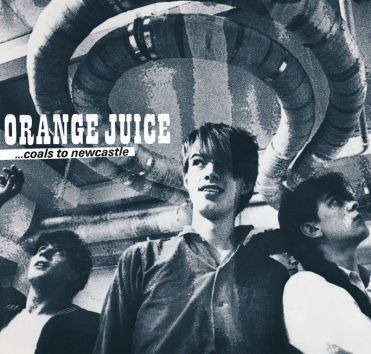
Album : Coals to Newcastle – Orange Juice
Review : Drowned in Sound, 9 November 2010
Author : Aaron Lavery

Over the last decade Orange Juice have been cited as a key influence by all manner of acts. Unfortunately the casual punter has for some time had difficulty in discovering what the big deal is. The Glasgow band’s key components – their spindly, DIY take on soul, Edwyn Collins’ unusual croon, their joy with an absurb lyric – were clear to see as an influence on everything from their Eighties contemporaries right up to modern indie adventurers such as Wild Beasts, but there was never any sense of completeness for anyone really wanting to get their teeth in. To see the sleeve of 1982’s You Can’t Hide Your Love Forever proudly displayed on the sleeve of a Belle & Sebastian DVD but not be able to go out and listen was perhaps the indiest cock-tease available.

For anyone wishing to fully delve into the strange of world of Orange Juice, the drip-drip availability of compilations and reissues was both alluring and frustrating. However, the itch can now be comprehensively scratched with Coals To Newcastle, a seven disc box set that gathers together Orange Juice’s complete discography, including radio sessions, B-sides and a collection of videos and live performances that couldn’t be more of their time if they came on VHS.

Like a lot of box sets, this sudden torrent of material can initially be overwhelming. Although Orange Juice come from an era when the B-side could be just as impressive as the main event, it can still be a struggle to maintain enthusiasm when listening in massive stretches. But then again, it’s probably not designed to be devoured that way – Orange Juice were such a strange beast, changing their line-up and musical leaning so quickly, that the only real mainstay was Collins’ absurd, cocky but vulnerable voice at the heart of it all. Instead, Coals To Newcastle works as a series of Postcards (arf!) showing how Orange Juice morphed from a gangly, awkward bunch of boys who should know better into a more widescreen but ultimately frustrated group.

The first disc on Coals To Newcastle is actually a bit of a misstep, as it’s already been released as 2005’s The Glasgow School. Appearing here with some changes to the track listing and a couple of interesting additions, it essentially serves up an initial taster of Orange Juice #1. This is the Orange Juice that felt they had the world at the feet, that had the London music scene scrabbling up past Hadrian’s Wall to find ‘the sound of young Scotland’, only to find it dressed like “a member of the aristocracy down on its luck”.

This era of Orange Juice, the one that has probably caused the most ripples in indie circles since, is encapsulated by discs one and two, the latter of which contains You Can’t Hide Your Love Forever plus myriad extra tracks. Together, they encapsulate what made the band so exciting at the time, and what has intrigued certain sensitive types ever since.

To suggest that the band’s ability never quite matched up to their ambition here might sound cruel, but it’s meant as a compliment. The likes of ‘Falling And Laughing’ and ‘Simply Thrilled Honey’ are solid gold classics, a rush of adolescent feeling wrapped in furiously strummed guitars. Elsewhere, the band’s almost punkish belief that they can do anything – write grandiose reflections on catching your reflection in a mirror, or imaginings of retribution to local bully boys – is rendered more human by the slight missteps the band make, words packed in like an overstuffed suitcase and rhythms discarded mid-song before being picked up again later on. The giddy sense of abandon can still be heard today, and is still infectious for the listener.

The benefit of the box set is captured in the first track of Coals To Newcastle’s third CD, ‘Rip It Up’, easily the most recognisable Orange Juice song and their only real hit. It’s a shock here as it marks such a change from the earlier discs, with the first incarnation of the group dissolved and Orange Juice reconstituted as a pop-funk curiosity, and most significantly joined by Zimbabwean drummer Zeke Manyika. To hear the Rip It Up LP, full of sax solos, squelching keyboards, and Manyika’s multi-layered rhythms is quite jarring, but the juxtaposition underlines the similarities with the earlier Juice.

Collins’ unmistakable voice is still there, and so is his grand ambition. Opening the album with their perfect pop single, the band follow it with ‘A Million Pleading Faces’, an afro-beat inspired shake-up of proceedings, and then follow that with ‘Mud In Your Eye’, a slice of blue-eyed soul that wouldn’t sound out of place on a Style Council LP. Elsewhere, Collins resurrects an old b-side that opens with him proclaiming “breakfast time! Breakfast time!!” over a slouching reggae rhythm.

Rip It Up is full of enough strange stuff to keep us intrigued today, and plenty of genuine pop moments – the Motown homage ‘I Can’t Help Myself’ for instance – that should have fired it to big success. That it didn’t perhaps explains Orange Juice’s next move.

Discs four and five are based around the band’s next official releases, mini-album Texas Fever and their swansong, The Orange Juice, both released in 1984. The contrast between the two is intriguing as it shows a side of the band that hasn’t really been captured in the Orange Juice compilations released so far. It’s clearly still from the same minds that concocted the jittery, excitable early act and the smoother, shades-wearing Orange Juice that appeared on Top Of The Pops, but it’s somehow a bit harder, musically speaking.

This is where Coals To Newcastle really earns its spurs. To hear Texas Fever is to find a band stripped of the musical excess of ‘Rip It Up’, replacing it with a Sixties-inspired world of close harmonies and even – shock horror corduroy fans – guitar solos. It still finds time for Collins to fit in a ridiculous ‘scary’ voice on ‘Craziest Feeling’, but it wouldn’t be Edwyn if it didn’t slide towards the ludicrous on occasion.

Listening to The Orange Juice, made when the band was officially just Collins and Manyika, again underlines the benefit of the box set. Overshadowed by the more popular and more influential parts of the back catalogue, here it can be judged on its own merits. Thankfully, it stands up well. Its mood is captured on ‘A Little Too Sensitive’, on which Collins turns his trademark cynicism inward, and seems to analyse just why he’s been left standing (almost) alone whilst the music he helped to create has gone on to soundtrack the early part of the decade.

It’s a reflective end to the band’s discography, albeit enlivened by the track ‘What Presence?!’, an early indicator of the guilty pleasure silliness Collins would bottle on ‘A Girl Like You’, and ‘Salmon Fishing In NY’, a heavier number that ends the record in a blizzard of guitar feedback. Accompanied here by numerous b-sides, live tracks and, believe it or not, dub mixes, plus that extra disc of radio sessions, it means Coals To Newcastle lacks a real finale, but that’s a problem of box sets in general, not just this one.

So what to make of the whole thing? Well, as an introduction to the band, it won’t work, simply because of its size. For that, you can get The Glasgow School and hear the influence of that early Orange Juice. For those that want to delve deeper however, this is pretty much darned essential. It confirms Orange Juice as more than an influential indie band – it shows up their ridiculousness, their ambition, their open-mindedness, their limitations, their self-reliance. It leaves you converted to their cause, whatever it is and however foolish it may be. It’s also something you can see yourself returning to, rather than keeping on a shelf for posterity. You can’t really ask for more than that, can you?

mp3 : Orange Juice – Falling and Laughing (Peel Session, 1980)
mp3 : Orange Juice – Mud In Your Eye
mp3 : Orange Juice – Craziest Feeling
mp3 : Orange Juice – What Presence?! (Kid Jensen session, 1984)

JC adds : You really should delve.  It’s bloody marvellous.  And I still can’t quite get my head round the fact that I got a thank you in the credits within the accompanying booklet.


ALL OUR YESTERDAYS (20/22)

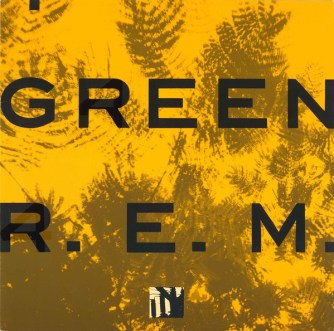
Album : Green – R.E.M.
Review : Rolling Stone, 12 January 1989
Author : Michael Azerrad

On Green, R.E.M. dares to think positive. Songs like “Stand,” “Get Up,” “World Leader Pretend” and “The Wrong Child” are a continuation of the upbeat call to arms sounded on Document‘s “Finest Worksong.” It was no coincidence that such a hopeful record was released on an election day whose outcome was a foregone conclusion. Now is not the time for despair, R.E.M. seems to be saying, but for a redoubling of efforts.

Having made the leap from a small label, I.R.S., to a monolithic major one, Warner Bros., R.E.M. hasn’t sold out; rather, the band has taken the opportunity to crack open the shell it’s been pecking at since it recorded its first album. On Green, R.E.M. acknowledges the outside world with a slew of musical references and some relatively pointed lyrics.

As Michael Stipe’s vocals get more distinct, so does his message – instead of meaning almost anything you want them to, his noticeably improved lyrics seem to be about at most two or three different things. Stipe even makes an effort to enunciate. And perhaps more remarkable, this is the first R.E.M. album with printed lyrics – actually, it provides the lyrics to just one song, “World Leader Pretend,” but with this band you take what you can get.

Green reveals a much wider range than previous efforts, including a playfulness that wasn’t there before. Some songs have a downright bubble-gummy feel: on “Stand,” Peter Buck lets fly with a ridiculously wanky wah-wah guitar solo. Still others reveal more emotion than the band has shown in the past; “You Are the Everything” and the untitled track that closes the album are frank love songs with few strings attached.

Except for those tender ballads, R.E.M. has completely lost its folk inflections. A heavy guitar sound has replaced the old Byrdsy jangle (which scores of college bands continue to ply). The trademark asymmetrical song structures are gone, too; now, verses are repeated for maximum catchiness.

The band’s last two albums – Life’s Rich Pageant and Document – seemed very much of a piece, but Green is a distinctive record with a new feel, at once slightly synthetic and deeply felt, with Stipe conveying strong conviction without shouting and subtle emotion without disappearing into the woodwork. (Green was coproduced by Scott Litt, who also coproduced Document, the band’s commercial breakthrough.)

“Turn You Inside-Out” includes percussion by former Sugar Hill Records house drummer Keith LeBlanc, but it’s no rap jam – rather, it’s the heaviest rock these guys have yet recorded. R.E.M. won its reputation as a great rock & roll band as much with its live shows as with its earnest, evocative records, and this album begins to approach the concert experience – not necessarily in its visceral impact, but in its stunning contrasts: the song that follows “Turn You Inside-Out,” the mandolin-laden “Hairshirt,” is the most delicate and affecting thing the band has ever done. “I am not the type of dog who could keep you waiting for no good reason,” Stipe fairly croons.

Musically, Green quotes a lot of sources. Listen closely and you can hear references to the Doors, Led Zeppelin, Sly Stone and others. If R.E.M. were any more calculating, one might suspect this is the band’s sneaky way of squeezing into tightly formatted AOR radio, with its emphasis on classic rock bands.

Just as it’s fascinating to watch elder statesmen like Keith Richards reconcile rock & roll with middle age, it’s fascinating to see how R.E.M. handles fame and commercial success. On paper, this looks to be the band’s biggest album ever – strong singles material (“Get Up,” “Stand” and “Orange Crush”), a major label, a more accessible sound. So it’s not for nothing that the album is titled Green, although environmental concerns, naivete and the generally positive attitude of the record must also have something to do with it.

R.E.M. may be dangerously close to becoming a conventional rock & roll band, but Green proves it’s a damn good one.

mp3 : R.E.M. – World Leader Pretend
mp3 : R.E.M. – Turn You Inside Out
mp3 : R.E.M. – Orange Crush

JC adds : Given that nobody had any idea just how massive R.E.M. would become, not quite with Green but the following two albums – Out of Time and Automatic for the People – then this review is very clairvoyant.


ALL OUR YESTERDAYS (19/22)

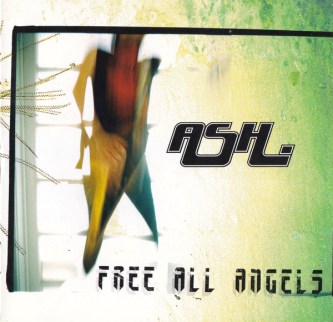
Album : Free All Angels – Ash
Review : The Guardian, 20 April 2001
Author : Betty Clarke

Nowadays it’s not cool to be young and enjoy it. Instead, adolescence is surrounded by negativity and teenagers just bemoan the fact that they have their whole lives in front of them. Fun without responsibility has been diluted by the likes of Wheatus, who celebrate the poor personal hygiene and dodgy taste in music that youth entails, by Westlife and their middle-aged, middle-of-the-road sentiments, and by dismissive declarations of “my generation” from the greying Limp Bizkit. Where are the head-spinning thrills, the heart-stopping lust, the celebration of golden summer holidays that seem to last for ever?

Step forward Ash, who (while they themselves wrestle with the complexities of mid-20s angst) have crystallised the pleasure and pain of being a teen. Back in 1996, when they kicked up some punk-pop dust with the single Kung Fu, Tim Wheeler, Mark Hamilton and Rick McMurray were the naughtiest kids in the Britpop class. Juggling a record deal with their A-levels, they hit the charts with the adrenaline-filled debut album 1977. Spawning indie classics Girl from Mars and Oh Yeah, 1977 conjured up playground longings and Kodak memories and set them to lush melodies and spiky guitars. Ash held on to their innocent exuberance, their Star Wars fixation and the knowledge that girls were an unknown but desired quantity.

Following a foray into soundtracks with A Life Less Ordinary, Ash acquired a new guitarist in Charlotte Hatherley and released their second album, Nu-Clear Sounds. But the joy had evaporated into thrash and an affection for the Jesus and Mary Chain that vanquished the optimism and fun of the past. Personally, things weren’t so great either. After two years of non-stop pop, the sweetness of success turned bitter for Wheeler, who gradually retreated into depression. Cue 18 months of suffering, silence and recovery.

But with Free All Angels, Ash have rediscovered their enthusiasm, and Wheeler – not just the singer but the band’s chief songwriter – has a smile on his face. From the beginning, you know it’s going to be good. Walking Barefoot has that trademark sense of nostalgia for a time you’re still experiencing. A great festival song, it’s about relishing a perfect moment while knowing it’s about to come to an end. “Remember when the sun was hot, remember when the days were long,” Wheeler sings, a homage to both lazy days and golden years.

The perfect pop ethic of simple, epic singalong songs continues with Shining Star, Ash’s greatest single since Girl from Mars, a celebration of someone special in sixth-form prose. World Domination is another call to arms to kids everywhere to kick off their trainers and jump up and down. With its “we don’t give a fuck how we’re meant to be” feelgood factor, plus count-in intro, speeding drums and rock guitars just distant enough from Status Quo to be cool, it’s destined to be an Ash anthem.

But Wheeler knows life isn’t all about good times, and Free All Angels has its share of sadness. New single Burn Baby Burn initially sounds joyful, but listen closer and you’ll hear how the nagging guitar really captures the sound of confusion in an ode to the slow death of a relationship. “You’re all I have in this teenage twilight,” Wheeler sings, while admitting that the bitter words and anger characterise the death of what was once his lifeline.

The obsession with stars is still apparent in many of the songs – from There’s a Star to the winsome hymn Sometimes, which blames the realignment of the stars for the loss of love – and so too are the layered harmonies and Beach Boys sound. Pacific Palisades in particular is very like the Barracudas, a fantastic melody rising like a wave before crashing into scrunched-up pop.

There’s some unlikely stuff too. On Nicole, Wheeler adopts a deranged serial-killer persona as he shouts: “I said no, I killed my baby, but I love her.” He gives the impression that the blood is still on his hands. The weirdness continues in Submission, which would find a suitably seedy home on Soft Cell’s Non-Stop Erotic Cabaret: a wannabe homage to S&M that doesn’t work because Wheeler’s voice is too thin to be scary. It’s like discovering your little brother’s secret stash of porn mags – it just makes you giggle.

Frothy, bizarre but beautiful, Candy is the most interesting song on the album. Wheeler does Dusty as the string section from the Walker Brothers’ Make It Easy on Yourself meets the sparse keyboards of Dr Dre‘s Next Episode in a song of sweetness and reassurance. Some unnecessary guitar messes up the ending, but it’s a brave and confident fusion of genres.

Free All Angels is simply great. Sometimes introspective, a bit strange, but most of all fun, it’s what being young is all about.

mp3 : Ash – Walking Barefoot
mp3 : Ash – Shining Light
mp3 : Ash – Candy
mp3 : Ash – World Domination

JC adds : As this series has demonstrated, there’s been a severe lack, over the years, of female writers when it comes to music reviews of the sort of stuff I’ve a love for, and it is interesting that I had to go to a broadsheet newspaper to dig this one out.  It’s a review that would make me want to buy the album, rightfully acknowledging that a very fine debut effort had been followed up with something of a mishap, but passing on the news that the boys and new girl were back on track again.

I listened again to Free All Angels in its entirety for the first time in ages on the back of reading this review and found myself falling for its charms all over again.  It certainly doesn’t feel or sound like an album that is not far short of 20 years old, and arguably deserves to be thought of as one of the best releases by a UK band from the period in question.


ALL OUR YESTERDAYS (18/22)

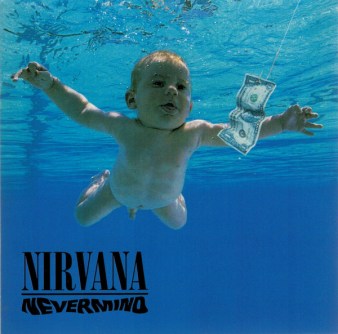
Album : Nevermind – Nirvana
Review : NME, 21 September 1991
Author : Steve Lamacq

Nirvana do here what Sonic Youth did so emphatically with ‘Goo’ last year – making the move from cult indie to major label with not as much as a hiccup. In fact, just as the Sonics impressed and outstripped the sceptics’ expectations, Nirvana have made an LP which is not only better than anything they’ve done before, it’ll stand up as a new reference point for the future post-hardcore generation.

For starters, this makes a refreshing change from the recent crop of groups – both British and American – who’ve used the Dinosaur Jr/Husker Du sound as their base starting point. Nirvana’s rawk, instead, draws upon their roots in Sub Pop grunge, but also takes in chunks of heavy ’70s bass/guitars and ideology.

Normally, this would spell the sort of appalling disaster you’d usually associate with ITV’s autumn schedules, but Nirvana, in their defence, have attacked rock and changed the format. This is monstrous in the sense of a good drama series, rather than a cheap US thriller. While various American grunge bands seem content to slosh around in their respective hardcore genres – albeit with some success and lucidity – Nirvana have opted out of the underground without wimping out of the creative process.

‘Nevermind’ is a record for people who’d like to like Metallica, but can’t stomach their lack of melody; while on the other hand it takes some of the Pixies‘ nous with tunes, and gives the idea new muscle. A shock to the system. Tracks like the excellent ‘In Bloom’ and best of the lot, ‘Come As You Are’, show a dexterity that combines both a tension and a laid-back vibe that work off each other to produce some cool, constructed twists and turns.

‘Come As You Are’ has something eerie about it, while opening track (and forthcoming single) ‘Smells Like Teen Spirit’ has a ‘Goo’ey feeling inherent in its lurching structure. At other times, the threesome lean into thrashier territory with the berserk ‘Territorial Pissings’ and screaming-pop of ‘Breed’.

This is the natural progression from their debut LP ‘Bleach’, exploring different avenues. They are less specific lyrically than SY, sometimes annoyingly so, but yet they still produce these vivid moods with ‘Drain You’, ‘Polly’ and the closing, quieter ‘Something In The Way’.

‘Nevermind’ is the big American alternative record of the autumn. But better still, it’ll last well into next year.

mp3 : Nirvana – Come As You Are
mp3 : Nirvana – In Bloom
mp3 : Nirvana – Something In The Way

JC adds : For a man who would become, thanks to his BBC Radio 1 Evening Session shows, so closely associated with the rise of Britpop just a few years later, credit has to go to Steve Lamacq for such a concise and well-thought review of an album that nobody could have predicted, at the time of its release, would later become so omnipresent.  His prediction that the impact of Nevermind would last a year or so was likely what everyone thought, not least the trio of musicians who made the album.


ALL OUR YESTERDAYS (17/22)

Album : Mezzanine – Massive Attack
Review : Rolling Stone, 28 May 1998
Author : Barney Hoskyns

Elder statesmen of the moody dance genre that used to trade under the facile name of trip-hop, Massive Attack like to take their time making albums – so long, indeed, that they perpetually run the risk of being overtaken by the very people (Björk, Tricky, Portishead, et al.) they’ve influenced.

One of Massive Attack’s strengths, though, is their indifference to passing fads. In a field where career longevity is a contradiction in terms, the assiduously anonymous trio from Bristol, England, give themselves the time and space to create music that lasts. And Mezzanine, their third album proper after Blue Lines (1991) and Protection (1995), shows that their creative edge is far from dulled.

Like its forebears, the record is a richly eclectic, unpigeonholeable artifact – king dubby meets the rockers uptown, with funk and jazz and hip-hop and even kraut rock all showing up for the party. Like its forebears, too, Mezzanine demonstrates exemplary taste in guest singers: no husky Tracey Thorn (who sang on Protection) this time, but an admirable substitute in the shape of Cocteau Twins siren Liz Fraser, together with the unearthly high tenor of Jamaican veteran Horace Andy.

Andy, who appeared on both Blue Lines and Protection (and who has his own marvelous anthology, Skylarking, on Massive Attack’s Melankolic label), is the star of two high points here. The opener, “Angel,” starts like some lean and mean R&B; track, then builds slowly through Andy’s haunted vocal to explode in a guitar-heavy chorus. Even better is the ominous “Man Next Door,” a troubled tale of urban angst that brilliantly evokes the pressure-cooker intensity of modern-day Kingston, Jamaica.

There are weaknesses on the album: Sometimes rhythm and texture are explored at the expense of memorable tunes, and the absence of the bizarre Tricky (who appeared on Blue Lines and Protection) only highlights the flat, monotonous rapping of the group’s 3-D. But Mezzanine remains a splendidly mercurial record, packed with amazing sounds and mesmeric grooves – a trip, in fact.

mp3 : Massive Attack – Angel
mp3 : Massive Attack – Teardrop
mp3 : Massive Attack – Man Next Door
mp3 : Massive Attack – Mezzanine

JC adds : I’ve long admired Barney Hoskyns as a writer and I was genuinely surprised to discover that he had contributed in the past to Rolling Stone.  It’s great to see that the prejudices previously on show in that publication (and highlighted in an earlier part of this series) had been swept away come the late 90s.


ALL OUR YESTERDAYS (16/22)

Album : Unknown Pleasure – Joy Division
Review : Melody Maker, 21 July 1979
Author : Jon Savage

“To talk of life today is like talking of rope in the house of a hanged man.” Where will it end?

The point is so obvious. It’s been made time and time again. So often that it’s a truism, if not a cliche. Cry wolf, yet again. At the time of writing, our very own mode of (Western,advanced, techno-) capitalism is slipping down the slope to it’s terminal phase: critical mass. Things fall apart. The cracks get wider: more paper is used, with increasing ingenuity, to cover them. Madness implodes, as people are slowly crushed, or, perhaps worse, help in crushing others. The abyss beckons: nevertheless, a febrile momentum keeps the train on the tracks. The question that lies behind the analysis (should, of course, you agree) is what action can anyone take?

One particular and vigorous product of capitalism’s excess has been pop music, not so much because of the form’s intrinsic merit (if any) but because, for many, bar football, it’s the only arena going in this country, at least. So vigorous because so much has to be channeled into so small a space: rebellion, creation, dance, sex energy, and this space, small as it is, is a market ruled by commerce, and excess of money. It’s as much as anyone can do, it seems, to accept the process andcarefully construct their theatre for performance and sale in halls in the flesh, in rooms and on radios (if you’re very lucky) in the plastic. The limits imposed especially as far as effective action goes) by this iron cycle of creation to consumption are as hard to break as they are suffocating.

“Trying to find a clue/trying to find a way/trying to get out!” “Unknown Pleasures” is a brave bulletin, a danceable dream; brilliantly, a record of place. Of one particular city, Manchester: your reviewer might very well be biased (after all, he lives there) but it is contended that “Unknown Pleasures,” in defining reaction and adjustment to place so accurately, makes the specific general, the particular a paradigm.

“To the centre of the city in the night waiting for you…” Joy Division‘s spatial, circular themes and Martin Hannett‘s shiny, waking-dream production gloss are one perfect reflection of Manchester’s dark spaces and empty places: endless sodium lights and hidden semis seen from a speeding car, vacant industrial sites – the endless detritus of the 19th century – seen gaping like rotten teeth from an orange bus. Hulme seen from the fifth floor on a threatening, rainy day… This is not, specifically, to glamourise; it could be anywhere. Manchester, as a (if not the) city of the Industrial Revolution, happens only to be a more obvious example of decay and malaise.

That Joy Division’s vision is so accurate is a matter of accident as much as of design: “Unknown Pleasures,” which together with recent gigs captures the group at some kind of peak, is a more precise, mature version of the confused anger and dark premonitions to be found (in their incarnation as Warsaw) on the skimpy “Electric Circus” blue thing, the inchoate “Ideal For Living” EP, and their unreleased LP from last year. As rarely happens, the timing is just right.

The song titles read as an opaque manifesto; “Disorder,” “Day Of The Lords,” “Candidate,” “Insight,” “New Dawn Fades” – to recite the first, aptly named, “Outside”. Loosely, they restate outsider themes (from Celine on in): the preoccupations and reactions of individuals caught in a trap they dimly perceive – anger, paranoia, alienation, feelings of thwarted power, and so on. Hardly pretty, but compulsive.

Again, these themes have been stated so often as to be cliches: what gives Joy Division their edge is the consistency of their vision – translated into crude musical terms, the taut danceability of their faster songs, and the dreamlike spell of their slower explorations. Both rely on the tense, careful counterpoint of bass (Peter Hook), drums (Stephen Morris) and guitar (Bernard Dickin): Ian Curtis‘ expressive, confused vocals croon deeply over recurring musical patterns which themselves mock any idea of escape.

LIve, he appears possessed by demons, dancing spastically and with lightning speed, unwinding and winding as the rigid metal music folds and unfolds over him. Recording, as ever, demands a different context: Hannett imposes a colder, more controlled hysteria together with an ebb and flow – songs merge in and out with one another in a brittle, metallic atmosphere. The album begins unequivocally with “Disorder”: “I’ve been waiting for a guide to come and take me by the hand”; the track races briskly, with ominous organ swirls – at the end, Curtis intones “Feeling feeling feeling” in the exact tone of someone who’s not sure he has any left.

Two slower songs follow, both based on massively accented drumming and rumbling bass – in their slow, relentless sucking tension, they pursue confusion to a dreamlike state: “Day Of The Lords” is built around a wrenching chorus of “Where will it end?” while the even sparser “Candidate” fleshes out the bare rhythm section with chance guitar ambience. In a story of failed connection and obscure madness, Curtis intones: “I tried to get to you” – ending with the pertinent “It’s just second nature/It’s what we’ve been shown/We’re living by your rules/That’s all that we’ve known.”

The album’s two aces are “Insight” and “She’s Lost Control”; here, finally, Gary Glitter meets the Velvet Underground. Both rely on rock-hard echoed drumming and bass recorded well up to take the melody – the guitar provides textural icing and thrust over the top.

The former leads out of “Candidate” with a suitable hesitation: whirring Leslie ambience leads to a door slamming, then a slow bass/drum fade into the song. The attractive, bouncing melody belies the lyrics: “But I don’t care anymore/I’ve lost the will to want more” – at the end Curtis croons, his voice treated, ghostly: “I’m not afraid anymore” to drown in a flurry of electronic noise from the synthesised snare.

“She’s Lost Control”, remixed to emphasise guitar and percussion, is a possible hit single: it’s certainly the obvious track for radio play. Deep and dark vocals ride over an irresistible, circular backing that threatens to break loose but never does: the tension ends in a crescendo of synthesised noise.

On the “Inside,” three faster tracks follow – mutated heavy pop, all built around punishing rhythms and riffs it’d be tempting to call metal, except control is everywhere. “Shadowplay” is a metallic travelogue – the city at night – with Curtis fleeing internal demons; the following couple, “Interzone” and “Wilderness,” wind the mesh even tighter.

“Wilderness” externalises things into Lovecraftian fantasy,all echoed drumming and sickening guitar slides, while “Interzone” moves through a clipped, perfect introduction to guitar shrills and “Murder Mystery” mumbles: “Down the dark street the houses look the same trying to find a way trying to find a clue trying to get out! Light shine like a neon tune no time to lose no place to stop no place to go…”

Both sides, finally, end with tracks – “New Dawn Fades” and “I Remember Nothing” – so slow and atmospheric that alienation becomes a waking dream upon which nothing impinges: “Me in my own world…”

Leaving the 20th Century is difficult; most people prefer to go back and nostalgise, Oh Boy. Joy Division at least set a course in the present with contrails for the future – perhaps you can’t ask for much more. Indeed, “Unknown Pleasures” may very well be one of the best  white, english, debut LPs of the year.

Problems remain; in recording place so accurately, Joy Division are vulnerable to any success the album may bring – once the delicate relationship with the environment is altered or tampered with, they may never produce anything as good again. And, ultimately, in their desperation and confusion about decay, there’s somewhere a premise that what has decayed is more valuable than what is to follow. The strengths of the album, however, belie this.

Perhaps it’s time we all started facing the future. How soon will it end?

mp3 : Joy Division – Disorder
mp3 : Joy Division – Shadowplay

JC adds : No matter how you look at it, this is an extraordinary review.  It opens with a quote from Raoul Vaneigem, a Belgian writer closely associated with the Situationist movement, that refers to suicide by hanging, the ultimate fate of Ian Curtis less than a year later. It also quotes the lyrics extensively, hinting at the troubled mind of the songwriter, and yet in the period after his death his bandmates would state constantly that they weren’t aware of what exactly was being sung, that they paid no attention and as such weren’t aware of the mental state of their friend. It does beg a few questions, not least whether any of the musicians of Joy Division actually read the album reviews…..

It’s now more than 40 years since the release of Unknown Pleasures and it still gets millions of words devoted to it on a yearly basis as fans, old and new, try to make sense of it all.  I don’t think, however, anyone has ever written anything as chilling as ‘Joy Division are vulnerable to any success the album may bring’.


ALL OUR YESTERDAYS (15/22)

Album : To Bring You My Love – PJ Harvey
Review : Rolling Stone, 9 March 1995
Author : Barbara O’Dair

“Call me Lazarus,” growls Polly Jean Harvey on the astonishing To Bring You My Love. It’s funny, it’s impressive, and we should take her at her word. Never a shrinking violet on record — and perhaps tired of being called a slip of a girl — Harvey bawls and shouts and moans her way through a set of blues-inspired tunes that are strange, skewed and solitary. “It’s my voodoo working,” she declaims elsewhere, and there’s nothing to say but “Yes, yes!”

On her first three albums, the heralded Dry (1992), the more problematic Rid of Me (1993) and the Rid of Me spinoff, 4-Track Demos (1993), Harvey rocked and roiled her way through female traumas and triumphs. While working traditional thematic turf — the body and soul of the suffering woman — she ripped to shreds staid truths about femininity. Such paradoxes generate power.

Harvey reckons with more than that, too: She has ambitions to remake rock & roll and its myths in her own guise. In the process she stretches her musical references. Her covers of such classics as Bob Dylan’s “Highway 61 Revisited” (on Rid of Me) and Willie Dixon’s “Wang Dang Doodle” (on John Peel’s British radio program) show an abiding interest in taking on the past, more particularly its male legends. In the same spirit in which Liz Phair answered the Rolling Stones on Exile in Guyville — but to a very different end — Harvey dive bombs the canon on To Bring You My Love.

She may get her sense of play from Captain Beefheart and her sense of drama from Patti Smith, but it’s the blues and blues-schooled greats whom Harvey transfigures — John Lee Hooker, Howlin’ Wolf, Jagger-Richards, Hendrix, Zeppelin. Nevertheless, listeners will probably find To Bring You My Love a relief after the beating producer Steve Albini gave the occasionally glorious Rid of Me. This time, Harvey co-produces (with U2 producer Flood and percussionist John Parish) for a result that combines Dry‘s ecstasy with Rid‘s agony. Harvey plays organ on every cut — along with singing and playing some guitar — adding still more dimension. The other musicians — guitarist Joe Gore, percussionists Jean-Marc Butty and Joe Dilworth, plus a string quartet on three tracks — help fuel the fire.

To Bring You My Love, full of portents, searching for grace, pulls its themes straight from the mythological terrain of the blues. Harvey forces personae to fit this music; her imagery is highly symbolic — not personal but essentially private. On the title track, over a chugging bass riff, she sings: “I was born in the desert/I’ve been down for years/Jesus, come closer/I think my time is near…. I’ve lain with the devil/Cursed God above/Forsaken heaven/To bring you my love.” On a hissing, rubbery blast called “Long Snake Moan,” a raw-voiced Harvey warns: “Bring me, lover/All your power…. In my dreaming/You’ll be drowning…. You oughta hear my long snake moan.”

On “The Dancer,” Harvey feelingly sings: “He came riding fast/Like a phoenix out of fire flames/He came dressed in black with a cross bearing my name/He came bathed in light and the splendor and glory/I can’t believe what the Lord has finally sent me.” And then she gives a few toy shrieks: it’s so over the top that you’re not sure her vision of a male savior on a horse isn’t a put-on.

So what’s this young, white, bluesdrenched woman doing? In attempting to create a sexual landscape as charged as the Midnight Rambler’s, Harvey envisions a teeming underworld where she is victim, aggressor and accomplice, song by song. The sexual menace, the left-behind woman, allegories about a son, a daughter, a “blue-eyed whore” — all these are put in the service of a primal vision on To Bring You My Love: Harvey’s bitter struggles with her demons and her wicked, wanton sympathy for the devil.

mp3 : PJ Harvey – To Bring You My Love
mp3 : PJ Harvey – Long Snake Moan
mp3 : PJ Harvey – The Dancer

JC adds : Try as I might, it was near impossible to find old album reviews by female journalists that are easily accessed on-line, certainly of the records that mean something to me.  I loved reading this and thinking back to everything that accompanied it, particularly the seemingly overnight and jaw-dropping change in PJ Harvey as she donned tight dresses, wore wigs, applied lurid shapes of lipstick and acted all seductive in the promo videos, styles she would then adopt when she made her return to the live setting.

Barbara O’Dair’s review captures the energy on show throughout the album, quietly acknowledging that after the disappointments associated with Rid of Me, the singer had taken full control of the entire process, dispensing with her old band, getting involved on the production side of things and determining that this new souped-up, aggressive and powerful sound required a look and style to match.  It’s the album that ensured PJ Harvey could leave behind the indie-circuit forever and provided the foundations for a career that has remained consistently outstanding.


ALL OUR YESTERDAYS (14/22)

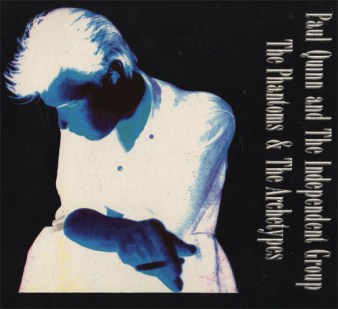
Album : The Phantoms & The Archetypes – Paul Quinn and The Independent Group
Review : NME, 12 November 1993
Author : John Mulvey

Paul Quinn had one of the great lost pop voices of the ‘80s, a mannered, expressive croon that recalled Bryan Ferry and, especially, ‘Young Americans’ –era Bowie. It allowed him to get away with the sort of soulful postures that made so many of his Glaswegian contemporaries look ridiculous. But oddly, for someone at the centre of the ‘Sound of Young Scotland’ creative whirl, Quinn’s career never really took off. A great debut single fronting Bourgie Bourgie, a nice flit through ‘Pale Blue Eyes’ with Edwyn Collins, a mismatch with Vince Clarke….and then nothing.

Until now and, appropriately, the relaunch of his spiritual home, Postcard. ‘The Phantoms & The Archetypes’ is the album Quinn always threatened to make; a cool, moody collection of torch and twanging, of songs that aren’t quite the classics they brazenly aspire to be, and with an acute understanding of soul that puts the final nail in the coffin of all the style charlatans and arch-wankers like Hue & Cry.

It’s all very late-night, low-key knowing stuff, of course. But the sheer panache and audacity of Quinn’s voice- he occasionally sounds like Scott Walker and Gene Pitney, and is terrific throughout – coupled with slick songs, mainly written by Quinn, Robert ‘Bobby Bluebell’ Hodgens and Postcard maestro Alan Horne, ensure the album’s style never cripples its content. The title track is an exemplary exercise in self-conscious languor, ‘Should’ve Known By Now’ very nearly breaks into a sweat and ‘Punk Rock Hotel’ is a brilliant, sassy fragment from a lost movie that was one of Horne’s myriad half-assed ‘80s projects.

The ubiquitous Edwyn – who stole a fair number of his throaty mannerisms from Quinn – produces with a deal more crispness than on the recent Frank & Walters album and The Independent Group play like a Scottish pop fan’s wet dream, featuring as they do Orange Juice’s James Kirk, Aztec Camera’s Campbell Owens and The Commotions’ Blair Cowan.

There is no doubt that the whole package is something of a hangover from another time, but when it’s from a time so maverick, exciting and too often forgotten, and when it gives a talent like Quinn’s a belated showcase, then living in the past can be wholeheartedly forgiven/ On this evidence, The Sound Of Early Middle-Aged Scotland will be far from the disgusting concept it may appear.

mp3 : Paul Quinn and The Independent Group – The Phantom & The Archetypes
mp3 : Paul Quinn and The Independent Group – Should’ve Known By Now
mp3 : Paul Quinn and The Independent Group – Punk Rock Hotel

JC adds : John Mulvey’s excellent review really takes me back.  The release of this album, and the later single Stupid Thing, provided real hope that the mighty Quinn was finally about to hit payola, but history records that it wasn’t to be.  It remains one of life’s great mysteries.

I used to sneer at articles/pieces in the 80s and 90s which mused on the unsung genius of a long-forgotten and/or under-appreciated singer or musician from decades previously, thinking that if they really were that talented/brilliant/ground-breaking then they wouldn’t be so unknown. It was only the sadness and anger that I felt when the same fate befell Paul Quinn that I understood why such articles were so important.  There are some lights that don’t deserve ever to go out.


ALL OUR YESTERDAYS (13/22)

Album : 50,000 Fall Fans Can’t Be Wrong – The Fall
Review : Pitchfork, 8 July 2004
Author : Alex Linhardt

The Fall have seen so many compilations and reissues of their work during the course of their 26-year career that they named their latest full-length The Real Fall LP for clarification. Given the reputation of these numerous shoddy anthologies, however, and the fact that, with the exception of the excellent 2002 Rough Trade release, Totally Wired, there has never been any truly “definitive” Fall retrospective, the best a potential convert could hope for was to pick whichever disc bore the prettiest packaging.

While other Fall comps pride themselves on monochromatic slabs of cover design more appropriate for Rothko retrospectives than tumultuous punk albums, 50,000 Fall Fans Can’t Be Wrong instantly has one thing going for it: Its artwork is absolutely hilarious, keenly referencing Elvis Presley‘s billion-selling 50,000,000 Elvis Fans Can’t Be Wrong. With its image of countless self-replicating Elvises hailing down in dashing suits, that original cover was a perfect embodiment of pop music’s narcissism and weirdness– incidentally also the two subjects of nearly every song Mark E. Smith ever laid to tape.

As the first legitimate career-spanning compilation, 50,000 Fall Fans begins at the band’s inception in 1977. Smith was a mere 20 years old, weaned on garage rock, kraut-rock, and a one-year stint as a dock worker. Like all young adults, he named his band after a Camus novel, quickly releasing a series of singles before 1979’s full-length debut, Live at the Witch Trials. Represented by “Repetition”, the pre-Witch Trials band consists of simple angular guitars, teen-pop rhythms, and drunken charm without any of the complexity or chaos that would later become integral to their work.

Around 1980’s Grotesque, The Fall began to seriously investigate other genres, channeling spiraling rodeos (“How I Wrote Elastic Man”), steely noise-pop (“Totally Wired”), and rhythmic shrapnel (“New Face in Hell”). 50,000 Fall Fans spends its leisurely time in this nascent stage, but the brunt of the album is understandably spent exploring The Fall’s near-perfect run of albums in the mid-80s, from 1982’s Hex Enduction Hour to 1986’s Bend Sinister. A staggering 13 tracks from this era find their place on this two-disc set, forging a truly brilliant sequence. Ranging from the blustering, seismic noise of “The Classical” to the schizophrenic death-rattle of “The Man Whose Head Expanded”, the album provides a convincing case that The Fall were the most uncompromisingly progressive and reliable band of the 1980s, whether they assumed the guise of punk heavyweights or sweet electro-divas (with the assistance of Smith’s wife, Brix).

With this sort of lead-in, even the most questionable song of the band’s notorious early-90s phase seems challenging and substantive. Considering that this anthology’s second disc includes the band’s stab at Europop/ska-rap (“Why Are People Grudgeful?”), this is truly a feat. As a general rule, this disc pulls one song from every album released from 1990 to the present, distilling each allegedly mediocre release to one stunning single. If anything, however, these selections compel listeners to return to the band’s 90s output with their tranquilized synths (“Masquerade”) and brash genre-blenders (the Cocteau Twins-vs.-AC/DC dynamics of “The Chiselers”).

Of course, with a career that’s spanned four decades, 50,000 Fall Fans inevitably winds up omitting some of the most crucial songs in their canon, including “Oh! Brother!”, “Slang King”, “Bombast”, and “Oleano”. Still, the songs represented are consistently fascinating and invigorating, many standing as among the finest of the last quarter-century, chaotically navigating punk through ever more adventurous territory, from Countrypolitan to house music.

As a result of this willed diversity and comprehensiveness, 50,000 Fall Fans has finally stepped up to assume its rightful position as the most successful and essential Fall compilation in existence– a convenient summary for fearful neophytes reluctant to dip their toe into the black hole of the band’s discography, as well as die-hard fans seeking a distillation of choice cuts from the group’s more wayward 90s efforts. Smith is never less than inspiring on any of these 39 tracks, flaunting his confrontational sneer and leering sarcasm over some of the most erratic, riled riffs in punk. In his oft-ignored later period, Smith sounds even more unhinged, furious and battered, cloaking criticisms of governmental policies in lunatic poetics that the most pretentious high-school fanzine dadaists would cower before. Smith quite literally sounds as if his mouth has been pierced full of gaping holes leaking bile and cancer.

Incidentally, this is also the fundamental difference between Smith and Elvis. Elvis was pure sexual dynamite, basking in his own libidinal juices; in sharp contrast, Smith is the ugliest, grimiest beast of Lucifer to ever drag his expanding head from a pub’s water closet. Elvis may have drooled sex, but it was artificial, manipulative, cheap. The Fall, like all truly great sex, climaxes in rage, regret and release– the three criteria for all utterly essential rock music. 50,000 Fall Fans Can’t Be Wrong chronicles more than two decades of those climaxes, perhaps to one day be held in similar regard to the album its artwork parodies.

mp3 : The Fall – New Face In Hell
mp3 : The Fall – The Classical
mp3 : The Fall – The Man Whose Head Expanded
mp3 : The Fall – The Chiselers

JC adds : I wasn’t sure whether to look out for any reviews of compilation albums, but I couldn’t resist this genuinely warm, appreciative and occasionally LOL piece from Alex Lindhart.  There are still folk out there who sneer and claim that real journalists can only be found through print media, in the same way that those of us who write about music via blogs aren’t nearly as qualified as those who have contracts with publishing moguls.  This review on its own should puncture those self-righteous bubbles.

Besides, 50,000 Fall Fans Can’t Be Wrong is the starting point to where I would direct anyone who remains unsure about the unbridled genius of Mark E Smith and the quality of the music he made during his lifetime.

The fact it got a positive mention in this review means I’ve included The Classical as one of the four tracks today…..it is one of the greatest bits of music that The Fall ever recorded, but I’ve always been uneasy about the lyric ‘Where are the obligatory n*****s? Hey there, fuck face!’  I don’t think MES was being racist, but he certainly was being confrontational and combative, ensuring that the tune wouldn’t get aired on radio.  I hope nobody is offended…..

ALL OUR YESTERDAYS (12/22)

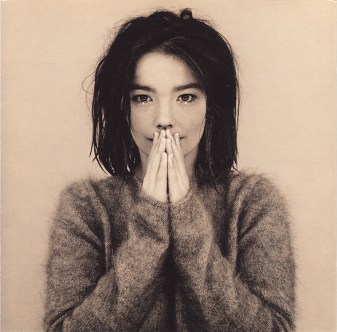
Album : Debut – Björk
Review : NME, 3 July 1993
Author : Johnny Dee

LET’S ADMIT it, the Sugarcubes resided in a border town south of Obscure and just north of Wacky. They juddered and lurched like difficult children, throwing toys against walls, scratching non-existent itches. They were the Euro B-52’s. But there was, above everything, that voice, an alien screech that coughed up puffin feathers, cracked, screeched and soared like nothing you’d heard before.

Five years on and ‘Birthday’ still sounds ridiculously stark and extraordinary because of it. But, then, as you found yourself consumed by its strange beauty, in walked Einar The Irritant barking a bizarre psycho-babble rap, bringing even the most goo-goo eyed back down to earth with an ugly bump.

Is should, therefore, come as some relief to find Björk left to journey alone without the ideas of a group cluttering up the landscape. The surprise, though, is that she has fashioned an album as elaborate, unique and fresh as ‘Debut’. It’s hard not to bellyflop straight into the deep end, cry, “Album of the year, end of story”, and float off on a sea of hyperbole. ‘Debut’ takes you to strange, uncharted places. No group could make an album like this – too many ears to please. But, although this is very much Björk’s album (you get the impression that these are songs she’s carried in her mind, like secrets, for years), the contribution of producer Nellee Hooper is vital. The man behind Soul II Soul‘s symphonies, he has managed to throw manifold ideas into this exotic soup without making it sound cluttered and overdone.

With his involvement and Björk’s previous solo dalliance with 808 State it would be easy to assume she’s become a fully fledged house diva. Not so; ‘Debut’ may walk the same side of the street but it wanders into jazz, film soundtracks, pop too. Heck, there’s even a couple of songs Babs Streisand wouldn’t blink at covering. And then there’s the just plain weird (natch).

The first three tracks are built from hypnotic loops. On ‘Human Behaviour’ a swampy kettle drum jazz vibe circles around Björk’s rasping larynx, trying to find a melody but eventually settling for the search. ‘Crying’ swims on a niggling piano riff, while the wonderful ‘Venus As A Boy’ creates an Arabic mantra. Here, as on most of the album, the tonsil gymnastics are kept to a minimum, but it’s still a vastly disarming sound: a voice only a lifetime of Marlboro abuse or a guttural foreign language where people have names like Gudmundsdottir could create.

There’s a bonkers part in ‘There’s More To Life Than This’, though, where she sounds positively possessed. Allegedly recorded live in the Milk Bar toilets, a muffled house beat chunders away somewhere in the distance amid giggling chatter, then a door is closed and Björk is left to sing alone about nicking boats and sneaking off into the night. This woman is quite patently barmy.

But even this is ill preparation for ‘Like Someone In Love’. Accompanied only by 80-year-old harpist Corki Hale, it’s the kind of tearful ballad you’d expect to find in the sad interlude of some crackly old black and white Judy Garland film. More fun, madness and surprise follows – the pulsating grind of ‘Big Time Sensuality’ and ‘Violently Happy‘ plus the sweet unearthly breeze of ‘One Day’ which ripples along to baby gurgles and ambient fizzes.

This is an album that believes music can be magical and special. It will either puzzle you or pull you into its spell. And if you fall into the latter category, ‘Debut’ will make every other record you own seem flat, lifeless and dull by comparison.

mp3 : Björk – Venus As A Boy
mp3 : Björk – Like Somone In Love
mp3 : Björk – Big Time Sensuality

JC adds : Anyone who is familiar with my own past postings on this album will be more than aware that my thoughts very much echo those of Mr Dee.

There you go, the grumpiness from yesterday has been forgotten already.


ALL OUR YESTERDAYS (11/22)

Album : Various/Various
Review : Rolling Stone, 13 May 1982
Author : David Fricke

To English popmusic fans, there is nothing like a good six-month fad. The punk explosion, the warmed-over mods, the ska craze and the psychedelic revival–don’t look now, but you just missed the New Romantics–have come and gone (and in some cases, come again) with such confounding rapidity that it is hard to take most of them any more seriously than Hula Hoops or edible underwear.

The country’s latest rage is synthesizer music. Every hip, young Tom, Dick and Johnny B. Goode has traded in his guitar for a synthesizer and rhythm box, buying into future cool by applying the latest keyboard and computer appliances to the brisk melodic cheeriness of commercial pop and the bubbly beat of off-white funk. But far from bowing down to the great god of automation or passing off their microchip bubblegum musings on sex and energy as the stuff of a brave new world, these synthesizer bands have bestowed an almost mock-human quality upon their hardware. The beeping, farting and whooshing of the keyboards, combined with the psycho-Sinatra cabaret croon of the singers (Soft Cell’s Marc Almond and Orchestral Manoeuvres in the Dark’s Andy McCluskey, take a bow), creates a man-machine tension channeled into the vigorous dance beat of many of these songs. And by dancing, that does not mean the March of the Androids but no-holds-barred Soul Train swing.

The chart success of these digital dandies and their synthesizer pop – all four of the above LPs made the U.K. Top Five and are faring surprisingly well here – is somewhat out of proportion to their artistic worth. These are, after all, only pop songs in transistor drag. But if singing the same old song with newfangled noise is no great leap, selling the public on a package of postpunk do-it-yourself ingenuity, easy-to-play technology and Top Forty classicism certainly is.

The Human League is a perfect case in point. In the four years since the group’s first single, a home-recorded slice of angry young electronic New Wave called “Being Boiled,” the original quartet split in half and evolved into a six-piece, circa-2001 Abba. Singer Phil Oakey‘s lusty saloon styling is now lightly sugared with the twee harmonies of Joanne Catherall and Susanne Sulley. Such songs as the Euro-fizzy “Open Your Heart” and the bright motorfunk exercise “Love Action” (both on Dare) are delightful, swinging singles free of sci-fi pretensions and uncluttered by art-school cleverness. Producer Martin Rushent‘s warm widescreen production also takes the edge off the severe chill that typified the League’s earlier import albums.

Yet, more important, the League itself now strikes an appealing balance between modern technique and tuneful charm, epitomized by the hit single “Don’t You Want Me.” Alternating between a gray doomsday riff and a smart samba strut, the song is a tasty white-soul layer cake of competing melody and harmony lines whose orchestral possibilities are pared down to a sleek, glassy arrangement by the metallic breeze and regimented beat of the synthesizers. With all the knobs and buttons at their disposal, the Human League still goes for the hook. And with eight other songs as artfully grabby as “Don’t You Want Me,” Dare keeps reelin’ ’em in.

The problem with Orchestral Manoeuvres in the Dark is that they want to have their art and eat it, too. The awkward mix of dreamy romanticism and spatial, Pink Floyd-ian abstractions on Architecture and Morality, OMD’s second American album, suggests that Andy McCluskey and Paul Humphreys are acutely embarrassed by their ability to pen seductive moonlight sonatas like “Souvenir” and the eerie Parisian waltz “Joan of Arc (Maid of Orleans).” Why else gussy up the LP with ponderous music of the spheres, as in the title track’s construction-site rattle and the overlong “Sealand,” a nuclear beach concerto of drawn-out synthesizer drones? They even sabotage the album’s one decent party track, “Georgia,” with carnival organ and holy choir sound effects. Too much sincerity and not enough spunk on Architecture and Morality make for attractive but dull fare.

The Soft Cell twosome of Marc Almond and David Ball walks on a much wilder side, bringing the brainy bop of OMD down to a lurid red-light-district level on their debut album, Non-Stop Erotic Cabaret. Their hit single, “Tainted Love” (included here), neatly captured Soft Cell’s fetish for R&B; camp; the twelve-inch single even segued into a heavy-breathing version of the Supremes‘ “Where Did Our Love Go.”

Not surprisingly, then, the best tracks on Non-Stop Erotic Cabaret–“Frustration,” “Sex Dwarf,” “Secret Life” – bump and grind with vibrant, tawdry soul. Ball, employing a limited arsenal of synthesized keyboard effects, tarts up the meaty funk beat with multiple rhythm figures and steamy extended chords. Together, these complement singer-lyricist Almond’s passion for sexual deviation (“Sex Dwarf,” “Entertain Me”) and rather vampiric fear of open day-light (“Memories of the night before/Out in clubland having fun/And now I’m hiding from the sun,” from “Bedsitter”).

Compared to Soft Cell’s smutty pop, Depeche Mode‘s Speak and Spell is strictly PG-rated fluff. A group of fresh-faced, suburban lads from Britain, they have neither the ambition of Orchestral Manoeuvres in the Dark nor the overt commercial allure of the Human League. They simply drift aimlessly between the two, occasionally hitting a disco bull’s-eye with chirpy dance tracks like “Dreaming of Me” and “Just Can’t Get Enough.” Too often the synthesizers lock into dead-end grooves, and the group’s boyish caroling is anonymous at best.

There’s plenty more where all this synthesized Dream Whip came from: e.g., Simple Minds, Duran Duran, Heaven 17, the Far East fantasies of the group Japan. They’re not all completely synth, but they certainly sing the body electric. Still, the temptation is to dismiss English synth-pop as the chart’s flavor of the month. For all their undeniable pop attractions and the genuine innovative potential of electro-dominated rock, these bands so far have only bent the rules, not broken them. If this batch of records is any indication, the revolution will not be synthesized.

mp3 : The Human League – Open Your Heart
mp3 : OMD – Georgia
mp3 : Soft Cell – Secret Life
mp3 : Depeche Mode – Dreaming of Me

JC adds “The chart success of these digital dandies and their synthesizer pop is somewhat out of proportion to their artistic worth.”   Just fuck off will you?  It’s dicks like you that give music writers/journalists a bad name.

Happy New Year.  It’s great to start it off grumpy.


ALL OUR YESTERDAYS (10/22)

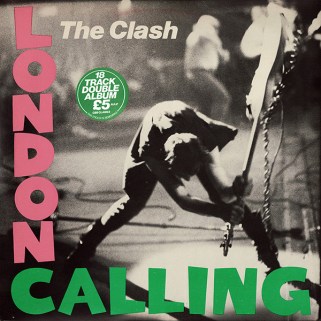
Album : London Calling by The Clash
Review : Rolling Stone, 3 April 1980
Author : Tom Carson

By now, our expectations of the Clash might seem to have become inflated beyond any possibility of fulfillment. It’s not simply that they’re the greatest rock & roll band in the world — indeed, after years of watching too many superstars compromise, blow chances and sell out, being the greatest is just about synonymous with being the music’s last hope. While the group itself resists such labels, they do tell you exactly how high the stakes are, and how urgent the need. The Clash got their start on the crest of what looked like a revolution, only to see the punk movement either smash up on its own violent momentum or be absorbed into the same corporate-rock machinery it had meant to destroy. Now, almost against their will, they’re the only ones left.

Give ‘Em Enough Rope, the band’s last recording, railed against the notion that being rock & roll heroes meant martyrdom. Yet the album also presented itself so flamboyantly as a last stand that it created a near-insoluble problem: after you’ve already brought the apocalypse crashing down on your head, how can you possibly go on? On the Clash’s new LP, London Calling, there’s a composition called “Death or Glory” that seems to disavow the struggle completely. Over a harsh and stormy guitar riff, lead singer Joe Strummer offers a grim litany of failure. Then his cohort, Mick Jones, steps forward to drive what appears to be the final nail into the coffin. “Death or glory,” he bitterly announces, “become just another story.”

But “Death or Glory” — in many ways, the pivotal song on London Calling — reverses itself midway. After Jones’ last, anguished cry drops off into silence, the music seems to scatter from the echo of his words. Strummer reenters, quiet and undramatic, talking almost to himself at first and not much caring if anyone else is listening. “We’re gonna march a long way,” he whispers. “Gonna fight — a long time.” The guitars, distant as bugles on some faraway plain, begin to rally. The drums collect into a beat, and Strummer slowly picks up strength and authority as he sings:

We’ve gotta travel — over mountains
We’ve gotta travel — over seas
We’re gonna fight — you, brother
We’re gonna fight — till you lose
We’re gonna raise —
TROUBLE!

The band races back to the firing line, and when the singers go surging into the final chorus of “Death or glory…just another story,” you know what they’re really saying: like hell it is!

Merry and tough, passionate and large-spirited, London Calling celebrates the romance of rock & roll rebellion in grand, epic terms. It doesn’t merely reaffirm the Clash’s own commitment to rock-as-revolution. Instead, the record ranges across the whole of rock & roll’s past for its sound, and digs deeply into rock legend, history, politics and myth for its images and themes. Everything has been brought together into a single, vast, stirring story — one that, as the Clash tell it, seems not only theirs but ours. For all its first-take scrappiness and guerrilla production, this two-LP set — which, at the group’s insistence, sells for not much more than the price of one — is music that means to endure. It’s so rich and far-reaching that it leaves you not just exhilarated but exalted and triumphantly alive.

From the start, however, you know how tough a fight it’s going to be. “London Calling” opens the album on an ominous note. When Strummer comes in on the downbeat, he sounds weary, used up, desperate: “The Ice Age is coming/The sun is zooming in/Meltdown expected/The wheat is growing thin.’

The rest of the record never turns its back on that vision of dread. Rather, it pulls you through the horror and out the other side. The Clash’s brand of heroism may be supremely romantic, even naive, but their utter refusal to sentimentalize their own myth — and their determination to live up to an actual code of honor in the real world, without ever minimizing the odds — makes such romanticism seem not only brave but absolutely necessary. London Calling sounds like a series of insistent messages sent to the scattered armies of the night, proffering warnings and comfort, good cheer and exhortations to keep moving. If we begin amid the desolation of the title track, we end, four sides later, with Mick Jones spitting out heroic defiance in “I’m Not Down” and finding a majestic metaphor at the pit of his depression that lifts him — and us — right off the ground. “Like skyscrapers rising up,” Jones screams. “Floor by floor — I’m not giving up.” Then Joe Strummer invites the audience, with a wink and a grin, to “smash up your seats and rock to this brand new beat” in the merry-go-round invocation of “Revolution Rock.”

Against all the brutality, injustice and large and small betrayals delineated in song after song here — the assembly-line Fascists in “Clampdown,” the advertising executives of “Koka Kola,” the drug dealer who turns out to be the singer’s one friend in the jittery, hypnotic “Hateful” — the Clash can only offer their sense of historic purpose and the faith, innocence, humor and camaraderie embodied in the band itself. This shines through everywhere, balancing out the terrors that the LP faces again and again. It can take forms as simple as letting bassist Paul Simonon sing his own “The Guns of Brixton,” or as relatively subtle as the way Strummer modestly moves in to support Jones’ fragile lead vocal on the forlorn “Lost in the Supermarket.” It can be as intimate and hilarious as the moment when Joe Strummer deflates any hint of portentousness in the sexual-equality polemics of “Lover’s Rock” by squawking “I’m so nervous!” to close the tune. In “Four Horsemen,” which sounds like the movie soundtrack to a rock & roll version of The Seven Samurai, the Clash’s martial pride turns openly exultant. The guitars and drums start at a thundering gallop, and when Strummer sings, “Four horsemen …,” the other members of the group charge into line to shout joyously: “…and it’s gonna be us!”

London Calling is spacious and extravagant. It’s as packed with characters and incidents as a great novel, and the band’s new stylistic expansions — brass, organ, occasional piano, blues grind, pop airiness and the reggae-dub influence that percolates subversively through nearly every number — add density and richness to the sound. The riotous rockabilly-meets-the-Ventures quality of “Brand New Cadillac” (“Jesus Christ!” Strummer yells to his ex-girlfriend, having so much fun he almost forgets to be angry, “Whereja get that Cadillac?”) slips without pause into the strung-out shuffle of “Jimmy Jazz,” a Nelson Algren-like street scene that limps along as slowly as its hero, just one step ahead of the cops. If “Rudie Can’t Fail” (the “She’s Leaving Home” of our generation) celebrates an initiation into bohemian lowlife with affection and panache, “The Card Cheat” picks up on what might be the same character twenty years later, shot down in a last grab for “more time away from the darkest door.” An awesome orchestral backing track gives this lower-depths anecdote a somber weight far beyond its scope. At the end of “. — “from the Hundred Year War to the Crimea” — that turns ephemeral pathos into permanent tragedy.

Other tracks tackle history head-on, and claim it as the Clash’s own. “Wrong ‘Em Boyo” updates the story of Stagger Lee in bumptious reggae terms, forging links between rock & roll legend and the group’s own politicized roots-rock rebel. “The Right Profile,” which is about Montgomery Clift, accomplishes a different kind of transformation. Over braying and sarcastic horns, Joe Strummer gags, mugs, mocks and snickers his way through a comic-horrible account of the actor’s collapse on booze and pills, only to close with a grudging admiration that becomes unexpectedly and astonishingly moving. It’s as if the singer is saying, no matter how ugly and pathetic Clift’s life was, he was still — in spite of everything — one of us.

“Spanish Bombs” is probably London Calling‘s best and most ambitious song. A soaring, chiming intro pulls you in, and before you can get your bearings, Strummer’s already halfway into his tale. Lost and lonely in his “disco casino,” he’s unable to tell whether the gunfire he hears is out on the streets or inside his head. Bits of Spanish doggerel, fragments of combat scenes, jangling flamenco guitars and the lilting vocals of a children’s tune mesh in a swirling kaleidoscope of courage and disillusionment, old wars and new corruption. The evocation of the Spanish Civil War is sumptuously romantic: “With trenches full of poets, the ragged army, fixin’ bayonets to fight the other line.” Strummer sings, as Jones throws in some lovely, softly stinging notes behind him. Here as elsewhere, the heroic past isn’t simply resurrected for nostalgia’s sake. Instead, the Clash state that the lessons of the past must be earned before we can apply them to the present.

London Calling certainly lives up to that challenge. With its grainy cover photo, its immediate, on-the-run sound, and songs that bristle with names and phrases from today’s headlines, it’s as topical as a broadside. But the album also claims to be no more than the latest battlefield in a war of rock & roll, culture and politics that’ll undoubtedly go on forever. “Revolution Rock,” the LP’s formal coda, celebrates the joys of this struggle as an eternal carnival. A spiraling organ weaves circles around Joe Strummer’s voice, while the horn section totters, sways and recovers like a drunken mariachi band. “This must be the way out,” Strummer calls over his shoulder, so full of glee at his own good luck that he can hardly believe it.” El Clash Combo,” he drawls like a proud father, coasting now, sure he’s made it home. “Weddings, parties, anything… And bongo jazz a specialty.”

But it’s Mick Jones who has the last word. “Train in Vain” arrives like an orphan in the wake of “Revolution Rock.” It’s not even listed on the label, and it sounds faint, almost overheard. Longing, tenderness and regret mingle in Jones’ voice as he tries to get across to his girl that losing her meant losing everything, yet he’s going to manage somehow. Though his sorrow is complete, his pride is that he can sing about it. A wistful, simple number about love and loss and perseverance, “Tram in Vain” seems like an odd ending to the anthemic tumult of London Calling. But it’s absolutely appropriate, because if this record has told us anything, it’s that a love affair and a revolution — small battles as well as large ones — are not that different. They’re all part of the same long, bloody march.

mp3 : The Clash – London Calling
mp3 : The Clash – Death or Glory
mp3 : The Clash – Spanish Bombs
mp3 : The Clash – Train In Vain

JC adds :  And here was me thinking that the NME was the sole outlet for overly-long and overly-descriptive album reviews back in the day.  There is no doubt that Tom Carson really liked London Calling, but with the benefit of hindsight over the past 40 years (certainly since its UK release), you can look back and argue that what he homed in on for particular attention was either inconsequential or unmerited.

Death or Glory is an important song, but is it worthy of taking up so much of the review?  Spanish Bombs is far from the album’s best or most ambitious song. And there’s more then a few remarks on various songs that feel straight out of Psued’s Corner. Having said all that, his view that Train In Vain seems an odd ending to the album is one that I’ve long shared, but as we’ve since learned from the story behind the album, this was really just the most  practical way of getting a new song out there to fans than any considered attempt to find an ending that was to provide an alternative to some of the anthemic stuff – indeed, there’s a body of thought that, outside of the title track, Train In Vain, has become the most anthemic song on the album.

I really did enjoy reading this particular review, for nothing else that it has a different tone and feel to those which came later when the album was remixed/re-released/re-packaged for certain anniversaries.  It also felt like the perfect way to close out the blog for 2019.


ALL OUR YESTERDAYS (9/22)

Album : Bandwagonesque by Teenage Fanclub
Review : Q, December 1991
Author : Paul Davies

Creation boss Alan McGee‘s latest rapscallion ruse to lighten the pockets of the record-buying public is a bunch of hirsute Glaswegians with a reputation for storming live shows and a penchant for genteel melodies and feedback-strafed electric guitars.

The self-styled Teenage Fannies have mockingly sidestepped the inevitable accusations of plundering rock’s dog-eared back pages with the nod’s as good as a wink LP title, and whilst there is little doubt that TFC have quaffed long and heartily from the fulsome musical goblets of Lennon and McCartney, Neil Young, Roger McGuinn and sundry American guitar delinquents, they are close to arriving at a sound that is recognisably all their own.

Introduced by an awesome barrage of feedback and the deadpan couplet “She wears denim wherever she goes, says she’s gonna get some records by the Status Quo”, the opening song, The Concept, is a thrilling induction into TFC’s melodious grunge guitar free-for-all. Operating in a parallel universe to the blips, bleeps and chemically assisted nirvana of the still raving indie dance scene, TFC have remodelled the whiplash guitar of Jesus And Mary Chain, grafted on their own softly shimmering vocal harmonies and replaced a black-hearted cynicism with a life-affirming brio and some sorely needed humour.

Cocking a snook at those who dissect slivers of plastic in search of coded entreaties to teenage devil worship, Satan is a murderous 80-second wind-up of orchestrated chaos and guitar savagery, with enough garbled vocals to keep the moral majority on overtime until Christmas. Cold compresses are applied to fevered brows on songs like December, Guiding Star and Sidewinder, as TFC slip into an altogether mellower groove with Norman Blake‘s understated lightweight vocals wafting along on clouds of multi-tracked harmonies and eardrum-fondling melodies.

Metal Baby drags a turbo-charged take on glam rock kicking and screaming into the 1990s, Alcoholiday is a loping singalong shuffle and What You Do To Me descends upon a classically Beatlesque melody with the untrammelled gusto of a runaway train on a collision course with an ammunition dump. The obligatory instrumental Is This Music? rounds things off with a celebratory flourish – Motown drumbeats, Rolf Harris-style wibble wobble bass lines and canoodling cross-cutting lead guitars soaring off on the back of a head-spinningly timeless melodic hook.

The sound of pop eating itself it may very well be, but with an aftertaste as good as this, it would be churlish to quibble about the choice of ingredients.

mp3 : Teenage Fanclub – The Concept
mp3 : Teenage Fanclub – I Don’t Know
mp3 : Teenage Fanclub – Guiding Star

JC adds :  A slightly shorter review than most in this series, it reflects the fact that Teenage Fanclub were something of an unknown quantity when Bandwagoneque hit the shops  – I distinctly remember that Tower Records in Glasgow offered a return with no qualms or questions if you bought the CD and didn’t like what you were hearing.  It’s a very positive and accurate review, although it is interesting to note that while the band had three main vocalists, Norman Blake was the only one singled out for mention; with hindsight (again!!) the failure to highlight Gerry Love is a serious oversight, especially given that he was the composer of the three songs mentioned in the lead-in to the praise given to Norman.


ALL OUR YESTERDAYS (8/22)

Album : Nixon by Lambchop
Review : NME, 1 March 2000
Author : Gavin Martin

On this, their fifth and greatest album, Kurt Wagner‘s ever-expanding 17-piece country soul outfit aren’t fucking around. Absorbing and magnifying the territory explored on its immediate predecessors, ‘What Another Man Spills’ and ‘Thriller‘, ‘Nixon’ is by any criteria an astonishing work.

Awash with delirious dream-bound strings, sanctifying gospel choirs, beautiful brass flourishes, pedal steels, Rhodes organ and, of course, open-end wrenches, it’s been called an alt-country ‘Pet Sounds’, Wagner (a Nashville-based floor-layer by day, genius by night) steering his inspired collective into areas of boundless musical wonder while keeping a sure and tender grasp on the emotional strings that tie these songs together.

Given the sheer sonorous delight of the Lambchop sound, the ‘Pet Sounds’ comparison is understandable if ultimately misleading. Once the magical opener ‘The Old Gold Shoe‘ – strewn with images of loss and abundance – takes flight you are borne aloft and thereafter free to explore a cosmic American ideal that would do Brian Wilson or Gram Parsons, or anyone proud. But as a singer and songwriter, Wagner operates at a remove from both his contemporaries and predecessors, his gentle imprecations, salty asides and off-kilter musings delivered in a raw falsetto that often sounds like a ravaged, confessional and mischievous ghost.

What Wagner has been working towards in a series of records that began with the tentative ‘I Hope You’re Sitting Down’ in 1994, is a music that illuminates the odd victories and tragedies of commonplace experience. Though it’s gilded with gentle rhapsodies, lush embellishments and thrilling expositions, ‘Nixon’ achieves its aims without ever resorting to overkill. Even in ‘Up With People’ – a joyous ode to friendship, procreation and dreams – the ‘Chop delight in caressing odd contrasts and eking out awkward emotional crevices.

Wagner’s mastery of the twisted love lyric comes to some sort of peak on ‘The Distance From Her To There’, summoning up a clumsy seduction with the line, “It’s not a theatre kiss/More like a railway piss”. So what, you may ask, has this all got to do with the man who was possibly the most mendacious US president of the last century? Ostensibly not much, the album was recorded before the cover image and the title were decided upon. Even so, the lyrics come complete with a Nixon reading list, the implication is that as someone who came of age in Tricky Dick’s era, Wagner can’t help but work in the dark shadow left by his legacy.

Mapping out a musical Utopia where Glen Campbell‘s golden era meets primetime Philadelphia soul and the dark gossamer funk of the late Curtis Mayfield is a constant presence, Wagner’s method even on the glowering looming despair of the magnificent ‘The Petrified Florist’ is a life-affirming riposte to the fear, division and paranoia Nixon fostered.

Fate and history can serve judgment on Richard Milhouse’s legacy – right now ‘Nixon’ is a swooning wonder, covered in glory. 9/10

mp3 : Lambchop – The Old Gold Shoe
mp3 : Lambchop – Up With People
mp3 : Lambchop – The Petrified Florist

JC adds :  Lambchop had passed me by until the release of Nixon.  Gavin Martin wasn’t the only one who sang its praises and I bought it, partly on the back of all the positive words, and partly as the man who owned the indie record store in Glasgow told me it was a great listen.  And it is….to the extent that everything that came before (as I went out and purchased the back catalogue) wasn’t quite as good, and everything that has come since hasn’t quite matched Nixon’s consistent brilliance.


ALL OUR YESTERDAYS (7/22)

Album : Fourteen Autumns & Fifteen Winters by The Twilight Sad
Review : Pitchfork, 12 April 2007
Author : Mark Richardson

The first time you hear the Twilight Sad, a four-piece band from just outside Glasgow, they already sound familiar. It’s like they’ve been around a while, even though their debut EP only came out last September. You might think of Arab Strap‘s Aidan Moffat when hearing singer James Graham because he’s got a feel for concrete imagery and does nothing to hide his thick Scottish accent. Shoegaze comes to mind because guitarist Andy MacFarlane favors billowy curtains of white noise that dominate the sound field. And, as Pitchfork writer Marc Hogan has already pointed out, the Twilight Sad sometimes bring to mind U2, with their shared fondness for huge choruses that occasionally verge on histrionic.

All that said, the Twilight Sad are pushing these familiar elements in some unexpected and exciting directions. Graham may sound a bit like Moffett but he doesn’t sing about getting wrecked in the pub while trying to forget. His focus is primarily the concerns of adolescence, and he even narrows it down to a specific age. In the first line of the key track “That Summer, at Home I Had Become the Invisible Boy”, Graham sings “…14, and you know…” and you want to stop him right there. (Fourteen. Yes, we know how awful it can be.) But what follows is a portrait of a miserable kid that’s both touching and cathartic. Graham sounds angry, with sarcastic barbs about a “loving mother” and a “lovely home,” but “That Summer…” is anything but a tantrum. He’s got about four different levels to his voice in the song, from a calm articulation to a throat-shredding wail, but he’s never so clouded by rage that he forgets the details.

And the details are what make the track, and the album, so compelling. The song titles suggest a writer trying to find the profound in the mundane, and in that way they remind me a bit of the Clientele, even though the tone couldn’t be more different. There’s lots of weather, elements like earth and fire. There are train rides and long walks to nowhere that offer plenty of time to think. “Last Year’s Rain Didn’t Fall Quite So Hard” reads one, and the structure, a canon of Graham’s multi-tracked voice swirling around a single piano chord that sounds like the opening of the Velvet Underground‘s “I’m Waiting for My Man”, reflects the sadness streaked with hope. In “Walking for Two Hours”, Graham sings about being “so far from home” as bass drum, crash cymbal, and guitar strums merge into a tightly coiled implosion that drives the loneliness home.

The shifts in volume, though not exactly surprising, are crucial. Peter Katis and the band produced, and the sonic arc they construct tracks the lyrics beautifully. There’s a “big moment” on most songs where the music gets ridiculously loud and the guitar distortion crowds almost everything out. There is, of course, no trick in this sort of surge; a couple clicks on a floor pedal is all it takes. But the Twilight Sad know how to use dynamic range to advance the plot.

With songs so direct and the band’s hearts on their sleeves, the music’s debt to shoegaze only goes so far. Instead of tying the overdriven fuzz to a blissed-out sense of surrender to noise, the Twilight Sad uses the guitar as another kind of yell. The instrumental title track closing the record touches on My Bloody Valentine‘s “glide” guitar drone, but the almost martial drumming, with the snare seemingly vibrated by the guitar amp, keeps the track intimate and grounded. And when the band gets ethereal, it’s in a loose, folky way, as with the braid of ringing guitar sounding during the coda of “Talking With Fireworks/ Here, It Never Snowed.” Regular use of accordion, also played by MacFarlane, imparts an appropriately street-level earthiness to the sound.

As exhilarating as Fourteen Autumns is at its most anthemic, the vividness of the lyrical themes ultimately carries the record over. If one were to consider only the widescreen sound while scanning the titles, you might think the Twilight Sad were overwrought and sappy, another example of a band overly concerned with childhood, too young to know how good they really had it. But that’s not the way these songs come across at all. The Twilight Sad approach the darker side of growing up with consideration and dignity, and manage to maintain a proper perspective. “As my bones grew, they did hurt/ They hurt really bad,” an angst-filled songwriter from another generation once sang; the Twilight Sad do a tremendous job of remembering that ache.

mp3 : The Twilight Sad – That Summer, At Home I Had Become The Invisible Boy
mp3 : The Twilight Sad – Last Year’s Rain Didn’t Fall Quite So Hard
mp3 : The Twilight Sad – Talking With Fireworks/Here, It Never Snowed

JC adds :  It’s Saturday, and by tradition, the blog looks at something Scottish.  I know I am consistently shoving The Twilight Sad down your collective throats, but I’ll never apologise for that.  I was simply thrilled to find an American review which was so positive and understanding (apart from the U2 comparisons which i Just don’t get) that I was tempted to then go through all the successive albums and pluck out reviews from over the pond.  But I haven’t….not yet, anyway!

There will be another superb Scottish album review from yesteryears in this spot next Saturday, but there will be six others before then.


ALL OUR YESTERDAYS (6/22)

Album : Whatever People Say I Am, That’s What I’m Not by Arctic Monkeys
Review : NME, 12 January 2006
Author : Tim Jonze

It’s hardly surprising that the first words to tumble out of Alex Turner’s mouth on this record are “Anticipation has a habit to set you up/For disappointment”. I mean, can you imagine how it feels to be in Arctic Monkeys right now? Great, obviously, seeing as they’ve filled the gutter-rock gap left behind by the imploding Libertines, gatecrashed the proper pop charts with their debut single and been declared Our Generation’s Most Important Band™. But you’ve kinda got to feel for them. They’ve only released one proper single and the world awaits excitedly for the greatest album since God plugged in his Fender and started jamming with Joe Strummer. What’s more, these boys have got an instant handicap. Loads of us have already heard half these tracks from the internet demos which helped build their fanbase. The tidier production here fails to add any more life to those snarling versions (although any more life and they’d have escaped from the case and gone joyriding around Shire Green)

But that’s enough doom-mongering. After a while the hype and expectation is going to fade away and, when it does, all you can really judge Arctic Monkeys on is their haircuts. Sorry, I meant their music. And even if you’ve been fortunate enough to live with these tracks over the last year or so, they still sound more vital, more likely to make you form your own band than anything else out there.

Essentially this is a stripped-down, punk rock record with every touchstone of Great British Music covered: The Britishness of The Kinks, the melodic nous of The Beatles, the sneer of Sex Pistols, the wit of The Smiths, the groove of The Stone Roses, the anthems of Oasis, the clatter of The Libertines

Of course, the Monkeys actually spent their teens listening to hip-hop. But where that really shows is in the lyrics and the frenetic pace at which Alex hurls them out of his gob. He’s a master of observation. Unlike, say, Morrissey or Jarvis, he doesn’t use his eye-spying skills to strike a blow for the freaks and misfits of this world. And that’s exactly why they work so well. They’re songs for everyone – from the shy romantic whose hopeless with the opposite sex, to the guy who’d still take you home, even though he “can’t see through your fake tan” (‘Still Take You Home’).

What Turner does have in common with Mozza and Jarvis is that he’s a funny little fucker. And his humour is so easy to identify with, that mere observation serves him more than adequately. Forget the flowery fantasies conjured up by Dickensian Doherty – these are tales of the scum-ridden streets as they are in 2006, not 1906.

So you get the tongue-tied tart in ‘Dancing Shoes’, the bored band-watcher in ‘Fake Tales Of San Francisco’ and the guy whose girl’s got the hump in ‘Mardy Bum’ – all sung with a voice so authentic it could land the lead role in the Hovis ads. This record’s heart lies in Yorkshire, and it’s usually down the local Ritzy disco, getting the cold shoulder off the bird it fancies and ending up in a scrap by the taxi rank outside. It couldn’t be any more Saturday night unless it woke up, bleary-eyed, next to a 16-stone munter with herpes.

The knock-out punch is saved for the finale, though. And when it comes, it smacks you three times. Just to make sure, like. ‘When The Sun Goes Down’ is the sound of the streets long after the Ritzy has kicked out for the night, ‘From The Ritz To The Rubble’ is a three-minute blast that dares to take on that most grotesque of creatures (nightclub bouncers, not Kerry Katona). The clincher, though, is ‘A Certain Romance’. As perfect a pop song as you could ever hope to hear, it rivals even The Streets in its portrayal of small-town England, a place where “there’s only music so that there’s new ringtones”. Alex’s message is compact yet delivered with dazzling poetic flair: “All of that’s what the point is not/The point’s that there ain’t no romance around here”.

By the time it finishes, you don’t feel sorry for Arctic Monkeys any more. They might have been swamped in more hype than Shayne Ward ballroom-dancing across the set of I’m A Celebrity… but all of that’s what the point is not. The point’s that there ain’t no disappointment around here.

mp3 : Arctic Monkeys – The View From The Afternoon
mp3 : Arctic Monkeys – Still Take You Home
mp3 : Arctic Monkeys – When The Sun Goes Down
mp3 : Arctic Monkeys – A Certain Romance

JC adds :  It’s an astoundingly brilliant and confident debut, and an incredibly mature record from a bunch of lads who weren’t yet out of their teens.   The scariest thing for me is that the album is now 14 years old…..and I still think of the band as being new kids on the block.

ALL OUR YESTERDAYS (5/22)

Album : Punch The Clock by Elvis Costello & The Attractions
Review : Rolling Stone, 1 September 1983
Author : Christopher Connelly

Well, nobody’s gonna call this album a masterpiece. On Punch the Clock, Costello retreats from the no-guts, no-glory stance that inspired Imperial Bedroom and chooses instead to tinker with the basic machinery. Toward that end, producers Clive Langer and Alan Winstanley have added two female backup singers and a peppy horn section to the still-solid Attractions sound. But most of Punch the Clock is standard Elvis fare: terrific tunes, take-it-or-leave-it singing and jaw-breaking wordplay that baffles as much as it enlightens. It’s still a spirited combination, but only in those moments when Costello transcends his glibness does this record become something really special.

With its extra aural punch, the album sounds like a winner right off. “Let Them All Talk” is a mile-a-minute raveup that supports Costello’s scratchy crooning without snuffing it. “Listening to the sad song that the radio plays/Have we come this fa-fa-fa to find a soul cliche,” he worries, but with that brass pumping away, who cares? Langer and Winstanley add some fine touches: the track finishes with a nifty falsetto, filigree (Elvis?) and some high-octave tinkling from keyboardist Steve Nieve.

But before long, Costello fans will be on territory that looks a little too familiar. “Didn’t they teach you anything except how to be cruel/In that charm school,” asks Elvis in “Charm School,” and no matter how lusciously the melody line floats, it’s hard not to think that you’ve been here before. The old themes are back: fighting, beauty and the greed of nations. Costello’s aggressive, suspicious sensibility is a given by now, but it’s too often couched in opaque, uninteresting scenarios (the otherwise appealing “King of Thieves”) or tossed out in facile phrasemaking. In “T.K.O. (Boxing Day),” he sings: “They put the numb into number they put the cut into cutie/They put the slum into slumber and the boot into beauty.” Clever? You bet, but naggingly so, like a smartass kid tugging on your shirttail.

Costello can do better — and he does. The mild paranoia of “The Invisible Man” is at least a little gleeful, and it’s worth it just to hear Elvis the Anglo pronounce “Harry Houdini.” “The World and His Wife” shows his smarm-minded eye at work: “The little girl you dangled on your knee without mishap/Stirs something in your memory/And something in your lap.” And in “The Element within Her,” Elvis even utilizes a Mersey-style la-la-la chorus: “He was a playboy/Could charm the birds right out of the trees/Now he says, ‘What do I do with these?’”

Costello can be hard to figure — unlike most singer/songwriters, he writes compositions that don’t often correlate to his own state of mind. But the war in the Falklands — practically prophesied in his earlier work — has had a clear effect on him, and the two songs it inspired are poignant, rantless and straight to the heart. The plangent “Shipbuilding,” a surprise hit for Robert Wyatt in England, carefully delineates a town where war is about to cure the unemployment problem. “Within weeks they’ll be reopening the shipyards/And notifying the next of kin/Once again,” Elvis sings with unusual care, high in his register. A stirring trumpet solo by the legendary Chet Baker beautifully enhances the track’s wistful lament. “It’s all we’re skilled in/We will be shipbuilding.” It’s a beautifully simple, almost terse, rumination, clear as water.

Perhaps more powerful than “Shipbuilding” is “Pills and Soap,” a song that Elvis originally released in England under the moniker “The Impostor.” Backed by the endlessly inventive Nieve and a click track with all the finger-snapping ominousness of an alley confrontation, Costello zeros in: “They talked to the sister, the father and the mother/With a microphone in one hand and a chequebook in the other/And the camera noses in to the tears on her face/The tears on her face/The tears on her face.” Sung with on-the-one rhythmic sense by Costello, the repetition of that one phrase packs a bigger emotional oomph than many of his tangled, tortured lyrics. In a single image, Costello captures both the crassness of the press — and, more significantly, the agony of a sorrow-filled parent. The impact is stunning.

Punch the Clock won’t alter anyone’s opinion of Elvis Costello, because it doesn’t represent much of a change for him. He remains the most consistently interesting songwriter in rock & roll, and there is evidence that a new, more emotionally generous sensibility may soon be present in his work. “I know I’ve got my faults, and among them I can’t control my tongue,” he offers in “Mouth Almighty,” and it’s true on this LP. As a holding pattern with a few flourishes here and there, Punch the Clock is a satisfying, if unstartling, opus.

mp3 : Elvis Costello & The Attractions – Let Them All Talk
mp3 : Elvis Costello & The Attractions – T.K.O. (Boxing Day)
mp3 : Elvis Costello & The Attractions – The Invisible Man
mp3 : Elvis Costello & The Attractions – Shipbuilding

JC adds :  26 December is known as Boxing Day here in the UK, which is why this review appears today.  It’s a decent enough summary of a decent enough album, one which isn’t the best of Elvis C, but has stood the test of time, thanks in part to the skill of the uber-producers.

ALL OUR YESTERDAYS (4/22)

Album : Ultimate Kylie by Kylie Minogue
Review : Pop Matters, 21 March 2005
Author : Hunter Felt

In the glorious dawning days of Napster, one of the first songs I ever illegally downloaded was “I Should Be So Lucky” by Kylie Minogue. Mind you, this was before “Can’t Get You out of My Head” summoned both the teenyboppers and the hipsters to the dance floor, this was the period when Kylie Minogue was a one-hit wonder, a disposable soap opera actress turned dance-pop monger. “I Should Be So Lucky”, an almost frightfully perky tale of Romantic frustration, contains practically every ’80s dance music cliché: from the numerous orchestra hits to the uncomfortably thin sounding drum machine. Despite these egregious sins, courtesy of in-retrospect-regrettable-hits making machine Stock, Aitken, & Waterman, something about Kylie’s innocent yet forceful vocals and the sheer catchiness of the song itself rose above its long dated components, and I was hooked. So the song became a beloved secret, and I never bothered to try to tune my friends in on “I Should Be So Lucky”, or, crazier yet, proclaim that this “has-been” would be a critical and commercial darling in a few years time.

Ultimate Kylie is a two-disc summary evenly split between two distinct periods in Kylie’s career. The first part features Kylie Minogue acting as Stock, Aitken, & Waterman’s puppet, and features her struggling in finding great pop songs buried in dated production techniques, and shining despite being paired up with unsuitable cover material (“Tears on My Pillow”) or justifiably forgotten performers (such as her former Neighbours co-star Jason Donovan on “Especially for You”). The second disc encapsulates her true solo career, showing her flirt with practically every style of dance music of the last two decades without ever sounding out of place. Kylie, who has reached one-name only status in Europe, is not a great singer, she wouldn’t even give Madonna a run for the money, but she has a trait that allows her to adapt to any possible musical shift that is remarkable for any performer, let alone one for a soap opera actress who never expected to be in the music industry.

The first disc, although clearly the lesser half of the album artistically, is, never-the-less, a fascinating collection that shows Kylie rising above the ghetto of ’80s dance-pop idols. Whereas artists such as David Bowie and Madonna are known for shifting their musical personality to reflect their changing personalities or changing musical landscapes, Kylie never even evolved a musical personality. She is something of a cipher, a Zelig figure who services her musical surroundings rather than having the music support her persona. This is what makes the first disc of The Ultimate Kylie surprisingly great. They are something of a punchline now, heck they were even at the time, but Stock, Aitken, & Waterman could write a decent song every now again to go along with their massive hooks, and, from the sound of it, they gave Kylie some of their best material knowing that she would devote all of her energy towards the songs themselves. There are pure pop moments, such as “I Should Be So Lucky” and the gorgeous “Je Ne Sais Pas Pourquoi”, almost soulful rave-ups such as “Better the Devil You Know”, and even a little funk on tracks like “Shocked”. I suppose many would scoff at the decidedly dated material, but the first disc is a collection of just about everything that was good about ’80s dance-pop with only hints about what makes that genre unbearable today. Even “The Loco-Motion” is not as bad as people imagine.

Plus, the first disc hints at the “Kylie unleashed” that dominates the second disc. Opening with a new track, the retro-futuristic “I Believe in You”, co-written with Jake Shears of the Scissor Sisters (she is a gay icon, don’t you know), the second disc explores the nuances of modern dance music. “Can’t Get You Out of My Head” and “Love at First Sight” are two of the best songs of the last five years, they both provide a perfect synthesis of Kylie’s pop princess appeal and her admirable exploration of experimental electronic music. The bare-bones rhythms of “Can’t Get You out of My Head” may be dulled through overexposure, but it still manages to hypnotize as Kylie’s vocals evolve from fembot coldness to ethereal beauty. “Love at First Sight” might even be better, a poppier, and even stranger song. Kylie had the audacity to basically rewrite Daft Punk’s immortal “Digital Love” and somehow may have even made it even more perfect than it already was. These songs are super-dense sound collages full of tiny strange little details that reward headphone listening (check out the subliminal bongos on the chorus to “Love at First Sight”) while encouraging, perhaps demanding, dancing.

Although nothing else on the album reaches the heights of these two songs, maybe nothing could, the music remains complex and fascinating throughout. Perhaps fed-up with the relatively formulaic Stock, Aitken, & Waterman sound, her later material finds her exploring any genre or style that she found interesting, mixing styles with reckless abandon. The second disc pays no heed to chronological order, but this would not help the material which would be scattershot and baffling regardless. Kylie does not evolve, really, she just seems to skip from style to style following her own whims. One of the more recent songs, “Slow”, is a tempo-changing, brain-warping example of what happens when Intelligent Dance Music meets actual Dance Music. It of course is followed by “On a Night Like This”, a track that is meant to go right to number one on the Billboard Club Tracks list and while being completely ignored by the general public.

This is both Kylie’s blessing and curse: She can be anything, which sort of makes her nothing. Luckily, whenever the songs are right, Kylie hits the right notes to make standard dance-floor jams into entrancing pop songs. It doesn’t matter if she dueting with vapid pop mannequins (the collection-nadir “Kids” with Robbie Williams) or with one of the more morbid singer-songwriters alive (the out-of-place, but still chilling, “Where the Wild Roses Grow” with Nick Cave), Kylie will stand out. In doesn’t matter if Kylie is trying to be Bjork (“Confide in Me”), or a singer-songwriter with trip-hop beats (“Put Yourself in My Place”), Kylie will come off as believable. Nearly all of the tracks work, which results in a surprisingly varied collection of great dance music.

It hardly matters that Kylie Minogue is not a great performer or that her music is close to faceless. What matters is that she has had enough great dance songs over her long career to make all but Madonna envious. Ultimate Kylie, which seems condensed even at its double-disc length, is one of the best collections of dance music available, even while including her ’80s pop hits. It is enough to get her MP3s permanently out of my “guilty pleasures” bin.

mp3 : Kylie Minogue – Hand On Your Heart
mp3 : Kylie Minogue – Better The Devil You Know
mp3 : Kylie Minogue – Love At First Sight
mp3 : Kylie Minogue – Confide In Me

JC adds :  Embrace the frivolous.  Ultimate Kylie is top stuff (mostly!).  Merry Xmas Everybody.