SIXTY PLUS

61KROk8OT6L._AC_UL160_SR160,160_

The morning after the day before.

Thanks for sticking with me during the 60 albums @ 60 rundown.  Things will eventually return to normal, but I’m going off for a week-long break in Toronto as from tomorrow, so there will be a continuation of posts that have been prepared well in advance.  I thought I’d kick things off post-birthday with yet another 60 minute long compilation, only as it felt like a good and appropriate idea.

mp3: Various – Nothing Lasts With Age (So People Say)

The Style Council – Speak Like A Child
Gorillaz (feat. Thundercat) – Cracker Island

Pop Will Eat Itself  – Wise Up! Sucker
King Biscuit Time – I Walk The Earth
Pet Shop Boys – Sexy Northerner
The Fall – No Bulbs 3
Blondie – Dreaming
Dead Kennedys – Too Drunk To Fuck
Frightened Rabbit – Be Less Rude
Spare Snare – Have A Go
Go Home Productions – Making Plans For Vinyl
Sugarcubes  – Birthday
The Brilliant Corners – Delilah Sands
The Wedding Present – We All Came From The Sea
Basement Jaxx- Where’s Your Head At
Elastica– Connection
Blur – Got Yer!

The Go Home Productions tune is a mash-up involving a well-known XTC tune and the lyric from Oops (Oh My), a Top 5 hit back in 2002 by Tweet feat. Missy Elliot.

And, as if by magic, the whole thing comes in at exactly 60 minutes and 0 seconds.

JC

60 ALBUMS @ 60 : #1

R-398719-1203291315

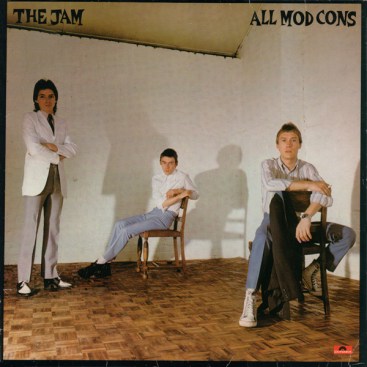
The Jam – All Mod Cons (1978)

It’s my 60th birthday today.  I’m gifting myself the words of Charles Shaar Murray from the NME of 22 October 1978.   I wish I was this talented.

—–

Third albums generally mean that it’s shut-up-or-get-cut-up time: when an act’s original momentum has drained away and they’ve got to cover the distance from a standing start, when you’ve got to cross “naive charm” off your list of assets.

For The Jam, it seemed as if the Third Album Syndrome hit with their second album. This Is The Modern World was dull and confused, lacking both the raging, one-dimensional attack of their first album and any kind of newly-won maturity. A couple of vaguely duff singles followed and, in the wake of a general disillusionment with the Brave New Wave World, it seemed as if Paul Weller and his team were about to be swept under the carpet.

Well, it just goes to show you never can tell. All Mod Cons is the third Jam album to be released (it’s actually the fourth Jam album to be recorded; the actual third Jam album was judged, found wanting and scrapped) and it’s not only several light years ahead of anything they’ve done before but also the album that’s going to catapult The Jam right into the front rank of international rock and roll; one of the handful of truly essential rock albums of the last few years.

The title is more than Grade B punning or a clever-clever linkup with the nostalgibuzz packaging (like the target design on the label, the Swinging London trinketry, the Lambretta diagram or the Immediate-style lettering); it’s a direct reference to both the broadening of musical idiom and Weller’s reaffirmation of a specific Mod consciousness.

Remember the Mod ideal: it was a lower-middle and working-class consciousness that stressed independence, fun and fashion without loss of integrity or descent into elitism or consumerism; unselfconscious solidarity and a dollop of non-sectarian concern for others. Weller has transcended his original naivety without becoming cynical about anything other than the music business.

Mod became hippies and we know that didn’t work; the more exploratory end of Mod rock became psychedelia. Just as Weller’s Mod ideal has abandoned the modern equivalent of beach-fighting and competitive posing, his Mod musical values have moved from ’65 to ’66: the intoxicating period between pilled-up guitar-strangling and Sergeant Pepper. Reference points: Rubber Soul and A Quick One rather than Small Faces and My Generation.

Still, though Weller’s blends of acoustic and electric 6 and 12-string guitars, sound effects, overdubs and more careful structuring and arranging of songs (not to mention a quantum leap in standard of composition) may cause frissons of delight over at the likes of Bomp, Trouser Press and other covens of aging Yankee Anglophiles, All Mod Cons is an album based firmly in 1978 and looking forward.

This is the modern world: ‘Down In The Tube Station At Midnight’ is a fair indication of what Weller’s up to on this album, as was ‘A-Bomb In Wardour Street’ (I can’t help thinking that he’s given more hard clear-eyed consideration to the implications of the Sham Army than Jimmy Pursey has), but they don’t remotely tell the whole story. For one thing, Weller has the almost unique ability to write love songs that convince the listener that the singer is really in love. Whether he’s describing an affair that’s going well or badly, he writes with a penetrating, committed insight that rings perfectly, utterly true.

Weller writes lovingly and (choke on it) sensitively, without ever descending to the patented sentimentality that is the stock-in-trade of the emotionally bankrupt. That sentimentality is but the reverse side of the macho coin, and both sides spell lovelessness. The inclusion of ‘English Rose’ (a one-man pick’n’croon acoustic number backed only by a tape of the sea) is both a musical and emotional finger in the eye for everyone who still clings to the old punk tough-guy stereotype and is prepared to call The Jam out for not doing likewise.

Weller is – like Bruce Springsteen – tough enough not to feel he needs to prove it any more, strong enough to break down his own defences, secure enough to make himself vulnerable. The consciousness of All Mod Cons is the most admirable in all of British rock and roll, and one that most of his one-time peers could do well to study.

Through the album, then: the brief, brusque title track and its immediate successor (‘To Be Someone’) examine the rock business first in a tart V-sign to some entrepreneurial type who wishes to squeeze the singer dry and then throw him away, and second in a cuttingly ironic track about a superstar who lost touch with the kids and blew his career. Weller is, by implication, assuring his listeners that no way is that going to happen to him: but the song is so well thought out and so convincing that it chokes back the instinctive “Oh yeah?” that a less honest song in the same vein would elicit from a less honest band.

From there we’re into ‘Mr Clean’, an attack on the complacent middle-aged “professional classes.” The extreme violence of its language (the nearest this album comes to an orthodox punk stance, in fact) is matched with music that combines delicacy and aggression with an astonishing command of dynamics. This is as good a place as any to point out that bassist Bruce Foxton and drummer Rick Buckler are more than equal to the new demands that Weller is making on them: the vitality, empathy and resourcefulness that they display throughout the album makes All Mod Cons a collective triumph for The Jam as well as a personal triumph for Weller.

‘David Watts’ follows (written by Ray Davies, sung by Foxton and a re-recorded improvement on the 45) with ‘English Rose’ in hot pursuit. The side ends with ‘In The Crowd’, which places Weller dazed and confused in the supermarket. It bears a superficial thematic resemblance to ‘The Combine’ (from the previous album) in that it places its protagonist in a crowd and examines his reactions to the situation, but its musical and lyrical sophistication smashes ‘The Combine’ straight back to the stone age. It ends with a lengthy, hallucinatory backward guitar solo which sounds as fresh and new as anything George Harrison or Pete Townshend did a dozen years ago, and a reference back to ‘Away From The Numbers’.

‘Billy Hunt’, whom we meet at the beginning of the second side, is not a visible envy-focus like Davies’ ‘David Watts’, but the protagonist’s faintly ludicrous all-powerful fantasy self: what he projects in the daydreams that see him through his crappy job. The deliberate naivety of this fantasy is caught and projected by Weller with a skill that is nothing short of marvellous.

A brace of love songs follow: ‘It’s Too Bad’ is a song of regret for a couple’s mutual inability to save a relationship which they both know is infinitely worth saving. Musically, it’s deliriously, wonderfully ’66 Beat Groupish in a way that represents exactly what all those tinpot powerpop bands were aiming for but couldn’t manage. Lyrically, even if this sort of song was Weller’s only lick, he’d still be giving Pete Shelley and all his New Romance fandangos a real run for his money.

‘Fly’ is an exquisite electric/acoustic construction, a real lovers’ song, but from there on in the mood changes for the “Doctor Marten’s Apocalypse” of ‘A-Bomb In Wardour Street’ and ‘Tube Station’. In both these songs, Weller depicts himself as the victim who doesn’t know why he’s getting trashed at the hands of people who don’t know why they feel they have to hand out the aggro.

We’ve heard a lot of stupid, destructive songs about the alleged joys of violence lately, and they all stink: if these songs are listened to in the spirit in which they were written then maybe we’ll see a few less pictures of kids getting carried off the terraces with darts in their skulls. And if these songs mean that one less meaningless street fight gets started, then we’ll all owe Paul Weller a favour.

The Jam brought us The Sound Of ’65 in 1976, and now in 1978 they bring us the sound of ’66. Again, they’ve done it such a way that even though you can still hear The Who here and there and a few distinct Beatleisms in those ornate decending 12-string chord sequences, it all sounds fresher and newer than anything else this year. All Mod Cons is the album that’ll make Bob Harris‘ ears bleed the next time he asks what has Britain produced lately; more important, it’ll be the album that makes The Jam real contenders for the crown.

Look out, all you rock and rollers: as of now, The Jam are the ones you have to beat.

—-

JC adds

Shaar Murray’s review just about captures everything I felt about this record back in the day, albeit I wasn’t fully up on his 60s era references, not being a fan of The Beatles or much that predated 1973.

I also remember reading this review thanks to the big brother of a friend who had heard me raving about ‘Tube Station’ and how it was by far the greatest song that anyone had ever written.  I didn’t buy the NME in 1978 – music was now an increasingly important part of my life, but it was still mainly football and my newly discovered hobby of golf, but being passed a copy of the paper specifically to read that review had a huge impact on the way I began to engage with and consume pop music.   I didn’t know it at the time, but I was just over six months away from seeing my first ever live gig, another seminal event in my development.

All Mod Cons is not the best album I have here in Villain Towers, but it is, and by some considerable distance, my all-time favourite.

And with that, the blog will return to the mundane and mediocre, beginning tomorrow. In the meantime, I’m off to find a bus driver to whom I can flash my newly acquired concessionary pass.

mp3:  The Jam – The Place I Love

Thanks for all your thoughts, views and opinions over the course of the rundown.

JC

The rundown in full:-

1. All Mod Cons – The Jam
2. After The Fact – Magazine

3. Sulk- Associates
4. The Midnight Organ Fight – Frightened Rabbit
5. Technique – New Order
6. The Orange Juice – Orange Juice
7. Closer – Joy Division
8. Fourteen Autumns and Fifteen Winters – The Twilight Sad
9. Hatful of Hollow – The Smiths
10. Songs To Remember – Scritti Politti
11. Mezzanine – Massive Attack
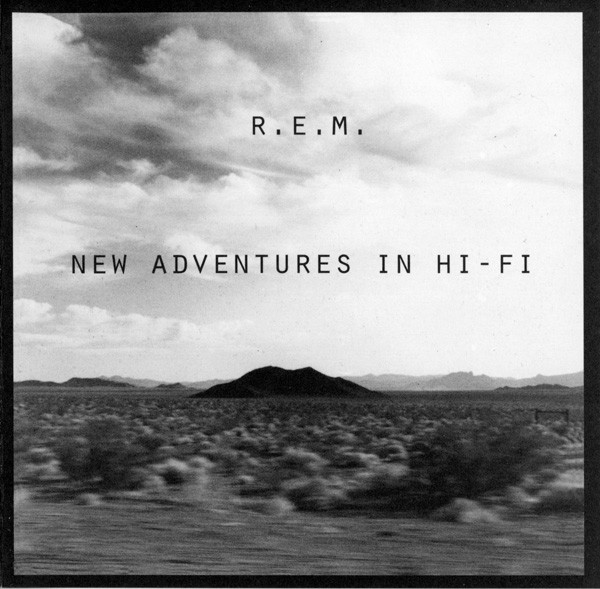
12. New Adventures In Hi-Fi – R.E.M.
13. Standing On A Beach – The Cure
14. Singles Going Steady – Buzzcocks
15. Seamonsters – The Wedding Present
16. Let Love In – Nick Cave & The Bad Seeds
17. Rattlesnakes – Lloyd Cole & The Commotions
18. London Calling – The Clash
19. Parallel Lines – Blondie
20. High Land, Hard Rain – Aztec Camera
21. Philophobia – Arab Strap
22. Death To The Pixies – Pixies
23. Non-Stop Erotic Cabaret – Soft Cell
24. Soul Mining – The The
25. Will I Ever Be Inside Of You? – Paul Quinn & The Independent Group
26. Different Class – Pulp
27. 30 Something – Carter the Unstoppable Sex Machine
28. Hypocrisy Is The Greatest Luxury – The Disposable Heroes of Hiphoprisy
29. Heaven Up Here – Echo and The Bunnymen
30. Tindersticks (II) – Tindersticks
31. Steve McQueen – Prefab Sprout
32. Head Over Heels – Cocteau Twins
33. Pop Art – Pet Shop Boys
34. Boat To Bolivia – Martin Stephenson & The Daintees
35. Empires and Dance – Simple Minds
36. DAMN – Kendrick Lamar
37. Before Hollywood – The Go-Betweens
38. Surrender – The Chemical Brothers
39. The Great Eastern – The Delgados
40. You Had A Kind Face – Butcher Boy
41. Shag Times – The Justified Ancients of Mu Mu
42. Whatever People Say I Am, That’s What I’m Not – Arctic Monkeys
43. Into The Woods – Malcom Middleton
44. Violent Femmes – Violent Femmes
45. Cafe Bleu – The Style Council
46. Trapped and Unwrapped – Friends Again
47. The Hurting – Tears For Fears
48. Debut – Bjork
49. Original Pirate Material – The Streets
50. Electronic – Electronic
51. Kilimanjiro – The Teardrop Explodes
52. A Certain Trigger – Maximo Park
53. Anthology : The Sounds of Science – Beastie Boys
54. Boxer – The National
55. Imaginary Walls Collapse – Adam Stafford
56. Beaucoup Fish – Underworld
57. Back In The D.H.S.S. – Half Man Half Biscuit
58. Love The Cup – Sons and Daughters
59. Talking With The Taxman About Poetry – Billy Bragg
60. A Secret Wish – Propaganda

(I’ve 51 of them on vinyl either as stand-alone LPs or as part of boxets.)

60 ALBUMS @ 60 : #2

R-511610-1390420908-2224

Magazine – After The Fact (1982)

That’s the problem with setting hard and fast rules – they inevitably come back to bite you in the backside.

The #2 position in this rundown should be occupied by The Correct Use of Soap, the album I reckon is as close to perfection as any that has ever been released  – and yup, JTFL, I include the cover of ‘Thank You…..’ in that assessment.   (Click here to be let in on that private joke).

The problem is that I didn’t buy said album in 1980.  As I’ve said before, and it has long been a source of immense regret, I didn’t pick up on Magazine until the band had broken up.

After The Fact was my first purchase. It is therefore, along with some later Magazine material including other compilations, box sets and a much later reunion LP, eligible for inclusion in the rundown, and I’ve decided, after careful and due consideration, that it is just as worthy as slotting it at #2 as ‘Soap’.

Controversial?  For sure.   But it’s my party, and I can ‘cheat’ if I want to.

The ten tracks across the album offer an overview of the band’s career.  Four of them had been released as singles, but at the same time, four other songs selected as 45s here in the UK were left off.  Each album is represented – Real Life (1978) and Secondhand Daylight (1979) both have three songs, while The Correct Use of Soap (1980) and Magic, Murder and The Weather (1981) have two.   The fact that my favourite record is relatively under-represented only added to the utter joy and elation I experienced when I finally bought myself a copy, which would have been just a matter of weeks after the compilation.

The back of the sleeve comes with a wonderfully-written essay from Paul Morley in which he reflects, in his usual rambling but engaging style, as to why Magazine were such an important, essential and always likely to be unappreciated part of the post-punk era. As you can imagine, the essay contains a number of magnificently structured phrases and sentences, but one of the more readily understandable is what really gets to the heart, as far as I’m concerned, about what made the group so compelling at the time and why they remain so relevant more than 40 years later:-

“Magazine took pop music in the direction of a new simplicity: that is, they sought to prove nothing, they were subtle, frank and alluring and there was every chance you would be amazed.”

All of this and more for this very impressionable late-teen.   They became the second group, in very short times, to emerge out of Manchester and make me fleetingly yearn to live elsewhere other than Glasgow.  Joy Division/New Order had been the first, and The Smiths would later prove to be a third.  I had yet to fully discover the wonders of The Fall….and I suppose it’s at this juncture it is worth confessing that Mark E Smith is conspicuous by his absence from this rundown.  I make no apologies and I make no excuses…it just sometimes works out that way.

For decades, I sneered at the idea of bands getting back together and reuniting after years apart.  I never wanted to entertain the thought of going along and seeing old heroes in their dotage doing everything possible to ruin their legacy with a substandard and embarrassing performance in front of fans who really should have been, in the words of Lloyd Cole, old enough to know better.

I did a handbrake turn after the events of 14 February 2009.  A Magazine gig, at the Academy in Manchester, after an absence of 29 years.  My first time seeing and hearing the songs in a live setting.  Two nights later, and I was in the audience in Glasgow.  Later in the year, at the end of August, I’d see them in Edinburgh, on a night when they played two half-sets, with a break in-between.  The first half, and I had no idea this is how it was going to pan out until about the third song in, involve playing The Complete Use Of Soap in its entirety in the same order as the record.  Needless to say, I couldn’t stop smiling afterwards for weeks.

mp3:   Magazine – A Song From Under The Floorboards

I wasn’t aware, when I first got familiar with Magazine, that this particular song was based on the novella Notes From Underground, written by Fyodor Dostoevsky back in 1864. Around the time that Magazine were undertaking the decades-later comeback, which culminated with the album No Thyself (2011), a piece in The Guardian newspaper suggested that basing on a song on a novel by Dostoyevsky was not the action of the typical pop group, but then again Howard Devoto was not a typical pop star. It was a sentence that made me wonder if Robert Forster had been thinking specifically of Howie when he penned these words in the song Here Comes The City, on the album Oceans Apart (2005):-

“And why do people who read Dostoevsky always look like Dostoevsky?”

I do have a quiet smile to myself every time I hear that line.

One more album to go, and the rundown is over. I’d like to think many of you might have worked out who is going to be responsible for it, and most likely the actual LP.

JC

60 ALBUMS @ 60 : #3

R-141548-1405448373-9186

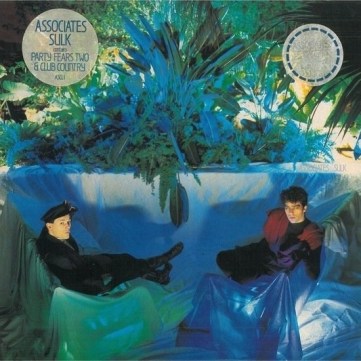
Associates – Sulk (1982)

Sulk was the third LP by Associates in as in as many years, albeit one of the previous LPs had simply brought together singles and b-sides.   It was, however, the first to bring them commercial success to match the critical acclaim of the earlier releases.

My first exposure to the band came via a friend passing me copies of their singles and earlier material on a cassette tape, and initally it was the pulsing weird electronica of the likes of Transport to Central, White Car In Germany and Tell Me Easter’s On Friday that grabbed my attention.  But gradually my ears attuned themselves to the strange vocals that accompanied the music and allowed me to fully ‘get’ what Associates were all about.

There was no way, however, that I thought they’d ever be a chart band which would attracted a teenybop following such as happened in 1981.  Sure, both boys were handsome and photogenic, particularly frontman Billy Mackenzie and thanks to them being on WEA Records they had a big promo/marketing arm there to push them along.  But these boys were just too weird to be pop stars weren’t they?

The stunning success of the singles Party Fears Two and Club Country changed everything.  Looking back there’s a big hint that this was an unexpected development all round – neither single had an advance promo made in an era when this was just about the first thing any record label, and not just a major like WEA, considered when planning the release of a 45.

It can often be the case that the inclusion of one or two truly stunning songs can overshadow the rest on an LP and make everything else seem tame or even mediocre in comparison.  But there’s no chance of Party Fears Two or Club Country having that impact or effect on Sulk, as all ten tracks really are something very special.

I know the LP was given a totally different tracklisting upon release in the USA – three of the tracks on the UK release were omitted and replaced with songs which had been singles, so what follows might not make sense to readers from that part of the world.

Rather unusually, Side A is devoid of the hit singles – indeed it is a side of an LP that goes out of its way to be often as far removed as possible from the jauntiness and joy of the music which had got the band radio airplay, appearances on Top of the Pops and those afore-mentioned Top 20 hits.

Having said that, it opens with an upbeat and incredibly catchy instrumental in Arrogance Gave Him Up that I can recall being a staple on the dancefloor of at least one alternative Glasgow nightclub.  After that, the trio of No, Bap De La Bap, Gloomy Sunday and Nude Spoons are as astonishing a run of music as you can ever hope to hear as Alan Rankine demonstrates that top-quality electronica back in 1982 could be made without it sounding rinky-dinky, light, inconsequential or disposable.

Thankfully Sulk came with a lyric sheet as there’s no way that you’d have worked out what the hell Billy was singing.  And it wasn’t that you couldn’t make out the words a la Elizabeth Fraser/Cocteau Twins, it was more like realising all the words on their own make sense, but in the order sung by Billy seem either nonsensical or inspired. Or both.

Oh, and the version of Gloomy Sunday, one of the most covered songs of all time, is surely among the best there is….

Side B opens with Skipping and It’s Better This Way – two of the best bits of music the band would ever lay down – and closes with firstly the hit singles and ultimately an instrumental that would later be extended and turned into a further hit single.

mp3:  Associates – Skipping

Sulk is a work of genius.  Actually, it’s the work of two geniuses.

It’s a work that veers all over the place and while it will often be labelled in with many other synth-led LPs of the era, it is nothing like those of Japan, Human League, Simple Minds, Ultravox or the rest of the bands who cracked the charts on a regular basis.  The vocals are often unworldly, going from a low and creepy moan to the high falsetto of a 10-year old choir boy in the space of seconds.

Sulk has songs that will have you leaping to the dance floor, and songs that will have you cowering behind the couch in fear. The production is outlandish and at times stretched to breaking point, but never ever snaps into overwrought pomp and pomposity.  It’s a record which hasn’t dated….indeed, if anything it has got better with age. It’s an album that could only have been made in the 80s, as only at that point in time could the music industry have really indulged the artistes to the extent they did.  And there’s no way that Billy and Alan would have become pop stars in the 21st Century, as their essential rough edges would have smoothed down to make them mundane and mediocre.

Sulk, dear readers, is an LP genuinely like no other.

And in deciding that it fits at #3 in this rundown, it has the honour of being my all-time favourite album by any singer or group to emerge out of Scotland.

JC

60 ALBUMS @ 60 : #4

R-1313207-1443449464-9907

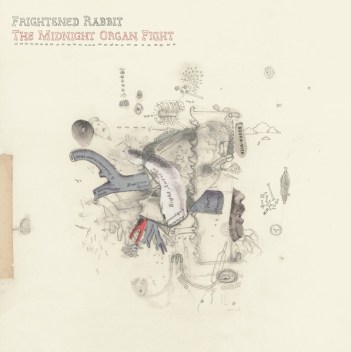
Frightened Rabbit – The Midnight Organ Fight (2008)

It was just a few days ago when I mentioned coming across a band who were just starting out when I first saw and heard them, after which I had the great fortune to watch them grow over the years during which time their sound evolved and developed.

As with The Twilight Sad, so too with Frightened Rabbit.  But to a greater extent.

My introduction came via Comrade Colin tipping me off thanks to him falling for the charms of debut single Be Less Rude.   Said single and debut album, Sing The Greys (2006), were duly purchased, but more importantly, I got into a habit of going along to see them play live at small venues all across Glasgow.   There were plenty of folk who would be more than happy to be my +1, including Rachel who wasn’t entirely convinced by the music (a bit on the quiet side for her complete liking) but who thought, rightly, they were a superb live act fronted by the most charming and self-effacing frontman imaginable.

It is impossible these days to try and write anything about Frightened Rabbit without thinking about Scott Hutchison.   A truly wonderful and gifted performer, but above all else one of the nicest and modest individuals around.  It’s still a hard one to realise that he’s no longer with us.  Five years on, and the timeline around his disappearance and eventual discovery of his body in the Firth of Forth, close to the bridges in Queensferry, remain painful memories.

Frightened Rabbit often featured over on the old blog, especially around the time that Midnight Organ Fight was released. I know that many musicians take personal circumstances, including the break-up of relationships, and turn them into songs.

This, however, felt different. Looking back, it was perhaps the shock of finding out that Scott had gone through such a traumatic break-up.  I had seen him perform on numerous occasions, most certainly at the same time as when he was writing these songs, but there was never any indication from his on-stage demeanour, or the very brief and very occasional chats with him post-shows, that he was grieving.

It wasn’t just in terms of the lyrics that Midnight Organ Fight was such a quantum leap from the debut.  Musically, it felt outstanding, the sort of record that you want to listen to over and over and over again until you know, inside-out, every single note, quaver and important periods of silence and reflection.

I fell heavily for this intense and passionate blend of indie-pop/folk, aided and abetted by being present at two launch gigs in small venues in Glasgow.  It was abundantly clear that Scott’s songs were bringing back all sorts of memories, including those where he was pointing the finger of blame solely in his own direction, and it was very moving to look on from such close quarters and realise how difficult and painful it was for him to be sharing so publicly sharing so many real-life episodes.

Back in 2018, just a few months prior to Scott ended his life, it was announced that Frightened Rabbit intended to mark the 10th Anniversary of The Midnight Organ Fight with a set of live shows.   I wrote at the time that I regarded the record as nothing short of a masterpiece, and an album that I would have no hesitation in placing very near the top of the best ever LPs by any Scottish singer or band… which I suppose is what I’m actually doing right now.  I also said that it was unlikely that I’d go along to any of the anniversary shows, as I was happy to make do with the memories of hearing the songs and the album in its entirety at those smaller venues back in the day.   Nobody knew that the shows would never take place…..

The work and songs of Scott Hutchison and Frightened Rabbit remain loved and celebrated.  Other singers and bands have incorporated cover versions into their live sets, drawing on the friendships they formed while touring together or socialising when they were part of the same Festival line-ups.    The Twilight Sad have included Keep Yourself Warm in their sets for a number of years, but earlier this year, on a short three-date acoustic tour, they aired one of the singles lifted from the album:-

mp3:  Frightened Rabbit – Fast Blood

Not every memory of a broken romance has to be painful.

And now I, I tremble,Because this fumble has become biblicalI feel like I just died twiceI was reborn again for all our dirty sinsAnd the fast blood, fast blood, fast bloodHurricanes through meAnd then it rips my roof away with her fire headsThis is the longest kiss good night

We’ve all been there, haven’t we?

JC

60 ALBUMS @ 60 : #5

R-5959484-1577486476-5429

New Order – Technique (1989)

Again, I’m falling back on an old post.  It’s one that got a fair bit of positive reaction which pleased me no end, more to do with the fact that I’m not alone in considering Technique to be the high point, albums wise, from New Order. What now follows is adapted from something I posted in April 2015, but slightly amended to take out a reference as to how the album was promoted, based on a correction provided via the comments section.

AS OWNED ON VINYL, CD AND CASSETTE

There is someone I know who thinks New Order should have disbanded in around 1985 as the music they have made since then has betrayed everything that Joy Division stood for.  Despite holding such strident and unacceptable views, he remains a dear friend…and besides it gives us one more thing to argue over.

Me?  I’ve never hidden from the view that it took until 1989 for their masterpiece to emerge….and while there has been the occasional nugget of gold since then, I’d have been happy if this had been their last ever record.

It’s worth recalling that the release of Brotherhood in 1986 had disappointed many fans. It was, in the main, a lacklustre affair and indeed was shown up as such when the compilation LP Substance was issued the following year. The one hope was that the Greatest Hits package featured two amazing new songs – True Faith and 1963, the former a wonderful dance track driven largely by Steve & Hooky and the latter a gorgeous pop number with Barney at last penning lyrics which made sense and had a semblance of a story line.

But post-Substance, the band seemingly disappeared off the radar, and some folk (including your humble scribe) thought we’d seen the last of them.

In the days before t’internet, you had to rely on the music papers for news/info on your favourite bands. One week, I read a snippet that New Order had gone to Ibiza to record a new LP. Months passed. Nothing. More months passed. Still nothing, and I assumed that somehow I had missed the news that the band had broken up.

Then, out of the blue in late 1988, a single was released. It was called Fine Time, and it was really quite different from anything else they had ever previously released being, for the most part, an instrumental, and which was very clearly aimed at the dance market. And I loved it.

The album kind of sneaked out in January 1989, at a time when the UK was at its most cold, miserable and wet. But this album made you forget all that.

It was everything that fulfilled the promise of True Faith/1963. There were immense dance numbers, there were songs of love, joy and happiness, and there were songs about having your heart broken into many pieces. Every song could have been a single. No, that’s not true. Every song could have been a #1 single.

Thankfully, the album did sell in reasonable quantities, but not enough to arrest Factory’s eventual decline into receivership/administration. It did however lead to New Order being asked to take the sound of Technique into the football world when they penned the England Squad’s 1990 World Cup Anthem, World In Motion, which finally gave the band the #1 hit they had been chasing for a few years.

2023 addendum (1)

And yes, as with The Orange Juice, it is an album I have on cassette, CD and vinyl, albeit the vinyl is a 2015 reissue on London Records.   But in writing this piece, it hit me that I should treat myself to an early birthday present and so I’m going to hunt down a vinyl copy on Factory Records.  I’ll do a further addendum once I’ve completed that mission.

Addendum 2

Picked up a superbly clean copy on Factory for £18 on Discogs….one where the gradings proved to be conservative.  As ever, I ended up with a few other things to save on P&P, one of which was a vinyl copy of the debut Lloyd Cole solo album for £3 which feels like a real bargain with the current cost of second-hand vinyl.

Addendum 3

With apologies for failing to have a tune when the post was first published.  Poor technique on my part.

mp3: New Order – Vanishing Point

JC

60 ALBUMS @ 60 : #6

s-l500

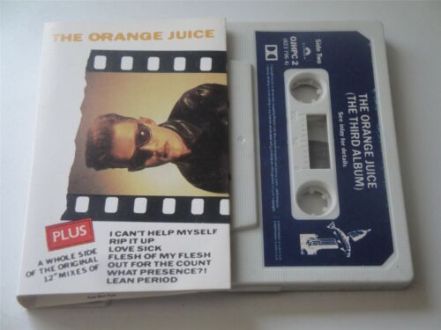
Orange Juice – The Orange Juice (1984)

There’s a famous quote attributed to John Peel that, when he was asked by a listener which Fall record they should buy, he replied ‘You must get them all’. 

It was a similar train of thought that initially led me to consider, in terms of Orange Juice and this rundown, including Coals To Newcastle, the 6xCD box set issued by Domino Records in 2010.  After all, having been given a repress, it’s available for £45 direct from AED Records, the enterprise owned by Edwyn Collins, and in return you’ll have 130 pieces of music along with a DVD containing TV appearances, a couple of promo videos and a live gig that was originally released on VHS back in 1985.   Click here if you’re interested.

But to have included this box set and ignored others, such as Heart and Soul, the 4xCD  Joy Division boxset which dates from 1997, would have been unfair, and so I turned my attention to the rest of the OJ discography.

The final studio album, The Orange Juice, is the one I’ve selected for the rundown.  Again, it wasn’t an easy choice, especially as there were options from the Postcard-era together as well as a compilation encompassing the three studio albums and one mini-LP from the Polydor years.

It’s been said, by others, that this record isn’t really that last in the life of Orange Juice, but the first solo release by Edwyn Collins.  The group had whittled down to just two members, as indicated by the notes that accompany the album  – ‘Orange Juice are Edwyn Collins and Zeke Manyika’.   The  record was made thanks to major contributions on bass from Clare Kenny (on loan from Amazulu) and producer Denis Bovell on keyboards.

Despite all this, or maybe perhaps because of this, the album proved to the tightest and most consistent that Orange Juice ever released.  The history of the band had been littered with fall-outs and departures due to musical differences, but at long last, Edwyn had the final say on everything, ably assisted and advised by an experienced producer whom he liked and trusted. Another factor was that the major label contract signed back in 1981 was coming to an end, and with this almost certain to be the final set of recordings to be bankrolled by Polydor, Edwyn’s waspish sense of mischief meant he was determined to finally make the sort of record the bosses had been after since day one.   The bosses, on the other hand, just wanted it done and dusted and weren’t prepared to offer much in promotional support beyond what was stipulated in the contract.

All of which meant that The Orange Juice, and its two majestic singles – What Presence?! and Lean Period – more or less passed everyone by, other than those of us who were paying close attention.  Which was a crying shame, as its ten songs really demonstrated Edwyn’s talents as a writer and performer. There’s some jingly-jangly pop, there are soulful, crooning ballads, and there are guitar solos that his great friend Roddy Frame would have been proud of.

It didn’t sell all that well.  I’m not sure if it’s an urban myth or not, but seemingly the cassette version sold more than the vinyl.  I’m certainly someone who bought the tape, attracted by the fact that it came with seven additional 12″ mixes of singles from across the Polydor era, albeit a much-hoped for extended version of Love Sick, one of the Postcard-era single, turned out to be no more than the re-recorded version that had been made available with the 2 x 7″ release of Rip It Up a few years previously.

I’ve subsequently bought the album on CD and a few years back, as I was rediscovering the love for vinyl as a result of getting this blog up and running, I picked up a cheap second-hand copy of the original vinyl.

And yes, while I would tell anyone who has nothing more than a casual awareness of Orange Juice to buy the box set (and while you’re there, have a scan through the list of ‘thank-yous’ to spot my name!!), you should never miss out on the opportunity to own a copy of The Orange Juice, one of the best and most enjoyable LPs ever to come out of Scotland,

mp3: Orange Juice – The Artisans

At best all the rest are just also-rans………..

JC

60 ALBUMS @ 60 : #7

R-81692-1538992531-7551

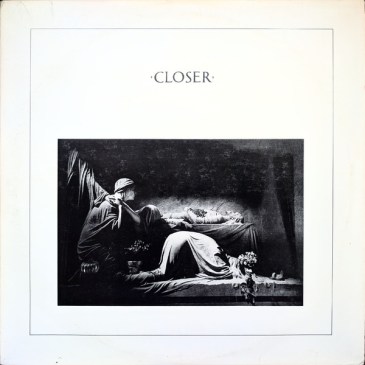
Joy Division – Closer (1980)

The thing is, I prefer Unknown Pleasures to Closer, but as I didn’t buy the debut album until around the same time as its follow-up, it can’t be considered for inclusion in the rundown.

I’m also loath to actually say that Closer is actually a favourite album.  It is such a sad and tragic piece of art, especially all these years later with the knowledge of the circumstances under which it was written and recorded, that it is impossible for anyone to place it on a turntable and call it an enjoyable listen.

It is fair to say that my relationship with Closer has changed a great deal over the past 43 years.   The 17-year old me was certainly moved by the suicide of Ian Curtis, but I never really made the connection between his music and what had driven him to take his own life.  I clearly wasn’t alone, as can be evidenced from the many millions of words that have been written about it all ever since, with none of his three fellow musicians in Joy Division, or indeed almost anyone involved in Factory Records ever stopping to consider that his lyrics were, to all extent and purposes, a cry for help from a frightened and confused man.  Nobody gave a damn about mental well-being in those days, and while there is still something of a stigma about it, at least there is a growing recognition these days that illnesses of the mind require the same level of professional care and attention as those which affect the bones, joints and muscles.

It is impossible to play Closer without picturing some of the scenes from the film Control, or to recall some of the prose written after the fact by the likes of Tony Wilson (RIP), John Savage or Paul Morley.  There’s also been so many documentaries or TV shows in which Bernard Sumner, Peter Hook and Stephen Morris have had their say on things, and their words also are hanging in the air when listening to the music.  It’s an album that is difficult to listen to purely on its own musical merits.

And yet………………..

I couldn’t dream of leaving it out this Top 60 for the simple fact that Joy Division are among the most personally influential groups in my life – some of the others have already featured in the rundown and others are still to appear. If it wasn’t for Joy Division, then a huge amount of the music I have loved since my late teens would never have made sense.

mp3:  Joy Division – Isolation

Yup.  Despite devoting all these words to the fact that Closer is such a hard listen, I’m finishing off the piece with the one that’s most danceable. It does seem remarkable that Ian chose to put one of his darkest and most foreboding lyrics to such an upbeat number…but it’s even more remarkable that nobody in the studio stopped to think for a couple of minutes and ask what he was thinking about or what was the meaning behind the lyric.  If that had happened, who knows how things would have turned out?

JC

PET SHOP BOYS SINGLES (Part Twenty-one)

Pet-Shop-Boys-008

2011.  

The most activity came through being the special guests of Take That as the fully-reformed five-piece boy band embarked on a tour lasting from 27 May to 1 August, and consisting of twenty-nine shows in outdoor sports stadia in the UK and Ireland, followed by six similar efforts in mainland Europe. The estimated audience across the entire tour was 1.8 million.  Pet Shop Boys played a 45-minute set each time, consisting mostly of the biggest and most popular hit singles.

2012. 

Format, a 2xCD collection of many of the b-sides issued between 1996 and 2009 is released in February. 

R-3775640-1344034936-4884

3 July 2012. 

A new digital single is released. 

6 August 2012

The new single is issued in physical form.

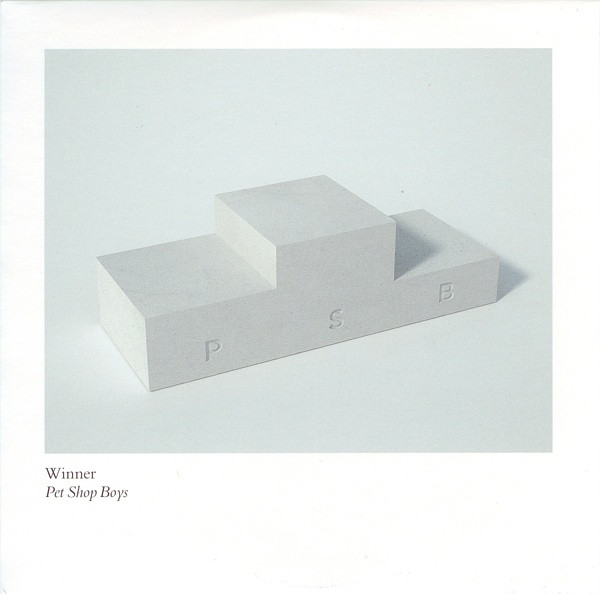
It all comes in the middle of London preparing for and then hosting the 2012 Olympic Games (27 July – 12 August) during which Team GB bags itself a record number of medals and the country is engulfed by a feel-good factor.  The PSB single is very appropriately named, and its artwork resembles a medal ceremony podium.

mp3: Pet Shop Boys – Winner

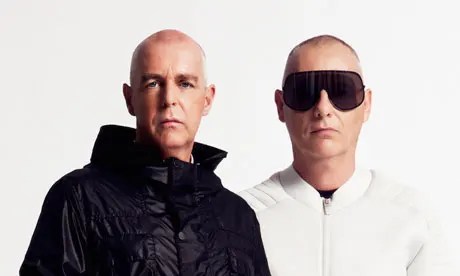
Neil and Chris are quick to say that the mid-tempo number has nothing to with sport and that it was written about being part of something like Eurovision or the X-Factor. Nevertheless, the promo video has a sports theme in that it features a real-life roller derby team from London and the introduction into the team of a new transgender rookie. 

It’s a real feel good number, and very appropriate for the times and the mood of the nation.  It stalled at #86…………..

Three songs were added to the physical release:-

mp3:  Pet Shop Boys – A Certain ‘Je ne sais quoi’
mp3:  Pet Shop Boys – The Way Through The Woods
mp3:  Pet Shop Boys – I Started A Joke

The first of these demonstrates that, even after all these years, Neil and Chris can come up with a b-side that carries a real punch.   It’s a million miles better than Winner, and it’s incredible to think, again, that the duo had quietly slipped out, without any fanfare, one of the best tunes they had written in years.

I’m indebted to Commentary, the ridiculously informative PSB fan site curated by Wayne Studer for otherwise hard-to-find information on the second track, the credits list of which on the back of the CD runs to three producers (including Neil and Chris), four engineers, a mixer, six individual backing vocalists and an unknown number from a backing vocal group who prove to act as a choir.   Oh, and a co-writing credit for Rudyard Kipling.

Wayne informs visitors to his site that it stems from a fresh idea that Neil and Chris hoped could develop, whereby they would set famous poems to music, specifically for schoolchildren to sing.  It really is among the strangest and most experimental tracks they have ever recorded – as far removed from any of the hit singles as can be imagined – with a lengthy, but very gentle near two-minutes worth of what feels entirely like incidental music to a film or TV programme before any the delivery of the poem begins. 

Given this, it would have been fair to anticipate the words/lyrics to be of the spoken variety, but it’s a singing effort which seriously tests Neil’s range, especially as he tries to match the singing from the choir. And then it gets incredibly weird and otherworldly.

The final track is a cover.  As you night imagine, a lot of studio time was required to complete The Way Through The Woods, and while they were recording, the news broke that Robin Gibb of the Bee Gees had passed away.  Neil and Chris decided to record one of his songs as a tribute and then chose to include it on Winner.

There’s one final postscript to all this.

Pet Shop Boys appeared at the closing ceremony of the London Olympics on 12th August, a short two-minute segment in which West End Girls was performed as the duo were cycled around the running track on chariots.

On 10th September, the day after the 2012 Paralympics were completed, the streets of London played host to a ‘Parade of Champions’ in which the host nation’s medallists were celebrated, an event which went out live across three different TV channels to even more millions of people watching at home.  The Pet Shop Boys were in among it all, performing Winner, West End Girls and Go West.

Kind of surreal eh?

This has been a long posting, and so I’ll return to later releases from 2012 next time around.  But you’ll need to show a little bit of patience, as next Sunday will be turned over to revealing the #1 entry in the 60 albums at 60 rundown.

JC

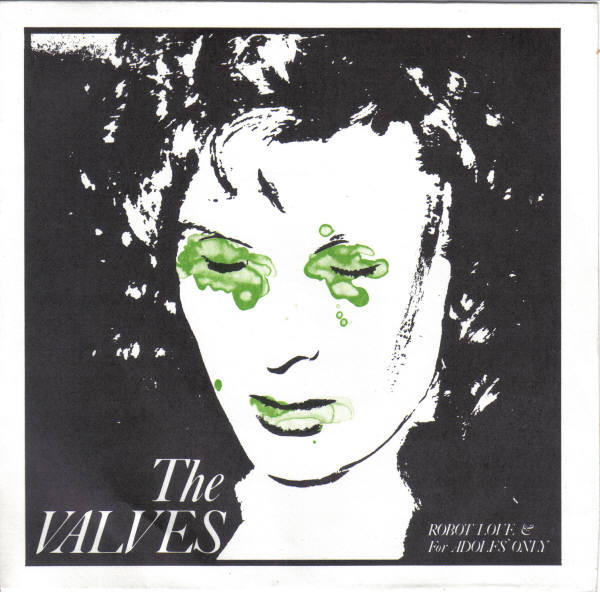
SATURDAY’S SCOTTISH SONG : #359: THE VALVES

R-1491863-1223730036

From the booklet accompanying the Big Gold Dreams box set:-

mp3: The Valves – Robot Love

Science-fiction and pub rock combined for this deadpan lurch through the pains of a moon-dwelling mannequin.  Forming one side of the debut single by Portobello’s premiere r’n’b no-wavers, it was the first release in 1977, on Bruce Findlay‘s Zoom label.

Guitarist Ronnie McKinnon, vocalist Dave Robertson (aka Dee Robot), Gordon Scott on bass and drummer Gordon Dair were the band’s mainstays, with more wordplay to be had with the follow-up single, Tarzan Of The King’s Road/Ain’t No Surf In Portobello.  It took two years before a third, Don’t Mean Nothin’ At All, appeared before the band spilt up.

The Valves reformed for a one-off Edinburgh show in 2013, and with Robertson now living in Antwerp, Cheetahs vocalist Joe Donkin has been drafted in for sporadic live shows since then.

JC adds….

Portobello is a district of  Edinburgh, located on the Firth of Forth but boasting a fabulously and expansive sandy beach.  It was, in its Victorian heyday, a town in its own right and a popular holiday destination.

Bruce Findlay owned Bruce’s Record Shop in Edinburgh. He established Zoom Records in 197 and in so doing created one of the first independent labels of the new wave era in Scotland.  The biggest signing to Zoom would be Simple Minds, via a licensing deal to Arista.

The Cheetahs were another short-live act who signed to Zoom Records.

Gordon Dair, bass player with The Valves, sadly passed away in November 2022 after a three-year battle with battle with cancer.   RIP, Gordon.

JC

60 ALBUMS @ 60 : #8

R-1326382-1395426718-5237

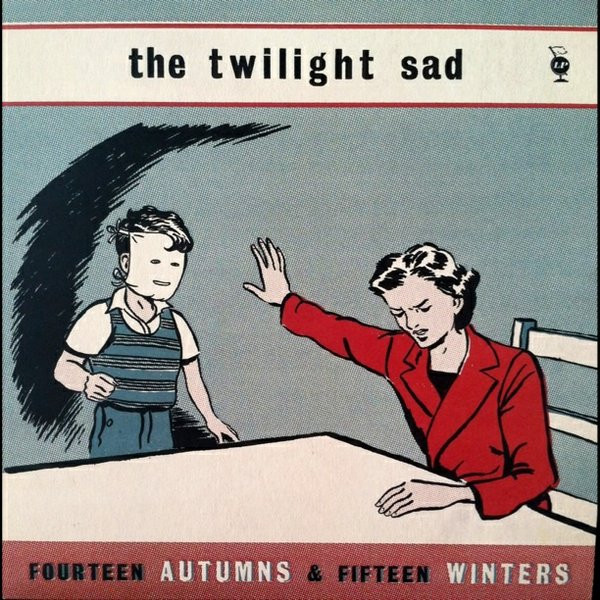
The Twilight Sad – Fourteen Autumns & Fifteen Winters (2007)

I’ve reached the stage of the rundown where just about any of the remaining albums could have been listed at #1.  If I had finally landed on Fourteen Autumns & Fifteen Winters, then I would have focussed on the fact that, almost by luck than design, I came across a band who were just starting out when I first saw and heard them, after which I had the great fortune to watch them grow over the years during which time their sound would evolve and develop, but never at the expense of making music that would become so alien to me that I would shirk away from buying it.

I’ve no doubt that The Twilight Sad are the group I’ve caught live the most over the past decade-and-a-half, often in the company of my good friend Aldo.   It is no lie to say that very single show has delivered at least one ‘wow’ moment, no matter how big or small the venue/audience, and no matter whether it has been a full band or the stripped down version in which James Graham sings and Andy MacFarlane plays guitar.  And don’t get me started on the show they played at Paisley Abbey in October 2013 accompanied by the Royal Scottish National Orchestra, an event I still can’t quite believe ever happened….

I have a great love for every one of very one of their five studio albums, and if the rule of no more than one LP per group or singer was being strictly enforced, they would have had multiple entries (as indeed would have been the case with many other acts).  But the debut is the only one that could possibly have made it to #1 in the rundown.

It remains an astounding and powerful listen, one that lyrically and sonically still makes my jaw drop with each and every listen.  It came out a couple of months prior to me moving to Canada to work for almost five months, and I fully expected by the time I got home that their name would be everywhere.  Here’s what may well have been the first full review of the album, published in The Skinny, a free cultural newspaper widely distributed across Glasgow and Edinburgh:-

This is what Mogwai have unleashed upon us, and we must be proud. Glasgow’s post-rock pioneering has stretched at least as far as Kilsyth, where The Twilight Sad have taken the intoxicating nature of the quintet’s whispering/screaming guitar recipe and added ingredients of their own.

With prominent (and local) vocals, and a theme to unite the songs-not-stretches, Fourteen Autumns and Fifteen Winters is the kind of sprawling triumph that Hope of The States always seemed to be aiming at. It tells everyday tales of hormonal adolescent angst in incredibly epic terms: sonically, as loud as the roar of a tidal wave; feedback, distortion and noise, blare and relax, and blare again. Lyrically – “the kids are on fire in the bedroom,” the key bawl from the key track, is a pretty grand way of describing parents’ inattention to teenage torment.

With a duration of 45 minutes, The Twilight Sad have wisely wrapped up their debut LP before the repeated quiet/loud blueprint becomes any kind of a boring labour, and in future days a certain lack of versatility might potentially pose a hindrance – but for right now, the outfit are fully deserving of praise in crafting one of the finest Scottish albums in years. [Ally Brown]

mp3: The Twilight Sad – That Summer, At Home I Had Become The Invisible Boy

Astonishingly, this was the first lyric that James Graham ever wrote.

Finally, Ally Brown closed out his five-star review with a word of caution that a lack of versatility might potentially pose a hindrance.  He needn’t have worried as their collective skills and talents have taken them all around the world, more often than not as the band The Cure want to open for them no matter the city.  North American audiences are being wowed right now….

JC

(BONUS POST) AN IMAGINARY COMPILATION ALBUM #342 – ‘JESUS’

_1248273_jesussanjuan300

I’ll open with an apology to all the wonderful people whose blogs are listed on T(n)VV, either on the right-hand side if you’re using a laptop, or down at the foot if you’re on a mobile device.

I’ve not visited anyone for around six weeks.  I could make some legitimate excuses, but that’s not really the point.  No matter how busy I am, or how absolutely rundown and listless I’m ever feeling, I really should make some time, even if it’s only a few minutes a day, to take a glance.

It’ll take me days to get through everything, especially given my habit of offering up comments on posts that are weeks old…..but, just like the Four Tops (and Orange Juice), I Can’t Help Myself.   Today, I’ve spent time reading what Walter, Jez, Adam and Stevie have been saying.  Khayem is next on the list, and indeed I should be knocking on his door right now instead of doing this bonus post.

The thing is, I’m taken by a couple of the new series that Stevie is pulling together over at Charity Chic Music, and in particular the songs featuring ‘Jesus’ in the title.  I thought, ‘that would make for a great ICA’, and decided to act on it immediately.

SIDE ONE

1. Even Jesus Couldn’t Love You – Lord Cut Glass

The opening track from the album Lord Cut Glass by Lord Cut Glass, released in 2009.  This was the alter-ego of  Alun Woodward (now back in the business as a fully fledged Delgado) – it’s a wonderfully eccentric and playful album, described accurately on the Chemikal Underground website as one of a kind and quite brilliant.

2. Jesus Hates Faggots – John Grant

I’ve got this one courtesy of Jacques the Kipper including it on a compilation CD more than a decade ago, and it comes from John Grant‘s debut album, The Queen of Denmark, released on Bella Union Records back in 2010.   Musically, it’s a perfect follow-up to Lord Cut Glass, and lyrically it’s a wonderful put-down of all those followers of Jesus whose beliefs are more about hatred and anger.

3. Teenage Jesus Superstar – The Vaselines

Ah….the dilemma.  Originally released in 1988 as Teenage Superstars on the Dying For It EP, it was then made available on the 1992 anthology All The Stuff and More…. with the title Teenage Jesus Superstar.  And as a purchase of the latter became the first time I owned a copy of the song, then I’m inclined to include it.

4. Jesus Hairdo – The Charlatans

The third single lifted from the third album, Up To Our Hips, this reached #48 in the charts in July 1994.  It’s always, in my opinion, been one of the most underrated songs by The Charlatans.

5. Jesus Of The Moon – Nick Cave & The Bad Seeds

Lifted from Dig, Lazarus Dig!! (2008) the fourteenth studio album from Nick Cave & The Bad Seeds, but what turned out to be the last to feature Mick Harvey who had more or less been Cave’s sidekick going way back to the days of The Boys Next Door, who would later morph into The Birthday Party.   This kind of slowly swings along and is a wonderful demonstration of just how adept the Bad Seeds are/were at taking on any kind of musical arrangement.

SIDE TWO

1.  Jesus Loves Amerika (Fundamental) – The Shamen

“I’m sick and tired of hearing about all of the radicals, and the perverts, and the liberals, and the leftists, and the communists coming out of the closet. It’s time for God’s people to come out of the closet, out of the churches, and change America. We must do it!”

From 1990’s In Gorbachev We Trust.   Not much has really changed has it, Governor DeSantis?

2. Personal Jesus – Depeche Mode

The lack of DM songs on this blog over the years will give you an indication that I’ve never been a huge fan of their material, but this one from 1989 is a bit of an exception.  Was a toss-up to go with this or Johnny Cash‘s later cover version as found on America IV : The Man Comes Around (2002)

3. Jesus Saves, I Spend – St. Vincent

I’m off to Toronto again soon, flying out a couple of days after I turn 60.  My connection to the city began in 2007 thanks to a secondment opportunity that lasted five months.  The first gig I went to while living there was at the legendary Horseshoe Tavern, and was a show by St. Vincent in support of the debut album, Marry Me, from which this track is taken.  Little did anyone in the small audience realise that superstardom and mainstream acceptance was just a few years away.

4.  Jesus Walking On The Water – Violent Femmes

It would be disingenuous not to have the ICA include a song that was written from a Christian perspective.   From the Violent Femmes second album, Hallowed Ground (1984), it’s a demonstration of the Baptist faith professed by lyricist Gordon Gano, one that wasn’t shared by the other band members who nevertheless considered that playing songs with religious themes to their fans was a punk thing to do in the mid-80s.

5. Jump Sweet Jesus Jump – The Kingfishers

The Kingfishers lasted about twelve months in 1982/83.  The members were drawn from two ‘nearly made it’ bands – Douglas MacIntyre and Ewan MacLennan from Article 58 and Kenny Blythe and Robert McCormick from Restricted Code.  All four were barely out of their teens and were part of a Glasgow/Lanarkshire-based ‘scene’ (for want of a better word) who were attracting a bit of industry attention.  Songs were recorded in demo form and shows in support of bands such as Aztec Camera and Prefab Sprout were played, but a lack of confidence among the members of The Kingfishers saw them split up before anything serious could develop.

In 2022, Douglas MacIntyre, by now a veteran of the Scottish music scene, put together a new version of The Kingfishers and went into a studio to record the debut album – 40 years after initially planned. ‘Reflections In Silver Sound’ has just been issued by Last Night From Glasgow, and it’s quite wonderful.  Click here for more info and purchase options

So there you are.  Churned out in just about two hours.  I think it holds up well as a themed ICA.

Oh, and if you’re confused by the photo at the top…..he’s Jesus Sanjuan, a Spanish footballer who spent three seasons in Scotland at the end of his career in the early 00s, playing for Airdrie and Kilmarnock.

JC

60 ALBUMS @ 60 : #9

R-382135-1668139419-9968

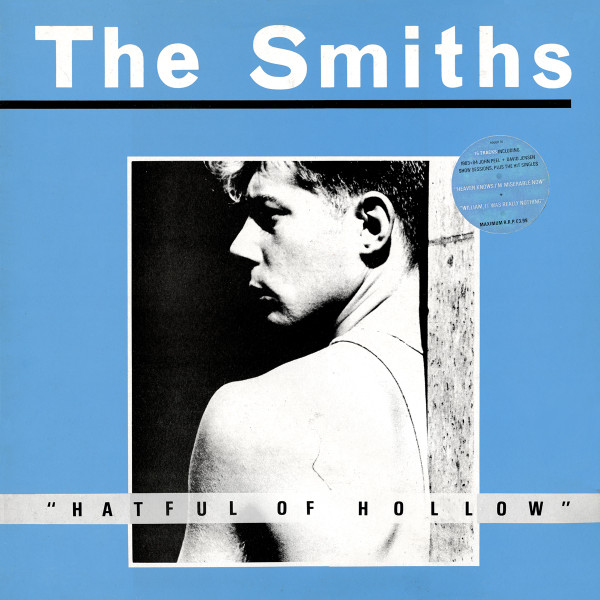
The Smiths – Hatful of Hollow (1984)

From wiki:-

Hatful of Hollow is a compilation album by English rock band The Smiths, released on 12 November 1984by Rough Trade Records. The album features BBC Radio 1 studio recordings and two contemporary singles with their B-sides.

The album consists mainly of songs recorded over several BBC Radio 1 sessions in 1983. Tracks shown with an asterisk were included on the album.

  1. For John Peel on 18 May 1983 (broadcast 31 May): “Handsome Devil*”, “Reel Around the Fountain*”, “Miserable Lie”, “What Difference Does It Make?*” (all four songs were later released as the Peel Sessions EP)
  2. For David Jensen on 26 June 1983 (broadcast 4 July): “These Things Take Time*”, “You’ve Got Everything Now*”, “Wonderful Woman”
  3. For Jensen on 25 August, 1983 (broadcast 5 September): “Accept Yourself*”, “I Don’t Owe You Anything”, “Pretty Girls Make Graves”, “Reel Around the Fountain”
  4. For Peel on 14 September, 1983 (broadcast 21 September): “This Charming Man*”, “Back to the Old House*”, “This Night Has Opened My Eyes*”, “Still Ill*”

When first broadcast, these radio sessions mainly featured songs which were otherwise unavailable. All were subsequently re-recorded for singles or for the band’s debut album the following year. “This Night Has Opened My Eyes” was recorded in the studio in June 1984, but the only version ever released was the September Peel session.

Hatful of Hollow also features the band’s debut single, “Hand in Glove”, and their two most recent singles prior to the album’s release, “Heaven Knows I’m Miserable Now” and “William, It Was Really Nothing”, along with their respective B-sides, “Girl Afraid”, “How Soon Is Now?” and “Please Please Please Let Me Get What I Want”.

The radio session versions of songs are different from other studio recordings. Some of the major differences are:

  • “What Difference Does It Make?” has heavier and more natural-sounding guitars than the version on The Smiths. It is also in a higher key than the version on The Smiths.
  • “These Things Take Time” features bass that is more prominent and drums that are less controlled than in the version from the “What Difference Does It Make?” 12″ single. Sliding guitar figures accompany the chorus.
  • “This Charming Man” has softer and more upbeat vocals, guitars and even drums than the version released as a single and on some versions of The Smiths. The bass line is louder and altered slightly. Additionally, there is no solo guitar introduction.
  • “Still Ill” opens and closes with a harmonica solo, and sounds less hollow and slightly slower than the version on The Smiths.
  • “You’ve Got Everything Now” is slower than the version on The Smiths and does not have any keyboard part. The bass line is also altered slightly.
  • “Back to the Old House” is an acoustic piece with melancholic guitars and vocals, as opposed to the full band version on the “What Differences Does It Make?” single.
  • Reel Around the Fountain” has duller-sounding drums and acoustic guitars than the version on The Smiths. The bass is more prominent, but the piano and organ parts are not included. It is also in a higher key than the version on The Smiths.

In addition, the original single version of “Hand in Glove” is included, not the remixed version that appears on The Smiths. It features a fade-intro and fade-out, louder bass, and vocals that sound very distant.

JC adds……

That’s your facts.

These days, Hatful of Hollow is the Smiths release I’ll lean on as my go-to album as it takes me back to the innocent and wonderful era when the band was being discovered.  All those radio sessions had been recorded onto cassette by someone or other in our ‘gang’, and numerous copies were made and passed around, with ever decreasing sound qualities and ever-increasing hissing.  I’m not sure that all the recordings were even in stereo.

It all meant that when the debut album was released in February 1984, it felt something of an anti-climax as so many of the songs were familiar, and indeed, even though the sound quality of the home-made cassettes was lousy, we felt the radio sessions were better versions.

The release of Hatful of Hollow in November 1984 went a long way to rectifying matters.

One other reason for looking back on this album so fondly?   It was responsible for my first ever written review of any album, thanks to the editor of the Strathclyde Telegraph, the University’s student newspaper, asking me to come up with a couple of hundred words.  I think he did so as he knew I had a copy of the album and there was so much interest in the group that he felt it better feature, even though Rough Trade hadn’t sent one in for review purposes.

Unfortunately, I no longer have a copy of the review….which I’m sort of glad about as no doubt it was appallingly written….but it was good for the ego to see my name in print.

mp3:  The Smiths – This Night Has Opened My Eyes

As wiki states, Hatful of Hollow was the only place that this track, which was an essential part of so many of the early live shows, was ever given a release.

Oh, and it shouldn’t be forgotten that three of the band’s best and subsequently most enduring studio recordings, previously only available as b-sides, were included on the album.

JC

60 ALBUMS @ 60 : #10

R-965780-1227901760

Scritti Politti – Songs To Remember (1982)

I’ve said plenty about this album across various previous posts on TVV, old and current versions alike, (and as SWC so kindly and helpfully points out, I’ve been known to say a few things on other wonderfully curated music blogs). But please, bear with me as i try to find some more words for the purposes of the rundown.

I think I’d be held up to ridicule if I ever tried to claim that this is one of the ten best records ever made.  But I’ll always have it placed high in any rundown of this nature for the fact that it helped to develop and broaden my musical tastes, listening and gig-going habits.

It was, thinking back on it, the first chin-stroking record that I ever truly fell for, one that didn’t require fast-paced guitar chords, poptastic synths or vocals being delivered by a brilliant or troubled genius to truly hold my attention.  If you’d suggested a few months prior to owning a copy that I’d be giving regular spins to a record on which a double-bass solo, alongside a jazzy sounding saxophone, were central to the delivery of one of its key tracks, then I would most likely have laughed in your face.

mp3:  Scritti Politti – Rock-A-Boy Blue

To be fair, I should have seen it coming.  An NME cassette had introduced me to Scritti Politti via the song The ‘Sweetest ‘Girl, a near-ballad whose softly played piano, drum machine and falsetto vocal I had found utterly charming.  The purchase of a later 45 of said song led to the discovery of a b-side, Lions After Slumber, that worked its way into my brain courtesy of a funky beat and a proto white boy rap delivery.   It was inevitable that I’d end up buying the album.

And loving it.

In 2001, a remastered version of the album was issued on CD.  A review in Q Magazine at that time stated that it still sounded delightfully undateable as it did back in 1982.

I’ve never really thought of the album in that way, but it is deadly accurate.  Songs To Remember is the type of record that could have been made in any of the past six decades and most of the time, would have never been dismissed as being totally out of fashion. It’s the sort of album no discernable music fan is every likely to fall out of love with.

Sigh.

JC

(BONUS POST) ‘LET’S MAKE THIS YEAR LOOK GOOD TONIGHT

The Mary Onettes @ Hus 7, Stockholm (01-06-23) + @ Nefertiti, Gothenburg (03-06-23)

A guest posting by Comrade Colin
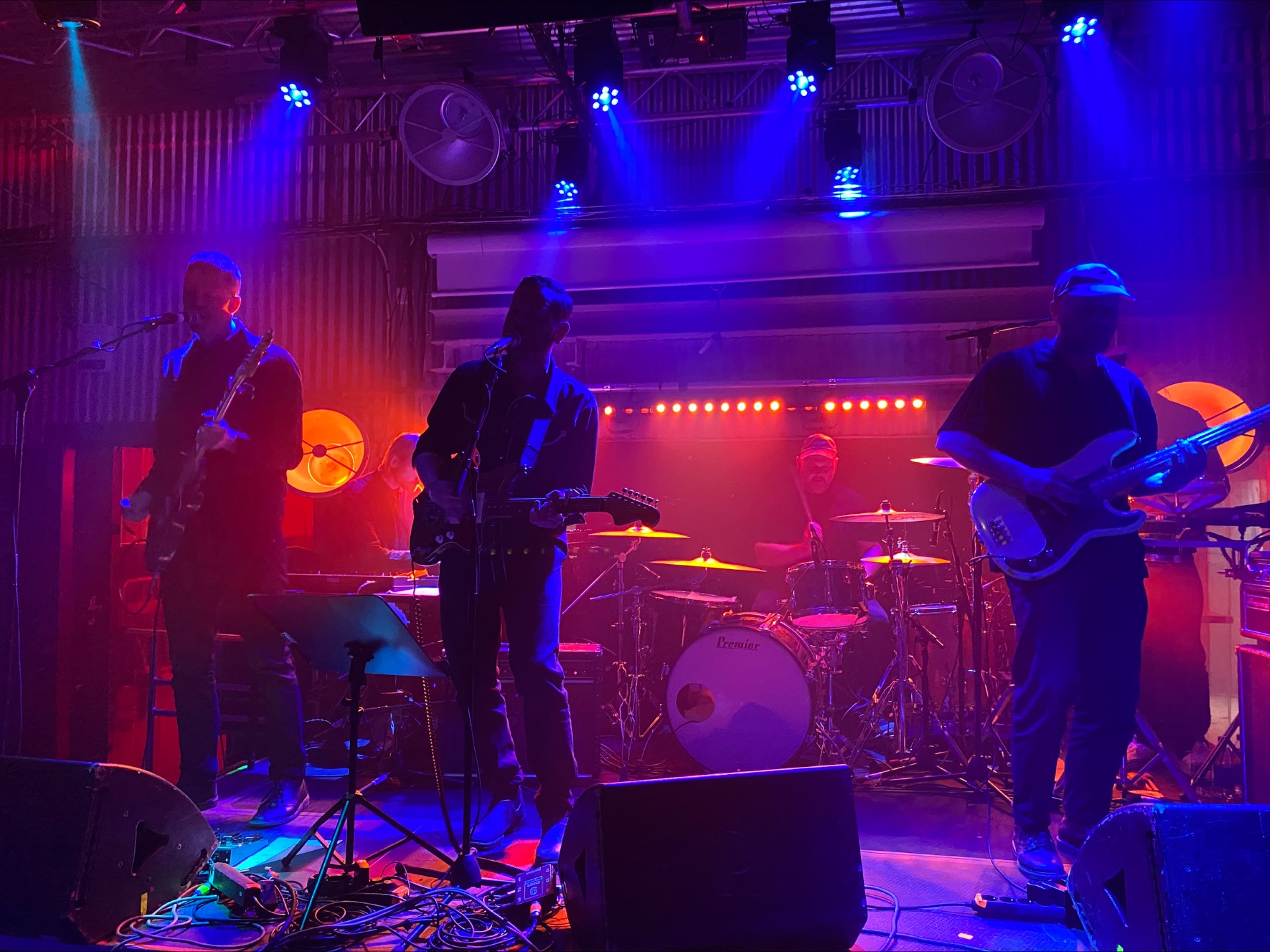
thumbnail_TMOstockholm01-06-23

After a period of relative radio silence – it has been close to five years since the ‘Cola Falls’ (2018) single release – Swedish band The Mary Onettes recently made a welcome return to making new music.

For sure, there had been a solo LP from lead singer/guitarist Philip Ekström – in the guise of H.MOON (‘Trustbood’, Welfare Sounds, 2020) – but that was very much his own thing.

In early 2022 rumours started to emerge online that the band were recording again for the innovative Gothenburg-based label Welfare Sounds and, right enough, in July that year the gorgeous slow-burning pop single ‘What I feel in some places’ was released digitally and on cassette tape, alongside two other new songs (‘Mind on fire’ and ‘Palace’).

Not content with this much-anticipated reintroduction, in March 2023, another glorious pop single appeared entitled ‘Easy hands’ (backed with the glacial quasi-instrumental song ‘Pearl Machine’) Those catchy riffs were instantly recognisable as The Mary Onettes. The band – with all original members present – were back with a vengeance and could still land a catchy riff and a heartfelt vocal.

And then, in May 2023, yet another single emerged via Welfare Sounds – ‘Forever before love’. This time, the single was backed with a song called ‘Future Grief’ which is a duet between Philip and the wonderfully talented Agnes Aldén (this a song that dates back to 2016, so it was great to finally hear it). I would say, for me, this is one of the best duets that I’ve ever heard (but more will be said about this song in a moment).

It is a truism, of course, but after an absence the heart does indeed grow fonder. The new material, to my ears at least, represents an extension and development of the material and sound to be found across all four albums they released for the Swedish label Labrador between 2007-2014 (‘The Mary Onettes’, 2007; ‘Islands’, 2009; ‘Hit the Waves’, 2013; ‘Portico’, 2014).

Then, in early 2023, news circulated of possible live shows. This was even more unexpected than the run of new singles. The band, as The Mary Onettes, had not played a gig since at least 2017, and even before this year their live shows were somewhat sporadic and almost never happened outside of their native Sweden (there had been a US tour, in early 2015, but this was the exception, not the norm).

A friend and I had always said we’d travel anywhere in Europe to see them play. If dates were to be announced, we had to be there. As it turned out, four dates were given: two in May 2023 (a warm-up show in Malmö and the Park Sounds festival in Huskvarna and two small club shows early on in the following month (Stockholm and Gothenburg).

Unfortunately, in the end, my pal couldn’t make these dates and stayed in Glasgow. I decided to venture forth and attend the latter gigs in June solo, via a journey that has now involved buses, trains, airplanes, trams, and my very tired legs (I am writing this at the airport in Gothenburg waiting for a flight back to Scotland).

In short, the last few days have been a life-changing time. But I will spare you those aspects. I will just focus on the music and the gigs.

The first show I saw was in Stockholm. I travelled by train from Gothenburg to get to this as the flights that worked best were between Edinburgh and Gothenburg. It was at a small venue called Hus 7 (House 7).

This was quite tricky to locate as it turned out, even with Google maps, but I thought I’d found it. I stood in the queue with an expectant audience that did not look to me like a typical (I imagined) The Mary Onettes audience. There was a lot of black clothing, a lot of chains, and a lot of deathly stares through thick eye make-up. I got to the front of the queue and the security guy looked at my ticket, then at me, and just laughed: “No, no… you need that place over there… [pointing at a doorway leading to another venue, next door]… this is a metal night. A very different thing!”. If I had been granted access to my mistaken location, well, that could have led to a very different kind of outcome and review.

The support act for the Stockholm show were called Lovi Did This and they were very good. Quite inventive in a soundtrack kind of way, embracing a range of instruments and styles (I would recommend ‘The Fish Song’ as an example). The lead singer prowled the stage with real confidence, and I admired that a lot.

The Mary Onettes took to the Hus 7 stage just after 9pm – with a gentle ‘hello’ from lead-singer Philip – to the drum pattern for ‘Puzzles’, the opening track from their 2009 LP ‘Islands’. It was a blistering start and it felt like a dream coming true. I sensed the goosebumps emerging and a lump in my dry throat… emotions were taking over. If you know their music at all, then I’m sure you can relate to this… they can cut you to the bone.

From this start we then had the pleasure of a 16-song set that covered most of their album and single releases, from the likes of ‘Lost’, ‘Slow’, and ‘Void’ to ‘God Knows I had Plans’, ‘Evil Coast’, and ‘The Night before the Funeral’ (before playing this latter song, Philip dedicated it to those who had travelled far to be there… including a certain city in Scotland).

Glasgow represents.

The real surprise of this show was the final song of the encore from the Det Vackra Livet 2011 release (‘Barn Av En Istid’). This was a one-off album made for Labrador by the brotherly team of Philip and Henrik Ekström. The lyrics are all in Swedish, and it is a truly beautiful record that adds to the strengths of what Philip does as a songwriter. The song, ‘Barn Av En Istid’ – translated as ‘Children of an ice age’), is one that slowly builds and builds and is a fragile thing that becomes fully-formed and one of those songs that ultimately becomes a soundtrack for important moments in your life. Had I theoretically heard this song before it was recorded, when I was a teenager in the late 1980s, this track would have ended side-B of every mix tape I ever made. One of those tracks.

On the Friday, I travelled back to Gothenburg from Stockholm by train for the second The Mary Onettes gig the next evening. In between I managed to see Suede play a free open-air gig on the Friday night by the new Hisingsbron bridge – to mark the 400-year anniversary of the city – and attend an IFK Gotëburg football match on the Saturday afternoon, but that tale is for another time. They lost 1-0 to Mjällby, for what it is worth, and it turns out Swedish football is just as frustrating as Scottish football. Suede played a kind of ‘greatest hits’ set and were, genuinely, taken aback by the response from the audience. They had them in the palm of their hand.

The Gothenburg The Mary Onettes show – an early one due to a club night starting at 10pm – was held at an old jazz/soul club called Nefertiti, just by the university campus in the city. Like Hus 7 it was going to be an intimate event. Philip and I had a brief chat before the show, and I nervously thanked him for the shows and the ‘shout-out’ in Stockholm. He was still a bit stunned I’d travelled solo all the way from Glasgow to see the band play in two different cities in Sweden. I had mentioned my plans on Twitter/Instagram earlier this year, just after the gigs were announced. I just replied: “But your music matters, of course I had to be here. I had to be here!”.

The support act for the Nefertiti show was Karl Vento, a very talented multi-instrumentalist who also now plays keyboards with The Mary Onettes (he has been with them the last 4-5 years or so). His set was mainly acoustic and electric guitar but aided and abetted via a very impressive pedal board. He created some magical sounds and had a very sweet vocal delivery, reminding me of Nick Drake and the Manchester musican Danny Saul. You can listen to Karl’s 2022 album ‘Rainbow Lights’ via his Bandcamp page.

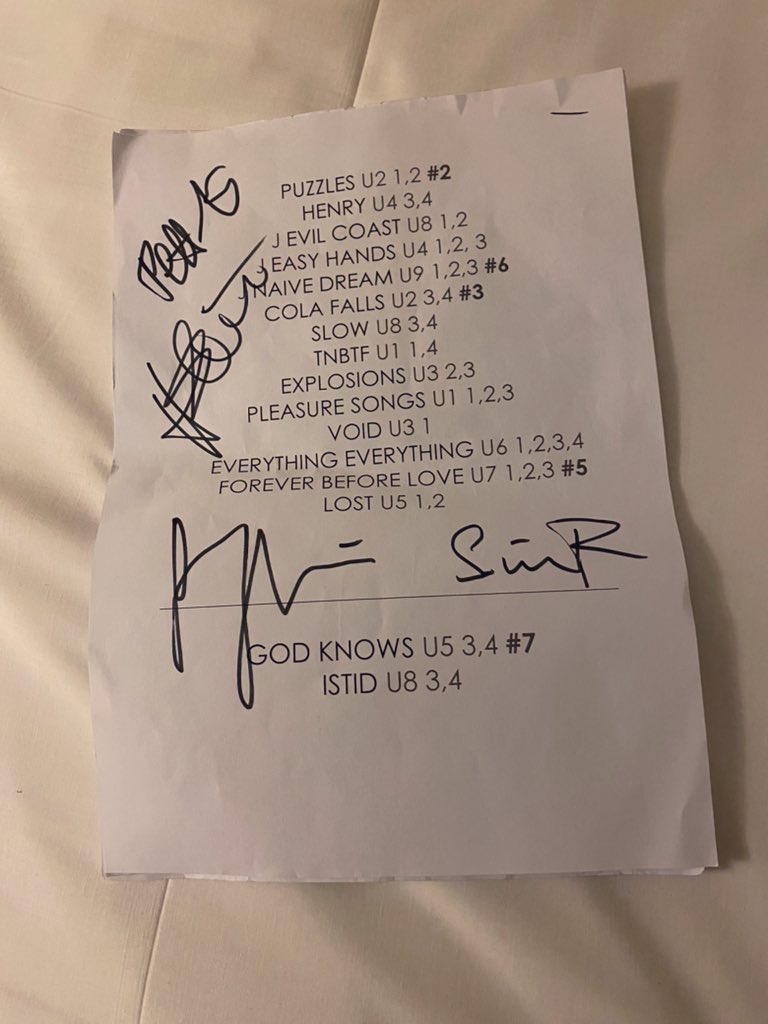
The Mary Onettes hit the stage not long after 8:30pm at Nefertiti and played an intense and fast set similar to the Stockholm one, but with a few key variations. One such difference, and the highlight for all of us who were present, was a semi-acoustic version of ‘Future Grief’ (the new duet with Agnes Aldén). The surprise appearance of Agnes on stage to sing with Philip added to the emotional intensity: the reflexive refrain of “Letting other people down” really cut the skin and hit home. Karl was on stage for this song as well, adding some electronica to the acoustic mix.

Before we knew it, the show was over… 70 minutes passed by so quickly. As they left the stage, Philip and Petter Agurén, the other guitarist in the band, both thanked those of us who had travelled a distance to attend – Spain, Germany, Scotland and elsewhere. After the show I managed to speak with Petter who kindly gifted me a signed setlist.
setlistgoteborg03-06-23

I also went to a club called Folk, near Järntorget, to hang out with them after the show. I was quite nervous and anxious about intruding into their post-gig space, but both Philip and Petter reassured me they wanted me to be there. We had a great conversation, including a lively discussion about the best song on the Cure LP ‘Wish’ (either ‘From the Edge of the Deep Green Sea’ or ‘To Wish Impossible Things’) and their best album (I would say ‘Faith’, Philip argues for ‘Disintegration’… both answers are actually correct).

As I sit here at the airport reflecting on these last few days, I just feel incredibly lucky and fortunate to be able to do things like this, not that I actually do them that often. In fact, the last time I travelled such a distance to see a live show it was fellow-Swedes The Radio Dept who were playing at the Kantine am Berghain in Berlin, February 2017. The band had a Glasgow show at the CCA cancelled, unfortunately, so a trip to Berlin it had to be.

It might be a Swedish thing. They do tend to make the best indie music. Or it might just be the power and draw of live music that speaks to you. We need to feel that connection and shared identity through singing along to every word, as your stand before your heroes who give their all for the cause. I don’t care if you are 16 or 61, you feel it and you need it. Music matters.

How to find the essential? The five songs below capture the main ingredients of the two shows I attended. I only hope you like them as much as I do, and then buy the albums they come from.

Thanks to JC, as ever, for giving me the space to say these words. And thanks for reading if you made it this far. I do go on a bit (as JC knows well).

‘Comrade Colin’

Gothenburg Airport

04-06-23 @ 16:17

PS, A musical recommendation from Petter – the LP ‘Nordsjøen’ by the Bergen-based musician, John Olav Nilsen (2017). It is excellent. This album is also worth your time and ears.

PPS, Hello to Thomas who travelled to both shows from Germany, who I have just met at the airport right now. Musical solidarity, mein freund!

The Mary Onettes – ‘Puzzles’ (4.32) – from the 2009 LP ‘Islands’.

The Mary Onettes – ‘Slow’ (4.24) – from the 2007 LP ‘The Mary Onettes’

The Mary Onettes – ‘Cola Falls’ (4.03) – from the 2018 single ‘Cola Falls’ (recently re-released on vinyl, here)

The Mary Onettes (with Agnes Aldén) – ‘Future Grief’ (3.41) – from the 2023 single ‘Forever Before Love’

Det Vackra Livet – ‘Barn Av En Istid’ (4.25) – from the 2011 LP ’Det Vackra Livet’
60 ALBUMS @ 60 : #11

R-6530-1615303532-5424

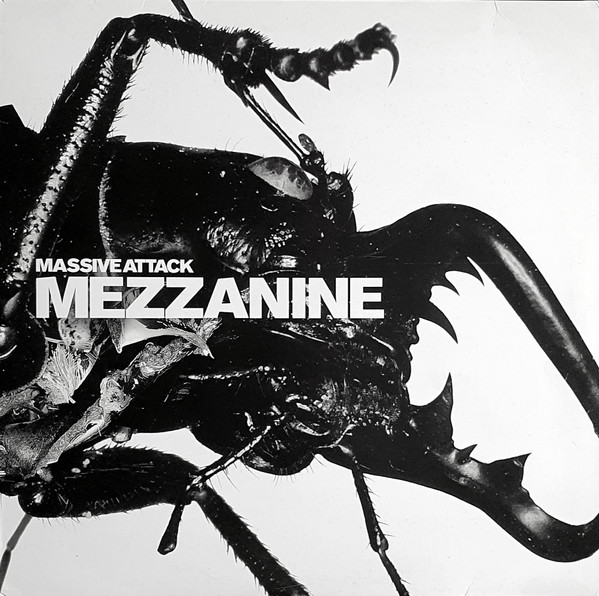
Mezzanine – Massive Attack (1998)

I think it’s pretty obvious by now that I’m a bit more comfortable trying to write about guitar-based indie music than any other genre.  This rundown has contained a few bits of hip-hop/rap/dance, but they have been the exception.  I find it much harder to explain why some records from such genres have hit my sweet spot, while many others have landed very far from the mark.

Massive Attack had been responsible for one of what was, and still is, one of my all-time favourite singles, Protection.   I can put my hand on my heart and say the Tracey Thorn vocal is my all-time favourite of hers, and given I’ve been a lifelong fan of Everything But The Girl, that is something of a bold statement.

But, no matter how hard I tried, neither of the first two albums ever fully clicked with me at the time, a situation that would only change when I went revisiting in the years after I bought and fell hard for Mezzanine.

Hearing the song Teardrop proved to be the jaw-dropping moment.  I’m 99.99% sure my first exposure was through the airing of its promotional video on MTV2 or suchlike, as hearing the voice of Elizabeth Fraser via the medium of television was something quite rare, particularly in the late 90s.  If I had previously thought Tracey’s performance on Protection had been career-defining, then I was quite prepared to feel exactly the same way about Liz’s work with Massive Attack.

The single was purchased for a stupid amount of money – it was either £3.99 or £4.99, and I came away wondering if I’d have been better shelling out for the album.  I played Teardrop an awful lot over the following days, discovering that I was enjoying the remixes and the b-side, Euro Zero Zero almost as much, and so I bought the album a few weeks later, probably just after the next pay day.

I found it to be an astonishing listen from start to end.  I couldn’t imagine any other trip-hop album being so dark, almost gothic like in nature, with the sounds seeming to have been engineered so that every note carried a sense of menace or a warning of impending danger.

mp3: Massive Attack – Mezzanine

I hadn’t, until this point in time, fully appreciated the skill and craft deployed by Massive Attack.  It led to a revisiting of the previous two albums, and a greater acknowledgement of how consistently excellent they had been.

A few years ago, as part of a festive period series, I posted a contemporary review of Mezzanine that had been written by Barney Hoskyns for Rolling Stone Magazine.  He described it as ‘a richly eclectic, unpigeonholeable artifact’ which seems just about perfect.

Only the Top 10 left now.  I’m sure regular readers will have just about worked out who are most likely to appear.

JC

(BONUS POST) THE AWKWARD BUNCH

A guest posting by Fraser Pettigrew

deck-chair

 [An Elvis Costello fan struggling to re-fold his copy of Armed Forces.”]

Aside from the music, one of the chief pleasures of vinyl records is the variety and artistry of their physical format and packaging. From the moment Andy Warhol placed his peelable pink banana on the cover of The Velvet Underground with Nico and The Beatles commissioned Peter Blake to design the cover of Sgt Pepper, the LP became more than just a disc of recorded music and presented a challenge to every marketing department’s art director to come up with novel twists in sleeve design that would catch the attention of press and public.

Geogadi

[“Geogadi, three discs, five sides, double pocket sleeve, Jesus wept…”]

The unintended consequence of this creative compulsion is that anyone with a decent-sized record collection will possess LPs whose packaging fails the most basic test of a mass consumer product – usability. In their quest for gimmick, record companies have delivered discs that frustrate their owners in any number of ways, and some of the most common I will now illustrate with items from my own collection, and some others.

ArmedForces

[“Armed Forces, harder than stripping and reassembling an AK-47.”]

For starters there are the numerous examples of pocket sleeves, or other unconventional wraps that require more than a simple tug or tilt to release the vinyl. This is definitely not a recent contrivance confined to such as Stereolab‘s Emperor Tomato Ketchup or Geogadi by Boards of Canada (beware: also features an unplayable side 6). In my shelves I have elderly examples such as an Australian pressing of Tommy by The Who, Roberta Flack‘s Killing Me Softly, and excellent Brit-disco album Four From 8 by The Real Thing. Elvis Costello‘s Armed Forces came in a famously complicated five-flap fold-out like a two-dimensional Rubik’s cube, containing a poster, four postcards and a bonus single as well as the actual LP itself, but none of that made it any easier to get at or put away again safely in your collection without the neighbouring LP getting jammed against a protruding flap as you tried to replace it. Good job Ballistic Bob wisnae a record collector.

Flack

Flack2

[“Copping flack for nuisance value”.]

The envelope sleeve is the next nuisance to be dealt with. My original UA label British edition of Can‘s Tago Mago is a good example. Worth a bob or two to collectors, but fragile and prone to wear and tear with repeated use, to the point where the closure tab doesn’t really do its job any more, reduced to a flabby puff of frayed paper that won’t fit in your letter-box never mind the tiny slot it was designed for.

TagoMago

[ “No can do”.]

Inconvenience of format rather than packaging brings us to albums that are not played at the conventional 33rpm but consist of two or three 45rpm 12 inch discs. If you have a turntable with a speed selector switch this is hardly any issue at all, but if you have invested in some higher-end hi-fi equipment you may have to lift the platter off its spindle and manually move the rubber band to a different position.

Welcome to my world, in which cracking good albums such as Cabaret Voltaire‘s 2×45 (the clue is in the name) or Spiritualized‘s Laser Guided Melodies don’t get the turntable time they deserve because I find it all too much effort.

mp3:  Cabaret Voltaire – Breathe Deep
mp3:  Spiritualized – You Know It’s True

This of course is nothing to those (not me) who may have been tempted to buy the 1980 single Buena/Tuff Enuff by Joe ‘King’ Carrasco and the Crowns (I know, why would you?), issued by Stiff Records in a 10 inch 78rpm version. This is the point at which gimmickry becomes pure perversity.

mp3:  Joe ‘King’ Carrasco and The Crowns – Buena

The multi-disc 45rpm album became more common with the advent of the CD era. The Rough Trade version of Ultramarine‘s Every Man and Woman is a Star, as well as the Spiritualized debut just mentioned, date from the time when a 12 inch 33rpm disc simply couldn’t accommodate the 60-70 minutes of music that had become the norm for CD albums without loss of signal volume. For convenience, however, this format quickly gave way to double-vinyl 33rpm sets where the sides were simply a little shorter than normal.

HowieB

[“Howie B, don’t get comfortable.”]

Even then, things could get out of hand. Sly and Robbie‘s Drum & Bass Strip to the Bone, mixed and co-created by Glaswegian hip-hop artist and producer Howie B, is quite a nifty, grinding rhythm work-out by the legendary Jamaican duo. But the ability to get a good sense of it as a whole has been severely hampered by pressing it on no fewer than FOUR pieces of vinyl. There’s about 75 minutes of music in there but the longest side only just manages to graze 11 minutes before you have to get up and flip it. Most of them are more like seven or eight. I mean it’s quite funky in parts so you MIGHT not want to sit down, but it’s definitely not one to stick on while you do some knitting.

HunkyDory

[“Transparent vinyl, it’s all or nothing.”]

Coloured vinyl may be attractive but it can be a pig if you’re trying to pick out a particular track. The darker and more solid the colour the better – a judiciously placed light source can help you see the division between tracks. But if the vinyl is transparent, like my RYKO re-press of Bowie‘s Hunky Dory, then forget about it.

mp3:  David Bowie – Life On Mars

Everyone will have examples of records whose packaging discourages frequent playing on account of shoddy manufacture. Machine Says Yes by FC Kahuna is my example, whose two pieces of vinyl hide in woefully under-sized inners and are impossible to remove without gripping the rims tightly between thumb and forefinger, violating all the rules about contact between greasy skin and the playing surface.

On the plus side of that equation, my copy of Bowie’s Aladdin Sane was picked up about 20 years ago in an Amsterdam back-street pop-up shop for the princely sum of 3 Euros. It’s an original 1973 UK pressing that I suspect had never been played on account of the fact that the inner sleeve is too big to fit into the outer, and I think it had languished for years in the back of a record shop, unsold until it found its way into my hands. Three cheers for printers’ errors.

Plain silly packaging is not the unique preserve of vinyl, of course. One needs only think of the 12xCD ‘pharmaceutical’ blister pack edition of Spiritualized’s Ladies and Gentlemen We Are Floating in Space. It’s one of the truly great albums of the 1990s, but the pill-pack concept renders it nigh-on unplayable. Even if you ruined it as a collector’s item by opening the blister pack to get at the CDs, could you really be arsed popping each single-track disc into your player, especially disc 7, all 2 minutes 22 seconds of it? Seriously, fuck that for a game of soldiers.

mp3:  Spiritualized – Home Of The Brave

But frankly, nothing beats The Return of the Durutti Column for plain silly. First released by Factory Records (who else?) in 1980, its sleeve consisted of two sheets of heavy duty number 1 glass paper, specially designed to utterly ruin whatever sat next to it in your record shelves. The concept was nicked from situationist Guy Debord‘s book “Mémoires”, and was originally contemplated the previous year by PiL for their second album. Nothing could be less abrasive than Vini Reilly‘s delicate, jazzy guitar pickings contained within. I have a later reissue of the plain, black-sleeved edition that came out after DIY enthusiasts snapped up the first pressing. (Discogs notes: “All sandpaper copies were stuck together and sprayed at Palatine Road by Joy Division to earn some extra cash – although Ian Curtis did most of them as the other members were watching an adult film in an adjoining room.”)

Tommy

[“Colonial crimes – NZ pressing of Tommy, polythene bag AND pocket sleeve”.]

My penultimate pet-peeve is the half-moon polythene inner sleeve, mercifully rare in the UK and America, but regrettably common here in Australasia. Trying to slide such bags back into the outer sleeve without the tops crumpling up into a bulging blob of plastic is like the proverbial effort of pushing jelly up a hill with your nose. Combined with the pocket sleeve as in my copy of Tommy, it was calculated to kill music much faster than home taping ever would.

Metal Box

And finally, to the mother of them all, an LP that manages to combine at least three of the above design defects and yet still holds a prized place in my record collection. Yes, it’s Metal Box. A tarnished tin film can that doggedly refuses to release the three 12 inch 45s inside, however much you tilt and shoogle it, vainly trying to keep your fingers off the surfaces as you winkle them out.

After I’ve hoiked the platter off my deck and flipped the speed regulator I can finally play it.

Ten minutes later and I’m up again changing sides, or trying to coax another disc out of the can.

The main reason it was originally pressed in this format was to give full rein to Jah Wobble‘s bowel-shaking bass, and the amplitude of the groove is so physically large it used to literally throw the needle into a jump on my old turntable. Even now I turn up the tracking weight on the arm when I play Albatross.

mp3:  PiL – Albatross

And yet for all this it’s the music that wins. It’s simply one of the greatest and most uncompromising albums ever released, and worth wrestling with on a regular basis. I could buy a CD version, or even the 2xLP ‘Second Edition’. But, well, you know… it just wouldn’t be as much fun, would it?

Fraser

60 ALBUMS @ 60 : #12

R-367404-1382709231-7248

New Adventures In Hi-Fi – R.E.M.(1996)

I know I’m in the minority when I make the statement that New Adventures In Hi-Fi is R.E.M.‘s best album.  Its numerous detractors feel it is a bit overblown, extending out to 14 tracks, and the inability of the band to settle down and record it in a single location and at a given point created an inconsistency in mood and tempo.

These, however, are precisely the sort of things that have made me increasingly love the album with each passing year.   I’m not going to say that it’s a flawless piece of work – indeed, for all that R.E.M. made many magnificent albums during their existence, including a couple towards the end of their career, they all contain something that could be nitpicked or criticised for one reason or another.

The album was recorded, for the most part, while they were out on a world tour in 1995, the first time they had undertaken such a venture in six years. It is quite strange looking back at things to fully appreciate that they had become global superstars on the back of Out of Time (1991) and Automatic For The People (1992) without ever playing what could be seen as a series of standard live shows in theatres or arenas.

It seemed a good idea at the time. The nightly set-lists would be packed with ‘the hits’, so what better way to alleviate the tedium of life on the road by using soundchecks and rehearsals to try out some new songs.

The intention was to make for a more relaxed way of recording a new record, one that the constant search for perfection in a studio would be avoided. The takes put down in the theatres could, if required, be fine-tuned at later dates with overdubs and the likes, but with these proving to be minimal, what came to be released was a double album which turned out to capture the original four members of R.E.M. at their performing peak.

Of the 14 tracks, five were recorded at soundchecks, two in Atlanta, and one in each of Orlando, Memphis and Phoenix.   Four were recorded live (but with no audience present) in Charleston, Boston, Auburn Hills and Phoenix. An instrumental track was captured in the dressing room of a venue in Philadelphia.   The remaining four, which all required a bit more technical input or contributions from musicians/singers not on the tour, were put down in the more traditional way in a recording studio in Seattle.

It all adds up to a fascinating listen. The songs were genuinely fresh and brimmming with ideas, and with much of the Monster tour set lists in ’95 heavily leaning on the three albums recorded in the early 90s, it is no surprise that the eventual contents of New Adventures In Hi-Fi proved to be a very fine blend of the acoustic and electric, as well as country rock and indie rock.

mp3: R.E.M. – Low Desert

Recorded at a soundcheck at the Omni Theatre in Atlanta, Georgia.  In addition to Berry/Buck/Mills/Stipe, the performance benefits from Nathan December on slide guitar and Scott McGaughey on piano.

My one regret looking back is that I only bought it on CD in 1996…..but then again, the old record deck, amplifier and speakers were in storage, and it was CDs or cassettes all the way, otherwise I wouldn’t have been able to hear it.  But I did buy the 25th Anniversary re-release on vinyl and got to enjoy things all over again.

JC

PET SHOP BOYS SINGLES (Part Twenty)

maxresdefault

Back in 2010, Record Store Day was still an idea worth getting behind.  Pet Shop Boys announced that they would be participating on 17 April 2010, with the release of a 7″ single, limited to 1,000 copies.

R-2236211-1273476455

mp3:  Pet Shop Boys – Love Life

It wasn’t an entirely new song. It had been written back in the early 2000s and given to nu-disco outfit Alcazar, who subsequently enjoyed a Top 10 hit with it in their native Sweden.  PSB resurrected the song for RSD 2010. 

The b-side of the single was of a studio version of a song that had only previously been heard when recorded for the John Peel Show session back in 2002.

mp3:  Pet Shop Boys – A Powerful Friend

The introduction to A-side starts off like a Pet Shop Boy song, the verse sounds like a Pet Shop Boys song, while the chorus couldn’t be anything else.  

The B-side on the other hand……..I just don’t get it.   Does nothing for me.  I’ll leave it at that.

The important thing is that the recording and release of the single had the purpose of assisting small, independent record shops, and whatever copies participating stores would have received would have sold out very quickly on the day, hopefully from PSB fans perhaps making their first visit to such stores in decades.

Here’s the thing.

I’ve listened to the version of A Powerful Friend that was recorded for the Peel Session and I love it.   In places, it’s unmistakably PSB at their synth-pop best, albeit the track is faster and more furious than most of their tunes, while it also incorporates harder elements within the music, almost as if they want to acknowledge the sort of material that is more normally to be heard on the Peel Show.  I’m quite surprised that Neil and Chris didn’t seek agreement with BBC Enterprises to make it the actual b-side.

The next major thing to happen was a triumphant appearance at Glastonbury on Saturday 26 June when they headlined The Other Stage, and according to many accounts, delivered the best performance across the entire three days of the festival.

R-2563812-1375707175-3309

A brand-new single was issued on 24 October 2010.  It sounds as if they were trying to create their own version of the sort of tunes that were massive in the clubs, thanks to new(ish) kids on the block such as Calvin Harris or David Guetta, both of whom owed a debt to PSB.   Sadly, it isn’t one of their best efforts.

mp3:  Pet Shop Boys – Together

It was initially just a digital release that was followed up by physical content on 29 November. In the interim, it had appeared as the one wholly new song on Ultimate, another ‘greatest hits’ album, containing 19 singles all told.  Ultimate was also made available in an expanded form with a bonus DVD containing including 27 performances at the BBC from the past 25 years, most of them filmed for Top Of The Pops, as well as their Glastonbury 2010 show.

The physical release of Together came in a CD single and a CD maxi single.  The former had a remix of West End Girls as the additional track, while the latter contained two cover versions.

mp3:  Pet Shop Boys – Glad All Over
mp3:  Pet Shop Boys – I Cried For Us

Yup.  One of these IS the song made famous by the Dave Clark Five in the 60s. The connection here is that it’s a song often sung at matches by fans of Blackpool FC, the hometown club of Chris Lowe. It might well qualify as the worst cover version they’ve ever released.

The other song was written, back in 1982, by Kate McGarrigle who enjoyed a long and successful musical career alongside her sister Anna, particularly in their native Canada.   Kate, whose name had become increasingly more after her son Rufus Wainwright shot to worldwide fame, had died at the age of 63 in January 2010, and Neil had performed I Cried For Us at a memorial concert in London in June 2010.  Shortly afterwards, a studio version of his interpretation of the song was recorded.

As mentioned last time around, the days of PSB singles going high into the UK charts were now at an end.  Together peaked at #58.

JC

SATURDAY’S SCOTTISH SONG : #358: URUSEI YATSURA

urusei-yatsura

From ICA 268 :-

Urusei Yatsura formed in 1993. Founding members Fergus Lawrie and Graham Kemp met whilst attending the University of Glasgow. They recruited Elaine Graham as bassist, and the line-up was completed with the subsequent addition of Elaine’s brother, Ian Graham, on drums.

They took their band name from the manga Urusei Yatsura, written by Rumiko Takahashi, and contributed their first recording, “Guitars Are Boring”, to a compilation album released by the locally based Kazoo Club. This record in turn brought them to the attention of John Peel, who brought them in to do a session in 1994. They would go on to record 4 Peel Sessions in total, as well as appearing on the Evening Session for Steve Lamacq.

Over the years they released three albums: We Are Urusei Yatsura (1996), Slain By Urusei Yatsura (1998) and Everybody Loves Urusei Yatsura (2000). Albums in America and Japan were released under the name of Yatsura for legal reasons. There were also around a dozen commercially available singles, mostly on Che, a London-based indie label. Urusei Yatsura split in June 2001, but three of the members would resurface in 2009 as Project A-Ko with a really good collection of tunes on the album Yoyodyne.

The most obvious, and therefore lazy, comparisons are Pavement, Dinosaur Jr. and Sonic Youth. As someone else has said elsewhere on t’internet, the sonic attacks of their songs were like three-minute bolts of lightning, and likewise, their debut album, snapped and crackled in a time when everything Brit-popped.

mp3:  Urusei Yatsura – Hello Tiger

From Slain By Urusei Yatsura. 

The closest the band ever got to commercial success. It reached #40 in the singles chart in February 1998.I wonder if things would have turned out different had they been invited to perform that week on Top of The Pops?

JC