THE 7″ LUCKY DIP (33) : The Shamen – Move Any Mountain

A little bit of techno/synth-pop from 1991 is on offer today.

The Shamen formed in Aberdeen, Scotland in 1984, initially under the name of Alone Again Or.  It was a time when indie-pop music, as we would come to call ‘the scene’ was based on the sort of standard band set up of guitars, bass, drums and a lead vocalist.  The Shamen were more than decent within the genre, sort of specialising in adding a touch of 60s psychedelia to the indie sound to make records that were interesting to listen to and geared towards making people dance.

By the late 80s, there had been a few changes in the make-up of the band, with keyboards having a bigger part to play in their sound along with the use of what was, at the time, the new(ish) idea of sampling. The Shamen were on an evolving journey towards the emerging rave scene, and by 1989, were down to just two members – Colin Angus and Will Sinnott – both now living in London and combining DJing along with writing, recording and performing.  A new single, Pro>gen, was released by their new label, One Little Indian Records, in March 1990.  It proved to be an absolute smash in the clubs and thanks to some plays on radio stations, attracted enough attention to spend a few weeks in the chart and reach #55, the first hit single of any sort for the band.

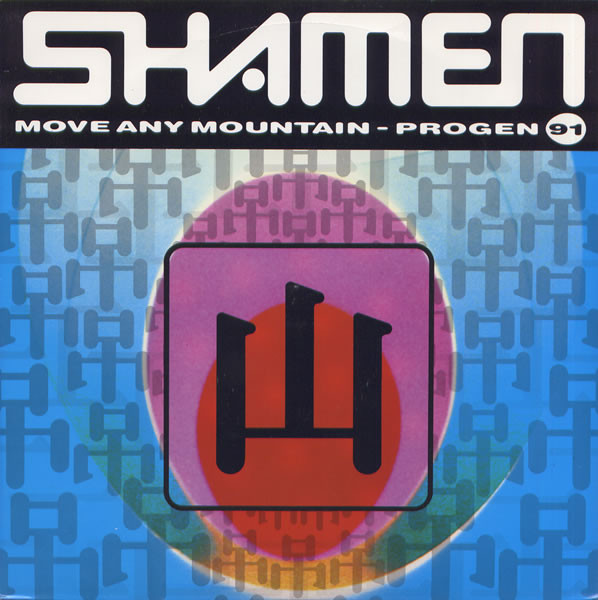
A year later, the single Hyperreal went Top 30.  A decision was taking to re-visit Pro>gen, and to issue it as the follow-up single over the summer, hoping that its constant playing in the clubs across the continental holiday resorts would help take it into the singles charts.  It was released on 12″ CD and 7″, and it’s a second-hand copy of the latter that I picked up many years later:-

mp3 : The Shamen – Move Any Mountain (Beat Edit)
mp3 : The Shamen – Move Any Mountain (Rude Edit)

A budget was set aside for a new promo video, to be filmed on Mount Tiede on the island of Tenerife.   Shortly after the filming was finished, tragedy stuck as Will Sinnott drowned, on 23 May 1991, while swimming off the coast of neighbouring island La Gomera.

Move Any Mountain reached #4 in the UK charts in July 1991.

Having given things some serious consideration, Colin Angus decided to continue with the band, augmenting things with a rapper – Mr C – and female backing vocalists, all of whom had previously been part of any live shows and occasional contributors in the studio.  In August 1992, a #1 single, Ebeneezer Goode, turned The Shamen into one of the most popular and talked about bands in the country.

JC


ONE SONG ON THE HARD DRIVE (18)

The song comes from its inclusion on Disc 2 of the NME C86 box set, issued by Cherry Red Records back in2014, while the next bit of the narrative has been taken from the John Peel wiki website.

A Riot Of Colour were an indie pop band from Swiss Cottage, North London, originally consisting of Alex Osman (drums), Alistair Jackson (guitar) and Dominic Blaazer (bass, vocals, guitar).  The band released several singles in the 80’s and a compilation album of their work in 2015.

Peel discovered the band via a flexi disc, which he played a track from first on his show in February 1986. He would play further material from the group, including a session they recorded for his show in April 1986.”

Turns out that the flexi mentioned above contained the very track included in the C86 boxset:-

mp3: A Riot Of Colour – Skink (flexi version)

Skink would later be re-recorded as the lead track on their eponymously-titled debut four-song EP issued by Dreamworld Records in 1986.  The only other release to be mentioned on Discogs is Swallow, another EP, this time with three-songs, which came out on Everlasting Records in 1989.  By this time, the band were just a duo consisting of Jackson and Blaazer.

The observation from Villain Towers?  While very much of its time and place, it is well worth three minutes of your time for a listen.  A solid 7/10 offering.

JC

ONE HUNDRED AND ELEVEN SINGLES : #092

aka The Vinyl Villain incorporating Sexy Loser

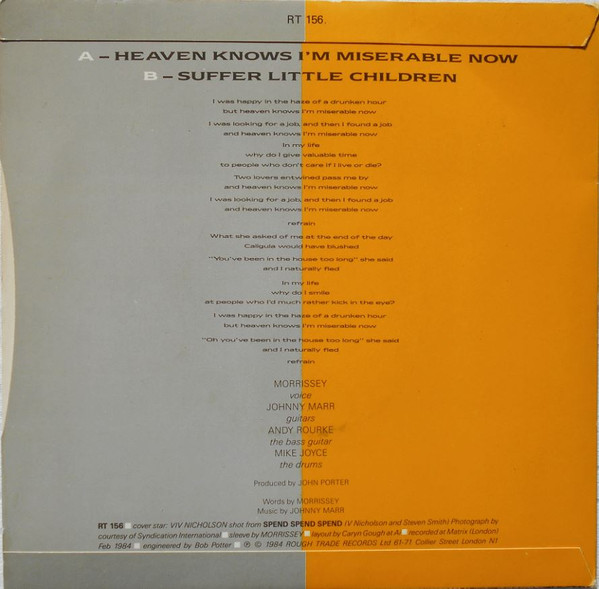
#092: The Smiths – ‘Heaven Knows I’m Miserable Now’ (Rough Trade Records ’84)

Dear friends,

now, before you shout at me – let’s be brutally honest: if you owned a Tesla, would you deliberately drive it against a wall at immense speed just because we all know now that Elon Musk is affirmatively the second-biggest prick in the USA? No? Well, I thought so … you’d rather get one of those rear stickers from Temu reading ‘I bought this before Elon went crazy!’ – and everything would be fine again.

Probably this is not the most useful comparison in the world, but I think you see what I’m trying to say, because basically The Smiths are facing the very same, let’s call it ‘Tesla-problem’. You see, I have always been the first to say ‘smash fascism’, but as a German, you learn to differ. I’ve always thought it is not correct to (still) blame a whole nation for what their grandfathers’ generation did some 90 years ago, but, believe me, this still happens, and it happens quite often over here.

So, the big question is: do we really have to neglect the back catalogue of one of the finest four-pieces ever to walk the earth just because one of them, the singer on this occasion, turned into a total tosser 30 years later? As far as I’m concerned: no, we should not, because a) four people were involved at the time, not just one and b) the music they made was too good, let’s be honest!

Also, I mean, you never know: there is always a chance (a very small one indeed, I admit) that some 15 year-old with a bit of taste ends on this site accidentally, someone who never heard of The Smiths – and there are millions of those out there, believe me, the fruit of my own loins being one of them (well, no, Little Loser was adopted by us, so there wasn’t much fruit involved – but I’m sure you’ll get my point)!

Either way, wouldn’t it be a shame if we didn’t educate this person properly, so that he or she knows that there’s more to music than Lady Gaga and Bruno Mars?!

I, for once, don’t want to be held responsible – and that’s why you find today’s record in the singles box. As everyone of you knows, of course (apart from our mystical 15-year old perhaps): any of the first singles could have featured instead, they were all simply brilliant. The only reason it is this one is: it was the first Smiths-tune I ever heard, and boy, did it blow me away back then!!

What I didn’t know then, of course, was this:

„Heaven Knows I’m Missing Him Now” was the twenty-third single by 1960s British girl singer Sandie Shaw, released in September 1969, her final single of that decade, marking the end of a string of singles which had made her the most successful British female singer of that era.

The tune did not chart at the time, but apparently it heavily met with Morrissey‘s approval, at least so much so that he wrote “Heaven Knows I’m Miserable Now”, which, contrary to poor Sandie’s original, turned out to be the first top ten single for The Smiths:

mp3: The Smiths – Heaven Knows I’m Miserable Now

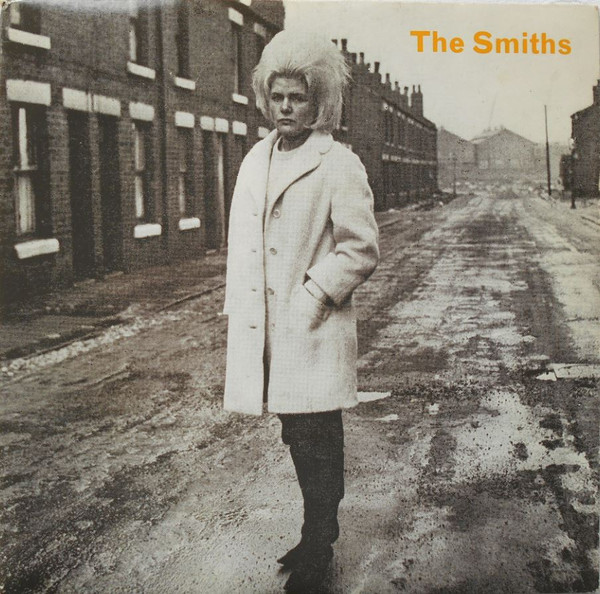
The cover above, fact fans, features Viv Nicholson, who became famous in 1961 in the UK for winning a large amount of money on the football pools – and then rapidly squandering it. Which might explain the look on her face, if you ask me …

Enjoy,

Dirk

AN IMAGINARY COMPILATION ALBUM : #389 : PET SHOP BOYS

It was while I was rebuilding the list of Imaginary Compilation Album that it hit me nobody had attempted to come up with one for the Pet Shop Boys.

In many ways, this is totally understandable, as it borders on a genuinely impossible task.  There’s a wiki page which offers what it describes as ‘a comprehensive list of songs….of officially released songs that have been performed by the band….and consists of mostly studio and BBC recordings; remixes and live recordings are not listed, unless the song has only been released in one of the two formats.’

The list runs to almost 350 songs.  Well, there have been fifteen studio albums along with more than seventy singles…..

Thinking about it further, ‘borders on a genuinely impossible task’ is an understatement.  I reckon you could ask 14,300 PSB fans for a Top 10, and you’d get 14,300 different lists.  Oh, the reason for homing in on 14,300 is simply down it being the capacity of the OVO Hydro in Glasgow where myself and Rachel last saw them play live back in May 2022, and although it was, in effect, a ‘greatest hits’ show (26 songs all in), we were struck by how many different people were saying on the way out that they wished Neil and Chris had played something that hadn’t aired that night.

I’m not taking on the task of a full-blown ICA.  Instead, here’s one based on tracks that weren’t played at the Hydro….call it an ICA of the lesser-known tracks.  I reckon it still makes for a more than decent listen.

SIDE A

1. I Wouldn’t Normally Do This Kind Of Thing

The original version can be found on Very, the duo’s fifth studio album, released in September 1993.  A few months later, in November 1993, a remixed version was issued as a single.  Neil and Chris chose to be quite radical in that a three-minute incredibly immediate pop song was remixed by Beatmasters, with an additional two minutes, while the house music style piano opening being replaced by something rather grand, orchestral and epic. As I’ve mentioned before, while I initially wasn’t all that fussed about the remix, it has grown on me over the years and looking back with the benefit of hindsight, it was the right sort of big and bouncy remix needed to complement the huge success of the previous single, Go West.  But I still feel it goes on for maybe 30-45 seconds too long, and so it’s the album version which opens the ICA.

2. Paninaro

The b-side of Suburbia, the duo’s fourth single which dates from 1986 has long been one of the most loved among the fan base, and I suspect that has much to do with the majority of the vocal, albeit more spoken than sung, being provided by Chris Lowe.  There’s a spoken sample at the two-and-a-half minute mark:-

I don’t like country-and-western. I don’t like rock music. I don’t like, I don’t like rockabilly or rock ’n’ roll particularly. Don’t like much really, do I? But what I do like I love passionately.

And that, ladies and gentlemen, is the enigmatic Chris Lowe in his own words.  He hasn’t really changed in almost 40 years.

3. Minimal

From Fundamental, the ninth studio album, which was released in 2006, and later issued as a single, becoming PSB’s thirty-seventh Top 20 hit in the UK.  Alex Petrides, in his review for The Guardian, described Minimal as sounding pleasingly like Kraftwerk mounting a defence of the Turner prize. A bit mind of Pseud’s Corner perhaps, but I know exactly what he’s getting at.

4. Your Funny Uncle

PSB have always been famed and loved for their more tender numbers, with, arguably, Being Boring being the best of them.  But it’s long been the song with which they have closed their shows, and so doesn’t qualify for inclusion on the ICA.  Instead, I’m including one from 1989, a b-side on what was a limited 7″ edition of It’s Alright. It’s based on a true story, with the lyric composed by Neil after he had attended the funeral of a friend who had died from AIDS. Here’s what he had to say about the song:-

“All the details are true: the cars in slow formation, and so on. He did have an uncle, who had been in the army all of his life and suddenly found himself at the funeral of his evidently gay nephew who’d died of Aids. I think it must have been quite a difficult situation for him, but he was really nice and dignified and spoke to all of his nephew’s friends. I had to give a reading, and the bit I read was from the book of Revelations…at the end it says there’s somewhere where there’s no pain or fear, and I found it a really moving piece of prose, and attached it to the end of the song.”

5. Love Is A Bourgeois Construct (Nighttime Radio Edit)

By the time of Electric, the twelfth studio album, which was released in 2013, PSB had more or less given up concerning themselves whether or not any singles made it into the charts.  This was reflected by the fact that they were largely digital only-releases, made available via downloads.  Love Is….was actually the third single lifted from Electric, and it was edited down from its near seven-minutes in length to a more radio-friendly four and a bit minutes.  The tongue-in-cheek title applied to the edit is another sign that the boys weren’t fussed about being A-listed by any radio station.

SIDE B

1. A Cloud In A Box
2. The Truck Driver and His Mate

I’ve decided to open this side of the ICA with two what would, in old-fashioned ways, be described as obscure b-sides.  It was one of the great joys of using the blog a couple of years back to have an in-depth look at all the PSB singles and discovering genuinely brilliant songs for the first time.

A Cloud In A Box was released in September 2016. It came as part of the digital download with Say It To Me, the fourth single to be lifted from Super, the thirteenth studio album.  I described Say It To Me as a banger of a tune which, during PSB’s imperious phase, would have certainly smashed into the higher echelons of the singles chart. I went on to say that describe A Cloud In A Box as being a thousand times bigger in terms of it being a banger, suggesting it was Faithless meets Left To My Own Devices. I’m not exaggerating.

The Truck Driver and His Mate dates from 1996, and was one of the b-sides on Before, the advance single from sixth studio album, Bilingual.  It’s an absolute joy, driven along by a rocky and raucous, nay, make that a glamorous beat, topped with a lyric packed with innuendo and humour.

3. This Must Be The Place I Waited Years To Leave

It’s A Sin may well be is the best-known of the songs that Neil has written about his unhappy time attending a school which had all sorts of strict rules, but I’ve always had a real soft spot for this album track from 1990’s Behaviour.  There’s also a hidden depth to this one, as Neil would later reveal that the song title, and indeed the sentiments within, were meant to refer to the fall of communism in eastern Europe. I also love that quite a bit of the tune feels like something New Order might have written.

4. Pandemonium

In which the duo write and record a pop song in 2009 that could have come from just about any time in their career from the 90s onwards.  It can be found on Yes, the tenth studio album.  It was later revealed Pandemonium had been written with the idea that it be recorded by Kylie Minogue, but for some unknown reason, it was turned down – as indeed were a handful of other PSB-written songs.  Neil was later to remark ‘ I had no idea she was so picky’.    I still think everyone missed a trick by not releasing this as a single.

5. Shameless

We’re shameless, we will do anything
To get our fifteen minutes of fame
We have no integrity, we’re ready to crawl
To obtain celebrity we’ll do anything at all

Who said PSB didn’t have a sense of humour?   The b-side of Go West, the immense #1 hit from September 1993.  I suppose having a fair idea that the Village People cover was going to be so memorable, then the task was to create, write, record and deliver something of their own that was equally majestic.

So there you have it.  One in which all the really big and best-known songs had to be excluded.  And there’s still plenty left off that would make for a fabulous Volume 2.

Oh, and if you fancy having a listen as to how ICA 389 might sound as a stand-alone album:-

SIDE A (18:27)

SIDE B (21:45)


JC
 

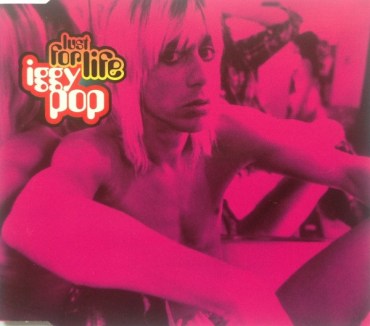
THE CD SINGLE LUCKY DIP (21) : Iggy Pop – Lust For Life

R-484342-1381048228-3657

Lust for Life, the title track of the 1977 album by Iggy Pop, wasn’t released as a single back in the day, except in the Netherlands and Belgium, where it reached #3 and #6 or #26 in the latter, depending on the region (#6 in Flanders and #28 in Wallonia – and please don’t expect me to offer any sort of rational explanation).

In due course, it became one of the better-known and best-loved tracks of that phase of Iggy’s career, and would reach an entirely new audience in the UK when it was used in the dynamic ans unforgettable opening shots of the film Trainspotting, released to great critical acclaim and commercial success in 1996.

It was no surprise that the record company to whom Iggy was now attached and who held the right to the song, decided that a cash-in would do very nicely.   A compilation album, Nude & Rude: The Best of Iggy Pop was issued in November 1996, just in time for cashing-in on the Christmas market.  It contained 17 songs, five of which went back to the era of The Stooges, six from The Idiot/Lust For Life era of the late 70s, with the remaining six coming from albums released between 1986 and 1993.

The album was something of a commercial failure, only spending one week in the charts at #99.  The spin-off single to help with the promotion of the album fared a bit better, coming in at #26.  Indeed, there’s a chance that the single actually managed to sell more copies than the album

mp3: Iggy Pop – Lust For Life

A well-known song was selected for the b-side of the 7″ vinyl version of the single (one which goes for about £25 on the second-hand market, which is no surprise given how very few were likely pressed in an era when CD ruled)

mp3: Iggy Pop – Get Up (I Feel Like Being A) Sex Machine

It’s not very good.   It sounds like a wedding band going through the motions.

The CD version of the single, which I picked up at some point in time after the fact for just 50p, had two live tracks on it

mp3: Iggy Pop – Lust For Life (live)
mp3: Iggy Pop – I Wanna Be Your Dog (live)

The former dates from 1993 when Iggy was the headliner on the first night of the three-day Féile Festival held in Thurles, County Tipperary, Ireland.

The latter dates from 1995 at the Rock For Choice Benefit Concert staged at the Hollywood Palladium, Los Angeles, USA.

Both songs kind of confirm the widely-held view that no live recording can truly capture the feeling of actually being there.

JC

SUPER FURRY SUNDAYS (aka The Singular Adventures of Super Furry Animals)

A guest series by The Robster

#10: Play It Cool (1997, Creation Records, CRE275)

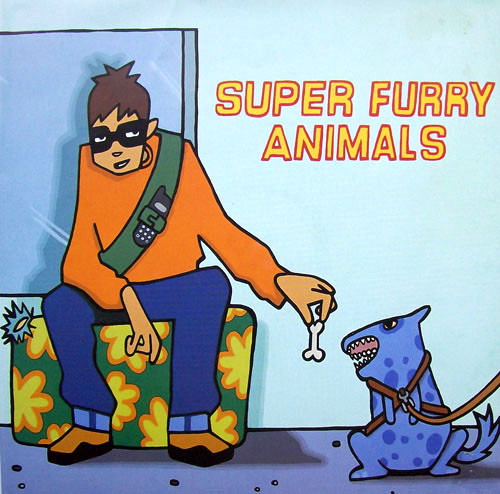
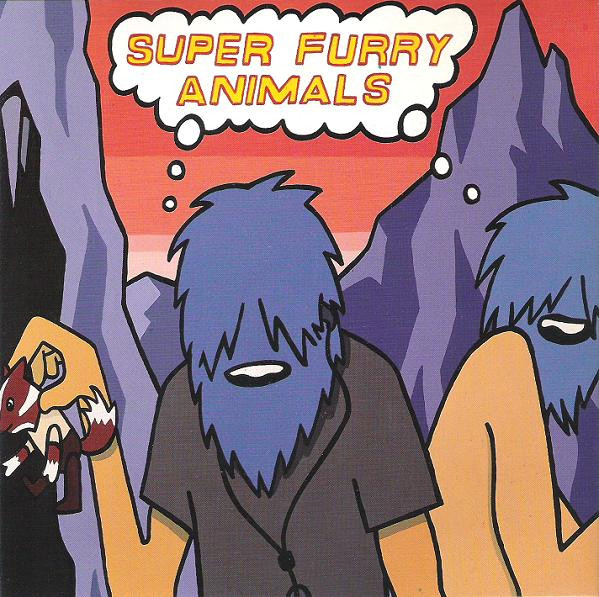
‘Radiator’, the second Super Furry Animals album, was set free in August 1997 and was festooned with great acclaim across the board. At this stage, the band could do no wrong in the eyes of fans and critics alike. Just four weeks after the album’s release, a third single was released. Play It Cool was one of the album’s highlights, but for the single, a slightly different (remixed?) version was offered up.

mp3: Play It Cool [single version]

There’s little to choose between the two versions. The most obvious difference is the intro, and the album version sounds a little more ‘bassy’, but other than that, they’re pretty similar. Not that it mattered – Play It Cool was a highlight on an album of many highlights, and it demonstrated once more how the band could produce something so original yet so completely melodic and accessible. The lyric “she’s raising money for the sex appeal” is another stroke of Gruff Rhys’ genius, in my opinion.

Play It Cool entered the UK charts on the first Sunday of October 1997 at number 27, which disappointingly is as high as it got. But chart positions have rarely been an indication of quality, right? It was released on the usual formats. The cassette and limited 7” included this on its flip:

mp3: Pass The Time

It’s a track I like, but it clearly wasn’t right for the album. That said, it would probably have been deemed good enough for release as an a-side by numerous Britpop bands of the era who were far lesser in quality than SFA, but more commercially successful.

The real gem lay in wait on the 12” and CD, a track I think starts off sounding like Shangri-La by the Kinks. It’s one of the band’s quietest, most tender songs. Don’t worry about it only coming out of the right channel to begin with, it’s meant to be that way…

mp3: Cryndod Yn Dy Lais (trans: Tremor In Your Voice)

This week’s bonus track is the demo version of the title track, recorded more than a year before. While the basic structure of the song is intact, it was clearly unfinished at this stage – there’s only one verse which is repeated, it’s slower and quite raw-sounding.

mp3: Play It Cool [demo]

The ‘Radiator’ campaign wasn’t over yet though…


The Robster

SATURDAY’S SCOTTISH SONG : #450: THE DELMONTES

From the blurb in the Big Gold Dreams box set, from which today’s offering is lifted.

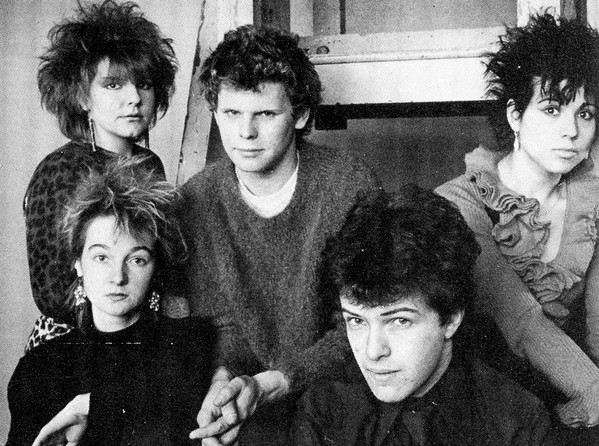
The 1980 debut single by Edinburgh five-piece The Delmontes was a groovy slice of sixties-inspired indie that pre-dated Stereolab‘s Pan-European exotica and mixed gender dynamics across a three-women/two-man line-up fronted by chief chanteuse Julie Hepburn. Guitarist Mike Berry, bassist Gordon Simpson, keyboardist Gillian Miller and drummer Bernice Campbell completed the line-up.

Tous Les Soirs and follow-up Don’t Cry Your Tears were released on Allan Campbell‘s unsung Rational label.  Various flirtations between The Delmontes and assorted major labels bore little fruit, although a compilation, Carousel, was released on LTM Recordings in 2006.  Campbell went on to be in The Pastels while more recently Berry could be spotted playing with former drummer of The Freeze, Neil Blackwood, and bass -playing theatre director Mark Thomson as The Bail Sheriffs.

mp3: The Delmontes – Tous Les Soirs

A rather fabulous three minutes of pop music that was one of my favourite discoveries right across the box set.  I’d never heard of the band beforehand.


JC


MAYDAZE

It’s a fact that we all need a little bit of sunshine in our lives.  But don’t forget that even the sunniest of times can end in haze or a storm.

mp3: Various – Maydaze

Billy Bragg – A13 Trunk Road To The Sea (Peel Session)
The Libertines – Time For Heroes
Graham Coxon – Freakin’ Out
Soft Cell – Where The Heart Is
Iggy Pop – Lust For Life
Hinds – Just Like Kids (Miau)
The Style Council – Long Hot Summer (extended version)
Edwyn Collins – Knowledge
Interpol – Slow Hands
Dry Cleaning – New Long Leg
The Primitives – Crash
The National – Apartment Story
Kendrick Lamar – Not Like Us
Franz Ferdinand – Darts Of Pleasure
Violent Femmes – Prove My Love
Port Sulphur feat. James Kirk – Orient Express
Paul Quinn – Ain’t That Always The Way

JC

SONGS UNDER TWO MINUTES (14): MAYDAY

Back in March 2018, as part of the ‘Cracking Debut Singles’ series, I featured What A Waster and I Get Along, the two tracks on either side of the 7″ debut by The Libertines, which came out on Rough Trade Records in June 2002.

The CD version of the single had a third track.  It might about a minute to listen to from start to end, but it is kind of one of the great ‘lost’ songs from the band, and of course one of their very oldest.

mp3: The Libertines – Mayday

Seemingly written after Pete Doherty was caught up in the anti-capitalist protests that took place in London on 1 May 2000.


JC

ONE HUNDRED AND ELEVEN SINGLES : #091

aka The Vinyl Villain incorporating Sexy Loser

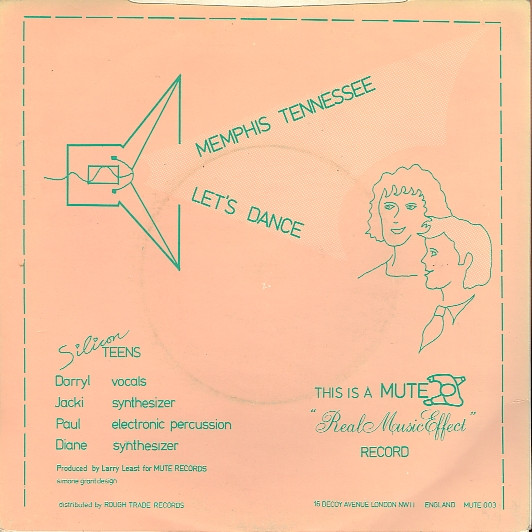
#091: Silicon Teens – ‘Memphis Tennessee’ (Mute Records ’79)

Dear friends,

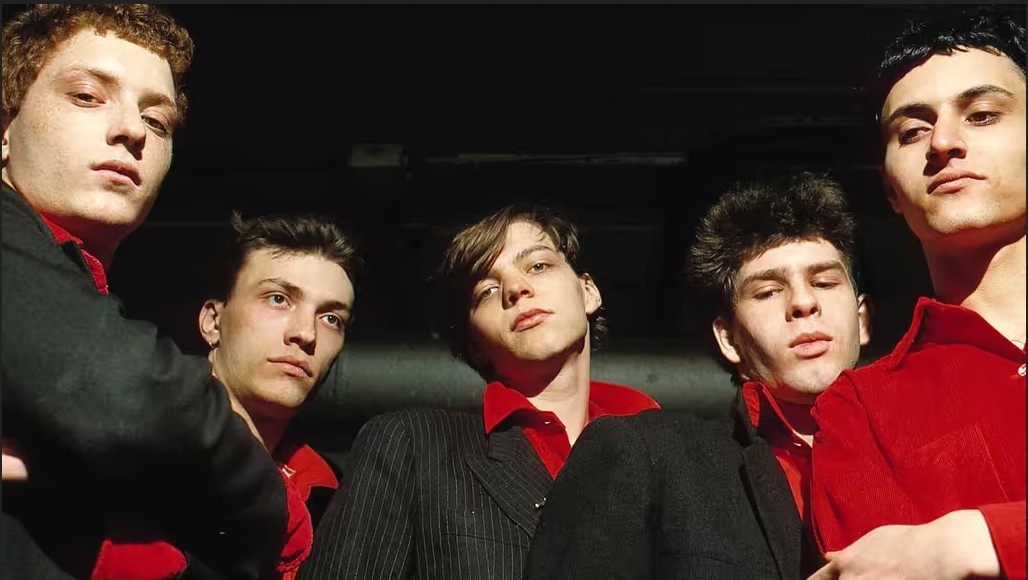
back to 1979 we go – that golden year – and I have Silicon Teens for you today: Darryl, Jacki, Paul and Diane, a brainchild of producer Larry Least. They certainly were ahead of their time both in concept and sound, but unfortunately they only released one longplayer, ‘Music for Parties’, an album which consisted of re-imagined rock n roll classics like ‘Let’s Dance’ and ‘You Really Got Me’, amongst others. Following the release, musical differences drove the band apart, but their profile was raised when John Hughes used the track ‘Red River Rock’ prominently in his film ‘Planes, Trains and Automobiles’. Said album is from 1980 and was released by the independent record label Mute, Daniel Miller‘s successful company which he launched with his own single under the moniker The Normal.

So that’s how the Silicon Teens’ story goes – but the true story was a little bit different: in fact you could well argue that The Silicon Teens were the world’s first manufactured electronic pop band, some 20 years before Gorillaz!

In reality, the whole band was just Mute Records’ Daniel Miller on his own, he did all the music plus all the singing. The Teens’ members – Paul (percussion), Diane (synthesizer), Jacki (synthesizer) and Daryl (vocals) – were purely fictional, so was their backstory for the press release: „they’re all teenagers and childhood friends in Liverpool. Inspired by the punk movement and subsequent post-punk bands like The Normal and Throbbing Gristle, they used a synthesizer owned by Jacki’s older brother Kevin to create their songs.“.

Miller carried things really far, it must be said: the band was portrayed by actors in interviews, press photos, and in the music video for their first single. Musician Frank Tovey, aka Fad Gadget, portrayed Darryl, whereas Miller himself portrayed Paul. „Larry Least, producer“, was also Miller – his take on Mickie Most, a very well-known UK producer at the time.

The whole swindle was uncovered by the music press only a year or so later, but until this happened, records were made: three singles, all not too successful, plus one album, which, to be frank, is quite hard to listen to in its entirety, especially these days.

So, why does the band feature here, then? Well, the first single is simply outstanding – I love it without any limits – and so should you:


mp3:  Silicon Teens – Memphis Tennessee

The definitive reading of the old Cuck Berry favourite, this, you will doubtlessly agree. If you don’t, I suspect you should seek medical help at your earliest convenience!

Enjoy,

Dirk

THE 12″ LUCKY DIP (22): Kylie Minogue – Confide In Me

Another one grabbed from the archives and edited down a bit.   Given it was January 2014, there’s a chance a few of you won’t have seen it before.

As my dear friend Jacques the Kipper will testify, I have long been an advocate of the talent of probably the most famous Australian on the planet. So much so, that back in the early 1990s when a music magazine (I think it may well have been the long-defunct Select) printed a photo of Kylie cavorting on a bed with Bobby Gillespie, JtK got a t-shirt made with my head superimposed on the body on Mr G, with the words ‘I Should Be So Lucky’ printed underneath…..

And I know that I’m not the only long-time indie-disco or other genres of music freak who hasn’t fallen for her charms over the years (hiya Adam!!!!)

Of course, there’s been a lot of stuff she has recorded and released that has been unlistenable. But overall, the magnificent easily outnumber the mundane, while there have been more sublime 45s than shite 45s.

And among all the great acts that I’ve seen live over the years, I’ve rarely been so well entertained as when Mrs V took me along as a surprise to catch Kylie perform in March 2005 at the SECC in Glasgow.

A few years back, I had the pleasure of finding a 12″ promo copy of some dance mixes disc of one of my favourite Kylie singles for just £1, so I’m sticking to my principles by offering these rips from vinyl:-

mp3 : Kylie Minogue – Confide In Me (Master Mix)
mp3 : Kylie Minogue – Confide In Me (The Truth Mix)
mp3 : Kylie Minogue – Confide In Me (Big Brothers Mix)

Enjoy!!!!


JC

AN IMAGINARY COMPILATION ALBUM : #388 : TAXI GIRL

A guest posting by J.C. Brouchard (our French Correspondent)

TAXI GIRL : Nous Sommes Jeunes, Nous Sommes Fiers, an Imaginary Compilation Album

Taxi Girl started in Paris in 1978 and went on to be one of the best French New Wave bands.

The band that released its first single in 1980 (Mannequin, produced by Kraftwerk friend and collaborator Maxime Schmitt) was made up of Daniel Darc (Vocals), Stéphane Erard (Bass), Laurent Sinclair (Keyboards), Mirwais Stass (Guitar) and Pierre Wolfsohn (Drums).

By the time the band split up in 1986, it had been reduced to a duo of Darc and Stass, after Erard was kicked out in 1980, Wolfsohn died of a drug overdose in 1981 and Sinclair was also asked to leave in 1983.

The band’s biggest hit was their second single, Cherchez Le Garçon, a synth pop classic.

Their only full length album is Seppuku (1982), produced by Jean-Jacques Burnel of The Stranglers, with drummer Jet Black standing in for the recently deceased Wolfsohn.  It was a strong, compact and very dark record, which failed to repeat the band’s previous success. It was released in 1983 in the UK with vocals
adapted into English.

Over the next four years, the band released one mini-album and three great singles, which were more and more confident.

After the split, Daniel Darc embarked on a solo career. He died in 2013 at 53.

Mirwais Stass released two albums with the band Juliette Et Les Indépendants, and a low-key solo mini-lp in 1990. His second solo album Music (2000) was a worldwide hit and led to him producing several records for Madonna.

Laurent Sinclair relased one solo single and collaborated with many artists. He died in 2019 at 58.

I have been a big fan of the band all along and I hope this cross-section of their discography will make you want to hear more of them. Unfortunately, due to legal disputes, their catalogue has not been properly reissued. The title of the compilation stems from one of the band’s singles, Dites-Le Fort (Say It Loud :
We’re Young, We’re Proud).

Side 1

1. Find The Boy (1982)

This is the hit Cherchez Le Garçon, with film noir referencing lyrics.  I never realized it at the time, but the keyboard intro was strongly ‘inspired by’ the intro to the Magazine song, Definitive Gaze !

The single was released in French by Virgin in the UK in 1980. It did nothing. To ease up comprehension for international Vinyl Villain readers, I’ve selected the English language version that was added as a bonus to the UK release of Seppuku.

2. Quelqu’un Comme Toi (1983)

The title track of their 1983 mini-lp, their first release as a duo. There’s flute-like synth and a jaunty rhythm, but the atmosphere is still sombre (« Night is closing in, hell is ours »).

3. Mannequin (1980)

There’s obviously a strong Kraftwerk influence (the Trans Europe Express song known in English as Showroom Dummies was recorded for the French issue as Les Mannequins), but it’s lively and with live drums. You must realize that, when this was released, the first Depeche Mode single was at least one year away.

4. On Any Evening (1982)

The band’s punk roots surface a little on N’Importe Quel Soir, and even more so in a 1979 live version available on the Quelque Part Dans Paris album. This is the English version from Seppuku.

5. Aussi Belle Qu’une Balle (Special Club Remix) (1986)

Mirwais’ skills for electronic music show up in this New Order-worthy 12 inch remix of their final single.

Side 2

1. Jardin Chinois (Nouvelle Version) (1981)

Originally the B side to Cherchez Le Garçon, Jardin Chinois was given its own single release a few months later, in a new, slightly faster version. It’s one of my favourite songs by the band, with strong lyrics (« I will kill you, I will kill you slowly. Your body is so soft to tear up »).

2. La Femme Écarlate (1982)

Another instance of Daniel Darc’s interest in all things Asian. This rather poppy Seppuku track was released as the second single from the album, in the same version, I think, but with a great cover drawn by artist Denis Sire.

3. Je Rêve Encore De Toi (Stephanie Says) (1985)

Taxi Girl took part in 1985 in the Virgin Records-curated tribute Les Enfants Du Velvet. They chose to cover the 1968 song Stephanie Says, which had only recently been made officially available on the V.U. album. Their contribution is a master stroke, if only for the original (not translated) French lyrics.

4. Thirteenth Section (1982)

The lyrics to Thirteenth Section read like an Ed McBain 87th Precinct novel. I even seem to remember an early bootleg version featured Inspector Meyer Meyer. He was replaced by Al Grundy in the album version.

5. V2 Sur Mes Souvenirs (1980)

It’s not a coincidence if I’ve included here all three tracks from Taxi Girl’s second release, Cherchez Le Garçon, a perfect EP. To round off the compilation, here’s this great song, propelled by Pierre Wolfsohn’s energetic drumming and Laurent Sinclair’s Dave Greenfield-inspired keyboards.

and with a live rendition to enjoy too.


JC Brouchard

SUPER FURRY SUNDAYS (aka The Singular Adventures of Super Furry Animals)

A guest series by The Robster

#9: The International Language Of Screaming (1997, Creation Records, CRE269)

A month before the second Super Furry Animals album hit the shelves, a second single from it was released. It has the longest title of any of the band’s singles (excluding the debut EP, of course), yet it is the third-shortest single in the band’s catalogue. That’s not significant at all, I just thought it was interesting. Sorry.

mp3: The International Language Of Screaming

This was more like we’d expect a single to sound like, following its rather odd predecessor. Short and snappy, with a proper earworm of a tune, lots of la-la-las and a wooo or two thrown in for good measure. And that’s not to mention the actual screaming towards the end. The line “If I scream it, I mean it, I hope you will understand me” is one I think everyone can relate to, regardless of the language you speak. Releasing a scream is an expression of passion that everyone has done at some point in their lives. Screaming is an international language, in that sense.

It was released the week of my 26th birthday in July 1997. Despite the obviously singleworthy nature of the song, it only reached number 24 in the UK charts, confirming that, while Britpop was still all over the place and making guitars more prominent in the hit parade for the first time in many years, Super Furry Animals perhaps didn’t quite fit with the pervading trends. I’m OK with that, and I don’t think they will have lost a lot of sleep over it either – if they wanted a number 1 single, it’s likely their music would have suffered greatly.

The b-side of the 7” and cassette single boasted another big tune, but it was so very different to the a-side, both in sound and style. A bit of Welsh glam rock, I suggest.

mp3: Wrap It Up

The CD single added two other decent tracks.

mp3: Foxy Music
mp3: nO.K.

Foxy Music is a lot of fun, Gruff tells a story about how a ginger-haired friend was once mistaken for a fox by a farmer and got shot! It’s awfully silly, and who knows if there is any truth to the story (I very much doubt there is…). The closing track is also a bit daft – essentially the English and Welsh alphabets being recited over an acoustic version of the title track, along with some bom-bom-boms and coughing.

All in all, The International Language Of Screaming is probably the most fun single in the Furries’ catalogue. To wrap it up this week (see what I did there?), here’s this week’s bonus demo, recorded in Cardiff in 1996:

mp3: The International Language Of Screaming [demo]

August 1997 would not only bring me a new Super Furry Animals album, but also my first child. Two hugely significant events, I still can’t decide which one was the most important…


The Robster

SATURDAY’S SCOTTISH SONG : #449: DEAR LEADER

Deer Leader, via their bandcamp page, describe themselves as “three multi instrumentalist producers from Glasgow who like a bit of noise.”

Heading over to the Last Night From Glasgow website, the label on which their debut album was released:-

“….it is the moniker used by Stuart McQuarrie, Ross Prentice and Robin Pringle – three multi-instrumentalists who produce introspective soundscapes that marry up loud guitars, spliced up beats, vocal samples and warm layers of reverb.

Initially a purely instrumental outfit, the group have previously released a double A-side single “Know Everything, Know Everyone/Last Acts of a Desperate Man”, which received attention from a few US blog sites and favourable reviews from the local music press.

However, the group has spent the last few years reworking their sound with revered producer Andy Miller (Mogwai, Arab Strap, Life Without Buildings); recording their debut, ‘We’ve Met Before Haven’t We?’ which was finished early 2019. The record moves away from their instrumental beginnings and presents songs that offer a sense of duality in both their musical and lyrical content; part dreamscape, part nightmare.

mp3: Deer Leader – Crocodile

It’s one of those albums that has a great deal to offer if you’re prepared to give it a bit of time and a few listens.  It’s not the most commercial of albums, but Deer Leader is very much the sort of band/act that LNFG was set up to provide a platform for.

JC


ONE SONG ON THE HARD DRIVE (17)

star_spangles

This is the occasional series in which I feature the one song on the hard drive that I have by a singer or band.  Most of the time, I’ve given the song in question a listen and thought to myself that it night be worth going down some sort of internet rabbit hole.

There are other times when I listen and think, WTF?, questioning just how a singer or band landed a record deal.  When this happens, I really don’t want to share things with you – just because my senses have been offended doesn’t mean I should run the risk of doing likewise to you.

I say all this while remembering my mantra that ‘there’s no such thing as bad music, but there’s a lot of music out there that is of no appeal to me, whatsoever’

With that in mind, I offer up

mp3:The Star Spangles – I Live For Speed

This came on a compilation album, released via EMI in 2004, called The Alternative Album.  The front cover proclaimed it contained ’20 full on guitar tracks from the best guitar bands around.’

If I tell that it contains Pyramid Song by Radiohead, a song where the guitars are almost incidental, then you can see that there’s a lot of lies hype involved.  Coldplay are on it….indeed they open the compilation before handing over to Radiohead who in turn are followed by Black Rebel Motorcycle Club, Placebo and Blur, who are represented by We’ve Got A File on You, one of their least essential tracks, from the album Think Tank.  But at least it’s all over and done with in 62 seconds.

As for The Star Spangles…..here’s wiki:-

The Star Spangles are a four-piece punk band from Manhattan, led by vocalist Ian Wilson. Formed in 1998, they released a single on Spain’s Muenster Records in 2000 followed by an album called Bazooka!!! in 2003, which includes the single “Which of the Two of Us is Gonna Burn This House Down?”.

After a falling-out with Capitol Records, followed by a line-up change in 2006; the Spangles released their follow up album, Dirty Bomb, in 2007.

The group dissolved in early 2008, but started playing live again in 2015.

I Live For Speed is the opening track on Bazooka!!! (and yup, the album title does make use of three exclamation marks).

Think about it….they were signed to Capital Records.  One of the biggest and most famous imprints of them all.  Sometimes, I don’t get it.

PS: You can sort of blame Dirk for this…..today had been set aside for the latest offering in his continually brilliant One Hundred and Eleven Singles series, but he’s been so busy at work that he didn’t get anything over to me this week.


JC

WHEN THE CLOCKS STRUCK THIRTEEN (April Pt 2)

A bumper fifteen songs were featured in the chart edition of this series a week or so ago.  Time now to look at the 45s that weren’t commercial hits.

Let’s start with some noise

mp3 : bIG*fLAME – Sink

Named after a revolutionary socialist feminist grouping that had formed in 1970, this Manchester-based trio were incredibly different from most. Their debut EP was released in April 1984 on their own Laughing Gun label, after which they became part of Ron Johnson Records (you’ll note that I didn’t use the word signed as I don’t think that would have been part of the band’s manifesto).  There would be just the four 7″ singles, one 10″ EP and one 12″ compilation issued between 1985 and 1987 before the end of biG*FlaME.

mp3: The Blue Nile – Stay

Cards on table.  I’m not a fan of The Blue Nile, but I’m aware that a few readers/visitors to this little corner of t’internet are.  There had been a single back in 1981 just after they had formed, but it was really their signing to an unusual record contract with Linn, a Scottish-based and emerging top-end manufacturer of hi-fi products, which got them on the map.  This was the first ever 45 issued on Linn Records.

mp3: The Farmer’s Boys – Apparently

The subject of a guest co-ICA back in January 2016, courtesy of Strictly Rockers; the ICA was The Sound of Young Norwich and also featured The Higsons.  As it turned out, The Farmer’s Boys would, later in 1984, enjoy a chart hit (and I’ll get there in due course) but April saw the release of Apparently, described in the ICA by SR as The highly polished sound of the major label FB’s with their own horn section and ‘real’ drummer. Reached a staggering #98 in the charts!

mp3: Husker Du – Eight Miles High

More cards on table.  I’m not a fan of Husker Du, but I’m aware that a few readers/visitors to this little corner of t’internet are. Indeed, they were the subject of a much-commented guest ICA, composed by Swiss Adam of Bagging Area, back in August 2016.  He included this one on his ICA with a very strong recommendation.

“….a cover of 60s group The Byrds, this is essential Husker Du. A searing acid-punk guitar tour de force, Bob (Mould) tears ferociously through the chords and vocals, Greg (Norton) and Grant (Hart) blasting their way through the rhythm. The breakdown section alone is worth the price of entry. This is the cover version against which all other covers must be judged.”

mp3: Bourgie Bourgie – Careless

As mentioned earlier in the series, debut single Breaking Point had been a minor hit, and hopes were high for the follow-up, along with what would be a subsequent debut album.  Sadly, after just one session recording said debut album, lead singer Paul Quinn quit and the band subsequently split up.  Quinn was soon working again, signed by Alan Horne (ex Postcard Records) to his newly formed Swamplands label, and recording alongside his old pal Edwyn Collins, whose band Orange Juice were in the process of breaking up.

mp3: Red Guitars – Good Technology

As recently featured here in Dirk‘s long-running and outstanding 111 singles series.

Happy listening.


JC

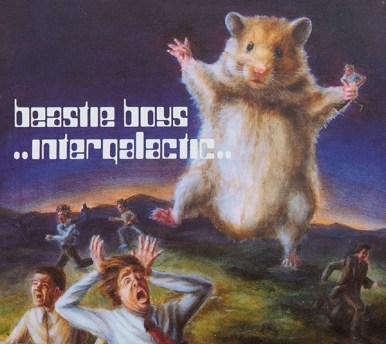
THE CD SINGLE LUCKY DIP (20) : Beastie Boys – Intergalactic

R-57338-1295667775

Intergalactic is probably the answer most folk would give to the question, ‘Name a hit single by the Beastie Boys’

It’s likely got as much to do with the memorable video, conceived and directed by Nathaniel Hornblower (aka Adam Yauch aka MCA), in which the trio, dressed as construction workers, are filmed in and around Tokyo while a dancing giant robot (which doubles as a spaceship) fights a deranged giant octopus armed with a trident.

But it turns out that Intergalactic was indeed the biggest hit they enjoyed in the UK, reaching #5 in July 1998.

mp3:  Beastie Boys – Intergalactic

I didn’t buy Intergalactic at the time, saving my cash to pick up a copy of Hello Nasty, which provided them with their first, and as it tuned out, only, #1 album in the UK.  It would have been a few years later that I grabbed a copy of the single in Missing Records as part of a wider haul of second-hand CD singles and albums.

Turns out it was released in 2xCD formats, and the version I have is CD1, which came with three other tracks.

mp3: Beastie Boys – Hail Sagan (Special K)
mp3: Beastie Boys – Intergalactic (Prisoners of Technology/TMS 1 Re-Mix)
mp3: Beastie Boys – Intergalactic (Fuzzy Logic Re-Mix)

The first of these is a strange and hugely uncommercial instrumental, which I assume is a tribute to the astronomer and scientist Carl Sagan who had passed away in late 1996 just a few months prior to work beginning on Hello Nasty.

The others are exactly as they say on the tin.

The first of them could be described as Beastie Boys meeting Drum’n’Bass, thanks to the contribution of a London-based producer and DJ whose output around the turn of the century and into the 00s was quite extensive.

The second is a bit more straightforward and is the work of Sam Sever and Jonathan Hoffman under the name of Fuzzy Logic which was the name given to their studio and production company.

JC

HERE’S THAT RHYTHM AGAIN….

A guest posting by Fraser Pettigrew (aka our New Zealand correspondent)

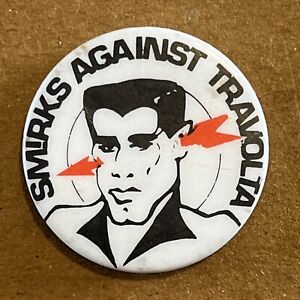
The Smirks were a short-lived band from Manchester whose chief contribution to posterity was as leaders, indeed sole proponents, of the parodic ‘Smirks Against Travolta’ movement. In 1978, I sent away for one of their badges which showed a cartoon of the iconic Saturday Night Fever star, his head impaled through the ears by a big red arrow in obvious homage to the Anti-Nazi League’s Rock Against Racism campaign materials. The Smirks’ campaign had a semi-serious intent to defend live music venues against the progressive dominance of discos and the formulaic dance music records that fuelled them. The punk era seemed like a propitious moment of revolt against the mainstream music industry, and disco music epitomised its commercialised, mass-produced product.

In 1977 and 1978 it seemed as though the early punk and new wave hits were but far-flung islands in an ocean of disco. Every other single featured on Top of the Pops seemed to bounce along four-to-the-floor on shimmering hi-hat ripples backed by scratchy wah-wah guitars and alternating octave bass lines. And it wasn’t just American R&B acts that were doing it. Old timers like The Bee Gees and even The Rolling Stones were doing it, Abba were doing it, Bowie was doing it. If somebody wasn’t doing it they soon would – I’m looking at you, Rod Stewart. It’s easy to see how The Smirks could view disco as a malignant algae slowly smothering every other lifeform in the sea.

In 1978, I didn’t like disco. Disco was the enemy, it was the commercial mainstream, it was the antithesis of punk and new wave. Disco music was not the music of teenage rebellion, it was the music of flare-wearing bubble-headed conformists, obsessed with superficial personal attractiveness. Disco kids were socially acquiescent good-timers, not uncompromising and intellectually fearless iconoclasts intent on remaking the culture in a constant cycle of destruction and renewal, like what I was.

Ironically, however, the ‘anything goes’ eclecticism unleashed by punk was already in the process of spawning music that blended new wave experimentalism with the stylised sounds of disco and its elder sibling funk. It wasn’t properly until 1979 that this seemingly taboo musical miscegenation was born, but the seeds were sown by the end of 1978. Ever the pioneer, John Lydon’s Public Image Ltd filled out the last eight minutes of their first album with the disco-loop time-waster Foederstompf. Despite its explicitly ‘contractual obligation’ nature (at one point Lydon sing-chants the line “how-to-finish-the-album-with-the-minimum-amount-of-effort-necessary…”), the track sets up a style marker that was picked up in startling fashion six months later on their second single Death Disco. Did exactly what it said on the tin. One of the strangest things ever to appear on Top of the Pops.

A month after PiL’s First Edition, in January 1979, New York punk scene graduates Blondie released Heart of Glass and within a week it was at number 1. It’s well known now that the song started life some three or four years earlier, and before it acquired its eventual form and title (when recorded in June 1978) it was referred to by the band as ‘the disco song’. Blondie had earlier included disco cover versions in their live set, including Donna Summer’s I Feel Love.

The single that Heart of Glass bumped off the top spot was Ian Dury and the Blockheads’ own disco classic, Hit Me With Your Rhythm Stick. In truth The Blockheads had always been a bit funky, and were never in any sense punk, but they surfed to prominence on the new wave, bearing an outsider affinity on account of Dury’s disabled skinhead Essex geezer persona and lyrical fondness for society’s nether parts.

Another of our favourite bands, Talking Heads, fellow alumni with Blondie of the CBGB school, had quite frankly been doing disco since day one. Talking Heads ’77 was a blueprint for blending slick, poppy dance rhythms with weirdo art-nerd lyrics, luring you onto the floor like the cutest boy in the class until you realised you were dancing with a bookworm, a civil servant, a psycho killer. More Songs About Buildings and Food delivered further explicitly disco tunes like The Girls Want to Be With The Girls, Stay Hungry and Found A Job, Frantz and Weymouth nailing the crisp tempos on hi-hat, snare and bouncing bass, Byrne and Harrison rubbing ‘chicken-scratch’ rhythm guitar straight out of KC and the Sunshine Band. There was a cover of an Al Green song.

The combined effect was to sand away the stigma associated with disco and funk. Did we disown Blondie? Had PiL sold out? No one complained, least of all me. Like everything else, my fearless iconoclasm was a pose, and though I genuinely didn’t like mainstream regurgitation, the appropriation and subversion of popular forms was obviously different, yeh? Also, music was supposed to be fun. Everyone wanted to party and the admission was grudgingly made that disco was 100% party music. Nobody was going to get up to The Bee Gees, but slap on Heart of Glass or Bowie’s Golden Years and we were on it. Something to do with the packaging.

Well away from the chart spotlight, other artists were taking funk and disco stylings and bolting them onto some distinctly uncommercial material. In The Smirks’ back yard, A Certain Ratio were beginning their rapid evolution towards icy, stripped down funk. In deepest darkest Bristol, The Pop Group compounded the irony of their name by confrontationally screaming agitprop over grooves that sounded like James Brown and George Clinton jamming in an abattoir.

So, in short order, my dislike of disco on purely aesthetic grounds vanished even faster than The Smirks. Just as well, since the following years saw a rapid diffusion of disco and funk throughout every level of post-punk music. You can hear it in the ‘Sound of Young Scotland’ in Orange Juice and Josef K, The Fire Engines, Boots For Dancing, in the Euro-disco of The Skids and Simple Minds, and in the warped pop of Associates.

New Order mashed up Kraftwerk and Giorgio Moroder to produce Everything’s Gone Green, following it up with Temptation, and eventually the monster techno-disco breakthrough of Blue Monday. The Pop Group never had a hit, assuredly for want of trying, but their former bassist Simon Underwood tasted success with Pigbag, whose James Brown-referencing Papa’s Got a Brand New Pigbag even inspired Paul Weller to jump on the bandwagon by ripping off the bass line for The Jam‘s disco song Precious.

By the beginning of the 80s, disco was as much part of the new wave as it was of the mainstream. And through the distinctive phenomenon that was Grace Jones, the new wave found itself infiltrating disco. In the late 1970s, the former fashion model had made a musical name for herself in the gay club scene with high-camp singles such as Do or Die and I Need a Man, but after teaming up with the Compass Point All Stars, her albums Warm Leatherette and Nightclubbing supplied a wider alternative club scene with some unexpected dance floor fillers. The former album’s title track could hardly be of more obscure origin, a cover of a proto-industrial synth pop single based on J.G. Ballard’s Crash, written and produced by The Normal, aka Daniel Miller, founder of Mute Records, the future home of all things alternative. Other covers followed, drawn from The Pretenders, The Police, Iggy Pop, Roxy Music and, most eyebrow-raising of all, Joy Division. When I occasionally frequented Edinburgh club JJ’s in the early 80s, Jones’s versions of She’s Lost Control and Warm Leatherette were staples, along with tracks like Bowie’s Stay, from Station to Station, and Material’s Bustin’ Out.

Bustin’ Out flags up another significant strand of alternative disco, the New York underground, propelled by experimentalists like Bill Laswell and Arthur Russell, ‘no-wave’ acts such as ESG, and the ZE Records stable that included Was (Not Was), Kid Creole and the Coconuts, Lizzy Mercier Descloux as well as Laswell’s Material. All of this fed alternative influences back into the disco club scene, ultimately influential in the metamorphosis of disco into house and techno in the late 1980s, a development further fuelled by post-punk electro-pioneers like Human League and Heaven 17, Depeche Mode, Throbbing Gristle and their offshoots Chris and Cosey, Yazoo and Erasure.

In parallel with all this painfully hip consumption, my musical tastes were being broadened to embrace some of the soul and funk originators like Sly and the Family Stone, Stevie Wonder, Isaac Hayes and Marvin Gaye. Several of my friends expressed healthy respect for the danceable end of soul music. One of them only ever wore white socks. Not long after it came out, I bought Off The Wall, easily one of the best pop/disco albums of all time. The barriers were down. I am now unashamed to reveal that my record collection holds prized items by such as Shalimar and the Detroit Spinners, and Brit-disco acts like Linx, Imagination and The Real Thing. Whisper it, I even have The Bee Gees’ Saturday Night Fever tracks on a CD, and they’re great. As Funkadelic so succinctly and eloquently phrased it, “Free your mind and your ass will follow.”

mp3: PiL – Death Disco
mp3: Talking Heads – Stay Hungry
mp3: The Pop Group – She is Beyond Good and Evil
mp3: The Jam – Precious
mp3: Material – Bustin’ Out (12” version)
mp3: Grace Jones – Warm Leatherette
mp3: David Bowie – Stay
mp3: Loose Joints – Is It All Over My Face? (Single female vocal version)
mp3: Heaven 17 –  I’m Your Money (12” version)
mp3: Linx – Wonder What You’re Doing Now


Fraser

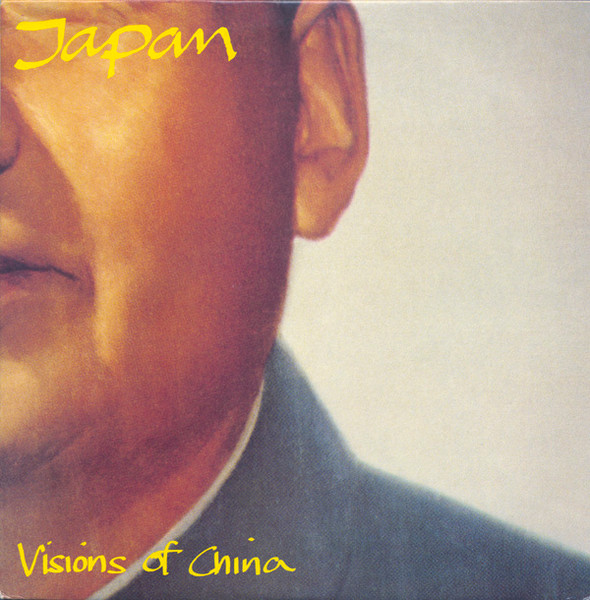
THE 7″ LUCKY DIP (32) : Japan – Visions of China

I mentioned a long while back, in referring to the single Life In Tokyo as part of one the features within the ‘Shakedown 1979’ mini-series, that the time would eventually come for Japan.

That time would prove to be late 1981, and the release of their fifth studio album, Tin Drum.  In an era when synth-based pop music was becoming increasingly prevalent, Japan shifted the goalposts in quite a dramatic fashion. The songs, both in terms of their titles and the way they sounded, very much leaned towards the country and region after which the band had long ago taken their name.  The synths, drums and bass seemed to create music that seemed beyond the capabilities of most of their contemporaries, while lead singer David Sylvian‘s imitation of the Bryan Ferry-like croon was the perfect accompaniment.

The new sound proved to be a hit with the critics, with Paul Morley at the NME being particularly enthusiastic.  It was synthpop with an arty twist, possibly bordering on the pretentiousness of the type that could be thrown at some of Morley’s writing?  At the same time, the undoubted good looks of all members of the band meant the publications and magazines primed for the that teenage female market were full of photos and words about the band. It was very much a win-win situation.

The lead-off second single lifted from the album remains quite timeless,

mp3: Japan – Visions Of China

The b-side was a remix of a song that had originally closed their previous studio album, Gentlemen Take Polaroids.

mp3: Japan – Taking Islands in Africa (remix)

It wasn’t quite as big a hit as I had actually thought, spending just three weeks in the Top 40 and peaking at #32. I’m guessing it was just a bit too strange sounding for daytime radio and with the album not yet having been released, the critics had yet to really do their fawning pieces on the band that would take them into the higher echelons of the charts.

JC


SUPER FURRY SUNDAYS (aka The Singular Adventures of Super Furry Animals)

A guest series by The Robster

#8: Hermann ♥’s Pauline (1997, Creation Records, CRE252)

I’ve mentioned before that, the only thing you should expect about the Super Furry Animals is the unexpected. So when the first track from the band’s second album was unveiled in May 1997, it’s perhaps little surprise that we got a strange, psychedelic odyssey about Albert Einstein’s parents!

mp3: Hermann ♥’s Pauline [single version]

According to Wikipedia: “The song was inspired by the pitstops that the band would take at motorway service stations whilst out on tour, where Gruff Rhys would peruse through bitesized biographies about famous people.” It’s really not a track you’d earmark as a single. Indeed, when the album ‘Radiator’ was released three months later, it was clear there were numerous tracks that might have been better suited as the first single. But then, perhaps that wouldn’t have been a very super furry thing to do.

Nevertheless, it has become a real fan favourite. Maybe, in part, because the band didn’t play it live for many years due to it being too difficult to do so, so when they eventually did figure it out for the live setting, it would have been a big surprise to the fans.

I think it probably has the most entertainingly odd opening verse of any Top 40 hit ever:

Hermann loves Pauline, and Pauline loves Hermann
They made love and gave birth to a little German
They called him MC2 because he looked like no other
An asthma sufferer like Ernesto Guevara

The single version shortens the electronic sounds at the very beginning and end of the song; other than that, it’s identical to the album version. The wonderful sleeve, designed by Pete Fowler, marked the beginning of a collaboration between the band and artist that would last another dozen years. Hermann ♥’s Pauline charted at #26 in the UK in its first week before subsequently falling away. It was released in the regular three formats. The 7” and cassette featured this rowdy little upstart as its b-side:

mp3: Calimero

The CD had another Welsh language track, but this one had an altogether different feel.

mp3: Trôns Mr Urdd

My Welsh is very poor, and Google translate doesn’t really shed much light on things. But, from what I can make out (and I may well have got this entirely wrong) – the first of these tracks bemoans the cynicism and lack of respect for others in modern society, ending with the English phrase “I feel so sad…”. The latter song may or may not have something to do with cross-dressing. Please feel free to correct me. Unless I’m so embarrassingly wrong, in which case it might be kinder to leave me in ignorance…

Bonus track this week – well if there was a demo for Hermann… it has not been issued, so instead here’s an early version of another track that would grace the second LP. The Placid Casual was track 2 on ‘Radiator’, but its demo recorded the previous year in 1996 sounded rather different to the finished article.

mp3: The Placid Casual [demo]

In 1998, the band established Placid Casual Recordings, a label they could release any solo or side project material on. I’ve no idea if the label was named after this song, but it’s unlikely to have been the other way round.

The Robster