Unashamedly copied and pasted from the website of the Manchester-based shop Piccadilly Records, which seems very apt as it was Manchester-based blogger Swiss Adam who first brought Eyes of Others to my attention:-
——
“Eyes of Others is the studio alias of Edinburgh based John Bryden, a self-christened ‘post-pub couldn’t get in the club’producer.
Having announced their signing to Heavenly Recordings last November (2022) with the release of a 10” vinyl-only 6-track EP, Bewitched By The Flames, which sold out immediately through independent shops and mail order, Eyes Of Others is now set to present their debut, self-titled album.
Marrying the anything-goes, freestyle magpie tendencies of Beck and The Beta Band to the electronic stylings of primetime 80s New Order by way of the spacious moods conjured by King Tubby, Eyes of Others debut’s whimsical demeanour is the perfect sonic balm to the utter confusion of the outside world. As is its sense of almost Balearic musical freedom. Such a mindset is fundamental to the music according to Bryden.
“I was thinking where’s my spot?”Bryden reflects about the pick & mix quality of the album. “The music is later than a gig but it’s not full-on early morning club fare. It’s the in-between space where I was imagining where my music works.”
But his beguiling tunes are perfect for the music soundtracking the afters too. As the dawn breaks and the sun begins to rise. “Maybe there aren’t enough venues opening at 7am!”he laughs, before quickly adding: “I don’t think it will catch on unfortunately.”
——
I bought the self-titled debut album in due course, and used the blog in October 2023 to declare it as one of my most enjoyable purchases of the year. A few months later, I caught a live performance in Glasgow in front of what was something of a meagre audience on a cold January evening, and came away quite annoyed that so few folk were picking up on things.
There’s not been any new music over the past 18 months, so I’m not sure if things have come to a crashing halt and that the legacy will be just the one rather excellent album.
# 100: Talking Heads – ‘Love → Building On Fire’ (Sire Records ’77)
Dear friends,
whenever you read something about New York’s famous CBGB club around 1975/’76, you can rest assured that four bands are always being cited: Television, Ramones, Blondie …. and Talking Heads. Now, the first three of those don’t come in as too much of a surprise, I’d reckon, but in the back of my mind I always wondered about the latter – I mean, Talking Heads don’t seem to have fitted in there, did they, bearing in mind that everyone was trying to re-invent the New York Dolls without sounding and/or looking like the New York Dolls (I know this is vast generalization, but it’s not too far away from the truth).
Probably this doubt derives from the fact that when you think about Talking Heads, your brain automatically pictures David Byrne in this overblown suit, being all arty and stuff, which was of course much later in their career. But perhaps this is just one of those psychological things your brain cannot fully cope with, like when I look you straight into the eye and ask you a) to concentrate on me and b) to quickly say for 20 times or so „white – white – white – white – white – white – white – white – white – white – white – white“ until I suddenly interrupt you with the question „what do cows drink?!”. Knowing you, most of you will have answered “milk”, you see, which cows don’t drink, at least not over here in Germany. Byrne’s suit is the same thing, of course – and I know because I was an Air Force medic when I was in the army, decades before I got employed to work for some obscure Scottish blogger on all too low wages!
But I digress, again: in their beginnings though, it was all much less grandiose, in CBGB and elsewhere Talking Heads entered the stage in the clothes they had worn all day, they did not try to look any special at all, the same is true for their performance: they just left the stage lights on and started. Also they were just a three-piece then, David Byrne, Chris Frantz and Tina Weymouth – something which you will of course already have noticed when looking at the sleeve below – and quite often they opened the night for the Ramones. On one of those occasions, in 1975, Seymour Stein from Sire Records was in the audience, and apparently he was so fond of what he heard that he offered the band a contract – which they declined for a while, because they thought they weren’t yet good enough, that they still had to work on themselves. This apparently was achieved when Jerry Harrison from Jonathan Richman & The Modern Lovers was recruited for lead guitar, but before this happened, they changed their minds, signed with Sire and the first single was recorded – without Jerry Harrison.
Now, all of this boring stuff is important here, because this record presents Talking Heads in quite a different form. Just compare this version of ‘Love → Building On Fire’ (which is supposed to mean ‘Love Goes To Building On Fire’, don’t ask me why) to the one on the most fabulous ‘The Name Of This Band Is Talking Heads’ live album: you’ll clearly see (or hear rather) the difference, exploding guitars live whereas here Byrne has a more minimalistic/robotic approach. This, to make that clear, does not mean that I dislike what the band did after this record, not at all. Nor do I prefer this one, or this version rather, in fact the live album was on constant play when I first got my hands upon it in the mid-80s: outstanding, as I said!
mp3: Talking Heads – ‘Love → Building On Fire’
The debut album was released half a year later, and ‘Love → Building On Fire’ was not on it. What was on it though was ‘Psycho Killer’, a song well known to everyone and also a good example to show what would make Talking Heads so very special throughout their career.
But either way, I always liked the very first single very much – in my book, it is well deserved to be included in the singles box.
Quite a number of years ago, 2015/16 to be precise, I pulled together a series on all the singles released by The Style Council. As always with these things, it was the singles released in the UK which were featured, meaning that this one was missed out.
The stomping Walls Come Tumbling Down was selected, in May 1985, as the advance single for band’s second album, Our Favourite Shop. It was a hit, reaching #6, and giving the band its eighth successive Top 20 appearance, with six of those being Top 10. The selection of the politically cynical song, Come To Milton Keynes, as the next single was, on reflection, a bit of a mistake as it stalled at #23, and was therefore something of a flop all things considered.
It was very much a UK release, with the markets in mainland Europe, Japan, the USA, Australia and New Zealand being exposed to a different song altogether from the album:-
mp3: The Style Council – Boy Who Cried Wolf
I’ve mentioned before that this one always reminds me of the break-up of what I felt was a serious relationship in the later years of my student days. An upbeat and uplifting tune which masks a very sad and sentimental lyric, packed with regret and more than an element of self-loathing. It could have been subtitled ‘All Men Are Bastards’. It’s a break-up song which is the complete opposite of The Bitterest Pill, an earlier composition from Paul Weller and one of the most underrated singles released by The Jam, as its narrative came from being blameless for a relationship coming to an end.
I picked up this 7″ in a charity shop a few years ago. It was issued by Polydor Records for the Dutch market.
Its b-side was the same previously unreleased song as had been found on the b-side of Come To Milton Keynes:-
mp3: The Style Council – (When You) Call Me
A rather lovely romantic number, almost perfect for daytime radio, that might well have made a fine single of its own,
JC
PS : The mp3s that should have been included in yesterday’s post on The Fall, but weren’t properly linked, have now been sorted. Apologies for the technical mishap.
A series for 2025 in which this blog will dedicate a day to each of the twenty-four of the sessions The Fall recorded for the John Peel Show between 1978 and 2004.
Session #10 was broadcast on this day, 9 July 1986, having been recorded on 29 June 1986.
The tenth session represents the high watermark of The Fall at the zenith of their Beggars Banquet years. A brittle, fresh ‘Hot Aftershave Bop’ writes large Smith’s obsession with US garage punk. While other bands were flirting at the time with the movement that was to become known as goth, ‘R.O.D.’ and ‘Gross Chapel’ demonstrate real dark, gnarled, gothic rock. If this wasn’t enough, ‘US 80s-90s’ is incredible, with Somon Rogers’ machines hovering loudly above the mix.
DARYL EASLEA, 2005
mp3: The Fall – Hot Aftershave Bop (Peel Session)
mp3: The Fall – R.O.D. (Peel Session)
mp3: The Fall – Gross Chapel – GB Grenadiers (Peel Session)
mp3: The Fall – US 80s-90s (Peel Session)
Produced by Dale Griffin, engineered by Mike Engles
Mark E Smith – vocals; Brix Smith – guitar, vocals; Craig Scanlon – guitar; Steve Hanley – bass; Simon Rogers – guitar, keyboards; Simon Wolstencroft – drums;
SWC has never been short of great ideas for features over at No Badger Required. One of the longest-running is ‘Nearly Perfect Albums’, his regular Saturday series and which, at the end of last month, reached #163 with a look at the eponymous debut by Elastica, released on Deceptive Records back in 1993.
He told us he originally had the album on a very long list for inclusion in the series, but removed it a while back because it maybe wasn’t as near perfect as he’d first thought. One day, the song Never Here came up on random shuffle and it made him think again. His subsequent post about the debut album in a way has inspired me to come up with an ICA. Here’s SWC:-
“Foolishly I thought I was tired of ‘Elastica’ bored perhaps of it or more probably I’d just stopped listening to it, but the truth is ‘Elastica’ is a tremendous record. It arrived at just the right time, just as Britpop was becoming, well Britpop and the thing about it that made it stand out back in 1993 was how Elastica as a band stood head and shoulders above nearly all the other indie guitar bands that were surfacing at the time.
..ultimately it was mainly about the tunes with Elastica. . Their songs were punchy and catchy and quite often blatant rip-offs of songs by Wire, but Elastica didn’t care and made us not care either. Elastica made us dance and smile.”
He does go on to suggest that you should forget about the second album, and in fact the entirety of the rest of their back catalogue and think of them as the greatest one album band that ever existed, with an impact that remains solid to this day. It’s hard to disagree, but I will find some space for a couple of later songs on the ICA.
Let’s get some facts established. Elastica’s entire recorded output isn’t massive but it’s perhaps marginally bigger than most folk think.
There were four singles prior to the debut album, all between 1993 and 1995. There was a gap of four years till 1999, by which time the original line-up had splintered when a six-track EP was issued. A single, followed by the second studio album, was the output in 2000, and finally, there was a stand-alone single in 2001, followed by a 21-song CD compilation drawn from sessions recorded for BBC Radio One.
Some songs, initially recorded for BBC sessions, would have the titles changed by the time they made it to any official release. All told, I came up with 44 different songs for consideration that have been whittled down to this 12-track ICA (the running time of a 10-track ICA would be too short).
SIDE A
1. Stutter
Where it all started. The ‘classic’ line-up of Elastica, comprising Justine Frischmann (vocals, guitar), Donna Matthews (guitar. vocals), Annie Holland (bass) and Justin Welch (drums) had been together since late 1992, and were soon being highlighted as ‘ones to watch’ by the UK music papers and monthly magazines, whose contributors were clearly delighted to have that rare thing of a decent band from right on their doorsteps to go and see and subsequently write about.
The debit single was released in the UK on 1 November 1993 and on 7″ vinyl only. A fast-paced and energetic number which was very obviously heavily influenced by the new wave/post-punk era, with a wry lyric about drunken impotence and the excuses offered up by non-performing males. It still sounds great more than 30 years on. I never picked up a copy of the single, but was aware of it thanks to it being voted in at #38 in the Peel Festive 50, despite having only been released just a month previously.
I finally picked up the song on CD, courtesy of being one of 18 songs on the NME Singles of The Week 1993 compilation, which I recall buying in early February 1994, just after I’d seen Elastica play at King Tut’s in Glasgow. It was an excellent, if short performance, and I came away knowing I had all the neccesary evidence that the band was worthy of the hype accorded them by the London-based papers.
2. Vaseline
Sex was always a big factor in the appeal of the band. All four members were cool and incredibly good-looking in totally different ways. The debut single, of course, hadn’t shied away from messy sex, and one of their next songs to come to wider attention is, according to SWC, ‘possibly the greatest song about female masturbation ever.’.
Vaseline was aired on via a Peel Session in December 1993, the first of what would be four such sessions for his show, while there would also be three others over the years for other Radio 1 DJs. The Peel session version of the song is, as you’d expect, a bit rough’n’ready. Their next version to reach the public was the demo, issued as a b-side to the single Line Up. I feel they nailed it best on the debut album, especiallt that ‘la la la las’ which sound so like Blondie in their 1979 pomp, and that’s the version on offer today.
3. Car Song
Let’s talk some more about sex. Car Song, from the debut album, is about enjoying a bit of what I used to refer to as ‘bare-bum-boxing’ in the cramped confines of the back seats of small vehicles, with Ford and Honda referenced in the lyric. Despite the subject matter, it was actually released as a single in the USA in January 1996, promoted in part by a Spike Jonze-directed video, elements of which clearly inspired the Beastie Boys when it came to ideas for Intergalactic a few years later. Incidentally, if you’re wondering why Annie Holland is absent from the video, then that’s down to her having left the band in August 1995, citing exhaustion from the constant touring.
4. How He Wrote Elastica Man
Other than one BBC Radio One session in July 1996, the band were incredibly quiet for over four years. It would later transpire that personality clashes, issues around drug dependencies, ill-health and a touch of writers-block had contributed to major problems behind the scenes. The sudden and unexpected release in mid-August 1999 of the Elastica 6 Track EP didn’t contain too many clues as to what had been happening, but Justine later explained that it wasn’t a big comeback release but instead was intended to try and capture for posterity what some of the recordings in the intervening period. The highlight was its opening track, one on which Mark E Smith offers a co-vocal and on which Julia Nagle, a member of The Fall between 1995 and 2001, is given a credit for the lyric. A different recording of the song would later appear on The Menace, the second and final Elastica album, released some eight months later.
5. Rock ‘n’ Roll (Mark Radcliffe Session)
A year after the debut album had gone to #1 in the UK, the band was invited to record a new session for the Marc Radcliffe show on BBC Radio One. Such sessions normally were made up of four songs, and bands often took the opportunity to play some new material. Elastica played four old songs, two of which had been on the album while the other two were what could be described as obscure, consisting as they did of previous b-sides. Rockunroll had, like Vaseline mentioned above, been a b-side on Line Up, but here it was with a slightly different title and harder edge airing on national radio almost two years on. It’s not their greatest moment, but it makes it onto the ICA for its ‘novelty’ factor.
6. Never Here
The song which caused SWC to reconsider the debut album as being worthy of inclusion in his series. At just under four-and-a-half minutes, it is the longest in the entire Elastica catalogue, and perhaps that is the key to why it such a great one to listen to. It is supposedly about Justine’s break-up with Brett Anderson with whom she had formed Suede in 1989, only to take her leave of the band when the relationship ended.
SIDE B
1. Line Up
This was the band’s second single, released in January 1995. It reached the Top 20 of the singles chart a couple of weeks later, so you can imagine that the live show I saw at King Tut’s around this time was a hot ticket, and I’m convinced the numbers in attendance was a fair bit over the venue’s official capacity. The sort of thing that nowadays would piss me off but back then, at the age of 31, it was an enjoyably hot and sweaty night.
The relationship between Justine Frischmann and Damien Albarn was all over the music papers, and on hearing Line Up, I was convinced that he was a silent partner when it came to writing Elastica’s songs, such was this one’s similarities to the Modern Life Is Rubbish era of Blur. Other folk thought Line Up was awfully similar to I Am The Fly and that Elastica were mere plagasists of Wire. I wasn’t so sure at that point in time……..
2. Connection
3. See That Animal
…..and then came the next ‘big’ song from the band. Those making that plagiarism accusations were given all the ammunition they needed with Connection, a song that had aired in a BBC Session in March 1994 and later released as the third single in October 1994. It is impossible to deny that its opening was identical to Three Girl Rhumba, a song that had been written and recorded by Wire for their 1977 album, Pink Flag. Connection was credited to Frischmann/Elastica which rather pissed off the members of Wire. It all ended up in the hands of lawyers, and in due course an out-of-court settlement was agreed.
The b-side to Connection was a bit of an oddity in that the writing credits are attributed to Brett Anderson/Justine Frischmann/Elastica, which clearaly indicates See That Animal was an early Suede song, but one that not taken any further. Its inclusion on the ICA is, again, more to do with the novelty factor, albeit it is one that wouldn’t have sounded too out of place on Elastica’s debut album.
All this stuff about ripping-off other bands must surely have made everyone wary going forward.
4. Waking Up
The song chosen to immediately preceed the release of the debut album. Waking Up is probably the most readily identifiable of all the Elastica songs and it did provide them with their biggest selling single, entering and peaking at #13 in February 1996, just a few weeks before the album entered at #1 prior to enjoying a 12-week stay in the Top 50 all the way through to mid-summer.
Guess what? It was another that led to a lawsuit, this time from the Stranglers, who won the arguement that Waking Up took the riff from No More Heroes. Again, it was settled out of court and this instance, part of the settlement involved Elastica agreeing to co-credit the Stranglers as song writers.
5. Generator
The credits on the back of The Radio One Sessions CD, released in October 2001, helps to highlight how often the personnel changed and helps illustrate the choas surrounding the band.
The five sessions between August 93 and March 95 feature the ‘classic’ line-up.
The sixth session, in July 1996 has Sheila Chipperfield playing bass in place of the departed Annie Holland, with the sound being augmenteed by Dave Bush, a past member of The Fall, coming in on keyboards.
The seventh and final session, for John Peel, in September 1999 had six musicians involved. Justine Frischmann and Justin Welch remained ever-presents and now Annie Holland was back in fold; however, Donna Matthews was no longer involved, having left a few months earlier, unable to cope with her heroin addiction. Dave Bush had shifted from keyboards to programming, and coming in new were Sharon Mew (keyboards) and Paul Jones (guitar).
The Menace, the second Elastica album would eventually be released in April 2000, having been recorded, in the main, by the six musicians who played on that September 1999 Peel session. But a number of the songs on the album were taken from earlier recording sessions on which Donna Matthews had played prior to her departure and on which Sheila Chipperfield had played prior to Annie Holland’s return. Given how messy it all was, it’s not really too much of a surprise that the overall quality of the album is lacking, but I’ll argue that Generator is more than listenable.
6. The Bitch Don’t Work
Deceptive Records had closed down in early 2021, and their American label dropped Elastica following the poor sales of The Menace. Sessions for an intended third album were abandoned and in October 2001, Justine Frischman spoke to the NME:-
“Yes, we have split up. It’s actually not official yet. We’ve got a Peel Sessions album coming out and we’ve got a farewell single coming out. I’m actually hugely relieved, to be honest. I’m feeling much happier. I don’t want to say I’ve got other projects, because it’s such a cliche, but I have. It will be music, I’m not suddenly going to have an acting career.”
The farewell single was released by Wichita Recordings in November 2001, and it makes sense to close off the ICA with it.
So there you have it. 12 songs from Elastica, neatly wrapped around the story of how they came to be, how they came to enjoy success, how it all unravalled and how it ended.
A damn near perfect debut album and some decent enough stuff from elsewhere.
The Lucksmiths were a very well-thought of Australian indie-pop band, with eight albums between 1993 and 2008. The bass player was Mark Monnone, and when the band broke-up, he embarked on a solo career using the rather obvious but brilliant name of Monnone Alone.
The debut album, Together At Last, was released in 2013, a year when Monnone Alone appeared at Indietracks, with one of the album tracks finding its way onto the celebratory compilation for that year’s festival.
mp3: Monnone Alone – Echoing Days
It really does evoke the spirit of C86, and therefore I’m willing to wager that the appearance of our Australian friend in deepest Derbyshire in 2013 went down well.
#19: It’s Not The End Of The World? (2002, Epic, 672175 6)
These days, when a band releases a new album, you get four or five “singles” released from it before it’s even out! It leaves very little left to discover when you do eventually get to hear the full record, and chances are all the best tracks have been out for weeks. Way back yonder, it was very different – one single, then the album, then two or three more singles to keep the album in consumers’ minds for a while longer.
Six months after ‘Rings Around The World’ hit the shelves, January 2002 in fact, a third and final single was issued from it. Now, as I said last week, ‘Rings…’ is not meant to be taken as a collection of individual songs, it is a proper old-fashioned album – it’s meant to be listened to as a whole. This might explain why the choice of singles from it were not exactly the best. If it were me, I’d have put out Sidewalk Serfer Girl, maybe an edit of Run! Christian, Run! if I could make it work, or even the brilliantly bonkers Receptacle For The Respectable. Instead, the band (or label, not sure who made those decisions) opted for this one:
mp3: It’s Not The End Of The World? [edit]
(The full album version was released across all formats, but I thought I’d post this ever-so-slightly shorter version which featured on a radio promo CD, never commercially issued anywhere! You’re welcome.)
For perhaps the first time, it’s a single that divided the critics, with the words “bland” and “a bit rubbish” being used in reviews, certainly not things the band had previously experienced. And I kind of get it. It was never a big fave of mine, though in the context of the album it’s OK, but I never would have had it down as a single.
As for what it’s about – Gruff described it as “a romantic song about getting old”, with lyrics touching on the very real possibility of human extinction. “When people talk about saving the world they’re really talking about saving humans. The reality is that humans are the problem […] maybe we’ll all die but the world’ll still be here, even if it’s a dark, singed piece of rock flying around the sun”.
A bit like the first of the singles from ‘Rings Around The World’, the b-sides to this one were better than the a-side. Again, there was no 7”, but the CD, cassette and DVD (yes, a DVD single!) all contained these two:
mp3: The Roman Road
mp3: Gýpsy Space Muffin
I have to say, while this period didn’t produce the best singles, some of the band’s very best b-sides exist here. The Roman Road is right up there with Patience, Edam Anchorman and Tradewinds as the best SFA songs you never heard. It’s a fabulous bit of country-rock with a very hummable chorus, glorious harmonies and some pedal steel – an instrument they’d work with more in the near future. The other b-side is perhaps a more conventional throwaway little thing, but it does have enough psychedelic glam-rock charm to lift it above the a-side in terms of interest.
Now, for your bonus tracks this week, a little bit of a special treat. I have a bootleg of Super Furry Animals playing in Chicago during their 2002 US tour. It’s an audience recording, but it sounds decent. Firstly, you’re getting a live version of today’s featured track which featured in the set:
mp3: It’s Not The End Of The World? [live at the Metro, Chicago]
As an added bonus, I’m giving you the track they closed that set with. Since the ‘Guerrilla’ sessions, Cian, Bunf, Guto and Daf had formed their own side project. They called themselves Das Koolies, and while their name was floated around in fans forums here and there, no one really knew if they actually existed. Over the years, Das Koolies made a number of electronic-heavy recordings, but never released anything. Until… in 2021, some years after SFA broke up, Das Koolies started releasing stuff, reworked and remixed from their horde. In 2023, they put out their debut album, which opened with a big-beat stomper called Best Mindfuck Yet. Where am I going with this? Well, more than two decades earlier, during that live show in Chicago, some of Super Furry Animals performed this as an encore:
mp3: Best Mindfuck Yet [live at the Metro, Chicago]
It’s an early version of the song that would otherwise remain locked in the Super Furry vaults for 20 years! Both these tracks have never been officially released, so enjoy. Again, you’re welcome.
Here’s another lot of whom I knew nothing until their inclusion on the Big Gold Dreams box set.
Coming straight out of Bishopbriggs, The Exile were the sound of the (Glasgow) suburbs.
Formed by Graham Scott, who cut his musical teethin pre-punk rockers Free Flight before The Exile’s school tie and leather jacketed quartet released the four-track ‘Don’t Tax Me EP’ on their own Boring Records.
As well as ‘Hooked On You”s slice of scratchy would-be power pop, the record featured ‘Fascist DJ’ about Radio Clyde’s Tom Ferrie who had helped spearhead Glasgow’s ‘ban’ on punk gigs. The Exile had fallen foul of the ban by way of a cancelled show with The Jolt, Johnny & The Self Abusers and The Cuban Heels. There followed a one-off single on Charly Records and an appearance of their track ‘Disaster Movie’ on Beggar Banquet’s compilation, ‘Streets’, before The Exile morphed into the Television-inspired Friction, fizzling out after another single on Boring.
mp3: The Exile – Hooked On You
If I had been serving on a Jukebox Jury back in 1977, I’m afraid I’d have called this out as a miss.
Stop me if you think you’ve heard this one before.
I’ve written about Father Sculptor a couple of times on this version of the blog, but they were all over the old, original version of TVV that was blown out of the water by Blogger back in July 2013. If you don’t mind me recapping……
It began in February 2011 when I went along to a gig at King Tut’s at the suggestion of Drew (Across The Kitchen Table); there was a huge buzz about a band called Spector and we both wanted to see what the fuss was about. To be honest, they were dull and not worth bothering about.
But we were both taken by the appearance of one of the support bands – Father Sculptor – and in the subsequent review of the gig on the old blog I raved about them. To my total surprise, an e-mail appeared in the Inbox a few days later from the band, not only thanking me for the kind words but telling me they were avid readers of The Vinyl Villain, and it had meant a lot to them to get a mention.
Thus began regular exchanges of correspondence – I was usually among the first to get a listen to their new material which they would in due course post online at their website, always without fail giving it very positive mentions on the blog. The bands consisted of five young men, all studying in Glasgow, although none were actually from the city. In time, they began to get a wider press with positive write-ups in the NME and The Guardian newspaper, as well as a range of web-based music outlets.
The band scrimped and saved towards their ambition of actually making a physical record instead of merely making things available as downloads, and I was thrilled, delighted and honoured when they asked if I could promote a show for them in Glasgow for the launch of what would be a self-financed debut EP on 12″ vinyl.
The gig took place in Stereo on Saturday 13 April 2013. There was a more than decent turnout and the boys played a terrific set. I spent some time with them the following morning, during which it hit me that while they were possibly on the verge of greatness, there were some things that could easily tear them apart. It felt that they weren’t a completely cohesive unit in the social sense, and so there were bound to be fall-outs, especially given how young and relatively inexperienced they were; furthermore, they would soon be reaching a stage when they were no longer students and facing the situation of needing to find employment of some sort or other, which was more than likely to impact on their continued abilities to rehearse, write and possibly record.
I’ve no idea what happened next. It turned out that the EP was their only physical release and Thomas David (vocals), Joseph (guitars), Felix (drums), Matthew (keyboards, vocals) and Phil (bass) must have, as I feared, gone their separate ways.
Just about everything can be listened to over at this YouTube page. But I thought it would be worth offering up the songs from the EP:-
mp3 : Father Sculptor – Basilica
mp3 : Father Sculptor – Sault
mp3 : Father Sculptor – The Swim
mp3 : Father Sculptor – Lowlands
mp3 : Father Sculptor – Swallowed In Dreams
So much potential that was never realised……but then again, the music industry is littered with such stories.
I know, I know. You wait ages for a post about Simple Minds, and two come along in very quick succession. These things happen…..
I thought I’d try and be smart with this one. Knowing that Jonny the Friendly Lawyer was a huge fan of Derek Forbes, the original bass player with Simple Minds, I thought he’d like to read the band biography, written by Scottish author Graeme Thomson, and so I took a copy over as one of a number of gifts that myself and Rachel wanted to pass onto him and Goldie as our way of saying thanks for inviting us to their home in Santa Monica for an extended stay. I did suggest that, if he wanted, he could submit a review for inclusion as part of this monthly series, and he has very kindly done so.
Here’s Jonny………
“JC asked me to write a review of ‘Themes for Great Cities, A New History of Simple Minds‘ by Graeme Thomson. My one word review is: unreadable. I like Simple Minds okay, or did for the first few albums. I was definitely an admirer of bassist Derek Forbes. But I do NOT recommend this book because of the hopelessly overwrought writing. It contains passages like the following:
Page 1: “I hear the otherworldly pulse of ‘In Trance as Mission’, with its ‘holy backbeat’ and the hopscotch skip of the bassline, like a loved-up heart murmur, or a dog running on three legs, forever slipping off the pavement edge.” (Italics in original.)
Page 120: “In this band, everybody is playing a different part. They’re like a succubus for the music, it is just flowing through them. They are doing what the unit they have formed demands of them. When you’re a band you become some weird symbiotic organism. You recognize body language, you start looking at each other’s books and magazines, you start noticing what part of the papers you all read. You find each other. When a band clicks you just know it, and it’s beautiful.”
Page 193: “Large parts of the two albums are simply beautiful, opening out slowly like long sunsets, dark orange and charcoal.”
Page 256: “The core bass line is, in some respects, the logical destination of Forbes as a bass player – from maximalist ‘X’ and ‘Y’ shapes to one minimalist ‘D’ note repeating ad infinitum. Rhythm pared back to its essence, the eternal cosmic throb.”
Dancing about architecture, to say the least. I don’t know if Thomson is a frustrated poet, or a starstruck fanboy, or is simply given to flights of extravagant, unnecessary prose, or what.
I guess the book includes subjects like how the band got together and recorded and performed, but it’s buried underneath endless steaming piles of superfluous verbiage. Simple Minds are a pretty popular band–there’s got to be a better written biography out there than this one.
Jonny
Oh dear……the song selected doesn’t quite fit.
mp3: Simple Minds – Book of Brilliant Things
From Sparkle In The Rain, released in February 1984, and the last studio album from the early era to which Derek Forbes contributed.
Finally, for today. You’ll recall that I ran a competition for two folk to win a copy of the June Book of the Month, the rather fabulous You’re Doing It All Wrong : My Life As A Failed Rock Star (In The Best Band You’ve Never Heard) by Michael M.
Thanks to everyone who entered. The two names drawn out of the hat were mnfennell and papa stew. My huge thanks to everyone who entered. I’ll likely run another competition of some sorts towards the end of the year.
I couldn’t be bothered watching the BBC coverage of Glastonbury. Down at the bottom of the road, in a nearby park, Simple Minds were trying their best to play the loudest ever outdoor gig in Glasgow. I sat down at the laptop, fired up the appropriate programme and got on with the task of coming up with the latest hour-long mix for the blog.
Job done. I gave it a listen. Was happy with the outcome.
But, try as I might, I couldn’t come up with a killer title after what had been a long day – it was now just after 11pm and the folk at the gig were now getting into their cars, slamming the doors shut and starting their engines. Sleep would still be a while away.
I went to Chat GPT (I know….I know!!!).
I typed in ‘What name should I give to a music mix with the following songs?’ and listed all 18 tunes.
This is what came back:-
Awesome mix! It’s got a great range of styles—funky, indie, alternative, and some classic bangers. Here are a few name ideas that might capture the vibe:
1. “Eclectic Frenzy” – Reflects the mix of genres and the energetic feel of the playlist. 2. “Tales From The Underground” – For a collection that has both depth and some edge. 3. “Sonic Mischief” – A nod to the “fun lovin'” vibe with a bit of rebellious energy. 4. “Waves & Whispers” – Mixing the laid-back sounds of some tracks with the intensity of others. 5. “Criminally Good” – A playful take on the Fun Lovin’ Criminals, with a nod to the rock and indie influences. 6. “Twisted Melodies” – For the mix of unexpected twists in sound and style. 7. “Offbeat Anthems” – Reflecting both the alt and indie influence, with some quirky throwbacks. 8. “Shadows & Lights” – Inspired by the contrast of dark and light themes in the mix, from moody to uplifting. 9. “Fuzzy Frequencies” – Captures the overall raw, fuzzy vibe some tracks bring. 10. “Rolling Through the Spectrum” – A playful nod to the wide range of styles and moods in the tracklist.
Pretty pish, eh?
I slept on it. And had a lightbulb moment, of sorts, in the morning. Thank you MES.
mp3: Various – Desperate For Entertainment
Beastie Boys – The Blue Nun
Fun Lovin’ Criminals – The Fun Lovin’ Criminal
Super Furry Animals – Golden Retriever
Robert Forster – I Don’t Do Drugs I Do Time
The Fall – A Lot Of Wind (Peel Session)
Radiohead – Paranoid Android
All Saints – Pure Shores
Hifi Sean ft. Crystal Waters – Testify
Working Men’s Club – Widow
Buzzcocks – Ever Fallen In Love?
The Popguns – Waiting For The Winter
R.E.M. – Star 69
Maximo Park – Apply Some Pressure
Fontaines D.C. – Big
The Flatmates – I Could Be In Heaven
Close Lobsters – Skyscrapers of St Mirin
Yeah Yeah Yeahs – Heads Will Roll
The Duckworth Lewis Method – Rain Stops Play
A couple of years back, I came up with the idea of a series in which I’d feature songs that would have been massive hits if the band and/or record label had released them as singles. I was full of great intentions, but the series got lost as I got distracted by other things and disappeared off the TVV radar after just these five suggestions:-
The Clash – Clampdown The Chameleons – Looking Inwardly* New Order – Age Of Consent Echo & The Bunnymen – Heaven Up Here Teenage Fanclub – Don’t Look Back
* a guest posting by Adrian Mahon
I’m going to try again, without promising that it will be a very regular thing.
The story of early Simple Minds is one of frustration and, with the benefit of hindsight, loads of missed opportunities from Arista Records.
Debut single Life In A Day did sneak into the charts at #62 in May 1979, but follow-up Chelsea Girl sunk without trace, although the debut album (also called Life In Day) did hit the Top 30. There was a degree of dissatisfaction among the group as to how the songs on the first album had been produced, and they decided to quickly return to a studio, with a new producer in the shape of John Leckie, and work on a new album with a bit more spontaneity.
It all meant Real To Real Cacophony was ready for release in November 1979. The only problem? Arista Records hated the results, and the marketing/promotion efforts were almost non-existent. The album failed to make it into the Top 100, and it took until January 1980 before a single was lifted from the album and giving a grudging release.
The song chosen was Changeling. It’s a more than decent number and perhaps, if it had been given any decent support by the label, it might have been a hit.
The b-side was another track lifted from the album, and given what would eventually happen with Simple Minds, then someone at Arista should still be hanging their heads in shame for relegating it to a b-side and not recognising that it had ‘hit’ written all over it.
mp3: Simple Minds – Premonition
I do get that with a running time of more than five minutes, Premonition wasn’t tailor-made for radio, but a bit of judicial editing, perhaps bringing in the vocals a bit earlier than the one-minute mark and an earlier fade-out, perhaps just after Jim Kerr has sung his last note, and you’d have had something quite special.
As it was, Arista would make a further mess of the band’s third album, Empires and Dance, as well as its two singles I Travel and Celebrate, and their full potential was only realised when they moved over to Virgin Records.
#18: (Drawing) Rings Around The World (2001, Epic, 671908 6)
The fifth Super Furry Animals album, ‘Rings Around The World’, was, and remains, my favourite SFA record. This, despite me really disliking its first single. The band really took advantage of the bigger budget they were afforded by their new label and the result was an album full of lush strings and orchestrations, coupled with an ambitious cinematic production. And, of course, some wonderful songs.
The original idea was to go all-in and make a double album called ‘Text Messaging Is Destroying The Pub Quiz As We Know It’, which, lets face it, is a brilliant title for a record. While that idea was scaled back somewhat, Gruff admitted he still wanted to go to excess. “We were trying to make a blockbuster album that was going to be like The Eagles. We were trying to make utopian pop music that had pretensions of being progressive and exciting.”
However you’d describe it, it cannot be denied that it still, to this day, sounds like a real triumph. It’s the band’s high-point, in my opinion. While we’re talking about my opinion, I think ‘Rings’ works as a whole, a wonderful album that should always be played from start to finish. It’s the sort of record that only really makes sense that way. This may be the reason then that I’ve always been disappointed by the choice of singles released from it. They don’t really cut it on their own. Of the three songs lifted, only one really ticks my boxes, and that’s today’s – the title track.
mp3: (Drawing) Rings Around The World
I love this one. On the surface, it sounds like a lot of fun, but actually has a rather concerning message. Following a discussion with his girlfriend’s father, Gruff wrote (D)RATW about an idea that came up regarding “all the rings of communication around the world. All the rings of pollution, and all the radioactivity that goes around. If you could visualize all the things we don’t see, Earth could look like some kind of fucked-up Saturn. And that’s the idea I have in my head – surrounded by communication lines and traffic and debris thrown out of spaceships.”
The song came together following a number of demos involving different members of the band (more on that later), and a collection of excerpts of phone calls the band made randomly to people around the world. See what they did there?
The critics gushed, as usual, though the one thing I’ve noticed in the course of writing this series is how music journalists love to compare whatever they’re reviewing to other things. Maybe it’s laziness, maybe it’s just to make it easier for readers, but quite often it can be very confusing if you read multiple reviews. That’s certainly true of (Drawing) Rings Around The World – no one could agree what it sounded like. Status Quo, ELO (again!), Beach Boys (again!), The Beatles, Wizzard, Cheap Trick… all were cited in the music press. Yet, to me, it’s the Super Furry Animals, no one else. OK, maybe a bit ELO, who have proven to be one of the band’s biggest influences…
Released in October 2001, it reached a disappointing #28 in the UK singles charts, but this should come as no surprise to anyone who has been following this series. Maybe it would have got higher if people had heard the b-side.
mp3: Edam Anchorman
Without a doubt, one of the band’s best b-sides, a big bold, anthemic tune which really deserved more than being tucked away on the flip of a single. It’s one for any mixtape/playlist if you’re looking for something that’s not obvious. Its lyrics also contain the title of the other b-side.
mp3: All The Shit U Do
This is basically a section of Edam Anchorman with the words “With all the shit you do” looped over and over, and some added bleeps and bloops from Cian. A bit of an odd one, all told.
A radio edit of the title track was issued on some promos, which simply shortens the intro and fades out early. You might as well have it for completion’s sake:
mp3: (Drawing) Rings Around The World [radio edit]
Which brings me to this week’s bonus track. I mentioned that several demos were made of (D)RATW during its composition. Each one is rather different, so rather than choose one, or post all three, I thought I’d pull together some bits and pieces of them and edit them together so you can hear the constituent parts of the song and how it all came together. It starts off with Cian’s electronic riff, followed by Gruff’s early solo take, then another run through with the full band. I’ve finished off by adding some of the phone call bits as well. It’s another Super Furry Sunday Exclusive!
mp3: (Drawing) Rings Around The World [demo amalgam]
Next week, the final single from ‘Rings Around The World’, and I’ve got another exclusive lined up for you…
There’s so little info out there – not even any sort of band photo can be found – that I originally felt I had no option but to do an edited cut’n’paste from the last time they were featured on the blog. But then, Fraser emailed me from New Zealand, with details of a proposed new series which actually got underway earlier this week with Frank Sintara. He also had all of this to say……..
“It was while googling for information about Everest the Hard Way that I first discovered The New Vinyl Villain, thanks to JC’s previous posting of this EP. Hopefully my recollections and researches add something to that piece.
When I applied for a university place in the summer of 1980 my choices were driven not by academic considerations but by where I would be able to see the best selection of bands on a regular basis. Consequently, I slapped down three London colleges and Edinburgh on the form. You had to enter five choices, but I knew I would get into Edinburgh at the very least, so the fifth line was a pointless toss-up between Glasgow and Aberdeen. Aberdeen won, but I never had any intention of going there in a million years. Fortunately, the two London colleges that interviewed me turned me down – I was young for my cohort, only just 17, hopelessly immature in many ways, and it would have been a disaster. So, Edinburgh it was, my hometown uni.
Home, however, was seven miles out of town in Dalkeith, and restrictive bus timetables and parental oversight were going to be incompatible with night club gig timings, not to mention my cold, premeditated intention to drink as much alcohol as I could afford. So I engineered a room in digs for myself while my parents were away on holiday and unable to object, and thereby spent a productive freshers’ week bonding with my new roommate, a fellow English Lit student. He was the son of a Church of Scotland minister from Ayrshire, and like all good sons of the manse liked nothing better than getting utterly pished, and so we spent that first week of our academic lives drinking ourselves under the tables of each student union bar in turn.
Gary’s taste in music was unfortunately dreadful (he wore cowboy boots) so he didn’t accompany me on my frequent outings to see local new wave bands in the same union bars and at the Nite Club above the Playhouse Theatre. It was in the latter club that I first saw Everest the Hard Way. Someone had told me they were good and I went to see them one night on a double bill with another Edinburgh band called New Apartment. I bumped into a girl from my year at school, whom I never took for much of a new wave fan. It turned out that she was a big fan of New Apartment’s bass player and singer, and he was a big fan of hers, if you get my drift. Looking at them both I could see why, and also why I had no fan club of my own, unfortunately.
New Apartment were a three-piece and I liked their fashionably funky post-punk music. The guitarist was a big guy called Mani Shoniwa, and in his massive hands his Rickenbacker guitar looked like a ukulele. Readers may recognise the name from his reappearance in the almost successful band Win, several years after New Apartment vanished with nothing but a solitary Demon single to their name, Them and Us/Catch 22.
Everest the Hard Way’s music I liked very much too. Less funk, more Berlin-Bowie disco or somewhere along the Bunnymen/Wake/Sound/Comsat Angels axis. They were a quartet who took their name from mountaineer Chris Bonnington’s book on the first successful ascent of the world’s highest peak by its stupidly difficult south-west face. Being also a fan of mountains, I’d actually read the book a few years earlier, so that probably helped to cement them in my affections, but their tight, intense performance that night was mainly what did it. I saw them another twice and they were always tight and intense, so it was no fluke.
The intensity came mainly from guitarist and singer David Service whose grizzled appearance and eyes screwed, tightly wound delivery was like David Byrne circa Fear of Music. He chopped out chords on his guitar as though he was desperately suppressing the urge to slash it to pieces like some demented hybrid of Pete Townshend and Wilko Johnson.
The tightness came from the rhythm section of Ian Stoddart on drums and Mike Peden on bass. Stoddart is another name that Win fans will recognise. Later, he also played for Scottish band Aberfeldy through their first few years including on their first album, Young Forever. And he is co-credited with the composition of both sides of that New Apartment single above. Somewhat improbably, Stoddy also found himself in 2000, somewhere in France, playing alongside Josef K’s Malcolm Ross as part of a ‘gypsy’ band led by Hollywood A-lister and celebrity perfume salesman Johnny Depp in the unaccountably Oscar-nominated rom-com Chocolat. For some reason I have a VHS copy of the movie and was going to toss it because it’s crap, until I discovered that a former member of Everest the Hard Way was in it. Now I’m stuck with it. You can watch the main scene with Stoddy, Ross and Depp on YouTube.
(Skip forward to 1.15 if you can’t stand the whole thing…).
Sadly, Stoddart died of cancer in 2020.
It was Mike Peden who caught my eye, or ear, for the most part when watching ETHW. It’s not difficult to see why he drew comparisons with Derek Forbes of Simple Minds. He was always playing rapid, intricate lines, melodic runs rather than anchoring notes, but I would say his technical ability surpassed Forbes and he has made a long career for himself as a session player and producer. His name crops up in production credits for a wide range of pop acts through the 1990s and 2000s, including Paul Haig, Shara Nelson (the voice on Massive Attack’s Unfinished Sympathy), YoYoHoney (that Mani Shoniwa again), Mica Paris, Darryl Hall and even Gareth Gates. He also had another more successful crack at performing as a member of short-lived early 90s soul-dance trio The Chimes.
The quartet was completed by keyboardist Jim Telford who added accents and body to the sound with a string synth, but his parts were not elaborate and didn’t dominate. All I can find about him outside ETHW is as contributor to a 1980 single by The Liberators (along with Robin Guthrie and Will Heggie before they formed the Cocteau Twins), and that he worked closely with Richard Strange through the 1980s after guesting on his 1981 LP The Phenomenal Rise of... becoming part of his backing band The Engine Room under the modified pseudonym of James T. Ford. Strange’s website also mentions that while working with Telford he signed a management deal with Max Tregoning who had previously managed Adam and the Ants and… Everest the Hard Way.
Tightrope came out in 1982 on Do It Records, run by Tregoning and his brother, and publishers of Adam and the Ants’ first album Dirk Wears White Sox and a few singles by Yello. The label folded later in ‘82, so ETHW were never going to get much of a boost from this release and they disappeared at much the same time. The production is rather average – credited partly to the band themselves – and doesn’t do justice to their live energy. Mike Peden obviously learned a lot about production in subsequent years, but I guess you have to start somewhere.
The title track is undoubtedly the stand-out of the four on the 12” EP (it was the A-side of the 7” single version), and comes closest to capturing the band as I remember them. You can hear the Simple Minds parallels as Peden and Stoddart drive the rolling Euro-dance rhythm, like a rough-cut of Love Song. When You’re Young is a bit more Bunnymen, and Take the Strain finds Service channelling Talking Heads’ Drugs or Electric Guitar into a more sparse arrangement, showcasing Mike Peden’s nimble fingers once again. Quarter to Six is the weakest piece, running over the rather well-worn theme of current-affairs media (cf Gang of Four‘s 5:45 – quarter to six used to be the time of the BBC’s main evening news bulletin). Through all the songs the subject matter is social rather than romantic, and you can hear the tension in the titles and lyrics as much as the delivery, and certainly more than in the production.
So Tightrope is not a great lost classic of the era, but to me it’s a fondly held memento of a time and place and a band that didn’t want for talent but lacked a crucial creative edge and that lucky break. It brings back memories of the Nite Club’s sticky floor, the pokey downstairs bar in Chambers Street student union, and a boozy night at Teviot Row also featuring the ramshackle talents of Boots For Dancing. When you’re young…
# 099: The Sundays – ‘Can’t Be Sure’ (Rough Trade Records ’89)
Dear friends,
TheSugarcubeslast earlier this week, TheSundays today: weren’t the late 80’s just awesome for those of us who got easily aroused? I mean, come on: Harriet Wheeler … she was just perfect, wasn’t she?
It’s just coincidental that (alphabetically) The Sundays follow The Sugarcubes in my singles box, but in hindsight it’s hard to say which band – or better singer – I adored more back then. Obviously, at the end of the day, such a comparison is rather fruitless, the same is true for the comparisons which were made at the time when ‘Can’t Be Sure’ was released. The music papers got mad about the band instantly, rightly so, of course, but all the time there were comparisons between The Sundays and a) The Smiths or b) The Cocteau Twins. I never thought this was accurate, I mean what did Harriet Wheeler have in common with Morrissey‘s huge ego, manifested in his singing style? Nothing. The same is true of Elizabeth Fraser: as great as The Cocteau Twins once were, they had painted themselves into a kind of drama corner by then – and it seemed to me as if there was no clever way for them to get out of it again. Quite unlike The Sundays …
It is fair to say though that The Sundays’ guitar playing might show some Smiths-/Marr influence, but that’s true for many late 80s artists, so why bother? As usual, it’s the song itself which counts – not how and why it was made.
‘Can’t Be Sure’ was released a full year before the debut album, and boy, it was a very long year of waiting after this masterpiece of a single, I can tell you! Its music may be as simple as it can get, but what it makes so special to me is the absolutely untraditional way of its structure, verses merge into another, they have different lengths – plus there is Harriet’s wonderful voice. Mind you, her going “Nnn—aah!” after the instrumental break alone is all I needed in life back then! Still makes me shiver, a hundred years later!
Then, when you’ve calmed down a bit on this, at 2:30, one minute before the song is over, the drums kick in – and passion gets a new definition: one fact why this tune is simply wonderful:
mp3: The Sundays – Can’t Be Sure
Two albums followed the debut, and then in ’97, literally overnight, The Sundays were no more. Harriet Wheeler, in a true Syd Barrett-style, disappeared from the face of the earth and was never seen again. Family matters, that’s what was assumed at the time.
The great Blogmeister from the ever-wonderful ‘Needle Time’ recently featured The Sundays’ debut album, the post was titled ‘The Harriet Wheeler Appreciation Society’. I’m all for this, if Blogmeister is the chairman, please, at least, let me be the CEO!
Hariet Wheeler, where are you?
Enjoy and take good care,
Dirk
Dirk
PS : JC adds……
Final chance to redirect you to this recent post, featuring the June book of the month, and the opportunity to win a copy as I’m running a competition. Closing date is 30 June. Good luck!!!!
The post featuring the new chart hits from June 1984 was a bit of a mixed bag. Thankfully, top of the flops proved to be a bit better.
mp3 : Nick Cave & The Bad Seeds – In The Ghetto
Yup….it’s now 41 years since the debut single of the band that had emerged from the implosion of The Birthday Party. This 45 had in fact been preceded by an album, From Her To Eternity, that can best be described as post-punk goth. It was less abrasive than the Birthday Party material, but it was still a long way from being what could be called commercially accessible. None of the seven songs on the album were thought of as being suitable for a single release, and so the band’s take on the Elvis Presley #1 hit from 1969 was put on sale in the shops, with a video made to help boost sales:-
It’s a mighty long way from the Nick Cave of 2025 who is such a darling of the chattering classes.
mp3: East Bay Ray – Trouble In Town
This is one I heard for the first time maybe seven or eight years ago, and it was via a blog or music aggregator site. East Bay Ray‘s guitar work was very much at the heart of what, musically, defined Dead Kennedys. This solo single from 1984, is a long way removed from that sound, It’s akin to the soundtrack of a cowboy movie and great fun to listen to. The lead vocal is courtesy of the frontman of Steve One & The Shades, a San Francisco-based power pop band back in the 80s.
mp3: The Fall – Oh! Brother
The band’s 13th single, but the first for new label Beggars Banquet and the first of what we can now define as the Brix-era. As I wrote when looking at this single in detail back in September 2021, it was The Fall, but not as we, or indeed anyone, knew them. It was a pop song, one which would have sat easily alongside those that were being released on a regular basis by Rough Trade. I’m sure that Geoff Travis would have been scratching his head and wondering just what he had ever done to upset MES to the extent that the thrawn bastard continuously refused to contemplate anything akin to radio friendly songs, while he was on his label, only for him to come up with this absolute monster once he’d moved to a major label.
mp3: The Brilliant Corners – Big Hip
The second 45 from Davey Woodward & co. Still leaning a bit on the rockabilly sound that had been at the heart of January 1984 debut She’s Got Fever rather than the indie-pop C86 sounds that they would swerve into a few years later, but more than listenable across its two minutes duration.
mp3: Microdisney – Dolly
The band’s move from Cork to London eventually led to a deal with Rough Trade, with the album Everybody Is Fantastic being released in May 1984 to not a lot of fanfare beyond those who had long been championing the band in Ireland. The following month saw the release of Dolly, a lovely acoustic-led track from the album, became their debut 45 on the label.
mp3: The Hit Parade – Forever
This features on the 5xCD box set, Scared To Get Happy: A Story of Indie-Pop 1980-1989. Here’s the blurb from the booklet:-
In 2011, The Guardian’s Alex Petridis interviewed Julian Henry about his dual life as a successful PR executive by day and his twilight world as guitarist and singer in an indie band. Back in the 80s, Henry had created The Hit Parade with Matthew Moffat and Raymond Watts, issuing beautifully crafted and overtly 60s-styled singles on their own JSH Records. It began with ‘Forever’, a Bacharach & David homage sans guitars in 1984…..
mp3: The June Brides – In The Rain
mp3: The June Brides – Sunday To Saturday
Another debut single, this time on the newly established Pink Records, from a band who would eventually be lumped in with the C86 movement but whose best songs long pre-dated that genre. Indeed, by 1986, The June Brides had more or less imploded. They are a band I knew nothing of back in 1984, but when, a few years later, I finally came across them, it was instant love, primarily as they had an unusual and distinctive sound, making use of viola and trumpet as well as the standard guitars, bass and drums, and in Phil Wilson they had a very talented songwriter albeit his vocal delivery was a bit of an acquired taste. It was a real thrill to finally see them play live at the Glas-Goes-Pop festival of 2022.
mp3: Biff Bang Pow! – There Must Be A Better Life
Back in February, I mentioned this lot’s debut single, 50 Years Of Fun, the third 45 to be issued by Creation Records, which was part-owned and run by the group’s vocalist and guitarist, Alan McGee. This was their second offering, and there’s more than a nod to the 60s mod-era.
mp3: Red Guitars – Steeltown
So much was expected of Red Guitars in 1984. Debut single, Good Technology (one of Dirk’s 111 selections) was, and remains, a bona-fide classic. A tour a support to The Smiths had raised their profile, and the press coverage in the UK music papers was almost universally positive. But they never clicked with the record-buying public, and this, their second single, was a flop.
mp3: R.E.M – (Don’t Go Back To) Rockville
The fourth single from the beat-combo out of Athens, Georgia. They didn’t, over their extensive career, really make too many songs that sounded as ‘countrified’ as this. It’s not to everyone’s taste, but it’s long been one of my favourites of theirs, and it inspired a train ride out to the town when I was over in Washington D.C. attending a conference back in the early 00s.
mp3: Section 25 – Looking From A Hilltop (restructure)
One of the lesser acclaimed acts on Factory Records, the band had been formed by brothers Vincent and Larry Cassidy. Their debut single for the label had been back in July 1980, and while there was a degree of critical acclaim for their post-punk sound, there was rarely much in the way of sales. By 1984, they had been through a few changes in personnel, and by now the brothers had been joined by two female vocalists and keyboardists, Jenny Ross and Angela Flowers, (Jenny was Larry’s wife, while Angela was their sister). The band’s third album, From The Hip, saw a shift in direction, being very much aimed at the dance floor. Produced by Bernard Sumner of New Order, it was released in March 1984, and the best received of its tracks, was remixed and issued as a 12″ single (FAC 108) a few months later.
mp3: The Stockholm Monsters – All At Once
mp3: The Stockholm Monsters – National Pastime (link fixed)
My big book of indie music tells a different story from wikipedia. The latter states that Stockholm Monsters formed in 1981 in Burnage, a suburb of Manchester. My big book suggests (and I have no every reason to doubt it thanks to a clarification from Swiss Adam) that the four-piece of Tony France, Karl France, John Rhodes and Shan Hira were from New York and only moved to Manchester after being ‘discovered’ by Factory Records supremo, Tony Wilson. A debut single for the label emerged in 1981 and there were further singles in each of 1982 and 1983, prior to debut album Alma Mater, produced by Peter Hook of New Order, was released in March 1984. The album, like all the three previous singles, was ignored by the record-buying public. Undeterred, and still championed by Wilson, two more tracks were issued as a single in Jun 1984 (FAC 107) and which was the subject of this post on the blog back in March 2023.
mp3: Violent Femmes – Gone Daddy Gone
A re-release of the band’s debut single came out on 12″ in June 1984, accompanied by Add It Up, another of the tracks to be found on the rather wonderful eponymous debut album, along with Jesus Walking On The Water, a track that would be found on the forthcoming second album, Hallowed Ground. It kind of says a lot that instead of issuing the new song as the lead track on a single, it was relegated to a b-side, with the record labels in the USA and UK trying hard to get the world to take notice of the brilliance of Gone Daddy Gone.
So there you have it. June 1984’s flop singles, many of which were far better than the ones which charted.
The picture above is the interior of the Lodge Room, which can be found at 104 N Avenue 56, in the Highland Park district of Los Angeles. To quote from the website:-
“..rich in vintage details from ceiling to floor was built in 1923 to serve as an actual Masonic Lodge. The 500-capacity room is located in the old Highland Park Masonic Lodge. The building has hidden trap doors, original cherry wood panelling, embossed cotton anaglypta and hand-painted murals. The venue features a lobby bar, a bar in the main room, staging, an in-house sound and lighting system, as well as access to three green rooms.”
It is quite possibly the finest venue in which I’ve ever seen any live rock show, thanks to The Wedding Present‘s gig on Saturday 7 June 2025, the last in what had been a 17-date tour across North America:-
The announcement of the tour, and in particular the date in L.A. had been the spark for nailing down our trip across the Atlantic for what proved to be an unforgettable stay with Jonny and Goldie in Santa Monica. Words alone can’t express how grateful myself and Rachel were for their incredible generosity and hospitality, and for the way they immediately made us feel like family rather than as friends who hadn’t previously spent too much time together.
I’ve previously mentioned how they took us on a trip to downtown L.A., but there were also other excursions to fantastic art galleries, amazing restaurants, farmers’ markets, dance classes (the girls only), pub quizzes (the boys only) and a long drive along the Pacific Coast Highway to the other side of Malibu where huge properties above beaches and on mountain sides were juxtaposed with scenes of sadness, thanks to the devastation caused by the January wildfires, particularly in the Pacific Palisades area through which we had to travel to reach Malibu.
The final drive was from Santa Monica, along the freeway and across the downtown area to Highland Park and again I’ll quote from an Internet site:-
“Highland Park is a historic Los Angeles area known for its diverse culture, arts scene, and wide range of attractions from nightlife to museums, parkland, and more. It was originally an artsy, bohemian community in the early 20th century. It became run-down in the late 20th century, but it was revitalised and today is once again a cultural gem of northeast Los Angeles.
Here you can find a bouncing nightlife, great restaurants, trendy gastropubs, independent art galleries, old-school taquerias, and chic bistros. You can go shopping or bowling, or visit museums that tell the storey of the area, all on the same street.”
We were only in the area for a few hours, and most of it was spent at the gig. But it certainly felt like the sort of place we would love to spend a day should we be fortunate enough to ever return to the city.
The gig? Well, Rachel and myself have seen The Wedding Present on countless occasions, but this was Jonny’s first time since 1990 and his friend Ed’s first ever time. All four of us had an absolute blast, but how could you not when the band were playing such a magnificent venue to ‘sold-out’ signs, with all 500 people in attendance very much appreciating the event given how infrequently they perform in the USA. It was a very respectful but enthusiastic audience, and while the majority were of an age that seemingly had been following the band from the beginning, there was a healthy contingent of younger fans to bring that little bit of additional energy.
The set-list was identical to every other show across the tour – the band did occasionally deviate with the order of the closing numbers – but what we were treated to was this:-
Two For The Road A Million Miles Science Fiction It’s a Gas Rachel Deer Caught in the Headlights Come Play With Me Brassneck Crushed No Thanks Kennedy What Have I Said Now? Granadaland Bewitched Take Me! Be Honest Crawl Dalliance My Favourite Dress
In other words….a new song to open with, six songs from the back catalogue, all ten from Bizarro and then three absolute bangers to round it all off.
There were honestly far too many highlights to single out – the show was consistently superb from the opening note to the last (OK….it dipped just a bit during Be Honest which David Gedge himself admitted hasn’t aged well and is kind of out of sync with the rest of the album), and in Rachel Wood (guitar), Stuart Hastings (bass) and Chris Hardwick (drums), this touring line-up was perfectly suited to the harder-edged sound of this particular set.
40 years in the business……and still as essential and magnificent as when they were releasing singles on their own record label and playing gigs in dingy basements. David mentioned that they might return to L.A. in the not too distant future and perform Seamonsters. If so, there’s every chance that we will be on the phone to Jonny and Goldie asking if they’d care to put up with us again………….
mp3: The Wedding Present – Thanks
mp3: The Wedding Present – You Should Always Keep In Touch With Your Friends
A new guest series by Fraser Pettigrew (aka our New Zealand correspondent)
#1: Songs For Swinging Lovers – Frank Sinatra (1956)
Is there a definition for an EP? Extended play is what the letters stand for and were originally used to denote 7” 45rpm vinyl records that had more than one track on each side, a feature made possible by the advent of microgroove pressings in the early 1950s. Wikipedia offers a rather broad definition, including anything that’s ‘more than a single but less than an album’, without defining either of those parameters. Where in that scheme does ‘mini album’ fit, I demand to know.
I only ask by way of setting a limit on this series of articles on EPs from my own vinyl collection, which otherwise could become rather lengthy and include some pretty unremarkable records. Of course, I can write about whatever the hell I like, but it’s nice to have some spurious hook to hang it on. Otherwise, it just looks self-indulgent…
So I say, for the purposes of this series, an EP has got at least four tracks, because there are quite a few singles that have two tracks on the B-side, such as The Jam’s News of the World and Down in the Tube Station at Midnight. That means I have to exclude XTC’s so-called ‘3D EP’ and Gang of Four’s Damaged Goods, which is sometimes referred to as an EP. In one case there are five tracks, but the majority have just four.
I’m not precious about 7” or 12” even though the larger disc enables longer running times than the classic single-sized EP, and I include a few 10” as well. Nor am I picky about playing speed – one of the 7-inchers runs at 33, but the rest are 45s. I have, however, drawn the line at multi-track singles or EPs of the house and techno era onwards, either because their running time can be almost traditional album length, or because they consist largely of multiple remixes of the same track. Things could get very silly, like some of the remixes.
Unsurprisingly to those of you familiar with my previous gibberings, this means that the majority of the discs I’m going to write about come from the late 70s and early 80s – so much for my claims of seeking out the new and not dwelling in the past, eh? I seem to be constantly ploughing a deep furrow of nostalgia, but hey ho… write about what you know, don’t they say?
Having said that, I’m going to kick off the series with something a little leftfield even for me and this blog: Frank Sinatra’s Songs For Swingin’ Lovers Part 1. Aha, you think, this must have been bought during the early 80s fad for old pop-jazz crooning, exemplified by Vic Godard’s Songs For Sale and Alison Moyet’s That Ole’ Devil Called Love amongst others. But no, in fact I never cared too much for that moment, even though I acquired an early liking for Nat King Cole and Duke Ellington.
In fact, this EP only came into my possession a couple of years ago after my mum died, and I found it in the old stereogram at her home near Edinburgh where it had undoubtedly lain for the duration of my whole life. I say that with confidence because the stereogram is now here with me in NZ and an old geezer who did a repair on it recognised the serial number on the speaker cones as 1963 manufacture, the year of my birth.
The EP however was first released in 1956, one instalment of the LP of the same name. It’s part two of four because in those days record companies had discovered the EP as a way of selling LPs in multiple parts to the significant number of people who didn’t own record players that could play 12” LPs. As I mentioned in my earlier piece about the evolution of vinyl, 33s and 45s were initially developed as competing formats, and many people only had players dedicated to one or other speed.
The presence of this EP in my parents’ collection is a bit of a mystery, since they didn’t really like Frank Sinatra. My dad was more into classical music and older trad jazz and my mum liked pure, clean, archetypal 60s voices like Judy Collins and Judith Durham of The Seekers. I think they found Sinatra’s persona unappealing as well, too much the louche American fly-guy, and his swinging musical style altogether too loose for them.
That, of course, is one of the things that made him great, that ability to sing so effortlessly outside the rhythm with absolute confidence, commanding even the most mediocre musical material. Van Morrison was moved to pay tribute, penning the lines: “Ain’t that some inspiration, When Sinatra sings against Nelson Riddle strings,” in his song Hard Nose the Highway.
Nelson Riddle was the bandleader and arranger behind what many regard as Sinatra’s finest recordings. But it wasn’t all Nelson Riddle – Sinatra had plenty of input as you can see in various films of the pair rehearsing (and also with other arrangers such as Quincy Jones). Sinatra is fully involved and shows absolute understanding of how the arrangement is working, how his phrasing fits, where the emotion comes from. He’s a man in virtuoso control of his instrument and how it blends into the ensemble.
Songs For Swingin’ Lovers was conceived as a change in mood from Sinatra’s previous album In The Wee Small Hours, a carefully constructed exercise in romantic melancholy. Swingin’ lovers, in contrast, wanted upbeat tunes to celebrate their wonderful lives, so Sinatra and Riddle delivered fifteen classic cuts with suitable modern verve, even if some of the songs, like Anything Goes, were already 20 years old and built in an entirely different era of foxtrots and quicksteps. But here it is, transported into fabulous 50s swing-time without wrecking the masterful interplay of Cole Porter’s brilliantly interlocking words and music.
You Make Me Feel So Young is probably the outstanding track here, approaching the heights of Sinatra’s best work where he inhabits a simple pop song with complete conviction. If you have ever had the misfortune to see one of those goddawful Simon Cowell talent shows, you will have immediately understood that many people have great voices, but most of them never become great singers. This is the sound of a great singer.
Sinatra didn’t feature heavily in my musical youth, despite my sometimes perverse eclecticism. Knocking around one student flat there was a copy of Strangers in the Night, the greatest celebration of casual sex in the history of popular music, and boy are there a few contenders for that title. It found its way onto several party tapes, more tongue in cheek (nudge wink) than genuine admiration, but my feelings have swung around in later years. I’m not a big Sinatra fan all the same, but unlike my parents I have come to appreciate what it was that made him a great pop singer. Everyone should have a little bit of Ole Blue Eyes in their collection, and this family heirloom EP is mine.
# 098: Sugarcubes – ‘Birthday’ (One Little Indian Records ’87)
Dear friends,
there are bands which by no means would have been even halfway as sucessful as they finally became if it hadn’t been for their singer, especially if said singer was female. The Sugarcubes, fronted by Björk of course, are one example, another one will follow next week.
I guess there is no need to get into full detail re The Sugarcubes, you all are old enough. It’s pretty easy to briefly sum up their career: they started out as KUKL (and had their stuff released on the label run by Crass, which I always found rather amusing), became The Sugarcubes, released ‘Birthday’ – and this record, which was pure unadulterated emotion, changed the world basically.
If you think I’m exaggerating, as ususal – well, sort of. But come on, such a singing style was, by and large, unheard of at the time. And from Iceland they came of all places – we hardly knew where this was, didn’t we? Those who listened to Peel at the time – before there was any mention of The Sugarcubes in the music papers – might, like me, have sat in front of the radio and imagined some Eskimo with quite an angelic voice (yes, I know: a) you are not allowed to call them like this these days and b) they don’t live in Iceland anyway).
But of course Björk had her haters, Mrs. Robster and Mrs. Loser being leaders of this club, I’m afraid. I never understood this disaffirmation, to me they were absolutely wonderful, the same is true of their debut album from 1988. So when the media caught up on the band, rather quickly two camps were built, and to my best knowledge there was not much of an inbetween – you either loved them or you hated them, as easy as this.
And then, soon, it was all over. Yes, I admit, three other albums followed, but to be frank: you’ll just remember ‘Regina’ from the second one, do you? The rest was, let’s face it, not good. So what happened? Well, if you listened closely to the debut album, there was this bloke in the background occasionally, disturbing Björk’s singing, so you could argue, with some strange shouting – and this chap was Einar Örk, the trumpet player.
Now, ‘Birthday’ topped Peel’s Festive 50, became a massive indie hit in the UK, a college radio hit in the USA and naturally all the media attention centred on Björk – and, obviously, quite rightly so! This very much disgusted poor Einar, the shouter, because he thought he’d deserve attention as well for The Sugarcubes being the new star in heaven. Still no one with a single brain cell left really saw it this way though and finally Björk had enough of the tensions with Einar and went solo. To even greater success, of course, so if you carried on with what she did on her own (I did not, too much other things to listen to), light a candle for Einar next time you’re in church, because at the end of the day he sort of paved her way to absolute stardom with his stupid attitude!
mp3: The Sugarcubes – Birthday
When filling the singles box I always tried to get hold of original releases of course, that’s when they were halfway affordable. But here I deliberately went for the re-release from ’88, because the ‘Christmas’-tune on the flipside is actually ‘Birthday’, but with the Jesus & Mary Chain‘s Reid brothers on guitars – and this version is absolutely stunning! So is the one sung in Icelandic, titled ‘Ammæli ‘, first issued on a 7“ in ’86 with ‘The Sugarcubes’ translated to ‘Sykurmolarnir’.
But still: the version above is the definitive one, of course. Some wise soul once wrote: „songs are rarely “out of this world” even if it is a descriptive term used quite regularly, but “Birthday” is undoubtedly otherworldly“.
Enjoy,
Dirk
PS : JC adds……
The e-mail from Dirk for this one arrived in the TVV inbox last Wednesday, 18 June 2025, which just happened to be my 62nd birthday….a complete coincidence according to my dear friend from Germany!!
Anyway, it gives me an excuse to redirect you to this recent post, featuring the June book of the month, and the opportunity to win a copy as I’m running a competition to celebrate said birthday.
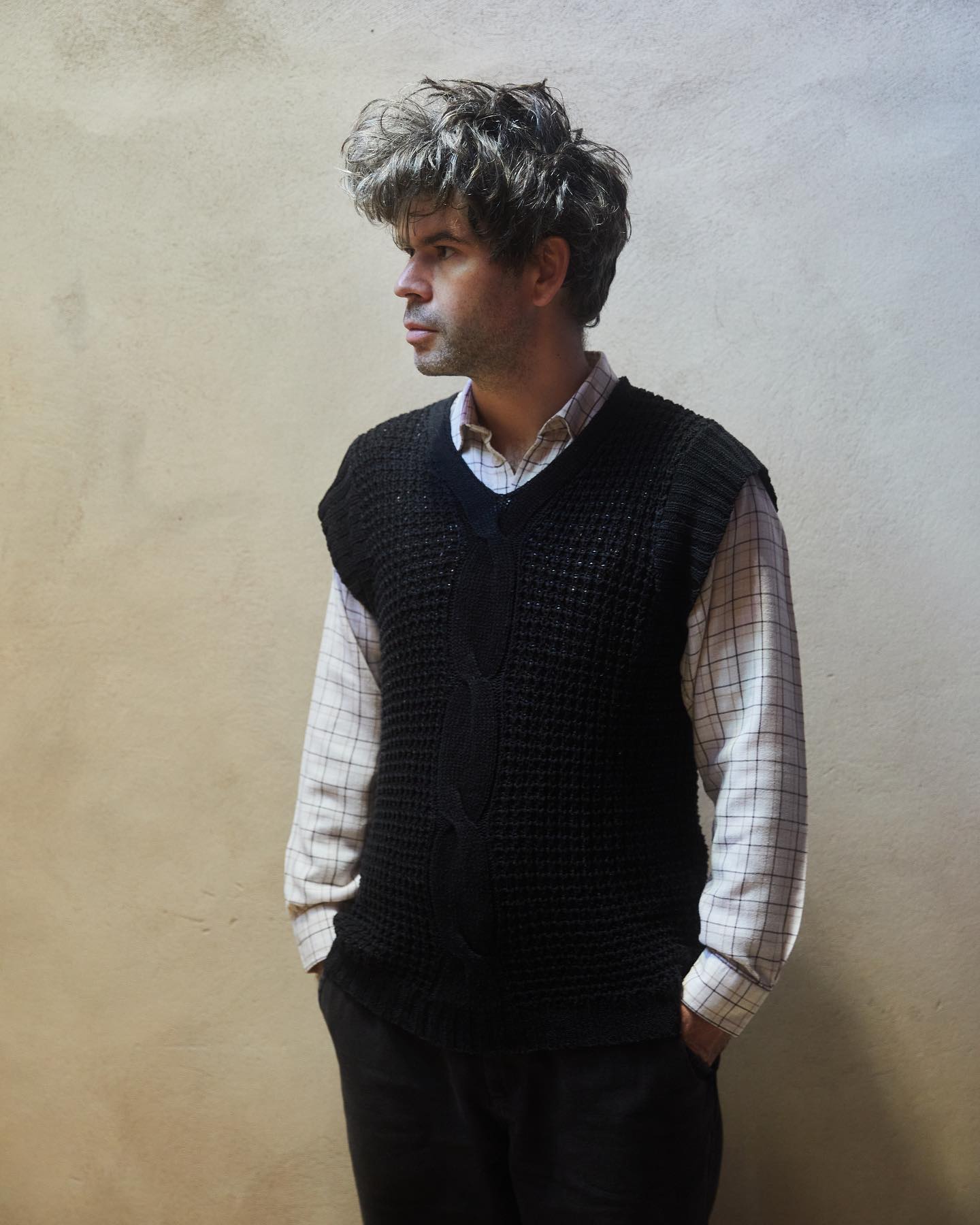


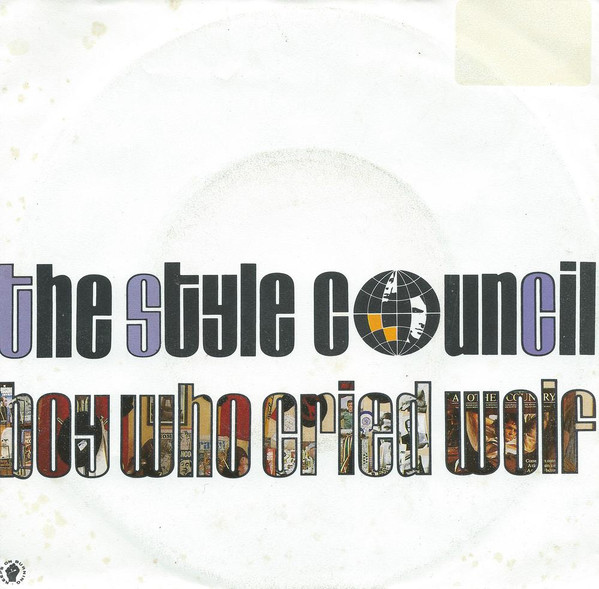

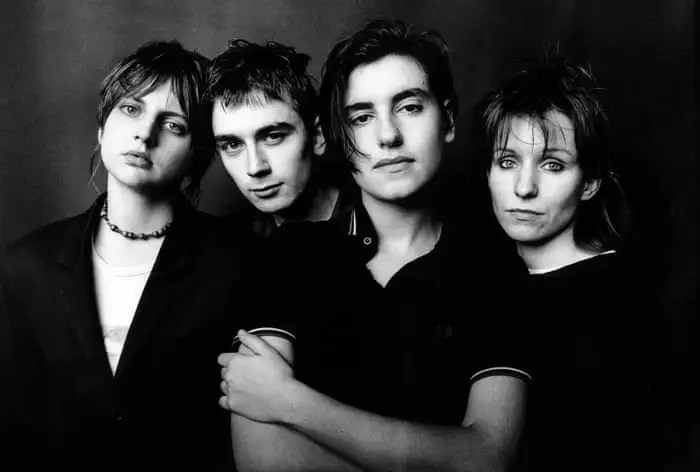
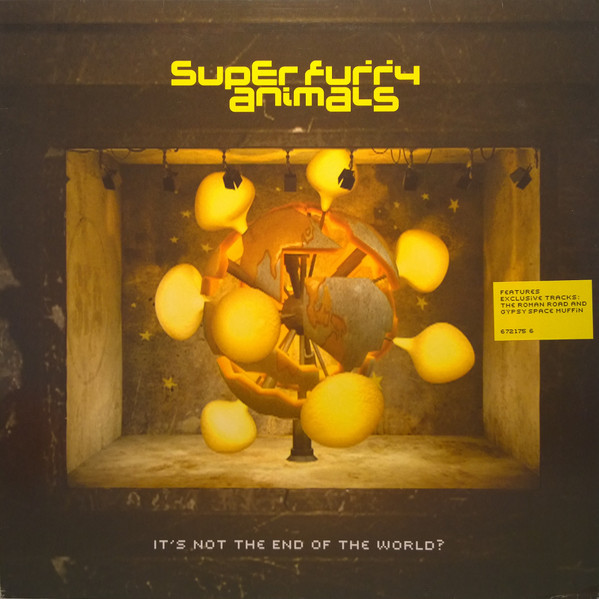
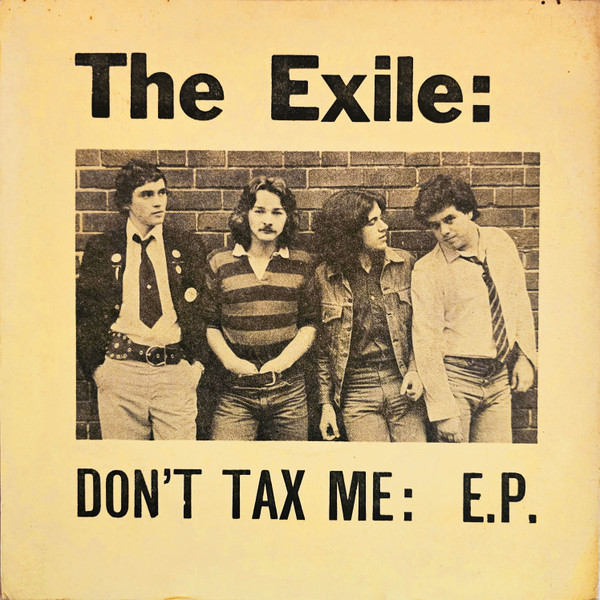

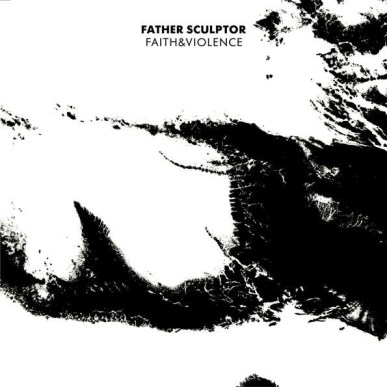
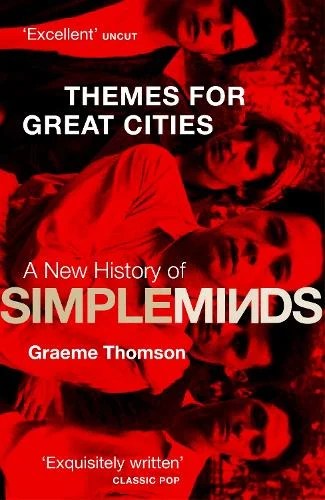
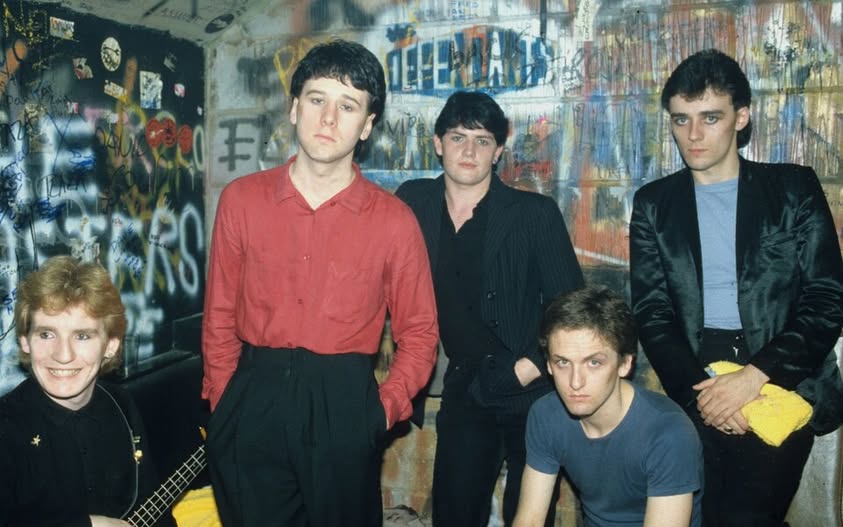
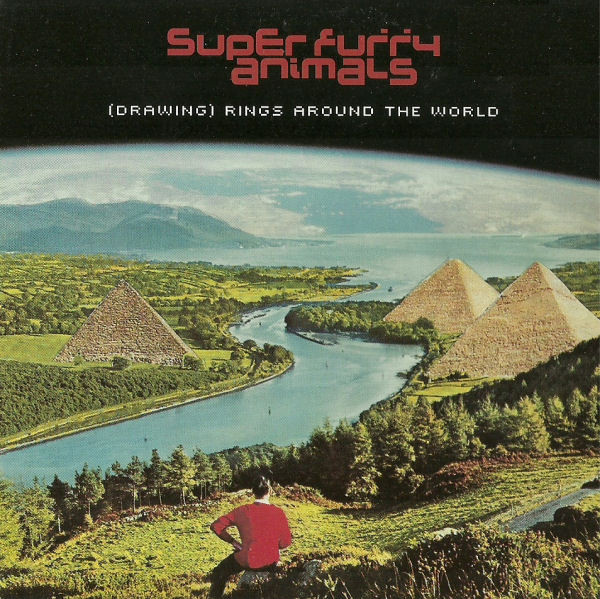
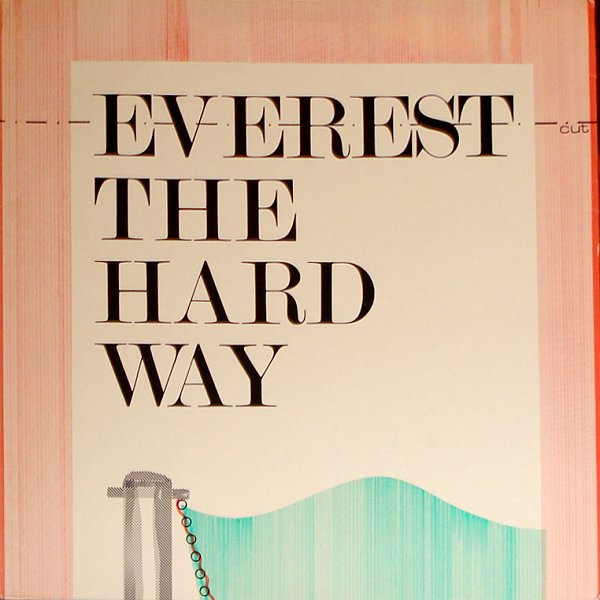
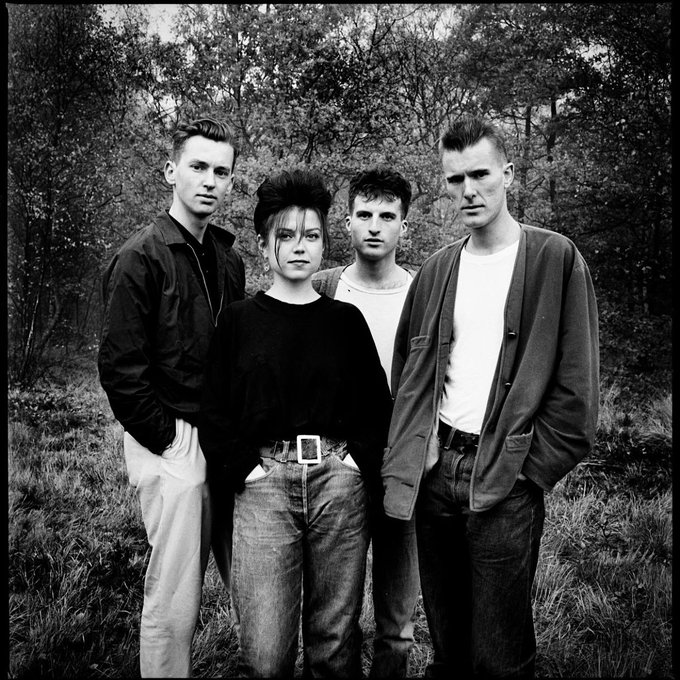
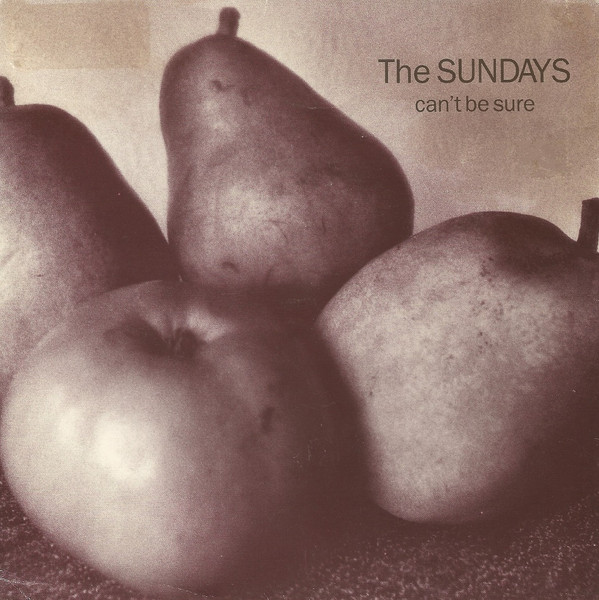
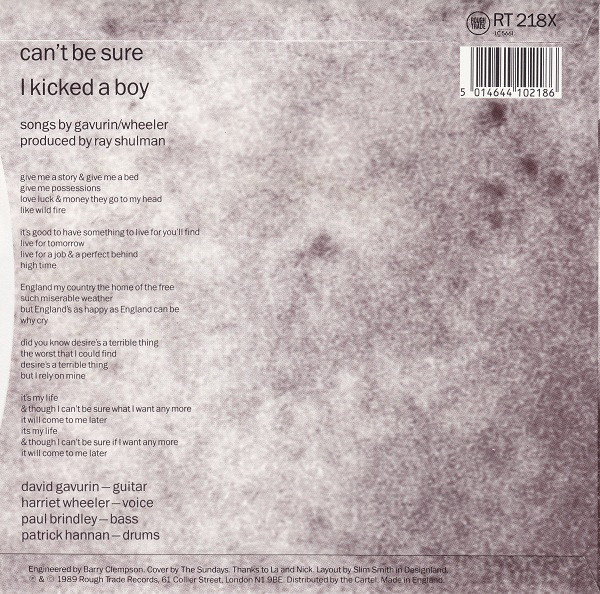

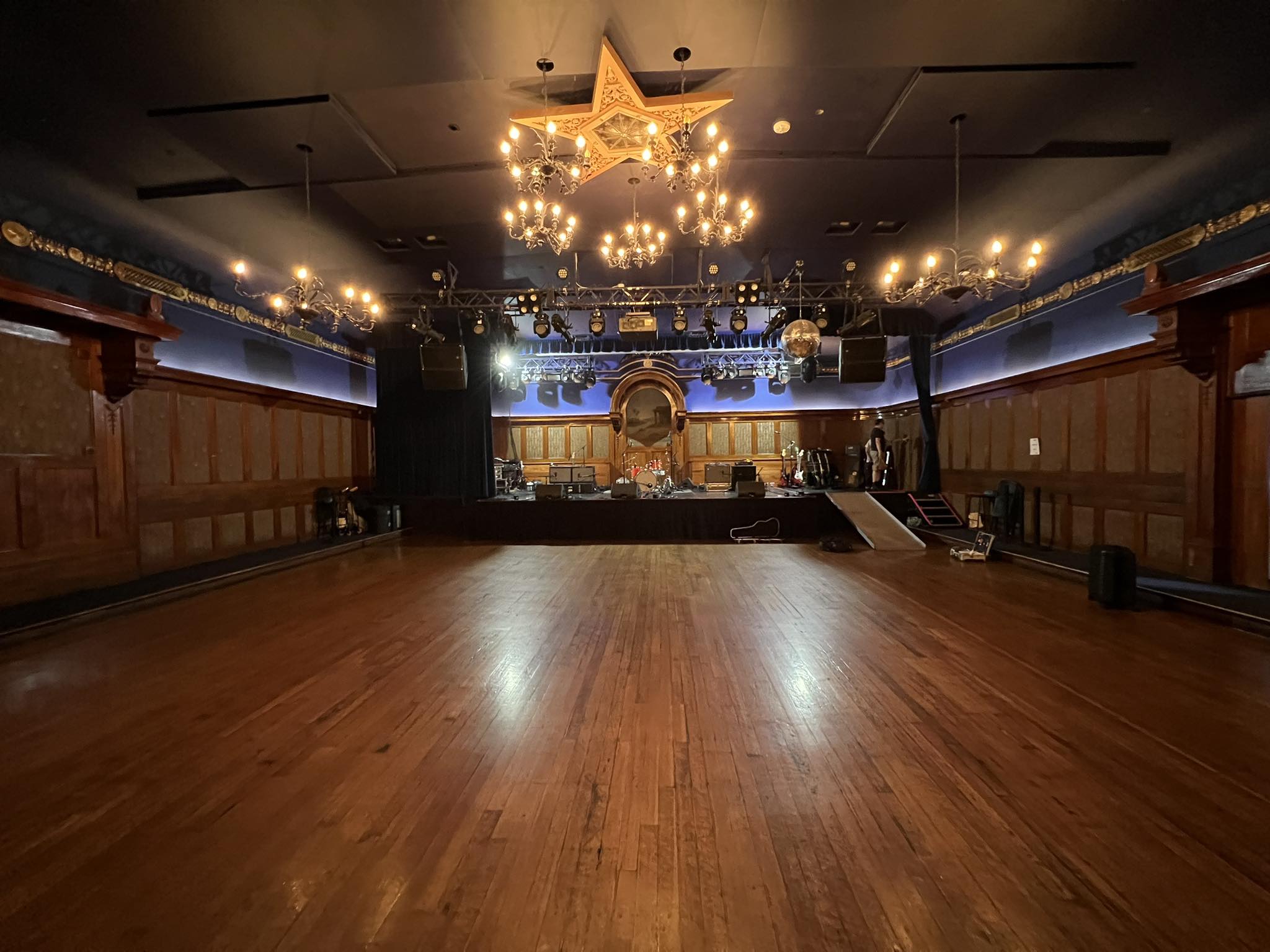
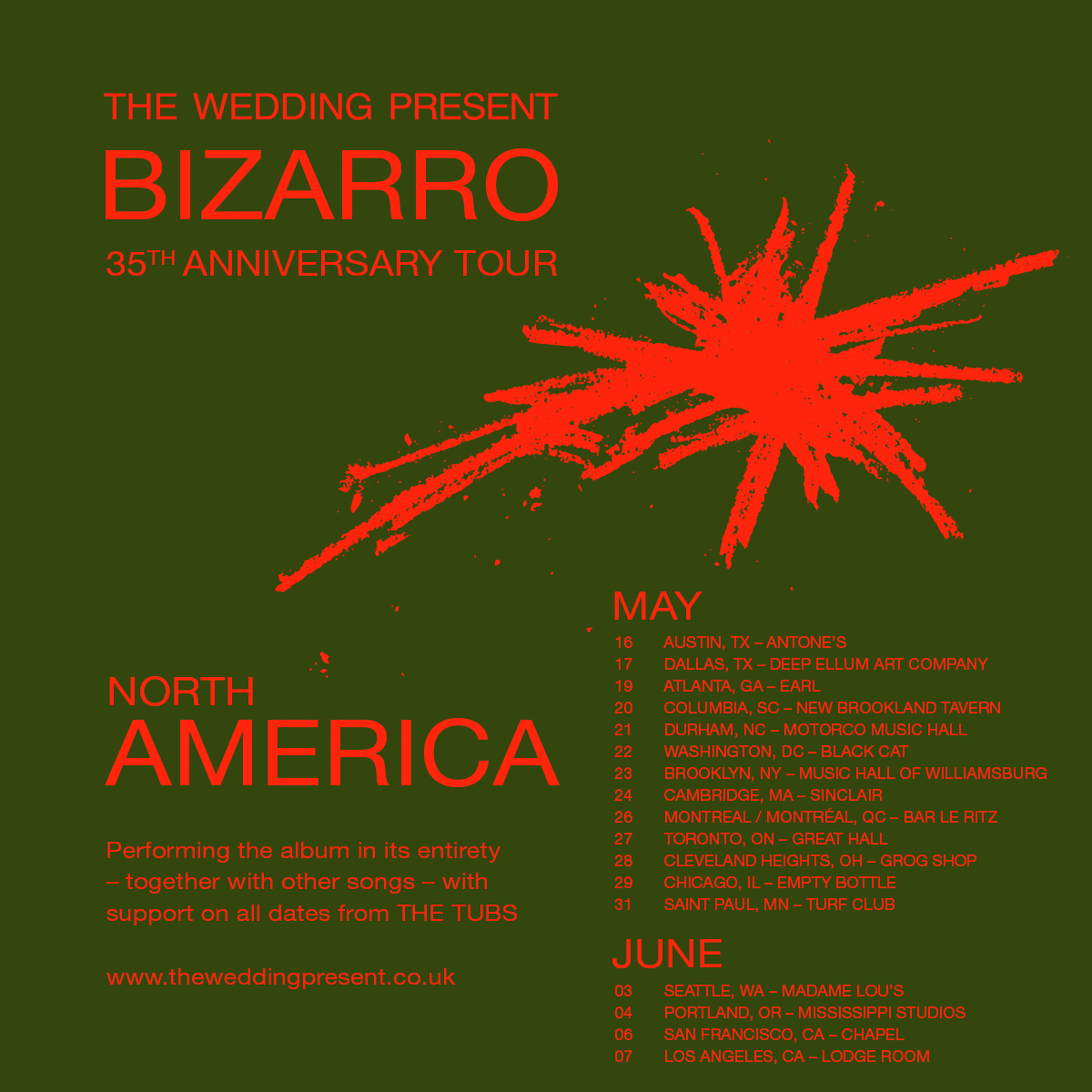
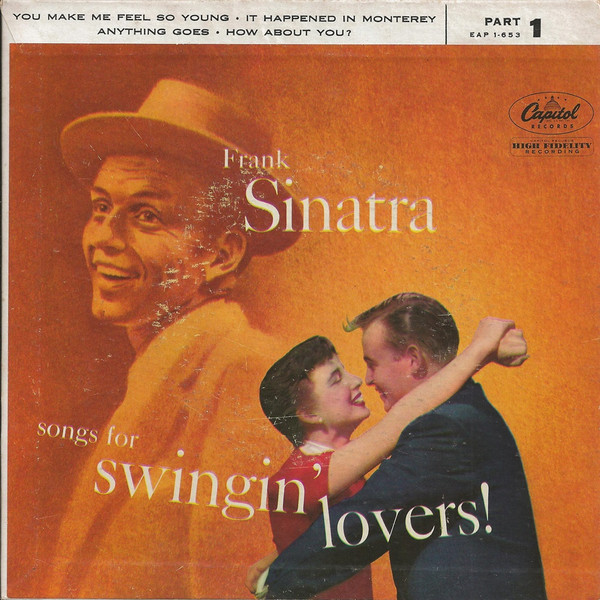
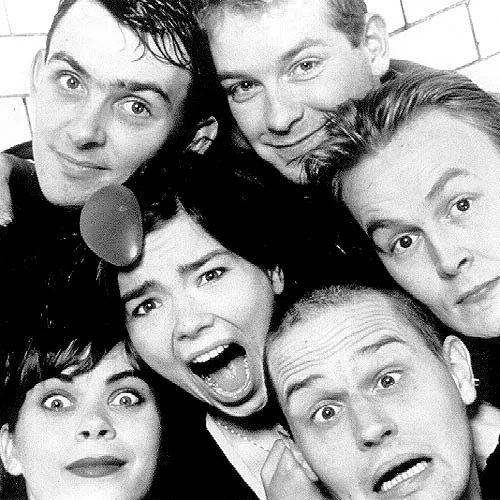
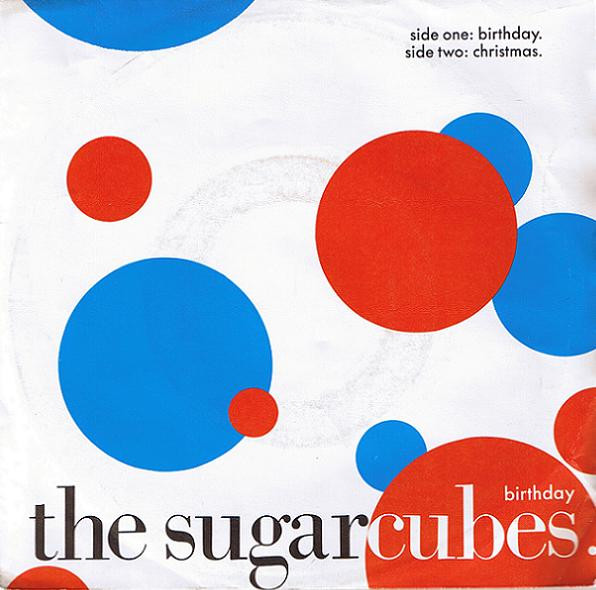
 THE NEW VINYL VILLAIN