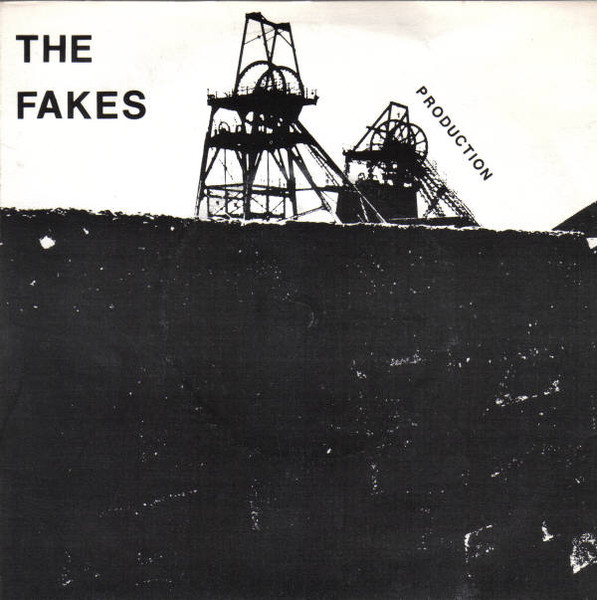
It’s back again to the Big Gold Dreams box set for a song from 1979. And for a tune that was recorded at the legendary Cargo Studios in Rochdale, a place which was important to the development of Joy Division.
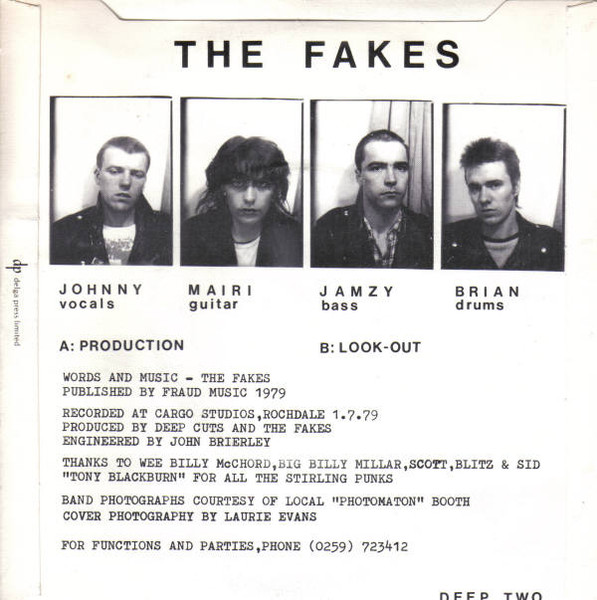
‘The Fakes are no real’ was the conceptual gag promoted by this Stirling-sired quartet founded by bassist James ‘Jamzy’ McDonald, singer Johnny Maguire and drummer Brian Kemp.
Originally The Cunts, then SK70, named after a silicon lubricant used with condoms, The Fakes made just one EP and a self-released cassette, joined by guitarist Mairi Ross.
A-side ‘Production’ was a pounding comment on dead-end factory jobs, while Sylvia Clarke was more catchy:-
mp3: The Fakes – Sylvia Clarke
The band fell apart following the death of Kemp in a motorcycle accident. McDonald reinvented himself as Mr Egg, overseeing a one-man acid techno revolution as the Can-referencing Ege Bam Yasi. More recently, McDonald and McGuire reformed The Fakes, with guitar whizz William Baird and Tango Rhums drummer Lee McPhail on board. Recent live shows sound as authentic as they’ve ever been.
The tune on offer today is very much of its time, but I feel it has some merit, thanks to the angular and slightly (to my ears) off-key guitars……
In late 2006, The Strokes announced they were going to take a break from recording and touring. There had already been three studio albums – Is This It (2001), Room On Fire (2003) and First Impressions Of Earth (2005) – while 2006 itself had seen them play almost 150 live shows between January and October, many of which had been at festivals and arenas. The proposed break was probably in everyone’s best interests.
Somehow, in among all this activity, the band’s rhythm guitarist Albert Hammond Jr found time to go into a studio and record his debut solo album. Yours To Keep was released in the UK by Rough Trade on 9 October 2006. It was a strangely low-key release, with no single issued in advance, and indeed the release date coincided with The Strokes finishing off a tour in the USA, meaning that Albert wasn’t around to do anything in the way of promotion.
The reviews were fine, but not gushing with praise, which I thought were a bit harsh. I had bought the album having heard it being played in a record shop as I browsed, without me actually knowing who it was. I certainly felt it was a more consistent and tuneful effort than the recent output of his band. But if the hope had been that many fans of the Strokes would shell out for Yours To Keep, then it proved to be a bit misguided, as it barely made a dent in the charts, coming in on its week of release at #74 before dropping out of the Top 100 altogether.
A month or so later, Albert brought a band came over to Europe for a short tour to further promote the album, including a Glasgow show at the 300-capacity ABC2. I was there along with Rachel, and to be fair, it proved to be a lot more enjoyable a night that we probably anticipated, probably as much to do with the fact he was genuinely enjoying playing such a small venue.
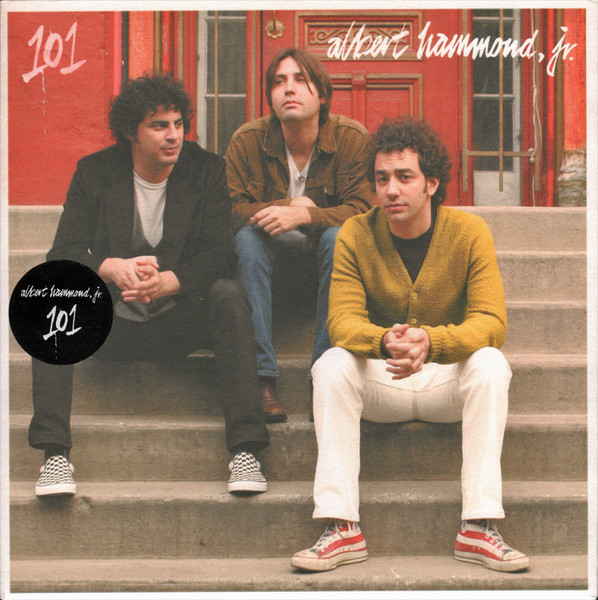
One of the tracks most mentioned positively in the reviews was given a belated release to coincide with the tour
mp3: Albert Hammond Jr – 101
It failed to really do anything, selling only enough copies to be logged at #76 in its first week.
The b-side was a cover
mp3: Albert Hammond Jr. – Postal Blowfish
The original was written and recorded by Guided By Voices in the 1990s. One of Albert’s favourite bands who were incredibly prolific throughout that decade, but I’m sorry to say I know nothing about them….I’ve one track of theirs in the collection, courtesy of it being included on a compilation CD given away by one of the monthly magazines.
Those of you who can recall when I had a chronological look at all the James 45s might well be familiar with the following few paragraphs as they date from February 2014.
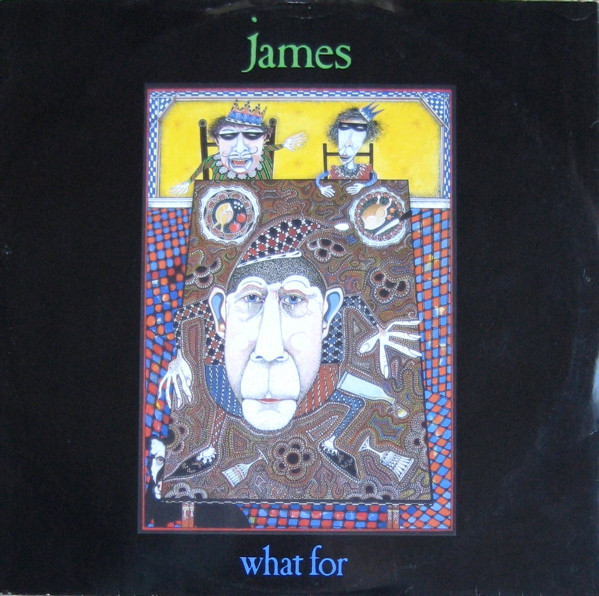
One of my favourite early James singles and the least favourite of the sleeves.
The latter half of 86, all of 87 and early 88 was a strange time to be a James fan. It was also a frustrating time to be in the band, and I’m assuming even more frustrating to be part of the label to which the band had signed.
James were uncompromising in how they wanted to sound, while Sire Records had made it clear that if they didn’t release material that was more commercial or radio-friendly then nothing would ever see the light of day. In early 1987, a new album was recorded, but the label demanded a ‘better’ mix which just wasn’t forthcoming. It really did look for a while as if we had seen the last of the band.
The boys eventually relented and in return the label agreed that they would back a new single which was released in March 1988, a full 18 months after the previous release. It turned out to be a stunning record. Joyous, anthemic and completely radio-friendly. It was surely destined for the Top 10. It even had whistling on it!!
Except……….the record label felt it was still too indie-sounding to be deserving of a promotional push and so again it was left to the late night DJs to try and champion it….but the problem being that the band had been away for too long and nobody was really all that interested.
A crime for which lots of folk should be put in the dock and found guilty.
A 12″ copy of this single sits in the cupboard, so here we go:-
mp3 : James – What For (Climax Mix)
mp3 : James – Island Swing
mp3 : James – Not There
Once again, the b-sides are well worth your attention. Island Swing perhaps suffers from having a wee bit too much in the way of harmonica and the second half of the song doesn’t match the opening minute or so which is quite tremendous, but there can’t be many bands that have done something this jaunty as a dig at the British Empire and other forms of colonialism – while Not There is an alternative and better version of a song that would later appear on the LP Strip-Mine.
# 101: Terry & Gerry – ‘Wait Until You’re Older’ (Vindaloo Records ’84)
Dear friends,
today it’s one of these days again when I sit here and think to myself, ‘Jesus Christ, why can’t I just listen to „normal“ music, like The Beatles, for example?!“. Probably you will have the very same thought every week when my nonsense appears here, but that’s a different story.
Without looking it up, I don’t think there is a single Beatles-tune where I would not find thousands of essays about on the internet within a minute: get some facts, some inspiration perhaps, write a little something down, send it to JC, et voilà – back to bed!
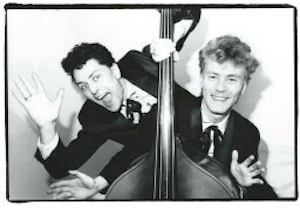
Not so with today’s single by the most wonderful Terry & Gerry, a skiffle duo from Birmingham! I have to admit their Wikipedia entry is bigger than I first thought, but apart from this there isn’t anything I can find about them, regardless their brilliance.
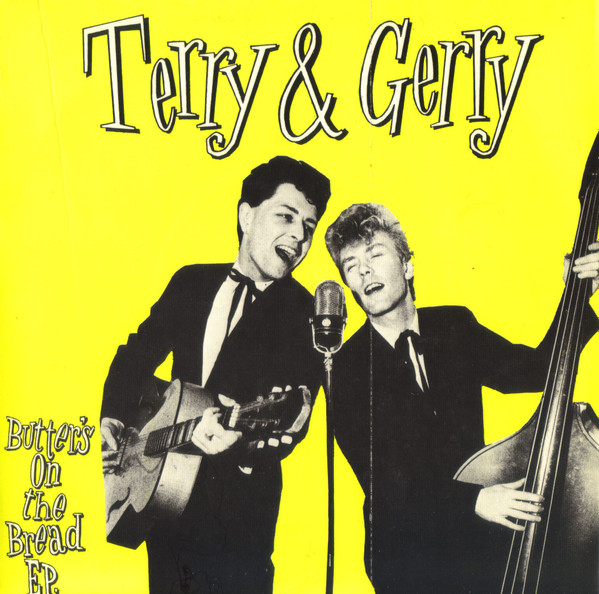
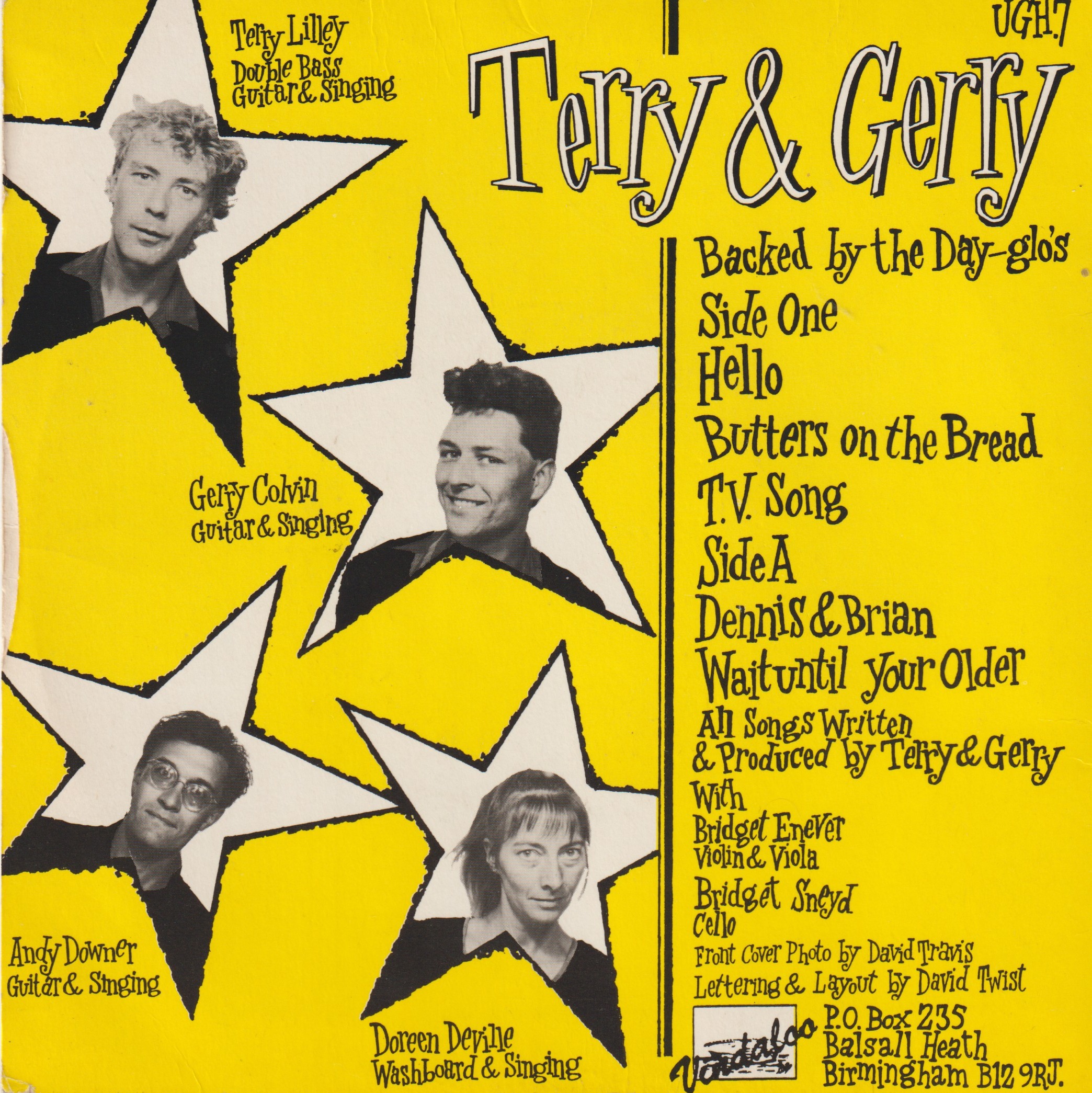
They (Terry Lilley and Gerry Colvin) formed in the early 80s and unusually for the time the band was based on a skiffle sound, making use of a washboard for percussion instead of a drum kit. Terry plays double bass, and Gerry sings lead vocals and plays acoustic guitar. Below track is one of five tunes on their wonderful debut EP, ‘Butter’s On The Bread’ (a reference to the miners’ strike apparently), the sleeve of which tells me that the two chaps are backed by The Day-Glo’s, Andy Downer (guitar, singing) and Doreen Devine (washboard, singing).
I wish I had seen them live back then, they took their style from 1950’s pop artists – so much so that they wore black evening suits and ribbon ties at their gigs: great stuff!
You see, I know very well that songs like these don’t gain great applause generally. Therefore, even if there was more I could tell you, I should not take it too far – most of you would not bother anyway, I’m afraid. But hey, that’s my life story when it comes to obscurities like these: Peel liked them, so did I – but no one else did (and consequently isn’t interested) – and I liked them so much that on occasion they ended up in my singles box … end of the story, and no, I’m not complaining.
Today’s offering was single of the week in March 2002 in the NME.
It was described as “scorched, ragged and super heavy, taking ‘Bleach’-era Nirvana as its starting point and then proceeds to compress the whole of Kurt Cobain’s career into a blistering minute and a half. It’s a totally brilliant record”
A bit-OTT perhaps, but I think it’s fair to say it is an exciting listen
mp3: The Vines – Highly Evolved
It reached #32 in the UK singles charts. One subsequent single, Outtathaway would go Top 20 which is an indication that this Australian indie-rock combo never quite got the sales the critics had predicted. But then again, the debut album, also called Highly Evolved, did reach #3 and sold the best part of a million copies worldwide.
George Best, the debut album from the Wedding Present, was released in November 1987. Among its twelve tracks were two songs that had previously been released as singles – My Favourite Dress (February ’87) and Anyone Can Make A Mistake (October ’87) – although it must be pointed out that the album version of My Favourite Dress was a different recording.
The album was a relative success, reaching #47 in the charts, which wasn’t too shabby given it was issued on Reception Records, the band’s own label and there wasn’t a huge amount of money set aside for marketing and promotion beyond basic adverts in the UK music papers. Bands on major record labels would probably have found themselves being in the situation of being asked to lift another single from the album, maybe a month or six weeks after its initial release, as a way of giving sales a further shot in the arm.
This would have been counterproductive for TWP in that most, if not all their fan base, would have already likely purchased the album, while there was also the risk of the music press turning against the band with the accusation of ripping off said fans – at the very least there would have been missives from disgruntled punters printed in the letters section, regardless of whether such letters were genuine or the figment of the imaginations of journalists seeking to start a row.
It meant that Nobody’s Twisting Your Arm, the band’s next single, released in January 1988, was a previously unreleased song.
Which also means the world was denied this bona fide classic ever being made available as a stand-alone 45:-
mp3: The Wedding Present – A Million Miles
It’s that rare TWP thing from that era – a storyline in which the male protagonist gets the girl. It kind of is like a fairytale, given that for most of us, the scenario which plays out in How Soon Is Now? by The Smiths (so you go and you stand on your own, and you leave on your own) was surely far more common than catching the eye of someone who not only returns a smile but is soon happy to chat with you and to agree to your suggestion that you walk her home given the absence of the friend she had come along with.
And the middle verse of the protagonist excitedly calling a friend all about it, possibly the next morning…..genius!
It is a delightful song in every possible sense of the word, lyrically and musically. Almost forty years on, it remains one of the most popular TWP songs of them all, and is still aired to great effect in the live shows. It would have been a great single, but it wouldn’t have made the mainstream charts.
Let’s start with a song this week, shall we? Have a listen to this.
MP3: By The Sea – Wendy & Bonnie
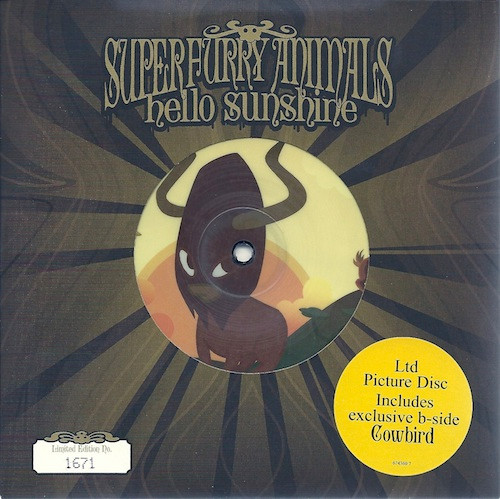
Isn’t that lovely? I’m sure many of you will recognise at least part of that track (from teenage sibling duo Wendy & Bonnie’s only album ‘Genesis’ from 1969) owing to its first 30-odd seconds being sampled by Super Furry Animals as the intro to Hello Sunshine, the opening track on ‘Phantom Power’. Four months after the album’s release, a version of Hello Sunshine, sadly shorn of that intro, was released as the album’s second single.
MP3: Hello Sunshine [radio edit]
It’s a hazy, lazy little summery number about emerging from a period of darkness in one’s life and finding some joy again. Odd, really, considering the single was released in November just as the long nights were drawing in… It’s not my favourite SFA single, to be honest, I find it a bit ordinary, but it does have some pedal steel in it, and it was nice to hear that on a chart single at the time.
It has become something of a favourite among fans and not-really-fans for its line “I’m a minger/You’re a minger too”. For our overseas friends, minger is a Scottish word and defined as thus:
minger /ˈmɪŋə/ noun : derogatory – informal an unattractive or unpleasant person or thing. “Why can’t anyone see that Spencer is a complete minger?”
It’s always bellowed very loudly by the audience at a SFA concert. The band has far better couplets in its arsenal (as I’ve pointed out a few times in this series) but for some reason, this one has stuck.
It’s also a song the band could have made a lot of money from when they were approached to use it in a Coca-Cola ad. However, thankfully, the band has far more morals and ethics than most musicians and turned them down flat. Gruff explained:
“We have never been a big selling band, but when it came to the crunch, we felt we couldn’t justify endorsing a product that may have had a part in violently suppressing some of its workers. For a moment, I thought that we could have done the advert and donated the money for their campaign for justice. Yet the thought of having to hear our song used to sell anything that exploits anyone for the worse turns my stomach.”
Despite the commercial potential of Hello Sunshine, it failed to set the charts alight. Perhaps if it had been put out during the summer months, it might have climbed higher than its actual chart peak of #31. It means a lot of people missed out on the b-sides. All formats – 7” picture disc, CD and DVD – had this:
MP3: Cowbird
The CD and DVD also included a third track:
MP3: Sanitizzzed
The former is an instrumental that belongs on some movie soundtrack or something. In the right context, it might be amazing, but I fail to get much out of it. The latter sounds like something the band would have done a few years earlier. It has that classic psyche-infused SFA-of-old sound, with a good melody and lots of la-la-las. And a dog. It’s clear why neither of these tracks appeared on the album, they just wouldn’t have fit anywhere.
The demo is wonderful and is my favourite version of the song. It’s even more laid-back than the final studio version, and features an extended bridge with extra lyrics that were eventually discarded. I also love what the band is doing in that part too. This really was a highlight of the 20th anniversary edition of ‘Phantom Power’.
I have to admit to quite liking the remix as well. It’s obviously very different, but it has its own charm and hazy warmth about it that makes it well worth a listen. It also retains the pedal steel, so a big tick for that! It featured on the remix album ‘Phantom Phorce’ along with another remix of Hello Sunshine which isn’t worth the effort as there are no recognisable parts of the original song in it, so I object to it being called a remix of anything and it won’t be posted here!
Anyway, next week, the third and final instalment of the Phantom Power singles, and it’s another special bumper post!
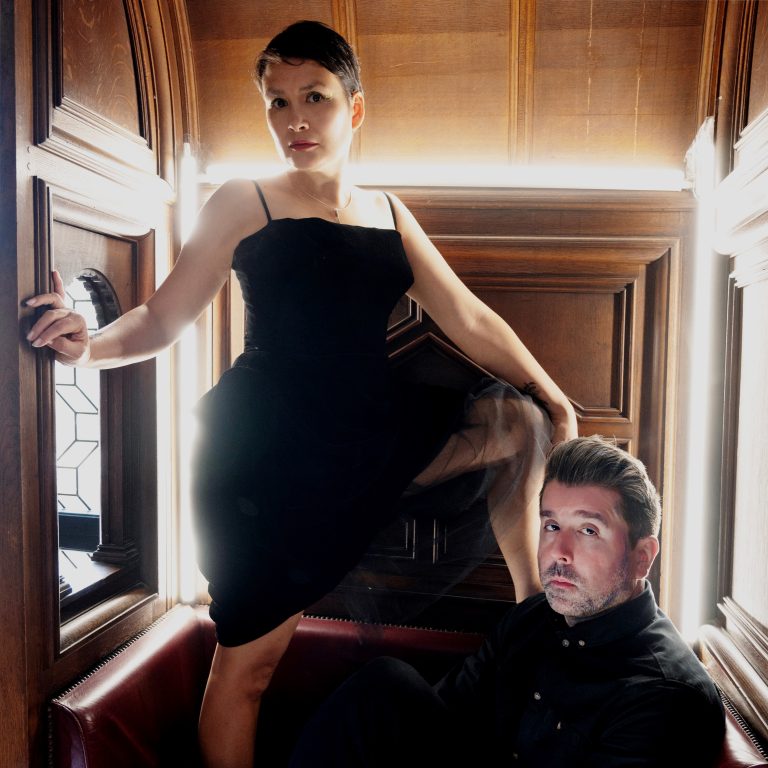
Here’s a duo that totally passed me by until earlier this year. F.O. Machete – previously known as Fuck Off Machete – and consisting of Natasha Noramly (bass, vocals) and Paul Mellon (guitar, vocals), formed in Glasgow back in 2003, and debut album My First Machete was released on Lost Dog Recordings the following year. There would be one further album and a couple of EPs before what is now described as a hiatus (not a break-up) from Natasha moving to the USA in 2011.
The onset of the COVID pandemic led to Natasha returning to Glasgow in 2020, and in the fullness of time she reconnected with Paul. A couple of years back, Last Night From Glasgow had made contact to seek out the possibility of releasing the back catalogue on vinyl (it had previously only been issued on CD). Those at the label were delighted to be told that Natasha and Paul had been working on new material, and so the plans for the reissue were put on the back burner and resources instead put towards recording and releasing the new songs.
The album Mother Of A Thousand came out back in February, and it is only down to the fact I knew they were due up in this long-running series that has stopped me mentioning it until now. There are a few reviews out there online, all of them fulsome in their praise for the album, and I make no apologies for quoting Neil Hodge (aka The Ginger Quiff), someone whose finger is always on the pulse of Scottish music, and who is one of our best writers:-
“That second album from the band with perhaps the most Glaswegian name ever is the triumphant Mother of a Thousand, featuring ten masterpieces of no wave alt-rock genius that scythe through the competition with their unique flair and preposterously addictive catchiness. The machete have taken the loud-quiet-loud blueprint that marked out the Pixies from their competition and have made it all their own, with songs that move from quiet almost whispered quirkiness all the way through a gamut of many textured sounds to some gargantuan fuck off riffs…..”
He has absolutely nailed it.
mp3: F.O.Machete – Confetti Clown
Hooks and riffs abound, and it is the sort of album which seems to throw up something fresh and different with each and every listen. I’m certain it’ll be one that will make a few end-of-the-year lists, and not just round these parts.
In which I admit to falling for the tricks of the marketing folk…..
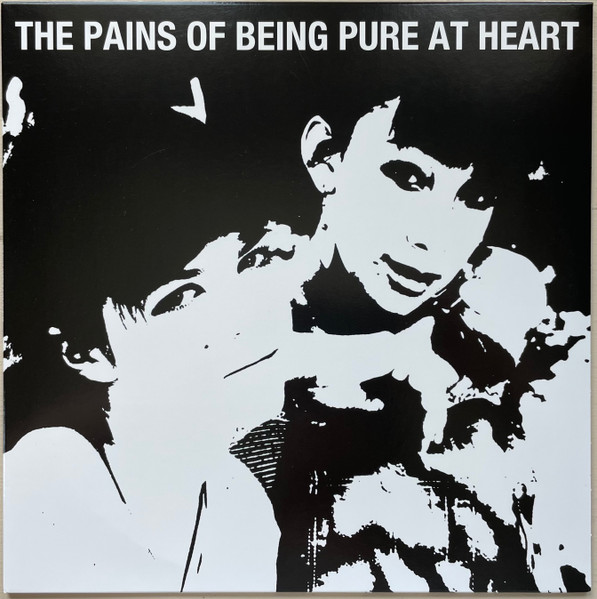
It was hearing some of their songs at the much-missed Little League nights during the 2010s that I first fell for the charms of The Pains of Being Pure At Heart. My dancing partner-in-crime, Aldo, was way ahead of the curve, having cottoned onto them from the outset, being someone who loved getting out and about to various indie-festivals in the UK and further afield. His CD collection has always been packed with releases from all the legendary indie labels, with Slumberland Records being one of his favourites.
The self-titled debut was released in February 2009. I’m quite sure Aldo would have bought it at the time and raved about it to anyone who would listen. I was going through a period of enjoying what was a particularly fertile period for emerging Scottish-based bands, and so I wouldn’t have paid much attention to the idea that great music was coming out of Brooklyn. But as I said, it was hearing some songs while out at the middle-aged folks equivalent of the indie-disco that got my ears pricked.
Said album was eventually purchased on CD in maybe 2015 or 2016. My take on things from the outset that it was a very good but not wholly brilliant listen. The opening five songs – Contender, Come Saturday, Young Adult Friction, This Love Is Fucking Right! and The Tenure Itch – were particularly strong, but that’s no real surprise, as the catchy singles were all in there. What I was particularly liking was how they seemed to blend a range of indie-influences from both the US and the UK and somehow come up with something that sounded different. The melodies were great, the tunes were toe-tapping, and the whole thing bounced along at a fair pace.
But just as I was beginning to think it was a classic, things sagged in the middle. Don’t get me wrong, the tunes Stay Alive and Everything With You were decent enough, but where there had been killer choruses early on, these kind of felt indie-by-numbers. Would I have felt the same if I’d seen the band play live back in the day? Probably not, as there was a sense that they would have sounded bright and energetic when aired in the presence of an adoring and enthusiastic audience. And just as I was kind of being dragged back in by A Teenager In Love and Hey Paul, the album closer Gentle Sons left me shaking my head as dull and plodding – the very worst of their influences coming through as it sounded like a Mary Chain cast-off with an awful lead guitar part midway through.
And then, in early 2022, one of the monthly e-mails from the Monorail record shop excitedly announced that the album was being re-released on limited edition vinyl – white with pink and yellow splatter no less – and could be ordered via the website. The thing is, there’s plenty of albums (and indeed singles) I have on CD that I’d love to have on vinyl, but this wasn’t really one of them. But, just like the Four Tops (and Orange Juice), I can’t help myself. And the order was placed within seconds of the email arriving – I didn’t want to miss out!
So now, I have two copies of The Pains Of Being Pure At Heart. Consumerism at its worst. But I could justify things to myself by the fact that I would now be able to place the vinyl on the turntable and lift it off without guilt at the end of Side 1.
mp3: The Pains Of Being Pure At Heart – Contender
mp3: The Pains Of Being Pure At Heart – Young Adult Friction
And if I want any of the Side 2 tracks, there’s always the digital versions on the laptop (although I’m no so shallow as to not put the needle into the groove of Side 2, but I always make sure it gets lifted again before the final track, which means it always closes with this:-
mp3: The Pains Of Being Pure At Heart – Hey Paul
Which I’ve just done as I listened again while typing out all of the above.
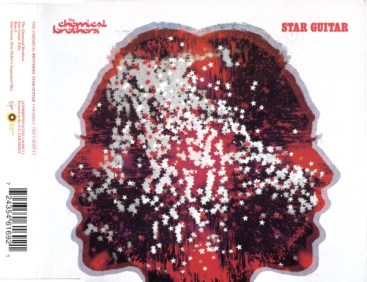
I pulled this one down off the shelf for inclusion in this series. First thing I did was look at the credits and was stunned/horrified to see that the track dates back to 2001. It’s another of those that make me wonder about where the time has gone……I could have sworn this was a good ten years later.
mp3: The Chemical Brothers – Star Guitar (edit)
This version is a couple of minutes shorter than the one included on the album Come With Us. Not being very good at describing what music sounds like, please permit me to quote a couple of professionals.
“a crisp post-disco work-out featuring bristling guitars and a Giorgio Moroder-style synth-bass.” – Sal Cinquemani of Slant Magazine
“a dreamy melody hatches from an array of Ritalin beats, is evidence of a band that is increasingly drawn to disorientingly lush tunes rather than to mere adrenaline anthems.”– Pat Blashall of Rolling Stone
Maybe Mr Blashall went to the same writing school as Graeme Thomson?
Fatboy Slim was asked if he fancied doing a remix of Star Guitar, but he declined on the basis that it couldn’t be improved.
I’m assuming that having received that particular rejection, Ed Simons and Tom Rowlands turned their attention to another music producer from Brighton, who was quite happy to get on board.
mp3: The Chemical Brothers – Star Guitar (Pete Heller Expanded Mix)
It’s quite epic in some ways, speeding up and slowing down as it meanders along, and certainly has a ‘hands to the ceiling’ feel to it.
The CD single came with one other piece of music.
mp3: The Chemical Brothers – Base 6
This one seems to pay homage to an awful lot of different types of dance/club music. The ‘123456 Bass’ sample has been lifted from a 1992 track by a Miami-based club DJ known as Beat Dominator, although I can’t help but think of ‘Bass’ being taken from White Lines by Grandmaster Melle Mel.
Star Guitar reached #8 in the singles chart in January 2002. They’ve only once reached the Top 10 since then, and that was with Galvanize in January 2005. But I think it’s fair to say that much of their music has proved to be timeless, remaining highly popular with young clubbers/festival goers all these years later.
July 1984. I spent most of the month inter-railing, myself and two girls using youth hostels en route to go from Glasgow to Rome, via London, Paris, Marseilles, Monte Carlo, Genoa and Viareggio where we realised we were running low on funds and so headed back via Venice and then overnight trains through Switzerland and Belgium before the boat back across the channel. As such, I can say with all honesty that I had no idea who was enjoying chart hits back home.
Thinking back to that trip, it’s unthinkable really to realise it was done without any sort of mobile technology and that all our cash was in sterling which was later exchanged at different times to francs and lira. We were also totally dependent on old-fashioned guide books and hostel info that we had borrowed from public libraries. Sadly, I’ve no photos at all from the adventure – I was in a relationship with one of the girls that later turned nasty, after which she destroyed almost everything that we collectively owned.
Anyways, back to the music.
1-7 July
Frankie Goes To Hollywood occupied #1 and #2 with Two Tribes and Relax. Nick Kershaw and Cyndi Lauper, sitting at #3 and #4, may well have been a tad upset that the mania engulfing the UK record-buying public prevented them hitting the top.
I do recall throughout my teen and youth years that the summer months were often quite barren in terms of new music and the first chart of July 1984 does nothing to distil such memories. The Thompson Twins had the highest new entry at #28 with Sister Of Mercy, which I had to look up on YouTube to be reminded of. It’s an overwrought ballad whose subject-matter was domestic abuse, seemingly based on a real-life murder case in France. Worthy but dull would be my verdict.
Ultravox were the next highest new entry, in at #33 with Lament, while the only other song to breach the Top 40 was State of Shock, a collaboration between The Jacksons and Mick Jagger. I have no recollection of either of these hits. The only two new entries further down that I can recall were ballads:-
mp3: The Kane Gang – Closest Thing To Heaven (#56)
mp3: Joe Jackson – Be My Number Two (#72)
The former would spend a couple of months in the chart, eventually peaking at #12 and is, by far, the one song most people of a certain age will recall when thinking of the Kane Gang. The latter is not one that I’m particularly enamoured by, but it’s on the hard drive courtesy of a cheap ‘best of’ CD’ picked up in a charity shop quite a few years ago.
8-14 July
The top four were still the same, albeit Nik and Cyndi had switched positions. The highest new entry was a novelty comedy record; actor Nigel Planer had released an album in his guise as the character Neil from the sitcom The Young Ones. The joke being that Neil was a peace-loving hippy, and the album was a mix of spoken tracks and 60s cover versions. Hole In My Shoe, originally recorded by Traffic in 1967, came in at #5. It would then spend three weeks stuck at #2 and if nothing else, we should perhaps be grateful that Two Tribes sold so heavily each and every week and prevented yet another novelty #1 single.
In among the dross was this at #26:-
mp3: Echo and The Bunnymen – Seven Seas
The Bunnymen‘s sixth successive Top 40 hit single and the third and final one to be lifted from Ocean Rain. It’s decent enough albeit far from a classic, but it did lead to a stupidly amusing appearance on Top of The Pops which I saw on VHS tape, courtesy of a flatmate, on my return from Europe:-
Introduced by John Peel. And there’s Bill Drummond down the front of the audience, looking geeky and awkward but ready to play his part in making waves. The big question, though, is how did Les Pattinson manage to avoid being part of all this? Oh, and just to mention…..my hair at this time was very much modelled on Mac’s look.
Keeping up the fun was this new entry at #38:-
mp3 : Divine – You Think You’re A Man
Bronski Beat were the serious side of gay culture in the pop charts. Harris Glenn Milstead, aka Divine, was the fun, cartoon-side of things back in 1984, with his drag-queen persona having long made him a film star prior to his pop/disco career. Divine brought his/her/their stage show to student venues in the UK in 1985, and I was lucky enough to see a performance at Strathclyde student union. It proved to be an outstanding night – the first time I realised live gigs delivered solely by backing tapes were not the devil incarnate! You Think You’re A Man would eventually reach #16 and be the biggest hit for Divine, who sadly died in his sleep of a heart attack, aged just 42, in March 1988.
15-21 July
Just as it was looking as if the Top 40 this week was totally stagnant:-
mp3: Blancmange – The Day Before You Came (#39)
Neil Arthur and Stephen Luscombe‘s sixth Top 40 hit, but their first with a cover version, being a slightly unusual take on the Abba single released just two years previously. Kind of hard to believe given how successful Abba were, but the cover version charted the highest of the two. The Swedes peaked at #32, while Blancmange’s take climbed to #22, a chart position it held for three successive weeks.
Worth mentioning, perhaps, that two very old songs entered the singles chart this week, thanks to then being re-released. A Hard Day’s Night by The Beatles came in at #54 (peaking the following week at #52) while Brown Sugar by The Rolling Stones was a #59 entry, peaking the following week at #58. It was also the chart in which Ben and Tracy enjoyed a second success of the year:-
mp3: Everything But The Girl – Mine (#58)
Fair play to the duo, and the record label, for not lifting a second single from the Top 20 album Eden, but my recollection at the time when first hearing it was that it was a bit of a letdown, not having too much of a memorable tune. I’ve grown to appreciate it more over the years, but it really felt like an outlier back in 1984. #58 was as high as it charted.
22-28 July
Ridiculously slim pickings this week. It’s A Hard Life by Queen was the highest new entry at #23, with the next best newbies being Hazell Dean, Rod Stewart and Tracey Ullman at 25, 42 and 51 respectively. I know I’ve featured Tracey Ullman before in this series, but Sunglasses, the song with which she entered the chart this week is one I just do not recall and having just gone again to YouTube to see if my memory could be jogged. Turned out that it couldn’t, and I only managed to watch about thirty seconds of the video before hurriedly hitting the stop button.
And just as I was to completely give up and write-off this week’s chart:-
mp3: The Colour Field – Take (#70)
The only week in which the band’s second single breached the Top 75.
Looking back over all of this, it does seem that I picked a good month to be out of the country.
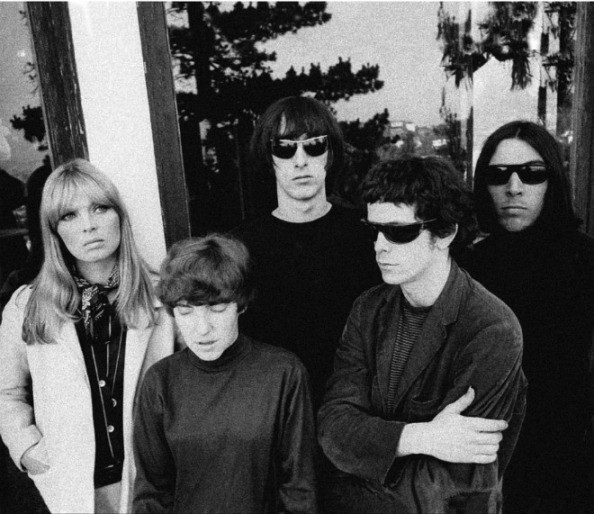
The second most influential band ever. A Velvet Underground ICA
As the long summer of 1991 faded to a rather limp end, the long lost Medway band, the Sexbirds clambered on to the small stage in the back room of Churchills Pub in Chatham. If they were disappointed by the small crowd they didn’t let it show, but as there was only three people there, they kind of had to have hoped for more. Still, they played a tight four song set full of post punk energy and displayed enough rock n roll attitude to impress the grumpy looking barman who literally served more pints than there were people. In that crowd, a devilishly good looking young chap stood alone from the other two people in the crowd, largely because he didn’t know them and standing with them in an empty room would have been weird.
But as the feedback influenced third song came to an end, the taller of the two other people wandered over to the devilishly good looking chap and said “Can you play guitar?” the good looking chap nodded even though he couldn’t play guitar, well not really. He’d had four lessons. “Good”, said the taller man, “let’s form a band, because if that lot can do it..” he hoisted a thumb at the stage, “anyone can…”.
Folks, only three people saw the Sexbirds live, but all three of them formed a band because of it and that in my eyes makes them most influential band in the history of rock music.
The distinct lack of available Sexbirds material makes an ICA on rocks most influential band impossible. So, here instead is an ICA on rocks second most influential band, The Velvet Underground (it will be debut album heavy, obviously)
The Velvet Underground are apparently one of those bands that you either get or you don’t. You either accept that they invented everything, literally everything, including the wheel, fire, glass, cigarettes and rock music, or you don’t. When I first heard the Velvet Underground, which was as a naïve seventeen-year-old in the bedroom of a much older woman* I didn’t get them. Then two years later as a student, I suddenly did.
Side One
Sunday Morning – The first Velvet Underground song I ever heard and it was this with its music box intro that confused me. In 1992, I thought this sounded dull but two years later that music box intro sounds beautiful and the way that Lou Reed’s guitar sounds all countrified (thanks to him loosening the strings) gives it a rather luminous glow of strangeness and uniqueness.
Pale Blue Eyes – ‘Pale Blue Eyes’ is rather confusingly a love song about a girl that Lou Reed used to date who had hazel coloured eyes. It is one of the most tender song that the band ever recorded and its rather wonderful because of it. It is taken from the third Velvet Underground record, which of all the Velvet Underground records it’s the one I play the least, but ‘Pale Blue Eyes’ is the stand-out track from it.
Venus In Furs – ‘Venus In Furs’ isn’t just a blend of hypnotic drone rock, sound textures and atmospheric brilliance. It’s a blend of hypnotic drone rock, sound textures and atmospheric brilliance that is also about sado masochism that was written in about 1965. That, folks, is why the Velvet Underground matter.
Rock N Roll (Full Length Version) – By the time the band reached album four, John Cale had of course departed to make some introrespective and abstract noises with his electric viola. Mo Tucker had also momentarily left as well so that she could have a baby. This left Lou Reed to stretch out and pretty much do what he wanted, and Lou Reed wanted to make a pop record. Albeit a pop record laced with the odd voyage into proto punk rock.
Run, Run, Run – According to legend, Lou Reed wrote this song on the back of an envelope whilst he and the rest of the band were on their way to a gig. If true, ‘Run, Run, Run’ is the greatest thing ever to be written on the back of an envelope and until -someone comes up with the secret of immortality and pops it down on the back of a gas bill – it always will be.
Side Two
What Goes On – ‘What Goes On’ was the only track to be released as a single from the band’s third album. Twelve years or so later, Talking Heads would borrow the organ riff and use it as the backdrop for ‘Once In A Lifetime’. That, folks, is another reason why the Velvet Underground matter, their influence and sound and organ riffs shaped so much of the music that we all loved as we grew up.
Sweet Jane (Full Length Version) – There are two tracks on ‘Loaded’ that sound like they could have featured on the debut Velvet Underground record. ‘Rock N Roll’ was one, ‘Sweet Jane’ is the other, and it fizzes with pure energy.
The Black Angel’s Death Song – ‘The Black Angel’s Death Song’ is extraordinarily good. The way that John Cale’s electric viola squeaks and scraps like someone dragging their fingernails over a chalkboard, the way Lou Reed’s vocals are kind of all over the place, its unsettling and ace at the same time.
White Light/White Heat – Just realised that I’ve almost reached the end and not once mentioned drugs. Well, let’s sort that now shall we. ‘White Light/White Heat’ is the greatest song ever written about the sensation that you get by injecting methamphetamine, and I’ll add for good measure it has the greatest ending to a track ever as John Cale’s distorted single chord bass goes batshit crazy.
Heroin – I’ll end with my favourite Velvets song. It needs little introduction but it’s insanely good. It’s insanely good because of the way that it all speeds up, and because of the way that Mo Tucker is drumming so fast that she has to stop drumming because she can’t keep up the rhythm that she started and it’s insanely good because literally no one notices, and she just joins back in amongst the squall of guitars and the screech of, well everything. Incredible.
* There were seven other people in that room at the time, and we’d just finished playing Monopoly, but it doesn’t sound as cool if I tell you that.
A guest series by Fraser Pettigrew (aka our New Zealand correspondent)
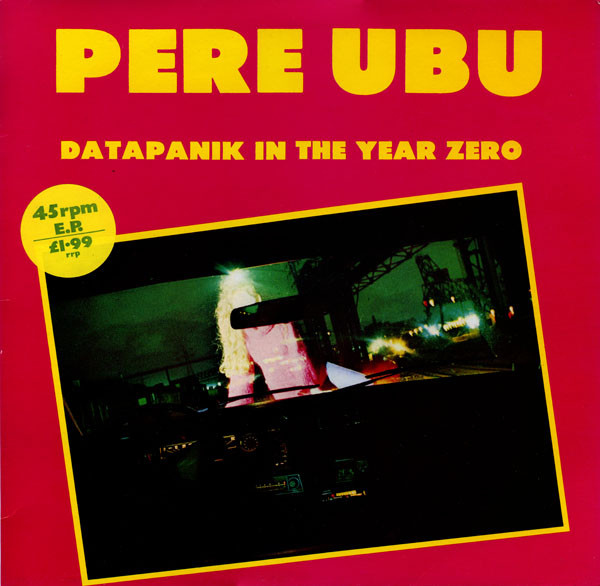
#3: Datapanik in the Year Zero – Pere Ubu (1978)
As a genre label, ‘post-punk’ implies some sort of influence and progression from punk, when in fact it was more like the way that natural selection operates in the biological world. Evolution is often misrepresented as an active, conscious process when it is really the accidental combination of random mutation and environment. Pere Ubu was one of many musical mutations taking place in the mid-70s and punk was the environment that enabled them to flourish.
Whatever the definition or consciousness of ‘punk rock’ was in Cleveland, Ohio in 1975, Pere Ubu were unquestionably distant from any mainstream music scene. Formed by two ex-members of recently disintegrated Cleveland band Rocket From The Tombs, singer David Thomas and guitarist Peter Laughner, Pere Ubu tagged themselves as ‘avant-garage’, a neat and clever coinage that indicated a different direction from their erstwhile bandmates Cheetah Chrome and Johnny Blitz who went on to form the very definitely punk Dead Boys.
Ubu’s music was an unsettling hybrid of mid-70s rock and weirdo gothic psycho-horror, and frontman Thomas wasn’t likely to soften the appeal. Always a big lad, usually dressed in an ill-fitting suit, there was no mistaking him for David Cassidy in the visual charisma stakes and his vocal style ranged from depressive mumble to disgruntled adenoidal bleat. Keyboard player Alan Ravenstine rarely played a chord, preferring to smother the music with harsh electronic noise that evoked the declining industrial landscape of rust-belt Cleveland. Altogether, you can see how the eclectic experimental non-conformism of post-punk drew Pere Ubu into the fold.
Datapanik in the Year Zero is a bit of an outlier in this EP series since it is a compilation drawn from three of the band’s first four singles rather than an original release of new material. As a compilation it’s a bit odd too because it contains only one a-side from those three, all three b-sides and a different unreleased version of one of the other a-sides.
The 12” EP was released in the UK early in 1978 in a one-off deal with Radar Records, to coincide with Mercury’s UK release of first album The Modern Dance. The singles had never been released outside America, having appeared only in limited numbers on Pere Ubu’s own Hearthan label. The name Hearthan became ‘Hearpen’ because it comes from the Anglo-Saxon for ‘harp’ and uses the ‘thorn’ character Þ which looks like a ‘p’ but sounds like ‘th’. As Thomas explained on his Crocus Behemoth website, “Confusion was the foundation on which the business grew”. So, not a slick marketing campaign and world-leading brand strategy, then?
Datapanik covers a two-year period from 1975 to 1977. The first side is a grim affair, containing both sides of the debut single, but opening with b-side Heart of Darkness. Not Joseph Conrad’s story but a similar nightmare of emotional dysfunction. A-side 30 Seconds Over Tokyo is about the 1941 Dolittle Raid on Japan, America’s first retaliation after Pearl Harbour, imagined from the perspective of one of the pilots, “never coming back from a suicide ride”. All six minutes and 20 seconds of it.
Dark stuff, and clearly not a serious bid for global rock stardom. But if you’re going to name yourself after an absurdist literary character, you might at least confound expectations. 30 Seconds was a reworking of a Rocket From The Tombs number, co-credited to Gene O’Connor (Cheetah Chrome), while Heart of Darkness was a Pere Ubu composition, but stylistically very much from the same crypt.
Second single Final Solution is another Rocket song, comparably morbid in title and sound, based on a heavy guitar lick that might have been plucked from The Stooges or MC5, with bleak lyrics of romantic rejection and existential despair. However, Final Solution is not included on Datapanik. The modern perspective assumes the reason is good taste, but the song is not about the Nazi final solution any more than Heart of Darkness is about colonialism in the Congo, and people weren’t so nervous about that sort of ambivalence in 1978 when this EP was released.
Whatever, the b-side Cloud 149 is the first track on side two of the EP, and it’s a distinct contrast to side one. It’s like the sun has come out and big Dave has suddenly, unexpectedly found love with the simple flip of a 7” slice of vinyl. The song bounces into life on overlapping layers of rhythm, settling into a briskly chugging syncopation with the kind of musical ingenuity that leaves you wondering where exactly the first beat in the bar is until the vocals nail it down. “Here she comes/She’s ok/I can tell/She’s ok…” From the lyrics it could be The Undertones or The Beach Boys, and it really doesn’t feel ironic. No idea what Cloud 149 means, unless it’s simply 140 clouds higher than cloud nine.
Third single Street Waves is completely absent along with its b-side My Dark Ages. The obvious rationale is that the same version of the a-side can be found on The Modern Dance album where it is one of the highlights of side one, a great little chunk of 70s rock’n’roll, though it has always sounded structurally weird to me, like the second half of a song rather than the whole thing. The explanation for the b-side’s omission may simply be that it’s not that great, certainly the least appealing of these early single tracks.
Fourth single The Modern Dance is sort of here, but in a different version from either the original a-side or the album version. Those two versions are exactly the same cut except that on the album the instrumental backing is accentuated by a metallic percussive clink, but on the single this rhythmic highlight is provided by that common musical instrument, a squeaky toy. The ‘Untitled’ version on Datapanik has neither clink nor eek, nor the call-and-response backing vocal that I used to think said ‘mantra mantra’ but I have since discovered is actually ‘merdre merdre’. All you Alfred Jarry fans will of course be keenly aware that ‘Merdre!’ is the opening line of the play Ubu Roi, a technical provocation to the French censor of 1896, usually translated into English as the definitely not sweary-word ‘Shrit!’
Final track Heaven was the b-side of The Modern Dance and is another little ray of melodic and lyrical sunshine: “A mid-summer’s night on a magic beach/The dreams that come to me, they don’t look out of reach… C’mon, darlin! It feels like heaven”.
The singles sampled on Datapanik, and the first two albums The Modern Dance and Dub Housing are, for me, the essential moments of Pere Ubu’s career. Focus and inspiration began to drift on New Picnic Time and The Art of Walking and weren’t recaptured after their subsequent split and reformation, nor were they evident to me on what I heard of David Thomas’s solo work. Too much formless electronic noise collage and weird yelping, not enough of the delicious punchy rock knocked slightly off kilter by the unique vocals and synth terror.
They were still impressive when I saw them supporting Gang of Four in 1981, when there was little indulgence of the shuffling sounds of the sands, but on record the appeal had faded. The self-defined avant-garage was something more accessible than avant garde and less ragged and more taut than garage, but rather too soon it became too much of one and not enough of the other.
For album #6, Super Furry Animals went back to basics. After the ambitious lushness of ‘Rings Around The World’ and the huge number of songs they wrote for it (which resulted in four months of discussions and arguments over which songs would be included and which ones wouldn’t), the band made a decision not to over-complicate things for the next record. Initially, the plan was to write songs all based around the same unconventional guitar tuning: D-A-D-D-A-D. And while a batch of songs were written to that concept, it was felt to be too limiting over all, so that plan was abandoned. However, the other plan to not write as many songs and not tinker too much with them was adhered to.
Recording took place through the second half of 2002 in a Cardiff office block. The band worked through the nights so as not to disturb the other occupants of the building during the day. The resulting record, ‘Phantom Power’ was unleashed in the summer of 2003. The contrast to its immediate predecessor was stark – it had a much more stripped back sound and a more cohesive style. The one thing it did retain was a stack of great songs.
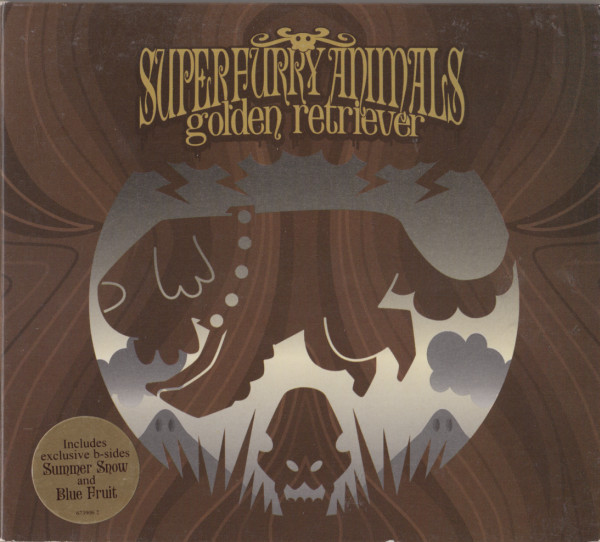
The public’s first taste of the new album was Golden Retriever, released just one week beforehand.
MP3: Golden Retriever
It was one of those songs written by Gruff on his acoustic guitar in the D-A-D-D-A-D tuning and has real echoes of the blues about it, not just in the musical structure, but in Gruff’s lyrics referencing the devil and the crossroads. It certainly has a more basic, raw feel to it than the songs on ‘Rings Around The World’, but those amazing backing vocals at the end of the chorus, that escalating “dryyyyyyyyyy” really sets the whole thing off for me. It’s that tinge of brilliance that runs through nearly everything the Furries ever did.
As for those lyrics – they’re about Gruff’s girlfriend’s two golden retrievers. Yes, even the lyrics were shorn of their obtuse, complex nature. Well, for the most part.
Golden Retriever remains one of the band’s highest charting singles, reaching number 13 in the UK. It was released on three formats – 7” picture disc, CD and DVD – all of which contained these two b-sides:
MP3: Summer Snow
MP3: Blue Fruit
Summer Snow is a country song which includes the eventual album’s title, suggesting it only missed out on the final cut somewhat narrowly. Blue Fruit, meanwhile sounds like a classic SFA psychedelic odyssey. It also sounds like a b-side, and not one of the quality we’d come to expect of the band over the years. Both these b-sides were issued in the US on a 7” single via Stop Smiling, “the magazine for high-minded lowlifes” according to itself, in 2004.
Now, the bonus tracks for the ‘Phantom Power’ singles will be drawn from both the 2002 demos issued with the 20th anniversary edition of the album, and the 2004 companion album ‘Phantom Phorce’ which contained remixes of each track alongside some cynical mock commentary by the fictional producer “Kurt Stern”.
MP3: Golden Retriever [demo]
MP3: Golden Retriever [Killa Kela remix]
The demo features Gruff solo with his voice double-tracked, one track being one line behind the other. The rest of the band contributes noisily towards the end. The remix comes courtesy of pioneering UK beatboxer Killa Kela, who strips away most of the instrumentation and replaces it with his own vocal-based beats. Kurt Stern can be heard at the end expressing his disappointment at the song’s subject matter.
As far as first singles go, Golden Retriever was a very decent introduction to Phantom Power. Sadly, it has been somewhat forgotten about due to the band’s next two singles becoming among their best loved.
Incidentally, that guitar tuning D-A-D-D-A-D was also used to compose the two short instrumental tracks on ‘Phantom Power’. Their titles? The clue is in there…..
Unashamedly copied and pasted from the website of the Manchester-based shop Piccadilly Records, which seems very apt as it was Manchester-based blogger Swiss Adam who first brought Eyes of Others to my attention:-
——
“Eyes of Others is the studio alias of Edinburgh based John Bryden, a self-christened ‘post-pub couldn’t get in the club’producer.
Having announced their signing to Heavenly Recordings last November (2022) with the release of a 10” vinyl-only 6-track EP, Bewitched By The Flames, which sold out immediately through independent shops and mail order, Eyes Of Others is now set to present their debut, self-titled album.
Marrying the anything-goes, freestyle magpie tendencies of Beck and The Beta Band to the electronic stylings of primetime 80s New Order by way of the spacious moods conjured by King Tubby, Eyes of Others debut’s whimsical demeanour is the perfect sonic balm to the utter confusion of the outside world. As is its sense of almost Balearic musical freedom. Such a mindset is fundamental to the music according to Bryden.
“I was thinking where’s my spot?”Bryden reflects about the pick & mix quality of the album. “The music is later than a gig but it’s not full-on early morning club fare. It’s the in-between space where I was imagining where my music works.”
But his beguiling tunes are perfect for the music soundtracking the afters too. As the dawn breaks and the sun begins to rise. “Maybe there aren’t enough venues opening at 7am!”he laughs, before quickly adding: “I don’t think it will catch on unfortunately.”
——
I bought the self-titled debut album in due course, and used the blog in October 2023 to declare it as one of my most enjoyable purchases of the year. A few months later, I caught a live performance in Glasgow in front of what was something of a meagre audience on a cold January evening, and came away quite annoyed that so few folk were picking up on things.
There’s not been any new music over the past 18 months, so I’m not sure if things have come to a crashing halt and that the legacy will be just the one rather excellent album.
# 100: Talking Heads – ‘Love → Building On Fire’ (Sire Records ’77)
Dear friends,
whenever you read something about New York’s famous CBGB club around 1975/’76, you can rest assured that four bands are always being cited: Television, Ramones, Blondie …. and Talking Heads. Now, the first three of those don’t come in as too much of a surprise, I’d reckon, but in the back of my mind I always wondered about the latter – I mean, Talking Heads don’t seem to have fitted in there, did they, bearing in mind that everyone was trying to re-invent the New York Dolls without sounding and/or looking like the New York Dolls (I know this is vast generalization, but it’s not too far away from the truth).
Probably this doubt derives from the fact that when you think about Talking Heads, your brain automatically pictures David Byrne in this overblown suit, being all arty and stuff, which was of course much later in their career. But perhaps this is just one of those psychological things your brain cannot fully cope with, like when I look you straight into the eye and ask you a) to concentrate on me and b) to quickly say for 20 times or so „white – white – white – white – white – white – white – white – white – white – white – white“ until I suddenly interrupt you with the question „what do cows drink?!”. Knowing you, most of you will have answered “milk”, you see, which cows don’t drink, at least not over here in Germany. Byrne’s suit is the same thing, of course – and I know because I was an Air Force medic when I was in the army, decades before I got employed to work for some obscure Scottish blogger on all too low wages!
But I digress, again: in their beginnings though, it was all much less grandiose, in CBGB and elsewhere Talking Heads entered the stage in the clothes they had worn all day, they did not try to look any special at all, the same is true for their performance: they just left the stage lights on and started. Also they were just a three-piece then, David Byrne, Chris Frantz and Tina Weymouth – something which you will of course already have noticed when looking at the sleeve below – and quite often they opened the night for the Ramones. On one of those occasions, in 1975, Seymour Stein from Sire Records was in the audience, and apparently he was so fond of what he heard that he offered the band a contract – which they declined for a while, because they thought they weren’t yet good enough, that they still had to work on themselves. This apparently was achieved when Jerry Harrison from Jonathan Richman & The Modern Lovers was recruited for lead guitar, but before this happened, they changed their minds, signed with Sire and the first single was recorded – without Jerry Harrison.
Now, all of this boring stuff is important here, because this record presents Talking Heads in quite a different form. Just compare this version of ‘Love → Building On Fire’ (which is supposed to mean ‘Love Goes To Building On Fire’, don’t ask me why) to the one on the most fabulous ‘The Name Of This Band Is Talking Heads’ live album: you’ll clearly see (or hear rather) the difference, exploding guitars live whereas here Byrne has a more minimalistic/robotic approach. This, to make that clear, does not mean that I dislike what the band did after this record, not at all. Nor do I prefer this one, or this version rather, in fact the live album was on constant play when I first got my hands upon it in the mid-80s: outstanding, as I said!
mp3: Talking Heads – ‘Love → Building On Fire’
The debut album was released half a year later, and ‘Love → Building On Fire’ was not on it. What was on it though was ‘Psycho Killer’, a song well known to everyone and also a good example to show what would make Talking Heads so very special throughout their career.
But either way, I always liked the very first single very much – in my book, it is well deserved to be included in the singles box.
Quite a number of years ago, 2015/16 to be precise, I pulled together a series on all the singles released by The Style Council. As always with these things, it was the singles released in the UK which were featured, meaning that this one was missed out.
The stomping Walls Come Tumbling Down was selected, in May 1985, as the advance single for band’s second album, Our Favourite Shop. It was a hit, reaching #6, and giving the band its eighth successive Top 20 appearance, with six of those being Top 10. The selection of the politically cynical song, Come To Milton Keynes, as the next single was, on reflection, a bit of a mistake as it stalled at #23, and was therefore something of a flop all things considered.
It was very much a UK release, with the markets in mainland Europe, Japan, the USA, Australia and New Zealand being exposed to a different song altogether from the album:-
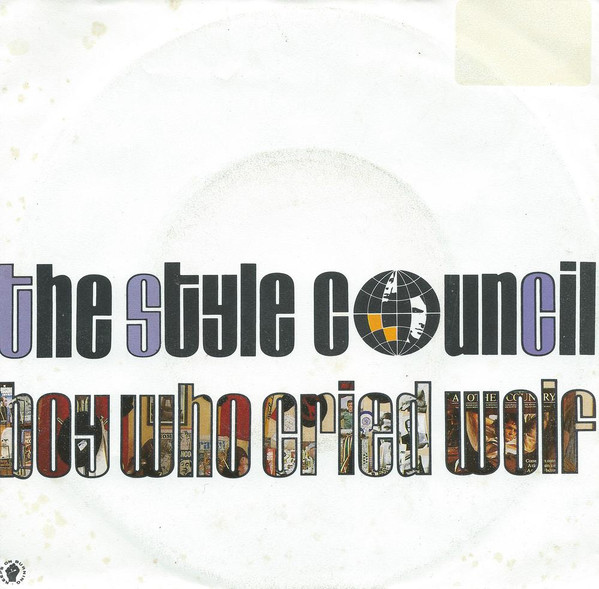
mp3: The Style Council – Boy Who Cried Wolf
I’ve mentioned before that this one always reminds me of the break-up of what I felt was a serious relationship in the later years of my student days. An upbeat and uplifting tune which masks a very sad and sentimental lyric, packed with regret and more than an element of self-loathing. It could have been subtitled ‘All Men Are Bastards’. It’s a break-up song which is the complete opposite of The Bitterest Pill, an earlier composition from Paul Weller and one of the most underrated singles released by The Jam, as its narrative came from being blameless for a relationship coming to an end.
I picked up this 7″ in a charity shop a few years ago. It was issued by Polydor Records for the Dutch market.
Its b-side was the same previously unreleased song as had been found on the b-side of Come To Milton Keynes:-
mp3: The Style Council – (When You) Call Me
A rather lovely romantic number, almost perfect for daytime radio, that might well have made a fine single of its own,
JC
PS : The mp3s that should have been included in yesterday’s post on The Fall, but weren’t properly linked, have now been sorted. Apologies for the technical mishap.
A series for 2025 in which this blog will dedicate a day to each of the twenty-four of the sessions The Fall recorded for the John Peel Show between 1978 and 2004.
Session #10 was broadcast on this day, 9 July 1986, having been recorded on 29 June 1986.
The tenth session represents the high watermark of The Fall at the zenith of their Beggars Banquet years. A brittle, fresh ‘Hot Aftershave Bop’ writes large Smith’s obsession with US garage punk. While other bands were flirting at the time with the movement that was to become known as goth, ‘R.O.D.’ and ‘Gross Chapel’ demonstrate real dark, gnarled, gothic rock. If this wasn’t enough, ‘US 80s-90s’ is incredible, with Somon Rogers’ machines hovering loudly above the mix.
DARYL EASLEA, 2005
mp3: The Fall – Hot Aftershave Bop (Peel Session)
mp3: The Fall – R.O.D. (Peel Session)
mp3: The Fall – Gross Chapel – GB Grenadiers (Peel Session)
mp3: The Fall – US 80s-90s (Peel Session)
Produced by Dale Griffin, engineered by Mike Engles
Mark E Smith – vocals; Brix Smith – guitar, vocals; Craig Scanlon – guitar; Steve Hanley – bass; Simon Rogers – guitar, keyboards; Simon Wolstencroft – drums;
SWC has never been short of great ideas for features over at No Badger Required. One of the longest-running is ‘Nearly Perfect Albums’, his regular Saturday series and which, at the end of last month, reached #163 with a look at the eponymous debut by Elastica, released on Deceptive Records back in 1993.
He told us he originally had the album on a very long list for inclusion in the series, but removed it a while back because it maybe wasn’t as near perfect as he’d first thought. One day, the song Never Here came up on random shuffle and it made him think again. His subsequent post about the debut album in a way has inspired me to come up with an ICA. Here’s SWC:-
“Foolishly I thought I was tired of ‘Elastica’ bored perhaps of it or more probably I’d just stopped listening to it, but the truth is ‘Elastica’ is a tremendous record. It arrived at just the right time, just as Britpop was becoming, well Britpop and the thing about it that made it stand out back in 1993 was how Elastica as a band stood head and shoulders above nearly all the other indie guitar bands that were surfacing at the time.
..ultimately it was mainly about the tunes with Elastica. . Their songs were punchy and catchy and quite often blatant rip-offs of songs by Wire, but Elastica didn’t care and made us not care either. Elastica made us dance and smile.”
He does go on to suggest that you should forget about the second album, and in fact the entirety of the rest of their back catalogue and think of them as the greatest one album band that ever existed, with an impact that remains solid to this day. It’s hard to disagree, but I will find some space for a couple of later songs on the ICA.
Let’s get some facts established. Elastica’s entire recorded output isn’t massive but it’s perhaps marginally bigger than most folk think.
There were four singles prior to the debut album, all between 1993 and 1995. There was a gap of four years till 1999, by which time the original line-up had splintered when a six-track EP was issued. A single, followed by the second studio album, was the output in 2000, and finally, there was a stand-alone single in 2001, followed by a 21-song CD compilation drawn from sessions recorded for BBC Radio One.
Some songs, initially recorded for BBC sessions, would have the titles changed by the time they made it to any official release. All told, I came up with 44 different songs for consideration that have been whittled down to this 12-track ICA (the running time of a 10-track ICA would be too short).
SIDE A
1. Stutter
Where it all started. The ‘classic’ line-up of Elastica, comprising Justine Frischmann (vocals, guitar), Donna Matthews (guitar. vocals), Annie Holland (bass) and Justin Welch (drums) had been together since late 1992, and were soon being highlighted as ‘ones to watch’ by the UK music papers and monthly magazines, whose contributors were clearly delighted to have that rare thing of a decent band from right on their doorsteps to go and see and subsequently write about.
The debit single was released in the UK on 1 November 1993 and on 7″ vinyl only. A fast-paced and energetic number which was very obviously heavily influenced by the new wave/post-punk era, with a wry lyric about drunken impotence and the excuses offered up by non-performing males. It still sounds great more than 30 years on. I never picked up a copy of the single, but was aware of it thanks to it being voted in at #38 in the Peel Festive 50, despite having only been released just a month previously.
I finally picked up the song on CD, courtesy of being one of 18 songs on the NME Singles of The Week 1993 compilation, which I recall buying in early February 1994, just after I’d seen Elastica play at King Tut’s in Glasgow. It was an excellent, if short performance, and I came away knowing I had all the neccesary evidence that the band was worthy of the hype accorded them by the London-based papers.
2. Vaseline
Sex was always a big factor in the appeal of the band. All four members were cool and incredibly good-looking in totally different ways. The debut single, of course, hadn’t shied away from messy sex, and one of their next songs to come to wider attention is, according to SWC, ‘possibly the greatest song about female masturbation ever.’.
Vaseline was aired on via a Peel Session in December 1993, the first of what would be four such sessions for his show, while there would also be three others over the years for other Radio 1 DJs. The Peel session version of the song is, as you’d expect, a bit rough’n’ready. Their next version to reach the public was the demo, issued as a b-side to the single Line Up. I feel they nailed it best on the debut album, especiallt that ‘la la la las’ which sound so like Blondie in their 1979 pomp, and that’s the version on offer today.
3. Car Song
Let’s talk some more about sex. Car Song, from the debut album, is about enjoying a bit of what I used to refer to as ‘bare-bum-boxing’ in the cramped confines of the back seats of small vehicles, with Ford and Honda referenced in the lyric. Despite the subject matter, it was actually released as a single in the USA in January 1996, promoted in part by a Spike Jonze-directed video, elements of which clearly inspired the Beastie Boys when it came to ideas for Intergalactic a few years later. Incidentally, if you’re wondering why Annie Holland is absent from the video, then that’s down to her having left the band in August 1995, citing exhaustion from the constant touring.
4. How He Wrote Elastica Man
Other than one BBC Radio One session in July 1996, the band were incredibly quiet for over four years. It would later transpire that personality clashes, issues around drug dependencies, ill-health and a touch of writers-block had contributed to major problems behind the scenes. The sudden and unexpected release in mid-August 1999 of the Elastica 6 Track EP didn’t contain too many clues as to what had been happening, but Justine later explained that it wasn’t a big comeback release but instead was intended to try and capture for posterity what some of the recordings in the intervening period. The highlight was its opening track, one on which Mark E Smith offers a co-vocal and on which Julia Nagle, a member of The Fall between 1995 and 2001, is given a credit for the lyric. A different recording of the song would later appear on The Menace, the second and final Elastica album, released some eight months later.
5. Rock ‘n’ Roll (Mark Radcliffe Session)
A year after the debut album had gone to #1 in the UK, the band was invited to record a new session for the Marc Radcliffe show on BBC Radio One. Such sessions normally were made up of four songs, and bands often took the opportunity to play some new material. Elastica played four old songs, two of which had been on the album while the other two were what could be described as obscure, consisting as they did of previous b-sides. Rockunroll had, like Vaseline mentioned above, been a b-side on Line Up, but here it was with a slightly different title and harder edge airing on national radio almost two years on. It’s not their greatest moment, but it makes it onto the ICA for its ‘novelty’ factor.
6. Never Here
The song which caused SWC to reconsider the debut album as being worthy of inclusion in his series. At just under four-and-a-half minutes, it is the longest in the entire Elastica catalogue, and perhaps that is the key to why it such a great one to listen to. It is supposedly about Justine’s break-up with Brett Anderson with whom she had formed Suede in 1989, only to take her leave of the band when the relationship ended.
SIDE B
1. Line Up
This was the band’s second single, released in January 1995. It reached the Top 20 of the singles chart a couple of weeks later, so you can imagine that the live show I saw at King Tut’s around this time was a hot ticket, and I’m convinced the numbers in attendance was a fair bit over the venue’s official capacity. The sort of thing that nowadays would piss me off but back then, at the age of 31, it was an enjoyably hot and sweaty night.
The relationship between Justine Frischmann and Damien Albarn was all over the music papers, and on hearing Line Up, I was convinced that he was a silent partner when it came to writing Elastica’s songs, such was this one’s similarities to the Modern Life Is Rubbish era of Blur. Other folk thought Line Up was awfully similar to I Am The Fly and that Elastica were mere plagasists of Wire. I wasn’t so sure at that point in time……..
2. Connection
3. See That Animal
…..and then came the next ‘big’ song from the band. Those making that plagiarism accusations were given all the ammunition they needed with Connection, a song that had aired in a BBC Session in March 1994 and later released as the third single in October 1994. It is impossible to deny that its opening was identical to Three Girl Rhumba, a song that had been written and recorded by Wire for their 1977 album, Pink Flag. Connection was credited to Frischmann/Elastica which rather pissed off the members of Wire. It all ended up in the hands of lawyers, and in due course an out-of-court settlement was agreed.
The b-side to Connection was a bit of an oddity in that the writing credits are attributed to Brett Anderson/Justine Frischmann/Elastica, which clearaly indicates See That Animal was an early Suede song, but one that not taken any further. Its inclusion on the ICA is, again, more to do with the novelty factor, albeit it is one that wouldn’t have sounded too out of place on Elastica’s debut album.
All this stuff about ripping-off other bands must surely have made everyone wary going forward.
4. Waking Up
The song chosen to immediately preceed the release of the debut album. Waking Up is probably the most readily identifiable of all the Elastica songs and it did provide them with their biggest selling single, entering and peaking at #13 in February 1996, just a few weeks before the album entered at #1 prior to enjoying a 12-week stay in the Top 50 all the way through to mid-summer.
Guess what? It was another that led to a lawsuit, this time from the Stranglers, who won the arguement that Waking Up took the riff from No More Heroes. Again, it was settled out of court and this instance, part of the settlement involved Elastica agreeing to co-credit the Stranglers as song writers.
5. Generator
The credits on the back of The Radio One Sessions CD, released in October 2001, helps to highlight how often the personnel changed and helps illustrate the choas surrounding the band.
The five sessions between August 93 and March 95 feature the ‘classic’ line-up.
The sixth session, in July 1996 has Sheila Chipperfield playing bass in place of the departed Annie Holland, with the sound being augmenteed by Dave Bush, a past member of The Fall, coming in on keyboards.
The seventh and final session, for John Peel, in September 1999 had six musicians involved. Justine Frischmann and Justin Welch remained ever-presents and now Annie Holland was back in fold; however, Donna Matthews was no longer involved, having left a few months earlier, unable to cope with her heroin addiction. Dave Bush had shifted from keyboards to programming, and coming in new were Sharon Mew (keyboards) and Paul Jones (guitar).
The Menace, the second Elastica album would eventually be released in April 2000, having been recorded, in the main, by the six musicians who played on that September 1999 Peel session. But a number of the songs on the album were taken from earlier recording sessions on which Donna Matthews had played prior to her departure and on which Sheila Chipperfield had played prior to Annie Holland’s return. Given how messy it all was, it’s not really too much of a surprise that the overall quality of the album is lacking, but I’ll argue that Generator is more than listenable.
6. The Bitch Don’t Work
Deceptive Records had closed down in early 2021, and their American label dropped Elastica following the poor sales of The Menace. Sessions for an intended third album were abandoned and in October 2001, Justine Frischman spoke to the NME:-
“Yes, we have split up. It’s actually not official yet. We’ve got a Peel Sessions album coming out and we’ve got a farewell single coming out. I’m actually hugely relieved, to be honest. I’m feeling much happier. I don’t want to say I’ve got other projects, because it’s such a cliche, but I have. It will be music, I’m not suddenly going to have an acting career.”
The farewell single was released by Wichita Recordings in November 2001, and it makes sense to close off the ICA with it.
So there you have it. 12 songs from Elastica, neatly wrapped around the story of how they came to be, how they came to enjoy success, how it all unravalled and how it ended.
A damn near perfect debut album and some decent enough stuff from elsewhere.
The Lucksmiths were a very well-thought of Australian indie-pop band, with eight albums between 1993 and 2008. The bass player was Mark Monnone, and when the band broke-up, he embarked on a solo career using the rather obvious but brilliant name of Monnone Alone.
The debut album, Together At Last, was released in 2013, a year when Monnone Alone appeared at Indietracks, with one of the album tracks finding its way onto the celebratory compilation for that year’s festival.
mp3: Monnone Alone – Echoing Days
It really does evoke the spirit of C86, and therefore I’m willing to wager that the appearance of our Australian friend in deepest Derbyshire in 2013 went down well.







 THE NEW VINYL VILLAIN