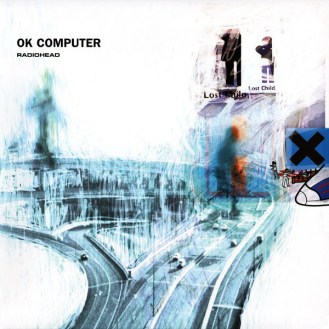
ALL OUR YESTERDAYS (3/22)

Album : OK Computer by Radiohead
Review : Q, July 1997
Author : David Cavanagh

With their 1.5 million-selling 1995 album The Bends, Radiohead executed something of a perfect Yin Yang: a great white hope and a big black cloud. Thematically, a cold look at a worn-down, scrofulous interior – Thom Yorke‘s lyric sheet did not so much scan as a fester – it was one of the great “tension” records of recent years. It was streets ahead of the fundamental volleys of angst to be found elsewhere in guitar rock that year and, indeed, on Radiohead’s own perfunctory 1993 debut album, Pablo Honey.

A new song, a gripping plea for rescue entitled Lucky – released in September, 1995 on the War Child compilation album Help – gave a tantalising indication of what their third album might contain. But now it transpires that Radiohead are even better than anybody imagined. The Bends was merely stage two in a long process of preparation for the overwhelming music of OK Computer.

Radiohead are known as a dynamic and neurotic three-guitar band, but the majority of OK Computer’s 12 songs (one of which is Lucky) takes place in a queer old landscape: unfamiliar and ominous, but also beautiful and unspoiled. They produced this album themselves (in their Oxfordshire studio), constructing an eerie sound-world that is both purpose-built – a five-piece rock band has rarely been better recorded – and oddly evocative of a 1984 lyric by the American group Let’s Active that talked of “moonstruck eyes and grey scales”. It’s not always easy to determine which instrument makes which noise. The melodies are unorthodox and tangential: there are no Justs, Creeps or Nice Dreams. It’s a huge, mysterious album for the head and soul.

To hear one of these songs alone is to catch one’s breath: it’s an unknown Radiohead. To hear the whole album is to have one’s milieu well and truly up-ended and one’s imagination repeatedly caught off guard by Radiohead’s expanded ammo-haul of treated guitars, Mellotrons (played by the increasingly dazzling Jonny Greenwood), electric pianos (ditto) and unforseen space effects. A lot of prog rock fans will get off on the album’s more planetarium-compatible noises (to say nothing of Greenwood’s King Crimson-style guitar chords on the opening track, Airbag). That said, OK Computer is not a goblin zone. In his often extraordinary lyrics, Yorke glares as cynically and as disgustedly at life as he did on The Bends. But look at how he’s writing now: “Regular exercise at the gym three days a week…Getting on better with your associate employee contemporaries…Fitter, healthier and more productive/A pig in a cage on antibiotics” (Fitter, Happier). Yorke is on top form.

“Hanging on in quiet desperation is the English way, “Pink Floyd told us in 1973. Twenty-four years later, Yorke out-writes Roger Waters with heavy sarcasm (and to a better tune, incidentally): “I’ll take a quite life, a handshake of carbon monoxide and no alarms and no surprises, please” (No Surprises). Whereas Dark Side Of The Moon was about madness, meadows and muddling along, OK Computer – along with The Smashing PumpkinsMellon Collie And The Infinite Sadness the present-day rock-fans closest equivalent to a ’70s behemoth LP – evokes the sensation of the frequent flyer who has suddenly noticed he’s travelling faster than his aircraft. “Sometimes I get overcharged,” reflects OK Computer’s The Tourist. “that’s when you see sparks/Theu ask me where I’m going at a thousand feet per second/Hey man, slow down, slow down…”

As for the actual Earth, lyric after anguished lyric declares it an unfit place to live on, and condemns Yorke himself as not fit to walk it – so where does that leave him? The answer ultimately arrives on Subterranean Homesick Alien. Yorke, driving along a country lane at night, longs to be carried off by a spaceship. Nice planet. You can have it. Small wonder much of OK Computer sounds not-quite-of-this-world.

Indeed, the first three tracks (of a five-song, continuous, 25-minute suite that’s as brilliant as any music of the last decade) all mention aliens or interstellar activity in some capacity. “I’m back to save the universe,” Yorke sings on Airbag, over a deeply sinister soundtrack of Mellotron, cross-purpose guitars (J.Greenwood, Yorke and Ed O’Brien), reggae-style bass (Colin Greenwood) and hissing, spitting drums (Phil Selway).

If Airbag is merely fascinating, Paranoid Android is simply the song of the year. The first single, it’s six-and-a-half minutes long and it comes in three sections. One of these even has it’s own sub-section. There’s terrific, jazzy 7/8 part with electric piano and deep-grooving bass; there’s a hefty dose of blistering rock (with two guitar solos); and there’s a truly awesome vocal harmony sequence reminiscent of a load of monks chanting a particularly intense extract from David Bowie‘s The Man Who Sold The World.

Although only one song on OK Computer is what you’ll call fast – Electroneering, coincidentally the worst track – it’s got to be said that Subterranean Homesick Alien, Exit Music (For A Film) and Let Down are unusually slow and thoughtful. Subterranean Homesick Alien has wonderful, tingling, golden guitars and Riders On The Storm-style electric piano. Let Down begins like a delicately chiming appendix to The Joshua Tree, but the crazy synthesizers start to fly in from all directions, like a laser show. And as Let Down’s guitar arpeggios drip-drip-drip into the brain, Yorke – one of the very few singers whose voice can appear to convey genuine grief (as opposed to pain) and despair (as opposed to frustration) – delivers a remarkable vocal: falsetto, glorious harmonies, total and utter harmonies. His voice has the terrible shiver of a toddler who can’t for the life of him stop crying.

Just before Let Down comes a gem of a song called Exit Music (For A Film). It concerns two young lovers leaving home and going on the run. Being a Yorke composition, it’s not exactly Moonlighting by Leo Sayer. Jonny Greenwood’s Mellotron produces an unearthly choir of basses and sopranos as one of the runaways implores the other, “Breathe, keep breathing, I can’t do this alone.” Then, during a murderous surge of drums and fuzz bass, the picture goes fuzzy. The fog clears just in time to hear Yorke moan the last, startling line: “We hope that you choke.”

The superb Karma Police, written about a party full of scary people, is what might resulted musically had The Bogus Man-period Roxy Music ever tried to play Sexy Sadie by The Beatles. Even weirder is Fitter, Happier. An aural nightmare with no precedent in Radiohead’s work, it’s a poem of doom, centered in the workplace recited by a pre-programmed Apple Mac that sounds like Stephen Hawking‘s electronic voice. The breakneck (and somehow unsatisfying) Electroneering kicks up a royal fuss, before collapsing into the uneasy trip-hop of Climbing Up The Walls. It now seems as though OK Computer’s second half will comprise nothing but menace and cacophony.

Suddenly, however, there’s a respite from this two-song burst of chaos. In fact, the final three-song sequence has more control, more room to breathe (and arguably more beauty) than any other part of the record. Each of these three songs is the match of Street Spirit (Fade Out) on The Bends. No Surprises is Radiohead’s prettiest moment to date, using dulcimer and Christmassy synth textures to decorate Ed O’Brien’s exquisite guitar refrain. A lesser band would have grafted Yorke’s withering lyric onto a ready-made anthem of barely adequate string-bending pique.

The Tourist, which follows the still-spooky-and-marvellous Lucky to conclude the album, is an unexpectedly bluesy waltz. It’s not easy to play a waltz with anxiety, let alone the panic felt by Yorke’s hyperventilating traveller, but they do. As it reaches its final bars, the three guitars fall out, leaving just Phil Selway’s brushed cymbals, a couple of plucks of Colin Greenwood’s bass and – finally – the “ding” of a tiny bell.

And that is that. A landmark on every latitude. Not the least achievement of OK Computer is that a major weirdo-psychological English guitar band can induce gasps of admiration, stunned silence and more than a few lumps in the throat. It’s and emotionally draining, epic experience. Now Radiohead can definitely be ranked high among the world’s greatest bands.

mp3 : Radiohead – Airbag
mp3 : Radiohead – Subterranean Homesick Alien
mp3 : Radiohead – Karma Police
mp3 : Radiohead – The Tourist

JC adds :  The review recognises and anticipates the many plaudits that would come the way of OK Computer; but I can’t but help getting annoyed at the way so many other bands have been shoehorned into the review, almost as if there’s a hope that, should these opinions be out of sync (which clearly they weren’t), at least offering a comparison with some other acts will ensure the message gets across that this is a serious and not frivolous piece of art.

PS : Tomorrow, being Christmas Day, I’ll have a review of something a bit less serious and way more frivolous.
 

ALL OUR YESTERDAYS (2/22)

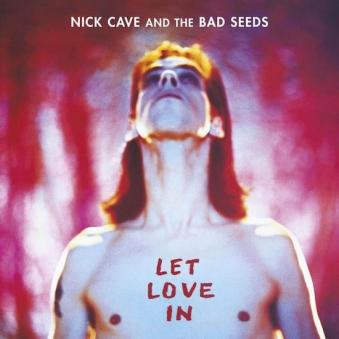
Album : Let Love In by Mick Cave & The Bad Seeds
Review : Rolling Stone, 16 June 1994
Author : Rob O’Connor

Nick Cave used to be strictly postmodern, stringing together word associations in spasmodic whelps for his band the Birthday Party. Then he used to be sort of postmodern, weaving together folk tales based on American blues myths and a quick read of Faulkner’s twisted South. Not bad for a kid from Australia.

Then Cave cut The Good Son (1990), an album that curtailed his self-consciousness by stripping his sound down to bare essentials. It forced him to reassess his affectations and sing straight from the heart. In the process, he lost his signature sound – the wayward rhythms and screeching dissonance that created the dramatic soundstage needed to weave his longer tales. Henry’s Dream (1992) attempted to stretch out; however, the effort was reined in by David Briggs‘ measured production.

This time, Cave pulled out the stops. The Bad Seeds are back, mixing haunted house organ, creaky-floorboard guitar and voodoo drumming for maximum effect. In turn, Cave is both singing with maturity and ranting and raving like the lunatic he often becomes in performance.

By combining the stately arrangements of The Good Son with his early work’s literary richness, Let Love In, Cave’s eighth studio album with the Bad Seeds (the second with this incarnation), works the balance between prudence (a sympathetic reading of “Nobody’s Baby Now”) and wild-man fervor (“Jangling Jack”).

Cave’s ecstatic love epistles are often derailed by the hellhound on his trail. “He’s coming through your door,” Cave sings during the album’s centerpiece, “Loverman,” “with his straining sex in his jumping paw/There’s a devil crawling along your floor.” He explains what each letter stands for (“L is for love, baby”), adding relish as the insights get sicker (“R is for rape me/M is for murder me”).

Cave’s still not shying away from hyperbolic moments; he loves the drama music can produce. With Let Love In, Cave has regained the frenzy of his early work and fused it with his more recently found focus. The result is pain and pleasure transformed into rhythm, sex and death.

mp3 : Nick Cave & The Bad Seeds – Nobody’s Baby Now
mp3 : Nick Cave & The Bad Seeds – Jangling Jack
mp3 : Nick Cave & The Bad Seeds – Loverman

JC adds : The astonishing thing is this review completely bypasses Red Right Hand, without question, the most enduring and popular track from the album.

This was the album which began the gradual move towards the mainstream – not that I think that’s been a bad thing – but the downside is that Nick Cave has very much nowadays become the rock god for the chattering classes, many of whom have only discovered him since the news coverage of the personal tragedies and the fact that his music has been used to incredible effect in the hit TV show Peaky Blinders.

I say downside as I never imagined that he would be able to undertake tours of 10,000+ capacity venues, selling them out in a matter of minutes, and charging the best part of £100 a ticket for the best seats in the house…so I doubt he sees it that way.  It’s not, however, for me….I’ll stick to my memories of shows from this era and the subsequent 20-odd years.


ALL OUR YESTERDAYS (1/22)

I hate the idea of the blog completely closing down, but at the same time I recognise that the number of visitors drops off substantially at the end of December and beginning of January, so it’s something of a waste of time to churn out original stuff. Last year, I dug deep into the archives for the daily posting, but I want to do something different this time round. It’s kind of been inspired by what proved to be a short-lived series earlier this year when I posted a review of album from 1999 and then offered up my own thoughts on it from a current day perspective. But what I’m going to do is post an original review from back in the day of some albums that I’ve always had a lot of time for, playing them to death when they were first released and returning to them occasionally nowadays

Here’s the first of them:-

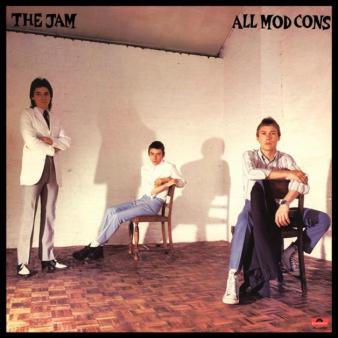
Album : All Mod Cons by The Jam
Review : NME, 28 October 1978
Author : Charles Shaar Murray

Third albums generally mean that it’s shut-up-or-get-cut-up time: when an act’s original momentum has drained away and they’ve got to cover the distance from a standing start, when you’ve got to cross “naive charm” off your list of assets.

For The Jam, it seemed as if the Third Album Syndrome hit with their second album. This Is The Modern World was dull and confused, lacking both the raging, one-dimensional attack of their first album and any kind of newly-won maturity. A couple of vaguely duff singles followed and, in the wake of a general disillusionment with the Brave New Wave World, it seemed as if Paul Weller and his team were about to be swept under the carpet.

Well, it just goes to show you never can tell. All Mod Cons is the third Jam album to be released (it’s actually the fourth Jam album to be recorded; the actual third Jam album was judged, found wanting and scrapped) and it’s not only several light years ahead of anything they’ve done before but also the album that’s going to catapult The Jam right into the front rank of international rock and roll; one of the handful of truly essential rock albums of the last few years.

The title is more than Grade B punning or a clever-clever linkup with the nostalgibuzz packaging (like the target design on the label, the Swinging London trinketry, the Lambretta diagram or the Immediate-style lettering); it’s a direct reference to both the broadening of musical idiom and Weller’s reaffirmation of a specific Mod consciousness.

Remember the Mod ideal: it was a lower-middle and working-class consciousness that stressed independence, fun and fashion without loss of integrity or descent into elitism or consumerism; unselfconscious solidarity and a dollop of non-sectarian concern for others. Weller has transcended his original naivety without becoming cynical about anything other than the music business.

Mod became hippies and we know that didn’t work; the more exploratory end of Mod rock became psychedelia. Just as Weller’s Mod ideal has abandoned the modern equivalent of beach-fighting and competitive posing, his Mod musical values have moved from ’65 to ’66: the intoxicating period between pilled-up guitar-strangling and Sergeant Pepper. Reference points: Rubber Soul and A Quick One rather than Small Faces and My Generation.

Still, though Weller’s blends of acoustic and electric 6 and 12-string guitars, sound effects, overdubs and more careful structuring and arranging of songs (not to mention a quantum leap in standard of composition) may cause frissons of delight over at the likes of Bomp, Trouser Press and other covens of aging Yankee Anglophiles, All Mod Cons is an album based firmly in 1978 and looking forward.

This is the modern world: ‘Down In The Tube Station At Midnight’ is a fair indication of what Weller’s up to on this album, as was ‘A-Bomb In Wardour Street’ (I can’t help thinking that he’s given more hard clear-eyed consideration to the implications of the Sham Army than Jimmy Pursey has), but they don’t remotely tell the whole story. For one thing, Weller has the almost unique ability to write love songs that convince the listener that the singer is really in love. Whether he’s describing an affair that’s going well or badly, he writes with a penetrating, committed insight that rings perfectly, utterly true.

Weller writes lovingly and (choke on it) sensitively without ever descending to the patented sentimentality that is the stock-in-trade of the emotionally bankrupt. That sentimentality is but the reverse side of the macho coin, and both sides spell lovelessness. The inclusion of ‘English Rose’ (a one-man pick’n’croon acoustic number backed only by a tape of the sea) is both a musical and emotional finger in the eye for everyone who still clings to the old punk tough-guy stereotype and is prepared to call The Jam out for not doing likewise.

Weller is – like Bruce Springsteen – tough enough not to feel he needs to prove it any more, strong enough to break down his own defences, secure enough to make himself vulnerable. The consciousness of All Mod Cons is the most admirable in all of British rock and roll, and one that most of his one-time peers could do well to study.

Through the album, then: the brief, brusque title track and its immediate successor (‘To Be Someone’) examine the rock business first in a tart V-sign to some entrepreneurial type who wishes to squeeze the singer dry and then throw him away, and second in a cuttingly ironic track about a superstar who lost touch with the kids and blew his career. Weller is, by implication, assuring his listeners that no way is that going to happen to him: but the song is so well thought out and so convincing that it chokes back the instinctive “Oh yeah?” that a less honest song in the same vein would elicit from a less honest band.

From there we’re into ‘Mr Clean’, an attack on the complacent middle-aged “professional classes.” The extreme violence of its language (the nearest this album comes to an orthodox punk stance, in fact) is matched with music that combines delicacy and aggression with an astonishing command of dynamics. This is as good a place as any to point out that bassist Bruce Foxton and drummer Rick Buckler are more than equal to the new demands that Weller is making on them: the vitality, empathy and resourcefulness that they display throughout the album makes All Mod Cons a collective triumph for The Jam as well as a personal triumph for Weller.

‘David Watts’ follows (written by Ray Davies, sung by Foxton and a re-recorded improvement on the 45) with ‘English Rose’ in hot pursuit. The side ends with ‘In The Crowd’, which places Weller dazed and confused in the supermarket. It bears a superficial thematic resemblance to ‘The Combine’ (from the previous album) in that it places its protagonist in a crowd and examines his reactions to the situation, but its musical and lyrical sophistication smashes ‘The Combine’ straight back to the stone age. It ends with a lengthy, hallucinatory backward guitar solo which sounds as fresh and new as anything George Harrison or Pete Townshend did a dozen years ago, and a reference back to ‘Away From The Numbers’.

‘Billy Hunt’, whom we meet at the beginning of the second side, is not a visible envy-focus like Davies’ ‘David Watts’, but the protagonist’s faintly ludicrous all-powerful fantasy self: what he projects in the day dreams that see him through his crappy job. The deliberate naivety of this fantasy is caught and projected by Weller with a skill that is nothing short of marvellous.

A brace of love songs follow: ‘It’s Too Bad’ is a song of regret for a couple’s mutual inability to save a relationship which they both know is infinitely worth saving. Musically, it’s deliriously, wonderfully ’66 Beat Groupish in a way that represents exactly what all those tinpot powerpop bands were aiming for but couldn’t manage. Lyrically, even if this sort of song was Weller’s only lick, he’d still be giving Pete Shelley and all his New Romance fandangos a real run for his money.

‘Fly’ is an exquisite electric/acoustic construction, a real lovers’ song, but from there on in the mood changes for the “Doctor Marten’s Apocalypse” of ‘A-Bomb In Wardour Street’ and ‘Tube Station’. In both these songs, Weller depicts himself as the victim who doesn’t know why he’s getting trashed at the hands of people who don’t know why they feel they have to hand out the aggro.

We’ve heard a lot of stupid, destructive songs about the alleged joys of violence lately and they all stink: if these songs are listened to in the spirit in which they were written then maybe we’ll see a few less pictures of kids getting carried off the terraces with darts in their skulls. And if these songs mean that one less meaningless street fight gets started then we’ll all owe Paul Weller a favour.

The Jam brought us The Sound Of ’65 in 1976, and now in 1978 they bring us the sound of ’66. Again, they’ve done it such a way that even though you can still hear The Who here and there and a few distinct Beatleisms in those ornate decending 12-string chord sequences, it all sounds fresher and newer than anything else this year. All Mod Cons is the album that’ll make Bob Harris‘ ears bleed the next time he asks what has Britain produced lately; more important, it’ll be the album that makes The Jam real contenders for the crown.

Look out, all you rock and rollers: as of now The Jam are the ones you have to beat.

mp3 : The Jam – All Mod Cons
mp3 : The Jam – In The Crowd
mp3 : The Jam – Fly
mp3 : The Jam – Down In The Tube Station at Midnight

JC adds : A review that captures exactly how I felt about this record back in 1978/79 and how I feel about now. I think that if pushed to name my all-time favourite album, it would be this one.

21 more old reviews to follow!

SATURDAY’S SCOTTISH SONG : #194 : THE LOW MIFFS

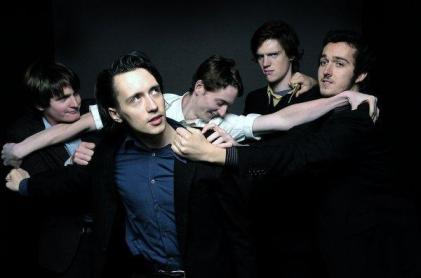
The Low Miffs burst suddenly onto the scene in 2007/08, made a bit of splash with two singles, teamed up with the legendary Malcolm Ross for a fantastic album and then called it a day.

The band comprised Leo Condie (vocals,guitar), Thomas Brogan (guitar, keyboards), Rory Clark (drums), Mike Fowler (bass) and Peter Webster (guitar). I’m thinking most of them will still be involved in music in some
shape or other – I caught Leo Condie’s most recent band White a couple of years ago, again finding myself amazed at his voice which at times is so reminiscent of Billy McKenzie (although not neccesarily on today’s two songs)

Here’s the two sides of their second single, released on the Leeds-based Art/Goes/Pop back in 2008:-

mp3 : The Low Miffs – Earl Grey
mp3 : The Low Miffs – This Is The New

This is one where the b-side feels so much better than the a-side……

The Low Miffs were talked about in the highest of terms when they first appeared, being championed by Franz Ferdinand and given a support slot by The Horrors. The album with Malcolm Ross will be looked at next time around in this series.

JC

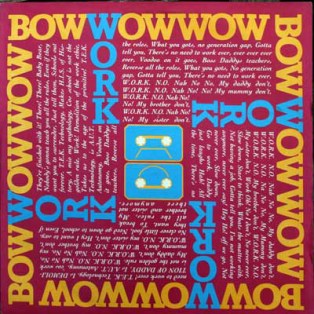
W.O.R.K.

The only previous occasion that Bow Wow Wow have appeared on this blog was in April 2015 when I had this look back at their biggest hit single, Go Wild In The Country. I was pleasantly surprised at the level of positive feedback and this posting has been inspired by the comment left behind at that time by postpunkmonk:-

I am comfortable with all phases of Bow Wow Wow’s career. First of all, the former Ants were just outstanding! The rhythm section was powerful and accomplished and Matthew Ashman’s guitar tone was fluid and rich. When the band were fronts for McLaren’s philosophical japes they were visceral yet fascinating. “W.O.R.K.,” especially in its 12″ form was a powerhouse of a groove, and remains my favorite BWW tune…..

W.O.R.K. was the band’s second single, released in March 1981, when it reached #62, a bit of a disappointment given that the debut C-30, C-60, C-90, Go had reached the Top 40 and Malcolm McLaren was in full hype mode. I’ve dug out the 12″ tracks:-

mp3 : Bow Wow Wow – W.O.R.K. (No Nah! No! No! No! My Daddy Don’t)

It is incredibly energetic, driven along by frantic drumming and chanting, not forgetting the slaps applied to the bass guitar.

Fun fact….the producer on this occasion was Alan Tarney who the previous year had written and produced the ultra-smooth We Don’t Talk Anymore, a #1 hit for Cliff Richard. In later years, he would be on production duties as a-ha enjoyed a period of chart dominance in the mid 80s.

The b-side was a lingual re-working of the debut single:-

mp3 : Bow Wow Wow – C-30, C-60, C-90 Anda!

Consider yourselves educated!!!

JC

AN IMAGINARY COMPILATION ALBUM : #233 – STEVIE WONDER

The period 3 January 1970 – 8 October 1977 covers 405 weeks.

Stevie Wonder spent 133 of those weeks with music in the Top 50 of the UK singles charts. 16 of his singles, stretching from Yester-Me, Yester-You, Yesterday which was in the middle of a long run that had begun October 1969, through to Another Star, the fourth 45 to be lifted from Songs In The Key of Life, found huge favour with the record buying public, albeit he never enjoyed a #1 hit in this golden age, and indeed just six of them reached the Top Ten.

The fact that he was rarely off the airwaves during my most formative years in terms of listening to music on the radio meant that I was exposed to his songs way more than most other long-standing acts of that decade. I really don’t want readers to think that this was something I regretted then or now as there’s a high number of those singles in which I reckon I can sing many of the words unprompted and would be very confident of getting them all in the right order and to a fair approximation of tone if standing in front of a karaoke machine.

But it was really difficult in the early to mid-80s to admit of any love or affection for Stevie Wonder on account of the sheer awfulness of two songs that spent ages at #1 – Ebony and Ivory, in which he and Paul McCartney called for greater racial harmony over a non-tune and lyric that could have been penned by a nine-year old – and I Just Called To Say I Love You, a solo song lifted from the soundtrack to the smash hit film, The Woman In Red, and one which holds the remarkable distinction of being the biggest selling single ever issued in the UK by Tamla Motown (a stat which says a great deal about the general poor taste of the UK public).

I didn’t, until the time when he was having the #1 singles, realise that Stevie Wonder’s career went all the way back to the early 60s. I knew of songs such as Uptight (Everything’s Alright) from various radio shows that played oldies, but had wrongly assumed it was from the late 60s when in fact it was a hit back in 1965. We are actually edging close to the 60th anniversary of him signing his first recording contract, which he did as a child prodigy in 1961 at the age of 11. It’s fair to say that you could come up with a number of ICAs that cover his entire career, but this one focusses solely on the 70s…..and mostly on the hit singles.

Side A

1. Yester-Me, Yester-You, Yesterday (peaked at #2, November 1969, exited the Top 50 on 13 February 1970)

This is a bit of a misnomer in that the song dates from 1967 but was released by Tamla in 1969 in lieu of the fact that Stevie Wonder was experiencing some severe problems with his vocal range when he reached the end of his teenage years, and rather than rush him back, the label went digging into the archives for previously recorded but unreleased material. It was his biggest hit in the UK, and would remain so until this……

2. Sir Duke (#2, May 1977)

Fun fact. The week that this peaked in the UK charts was the same week that The Jam debuted in the Top 50 with In The City – two completely contrasting but joyously upbeat pieces of music that have very much stood the test of time.

3. You Haven’t Done Nothin’ (#30, November 1974)

A wee bit of a cheat here on my part. This is one of the hits that I can’t recall from the actual time, probably on account of it only being in the charts for a short period of time; there’s also the fact that it was a highly political song, being an attack on the disgraced Richard Nixon which likely meant the BBC didn’t air it too often. Features a fabulous backing vocal from the Jackson 5.

4. He’s Misstra Know It All (#10, May 1974)

It was years before I found out that the title of this one wasn’t Mister Know It All. Again, I’d be pushing it to say that this was one that I fully remember from the time of its release on the basis that slower songs didn’t excite me all that much (which is probably the real reason that I feel head-over-heels for new wave), but it’s one of those songs that just oozes class and style from its opening second right through to its conclusion. It’s also incredible to realise that, with the exception of the bass guitar, every single note on this songs comes from the hands of Stevie Wonder….he was very much a genius.

5. Signed, Sealed, Delivered I’m Yours (#15, August 1970)

I reckon this is the first Stevie Wonder song that I can fully associate with. This joyous piece of music, complete with its ridiculously catchy chorus, would have sounded particularly good to the ears of my seven-year old self. I’ve had a look at the chart from the week it reached its peak, and there’s a few other songs that I can recall from the era, and in particular In the Summertime by Mungo Jerry, Lola by The Kinks and All Right Now by Free, although there’s every chance the latter two are more to do with them being played by older cousins whenever we went to visit them.

Side B

1. Superstition (#11, February 1973)

If I had bought this back in 1973, it would have certainly featured in my 45 45s at 45 rundown from 2008. I love this record in a way that it is difficult to express in words. Its opening notes offer one of the most immediately identifiable pieces of music in all history, one that defies any listener to stay rooted to their seat and not enjoy a boogie.

2. You Are The Sunshine Of My Life (#7, June 1973)

The follow-up to Superstition and early evidence of the eventual shift into a more mellow, smooth sound that would reach its peak just over a decade or so later. As I mentioned previously in this ICA, the younger me wasn’t a fan of slow songs and ballads, so the inclusion of this track in the ICA is to acknowledge that my tastes matured a bit as I got older. I’m not saying that it’s one of my all-time Top 10 favourite Stevie Wonder tunes, but it does fit in well at this point of the imaginary album, setting the scene nicely to close things off.

The first two lines of the song are sung, not by Wonder, but by Jim Gilstrap while Lani Groves sings the next two lines. It’s also the album version of the song as it doesn’t have the annoying horns to distract you.

3. Living For The City (#15, February 1974)

This is very much a relative of this rap song that featured a short while back in the ‘Some Songs Make Great Short Stories’ series. It’s still so relevant today, more than 40 years on.

4. I Wish (#5, January 1977)

Another song that could have featured in the great short stories series, being one in which the singer/songwriter put the story of his childhood days to a funky, upbeat tune. If you want an example of how much the record industry has changed, imagine the reaction to an exec who made the suggestion nowadays to have this single released exactly one week before Christmas. There would be little chance, no matter the fact that it’s such an outstanding number, of it getting any airplay against the drivel that we are subjected to year after year after year after year.

5. Don’t You Worry ‘bout A Thing (non-single in the UK, #16 on the US Billboards chart, March 1974)

No apologies for finishing things off a third cut from Innervisions, an album that many critics and fans feel to be the pinnacle of Stevie Wonder’s career. It just seems the right way to sign this one off.

JC

Bonus track.

Here in the UK, Top of the Pops was the name of a series of records on the Hallmark label, and they were made up of anonymous cover versions of current hit singles, intended to replicate the sound of the original hits as closely as possible.

The albums were budget priced and were a mainstay of the collections of many working class families for whom purchasing all the singles was prohibitive. There were more than 100 of the albums recorded between 1968 and 1985, at which point in time, the major labels realised there was something of a captive market and began to collaborate to issue compilation albums featuring the original artists and songs.

Volume 12 was released in 1970 and had this version of a Stevie Wonder hit

mp3 : Signed, Sealed, Delivered I’m Yours

As usual, there were no credits given to the performer – they were always destined to be anonymous. It was later revealed that this had been the work of a jobbing singer called Reg Dwight, who went on to find huge fame and fortune under another name.


SOME SONGS ARE GREAT SHORT STORIES (Chapter 29)

Some songs make for the very saddest of short stories.

Mrs. Brown wakes up every morning
She takes the milk from her doorstep
Puts on a pair of faded carpet slippers
And walks a painful mile to the launderette

Her husband Jack is slowly dying
Asbestos poisoning had riddled his insides
He got his pension six years early
When they took away his job they took away his pride

Mrs. Wilson sets her clock for seven
To see the children off to school
She can’t afford to give them breakfast
Well not as a rule

Her husband Jack has run away
Gone with the barmaid from the Roses and Crown
Picks up her prescription every Friday
She’s heading for her second nervous breakdown

Jennifer Lee is only seventeen
She had a baby when she was still at school
Her parents have disowned her
And the social service barely calls

The father was a boy she met at a party
Her sister Debbie’s twenty-first
She can’t remember his face or his name very well
Anyway he probably doesn’t remember her

And every day’s the same
On paradise estate
Because paradise came one day too late

We all live in little boxes
Boxes made of bricks
Boxes for unmarried mothers
Elderly and sick
Graffiti on the walls
Tells it all
“Gary loves Julie”
National Front slogans
“Jesus is coming”
“Kilroy was here”

But paradise came one day too late
On paradise estate

It was the very melancholy b-side to A Sense of Belonging, an excellent single released on Rough Trade back in 1983

mp3 : The Television Personalities – Paradise Estate

JC

THE GERMAN LLOYD COLE & THE COMMOTIONS

I was browsing through some list or other about indie bands from the 80s who should be better known than they are or more popular than they were.  On the list was a group called The Jeremy Days, which was a new one on me.  Then I read the blurb:-

The Jeremy Days. The German Lloyd Cole & The Commotions. Presumably there was a need for one of those. Their self-titled 1988 debut album was actually produced by Clive Langer and Alan Winstanley, the men in the chair for the Commotions’ 1985 set ‘Easy Pieces’, and picked up coverage over here – if not any genuine sales.

Wiki was my next friend….except the page was in German….but this is what the translation seemingly says:-

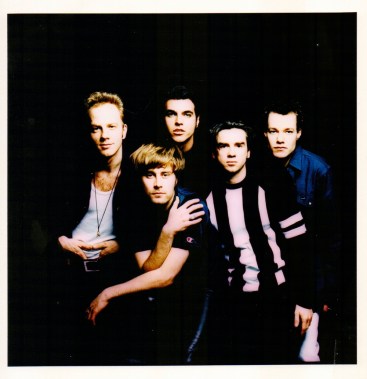
The Jeremy Days was a German pop band from Hamburg , which was founded in 1987 and disbanded in 1996. The band originally consisted of Dirk Darmstaedter (vocals, guitar), Christoph M. Kaiser (bass, vocals), Louis C. Oberlander (keyboard), Stefan Rager (drums) and Jörn-Christof Heilbut (guitar). In 1994, Rager left the band and was replaced on the drums by Rob Feigel.

In 1988 appeared on Polydor debut album The Jeremy Days , which was produced by the English producer team Clive Langer and Alan Winstanley. The record sold about 150,000 times. The single Brand New Toy came up to number 11 on the German charts .

Sporadically there are reunions of the band for special occasions; so the complete original cast at the festival “Save the FC St.Pauli” played in August 2003 at the Millerntor Stadium in Hamburg. In March 2011, Dirk Darmstaedter, Jörn-Christof Heilbut and Christoph M. Kaiser performed in the Hamburg club Grünspan at the memorial event for the late former Palais Schaumburg singer and media designer Walter Welke (née Thielsch). In June 2018, the band announced for January 2019 a reunion concert in Hamburg with all founding members except Christoph M. Kaiser. This took place on 18 January 2019 in front of a sold-out house in the docks.

The FC St Pauli thing caught my eyes. It has never been the most succesful of football clubs but it is one for which I have a soft spot  as it has encouraged an alternative fan scene over the 30-40 years, leaning towards left-wing politics and social causes, often linked into the punk music scene in Hamburg.

I was guessing that The Jeremy Days weren’t punk, but the fact they had taken part in a fundraiser for FC St Pauli at a time when the club was at a low ebb, instantly made them worth checking out.

They actually shared a record label with Lloyd Cole & The Commotions and released four albums and ten singles on Polydor between 1988 and 1994 before moving to Motor Music (which was a German subsidiary of Polydor) for whom there was one album and four singles in 1995 and one futher single in 2001 (which I’m assuming coincided with the FC St Pauli gig).

Let’s start with the song that gets a mention in the wiki page

mp3 : The Jeremy Days – Brand New Toy

Musically, it’s not immediately similar to LC & the Comms…..but good god, the voice is spooky!

That was actually their third single, this was the debut:-

mp3 : The Jeremy Days – Are You Inventive?

It sounds more akin to Go West than it does to jingly-jangly pop, and I can understand now why it all passed me by.

Jumping forward to 1990 and a track from their second album:-

mp3 : The Jeremy Days – Sylvia Suddenly

Again, there’s nothing to get me too excited, but I can hear why it would find favour with pop fans.

In 1992, they went to New York and recorded an album with Fred Maher who had worked with Lloyd Cole at the start of the solo career. Here’s a single from that era:-

mp3 : The Jeremy Days – Loved

And finally, here’s the single from 2001:-

mp3 : The Jeremy Days – It Is The Time

In doing a bit of research for this piece, I learned that 2001 was also the year that a compilation album was released of different mixes of old songs and unreleased material. This wasn’t actually a new song but a new mix of one that date from 1992.

So there you go…..The Jeremy Days from Hamburg. Most certainly NOT the German Lloyd Cole & The Commotions……just another example of shit and lazy journalism…no surprise it was from the modern era NME in a piece that was headed up “50 Unfashionable But Brilliant 80s Bands That Time Cruelly Forgot”

JC

LET’S GET TATTOOS

Jennifer we can’t go wrong let’s put it in writing
Jennifer we can’t go wrong let’s do it right now
Maybe you were a little hasty
But they say love is blind

Now her name’s on you
Jennifer in blue

Did you ever have a bad dream wake up and it not stop?
Did you ever feel for a girl for a time and then stop?
Well it’s written there in blue
With a heart and arrow through

Her name on you
Jennifer in blue

Oh, forever you said that’s forever you said
Forever
And forever she said that’s forever she said
Forever..

But you change with the weather
And this is the rain

It’s just a little bit too simple to feature in the great short stories series, but I really love the sentiments, especially when you recall it was written and recorded in 1987 at a time when tattoos were incredibly unfashionable, with all the parlours located in the dodgiest and crime-ridden corners of towns and cities. There really was nothing more ridiculous or stupid than getting the name of your current or latest flame embellished in blue ink on your skin.

It’s also one of the most upbeat and most sing-along of all the Commotions songs:-

mp3 : Lloyd Cole & The Commotions – Jennifer She Said

It was released as a single in the first week of January 1988, climbing to #31 before the month was out.

The 12” version had three other tracks – a re-recorded version of a song from Easy Pieces along with a couple of covers, both recorded live in New York City in April 1986:-

mp3 : Lloyd Cole & The Commotions – Perfect Blue
mp3 : Lloyd Cole & The Commotions – Mystery Train
mp3 : Lloyd Cole & The Commotions – I Don’t Believe You

The former dated back to 1953 when it was first recorded by its composer, Junior Parker. It’s most famous version is that recorded in 1955 by Elvis Presley and considered to be the tune that first got him noticed outside of his home state.

The latter is a Bob Dylan number, written and recorded as I Don’t Believe You (She Acts Like We Never Have Met), one of the tracks in the 1964 album, Another Side of Bob Dylan.

Jennifer is a song that Lloyd Cole has included, dropped and re-instated into his live sets over the years. It’s long been a favourite among fans.

JC

THE SINGULAR ADVENTURES OF LUKE HAINES (15)

I’d like this to be considered as an early Christmas present to everyone.

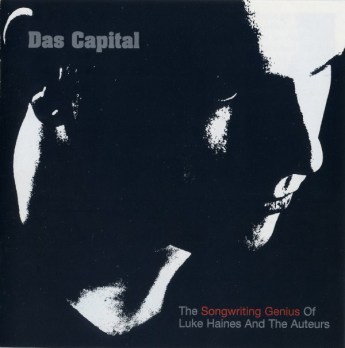
Das Capital – The Songwriting Genius of Luke Haines and The Auteurs was released in 2003. Wiki states only that the album features orchestral re-recordings of some of his older songs from The Auteurs and Baader Meinhof periods, along with some new tracks.

It’s fair to say that the few who actually wrote up contemporary reviews came to differing opinions. Ben Hogwood at Music OMH said:-

“Haines comes across as the macabre balladeer, that sinister husky voice of his ever more to the fore. The expansive How Could I Go Wrong does well in this guise with the guitar line (shades of Santana?!) a majestic opener before the strings drape their treble line over the top. What’s evident here and elsewhere is that the music retains its urgency and edginess, nowhere more so than on Lenny Valentino, which still rocks, and on Showgirl, where the complete standstill half a minute in has the same powerful impact.

So what of the new material, 21st century Haines? Well Satan Wants Me is pretty self explanatory, a dirge with Haines spitting “Satan wants me, not you.” Then there’s Michael Powell, where Haines announces, “I’m just a horny devil baby, but I know how to treat a lady.” Dark alley, anyone? All of which leaves Bugger Bognor, a quietly venomous vocal highlighting similarities with Philip Larkin.

Production on Das Capital is heavy on the strings but not usually intrusive, with violins up in the heavens on Starstruck but subtly restrained on the sublime closer Future Generation. The male voice choir in the middle foreground of Baader Meinhof is a nice touch.”

On the other hand, Michael Idov at Pitchfork, in giving the album a rating of 5.1/10, states:-

“Das Capital: The Songwriting Genius of Luke Haines and the Auteurs is a primo Situationist stunt. From the title on down, it concerns itself purely with the sound of money. Fat with winds, strings, chimes, echo chambers the size of Wembley stadium and, per liner notes, “the greatest sax solo in the history of popular culture,” the album is meticulously designed to mimic fundraiser quickies like The Royal Philharmonic Orchestra Plays the Music of Oasis. The result, needless to say, is patently and intentionally ludicrous; it could be one of the greatest jokes ever played on a label by an artist.

I can’t help but applaud Das Capital’s meta-architecture, which incorporates everything from the cover art to the attendant interviews filled with bragging about the project’s cost – one small quibble, however, remains: The album is unlistenable………….I would never recommend a living soul to purchase Das Capital, and yet, full marks are due to Haines for making good on the hissed mission statement from his Oliver Twist Manifesto: “You better believe me when I say/ I never wanted to be liked.”

Me? I love it. The very fact that he was able to again persuade a record label to fork out money to capitalise on the recent success of Black Box Recorder with the promise of delivering a ‘best-of’ collection has to be appluaded. The further fact that he stood and delivered something so unexpected and near impossible to market and recoup its costs was the ultimate in highway robbery. Here’s Luke Haines own words from the CD booklet:-

“I cannot afford to buy an island, but I can afford to buy a theme park, or more accurately, Hut recordings in their speculative wisdom have provided me with the neccesary to create an aural them park, HainesWorld if you like. So, dear listener, take your token, climb aboard the waltzer, and as you spin into luxuriant orchestral delirium, hear me whisper in your ear, “I’m the man you camt to see fall into the machine.” I may be paraphrasing David Essex.

Alternately, the CD you have purchased is a brand new collection of old songs re-recorded, mainly of the 92-96 vintage. Why did these songs need to be recorded again? Because they were slipping out of view. Sometimes you have to point out to people what lies in front of their noses. Does this consolidate my place in musical history? You bet.”

There’s a couple more equally entertaining and slightly tongue-in-cheek paragraphs, before Haines’ own genuinely hilarious reviews of all the albums he had released with The Auteurs or under his own steam as a solo artists. Here’s some extracts:-

New Wave – My first masterpiece…best debut album of the nineties no contest, and as seminal as the first Modern Lovers; 5 stars

Now I’m A Cowboy – OK, sometimes the artist isn’t the best judge of his work. However this one requires serious reappraisal (from yours truly at least)…The Upper Classes was (yet another) precursor to the burgeoning Brit Pop thingy. My commercial peak to date; 4 stars

The Auteurs vs. μ-Ziq – Remixes by some kid from Wimbledon for £500. A lot of money for a teenager. Never listened to it myself. Went on to sell well in America. 100% of the publishing goes to me: 5 stars

After Murder Park – The most fun I had making a record, written in wheelchair confinement. Sonically great, Albini on top form and me too. An anti-zeigeist gem. Chris Cunningham has made a career out of recycling this sleeve art. Full marks to everyone involved; 5 stars

Baader Meinhof – My second masterpiece. Buy it so that I don’t have to. A testimonial to the joys of analogue recording; 5 stars

How I Learned to Love The Bootboys – Under-rated now and at the time. Unfortunately this record cannot be reappraised due to its anti-sentimental stance; 4 stars

Christie Malry’s Own Double Entry OST – My first foray into film soundtracks and my third masterpiece; 5 stars

The Oliver Twist Manifesto – You are not allowed to make record like this anymore….and as the credits roll, I would like to thank David, Paul and all at Hut Records….I say continue your worthless work and hang your heads in shame; 5 stars.

All that’s left now are these:-

mp3 : Luke Haines & The Auteurs – How Could I Be Wrong
mp3 : Luke Haines & The Auteurs – Showgirl
mp3 : Luke Haines & The Auteurs – Baader Meinhof
mp3 : Luke Haines & The Auteurs – Lenny Valentino
mp3 : Luke Haines & The Auteurs – Starstruck
mp3 : Luke Haines & The Auteurs – Satan Wants Me
mp3 : Luke Haines & The Auteurs – Unsolved Child Murder
mp3 : Luke Haines & The Auteurs – Junk Shop Clothes
mp3 : Luke Haines & The Auteurs – The Mitford Sisters
mp3 : Luke Haines & The Auteurs – Bugger Bognor
mp3 : Luke Haines & The Auteurs – Future Generation

You better be quick, as the links will be removed on Boxing Day (26 December)

Oh, and one more thing. There was a hidden track that could only be played by holding down the rewind button when you went play track 1:-

mp3 : Luke Haines & The Auteurs – Das Capital Overture

This track includes Back With The Killer Again, The Rubettes, Housebreaker, Tombstone, Buddah, Kids Issue, Light Aircraft on Fire, The Upper Classes and Discomania. I’ll leave it hanging around for a bit longer.

This series takes a short break as next weekend will see the introduction of a temporary feature with 22 daily posts covering the entire festive period. Luke will be back on Sunday 19 January.

Oh, and I’m going to see him play live in 2020…….click here for the info!

JC

SATURDAY’S SCOTTISH SONG : #193 : LOVE AND MONEY

This is cribbed from a previous posting on the band.

Love and Money rose from the ashes of Friends Again when three members of the latter decided to continue to work together while drafting in a new bass player. The fact that I had been such a huge fan of Friends Again should really have meant that I’d fall for the charms of this new combo but in all truth it never quite happened. It wasn’t for a lack of effort on my part as I went along to a lot of the early gigs in Glasgow and bought the singles and then the debut LP (All You Need Is….Love and Money) almost as soon as they were released. But the purchases were often out of a feeling of loyalty to James Grant (vocals/guitar), Paul McGeechan (keyboards), Stuart Kerr (drums) and Bobby Paterson (bass) as the music was just a bit too clean and antiseptic for me, certainly in the form it was released on vinyl, although they remained at all times a formidable and entertaining live band with a great mix of pop, soul and funk to get your feet moving.

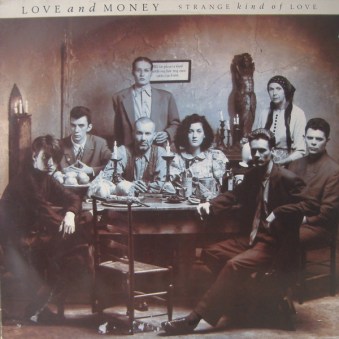
Love and Money were signed to Mercury Records who first of all teamed the band up with Andy Taylor (Duran Duran and The Power Station) and then with Gary Katz, a producer who had done much to popularise Steely Dan.They even sent the band to Los Angeles to make what proved to be a very expensive second album, Strange Kind Of Love (1988), where all the rough edges were smoothed out. The singles should, by the formula they followed, have been huge hits on both sides of the Atlantic but it just never happened.

In 1990, a third LP was rejected by the label but they provided enough finance for another release the following year, Dogs In The Traffic, one of the most locally critically acclaimed albums of the era, and one which, with many of its tracks being acoustic-led, was a long way removed from the early material.

mp3 : Love and Money – River of People

The song featued above, however, is a track from the 1986 debut album.

JC

AN IMAGINARY COMPILATION ALBUM : #232 : VIC CHESNUTT

A GUEST POSTING by HYBRID SOC PROF,
our Michigan Correspondent


A TRAGICOMIC SOUTHERN GOTHIC ICA

To a certain extent, it’s hard to separate the apocrypha from reality when it comes to Vic Chesnutt’s history. Whether this is because he was a fabulist more interested in narrative and poetry than facts or because he was, by all accounts, more than open to a wide variety of mind-altering substances consumed with regularity, is unclear. Uncontested is that he grew up in a small Southern town 60 miles south of Atlanta, Georgia. Moreover, depressive, unathletic and an atheist from an evangelical family in the Bible Belt, he’d taken a stab at suicide even before he was largely paralyzed following a drunken auto accident in his late teens. He consistently reported that it was the gift of poetry – in the form of an album of poetry written and ready by the British poet Stevie Smith – that changed his life, lead him to read books and try to get away from his “Daddy’s friends, asshole chauvinist racist pigs.”

Effectively confined to a wheelchair and with limited use of his hands and arms, Chesnutt was able to play simple chords on his guitar and, while here again accounts vary, would read his poetry with the guitar or interspersed with it. Nevertheless, more suicide attempts followed. Exactly how many… who knows. Leaving Zebulon, Georgia, for Nashville, Tennessee, before moving to Athens, Georgia – 80 miles east northeast of Atlanta – is regularly described but opaque to me. Nevertheless, he joined a band in Athens and then left it to perform his own poetry/songs. (If you’re interested in reading more about his life via interviews and reviews, there’s a wordpress site titled revicchesnutt where many things are collected.) Famously, there in the late ‘80s, he was seen by Michael Stipe who then directed and produced Chesnutt’s first two records, Little (1990) and West of Rome (1991). They were on a tiny label, Texas Hotel, and if they were sent to KZSC, the university station in Santa Cruz, I completely missed them.

I’d had a subscription to Option magazine, a medium circulation music rag focused on independent, small label, and niche musical tastes, that I’d started in New York in ’87 and read religiously. There were what seemed to be hundreds of short reviews at the end of each issue and it was a great resource. I was flipping through an issue in 1993 and read these lines from Eddie Huffman: “Vic Chesnutt is a mama’s boy from Georgia. His mama’s a born-again Christian. When she heard him sing, ‘I am not a victim, I am an atheist,’ it made her cry.” Pretty great opening and it drew me in, as did the take-away point… that Huffman had interviewed Chesnutt and his wife, Tina, at least in part to tell him to please not commit suicide. His third record, self-produced, Drunk (1993) had just come out and I bought the CD – I might have had to drive to San Francisco to get it at Amoeba – and searched the radio station to see if we had it. We did, but not the previous two.

Chesnutt’s nasal, grating and yet sometimes beautiful Southern-tinged twang is jarringly perfect for his poetry/lyrics. And the lyrics are intensely evocative and emotionally devastating… while regularly flush with soaring, ironic – even hilarious – distance from the immediate experiences and feelings he recounts. He could also be pretty darned raunchy. Importantly, via the second version of “Sleeping Man” on Drunk, I was introduced to Syd Straw’s glorious voice. I was hooked. Then came Is the Actor Happy? (1995) and About to Choke (1996) and, by no means alone, I had found what I believed was among the most singular voices in rock.

Proving that I was far from alone, he had – the year before – collaborated with Widespread Panic on an album, Nine High a Pallet (1995), released as Brute. (They’d release a second, Co-Balt, in 2002.) Moreover, Sweet Relief II: Gravity of the Situation (1996) was released with a raft of brilliant covers of his songs. The Sweet Relief Foundation was set up to generate money to pay for health costs and coverage for US musicians given the anti-social and inhuman nature of our profit-driven private health insurance and delivery system. That same year, as well, he had a minor role in Billy Bob Thornton’s brilliant film, Sling Blade.

However, to my mind the collaborations got out of control. I didn’t like The Salesman and Bernadette (1998), recorded with Lambchop, nor did I appreciate his work with the Keneipp sisters on Merriment in 2000. And I thought he’d simply gone off the rails with 2001’s Left to His Own Devices, 2003’s Silver Lake, and 2005’s Ghetto Bells. Diane and I had seen him open for Wilco at a small college here in Michigan around 2000 and he was engaging, self-deprecating, and wonderful. More than anything, though, he was a bit painful to watch. Years of atrophy given his paralysis had left him physically twisted and clearly physically uncomfortable. This was a guy who’s work I’d always continue to buy, if for no reason other than giving tribute to his force of will.

As a result, when I bought North Star Deserter, in 2007, I was completely unprepared for its extraordinary lyrical power and explosive instrumentation. Recorded in Montreal with members of Thee Silver Mt Zion Memorial Orchestra and Godspeed! You Black Emperor, along with Guy Piccioto from Fugazi. It makes perfect sense, in a way, that he’d record with anarcho-communalist cooperatives and punks but, jeez, that he served to focus the two Canadian bands and that Picciotto seems to have found another natural métier continues to amaze me. I love this record. Both Mitte End August OST and At the Cut were released in 2009 and weld the very early solo/folkish work on West of Rome with the experimental creativity of North Star Deserter. Most notably, however, At the Cut has what Chesnutt claimed were his farewells to suicide in “Coward” and “Flirted with You All My Life”… even though – in the face of ever more insurmountable medical bills – he committed suicide as Skitter on Take Off – his third recoding of 2009 – was being released.

As with any ICA where the artist’s work spans decades, cutting down to 10 songs to produce a coherent album means a lot of great stuff is left behind. In putting this together, I went for a combination of feeling and flow as much as favorites. It turned out a little heavier than I anticipated on the last efforts… but I think it works.

In the Robert Palmer-curated BBC/PBS History of Rock ‘n’ Roll series (1995?), there’s an episode, Respect, about Motown, Stax and Fame studios. In it, Steve Cropper, of Booker T and the MGs, is talking about the death of Otis Reading says that every time he played with him, from the first time he was in the studio with Reading playing solo piano to the last, recording “Sitting on the Dock of the Bay”, that Reading “always moved me.” That’s how I feel about Vic Chesnutt (even if I wasn’t always moved to appreciation.)

1. Vic Chesnutt – Flirted with You All My Life – from At the Cut
2. Vic Chesnutt – Ladle – from About to Choke
3. Vic Chesnutt – Sleeping Man (Syd Straw version) – from Drunk
4. Brute – Protein Drink/Sewing Machine – from Nine High a Pallet
5. Vic Chesnutt – Sponge – from West of Rome
6. Vic Chesnutt – Gravity of the Situation – from Is the Actor Happy?
7. Vic Chesnutt – Marathon – from Mitt Ende August OST
8. Vic Chesnutt – Free of Hope – from Is the Actor Happy?
9. Vic Chesnutt – Everything I Say – from North Star Deserter
10. Vic Chesnutt – Coward – from At the Cut

HSP

SOME THINGS DON’T EVER REALLY CHANGE

It’s election day here in the UK.  I’m dreading the outcome with the expectation that the people will give the keys to 10 Downing Street to someone who has taken the art of lying to a completely new level. I have worked for, with and alongside politicians, of varying abilities and talents, for 35 years and at times I have been party to misrepresentations, spin and efforts to deflect and distract – to some extent it has always come with the territory.

But Johnson is the first of a kind – someone who can stand in a room full of people and say things that he and everyone present knows to be absolute nonsense. We are hours away from confirmation that you can win an election by lying and lying and lying and lying and lying without stopping.

And then I remember that Trump achieved likewise in the USA and that the PM of Australia seems to have a similar reputation. It’s despicable.

Just before flying off to the recent holiday, I bought a magaine that looked back at the life and work of R.E.M. through the various media interviews they gave over the years to the music press here in the UK. It’s a fascinating read as there’s no effort to edit anything that was said (or asked) at the time, and there’s a few moments where the views and opinions do leave the band members looking or sounding a little bit odd and quite removed from reality. One thing said by Michael Stipe in 1988, on the eve of the election of George Bush Snr, that hit home in response to a question about apathy when it comes to politics and politicians:-

“It’s a real problem because the country is so huge that things can’t really be focussed on except through the media, which completely abuses or overdramatises events according to their whim.”

30 years on, and while the media is now much more than newsprint and TV, it is even more of a problem about the abuse of its power and the way it overdramatises events. Just google the words ‘Jeremy Corbyn’ and ‘Election 2019’ to get the idea.

mp3 : Billy Bragg – Waiting For The Great Leap Forwards (2019 version – live)

Taken from footage of Billy lending his support to striking university lecturers on a picket line in Birmingham, England on 5 December.

Tomorrow could well be the blackest of all black Fridays.  This blog won’t be reflecting at all on the election outcome. It’ll be in the hands of a guest with a very good ICA.

JC

BANG-BANG-BANG-BANG : 4 IN 10 MINUTES

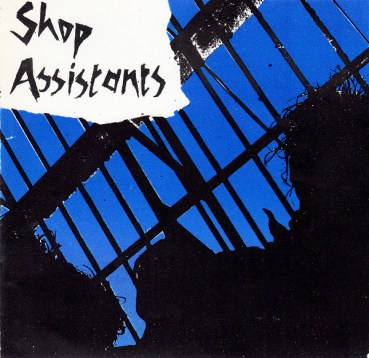
Shop Assistants are probably best known for Safety Net, the first single to be released, back in 1986, on the Bellshill-based 53rd & 3rd Records. This was actually the band’s third single, following on from the late-1984 debut, Something to Do (which was by Buba & The Shop Assistants and is extremely rare and hard to find) and a four-track EP, Shopping Parade, which was issued by The Subway Organisation.

Worth mentioning that the line-up for the debut single consisted of Aggi (vocals), David Keegan (guitar), John Peutherer (bass) and Moray Crawford (drums) with Stephen Pastel on backing vocals and production duties.

By the time they were in the studio for the follow-up, there had been huge changes with only David Keegan still around, joined now by Alex Taylor (vocals), Sarah Kneale (bass), Laura MacPhail (drums) and Ann Donald (drums). The EP was recorded for their Bristol-based label in Edinburgh in April 1985 with the results being energetic and tuneful lo-fi indie-pop, mostly fast-paced (apart from the one that sounds like a Velvet Underground outtake) that provided the introduction to the vocal talents of someone who was being increasingly talked of as the new face and voices of the independent Scottish music scene in the mid-80s.

mp3 : The Shop Assistants – All Day Long
mp3 : The Shop Assistants – Switzerland
mp3 : The Shop Assistants – All That Ever Mattered
mp3 : The Shop Assistants – It’s Up To You

For the avoidance of doubt, All That Ever Mattered is a totally different song to the one of the same name later recorded by Orange Juice.  Oh, and All Day Long is one of the best and most enduring songs to come out of Scotland the entire decade.

JC

KNOWN ONLY FROM COMPILATION ALBUMS

I was cleaning up some music files on the laptop the other day, mostly involving the deletion of duplicate tracks. It’s quite astonishing just how often some songs have been licensed to appear on mumerous compilation CDs, especially those that celebrate UK indie-musicin the mid-late 80s.

In carrying out the clean-up, I noticed I had three songs by Blow-Up, courtesy of them being on both the multi-label C87 and C88 boxsets and also from being on Ambition (Volume 1), a 1991 compilation of 24 songs that had been released by Cherry Red. The band were a total mystery to me, being one that I couldn’t recall at all. Here’s wiki:-

Blow-Up was formed in Brighton, England in 1986 by former 14 Iced Bears member Nick Roughley (vocals), along with Alan Stirner (guitar), Whirl frontman Trevor Elliott on Bass, and The Milk Sisters Drummer Chris Window (drums).

Signing to Creation Records at their first gig by an awe-struck Alan McGee they gained exposure with two singles on the label, 1987’s 1966-Nuggets-style “Good For Me” and the epic “Pool Valley” (the latter taking its name from Brighton’s bus station and featuring new bassist Aziz Hashmi).

A BBC Janice Long live session at the legendary BBC Abbey Road studios in 1987 brought the outfit well needed publicity with the help of Dave Nimmo on percussion. A tour of the Netherlands and Belgium was followed by their early recordings being collected on the Rollercoaster compilation issued on Megadisc in 1988. After two further EP’s, the Pixies-influenced first album proper, In Watermelon Sugar, was issued in 1990. This line-up featured Justin Spear, son of Roger Ruskin Spear of the Bonzo Dog Doo-Dah Band and ‘Paul’ Reeves, who as Billy Reeves formed theaudience with Sophie Ellis-Bextor in 1997. An ambitious further album, Amazon Eyegasm (featuring the former 14 Iced Bear Will Taylor on guitar and ‘Red Ed’ on drums) followed in 1991.

Blow-Up were described as ‘the best band I ever signed, and the worst band I ever signed’ by Alan McGee.

So there you have it….and here’s the three songs that I have via CD compilations:-

mp3 : Blow-Up – Good For Me (Creation Records, 1987)
mp3 : Blow-Up – Forever Holiday (Ediesta Records, 1988)
mp3 : Blow-Up – World (Cherry Red Records, 1991)

All three were released as singles. All three are quite different in tone and feel. And maybe that’s the issue at hand…they sound like a band that was constantly searching for a sound they were comfortable with. None of the songs are dreadful, but none of them are particularly memorable or distinctive.

JC

I KNOW IT’S OUT OF FASHION AND A TRIFLE UNCOOL

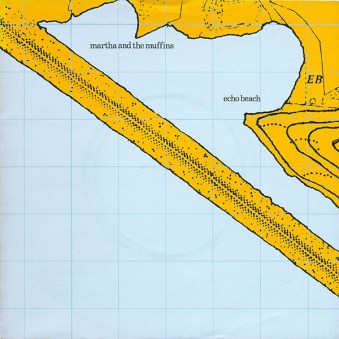
Martha and The Muffins were the subject of this outstanding guest ICA by Alex G away back in July 2015.

As Alex G reminded us, Martha and the Muffins formed in Toronto in 1977 and within a year had settled down to a line-up of Martha Johnson (vocals, keyboards), Mark Gane (guitar), Carl Finkle (bass), Andy Haas (sax), Martha Ladly (backing vocals, keyboards) and Tim Gane (drums). A self-financed 7”, Insect Love, brought them to the attention of Virgin Records, who signed them up to their new DinDisc label and brought them to the UK to cut a debut album Metro Music (Canada 1979, UK release 1980) from which a first single was identified:-

mp3 : Martha and The Muffins – Echo Beach

It would prove to be their only hit in the UK, and indeed outside of Canada, the band has long struggled for any recognition beyond Echo Beach. It must be a a bit bewildering for the band, as they went on to release a number of critically well-received singles and albums in later years but the record buying public seemed determined to have them firmly in the category of one-hit wonders.

The single is a great example of new wave in its broadest definition. It’s not a rock song, it’s not a punk song and while it has a pop feel to it, it can’t be classified as pure pop. It also makes much use of keyboards but not in any sort of way that you would associate with prog or the emerging electronica. It’s also ridiculously catchy and tailor-made for radio, still often heard on the numerous stations devoted to nostalgia. Kind of hard to accept that it is coming up for its 40th birthday.

Here’s your b-side:-

mp3 : Martha and The Muffins – Teddy the Dink

Fun filled fact.

In June 2011, a 4,000 capacity outdoor concert venue opened in Toronto and it was decided to name after this hit single…and yes, it is on a waterfront loaction!

JC

THE SINGULAR ADVENTURES OF LUKE HAINES (14)

Last week’s posting featured the final single to be released by The Auteurs, which was June 1999.

April 2000 saw Black Box Recorder hit the charts with The Facts of Life single.  The album went Top 40 in May 2000 but the follow-up single, The Art of Driving, ground to a halt at #53 in July 2000.

It was around this time that the budding secret romance between John Moore and Sarah Nixey became known to Luke Haines and he got mightily pissed-off….perhaps a bit hypocritically given that he and Alice Readman, the bassist in The Auteurs, had been an item throughout the period that the first three albums had been recorded.

He decided he needed to go off and do his own thing and there would be two releases in 2001, albeit one of them featured music that had been recorded more than a year earlier for a soundtrack to an as yet unreleased album and on which chaval will ruminate in due course.

The other album from 2001 proved to be the first time that David Boyd, supremo at Hut Records, had doubts about Luke Haines, with the tale of the album playback told in its full toe-curling detail within the pages of Post Everything.

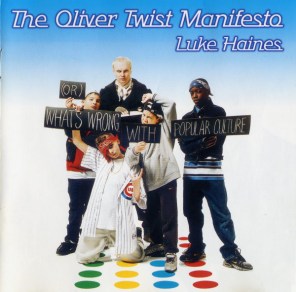
The Oliver Twist Manifesto was, an still is, nothing like anything else Haines has ever recorded.  He was obsessed at the time with concept art and rap music, and in particular falling for the charms of Dr Dre/Eminem. He decided to make a high-art-hip-hop pastiche concept album on which he opens with the line ‘This is not entertainment, don’t expect me to entertain you’.

The album has a pop at many things, and the best thing I can do to sum it up is provide the NME’s review from the time….one which gave album fours stars out of five:-

The erstwhile Auteur loves saying the unsayable, and the bizarre Dickensian Slim Shady character that glowers through the music on ‘The Oliver Twist Manifesto’ – his first ‘proper’ solo LP – is his most hateful invention yet. This is Haines as cultural dilettante – a murderous misanthrope who brings fear and doom to all.

While he wastes valuable bile on worthless art bores (‘Death Of Sarah Lucas’), when he finds something to get genuinely upset about, Haines is a genuinely stunning writer. His unusually affecting treatise on mortality ‘What Happens When We Die’ is exceptional – the primitive synth-march of ‘England Vs America’ is possibly even better.

However, if you want evidence of what bitterness can do to a person, it may be worth tracing the manner that Haines’ voice has degenerated to a hoarse whisper as his albums have become more spiteful. He hisses like a pantomime villain throughout this bizarre, uneven assault on popular culture: [I]”You’ve gotta believe me when I say I never wanted to be liked”,[/I] he coughs on the title track. If that was his aim, then with the most unlikeable album of his entire career, he’s going the right way about it.

Here’s the opening and closing tracks of an album that clocks in at just 37 minutes. It’s still a fascinating if rather odd listen…..one that has come to make more sense in later years but was so out of leftfield in 2001 that it jarred somewhat.

mp3 : Luke Haines – Rock’n’Roll Communique No. 1
mp3 : Luke Haines – The Oliver Twist Manifesto

JC

SATURDAY’S SCOTTISH SONG : #192 : LORD CUT-GLASS

From the Chemikal Underground website:-

In 2009 Lord Cut Glass, the alter-ego of our very own Alun Woodward (label boss and ex-Delgado), delivered us an album that had been four years in the making; written, arranged and largely performed by Woodward, the album was a beguilingly eclectic and hugely flamboyant affair.

Sometimes bashful, occasionally imbued with curmudgeonly bluster, and yet always lifted by humorous life learned truisms, Lord Cut-Glass struck a dashing figure of musically inventive bravado. Galloping percussion, waltzes and marches, promenades of male and female harmony: delicate and serene creations punctuated by casual profanity and shot through with brazenly hilarious words-to-the-wise. It was one of a kind and quite brilliant.

That last sentence nails it.  One of a kind and brilliant.  An album that never gets boring and throws up something new with every single listen.

Here’s the debut single that was lifted from it:-

mp3 : Lord Cut-Glass – Look After Your Wife

And the animated promo for its equally fabulous follow-up….although it was never given an actual physical release as a single:-

Note the use of the word ‘motherblaster’ in this version (just after the 1:30 mark); it wasn’t the word used on the album version……

JC

IT REALLY WAS A CRACKING DEBUT SINGLE (43)

Today’s featured 7” piece of vinyl was seemingly named as ‘Single of the Week’ in August 1978 within the pages of all four of the main UK music papers – Melody Maker, NME, Record Mirror and Sounds, something I find hard to believe given that the papers projected themselves towards slightly different audiences and it was incredibly rare for all of them to simultaneously champion one band or singer.

But such was the fate of this:-

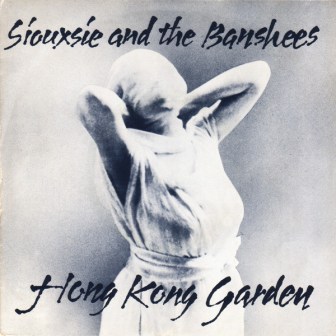
mp3 : Siouxsie and The Banshees – Hong Kong Garden

In an era when many a new band sounded fresh and exciting, particularly to my teenage ears, there was something about Hong Kong Garden that made it stand out even more so, that, of course being the Oriental sounding opening. The reviews in the music papers, to their credit, did nail things very well, offering the sort of soundbites that could be added to a poster if it was being used to attract further custom:-

“a bright, vivid narrative, power charged by the most original, intoxicating guitar playing heard in a long, long time”.

“strident and powerful with tantalising oriental guitar riffs”.

“ catchy, original….coupled with an irresistible sing-along chorus”.

“I love every second”.

The introductory notes come courtesy of a xylophone. The song had originally been aired on the John Peel Show on Radio 1 some six months earlier, with a quite different sound courtesy of a toy glockenspiel. The drums were also quite different….

mp3 : Siouxsie and The Banshees – Hong Kong Garden (Peel Session)

Ah, the drums. The instrument that played a huge part in making Hong Kong Garden one of the earliest smash hits of the new wave era – it’s #7 placing made it one of the few to go Top Ten in those days. Polydor Records had hooked the band up with an American producer named Bruce Albertine and had hired the expensive Olympic Studios in London for the sessions. The band didn’t like the results and the decision was taken to work with a little-known producer in a tiny basement studio in London. The producer got it done and dusted in two days, concentrating on the drum sound, insisting that Kenny Morris play the bass and snares first of all and then cymbals and tom-toms later on. These were matched up, with a bit of echo added, thus giving the song a bigger, fuller and more ambitious sound, arguably making the first new-wave single that didn’t sound just one step up from a great, live sounding demo.

The producer’s name was Steve Lillywhite and Hong Kong Garden was his first hit in that role….the first of many hundreds.

You can get a real sense of the difference that Lillywhite made by flipping it over to the b-side:-

mp3 : Siouxsie and The Banshees – Voices

This was salvaged from the Olympic Sessions with Bruce Albertine. It is distinctly average……(feel free to differ!!!)

The band would return to the studio with Steve Lillywhite to record debut album The Scream. As it was a separate session, and in a different studio to where they had first worked on the single, the decision was taken to leave Hong Kong Garden off said debut album. An act of artistic merit, but something of a commercial folly.

JC

IT REALLY WAS A CRACKING DEBUT SINGLE (42)

I had a quick look on Discogs to see if there were any second-hand copies of today’s debut single, by Wire, up for sale.

There’s loads of them, ranging in price from £50-£350, although the seller who is seeking the highest amount seems a bit ambitious, given that all he/she is offering is the 7” plastic in a generic record company sleeve while others, who are looking for a bit less, do have the single available in the picture sleeve from 1977.

I’m prepared to guess that maybe 15-20 years ago, you could have picked up Mannequin for £25 tops, but such has been the recent explosive growth in the demand for original vinyl from the good old days that sellers are asking a premium and there’s folk out there willing to pay. I sort of get it, but as I get older, it is decreasingly so.

I started this blog 13 years ago, ostensibly to try and post songs that were almost impossible to find, usually consisting of b-sides only issued on vinyl or different mixes of singles, again otherwise not available other than vinyl. Things have been overtaken with just about every singer/band from the punk, post-punk, new wave and 80s era being happy enough for old albums to be re-released, often with additional material, such as demos, b-sides and single mixes, to be tagged on. It’s a clever way to continue to extract money from fans and there’s a certain democratic element to it as it means that fans can complete their collections without having to fork out silly amounts of money.

My best personal take on it is that my hunt for a copy of the debut Orange Juice single slowed down once the tracks were made available via a CD reissue of all the Postcard Records material and it ground to a halt when the vinyl revival saw the price for the original artefact go through the roof. In some ways, getting your hands on original vinyl from the 70s/80s, especially those which weren’t pressed in any significant amounts, has become like collecting pieces of visual art such as paintings or sculptures, where all too often, it is only the moneyed and privileged who can participate.

I’ll now get off my soapbox and return to the business of the day.

Wire weren’t loved by many back in 1977. They were critically lauded in some places but there was little in the way of mass appeal. The debut album, Pink Flag, didn’t chart. It was, in many respects, ahead of its time as there can’t have been many prior LPs that contained 21 songs but with a running time of just over 35 minutes. It was music of a different quality and distinction and although it has retrospectively been lauded as one of the most original pieces of work to emerge out of the UK at any point in time, and has proven to be a huge influence on so many acts who would find fame and fortune in future times, hardly anybody knew it.

I’d be very surprised if the debut single was ever played on mainstream radio, other than by the usual suspect, John Peel:-

mp3 : Wire – Mannequin
mp3 : Wire – Feeling Called Love
mp3 : Wire – 1.2.X.U

More than 40 years on, these three songs still sound fresh, vibrant, edgy and exciting. They also sound familiar as so many bands would appropriate the Wire methodology in later years, often making a fair bit of money in the process.

All the tracks were available on Pink Flag, itself an album that has never been too difficult to find, having had its first re-release on CD in 1987, which also coincided with the label re-issuing it on vinyl. As such, none of the three songs were ever really obscure, and yet you have the situation of the 7” single fetching silly amounts. The original pressing of the album, which although not a great seller would still have found its way into more homes than the debut single, can be got for as ‘little’ as £60 or as much as £450, with the seller advising the vinyl and its sleeve are near-mint. Just as incredibly, a copy of the cassette version from 1977 is also up for grabs….£80 and its all yours with the seller saying “Tape looks in excellent condition, artwork is lovely, very slight corner wear. IS in original case, which is a bit worn, happy to replace with a new one, but it will be all clear, and this one has a black back”

Would it really be any better to hear the songs via these high-priced medium than any other?

JC