WHEN THE CLOCKS STRUCK THIRTEEN (November)

4-10 November

The highest new entry on the singles chart back in the first week in November 1986 belonged to Depeche Mode, a favourite of many TVV regulars but a band that your humble scribe has never taken to.  Which is why there’s no link today to Blasphemous Rumours or Somebody, a double-A sided single which came in at #29 en route to becoming their 11th successive chart single going back to Dreaming Of Me in early 1981, (of which five had gone Top 10)

I’ve had to go all the way down to #54 to find a new entry worth offering a listen to:-

mp3: The Kane Gang – Respect Yourself

The trio’s third hit of the year, thanks to a cover of 1971 R&B/gospel number originally written and recorded by the Chicago-based Staple Singers.  One of the highlights of the debut album The Bad and Lowdown World of The Kane Gang, which would reach #21 on its eventual release in March 1985.

Just two places further down the singles chart this week was another gang who often inhabited a bad and lowdown world, certainly in the eyes of the tabloid media:-

mp3: The Redskins – Keep On Keepin’ On (#56)

A real favourite in the student union discos among us who were of a left-wing persuasion.  The Redskins delivered a fine mix of pop, soul, blues, folk, punk and politics, who, if it hadn’t been for the fact that collectively the idea of a career in pop music was not their idea of fun, would surely have enjoyed a run of great albums beyond their sole offering, Neither Washington Nor Moscow, which would eventually appear in early 1986. Keep On Keepin’ On would eventually reach #46, and the offering today is the 12″ version as that’s a bit of vinyl I proudly still have all these years later.

mp3: Orchestral Manoeuvres in the Dark – Never Turn Away (#70)

Probably the least-remembered of the twenty-two singles released by OMD during the 80s, it was also the one which performed the worst as #70 in the first week in November 84 was as good as it got.  It’s one of those rare 45s on which Paul Humphreys rather than Andy McCluskey delivered the lead vocal.

11-17 November

The highest new entry on the singles chart back in the second week in November 1986 belonged to The Riddle by Nik Kershaw, someone who has his admirers among fans of 80s synth-pop.  I always felt he was synth-pop with a soft rock edge, and while he may perhaps feature via guest postings, he’s not showing up today. This one came in at #17 and would peak at #3. It was his fourth smash hit of the year, and his success would continue throughout the following year.

mp3: The Human League – Louise (#36)

I think it’s worth lifting some stuff about this one from wiki:-

The lyrical story telling of “Louise” superficially seems to be a story about a chance encounter between a man and a woman on a bus who seem to be on the verge of a lover’s reconciliation. But like much of Phil Oakey’s songwriting, what seems ‘sugary sweet’ on the surface actually has a much darker subtext. Oakey points out that the story is actually about the original protagonists from “Don’t You Want Me” meeting up 4 years later. In “Louise” the man sees his lost love again and still cannot deal with reality. The anger that drove the earlier song has dissipated, and is replaced with a hopeful fantasy that his ex-lover is drawn to him all over again. So “Louise” is really about self-deception, delusion and eternal sadness. Oakey says about “Louise” in interview:

It’s about men thinking they can manipulate women when they can’t, even conning themselves that they have when they haven’t.

However, like the less savoury premise of “Don’t You Want Me”, the darker side of the “Louise” story went over the heads of the record buying public, who misinterpreted the lyrics as “sweet and upbeat”.

Louise would eventually reach #13 and still features in the band’s setlists to this day.

mp3: Strawberry Switchblade – Since Yesterday (#63)

I can’t claim I came up with this description, but it is so accurate:-

“From the ominous shadows of Goth suddenly appeared two young girls in polka-dot dresses, flaming red lipstick, and hair ribbons. Looking like the brides of Robert Smith, Strawberry Switchblade made a brief splash on the U.K. charts and then abruptly vanished in the mid ’80s, leaving their fans with a handful of collectible singles and one LP of deceptively sweet-sounding dance pop.”

Jill Bryson and Rose McDowall were very well-known figures in Glasgow in the early 80s.  The look they had for their pop success was how they walked the streets of my homw city – everyone, while not knowing exactly who they were, certainly recognised them.  Since Yesterday is a very 80s sounding song, and there’s an argument could be made that it hasn’t dated brilliantly thanks to its rather lightweight production.  But I’ll always a have a soft spot for it….it’s just one of those songs which sound tracked the festive period of 84/85, eventually peaking at #5 in late January and spending an incredible 17 weeks in the Top 75.

mp3: Lloyd Cole & The Commotions – Rattlesnakes (#65)

The third and last single to be lifted from the debut album.  Maybe it was all down to all the band’s fans having bought the album the previous month that this single, a genuinely outstanding song, stalled at #65.

mp3: Scritti Politti – Hypnotize (#67)

The third hit single of the year for Green Gartside & co, but #67 was as high as it got, coming nowhere near the success of Wood Beez (#10) and Absolute (#17).  The band would bounce back in great style in 1985, with The Word Girl delivering a #6 hit and the album Cupid & Psyche ’85 going Top 5.

18-24 November

It was probably inevitable that after such a fine run of new singles the previous two weeks, the well would just about dry up completely this week.  You could tell the Xmas marketing campaign was getting into full swing as the novelty records began to make showings – yup, this was the week We All Stand Together by Paul McCartney and The Frog Chorus came into the charts at #50, going on to reach #3 and particularly annoy the hell out of me for the many months it was never off the bleedin’ radio.

Having said that, there’s probably many fans of the lovable mop top who would have got annoyed with this one:-

mp3: The Art Of Noise – Close (To The Edit) (#62)

The ZTT collective’s music hadn’t struck a chord with the record-buying public.  Debut single Beatbox had failed to chart in Aril 1984 and debut album Who’s Afraid Of The Art Of Noise had languished at the very lower end of the chart.  But for whatever reason, and I think a lot had to do with the imaginative video(s), Close (To The Edit) found favour. It was also released in a ridiculous amount of formats – standard and picture disc 7-inch versions, five 12-inch singles (one a picture disc) and a cassette single – and would enjoy a 20-week residency in the Top 75 right through to the end of March 1985, peaking at #8. It did lead to a Top of the Pops appearance that they wasn’t taken too seriously while illustrating the actual size of the synths that were required back in those days:-

Anne Dudley would later say:-

Top of the Pops was one of the worst experiences of my life. We’d done so many edits of the single I wasn’t even sure what its final structure was. We just stood there behind three keyboards. The director saved our bacon by cutting away to the animated video the record company had commissioned – they hadn’t liked the original one made by Zbigniew Rybczyński, featuring a punkette girl and three blokes in tails dismantling musical instruments with a chainsaw. It was the polar opposite of Duran Duran on a luxury yacht.

25 November – 1 December

The Art of Noise might not have been making much money for ZTT but this lot were:-

mp3: Frankie Goes To Hollywood – The Power Of Love (#3)

The Xmas single – not an obvious one but the nativity-themed video, which was being aired everywhere, even on news programmes, made it clear what the marketing campaign was. It was all set to spend umpteen weeks at #1 and confirm the band’s total dominantion of the singles charts on the back of Relax and Two Tribes.  It did reach #1 the following week, but then Band Aid came along………

Fun fact…..The Power Of Love was re-released just before Xmas 1993 and again went Top 10.

mp3: Big Country – Where The Rose Is Sown (#35)

The second single to be lifted from the #1 album Steeltown.  Kind of feels strange that the record label pushed out a new 45 at this particular time of year. It certainly didn’t do anything to lift the album back up the charts and in reaching just #29, became the poorest-performing 45 of what was ‘peak’ Big Country.

mp3: Tears For Fears – Shout (#45)

I may have mentioned previously in this series that I couldn’t for the life of me recall Mother’s Talk which had charted in August 1984.  But I certainly can’t say the same about Shout, which thanks to its boombastic chorus easily lodged into my brain.  I recall being very disappointed with this.  I had so much love and time for Tears for Fears when they emerged, and I still think the debut album The Hurting is a masterpiece.  But Shout felt like synth pop with a stadium-rock edge and not for me, but loads of others loved it and took it to #4 in January 1985.

mp3: Bronski Beat – It Ain’t Necessarily So (#53)

A lot different from the previous two hit singles of Smalltown Boy and Why?, this inventive cover of a song written in 1935 by George Gershwin for the opera Porgy and Bess would spend 12 weeks in the chart, reaching #16.  It helped further establish Bronski Beat as one of the best new arrivals in the UK music scene in 1984.

mp3: Dead Or Alive – You Spin Me Round (Like A Record) (#55)

I hadn’t, until now, appreciated that Pete Burns‘ biggest hit single actually dated from 1984.   Turns out it came into the chart at the end of November 1984 and then spent another 11 weeks stuck in the lower regions of the Top 75 before bursting into the Top 20 and eventually reaching #1 in early March 1985.  Say what you like about manufactured pop music and be as critical as you want to be, but this makes for a majestic, magnificent and memorable single. I will not tolerate any dissent!!!!  Wylie, Cope and McCulloch must have been looking on in bewilderment.

So there you have it.  November 1984.  A month in which the singles chart, certainly at the lower end of things, was worth recalling in some detail.  Keep an eye out later on for Part 2 looking at the new indie singles from the era.
 

JC

WHEN THE CLOCKS STRUCK THIRTEEN (September)

2-8 September

The month of August 1984 did offer up some gems, including what I have long held to be the greatest 12″ release of all time, William It Was Really Nothing/Please Please Please Let Me Get What I Want/ How Soon Is Now?, issued on Rough Trade Records and which, in the first week of September 1984, peaked at #17 in the UK singles charts.  Turned out it would be another two years before The Smiths experienced another Top 20 single.

So here’s a few other things that were happening forty-one years ago.

The highest new entry was a re-release, and one that wasn’t all that old.  We Are Family by Sister Sledge had been a #8 hit in May 1979, and here it was, just five years later, coming back in at #32, and before the month was over it would peak at #4. It does seem the 1984 edition of the song was different from the original in that it was a remix by Nile Rogers.

The second and third-highest new entries at #39 and #43 are again examples of songs I genuinely cannot remember a single not of.  Torture by The Jacksons and Heaven’s On Fire by Kiss.  There’s actually only two new entries in the Top 74 worth posting here, and even then, the first of them, as far as I’m concerned, is far from this particular synth-pop duo’s finest 45s

mp3: OMD – Tesla Girls (#48)

The second, and I think I’m right in saying this, was the only hit single on which keyboardist and main songwriter, Jerry Dammers, took the lead vocal, and he does so with a falsetto.

mp3: Special AKA – What I Like Most About You Is Your Girlfriend (#72)

The former would reach #21 and give OMD a ninth Top 30 hit in four years. The latter, in reaching #51, was the last single released on 2 Tone to reach the charts.

9-15 September

Dare I post the highest new entry this week, knowing that it’ll be met mostly by sneers and snorts of derision?  Mind you, my young brother likes it, and he pops his head in almost every day

mp3: U2 – Pride (In The Name Of Love) (#9)

The lead-off single from the soon-to-be released album The Unforgettable Fire.  This, more than any of their songs, was the one which suggested their future lay in arena-rock. It would, in due course, reach #3, and remain their biggest hit single through till 1988 when Desire became their first #1.

The rest of the new entries really are like a roll-call of Smooth Radio computer generated playlists.  It was painful enough being reminded of them again without actually typing them out.

16-22 September

David Bowie’s new single was the highest new entry this week.

mp3: David Bowie – Blue Jean (#17)

1983 had been Bowie’s best year ever, in terms of the actual sales/success of hit singles with Let’s Dance (#1), China Girl (#2) and Modern Love (#2).  There had also been Serious Moonlight, a hugely successful world tour of arenas and stadia which brought on board millions of new fans, but had left fans of old wondering why their hero had sold out to the shiny pop world. This brand-new song won’t have done too much to put smiles on the faces of the older fans, while the newer ones might have been less than impressed, as it was nowhere near as immediate as the offerings from the previous year.  Time hasn’t been kind to Blue Jean, or indeed the parent album Tonight.  Blue Jean would climb to #6 the following week before experiencing a rapid tumble out of the charts.

Queen had the next highest new entry at #22 with Hammer To Fall, another song from 1984 that I can’t recall.  Unlike the song coming in at #22:-

mp3: Bronski Beat – Why?

An absolute floor-filler at the student discos, and quite possibly the discos where the girls in white stilettos danced around their handbags, but I wouldn’t know as I never went near such places.  Too many pounds, shillings and pence were required to gain entry, while the drinks were way more expensive than any student union.  Smalltown Boy had only just fallen out of the Top 75 after a 13-week stay, so it was great that Why? kept Bronski Beat’s name prominently featured on the radio and TV stations of our nation.  It would eventually reach #6 around the same time as debut album Age of Consent entered the charts at #4.

Another interesting song came in at #25.

mp3: Prince & The Revolution – Purple Rain

Not one of my favourites, but loved by so many others. This single, its parent album and the film of the same name truly made a superstar out of Prince.  This would also, like Why?, peak at #6.

I mentioned up above that Queen had a new entry at #22. The band’s lead singer, Freddie Mercury, saw his first ever solo single also chart this week. Love Kills came in at #27.  Two weeks later, it peaked at #10 which meant it had outsold and outperformed the band’s new 45.  I wonder if any tension was created from such an outcome.

And finally from this week’s chart, a prime example of a slow burner

mp3: Giorgio Moroder and Phil Oakey – Together In Electric Dreams (#74)

There is a very interesting and telling background to this one, as recalled by the director of the film Electric Dreams, for which this was written as the theme song:-

“Giorgio Moroder was hired as composer and played me a demo track he thought would be good for the movie. It was the tune of “Together in Electric Dreams” but with some temporary lyrics sung by someone who sounded like a cheesy version of Neil Diamond. Giorgio was insisting the song could be a hit, so I thought I’d suggest someone to sing who would be as far from a cheesy Neil Diamond as one could possibly go. Phil Oakey. We then got Phil in who wrote some new lyrics on the back of a fag packet on the way to the recording studio and did two takes which Giorgio was well pleased with and everybody went home happy”

The song would spend 13 weeks on the chart, taking six of them to reach its peak of #3, all of which made it feel as if the song had been around forever, and even worse, was never going to go away

23-29 September

Big Country had been one of the UK’s breakthrough bands in 1983, and the band’s willingness to be seemingly constantly out on the road was a huge factor in how their fan base continued to grow.  There had been one ‘stopgap’ single, Wonderland, earlier in the year which had provided a third Top 10 hit, and hopes were very high for the lead off 45 from what was soon to their sophomore album:-

mp3; Big Country – East Of Eden (#27)

To the consternation of the band and the record label, East of Eden would stall at #17, which was maybe an indication that the new material was less radio-friendly and a tad more rock-orientated than had come before.  The big consolation was that the album, Steeltown, would enter the charts at #1 in early October.

And finally, in what it has to be said, really is something of an underwhelming month in this series:-

mp3: XTC – All You Pretty Girls (#69)

XTC released loads of great singles over the years.  This, I’m afraid to say, wasn’t one of them.  It would peak at #55.

The good news is that Part 2 of this feature will have a bundle of non-hit singles that have proven to be absolute classics.


JC

WHEN THE CLOCKS STRUCK THIRTEEN (June)

June 1984.  The month I turned 21 years of age.  I wish I had a photo or two to show you, but it was an era when nobody bothered too much with cameras. There was no huge celebration to mark the occasion, mainly as my birthday fell on a Monday, but much drink was consumed and I ended up playing Girl Afraid by The Smiths on constant rotation back in the flat, grateful to be indulged by my flatmates in such a manner.

Having been out all day, we missed seeing the TV news, which would have been full of one-sided reporting of a shameful day for Britain.

The soundtrack to this state-sanctioned police brutality?

3 – 9 June

One new entry in the Top 40, courtesy of Spandau Ballet, in at #5, with the utterly forgettable Only When You Leave.  I mean that, I cannot recall this one at all, despite it seemingly spending nine weeks in the charts and peaking at #3.

The next highest new entry was at #43, and is one featured previously on TVV:-

mp3: Scritti Politti – Absolute

The follow-up to Top 10 hit Wood Beez (Pray Like Aretha Franklin) was released a couple of weeks before the band’s debut album for Virgin Records.  Any initial disappointment at not cracking the Top 40 right away would have been dissipated quickly as Absolute spent ten weeks in the charts, peaking at #17 and getting Green & co another appearance on Top of The Pops where anyone who hadn’t been keeping up with things since the release of the scratchy Skank Bloc Bologna back in 1978 might have rubbed their eyes in astonishment:-

It is so 80s isn’t it?  (and I don’t mean that as a bad thing!!!!)

The Damned were still doing there thing a full eight years after New Rose had lit us all up:-

mp3: The Damned – Thanks For The Night

They were never really a band for hit single.  This was their 19th (by my reckoning) assault on the UK charts and only twice had they gone Top 40 (Love Song and Smash It Up, both in 1979). Thanks For The Night didn’t change things. In at #52 and peaking a week later at #43.

This week’s chart was responsible for the only time a single by Working Week ever made the Top 75:-

mp3: Working Week – Venceremos (We Will Win)

A jazz-dance band with something of a fluid membership, the single was a benefit record made to raise funds for the UK Chile Solidarity campaign, and had been inspired by the Pinochet junta’s brutal murder of political activisit Victor Jara (who had been namechecked by The Clash in Washington Bullets from the Sandinista! album). The vocalist are Claudia Figuerora, Robert Wyatt and Tracey Thorn.  This came in at #66 with the 12″ version, which comes in at just over ten minutes in length, being the easier to find in the shops than the 7″:-

mp3: Working Week – Venceremos (We Will Win) (Jazz Dance Special 12″ version)

10-16 June

A new #1 to bring an end to Wake Me Up Before You Go-Go‘s two-week stay at the top.  And a brand-new entry at that:-

mp3: Frankie Goes To Hollywood – Two Tribes

It’s worth recalling that there were some genuine fears that a nuclear war could erupt as the Cold War between the USA and the Soviet Union intensified, and FGTH’s take on things, including the controversial and violent video featuring a wrestling match between President Ronald Reagan (USA) and General Secretary Konstantin Chernenko, captured the zeitgeist.

Two Tribes would spent nine weeks at #1 and wouldn’t drop out of the singles chart until late October.

At the other end of the Top 40, a couple of TVV regulars show their faces:-

mp3: Orchestral Manoeuvres In The Dark – Talking Loud & Clear (#39)
mp3: Elvis Costello & The Attractions – I Wanna Be Loved/ Turning The Town Red (#40)

Worth mentioning that Locomotion by OMD was at #41 this week…..

Talking Loud & Clear is one that has grown on me a little bit over the years, albeit I wasn’t all that keen on it back in the day as mid-temp electro-pop wasn’t really my thing. It eventually reached #11, which illustrates I was out of touch with the record-buying public that summer.

Elvis’s record company went with a double-A sided single.  I Wanna Be Loved was a cover version of an obscure 1973 b-side by Teacher’s Edition, a little-known US soul group, and seemed a strange choice at the time.  A week or so later, the album Goodbye Cruel World hit the shops when it became clear that almost all of the Costello originals penned for the album were not exactly tailor-made singles.  The flip side was a stand-alone song that had been written as the theme tune for Scully, a seven-part drama/comedy series broadcast on Channel 4 in May/June 1984, set in Liverpool and in which Elvis Costello had a minor but re-occurring part as the brother of the main character. It probably helped sales to some extent as the single, which is far from one of Costello’s best, peaked at #25.

mp3: Associates – Those First Impressions (#52)

Two long and difficult years had passed since the Associates had seemingly come to an end when Alan Rankine quit.  Billy Mackenzie soldiered on under the band name, but to all intent and purposes, he was riding solo with a few session musician friends to help him out.  The record label weren’t happy with what was being written and recorded, and Billy was utterly miserable.  Those First Impressions got to #43. None of the subsequent singles ever got that close to the Top 40. The Top of the Pop era was well and truly over.

17-23 June

The height of summer. The single chart was a tad moribund. The highest new entry came from Pointer Sisters, in at #24 with Jump (For My Love).  Urgh.

It’s a chart that saw the return of Gary Glitter after a number of years away as he and his band hit the university circuit , cashing-in on the fact that much of his original pre-pubescent audience were now propping up student unions up and down the country.  I know this becuse he played Strathclyde a few times..  Urgh.

A couple of half-decent pop songs arrived further down the chart:-

mp3: The Bluebells – Young At Heart  (#54)
mp3: Alison Moyet – Love Resurrection (#55)

Young At Heart was the second hit of the year for The Bluebells.  It was radically different cover of a song that had originally been written and recorded by Bananarama for their 1983 debut album Deep Sea SkivingRobert Hodgens of the Bluebells had helped with the writing having, at the time, been the boyfriend of Siobhan Fahey. The Bluebell take on things, which was credited soley to Hodgens and Fahey – went onto reach #8 in late July, at which point I don’t think anyone would have imagined that nine years later, having been used to soundtrack a car commercial, it would be re-released and reach #1.

Alison Moyet was embarking on a solo career after Vince Clarke had called it a day on Yazoo.  It wasn’t anticipated that she would continue down the electro route, and it was no surprise that she was teamed up with songwriters whose main focus was the pop market, with a nod to AOR.  I’m not actually that fond of much that she did, and indeed continues to do, in her solo career, but I’ve always had a chuckle that her debut single, which went Top 10, deals with erectile dysfunction.

24- 30 June

I mentioned last month how there had been a negative recation to the Human League‘s comeback single The Lebanon.  The record label obviously felt that a rush-release of the follow-up might act as a bit of a distraction:-

mp3: The Human League – Life On Your Own (#29)

A bit more akin to the sound with which they had shot to fame and made much fortune, but there was still something of a muted response among the critics and the fans.  In time, this would reach #16, but this was a long way short of what everyone was expecting, given the enormous bills run uop in various studios over the years.  To illustrate how big the dip was in popularity, Dare back in 1981/82 sold not far short of 1 million copies.  Hysteria, which had now been in the shops for a month by the time Life On Your Own was released, would ship around just over 10% of that number.

mp3: Prince & The Revolution – When Doves Cry (#44)

After many years of critical acclaim but next to no commercial success in the UK, Prince had made a breakthrough with the album 1999, which spawned two huge hit singles via the title track and Little Red Corvette.  Two years down the line, and the industry was buzzing with what was coming next in the shape of an album/soundtrack to a much-anticiapted film, Purple Rain, based on the life and times of the musician and in which he would star.  When Doves Cry was the first single to be lifted from the new album, and by late July, it was sitting at #4 while the album was Top 20.  The film was released at the end of July – it had cost $7.2 million to make and it grossed $70.3 world-wide at the box office.  The album would go onto spend 63 weeks in the UK charts, sellling 600,000 copies.  Across the world, the album would sell 25 million copies, over half being in the USA.

It’s fair to say that Prince was a big a global superstar as anyone in the mid-80s, but he never was as big a favourite in Villain Towers as the frontman of our next song:-

mp3: The Mighty Wah! – Come Back (#53)

As mentioned earlier, Billy Mackenzie had gone through a misearble time with WEA Records in the mid 80s.  So too, had Pete Wylie.  He escaped to Beggars Banquet and wrote the sort of song those at WEA had been pleading for in vain.  It was the proverbial two-fingered salute. This is another that Dirk has included in his 111 singles series, doing so last July.  Click here for a reminder of what he had to say.

There was a ying to the yang that Wylie brought to this week’s chart.

Aga-fucking-doo came in this week at #66.  It would hang around the Top 75 for 30 weeks, right through over Christmas and into early 1985,  Maybe when people suggest that the 80s were among the worst decades for pop music, they are thinking of Black Lace.  I know I have something of a mantra that there is no such thing as shit music, just a difference in tastes….but for Agadoo and ‘party/novelty’ songs of its ilk, I have to make an exception.  It is music with any merits whatsoever.

My take on June 1984 is that I had a great time of it socially, and indeed I was gearing up to hit the railways of Europe over the summer months.  Musically, the charts were a bit shit with the odd exception while politically, it was a shambles; astonishingly, on both fronts, we hadn’t reached rock-bottom.

JC

WHEN THE CLOCKS STRUCK THIRTEEN (April)

I finished off last month’s two-part look back at the singles chart of 1984 with a degree of pessimism that 1984 wasn’t really shaping up to be a vintage year judging by the quality of new entries in the month of March.  Will the four charts to fall in the month of April offer any rays of sunshine?

1-7 April

Lionel Richie was still saying Hello, and in the very confusing promo video, asking someone…..a blind woman much younger than himself….if it was him she was looking for.  Urgh.

Ballads were seemingly all the rage among the mainstream as the highest new entry, at #26 belonged to Phil Collins with Against All Odds (Take A Look at Me Now).  Before the month was out, this one would be stuck at #2…..initially kept off the top spot by ole’ Lionel.

So far….so awful.  Thankfully, Bob and his boys offered some respite

mp3: The Cure – The Caterpillar (#31)

Or did they? Let’s be honest about things.  The Cure had given us some great singles in the early 80s and would do so from the mid-80s onwards.  But their sole 45 from 1984 is a bit meh….and indeed, the parent album The Top, is one which, while subject to positive reviews at the time, has come to be regarded as one of their less stellar offerings. The Caterpillar would spend seven weeks in the charts, peaking at #14.

mp3: The Psychedelic Furs – Heaven (#39)

Here’s one whose production values and techniques highlight it could only be from the 80s. I’ve a lot of time for a number of the early Psychedelic Furs material, but fourth album, Mirror Moves, from which Heaven was the lead-off single was where they began to lose me.  As I wrote many years ago in a previous posting on the band, I found myself wondering why it was that I once thought they were an important part of the alternative music scene in the UK in the early 80s when in fact they were really always a mainstream act bordering on the different.  Heaven would briefly break into the Top 30 the following week, and other than the later re-release of Pretty In Pink to tie-in with the film of that name, would be their best achieving 45.

mp3: Killing Joke – Eighties (#60)

I’m kind of surprised that I’ve never featured this before on the blog….but then again, it’s not actually a piece of vinyl I own.   Indeed, I don’t have too much by Killing Joke gathering dust on the shelves.  But this one, which was clearly ripped off a few years later by Kurt Cobain when he wrote Come As You Are, is a more than listenable number.  It spent five weeks in the chart, and by the look of things, sold roughly the same number of copies each and every week with chart positions of 60, 62, 61, 63 and 64.

mp3: Malcolm X and Keith Le Blanc – No Sell Out (#69)

On which samples of words spoken in speeches by the assassinated political activist were put to a hip hop beat.  The lack of radio play in the UK hindered sales, with it eventually reaching just #60.  It was, however, a mainstay of student union discos across the land.  Well, I certainly ensured it got played it on the occasional Thursday alt-night at Strathclyde.

mp3: Talk Talk – Such A Shame (#70)

The follow-up to It’s My Life which had peaked at #46 in January fared no better, staggering its way up to #49 in mid-April.  It did much better in other markets, reaching #1 in Italy and Switzerland, and #2 in Austria and West Germany.

8-14 April

I Want To Break Free by Queen was your highest new entry at #18.  I’ve nothing to add to that sentence. Next highest was from an electronic duo, many of whose earliest singles had excited me.

mp3: Orchestral Manoeuvres In The Dark – Locomotion (#28)

The duo had taken a bit of a commercial battering with the singles taken from 1983’s Dazzle Ships, with one reaching #20 and the other only hitting #42.  A more pop-focussed approach was adopted for 1984’s follow-up, Junk Culture, with this lead off effort eventually peaking at #5.  I know this era of OMD has its fans, but I’m not among them.

mp3: Blancmange – Don’t Tell Me (#32)

The third 45 to be lifted from the soon-to-be released Mange Tout provided Blancmange with a fifth successive Top 40 hit, The rather excellent Don’t Tell Me would subsequently become one of their biggest, reaching #8, just one place below Living On The Ceiling, their breakthrough single back in 1982.

mp3: Spear of Destiny – Liberator (#67)

Prisoner of Love, released in January 1984, had not been the hoped-for smash for Spear of Destiny and record label Epic, only reaching #59.  Hopes were high for Liberator, but it fared even worse, coming in at #67 and not getting any higher.  The consolation was that parent album, One Eyed Jacks, released at the end of April did reach #22.

mp3: Tracie – Souls On Fire (#73)

Tracie Young was a protégé of Paul Weller. Aged 17, she had sent a demo tape to the singer when he was looking to sign acts to his newly established Respond Records.  She was immediately asked to provide backing vocals to The Jam‘s final single, Beat Surrender, in November 1982, and then became part of The Style Council as backing vocalist and touring performer.  Her debut solo single, The House That Jack Built, attributed solely to Tracie, went Top 10 in April 1983, but the subsequent solo album, Far From The Hurting Kind, sold poorly and reached just #64.

Twelve months after the big hit, an effort was made to re-start her career with a new single. Souls On Fire flopped, peaking at #73.  There was one more single later in the year….watch out for it later in this series.

15-21 April

mp3: Echo & The Bunnymen – Silver (#32)

The Killing Moon had been a big hit earlier in the year, and the music press was buzzing with anticipation for the release of the forthcoming album, Ocean Rain.  It’s fair to say that the band’s manager, Bill Drummond, was really talking things up.  In many ways, Silver was something of an anti-climax; it was a decent enough tune, but it didn’t feel that the hype was fully justified.  It was the Bunnymen, but not quite as we knew them.  It came in at #32, and didn’t get any higher than #30.

mp3: Sandie Shaw – Hand In Glove (#44)

Well, well, well.

The Smiths, and Morrissey in particular, remained irked that their debut single had failed to trouble the charts.  Having talked often in the press of his love for 60s bare-footed chanteuse Sandie Shaw, he persuaded her to provide a vocal to a re-recorded version of the tune, on which Johnny Marr, Andy Rourke and Mike Joyce all played. It would eventually reach #27 and indeed offer up an enjoyable appearance on Top of The Pops, in which Sandie at one point gently sends-up Morrissey. Worth also mentioning that it was the first time in fifteen years that she had been on the show.

mp3: Bruce Foxton – It Makes Me Wonder (#74)

The first couple of singles by the ex-Jam bassist in 1983 had done OK, with debut effort Freak reaching #23.  The debut album, Touch Sensitive, was scheduled for release in May 1984 and so this further advance single was released.  Sadly, but not too unsurprisingly, as the quality was lacking, both it and the album sold poorly and Bruce Foxton would be dropped by his record label by the year-end.

22-28 April

Those of you who watched the Sandie Shaw TOTP clip and listened carefully to the presenters’ introduction would have heard that Duran Duran were coming up later on the same show.  It would be to perform their latest smash.

mp3: Duran Duran – The Reflex (#5)

An unusually high new entry for the early part of 1984. It was their 11th hit single in a row, and would ultimately provide them with a second #1  – the other had been Is There Something I Should Know? back in March 1983.  Nobody knew it at the time, as the future looked ridiculously rosy, but it was the last time they had a #1.

mp3: New Order – Thieves Like Us (#21)

Blue Monday, and to a lesser extent, Confusion, had made stars out of New Order, but they confounded many of their newly founded fans by making their next single an indie effort rather than one aimed at the dance floor.  Oh, and to make things even more perverse, it was released only on 12″, allowing for its full running time of more than six-and-a-half minutes, but there was an edited version made available as a promo 7″ to radio stations.  Thieves Like Us would reach #18 in the chart which straddled April/May 1984….and led to a live TOTP appearance in which Bernard sounded……….well, I’ll leave it you to decide!

mp3: Cocteau Twins – Pearly-Dewdrops Drop (#38)

A reminder that 1984 was occasionally capable of offering unexpected hit singles.  This would eventually climb to #29, and be the first and last time the Cocteau Twins would breach the Top 30 – not that they nor 4AD were all that bothered, as it really was about album sales.  Just a pity there was no TOTP appearance, but they had already appeared earlier in the year on another of the BBC’s programmes.

A reminder that I’ll be back later in the month with April 1984 singles that didn’t reach the Top 75.

Many thanks


JC

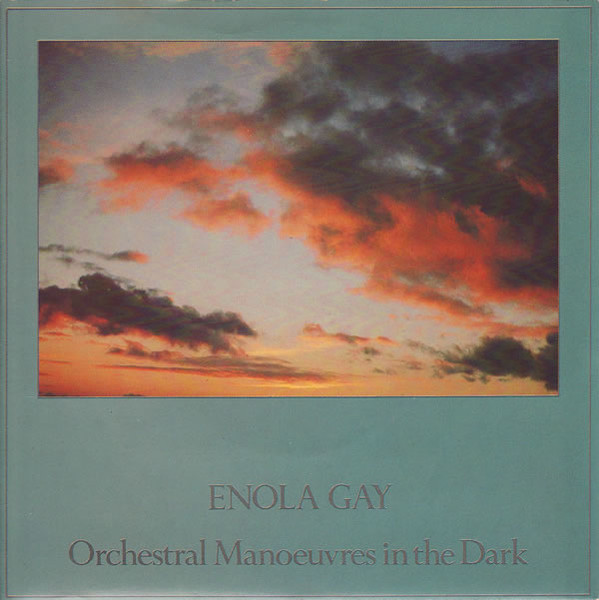
THE MOST DANCEABLE ANTI-WAR SONG OF ALL TIME?

R-99647-1277962664

Released just over 40 years ago, on 26 September 1980

mp3: Orchestral Manoeuvres In The Dark – Enola Gay

The spectre of nuclear war was all too real in 1980.   Membership of CND was on the rise, and would indeed increase very dramatically in the early 80s after Ronald Reagan became US President, give he seemed to have no concerns about using deadly weapons against the Soviet Union should it come down to it.

The release of Enola Gay was timely.  From a musical point of view, it was another signpost that electronica was becoming ever-increasingly important across pop music.  But for many of us of a certain age, it added to our knowledge base of what had happened in Japan back in 1945.

Yup. We were taught that two atomic bombs had brought an end to World War II, and that these weapons had been so deadly and devastating that they hadn’t been used over the next 35 years.  But Andy McCluskey‘s lyric added a poignancy and human element to the event.  The name of the plane that had carried the bomb dropped on Hiroshima would now be etched forever in the minds of a generation of music-lovers.   

It’s quite remarkable, and indeed ironic, that such a serious subject matter was accompanied by such a danceable and happy tune.  And in an era where chorus was king, OMD showed, again, as they had with Electricity, that there were different ways to make memorable 45s that will always stand the test of time.

The b-side wasn’t too shabby either, albeit it’s far less immediate or danceable than the a-side:-

mp3: Orchestral Manoeuvres In The Dark – Annex

Enola Gay reached #8 in the singles charts, and was the first of what proved to be seven Top 10 hits across the group’s career.

JC


NOSTALGIA IN SEPTEMBER (8)

omd_

Some extracts from ICA 33.

Enola Gay

Likely the band’s most recognized and iconic song, this is a great introduction to the dual nature of so many OMD songs: a danceable and poppy synthesizer sound, but married to much darker lyrics…this time about the airplane that dropped the first atomic bomb on Hiroshima.

There is in fact generally a fascination in the songs of OMD with historical air, rail, and naval transportation. That is, the sometimes strikingly transcendent potential of all three is often contrasted with their darker destructive power, a theme which runs through the songs and albums of the band throughout their 35 year career. This is perhaps most obvious when one glances from the 1983 Dazzle Ships concept album to the 1993 Liberator album (with its nose cone cover art), to their most recent work following the 2006 resurrection of the band following a ten-year hiatus, 2013’s English Electric.

International

For me, this is the best track on what is probably the strongest, and most experimental “long ahead of its time” album the band ever created, Dazzle Ships. So good it was, in fact, that it lost the band about 90% of its audience overnight, but satisfied the band’s inner need to experiment with every electronic toy, every tape loop, every newsreel sample, every strange sound and industrial screech at their disposal.

Souvenir

A return here to the earlier material (1981), and the more conventionally “critically approved” material, this time with founder and synth-player Paul Humphreys taking a relatively rare turn on vocals.  But did you hear the 1998 remixes by Sash and Moby, with their deep house re-envisioning of the songs on Architecture and Morality? I believe the interested can find them on YouTube…

rhetor

PS : A late edition to today’s scheduled post.  It’s nothing to do with OMD and some of you may already have come across it.

Craig, from Plain or Pan, has come up with an amazing concept for one of the greatest and most moving songs of all time.

FLip Out

It’s well worth a few minutes of your time.

JC

FAC 6 : ELECTRICITY by ORCHESTRAL MANOEUVRES IN THE DARK

R-11399-1435047515-1945

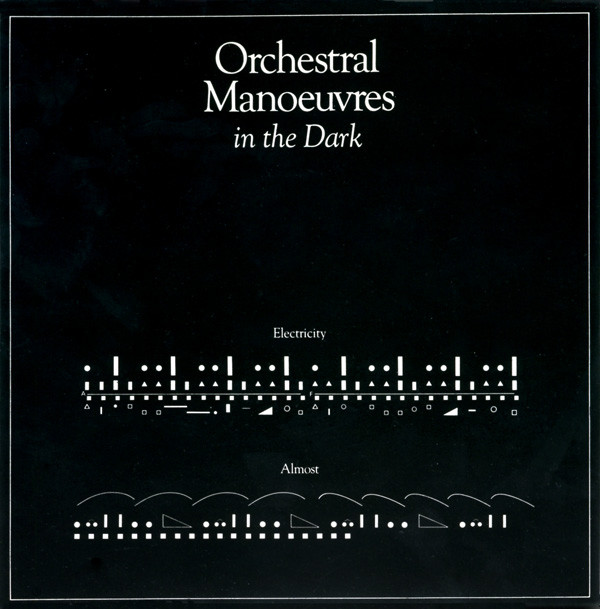
The short series dealing with the contents of the Use Hearing Protection box set.  FAC6 has featured before on the blog, back in September 2018, when I had a look at all three versions of Electricity/Almost.  A lot of what follows, is taken from that post.

The first version was FAC6, released in May 1979.

Orchestral Manoeuvres In The Dark had originally recorded both sides of the single with Martin Zero (aka Hannett) at the helm in Cargo Studios in Rochdale. They felt, however, that it was overproduced and so, at a studio in their home city of Liverpool, they re-recorded both songs with production being shared by the band and their manager Paul Collister. As a compromise, and not wishing to totally upset the volatile Hannett, it was agreed by Factory Records that the b-side from the Cargo sessions would be used.

Four months later, with the duo having now signed to DinDisc Records, the debut single was re-released, (catalogue # DIN2) but with it featuring the Hannett-helmed version as the a-side.

Neither release bothered the charts, but after a later single, Red Frame White Light (DIN6) managed to become a minor hit, DinDisc decided to re-release Electricity as part of the marketing campaign for the debut album. It also had the catalogue #DIN2, but it was different from the earlier DinDisc take on things as both sides of the 45 were the album versions, as produced by OMD and Chester Valentino (an alias adopted by Paul Collister).

But this series is, of course, only about the early Factory releases, so here, taken straight from the vinyl within the box set are the two songs on FAC6:-

mp3: Orchestral Manoeuvres In The Dark – Electricity
mp3: Orchestral Manoeuvres In The Dark – Almost

Incidentally, when I wrote about FAC6 back in September 2018, I mentioned that if you were lucky enough to have a good quality copy of the artefact, you could ask for and get in excess of £100 if you put up for sale.

Scratch that.  The asking price for it nowadays is substantially over £200.

JC

SWC WAS COMING UP FOR ONLY HIS 5th BIRTHDAY

I’ve got this series underway that’s looking back at chart hits from 30 years ago, which is proving to be scary. If I had taken it back to 1980, then it would have been absolutely terrifying to realise just how long some pieces of vinyl have been in my possession.

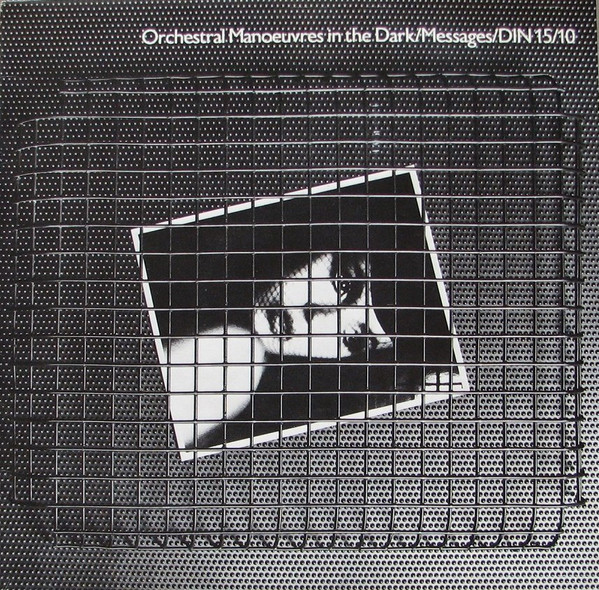
Like the 10″ version of the first hit single, in May 1980, for Orchestral Manoeuvres In The Dark. I often try and clean up some of the tracks that I post here, looking out for cleaner copies that don’t snap, crack, pop or skip. In this instance, I’m just going straight from the vinyl, which has survived reasonably intact, possibly as a result of the songs being pressed on a particularly hard piece of vinyl that would refuse to bend no matter how hard you would try (not that I did try…..well, not since the first couple of days after buying it as I had genuinely never seen a record that looked or felt like this particular piece of plastic).

mp3 : Orchestral Manoeuvres In The Dark – Messages

Two tracks on the b-side, one being a remix/instrumental version of the single and the other being an electropop take on a Velvet Underground classic:-

mp3 : Orchestral Manoeuvres In The Dark – Taking Sides Again
mp3 : Orchestral Manoeuvres In The Dark – Waiting For The Man

I’ve long thought that there’s a real sense of a bassless Joy Division to Taking Sides Again.

But 40 years ago?????????  C’mon………………………………………….

JC

ALL OUR YESTERDAYS (11/22)

Album : Various/Various
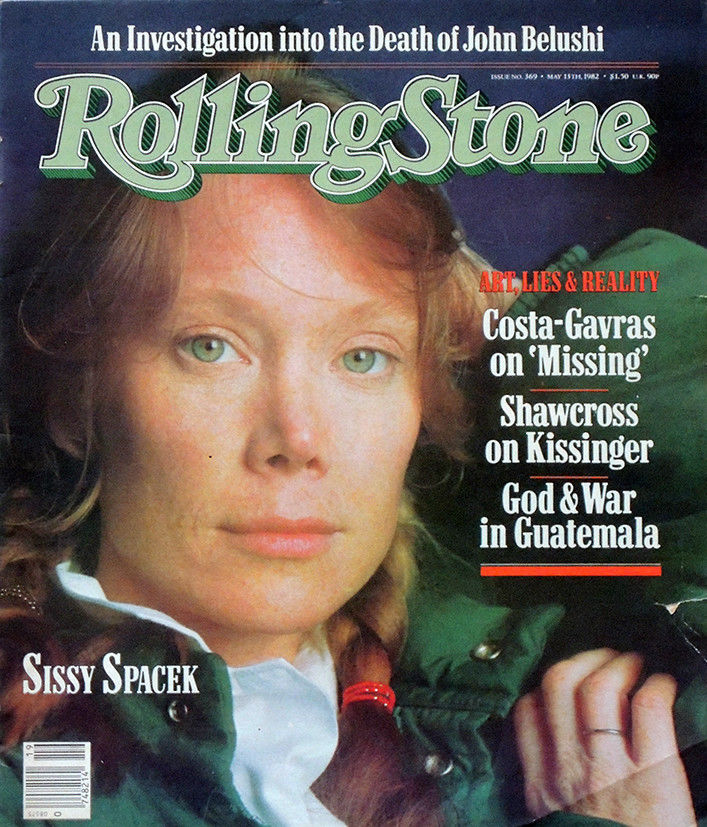
Review : Rolling Stone, 13 May 1982
Author : David Fricke

To English popmusic fans, there is nothing like a good six-month fad. The punk explosion, the warmed-over mods, the ska craze and the psychedelic revival–don’t look now, but you just missed the New Romantics–have come and gone (and in some cases, come again) with such confounding rapidity that it is hard to take most of them any more seriously than Hula Hoops or edible underwear.

The country’s latest rage is synthesizer music. Every hip, young Tom, Dick and Johnny B. Goode has traded in his guitar for a synthesizer and rhythm box, buying into future cool by applying the latest keyboard and computer appliances to the brisk melodic cheeriness of commercial pop and the bubbly beat of off-white funk. But far from bowing down to the great god of automation or passing off their microchip bubblegum musings on sex and energy as the stuff of a brave new world, these synthesizer bands have bestowed an almost mock-human quality upon their hardware. The beeping, farting and whooshing of the keyboards, combined with the psycho-Sinatra cabaret croon of the singers (Soft Cell’s Marc Almond and Orchestral Manoeuvres in the Dark’s Andy McCluskey, take a bow), creates a man-machine tension channeled into the vigorous dance beat of many of these songs. And by dancing, that does not mean the March of the Androids but no-holds-barred Soul Train swing.

The chart success of these digital dandies and their synthesizer pop – all four of the above LPs made the U.K. Top Five and are faring surprisingly well here – is somewhat out of proportion to their artistic worth. These are, after all, only pop songs in transistor drag. But if singing the same old song with newfangled noise is no great leap, selling the public on a package of postpunk do-it-yourself ingenuity, easy-to-play technology and Top Forty classicism certainly is.

The Human League is a perfect case in point. In the four years since the group’s first single, a home-recorded slice of angry young electronic New Wave called “Being Boiled,” the original quartet split in half and evolved into a six-piece, circa-2001 Abba. Singer Phil Oakey‘s lusty saloon styling is now lightly sugared with the twee harmonies of Joanne Catherall and Susanne Sulley. Such songs as the Euro-fizzy “Open Your Heart” and the bright motorfunk exercise “Love Action” (both on Dare) are delightful, swinging singles free of sci-fi pretensions and uncluttered by art-school cleverness. Producer Martin Rushent‘s warm widescreen production also takes the edge off the severe chill that typified the League’s earlier import albums.

Yet, more important, the League itself now strikes an appealing balance between modern technique and tuneful charm, epitomized by the hit single “Don’t You Want Me.” Alternating between a gray doomsday riff and a smart samba strut, the song is a tasty white-soul layer cake of competing melody and harmony lines whose orchestral possibilities are pared down to a sleek, glassy arrangement by the metallic breeze and regimented beat of the synthesizers. With all the knobs and buttons at their disposal, the Human League still goes for the hook. And with eight other songs as artfully grabby as “Don’t You Want Me,” Dare keeps reelin’ ’em in.

The problem with Orchestral Manoeuvres in the Dark is that they want to have their art and eat it, too. The awkward mix of dreamy romanticism and spatial, Pink Floyd-ian abstractions on Architecture and Morality, OMD’s second American album, suggests that Andy McCluskey and Paul Humphreys are acutely embarrassed by their ability to pen seductive moonlight sonatas like “Souvenir” and the eerie Parisian waltz “Joan of Arc (Maid of Orleans).” Why else gussy up the LP with ponderous music of the spheres, as in the title track’s construction-site rattle and the overlong “Sealand,” a nuclear beach concerto of drawn-out synthesizer drones? They even sabotage the album’s one decent party track, “Georgia,” with carnival organ and holy choir sound effects. Too much sincerity and not enough spunk on Architecture and Morality make for attractive but dull fare.

The Soft Cell twosome of Marc Almond and David Ball walks on a much wilder side, bringing the brainy bop of OMD down to a lurid red-light-district level on their debut album, Non-Stop Erotic Cabaret. Their hit single, “Tainted Love” (included here), neatly captured Soft Cell’s fetish for R&B; camp; the twelve-inch single even segued into a heavy-breathing version of the Supremes‘ “Where Did Our Love Go.”

Not surprisingly, then, the best tracks on Non-Stop Erotic Cabaret–“Frustration,” “Sex Dwarf,” “Secret Life” – bump and grind with vibrant, tawdry soul. Ball, employing a limited arsenal of synthesized keyboard effects, tarts up the meaty funk beat with multiple rhythm figures and steamy extended chords. Together, these complement singer-lyricist Almond’s passion for sexual deviation (“Sex Dwarf,” “Entertain Me”) and rather vampiric fear of open day-light (“Memories of the night before/Out in clubland having fun/And now I’m hiding from the sun,” from “Bedsitter”).

Compared to Soft Cell’s smutty pop, Depeche Mode‘s Speak and Spell is strictly PG-rated fluff. A group of fresh-faced, suburban lads from Britain, they have neither the ambition of Orchestral Manoeuvres in the Dark nor the overt commercial allure of the Human League. They simply drift aimlessly between the two, occasionally hitting a disco bull’s-eye with chirpy dance tracks like “Dreaming of Me” and “Just Can’t Get Enough.” Too often the synthesizers lock into dead-end grooves, and the group’s boyish caroling is anonymous at best.

There’s plenty more where all this synthesized Dream Whip came from: e.g., Simple Minds, Duran Duran, Heaven 17, the Far East fantasies of the group Japan. They’re not all completely synth, but they certainly sing the body electric. Still, the temptation is to dismiss English synth-pop as the chart’s flavor of the month. For all their undeniable pop attractions and the genuine innovative potential of electro-dominated rock, these bands so far have only bent the rules, not broken them. If this batch of records is any indication, the revolution will not be synthesized.

mp3 : The Human League – Open Your Heart
mp3 : OMD – Georgia
mp3 : Soft Cell – Secret Life
mp3 : Depeche Mode – Dreaming of Me

JC adds “The chart success of these digital dandies and their synthesizer pop is somewhat out of proportion to their artistic worth.”   Just fuck off will you?  It’s dicks like you that give music writers/journalists a bad name.

Happy New Year.  It’s great to start it off grumpy.


ELECTRICITY (x3)

The sleeve pictured above is the version of Electricity that I first owned. It was on Dindiscs Records and came out in early 1980.

What I didn’t realise at the time, and indeed didn’t for many years, was that this was in fact the third attempt at turning the song into a hit single, albeit the first really serious attempt as previous releases had been either via a limited run or using a mix which the band were unsure about.

It’s a complex and twisting tale….please bear with me

First Release : Factory Records (FAC6) : May 1979

The band had originally recorded Electricity, together with the b-side Almost, with Martin Zero (aka Hannett) at the helm in Cargo Studios in Rochdale. They felt, however, that it was overproduced and so, at a studio in their home city of Liverpool, they re-recorded both songs with production being shared by the band and their manager Paul Collister. As a compromise, and not wishing to totally upset the volatile Hannett, it was agreed by Factory Records that the b-side from the Cargo sessions would be used…..all of this is info is provided on the reverse of the sleeve for FAC6, which was restricted to a run of 5,000 copies:-

mp3 : OMD – Electricity (FAC6 version)
mp3 : OMD – Almost (FAC6 version)

If you’re lucky enough to have a good quality copy of this artefact, you could ask for and get in excess of £100 if you put up for sale.

Second Release : DinDisc Records (DIN2) : September 1979

The band had left Factory, enticed by a multi-album offer and decent advance by DinDisc, and the label decided to try to make an early gain by re-releasing Electricity in September 1979, but for some strange reason went with the version recorded at Cargo despite the band having previously indicated they weren’t satisfied with it:-

mp3 : OMD – Electricity (Hannett Cargo Studios version)

The version of Almost was that from the Factory single. Again, all of this info is provided on the reverse of the sleeve.

Third Release : DinDisc Records (DIN2) : March 1980

The single Red Frame White Light (DIN6) had been a minor hit in early 1980 just in advance of the release of the self-titled debut album. In an effort to keep the momentum going, Dindisc decided to re-release Electricity. The ability for confusion can be seen from the fact that they didn’t give this re-release a different catalogue number, nor did they change the front of the sleeve, although the back was different as there was no information provided about the recording process.

The piece of plastic inside the sleeve was completely different from earlier 45s as they were the versions that had been included on the debut album:-

mp3 : OMD – Electricity (album version)
mp3 : OMD – Almost (album version)

This version, if you cross-checked with the album, was produced by the band and someone called Chester Valentino, who in reality was manager Paul Collister who had been credited under his real name on the Factory version.

Told you it was complex and twisting.

In any event, the third effort at creating a hit out of Electricity came to nothing. It has, however, endured as one of the bands best-known and best-loved songs.

It was a contender for inclusion in the great debut singles series that occasionally features here, but intsead I felt the full story needed to be told.

Oh and just to complete things for you, here’s the earliest known version of the song, recorded by Andy McCluskey and Paul Humphries before they came up with the name of Orchestral Manoeuvres In The Dark.

mp3 : The ID – Electricity

And finally, the version of Almost that was recorded in Liverpool but which didn’t see light of day until its inclusion in a compilation album in 2001 (and which in my view is the best of them):-

mp3 : OMD – Almost (alternate version)

JC

AN IMAGINARY COMPILATION ALBUM : #33: OMD

OMD_1311752345

rhetor has been back in touch again from Canada with what I think is a great piece on a band that were much better in their day than many have given them credit…..and a band that was the firsy ‘synth’ act I ever caught live at the Glasgow Apollo on 10 November 1980.

——————————————————-

According to good old Wikipedia, “The Quietus magazine editor John Doran once remarked: “Orchestral Manoeuvres in the Dark are not one of the best synth bands ever: they are one of the best bands ever.”

Yes, I figure some TVV readers will say that is putting the case a little strongly, but I really think it would be a dreadful shame if people limited their listening to the first few “experimental” singles that date from the period of their Kraftwerkesque sound and the days of their Peter Saville and Factory Records association, and write the band off as having “sold out” around the time the film Pretty In Pink came out with its chart-topping If You Leave single.

The band itself laughs off the success of this song, by the way, noting that it was written literally over night when the record label asked them for a “hit” (to break through in the lucrative American market) and at the request of film maker John Hughes, who asked them for a new song fast to fit the revised ending of his film (after a last-minute script change owing to negative test market reactions to his original planned ending).

And of course, some may not even be aware that the band is still a going concern, both touring worldwide, and releasing two new albums and a third in the works, all in the last five years. I was lucky enough to catch them live in July 2013 in Toronto, on my birthday no less, at one of their last live shows to date before, three days later (and also in Toronto) band member Malcolm Holmes had a heart incident in mid-show, and the band was forced to take an unforeseen break from live gigs.

But the show I got to see was fantastic, sweaty, and packed, and I danced like such a maniac stage-side that singer Andy McCluskey gave me a huge grin and a thumbs-up (though he is known himself for his energetic, unusual and sometimes gawky moves!).

Side A

Track 1: Enola Gay (from the 1980 album Organisation)

Likely the band’s most recognized and iconic song, this is a great introduction to the dual nature of so many OMD songs: a danceable and poppy synthesizer sound, but married to much darker lyrics…this time about the airplane that dropped the first atomic bomb on Hiroshima.

There is in fact generally a fascination in the songs of OMD with historical air, rail, and naval transportation. That is, the sometimes strikingly transcendent potential of all three is often contrasted with their darker destructive power, a theme which runs through the songs and albums of the band throughout their 35 year career. This is perhaps most obvious when one glances from the 1983 Dazzle Ships concept album to the 1993 Liberator album (with its nose cone cover art), to their most recent work following the 2006 resurrection of the band following a ten-year hiatus, 2013’s English Electric.

Track 2: Electricity (from the album the 1980 album Orchestral Manoeuvres in the Dark)

Continuing with the theme of the history of technology, this song makes the perhaps natural connection between synthesizer music’s novel sound, and the power behind it that makes it all possible.

The real feat of the song is that the emotional range and warmth of the voice of singer Andy McCluskey offsets so naturally the “colder” machine generated synthetic sound of the instrumental track. Along with other club hits such as Tesla Girls and Telegraph, the theme of exploring the potential for both good and harm in even the simplest forms of technology continues, through the very unexpected medium of new wave dance music, treated from the uniquely historical perspective of “hindsight”.

Track 3: Maid of Orleans (from the 1981 album Architecture and Morality)

A lovely tune, and one of two songs about Joan of Arc on the same album, both released as singles. This track was originally to be titled Joan of Arc as well, but the record label told them that was just nuts…

Track 4: Forever Live and Die (from the 1986 album The Pacific Age)

One of my favourite OMD tracks, in fact, as for some reason I can’t get enough of the soaring vocals of the line in the chorus, with its sudden descent into the title, “I never know, I never know, I never know, I never know why…Forever Live and Die”. Maybe it’s just me…

Track 5: International (from the 1983 album Dazzle Ships)

For me, this is the best track on what is probably the strongest, and most experimental “long ahead of its time” album the band ever created, Dazzle Ships. So good it was, in fact, that it lost the band about 90% of its audience overnight, but satisfied the band’s inner need to experiment with every electronic toy, every tape loop, every news reel sample, every strange sound and industrial screech at their disposal. So I have placed it in its original place, the closing song on the first side of the album.

Side B

Track 6: Metroland (from the 2013 album English Electric)

This is the stand-out track and first single from the bands most recent album, which has actually done quite respectably, both critically and in the all-important sales category. The album itself reached number 1 on the UK Indie Music Charts, and Number 8 on the US Dance Charts. If you listen, you will note that it is really a return to the original sound that made OMD unique, but with just that touch of modern that was enough to catch the eye of the professional club remixers, as one can see by the 6 or so different versions available through the beatport.com dj website, or more inexpensively through YouTube…

Track 7: Secret (from the 1985 album Crush)

This was never as big a hit in the rest of the world, apparently, as it was in my native Canada, for whatever reason—perhaps it is the “children’s chorus of the titular word ‘Secret’ that many find off-putting.

On the band’s website forum, where front-man Andy McCluskey is kind enough to put in frequent appearances, answering questions and offering opinions, he puts it down to the fact that the record label forced radio stations to pull it early to make way for the “next big single” So In Love, before it had time to make any real impact.

But on Toronto indie and alternative radio stations, it played in heavy rotation, and that was (I date myself) the year I was in 8th grade, that difficult and yearning year of awkward parties, relationships which formed quickly and broke up inexplicably, and, yes, secrets, so in a way I think of this as a kind of soundtrack song for that entire period. And when the band chose it (at the crowd’s request) as the encore at the concert they played in Toronto, on a hot sweaty July day in a crammed club packed with people dancing as if they were still crazy and still in 8th grade, it seemed just perfect for the occasion.

Track 8: Pulse (from the 2010 album History of Modern)

The Allmusic review of the album refers to this track as “neo-electro sleaze, full of bedroom whispers, moans, and yearning yelps”, and suggests it is one of the stand-out tracks of the album in being an experimental update to the OMD sound for 2006, after the band had been defunct for a decade.

The album HOM itself is not necessarily their strongest, and not overly experimental musically the way the pre-Pretty-in-Pink albums were, in way more sure to pique the interest of critics, but I figure every good electronic album needs its sleaze, and track 8 is about the right place for it. And one can’t ignore the modern incarnation of OMD either, if one is to be honest…both “new” albums are worth the listen.

Track 9: Souvenir (from the 1981 album Architecture and Morality)

A return here to the earlier material, and the more conventionally “critically approved” material, this time with founder and synth-player Paul Humphreys taking a turn on vocals (as he does, incidentally, on Secret, though this is relatively rare in the band catalogue).  But did you hear the 1998 remixes by Sash and Moby, with their deep house re-envisioning of the songs? I believe the interested can find them on YouTube…

Track 10: Messages (from the 1980 album Orchestral Manoeuvres In The Dark)

It is somehow fitting, I think, to end off with what was the band’s very first hit single from their very first album. It just goes to show how far a very, very simple synthesizer line can take you. I recently picked up from eBay copies of the 10” single for both this and Souvenir, as I have recently taken a great delight in collecting that rarest of vinyl beasts, the 10”.

I am always fascinated at just what makes a band (or a record label) choose that particular beautiful but unwieldy format. Actually, I have a suggestion that I am daring to put out there, for a new series that the The Vinyl Villain (and his followers and contributors) might wish someday to pursue: Top Ten Ten-Inches in Ten Days. Looking at my collection of vinyl, I have always felt the 10” selection, though slim, to be somewhat special…and I am really curious what lurks in the cupboards of TVV in that direction….

And that is it. And if you’ll note, I did not even include “If You Leave”…though it’s not at all a bad song, really…

rehetor

mp3 : OMD – Enola Gay
mp3 : OMD – Electricity
mp3 : OMD – Maid Of Orleans
mp3 : OMD – Forever Live and Die
mp3 : OMD – International
mp3 : OMD – Metroland
mp3 : OMD – Secret
mp3 : OMD – Pulse
mp3 : OMD – Souvenir
mp3 : OMD – Messages

JC adds…..

I too have said 10″ single and featured it back in Dec 2013:-

https://thenewvinylvillain.wordpress.com/2013/12/19/a-great-often-neglected-synth-pop-classic/

It is one of only about 15 singles I have in that shape and size.

SOMETIMES IT TAKES A WHILE

omd-orchestralmanoeuvresinthedark-lprecord-474649

Aside from Simple Minds, which was largely on the basis of them being local, Orchestral Manoeuvres In The Dark were the first electronic band that I really became a fan of, thanks to the early singles Electricity and Messages. They were certainly the first electronic band I ever saw play live at the Glasgow Apollo in November 1980, a gig which left me rather disappointed and underwhelmed, but then again I didn’t have a great seat stuck at the back of the circle (but not quite the upper circle which really was a dreadful spot in the building being so high up and far from the stage).

However, it was only some 20 years after its release that I really became a fan of the band’s debut LP. This was a record which had versions of the two hit singles I loved along with eight other bits of music, many of which were far darker, moodier and difficult for a 17-year-old weaned on guitar music to really get his head around. It wasn’t too long in the collection as I soon swapped it with a friend for a copy of Diamond Dogs (which I’m sure he had pinched from his big brother’s collection) as  I was just really getting into Bowie on the back of Scary Monsters.

It was many years later that I picked up a copy of the OMD debut on CD for £5. I was of course approaching it with a whole new outlook on music with my tastes have broadened substantially from those long-ago teenage years. And I very much liked what I was hearing – and in particular what I had previously thought difficult and almost unlistenable bits of music.

A few weeks ago I picked up a second-hand vinyl copy of the album. It’s not the now rare first edition that I had bought away back in 1980 but one of what was a number of re-issues by Dindisc Records. It’s a near mint copy vinyl wise, but the sleeve is a bit tattered and torn which makes me think the original owner, a bit like myself, didn’t take a shine to the music and the sleeve ended up not being looked after as it was boxed up and moved house on a few occasions.

The closing tracks on the second side of the record in particular are quite stunning – the very experimental and inappropriately named Dancing and then the beauty and majesty of Pretending To See The Future which can now be seen as a huge influence on so many bands who were to follow:-

mp3 : Orchestral Manoeuvres In The Dark – Dancing
mp3 : Orchestral Manoeuvres In The Dark – Pretending To See The Future

It’s also worth having a listen to the original version and the single version of what would become their first Top 40 hits:-

mp3 : Orchestral Manoeuvres In The Dark – Messages (LP version)
mp3 : Orchestral Manoeuvres In The Dark – Messages (10″ single version)

It’s a very fine example of tweaking a song to make it far more daytime radio-friendly without losing the sense of magic that made it sound so special in the first place.

Enjoy.