WHEN THE CLOCKS STRUCK THIRTEEN (September Pt 2)

In which I hope to have kept to my promise that this one will feature all sorts of great ‘non-hit’ singles.  The well-thumbed big red book is again being flicked through.

mp3: Cabaret Voltaire – Sensoria

Anyone reading this post and hearing Sensoria for the very first time in their life might have a hard time in believing it’s a song that’s 41 years old. One that takes me back to the Strathclyde Uni Students Union downstairs disco on Friday and Saturday nights, held in the space that was normally where we devoured our daily helpings of pie, beans and chips.  As I’ve said before, this is one for flailing around the dance floor with your raincoat flapping behind you like Batman’s cape as he chases the bad guys.

mp3: The Daintees – Trouble Town

The second single from a newish-band based in the north-east of England who had been snapped up by Newcastle-based label Kitchenware Records, largely on the basis of the talents of their singer/songwriter frontman.  It would take until mid-86 before the band, now called Martin Stephenson and The Daintees, to enjoy a small amount of commercial success via their albums and dynamic live shows.

mp3: Go-Betweens – Bachelor Kisses

The second and final single to be lifted from the album, Spring Hill Fair.  After Part Company had failed to wow the record-buying public, Sire Records went for a Grant McLennan composed number this time around.  The record label actually went a bit further. Believing that they had a radio-friendly number on their hands, they gave the album version to producers Colin Fairley and Robert Andrews, who earlier in the year had worked with The Bluebells, and asked them to make it just that little bit more commercial.  Robert Forster would later comment “we got new producers, more days on the bass drum, and a version of the song of no great variance to the original take.”

Money was also spent on a promo video:-

The female backing vocal is courtesy of Ana da Silva, the lead singer of post-punkers The Raincoats, and a band much loved by Kurt Cobain.  The failure of the single led to Sire Records dropping the band a few weeks later.

mp3: Grab Grab The Haddock – I’m Used Now

The Marine Girls, a trio from the south of England featuring Tracey Thorn, Alice Fox and Jane Fox, had made a small splash in the indie-pop world in the early 80s, eventually signing to Cherry Red Records and releasing the well-received album Lazy Ways in early 1983.  By this time, Tracey had relocated to Hull University where she would meet Ben Watt and form Everything But The Girl; meanwhile, Jane had recorded material with her boyfriend, the Manchester-born poet Edward Barton, with one of the songs, It’s A Fine Day later being re-recorded as an electronic dance track by Opus III in 1992 and proving to be a massive hit.  After the Jane and Barton mini-album in late 1983 had sunk without trace, the Fox sisters formed what proved to be a short-lived band called Grab Grab The Haddock who would release a 12″ single and an EP on Cherry Red in 1984/85.  I’m Used Now was the debut single.

mp3: Paul Haig – The Only Truth

The production is credited to B-Music/Dojo, otherwise better known as Bernard Sumner and Donald Johnson. How many of you wanted to shout out ‘Confusion’ just before Paul’s vocals kicked in?

One word to describe this one?  Tune.

mp3: The Higsons – Music To Watch Girls By

A band formed by students at the University of East Anglia in Norwich, The Higsons had been around since 1981, and in due course would sign for 2 Tone and release a couple of non-hit singles for the label in 1982/83.  By 1984, they were on the London-based indie-label Upright Records, who would release the band’s sole LP from which this cover version of the easy-listening 1967 hit single by The Bob Crewe Generation was the lead single.  The band broke up the following year, and lead singer Charlie Higson would find fame and fortune as a comedy actor/writer in The Fast Show, while trumpeter/saxophonist/guitarist Terry Edwards would forge a very successful musical career which continues to this day.

mp3: The June Brides – Every Conversation

The band’s second single on the newly established Pink Records somehow managed to surpass the magnificence of debut In The Rain from a couple of months earlier.  A band that would get lumped in with the C87 ‘movement’ despite all their music, in their first incarnation, all being from June 84-May 86.

mp3: The Loft – Why Does The Rain

The Loft, as with The June Brides, get lumped in with the C87 ‘movement’ when in fact they had already broken up in late 1985.  This was the debut single, and it’s an absolute belter.  The next 45, Up The Hill And Down The Slope, was even better, but singer/songwriter Pete Astor then called it a day and went on to form The Weather Prophets, a band who would release their own take on Why Does The Rain on their debut album, Mayflower, in April 1987.

mp3: Red Guitars – Marimba Jive

The third and final single of the year from Red Guitars, whose profile was fairly high after a load of well-received live shows opening for The Smiths UK tour in early 1984.  Sadly, and undeservedly, the singles failed to connect with the record-buying public, and likewise with debut album Slow To Fade which was released just before the end of the year.

mp3: Marc Riley & The Creepers – Shadow Figure

The fifth single to be recorded by the band set up by Marc Riley after he ‘took his leave’ of The Fall in January 1983, but their first following the release of debut album Gross Out back in June 1984. An unusual number in which the kitchen sink seems to have been thrown at the tune during the production process….almost chamber pop in execution.

mp3: Shriekback – Mercy Dash

The second flop single in a three months.  This one is dedicated to Post Punk Monk, one of the finest on-line writers out there, and a huge fan of Shriekback.

mp3: Violent Femmes – It’s Gonna Rain

The second and final single to be lifted from the album Hallowed Ground.  I remember at the time being a bit underwhelmed by the album, but then again, it had been an impossible task to follow the eponymous debut that had landed in the UK in late 1983.  I’ve grown to appreciate things just a little bit more as the years have passed, but it remains hard to fully embrace an album of folk/country tunes with more than a hint of Christianity sprinkled in.  It’s Gonna Rain is actually an interpretation of the Noah’s Ark story, and in places it’s not too far removed from the sort of music Jonathan Richman does so very very well.

mp3: The Mighty Wah! – Weekends

The second and final single to be lifted from the album, A Word To The Wise Guy.  And while Come Back had gone Top 20 earlier in the year, the radio stations ignored the follow-up!

Told you this month was a good ‘un.

late addendum/correction : huge thanks to those who corrected me on Jane and Barton (see the comments section).  Much appreciated.


JC

WHEN THE CLOCKS STRUCK THIRTEEN (July Pt 2)

Congratulations to those of you who tolerated the chart offerings from July 1984 via the post from a couple of weeks back.   Surely those 45s issued via the indie labels and who distribution methods/lack of daytime airplay were the biggest factors in them not hitting the Top 75 would prove to be a bit more palatable. Surely……..

In June 1983, Lawrence Hayward (aka Felt) had released Penelope Tree, a gloriously catchy piece of indie-pop which, if the world was a fair and just place, would have been a huge hit. The opening lines of Penelope Tree were:-

I didn’t want the world to know
That sunlight bathed the golden glow

Just over a year later, the new single from Felt opened with these lines:-

You’re trying to fool somebody
But you end up fooling yourself

Methinks Lawrence was, despite his claims of never really wanting to be a pop star, was getting a tad frustrated:-

mp3: Felt – Sunlight Bathed The Golden Glow

Moving along quickly to another song which takes me back to that particular summer

mp3: The Go-Betweens – Part Company

Having, the previous year, come to the attention of the UK indie cognoscenti via Rough Trade Records, our wizards from Oz were signed by Sire Records and thanks to the snippets of news via the music papers, we learned they had headed off to France to record what would be their third studio album, Spring Hill Fair, from which Part Company was the lead single.  It’s one on which Robert Forster takes the lead vocal, and musically there is a hint of the slower numbers that Johnny Marr was writing for The Smiths.  Another that should’ve been a hit, but like every other 45 released by the band, it failed to trouble the charts.

mp3: The Jazz Butcher – Roadrunner

I’ll confess not to knowing that this rather frantic and fabulous cover version had been released in July 1984….it was many many many years later (via a blog in the 21st century) did I learn that Pat Fish et al. had taken Jonathan Richman‘s signature tune and made into something that sounded like one of their own.

mp3: Shriekback – Hand On My Heart

The mid 80s was a time when white-boy funk was a bit of a ‘thing’ (and Glasgow had more than its fair share of would-be bands).  Shriekback had formed in 1982, with Barry Andrews (ex XTC) and Dave Allen (ex Gang of Four) being joined on vocals by Carl Marsh.  By 1984, they were signed to a major label – Arista Records – and given a bit of a makeover with the addition of female backing vocals in an attempt to create a really radio-friendly sound.  Debut single for the label, Hand on My Heart flopped. As indeed would the subsequent singles and two albums, Mercy Dash (Sep 84) and Oil and Gold (June 85).

It wasn’t just white-boy funk, mind you:-

mp3: Sunset Gun – Be Thankful For What You’ve Got

As mentioned previously on the blog, Sunset Gun were a Glasgow trio, made of up sisters Dee and Louise Rutkowski, and Ross Campbell. The Rutkowski sisters were a huge part of the Glasgow music scene in the early 80s, having been part of Jazzateers, the group that would in due course evolve into Bourgie Bourgie.

The demos recorded by Sunset Gun created a bit of a buzz, with a number of labels looking to sign the group, and in the end it was CBS that won the bidding war. The trio went into a studio with Alan Rankine (ex Associates) in the producer’s chair, and the debut single was a cover of the 1974 hit written and recorded by William DeVaughn, a song later covered by Massive Attack and included on their subsequent debut album in 1991.

Continuing with the theme of debut singles…..

mp3: The Woodentops – Plenty

A band who would influence and delight many in subsequent years without ever getting the sort of commercial success that their fans in the media believed should have been theirs.   I’ve always associated The Woodentops with Rough Trade Records, but this particular 45 was released on the then very new Food Records that had been set up by Dave Balfe, formerly of the Teardrop Explodes.  What a glorious and enduring debut!!!!


JC

WHEN COLIN MET LINDY

Regular readers will be aware of the pivotal role Comrade Colin played in getting the original blog off the ground back in September 2006, and indeed in providing the support for it to be reincarnated in July 2013 just a matter of hours after Blogger had pulled the plug on things and I flitted over to WordPress.  His own, long-lost and much missed blogs (Let’s Kiss and Make Up and And Before The First Kiss) were the inspiration for TVV, and it didn’t take too long before we became close friends, mainly due to a common love of much great music.

I mentioned previously that, late last year, he went to Australia, for a trip that would combine work, a family holiday and a pilgrimage to various sites and locations that are part of the story of the Go-Betweens, while also unashamedly admitting that I was insane with jealousy.

He used some acceptable social media platforms to keep those of us not in Australia up-to-speed with his adventures, including some of the treasures he had unearthed in various record shops, including a copy of Your Turn, My Turn, the third single released by the Go-Betweens on Missing Link Records back in 1981.  As if that wasn’t enough, he then let us know that he had made contact with Lindy Morrison, the long-time drummer with the band during their glory decade of the 80s, and had arranged to have lunch in a beachside location close to her home.

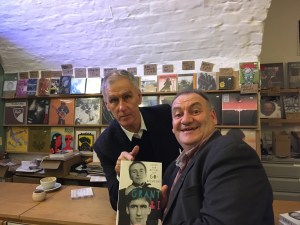
He posted some photos of their lunchtime meeting, adding the commentary that it turned out to be a perfect day, during which Lindy had been thrilled to learn that someone from Scotland was now the owner of a copy of such an old single. He also passed on the info that Lindy had, naturally, been more than happy to sign the sleeve with a personal dedication to said owner.  In looking at the photo, and zooming in on the dedication, my jaw dropped, a large lump got stuck in my throat and tears filled up my eyes:-

“Dearest Jim. All my very best to you. Lindy”

The single had always been intended for me from the moment Colin found it in Rocksteady Records in Melbourne.  The idea of having it signed by Lindy was something that came to him later.

I still haven’t been able to find the right words with which to thank Colin for his incredible act of generosity.  He told me it was just his way of saying a huge thanks for being such a good friend over the many years, and that he knew just how much it would mean to me.

mp3: The Go-Betweens – Your Turn, My Turn
mp3: The Go-Betweens – World Weary

I’m still in disbelief.

JC

AN HOUR OF…..THE GO-BETWEENS (2)

As usual, I’m (kind of) closing the blog down over the festive period.

Every day, weekends and holidays included, up to Monday 6 January 2025, you will find an hour-long mix featuring one particular band.

mp3: One Hour of……The Go-Betweens (2)

By Chance
Love Goes On!
People Say
Apology Accepted
Bachelor Kisses
A Bad Debt Follows You
Head Full Of Steam
Born To A Family
The Clarke Sisters (acoustic demo)
Finding You
Love Is A Sign
Part Company
The Wrong Road
I Need Two Heads
Hammer The Hammer
Two Steps Step Out
To Reach Me
When She Sang About Angels (TVV fade-out version)

The things you have to do to keep it within time limits….

JC

AN HOUR OF…..THE GO-BETWEENS

As usual, I’m (kind of) closing the blog down over the festive period.

Every day, weekends and holidays included, up to Monday 6 January 2025, you will find an hour-long mix featuring one particular band.

mp3: One Hour of……The Go-Betweens

Bye Bye Pride
Man O’ Sand To Girl O’ Sea
Lee Remick
Dive For Your Memory
The Clock
Cattle and Cane
Spring Rain
Was There Anything I Could Do?
Right Here
Here Comes A City
The House That Jack Kerouac Built
Streets Of Your Town
This Girl, Black Girl
I Just Get Caught Out
Draining The Pool For You
That Way
My Rock and Roll Friend

Round and round, Up and Down.

And so many that I couldn’t fit in….which is why a second volume will appear tomorrow.

JC

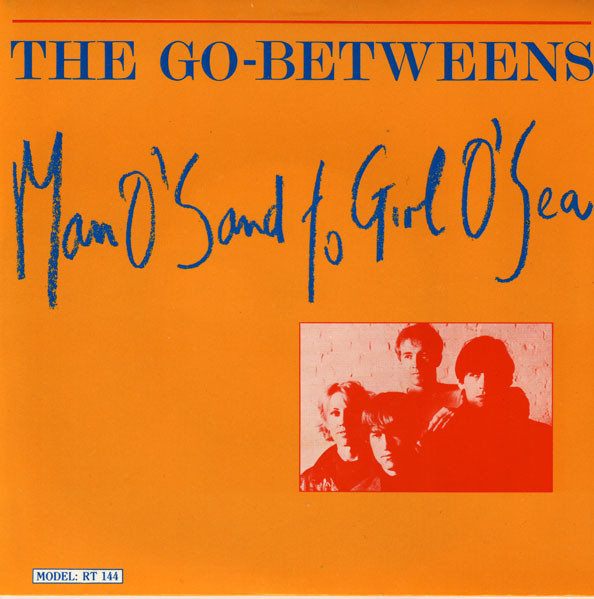
THE 7″ LUCKY DIP (24) : Go-Betweens – Man o’Sand to Girl o’Sea

First posted in May 2008 over at the old place.   Re-posted in May 2016.   It’s appearing in a slightly adapted form today to celebrate that Comrade Colin is currently in Australia, combining work, a family holiday and a pilgrimage to various sites and locations that are part of the story of the Go-Betweens.  I am, of course, insane with jealousy.

I think most people are surprised with my answer to the not-too-often posed question of ‘What’s Your Favourite Go-Betweens Song?’  It really is nigh-on impossible to  ignore the merits of the genius, majesty and sheer beauty of Cattle and Cane – the track that is probably their best-known and best-loved song? Not to mention the gorgeous vocal delivery of the much-missed Grant McLennan.  But the follow-up single just means an awful lot more to me.

It was at the age of 20, in August 1983, that I finally moved out from underneath my parents’ protection and branched out to a place of my own. It was a student residency flat on campus in Glasgow City Centre. It was a two-bedroom job, complete with kitchen, toilet and shower. I had the single room, while my two flatmates shared a larger space. The rent for each of us was £510 – for a full year including the summer months.

I had a reasonable record collection, but one of my other flatmates had a collection that I reckon was probably only second to that of John Peel (for instance, he had every single that had come out on Postcard Records). It was a time when my musical tastes broadened more than ever before, thanks to hearing some old stuff for the first time, but also on account of new and emerging bands throughout the early and mid 80s. This was where I first learned about, among others, The Go-Betweens.

The location of the flat was incredible, a mere stone’s throw from the student union where we seemed to spend most of our free time. We’d spend hours every weekend getting ready to go out, taking turns to play some of our favourite songs, often dissecting the lyrics and melodies in a way that seemed very important and meaningful.

Every Friday and Saturday, the set-lists for going out would change, but there was one single from October 1983 that always seemed to get played – as indeed was the b-side:-

mp3 : The Go-Betweens – Man O’ Sand To Girl O’ Sea
mp3 : The Go-Betweens – This Girl, Black Girl

Robert Forster’s manic delivery of the line ‘I feel so sure about our love I’ve wrote a song about us breaking up’ is one of the finest moments in pop history. As is the chorus that isn’t a chorus – ‘I want you baaaaaack.’ And don’t get me started in the great backing vocals.

But there’s something else…..

This was another 7” which was ‘lost’ in Edinburgh all those years ago, although I did still have copies of the songs on a double compilation LP called 1978-1990. However, by the early part of this century, it was all CDs or digital and I just couldn’t get my hands on a copy of the b-side.

But….there came a day when, after much humming and hawing, I plucked up the courage to ask a bloke called Colin who at the time (2006) had a great blog called Let’s Kiss And Make Up that had previously featured The Go-Betweens if he could post an mp3 of This Girl, Black Girl. He willingly obliged.

Colin also later replied to other e-mails from me in which I asked for advice in setting up my own blog – and without fail he was always courteous, charming, witty and hugely supportive, especially in the very early days when I was unsure of what I was doing and terrified that I was out of my depth, making a fool of myself and wasting my time.

Without him, and without this particular 45, I wouldn’t be doing this.

Thanks comrade. I’m proud to call you a mate. Real proud.  And I hope you’re having the time of your life in Australia right now.  Say hi to A & L from me if that part of the trip does come off.

JC


ONE HUNDRED AND ELEVEN SINGLES : #032

aka The Vinyl Villain incorporating Sexy Loser

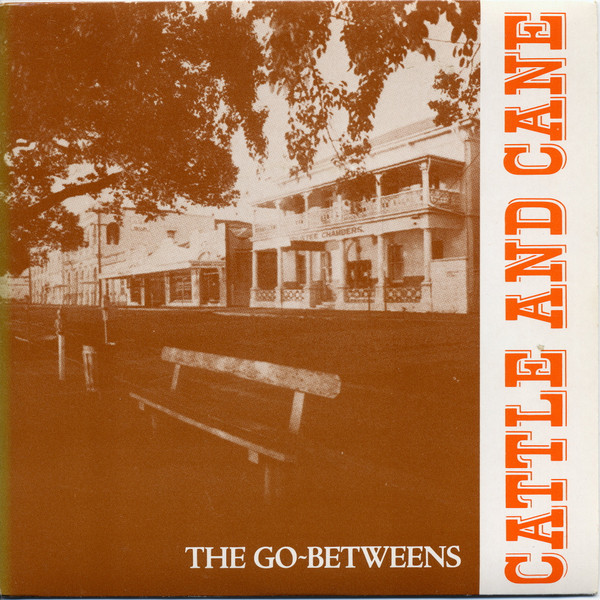
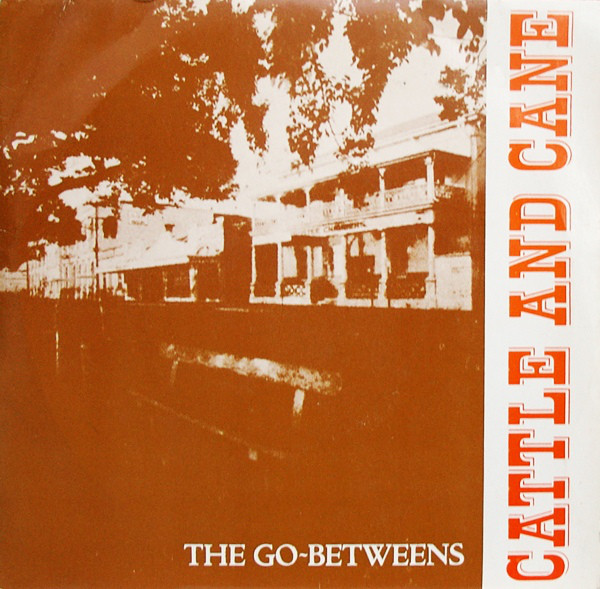
#032– The Go-Betweens – ‘Cattle and Cane’ (Rough Trade Records ’83)

Go-Betweens

Dear friends,

yes, yes, yes – the moment you’ve all been waiting for has finally come: for a change, I have a band for you with at least a bit of recognition value! Plus one of the finest singles of the last 40 years, to be sure.

The Go-Betweens it is, folks – I mean, come on, who does not adore them, right?! Formed in 1977 in Brisbane, Queensland – and I don’t mention this as a filler of what might or might not turn out to be boring nonsense again anyway, no, in fact their origins are of some importance for this specific song, you’ll wait and see.

Now, a lot of fans and specialists regard ‘Cattle And Cane’ as The Go-Betweens’ finest moment. And they do so because of the track’s highly uncommon time signature and because of its lyrics. I am a complete fuckwit when it comes to being able to read music, so for the more educated of you: “the time signature (also known as meter, metre, and measure signature) is a convention in Western music notation to specify how many of a particular note value are contained in each measure (bar). The time signature is a notational device representing the meter, an auditory feature of the music.”

So there you are, but even if I had understood one single word of the above, I would still disagree: ‘Cattle And Cane’ is certainly not their best song, in fact if ‘Draining The Pool For You’ had been released on 7”, I would perhaps have chosen it instead. But I would surely have chosen the band’s second single, 1979’s ‘People Say’ – the problem is that it’s one of the two famous Able Label – singles, the cheapest copy on discogs is for € 999.99. On the plus side, it’s only € 7,- for postage (from Portugal)…. so just let me contemplate a bit longer, will you? But for now, ‘People Say’ is not yet included in the wooden box along with the other 110 singles.

But, instead, ‘Cattle And Cane’ is – written in 1982 in London, because this is where the band retreated to in this year, in Nick Cave’s apartment, in fact, and on his acoustic guitar. But it was recorded in Eastbourne of all places – again this is of some importance, at least for those of you who know Eastbourne … which is not exactly the UK’s most, hmmm, delightful spot, let’s put it this way.

Which brings us to the lyrics, in which Grant McLennan tells us an autobiographical story of a train journey he once did, heading home as a schoolboy. Now, being stuck in the UK, cold and grey, plus finally ending up in bloody Eastbourne, McLennan was full of severe homesickness, constantly thinking about the past and his life, his friends and his family back in Queensland. And that, basically, is the background of ‘Cattle And Cane’, so very well transmogrified into four of the finest verses ever written.

To quote The Canberra Times: “the three verses by McLennan cover three phases of his life to date in a series of images – the primary schoolboy scrambling through cane fields, the adolescent in boarding school losing his late father’s watch in the showers, the young man at university discovering a bigger brighter world – and then the fourth phase of his life: Robert Forster, playing himself.”

R-748794-1486680805-1072

R-748794-1486680795-1105

mp3:  The Go-Betweens – Cattle and Cane

Listening to it, we actually feel like we’re on that train together with Grant, don’t we?

Take care, all the best, and …. enjoy,

Dirk

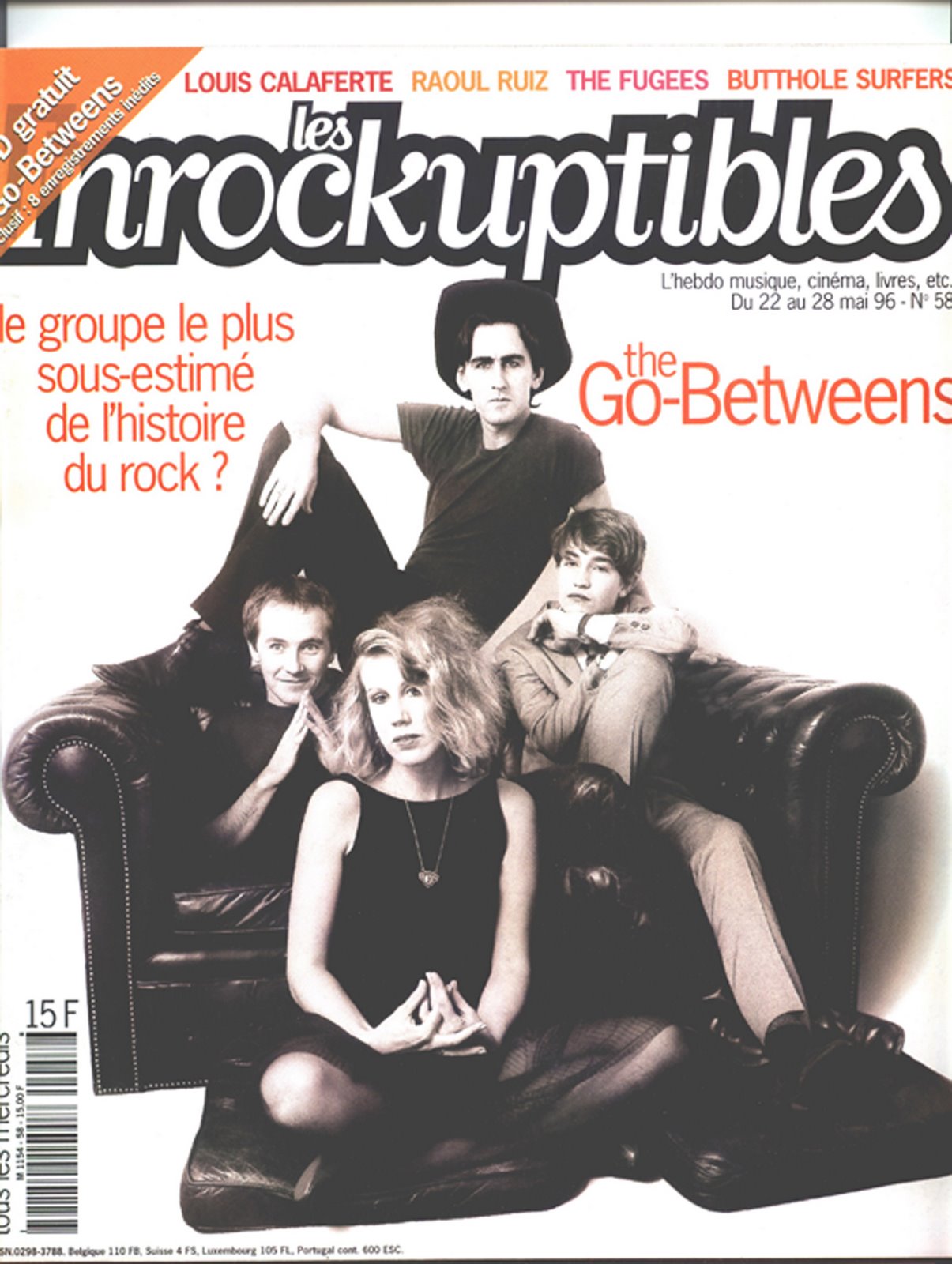
LE GROUPE LE PLUS SOUS-ESTIME DE L’HISTOIRE DU ROCK?

gobsfrenchmag

In 1996, the French music magazine Les Inrockuptibles voted 16 Lovers Lane the best album in their then 10-year history. They put The Go-Betweens on the cover with the strapline “The Go-Betweens, the most underrated band in the rock history.  

It was issue #58 of the magazine, dated 22-28 May 1996, and it came with a free 11-track CD, the first eight of which were acoustic demos of songs on 16 Lovers Lane, with the others being album cuts of one song from each of 16 Lovers Lane, Talulah and Spring Hill Fair.

R-515408-1435521601-1772

A copy of the CD was gifted to me a while back by a good friend of this blog, JC Brouchard.   With it being Bastille Day, I thought it would be appropriate to thank JC for such a kind gesture and in doing so, offer the opportunity to hear the demos.

mp3: The Go-Betweens – Was There Anything I Could Do? (demo)
mp3: The Go-Betweens – Wait Till June (demo)
mp3: The Go-Betweens – The Devil’s Eye (demo)
mp3: The Go-Betweens – I’m Allright (demo)
mp3: The Go-Betweens – You Won’t Find It Again (demo)
mp3: The Go-Betweens – Love Goes On! (demo)
mp3: The Go-Betweens – Love Is A Sign (demo)
mp3: The Go-Betweens – Dive For Your Memory (demo)

JC

60 ALBUMS @ 60 : #37

R-381470-1557612660-3244

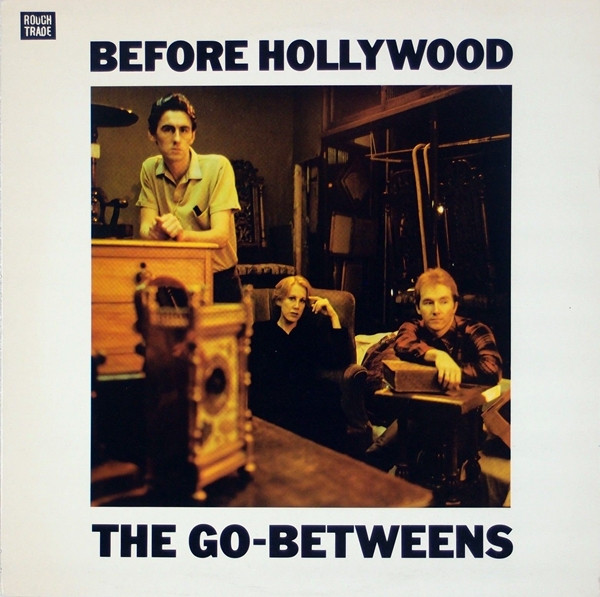
Before Hollywood – The Go-Betweens (1983)

This was a particularly tough one.  It took me a few days to decide which Go-Betweens album to include in the rundown.  I’m also thinking, as I type these words, that if I had gone for one of the others, there’s a distinct possibility that it would have placed higher than #37.

Before Hollywood is not their ‘best’ album, but it’s the one that means the most to me. It’s another record that takes me back to 1993, moving out of the parental home and into a shared student flat, trying to find ways to stand on my own two feet.

One of the two friends who I was sharing with had an astonishing collection of records as well as a state of the art stereo system on which to play them.  One of the singles he played more often than others was Cattle and Cane, but he also gave regular airings to the band’s new album.  The continued exposure to the album could have worked two ways – I could have got so sick and tired of hearing it that I’d have hated it, or I would soon get so lovingly acquainted with it that I could recite every single lyric.   I don’t think I need to spell out which way it went.

The only thing was that I didn’t go out and buy my own copy of the album, not even when that particular flat sharing arrangement came to an end after a year and I moved into a different location in a larger flat, not too far as it turns out where, many years later, I’d settle down in Villain Towers.  I only got round to buying Before Hollywood in the mid-80s*. Indeed, Liberty Belle and The Black Diamond Express, released in 1986, was the first Go-Betweens album I bought immediately on its release, and it came very close to making the rundown as it reminded me of a different flat-sharing situation in Edinburgh.  But then again, 16 Lovers Lane, released in 1988, was also under very serious consideration, on the basis that I think it is their ‘best’ album.

The thing about Before Hollywood is that it’s an album in which the standout track, Cattle and Cane, is so ridiculously far ahead of the others that there’s a temptation to think of them as not being great songs in their own rights.  It’s also fair to conclude that it’s a record on which the songs of Grant McLennan are way ahead, in terms of quality, than those of Robert Forster. Indeed, Robert would soon admit that listening to Before Hollywood was a real wake-up call in that he realised he had to up his game in terms of his songwriting.

mp3: The Go-Betweens – That Way

The gloriously uplifting album closer. It was, and still is, my cue to turn the record over and listen again.

*I know that in setting out the rules for this rundown, any album in the rundown had to have been bought at the time of its release.  In this instance, the fact it was owned by a flatmate and there was no need for a duplicate purchase allows it a free pass.

JC

THE INSANE COST OF SECOND HAND VINYL? (Issue #2)

s-l500

I want to say a huge thanks to everyone who pitched in with their thoughts, views, opinions and anecdotes last week when Issue #1 of this series was posted.

The extent of the replies, via the comments section, was unparalleled in the sixteen-plus years during which this and the old blog have been going.  It’s clearly a subject on which folk have a lot to say, so if anyone out there wants to offer up a guest posting, then please feel to do so via the e-mail address : thevinylvillain@hotmail.co.uk

If you do write and don’t receive an immediate reply, then there’s no cause for concern, as I don’t check the inbox every single day.

I had always planned Issue #2 for today, with a specific piece of vinyl obtained a number of years ago via Discogs, but it’s now going to appear tomorrow.  Instead, and inspired by some of the things said in the comments section, I’ve gone into my eBay history as it predates when I started using Discogs.

The unfortunate thing is that there is no precise dating available – it simply says ‘more than a year ago’ for purchases prior to 2022.  I do know, however, that I would have been using eBay to get vinyl and CDs from around mid-2006.  The prices of some of these early purchases seem like a real bargain, which chimes with a number of the experiences a number of you offered up in response to Issue #1.

An early eBay purchase was this:-

R-668489-1446142819-6340

For one reason or another, back in the early 80s, I had never got round to picking up a copy of Send Me A Lullaby, the debut album by The Go-Betweens.  I had all of the other 80s albums, but not the debut, which came out originally in November 1981 on Missing Link Records in Australia and was then issued in the UK by Rough Trade in February 1982.

The Australian release contained eight songs, but the UK release, with the catalogue number ROUGH 45, had twelve songs.  Grant McLellan and Robert Forster themselves later described it as ‘an inauspicious debut’ while Lindy Morrison felt her drumming on the record was lacking.  It was hardly any sort of ringing endorsement for the album, which is why I never had any great urge to buy it.

I spotted it on eBay, most likely in the summer of 2006 when the idea of starting The Vinyl Villain was fermenting.  I wish I could be more precise with the date, but at least the purchase history indicates what I paid for it.

£4.20.  Plus P&P.

I reckoned that was a decent enough price back then.  It felt about right for a second-hand piece of vinyl that was almost 25 years old, and was a record that nobody had any real love for. The pleasing thing was that I now had all the 80s releases on vinyl and the bonus was that, when it arrived, it was immediately noticeable that it had been very well looked after by the previous owner (or perhaps it had hardly been played as it’s not the most consistent listen, certainly in comparison to later albums).

There’s one copy of ROUGH 45 on vinyl currently on eBay.  The asking price is £79.99 with an additional £3.95 P&P.

Over on Discogs, there are thirteen copies up for sale, from people in Germany, Belgium, South Africa, United Kingdom, United States, Greece, Luxembourg, Portugal, Ireland and Japan.

The cheapest is 39 euro, (plus unspecified shipping) with the caveat that there is a scratch on one side of the vinyl, wear and tear to the cover and the original inner sleeve is missing.

The most expensive is $148.15 (US) plus £24.23 (US) shipping.

The one on sale in the UK, which would be the nearest equivalent to the eBay purchase all those years ago, has an asking price of £50 plus £4.95 shipping with the vinyl and sleeve described as VG+, but with a rider of ‘occasional very light background noise.’

A reminder that my purchase, for a copy that is at least VG+ and bordering on near mint, cost £4.20 in 2006.  As I said earlier, the current asking price on eBay is £79.99 which equates to a staggering 1,804% rise from 2006, and while I’m no economist or financial expert, I reckon that’s probably a fair bit above the inflationary level in most countries.

I’ll be surprised if anything I’ve bought on the second hand market via Discogs or eBay has had such an outrageous increase, but I’ll keep an eye out.  In the meantime, here’s a song from said album:-

mp3: The Go-Betweens – Careless

JC

PS : If you want an escape from the soapbox stuff from today, I’ve contributed a couple of contrasting guest pieces elsewhere in recent days.

This one over at Charity Chic Music is a short effort, drawing attention to three songs with the word ‘Revolution’ in the song title. It’s part of his new regular Friday series.

SWC over at No Badger Required has generously given me free rein to talk about Rochdale AFC is his current Sunday series about Third Division football.  I have prattled on at great length, way more than would normally be tolerated on his blog, and I owe him for that.  There’s also a handful of decent tunes referenced……click here if you fancy a read.

THE MONDAY MORNING HI-QUALITY VINYL RIP : Part sixty: THE WRONG ROAD

ab67616d0000b2738fc7eb8596eb145ed861752e

The Go-Betweens are best known for indie-pop with guitars, albeit the addition of Amanda Brown on violin to the group added a new dynamic to the songs on the fourth and fifth studio albums, Tallulah (1987) and 16 Lovers Lane (1988).

Today’s hi-quality vinyl rip comes from Liberty Belle and The Black Diamond Express, the third album which dates back to 1986. It’s a song written by the late Grant McLennan and is one in which strings, in the shape of a cello, two violins and a viola are very much to the fore, especially in the middle section instrumental break, leading to a five-minute masterpiece of chamber pop:-

mp3: The Go-Betweens – The Wrong Road

The first time I saw Butcher Boy play immediately put The Wrong Road into my head, thanks to the presence of a string section among the usual mix of guitars, bass, keyboards and drums – oh and the fact John Hunt on lead vocals had such a shy yet magnetic presence on stage that he reminded me of Grant.  It’s little wonder I fell under his and his band’s spell.

JC

AN IMAGINARY COMPILATION ALBUM : #200 : THE GO-BETWEENS (3)

The visit earlier this year to the cinema to enjoy Right Here led to me going on a bit of a Go-Betweens binge immediately afterwards; I even managed to slip Bye Bye Pride into a pre-matCh play list at a Raith Rovers game not too long ago.

It also got me looking again at the two previous ICAs in November 2016. I still think they stand amongst the best in the entire series, but it also made me realise just how many superb songs had been left off. This was partly down to me trying really hard to stick by my first principle of an ICA, namely that it shouldn’t necessarily comprise what I think are the ten best songs, nor should it be my ten favourites songs, but instead should hang together as a ‘perfect’ LP with five tracks on each side. Oh, and I also wanted to ensure there were five songs from each of Robert Forster and Grant McLellan.

Thus it is that the landmark 200th ICA is my stab at a third volume for possibly the greatest band to ever emerge from Australia….sometimes I do think it is them but on other days I can’t see past The Bad Seeds. This time around there’s a co-composition, which I really should have found room for previously but in looking at both volumes, I’m still struggling to see where it would have fitted in and at what other song’s expense. But there’s five lead vocals from each of them.

SIDE A

Lee Remick (debut single, 1978)

The one which made it all possible. My thinking behind it not being included on either of the previous volumes is that, by the time I made my own discovery of the band some five years later with the release of Before Hollywood, they had developed a more sophisticated and less jarring sound. Lee Remick, and indeed its superior b-side Karen, are both great little numbers but in the grand scheme of things have the feel of demos rather than finished products.

Robert’s autobiography and the documentary helped shed a bit more light on things and made me appreciate just how much of an achievement it was getting the band and new label up and running in Brisbane in the late 70s given how in so many ways the city and the state of Queensland was ridiculously insular and backward-looking, with a particularly oppressive police regime which wasn’t slow in using violence against anyone wanting to be creative in a modern way; not that Robert, Grant or record-label owner Damien Nelson ever really got caught up in such stuff, but Brisbane in the late 70s was the least likely of the big Australian cities to spawn a band like The Go-Betweens and it was no real surprise that before too long they were on the move to elsewhere in the country and then to the UK.

To Reach Me (from Liberty Belle and the Black Diamond Express, 1986)

The fact the band had two main singer-songwriters was both a strength and a weakness. On the upside, it allowed listeners to enjoy two quite different approaches to work with Grant for the main (but not exclusively) being the arch-exponent of great pop songs, often about love and life while Robert was a bit more celebral (but again, not exclusively). This one kind of crosses the two in that it’s a love song (of sorts), set to a complicated yet catchy tune with a lyric that is almost Cave-esque with its imagery. It’s all quite magical.

The weakness? The music press, lazy in extreme, wanted a sole focus of attention for the interviews and profiles. The band didn’t play the game and lost out.

The Clock (from The Friends of Rachel Worth, 2000)

I wasn’t too sure about Robert and Grant’s decision to reform the band after more than a decade. I had my doubts about whether they were capable of recapturing the magic of the golden era, especially given that the other key members were nowhere to be seen. I certainly haven’t listened to the three final albums anywhere near as much as I did the earlier material, and indeed would still say I wasn’t wholly familiar with them in comparison in particular to Before Hollywood, Liberty Belle and the Black Diamond Express, and 16 Lovers Lane. The binge of recent weeks, however, has seen them get more airings than any others, and while I’m still not sure about Bright Yellow Bright Orange (2003), the albums on either side are now much more appreciated.

The Clock, on first, and indeed subsequent early listens, seemed a little bit inconsequential, but it’s one of those from which an exposure to repeated listening reveals a bit of musical depth, even although it is not really close to much of the 80s output.

Hammer The Hammer (single, 1982)

The band’s fifth single, but the first to feature Grant on lead vocal (and as such, the first of his own compositions to be chosen for a 45). I hadn’t until reading the book quite realised how little interest Grant had in music until he was pestered to form a band by Robert, a point also reinforced by the film. This meant that Robert, having been keen to pursue such a career had more than a head start in terms of having sufficient songs of quality to issue as early singles with Grant first of all learning the rudiments of bass and acoustic guitars before really turning his attention to song writing.

There’s a great bit in the film where Robert describes the song writing issue it as being akin to him driving a car, and he’s away ahead of Grant, but out of nowhere his friend appears in the rear view mirror, getting ever closer and eventually passing him, which he felt happened with the writing and recording of Hammer the Hammer, and which would continue thanks to the likes of Cattle and Cane, That Way and Dusty in Here, all of which were among the strongest and most enduring songs on the band’s sophomore LP.

Robert’s response was to seek to up his own game and start penning songs that would have him catch up……………….

Part Company (single, 1984)

The band had been very unlucky timing wise with the debut album.  Rough Trade had been very enthusiastic but then along came The Smiths and the label decided to put all its eggs into that particular basket.  The Go-Betweens were offered to, and accepted by Seymour Stein at Sire Records.  It proved by a poor fit, with the label not quite sure exactly how best to pitch the band to the record buying public. An expensively produced album, Spring Hill Fair, was recorded in rural France but it wasn’t a terribly happy experience for all concerned.  Despite this, the album still manages to incorporate some of their finest moments, including Part Company, which was Robert’s attempt to compose a song that was more literate than before and the first stage in catching-up to the quality of the songs of his mate.  But it was bonkers of the label to have it as the lead single.

Robert still plays this at solo gigs….and it never fails to be met with huge acclaim.

Side B

Head Full Of Steam (From Liberty Belle and the Black Diamond Express, 1986)

Don’t Let Him Come Back (new version, 1986)

The opening track to side-B of this ICA is one of the great long-lost singles of the 80s.  The bitter experiences around the recording of Spring Hill Fair had made the band determined to get it right next time around, which they more than did with Liberty Belle….the album which was certainly the high point of the band’s time as a four-piece.   They also brought in a few friends to assist on some songs, and Tracey Thorn supplies a wonderfully understated backing vocal which perfectly complements that of Robert, whose deadpan performance is just perfect.

The b-side to the single was a real treat.  It was a superb re-recording of a very early song, originally issued as the b-side to 1979 single People Say, and in which Grant, Robert, Lindy and the other Robert give us something which could easily be held up as the definitive indie-jangly song of the era.

Apology Accepted (radio session 1986)

The original version closes Liberty Belle….and as much as I loved it when I first heard it in the mid 80s, nothing prepared me for just the majesty of this radio session, broadcast on the Janice Long Show on BBC Radio One in May 1986 and made available when the parent album was released in an expanded 2-CD form in 2004.  It has a slightly faster tempo than the original, but for me its the way that the piano solo in the middle of the song is brought to the fore that makes it the superior version….but it was a close run thing.

Bachelor Kisses (from Spring Hill Fair, 1984)

The NME review of this, when it was released as the second 45 from the album stated:-

“Song of the week.  Only when we’re confronted with a song so perfectly turned, lines so finely balanced and a melody so achingly sweet as Bachelor Kisses are we forced to notice how hollow most contemporary pop rings.”

High praise indeed, particularly when you recall that for the NME in 1984, contemporary pop in their eyes had an indie-bent and included bands such as The Smiths, Orange Juice, Aztec Camera, Scritti Politti and Prefab Sprout.  I’m not sure I’d go as far as the NME reviewer did as I’ve long felt that Bachelor Kisses gravitates towards soft-rock territory in some ways but it’s a song of which I grew increasingly appreciative of in later years as bitter-sweet love songs came to mean something in my life.

Finding You (from Oceans Apart, 2005)

If nothing else, reading the book and watching the film brought the realisation that I had been so wrong to have dismissed Finding You simply as a mid-tempo piece of sombre sentimentality.

It wasn’t widely known, but at the time Grant was battling all sorts of demons in his life.  The Go-Betweens had reformed but, and this comes out especially in the film, he was a desperately unhappy and lonely man.  It’s really little wonder that it was tunes and lyrics such as this which were pouring out of him, although it did take a contribution from Robert to provide the final touch, thus delivering one of the few genuine Forster/McLennan compositions.

And its chorus captures my own issues with this blog after all these years….don’t know where I’m going, don’t know where it’s flowing…………but the thing is, these ICAs, and in particular the stuff it has enabled me, and hopefully you as readers, to find over the now 200 efforts, makes it worth it.

JC

PS : ICA 201, a guest contribution, will appear tomorrow.

BONUS POST : RIGHT HERE (A FILM REVIEW)

I attempted to get an ambitious new series underway a few months back in that it was to involve a lengthy look back at the career of The Go-Betweens via separate chapters in Robert Forster’s excellent autobiography, Grant and I. The series stalled, not through any lack of enthusiasm on my part, but simply that I really couldn’t do the series justice as all too soon I had run out of superlatives for the contents of the book and the songs of the band.

I fully intend at some point in the future to have an extended look at the band, and indeed the solo careers of the two principal songwriters, most likely via a long-running Sunday series, although I’ve also been thinking that I might devote an entire month to the subject matter….

In the meantime, I wanted to reflect on Right Here, a documentary which premiered at the Sydney Film Festival as far back as June 2017 but which has, for various logistical and financial reasons, taken until now to get a cinema airing around these parts.

I went along to the Glasgow Film Theatre for the early evening showing just last Friday, accompanied by Rachel aka Mrs Villain. We unexpectedly bumped into our old friend Comrade Colin in the cinema café – I say unexpectedly but then again, the Comrade is as huge a fan of the band as myself and so it really shouldn’t have been a surprise that he was also going to be in the audience. The surprise though was that he had been to the earlier matinée showing just a couple of hours previously but was so taken by the work that he wanted to have a second and immediate viewing on the back of him posting these words on social media:-

“I’d seen this brilliant Go-Betweens documentary, ‘Right Here’ (Dir : Kriv Stenders), before, via a questionable WWW link, but I still wasn’t prepared for the emotional impact of watching this on the big screen, with a proper sound system. There were moments of pure joy, utter elation and dark humour, but also tears, sadness and anger, especially when hearing from Lindy and Amanda on life after ’16 Lovers Lane’. And, well, the ending that we all know is inevitable. Grant’s tragic death at the age of 48.

“The film is an incredible monument to a story, or rather, a set of competing narratives and ego performances, about yet another band would should have and could have. And they did, in a way, and against all the fucking odds. But they did this very much in their own way, to their own tune. That striped sunlight sound lives on but only in the records we have in our collections (“The Go-Betweens were…” run the final credits). Lindy’s still clearly mad about Robert, but also mad *with* Robert. Heartbreaking. Grant is missed by all, especially Amanda. And Robert too of course, his best friend, his muse.

“This is simply one of the best music documentaries I’ve ever seen about a band that are ingrained into my fabric and DNA. A band who had no hits. A story about a band in the middle. 10/10”

He’s quite right you know……

Relationships were essential to the band moving in the direction that it did between 1977 and 1989 and complicated, ever-shifting relationships at that. It’s testament to the skills of the director that he elicits really positive contributions from all past members, clearly proud of the contributions they made to that initial run of albums, while also enabling them to vent what, in many cases, appear to be pent-up anger and frustrations at how they were, to all intent and purposes, cast aside by Grant and Robert. The Comrade has already given his take on Lindy Morrison and Amanda Brown, but there’s also some very telling testimonies, particularly from ex-bass players Robert Vickers and John Willsteed and, on reflection afterwards, also from early drummer Tim Mustapha, who was cast aside in a way which really did give an early indication of what would remain an almost undetectable ruthlessness on the parts of the two main principals.

The documentary has benefited immensely from the 10 year gap between Grant’s death, by heart attack, and the filming getting underway. It’s a period in which Robert has been able to reflect fully on things, including him exorcising a number of demons through the writing of his book. I think it’s also enabled him to come to understand that, on occasions, some of both his and Grants’ behaviour and their attitudes towards their band colleagues were less than stellar and any offered excuses centring around the temperaments of creative geniuses don’t really wash. There’s certainly a sense of lingering regret in a number of his contributions, particularly towards the end of the film, very much in contrast with the first hour or so in which there is a real and deserved celebration of the band’s legacy, wonderful contributions from a diverse range of talking heads including musicians such as Mick Harvey, Lloyd Cole and David McClymont, friends and family such as Sally McLennan, Clinton Walker (a well-known and highly regarded cultural figure in Australia who almost steals the show) and Damian Nelson, and those involved with the band professionally such as Bob Johnson and Roger Grierson. Oh, and the archive footage of videos, TV appearances and still photographs is an absolute joy….as, of course is the music which is constantly in the background or the forefront of many scenes.

I’ll just echo the Comrade – Right Here is simply one of the best and most all-round satisfying music documentaries I’ve ever seen. Informative, engaging, entertaining (there were many moments which resulted in a smile or a laugh, often when Clinton Walker was offering his thoughts) and ultimately very moving with it abundantly clear that Grant is still missed each and every day. It also made me more determined than ever to get myself to Australia, ideally to catch Robert play a solo show in Brisbane.

mp3 : Go Betweens – Right Here

JC

THE THIRD POST FEATURING EXTRACTS FROM ‘GRANT & I’


Now that The Go-Betweens have been knocked out of the ICA World Cup, I can safely turn my attention to the third in this very occasional series in which I’ll tell the story of the band’s musical history through the pages of the excellent memoir from Robert Forster.

The first two parts dealt with the release of singles in Australia and took us to up to November 1979 when the duo decided to take their chances in London.

“A few things were immediately clear.  We bought the NME on the day it came out, and that shrinking of time and senses of being at the centre of the action was thrilling.  It was also what made one thing spectacularly apparent – The Go-Betweens were going to get nowhere in London.  The scene was too big, the walls too high, and we knew no one in the music business.  We’d travelled sixteen thousand kilometres to advance the career of the band without bringing one telephone number.”

The duo went to a gigs, seeing Gang of Four, The Raincoats and Scritti Politti on one bill, Echo and the Bunnymen, The Teardrop Explodes and A Certain Ratio together on another, while also on other occasions catching The Cramps, The Fall, The Cure and The Pretenders.  As their savings ran out, and after a brief interlude in Paris for Robert and Greece for Grant they picked up menial jobs to get by.  In due course, via a fellow Australian who worked in the Rough Trade record store, they got to meet Geoff Travis and let him hear Lee Remick but he dismissed it as being too poppy although he was willing to put the single on display in the store.

Two months later, Edwyn Collins, David McClymont and Alan Horne turned up at the same shop trying to get the owners to take the first ever Postcard single off their hands.  All three had previously taken notice of Lee Remick when it had been played on the John Peel show and Alan Horne was intrigued enough to ask the Australian working in the shop how a copy had made it way to London from Brisbane.  Having heard that Grant and Robert were in London, he put together a package and asked if it could be delivered to them.  The package consisted of a single, some promo photos of Orange Juice and a handwritten letter inviting them to come to Glasgow and record a single for Postcard Records.

It would be fair to say that neither Grant nor Robert knew what to make of Falling and Laughing as it was unlike anything else they had heard during their time in London.  But with nothing else happening, they pursued the offer and on 1 April 1980. they took the train to Glasgow.  Their first impressions was that ‘it immediately felt right.’

They would spend six weeks in Scotland, playing gigs at which Steven Daly of Orange Juice would drum for them, on bills alongside that band and Josef K.  Grant was put up in a spare room in Edwyn Collins’ flat while Robert was accommodated by two art school friends of David.

Watching Orange Juice on stage opened up their eyes to what was possible.

“There was a Beatles ’62 thing about them.  Own humour. Own dress style. Own songs and sound in the heart of a city. Immediately obvious was their superiority to the bands we’d seen in London, drowning as many of them were in reverb and effects.  Orange Juice had clarity, which made their stinging songs and each member’s contribution all the more powerful. ‘Falling and Laughing’ sounded much better live – like a classic, in fact, but they had at least half a dozen of them. Grant and I, five metres back from the stage, were counting.”

They ended up in a studio just outside of Edinburgh where they cut the two sides of the 45 for Postcard.  They were team-tagged in the studio with Orange Juice and looked on as they recorded Blue Boy and Lovesick.

“It was clear that something special was happening.  It was whiplash pop, miles removed from the doom of the Joy Division imitators or the rumble of The Fall.  Orange Juice had cut a major record that, give any kind of chance, would break the band and all those who sailed in it along with them.

Which makes our decision to leave in late May all the harder to explain. Why go when we had a single recorded for a fast-rising label and were living in a city we dug?  I was missing Lindy – that was the nub of it.  First love had bitten hard. It was six months since I’d seen her, and six months seemed to be the length of time I could endure without her.”

Robert therefore put his personal life before that of the band. It wasn’t easy – he was left to make his way back to Australia alone, with his air fare paid by his parents.  Grant went to New York but agreed to talk about things when he himself eventually got back home.   Neither of them hung around long enough for the Postcard single to be pressed up and copies taken back to Brisbane, although Robert did have a cassette copy, along with a battered Nu-sonic guitar that had been gifted to him by James Kirk.

mp3 : Go-Betweens – I Need Two Heads
mp3 : Go-Betweens – Stop Before You Say It


JC


THE SECOND POST FEATURING EXTRACTS FROM ‘GRANT & I’

Click here for a reminder of the first post.

It may have been limited to just 500 copies, but the release of Lee Remick/Karen in the late summer of 1978 had generated a bit of a buzz around Go-Betweens.

“We mailed our record to the Australian and overseas press, where it was widely and positively reviewed, and to a select group of people who were important to us. We also targeted a list of record companies , one of which, Beserkley UK, the London-based home of Jonathan Richman & The Modern Lovers, overwhelmed us by offering a worldwide multi-album deal.”

The label had also suggested it would be willing to release each of Lee Remick and Karen as singles and encouraged Robert and Grant to come up with b-sides. They went about this with some gusto, walking around Brisbane with a huge swagger and self-belief. Only to find that when they asked the label that the costs of the studio time be repaid that all communication suddenly stopped.

“The deal was off, as was our fast track to stardom; we were getting a crash course in the music business and the cruel, cruel world outside the environs of Brisbane.”

By now, Robert had finally, at the age of 21, left the comfort of his parental home and moved into the house in which Grant had been living for a number of years, in what is described as a bohemian lifestyle with a group of friends. The house, on Golding Street in the Toowong district of Brisbane, was now the recognised centre of all Go-Betweens activity and it was there that many of the next batch of songs were composed.

In another arty part of the New Farm district in late 78/early 79, a band called Zero ruled the roost. Robert’s book records that Zero had started out as a fierce, feminist group, whose core members Irena Luckus (vocals/keyboards) and Lindy Morrison (drums), had added a new male bass player in John Willsteed who had helped the band move towards a post-punk direction with their live set including covers of songs by Gang Of Four, Wire and XTC. Robert was so besotted with the drummer that he changed some of the lyrics of one of his new songs, People Say from “So pack your bags your saxophone/I’m gonna take you to Rome” to “So pack your bags your drums/I’m gonna take you till the kingdom comes”.**

It may have been corny, but it did help. Robert was now in the first serious relationship of his life, with a woman six years older than him and one who had a huge, dynamic personality with confirmed views on politics and life in general. It was a seriously steep learning curve for him.

The next few months were frantic. A new drummer, Tim Mustafa had been recruited into Go-Betweens, and with the addition of Malcolm Kelly on keyboards, they went into the studio in May 1979 to cut a second single for Able Records.

mp3 : Go-Betweens – People Say
mp3 : Go-Betweens – Don’t Let Him Come Back

The latter was the first Forster/McLellan joint composition. If you have one of the copies of this single, expect to get around £500 if you put it up for sale.

The single would be released in September 1979. The success of the debut meant the label pushed the boat out this time and pressed up 750 copies.  But before it hit the shops, Tim took his leave of the band. A stand-in drummer, Bruce Ashton, enabled some supporting gigs, all in Brisbane.

“There was no organisation in place to play Sydney or Melbourne: you had to move there. I was conflicted about leaving, the dream of escaping Australia with Grant, two drifters off to see the world – and there was a lot of world to see – severely shaken by my relationship with Lindy. Things became further complicated when I joined Zero as a stand-in guitarist.”

Robert and Grant made up their mind to go to London which they eventually did in November 1979. That chapter in their story, which includes a spell in Glasgow, will be told next time round.

JC

PS

** In later years, the original lyric would be re-adopted, as per this live performance in August 2005:-

mp3 : Go-Betweens – People Say (live at The Tivoli, Brisbane)

A BOOK REVIEW…..AND A POINTER TO A NEW OCCASIONAL SERIES

A short time ago, I went along to a cultural gathering in my home city.

Robert Forster was appearing at Mono, a location that is part music-venue, part vegetarian cafe and part record-store that is owned and run by Stephen Pastel.  Robert was going to take part in an interview to promote his recently issued book Grant & I : Inside and Outside The Go-Betweens and in the process sing a few songs.  It was an event that I’d have more than willingly paid a fair bit of money to get to and yet the tickets were free.

It was, as you’d expect, packed full of folk who had been Go-Betweens devotees at one time or another. I knew a lot of people in the room,many of who have become close friends in the near eleven years since I began this blog.  It was always going to be a special and emotional evening, not least as the Australian band were indirectly responsible for me getting my finger out and launching TVV and I’ve still never quite gotten used to the fact that Grant McLennan is no longer with us.

It turned out to be everything I could have wished for and more, thanks to the opportunity to meet Robert at the end of the night, have a photo taken with him and have him sign a copy of the book, with the dedication to The Vinyl Villain.  I’ve only one other book with such a dedication and it came from Grace Maxwell and Edwyn Collins;  I tend to shy away from having my records and books ‘defaced’ with signatures.

The following day I started reading the book and soon found it all-consuming.  Robert is an extremely talented and entertaining writer and of course the story he gets to tell is rather extraordinary.  The blurb on the back nails it perfectly:-

Beautifully written – like lyrics, like prose – Grant & I is a rock memoir akin to no other, Part ‘making of’, part music industry expose, part buddy-book, this is a delicate and perceptive celebration of creative endeavour. With wit and candour, Robert Forster pays tribute to a band who found huge success in the margins, having friendship at its heart.

It’s easy to forget that this was a band who never enjoyed the success in the 80s that their collective talents and output deserved.  The albums were well received but their singles all flopped despite most of subsequently proving to be timeless classics (unlike many others from the same decade).  They recorded for numerous labels, finding themselves dropped all sorts of strange and unrelated reasons looking on as so many of their contemporaries hit payola. But not once does the author feel the need to settle any old scores or cast aspersions on those who did get rich and famous – indeed I think there was just one swear word within its 330 pages and the profanity was followed by an immediate apology in brackets!

Instead, it is a celebration of the fact the band had a lengthy career, initially from 1977 -1989 and then again when they reformed in 2000 through to Grant’s sudden death from heart failure in May 2006.  The book has a strong supporting cast including long-standing band members Lindy Morrison, Robert Vickers and Amanda Brown, various friends, family and band associates. There’s also many wonderful cameo appearances dotted throughout from other leading Australian musicians, the Postcard Records cognoscenti and all sorts of producers and artists.

Much of the book is set in Australia, and at different times paints wonderfully evocative pictures of the cities of Brisbane, Melbourne and Sydney, It certainly made me want to get on a plane and go see these places for myself.  It is rich in its description of life in London in the 80s, getting across the bizarre notion of musicians who were hugely respected and appreciated by just about everyone in the industry and yet rarely had more than £50 a week per person to live on.  There is a lot of self-deprecating wit on display throughout, punctured occasionally by a sentence or two that is genuinely shocking with revelations about personal circumstances that a sharp reminder that rock stars are human beings and suffer from the same type of frailties that impinge on the rest of us mere mortals.

But here’s the thing.  Having devoured the first 80-90% of the book in a matter of days, it took me weeks to pick it up again and finish it. It was all down to knowing that the hero dies in the end and I just didn’t want to face up to that. I had to be in the right frame of mind for finishing it off…but despite my best efforts I did find myself upset and crying.

I am delighted that Robert Forster has produced a masterpiece, as fine a music memoir as I’ve ever read, and given I have about 200 such books lying around the house I’m in a reasonable position to make such a judgement.  Even if you know little or nothing about the band, there is much to enjoy from the writing and the telling of what is a wonderfully played out story of two soul mates who perfectly complemented one another.

The book has given me an idea for a new, occasional (at best monthly) series and that is to look at the music and offer up some of Robert’s words as an accompaniment.  Staring right back with the debut single, released originally in 1978 on the Australian indie Able Label and restricted to just 700 copies.  If you want one nowadays, be prepared to shell out almost £1,500.

mp3 : The Go-Betweens – Lee Remick
mp3 : The Go-Betweens – Karen

The latter was just about the first song the university student Robert Forster wrote. By this time, one of his best friends was fellow student Grant McLennan; Robert had been rebuffed by Grant in an effort to form a band as Grant was far more interested in and occupied by cinema.

Robert had instead formed a three piece called The Godots who were down to play in a Battle of the Bands competition in Brisbane. The set had to comprise one cover and four originals, one of which would be Karen, receiving its first ever public airing.

“My songwriting had also improved, taking a lion-sized leap with the completion of a simple, predominantly two-chorded number, a paean to the female librarians at the university – helpful, distant women I idealised – that swelled and built over three choruses to end in a shouted climax of the song’s title”

“An attentive silence came over the room as we began the song, brought on by the hypnotic beat of the long introduction; I was sensing a power I’d never known as I stepped up to the microphone to deliver the opening lines.”

Grant McLennan was in the audience watching his friend perform, perhaps sorry that he had declined to be in the band. They didn’t win the competition – in fact they weren’t even billed as The Godots, a misunderstanding with the organisers leading to the band being introduced as the less pretentious sounding The Go-Dots. By the end of the year, that band were no more and Grant, having been aware that Robert was writing other songs, including one that was all about Hollywood actress Lee Remick, said that he was willing to take away a cassette copy to listen to back home during the Xmas/New Year break of 1977/78. The rest, as they say is history.

Worth mentioning too that Lee Remick herself, many many years later, did meet Robert Forster and accept the gift of one of the singles that bore her name. She revealed that she was aware of its existence and was charmed by it. Robert, in the book declares the meeting as one of the highlights of his entire life.

JC


SAME AS IT EVER WAS

One of the reasons I began blogging was to feature some great songs that were often hard to track down thanks to them only ever being released as b-sides on vinyl that was often long deleted.

Today’s offering is an example of one such track – a piece of music by The Go-Betweens that many other bands at the time would have loved to have been able to offer up as a single rather than something that’s almost a throwaway:-

mp3 : The Go-Betweens – Wait Until June

It first appeared in July 1988 as the b-side to the dreamy yet sinister Streets Of Your Town, which was about as close to a UK hit as the band ever got.

This song was once rare and difficult to track down. But, as would become increasingly common, later re-releases would see albums come back to the shelves and racks with bonus material, usually consisting of long-lost b-sides and live recordings from a particular era, and was the case back in 2004 with 16 Lovers Lane. Things have moved on even further with i-tunes, spotify etc. making just about everything in the back catalogue immediately accessible.

So technically, Wait Until June isn’t all that difficult to get a hold of nowadays, but there’s got to be something different about the mp3 being via a needle settling into the groove. Especially when it hits the bit that jumps and skips at the one minute mark (you’ve been warned!!!)

JC

AN IMAGINARY COMPILATION ALBUM : #99 : THE GO-BETWEENS (Vol 2)

I said most of what I had to say yesterday. Here’s some more great songs.

Side One

That Way from Before Hollywood (1983) : lead vocal by Grant McLennan

Until now, I don’t think I, or indeed anyone, has ever opened up an ICA with the closing track of an LP. It just goes to show how many great songs there were back in the day that they could put this gem at the end.  It certainly would make you want to get up and turn the record back over immediately.

The House That Jack Kerouac Built from Tallulah (1987) : lead vocal by Robert Forster

Having failed to crack open the markets with the first four albums, everyone involved threw the kitchen sink and the rest into the recording of Tallulah including the addition of a fifth member on violin and oboe. It was a record greeted with some scepticism on its release as a result of to its lush production and move away from indie-guitar pop, but which is now regarded as a bona-fide classic.

The Wrong Road from Liberty Belle and The Black Diamond Express (1986) : lead vocals by Grant McLennan

The thing is, the path that would lead to Tallulah had in some ways been set by this track from the album released the previous year.  The addition of violin, cellos, viola and organ take this to places the band hadn’t explored before and the result was one of their finest ever songs.  Epic.

Was There Anything I Could Do? from 16 Lovers Lane (1988) : lead vocals by Grant McLennan

FFS. How did this single not get any airplay?

Surfing Magazines from The Friends of Rachel Worth (2000) : lead vocal by Robert Forster

Here’s a band that came out with some of the best lyrics of their generation falling back on a variation of la-la-la-la-la for the chorus and pulling it off with some style.

Side Two

Bye Bye Pride from Talullah (1987) : lead vocal by Grant McLennan

In which the decision to bring in a new member who plays oboe is totally justified in four minutes flat.

Rock and Roll Friend b-side to Was There Anything I Could Do? (1988) : lead vocal by Robert Forster

A song that became synonymous with Robert’s efforts to get back in the saddle after Grant’s shock death in 2006.  It must have been very tempting just to pack it all in. Instead, he went into the studio and recorded The Evangelist, his first solo LP in 12 years and hit the road and in every show he played this (a song he had re-recorded himself in 1996) and dedicated to his late band mate.  It’s worthy of a place on this ICA for that alone notwithstanding it is such a fine number.

I Just Get Caught Out from Tallulah (1987) : lead vocal by Robert Forster

Another great little failure of a pop single.  I defy you to listen and not dance.

Dusty In Here from Before Hollywood (1983) : lead vocal by Grant McLennan

A  ballad just to mix things up a bit and because it fits in well at this point on this ICA.

Dive For Your Memory from 16 Lovers Lane (1988) : lead vocal by Robert Forster

Couldn’t think of a more fitting way to end this ICA. The other song that Robert often dedicates nowadays to Grant; there’s something poignant that he once wrote a line ‘I miss my friend.’

Don’t we all?

Bonus 45 : The debut single from 1978.

mp3 : The Go-Betweens : Lee Remick
mp3 : The Go-Betweens : Karen

Tune in tomorrow for ICA #100 as it features a tale and a half from Badger.

AN IMAGINARY COMPILATION ALBUM : #98 : THE GO-BETWEENS (Vol 1)

Continuing the headlong rush towards #100 in the series.

It’s impossible to do justice to The Go-Betweens in one ICA, so here’s the first of two successive days of me tearing what little is left of my hair out to reach a satisfactory conclusion.

Side One

Man O’ Sand To Girl O’ Sea single (1983) : lead vocal by Robert Forster

As I’ve said before, the single (and its b-side) which was indirectly responsible for me starting to blog back in 2006.  An absolute belter of a 45 – but let’s face it they all were – and a completely different version from that found on the LP Spring Hill Fair. Angular guitars, a pleading desperate lyric and a rhythm section that drives things along to a perfect beat….oh and not forgetting the vocal harmonies.  Perfection in just under three and a half minutes.

Streets Of Your Town from 16 Lovers Lane (1988) : lead vocal by Grant McLennan

See that thing I mentioned about perfection….feel free to apply it to this too. This was rightly released as a single and was the closest they ever got to a chart hit…..when it reached #80.  There’s all the evidence you need to realise just how criminally ignored this band throughout a stellar career that saw nine studio albums all told (six in the period 81-88 and three when they later re-formed between 2000-2005, the last of these being just 12 months ahead of Grant’s unexpected death from a heart attack at the early age of 48)

Going Blind from The Friends Of Rachel Worth (2000) : lead vocal by Grant McLennan

The re-formed band was Grant & Robert with musicians who hadn’t been part of the original line-up but whose pedigree was incredibly impressive.  The keyboards came from Sam Coomes who has long been an integral part of the USA west coast indie scene while his then wife, Janet Weiss, played the drums.  On this track, Janet was joined in the studio by her two fellow band mates from Sleater-KinneyCorin Tucker on vocals and Carrie Brownstein on guitar.  This indie super-group in turn gave us something delightfully 80s at the turn of the century.

Here Comes A City from Oceans Apart (2005) : lead vocal by Robert Forster

If you need proof that the second incarnation of the band could make music that was as enjoyably catchy and infectious as in their mid 80s pomp, then look no further than this, the opening track of what proved to be their final ever record.  Sure, it owes a lot to the style and delivery of David Byrne but there’s little wrong with that.

Spring Rain from Liberty Belle and the Black Diamond Express (1986) : lead vocal by Robert Forster

Yet another flop single.  It always bemused me that so few fans of The Smiths fell for the charms of The Go-Betweens given the fact that the two bands were responsible for the best indie-pop with a guitar bent of the era.

Side Two

Right Here from Talullah (1987) : lead vocal by Grant McLennan

Another great pop song that was given a release as a single only to be criminally ignored.  I make no apologies for the fact that so many 45s are on this volume; it only demonstrates just how cloth-eared radio station producers were in their continual failure to not put the songs on daytime playlists.

When She Sang About Angels from The Friends of Rachel Worth (2000) : lead vocal by Robert Forster

This was a band, who when they slowed things down, were every bit as effective as when they cranked out another indie-pop classic.  Two examples on this ICA are back-to-back – this first being from the comeback album in 2000 with a tune that Roddy Frame himself would have been proud of…..followed by….

Cattle and Cane single (1983) : lead vocal by Grant McLennan

The single version is some 20 seconds shorter than the version on the LP Before Hollywood.  I’ve mentioned before that this is a very special song to me for a number of reasons; nowadays, it makes me sad as it reminds me of Grant’s sudden and very unexpected death but it is a song, along with a few others, that I associate with some of my happiest days, weeks and months on Planet Earth when I fell properly in love for the first time.

Some facts : It was written as a recollection of childhood in a London flat in an effort to combat homesickness with the band as far away as can be from their native Australia, cold and skint and fearing they’ll never succeed.  It was written using the acoustic guitar belonging to the owner of the flat while he lay comatose from drug abuse.  The guitar belonged to Nick Cave.

Sublimely beautiful.

Draining The Pool For You from Spring Hill Fair (1984) : lead vocal by Robert Forster

One of best things about The Go-Betweens is the complete contrast in styles from the two lead singers.  It enabled a much wider range of songs and tunes to emerge from the recording process and things were never dull.  Robert is the first to admit that he’s most the most classical of singers, but he’s still going strong today releasing a series of top-notch solo albums and when he tours he’ll slip in quite a few of the tunes from the days of his old band.  I love it when he plays this break-up song that is witty and clever and far from sad.

This Girl, Black Girl b-side to Man O’ Sand To Girl O’ Sea single (1983) : lead vocal by Grant McLennan

Just because.

Volume 2 coming your way tomorrow.