I’m gonna scream and shout till my dying breath I’m gonna smash it up till there’s nothing left
mp3 : The Damned – Smash It Up
Most politicians are prone to lying. But Trump takes it to a completely new level.
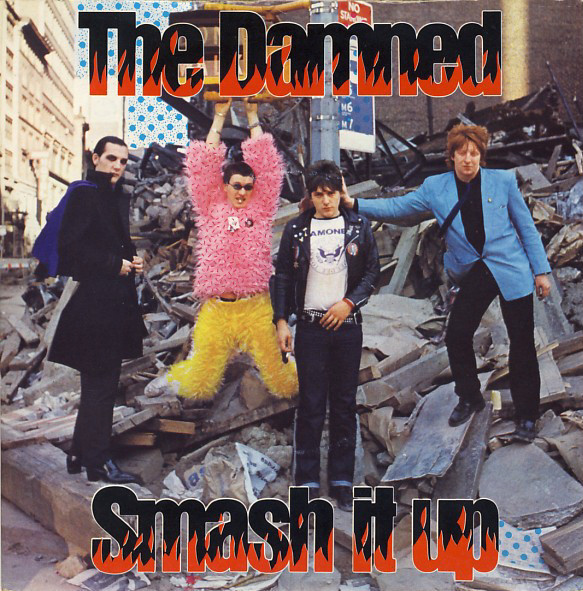
As I wrote when this previously appeared on the blog back in 2017, this was banned by the BBC in the 1979 on the basis of its title, despite it not really being an anarchistic call to arms. It made #35 in the charts but deserved so much better.
June 1984. The month I turned 21 years of age. I wish I had a photo or two to show you, but it was an era when nobody bothered too much with cameras. There was no huge celebration to mark the occasion, mainly as my birthday fell on a Monday, but much drink was consumed and I ended up playing Girl Afraid by The Smiths on constant rotation back in the flat, grateful to be indulged by my flatmates in such a manner.
Having been out all day, we missed seeing the TV news, which would have been full of one-sided reporting of a shameful day for Britain.
The soundtrack to this state-sanctioned police brutality?
3 – 9 June
One new entry in the Top 40, courtesy of Spandau Ballet, in at #5, with the utterly forgettable Only When You Leave. I mean that, I cannot recall this one at all, despite it seemingly spending nine weeks in the charts and peaking at #3.
The next highest new entry was at #43, and is one featured previously on TVV:-
mp3: Scritti Politti – Absolute
The follow-up to Top 10 hit Wood Beez (Pray Like Aretha Franklin) was released a couple of weeks before the band’s debut album for Virgin Records. Any initial disappointment at not cracking the Top 40 right away would have been dissipated quickly as Absolute spent ten weeks in the charts, peaking at #17 and getting Green & co another appearance on Top of The Pops where anyone who hadn’t been keeping up with things since the release of the scratchy Skank Bloc Bologna back in 1978 might have rubbed their eyes in astonishment:-
It is so 80s isn’t it? (and I don’t mean that as a bad thing!!!!)
The Damned were still doing there thing a full eight years after New Rose had lit us all up:-
mp3: The Damned – Thanks For The Night
They were never really a band for hit single. This was their 19th (by my reckoning) assault on the UK charts and only twice had they gone Top 40 (Love Song and Smash It Up, both in 1979). Thanks For The Night didn’t change things. In at #52 and peaking a week later at #43.
This week’s chart was responsible for the only time a single by Working Week ever made the Top 75:-
mp3: Working Week – Venceremos (We Will Win)
A jazz-dance band with something of a fluid membership, the single was a benefit record made to raise funds for the UK Chile Solidarity campaign, and had been inspired by the Pinochet junta’s brutal murder of political activisit Victor Jara (who had been namechecked by The Clash in Washington Bullets from the Sandinista! album). The vocalist are Claudia Figuerora, Robert Wyatt and Tracey Thorn. This came in at #66 with the 12″ version, which comes in at just over ten minutes in length, being the easier to find in the shops than the 7″:-
mp3: Working Week – Venceremos (We Will Win) (Jazz Dance Special 12″ version)
10-16 June
A new #1 to bring an end to Wake Me Up Before You Go-Go‘s two-week stay at the top. And a brand-new entry at that:-
mp3: Frankie Goes To Hollywood – Two Tribes
It’s worth recalling that there were some genuine fears that a nuclear war could erupt as the Cold War between the USA and the Soviet Union intensified, and FGTH’s take on things, including the controversial and violent video featuring a wrestling match between President Ronald Reagan (USA) and General Secretary Konstantin Chernenko, captured the zeitgeist.
Two Tribes would spent nine weeks at #1 and wouldn’t drop out of the singles chart until late October.
At the other end of the Top 40, a couple of TVV regulars show their faces:-
mp3: Orchestral Manoeuvres In The Dark – Talking Loud & Clear (#39)
mp3: Elvis Costello & The Attractions – I Wanna Be Loved/ Turning The Town Red (#40)
Worth mentioning that Locomotion by OMD was at #41 this week…..
Talking Loud & Clear is one that has grown on me a little bit over the years, albeit I wasn’t all that keen on it back in the day as mid-temp electro-pop wasn’t really my thing. It eventually reached #11, which illustrates I was out of touch with the record-buying public that summer.
Elvis’s record company went with a double-A sided single. I Wanna Be Loved was a cover version of an obscure 1973 b-side by Teacher’s Edition, a little-known US soul group, and seemed a strange choice at the time. A week or so later, the album Goodbye Cruel World hit the shops when it became clear that almost all of the Costello originals penned for the album were not exactly tailor-made singles. The flip side was a stand-alone song that had been written as the theme tune for Scully, a seven-part drama/comedy series broadcast on Channel 4 in May/June 1984, set in Liverpool and in which Elvis Costello had a minor but re-occurring part as the brother of the main character. It probably helped sales to some extent as the single, which is far from one of Costello’s best, peaked at #25.
Two long and difficult years had passed since the Associates had seemingly come to an end when Alan Rankine quit. Billy Mackenzie soldiered on under the band name, but to all intent and purposes, he was riding solo with a few session musician friends to help him out. The record label weren’t happy with what was being written and recorded, and Billy was utterly miserable. Those First Impressions got to #43. None of the subsequent singles ever got that close to the Top 40. The Top of the Pop era was well and truly over.
17-23 June
The height of summer. The single chart was a tad moribund. The highest new entry came from Pointer Sisters, in at #24 with Jump (For My Love). Urgh.
It’s a chart that saw the return of Gary Glitter after a number of years away as he and his band hit the university circuit , cashing-in on the fact that much of his original pre-pubescent audience were now propping up student unions up and down the country. I know this becuse he played Strathclyde a few times.. Urgh.
A couple of half-decent pop songs arrived further down the chart:-
mp3: The Bluebells – Young At Heart (#54)
mp3: Alison Moyet – Love Resurrection (#55)
Young At Heart was the second hit of the year for The Bluebells. It was radically different cover of a song that had originally been written and recorded by Bananarama for their 1983 debut album Deep Sea Skiving – Robert Hodgens of the Bluebells had helped with the writing having, at the time, been the boyfriend of Siobhan Fahey. The Bluebell take on things, which was credited soley to Hodgens and Fahey – went onto reach #8 in late July, at which point I don’t think anyone would have imagined that nine years later, having been used to soundtrack a car commercial, it would be re-released and reach #1.
Alison Moyet was embarking on a solo career after Vince Clarke had called it a day on Yazoo. It wasn’t anticipated that she would continue down the electro route, and it was no surprise that she was teamed up with songwriters whose main focus was the pop market, with a nod to AOR. I’m not actually that fond of much that she did, and indeed continues to do, in her solo career, but I’ve always had a chuckle that her debut single, which went Top 10, deals with erectile dysfunction.
24- 30 June
I mentioned last month how there had been a negative recation to the Human League‘s comeback single The Lebanon. The record label obviously felt that a rush-release of the follow-up might act as a bit of a distraction:-
mp3: The Human League – Life On Your Own (#29)
A bit more akin to the sound with which they had shot to fame and made much fortune, but there was still something of a muted response among the critics and the fans. In time, this would reach #16, but this was a long way short of what everyone was expecting, given the enormous bills run uop in various studios over the years. To illustrate how big the dip was in popularity, Dare back in 1981/82 sold not far short of 1 million copies. Hysteria, which had now been in the shops for a month by the time Life On Your Own was released, would ship around just over 10% of that number.
mp3: Prince & The Revolution – When Doves Cry (#44)
After many years of critical acclaim but next to no commercial success in the UK, Prince had made a breakthrough with the album 1999, which spawned two huge hit singles via the title track and Little Red Corvette. Two years down the line, and the industry was buzzing with what was coming next in the shape of an album/soundtrack to a much-anticiapted film, Purple Rain, based on the life and times of the musician and in which he would star. When Doves Cry was the first single to be lifted from the new album, and by late July, it was sitting at #4 while the album was Top 20. The film was released at the end of July – it had cost $7.2 million to make and it grossed $70.3 world-wide at the box office. The album would go onto spend 63 weeks in the UK charts, sellling 600,000 copies. Across the world, the album would sell 25 million copies, over half being in the USA.
It’s fair to say that Prince was a big a global superstar as anyone in the mid-80s, but he never was as big a favourite in Villain Towers as the frontman of our next song:-
mp3: The Mighty Wah! – Come Back (#53)
As mentioned earlier, Billy Mackenzie had gone through a misearble time with WEA Records in the mid 80s. So too, had Pete Wylie. He escaped to Beggars Banquet and wrote the sort of song those at WEA had been pleading for in vain. It was the proverbial two-fingered salute. This is another that Dirk has included in his 111 singles series, doing so last July. Click here for a reminder of what he had to say.
There was a ying to the yang that Wylie brought to this week’s chart.
Aga-fucking-doo came in this week at #66. It would hang around the Top 75 for 30 weeks, right through over Christmas and into early 1985, Maybe when people suggest that the 80s were among the worst decades for pop music, they are thinking of Black Lace. I know I have something of a mantra that there is no such thing as shit music, just a difference in tastes….but for Agadoo and ‘party/novelty’ songs of its ilk, I have to make an exception. It is music with any merits whatsoever.
My take on June 1984 is that I had a great time of it socially, and indeed I was gearing up to hit the railways of Europe over the summer months. Musically, the charts were a bit shit with the odd exception while politically, it was a shambles; astonishingly, on both fronts, we hadn’t reached rock-bottom.
The first of the singles charts to be looked back at this time around covers 30 September–6 October. The Top 3 positions were taken by The Police, Blondie and Gary Numan. Quite a few of those mentioned over the past two editions of this series were still showing up well in the Top 50 – Buggles, Michael Jackson, Secret Affair, Madness, Squeeze, The Jags, The Skids, Roxy Music, XTC, The Stranglers, The Specials, Stiff Little Fingers and Siouxsie & The Banshees.
I’m mentioning all of this as it was a chart when the dull and boring started to fight back. There were 10 new entries in the Top 75, the highest of which came in at #51. None of them (IMHO) are worth posting – The Nolans, Fleetwood Mac, The Chords, Viola Wills, Gloria Gaynor, Earth Wind & Fire, Cats U.K., New Musik, The AddrisiBrothers and Diana Ross.
I’m aware that some of you might be thinking that New Musik were seen as part of the growing new wave scene back in 1979. I suppose it’s a matter of taste, but I thought they were awful. It was the single Straight Lines that brought them into the chart in October 1979. It entered at #70 and peaked at #53. But they were another whose presence on a major label led to an invitation to appear on Top of the Pops.
Let’s quickly move on to 7-13 October.
The highest new entry, at #36, this week belonged to Sex Pistols with what felt like the 758th single lifted from the soundtrack to the film The Great Rock’n’Roll Swindle. I won’t waste your time by linking anything.
Scrolling my way down through the chart proved to be a depressing experience. There was a decent disco number courtesy of Chic in at #51, but My Forbidden Lover isn’t up there as one of their classics. Just as I was thinking it was going to be two duffs week in a row, the new entries at #60 and #64 saved the day.
mp3: The Slits – Typical Girls
mp3: The Selecter – On My Radio
Debut singles for both bands…although some may disagree with that!
The Slits, as I mentioned in a posting back in June 2021, were an act that the 16-year old me didn’t get, and so I totally ignored this and indeed their debut album, Cut. As I grew older, and my musical tastes developed/matured, I was able to see them as truly astonishing and ground-breaking as nobody was making music like them back in the day. They were true punk/new wave pioneers. Typical Girls was the only single of theirs to ever bother the chart compilers. It came in at #60 and then dropped out altogether within two weeks.
As this is the first time The Selecter have really been featured on the blog, please allow me to give a potted history.
It could be argued that On My Radio is not the debut single by The Selecter. The evidence would be that the b-side to Gangsters, the debut hit by The Specials, was credited to The Selecter.
But my take on things is that particular b-side is the work of a precursor to the band we would come to recognise as The Selecter. It was an instrumental, written by Neol Davies and John Bradbury that was originally called Kingston Affair. It was re-titled The Selecter and credited to an act of the same name. Its success led to Neol Davies wanting to put a new band together to capitalise on things (and who could blame him?), which he did by bringing together musicians who had long been part of the scene in Coventry and recruiting an unknown female singer. The singer’s name was Belinda Magnus, and she worked as a radiographer in a Coventry hospital. She wasn’t keen on her employer learning that she was getting involved in the music scene, and so she adopted the stage name of Pauline Black. She has enjoyed a long and successful career as a musician and actor, and is still going strong at the age of 70.
On My Radio, which in due course climbed all the way to #8, was the first of four hit singles in a 12-month period for The Selecter, while their 1980 debut album went Top 5. That initial burst of success, however, wasn’t maintained and by 1981 they had disbanded. There were various reunions from the early 90s onwards, but as often is the case with such things, there were disagreements and more splits, leading in due course to there being two versions of the band on the go, one led by Neol Davies and the other by Pauline Black.
I think it’s time to move on and look at the charts for the rest of October 1979.
New singles from Abba and Queen entered the Top 40 on 14 October 1979 and both would still be hanging around when the new decade came around. The third-highest new entry was one that came in at #40 proved to have no such longevity.
mp3: The Stranglers – Nuclear Device (The Wizard Of Aus)
Duchess had only dropped out of the Top 75 the previous week, and so this was something of a fast cash-in to maintain momentum. I don’t think, despite having a sing-a-long chorus (of sorts) that it was an obvious choice as a single, which is maybe illustrated by it getting no higher than #36 and dropping out altogether after four weeks.
Now on to one that should have been a bigger hit than it turned out.
mp3: The Damned – Smash It Up
Some might have thought of them as cartoon punks, but I thought they were great, and this is their finest 45. In at #43, but it only got as high as #35.
mp3: Public Image Ltd – Memories (#60)
PiL‘s first two singles had both gone Top 20. John Lydon obviously decided this was unacceptable, and so the band’s third 45 was one that daytime radio wouldn’t go near. Memories proved to be a great indicator of the direction the group was heading with their impending album, Metal Box that was released in mid-November.
mp3: The Undertones – You’ve Got My Number (Why Don’t You Use It) (#64)
This proved to be the second mid-position hit for The Undertones in 1979, reaching #32, which was two places higher than Here Comes The Summer. The following year would see better returns for them, with My Perfect Cousin providing them with their only Top 10 hit, and it’s follow-up, Wednesday Week, reaching #11.
The chart of 21-27 October didn’t have any new entries at all in The Top 40, which probably made for a rather dull or least repetitive edition of Top of The Pops. But this one came close.
mp3: The Specials – A Message To You Rudy
The fact that The Specials second 45, a double-A side effort, turned out to be a hit was further proof that the Two-Tone movement was of some significance, culturally and musically. A Message To You Rudy was a cover version of a 1967 tune written and recorded by Dandy Livingstone, but the other A-side was an original.
mp3: The Specials – Nite Klub
Fun facts. Both sides of the single were produced by Elvis Costello while Chrissie Hynde of The Pretenders offered a backing vocal on Nite Klub. It would spend 14 weeks in the charts, peaking at #10.
mp3: Sparks – Tryouts For The Human Race (#74)
A third hit of the year for the brothers Mael, aided and abetted by Giorgio Moroder. I remember one of the writers in one of the music papers being apoplectic with rage that a third single had been lifted from an album, No.1 In Heaven, that had just six tracks on it. Tryouts…. would spend five weeks in the chart and reach #45. And while Sparks would continue to release albums on a very regular basis throughout the 80s, they wouldn’t enjoy another hit single until 1994.
A bit of a mixed bag then, hits wise, for October 1979. But if you care to come back in a couple of weeks time for Part 2 when I look at singles that weren’t hits, there will be a few of real interest.
I trust that the first three months of this series has helped to convince any of you who happened to be non-believers that 1979 was very much the greatest year for hit singles in the UK. So, what did April shower upon us??
While I wasn’t overly keen on the Sex Pistols singles on which Sid Vicious took on the duty of lead vocals, (which is why Something Else was left out previously and C’Mon Everybody will not appear in future), the cash-in this month did hold some appeal.
mp3: Sex Pistols – Silly Thing
Virgin Records really didn’t care too much about facts when it came to Sex Pistols. The info attached to the 45 states that it’s from the album The Great Rock ‘n’ Roll Swindle, when in fact it’s a totally different version. The album track has Paul Cook on lead vocals and had been recorded in mid-1978. The single version has Steve Jones on lead vocals, and had been recorded in March 1979, with Bill Price on production duties.
It entered the charts in the first week of April 1979 at #24, and in due course climbed up to #6 as part of what proved to be an eight-week stay in the Top 75.
mp3: The Members – Offshore Banking Business
The wonderful follow-up to Sound of The Suburbs was a reggae-tinged attack on white-collar crime. Sadly, things have only got worse with the passing of time.
Offshore Banking Business was, in comparison to ‘Suburbs’, a minor hit, only reaching #31, and it would prove to be the last time that The Members troubled the chart compilers.
mp3: M- Pop Muzik
Some folk will argue that this was a novelty number and a bit of an annoyance. I’ll accept that it did become over-exposed somewhat back in the day and became a bit of an irritant, but the passage of time has more than convinced me that it’s a bona-fide pop classic.
M was the recording name taken by Robin Scott, a man with a fascinating backstory in that he’d been in and around the creative industries for much of the 70s as a singer, recording artist and record producer, as well as being a friend of Malcolm McLaren and Vivienne Westwood. He also worked with the then emerging film director Julian Temple.
Pop Muzik came into the charts at #53, and would go on to spend 14 weeks in the Top 75, peaking at #2. It was also a huge hit in many other countries, and probably sold enough copies that ensured its composer would never again have to have any financial concerns, and enabled him to indulge in various creative projects over the next forty-plus years.
mp3: Sparks – The Number One Song In Heaven
I’ve previously written at length about this song, back in December 2016. I summed it up by saying that it was where prog met glam met disco met film soundtrack on one piece of 7″ black vinyl. I also declared it as the celestial song which cleared the decks for the likes of Soft Cell, Pet Shop Boys, Human League and Heaven 17 (as well as many other inferior versions of electro-pop) to come along in the 80s and make a fortune. The one difference from 2016 and now is that I have since picked up a second-hand copy of the 45, having been without one for more than 30 years. This one entered the charts at #60 on 21 April 1979. It peaked at #14 in June 1979 while spending a total of 12 weeks in the Top 75.
mp3: X-Ray Spex – Highly Inflammable
Highly Inflammable was the first new song from X-Ray Spex since the release of the debut album Germ Free Adolescents at the end of the previous year. It turned out to be their last piece of music for almost 16 years, as the group came to an end when lead singer Poly Styrene announced her departure shortly afterwards. They would reform for live shows in 1991 and a second and final album would appear in 1995. Highly Inflammable was their fourth chart 45, but where each of The Day The World Turned Dayglo, Identity and Germ Free Adolescents had all hit at least the Top 30, the final single stalled at #45.
mp3: The Police – Roxanne
Yup, it’s now 45 years since Sting & co. first tasted fame. If they had had their way, it would have been a full year earlier, as Roxanne was initially released in April 1978 to great indifference. But America went nuts for the song in early 79 and this led to A&M Records giving it a re-release over here. The rest, as you might say, is history.
Roxanne came into the charts at #42 on 22 April. It hung around for 9 weeks and peaked at #12. I bought the re-released version of the single and that same time, having convinced my parents that going to new wave/post-punk gigs at the Glasgow Apollo wasn’t as dangerous as some tabloid papers would have you believe, I bought a ticket for my first ever live show.
The Police. Thursday 31 May 1979. There were two support acts. Bobby Henry, followed by The Cramps. I haven’t kept count, but I reckon I’ve been to over 1,000 gigs all-told now. I still very much remember the first time.
mp3: The Undertones – Jimmy Jimmy
Get Over You had been a flop, so there was quite a lot riding on the next single from Derry’s finest. Thankfully, the radio stations and record-buying public really took to Jimmy Jimmy over the spring and summer of 79. It came in at #57, spent 10 weeks in the chart, and peaked at #16. For all that it’s such an upbeat and anthemic number, it really is a very sad lyric. One of the band’s finest three minutes, if you don’t mind me saying.
mp3: David Bowie – Boys Keep Swinging
I wasn’t quite at the stage where I was acquainting myself with David Bowie albums. For now, I was more than happy to make do with the singles. I had liked most of what I heard on daytime radio, but had never actually bought anything of his until Boys Keep Swinging. It’s one of those that I can’t quite really put my finger on exactly why this really appealed to the then 15-year-old me, but there’s no denying that seeing it performed on the Kenny Everett TV show proved to be what would now be described as a water-cooler moment, albeit in may case it was in a school playground the next day when a fair bit of homophobic language was involved. Little did we know the official video would create even more of a buzz.
Boys Keep Swinging came in at #31 on 29 April. It climbed all the way to #7, and in doing so, gave Bowie his first Top 10 hit since Sound and Vision some two years previously.
mp3: The Damned – Love Song
Another of the new entries on 29 April. This was the sixth single by The Damned, but proved to be the first time they hit the charts, and is all the evidence you need that the post-punk/new wave sounds had really become part of the mainstream. It came in at #44, and before too long it had cracked the Top 20.
As I said earlier, and the whole point of this series, 1979 was a great year for singles (albeit the really big sellers were dreadful).
I bought a second-hand CD a long time ago, specifically for the purposes of having a bit of fun on the blog, and I’ve decided to use the normally quiet festive period, when the traffic and number of visitors drops quite dramatically, to go with it.
The CD was issued in 1996. It is called Beat On The Brass, and it was recorded by The Nutley Brass, the brains of whom belong to New York musician Sam Elwitt.
The concept behind the album is simple. Take one bona-fide punk/post-punk/new wave classic and give it the easy listening treatment.
There are 18 tracks on the CD all told. Some have to be heard to be believed.
Strap yourselves in.
mp3: The Nutley Brass – New Rose
And, just so you can appreciate the magnificence (or otherwise) of the renditions, you’ll also be able to listen to the original versions as we make our way through the CD in random order.
mp3: The Damned – New Rose
Released as a single in October 1976.
EDIT : 11 JANUARY 2023.
Thanks to hamirthehermit for pointing out that the Nutley Brass mp3 for this one skipped, jumped and ground to a halt all to early. A fresh file has now been made available should you wish to give it a listen.
That’s how long it has been since the first ever single by a British punk group was released over here.
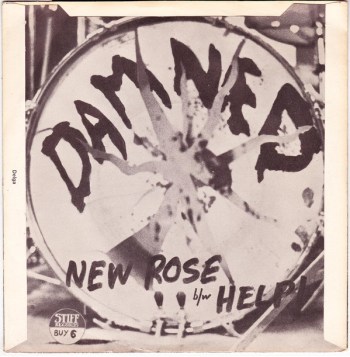
22 October 1976. It had long been thought the Sex Pistols or The Clash would grab that particular accolade but they were both blindsided by The Damned.
mp3 : The Damned – New Rose
It came out on Stiff Records and it really threw most people. Punk was supposed to be, according to legend, tuneless, aimless and unlistenable. New Rose was none of those, with its catchy chorus, decent enough verses and a lead singer who was easy(ish) on the ear. As Andy Partridge would later say, this is pop – yeah, yeah.
Talking of which, the b-side was a hoot.
mp3 : The Damned – Help!
103 seconds of what most folk thought punk was….tuneless, aimless and unlistenable if you thought the original was a sacred cow.
A first pressing, with the catalogue number STIFF 6, is fairly valuable these days, and a good quality copy will most likely cost you over £100 on the second-hand market.
It was still too much for daytime or commercial radio who barely played it. And with nobody hearing it, nobody was buying it. It didn’t break into the Top 75.
Oh, and for what it’s worth…..I reckon The Damned would release better 45s later on. My own favourite is this.
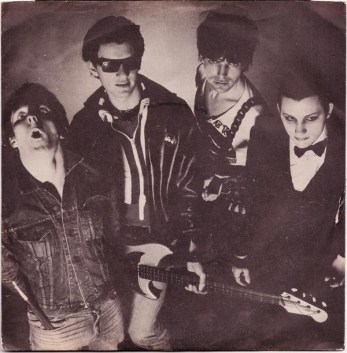
The Damned, thanks to New Rose on Stiff Records in October 1976, may have released the first punk rock single in the UK but to many they were regarded as a bit of a joke band and never given the same kudos as many of their peers.
If you look back at their history, they do appear to have been a half-decent pop/rock band who were in the right place at the right time to jump on the bandwagon with enough savvy among certain band members to adopt the look and feel of punk, including adopting silly monikers, to get noticed and written about.
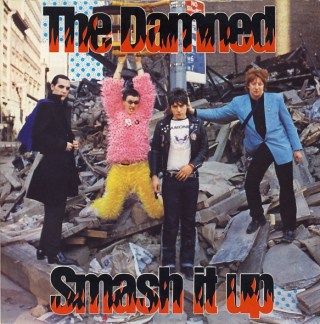
I hadn’t fully realised that they had broken up for a bit after their second album had been panned, undergoing various changes in personnel including having Jon Moss, later to find huge pop fame/infamy as part of Culture Club, on drums for a short spell. They were absent for much of 1978 but came back with a bang in 1979 with the occasionally tuneful Machine Gun Etiquette from which this classic 45 was lifted:-
mp3 : The Damned – Smash It Up
It was banned by the BBC on the basis of its title despite it not really being an anarchistic call to arms. Still made #35 in the charts but deserved better.
Here’s your b-side
mp3 : The Damned – Burglar
Comic-book punk rock indeed. The sort of stuff that Kenny Everett parodied in his TV shows of the time

 THE NEW VINYL VILLAIN