THE CLASH ON SUNDAYS (18)

R-550566-1299670760.jpeg

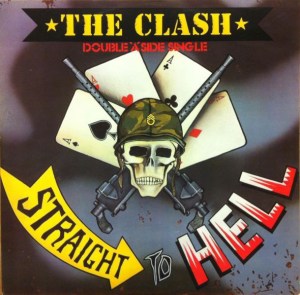
Disc 18 is Straight To Hell/Should I Stay Or Should I Go.

Released just three months after Rock The Casbah, a lot had changed for The Clash in the summer of 1982, not least the fact that they had ‘cracked’ America.  Combat Rock was proving to be an enduring album, going on to spend almost six months successively in the UK charts which was well beyond the time expected of any album by the band. They were now determined to get their music across to as wide an audience as possible, hence the decision to accept the task of opening for The Who at a series of outdoor stadium gigs in October 1982, although it is worth recalling that the band continued to headline at much smaller venues in the States at the same time.

The days of standing up to record company wishes to milk albums dry were also over as seen by the fact that the release of a double A single meant that exactly one-third of  Combat Rock had been put out on the 45rpm format.  But in saying this, there’s no argument that it is one of the band’s finest 45s.

My own preference is for Straight To Hell.  As I wrote when I included it in the ICA this time last year, my view is that it an extraordinary piece of music. The very idea that one of the world’s foremost punk bands would, within just five years of their explosive and noisy debut, end up recording and releasing a song that leaned heavily on a bossa nova drumbeat devised by Topper Headon and a haunting violin sound would have been laughable.

It has a stunning and thought-provoking lyric delivered by a resigned-sounding Joe Strummer who seems devastated by the fact that musicians cannot make the world’s problems disappear.

Radio stations and the general public however, preferred the charms of Should I Stay Or Should I Go. It has a great riff, a sing-a-long and infectiously catchy chorus and the most ridiculously yet charming backing vocals in some strange version of Spanish.  What’s not to like???

It famously became a huge hit all over again some nine years later after it was used in an advert to promote Levi Jeans.  It went to #1 in the UK as well as Top 5 in just about every singles chart in Europe.


mp3 : The Clash – Straight To Hell (edited version)
mp3 : The Clash – Should I Stay Or Should I Go

SHOULD I STAY OR SHOULD I GO  : Released 17 September 1982 : #17 in the UK singles chart; #1 on its re-release in 1991

My favourite Clash song is ‘Train In Vain’. My favourite of their singles is in that vein – ‘Should I Stay Or Should I Go’.  I thought I’d heard it somewhere before (I’m not trying to be ironic). I had to buy all my Clash records until ‘Combat Rock’ which was produced by longtime Who producer Glyn Johns.  I got a free one of those . It makes me feel like I’m 34 again and Spring is in the cocaine.

We had a junior manager called Chris Chappel who was a huge Clash fan.  I invited them onto the US tour after Chris convinced our senior manager they would be good.  By the end of the tour, they had broken the USA.  We were playing huge stadiums on that tour and they really handled the shows well, and convinced the crowd they were real.

I adore The Clash, as I adored the Sex Pistols.  Different, incompatible, not really comparable, they both felt to me like bands who (like The Jam a little later) had travelled a route laid by The Who more than any other band.  The New York Dolls and the Ramones influenced British punk rock, of course, but it was our simultaneous exaltation of rock, and indifference to it, that both bands emulated, though they each had different reasons for using that particularly tortured formula.  So, I have a personal pride in The Clash as I do in the Sex Pistols and The Jam.

I feel bad that I have outlived Joe Strummer, but delighted that Topper is alive, against the odds: he is an absolute sweetheart. I really admire Mick Jones and Paul Simonon too, for remaining true to their individual artistic theses. These guys made a troubled and druggy period of my life in the late 1970s and early 1980s so much happier.  The Who just played at the Brighton Centre and all I could think of while we played was that I had once played with The Clash on the same stage in 1981.

Pete Townsend, The Who

THE CLASH ON SUNDAYS (17)

R-300091-1266278467.jpeg

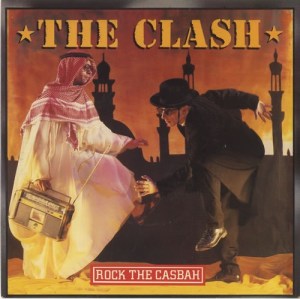
Disc 12 is Rock The Casbah.

Combat Rock had not turned out to be a return to the punk origins as many had thought might be the case based on its lead off single.  It was also clear that the record company were now, for whatever reason, calling more of the shots as Rock The Casbah was issued just seven weeks after Know Your Rights when there had previously been considerable gaps between the singles.

The move was as much a response to the reception given to the album, particularly in America.  There is no doubt that Rock the Casbah was always going to be a single, as evidenced by the promo video being made.  I’m not sure how many of you have noticed however, that the drummer in the video is none other than Terry Chimes and not Topper Headon….the irony of course being that we would later learn Rock The Casbah was mostly written by the now departed drummer who had left the band on the eve of the tour to promote the album, with exhaustion being cited.

This is a single like no other in the history of The Clash, at least during their time together as a band.  It didn’t do all that brilliantly in the UK, stalling at #30 and perhaps providing evidence that long time fans were finding it hard to come to terms with the new sound.  But elsewhere, where The Clash hadn’t really enjoyed huge success before, the single brought fame and fortune – Top 5 in both Australia and New Zealand, Top 20 across much of Europe and most crucially, Top 10 in the USA in both mainstream and dance charts.

It’s a song driven along in the main by the disco beat and piano playing, but there’s some decent contributions from Mick on guitar while Joe’s lyrics are among the catchiest he ever penned.  It’s a terrific and enduring pop song that, if written and recorded in that style by any other band of the era, would equally have proven to be a hit.  It’s the one song by The Clash that just about everyone aged 45-60 nowadays can easily recall.

It was released in the UK on 7″ and 12″ vinyl. The former contained a decent sounding and poppy b-side albeit it does on for maybe a minute too long)  which we would later learn was written by Paul Simonon about issues he was having in a long-term relationship but unlike Guns Of Brixton the vocal was taken on by Joe.  The latter had an instrumental remix of the a-side on offer:-

mp3 : The Clash – Rock The Casbah
mp3 : The Clash – Long Time Jerk
mp3 : The Clash – Mustapha Dance

ROCK THE CASBAH  : Released 11 June 1982 : #30 in the UK singles chart (#15 on 1991 re-release)

I was aware of The Clash when punk happened because that was what started us going, although I don’t think Joy Division were punk like that.  I think we were something else that came after that didn’t have a name.

‘Rock The Casbah’ is my favourite track. I heard it in New York when we first started going there in the early 80s after the demise of Joy Division. We were struggling a bit because Ian’s death meant we couldn’t go in that direction anymore, we’d peaked in that sound.

Clubs in NY were ‘new wave’ and the music was infinitely better than in England. For a start they were often in big warehouses.  There was the Peppermint Lounge, Danceteria, Hurrah’s, AM-PM…tons of them. They weren’t playing commercial dance music, but club tracks by English groups…and the two absolute classics were ‘Tainted Love’ by Soft Cell and ‘Rock The Casbah.’

It broke form. I believe it was written by the drummer. It really cut it in a club and showed me you can make club music that’s not cheesy – like nightclub music was in England at the time.  Here was a proper group, making proper music, but they were using traditional rock’n’roll instruments to make music that dominated a New York club scene.  That was a massive inspiration for me.

The song has great rhythmic content and a great hookline. It’s The Clash at their best.  OK, it’s not slashing guitars and a 190bpm tempo – but it’s a fucking great, really, really good song.

Bernard Sumner, Joy Division & New Order

THE CLASH ON SUNDAYS (16)

121-5-im-Cover-1007

Disc 16 is Know Your Rights.

April 1982.  And just when you thought that The Clash were incapable of any new surprises, they hit hard with the release of what turned out to be the first of three singles that would be lifted from Combat Rock.

Maybe they were just fed up of not being able to articulate their message properly with a music press that were no longer fans (for the most part) or maybe it was just a bit of piss-taking from Joe aimed at those who had dismissed This Is Radio Clash as sloganeering even before hearing a single note.  But it takes a big set of balls to scream out that what follows on record is ‘a public service announcement………………..WITH GUITARS!!!!!’

Yup, it’s time to throw away the funk, disco and reggae and get back to some good old-fashioned noise to what is suspiciously akin to a rockabilly beat.  But it was exactly what we were needing.

I’m a big fan of this song, and think it is one of the most underrated of the singles.  It was a throwback to the angry, disenfranchised band of old. It only came out on 7″ vinyl – no extended remixes for this track – and it even had a b-side that name-checked London just like so many songs of old.  The infatuation with America was seemingly over and it made me believe that the forthcoming album was going to be 45 minutes of pent-up aggression unleashed on a listening public.

Got that wrong didn’t I?

mp3 : The Clash – Know Your Rights
mp3 : The Clash – First Night Back In London

Years later, the early versions of the songs that made it onto Combat Rock became available in bootleg form.  It is interesting to hear how the lyric is delivered with a far more cynical rather than angry tone.  It’s also a couple of minutes longer than the version that was eventually publicly issued…

mp3 : The Clash – Know Your Rights (early version)

KNOW YOUR RIGHTS  : Released 23 April 1982 : #43 in the UK singles chart

For me it’s all about the first ten seconds of ‘Know Your Rights’.  The way Mick Jones bashes his guitar  and then Strummer shouts “This is a public service announcement/With guitars!” That’s the whole reason why The Clash existed right there. It’s a massive influence on what we’re going with Radio 4.

As a kid growing up in America, ‘Combat Rock’ was everywhere. MTV had just started and the video for ‘Rock the Casbah’ was on all the time. All the kids at school loved it but ‘Know Your Rights’ was the one for me. It’s the ultimate synthesis of all their influences, from reggae to punk through R&B to soul.  Musically, it sounds really urgent, as if they were keen to tighten things up.

Maybe they were conscious that they’d lost a few people en route with ‘Sandinista’ and wanted ro strip the sound back to bare bones.  The lyrics are spot on: “Murder is a crime/Unless it is done by a politician or an aristocrat”.  Someone could release ‘Know Your Rights’ next week and it would still sound relevant.  It’s timeless.

Anthony Roman, Radio 4

THE CLASH ON SUNDAYS (15)

R-103696-1206047164.jpeg

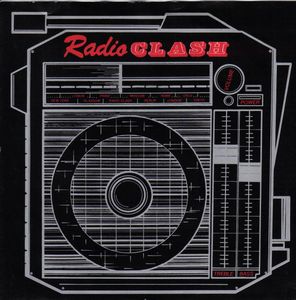
Disc 15 is This Is Radio Clash.

By late 1981, The Clash were not getting much positive press in the UK.  This was in part down to the continued backlash against what many critics and journalists considered to be a folly (or even worse a vanity project) of the triple-album but also because the band were no longer as accessible as they had been just five years previous when the debut album and singles had been unleashed.

Word came through that the band were reverting to old practices and releasing a one-off 45 that hadn’t been on any previous albums nor would it feature on any future recordings.  Word then came through that the title of the new 45 was to be This Is Radio Clash, and before anyone had heard a single second of music, it had been dismissed by a number of writers on the title alone on the basis that they’d had enough of the Joe’s sloganeering.

As such, the new single was on a hiding to nothing.  The reviews were mixed to say the least, and there was a further backlash when it was revealed that the 7″ single was the same tune with slightly altered lyrics and the 12″ only had remixes.  As someone wrote at the time, it was as if the band had used up all their creative talent in making Sandanista! and now had the equivalent of writer’s block.

All of which is very unfair on the single.  Yes, it was another surprise in terms of its sound being akin to a dance number that was more funk than punk, but it was far from awful.  Indeed, it is easy to look back now and see that they were laying down a marker for what was to be their next album – the one that really would propel them to fame and fortune in the USA which had been such a goal in recent times.  As one of those new wavers who liked his disco music, I was at the time and have continued ever since to be a fan of this single and can look back with pride that I helped it reach the giddy heights of #47!! Although I have to admit that the 12″ mixes are a bit on the dull side.

mp3 : The Clash – This Is Radio Clash
mp3 : The Clash – Radio Clash
mp3 : The Clash – Outside Broadcast
mp3 : The Clash – Radio 5

Worth noting that at the time of its release, there were only Radios 1,2,3 and 4 broadcasting nationally on the BBC in the UK. Radio 5, which became the news and sports channel, was launched in 1990.

THIS IS RADIO CLASH  : Released 20 November 1981 : #47 in the UK singles chart

The thing with ‘Radio Clash’ is it’s got that great ‘dan-daan-daan-dandaaaah’ introduction, almost as if saying ‘Here comes the villain’, the the riff comes in.  It’s pretty much like listening to the future if you consider what they were doing with sampling and remixing but without all the modern technology.

I wasn’t around for punk but you didn’t have to be to realise it was way ahead of its time. Also, it’ still got the attitude in there, even now, many years on. Joe’s lyrics hit home.  If you compare it to ‘White Riot’, they are so far apart stylistically, and that to me is what makes The Clash great. The mixing of styles, the lack of fear of experimentation, the way they’d get on and make records they wanted to, regardless of what anyone thought.  Not being afraid to try musically different styles has influenced Hard Fi,

I’m from a satellite town where the cultural arena was pretty sparse so The Clash were one of the ways to actually find out about stuff, whether it was dub, ska or Jack Kerouac.  They talked about what was going on in the world, we took that from them, they dealt with global issues but we’ve kept it to a local level. My older brother, Steve, got me into them.  Then I read Nirvana talking about them in interviews, and then Mick produced my first band.

Fast forward to a couple of months ago when he joined us on stage at Brixton Academy and it sums up how so much has changed in the last few years.  You couldn’t ask for any more. When I hear their songs it makes my heart beat faster, and I just want to pick up my guitar and get on stage.

Richard Archer, Hard Fi

(I’m thinking today’s author won’t be too well-known outside of the UK – here’s wiki )

THE CLASH ON SUNDAYS (14)

R-475410-1271637923.jpeg

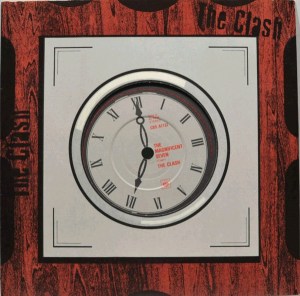
Disc 14 is The Magnificent Seven.

For all that I’ve never fallen totally for the charms of Sandinista!, the opening track on Side A was one that I loved on first play and have never since tired of it.  Yes, it was a total curve ball as it was not what any of us were expecting from The Clash.  Rap music was something us British new wave post-punkers only really read about tucked away in obscure parts of our music papers and up until this point I can’t say that outside of the Top 3 hit Rapper’s Delight by The Sugarhill Gang (a single I had bought as a 16-year old) was a genre I was unfamiliar with.  But as I’ve mentioned in previous postings looking at times in my life, dancing and dance music has always been important to me.  And everything about the track insisted you moved your limbs to the best of your ability.

mp3 : The Clash – The Magnificent Seven

As wiki accurately reports, it was was inspired by hip hop acts from New York City, like the aforementioned  Sugarhill Gang and Grandmaster Flash & The Furious Five, both of whom were having an impact on all members of The Clash.

It was recorded in April 1980 at Electric Lady Studios in New York City, built around a funky bass loop played by Norman Watt-Roy of The Blockheads with Joe Strummer writing the words on the spot. It is probably the first time a rock band had tried to record a rap song – it predated the much more famous and successful Rapture, the #1 hit for Blondie, by some six months.

It’s a remarkable song in so many ways, not least the lyric which deals with the humdrum of everyday life (especially the need to work to survive) but also has an incredible stream of consciousness fashion that takes in shopping, the media and famous people in history. And cheeseburgers. And vacuum cleaners. And budgerigars.

It was released on 7″ vinyl with highly edited versions and an instrumental on the b-side:-

mp3 : The Clash – The Magnificent Seven (edit)
mp3 : The Clash – The Magnificent Dance (edit)

The 12″ versions were slightly longer but still shorter than the album version:-

mp3 : The Clash – The Magnificent Seven (12″ mix)
mp3 : The Clash – The Magnificent Dance (12″ mix)

The US 12″ version also contained The Cool Out, the remix of The Call Out as featured two weeks back.

A cracking essay is in the booklet for this one….

THE MAGNIFICENT SEVEN : Released 10 April 1981 : #34 in the UK singles chart

I bought Sandanista and I played the first and second sides loads and I think ‘The Magnificent Seven’ is the leading track.  At the time I had a job in a print factory, and the lyrics were pretty true to my life, “Ring Ring 7am, got to get up and start again”.  Most of the time I wanted to commit suicide, so the song portrayed that experience correctly. It made it funny as well..the “cheesburger” line. I heard he was making an order, and they kept it on the track.

The song’s about the futility of work and that’s what I felt, it voiced the experience I was going through. Living in a cage, imprisoned with no real future, that song gave me the courage to give up work. I always remember the lyrics because of that.

I loved Chic and this sounded like ‘Good Times’, but I liked it.  I didn’t know Joe was doing rap, I do in retrospect but at the time I never knew that. It sounded like a punk version of Chic.

It’s a rebel song you can really dance to.  One of the best, really brave, the album before was ‘London Calling’ which everyone was saying was a rock masterpiece, then they come out with a triple album full of disco, psychedelia, country, dub, everything.  I probably bought it at Soundtrack Records in Mount Florida, Glasgow. For some reason he always had punk records.  I was 18 years old, living at home with my dad. It’s an amazing record, great energy, great remixes, a truly wild record with some of Strummer’s greatest lyrics.

Bobby Gillespie,  Primal Scream

PS from JC…………………

The one thing I will say about the bass line from The Magnificent Seven, is that it bears more than a passing resemblance to this hit single from 1978:-

mp3 : The Rolling Stones – Miss You

Doesn’t it?


THE CLASH ON SUNDAYS (13)

R-1273942-1206047415.jpeg

Disc 8 is Hitsville UK.

An unashamed tribute to Tamla Motown, from the opening few bars that rip off You Can’t Hurry Love through a bass line that Holland/Dozier/Holland and Smokey Robinson would equally be proud of, to the title which apes the Hitsville USA marketing slogan closely associated with the Detroit years of the label.

Trouble is, it’s not really very good is it?  It’s certainly not worthy of most of the other singles that had gone beforehand and in many ways represents much of what was wrong with Sandinista, the triple album that had been released at the end of 1980.  I know I’m probably in a minority, but I was never a fan of the album, albeit it does contain a reasonable number of decent songs.  It was almost as if the band wanted to put out six sides of vinyl at minimal cost as a two-fingered salute to CBS and also to demonstrate to their fan base how little the idea of making money appealed to the greatest of rock’n’roll bands.

Hitsville UK features a vocal from Ellen Foley, who was Mick’s girlfriend at the time.  It’s hard to imagine nowadays the furore this caused at the time (the vocal…..not the relationship!!) as she was best known, in the UK at least, for being the co-vocalist on one of Meat Loaf‘s epic numbers which back in 1977 has been seen as one of the defining moments as to why it was important to embrace the short and sharp sound of punk/new wave.  The thought of such an out-and-out rocker, as she was being portrayed in the press, becoming part of The Clash was a hard one to absorb.

mp3 : The Clash – Hitsville UK

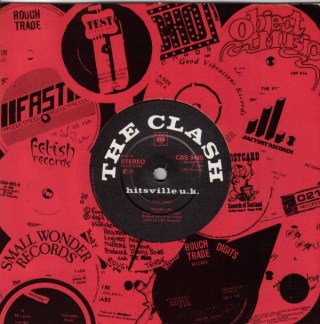
The single bombed.  It’s strange as the lyric is a good one, with Mick acknowledging just how influential the indie labels in the UK were starting to become with the likes of Small Wonder, Fast, Factory and Rough Trade all getting name-checked in some shape or form as is the joy of the three-minute single (another link to the really heady days of Motown).  The logos of many of indie labels (including Postcard) are reproduced lovingly on the sleeve. But it all gets lost in a sadly anodyne production – but maybe that was the band’s plan all along.   It’s not one I go to very often.

The b-side also didn’t offer any succour for those looking for the punky sound of the band, as it was a Mikey Dread number that developed further the sound offered up on Bankrobber a few months back:-

mp3 : The Clash – Radio One

HITSVILLE UK : Released 16 January 1981 : #58 in the UK singles chart

Every film I’ve made I’ve tried in vain to get ‘Hitsville UK’ into it. This stab of post-punk and Motown would elevate any British film. It’s also the perfect blueprint of how to make a British film. For a long time it was on the end of ’28 Days Later’ but mutants, creeps and musclemen persuaded me to replace it with something else.

A couple of months later, Joe Strummer died and although I’d helped to shower him in spit and beer, I’d never met him or any of the group. Now I felt in some stupid way that I’d let him down. Finally, I got it into ‘Millions’ – and will never again delay paying dues.

Danny Boyle,  film director (Trainspotting, A Life Less Ordinary, Shallow Grave)

THE CLASH ON SUNDAYS (12)

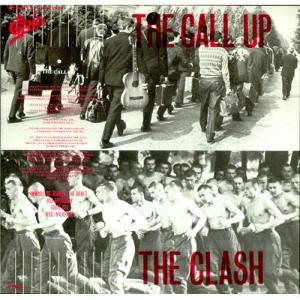
The+Clash+The+Call+Up+165860Disc 12 is The Call Up.

It was just a three-month wait for the next single.  But for many people it was the first hint of the band being a disappointment.  It’s not that The Call Up is a bad single, but it just felt, when set against the run of 45s in recent times, to be a tad less than essential. It also fell back to the sort of chart positions that the earlier singles, barely scraping into the Top 40. It was only years later that we’d recognise it as a partial template for the sound of Big Audio Dynamite

It’s clearly an anti-war song, or more precisely, an anti-Army/military service song urging those 18-25 year olds who were, thanks to a new bill passing through the US Congress, facing a requirement to register themselves under a system where circumstances could lead to them having to carry out service in ‘defence’ of their country.  The sentiments were very noble given it was only a decade after Vietnam where, as a later hit song would remind us, the average age of a casualty had been 19.

The b-side was another song with an anti-war message, highlighting the fear of a nuclear holocaust….a situation that was growing ever more likely with the impending elevation of Ronald Reagan to the presidency.

Both sides also indicated how America and its way of life was becoming more interesting as subject matters in terms of songwriting to Joe Strummer and Mick Jones.  Things had really moved on from the London-centric debut LP just three years earlier where it was deemed acceptable to be bored with the USA.  Some journalists actually used that as a stick with which to metaphorically beat the band around the head with. Again.

mp3 : The Clash – The Call Up
mp3 : The Clash – Stop The World

It was originally released only in the UK on 7″ vinyl, but the following year  a cracking instrumental remix of the song was made available on a 12″ single released in the USA, and given that the author of the accompanying essay in the box set makes reference to that (and to a later single in this series), it makes sense to feature it here:-

mp3 : The Clash – The Cool Out

THE CALL UP  : Released 21 November 1980 : #40 in the UK singles chart

‘The Cool Out’ is a mix of ‘The Call Up’ and is really important because they show the versatility The Clash went for in terms of incorporating different kinds of music. The thing about The Clash that stood out is they were massive fans of music themselves, they were always looking for what was happening, what was coming up from the street. They took what was new and hadn’t broken through, mixed it with something accessible and made it The Clash.

They changed music completely by showing they can take a band with bass and guitars and drums to a whole new place.  You can take Chic or rap or whatever and mix it.  They were probably hanging out in clubs and discos in New York at the time. Those mixes still influence a lot of bands now. It took the fear away of gay disco music, back then I guess you were either a rock’n’roll band or disco was for women.  Most bands would have feared this type of music but not The Clash.

My all-time favourite single by The Clash was ‘Rock The Casbah’ because I was convinced they were singing “Sharleen don’t like it”.  Later, I used to book into hotels as Janie Jones until someone rumbled me.

Sharleen Spiteri, Texas

THE CLASH ON SUNDAYS (11)

bankrobber

Disc 11 is Bankrobber

A double album at the end of 1979 had taken the world by storm and lifted the profile of The Clash to new heights.  Columbia Records were desperate for something to maintain the momentum and the executives must have been highly frustrated that it took a full eight months into 1980 before there was any product to put on the market.

Bankrobber was a real surprise.  Where the rock side of things was where most expected he band to go, they brought out a single that delighted those who had fallen for the charms of their reggae covers.  It didn’t however, find favour with a few critics who were looking for any reason to turn on the band (after all, the whole ethos of music journalism has always been to tear down those you spent time building up).

In this instance, while it was OK for the band to cover reggae numbers, how dare they, as white musicians, try to do their own thing.  Oh, and while the journos were on the soap boxes, they of course took delight in reminding Joe that his daddy, far from being a villain and a thief, was in fact a career diplomat whose meanderings around the world saw him live in fine opulence at the expense of taxpayers……….

Although there were tracks recorded for a 12″ release to follow the success of that format with the London Calling single, the tensions between band and label saw it only appear in 7″ form with these two tracks:-

mp3 : The Clash – Bankrobber
mp3 : The Clash (feat Mikey Dread) – Rockers Galore….UK Tour

It reached #12 in the singles chart, which was just one place below that of London Calling.  Again, an appearance on Top of the Pops (or even allowing the promo video to be aired) might have seen it reach the Top 10.

What had been intended for the 12″ release would eventually find its way out via inclusion on Black Market Clash:-

mp3 : The Clash – Bankrobber/Robber Dub

BANKROBBER : Released 8 August 1980 : #12 in the UK singles chart

I was there at the recording of ‘Bankrobber’.  Me and my mate Pete Garner were walking down Granby Road in the middle of Manchester one day and we could hear these drums coming through the walls. Pete was a proper Clash fan and he was convinced it was them.  Then Topper Headon walks out onto the street right in front of us!

He invited us downstairs into the studio to see what was going on.  Mikey Dread was there and we got chatting. They were dead cool.  Joe Strummer was sitting in the corner with a big, wide-brimmed hat on beneath this big grand-father clock, clicking his fingers in time to it. Paul Simonon asked us what our favourite film was and then said (affects authentic West London drawl) ‘mine’s ‘Death Race 2000’! Funny the things you remember.

Afterwards we showed Johnny Green, their tour manager, the way to the record shop and he bought two copies of ‘London Calling’ – one for each of us.  I’ll never forget it.

Ian Brown,  The Stone Roses

THE CLASH ON SUNDAYS (10)

index

Disc 10 is London Calling.

So we come to the point when The Clash to all intent and purposes stopped being a punk/new wave band and moved beyond any sort of meaningful classification thanks to their ability to turn their hand to just about any sort of genre and make it sound their own.

It is quite incredible that a double album, widely recognised and acknowledged as one of the best of all time, only ever had one single lifted from it. (I’m talking in broad terms here as I know that a separate song was lifted and released in the USA).  It is also quite incredible that more than 35 years since it was first broadcast over the airwaves that it has since become one of the most immediately identifiable opening to any song ever written.

It was released at the beginning of December 1979 in 7″ and 12″ form, the latter being something new for the band and as such was the version I bought.  I was blown away right away, particularly for the booming bass notes that blared out of my speakers in an almost distorted manner.  And the ending with its S.O.S.call just added a wow factor.

The other three songs on the 12″ were equally jaw dropping, albeit it was one cover and two remixed dub versions of said cover.  I actually thought that the lyrics and sentiments of White Man (In Hammersmith Palais) meant that the Clash wouldn’t go back to reggae for any material choosing to leave the majesty of Police and Thieves as their calling card in that respect.  But Armagideon Time and the dub versions blew that notion away.

My 12″ copy of the single was, alas, damaged beyond repair a few years later when put into use at a party in the flat and someone dropped burning ash onto it.  I’d later get the songs back via their inclusion on the compilation album Black Market Clash.

It’s worth noting that the single didn’t sell all that well in the run up to Christmas  – I’m guessing most fans would have spent their money initially on the album which came out just seven days later.  But it was a real slow burner of a 45 and six weeks after its release it hit its peak of #11….just think how high it would have got if the band had been interested in appearing on Top of The Pops to boost sales.

This was the UK top 10 on the week of 19 January 1980:-

1. The Pretenders – Brass In Pocket
2. Billy Preston & Syreeta – With You I’m Born Again
3. KC & The Sunshine Band – Please Don’t Go
4. Madness – My Girl
5. Pink Floyd – Another Brick In The Wall
6. The Nolans – I’m In The Mood For Dancing
7. Abba – I Have A Dream
8. The Beat – Tears Of A Clown/Ranking Full Stop
9. Fiddler’s Dram – Day Trip To Bangor
10. The Tourists – I Only Want To Be With You

A mixed bag to say the very least, and surely a missed opportunity to hit #1.

mp3 : The Clash – London Calling
mp3 : The Clash – Armagideon Time
mp3 : The Clash – Justice Tonight
mp3 : The Clash – Kick It Over

Bit of a surprise as to the author of the main essay in the booklet. I also think he’s talking bollocks, but never mind.

LONDON CALLING : Released 7 December 1979 : #11

I love The Clash.  I liked their first album even though the production was not too good. As you know they were formed because of seeing the Pistols, so it was never seen as a threat, the Pistols were number one and The Clash were number two, even if it was perceived to have changed further along the road.

I like the way they played because it was the same style as I’m from, the same school of glam, the tunes very similar to what I was brought up with.  The structures and blueprint Mick Jones gave them were coming from the same place I was.  I went up to Birmingham, to the Music Machine and played with them. There was no animosity, it was all good in my book.

“London Calling” was their “Anarchy In The UK”. I thought it was a depressing song but significant, because of the lyrics. The best time I ever saw them was early on, when they were rehearsing, Keith Levine was still in the band, and I watched them rehearse at the Roundhouse and they didn’t change much from then on. 

You know history gets twisted by those that weren’t there.  The Clash, they were there, we were there. I’ve had Mick on the blower for the radio show.  Joe: I’d get weird messages when he was alive, at 5am, saying how he thought I was his fave guitar player, they were great guys.  I Liked them.

Steve Jones, the Sex Pistols and Indie 103.1FM, Los Angeles

There’s so much drama in this tune, it feels like you are in the middle of a dream.

Damon Albarn, Gorillaz, Blur.

THE CLASH ON SUNDAYS (9)

The Clash - The Cost Of Living EP - Front

Disc 9 is The Cost Of Living EP.

I mentioned last week that when English Civil War had been released as the second 45 off Give ‘Em Enough Rope how Joe Strummer had promised that any fans who maybe felt a bit short-changed would have it made up to them with the next 45.

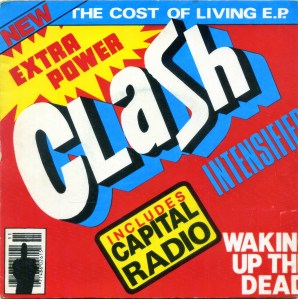
It was only a three-month wait till the next release and it came in the shape of an EP with four songs, one of which was the band’s first stab at putting out a cover as the lead track, another was the re-recording of an old favourite that was proving expensive to track down and own, while there were two brand new songs to enjoy that were only ever going to be available on the EP.  Oh and it came with a degree of fancy packaging, the concept of which lampooned a popular brand of soap powder in the UK.

The Cost Of Living EP was a stupendous release.  The cover version sounded as punky as anything they had recorded up to that point and didn’t feel like a song dating back to 1966.  The two new tracks were incredibly catchy and listenable and bordered on pop…..one of them even featured a harmonica solo ans acoustic guitar….and then there was the tongue-in cheek approach to the re-recording of Capital Radio with Joe’s mad ad-libs and then signing off with a crazy spoof sales jingle .

mp3 : The Clash – I Fought The Law
mp3 : The Clash – Groovy Times
mp3 : The Clash – Gates Of The West
mp3 : The Clash – Capital Radio Two

Turns out the box set falls down a bit at this juncture as the version of Capital Radio Two is the same as later made available on the import LP Black Market Clash. To get the full effect you need a vinyl copy of the EP from back in 79, so it’s just as well I have one in the collection:-

mp3 : The Clash – Capital Radio Two (with jingle)

There’s another excellent essay in the box set booklet from a musician who, as a kid, was mesmerised by The Clash.

COST OF LIVING EP : Released 11 May 1979 : #22

I was an eight-year-old punk when “The Cost Of Living” came out.  My dad was well into his music and for my birthday present he took me to see The Clash at the Apollo in Manchester. I can still remember seeing the sign outside as we arrived : “LIVE TONIGHT – THE CLASH”

Joe Strummer was totally wired, throwing his guitar around the stage. We were sitting in the balcony and by the end the whole place was going crazy. Seats were getting ripped out and flying everywhere. My old man was like, ‘we’d better get you out of here.’  The first line of “I Fought The Law” is the killer : ‘Breaking rocks in the hot sun’. Fucking brilliant.  After that you can do anything.

I found out recently that “I Fought The Law” was written by Sonny Curtis, the guitarist in The Crickets. It’s weird, it’s better than anything Buddy Holly ever did! And of course, Bobby Fuller was dead at 22, which only adds to the mystery.

It’s a great track, but then The Clash always did brilliant covers: “Police and Thieves”, “Brand New Cadillac”. I’ve still got my dad’s vinyl copies of the first album. I dug it out the other day. As a kid, I’d written all over it in crayon: ‘Jimi Goodwin – Punk Rock Lives’. The seeds of everything I’ve done since were sown there, I reckon!

Jimi Goodwin, The Doves

THE CLASH ON SUNDAYS (8)

033052e7bfbd234c9e2abdaa5f2cca0fDisc 8 is English Civil War.

The end of year polls in 1978 had been good to The Clash.  They were still seen as being a band for the people, not willing to compromise or sell-out with the continued non-appearances on the likes of Top of The Pops to promote singles being held up as a particular example.

It was also known that they weren’t keen for singles to be lifted off albums, and indeed the decision by CBS to issue Remote Control off the debut LP had caused huge friction.  But there was hardly an eyebrow raised in surprise when it was revealed that a second single was to be culled from Give Em Enough Rope a full three months after the LP had been released.  Part of this was down to the band not making a fuss – indeed it seemed as if they wanted it released as they felt it was important to bring as much attention as possible to their fears and concerns around the growing rise of a neo-Nazi right-wing in the UK.

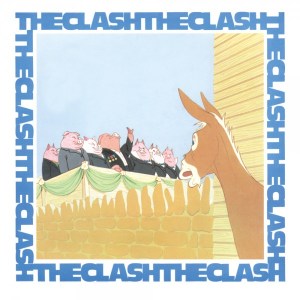
English Civil War was a loud and very punky track with a tune that was taken from an old marching song dating back to the American Civil War.  Joe’s new lyrics to the jaunty tune drew attention to the fact that if the rise of the right continued in the way it was threatening to then it would be up those who cared most to fight against it in the streets.  And as if to really drive the message home, the lyrics were printed on the rear of the single which had as its front cover, a still lifted from the animated version of Animal Farm as its front cover.

mp3 : The Clash – English Civil War

The fact that the band could their message across in graphic and musical fashions allayed any overriding concerns that fans were being ripped off – and besides, Joe told everyone that they would make it up to everyone in a special way with the next single.

The b-side was a punky cover of an old reggae tune recorded by The Maytals in 1969 and which came to wider attention when it was included on the soundtrack of the movie The Harder They Come:-

mp3 : The Clash – Pressure Drop

It reached #25 in the singles chart, which was an outstanding achievement for a song that most fans would already have owned. The essay in the booklet is a good one….

ENGLISH CIVIL WAR : Released 23 February 1979 : #25 in the UK singles chart

I bought Give ‘Em Enough Rope in the record department of Rumblelows in Northwich. I’d bought Sandanista a few weeks before, and I was at that stage where you want to hear everything you can. The first three tracks just blew me away – Safe European Home, Tommy Gun and English Civil War. I’d never heard a record which sounded so big and powerful. 

I love English Civil War. It’s a marching song. The intro is all on one chord, then Strummer just screams “Alright!”.  At  14, it sounded fucking incredible – all-guns-blazing rock’n’roll. I’d go round to my mate’s house and put it on and we’d all jump around the bedroom.  It’s the sound of the last gang in town arriving through the speakers.

I think the lyrics are adapted from an old American Civil War song.  I remember singing along to ‘When Johnny Comes Marching Home Again’ but I never really knew what it was about. I just knew it must be about standing up for what you believe in. It really fired up my imagination. Looking back, dancing around that bedroom with my mates to English Civil war was my first experience of finding a community through music, outside of school.  They were a gang, and so were we.

The Clash weren’t just a brilliant rock’n’roll band. they made me realise it was possible to live out my dreams.

Tim Burgess,  The Charlatans

THE CLASH ON SUNDAYS (7)

index
Disc 7 is Tommy Gun.

Most bands put out singles as tasters for upcoming albums but then again The Clash have always been a bit different.

Give Em Enough Rope had been released on 10 November 1978 to a fair amount of critical acclaim even if there were some who remain bemused by the choice of producer in Sandy Pearlman whose main work had been over seven albums by American rockers Blue Oyster Cult.  There was certainly a sharper sound to the band, but many at the time felt this was more likely to each member becoming more proficient the more they played in the live setting and got used to the studio environment.  It would emerge later on that Pearlman had played a significant part in the record trying to raise the instrumentation within the final mix, particularly the drums, as he felt Joe Strummer‘s voice lacked quality and took away something from the songs.

Two weeks after the LP hit the shops, a single was lifted from it:-

mp3 : The Clash – Tommy Gun

It was a song driven along by the ferocious playing of Topper Headon, the rat-a-tat-tat of his drum breaks akin to the sound of machine gun firing.  It was a million miles away from the softer paced approach of previous single (White Man) In Hammersmith Palais and certainly grabbed the attention of those who loved their punk rock raw, hard, explosive and loud as it gave the band their biggest hit to date, taking them into the UK Top 20.

It also contains a fabulous b-side albeit it was one that the punk purists balked it, being a straight-forward love song, albeit played at a high tempo:-

mp3 : The Clash – 1-2 Crush On You

Listening back, it’s clear that this was a band approaching the very top of their game, capable of turning their attention to all sorts of songs and styles.  That’s a b-side which would have sounded great on radio, but its release as a 45 or indeed as an album track would have led to cries of sell-out as the band still needed to maintain punk/new wave credibility at this stage in their career.  Wouldn’t be long though before they could throw off those shackles and become a good old fashioned rock’n’roll band to whom no label could be accurately applied.

Here’s the essay from the box set.

TOMMY GUN : Released 24 November 1978 : #19 in the UK singles chart

I was aware of The Clash as a kid. They were part of the nameless soundtrack to my early life. My mum and dad had these punk compilation tapes they used to play at home and Should I Stay Or Should I Go and London Calling were on there. I didn’t know who the other groups were but I knew The Clash.

As I got more into music I read about them being punk icons, bit they were always appealed more than the Sex Pistols. They wer more intelligent, they had more to say. Tommy Gun evokes that age. It’s a product of the volatile climate of the late 70s – all those references to Baader Meinhoff and The Red Brigade. It’s like a punk adaptation of The Beatles’ Revolution: “Tommy Gun, you ain’t happy less you got on!” Fucking great.

It seems to me they were doing the same thing Rage Against The Machine did later – letting the audience know what’s going on politically, with the band in the position of outlaws spreading the news. The snare drum at the start is fucking great too.

A mate told me a funny story about the ad lib near the end where Strummer sings “OK, so let’s agree about the price, and make it one jet airliner for ten prisoners.” apparently he texted it to a mate who couldn’t figure out what the lyrics were, and the next morning some heavies from M15 turned up on his doorstep demanding yo know what he was up to! That alone proves Tommy Gun is as relevant now as it was back then.

Carl Barat, Libertines and Dirty Pretty Things


THE CLASH ON SUNDAYS (6)

r-4759076-1374600844-4629

Disc 6 is (White Man) In Hammersmith Palais.

How appropriate that this should be slated for inclusion on Valentine’s Day as it is the song by The Clash that I am most in love with.  It’s a song that features highly in my all time list of singles and I’ll be saying a bit more in that particular series in due course.

It’s also got a belter of a b-side.

mp3 : The Clash – (White Man) In Hammersmith Palais
mp3 : The Clash – The Prisoner

I’ll leave the majority of words today to those who contributed essays to the singles boxset.

(WHITE MAN) IN HAMMERSMITH PALAIS : Released 16 June 1978 : #32

The Clash’s first album always sounded a bit rough to me. It was only when I saw the band live on their “Out Of Control” tour that I found out how potent they could be. It was October 21st 1977 in Trinity College Dublin and it was way more than just a gig. This was a tribal gathering and it had a seismic impact on the Dublin subculture.

White Man In Hammersmith Palais came out June 16th 1978. It was the first Clash song that drew influence from the reggae music of their “front-line” Notting Hill Gate neighbourhood. It was also the first song that really revealed the bands political depth. Written after a disappointing reggae gig at the Hammersmith Palais featuring seminal Jamaican stars Dillinger, Leroy Smart and Delroy Wilson, it mocks both the gun-toting braggarty of the reggae artists and the shallow attention seeking UK punk rockers for missing the real danger; the rise of the neo-Nazi movement.

Maybe more interesting than the political message was the evidence it gave us of a new-found musical ambition that set The Clash apart from their punk rock peers. This was one of the greatest bands of all time coming into their own.

The Edge, U2

Has anyone else ever managed to combine great tunes with such ferocious moralising? Dylan, in his early years, possibly, although Dylan pinched a lot of his tunes from elsewhere. It wasn’t just that Joe Strummer made you believe his outrage; he made you share it too. I have listened to this song hundreds of times and I’m still not entirely sure how he gets us from a reggae show at the Palais to Adolf Hitler in a limousine. I do know, however, that by the time you get to the fantastic, soaring finger-pointing last verse, you’re willing to leave your job and your family in order to right any wrong that Joe tell you to. The irony is that the Four-Tops-stage-right showmanship that Strummer bemoans is replicated, in part, by Mick Jones’ pop sensibilities – that’s why we’re all still listening now. This is a great single by one of England’s two or three greatest-ever bands.

Nick Hornby, novelist (High Fidelity, About A Boy, Fever Pitch)

THE CLASH ON SUNDAYS (5)

8a8f94e4c83382ecb5b7783b4156fa94

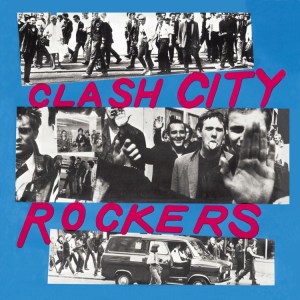
Disc 5 is Clash City Rockers.

The time in and around the release of Complete Control had seen the band out on the road for a fair bit, and is often the case in such situations, there was a bit of a fall-out with Mick and Paul not on speaking terms for a bit.  Part of this came from the fact that Mick and Joe had been given the opportunity to go to Jamaica to absorb some of the culture on offer in the hope it would have a positive effect on the songs that were going to be needed for the second album – Paul being the biggest reggae fan in the band was understandably annoyed at having to stay in the cold and damp UK while his mates went in search of inspiration (forlornly as it turned out as later captured on the album track Safe European Home).

While the two songwriters were in Jamaica, manager Bernie Rhodes pulled a trick that caused yet another rift in Camp Clash.  The band had gone into the studio to record a new single – an anthemic number that partly mythologised all that The Clash considered they stood for while incorporating, in part, a section of a tune from a 17th century children’s nursery rhyme about church bells in London.

The thing is, Rhodes thought the final recording was a bit flat sounding and so he convinced producer Mickey Foote to increase its speed marginally thus making it slightly higher in pitch.  All this was done while Joe and Mick were away and the single had been pressed before they heard the results.  They were appalled and angered and Foote was sacked on the spot.

mp3 : The Clash – Clash City Rockers (single version)

All subsequent releases of the song on compilation albums etc have featured the original version of the song (at the proper speed)

mp3 : The Clash – Clash City Rockers (original recording)

The b-side was an update of one of Joe’s old pub rock songs but the vocal gifted to Mick:-

mp3 : The Clash – Jail Guitar Doors

It’s long been a popular song among fans and indeed was deemed worthy of inclusion on the track-list of the band’s debut LP when it was finally released in the USA in a form almost unrecognisable from its UK counterpart.

Jail Guitar Doors is also the name of a charity, set up by Billy Bragg, whose aim is to aid rehabilitation by providing musical equipment for the use of inmates serving time in prisons and funding individual projects such as recording sessions in UK prisons and for former inmates.  A similar scheme was later established in the USA.

The single reached #35 in the charts and again they declined an opportunity to promote it via an appearance on Top of The Pops.

CLASH CITY ROCKERS : Released 17 February 1978 : #35

The opening chopped guitar riff, executed with such abrupt power and precision, immediately arrests you and informs you you’re in the presence of true greatness.  Punk was primarily a male youth culture, and the song audaciously kicks over the previous statues of lad iconicism – Bowie (and the pre-nonce) Gary Glitter.  It was saying that it wasn’t wearing make-up and pretending to be camp that made us shocking; it was because we were obnoxious, spotty, angry, bored young cunts.

This was one of the songs that made me leave home and go to London, then underscored my early years in the city. It was always on at all hours in the Shepherd’s Bush squat and Queensbridge Road pads, and it was our national anthem. I became an insomniac because of this song. There was never a centre-half at Hibs who got up as high for corner kicks as I did when this bastard blasted out.

Every time you put it on you were making a statement: this is our time and we will not be denied. A lot of water, beer, amphetamine and music has flowed under the bridge since then. But under the right conditions – for example, blasting out from a Stoke Newington stereo on a hot London summer’s day – I feel a shiver down my spine and nearly 30 years seems to have been shed. I love it so much.

Irvine Welsh, novelist (Trainspotting, The Acid House, Filth)

THE CLASH ON SUNDAYS (4)

R-6640389-1423659567-2207.jpegDisc 4 is Complete Control

I’m not sure how much to type today as I’m guessing that most T(n)VV readers will be very familiar with the fact that Complete Control was written, recorded and released in a fit of anger by The Clash as their response to CBS having released Remote Control as a single in May 1977.

It’s interesting to note that the attack on CBS via the line They said, we’d be artistically free when we signed that bit of paper’ was savaged by many critics at the time with the band being accused of complete naiveté and indeed some went as far as suggesting the row was manufactured to allow Joe Strummer in particular to continue to appear as a spokesman for the people.

Some other facts.

It was  engineered by Mickey Foote and produced by Lee “Scratch” Perry who happened to be in London producing for Bob Marley & the Wailers and readily accepted the invited to produce Complete Control.  However, it turned out that his contribution to the track had to be toned down with Mick Jones re-working things to bring the guitars out more to the fore and drop down the echo Perry had dropped on it. The song was also Topper Headon‘s first recording with the band.

mp3 : The Clash – Complete Control

The b-side is one that many fans are very fond of and its inclusion of a saxophone part was hugely unusual in punk circles:-

mp3 : The Clash – City of The Dead

It reached #28 in the singles chart, making it The Clash’s first Top 30 release. The essay in the booklet was penned by a footballer.

COMPLETE CONTROL : Released 23 September 1977 : #28 in the UK singles chart

When I was 14, I was living with my mum and dad in Kingsbury, north-west London. After school I’d be straight up to the bedroom and get the records on. The walls had posters of all the bands I liked, The Clash, Stranglers, Stiff Little Fingers, Bowie – I got into music through him and then punk came along. I had a Lurkers set list and a massive Holidays In The Sun Pistols poster. I’d get this stuff from point of sale in the local record shops , they’s have big cardboard displays of the bands and I’d ask the bloke if he could save me it when they took them down.

I didn’t have a clue what I wanted to do back then. I still don’t now. I was just into music. Back then I didn’t want to hear any slow songs or any ballads; I just wanted something fast and loud that I could sing along to and jump up and down on the bed with a baseball bat like an idiot. Complete Control was the rawest song I had, everything I wanted was on it, the rawness. I can still remember my old girl coming in and telling me to turn it down.

I probably saw The Clash up to ten times, the best was in Harlesden. Another tack I really liked was The Prisoner, which I think was on the B-side of White Man In Hammersmith Palais. I’d play White Riot before I went out to play, mainly at Forest; that was my musical peak because I was captain. Brian Clough sort of turned a blind eye to it, really.

Stuart Pearce,  England’s greatest-ever left back

THE CLASH ON SUNDAYS (3)

R-514398-1306680915.jpeg

Disc 3 is Remote Control.

The debut album had been released in the UK on 8 April 1977 to great critical acclaim. Some five weeks later, CBS Records decided a cash-in opportunity was there for the taking and totally against the band’s wishes shoved out Remote Control as the second official 45.

While it had been highlighted by many as among the more accessible on the debut LP its release on seven-inch form led to it being disowned by The Clash with immediate effect.

It’s a song written by Mick Jones (but as ever attributed to the Strummer/Jones partnership) as a response to the frustrations on being caught up in all the hoo-ha around the cancellation of so much of the Sex Pistols Anarchy tour which left The Clash kicking their heels when they were desperate to get out on stage and show just what they were capable of and to win the unofficial title of best punk band in the country.

mp3 : The Clash – Remote Control

The b-side was a live mono version, recorded in Dunstable (I’m guessing at a soundcheck), of another song on the debut album

mp3 : The Clash – London’s Burning

It’s much rawer compared to the LP version and well worthy of your attention.

REMOTE CONTROL : Released 13 May 1977 : Did not chart

This was the first Clash single I bought and looking down this long list I realise that their first and last were the only ones I missed. I got it on the way home from school, green blazer, metallic purple drop-handled racing bike chained to the drainpipe and into the basement of Altrincham’s second-best record shop. All the new single sleeves used to be pinned up on the wall and those three geezers with their shit stoppers and armbands were irresistible to a boy buying all the punk he could afford in the wake of The Bill Grundy Show.

Employment, repression and the state of London town weren’t top priorities in my life but combined with civic halls, daleks, big business and the House of Lords, they were lyrical reference points that wiped the floor with The Beach Boys, my previous obsession and what’s more they sounded like they meant it, man.

Mick played a Gibson, Mick played solos, Mick was the one I listened to, the one who taught me how to play. No Clash – No Roses. The b-side wasn’t bad either, and a taste of what was to come; my first-ever gig, my epiphany, a searing, blinding, ear-splitting glimpse of the future – Manchester Apollo, October 29 1977. Ignore alien orders.

John Squire, Stone Roses guitarist and artist

THE CLASH ON SUNDAYS (2)

The_Clash_-_Capital_Radio_(EP)

Disc 2 is Capital Radio.

This was a 7″ EP released on 9 April 1977 but was only available to readers who sent off a coupon printed in the NME plus the red sticker found on the band’s debut studio album.

It contained four ‘tracks’ in as much as there were four separate listings:-

Side 1

1. “Listen” (excerpt)
2. “Interview with The Clash on The Circle Line (Part 1)”

Side 2

3. “Interview with The Clash on The Circle Line (Part 2)”
4. “Capital Radio”

It was a limited pressing and before too long, with demand having greatly outstripped supply, copies were changing hands for silly money.  Even now, a tattered and battered second-hand copy will fetch £20-25 on the second-hand market.

mp3 : The Clash – Listen (excerpt)
mp3 : The Clash – Interview with The Clash on the Circle Line (Part One)
mp3 : The Clash – Interview with The Clash on the Circle Line (Part Two)
mp3 : The Clash – Capital Radio

The interview was with Tony Parsons of the NME who also contributed the essay for the box set:-

CAPITAL RADIO : Released as an NME give away April 1977

On the day of the interview that appears here, me, Mick, Paul and Joe met on a tube station on the Circle Line. I had a big bag of speed. I’d met  ’em before and it was a great way to het to know ’em. I really loved the band. I think they thought this guy’s our ally. The main thing I remember is the four of us in the photobooth on Liverpool Street Station taking the speed and a policeman trying to get in.  It was early ’77, a fantastic time because it was all taking off. They could see the great adventure unfolding before them. We went back to Mick’s gran’s by the Westway and then we went to the Speakeasy. We were turned away for not being famous enough.

The next day, Julie (Burchill) and I went down the studio for the recording of Capital Radio as it was going to be an NME single, first 25,000 readers got one or something. We spent all day at the studio, watching them work. They were a band with three leaders, at the time they clearly loved each other like brothers do.

They had Terry Chimes on drums at that point, he was a good drummer but he was too ordinary, he didn’t realise the history of what was happening, he kept saying ‘There’s a Bing Crosby film on tonight.’ And I remember Mick Jones being shocked by this.

I remember Strummer improvising. ‘Don’t touch that Dial’. They knew then all the dreams were gonna come through. They were a great band, live, in the studio, great together, they looked like superstars walking down the street.

We were too tired to go to bed that night, and the Pistols played ar Screen on the Green really late. We walked in and Strummer was there, holding a baby. He joked, ‘This is mine!’ It seemed an impossibility that any of us would ever have children or grow up. Magical days.

Tony Parsons, novelist and former NME journalist

THE CLASH ON SUNDAYS (1)

R-371717-1316436936.jpeg
So here it is. The new series for Sundays in 2016. Well, for the next 19 weeks anyway.

Inspired by last year’s purchase of The Clash Singles Box for a bit of a bargain price.

OK, its all CDs rather than vinyl but I’m consoled by the fact that the 19 discs in the box are packaged in sleeves that are reproductions of the original singles with the CDs themselves cleverly designed to look like vinyl records, complete with grooves and a label in the centre of each disc.

Disc 1 is White Riot.

Famously written in the aftermath of disturbances at the Notting Hill Carnival in August 1976, it couldn’t be any further removed from being about a call for some sort of race war, which incredibly was what some media commentators claimed was its subject matter when it was released. It is of course, a demand/plea/call-to-arms aimed at disaffected white youth in the UK, of which there was an ever-increasing number, to take note of the fact that the black community wasn’t afraid to take direct action to get their viewpoint across.

As a debut it was incendiary, raw and quite unlike anything most of us had heard before. I’ll admit, I wasn’t yet 14 years of age and so it kind of passed me by at the time as indeed did all the initial punk songs. But when I eventually did catch on to The Clash around 15 months later, it was great to go back and discover the early material.

The single version differs from the US album version in that it opens with a police siren instead of Mick Jones counting the band in:-

mp3 : The Clash – White Riot

The b-side was an otherwise unreleased song which became a bit of a manifesto for the punk era:-

mp3 : The Clash – 1977

One of the things I’m going to do with this series is also feature the short essay that accompanies each single within the boxset.

WHITE RIOT : Released March 18 1977 : Highest UK Chart Position 38

All the Clash singles came down to White Riot. It was the first single, it wasn’t on the album, it’s got 1977 on the b-side and I’ll always remember the day I bought it – which was the day out it came out.

It was March ’77 and you could really see that the party was already over and we were rushing headlong towards the summer of hate. White Riot and 1977 really gave off that feeling of paranoia and The Clash were doing their up-against-the-wall stance in their stencilled suits and the whole thing was really fresh.

It was all about staying out in sexually deviant or heavy duty black night clubs, you know – 48 thrills, speed and massive creativity. It had a great picture sleeve and was saying ‘White riot, I wanna riot, white riot, riot of my own’

It was also a piss-take of how pathetic white people are ar standing up for their rights and having fun, whereas black people know how to do both.  Both The Clash and The Pistols were masters of being completely decadent and they made decadent fun.

The essential theme behind punk wasn’t hate; it was complete contempt for the idea of the right to work or the need tp do anything. It wasn’t ignorance, it was simply ‘Fuck it. I don’t care. I just wanna have fun.’ And White Riot says it all.

Shane McGowan, The Pogues


READ IT IN BOOKS : THE CLASH (1)

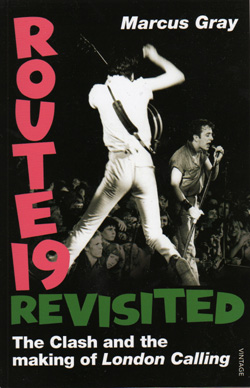
route19_vintage_cover

The recation to the imaginary Clash album has been remarkable.  The hits to the site over Friday/Saturday went through the roof (almost tripled!!!)  and the number, and quality, of comments that folk left behing was truly heart-warming.

I thought I should bookend the weekend with another posting about the band and I’ve dug into the archives and pulled out an old book review that I’m hoping you’ll apprecoiate.  Besides, it allows me to put up an imaginary EP of London Calling cuts to accompany the imaginary album…..

Being familiar with the work of Marcus Gray thanks to having bought and read his 1997 book It Crawled From The South : An R.E.M. Companion, I had an idea in advance that the 500+pages that comprised Route 19 Revisited : The Clash and London Calling would be packed with all sorts of facts, figures, information and trivia as well as some terrific insights into the making of an album that features in just about every critics list of greatest of all time.

Route 19 doesn’t disappoint and believe me – it does a lot more than it simply says on the dustcover. Before analysing the 1979 LP, you can enjoy potted bios of the band members and some of the other key figures in their history as well as a look back at the albums and singles that appeared before they went into the studio to record London Calling.  Afterwards there is an even better postscript – where even if you are very familiar with the post-Clash careers and lives of Mick, Joe, Paul and Topper you will come across sentences and paragraphs that give you a whole new insight.

Taking its title from a London bus route along which many of the songs were conceived, written and recorded (and a route name checked on the track Rudie Can’t Fail), the heart of this excellent book lies with the 205 pages devoted to looking at every minute aspect of the songs that make up London Calling. Every lyric is dissected, every musical note and sound is analysed and all sorts of links and tangents are explored. Yes, sometimes you can get the feeling that some of the connections feel a touch contrived to make the song a better fit to some of the issues explored. And yes, being a non-musician I did get a bit bored now and again when the prose centres on the chord changes or the types of pedals/percussion used, but this has to be balanced against the opportunity afforded to learn about those who inspired many of the songs or who were responsible for writing the songs that The Clash covered. It also at times feels like a wonderful London travelogue….and made me want to jump on board the 19 bus.

In addition, the author corrects a few long-held myths about some of the songs – and in particular highlights that some songs long attributed to Mick Jones were in fact largely the work of Joe Strummer. Stories of the band’s seemingly endless battles with their record label, both in the UK and USA, are explored in some detail – often within the context of a story on a particular song.

Oh and there’s also a hugely entertaining sections about the design, artwork and photography which certainly made this particular reader appreciate just how important these things can be when it comes to the finished product of any record….

Route 19 Revisited is a very rare thing indeed – a book that, without any question, adds to your listening experience.

mp3 : The Clash – Rudie Can’t Fail
mp3 : The Clash – Spanish Bombs
mp3 : The Clash – Guns of Brixton
mp3 : The Clash – Train In Vain

Enjoy

AN IMAGINARY COMPILATION ALBUM #12 – THE CLASH

the-clash1

This, quite frankly, is an impossible task but one that I can put off no longer after my dear friend Dirk‘s call out last time round when I featured Lloyd Cole & The Commotions in this particular series.

The Clash evolved and diversified like no other band that I’ve ever known in my lifetime and so make the idea of dipping into their extensive catalogue and finding ten songs as the definitive collection – and putting them in a semblance of order that makes for great listening – is a task that once complete will inevitably lead to very legitimate questions about what has been left off.  But here goes:-

Side A

1. Complete Control (single, released in September 1977)

You’ve got to open any imaginary compilation album with a killer tune…something of an anthem which epitomizes the band or singer being featured….and I can’t think of anything better than this. One of punk rock’s greatest songs, written and recorded in frustration as the penny dropped for the band, and in particular Joe Strummer, that being a fully fledged, ideologically driven punk at the same time as being a core part of the mainstream music industry was an uncomfortable and some would say impossible position. Anger as an energy…..

2. White Man In Hammersmith Palais (single, released in June 1978)

Another song fuelled by disappointment and anger. The song title may have been derived from being let down at the dearth of talent performing at an all-night reggae gig but the most meaningful attacks come later on as Joe delivers his very own state-of-the-nation address and in doing so outlines what was so wrong with the UK at that time. Little did he or any of us know that social disorder, racial disharmony, unfair distribution of wealth and the increasing lurch to the right-wing of the political spectrum by all mainstream parties would get a lot worse over the next decade.

This is my favourite Clash song of all time. It is one of those once-in-a-lifetime tunes that comes along and embeds itself permanently in your subconscious with a lyric that educates and raises your social and political awareness. I turned 15 years of age the day after this 45 was released….it struck a chord with me then and given that, almost 37 years on, I  still hold many of those values that forged my outlook on life, this song hasn’t dated….nor will it ever.

3. London Calling (single, released in December 1979)

It’s quite frightening to think that this song was unleashed on the record-buying public a little over two-and-a-half years after the debut. Musically this is a billion miles away from White Riot as the jarring almost off-key thrashing guitars atypical of the punk sound are replaced by a confident, bombastic rock sound that was tailor-made for radio and evidence that a song does not need a chorus to be catchy and memorable.

There can be little argument that London Calling is the best-known song ever recorded by The Clash and there’s nothing I can add to the countless positive words that have been written over the years.

4. Janie Jones (album track, released in April 1977)

There are so many great songs that are incredibly worthy of inclusion on this particular ten-track effort.  I’ve changed my mind more than a few times about things but I’ve never dreamt of leaving off Janie Jones. It’s a two-minute burst of high-tempo energy that just never lets up and, in what is now approaching 40 years, has never once failed to get me singing along. I also love how the band didn’t try to hide the fact that, at this stage, Paul Simonon wasn’t the greatest of bass guitarists but somehow his one-note contribution helps make the chorus so memorable.

5. Straight To Hell (single, released in September 1982)

This is an extraordinary piece of music. The very idea that one of the world’s foremost punk bands would, within just five years, record and release a song that leaned heavily on a bossa nova drumbeat devised by Topper Headon and a haunting violin sound would have been laughable.

And what a lyric and just as importantly, what a delivery of the lyric as a resigned-sounding Joe, having highlighted societal issues and problems in all four corners of the world, tells us in a few short words, that misery abounds everywhere:-

“It could be anywhere, most likely could be any frontier, any hemisphere….”

The full unedited version, made available via The Clash on Broadway box set is what I’ve used to close this particular side.

Side B

1. Clampdown (album track, released in December 1979)

The Clash famously had a policy of minimising the number of 45s that would be taken from any album – a stance that led to a lot of friction with CBS Records. It also caused the band to miss out on chart success as they left behind so many great album cuts that were tailor-made for radio airplay – none more so than this track from London Calling.

I suppose that’s not quite true as Clampdown was released in early 1980 in Australia where, it being the height of their summer, I’d like to imagine that it would be blasting out over Bondi Beach at high volume. But I doubt it….

Oh and there’s many reasons to say thank you for the invention of the internet, not least being the fact that you can now, all these years later, put in the relevant search and get the previously impossible to work out spoken intro:-

“The kingdom was ransacked, the jewels got ransacked and a chopper descends
They hid it in the back and they switched it on and off but the tape of spool just ends
They say now I’m back,hit at his face in a crack but he said there’s a crack on the lens”

Before one of the great shout/sing-a-long lines ever written…WHAT ARE WE GONNA DO NOW?

2. Safe European Home (album track, released in November 1978)

I was thoroughly bemused at first by this, the opening track of the band’s second studio LP. The tune was fabulous and demanded to be played at a volume that bordered on distortion on the old Dansette, (loud enough to drive my parents daft and feel as I was being a teenage rebel), but was this a dodgy racist lyric in which Joe was suggesting everyone in Jamaica was a potential mugger?

It took an interview/feature in one of the British music papers to out my mind at ease as Joe revealed the true meaning of the song and the fact that he and Mick had let their idealistic view of the country get in the way of reality and that the song, far from being a dig at Jamaicans, was an effort to chide himself for being so naive. What a relief….

3. Stay Free (album track, released in November 1978)

The second album is considered by many to be a weak record but here am I going with a second successive track from it and there’s no sign of the two cracking 45s that were lifted from it. It just demonstrates that Give ‘Em Enough Rope had plenty of moments to be declared as a decent and solid record rather than weak.

At 15 years of age, I was gravitating to the lyricists who were telling stories via the songs – Paul Weller was already a huge favourite and the tale of Down In The Tube Station At Midnight was, in my young mind, he greatest song lyric of all time. But not far behind was Mick Jones‘ heartfelt tribute to his best mate who had gone spectacularly off the rails while Mick was working tirelessly to make it as a musician. This has more than stood the test of time as a great love song….

4. Armagideon Time (b-side, released in December 1979)

If you’re a regular reader of this blog, or indeed followed the nonsense over at the old place, you’ll have worked out that I don’t own much in the way of reggae as it has very rarely featured. It’s really strange as so many of the punk bands talked up the genre as an influence, and none more so than The Clash, but I just never ever managed to get into it in any meaningful way. Maybe it was the fact that I didn’t have the greatest music player in the world and thus didn’t fully pick up the all important bass beats and rhythms but more likely I was just too into my white-boy new wave guitars to worry about it.

But when I played the b-side to the London Calling single, I was blown away by what I was hearing. It wasn’t of course the first time the band had provided their take on a reggae song but this, to my young ears, just sounded so very very special. For a long time I was convinced that this would be unsurpassed as the 45 with the best quality on both sides of the vinyl….(but then along came Morrissey and Marr).

5. Capital Radio Two (b-side, released in May 1979)

I’m surely not already at the final track on this compilation?? There’s nearly 30 songs that still haven’t had a line put through them. I’m going to leave far too many things off that tomorrow I will scratch my head and consider myself mad. But to close things out, and having played the nine other songs back to back, I’ve gone for the re-recorded version of one of the band’s earliest songs.

I’ve written before about how, growing up and living in Glasgow, I was enthralled by what London was like and couldn’t wait to visit. I suppose it’s impossible for young people nowadays who have grown up with a shrinking world made easy to get round thanks to cheap travel by plane, train and automobiles, to realise just how much of a pipe dream making a visit was such was the expense involved. So I had to make do with imagining the city through music and the written word.

OK, Joe and the boys were warning that the local radio station was rubbish and didn’t play the music ‘the kids’ wanted to hear, but the fact was I was hundreds of miles outside the reception area for the station and it was one of the things I did want to experience, along with a ride on the Underground and seeing the likes of Big Ben and Tower Bridge which were beamed into our homes every night through news and television programmes.

The song was a huge part of my youth – I had a poorly recorded copy of the original on tape – and I loved the idea that the band had a new version as part of the Cost Of Living EP. The fact it came with an outro that spoofed adverts and encouraged people to rush down to their nearest Clash showroom I thought was a work of genius. So for the fact that I love the song, coupled with the fact that this version closes with a bit of I Fought The Law in the background, this, in my mind is the perfect way to finish things off.

mp3 : The Clash – Complete Control
mp3 : The Clash – White Man In Hammersmith Palais
mp3 : The Clash – London Calling
mp3 : The Clash – Janie Jones
mp3 : The Clash – Straight To Hell
mp3 : The Clash – Clampdown
mp3 : The Clash – Safe European Home
mp3 : The Clash – Stay Free
mp3 : The Clash – Armagideon Time
mp3 : The Clash – Capital Radio Two

Feel free to jump in and criticise the omissions!!!