MONDAY MORNING….COMING DOWN (6)

One of my all time favourites from the C86,87,88 era is Waiting For The Winter by The Popguns.

I really can’t do better than send you to Brian’s place – Linear Track Lives – as he is probably the band’s #1 fan and it was he who brought me the news back in November 2016 of a side-project involving Simon and Wendy Pickles. This wonderful interview gives all the details.

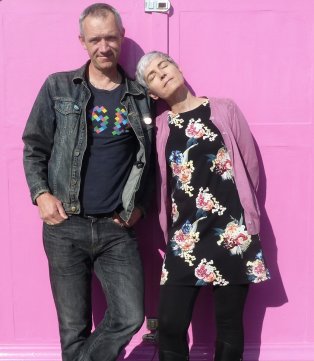
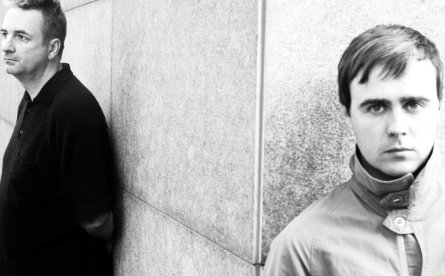
Shamefully, it took me over two years to pick up Isobar Blues, the debut album by The Perfect English Weather for which Brian interviewed the duo, by which time they had released a follow-up, Don’t You Wanna Feel The Rain, from which today’s Monday Morning…Coming Down song is selected:-

mp3 : The Perfect English Weather – The Waves Upon The Shingle

Isn’t it absolutely gorgeous?

Do yourself a favour and get over here to purchase the albums and while you’re there, do yourself an even bigger favour by picking up the stunning comeback material by The Popguns.

JC

THE SINGULAR ADVENTURES OF PAUL HAIG (Part 19)

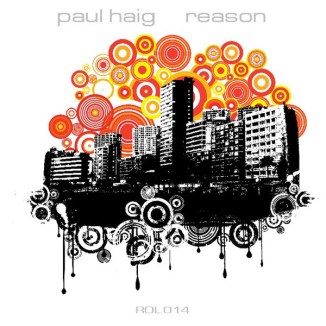
Last week featured the unexpected release of Reason in 2007, the first single by Paul Haig in the best part of a decade which came on the back of a run of album releases on his revived Rhythm of Life (ROL) label.

It was followed up, later that year, by the album Electronik Audience, 13 tracks which, for the most part, blended vocals and experimental/soundtrack style music to what sadly, but predictably, was an uninterested audience. Difficult at the time to find in shops but available on-line, it’s an album which even the most hardcore of fans found a strange listen upon release, one which kind of harked back a decade to the sounds of the likes of Daft Punk.

Much to everyone’s surprise, it would take only a further 12 months before a new batch of material, with the album Go Out Tonight….and even more surprisingly there was a fair bit of guitar work in among some fabulous keyboard work. In places, it has songs as light and poppy as Paul has ever released, while also being home to the song Data Retro which harked back magnificently to the era when he almost became a huge star and the likes of New Order (among many others) were in debt to him. There were certainly a number of possibilities for singles but the decision was taken just to go with one and even then, it was download only:-

mp3 : Paul Haig – Hippy Dippy (Pharmaceutically Trippy)

Maybe it’s just me, but this is one of the merely OK tracks on the album where there are a number of standouts. But then again, it’s the type of noise that Paul hadn’t been making for a long while and so it was perhaps understandable that this was the one made available above other, better (IMHO) contenders.

One more week to go in this series. And it will go out with an absolute bang. Trust me on that.

JC

SATURDAY’S SCOTTISH SONG : #151 & #152 : JAMES KING (AND THE LONEWOLVES)

I am in the debt of the fine people at Stereogram Recordings, an Edinburgh-based indie label, for the following words:-

In the early 80’s, I was fascinated by how extreme bands were in the Post-Punk scenario. Particularly The Birthday Party, The Pop Group and Einsturzende Neubauten, even The Gun Club with their take on Voodoo Blues. I should have been looking closer to home! Some bunch of misfits in Glasgow were kicking up a hornet’s nest accompanied by the soundtrack of the darker sounds of the USA. Hank Williams, The Stooges and Johnny Thunders’ Heartbreakers, come to mind, but James King and the Lonewolves may have been using archetypical elements, yet they made them sound eloquent – there was classic songwriting here, although it may have been ‘cursed, poisoned and condemned’. James King had most definitely sold his soul to the devil at the same crossroads as Robert Johnson.

I remember writing a review in Cut magazine, stating I found them more sinister than The Violent Femmes, which was saying a lot, as they had just written Country Death Song – all about a father murdering, and disposing of his own daughter down a well. In the early 80’s, while Scottish pop was getting brighter and shinier, James King and the Lonewolves were the dark side, and they made no bones about it.

While ex-Fall guitarist, Martin Brammah’s band The Blue Orchids did the honours in Edinburgh, as fallen Velvet Underground chanteuse Nico’s backing band, The Lonewolves did the same in Glasgow.

They signed to Alan Horne’s Swamplands label in 1984 alongside Davy Henderson’s WIN! and Steven Daly’s Memphis, but after an Old Grey Whistle Test performance, featuring multiple profanities, which received countless complaints from viewers, Swamplands washed their hands of this unmanageable collection of individuals in 1985. An album recorded with John Cale at the height of his madness would never see the light of day.

JC interupts……..

Here is said OGWT clip

There is a very audible profanity towards the end of what was a stellar performance which has presenter David Hepworth racing in to make an apology to any distressed viewers!

I’ve three singles in the collection in which James King features. The first is under his own name and dates from 1981; this is the lead track:-

mp3 : James King – Back From The Dead

There’s two under the moniker James King and The Lonewolves, one from 1983 on Thrush Records and one from 1985 on Swamplands. This is the lead from the latter:-

mp3 : James King & The Lonewolves – The Angels Know

Both still sound superb all these years later. Oh, and that album recorded with John Cale? Back to the fine folk at Stereogram:-

An album recorded with John Cale at the height of his madness would never see the light of day. Until now that is – Sterogram Recordings are about to set the record straight, through the bands main protagonists burying the hatchet.

Fast forward to the future – James King and Jake McKechan make it up in 2011 after 25 years of not speaking and play a memorial show for former agent, Alan Mawn. It is nothing, if not fantastic. In light of all the complacency we are currently experiencing in modern music, hearing the sounds of James King and the Lonewolves again is a joy. This is Rock’n’Roll as it should be and you can tell they mean it maaan!

Ken McCluskey (The Bluebells) in 1996 at height of Britpop, ‘You guys were 10 years too early’

The first recorded fruits of the revamped Lonewolves in May 2013 was a revelation. Pretty Blue Eyes sounded like it should have been a double-sided 7” on Ork Records from 1975, as cool as Little Johnny Jewel by Television, you kinda wanted it to be longer. Fun Patrol kicked in like The Smiths’ How Soon is Now, then morphed into The Glitter band meets The Stooges – need I say more, and James still has a vicious tongue. James King and the Lonewolves – as stated on their very first single, were indeed Back from the Dead!

Now, having hooked up with Edinburgh’s Stereogram Recordings (home to The Cathode Ray and Roy Moller), that fantastic, long-lost album, Lost Songs of the Confederacy, has finally seen the light of day – obviously re-recorded, re-mastered and brought up to scratch with new recordings to supplement the buried ones resulting in James saying ‘ there was unfinished business to be done’. I’m sure there are many other buried treasures out there, meanwhile, this is as good a place as any to re-acquaint yourself with the Lonewolves’ particular brand of classic rock through the ages.

ENDS


AN IMAGINARY COMPILATION ALBUM : #207 : CHUCK PROPHET

A GUEST POSTING by HYBRID SOC PROF,
our Michigan Correspondent

With apologies, this one’s a little long, I chose to recount – record by record – Chuck’s long and ongoing career.

There are some performers that – to completely wreck a few blended metaphors – grab you by the lapels, draw you into their arms and leave you both utterly agog and reveling in the extent to which you feel flatted by a Mack truck. Chuck Prophet’s that guy for me. I really loved his playing with Green on Red but he was clearly second fiddle to Dan Stuart’s songwriting and vision. I tracked GoR long enough to know their chemical struggles and battles with the bottle, so when they broke up I pretty much figured that was the end of that.

Then Chuck and his partner, Stephanie Finch, appeared on an AIDS benefit compilation, the Acoustic Music Project performing a beautiful beautiful song, Step Right This Way, soon followed by an LP, Brother Aldo. Chuck had turned into a subtle and soulful, still axe-wielding, singer-songwriter. Diane and I went and saw him fairly soon thereafter at The Great American Music Hall, the show was great.

The next two records – Balinese Dancer and Feast of Hearts – have some wonderful songs on them but it seemed to me that Chuck was feeling for something he couldn’t quite get the feel of… something at the mysterious intersection of folk, soul, pop and rock. He was working with Jim Dickinson – a Memphis legend who’d played with everyone from Aretha Franklin to the Rolling Stones and Flaming Groovies – during this stretch working out the range, breadth and scope of his new identity. I saw him at the Starry Plough, a tiny little venue on Berkeley-Oakland border, around the time of Balinese Dancer, and talked to him for the first time. Warm, appreciative, open, kind… everything you’d want. A few years later, I saw him in San Francisco – probably at Slims – and caught him warming up on a secondary stage – ripping through 3-4 Aerosmith tunes.

I’d moved to Massachusetts, following Diane, by the time Homemade Blood came out in 1997. There are a lot of great guitar records from the 1990s and Homemade Blood is in my top 10, probably near the middle. It’s an emotion-drenched, intensely-committed and person record. In the press, we learned that he’d been through rehab and ended up back at his parents’ place – something he jokes about to this day; the suburban home pictured on the front of the CD/LP. There’s pain and comfort, ease and passion in that record. 20 years later, I can listen to the rockers and ballads, alike, without the slightest reduction in enjoyment.

… and then came The Hurting Business. My sense of this glorious record is that, having moved back to San Francisco and living “South of Market,” Chuck took every sound he was hearing and every tradition he loved and overlaid them is a distillation of everything musical the city had to offer at that point in time. There are two smoky ballads, three rip roaring rockers, four blendings of singer-songwriter and conscious hip hop and some Memphis soul thrown in for good measure. In an interview a short while later, synthesizing most everything he’s done since 2000, Chuck said:

As a songwriter, I’m a slave to traditional song craft, whatever I do. I mean, my heroes are still going to be Dylan and Carole King and Hank Williams. But for me, the process of making new records is a matter of constantly seeking new ways to cast the movie. I’m turned on by people like Moby and DJ Shadow, and I appreciate what those guys have been able to do by bending traditional song structures. As much as I admire that stuff, I’m still a “first verse, first chorus” kind of guy. 

I saw him opening for Peter Case around this time and they tore the roof off of Schuba’s in Chicago… and were able to convince the audience to demand an electric version of the Plimsouls’ classic “A Million Miles Away”, and maybe “Lie, Beg, Borrow, and Steal,” I don’t quite recall.

2002’s No Other Love is a quieter record and generated the minor hit “Summertime Thing” which, combined with having toured with his connections in Memphis, touring with Lucinda Williams, and writing a hit for another artist got him onto Daryl Hall’s Live from Daryl’s House webcast. 2004’s Age of Miracles represented a tick up in the energy level but also the show-stopping “You Did” and magnificent love-drenched and broken evening stroll of “Pin a Rose on Me.”

Someone on Letterman heard and liked 2007’s Soap and Water but playing “Doubter Out of Jesus (All Over You)” generated an after-the-fact-predictable stupid right wing backlash that no minor artist needs. 2009’s ¡Let Freedom Ring! was recorded in Mexico City and, repeating “the word on the street” at the time was a political record for non-political people. It’s a fairly straight-ahead indie rock record perhaps reflecting his increasing connection and various collaborations with Alejandro Escovedo.

2012’s Temple Beautiful is a great, consistent, rocking, ironic, fun record… not so much a return to form as a world of fun… possibly his most consistent record. Even if I can’t really pull out a standout track, it’s one of those records I can always listen to all the way through from start to finish. A rare thing in the world of CDs, mp3s, and streaming. 2014’s Night Surfer slowed everything down two notches but, sadly, didn’t do a lot for me

Bobby Fuller Did for Your Sins, from 2017 – the last record released – is in fact a return to form. There’s fun in the title song, throbbing eroticism in “Your Skin,” a full-on mid-70s throwback in “Bad Year for Rock and Roll,” a retro-rocker driven by a freight train beat in “In the Mausoleum,” and a howl of pain, rage and confusion in “Alex Nieto.”

Still married to Stephanie, she’s still playing keyboards in the band alongside a stable drummer and second guitar player… my sense is that, as is so often the case, the bassist has rotated. I hope you like these…

1. Pin A Rose On Me (from Age of Miracles, 2004)
2. Summertime Thing (from No Other Love, 2002)
3. Kmart Family Portrait (from Homemade Blood, 1997)
4. Scarecrow (from Brother Aldo, 1990)
5. Dyin’ All Young (from The Hurting Business, 1999)
6. Doubter Out Of Jesus (All Over You) (from Soap and Water, 2007)
7. Your Skin (from Bobby Fuller Died For Our Sins, 2017)
8. Ooh Wee (from Homemade Blood, 1997)
9. Dirt (from While No One Was Looking: Toasting 20 Years Of Bloodshot Records, 2014)
10. Run Primo Run (from No Other Love, 2002)
11. Alex Nieto (from Bobby Fuller Died For Our Sins, 2017)

HSP

INFANTJOY: THE AUTHOR AND THE CELLIST

I might try and pass myself off as a smart-arse and know-all, but a fair chunk of what appears in postings within this little corner of t’internet is gleamed from other sources.

The research can be time consuming and deadly dull given that I’m often just looking to clarify one small point which is often buried away within screeds of stuff that I already knew. Every now and again, I do come across something which gets me mumbling along the lines of ‘I had no idea about that’ and I end up going off to find out more – such as when I read that a band called Infantjoy had been in existence in the middle part of the first decade of the 21st Century.

Let me rip off a bandcamp page to provide the skinny:-

Infantjoy is literally a musical collaboration between cellist/percussionist James Banbury and conceptualist/percussionist Paul Morley. They met whilst compiling a remix edition of the Art of Noise album The Seduction of Claude Debussy – Morley as a member of the Art of Noise whose contribution to the group was somewhere between making the tea and dreaming the whole damned thing up, Banbury as an ex member of the Auteurs entering a strange new world as a programmer and string arranger with his heart forged by Sheffield electropop and his mind made up by modernism.

They decided that their first musical act as Infantjoy, once they had decided they would be Infantjoy, should discreetly and indiscreetly acknowledge the composer who suggested that you play a piece of his music by ‘wondering about yourself.’ or by ‘opening your mind’ or by being ‘as light as an egg’ – Erik Satie, a major influence on Debussy and Eno, the former triggering most modern music, and the latter re-routing most post-modern music. They wouldn’t consider Paris, but make up their own city, with its own streets, and its own lighting, and its own river, and its own people muttering in the dark about the time Satie was alive, and livid, and of course extremely unlivid.

Great to see that Paul Morley never lost the knack for great commentary on something he was involved in – entertaining and bamboozling in equal measures!

Debut album Where The Night Goes, was released in June 2005 by Sony BMG who clearly had high hopes that the haunting electronica chamber pop would find more than a niche audience. In the end, it didn’t even achieve that and they were let go soom after, although they continued to have belief in their vision and continued to release material on their own ServiceAV label, including the album With in 2007.

Here’s a track from the debut:-

mp3 : Infantjoy – Ghosts

It’s a cover of the Japan single and the lyric is delivered by Sarah Nixey who had been part of Black Box Recorder alongside Luke Haines, a former sparring partner of James Banbury.

Sarah Nixey would also release a number of solo singles on ServiceAV, including this take on a Human League number:-

mp3 : Sarah Nixey – The Black Hit of Space

There’s just something so alluring, erotic and sensual about the way that woman sings……..

JC

LET THEM ALL TALK

I honestly can’t tell you how many times I’ve seen Nick Cave in the live setting. It’s been lots and has encompassed The Bad Seeds, Grinderman and solo shows.

There hasn’t ever been a duff show and he even managed, back in 2008 on the Dig Lazarus Dig!!! tour, to make a gig at the usually horrific (for sound and sight lines) Corn Exchange in Edinburgh bearable. Not least for the fact that his 18-song set was drawn from ten different albums – little did I know that the tour would be the last time I’d see Mick Harvey on stage with him.

The announcement in 2017 that the Bad Seeds were putting on a show at the cavernous Hydro Arena was quite disconcerting as I just couldn’t imagine it working in an arena of that scale. My mind wasn’t quite made up on whether or not to go when the ticket prices were announced and I decided that £70 plus booking fees was just too much. The subsequent chats with those who did go along did cause pangs of regret with a number saying it was as fine a spectacle as they had seen in years, although interestingly a couple of folk who have been fans since The Birthday Party days felt it was a tad on the self-indulgent side with Nick throwing himself into the crowd knowing he would be held aloft whereas the old days would have seen fights break out down the front!!

But let’s face it, Nick Cave has more than paid his dues over the years, making consistently great music and, just as importantly, making sure that every tour offers something different from its predecessors so that you never tire of going along.

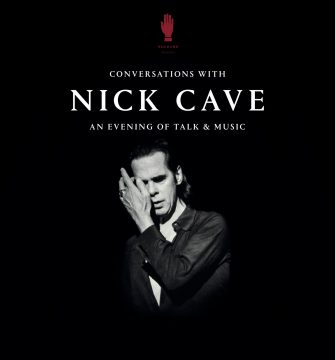
So, when it was announced that he was bringing his latest show to Edinburgh, and that it would involve him taking part in a Q&A that would involve audience participation (with no subject matter deemed to be off-limits or taboo), as well as playing some songs solo on the piano, I was really keen to get myself along. And then I saw that the cost of the best seats in the house (it’s at the Usher Hall, an old fashioned but lovely three-tiered venue including what must be the closest seats to heaven in all mankind), I changed my mind and came to the realisation that I’m unlikely top ever see Nick Cave in concert ever again.

£93.50 plus booking fees. Even the seats in the gods are £33 from where I imagine you’ll stand little chance of interacting with things on the stage.

If it had been a full Bad Seeds Show, I might have considered it…..but it might have needed Grinderman to be the support act to be the clincher (and I haven’t forgotten that I’ve a few of their singles to feature in an on-going and occasional series). But the best part of £200 for myself and Mrs V to go to a talk show with a few songs? For that amount of money, I’d be looking for him to pop round to Villain Towers for a chat and cup of tea (but not owning a piano, the songs would need to be left off the itinerary.)

It seems the ‘Conversations with Nick Cave’ idea is building on what appears to have been a successful tour of a similar nature earlier this year in Australia and New Zealand. 14/15 songs per night appear to have been worked into each event – which, to be fair, is more than I would have imagined – with many of the more popular ballads such as The Ship Song, Into My Arms, God Is In The House, West Country Girl and Love Letter being mainstays alongside re-workings of the likes of The Mercy Seat and Papa Won’t Leave You Henry, while his cover of Leonard Cohen’s Avalanche has also been dusted down. It has also found favour with many aficionados in the UK and Europe who have parted with their hard earned cash and made the tour a sell-out…..bit it ain’t for me, babe.

mp3 : Nick Cave – I’m Your Man

JC

A COMPANION PIECE TO YESTERDAY’S POSTING

February 2019 was something of a poignant month. Comrade Colin wrote brilliantly and eloquently about the death, at the age of 64, of Mark Hollis. I’d like to now say a few words about Peter Tork and Beatrice Colin, both of whom also left us last month.

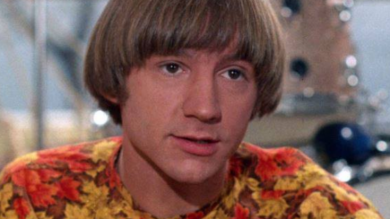
Peter Tork was one-quarter of The Monkees, a band without whom I’d unlikely have developed such an affection for great, guitar-based pop music. The TV show seemed to be on BBC1 during the children’s hour all the time in the 70s, a show which I would get to watch just after getting home from school and before my mum would get in from her long shift in the factory to make us something to eat. The Monkees were, to my young mind, a magical and fun group of people to be around. It made for great TV with what seemed to be a perfect blend of slapstick comedy and drama, soundtracked by songs which, by the third or fourth time you’d heard them, were embedded in your brain, but in a very good way. Of course I had no idea that so much of it was manufactured and that the songs were the work of others who weren’t ever going to appear on-screen but to be honest, that didn’t matter and I wouldn’t have cared in any event. I just wanted my four heroes to come good and play us out with a great song…which they always did.

I’d be a liar if I said Peter was my favourite Monkee….that honour was bestowed on Micky Dolenz as he made me laugh more than the others and the songs he sang on seemed to be the best. But I loved watching all four of them, and the news of Peter’s death made me recall happy memories of very olden days while providing a sad reminder that I’m now constantly losing people who in some shape or form shaped me, directly or indirectly, into who and what I am today.

mp3 : The Monkees – (I’m Not Your) Steppin’ Stone

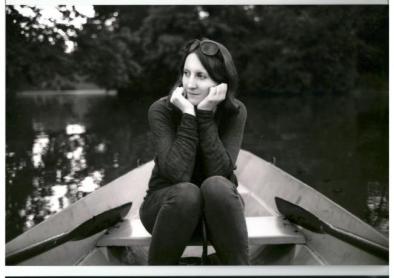
Beatrice Colin didn’t have anything like the impact on the music scene as Peter Tork – indeed very few people will actually associate her with the genre. Readers of old, however, will know that she was one half of the very short-live band April Showers who emerged out of Glasgow in 1984 – the other half was David Bernstein. (co-author of a very fine book which was reviewed back in 2014)

There was just the one single, but it was absolutely glorious and one of my favourites from the era:-

mp3 : April Showers – Abandon Ship

Beatrice was ages with me and I happened to be in her company a couple of times, but only as part of a larger social group in a city centre pub. She was the girlfriend of James Grant who, by complete coincidence, was featured on the blog just last Saturday.

She seemed a lovely, down-to-earth person and not the slightest bit big-headed or boastful about the fact she had made a pop record (which to me, at the time) was the be-all and end-all.

But pop music was not be her forte and while she remained on its fringes as a backing vocalist in studios and on stage – including stints with Love and Money – (and as I’ve since learned with a band of her own called Pale Fire, she began to carve out a career in journalism and writing, initially penning reviews and features for newspapers and magazines. Such was her talent for writing that, by her mid-30s, she was a published novelist and playwright. In later years, she would expand her horizons even further with a move into academia as a lecturer in Creative Writing. Her tragically young death at the age of 55, came after a long battle against ovarian cancer and has left a significant hole in the cultural life of my home city.

Thoughts are with her husband, children and close friends who will be missing her so much.

JC

A hastily added PS….

The above words were pulled together a few days in advance of the very sad news of the passing of Keith Flint.

There will be many tributes across the internet today on top of those which appeared throughout yesterday.  I’ll simply take a few words from a Facebook posting by a London-based friend of mine, the comedian Steve McLean:-

You know what I really loved about The Prodigy?

Almost everybody liked them. 

Back when people had very firm music camps that they stayed in, everyone would be enticed out with The Prodigy.  You were as likely to hear them played at The Underworld as you were at The Ministry.  Even before their heavier guitar sampling tunes too, everyone loved Charly and Out of Space – The Prodigy let you dance with all your mates regardless of your snobbery.

Later in their career they headlined both Download and Creamfields. Has there ever been another band that could do that?

RIP Keith Flint.

THE SPACE BETWEEN THE NOTES: A TRIBUTE TO THE LATE MARK HOLLIS

A GUEST POSTING by COMRADE COLIN

“Sketches of Spain is a beautiful artistic endeavour. It took two dates to complete, with basically the same orchestra as the two previous large group sessions. Miles is playing slowly, methodically, and, for the first time, using extensively bent notes. Also, for the first time, the orchestration, with its colours streaming like a series of rainbows, definitely telling a story, seems to be what Miles primarily wants. Although he and the orchestra are almost antiphonal, it is a true dialogue, as between a preacher and his congregation.”

Bill Cole (1974) Miles Davis: A Musical Biography, William Morrow and Company Inc: New York, pp 87-88.

Rob Young (interviewer): “Are you delivering gospel or apocalypse? Good news or bad?”

Mark Hollis: “I dunno… don’t know the answer to that one. I think I’m done.”

James Marsh, Chris Roberts and Toby Benjamin (2012) Spirit of Talk Talk Rocket 88: London, p192.

Grief is a very curious bedfellow. At times it can evade us when most expected, such as the sudden death of a close friend or a family member. At other times grief will cross the road, stare at us, and shout obscenities in our face, so close up that we can’t ignore it. That these emotions can spill out and come undone for people we’ve never even met is a most peculiar thing. But it happens. All the time. Tears will flow.

There had been Bowie of course, there had also been (the artist formerly known as) Prince. We recall the reactions to these deaths and many more in 2016. It was a year and a half for our idols departing. But we accepted it, naturally, in terms of the ‘rich legacy’ and ‘cultural influence’ left behind. Posterity would redeem, value, recognise. The enigmatic adjectives were produced and refashioned. Bowie’s death, in particular, was a meticulous example of how to exit stage left with a certain vision and a plan. What a performance it was.

In contrast to…

And, so it was on Monday 25th February, 2019. News of Mark Hollis and his cruel sudden passing, at the not-quite-there statutory retirement age of 64, started to ripple across the world in a sequence of zeros and ones. A close friend, knowing my interest, messaged me via Twitter alerting me. His source had been a statement via Twitter from Matt Johnson of The The.

But was it true? How could it be? What? How? When? Where?

We held out, many of us, searching for ‘verified’ and ‘confirmed’ news. We refused to believe it unless a direct statement from the Hollis family was forthcoming. And sadly, via Twitter again, the toxic Town Crier of the digital age, it did arrive, via Mark’s cousin-in-law Professor Anthony Costello of University College London. Anthony referred to his relative, “RIP Mark Hollis”, as “an indefinable musical icon” and, of course, a great dad. Then, over the next few hours and days, several music journalists and staff writers and (pop) cultural commentators tried to do exactly this. But how to define and categorise someone, and their music, who just couldn’t be placed? Someone who was “indefinable’? Why would you even try?

So, I will not do this. I refuse. And more pragmatically, I simply can’t. So many words have already been written about what Hollis achieved before he ‘retired from the music industry’ in his early forties (apropos, ‘how to disappear completely’). This is the popular narrative and central discourse. This is what we have been told. Except, as we all know, it simply isn’t true. Hollis kept his hand in with music, he still played all the time according to Tim Friese-Greene, he just did so quietly, without fanfare, and outside of a studio. There was a degree of silence that was only broken when the mood struck. For example, he co-produced and arranged music for significant others (Anja Garbarek, 2001), he played and co-wrote for other bands (Unkle, 1998). Similarly, he added his ‘Piano’ contribution to the ‘AV 1’ album by former producer Phil Brown and his partner Dave Allinson (1998), as well as writing and performing a short, original piece of music entitled ‘ARB Section 1’ for the TV series Boss (2012). The music continued, it never actually ended.

But all this you know. He did not ‘retire’, he just preferred a degree of relative quiet, anonymity, family life, privacy and some further ‘space between the notes’. And, given what he had so brutally endured through the mid-80’s height of the EMI Talk Talk years – as an example, just watch some of the white-knuckle interviews and ‘live’ comedic playback performances from mainly European music shows during 1984-1986 – you can understand why Hollis and company just wanted to be immersed in a studio cocoon like Wessex. Yes, perhaps true, we can speak of the Talk Talk ‘transformative metamorphosis’ or some such; a story of ‘Europop emergence’, ‘post-rock ascendancy’ and then a ‘near-silent exit’ via the solo recording. But what good does this do? And is it even true? I am unsure, and I think I always will be. Even imaginary compilation albums seem a bit meaningless right now.

All this, naturally, brings me back to Miles Davis and Sketches of Spain (1960). Since the news of Mark’s untimely death I’ve been playing this album constantly, and reading about its recording. I am actually playing it again now as I sit and type this out at the kitchen table; it is casually drifting through from the living room where my record player stays. Anyway, I think this mild obsession, again, with Davies is, in part, due to reading an interview some time ago where Hollis discusses the influence of both this album, as well as the earlier Davis/Evans recording of Porgy and Bess (1959), on the sessions for his 1998 self-titled album. The quotation given at the top of this page, taken from the Bill Cole (1974) book, struck me as being the kind of thing we could say about Hollis… the invocation of ‘colours and rainbows’, an unsubtle comparison with ‘a preacher and his congregation’. But we won’t. I just think it’s apt to note that what Cole said about Davis we could say about Hollis. If we chose to. We might even guess that Hollis would appreciate that association. Then again, knowing his humour and modesty, perhaps not. He’d just laugh and dismiss the notion out of hand.

Quite possibly, instead, it is better to conclude with the final words spoken by Hollis himself to interviewer Rob Young at the close of an essay and conversation that was originally published by The Wire (#167, 1998): “I think I’m done”, Hollis remarked, before making his move to leave Young alone. To be fair, it was a rather glib and facile question about whether the album was delivering the gospel or warnings of apocalypse. Wouldn’t you also not quite know what to say to that kind of question and just leave?

So, just as we accepted Hollis’s supposed ‘retirement’ twenty odd years ago from the music industry, we must now accept a new kind of silence. Indeed, this seems to the defined word of choice for many ‘in remembrance’ type articles right now. And it does ring true, to an extent. But then again, you can listen to that seventy-five second malfunctioning variophon solo from ‘After the Flood’ or the stark Hollis call and ‘lift’ of “Nature’s son” from the track ‘Inheritance’, at the one minute and forty-four second mark. Then you realise that there was also a gloriously multi-faceted – spontaneous but spliced together – noise happening. It’s evident that people were listening and noticed this.

In the end, you realise, there is no ‘return to Eden’, we truly never know what day is going to pick us, as Mark Kozelek pointedly sings on ‘Duk Koo Kim’ “…out of the air, out of nowhere”. Instead, we can only recognise and value the space between the notes that we play or don’t play. We can choose to wear our grief on our sleeves, as an open border, relational kind of coping strategy, or we can just go about our (intimate) daily lives whilst playing over and over again that sequence, live, when ‘Mirror Man’ becomes ‘Does Caroline Know?’. It is glorious, as you know, your heart skips a beats and you feel a sharp intake of breath.

But what happens after the music stops? We continue. We remember, in our own way. Indeed, the following day, after the news of Mark’s death on February 26th, 2019, I was down to chair an event for a third-sector organisation which I am a Board member of, at the Royal Concert Hall in Glasgow. I had thought, at 4am, about feigning illness, or rather, admitting I wasn’t coping too well, and cancelling my involvement. However, I decided against this. It was too late. Instead, I arranged for ‘Sketches of Spain’ to be played during registration and coffee. No one recognised it (I asked delegates this question in my opening remarks, everyone looked nonplussed). Further, I wore my ‘The Colour of Spring’ pin badge on the lapel of my grey Jasper Conran corduroy jacket. No one recognised it, in conversations over lunch, no one said a word. But at least I tried to make a connection, physically, with a kindred spirit that day. I reached out.

Enough, enough now; simply embrace the space between the notes.

COLIN

PS : After penning the above words, Colin asked that I draw attention to this, a near 8-minute long Eden rehearsal cassette that has been placed on Souncloud by Tim Friese-Greene as his tribute to his late colleague.

JC adds…….

I had to tease these words out of Comrade Colin.  He’s been hit every bit as hard by the death of Mark Hollis as those who were the biggest fans of Bowie and Prince back in 2016….in the ten years and more that I’ve known him, he has never stopped trying to convince me that Hollis was a visionary genius. I felt that him penning a tribute, in his own unique style, would help with the grieving process.

His original piece didn’t come with any songs, but after a think about it, he has suggested these:-

mp3 : Talk Talk – After The Flood (from Laughing Stock, 1991)
mp3 : Mark Hollis – A Life (1895-1915) (from Mark Hollis, 1998)

I’ve posted this today in place of the usual Monday Morning, Coming Down piece which has been held over for a week. Thanks for dropping by today.

JC
THE SINGULAR ADVENTURES OF PAUL HAIG (Part 18)

I mentioned in last week’s post that Paul Haig had revived ROL Records in 1999 for the purpose of issuing Memory Palace, attributed to Haig/Mackenzie, and consisting of the music that he and Billy Mackenzie had collaborated on in the early-mid 90s.

ROL has been the vehicle for Paul’s work throughout the 21st Century, all of which in the early part of the decade were albums, with the imagined soundtrack albums Cinematique 2 and Cinematique 3 appearing in 2001 and 2003 respectively. ROL was also the label for the issuing of some more posthumous (and quickly deleted) previously unreleased material by Billy Mackenzie (solo or in collaboration with Steve Aungle) and a live CD by Josef K, featuring two Edinburgh gigs from back in 1981. Again all of this activity was between 2001-03.

It was another four years before the next burst of activity, with the biggest surprise that it consisted of a 7″ single and download:-

mp3 : Paul Haig – Reason
mp3 : Paul Haig – Maybe

There was never any real push to make it a hit – it was pushed and promoted largely through Paul’s website and I’m not sure just how easy it was to find in shops. It’s a decent enough and enjoyable piece of music, not as immediate or upbeat as some of his previous 45s, but catchy enough, and with its refrain of ‘It’s time I was leaving…I’m moving on….’ it seemed to be sending out the message that this could be the farewell to the industry.

Thankfully it wasn’t.

The b-side is a short (just over 2:20) but interesting enough song….it was just a real joy to hear Paul singing again after all these years.

JC

SATURDAY’S SCOTTISH SONG : #150 : JAMES GRANT

From wiki:-

James Grant’s music career began in 1982 as songwriter and guitarist in Friends Again, alongside Chris Thomson, later of The Bathers. The group had minor hit singles with “State of Art”, “Sunkissed” and “Honey at the Core”. They released a self-titled EP in 1983 and then recorded their debut album, Trapped & Unwrapped, in 1984.

When Friends Again split in 1985, Grant went on to form Love and Money along with drummer Stuart Kerr and keyboardist Paul McGeechan. In their nine years together they recorded four moderately successful albums, All You Need Is, Strange Kind Of Love, Dogs In The Traffic, and littledeath.

Grant’s first solo album, Sawdust in My Veins, was released on Survival Records in 1998. It featured long term collaborator Donald Shaw, Karen Matheson, harmonica player Fraser Speirs, drummer James MacKintosh and the BT Scottish Ensemble. After a label change to Vertical, the same lineup was retained for My Thrawn Glory in 2000.

I Shot The Albatross, a collection of poetry set to music, was released in 2002. It included interpretations of works by Edwin Morgan, EE Cummings, and William Blake. The gentle, introspective Holy Love, followed in 2004, featuring contributions by dobro player Jerry Douglas and ex-Thrum vocalist Monica Queen. Strange Flowers, a more upbeat collection, was released in February 2009

Grant also scored the film The Near Room and has collaborated with Capercaillie’s Karen Matheson, performing live and writing songs for her solo records The Dreaming Sea, Downriver, and Time To Fall.

Love and Money reformed for a show at the Glasgow Royal Concert Hall as part of Celtic Connections 2011; this was intended to be a one-off but was very successful and the band subsequently decided to tour the UK. Following this the band released their fifth studio album ‘The Devil’s Debt’ in 2012. A limited edition live album of their Royal Concert Hall show, ‘Strange Kind Of Love’ was also released.

In conversation with radio presenter Billy Sloan on BBC Scotland’s Music Through Midnight show on 5 June 2015, Grant revealed he was writing material and suggested it was more likely to be for a solo album than another Love & Money project.

James Grant is another of the many largely unheralded Scottish musicians who really should have a worldwide following.  He’s a ridiculously talented guitarist, and while I’ve not always fallen deeply for some of his post-Friends Again material, almost all of his albums have had something worthy and of note.

He’s still very active on the live front, and upcoming shows in 2019 include London on 2 May, followed by some Scottish shows later in the month.

This is from Sawdust In My Veins, his solo album from 1998 – it was also released as a single:-

mp3 : James Grant – Pray The Dawn

JC

SOME SONGS ARE GREAT SHORT STORIES (Chapter 20)

Johnny Ryall is the bum on my stoop
I gave him fifty cents to buy some soup
He knows the time with the fresh Gucci watch
He’s even more over than my mayor Ed Koch
Washing windows on the Bowery at a quarter to four
‘Cause he ain’t gonna work on Maggie’s Farm no more
Livin’ on borrowed time and borrowed money
Sleepin’ on the street there ain’t a damn thing funny
With the hand-me-down food and hand-me-down clothes
A rockabilly past of which nobody knows
Makes his home all over the place
He goes to sleep by falling down on his face
Sometimes known as the leader of the homeless
Sometimes drunk, man the kid’s always phoneless
Sleepin’ on the street in a cardboard box
He’s better off drinkin’ than smokin’ the rocks
Johnny Ryall, Johnny Ryall
Kickin’ uptown, kickin’ downtown, kickin’ crosstown
Johnny Ryall, Johnny Ryall

He drinks where he lies
He’s covered with flies
He’s got the hand me down Pumas and the tie dyes
Well, you go upstate and get your head together
Thunderbird is the word and you’re light as a feather
Detox at the flop house no booze allowed
Remember the good old days with the rockabilly crowd
Memphis is where he’s from (out in Tennessee)
He lives in the street but he’s no bum
He’s the rockabilly star from the days of old
He used to have teeth all filled with gold
He got platinum voice but only gold records
On the bass (was Boots), on the drums (was Checkers)
Louis Vuitton with the Gucci guitar
Johnny Ryall
Who do you think you are?
Johnny Ryall, Johnny Ryall
Takin’ the night train, drinkin’ O.E
Johnny Ryall, Johnny Ryall
One, two, three, four
One, two, three

Donald Trump and Donald Tramp living in the men’s shelter
Wonder Bread bag shoes and singing “Helter Skelter”
He asks for a dollar you know what it’s for
Man, bottle after bottle he’ll always need more
He’s no less important than you working class stiffs
He drinks a lot of liquor but he don’t drink piss
He paid his dues playing the blues
He claims that he wrote the Blue Suede Shoes
Elvis shaved his head when he went into the army
That’s right y’all his name is Johnny
Kick it
Johnny Ryall, Johnny Ryall

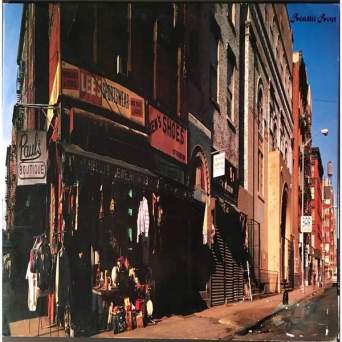
Track 3 from Paul’s Boutique, and one the most extraordinary parts of an extraordinary album.

Worth recalling that the prior to the release of their second album in 1989, Beastie Boys were regarded by many as one-trick ponies. The album caught just about everyone out in that it wasn’t anything close to a re-tread of Licensed to Ill, and indeed the past 30 years have only seen it grow in stature, partly from the recognition of its ground-breaking nature but also from the fact that many have since tried but failed in their efforts to replicate it. And given just how expensive it would be nowadays to get clearance for that amount of samples (over 100 were used on the album), it never again will be attempted.

The idea of the these three early-20s rappers writing something making reference to the plight of a homeless man on the streets of NYC would have seemed ludicrous to those who were part of the initial journey from hardcore to hip-hop, but what you have here is one of the earliest examples of the band increasingly making use of their profile and platform to make significant sociopolitical statements.

A book dedicated to an in-depth analysis of the album reveals that Johnny Ryall was the name given to a vagrant who had hung around the outside of Mike Diamond’s apartment building in NYC a few years previously. The vagrant was also given a back story of being a down-at-luck rockabilly star who had been friendly with Elvis Presley. The source for the name and the back story was Mike D’s flatmate, who was Sean Casarov, previously a member of the inner circle of The Clash before he upped sticks and moved to the States. The Beastie Boys book also reveals that neither Mike nor Sean regarded the vagrant as a source of fun or amusement and indeed would provide him with clothes when it got particularly cold. The irony of the song is that the lyric was pieced together in Los Angeles where the band had relocated to and the inspiration was long gone. Nowadays, the power and reach of social media would likely have tracked him down for a reunion with Mike D.

mp3 : Beastie Boys – Johnny Ryall

Oh and I bet nobody involved would have thought the person referenced in the first line of the final verse would one day be PoTUS.

JC