The worldwide lockdown in the wake of the outbreak of the COVID pandemic meant musicians had to be a lot more innovative in how they went about their business and tried to make a living.
Glasgow-based singer/songwriter Louise Quinn and producer/musician Bal Cooke, with the support of Creative Scotland’s Open Fund to sustain creativity during lockdown, teamed up remotely with producer/ DJ Scott Fraser (London), producer/ DJ Kid Loco (Paris) and film/art director Tim Saccenti (New York) to form Gates of Light for the release of an eponymous album of what was described as a psychedelic, dream-pop glitch landscape of future folk, and which was released on Shimmy Records, a New York label owned by Mark Kramer, a veteran of the music scene.
The experience proved to be an enjoyable one, and the idea behind Gates of Light continued into the post-pandemic age, with three digitally released EPs that were rooted in different cities – Glasgow, Paris and London – which were then collated and released as Gates of Light II by Last Night from Glasgow in February 2025.
# 110: Yazoo – ‘Nobody’s Diary’ (Mute Records ’83)
Dear friends,
synth-pop is a dangerous thing, I always thought. You see, your approval for it falls and stands with your age, more specifically: when you were 14, 15, 16, developing a serious interest for music – was it 1983 then or was it 1993? The point I’m trying to make is: in 1983, 1984, at least here in Germany, there was nothing else but synth-pop by and large, you were flooded with it everywhere: radio, TV, clubs (well, ‘clubs’ in a sense: we are talking rural village gatherings here, you see – those venues you could get into when you were an adolescent, a club bouncer in town would just laugh at you and send you away).
In addition to this the media was still desperately trying to reanimate the dead horse that was called „New (German) Wave“ over here, basically this was awful synth-pop, albeit sung in German. There were positive exceptions, but very limited ones, believe me, the vast majority was total crap.
So, the point I’m trying to make is: you were battered with new romantic synth-pop all day long, sung in English and sung in German – there was no escape! Please get me right: the new bands were not bad per se, 99% of their synth stuff was much more enjoyable than the 12-minute-guitar-solo-prog-rock-stuff we constantly had to listen to in the aforementioned “youth clubs“ before. Why? Well, because the DJs there were always either old hippies or hard rock fanatics, always much older than you … and you would not argue with them when you were 14, that’s why! But eventually they could not close their eyes any longer, the demand got too big, or the requests too many, I suppose – soon synth pop had found its way into those youth clubs as well.
Now, coming to the essence of all of this: you might already have gathered it, but of course only the mainstream stuff got played there, just like on the radio – Depeche Mode, Eurythmics, Heaven 17, Human League, Icehouse, Tears For Fears, you know the lot!
But there were quite some bands which flew below the radar, undeservedly so, because what they offered was superb: clever, thoughtful, special. Three totally underrated bands stood out here, one and two were – in my humble opinion – Blancmange and Soft Cell and the third was Yazoo. We can have endless discussions about which single to go for by Yazoo, ”Only You“, „Don’t Go“, „Situation“, „The Other Side Of Love“ – or my absolute favourite, this:
mp3: Yazoo – Nobody’s Diary
The tabloids back then were more uncertain than me, apparently:
Smash Hits: “Strong on emotion and weak on melody but the combination of ringing synths and bluesy singing is still a winner.”
Number One: “It sounds like all the rest, and yet, it doesn’t! Somehow they keep coming up with enough hit variations on their theme. Can’t fail.”
Melody Maker: “quite like[s]” the song, but would “like to hear a different kind of backing track” for Moyet’s “wonderful” vocals as Yazoo’s “synthesized sound doesn’t have very much depth”. Still it would be a big hit and that Moyet “sounds very different on this, a bit restrained, a bit deeper”.
Contrary to the music papers, there is nothing at all which I miss from or would add to this single – it’s just perfect the way it is!
What the hell, indeed? My first ICA was on PWEI in January 2020. That took me two years to write. This second one has taken nearly six years. I’m not sure I can really explain why. But here we are with an ICA that moves more firmly into dance territory with the fantastic Orbital. All tracks are in the Spotify playlist below and there are a few videos to enjoy as well.
Orbital are brothers Paul and Phil Hartnoll from Kent. Legendarily, the band’s name is taken from Greater London’s orbital motorway, the M25. The M25 was central to the early rave scene of the 80s, as ravers ended up playing a cat and mouse game with the police waiting at service stations for news on where the next rave was located.
Live is where they’ve really shone, with their semi-improvised sets that twist and stretch originals into new thrilling shapes. They’ve played one of the iconic Glastonbury sets in 1994 and also appeared at the Royal Albert Hall (twice).
They’ve had a few compilations over the years, including Work 1989-2002 (2002), 2Twenty (2009) and A Beginners Guide (2024). All of these are decent resumes of their best moments, so this ICA takes a slightly less travelled path.
Side A
This side is a non-chronological trawl through a few of their more danceable moments.
Chime Extended (1989)
This is featured on all their compilations, but there really wasn’t any other place to start. Chime from 1989 is their breakthrough track. This was recorded under the stairs on their father’s 4 track tape deck, which they released on DJ Jazzy M‘s Oh Zone Records in December 1989. It was re-released on FFRR Records in 1990. The track reached number 17 in the UK charts, and they appeared on Top of the Pops wearing anti-Poll Tax T-shirts and with their equipment visibly not plugged in.
The heart of the track is the stabby piano chord allied to a chunky bass and of the time percussion. I’ve included the full 12 minute version to give you the full ‘lost at the rave’ experience. It’s a classic close to my heart but unsurprisingly for something that’s 35 years old it does sound a bit dated.
Impact USA (The Earth Is Burning) (1993)
Taken from their second album, known as the Brown album, this is an in your face climate change anthem. Orbital have always been awkwardly principled and this track pushes the environmental concerns to the fore.
The track offers their usual tumble of break beats along with almost symphonic brass synths. The samples that pepper the track talk about “A cry for survival”. Live this builds and builds and is immense.
Octane (2003)
Jumping forward to 2003, here’s Orbital showing their ability to do a soundtrack for an indie film Octane. This was done just before they split up in 2004. It’s a largely beatless track but employs a spooky keyboard and a dark bass line to offer that horror vibe.
As for the film, Octane (released as Pulse in the United States) is a 2003 horror film directed by Marcus Adams and starring Madeleine Stowe, Mischa Barton, and Norman Reedus. The film follows a divorced mother and her teenage daughter on a late-night road trip, and the mother’s battle to find her daughter after she gets caught up with a bizarre cult of young criminals at a truck stop.
Where Is It Going? (feat. Stephen Hawking) (2012)
Orbital reformed at the end of 2008 and ended up creating this absolute classic using a track from the album Wonky. One of my all-time favourite tracks this manage to be magisterial in its opening, awe-inspiring in its use of Stephen Hawking’s vocal and utterly danceable.
Orbital appeared at the opening ceremony for the London 2012 Paralympic Games, performing “Where Is It Going?” live with Stephen Hawking delivering a speech about the Large Hadron Collider. “Transform our Perception of the Universe.”
Tiny Foldable Cities (2017)
Orbital split up again in 2014 and returned in 2017. Tiny Foldable Cities was their first release in this new period, ahead of their Monsters Exist album (2018).
The track has a woozy fairground organ as its centrepiece. This is all very English and is happy to remain strange even when the beats and synths arrive.
Funny Break (One Is Enough) Full Version (2001)
Taken from the album The Altogether this shows how adept Orbital are at marrying their music to ethereal vocals. The vocals are from Naomi Bedford of Jonah Hex whilst the lyrics are by Naomi together with fellow band member Andrew Bramley.
Unusually for Orbital this track includes trumpet and sax from Michael Smith and Dominic Glover. They offer additional support to the vocal, allowing it to really soar within the track.
Taken from their Radicchio EP this features a line from Scott Walker’s Next. It’s a doomy bass heavy track that offers only pleasures in the next world, not this. It’s a largely instrumental track that pounds along from start to finish.
Side B
This side is another non-chronological trawl but with a more chilled come down feel.
Halcyon + On + On (1993)
Originally released on the Radicchio EP, this version is another that’s taken from the Brown album. But also another stone classic. The repeating refrain, the thrummed synth and the use of the Opus III sample from Kirsty Hawkshaw all combine into a total anthem.
The inspiration for the track is Phil and Paul Hartnoll’s mother, who was addicted to the tranquilliser Halcion (Triazolam) for many years. As Phil explained “my dad was working really hard and was rarely at home while our mum was freaking out on Halcyon (a then-popular prescription tranquiliser)… Don’t get me wrong, mum was always very loving and caring. But they prescribed her this drug and she just kept on doubling the dose.”
Live, Orbital were famous for adding Belinda Carlisle (Heaven Is A Place on Earth) and Bon Jovi (You Give Love A Bad Name) half way through. This was a cause of many mass singalongs. In recent years they’ve sadly dropped Belinda and Bon Jovi, but it’s still a wonderful track.
Kein Trink Wasser (1994)
Taken from the album Snivilisation and meaning non-drinking water, this is another of those built around a set of arpeggiated piano chords. It bursts with exuberance that eventually turns into some of Orbital’s favoured break beats at the half way mark. There’s something quite Mozart about the piano.
The Box – Part 2 (1996)
Imaginary spy theme for an imaginary compilation. The Box is taken from the In Sides album. The version released on In Sides is in two parts, a slow downbeat Part 1 and a faster upbeat Part 2 of the same song. The track has a wonderful darkness to it.
Paul Hartnoll told the NME that the song was based on a recurring dream he had about the discovery of a mysterious wooden box in the Welsh countryside, but that he would always wake up just at the point he was opening the box, so he never found out what was inside it.
One Perfect Sunrise (2004)
A classic chillout track taken from the Blue Album. This has ethereal vocals from Lisa Gerrard from Dead Can Dance. They dominate the track and help it manage the assertive breakbeats.
The Girl With The Sun In Her Head (1996)
The final track on this ICA is another low-key one. It’s also a movingly poignant one as it was dedicated to the memory of photographer Sally Harding, who died in 1995. The track was recorded using electricity from a Greenpeace solar power generator.
It opens with a heartbeat sound focusing in on our life essence. It’s then followed by one of Orbital’s most classic and heartfelt keyboard riffs that recurs throughout the track. The beats are less prominent than many Orbital would do to allow the melodies to hold the centre stage.
Bonus 12”
Belfast – David Holmes Remix
Perhaps the track that deserves to be Orbital’s best known. Originally released in 1991 the track uses a sample of soprano Emily Van Evera performing “O Euchari” (a vocal composition by Hildegard von Bingen) from the Gothic Voices album A Feather on the Breath of God. It’s a spiralling sprawling mix of the classical vocal and dreamy synths and beats. This version is a David Holmes remix from 2024.
As for its genesis. Paul Hartnoll said “I decided to make an ambient song,”He explained, “It was a rainy melancholy mid-week kind of afternoon. I got the chords first and just went from there.”
Then Orbital went to Belfast to play at David Holmes’ Sugarsweet club. “So, after the gig, in David’s Mum’s house’s spare bedroom, David asked if we had any demos. Two weeks later, David rings up and tells me that him and his friends all love the second track on the tape. We called it Belfast after the brilliant time we had there. The track was named after, and dedicated to David and all his friends.”
EMF – It’s You (13½% Extra mix) (1992)
To end, a curiosity but one I love. Orbital have done relatively few remixes (they did do a not very good one for Madonna BITD).
They did this one for EMF in 1992. No idea why. It takes fuzzed guitars and marries them to a string drenched start and a one note piano line to die for. There’s a wonderful naivety that comes through.
As promised…….the entire ICA on Spotify. Click here.
Total and very happy coincidence this dropped into the Inbox just as I was finalising stuff for the blog’s 19th birthday.
For those of you who perhaps don’t know the back story, Acid Ted has been the blog’s longest-serving guest contributor – his first guest posting would have been in 2007– but so many of his pieces were lost when Google removed the old blog. AcidTed was also the first non-Glasgow blogger I ever met face-to-face, as far back as October 2009. And above all else, he was the person who stepped in back in 2010 and 2011 when a couple of deaths, firstly to my brother and then my best friend, meant I had to take a couple of extended breaks.
He, along with Rachel (Mrs Vinyl Villain) and Comrade Colin (ex-blogger from Glasgow), are the folk who I’ll always be most indebted to for getting things going and established, but there are also many dozens of others who have been incredibly supportive and whose help has been invaluable over the years.
Once again….and I’ll never get tired of saying this……..THANK YOU!
Port Sulphur (feat Vic Godard) – Fast Girls and Factory Cars
Buzzcocks – Love You More
Elvis Costello & The Attractions – Green Shirt
Violent Femmes – Gone Daddy Gone
Heavenly – Modestic
Kim Deal – Are You Mine?
Working Men’s Club – Widow
Follytechnic Music Library – Fined
Happy Mondays – W.F.L (Vince Clarke mix)
McAlmont & Butler – Falling
The Pains Of Being Pure At Heart – Come Saturday (‘Searching For The Now’ version)
Sonic Youth – Kool Thing
The Futureheads – Decent Days and Nights (radio mix)
Urusei Yatsura – Super-Fi
The Motorcycle Boy – Big Rock Candy Mountain (velocity dance mix)
The Wedding Present – Nobody’s Twisting Your Arm
Truth be told, I forgot I’d already pulled together a monthly mix for October, and I couldn’t be arsed putting this on the shelf for another 31 days. You don’t need to listen, arms are never twisted round these parts.
The Wedding Present – Corduroy (single version)
Half Man Half Biscuit – Jack’s Been To The National
The Spook School – Gone Home
The Monochrome Set – He’s Frank (Slight Return)
Beck – Devil’s Haircut
Dream Wife – Hey! Heartbreaker
Luke Haines & The Auteurs – Showgirl (orchestral version)
Butcher Boy – Profit In Your Poetry
The Luxembourg Signal – Take It Back
The Sisters of Mercy – This Corrosion
New Order – True Faith
Neutral Milk Hotel – King Of Carrot Flowers (Part 1)
The Delmonas – Comin’ Home Baby
Magazine – I Love You You Big Dummy (Peel Session)
Brian Bilston & The Catenary Wires – Might Not, Might Not Have
Scritti Politti – Lions After Slumber
The Raveonettes – Let’s Rave On
19 years in the business. Let’s Rave On indeed. There’s more a wee bit later on today….
30 September 2006 was the date of the very first posting on The Vinyl Villain. A site hosted by blogger until unceremoniously being taken down on 24 July 2013. My own fault I suppose for not paying attention to the threatening emails from technocrats unhappy about what they termed as abuse of copyrights.
A few hours later, and WordPress became the home of The (New) Vinyl Villain. WordPress has proven to be a much more sociable and friendly host, albeit there have been a couple of bumps in the road over the past twelve years in terms of some technical changes that have affected how the site is laid out.
I never imagined, when I started out, that I’d still be doing this all these years later. It really is all down to the support offered by everyone who is part of the TVV community, and by that I mean those who frequent this place, be that occasionally or regularly. I never take anything for granted, least of all those of you who leave comments and/or go that little bit further with guest contributions.
The stats tell me that there were approx 2.300 posts on the old blog (I can’t be totally precise) and that today’s offering should be #4,632 using WordPress. Almost 7,000 posts all told, albeit some of them, maybe a couple of hundred or so, have been reposts.
There’s a stats thing that comes with the package I use for the blog. It tells me that the average length of a post going back to 2013 is 626 words. Which means that the approx total number of words going back to 30 September 2009 is….drum roll…………..4.381 million.
In comparison, the widely-accepted longest novel of them all, In Search of Lost Time by Marcel Proust, (1913-1927), extends to 1.3 million words over its seven volumes.
All I can say is thank you for allowing this self-indulgent little corner of t’internet to prosper in the way it has. And happy birthday to all of us.
Take it away, Lloyd.
mp3: Lloyd Cole – Old Enough To Know Better
The birthday celebrations will continue into tomorrow and indeed the day after, with a guest contribution from someone who was one of the first to get right behind the blog and who has, over the years, been an inspiration and life-saver.
In which I hope to have kept to my promise that this one will feature all sorts of great ‘non-hit’ singles. The well-thumbed big red book is again being flicked through.
mp3: Cabaret Voltaire – Sensoria
Anyone reading this post and hearing Sensoria for the very first time in their life might have a hard time in believing it’s a song that’s 41 years old. One that takes me back to the Strathclyde Uni Students Union downstairs disco on Friday and Saturday nights, held in the space that was normally where we devoured our daily helpings of pie, beans and chips. As I’ve said before, this is one for flailing around the dance floor with your raincoat flapping behind you like Batman’s cape as he chases the bad guys.
mp3: The Daintees – Trouble Town
The second single from a newish-band based in the north-east of England who had been snapped up by Newcastle-based label Kitchenware Records, largely on the basis of the talents of their singer/songwriter frontman. It would take until mid-86 before the band, now called Martin Stephenson and The Daintees, to enjoy a small amount of commercial success via their albums and dynamic live shows.
mp3: Go-Betweens – Bachelor Kisses
The second and final single to be lifted from the album, Spring Hill Fair. After Part Company had failed to wow the record-buying public, Sire Records went for a Grant McLennan composed number this time around. The record label actually went a bit further. Believing that they had a radio-friendly number on their hands, they gave the album version to producers Colin Fairley and Robert Andrews, who earlier in the year had worked with The Bluebells, and asked them to make it just that little bit more commercial. Robert Forster would later comment “we got new producers, more days on the bass drum, and a version of the song of no great variance to the original take.”
Money was also spent on a promo video:-
The female backing vocal is courtesy of Ana da Silva, the lead singer of post-punkers The Raincoats, and a band much loved by Kurt Cobain. The failure of the single led to Sire Records dropping the band a few weeks later.
mp3: Grab Grab The Haddock – I’m Used Now
The Marine Girls, a trio from the south of England featuring Tracey Thorn, Alice Fox and Jane Fox, had made a small splash in the indie-pop world in the early 80s, eventually signing to Cherry Red Records and releasing the well-received album Lazy Ways in early 1983. By this time, Tracey had relocated to Hull University where she would meet Ben Watt and form Everything But The Girl; meanwhile, Jane had recorded material with her boyfriend, the Manchester-born poet Edward Barton, with one of the songs, It’s A Fine Day later being re-recorded as an electronic dance track by Opus III in 1992 and proving to be a massive hit. After the Jane and Barton mini-album in late 1983 had sunk without trace, the Fox sisters formed what proved to be a short-lived band called Grab Grab The Haddock who would release a 12″ single and an EP on Cherry Red in 1984/85. I’m Used Now was the debut single.
mp3: Paul Haig – The Only Truth
The production is credited to B-Music/Dojo, otherwise better known as Bernard Sumner and Donald Johnson. How many of you wanted to shout out ‘Confusion’just before Paul’s vocals kicked in?
One word to describe this one? Tune.
mp3: The Higsons – Music To Watch Girls By
A band formed by students at the University of East Anglia in Norwich, The Higsons had been around since 1981, and in due course would sign for 2 Tone and release a couple of non-hit singles for the label in 1982/83. By 1984, they were on the London-based indie-label Upright Records, who would release the band’s sole LP from which this cover version of the easy-listening 1967 hit single by The Bob Crewe Generation was the lead single. The band broke up the following year, and lead singer Charlie Higson would find fame and fortune as a comedy actor/writer in The Fast Show, while trumpeter/saxophonist/guitarist Terry Edwards would forge a very successful musical career which continues to this day.
mp3: The June Brides – Every Conversation
The band’s second single on the newly established Pink Records somehow managed to surpass the magnificence of debut In The Rain from a couple of months earlier. A band that would get lumped in with the C87 ‘movement’ despite all their music, in their first incarnation, all being from June 84-May 86.
mp3: The Loft – Why Does The Rain
The Loft, as with The June Brides, get lumped in with the C87 ‘movement’ when in fact they had already broken up in late 1985. This was the debut single, and it’s an absolute belter. The next 45, Up The Hill And Down The Slope, was even better, but singer/songwriter Pete Astor then called it a day and went on to form The Weather Prophets, a band who would release their own take on Why Does The Rain on their debut album, Mayflower, in April 1987.
mp3: Red Guitars – Marimba Jive
The third and final single of the year from Red Guitars, whose profile was fairly high after a load of well-received live shows opening for The Smiths UK tour in early 1984. Sadly, and undeservedly, the singles failed to connect with the record-buying public, and likewise with debut album Slow To Fade which was released just before the end of the year.
mp3: Marc Riley & The Creepers – Shadow Figure
The fifth single to be recorded by the band set up by Marc Riley after he ‘took his leave’ of The Fall in January 1983, but their first following the release of debut album Gross Out back in June 1984. An unusual number in which the kitchen sink seems to have been thrown at the tune during the production process….almost chamber pop in execution.
mp3: Shriekback – Mercy Dash
The second flop single in three months. This one is dedicated to Post Punk Monk, one of the finest on-line writers out there, and a huge fan of Shriekback.
mp3: Violent Femmes – It’s Gonna Rain
The second and final single to be lifted from the album Hallowed Ground. I remember at the time being a bit underwhelmed by the album, but then again, it had been an impossible task to follow the eponymous debut that had landed in the UK in late 1983. I’ve grown to appreciate things just a little bit more as the years have passed, but it remains hard to fully embrace an album of folk/country tunes with more than a hint of Christianity sprinkled in. It’s Gonna Rain is actually an interpretation of the Noah’s Ark story, and in places it’s not too far removed from the sort of music Jonathan Richman does so very very well.
mp3: The Mighty Wah! – Weekends
The second and final single to be lifted from the album, A Word To The Wise Guy. And while Come Back had gone Top 20 earlier in the year, the radio stations ignored the follow-up!
Told you this month was a good ‘un.
late addendum/correction : huge thanks to those who corrected me on Jane and Barton (see the comments section). Much appreciated.
#1: Falling and Laughing : Orange Juice (Postcard 80-1, 1980)
Earlier this week, Edwyn Collins embarked on The Testimonial Tour, a last lap of live shows around the UK before what can only be assumed is a well-deserved retirement. The timing, last Sunday, of the end of The Robster‘s epic series on Super Furry Animals I felt offered the perfect opportunity to now turn this particular day of the week into a real nostalgia-fest by looking back at all the singles Edwyn has released over the years encompassing Orange Juice, the solo career and the occasional collaboration along the way.
I make no apologies in advance if much of the series proves to be retreads of material used on the blog before, which can’t some as a surprise to you given how often he has featured over the years. But it will offer the opportunity to eventually have everything in one place under a new entry within the index system.
His debut appearance on vinyl launched a label as well as a career now spanning 45 years and counting.
mp3 : Orange Juice – Falling and Laughing
Recorded in December 1979 in a tiny studio in the town of Strathaven, some 25 miles south of Glasgow. The studio owner, John McLarty, despite having little experience in the sort of pop music the band intended to lay down, insisted on handling the production duties. As a sop, he did allow Malcolm Ross, a friend of the band who had already been involved in making a single with his band Josef K, to sit in on the session and make some suggestions.
Edwyn sings and plays guitar, James Kirk plays guitar, the bass is courtesy of David McClymont and Steven Daly is banging the drums. Legend has it that 963 copies were pressed up, with a free flexi-disc and an actual Postcard being included inside what was a strangely shaped folding sleeve rather than the standard type into which a record would fit.
Two tracks were included as b-sides:-
mp3: Orange Juice – Moscow Olympics
mp3: Orange Juice – Moscow
They are the same tune, with the latter being particularly rough and demo sounding while adding a few additional chants of the word ‘Moscow’, courtesy of Alan Wilde (a name adopted by the band’s manager Alan Horne) and Steven Daly.
In June 2023, I finally obtained a copy of the single, a 60th birthday present from Rachel, without whom this blog wouldn’t have got off the ground. It was also fitting that the online sale of the single was drawn to our attention by our dear friend Comrade Colin, without whom this blog wouldn’t have got off the ground. It came with the flexidisc and a postcard, and it was in mint condition.
mp3: Orange Juice – Felicity (live)
As recorded at an early gig in April 1979 by the aforementioned Malcolm Ross.
For a eighth time in this series, I’m grabbing something from David Cameron’s Eton Mess, a compilation album released in October 2015 on Song, By Toad Records.
As I’ve written before:-
“Almost all of the singers and bands were, at the time, unknown with very little more than a few tracks available online or via a limited physical release, most often cheaply done on a cassette. Label owner, Matthew Young, said at the time:-
“Most of the bands are friends and a lot of musicians feature on several of the album’s tracks, one of the reasons why we’ve put the compilation together. It feels like there’s this pool of really talented musicians bubbling away and all sorts of excellent music is starting to emerge from the mix. Bands are forming, breaking up, and starting again all the time. When you see a loose collection of bands connecting like this you never know what is going to happen. A few will disappear, some will do okay, some might pave the way for others, and a few of these bands could go on to do really well.”
The track from Froth was this:-
mp3: Froth – The Rat
The Bandcamp page describes Froth as ‘Glasgow Musical Fiasco’ and lists Paul Docherty, Keith Harcus, Izzy Rose, Simone Wilson, Grant Simpson and Eilidh McMillan as its members. There are five digital releases available to download for £1 each….and none of them are The Rat.
Simone and Eilidh would, along with Cal Donnelly, later form the rather splendid Breakfast Muff whose 2017 debut, (and thus far only), album Eurgh! is an absolute lo-fi classic.
I’d gone a long time since pulling this one down from the shelf and giving it a spin on the turntable. It’s not that I don’t love the song, but it, along with many others, has fallen victim to me having too much vinyl and not enough time in my life to listen to all the good stuff.
I’d picked it out after looking at the i-phone with its near 50,000 tunes and finding out that, for whatever reason, but entirely down to human error, I had either never actually made an mp3 copy of Crash to transfer on to any portable device, or had managed somehow to delete the file. Either way, I couldn’t listen to it on this particular journey.
Do any of you disagree with the statement ‘Crash is one of the great indie-pop tunes of any era thanks to its two-and-a-half minutes of perfection’
It’s one that found favour far beyond the indie-cognoscenti, going all the way to #5 in March 1988, easily outperforming all the bands The Primitives were being lumped in with. Sadly, for all concerned, that was as bright as the stars ever shone for, and while it is the case that the band is still on the go today, having reformed in 2009 after what had been an 18-year hiatus, they are more or less just known for the majesty of their big hit.
mp3: The Primitives – Crash
The 12″ comes with three other tracks
mp3 : The Primitives – I’ll Stick With You
mp3 : The Primitives – Crash (demo version)
mp3 : The Primitives – Things Get In Your Way
The two other songs kind of highlight that much of the material just didn’t match the brilliance of Crash. The demo version dates from October 1985. The signs are there that something pretty special is being worked up, but there is no question that all the bits which came together in the studio, such as the backing/additional vocals, are what took it to the great heights.
# 109: X-tal – ‘An Old Colonial’s Hard Luck Story’ (Alias Records ’90)
Hello friends,
right, you knew this was bound to happen, didn’t you? I mean, just look at the last posts: Wedding Present, Wild Swans, X-Ray-Spex (with their most fragile tune ever, no question about that!) … you have been pampered with the MOR stuff you like so very much – but today it’s obscurity-time again, I’m afraid. And, as usual, I can only give the advice not to skip this just because you don’t know it – it’s extraordinarily good, this! Special, yes, but good – believe me!
X-tal hail from San Francisco, they started out in ’83 and called it a day in ’96. Their story is nothing different to other unknown leftist bands’ sad stories, I’d reckon: many changes in the line-up over the years, one or two tracks on a compilation of local bands, finally an album which only a handful of folk admired at the time.
In X-tal’s case it were a few albums even, five, from ’90 to ’96 to be precise – none of which I ever heard, I’m ashamed to say. Perhaps I should change this, I mean: today’s single is in the box for a reason – because it’s simply brilliant, of course – so who knows whether the albums are not too shabby either?
Anyway, back to the single. Knowing you lot, I can imagine that a song’s lyrics are as important to you as its music. And let’s be brutally frank: is there anyone of you who did not have the lifelong desire to enjoy a song which broaches the all-important issue of the self-pity of Rhodesian exiles?!
Oh well, fear not – your day has finally come, friends:
mp3: X-tal – An Old Colonial’s Hard Luck Story
Wonderful stuff, I’m sure you agree. Lyric sheet instead of back sleeve for you today, as a special service, see above!
A series for 2025 in which this blog will dedicate a day to each of the twenty-four of the sessions The Fall recorded for the John Peel Show between 1978 and 2004.
Session #3 was broadcast on this day, 24 September 1980, having been recorded on 16 September 1980.
Arguably the greatest Fall session, this is the occasion, according to Riley, where producer John Sparrow’s pipe had gone out, and he’d fallen asleep. Returning with newcomers Scanlon and the Hanley brothers, this is the first truly great Fall Peel Session. The definitive recording of ‘New Puritan’ (with the Ur-Smith lines “I curse the self-copulation of your record collection – New Puritan says ‘coffee table LPs never breathe'”), the fresh and quick ‘Container Drivers’ and the extended ‘New Face In Hell’ offer glimpses of past and present, while ‘Jawbone And The Air Rifle’ offers the first tart taste of ‘Hex Enduction Hour’, still some 18 months away.
DARYL EASLEA, 2005
mp3: The Fall – Container Drivers (Peel Session)
mp3: The Fall – Jawbone And The Air Rifle (Peel Session)
mp3: The Fall – New Puritan (Peel Session)
mp3: The Fall – New Face In Hell (Peel Session)
Produced by John Sparrow
Mark E Smith – vocals; Marc Riley – guitar; Craig Scanlon – guitar; Steve Hanley – bass; Paul Hanley – drums;
I know these blogs are supposed to be about music, but this story is a fucking doozie. My name is Fleming, Ian Fleming and I got caught ripping off my mates….
Cast your mind back to 1983 and the summer of the ‘Battle of the Bond Films’ – Octopussy versus Never Say Never Again.
Octopussy was the ‘official’ Bond film (official because it was produced the Bond rights holders EON). Never Say Never Again was produced by Jack Schwartzmann and saw Sean Connery return to the role he originated for the big screen.
Octopussy gets a bit of stick for Roger Moore being old enough to be the creepy grandfather of some of the supporting cast, but generally it’s an okay film with Steven Berkoff over-egging the pudding for maximum results. The film is based on a Fleming short story of the same name which serves as background to film’s narrative. While Rita Coolidge delivers up a cracking Bond theme (All Time High) via John Barry and Tim Rice (check out the Pulp cover version too).
mp3: Rita Coolidge – All Time High
mp3: Pulp – All Time High
Never Say Never Again is actually a remake of Thunderball (1965) and is a great lesson in not nicking the work of others or (depending on your point of view) not allowing others any kind of claim on original work.
In 1957, long before Bond was officially adapted to the big screen Fleming started work on some scripts with film maker Kevin McClory (working titles include SPECTRE and James Bond of the Secret Service).
By 1959 Fleming was beginning to lose interest in the project since it had no real backing and McClory’s current film ‘The Boy and Bridge’ had flopped at film festivals. McClory was tenacious if nothing else and took the rough drafts to Ealing Studios writer Jack Whittingham. Together they crafted a script based on McClory and Fleming’s ideas and presented it back to Fleming with the working title of ‘Longitude 78 West’.
Fleming reportedly said the work was ‘very good’ and did very little re-writes himself, save from retitling the work ‘Thunderball’. As negotiations with MCA were ongoing to produce the movie, Fleming began work on the novelisation of the script which he decided he was taking full credit for. McClory and Whittingham thought ‘fuck no’ and went to the high court. Whitingham had already sold his rights to McClory and so only served as a ‘principle’ witness’
Fleming and McClory ultimately settled out of court, the result was McClory was given screen rights to the film and Fleming could publish the book under his name with the caveat of “based on a screen treatment by Kevin McClory, Jack Whittingham and the Author” McClory was also credited to co-authorship of ideas and characters; Spectre and Ernst Stavro Blofeld.
In the official EON produced documentary ‘Everything or Nothing’ there is some staunch defence of Ian Fleming’s behaviour. The talking heads take great care to mention the alcohol consumed by Fleming and McClory during their writing sessions and how ‘no one could be sure who came up with what characters’ and other hazy comments. It’s all very partisan and perhaps rightfully so. One thing the film heavily implies (through talking heads) is that the court case against McClory was the thing that caused Fleming’s fatal heart attack. This claim would carry more weight if didn’t come a few minutes after a segment that documented his heavy problem drinking and his 70-a-day cigarette habit.
Fast forward to 1964, when the production company EON had the James Bond license and delivered three hit films through the studio MGM. Thunderball had been a massively popular book, so EON struck a deal with McClory to adapt it into a film that allowed him to act as producer and with the rights returning to him after a decade.
Before the franchise launched it was apparently intended to be the first movie of the series. EON producers were so confident in the story that they commissioned a script to be authored long before they spoke to McClory. They even used the script to lure Connery into the role;
“The first James Bond film which I was hired for was Thunderball, for United Artists… The first script I was given to read by Broccoli and Saltzman’s company was Thunderball”Sean Connery, Undated Letter from the EON Archives
The film version of Thunderball was massive, it earned $141m worldwide on a $9m budget (times it by 10 for the 2025 value). The theme tune was originally supposed to be Mr Kiss Kiss Bang Bang by Shirley Bassey who had scored a massive hit with the title song to the previous film, Goldfinger.
After recording, the track was found not to be long enough for the opening credits so was re-recorded. Unfortunately, Bassey wasn’t available for the second session so Dionne Warwick was tasked with delivering a version. Ultimately the producers wanted a song with the film name in the title and given that neither Warwick or Bassey were available, they went with the next best thing, which was clearly Tom Jones.
mp3: Shirley Bassey – Mr Kiss Kiss Bang Bang
mp3: Dionne Warwick – Mr Kiss Kiss Bang Bang
mp3: Tom Jones – Thunderball
As popular as James Bond was, no one would have predicted the decades long British institution it would have become, even in 1965. The McClory deal, on paper, seemed like a good one for Fleming. Ten-year franchises didn’t really exist outside of Hammer Horror films and Sherlock Holmes. Who would be interested in a Bond film in 1975?
Even as late as 1969, many industry people thought the Bond bubble would eventually burst. George Lazenby was advised not to sign a seven-picture deal because he was told that the arse would drop out of cold war spy films in the hip 1970s.
“I had advice that James Bond was over anyway. It was Sean Connery’s gig and, being in the ’60s, it was love, not war. You know, hippy time. And I bought into that,” George Lazenby, The Guardian 2017.
Shrewd.
By 1974 McClory announced a film called ‘James Bond of the Secret Service‘ while Cubby Broccoli and EON were struggling with the critical flop of The Man with the Golden Gun;
“Amid the general lack of gumption, Roger Moore’s large rigid figure appears to be wheeled about on tiny casters” The Times, December 19, 1974
In order not to have their product damaged any further, they hit McClory with a massive lawsuit. Realising that he doesn’t have the financial clout to counter the MGM backed producer, McClory backs down…… for now.
As the late 1970s approach and McClory now has the rights to ten unfinished Bond scripts that he had worked out with Fleming, and he has the backing of Paramount pictures. Once again there’s legal action to stop or delay him but this time it’s less successful. By 1981 Paramount Pictures have backed out but Warner Bros via Jack Schwartzmann (an entertainment attorney and Mr Talia Shire) are on board. Schwartzmann licenced the rights from McClory and set about producing his first film.
In the early 1980s, Sean Connery was not exactly a massive box office draw, in fact he had spent a decade trying to get away from the Bond image. Unfortunately, he’s also been in a fair few flops (including Zardoz which is a science fiction head fuck about a society that worships the Wizard of Oz and finds Sir Sean in knee high fuck-me boots and a red bikini combo; Objectification isn’t so sexy now is it? How do you like it, Sean? Eh?… seriously though, you would)
Earlier McClory had pulled off a genius move; Connery had previously said he’d never play Bond again. Playing on the actor’s ego McClory brought him on board to help with the script re-drafting and as a consultant, in fact a de-facto co-producer.
Schwartzmann kept that deal going and he also involved him in casting choices making sure that he saw a lot of below-par actors for the role. Ultimately this led to Sir Sean being swayed towards the part.
“(Kevin McClory) knew I wasn’t interested in playing the part but would I consider writing a screenplay with Len Deighton. I worked with Len… six months nearly and the script was coming on rather well and I was discussing it with my wife and she said ‘well if it’s going so well why don’t you play the part’ Sean Connery, Film ’83 with Barry Norman
Maybe Connery was duped or manoeuvred into the role but personally I think Schwartzmann gave him a reason that he could use to publicly change his mind after so many years of saying he’d never do it again.
With the help of re-writes from Dick Clement and Ian La Frenais (The Likely Lads, Porridge and Auf Wiedersein, Pet!) the film was ready to go by 1983. For all intents and purposes, it was a Bond film. It had great set piece stunts, gadgets, half naked ladies and not one but two (!) Johnny Foreigner bad guys.
MGM then try to tie up McClory in more legal trouble but this eventually worked in his favour with EON having to remove elements of Spectre and Blofeld from any upcoming films, but the flip side of the court ruling was that any film McClory made couldn’t deviate from the Thunderball template.
“Because of the threat of litigation they were told at some point ‘you can only use original dialogue from the book’ it’s impossible to write a screen play where you only use dialogue from a book. Everything had to be checked by the producer, the director, by Sean and then by the insurance company who were insuring the company against litigation. There were four sets of people checking everything we wrote which was extraordinary” Dick Clement – uncredited writer Never Say Never Again. The Big Gamble; The Making of Never Say Never Again 2009
As for the cast; Edward Fox adds a star to the ratings as an excellent middle-management version of ‘M’, Barbara Carrera massively upstages Kim Basinger as Fatima Bush. Rowan Atkinson plays every Rowan Atkinson character that isn’t Blackadder or Mr Bean and Pat Roach rocks up as a baddie (that’s living alright).
Peter Hunt, who directed On Her Majesty’s Secret Service (and had been an editor on many other Bond films) was offered the chair but turned it down;
“I would have offended Cubby if I had done it. That whole situation was very poor in their thinking, and I think if I had done it, they would have thought that I was a traitor. We had talks about it, but I wouldn’t have taken it for that reason” Peter Hunt, Retrovision 1998
After shopping the job around for a few months, Irwin Kirschner eventually accepted the job. Kirschner had recently smashed Empire Strikes Back out of the park then turned down Return of the Jedi to work on this film….. and that’s why we have Ewoks. Plank.
(Advert from Smash Hits January 1984)
The film was released to a massive fanfare, mainly that of ‘Sean is BACK!’ and it should be taken literally when I say reviews were ‘mixed’. As in some found it to be amazing and other found it to be amazingly average. The headline from the Chicago Tribune seems to be a tad too inflated for what they themselves say is a 3.5 star film, Be consistent, guys! (Since writing this I’ve been informed that the Tribune’s reviews are actually out of four stars. I’m not fucking changing what I’ve written, even though it’s now wrong. Four stars? Who the fuck does that? The phrase FIVE STAR REVIEW is there for a reason you fucking bellends)
Success is relative. A multitude of middling 6 or 7 out of 10 reviews ignore the fact that the film is highly watchable and fun against all odds.
The film essentially had three producers all of whom had different ideas on what the film should look like. As well as Warner Bros management, there was Jack Schwartzmann, Sean Connery and Kevin McClory who all had something to say. Plus there were lawyers all over the place, making sure the Thunderball scripts were being stuck to. The multiple checks and balances each script and shoot went through left a bitter taste in the director’s mouth. The script changes required multiple re-shoots to make up for cut dialogue;
“We had some pick up shots in the caves. I was bored with shooting this kind of thing….I never had a moment of pleasure after that. I was tired of the way the picture had to be made, in pieces with different writers, with holes in the script that had to be filled on the set” Irwin Kirschner, The Big Gamble; The Making of Never Say Never Again 2009
There are multiple stories of Connery not liking Jack Schwartzmann to the point that Schwartzmann would leave the room if Connery entered. Clement later claimed that Schwartzmann was scared of Connery.
“Sean and the producer just didn’t get along at all. They hated each other.” Barbara Carrera, 007 Magazine, 2007.
In Schwartzmann’s defence he was spending a lot of time in court and had no time for the job of actual producer. He was the man doing everything and nothing himself.
The soundtrack is a big part of any Bond film and unfortunately Never Say Never Again film had no access to any of John Barry’s previous work. Like most Bond soundtracks, the production has two vocal songs among the instrumental music. Never Say Never Again by Lani Hall starts with the hallmarks of a Bond theme but then just sorted fizzles out. Like they got the introduction and thought ‘that’ll do, that’s Bond enough’. Slightly better is the song Une Chanson D’Amour by Sophie Della but even then it’s only good by comparison,
mp3: Lani Hall – Never Say Never Again
mp3: Sophie Della – Une Chanson D’Amour
Ultimately both sound like an A.I. was asked to write an 80s James Bond tune and the AI said ‘Do I have to? For fuck’s sake, will this do?’
According to Bonnie Tyler, she was approached to sing the theme but took a hard pass
“They just asked me. Would I like to do a song? And they sent me the song. “Never Say Never (again)” and I listened to it, and I thought, “Ugh! Shit! I don’t like it.” I had to turn it down. Now how many people turn down a Bond song? I don’t know. But I turned it down because I didn’t like it. And I was proved right. Because I think out of all the songs… I can’t even remember it.” Bonnie Tyler, The Bat Segundo Show 2008.
A song that was too shit for someone who once recorded a duet with Shakin’ Stevens. Blimey.
The soundtrack does have some gems of music though. Most of the great tunes in a Bond film are hidden in the incidental music and Never Say Never Again is no different. Michel Legrand who composed the score delivers this beauty;
mp3: Michel Legrand – Felix and James Exit
It’s s a nice piece of 80s cop funk that wouldn’t be out of place on Miami Vice.
Apparently it was Connery himself that enticed Legrand to work on the film.
“Sean’s warmth and enthusiasm persuaded me,”Michel Legrand, Jon Burlingame’s The Music of James Bond
As with most Bond films there’s a passed over tune that didn’t make it ( among others; Johnny Cash turned in a tune for Thunderball, Blondie had a stab at For Your Eyes Only and Alice Cooper composed The Man With The Golden Gun… honestly that’s a different blog for another day; Run, James, Run by Brian Wilson deserves a whole page to itself…..
‘Never Say Never Again’ By Phyllis Hyman could have done wonders for the film’s press.
In the battle of the Bond soundtrack, Octopussy wins hands down. When it comes to the reception of the films, it’s probably a tie. Never Say Never Again was generally well received. Both are three out of five 80s action mehhhs. I think the best description of the work lies in the title of the reformed New York Dolls album; ‘One Day It Will Please Us to Remember Even This’
For Connery it would be the last time he would play Bond. The film drained him to the point that he was happy to complain about it publicly.
“It should have been a great deal more pleasure than it was. What I’m thrilled about is the huge success that it’s had…But it’s unfortunate that yet again one has had to carry someone incompetent” Sean Connery, Film ’83 With Barry Norman
He was a few years away from the massive success of Highlander, The Untouchables, The Hunt for Red October and many others as his career got a second wind.
McClory ended up trying to cash in on the Bond resurgence of the mid 1990s; he’d hawk a script around Hollywood called Warhead 2000 which again was another remake of Thunderball. Timothy Dalton. Liam Neeson and Sean Connery were all attached to the role of Bond at some point. Sony took the plunge and in 1997 they released this press statement
“Columbia Pictures, a Sony Pictures Entertainment Company (SPE), today announced a new association with producer/director Kevin McClory and his company Spectre Associates Inc. to make a series of new James Bond feature films. These movies will be based on original works created by McClory, James Bond novelist Ian Fleming and Jack Whittingham” Sony Press Release Oct 1997
MGM said nope. They sued and Sony counter sued, and in 1998 a court ordered the production of the film halted until it could be sorted out. Ultimately both sides came to a settlement. And by that I mean Sony probably ran the numbers and found that the court case would triple the budget of the film, and they had no idea if that film would even recoup its costs let alone that of the legal trial. They didn’t want to be into the third sequel before they made a profit.
In 2001 McClory had one last stab at some Bondage. He claimed he had a portion of the ownership rights of the character since so many of his idea were adopted into the franchise. The 9th Circuit Court that oversaw the case said he’d left too long to make that charge and was he out of his fucking mind? Okay they didn’t say the second bit.
Eventually Sony obtained MGM as a company and with it was able to merge the Bond franchise with their rights to Casino Royale and Never Say Never Again (and supporting creative works), which is why we eventually got a proper Casino Royale and a return of Blofeld.
I feel we should take a moment here to adore the glorious Burt Bacharach soundtrack to the 1960s Casino Royale;
mp3: Dusty Springfield – The Look Of Love
mp3: Burt Bacharach – Hi There, Miss Goodthighs
mp3: Burt Bacharach – The Big Cowboy and Indian Fight at Casino Royale
Since the MGM acquisition the Bond community are still split on the film. Some even sent hate mail to McClory when he was alive. There are multiple fan edits of the film including this on which adds a ‘Gun Barrel’ intro and includes John Barry music
Hardcore Bond fans still argue over whether Never Say Never Again should now considered an official film in the series but those arguments will almost certainly stop once they find someone who will fuck them.
As Big As Life, As Small As Nothing: A Thomas Leer ICA
It’s 25th February 2023, and JC has posted #344 in the excellent (and still ongoing) Saturday’s Scottish Song series, featuring Thomas Leer.
The post prompted some enthusiastic responses, including one from me:
“I’ve got an ICA nearly finished and ready to send, but I’m now thinking of having a try with Thomas Leer next. I may be some time…!”
I wasn’t kidding! The ‘nearly finished’ ICA (ABC, #338, fact fans) saw the light of day in April 2023. It’s taken considerably longer for Thomas Leer’s turn to come, but here it is at last!
Some of the delay has been due to life stuff, but I also have to attribute much of it to the ‘rabbit hole’ factor that frequently affects the ideas that pop into my head.
When I posted the comment, I had enough material for an ICA, but then I discovered that Thomas had released an album in 2022 and I had to check it out. Thomas Leer’s Future Historic site on Bandcamp then revealed a load of unreleased albums and EPs that had been recorded, and I was literally lost in music. In fact, I was taking so long, that Thomas even recorded and released a brand new song in 2024! How on earth was I going to absorb all this and condense it into an ICA that would do him justice!
Yep, time for those self-imposed rules to help me out.
My first act of sacrilege was to rule out using 1979’s seminal experimental album The Bridge by Thomas and Robert Rental. Given that I had nearly five decades to cover, I didn’t want the ICA too heavily weighted towards his earliest recordings and already had a couple of songs from 1978 that I couldn’t exclude.
I also focused exclusively on songs featuring Thomas’ voice. He’s recorded a ton of instrumental music over the years, but that’s for a different time, a different compilation.
I guess that other connecting thread is that to these ears at least, the ICA collates some of Thomas Leer’s more accessible – I hesitate to say ‘pop’ moments – songs, even if they don’t necessarily confirm to the rigid rules about structure, running time, or being commercially appealing.
In his Saturday’s Scottish Song post in 2023, JC described the featured song (Don’t) as “a bit of a hidden gem” which I think sums up Thomas Leer pretty well.
I hope this ICA serves as a helpful summary and/or introduction and inspires you to dive deeper into his music.
Side One
Private Plane (single, 1978)
Leer’s self-financed debut (just 650 copies) and NME Single of the Week. The ‘DIY @ home’ feel is the real deal, but the Can-inspired motorik bass and plaintive vocals are compelling from start to finish. Like Cabaret Voltaire, if they were fronted by Matt Johnson.
Don’t (4 Movements EP, 1981)
Opener of the 4 Movements EP or, in other words, 4 off-kilter A-sides. I love the dynamics of this song, the stuttering synth bass, the tinkling chords, and repetitive riffs, at odds with and complementing one another simultaneously. The narrative sidesteps a chorus, building instead around the one word title to create structure.
Transition (The Scale Of Ten, 1984)
A more accessible, commercial sound on Leer’s debut album, and on a major label (Arista) too. Still left of centre but sailing close to the kind of music that was enjoying chart success from New Order to China Crisis, even Men Without Hats. This wasn’t a single, yet ticked all the right boxes to have been a contender.
Tonight (A Rose, 2009)
As far as official music releases are concerned, Thomas Leer was dormant throughout the 1990s. Collaborative ventures outside of his partnerships with Robert Rental and Claudia Brücken have also been few and far between. And yet… Unexpectedly, a co-write and a vocal on the penultimate song of Stefano Panunzi’s 2009 album A Rose and it was like Thomas had never been away. One of his most conventional – and beautiful – songs.
Death Of A Dream (single, 2024)
Thomas Leer’s Bandcamp site, Future Historic, has been a repository and treasure trove of recordings, rarities and works in progress never completed, as the name might suggest. Spanning 1979 to the present, including the aforementioned ‘lost’ 1990s, where Leer was in fact far from unproductive. Death Of A Dream is his most recent offering, an 8-minute epic from January 2024. This may be an older, ‘broken’ Thomas Leer, but the fire still burns brightly.
Side Two
Absolutely Immune (single, 1987)
From Death Of A Dream to Rebirth Of The Cool, at least according to ZTT in the late 1980s. Act – Thomas partnered with Claudia Brücken, freshly divorced from Propaganda – should have been huge and weren’t. From a vocal perspective, Act was mainly a showcase for Claudia, but on songs like Absolutely Immune and Snobbery & Decay, it’s clear that Thomas brought a quality beyond his songwriting and musicianship. A personal favourite from this short-lived duo, though I’m still not sure about Thomas singing, “I’m going to spray your empty face with flecks of ecstasy”!
The Devil In Me (Fairlight EP ’83, 2015)
From a 7-track EP of demos recorded during a 7-day Fairlight session in 1983, providing a missing link between Leer’s releases on Cherry Red and Arista and the move to a poppier, more chart-hungry sound. Considering some of the pop pap that was troubling the upper reaches of the UK singles chart at the time, it’s a shame that this song remained incomplete and unreleased for over thirty years.
Looks That Kill (Contradictions, 1982)
…Not that the previous year’s Contradictions EP/mini-album missed its own fair share of pop hooks. An insistent synth guitar strum and bubbling preset percussion underpin a persuasive and occasionally meandering vocal from Leer.
Touch My Screen (From Sci-Fi To Barfly, 2022)
Recorded in 2004, released in 2022, the brilliantly titled album From Sci-Fi To Barfly is self-described as “possibly (Thomas Leer’s) most disparate collection”. Maybe so, though Touch My Screen shows that Thomas’ continual crafting and honing of music at home still produced aurally stimulating and lyrically sharp songs.
Chasing The Dragon (No. 1 B-side, 1985)
Relegated to the B-side of the optimistically titled single No. 1 (it didn’t chart), possibly due to it being Leer’s “drug song”. An obvious (a little too obvious) Oriental music motif aside, Chasing The Dragon is a pretty good song and would undoubtedly have made the cut, if it had been recorded ten years earlier… or later.
WeatherBelle (Radio Cinéola Trilogy: Volume 4: The End Of The Day, 2017)
Thomas Leer’s association with Matt Johnson goes way back. The first time that I saw Leer’s name was in the credits for GIANT, the epic closing song of The The’s album Soul Mining in 1983. Although Thomas has recorded very few cover versions in his career (and mostly as Act, with Claudia Brücken singing), it was perhaps inevitable that he would one day get the nod from Matt.
In 2000, The The released the album NakedSelf, with the idea that the companion EPs would feature covers of The The songs by hand-picked artists. Record label shenanigans meant that this never got past the first single, ShrunkenMan. However, various versions by the likes of Elbow, Ergo Phizmiz and Anna Domino have popped up here and there over the years.
Thomas’ cover of WeatherBelle from NakedSelf appeared on the Radio Cinéola Trilogy box set in 2017 and it’s brilliant. As a listener, you can feel as well as hear Leer’s cracked, aged voice stretching to breaking point, lyrical lines like the proverbial torture rack, yet losing none of the emotional impact of Matt Johnson’s original work. Astonishing.
International (single, 1978)
And the ICA comes full circle, ending where it began with Thomas Leer’s debut double A-side single. Leer obviously had a thing for the title/word, as a completely unrelated song called International appeared on debut album Scale Of Ten in 1984 and was also a (flop) single.
The post-punk, synth pop International from 1978 is the one to go for, though. Again, the appeal is all in the lo-fi, home recording, scuzzy riffs, and surfing vocals. Compare this with 2024’s Death Of A Dream, and you’ll see how far Thomas Leer’s music has travelled, yet how connected the timeline is. Future Historic, indeed.
Back in November 2003, the Wales national football team stood at the precipice of history. After 45 years, they were just a single game away from qualifying for their first major tournament in 45 years – Euro 2004. It had been an odd campaign, during which they won their first four matches – including a massive shock win against Italy – before drawing one and losing three of their next four. It meant they finished second in their group and headed for a two legged play-off against Russia.
There was excitement in the nation, none more so than in the Super Furry Animals camp, containing five footie fans who, in the video for Play It Cool some years earlier, had played for Wales and beaten the mighty Brazil. Kind of. In preparation for what would surely be a glorious win against the Russians, they wrote a song that they planned to record and release in line with Euro 2004 in Portugal, supporting the Welsh team.
The first leg of the play-off finished 0-0, slightly disappointing, but it meant it was all or nothing for both teams in the second game. Sadly, a single goal sank the brave Welshmen that night. A qualification that started so well ended, as we all knew in our heart of hearts it would, in failure. That was the story of Welsh football. And the song written by our heroes lay buried among giant inflatable bears, various stage props, dreams and paraphernalia in the Furries archive for the best part 12 years.
Fast-forward to 2015, and after nearly six decades of failure, and against all the odds, a new breed of players finally took Wales to a major football tournament. As if by coincidence, or fate, or a bit of both, this also coincided with the Super Furry Animals’ 20th Anniversary tour. As a recording outfit, the band had been dormant for half a dozen years, but they saw a golden opportunity to soundtrack this unlikely success story, with what they described as “the lunar howl of their lost opus”. So after its prolonged hibernation, Bing Bong was resurrected, recorded, and released in the summer of 2016 as a prelude to that year’s European Championships.
“Into the studio we went, with wagging tails to record what is a rite of passage to many a band: the football cup song,” the band explained. “See also fine examples by New Order for England in 1990 and Primal Scream for Scotland in 1996.
Bing Bong isn’t a song of victory, nor of defeat, but a beacon of faith to return to when your best centre forward gets sent off, or it rains at your festival.” According to Gruff: “Bing bong is a Welsh folk idiom that we have appropriated, but its pronunciation has been partly inspired by the sonic motif of the talking robot, Twiki, in the sci-fi series Buck Rodgers in the 25th Century.”
The story of Wales at Euro 2016 is well documented. Experiencing the sheer joy and excitement of a nation who until then had almost forgot there was a sport involving a round ball, was exhilarating. What has been largely forgotten is that their best ever band delivered one final tune in celebration before parting ways. Kind of.
They called it ‘cosmic disco’, which I suppose it is. The lyrics were largely nonsensical, even when translated into English, and it really didn’t sound like the Super Furry Animals at all. In fact, it was more in keeping with what four fifths of them would emerge with a few years later under the moniker of Das Koolies. You won’t hear much in the way of guitars in it, it’s all shimmering, sparkly synths and otherworldly electronics. I don’t think it would have sounded like this had Wales beaten Russia and Bing Bong been recorded for Euro 2004 instead.
It would be the last new material Super Furry Animals would ever release. Well, at least as far as we know. We live in hope. It was also the first (and last) physical single they released in nine years. It was put out as a single-sided 12” on their own Strangetown Records label.
Promo CDs contained a much shorter radio edit, which may well do the job for some people:
mp3: Bing Bong [radio edit]
Some final live dates followed across North America before it ended. Super Furry Animals went into hibernation at the end of 2016 and have not been seen since. Well, kind of.
Your final bonus track is taken from the band’s performance at the Pitchfork Music Festival in Chicago, in July 2016.
mp3: Bing Bong [live]
And that, my friends, is it! Of course, the members of Super Furry Animals are all alive and well, and still making great music. Gruff released his 9th solo album this year, while the other four are out and about as Das Koolies, who also put out their second record in 2025. Guto’s other band Gulp also released their third album recently, and I’ve no doubt everyone else is doing all kinds of weird and wonderful musical things.
Oh, and for those pedants among you who are screaming right now: “Robster, you’ve forgotten about that obscure digital single Of No Fixed Identity the band released for charity in 2022!” Well, no, I haven’t. That track, you see, was unearthed from the Super Furry Archive and dated back to 1993 when Rhys Ifans and Dic Ben were still in the band, before Cian joined and before they had actually released any records. If you swing right the way back to part one of this series, I included it there because I reckon, despite when they released it, that’s where it belongs.
Thanks for riding with me on this Super Furry Journey. I’ve thoroughly enjoyed myself, hope you have too. Now, I need a nice long catnap. Night night…
The Robster
JC ADDS……..
I think I speak on behalf of all the TVV community when I say that this has been one of the most enjoyable, entertaining and informative series in all the time this blog has been on the go. The Robster has a wonderful writing style, and his passion for all things SFA really shone through, while his idea to offer up so many extras in the shape of live recordings, different and unique mixes etc., really did make his contributions such essential reading these past 20 weeks.
I’ll of course say thank you (as I have done on a regular basis when his emails had arrived in the Inbox), but those two words on their own don’t quite seem enough.
A reminder of which beat combos and singers have now had their singles featured in depth over the years – Altered Images, Cinerama, The Clash, The Fall, Grinderman, James, The Jam, Luke Haines/The Auteurs, Marc Almond, Morrissey, New Order, Paul Haig, Pet Shop Boys, R.E.M, Simple Minds (the early years!), The Style Council, Super Furry Animals, The Undertones and The Wedding Present. Everything can be found in the vaults via the index.
Next up is………well, you’ll just have to tune in next Sunday to find out.
Today’s post is closely linked to this post back in February in which the story of Cindytalk was featured and which then later led to this guest posting from Fraser recalling a Rock Against Racism gig in Edinburgh in 1978.
The Freeze are part of the Big Gold Dreams box set, one of 115 singers and bands included across five CDs telling the story, but not quite the definitive story, of Scottish Independent Music 1977 – 1989.
mp3: The Freeze – Paranoia
“Vocalist Gordon Sharp, guitarist David Clancy and bassist Keith Grant were joined by Grangemouth drummer Graeme Radin in The Freeze, formed at Linlithgow Academy, West Lothian. Lyrics for this lead track from their debut EP were provided by their English teacher manager Alistair Allison, helping make this a far darker proposition than this straightforward thrash might suggest; second single Celebration (1980) was a tribute to American actress Louise Brooks. With an American hardcore band The Freeze in existence, and British disco act Freeez charting with Southern Freeze in 1981, Sharp and Clancy morphed into Cindytalk. This gave Sharp especially free rein, as he went on to work with kindred spirits The Cocteau Twins and This Mortal Coil, ploughing a wilfully singular fashion under the Cindytalk banner to this day.”
A series for 2025 in which this blog will dedicate a day to each of the twenty-four of the sessions The Fall recorded for the John Peel Show between 1978 and 2004.
Session #5 was broadcast….well actually not on this day as I messed it up and missed it by 96 hours. It was broadcast on 15 September 1981, having been recorded on 26 August 1981.
Recorded after their defining second American tour and before the group went to Iceland to gig and record some of ‘Hex Enduction Hour’, this Dale-Griffin-produced session was another showcase for ‘Hex Enduction Hour’ material, plus the accompanying ‘Look, Know’ single. It also offers the clearest description of the light rating system used in ‘Winter’ and fierce run through of ‘Who Makes The Nazis?’
DARYL EASLEA, 2005
mp3: The Fall – Deer Park (Peel Session)
mp3: The Fall – Look, Know (Peel Session)
mp3: The Fall – Winter (Peel Session)
mp3: The Fall – Who Makes The Nazis? (Peel Session)
Produced by Dale Grffin, Engineered by Nick Gomm
Mark E Smith – vocals; Marc Riley – guitar; Craig Scanlon – guitar; Steve Hanley – bass; Paul Hanley – drums;
when it comes to female-fronted punk bands, at least those who joined the party early, The Slits will certainly be mentioned, and so will X-Ray Spex. The thing is, you see: whereas Ari Up always left a bit of a childishly fresh impression, a little bit naïve even, or, at least, acting naïve – Poly Styrene did not. Quite the contrary in fact, she was the prototype of self-confidence, coolness and style. And as a black woman, just 18 years of age in the UK (and we are talking ‘76 here, mind you – NF et al on the rise), your admiration for what Poly achieved in those few years before the end of the decade – as well for feminism as musically – cannot be high enough if you ask me! Honestly, when you’re looking for a guitar-driven blend of Ska and Reggae, presented by a great voice, all you need is X-Ray Spex really! And if you don’t believe me re feminism, perhaps you’ll believe all those Riot Grrrls, Bikini Kill or Bratmobile or Babes In Toyland, who constantly referred to Poly Styrene as a massive influence when they started out in the early 90s.
X-Ray Spex already disbanded in ’79, which means that they weren’t able to provide us with a huge legacy, well, not in terms of records, at least: one album, five singles – but 50% of the singles’ tracks were on the album anyway. Then again, hardly a bad song can be found, all pure energy, clever lyrics, but probably the most remarkable difference in comparison to their combatants of the time was the inclusion of a saxophone – which, until ’77 was played by Lora Logic, a name which might or might not still ring a bell with some of you. Lora left though and got replaced by Rudi Thomson for the album, ‘Germfree Adolescents’, released in November ’78.
As I said, I could easily have picked any of the five singles, as they are all outstanding in their own rights. But I have gone for the album’s title track, I think I always liked it a little bit more than the other tunes
mp3: X-Ray Spex – Germfree Adolescents
And before you complain, there are various forms of spellings everywhere around, on the label, on the sleeve, all rather confusing to me: ‘Germ Free Adolescents’, ‘Germfree Adolescents’, ‘Germ Free Adolescence’, ‘Germfree Adolescence’, Germ-Free Adolescents’, ‘Germ-Free Adolescence’ … feel free to go for the one you like most, it’s your language, not mine!
Apart from that, the track is most ace, mind you – I’m sure you agree!
So enjoy,
Dirk
PS: for our overseas and continental readers: ‘S.R.’ used to be a toothpaste in the UK, hence the “cleans her teeth ten times a day, scrub away, scrub away, the S.R. way”– line …
PPS: Poly Styrene died in 2011, being just 54. Cancer sucks!
A guest series by Fraser Pettigrew (aka our New Zealand correspondent)
#6: Starethrough – Seefeel (1994)
I can’t now remember how Seefeel became known to me. Perhaps it was a magazine review, but at any rate I picked up the Pure, Impure CD around the middle of 1993 and took an immediate liking to it. Initially I thought it was their first LP, but later realised that it was merely the Plainsong 3-track EP bundled together with two Aphex Twin remixes of the track Time to Find Me from their earlier debut EP More Like Space, and rounded off with an unreleased remix of Plainsong.
In the Autumn of 1993 Seefeel released their first album proper, Quique, which enjoyed frequent spins on my Ariston Q-deck over the following months. In February of 1994 I then got the chance to see them live when they came to the Cambridge Corn Exchange as support to The Cocteau Twins. I went along specifically to hear Seefeel rather than The Cocteau Twins, in whom I wasn’t particularly interested. I can hear your eyes swivelling in your heads all the way down here in NZ.
I seem to recall some comment about Seefeel, perhaps from the theoretical magazine review, that described them as a guitar band that didn’t sound like a guitar band, and that was borne out by their live performance that night. They certainly looked like a guitar band, taking the stage with a standard drum kit, a bass player, and at least one guitar, as well as a small bank of electronics.
Once they started playing, however, it was clearly the electronics that were creating all the surface texture and atmosphere to the music. The crisply rhythmic drums and dub-heavy bass set up an unchanging foundation, but the guitar was fed through some kind of sampling and looping process that created multi-layered washes of sound that grew and changed as each piece developed.
In retrospect, it appears that the Seefeel method was an early use of the kind of technology that is now commonly at the fingertips (or toes) of many musicians. A few years ago I saw ex- Mutton Bird Don McGlashan here in Wellington, performing solo but using a foot pedal sample and loop set-up to build up a backing accompaniment that created the effect of a small ensemble rather than one bloke with a guitar (and a French horn to recreate the signature motif from The Mutton Birds’ ‘Dominion Road’).
The nearest point of reference I had to Seefeel’s music was Fripp and Eno’s mid-70s collaboration on No Pussyfooting and Evening Star, and in fact the technique is not dissimilar. Eno used two reel-to-reel tape recorders with a continuous loop of tape strung between the two, the first one recording Fripp’s guitar figure and then the second one playing it back while the first was still recording, adding layer upon layer of sound to create a great pulsating tide of music. Seefeel’s technology was digital rather than analogue, but the principle was pretty much the same.
The difference was that Fripp and Eno used no percussion, where Seefeel’s sound was pleasantly propulsive, an original and fortuitous blending of indie and dance music that didn’t just re-hash Screamadelica.
A couple of months later, the Starethrough EP came out. It was recognisably Seefeel, but things had obviously changed a little. Perhaps it was the new label. The first singles and album had all been released on Too Pure, the indie label that had first introduced PJ Harvey and Stereolab to the world, along with several other largely rock-oriented artists. While Seefeel may have looked the part in photos, their sound was perhaps not comfortable in such company. Starethrough came out on Warp, which should give you a better idea of what you’re about to hear.
The dreamy blend of dub and shoegaze that characterises Quique is still there to a large extent. The track titles share the faintly romantic connotations of the first album. Air-eyes, Spangle and Lux1 complete the quartet of pieces, evoking similar feelings to Quique track names like Charlotte’s Mouth, Climactic Phase #1, Polyfusion.
Musically, the title track is in a similar groove to much of Quique, with a deep, dubby bass line, ethereal, wordless vocals from Sarah Peacock and looping, overlapping glissando guitar. The percussion, however, forsakes the conventional rock kit for a more or less uniform synthetic timbales sound throughout. Air-eyes sounds as it reads with no bass or drums, just dreamy electronic wash. Spangle picks up the metallic drum sound again but rhythmically none of this can be construed as dance music, unlike most of Quique. It’s well into ambient territory and the drums frequently sound more like bumps in the road rather than smooth rails helping the music along.
The follow-up single in September 1994, a neat little 10” disc titled Fractured, previewed the second album Succour which came out the following March. In both look and sound, the single and album present a quintessential Warp Records experience of abrasive, abstract electronica wrapped up in austere, typographically smart-arsed packaging, with track titles like pseudo-classical sci-fi planet names: Gatha, Ruby-Ha, Tempean. None of these track titles are actually printed in full on the sleeve, instead abbreviated to look like fictional elements in the periodic table: Ga05, RuH06, Tempean not even abbreviated, just listed by the superscript 11.
The music is equally inaccessible. Emotionally, if we are on one of those sci-fi planets, it’s a cold, industrial one, on which we find ourselves trapped in lightless mineshafts rather than tripping through sunlit meadows. See? Feel? With Succour I am blind, groping my way across wet, hard metal. If you are a fan of things like Aphex Twin’s Selected Ambient Works Vol 2 you might enjoy some of the ferocious sonic textures there. Unfortunately, I’m not, so at this point, Seefeel and I parted company. I was completely oblivious to the 1996 release of a mini-album (Ch-Vox) which I’ve still never heard, and with track titles like E-hix² I’m not that bothered. By all accounts it was a close cousin of Succour.
And that was that for Seefeel for the next fourteen years until out of the blue appeared the self-titled Seefeel album in 2010. I’ve listened to it online a couple of times and it’s something of a return to the lighter textures of their early work, but doesn’t rekindle the fire all the same. Last year saw two releases, another couple of mini-albums called Everything Squared and Squared Roots. I haven’t heard either of them, but the latter appears to be remixes of material from the former, although so different you’d never know, according to one review. The urge to seek them out is not terribly strong as I suspect none of it will approach the pleasures of their earliest work which I was lucky enough to catch at the time, with Starethrough the closing act of that phase.
I had a recent visit from my younger sister, and we were reminiscing that the first concert she ever saw when I took her to was The Undertones at De Montford Hall Leicester and in true brotherly fashion (I was only 17) rushed towards the front and dragged her with me to join the bouncing throng, and JC’s comment that ‘Get Over You’ never made the top 30 single charts, drew me back to The Undertones and I realised two things, firstly, how happy their tunes made me and secondly they are seriously under rated as lyric writers.
In my humble opinion The Undertones should be regarded as one of the greatest lyric writers of their generation, uniquely managing to combine relatable everyday events/ phrases with humour, they really did make you feel as though they were living the same life as you were, they weren’t millionaires living in mansions nor were they living in trendy squats in trendy London. Of course not only did they have great lyrics, they had the voice of Feargal Sharkey to deliver them.
So here comes my Undertones ICA selected upon specific lyrics.
More Songs About Chocolate & Girls
Sets the tone perfectly and manages to take the mickey out of themselves and Talking Heads and even better includes a line about their first and the song they are forever associated with:-
Our teenage dreams They’re surely worth a mention ‘Cause here’s more songs about chocolate and girls
My Perfect Cousin
A single release which also combines humour with a staple boys game of the seventies and a musical reference
Even at the age of ten Smart boy Kevin was a smart boy then He always beat me at Subbuteo ‘Cause he ‘flicked to kick’ And I didn’t know
His mother bought him a synthesiser Got the Human League into advise her Now he’s making lots of noise, playing along with the art school boys
Mars Bars
This track was the b side to the Jimmy Jimmy single and uses the tag line from the advert of the time. But what this anthem to the chocolate bar has hidden away is a verse that which refers to a TV personality and also refers to another musical act.
I need a Mars Bar I’ve had ten so far It helps me, makes me Work, rest and play
To Patrick Moore and David Bowie And all the other stars There’s evidence here to show you That there’s Life on Mars
Boy Wonder
Real life, this time of a more mundane nature and a concise and vivid description of the boy at school who was physically stronger.
Boy Wonder never wants to grow up Cos with some competition he wouldn’t look so great Well he’s the biggest in the street He knows to use his weight But when it comes to real life It’ll be too late
Casbah Rock
a short track that celebrates the band’s early experiences playing at the Casbah Club in Derry which it is claimed is the only venue at the time that would play ‘Alternative’ music:-
Cos you’ll never get pop at the Casbah Rock
Fairly In The Money Now
Released as the B-side to their 1981 single “It’s Going To Happen!”. The song is about a band achieving success and the subsequent changes that come with it, including newfound wealth and attention. And the need to continue releasing songs that are maybe not as good as their earlier ones.
Tommy always said he would make it one day Lead singer in a top show band So with some friends and latest tunes to play Tommy Tate and the Torpedoes began
Soon they were the rave of all the high school hops In satin suits, all dressed to kill Soon Tommy’s boys became Top of the Pops But then the money came over the hill
All the cash to spend, on their girlfriends, And in then their interest, and manager’s request They all bought their mansions
Hype-notised by every part that arrived Higher prices for indifferent songs But nevertheless big Tommy’s into success So his Torpedoes kept plodding on And his Torpedoes keep plodding on
Fascination
As true today as it was, if not truer as it has taken me over 6 months to put this together
Sitting in a front room Nothing ever gets done
Get Over You
My favourite Undertones song, with their best opening line, how did it fail to make the top 30?
Dressed like that you must be living in a different world
His Good Looking Girlfriend
A lovely song which tells the story of how a young lad becomes popular only because of his girlfriend.
He’s never been more popular Since he met Marie He never went to parties Then last week he went to three
Male Model
I know it dates me, but Freeman’s Catalogue was an ever present in the 70’s but the idea that a rock band would ever admit to wearing their clothes???
When I was young, I never wanted toys Things like that were for little boys My mama bought me clothes for her favourite son Freeman’s, item A, page 61
Jimmy Jimmy
Another great song, combined with Feargal’s voice the lyrics are simple but heartfelt and poignant
Now little Jimmy’s gone He disappeared one day But no one saw the ambulance That took little Jim away
I hope this ICA brings a smile to your face and brightens your day as it has done mine.
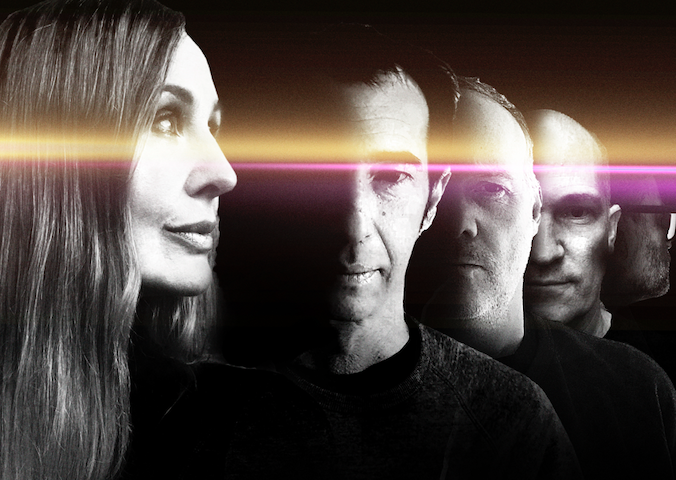
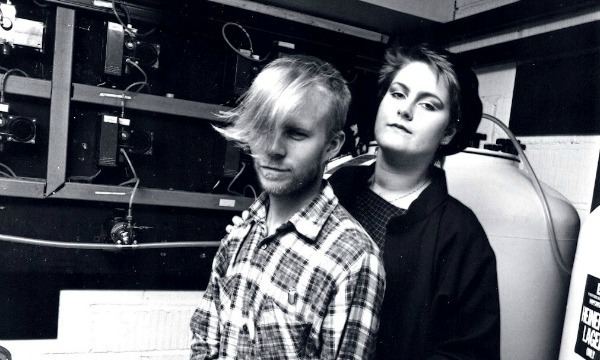
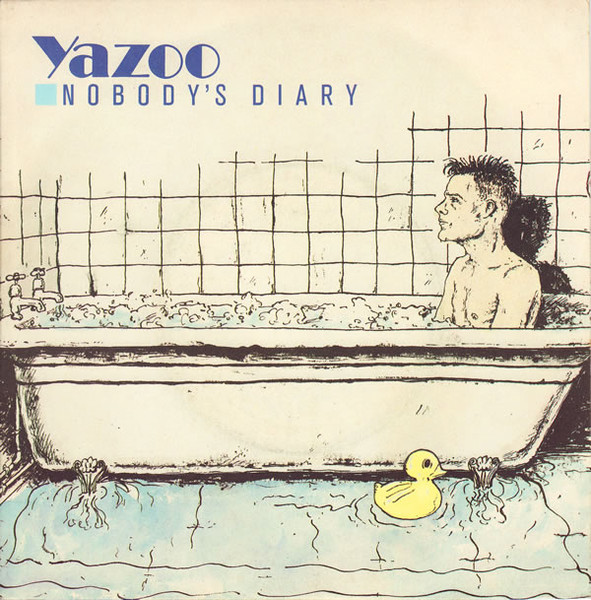
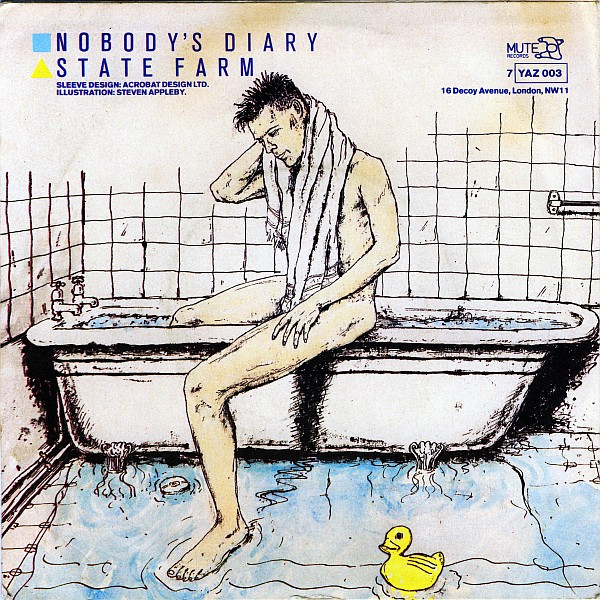
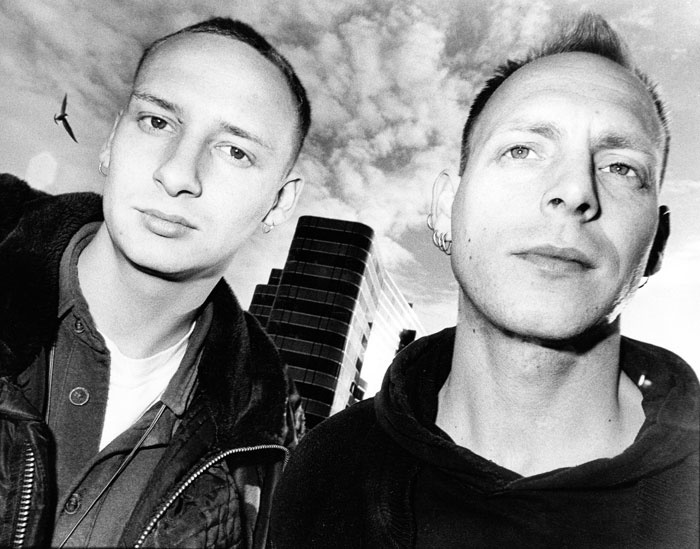
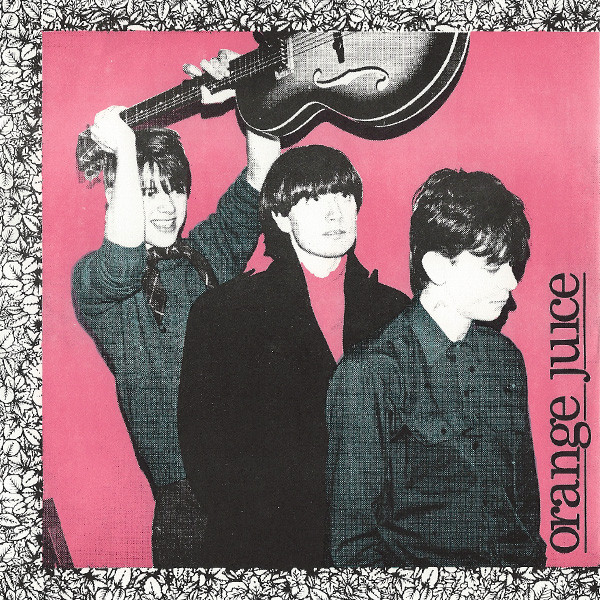
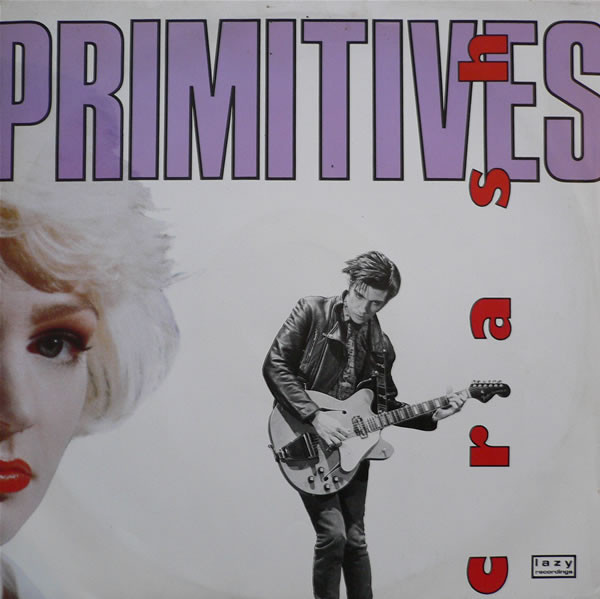
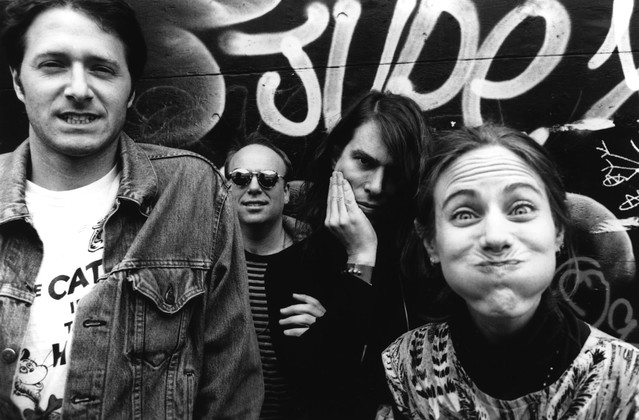
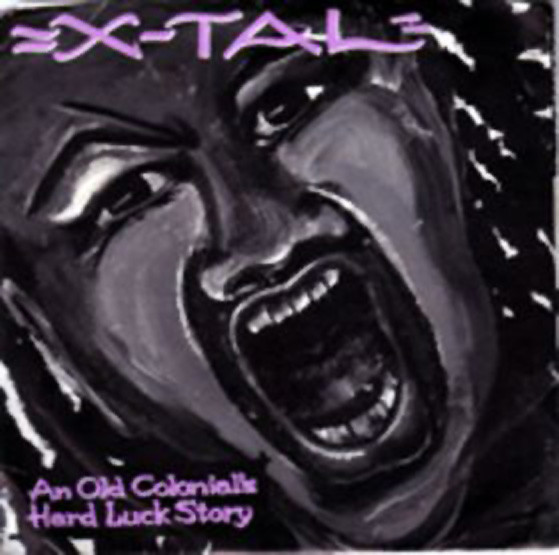
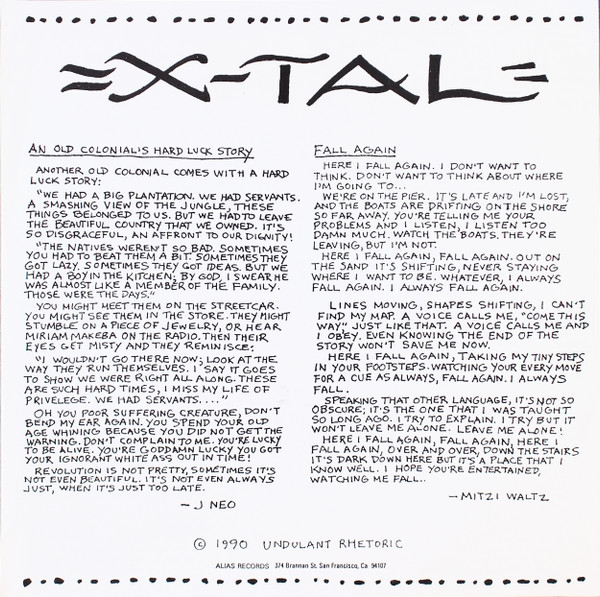

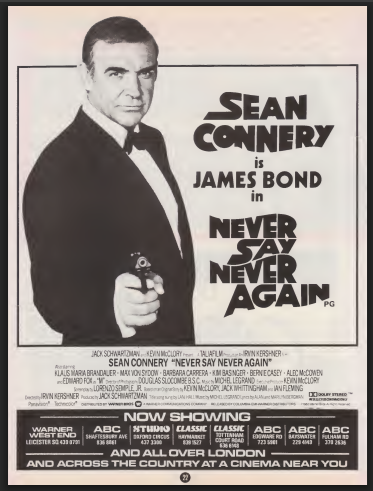
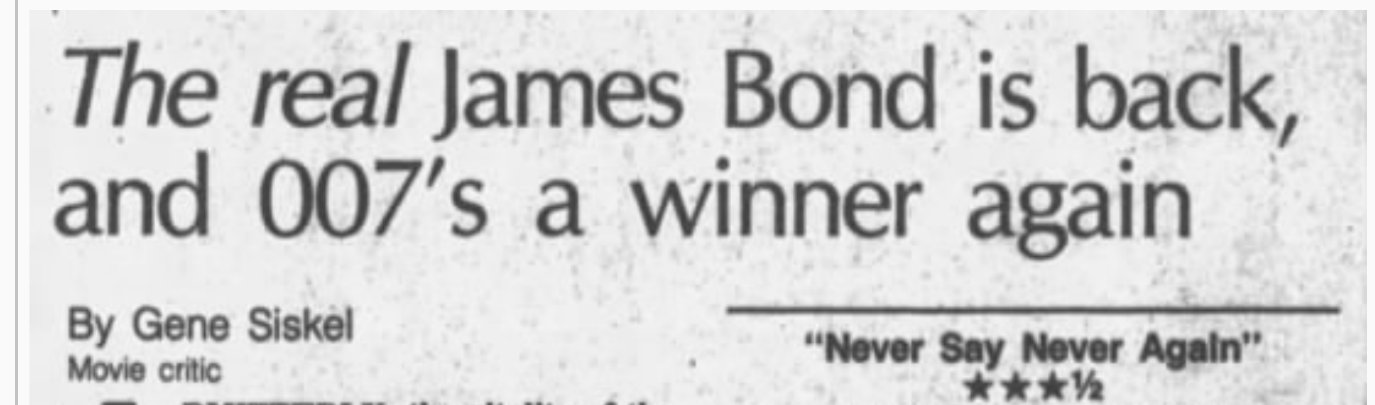
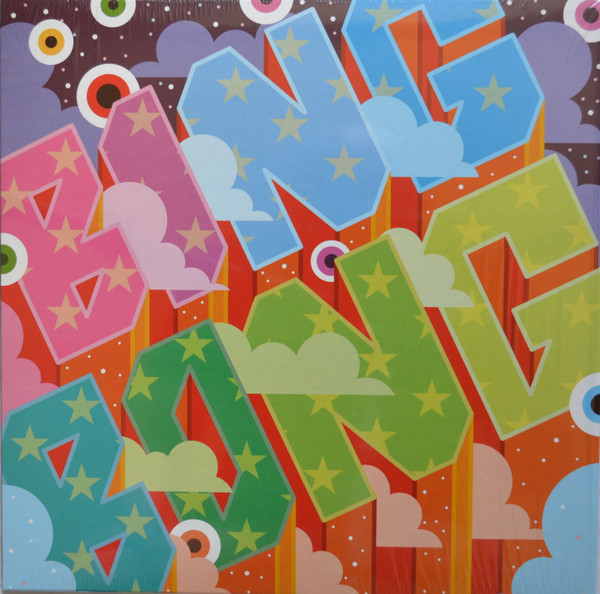
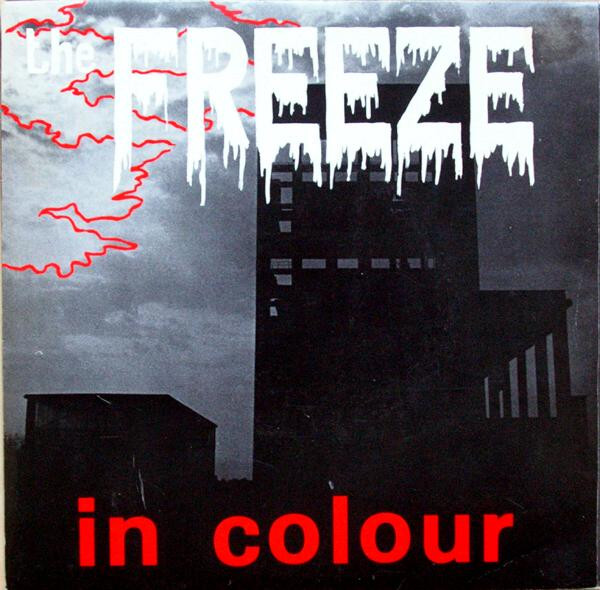
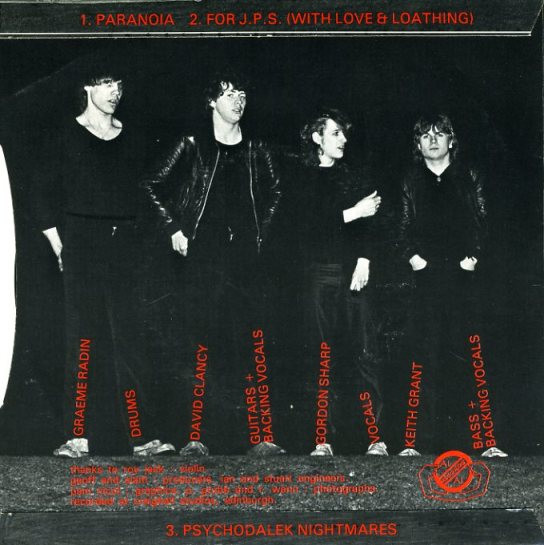
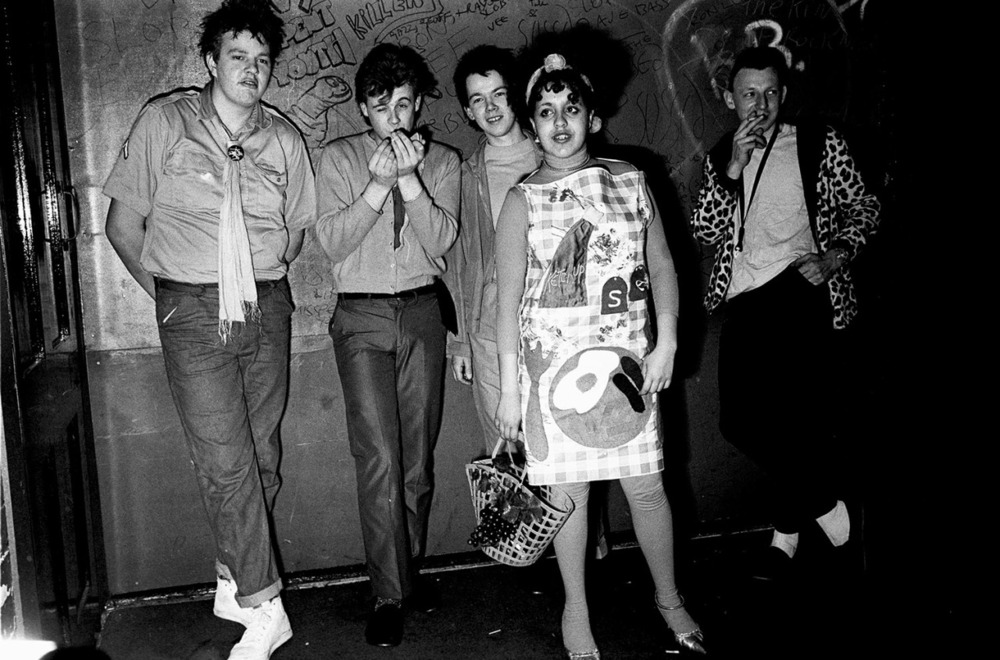
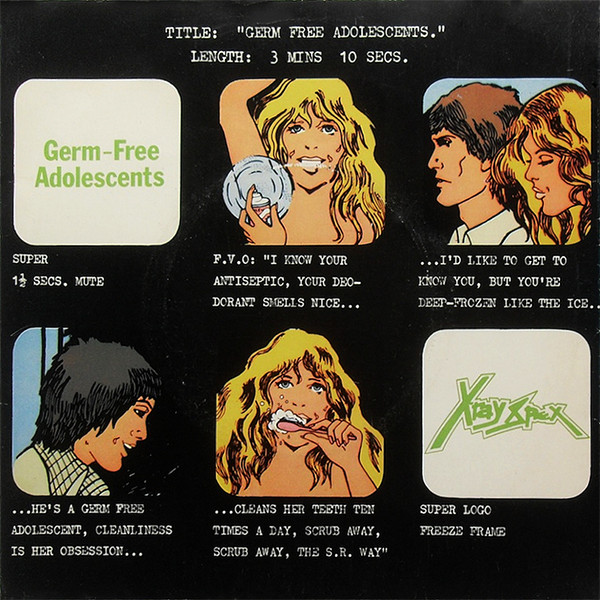
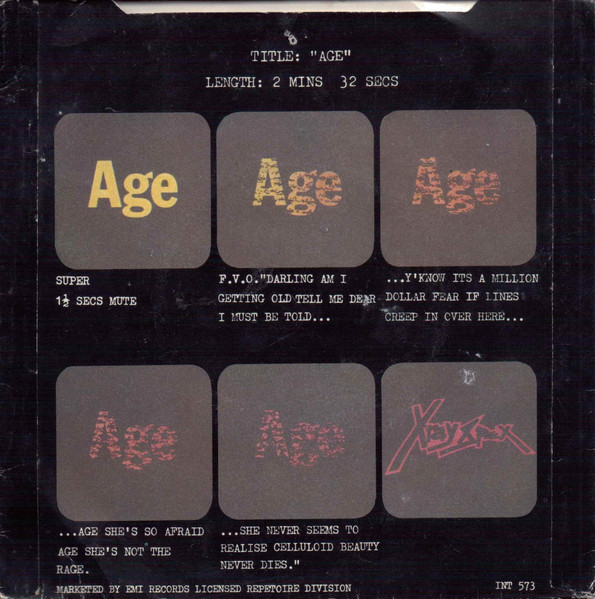
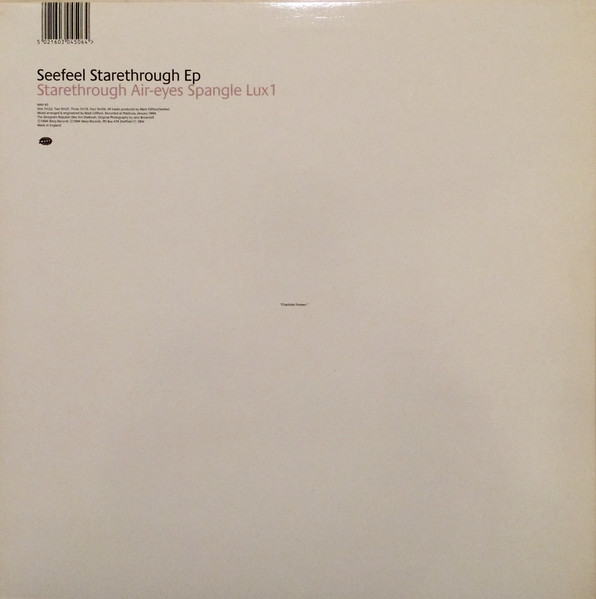
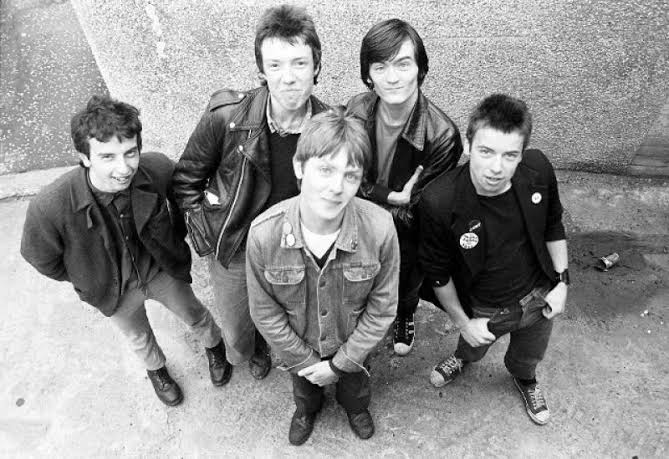
 THE NEW VINYL VILLAIN