60 ALBUMS @ 60 : #50

R-79781-1186401548

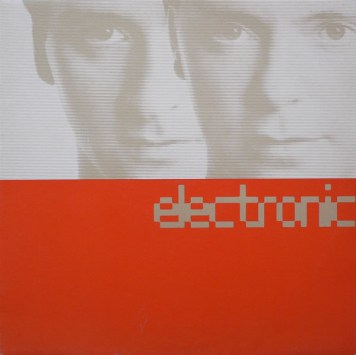
Electronic – Electronic (1991)

Collaborations don’t work.

The sentiments of a tongue-in-cheek song by FFS in 2015….FFS, of course, being the ‘supergroup’ formed by Franz Ferdinand and Sparks.

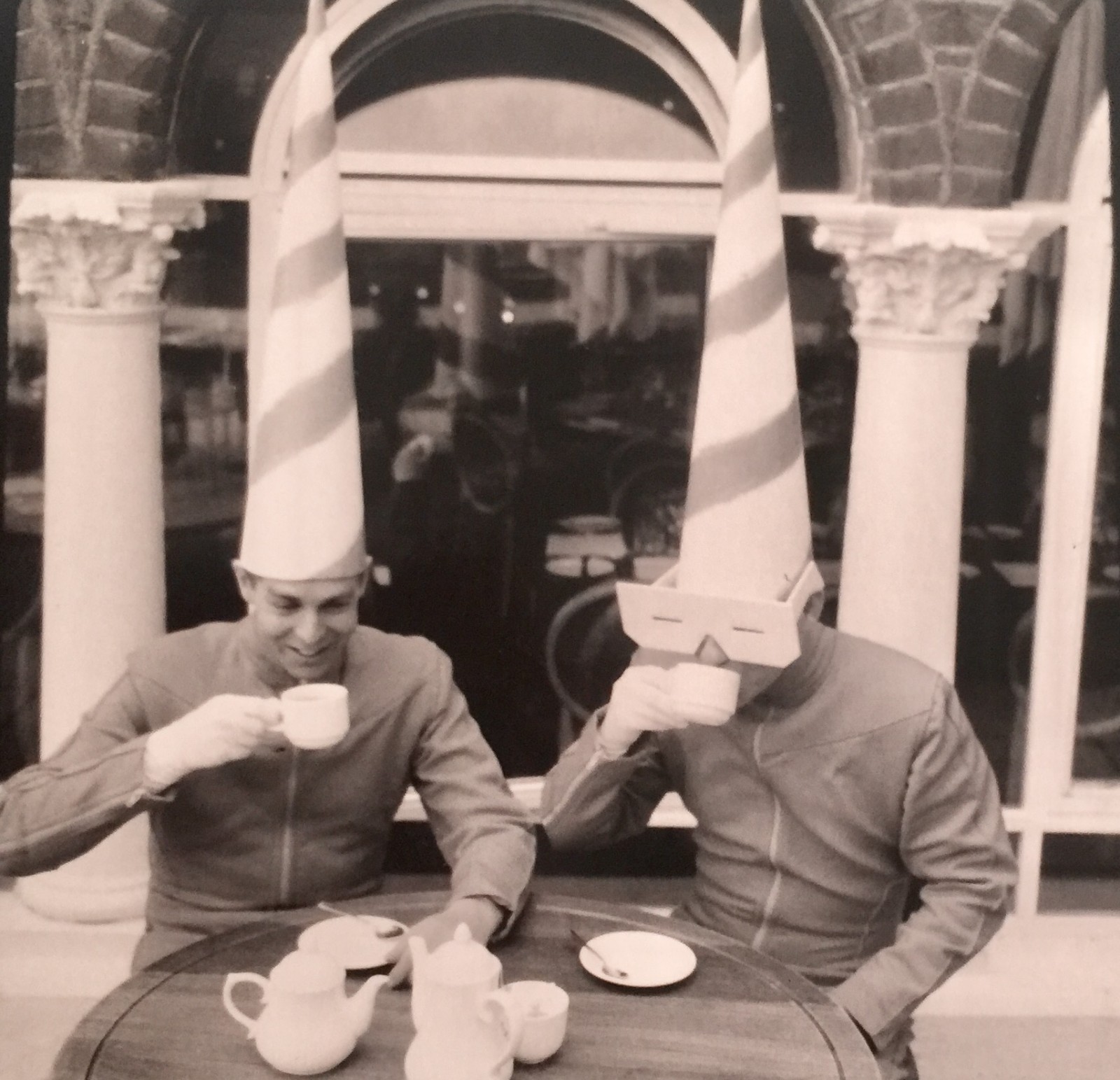
Musically, such coming togethers should be a disaster, with too many egos likely to get in the way.  It wasn’t the case in December 1989, when Bernard Sumner, Johnny Marr and Neil Tennant came together to record and released the sublime single Getting Away With It.  

The music press would provide the occasional snippet of information that plans were in hand for further collaborations under the Electronic banner, but the longer the time passed the more it felt, to those on the outside, that the egos were probably getting in the way. It wasn’t until April 1991 that we next heard from Electronic, with a single which blended the most wonderful things about New Order and The Smiths:-

mp3: Electronic – Get The Message

One month later, the debut album, which included Get The Message, but not Getting Away With It, hit the stores.  As someone who thought the world of Barney and Johnny, I rushed out to pick up a copy.

It hardly left the CD player for about a month.  I also made a copy onto cassette so that the album could accompany me on the daily commute to and from Edinburgh.  And later in the year, shortly before Christmas, when they played a very rare live show at the Glasgow Barrowlands, I made sure I got there early to be right at the front, worshipping literally at their feet (Johnny’s in particular).

I know I came to this album pre-judging that it would be nothing short of a triumph.  There were even occasions as I played it so often in 1991 when I thought it was better than anything else either of the two main protagonists had been involved in.  I really did consider it to be a perfect record.

Time has passed, and my initial giddy excitement has dissipated slightly.  I still love and adore the debut Electronic album, but I do fully accept and acknowledge that the protagonists have made better, more influential and more enduring records. Spoiler alert – this isn’t the last time Barney or Johnny or Neil appear in this rundown.

JC

60 ALBUMS @ 60 : #51

R-1747139-1520151438-2344

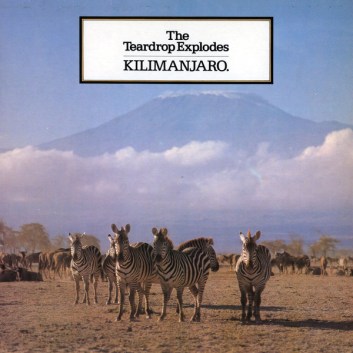
Kilimanjaro(reissue)-The Teardrop Explodes (1981)

Yup.  I’m happy to admit that the record label got it right when it decided that the debut album from The Teardrop Explodes should be reissued with the inclusion of the big hit single, even if they did choose to house it in an appalling sleeve.

Kilimanjaro was originally released in October 1980.  It entered the chart at #35 in its first week, before it tumbled out of the Top 75 over the next three weeks.  This wasn’t too difficult to understand as the band were very much a cult act, known primarily for their time with Liverpool-based Zoo Records prior to signing with Mercury.  Their first single for the major label, When I Dream, had been released just prior to the album but failed to make the Top 40.

In January 1981, the band released a new single, Reward, which, unusually at the time, wasn’t on the album.   Reward proved to be a smash hit, going all the way to #6.  Its success did have a positive impact on the sales of Kilimanjaro, as the album re-entered the charts at #36 in the same week that Reward peaked as a single.  But the fact it wasn’t to be found on the album was likely a factor in it again quickly dropping out of the Top 75.

The record label returned to the debut for the follow-up single, with the re-release of the remixed version of Treason (It’s Just A Story), the earlier version of which had been the final single ever released on Zoo Records.  It was also a Top 20 hit.

It was around this time that Mercury hit upon the idea of doing a different pressing of Kilimanjaro.   Reward was added to Side A in between what had been the fourth and fifth tracks.  Some tracks were remixed, while a further two minutes were added to the album’s final track, When I Dream, taking it all the way to a psychedelically fantastic seven minutes plus.

*Big thanks to Fraser for correcting things in the comments section.   The extra two minutes were only added years later with a CD reissue….that’s the version I have on the hard drive, and so made the schoolboy error!! 

The biggest change, of course, came with the sleeve. The picture of the band being replaced by a photo of a herd of zebras in front of Mount Kilimanjaro.   It certainly had enough people picking it up and thinking it was a brand-new album, as the next thing was that it was back in the charts, and all the way up to #24.

Thinking back on it, the success of Treason probably coincided with a period when the album was a bit more difficult to find in the shops, with no further pressings being made available to replace any sold stock, with everything on hold till the re-release had been pressed up and distributed.

No matter the reasons and the timing, it’s fair to say that the addition of Reward alone made the re-release a more rounded and essential purchase.  The purists might not like it, but so what?

mp3: The Teardrop Explodes – Reward

Kilimanjaro is an excellent album, and that’s why I’ve found a place for in this rundown.  It’s worth remembering that this was the work of a very young group of musicians – Julian Cope was coming up for his 23rd birthday when it was first released – and there’s a lot more pop and melody on show than you might come to expect if your point of entry was the modern day Cope.

All told, there were six tracks on it released as singles, whether by Zoo or Mercury.  The ones that had flopped could easily have been hits a second time around, but given that the band had already recorded another album’s worth of material in 1981, it was easy enough to move on.

It really did seem that the Teardrop Explodes had the pop world at their feet when the new single Passionate Friend was released in August 1981. Little did most fans know that things were unravelling at a scary pace, thanks to Julian’s ever-increasing devotion to LSD.

JC

(BONUS POST) THIS COULD SPARK A DISCUSSION…..

Debate-Team-800x500

Intro from JC.

I’m very proud that a wonderful TVV community has built up over the years, and as I’ve said on numerous occasions, there is every possibility that I’d have given up the ghost by now if it wasn’t for the feedback/contributions from so many people.

I’ve never once turned down an offer of a guest posting, and I’m not going to start now.

Incidentally, it was my choice of music today.

Cancel-Culture Club

A GUEST POST by FRASER PETTIGREW

The composer Richard Wagner was an unashamed anti-semite, committing the most repugnant prejudice to print in both published and private writings. Decades after his death in 1883, his music was championed by the Nazis and used to glorify the horrors of German fascism. For many people, both Wagner’s own bigotry and his posthumous association with Nazism render his works unlistenable. Despite all this, he is almost universally recognised as one of the most important and influential figures in the history of music, without whose innovations the sound of our world might have developed very differently. His operas are a central part of the canon of western classical music, and he is revered today almost as much as he was over a century ago.

Risking a clang of bathos here, it could be said that Morrissey stands in a similar relation to modern pop music. His influence and innovations are not of comparable stature, but his now undeniable racism places fans of his music in an invidious and depressing position. How can people listen to songs that once defined and enriched their lives without conferring respectability on a man whose every utterance now disgusts them?

Neither Morrissey nor Wagner produced music that is explicitly racist, even though there is much post-hoc reappraisal of songs such as Bengali in Platforms, Asian Rut and National Front Disco. It was possible at the time for Asian fans to read those songs as sympathetic laments, and as I will argue below it is still possible for us all to do so, despite Morrissey’s more recent and unequivocal pronouncements.

All the same, it feels much easier to listen to Parsifal or the Siegfried Idyll than ‘How Soon Is Now’ or ‘Hold On To Your Friends’. The distance of time is undoubtedly significant. Wagner is long dead and not earning royalties from any of my purchases.

But musical genre has a lot to do with it too. It is much easier to divorce Wagner the anti-semite from his operas than it is to separate Morrissey the racist from any of his music because persona and performance are so much more important in rock and pop than in classical. It’s Morrissey himself who is singing to us when we listen to The Smiths and a huge part of the appeal of pop music is our admiration of and identification with the performers. When you become a fan of a group or a singer you buy in to the look, the personality, the sense of who these people might be and how you can make yourself more like them. Every star is a personalised dream of who we might like to be ourselves. Cool, talented, creative, adored by thousands… Nobody feels like that about Harrison Birtwistle or Michael Tippett because they were foosty old nerds. Consider the tragic uncool of Nigel Kennedy. I rest my case.

I am a firm believer in appreciating art without need of biographical details about the artist, or even knowledge of what they intended by their work. If the work enables you to arrive at an interpretation that illuminates, entertains or moves you, then that’s all that matters. But it’s hard to keep that up in the realm of pop music for the reasons above. It’s hard to be completely ignorant and not at all curious about who made this music and it’s natural to want to admire the person who made something you like.

Having said that, I reiterate that instinctively I want to be able to listen to the great creations of these people without guilt, and with a full focus on what the songs themselves make me feel. What we need to realise is that our responses to these songs are personal to us, not actually dependent on the people who made them or what they are really like, despite that impulse to identify. In the same way that young children will request specific stories for bedtime reading because they articulate feelings, anxieties, or aspirations that they harbour subliminally, we reach for particular songs and music because they capture something in our own lives or thoughts and give them expression more perfectly than we could manage ourselves, even though it may not be what the artist meant by it.

Once a work of art is out there in the world it takes on a life of its own. The artist can no longer fully control what the work means, even if they had a very specific meaning in their own minds when they made it.

An example of this for me is the Velvet Underground‘s ‘I’m Waiting For The Man’. This song was on rotation for me as a 15 year old, not because I aspired to be a New York junkie, which is what the song is about, but because I interpreted ‘waiting for the man’ in the sense of waiting to become a man, an independent adult with the freedom of personal responsibility. The song’s agitated, insistent rhythm was my impatience to be grown up and flown from the nest, not Lou Reed‘s strung-out desperation for another fix. It doesn’t matter to me what Lou Reed meant, the song will always be my coming-of-age anthem.

Listening to Morrissey won’t make anyone a racist. Nobody who grew up in love with The Smiths became racist because of anything Morrissey sang, nor will revisiting that music make you racist just because the mask has now fallen from Morrissey’s face. If you focus on the music and the memory of what those songs meant to you then you will continue to experience the humane, humourous, sensitive exposure of adolescent self-pity, the poignant loneliness, the yearning, the farce, the comic arrogance, the ironic love of life’s great disappointments. You will also continue to understand that Morrissey is a racist fuckwit. In fact, you owe it to yourself and to the rest of the world to prevent Morrissey taking those songs away from you.

That position may well be possible for you to achieve, but will you be able to resist the wrath of others who take a different view? One of the strong distinctions between our time and Wagner’s is the power of ‘cancel-culture’. Wagner wasn’t cancelled because when he was alive, anti-semitism was as socially acceptable as holding a door open for the ladies. Nowadays, if you transgress, you will be tried by a judge and jury of Twitterati and no argument will be brooked. I dislike using the epithet ‘woke’ in a negative sense, but sadly its proponents have made it all too easy for reactionary bigots to turn it against them through their rabid absolutism. To the woke, all is black and white, to coin a phrase, and nuance, subtlety and ambivalence are seen as tools of the fascists to undermine their comforting moral certainty.

So if the forces of the woke decree that Morrissey is to be erased, then good luck with arguing for the need to reclaim his creations of beauty and humanity. You may well end up cast out along with him. Your insistence on the value of anything Morrissey brought into the world will be like Winston Smith‘s happy memory of playing snakes and ladders with his mother, recalled at the end of Orwell‘s 1984. It will be punished out of you, it will be a false memory, a lie.

We should all question ourselves about where our own personal red lines are. What are the things that we find intolerable and inexcusable, and how should we react to them? We need to be able to explain and justify, to ourselves and to others, what our views are, because we have to understand our morality, not simply adopt it wholesale from another’s insistence. Not to do our own thinking is to submit to another sort of tyranny and it leaves us incapable of making sound judgements when confronted by new instances of social or moral transgression.

How else can you deal with the fact that Wagner had many Jewish friends, supporters and colleagues, including a long term friendship and professional association with the conductor Hermann Levi. It was Levi who conducted the first performance of Wagner’s final opera Parsifal in 1882, although in a demonstration of how obnoxious Wagner could be, he tried to insist that Levi be baptised before the performance. More recently, the Jewish pianist and conductor Daniel Barenboim attempted several times to perform Wagner’s music in Israel, and did so to a private audience in 1991 and again to a public concert audience in 2001. I doubt that Wagner will be high up the playlists of many woke warriors, because those kind of moral complexities are too hard for them to compute.

Similarly, poor old Morrissey – no, I take that back, Morrissey doesn’t deserve any of our pity – stupid Morrissey. For someone who once seemed able to encapsulate Englishness in a couple of lines he seems incapable of understanding the country’s moral burden born out of its history of colonial exploitation, slavery and cultural oppression. As V.S. Naipul used to say every time someone suggested that immigrants should ‘go back where they came from’, “we are here because you were there.” Who now has more right to declare that “England is mine and it owes me a living” than the children of Indian or Caribbean immigrants whose ancestors were screwed out of their birthrights by English imperialists?

In conclusion, I am against banishing Morrissey’s works to the same dark and soundproof cupboard that holds everything ever recorded by Gary Glitter and R. Kelly because the works themselves still have the same positive humane values for me that they always did. I am against giving any more indulgence to Morrissey himself, and against doing anything that will enable him to profit greatly from his work any more. So, making some of them audible here on this blog seems a perfect way of achieving both of those things.

mp3:  Morrissey – Hold On To Your Friends

mp3 : Richard Wagner – Ride Of The Valkyries

FRASER PETTIGREW
60 ALBUMS @ 60 : #52

R-455845-1639566074-8681

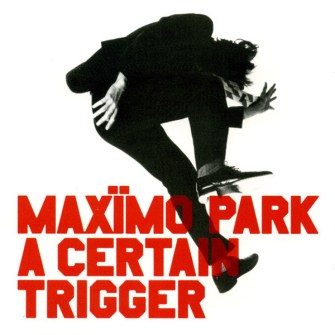
A Certain Trigger – Maxïmo Park (2005)

For the best part of a decade, beginning just before the turn of the century, a great deal of the music that I was enjoying came through the airing of videos on various satellite TV music stations.  There must have been maybe 20 or so stations to choose from, albeit the majority continually aired promos I had little time for.

MTV2 Europe was really the channel of choice given that it heavily focussed on indie music, occasionally airing promos from years gone by but primarily concentrating on the music being released by new and emerging bands.

Maxïmo Park were probably the best example of a band who found their way into my heart courtesy of the television.  They had released a number of singles that were on heavy rotation, all of which seemed to be better than the last.  They did some interviews for the channel and came across as hard-working decent, level-headed individuals with no hints of arrogance or delusions of grandeur.   But then again, that seems to be typical of most people who come from Newcastle in the north-east of England.

I bought the debut album a couple of weeks after its release in May 2005. I already knew three of its tracks through the airing of the promos, and was delighted to discover that the quality was very much maintained across the other ten songs.  It was the sort of guitar-led indie-pop that had always appealed to my tastes, going all the way back to the late 70s.

Almost every song was written and recorded as if it could be a fast-paced and energetic single, and yet no two songs sounded the same. My first thoughts were along the lines of them being the 21st century equivalent of Buzzcocks given that many of the song themes were about love and relationships not going quite as smoothly as planned.

The other really charming factor was the way that Paul Smith sang in his strong, local accent and so offered something different in the world of the new indie-pop/rock where even the best UK bands seemed intent on mimicking their American counterparts.

mp3: Maxïmo Park – Apply Some Pressure

One of the reasons that I’ve maintained a long-love for A Certain Trigger over many of the similar type album released in the mid-noughties is that Maxïmo Park turned out to be a great live band, offering up no less than two great experiences in a very short space of time. I first saw them in December 2005 when, such was the demand for tickets, that the show was moved late on from the planned venue of the Queen Margaret Union at Glasgow University to the Barrowlands.  It was probably the biggest show the group had played, but if they had any nerves, they didn’t show.  A barnstorming run through the album, with a few b-sides and unreleased songs thrown in for good measure, made for a great night.

They were next in the city in February 2006 as the headliners of the NME Awards Tour, a four-band tour of the UK, with the Glasgow venue being the Carling Academy.  Proceedings were opened by Mystery Jets, who were followed by We Are Scientists.  Next on were Arctic Monkeys, who had taken the indie-world by storm in the period since the tour had been announced.  Indeed, the Glasgow show came very shortly after their album had become the fastest-selling debut album in British history, with more than 350,000 copies sold in the first week.

Most ticket-holders were there for the support act and the audience had thinned out by the time Maxïmo Park took to the stage.  It would have been easy for them to take the money and go through the motions – but they really upped the ante and showed that while Arctic Monkeys were more than decent on stage, they still had a lot to learn in terms of putting on what would be called a show. Anger really did prove to be an energy that night.

I’ve not maintained the same level of interest in Maxïmo Park over the subsequent years beyond their third album, which is probably to my detriment. If anyone out there has a knowledge of everything the band has released, then a guest ICA would be really appreciated.

JC

PET SHOP BOYS SINGLES (Part Twelve)

7f056eaa507e11c2fd3a637411bda62c

Comic Relief is a British charity that aims to raise money and awareness for good causes all around the world. In support of the charity, a Red Nose Day event is held every two years. This involves a live television broadcast featuring a host of comedians and celebrities.  Since 1986, the event has also been supported by the release of a charity single, often with a comedy element included. 

In May 1994, the Pet Shop Boys accepted the approach to get involved.

R-144980-1187993056

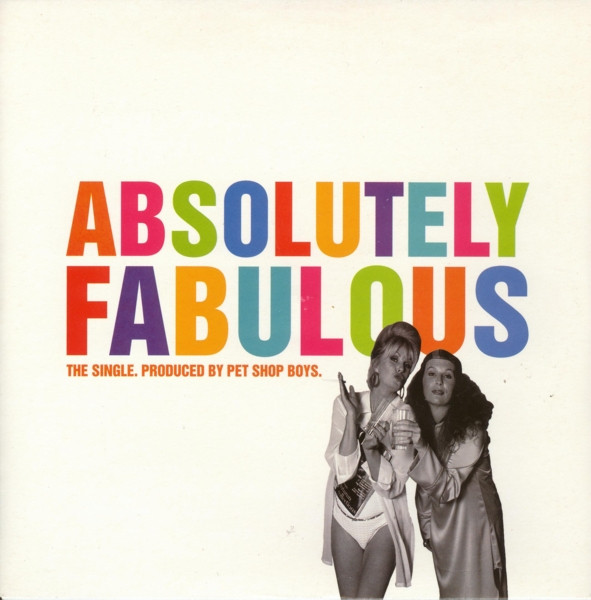
The song was called Absolutely Fabulous, and it was released under the artist name of Absolutely Fabulous, based on a sitcom which starred Jennifer Saunders and Joanna Lumley. It is set to a tune written by PSB  and features snippets of dialogue taken from the show as well as some additional lines recorded in the studio.   Neil and Chris were huge fans of the sitcom and were delighted to be involved, and in response to some criticism which was thrown their way, Neil said:-

“I know some people are horrified that we did a charity record, but it just seemed a way of dealing with it. It made it simple, because we did the record for fun, not as a major artistic statement”.

7″

mp3: Absolutely Fabulous – Absolutely Fabulous
mp3: Absolutely Fabulous – Dull Soulless Dance Remix

It reached #6 in the singles chart. The b-side extends to eight minutes in length…..

R-115866-1610806001-5789

On 29 August 1994, a fifth and final single was taken from Very, eleven months after the album had been released.

As with ‘I Wouldn’t Normally…..’, the version issued as a 45 was a substantially different mix from that found on the album, with production input from Julian Mendelsohn who had previously worked with PSB as far back as 1987, and Jam & Spoon, a German electronic duo who were enjoying chart success as musicians and on the production side of things.

This is one of the singles that I can take or leave.   It comes across as PSB by numbers, but I suppose it sounded great in a club setting.

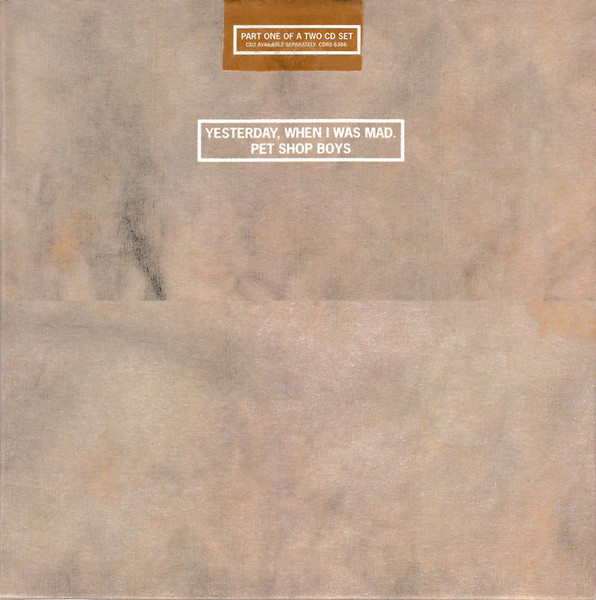
mp3 : Pet Shop Boys – Yesterday, When I Was Mad

It was the first PSB single not to be released on 7″vinyl, albeit a 12″ version was made available alongside 2 x CD singles and a cassette single, across which three new songs could be found alongside various remixes of ‘Yesterday…..’and a swing version of Can You Forgive Her.  

CD1

mp3: Pet Shop Boys – If Love Were All

In which Neil and Chris go all west end theatre on us.  It’s a cover of a song written by Noel Coward in 1929, first appearing in the operetta Bitter Sweet.  It’s rather a lovely song about loneliness, but it had to be said that Neil’s vocal limitations don’t do him any favours.  You’ll find better cover versions out there…..

CD2

mp3: Pet Shop Boys – Some Speculation

I’m not sure if this was a song held over from the Very sessions or had been worked up in the intervening period.  It’s a long song, some six-and-a-half minutes long, and the folk assisting with the production and engineering side of things had not been involved with the album, which makes me lean towards it being a more recent work.   It’s a more than decent b-side, albeit without any of the catchiness and hooks that make it an essential PSB song, but a worthy reward for fans happy to spend money on yet another single, the sixth all told in a 12-month period.

Cassette

mp3: Pet Shop Boys – Euroboy

Also made available as a track on the European version of the CD single

One on which both Neil and Chris’s vocals can be heard, with the latter using a vocoder.   It’s a track that, if Neil’s vocal hadn’t been so recognisable, could have been attributed to any number of club acts who were enjoying chart success in the mid 90s (none of whom I can name off the top of my head!!)

Yesterday, When I Was Mad got to #13 in the UK singles charts, but maybe the best indication of where the PSB sounds had been increasingly heading was that it reached #4 in the Billboard Chart for US Club and Dance.

1994 ended with PSB undertaking a six-week ‘Discovery’ tour in which they played shows in Singapore, Australia, Puerto Rico, Mexico, Columbia, Chile, Argentina and Brazil.

1995 proved to be very quiet with just the one single released, on 31 July, and even then, it wasn’t new material.

R-114831-1588671068-4546

Paninaro ’95 was, a new version of the song they had first recorded in 1986, and was based upon the new arrangement  Chris performed on the ‘Discovery’ tour, along with his new updated lyrics.

mp3: Pet Shop Boys – Paninaro ’95

It was also part of the promotion for a new compilation album, Alternative, a 2xCD set featuring 30 b-sides

Paninaro ’95 was issued on 2 x CDs, the first of which had five different mixes of the single, while CD2 had one new track:-

CD2

mp3: Pet Shop Boys – Girls and Boys (live in Rio)

PSB had previously produced a remix of Girls and Boys for Blur, and so enjoyed the process that they played a cover version during the Discovery tour that had been undertaken in late 1994. 

The single, despite being such an old tune, reached #15 in the UK singles charts, and was another to peak at #4 in the Billboard Chart for US Club and Dance.

PSB proved to be much more active and more prominent in 1996.

JC

SATURDAY’S SCOTTISH SONG : #350: TRAVIS

travis

Isn’t it amazing how young they all looked when they were doing the promotional rounds for the  debut album?

Some of the members of what eventually became Travis actually started playing music together as far back as 1990 when they were at school.  The first name they played and recorded under was Glass Onion.   Theirs is a story of finding success the hard way, a number of years grafting away to refine and improve their playing and songwriting abilities, taking a lot of flak and criticism along the way.

Things began to change dramatically in 1996 when the decision was taken to reduce the size of the band by asking two of its founding members to leave, and at the same time, recruit a new bass player.  The same four musicians – Fran Healy (vocals/guitar/piano), Andy Dunlop (guitar), Neil Primrose (drums) and Dougie Payne (bass) have been together ever since.

Having attracted the attention of Andy MacDonald, formerly of Go! Discs and now the founder of Independiente Records (a minor label backed by the resources of the multinational Sony Records), they signed a deal that led to the release of the album Good Feeling in 1997.

It was an indie-rock record, one that wasn’t out of fashion with the times – Noel Gallagher declared himself a fan and Travis went on tour as support to Oasis – but it had very little to make it really stand out from the crowd and sales weren’t huge.

The Man Who was the next album, released in 1999.  It was a different beast altogether from the debut, with many of its songs being more downbeat, almost acoustic in nature.  But still, there was no real audience for their music.

Glastonbury 1999.  After two years of the festival being played in monsoon like conditions, the sun shone for the most part in 1999.  Except when Travis took the stage, which made it really ironic when they played the opening notes of their minor hit single Why Does It Always Rain On Me?.  The sort of moment which is loved by the media and the BBC , the broadcaster of choice at the festival, were all over it, turning the performance into a news story. And, in those pre social media days, where TV led, the newspapers followed.

Travis were now a household name.

The Man Who started to sell in greater numbers, eventually reaching #1.  The Brit Awards of 2000 declared it album of the year, while Travis took the best band trophy home, handing immediately to the landlord of the Glasgow city centre pub above whose premises Glass Onion and the early incantation of Travis had been allowed to graft away.  The trophy remained on display for many years.

It’s for reasons like this that it’s almost impossible to have any dislike for the band.  Their music might not be inspiring, but they are all really good people who, over the years, have put much back into the music scene in Glasgow and done some quietly effective work to bring positivity into poor and deprived communities.

They are now nine albums into their career, and while they don’t get anything like the audiences or attention they did at their peak, which was unarguably with the release of The Invisible Band (2003) which went on to sell 1.2 million copies in the UK alone, they still sell out decent sized venues, especially round these parts

mp3 : Travis – All I Want To Do Is Rock

The debut single on Independiente in June 1997.

It entered at #39 and dropped the following week to #73.   Success was still two years away.

JC

60 ALBUMS @ 60 : #53

R-1392922-1485800179-3994

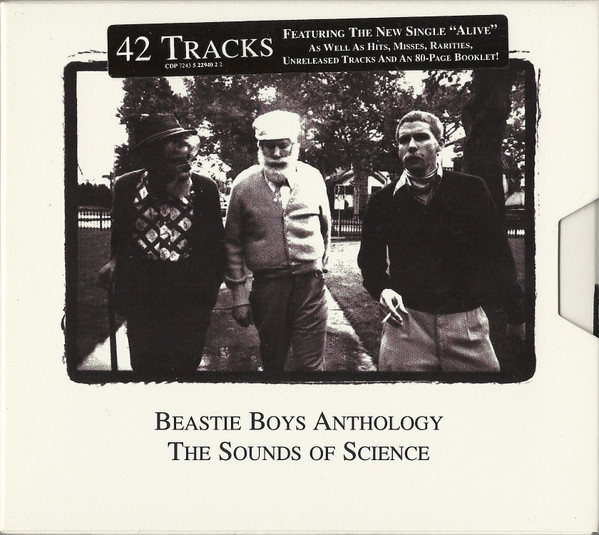
Anthology : The Sounds Of Science – Beastie Boys (1999)

Here’s the thing.  I came into this exercise with the intention of the rundown to consist only of 60 original studio albums.  Next to Beastie Boys, I typed up ‘Paul’s Boutique’ and thought whereabouts in the Top 20 it might eventually place.

The problem was that I didn’t buy Paul’s Boutique at the time of release in 1989. Indeed, it wasn’t until Hello Nasty (1998) that I ever made any timely purchase of a Beastie Boys album.

I was already weighing up whether any  ‘best-of’ collections or indeed box sets should qualify for consideration when the Beastie Boys created this dilemma.   In the end, I decided that if any compilation was listened to on a regular basis from start to end, then it was permissible. Which is any Anthology : The Sounds Of Science is in the rundown at #53, a position far lower than Paul’s Boutique would have obtained.

This particular release contains 42 tracks, of which around one-third were what could be described as hits.  The rest consists of album tracks, b-sides and some material that had previously been unreleased.  It’s not offered up in any chronological fashion, and the best-known songs are scattered liberally throughout.

It came out a year after their fifth studio album, the aforementioned Hello Nasty.  It would have been an easy cash-in to shove out a single disc of all the popular songs with minimum attention paid to the artwork and packaging. Indeed, such a release would likely have generated more sales, as some would be-purchasers would have been put off by some reviews that concentrated on the unreleased material on the basis that quality control was the reason a lot of the songs hadn’t previously seen the light of day.

Instead, the two discs came beautifully packaged, complete with a lovingly written 80-page booklet offering up the backstories of each track, in the words of one or other of Adam Yauch, Michael Diamond or Adam Horowitz, along with many previously unseen photographs.  Sure, there were bits on both discs that seemed a tad superfluous, but not at any time should they be regarded as self-indulgent.  No Beastie Boys album had ever been a straightforward listen, so why should this collection be any different?

mp3: Beastie Boys – Shadrach

Beastie Boys are a rare example of a group winning me over after early scepticism.  I wasn’t enamoured by the debut album, Licensed To Ill (1986) nor its early singles.  It was for this reason, as much as any other, that I paid no attention to Paul’s Boutique when it hit the shops.  I wasn’t alone in this, certainly in the UK, as the album didn’t sell all that well.  Their next album, Check Your Head (1992) didn’t even make the Top 100 over here and to all intent and purposes, the trio had been dismissed and forgotten.

It was the release of Ill Communication (1994) and the relative success of the singles Sabotage and Sure Shot that transformed their fortunes over here.  The end of year write-ups were full of praise, and so I made sure I got Santa to deliver me a copy.  Things being what they are at such busy times (I had just got myself a new job in Glasgow) that it took me a few months to actually sit down and give it a proper listen.  It proved to be the album that had me reassessing things and eventually going back to listen to what I had missed.

JC

(BONUS POST) : ONE HUNDRED AND ELEVEN SINGLES : #013

aka The Vinyl Villain incorporating Sexy Loser

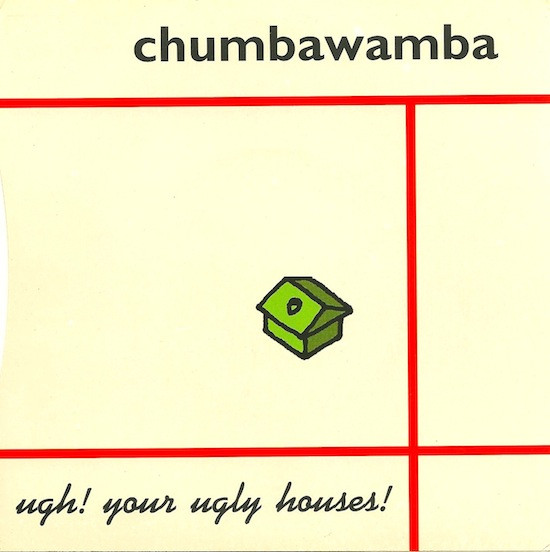
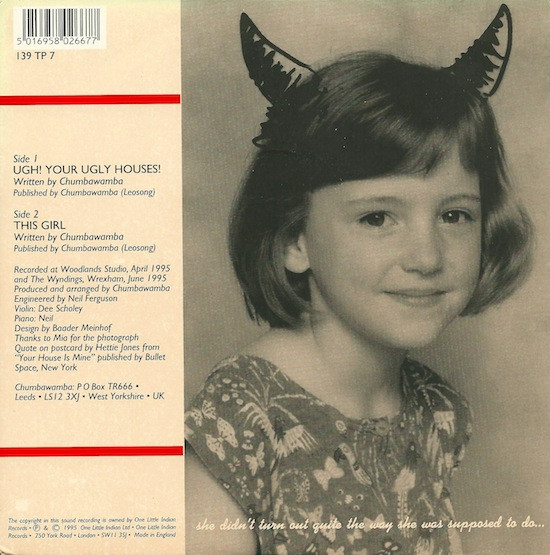
#013– Chumbawamba – ‚This Girl’ (One Little Indian Records, ’95)

Chumbawambadoc-news

Hello friends,

my anarchistic career solely consists of listening to ‘The Feeding Of The 5.000’ by Crass. I should admit I didn’t listen to it when it came out in 1979, I only listened to it some five years later. But I listened to it very closely indeed (if I exerted myself, I would still be able to recite most of ‘So What’, I reckon), which probably doesn’t turn me into being the next Federico Garcia Lorca, but hey, I experienced more anarchy than most of you lot ever did, right?!

And because I was so hardcore and in the thick of the scene, I never cared a great deal for the only other anarchistic band on the planet: Chumbawamba. They started out in 1983 and always pretended to be the most anarchistic thing on earth. At least much more anarchistic than Crass ever were … so they said. They had their own little label, Agit Prop, until the early 90’s. Then they switched to One Little Indian Records, home of The Sugarcubes, and probably this move made them a little better known. This and Peel playing a few tunes from their 1992 ‘Shhh’ – LP, which I bought myself because I thought what I heard (‘Behave!’ and ‘Look! No Strings!’) was ace. But the album disappointed me, if I remember correctly, and I sold it pretty quickly to some poor soul.

Two years later, in 1994, Chumbawamba, still being as anarchistic as possible, teamed up with hip-hop labelmates Credit To The Nation. There was ‘Enough Is Enough’ (which was good throughout) and perhaps some other song, I forgot about the details. Then, one year later, they released their album ‘Swingin’ With Raymond’. I would never have known about its existence, hadn’t a young lady (Petra) I was briefly together with at that time, made up a tape for me which included two songs from this album. First ‘Not The Girl I Used To Be’ (absolutely fantastic, should you never have heard it) and, secondly, today’s choice:

R-1539642-1283212754

R-1539642-1283212765

mp3:  Chumbawamba – This Girl

And, as you can tell, if you look at the sleeve above, it only was the B-Side of another song from the album. Quite why they didn’t release this the other way round will always remain a mystery to me. Then again, who cares … I got it as a 7”, that’s all that counts!

The rest is, as they say, history: after ‘Swingin’ With Raymond’ Chumbawamba hid under the wings of EMI Records (not necessarily the most anarchistic move on earth, it must be said), where they released ‘Tubthumping’ in 1997. And at this point even younger readers of these pages (if such creatures exist at all), at least if they’re male and go to the football grounds every once in a while, should realize who Chumbawamba are: “I get knocked down, but I get up again /You are never gonna keep me down” … oh come on, I’m sure you know it by heart, don’t you?!

And this tune, ‘Tubthumping’, after nearly 15 years of anarchy, chaos and destruction (to quote The Damned), finally made Chumbawamba a one hit wonder – band. You can argue for hours about whether this success is deserved or not and/or whether having a multi-million dollar hit complies with the international rules of anarchy.

My personal position is very clear: a combo which issues a tune as awesome as ‘This Girl’ deserves everyone’s love, applause and homage …

Take good care,

Dirk

60 ALBUMS @ 60 : #54

R-1020433-1184850729

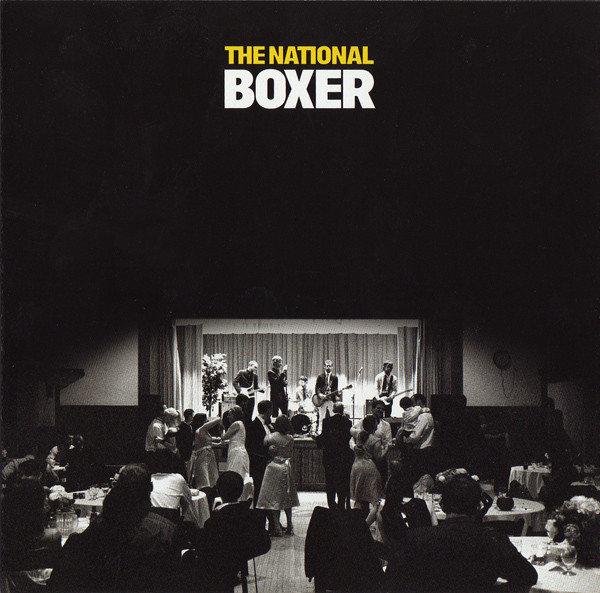
Boxer – The National(2007)

2007 turned out to be an unexpectedly important year in my life.

It was a year that had begun appallingly, workwise, in that I had not long been passed over for a promotion in what could be seen as controversial circumstances thanks to some politicians interfering where they had no right to.   My role in the local authority was nigh on untenable, but given I had done nothing wrong, I had to be found another position within the organisation.

The sideways shift I undertook actually turned out to be the best thing that ever happened, certainly in the long term.  Through an incredible set of circumstances, and really being in the right place at the right time, I was able to later take up a temporary position in Toronto, beginning in June 2007, carrying out a study and analysis of the procedures and processes in place for the Ontario Provincial Elections that were taking place on 10 October 2007

I made the move to Toronto, not taking too much in the way of personal belongings beyond clothes, golf clubs and maybe around 50 CDs. It was a five-month secondment and Rachel stayed back in Glasgow, albeit, along she came for a visit that lasted a couple of weeks.

I soon grew bored with what little music I had brought with me, and so started to browse the record shops of my temporary home city. I found loads of great second-hand stores selling vinyl for what seemed like bargain prices, and so Rachel was instructed to bring over an empty case when she visited that she would then take back with some booty.  This exercise was repeated with a couple more friends who also came over for a visit.

But it wasn’t all second-hand stuff that I ended-up buying.  I was vaguely aware of The National before I went to Canada, in that a few bloggers had been talking them up.  My interest rose substantially when I caught them performing a song on one of the late-night TV chat shows in America (all the US networks broadcast north of their border – I’ve just done a bit of research, and it seem it was the David Letterman show on 24 July). I was transfixed.

I bought all four of their albums on my next visit to a favourite record store.  It  also doubled up as a place to buy tickets for upcoming gigs, and so I grabbed one for the show The National were playing at the downtown Phoenix Concert Theatre on 8 October.

All the albums were on heavy rotation for a while, but it was the newest release, Boxer, that I kept returning to.  It was a riveting listen, one that seemed to offer something different with each fresh listen.  The band, and the many other additional guest musicians, were a joy to listen to, but the greatest pleasure came via Matt Berninger‘s sublime baritone.

mp3: The National – Brainy

I’ve remained a big fan of the National ever since, always buying the new albums at the earliest opportunity.  They all have something wonderful to offer, but none have quite been at the consistent and effortless magnificence of Boxer.

Oh…and the reason for such a lengthy and detailed backstory?

I didn’t get to the concert on 8 October.

It became the evening when I, along with someone who has become a very close friend, had to do what turned into an 24-hour overnight shift to ensure that the polling stations in one particular locality would actually open as scheduled on the morning of 10 October, as the staff in charge on the ground had made an almighty mess of things, and indeed were now nowhere to be seen.

Nobody, other than the CEO  back at Elections HQ thought we could pull it off, but we repaid his faith in us by busting our asses and every other part of our anatomy, fuelled only by adrenaline, caffeine drinks and Tim Horton doughnuts.  I don’t think I’ve ever been more proud of myself, workwise, than when the auditor declared that everything was good to go, just a few hours short of the scheduled opening.

Incidentally, the someone who worked that shift with me is coming to Scotland in June to help me celebrate turning 60.  We will no doubt, as we always do, talk long and drunkenly about it all.  I’ll again curse the fact that it caused me to miss what would have been a memorable gig.

JC

(BONUS POST) AN IMAGINARY COMPILATION ALBUM : #338: ABC

A GUEST POSTING by KHAYEM

https://dubhed.blogspot.com/

main-qimg-89f3420af56b7d83f5e174d8743e164e-lq

Something To Believe In: An ABC ICA

I posted an ABC selection over at my blog back in November 2022, which was well received. JC had the following to say:

Here’s the thing……

The Lexicon of Love was such a perfect album that I reckoned ABC would never be able to come close to matching it. As a result, I more or less ignored everything that followed and had no idea so much material had been released since. I’ll need to give this mix a good listen over the coming days/weeks/months – I’ve so much to catch up with just now.

PS : Do you fancy adapting this piece to turn it into an ICA?

How could I refuse an offer like that? However, I was clear from the start that, rather than a rehash of my original post, I wanted to come up with something new. Over four months later…

I confessed then, and I’ll admit now, that I must have been one of the few people on the planet who didn’t buy The Lexicon Of Love in 1982. In my defence, I was 11 years old and didn’t get enough pocket money to spend it all on records. However, I belatedly caught up with ABC’s albums up to and including The Lexicon Of Love II in 2016. I admire that Martin Fry resisted attempts to do the latter until then – there must have been an incredible pressure to go there with each ABC album in the past three decades. When he eventually revisited that world, it was with the benefit of all that lived experience and an older, wider perspective.

Not that any ABC album is bad. The musical styles and genre-hopping may have been frequent between 1982 and 2016 (rest easy, there’s not an experimental drum ’n’ bass ABC album hiding in there) but the characteristic ABC sound and lyrical themes remain intact throughout.

I played around the 10-song selection here a fair bit but I’m happy that the final ICA gives ABC a fair shout, from their debut single to their last (to date) album.

Side One

1) The Very First Time (Traffic, 2008)

Traffic was ABC’s first album of the 21st Century and over a decade since their previous release. This is the second song but was an immediate choice for an opener here, a modern take on classic ABC.

2) The Greatest Love Of All (Album Version)  (Up, 1989)

ABC go clubbing. There was a whiff of bandwagon-jumping with this one, but their choice of collaborators was impeccable: Graeme Park and Mike Pickering on this track, Frankie Knuckles, David Morales and Derrick May on the single remixes. Up is not my favourite album, but Martin Fry and Mark White had definitely not ‘sold out’.

3) Tears Are Not Enough (Extended Version) (Tears Are Not Enough EP, 1981)

What a statement of intent for your debut single. If anything, the song is even better in it’s extended 12” version, a format that ABC immediately embraced with some stunning results throughout the 1980s and 1990s. Would I lie? Could I lie?

4) Bad Blood (Alphabet City, 1987)

I wasn’t a fan of When Smokey Sings when it was released as a single, though I’ve come to appreciate it much more since, particularly when I paid more attention to the lyrics. The record buying public clearly disagreed. Whilst the single narrowly missed the Top 10 in the UK, fourth album Alphabet City scored ABC their first Top 10 hit since The Lexicon Of Love. It’s chock full of poptastic tunes, as Bad Blood attests.

5) Who Can I Turn To? (Skyscraping, 1997)

ABC released two albums in the 1990s, Abracadabra in 1991 and Skyscraping six years later. By the time of the latter, ABC was essentially a solo vehicle for Martin Fry, writing with collaborators including Heaven 17’s Glenn Gregory on this song. This ‘comeback’ album wasn’t a commercial success and it was more than 10 years before a new album emerged. A shame as Skyscraping deserved more.

Side Two

1) Vanity Kills (U.S.A. Remix)  (Vanity Kills EP, 1986)

Third album How To Be A… Zillionaire! delivered a new ABC line-up and diminishing chart success, again which is a shame as there are some great pop songs within. Vanity Kills made #70 in the UK singles chart and #91 in the US Billboard Hot 100. This rather good remix by Mark ‘Spike’ Stent didn’t get a UK release until the 2005 expanded issue of … Zillionaire!, as far as I can tell.

2) What’s Good About Goodbye? (Love Conquers All EP, 1991)

I’ve opted for a B-side rather than an album track from Abracadabra, not because the album is poor but I just really like this song. What’s Good About Goodbye? features earlier as a line in Bad Blood. Clearly it stuck in Martin Fry’s brain as he returned to it a few years later, pairing it with the equally great line, ‘What’s fair about farewell?’

3) Valentine’s Day (Album Version)  (The Lexicon Of Love, 1982)

I briefly toyed with the idea of not including anything at all from The Lexicon Of Love. I mean, everyone knows it surely and for many, it raised the bar so high that ABC couldn’t hope to match it for brilliance. Then again, how could I ignore it? Valentine’s Day is so familiar, it’s easy to forget that it wasn’t actually a single (apart from in Japan, who knew their onions). A classic Trevor Horn and Gary Langan production, eminently quotable lyrics from Martin Fry and a band who were really at the top of their game.

4) I Believe In Love (The Lexicon Of Love II, 2016)

For the sequel, the only returnee from the 1982 crew apart from Martin Fry was Anne Dudley. She co-wrote a few songs, though not this one, which Fry wrote with Matt Rowe, who I only knew from his time as one half of remix/DJ duo Biff & Memphis. It’s a slow-building song, starting off with acoustic guitar and ending as a bit of a banger. Great stuff.

5) United Kingdom (Beauty Stab, 1983)

Beauty Stab suffered at the time from not being The Lexicon Of Love II, keeping some of the lush, string-laden sound of it’s predecessor for a rawer, guitar-based sound. United Kingdom is a simple, piano-led piece, Fry duetting with himself on a sadly still-relevant song about life on the dole. A perfect closer to both Beauty Stab and this iCA.

Khayem

60 ALBUMS @ 60 : #55

R-4754615-1374459670-5563

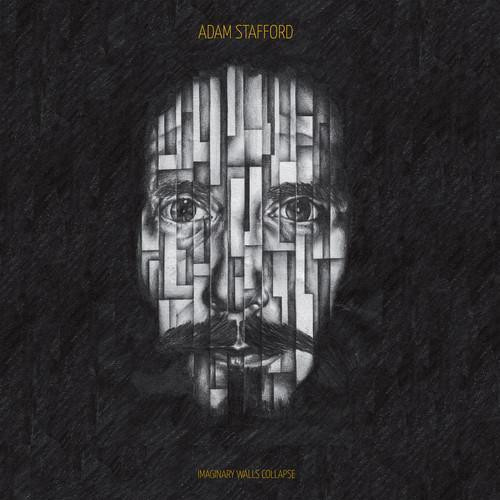
Imaginary Walls Collapse – Adam Stafford (2013)

I’ll never tire of shouting out very loudly that Adam Stafford is a musical genius.  It’s his misfortune (as such) to have been born in Sunderland and to spend most of his life in Falkirk, instead of one of the great and innovative cities of the world where his talents would have been more readily acknowledged.

I first came across him as the frontman of indie band Y’All Is Fantasy Island.  I later read that the band had broken up and Adam had decided to pursue a solo career. It was around the same time as I was making my first foray into gig promotion in 2011 by putting on a home town show by Butcher Boy, partly to mark the 5th anniversary of the old blog and to showcase the band’s new album, Helping Hands.

I made contact with Adam, and he agreed to come along as the support act.  He wasn’t everyone’s cup of tea, but I thought he was magical.  I started going to as many of his live performances as I could and mentioned his name to a few folk, including Matthew Young, the entrepreneur behind Edinburgh-based Song, By Toad Records.  The next thing I knew, Adam had a deal to release his music on the label.

It was the start of a partnership that saw five albums between 2013 and 2021.  The first of these was Imaginary Walls Collapse, an astonishing LP that was longlisted for the Scottish Album of the Year, which was quite some feat for a label that was not much more than a cottage industry.

I previously described it as being something that defied conventional description, with a thin white duke playing his guitar, beat-boxing, crooning and using effect pedals to make sounds unlike any other of my records.  I’ll stand by that description, but quickly add that the live experience always outshines what comes across on vinyl:-

mp3: Adam Stafford – Cold Seas

I know that Adam’s currently working on new material, and fingers crossed it will see the light of day over the next year or so.

Feel free to come back later on for a bonus post ICA……

JC

60 ALBUMS @ 60 : #56

R-105972-1170249090

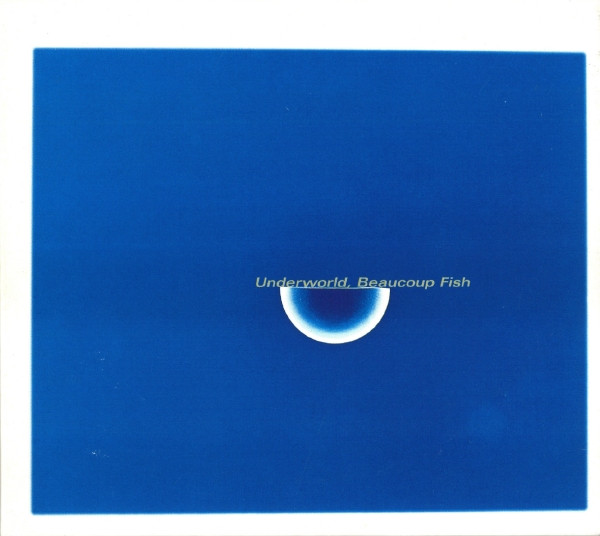
Beaucoup Fish – Underworld (1999)

There won’t be a huge amount of dance music in this rundown.  It’s not anything to do with my taste in music, but more down to most of the vinyl/CDs associated with the genre and sitting in Villain Towers are singles rather than albums.

One exception is Beacoup Fish, the mighty opus released by Underworld in 1999.  Eleven tracks that take almost 75 minutes to get through, and not at any point do I ever feel like reaching for the remote and pressing the FF button to the next tune.

I wasn’t all that familiar with Underworld prior to the heights scaled by Born Slippy following its use in the film Trainspotting.  I know I wasn’t alone in that regard, and I found it entertaining to read the views of many long-time fans and critics, who were often quite sneering to the millions of us who were so late to the party.  It kind of felt inevitable that there would be some sort of backlash when Karl Hyde, Rick Smith and Darren Emerson got round to writing and recording the new material, and so it proved as Beaucoup Fish was greeted, not quite with cat-calls, but certainly plenty of choruses of it not being as great as the previous four albums.

Not having any of these in my possession meant that I wasn’t in place to make any sort of judgement.  I took this CD entirely on its merits and found it to be a thing of great joy.

It’s another record that lulls listeners into a false sense of security, as album opener Cups meanders along fairly gently for the best part of its opening seven minutes before taking an abrupt turn with a techno beat that seems to build gradually for its remaining five minutes before bouncing straight into the joyous Push Upstairs, a track that must surely never fail to fill any dance floor.  The pop/dance nature of Jumbo merely keeps things going.  All of a sudden, almost 23 minutes have passed in a flash and there’s still eight tracks for your senses to absorb.

mp3 : Underworld – Jumbo

Things do veer a bit for much of the rest of the album between high-tempo dance stuff and more ambient or chilled numbers, before it all signs off with the magnificence of Moaner, a track I have previously waxed lyrically about on this blog, and one that I believe to be the greatest club number of them all.

The thing is, I never went back to Underworld in the years immediately after this album.  It was more a reflection of my limited interest in their type of music than anything else, but if I can jump ahead to 2016, I picked up a copy of their ninth studio album, Barbara Barbara, We Face A Shining Future on the recommendation of a few bloggers I admire, and found it a very enjoyable listen, albeit it was far less frantic and manic than their album from seventeen years earlier.  I suppose even the ravers get old and have to slow down.

JC

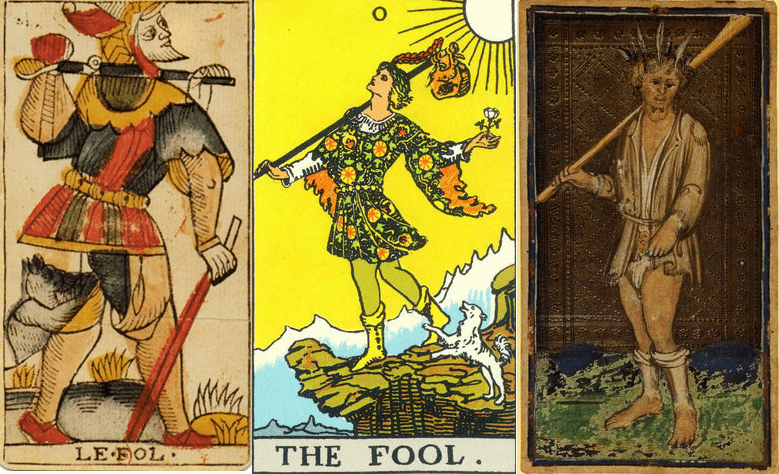
(BONUS POST) : JUST FOOLING AROUND

foolcomp

This month’s offering is sort of over the place.  A few risks have been taken, not least an eight-minute version of a song early on and the later inclusion of Sting.

All tunes included in this month’s mix comes from a bygone era.

mp3: Various – Just Fooling Around

Roxy Music – Love Is The Drug
Echo and The Bunnymen – Nocturnal Me
This Poison – Poised Over The Pause Button
Curve – Fait Accompli (12″)
Cabaret Voltaire – Sensoria (12″)
Prefab Sprout – Bonny
Jens Lekman – The Opposite Of Hallelujah
Allvays – Adult Diversion
The Police – Message In A Bottle (7″)
Fun Boy Three – Our Lips Are Sealed (single version)
The Rakes – Retreat
The Drums  – Let’s Go Surfing
The Clash – Rudie Can’t Fail
Bodega  – Jack In Titanic
Hi Fi Sean and David McAlmont – All In The World
The Goon Sax – Till The End

Comes in at 13 seconds under the hour.

JC

60 ALBUMS @ 60 : #57

R-985903-1499184608-6656

Back In The D.H.S.S. – Half Man Half Biscuit (1985)

I had two folk sharing the first flat I lived in over in Edinburgh, one male and one female.  He, like me, had an office based job with regular hours, but the woman worked in the hotel/hospitality industry as a trainee manager and get the strangest hours.  It meant we had to be careful not to make too much noise when she was catching up with her sleep, and inevitably, there were days on end when there was no loud music played in the flat.

Which is why I associate the debut album by Half Man Half Biscuit with headphones.  It was one that I had on vinyl but in order to be able to listen to it as and when I wanted, it had been transferred to a cassette and played on the Walkman.

It was already a lo-fi recording with plenty of hisses throughout, which were only magnified by the rubbish way I’d done the recording on what was likely one side of a Memorex C90, with some sort of compilation, possibly full of slow songs/ballads in the hope that maybe one night I’d meet someone who was willing to come back to the flat.

HMHB made me laugh.  I’d picked up on them via John Peel and I particularly enjoyed the cultural references within the lyrics, not all of which were topical. The reverse of the record sleeve also amused me. I knew most of the celebrities name-checked in the songs, and so was well aware that none of the descriptions of who they were and what they did were close to being accurate.  This is the opening number:-

mp3: Half Man Half Biscuit – God Gave Us Life

The count-in of ‘1234, John the Baptist knows the score’ never fails to make me smile.

The gentle start to the song lulls the listener into a false sense of security….a trick that the band have made use of on a few occasions over many years.  Just as you think it’s a ditty about all the nice things in life for which we should be thanking the lord above, there’s a mention of strange men trying to lure kids into cars, before an explosive tirade of celebrities who the singer seems to have no time for.

It’s not the best song on the album, but it captures perfectly everything that made HMHB in 1985 such an essential listen.

The thing is, I don’t think anyone ever imagined they would still be going in 2023, releasing consistently enjoyable albums every few years, and in the process, having frontman and main songwriter Nigel Blackwell become an unofficial national treasure.  I genuinely don’t know any fan of ‘indie’ or ‘alternative’ music in the UK who hasn’t at one time or other expressed admiration for HMHB.  The Voltarol Years was their 15th studio album, and was one of my favourite releases of 2022.

It, like many of their records for a long time now, is nowhere near as rough’n’ready as the early offerings.  Indeed, with almost 40 years experience behind them, it’s probably fair to say that the band are as competent and professional in the studio or on stage as any.  I did consider a few of the other HMHB albums for the longlist, but the memories of listening so intently to the debut in circumstances I’ve never experienced since, became the overall deciding factor.

PS : Come back later today for a bonus posting.  It’s first non-weekend day of a new month.

JC

PET SHOP BOYS SINGLES (Part Eleven)

61b83109ec4b31f29a12b11698d520a8

No sooner had Go West taken its leave of the singles charts was another single readied from Very.

R-360989-1235757801

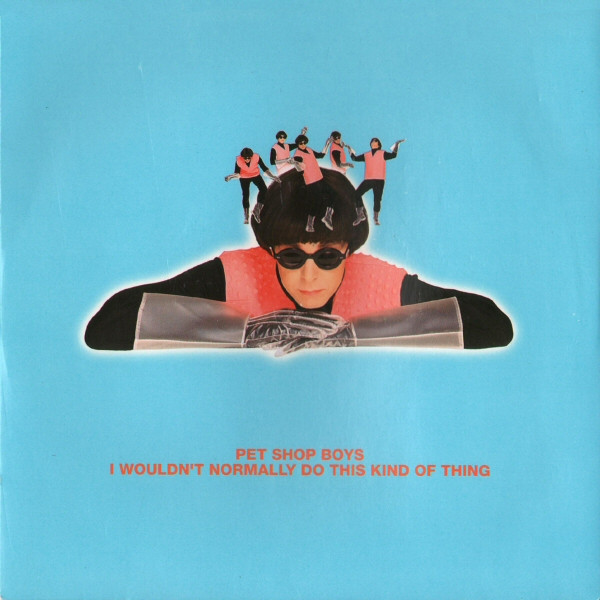
I Wouldn’t Normally Do This Kind Of Thing was reckoned to be one of the standout tracks from the album.   It had hit single written all over it from the outset, but Neil and Chris decided to do something quite radical in that a three minute song was extended by the best part of an additional two minutes, while the really catchy piano opening in the house music style piano opening was replaced by something rather grand, orchestral and epic.  The opening refrain was put to much use throughout the new version, particularly within each chorus as the words ‘I Wouldn’t Normally Do This Kind Of Thing’ were followed with an uplifting flourish of noise.

The remix was the work of Beatmasters, a four-piece electronic/dance group who had enjoyed some chart hits in the late 80s but had really found fame and fortune as producers and remixers, and were riding high at the time from their work with The Shamen.

I wasn’t initially all that fussed about the remix as I really loved the album version, but it has grown on me over the years.    Looking back, it was the right sort of big and bouncy remix needed to complement the success of Go West, but I still feel it goes on for maybe 30-45 seconds too long.

7″

mp3: Pet Shop Boys – I Wouldn’t Normally Do This Kind Of Thing
mp3: Pet Shop Boys – Too Many People

The b-side is another excellent listen.  There’s so much going on over its four minutes.  It opens up as something akin to a house tune (and like something off the Electronic album) before settling into something which harks back to the music of the first two albums, but the next thing you know there’s all sort of production tricks thrown in, but that proves to be short-lived, and soon we are back to classic early days PSB with a sing-along chorus. 

Worth mentioning that this single was released across a range of formats, with ‘I Wouldn’t Normally….’ getting at least five different remixes/dub versions, while West End Girls was given the remix treatment of the 12″ and CD versions.  No wonder, for the sake of my sanity, I’m sticking to the 7″ releases (while I can!!).

R-612702-1288512541

The next single was released on 4 April 1994.

I’ll be honest and admit that until pulling this series together, I had no idea that Liberation, one of the slower numbers on Very, had been issued as single, never mind that it was a decent-sized hit, entering and peaking at #14 on the basis of its first week of sales.

I don’t mind the song, but it’s not close to being one of my favourites. It did fit in very well on the album – it was the third track and provided a nice change of pace after the one-two opening of Can You Forgive Her? and I Wouldn’t Normally…., but I much prefer To Speak Is A Sin, one of the other ballads on the album.

7″

mp3: Pet Shop Boys – Liberation
mp3: Pet Shop Boys – Decadence

I’ve only just got to know this b-side, thanks to me picking up a second-hand copy of the 7″ single.   On first play, I thought it very cinematic in theme, while the very opening notes reminded me a bit of Confide In Me, the superb single released by Kylie Minogue a little later the same year.  I was really enjoying it, but there was something else that I couldn’t quite put by finger on.   I put on my reading glasses and looked at the small print on the back of the sleeve.

Guitars : Johnny Marr

All of which led to me doing a  little bit of searching on t’internet and coming across this nugget of info*:-

” Pet Shop Boys had been asked to write the theme music for a film titled Decadence based on a play by Steven Berkoff. Chris began writing a song built around a sample of the opening two bars of the Burt Bacharach/Hal David tune “I Say a Little Prayer” as performed by Aretha Franklin. When the song was finished, however, Neil and Chris decided that the track didn’t need the sample and thus removed it. They also decided not to submit the song for use in the film after having seen a rough edit, which they apparently didn’t particularly like.

According to Neil, the lyrics directly address “someone who’s become a really horrible person because they take lots of drugs and all they think about is money.” When once asked whether “Yesterday, When I Was Mad” was about the Boys’ former manager Tom Watkins, Neil replied, “No, but ‘Decadence’ was.” Neil has also stated elsewhere that he regrets the reference to “fin de siècle pretense” (fin de siècle is French for “end of the century,” commonly a period for decadent behavior), chiding himself for his own pretentiousness in authoring such a line.

Johnny Marr, formerly of the Smiths, played guitar, giving the track a distinctly “unplugged” feel—which undoubtedly inspired the Boys to go all the way and provide an “Unplugged Mix”. Chris says the recording “cost a fortune.””

There was no way I wasn’t hunting that down….

mp3: Pet Shop Boys – Decadence (Unplugged Mix)

As found on CD2 of Liberation.

*it was found on what can only be described as probably the most informative and well-written PSB fan site anywhere on the internet. It’s called Commentary, and it’s the work of Wayne Studer.    It can be found here.

Apologies to Wayne for not acknowledging this fully when the piece was initially posted.

JC

SATURDAY’S SCOTTISH SONG : #349: THE TRAPPISTS

Untitled

There isn’t much to say about the small Midlothian town of Bonnyrigg. It is located a few miles outside of Edinburgh, it has a statue dedicated to a leader of the miners in its park. It has several churches, and a decent Italian. It also gave us the hugely influential post rock band The Trappists.

The Trappists were artistes who refused to compromise. They were a band who tore up the rulebook, threw it away, then wrote their own rulebook which they then ignored. The Trappists didn’t tour, they didn’t do interviews, they issued very few promotional photos, they never appeared on the radio, and they only ever wore brown.

There was of course a reason why the Trappists didn’t tour, didn’t do interviews and issue photos. They were Trappists Monks and upon entering the Order of Silvino Francisco (which was a small monastery located just behind Dundas Park, home of Bonnyrigg Rose FC) they swore a vow of silence and as such became the most punk rock band to have ever driven along the A7 in a clapped out minibus without even knowing it.

The Trappists were formed of three brothers, (who were not actually brothers in the Noel and Liam sense but in the professional sense) Thelonius (born in Grimsby) who played guitar, Garry (born in Ormskirk), who banged the drums and Adrian (born in Akron) who played bass. They did not sing on any of their releases, not only because they had taken a vow of silence, but just like Mogwai they preferred to let the music do the speaking.

The legend goes that one day after prayers and a short pilgrimage to a Dalkeith bakery, the three brothers were in the monastery’s music room tidying away the pan pipes and simply started jamming together. Within an hour, they had recorded their first track, their instrumental take on  Madonna’s ‘Erotica’. 

Despite its tough and ready nature, they were confident enough to offer it immediately to the one person allowed to utter any words within the monastery, their head abbot, who had taken the holy name of Russell when entering the order back in 1946.  He gave it a thumbs-up, but after a second listen, he felt it would benefit from a minor contribution, around the four-minute mark, by some of the nuns who lived in an adjacent convent.

Erotica – The Trappists (1992, Cachinno Records, Taken from ‘Trappist Music Vol. 1’ – the complete collection’)

Thus, The Trappists silently announced themselves to the musical world of Midlothian. The abbot was approached on their behalf with the opportunity for the lads to have a Saturday night residency at nearby Danderhall Miners Welfare Club, as the Committee considered them as the perfect opening act prior to the bingo and the headline show performed by the legendary Englebert Humperdinck.

The abbot was tempted, but he decided that their musical careers would always play second fiddle to their commitments to the brotherhood and their other extracurricular activities. Because of this, recorded material was eventiually restricted to just one album – ‘Aprilis stulti locus’ and one very limited edition EP ‘Hoc est ventus est’.

The album itself took five years to record as Thelonius was regularly called upon (not in the vocal sense obviously) to play the harpsichord at local schools and at the convent. Garry was also employed on occasion as a football manager for the local church side and under his silent but incredibly detailed diagrammatic team talks, the local church side won the Scottish Challenge Cup twice in the late nineties (beating Raith 4 – 1 in 1997 and Airdrie 3 – 2 in 1999). Adrian meanwhile spent a year working as a consultant detective in the Chicago Police Department, in that time he was also briefly employed as a session guitarist for the Smashing Pumpkins, and despite his vow of silence, still managed to talk more sense than Billy Corgan.

The album was a post rock masterpiece, it drew comparisons to recently released works by the likes of Tortoise and Slint. It consisted of fourteen tracks all of them instrumental post rock versions of eighties and nineties alternative rock classics, many of them had a religious (in name at least) theme to them. Like this one for example.

Jesus Christ Pose – The Trappists (1996, Cachinno Records, Taken from ‘Aprilis Stulti Locus’)

The limited edition EP- which was only made available in the gift shop at the Francisco Monastery in Bonnyrigg for six weeks, now changes hands on Discogs for around £1000 a time.

Here is one track taken from it.  The EP was actually produced by the abbot, who sadly forgot that he had left his own mic on during the process, and the three words he actually knew from the original are occasionally and accidentally chanted.

Holiday In Cambodia – The Trappists (1995, Cachinno Records, Taken from ‘Hoc est ventus est’)

The Bastard Sons of Dean Friedman

(BONUS POST) : ONE HUNDRED AND ELEVEN SINGLES : #012

aka The Vinyl Villain incorporating Sexy Loser

#012– Camper Van Beethoven – ‚Take The Skinheads Bowling’ (Rough Trade Records, ’86)

Artist-Image-Camper-Van-Beethoven

Hello friends,

the first single from a band starting with a ‘C’ … and all the way to America we go, too!

Let’s be honest, not very many of us know a lot more songs by Camper Van Beethoven than ‘Take The Skinheads Bowling’ – their signature tune, I think it’s fair to say. When trying to find out more about the band, I learnt that their output was quite massive, and I made a note to myself to start a more profound search within their back catalogue soon.

Camper Van Beethoven hail from Santa Cruz, California, and if you – like me – ever wondered why it is that they called themselves Camper Van Beethoven and not something more easy, like, say ‘The Beatles’, here’s yer explanation:

“The band’s name was coined by McDaniel (on guitar ’83 – ’84): according to (David) Lowery (lead singer) “McDaniel was into this stuff that would sound like it made sense, but really it didn’t… He’d watch a lot of TV, accept all this mass-media stuff and spit it out all chopped up.”

And not only the band’s name is strange, the title of today’s tune is strange as well. But of course David Lowery has an explanation for that as well:

“We regarded ‘Take The Skinheads Bowling’ as just a weird non-sensical song. The lyrics were purposely structured so that it would be devoid of meaning. Each subsequent line would undermine any sort of meaning established by the last line. It was the early 80′s and all our peers were writing songs that were full of meaning. It was our way of rebelling. BTW this is the most important fact about this song. We wanted the words to lack any coherent meaning. There is no story or deeper insight that I can give you about this song.”

So there you are, two lifetime mysteries solved, as easy as that! I really don’t know how often I must have listened to this song since it came out in 1986. But each and every time I did, I thought to myself “next time you are late for work because you had a few too much to drink the evening before (and look appropriately hangoverish), just look your boss firmly in the eye and say to him: ‘Sorry for being late, boss, but last night there were skinheads on my lawn!’” … so far I never remembered to do it, but one of these days I will, for sure!

And finally, this is the first record of quite a few from the nice people of Optic Nerve Records in the UK, a label who re-releases old gems for rather fair prices. They stick to the original artwork, but include some extras, like little posters and/or postcards. This comes in shimmering orange vinyl, rather nice in fact:

R-17850523-1615800617-9443

cvb

mp3:  Camper Van Beethoven – Take The Skinheads Bowling

 See you soon, take care

Dirk

60 ALBUMS @ 60 : #58

R-529474-1392294144-4039

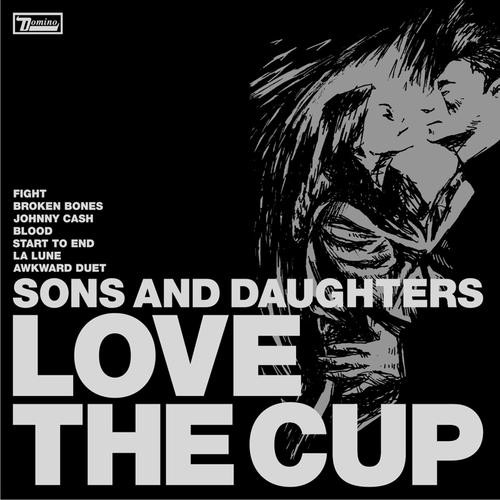
Love The Cup – Sons and Daughters (2004)

This is one of the increasing number of postings which me think  time is passing far too quickly.  It can’t really be 20 years now since Sons and Daughters burst on to the Glasgow scene and got lots of people very excited.

In those pre-blogging days, I wasn’t nearly as switched on as I should have been to what was happening in and around my home city.  A couple of work colleagues and associates, knowing my taste in music, had mentioned that I should check out Sons and Daughters as they were quiet the live act.  I was aware that they had two lead vocalists – one of who was Adele Bethel whom I’d seen on stage with Arab Strap. But in some ways this was one of the reasons I never pursued things to begin with, as I didn’t think she was capable of having the voice or personality to be centre-stage.

A video on MTV2 was my first introduction to the band.  It was the guitar riff and broad Scottish accent that grabbed my attention – the video had already gone past the bit where the info about the song and band had been on-screen, so I looked on in total ignorance.  The video itself, which had by now descended into a bar-room brawl, was also something to enjoy. Just as the song ended, the info came up, and I was formally introduced to the pleasures of Sons and Daughters and their debut single:-

I was hooked.  The single was bought the following morning, followed soon after by the debut mini-album Love The Cup.

mp3: Sons and Daughters – Fight

They were a great live act. No gig ever fell into chaos, and with the vocal duties being spilt between Adele and Scott Paterson, there was never any desire or requirement to focus attention mainly on the one person on the stage.  Many of the songs had great instrumental breaks, which only highlighted the talent and tightness of the rhythm section of David Gow and Ailidh Lennon.

I never fell out of love with the band, catching them live on many an occasion whether as headliners or support acts, including at the cavernous Alexandra Palace in London when they opened for Nick Cave & The Bad Seeds in 2005, just after the release of the first full-length album, The Repulsion Box (which was under serious consideration for this rundown).

It was a sad day when they split in 2012, their full potential having never been realised. One of the many ‘should have been massive’ bands I’ve seen over the years.

JC

60 ALBUMS @ 60 : #59

R-3521367-1333736942

Talking With The Taxman About Poetry – Billy Bragg (1986)

The so-called ‘difficult’ third album.

Billy Bragg had very quickly become a hero of mine.  He had been a big part of the soundtrack to my political development at University, and it’s not much of an exaggeration to suggest that I hung on to his every word.

As mentioned yesterday,  I had moved to Edinburgh to work in July 1985.  I don’t think I’ve given the details before, but my first job was as a committee administrator with a Tory-led council, one that involved me working directly with a number of folk whose political views were at odds with my own – not that I ever uttered anything in public as it could have led to me being fired!  To be fair, and looking back on it, these particular Tories, with maybe a couple of exceptions, were far from Thatcherites and very much to the centre of their party – back in the mid 80s, the Tories weren’t comprised completely of right-wing nutters.

Billy Bragg’s first two albums were a godsend.  If I’d had a bad day at the office, they could be my go-to records – along with those from Paul Weller and The Clash.  The third album was eagerly awaited.  It had been trailed by the release of a new single, Levi Stubbs’ Tears, whose promo video had been recorded onto VHS tape after it had been shown on Whistle Test on BBC2.  The promo was a single-track shot of Billy playing guitar and singing live until the point that the trumpet solo comes in to end the song.  I thought it was astounding.

I bought the album on cassette for the simple reason that I was going to be heading back and forth to Glasgow a couple of times over a short spell and thought it would be perfect for shoving into the Walkman.

My instincts were right.  It made for a wonderful listen. It was a totally different type of album than his previous efforts, thanks in part to the contributions made by other musicians such as Johnny Marr, Kirsty MacColl, Hang Wangford, Bobby Valentino and Dave Woodhead.  It’s the album which took Billy beyond any one-dimensional caricature of a protest singer and really laid the foundations for a career that is still going strong today.

mp3: Billy Bragg – Greetings To The New Brunette

Given that I’ve seen Billy Bragg play live more than anyone else in all my near 60 years on the planet, it was inevitable that one of his albums would make the longlist.  It was a hard choice between all the early albums and a couple of the later ones.  In the end, I went with the one that I can honestly say was the first to be on constant rotation, if indeed that’s a description you can give a cassette.

I still have the cassette, but I’ve also got this album on CD and vinyl, while it also, in extended form, forms part of a Billy Bragg boxset.  I won’t, however, be shelling out for Billy’s 14-CD Super Deluxe Box Set (RRP £120) that’s being issued this coming October to commemorate his 40th Anniversary as a performer.  Kind of feels like he’s taking the piss……

JC

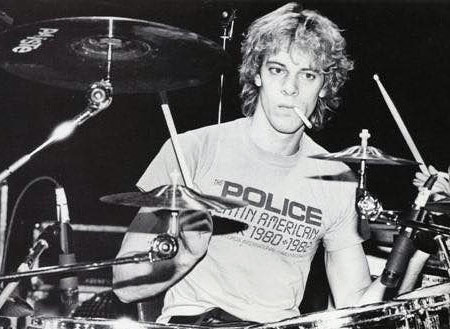
(BONUS POST): AN IMAGINARY COMPILATION ALBUM : #337: STEWART COPELAND

A GUEST POSTING by JONNY THE FRIENDLY LAWYER

stewartcopeland

Stewart Copeland with The Police: an ICA

Most of the Police’s great big hits (and duds) were written by StingStewart Copeland also wrote a number of songs for the Cops, but his contributions are few and far between.  Kinda like how Paul Weller let Bruce Foxton squeak a tune onto a Jam album once in a while.  Definitely not like the great Colin Moulding, XTC’s auxiliary songwriter, who didn’t get in as many tracks as Andy Partridge but still had his share of singles (see ICA #26).  I got to wondering if Copeland wrote enough Police songs for an ICA.  Turns out there are exactly 10, so here they are, in alphabetical order.

1.     A Sermon

B-side of the UK single “De Do Do Do, De Da Da Da.”  The chorus sounds like a Sting song, the verses are a little stilted.  A respectable choice for a b-side.  Better than the A-side anyway.

2.     Bombs Away

Album track from Zenyatta Mondatta One of the band’s best songs.  Lovely middle-eastern sounding solo (“phrygian mode,” says my lead guitarist) by Andy Summers.

3.     Contact

Album track from Reggatta de Blanc.  Hmm…I’d call this filler. It’s got the band’s trademark sound, but doesn’t do anything special.  Next.

4.     Darkness

Album track from Ghost in the Machine.  Here’s a good one.  Unrushed and moody, fits really well with the rest of the band’s fourth album, which I always thought didn’t get the recognition it deserves.  Well, it did, sales-wise, but I like it more than their other ones.

5.     Does Everyone Stare

Album track from Reggatta de Blanc.  The drummer got three solo credits on their second album, as well as three tunes co-written with his bandmates.  This one’s my favorite.  Police tunes don’t feature a lot of keyboards, and I like what Copeland does here on piano.

6.     Fall Out

The band’s debut single on Illegal Records, before Andy Summers joined the band.  Wiki says original guitarist Henri Padovani was too nervous in the studio to play anything but the solo, so Copeland played the rest of the guitar parts.  This non-album track was the only Police A-side Copeland ever got.

7.     Miss Gradenko

Album track from Synchronicity.  Great melody.  Summers does some beautiful finger-picking before peeling off another stellar lead.  Summers actually wrote a few tunes for the band, too, but they’re pretty weak.  Can’t touch his guitar playing, though.

8.     Nothing Achieving

B-side to Fall Out.  Co-written with big brother Ian.  Copeland’s playing the guitar parts again with Padovani on the solo, such as it is.  Meh.

9.     On Any Other Day

Album track from Reggatta de Blanc.  Copeland starts with the spoken words, “You want something corny?  You got it!”  Then the lyric is about the day of a hapless idiot, which I guess was meant to be funny.  Or corny.  Not sure—is ‘corny’ a word in the UK?  Does it excuse the homophobic dis in the chorus?  Probably not.  Maybe that’s why Sting didn’t sing lead on it.  Despite its daft lyrics, I love this song because it’s got such a great bass line.  Sting is noted as a songwriter and singer and heartthrob and actor and lutist.  But no one ever talks about his bass playing, which is outstanding. He always plays an interesting line that serves the song.  He doesn’t get fancy unless he has to.

10.  The Other Way of Stopping

Album track from Reggatta de Blanc.  On my bass forum there was a poll recently asking if you could play with any drummer who would it be?  Lots of folks picked Copeland and you can hear why on this instrumental.  His timekeeping is perfect.  His fills are fast and unpredictable.  He has great touch—he can smack away or brush gently.  Love or hate the Police, you can’t deny they were all awesome musicians.

Bonus Track.  Don’t Care

 Released under the pseudonym Klark Kent on Kryptone Records back in 1977.  I guess Sting was more interested in trying to nail down the Police sound so Copeland put it out himself.  It’s a great little new wave tune with Copeland singing and playing all the instruments.

Copeland made a hell of a lot of music after the Police.  Film and TV soundtracks, collaborations, solo projects, and as a member of Oysterhead—a supergroup including Les Claypool (Primus) on bass and Trey Anastasio (Phish) on guitar.  You can always tell it’s him drumming.  I’d be curious if anyone’s familiar enough to do a separate ICA drawn from his lengthy post-Police career.

JTFL