BOOK OF THE MONTH : DECEMBER 2025 : ‘FALLING AND LAUGHING – THE RESTORATION OF EDWYN COLLINS’ by GRACE MAXWELL

The blog is in the middle of a celebration of all the singles Edwyn Collins has released across what has been an unbelievable career.  I thought I’d delve into the vaults for a review that I originally penned in July 2009 when the hardback edition of the book was published, and which I then re-posted in February 2015 with an update of what had happened during the intervening six years.  I now want to bring it right up to date, and to make a very strong recommendation to everyone in the TVV community – if you don’t own a copy of Falling & Laughing, then ask someone to gift it to you this coming Christmas.  I’ll provide a link at the foot of this post.

– – – – –

After reading this compelling 310 pages, I was left with quite a number of impressions, one being that I couldn’t possibly cope with being married to Grace Maxwell. She herself acknowledges that she is a nagging, dominating, sharp-tongued and single-minded individual who has difficulty ever admitting that she ever gets something wrong. But one thing is for sure…..if she wasn’t like that, her partner would most likely be dead, or at best locked away from the world, dependent on specialist round-the-clock treatment. So without any question at all, Edwyn Collins is very blessed to have Grace Maxwell by his side…

Falling and Laughing – The Restoration of Edwyn Collins is a truly astonishing and eye-opening book. It’s also a very very frightening bit of work, and not the sort of thing you really want to be reading if someone close to you is lying ill in hospital with a life-threatening condition.

I’m sure most regular TVV readers are familiar with the basic facts, but here’s a quick resume of what I knew before picking up the hardback.

In February 2005, Edwyn Collins suffered a stroke which left him seriously ill in a London hospital. He was in a coma and required major brain surgery to stop internal bleeding which threatened to kill him. His recovery was hampered by him contracting MRSA, but in the fullness of time, he got back home, and thanks to some fantastic TLC from his partner Grace, their son Will and many other members of his family and his close friends, not to mention many hours of therapeutic treatment, he made a remarkable recovery which allowed him to get back on stage again in late 2007 and to then go on tour in the summer of 2008.

If only it had been that simple……

Opening with a very short prologue that asks the reader to imagine you not having any more thoughts, the book then looks back at the early part of Edwyn’s career with Orange Juice and the circumstances which brought him and Grace together for the first time in 1980, leading to them deciding to live together some five years later. From the outset, Grace was an essential part of Team Edwyn – she was his full-time manager before they got together as a couple, and she shared his woes and worries as he went out of fashion post-Orange Juice but never ever giving up on his immense talent, even when his records were selling to almost no-one.

The world-wide success of the single A Girl Like You in 1994/95 changed everything, setting them, and new son Will, up for life in terms of financial security. It also gave Edwyn the opportunity to make and produce music as and when he liked from the comfort of his own and much-in-demand studio. By early 2005, life seemed quite uncomplicated. Edwyn was 45 years of age, an elder and much respected statesman in music, still recording new songs but under no pressure to come up with the hits. Indeed, there was a great deal of satisfaction with the new songs recently recorded and about to go into the post-production for a new LP which would be followed by the inevitable tour and other promotional work.

But then Grace came home on at around 7pm on the night of Sunday 20th February 2005 after picking up her car that had been left at a friend’s house after a party she and Edwyn had attended the night before – and discovered him lying semi-conscious and distressed on the living room floor….

Much of the book deals with the next few months as Edwyn tries to battle back from the stroke. Grace writes with a directness and clarity that is utterly refreshing, and she is never over-dramatic about events. She gives a great deal of praise to the medical and nursing staff involved in saving Edwyn’s life, but without ever making them appear as saints. At the same time, she also paints a very distressing picture of a medical system that contributes more to a crisis than it does resolve it.

Grace was fortunate in having some immediate family members who work in medicine, and so she could often talk to someone and try to get an alternative view. Grace was also able to devote 100% of her own energy to be with Edwyn over an extended period of time – a luxury very rarely afforded to most wives/husbands/partners. If she had been in a position where she had taken all the medical opinions totally at face value, and had been unable to spend as much time by Edwyn’s side in the very early days, it is quite likely that everyone would have given up the fight…but they battled through all the obstacles and barriers placed in their way, and slowly his recovery began.

But just as Edwyn was about to be moved out of general care into a specialist unit where his therapy would be intense, there was a setback that made the original stroke seem a bit like a pleasant Sunday stroll in the sunshine round – the contraction of the superbug MRSA. What follows really is the stuff of nightmares……

I’m not spoiling anything by revealing that in the fullness of time, Edwyn faced up to and defeated death for a second time. His rehabilitation is covered in great depth and compassion. Grace doesn’t hide from the fact that this was an immense strain on her and Will, and describes some unpleasant family exchanges with an admirable honesty that brought a lump to the throat of this particular reader. I’m sure most of us by now have been in difficult circumstances when someone close is being treated for an illness, and reading many of Grace’s lines brought back a lot of memories of watching loved ones painfully tear themselves up trying to work out what course of action is the best way forward.

As a long-time fan of Edwyn Collins, I would love to have discovered that his recovery turned out to be a smooth and straight-forward process, with him taking his medicine and undergoing his therapy without complaint or giving anyone any cause for concern, and indeed Grace could have easily painted such a rosy picture with very few of us being any the wiser. That she doesn’t is testament to just how good a book this is, and helps the reader gain a much better understanding of just how remarkable it is that Edwyn has the ability nowadays to take to the stage and entertain us.

Having been lucky enough to see him perform three times over the past 12 months I thought that Edwyn – not withstanding the very clear mobility and speech difficulties he still has – was almost completely rehabilitated. Grace’s book reminds everyone that there is still a long way to go. It also reminds us that what Edwyn and so many others close to him have achieved over the past couple of years is quite miraculous – but it has all been through grit, graft and guts, not to mention a lot of Grace.

2025 Postscript

Just over twenty years later, and Edwyn has released a new album and completed a UK tour for which there was nothing but love and praise from fans and critics alike.  There are three shows scheduled to take place in Austria at the end of next month, after which he should be able to take a well-earned retirement from live performances.  There’s now been five studio albums since the near-death experience, although the first of them, Home Again (2007), had seen much of its work completed before he took ill.

There have been numerous live shows almost each and every year, including lengthy tours in each of 2008, 2010, 2011, 2013, 2015, 2019 and 2025, while he has travelled all over Europe and played in America and Australia.  All the while, he has been closely supported by Grace and Will, both of whom were selling the merch on the recent UK tour, while Andy Hackett, Sean Read and Carwyn Ellis have been constant companions in the studio and out on the road, with many others, too many to mention, helping, assisting and contributing along the way.

There was also a documentary film, The Possibilities Are Endless, released in 2014 which sought to tell the story of his recovery and comeback – and if you want to know why the film has that particular title, well you can find out through the book (albeit typing the phrase into any search engine will reveal all).

I know that Edwyn Collins is not everyone’s cup of tea, and that there are many who have always found his vocal mannerisms and delivery to be an acquired taste.  But you don’t need to be a fan of the music to appreciate the story that’s told within the pages of this book. At times, it is not an easy or comfortable read, but ultimately, it’s a true tale about love, sheer bloodymindedness, resilience and courage, and one which comes with a happy ending.

mp3: Edwyn Collins – Searching For The Truth (from the album Losing Sleep, 2010)

The book can be bought in many places, but I’d recommend doing so direct from Edwyn and Grace’s online store.  Click here for info.

Thank You.


JC

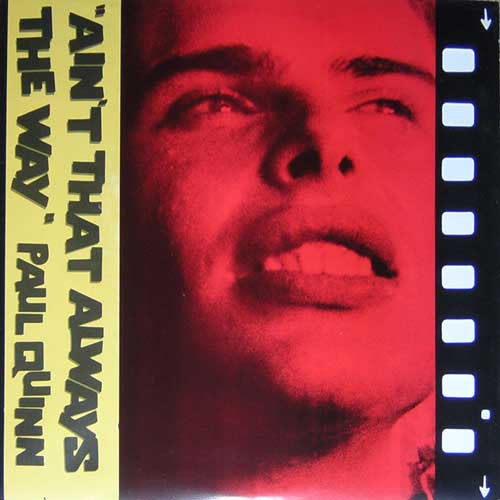
THE 7″ LUCKY DIP (40) : Bourgie Bourgie – Breaking Point

Given that it is one of my all-time favourite 45s, it’s no surprise that Breaking Point by Bourgie Bourgie has featured round these parts on quite a few occasions.

I thought that today, I’d offer up, word-for-word, the review which was printed in Smash Hits in February 1984. It was penned by Neil Tennant.

A new group from Glasgow with a big, hungry sound. Their singer, Paul Quinn, has a deep, powerful voice but definitely doesn’t belong to the ever-popular “foghorn” school of signing. The clever use of a synthesiser and a single cello gives the impression of bold orchestration, and is helped along by someone making rather loud noises on an electric guitar. One of the few records of this batch (possibly the only one) that leaves me wanting more.

mp3: Bourgie Bourgie – Breaking Point

Such a shame that within six months, and just one further 45, it was all over.

The single was produced by a then relatively-unknown Ian Broudie.   The b-side was a joint effort involving the band and Stephen Lironi, best-known at that time as a former member of Altered Images.

mp3: Bourgie Bourgie – Aprés Ski


JC

THE TESTIMONIAL TOUR OF 45s (aka The Singular Adventures of Edwyn Collins)

#11: Bridge : Orange Juice (Polydor, OJ5, 1984)

Before we get onto the next Orange Juice single, here’s some TV footage which is needed as part of the backstory.

It’s taken from a show called Switch, which aired on Channel 4 on Friday evenings between 25 March and 2 September 1983, filling in the gap between the first two series of The Tube. I can’t give you the precise date of the Orange Juice appearance, but you can see it is the Collins/McClymont/Ross/Manyika line-up playing the big hit and a new song, albeit it had been made available on flexidisc to readers of Melody Maker earlier in the year.

All appears well in the clip, but this masked reality

The band were working again with Dennis Bovell in the studio on the third album.  Plans were in hand to release A Place In My Heart as its lead single in October 1983, with the album to come out the following month, positioning itself well for the pre-Xmas market.  Out of the blue, David McClymont and Malcolm Ross decided to leave the band, citing ‘musical differences’.  The album was only half-finished……

A salvage job was put into operation.   A six-track mini-LP, Texas Fever was scheduled for release in March 1984, with things rounded off, appropriately given the circumstances, with the inclusion of A Sad Lament, the b-side a year earlier to Rip It Up.   The advance single was changed from A Place In My Heart to this:-

mp3: Orange Juice – Bridge

Given the band were somewhat at odds with one another during the recording process, it really is quite something that they delivered such a great sounding single, albeit Bridge was a song that had been part of their live sets for a while, with Malcolm Ross playing keyboards.  It was something new and different from what had come before, and I’ll happily admit that I really enjoyed this harder-sounding version of Orange Juice, and Bridge had a groove and rhythm that was infectious, not least the handclaps that made listeners (well, me at least) want to replicate if it ever got played on the disco floor. Not that the chance ever came, as DJs and indeed radio stations shunned it, leading to an undeserved #67 flop.

The b-side was another new, frantically paced number, one that wasn’t included on Texas Fever (but would subsequently be recorded in a much slower form and slotted into the final OJ album almost a year later).

mp3: Orange Juice – Out For The Count (single version)

Polydor‘s marketing people did their best.  A 12″ version was released, as was a limited edition 7″ version which came with an additional flexi disc.  The 12″ didn’t feature an extended version of Bridge, but it did add in a band-produced take on things, one that in effect was the demo provided to Dennis Bovell; please don’t be fooled by the crowd noise at the beginning and the end…this is a decades-old version of ‘Fake News’ as these were added to give the impression it was a concert recording….the rapturous applause at the end clearly gives the game away as Orange Juice gigs never got that sort of reaction!.

mp3: Orange Juice – Bridge (Summer 83 version)

The flexi disc claimed to be a live recording of a Postcard-era single when in fact it was a new studio recording, produced by Dennis Bovell.

mp3: Orange Juice – Poor Old Soul (flexidisc version)

The Polydor contract had been signed when the band consisted of Edwyn Collins, James Kirk, David McClymont and Steven Daly.  Only Edwyn remained, and there was just one other official band member in Zeke Manyika.  There was still belief that hit singles would come along, and rather than cutting their losses, funding was made available to have the duo, with guest musicians, go back into the studio.  The songs to emerge from those sessions proved to be among the best of Edwyn’s entire career…..

JC

SATURDAY’S SCOTTISH SONG : #482: THE HAPPY FAMILY

The Happy Family were the earliest vehicle for the cerebral songs of an Edinburgh university drop-out called Nicholas Currie – he was later to find his true vocation as a post-Brel, post-Gainsbourg “tender pervert” called Momus.

Ivo‘s attention had been attracted by a demo which also featured ex-Josef K guitarist Malcolm Ross. A three-song single, ‘Puritans’ – which, if truth be told, owed a rather large sonic debt to both Josef K and Orange Juice – was swiftly followed by an ambitious, complex concept album called The Man On Your Street.

It was conceived as a sort of Brechtian musical, but 4AD lacked the resources to pay for the ambitious orchestrations that the band original envisaged. Looking back, Currie has this to say:

“It’s 1982. Postcard Records and The Sound Of Young Scotland. An Edinburgh literature student called Nick Currie forms a pop group with three ex-members of local group Josef K. They sign to 4AD, home of The Birthday Party, and proceed to record a CD with the following cast list: an evangelical detergent salesman; a Fascist dictator who comes to power thanks to a lottery win; Samuel, the son of the salesman and Maria, the dictator’s beautiful daughter, who join the Red Brigade and plots to assassinate the Fascist. Confused? Just wait ’til you read the lyrics!”

The Man On Your Street was to be The Happy Family’s only album – Momus, of course, went on to release a string of twisted, provocative and highly literate pop records. He is still active.

mp3: The Happy Family – Puritans

And given the album had such a different sound altogether:-

mp3: The Happy Family – The Luckiest Citizen

JC


ON THIS DAY : THE FALL’S PEEL SESSIONS #2

A series for 2025 in which this blog will dedicate a day to each of the twenty-four of the sessions The Fall recorded for the John Peel Show between 1978 and 2004.

Session #2 was broadcast, not quite on this day, 6 December 1978, having been recorded on 27 November 1978.

After a weekend gig at the Prestwich Hospital Social Club, the group headed south on Monday morning to record this, possibly the most released Peel session to date. With four months to go to the release of ‘Live At The Witch Trials’, newcomer Riley is in hos original role as bassist, complementing Burns as they grapple with the variances in tempo of a definitive version of ‘No Xmas For John Quays’. ‘Put Away’ – here in a wild, formative run-through – didn’t see the light of day until the following October’s ‘Dragnet’, while the 78/79 live favourite ‘Mess of My’ (sometimes referred to as ‘Mess of My Age’) never featured on a contemporaneous Fall release.  The session was broadcast the same month that the group signed off the dole.

DARYL EASLEA, 2005

mp3: The Fall – Put Away (Peel Session)
mp3: The Fall – Mess Of My (Peel Session)
mp3: The Fall – No Xmas For John Quays (Peel Session)
mp3: The Fall – Like To Blow (Peel Session)

Produced by Bob Sargeant, Engineered by Dave Dade & Brian Tuck

Mark E Smith – vocals; Martin Bramah – guitar, bass, backing vocals; Yvonne Pawlett – keyboards; Marc Riley – bass; Karl Burns – drums;

JC

FICTIVE FRIDAYS (ON A THURSDAY THIS WEEK): #5

a guest series, courtesy of a very friendly lawyer

Origin Stories

JC explains……I hate to move Jonny’s column around and I’ll do my damnest going forward.  But Mark E Smith & co have long been slated for tomorrow’s slot.

Q: Where do great songs come from?
A: Other songs!

Q: Is that okay?
A: Sometimes!

Q: What the hell are you talking about, fictive boy?
A: I’ll show you.

Devil’s Haircut by Beck. This standout track from Odelay is credited to Beck and the Dust Brothers, who produced the album. The trio were pretty heavily into sampling back in the 90’s, and this song contains a couple by Pretty Purdie and Irish band Them. But Beck played the guitar riff from another Them tune himself, rather than sampling it. Here’s where it came from:

I Can Only Give You Everything by Them. The Belfast garage rockers are most noteworthy for launching Van Morrison‘s solo career and his side gig as the antagonist in the Leprechaun horror/comedy film series. Pretty sure Geffen paid to use the samples; not sure if the original songwriters got any cash from Beck’s hit.

Panic by The Smiths. This non-album single from 1986 proved to be controversial because its “burn down the disco” lyric was interpreted as an anti-black sentiment. Remember, this was several years before Morrissey took to flaunting his racism. Johnny Marr was offended by the criticism: “Show me the black members of New Order!” he barked, Mancunially. But perhaps he was pleased that no one was on his case for nicking the song’s music. Here’s where it came from:

Metal Guru by T. Rex. Marr actually copped to the theft: “The Slider came out and it had ‘Metal Guru’ on it. It was a song that changed my life as I had never heard anything so beautiful and so strange, but yet so catchy.” So he jacked it. Finders keepers!

Connection by Elastica. The eponymous debut by Elastica was a welcome blast of Britpop. We all needed it since Kurt Cobain‘s suicide bummed everyone out and knocked the grunge craze off its trajectory. Frontwoman/songwriter Justine Frischmann had the voice, the looks, and the ‘tude to make the big time. And unlike some of her contemporaries, Elastica immediately crossed over in the US. ‘Connection’ was a hit in both the UK and Stateside, with its punchy opening hook. Here’s where it came from:

Three Girl Rhumba by Wire. When I was lawyering the technical legal term we’d use for this sort of appropriation is ‘a total fucking rip off.‘ Wire thought so, too, and sued about it. It was settled out of court for an undisclosed sum. The Stranglers also sued Elastica because the single ‘Waking Up’ bore more than a passing resemblance to their song ‘No More Heroes.’ The Meninblack got 40% of Elastica’s proceeds and a co-writing credit for that one.

Get Free by Lana Del Rey. LDR is another musician that my daughter Jane put on my radar. Not sure how I missed her, since she’s released lots of EPs, numerous singles, and an album every other year since 2010. This song, which closes her fifth LP Lust for Life, might sound familiar. Here’s where it comes from:

Creep by Radiohead. Lana contended she wasn’t “inspired” by the single that put the Oxford quintet on the map, but the chord progression is unmistakable. So her label offered the boys 40% of the publishing royalties. Not sure how the matter was resolved–no lawsuit was ever filed, and writing credits were never updated. The whole thing is pretty ironic because Radiohead themselves were sued over Creep‘s similarity to the 1972 song “The Air That I Breathe”, written by Albert Hammond (dad of the Strokes’ guitarist) and Mike Hazlewood, who ultimately received co-writing credits and a percentage of the royalties.

Interzone by Joy Division. The Tangier International Zone was a geographic area in Morocco subject to the rule of multiple governments in the early- and mid-twentieth century. William S. Burroughs wrote the classic beat novel Naked Lunch while he was living there in the 1950’s. The book describes a lawless “interzone” rife with espionage and drug smuggling, and was a favorite of Ian Curtis. His lyrics don’t have too much to do with Burrough’s masterwork, but at least we know about the music. Here’s where it came from:

Keep on Keepin’ On by Nolan Porter. Before they recorded for Factory, Joy Division had a go at recording for the RCA label. Legend has it that RCA A&R guy Richard Searling wanted the band to cover one of his favorite Northern Soul singles recorded by LA soul singer Nolan “N.F.” Porter in 1971. Apparently the band weren’t too adept when they tried to cover the song, and the RCA sessions were aborted. But Joy Division hung on to the riff and ‘Interzone’ appeared as an album track on their debut, Unknown Pleasures. For which Porter received nothing.

Jonny

FOUR TRACK MIND : A RANDOM SERIES OF EXTENDED PLAY SINGLES

A guest series by Fraser Pettigrew (aka our New Zealand correspondent)

#10: The Raincoats – Extended Play (1994)

The role of women in punk and post-punk is an aptly diverse one. If you accept the era’s defining principle as the breaking of moulds, then you can find female musicians taking a hammer to them in various ways, as well as being unwillingly pigeonholed as sex symbols.

Vocalists such as Siouxsie Sioux, Pauline Murray and Poly Styrene did their damnedest to reject the cliché of glamorous girl singer and brought their originality to the front of the stage. Bassist Gaye Advert bucked the trend by working in the traditionally unglamorous rhythm section. Una Baines was a founding member of The Fall, playing keyboards in the back line. Debbie Harry was at the conventional end of the spectrum, despite being old enough to be the mother of most of the adolescent boys drooling over her pin-up.

Then along came The Slits. Inspired by the Sex Pistols and The Clash, The Slits broke two moulds at the same time, insisting that a bunch of women could form a vital punk group and they also didn’t need to use sex as a selling point. Their inexpert musical ability helped them create a unique sound, and their pioneering existence quickly proved inspirational to others in turn.

Prime amongst the inspired were The Raincoats. After seeing The Slits in early 1977 Ana da Silva and Gina Birch suddenly felt that they had been ‘given permission’ to be in a band too. “It never occurred to me that I could be in a band. Girls didn’t do that. But when I saw The Slits doing it, I thought, ‘This is me. This is mine,’” said Birch.

A year after their formation, The Raincoats became an all-female band with the arrival of violinist Vicky Aspinall and former Slits drummer Palmolive. Like The Slits, their varied levels of musical experience contributed to a sound on their first self-titled album (1979) that was sometimes ramshackle, always startlingly original and definitely Marmite to the critics.

Second album Odyshape (1981) is one of my all-time favourite records. Its blend of influences is so unique, like a musical spice market where you are assailed with tantalising scents that you can’t quite place but the overall stimulus is nothing but delightful. Palmolive had departed and the percussion on the album was handled by several people: Palmolive’s brief replacement Ingrid Weiss, Robert Wyatt, former 101ers and PiL drummer Richard Dudanski, and This Heat’s Charles Hayward. Various others contribute parts on a diversity of unusual instruments like kalimba, shruti box, shenai and balophone.

Far from fracturing its consistency, this cavalcade of collaborators and instruments wends its way through the album like a multicultural festival that projects a unified aura of harmony. It’s a triumph of gentle eclecticism that the band would never surpass.

There was a hiatus of three years after Odyshape, an eternity in those days, and consequently I missed out entirely on their third album, 1984’s Movement. It was a decade later that I came across it on CD, and shortly afterwards spotted this lovely little 10” EP with a big lemon on the cover.

Extended Play consists of the band’s third session for John Peel, recorded on 29 March 1994 and broadcast on 16 April, less than two weeks after the death of Kurt Cobain, whose love of The Raincoats was effectively responsible for their reunion and renewed activity at that time. The story of Cobain wandering into the Rough Trade shop in Covent Garden and his redirection to Ana Da Silva’s antiques shop round the corner is as well-worn as Cobain’s copy of their first album that led him there in the first place.

Largely thanks to Cobain, the three albums were reissued on CD in 1993 by the David Geffen label, the Peel session was recorded in March 1994, and the band were scheduled to open for Nirvana on several dates in 1994, until tragedy intervened.

The EP carries a dedication to Cobain on the inner sleeve. “Kurt Cobain gave so much life, inspiration and liberation in his music, and he gave us a new life. This session would probably not have existed without his love and enthusiasm, and we dedicate it to him.”

Peel sessions perfectly matched the EP format – around 15 minutes of airtime, more often than not yielding four tracks, showcasing new material or unsigned bands. Many Peel recordings ended up on vinyl, either at the time or subsequently on the Strange Fruit label that was set up specifically to release the show’s extensive archive. Curiously, however, this Raincoats EP is the only disc in my Four Track Mind series that comes from this source.

Although it was common for bands to use a Peel session to preview unreleased music, two of the four songs here are new and two are old. The reason for including two decade-old songs probably lies in the unplanned circumstances of The Raincoats reunion, as described above. Side one has the new songs, Don’t Be Mean and We Smile. Side two has versions of Odyshape opener Shouting Out Loud, and No One’s Little Girl, which first appeared on a 1982 single. Another version of Don’t Be Mean later appeared on the band’s fourth album Looking In The Shadows.

Only Birch and Da Silva survived from the previous lineups. Anne Wood comes in on violin where once Vicky Aspinall stood, and the drummer’s seat was occupied by Steve Shelley of Sonic Youth (Kim Gordon was another celebrity fan). Despite the lack of supplementary musicians and instruments that had enriched Odyshape, the version of Shouting Out Loud compares very favourably with the original, not in any way suffering from the almost-live demands of the BBC recording session. Similarly, No One’s Little Girl is faithful to the 1982 version.

The new songs slot comfortably into the Raincoats canon, not marking any radical advance in style, but perhaps reaffirming for Birch and Da Silva that their approach to music had been right all along. After Moving, Birch and Aspinall had spent a couple of years in their ‘total pop’ vehicle Dorothy, releasing a clutch of singles unsuccessfully targeting the same kind of chart-friendly subterfuge as Scritti Politti, ABC and others. This deliberate engagement with the mainstream music business proved a self-confessed nightmare, both in chasing success and also over-refining and over-producing the music. Returning to the intuitive and unrestricted method of The Raincoats must have been a relief.

Looking In The Shadows eventuated in 1996, but once again I managed to miss it and only picked up a copy relatively recently. While it was great to hear new Raincoats material, the album lacked a certain spark for me, and perhaps it did for them too. It was another big music biz experience (with Geffen), produced by former Psychedelic Fur Ed Buller who had previously shaped albums by Suede, Pulp and the Boo Radleys.

I don’t know what influence Buller had on the arrangements but sometimes it sounds almost too conventional, too much like the ‘rock’ music The Raincoats had pretty consciously striven to avoid. While most of the songs are as idiosyncratic as ever, there’s a presence of studio, production, and budget like never before, and a few guitar riffs that stick out like a hippy at an Exploited gig. The comparison between the two versions of Don’t Be Mean is instructive, with the EP take sounding very much more immediate and authentic.

The moment of their second coming faded, and they went their separate ways once again. There have been periodic reunions and both Birch and Da Silva have released solo material of widely differing character.

The Raincoats sang about women and their lives, about the expectations heaped on them, by others and by themselves. It’s definitely a feminist perspective, but not of the strident ‘all men are rapists’ variety (it’s not all about you, you know). They marked out a unique territory for their music, not quite ever one thing or another, not susceptible to the standard rock and pop tropes, the sex and drugs, or the big social and political themes in a sloganeering way.

Their songs engaged at a very personal level, rooted in their own experience, avoiding generalisations, describing the world of inequality through an individual’s thoughts and feelings. Each song feels like a small slice of personal testimony to the unfairness and difficulty of the world, and the music always keeps to a human scale, never reaching for grandiose effects or epic statements, yet often reaching great levels of emotional impact, and the liberating pleasure of something unique and indefinable.

Don’t Be Mean

We Smile

No One’s Little Girl

Shouting Out Loud


Fraser

AN IMAGINARY COMPILATION ALBUM : #399 : ROBERT FORSTER

This is a sort of incomplete ICA as I’m not looking to include any of the songs released on Strawberries as that album is far too new to have any mp3s featured.

The skinny…..of sorts.  Robert Forster came to fame as part of the Go-Betweens, whom he co-founded along with Grant McLennan in late 1977. The band would release six albums before initially breaking up in late 1989.  Robert would embark on a solo career, recording four albums in the 1990s before the decision was taken to reform the old band at the turn of the century.  Three albums followed in 2000, 2003 and 2005, before Grant died suddenly from natural causes, aged 46, on 6 May 2006. After a short period, Robert decided to resume his solo career, and has made a further five albums since 2008.  This chronological ICA is drawn from those first eight records.

SIDE A

1. Danger In The Past (from Danger In The Past, 1990)

Robert was living in Germany when the Go-Betweens broke up, having not long before formed a romantic relationship with musician Karin Bäumler whom he would marry in May 1990 and later start a family.  Having been retained by his label Beggars Banquet, he decided to realise a long-held ambition by recording his solo debut in the famous Hansa Studios in Berlin. His fellow musicians were three members of the Bad Seeds  – Mick Harvey (who would produce as well as play), Hugo Race and Thomas Wydler, while Karin added some vocals.  The album, in places, is close in sound to that of his old band, but there is also the sense that Robert’s songwriting was drawing on musical influences from Americana.

2. 121 (from Calling From A Country Phone, 1993)

The songs on the second solo album were largely written in Germany, but recorded back in his home city of Brisbane.  Robert’s idea for the record was to find new and young musicians he hadn’t worked with before, which he did after a live show he went to following a tip-off from a record store owner he had known for years.  The musicians strengths were in country or western, which comes through at regular intervals throughout the record.  121 was a regular part of the live sets from the 2025 tour with The Swedish Band, whose Glasgow show I reviewed a short time back.

3. 2541 (from I Had A New York Girlfriend, 1994)

There was a touch of writer’s block in the mid 90s, which meant the third solo album consisted solely of covers. As these things go, it’s OK, with a real surprise being a very fragile voice and piano take on Alone, a late-80s power-ballad which gave American rockers Heart a worldwide smash.  The one song I’ve regularly gone back to is 2541, which was the lead track on the first solo EP written and recorded in 1988 by Grant Hart after the break-up of Hüsker Dü.

4. Warm Nights (from Warm Nights, 1996)

It took until 1996 before Robert had written enough songs for a new album, and for this one he went to England and to Edwyn Collins‘ newly built studio with his old mate from the Postcard Records era on production duties.  In truth, the record doesn’t quite spark in the way it was hoped for, although I’ve long had a soft spot for the title track.

5. Let Your Light In, Babe (from The Evangelist, 2008)

A number of songs had already been co-written by for what should have been the next group album before Grant’s sudden death.  Three of those songs, including Let Your Light In Babe, would appear on The Evangelist, an album recorded in London by the core of what had been the final line-up of the Go-Betweens.   I think many of us who had followed Robert’s career over the years felt this would be his swansong, and for a few years it seemed that was going to be the case.

SIDE B

1. Learn To Burn (from Songs To Play, 2015)

It would be seven years before another solo album.  It was no surprise that Robert needed time and space to adjust to the loss of his long-time musical partner, and for a while he concentrated on his emerging work as a rock critic, writing mainly for The Monthly, a highly-regarded Australian publication, as well as devoting time to a memoir, which in due course would be published in 2016.

His ‘comeback’ solo album was issued by Tapete Records, an independent label based in Hamburg, Germany.  Robert, in the press interviews at the time of the album’s release, explained that many of the songs had been written for a while, but he needed time to work out exactly how and where, and with whom, he wanted to record them. He ended up decamping to a rural Australian studio next to a village with a population of 430, with the album to be co-produced with two members of a largely-unknown Australian band, The John Steel Singers. It also had, for the first time, major contributions from Karin Bäumler, whose violin playing is at the heart of many of its songs,

2. I Love Myself (And I Always Have) (from Songs To Play, 2015)

Who says that Robert Forster doesn’t have a sense of humour?  A song that has become something of a signature tune over the past decade and which always gets very loud cheers when aired live.

3. One Bird In The Sky (from Inferno, 2019)

Inferno, certainly for me, is kind of like Warm Nights was back in 1996 in that it never quite lived up to my expectations. Strangely enough, the live tour in support of the album, which came to Glasgow in May 2019, was a great event, but that was largely down to more than half the set being Go-Betweens songs, including a few I never expected to hear.  Having said all that, this, the closing song on the album, is a bit of a latter-career classic.

4. Tender Years (from The Candle and The Flame, 2023)

An album that’s easily his most personal.  The songs were mostly written in 2020/21 and then came the news that Karin Bäumler had been diagnosed with Stage 4 ovarian cancer.  Everything was put on hold as she battled the disease, defying all expectations.  It led to one new song being written with just six words repeated over and over again –  ‘She’s A Fighter, Fighting For Good – to a tune that came from jams undertaken by Robert and Karin, along with their son Louis (who by now had three albums under his belt as part of The Goon Sax) as part of their way of distracting themselves as they waited on the results of Karin’s ongoing treatment.

The album made me wonder if Robert had some sort of sixth sense as many of its other song seemed to reflect on love, life and happiness.  This autobiographical tale of domestic bliss is so joyful….as indeed is its video.

5. When I Was A Young Man (from The Candle and The Flame, 2023)

Yet another tune which closed an album. On this one, Robert looks back on his own life and the paths that led him to become a musician. It’s a song of celebration, but not made with any sort of boastfulness, while the lyrics and tune clearly pay homage to those heroes of Robert who helped him on the journey. It was one of my favourite songs of 2023, and is the perfect way to bring the ICA to a close.

JC


25 TRACKS FROM 2025

Round these parts, it’s normally an hour-long mix of all sorts to bring in a new month.  This time, however, it’s a mix consisting almost exclusively of songs released in 2025 taken almost exclusively from my favourite 25 albums that had been released by the end of October, which was when I began pulling the piece together.

The ‘almost exclusively’ explanations?  One of the songs was on an album originally given a digital release in 2024 before the vinyl appeared this year. Another is taken from an album which dates from in 1992 but that I only had on CD until it was given an update and a vinyl re-release more than thirty years later. I’ve also taken the  liberty of calling a five-track EP while one song is lifted from a 7″ single. Oh, and one of the songs is from an album that I’m still undecided about, but in years to come I’ll loook back and probably conclude it was one of the best of the year.

I should point out that the mix isn’t full of what are necessarily my favourite songs from the albums, but has been curated in a way to make what I think works best as a something to listen to from start to end.

mp3: Various – 25 tracks from 2025

1. Jim Bob – A Song By Me (from Stick – Cherry Red Records)  starts at 0:00 on the mix

Jim Bob released two new albums, Stick and Automatic, on the same day back in August.  These were the 11th and 12th studio solo albums from the man who first came to fame via Carter USM.  He’s still got it…….

2. Dancer – Baby Blue (from More Or Less – Meritorio Records) starts at 2:35

Glasgow-based band who I finally got to see when they supported The Bug Club back in February, and so enjoyed their performance that I went straight out to buy their 2024 debut 10 Songs I Hate About You and then eagerly picked up its follow-up when it was released in September.

3. The Bug Club – Twisting In The Middle (from Very Human Features – Sub Pop Records) starts at 05:23

The gig by The Bug Club mentioned above was part of a tour promoting the 2024 album On The Intricate Workings Of The System, which had been their fifth release since 2021 but their first for Sub Pop.  It was The Robster who brought this lot to my attention, thanks to this ICA, during which he pointed out that the duo were very prolific and always seemingly on the road or in the studio.  The latest album hit the shops in June and there was a further live gig in Glasgow in October.

4. Edwyn Collins – Knowledge (from Nation Shall Speak Unto Nation – AED Records) starts at 09:06

Edwyn‘s tenth studio album was preceded by this track as an advance single.  If you haven’t already seen the video, then head over to YouTube or the likes.  It’s an incredibly moving but uplifting piece of film.

5. Kendrick Lamar – Squabble Up (from GNX – Interscope Records) starts at 12:18

The sixth studio album from the LA rapper was very unexpectedly given a digital release on 22 November 2024 on the back of what had been a months-long feud with Canadian rapper Drake.  If you’re not aware of what that was all about and what songs were released while it was all kicking off, then it’s best you use a search engine of your choice rather than me trying to offer a ham-fisted explanation.  GNX eventually appeared on vinyl last February.

6. Wet Leg – Mangetout (from Moisturizer – Domino Records) starts at 14:55

In the TikTok world of instant gratification, three years is a dangerously long time to wait for the follow-up to a debut album which taken much of the world by storm.  I really felt that the critics would have it in for Wet Leg and that the fan base would have largely moved on, but the fact that Mositurizer proved to be something which in many places gave nods to many of the best female-fronted 90s alt/indie rock bands (hello to Belly, The Breeders, Elastica and Throwing Muses), then I was always going to be a sucker for its tunes.

7. Warren McIntyre & James Kirk – Miss Green Tea (7″ single) starts at 18:19

Glas-Goes-Pop has, in just four years, established itself as one of the very best weekend events in my home city.  An annual two-day festival of indie-pop magic that takes place indoors in early August at the Glasgow University Union.  This year saw the release of the first ever single on the Glas-Goes-Pop label, consisting of a collabortion between two veterans of the local scene, albeit from different generations.  This is one side of that single and features James’s dictinctive and charming vocals, as first enjoyed more than four decades ago when Orange Juice began making music.

8. The Secret Goldfish – Moscow (from Empty Holster – Creeping Bent Records/Last Night From Glasgow) starts at 23:15

Douglas MacIntyre‘s Creeping Bent Records is now winding down after 30 years.  A number of releases and events have been held or are in place to mark the occasion, including a final album by The Secret Goldfish, issued in June, and which consists of 11 cover songs and 1 brand-new composition.  And yes, this is a take on the b-side of the debut Orange Juice single, one on which the above mentioned James Kirk played back in 1980.

9. Sydney Minsky Sargeant – I Don’t Wanna (from Lunga – Domino Records) starts at 25:15

The music to be found on the debut solo album from the frontman of Working Men’s Club must be the most surprising and unexpected of 2025. Melodies and acoutsic guitars abound, about as far away as can be imagined from the frantic upbeat post-punk electronica with which he has been associated these past few years.

10. Robert Forster – Tell It Back To Me (from Strawberries – Tapete Records) starts at 28:30

The opening track of Robert‘s 9th studio album, as our friend Chaval pointed out in a comment after I’d reviewed a live show, is Dylanesque, complete with the judicious use of a harmonica.   Eight studio albums before now and no ICA?  Hmmm……………..

11. Brian – Understand (from Understood – Needle Mythology Records) starts at 32:00

For those of you who don’t know, this is the label run by the wonderfully talented writer Pete Paphides.  It specialises, but not exclusively, on reissuing albums which came out in that period in the 90s/00s when CD was king and which had either a very limited vinyl pressing or none at all.  Brian is the recording name used by Dublin-born singer/songwriter Ken Sweeney, and his charning debut album Understand was released on Setanta Records in 1992.  This reissue has slightly amended the title of the album and added on the four songs which formed the Planes EP in 1993 along with one previously unreleased track from the era.

12. Pearl Charles – Does This Song Sound Familiar?  (from Desert Queen – Last Night From Glasgow Records) starts at 37:54

Pearl Charles been releasing music for a decade now, but 2025 marked my introduction to this Californian singer-songwriter courtesy of her third album being released by a label with which I have a subscription.  There is something very appealling about her voice while the tunes kind of defy any easy definition, with all sorts of influences to the fore – rock, pop, country and soul among them.  The album also contains a co-vocal with Tim Burgess…..

13. Half Man Half Biscuit – Record Store Day (from All Asimov And No Fresh Air – RM Qualtrough Records) starts at 42:42

40 years after the debut and I think it’s fair to say that Half Man Half Biscuit can truly be anointed as national treasures.   The latest album, their 17th all told, has all the usual things we’ve come to expect – great tunes and lyrics that will very often out a smile on your face.  Nigel Blackwell has, with this particular song, nailed exactly what so many of us feel about an event that has moved a long way from its original intentions, having been increasingly hijacked by major labels, their executives and their marketing gurus. The perfect way to mark the halfway point of this mix.

14. Bar Italia – Cowbella (from Some Like It Hot – Matador Records) starts at 46:00

There have been a number of horrifically scathing reviews written about the third Bar Italia studio album.  They are all well wide of the mark.  The critics who worship at the altar of the hipster scene simply get upset when one of their favourites have the nerve to make a record which has some mainstream sounding tunes.

15. The Sexual Objects – Here Come The Rubber Cops (from Orangutan – Creeping Bent Records) starts at 50:20

As mentioned earlier, Creeping Bent Records will cease operations in a few weeks time. One of the parting gifts is this compilation album, which brings together some hard-to-find singles and album tracks from a band that has been described as a Scottish T-Rex for the 21st Century, fronted by Davy Henderson whose work with Fire Engines, Win and Nectarine No.9 has long been highlighted on this blog.

16. Quad 90 – Le Blank (from Quad 90 – Last Night From Glasgow/Creeping Bent Records) starts at 55:39

The duo of Amelia Lironi and Naomi Mackay met a few years ago while attending a Glasgow college which offers courses in music production and performance.  It was back in 2023 when they released Le Blank as a 12″ limited edition single, but I was too slow to pick up a copy. This was followed up by a number of digital releases at regular intervals before, at long last, the debut album was released in September, and I could finally play this wonderful piece of dance floor funk that makes me wish I was forty years younger.

17. Say Sue Me – Time Is Not Yours (from Time Is Not Yours – Damnably Records) starts at 60:31

This is the one from the five-track EP referred to in the introduction.  It came out in April as a picture disc, and I picked up a copy a short while later when the band played their latest show in Glasgow (it’s long been one of thir favourite stopping places).  It’s K-Pop, but not as the kids know it – and it’s a great example of how fine guitar-led songs with an indie bent will never truly go out of fashion.

18. The Cords – Fabulist (from The Cords – Skep Wax/Slumberland Records) starts at 64:20

This is from the album that, right now, I’m not too sure about. The duo of sisters Eva and Grace Tedeschi have been making a great deal of noise across the Glasgow scene these past couple of years.  I should, by nature, love everything about them thanks to them channelling so much that is wonderful about 80s and 90s indiepop into their 13 songs on a debut that races by in just 31 minutes. But, for now at least, on a couple of initial listens, it feels a tad one-dimensional….but then again I came to it with high and probably unrealistic expectations.

19. Richard Norris – Brave Raver (from Sounds From The Flightpath Estate Volume 2 – Golden Lion Sounds) starts at 67:11

As found on a compilation lovingly compiled by a group of people dedicated to the works of Andrew Weatherall…..and, of course, our dear friend Adam from Bagging Area is very much involved.  Thanks mate.

20. Sprints – Descartes (from All That Is Over – City Slang Records) starts at 73:36

The music of the Dublin post-punk band has moved a long way from the indie-style sounds of the early singles back in 2020/2021.  The increasing move to a heavier and more explosively angry style really manifests itself on this their second album, and while I remain a big fan of all they are doing, the fact All That Is Over peaked at #50 where debut Letter To Self reached #20 perhaps indicates they are losing folk along the way.  It’s a pity.

21. Emma Pollock – Future Tree (from Begging The Night To Take Hold – Chemikal Underground Records) starts at 76:48

An album that’s been a long time in the making and post-production process for all sorts of reasons.  It is Emma‘s first since 2016 but has proven to be well worth the wait. It is a remarkable record which reflects on what has been a period of personal disruption for Emma in so many ways.

22. Brian Bilston & The Catenary Wires – Might Have. Might Not Have (from Sounds Made By Humans – Skep Wax Records) starts at 80:23

Released last May, this album is a wonderful collaboration between a rather wonderful poet and a rather wonderful indie-pop band in which the band came up with melodies and arrangements for thirteen poems to create, and I’m quoting the PR blurb as it’s not hyperbole, ‘a pop album where the poetry and the music are equal partners: sounds made by humans in perfect artistic alignment.’

23. The Loft – Feel Good Now (from Everything Changes Everything Stays The Same – Tapete Records) starts at 82:39

The Loft released just two singles and a compilation album on Creation Records back in the mid 80s before splintering into various pieces.  It has taken an agonisingly  long time for the debut album to be recorded and then released via the Hamburg-based Tapete Records. To quote an online review, it’s an old-fashioned sounding record made by grey-haired veterans.

24. F.O. Machete – Kids Of The Summer (from Mother Of A Thousand – Last Night From Glasgow) starts at 86:02

25. Davey Woodward – Don’t Phone Me (from Mumbo In The Jumbo – Last Night From Glasgow) starts at 90:16 ends at 92:33

Last Night From Glasgow has issued dozens of albums in 2025, and the subscription membership I have with the label means I get them all.  I’m not going to claim that everything I’ve picked up from LNFG’s headquarters, which is located in an increasingly hipster part of the city between the centre and the west end, makes for essential listening but they do quite often hit the mark spectacularly.

Track 24 is courtesy of a Glasgow duo whose debut recordings go back to the early 2000s, but who went on a long hiatus from 2011 until 2024.  I’ll hold my hands up and admit I knew nothing of them until being handed this album back in February. It’s since been on heavy rotation.

Track 25 is courtesy of a veteran of the indie-pop scene who first came to prominence with The Brilliant Corners.  He’s continued to make music, on-and-off, throughout the years as a member of various other acts such as The Experimental Pop Band and Karen, while 2018 saw Tapete Records issue an album credited to Davey Woodward and The Winter Orphans, before that act signed to LNFG and released an album in 2023.  Mumbo In The Jumbo is the first record credited solely as a solo performer and with Don’t Phone Me being its closing track, it made sense to end this mix with it.

I really hope there’s something today that has grabbed your attention and perhaps encouraged you to either buy the album now or add it to the wishlist you’ve prepared for Santa Claus.


JC


THE TESTIMONIAL TOUR OF 45s (aka The Singular Adventures of Edwyn Collins)

#10: Flesh Of My Flesh : Orange Juice (Polydor, OJ4, 1983)

Let me begin this week by trying to explain why the first single under which Orange Juice has its own specific catalogue number, offered up by Polydor, carries OJ4.

OJ1 had been a 12″ promo featuring two non-singles, A Million Pleading Faces and Breakfast Time, given to DJs as a way of further plugging the Rip It Up LP.  OJ2 had been the number attached to the bonus disc included as part of the 2 x 7″ release of Rip It Up, while OJ3 had been a flexidisc of a previously unreleased song, The Day I Went Down To Texas, that was given away with copies of Melody Maker, one of the four weekly UK music papers, in March 1983.

OJ4 was released in June 1983.  A full eight months after Flesh of My Flesh had first been heard as an album track, the decision was taken to issue it as a single.  In order to tempt fans to buy it, a completely new mix was issued on 7″ (and also available as a picture disc), with production duties handled by legendary reggae and dub musician/producer, Dennis Bovell.

mp3: Orange Juice – Flesh of My Flesh (7″ version)

A decent enough pop effort, but it wasn’t one to get the sort of attention of the big hit a few months earlier, and despite a six-week stay in the singles chart, it peaked at #41 which, going by history, seemed to be the natural position for Orange Juice singles.

The fact that the band was struggling a bit for material can be seen from the b-side offering:-

mp3: Orange Juice – Lord John White and The Bottleneck Train

The writing credits are attributed to Manyika/McClymont/Ross.  It is a rollicking but strange almost surreal sort of tune in which Zeke tells the story of a train journey in Zimbabwe, but if you pay close attention, you can also make out a sort of wailing sound courtesy of Edwyn which turns out to be the vocal to Flesh of My Flesh played backwards.  Quite clearly, the band and Dennis Bovell were intent on having a bit of fun in the studio.

The 12″ version of the single added various studio effects to Flesh of My Flesh.  It is, in my view, a bit on the self-indulgent side, and does the song no favours at all.

mp3: Orange Juice – Flesh of My Flesh (12″ version)

One other thing to add…the picture disc version of the single for some reason had an edited version, by about 90 seconds, of Lord John White. So, for completeness:-

mp3: Orange Juice – Lord John White and The Bottleneck Train (edit)

What we didn’t know was that the band were already back in the studio, working on new material for a third album, and that the next single was at an advanced stage of planning.  But those of you who have been following the story of Orange Juice via this series will be well aware that things rarely go smoothly or as planned.


JC

SATURDAY’S SCOTTISH SONG : #481: HAMISH HAWK

Hamish Hawk has featured on the blog a couple of times previously, but never as part of this ridiculously long-running series, the first of which was A.C. Acoustics back in February 2015.

Culled from an extensive blurb over at all music:-

This Edinburgh-born singer/songwriter’s intense, lyrical compositions blend aspects of indie rock and chamber pop laced with a bone-dry sense of humour and often crammed with seemingly disparate historical and cultural references.

It took me a while to appreciate Hamish Hawk, having first seen and heard him play an acoustic solo set in support of an acoustic show by Arab Strap in October 2021 and been less than impressed.    Seeing him again, on this occasion with a full band, in Berlin in mid-2023, by which time I was very familiar with the albums Heavy Elevator and Angel Numbers, was a bit of a revelation.   His sell-out show at Glasgow Barrowlands in February 2024 was a real triumph, and with him not afraid to head out on tour as support to the likes of Simple Minds and Elbow, he has been able to grow his audience substantially over the past couple of years.

I thought his latest album, A Firmer Hand, released in August 2024 had some of his best songs but didn’t, overall, maintain the quality of the previous two records.  It’ll be interesting to see what comes next.

mp3: Hamish Hawk – The Mauritian Badminton Doubles Champion, 1973

From Heavy Elevator.   A magnificent song title with a magnificent lyric and tune to match.


JC


A FEW OF MY FAVOURITE THINGS (3)

The latest instalment of this occasional and lazy series where I dive deep into the TVV vaults and pick out what I think could be an interesting posting from yesteryear. It’ll always be from quite a while back and will usuually feature a singer or band whose appearances aren’t one of the regulars. The main idea being that those readers who are relatively new to the blog get to, hopefully, enjoy something they would otherwise have probably missed, while those of you who have been coming here a long time can just sigh as you see how the quality of writing has diminished with each passing year. This is from 18 November 2015.

ON THEIR VERY BEST BEHAVIOUR

It was in August 1992 that Chumbawamba released a single on 12” vinyl and CD entitled (Someone’s Always Telling You How To) Behave. The sleeve contained a superbly worded essay drawn from a piece by Steven Wells (R.I.P.) in which he highlighted how ludicrous it was for anyone involved in the arts, particularly pop and rock music, to be in any way homophobic. The single was released on the back of two now infamous events, one being where a famous pop star of the day – Jason Donovan – launched and won a libel action against a magazine that had alleged he was homosexual and the other being where Shawn Ryder was riding the waves of fame on the back of stating openly and unapologetically that he hated ‘queers’ and releasing a press statement ‘confirming his heterosexuality.’

The single, however, was the third such version of the song in a little over six months wherein lies a fine tale.

Chumbawamba began the year with plans to release a new album that would rely very heavily on sampled music and dialogue. Said album, which was entitled Jesus H Christ, was recorded but never given an official release as it was going to prove far too costly and time-consuming to gain clearance for all the samples involved – there were more than 40 – and there was a real concern that someone would simply refuse permission and so lead to the song or indeed whole album being shelved. One of the songs was this:-

mp3 : Chumbawamba – Silly Love Songs

The samples on the track consisted of Silly Love Songs by Paul McCartney & Wings, Tell Me Lies by Fleetwood Mac and Gimme Some Truth by John Lennon. It also contained a snatch of dialogue involving the single word ‘Behave’ as regularly uttered by music producer Pete Waterman during his stint as presenter on the late night TV show The Hit Man and Her.

The band knew that they had written a decent batch of lyrics for the new songs and so rather than letting them go to waste they went into the studio and recorded the album Shhh  during which Silly Love Songs had evolved into this very fine number:-

mp3 : Chumbawamba – Behave!

Then the band came up with the idea of re-recording Behave! with a completely new lyric as part of their response to the homophobia scandals, particularly the Jason Donovan court case. There’s no little irony that his rise to music stardom was masterminded by none other than Pete Waterman whose contribution to the original version of the song was such that it had led to it being adopted as its new title when the album was released.

mp3 : Chumbawamaba – (Someone’s Always Telling You How To) Behave

The 45 version is quite a bit different from the album version, losing the trumpets and the constant refrain of behave!, as well as having a completely different lyric. The band had high hopes for the record which was being released, as usual on their own Agit-Pop label, but there were huge disputes with the distributor whose efforts were somewhat half-hearted to say the least and indeed pissed about a fair bit while Chumbawamba were touring in the USA and unable to give it the support they wanted to here in the UK. The issues were so intense that the band would wind their label up almost immediately and sign to One Little Indian.

The 12” and CD had three other songs listed on the sleeve, although there was an additional hidden track, which was yet another alternative version of Behave!

mp3 : Chumbawamaba – (Someone’s Always Telling You How To) Behave (brittle mix)
mp3 : Chumbawamaba – Misbehave (brittle mix)
mp3 : Chumbawamaba – Misbehave
mp3 : Chumbawamaba – (Someone’s Always Telling You How To) Behave (version)

Misbehave isn’t a remix of behave!. Instead, it is a brand new and ridiculously catchy song – particularly in its brittle mix form – in which the names of real people and fictional characters whose claim to fame was that they weren’t always good boys or girls are chanted over a punchy techno-lite track that once heard won’t be easily forgotten. Billy Joel and We Didn’t Start The Fire it certainly isn’t………………..

Enjoy

PS : Copies of Jesus H Christ did quietly make their way into some shops after Shhh was released; some of the owners have since put the songs out there on t’internet which is how I’ve been able to get a copy of Silly Love Songs for inclusion today…..

PPS : Talking of ‘favourite things’, I’m off on holiday again today – Barbados bound for 12 days – but rest assured plenty of blog posts have been readied for your daily consumption.  All your usual favourites should pop up as and when you expect them!

JC


SOME SONGS MAKE GREAT SHORT STORIES (Chapter 64)

It’s been more than two years since Chapter 63 of this series.  I could blame writer’s block, but it’s really down to me forgetting about it!

Today’s story of an unwanted pregnancy is a really sad one, and yet it is set to an upbeat tune that could be danced to at an indie disco.

Oh, baby blankets and baby shoesBaby slippers, baby spoons, walls of baby blueDream child in my head is a nightmare born in a borrowed bedNow I know lightning strikes againIt struck me once, then struck me deadMy folly grows inside of me
I eat for two, walk for two, breathe for two nowWalk for two, eat for two, breathe for two now
Well, the egg man fell down off his shelfAll the good King’s men with all their helpStruggled ’til the end for a shell they couldn’t mendYou know where this will leadTo hush and rock in the nurseryFor the kicking one inside of me
I eat for two, walk for two, breathe for two nowEat for two, walk for two, breathe for two now
When the boy was a boy, the girl was a girlThey found each other in a wicked worldStrong in some respectsBut she couldn’t stand for the way he begged and gave inPride is for men, young girls should run and hide insteadRisk the game by taking dares with “yes”
Eat for two, walk for two, breathe for two nowEat for two, walk for two, breathe for two now
Walk for two? I’m stumblingWalk for two? I’m stumblingBreathe for two, how? I can’t breatheI can’t breatheFive months, how it growsFive months now, I begin to show

mp3: 10,000 Maniacs – Eat For Two

It dates from 1989 when Natalie Merchant was the lead singer with the band.  It can be found on Blind Man’s Zoo and was the second single to be lifted from that particular album.

The other three tracks on what was a 4-song EP were all very obscure cover versions.

mp3: 10,000 Maniacs – Wildwood Flower
mp3: 10,000 Maniacs – Don’t Call Us
mp3: 10,000 Maniacs – From The Time You Say Goodbye

The first of these was written and recorded in 1928 by The Carter Family, an American folk group who came out of Virginia in the 1920s and are widely regarded as the first vocal group to become country music stars.

The second song is ridiculously obscure.  It dates from 1981, and the composers are Arwin Thomas and Graham Blanch. It was a ska single credited to a band called Digital Dinosaurs and recorded at Cargo Studios in Rochdale, before being released by Yucca Records, based in Wrexham in north Wales.  But the main participants were youngsters from a school in Wales for disadvantaged and handicapped children.  I was only able to gleam all this from the fact that John Peel aired the single on his show in October 1981.  I have no idea how 10,000 Maniacs came to be aware of its existence.

The third and final track dates from 1952 and was written by Leslie Sturdy, and the online info indicates it was first recorded by Vera Lynn, the English singer whose recordings became particularly popular with British servicemen during World War II, and was the b-side of a 78rpm single called Auf Wiederseh’n Sweetheart.

You can learn something almost every day here at TVV.

JC

WHEN THE CLOCKS STRUCK THIRTEEN (November Pt 2)

November 1984.  As we have previously seen, a decent enough month for the ‘proper’ singles chart, albeit there was still all sorts of rubbish polluting the air waves of radio stations. But what were the new 45s that might have been getting aired later at night on Radio 1 or perhaps were from folk whose start was no longer in the ascendancy and who were prone to getting completely ignored.  Like this fella:-

mp3: Shelley – Never Again

Yup, he decided to drop his forename in 1984 for what was the first single to be released by Immaculate Records, a London-based indie-label whose perhaps best known act in later years would be One Thousand Violins, who would enjoy some indie chart success in the late 80s.  For this one, Pete had Barry Adamson on board playing bass, but even that great man’s involvement can’t stop this being all just a bit ‘meh’.

mp3: The Ramones – Howling At The Moon (Sha La La)

It had been at lest four years since The Ramones had last enjoyed any sort of commercial success, and the band was losing a lot of love among fans and critics by making records that were a long way removed from their punk origins.  For 1984’s Too Tough To Die, former member Tommy Ramone, under his real name of Thomas Erdelyi, was in the producer’s chair, and for the most part the critics proclaimed it as a return to form, albeit it would end up selling as poorly as Pleasant Dreams (1981) and Subterranean Jungle (1983).  The one exception to the production duties was Howling At The Moon (Sha La La), which has Dave Stewart of Eurythmics at the controls. And yes, it ends up being as strange and confused in real life as it does on paper.

mp3: XTC – This World Over

A few years back, all the XTC singles were looked at in some detail on the blog.  This World Over was Part 20 of the series.  Here’s what was said at the time by myself and others via the comments section (as it illustrates just how wonderful such contributions/observations have long been:-

JC :  In an era when the protest song was again becoming hugely fashionable, XTC did things in a really understated way in which there was no rabble-rousing or sing-a-long chorus; instead it’s a melancholy and resigned number that sadly looks back at the aftermath of the bomb dropping on London as a parent tried to explain the madness of it all. It’s very listenable and has dated ok, but I should add it reminds me a bit of later-era The Police.

JTFL : In a continuing attempt to say something nice about XTC’s ’83”84 period, here goes: (a) another great sleeve by Partridge and (b) Moulding started using a Wal bass around this period and it sounds really good on this track. Otherwise, not too crazy for this song, with its minimal emphasis on guitar. Peter Phipps is solid as a timekeeper, but the drums are so up front in the mix that it seems like the band is playing around him.

Echorich : This is just a magical, melancholy tour de force. This World Over is tender and emotionally charged with a crescendo that builds leading ultimately to a sad resignation as the song ends. It is a song that ranks very high in the band’s canon for me and one that once heard, stays with me all day.

postpunkmonk: Hmm. Yeah, I guess there is a Police/Synchronicity sound to it all; albeit with better lyrics/performance. It’s on a whole different level of maturity and sophistication as compared to the Police, though I’ll concede the vibe.

Reached #99 in the ‘proper’ chart.  Don’t recall ever hearing it on the radio.

mp3: A Certain Ratio – Life’s A Scream

Still ploughing a lonely furrow on Factory Records, with Anthony H Wilson never losing faith.  This one has the catalogue number FAC 112 and was a 12″ release only, albeit there are 7″ white label and promo copies kicking around.  It’s one of those rare beasts – a mid 80s number with mid 80s production/gimmickry that somehow has managed to date well.

mp3: Marc Almond – Tenderness Is A Weakness

Where Marc Almond’s first two solo singles had made small dents in the charts earlier in the year, the third and last selection lifted from the album Vermine In Ermine went nowhere.  I think a lot of this is to do with timing.  Joe and Josephine Public wanted the poppier side of Marc and weren’t geared up at all for the torch-like and dramatic sounding tunes that he would later find some success with, albeit often through cover versions such as Jacky (1991) and The Days of Pearly Spencer (1992). Tenderness Is A Weakness is one of the best of his early solo songs, and it’s a pity it’s not better known

mp3: Aztec Camera – Still On Fire

The second 45 taken from Knife.   I’ll damn it with faint praise by saying it’s marginally better than All I Need Is Everything, the #34 hit from a few months earlier.

mp3: Goodbye Mr Mackenzie – Death Of A Salesman

I only learned of this one from its inclusion in The Great Indie Discography, the book by Martin C Strong that has provided almost all the info for the Part 2 sections of this series.  It was recorded and released a full two years before GMM were signed to any sort of mainstream label, and it came about courtesy of a further education college in West Lothian which was running a pilot music industry course for students.  It was a split 7″, on a label called Scruples, with the other track being Locked Inside Your Prison by Lindy Bergmann, of which and of whom I can tell you nothing despite me searching.  Just 1,000 copies of the single were pressed, and while the music sounds quite unlike anything GMM would later release, there’s more than enough interest in it nowadays that it can fetch a more than decent sum on the few occasions a copy makes its way onto any second-hand market (and no, I don’t own a copy!)

mp3: The Jesus and Mary Chain – Upside Down

The debut single, and their only recording for Creation Records, before they signed to Blanco y Negro after being wooed by Geoff Travis of Rough Trade.  The sleeves for the first 1,000 copies were in black with red words and listed an address to write to the band. Subsequent copies, without the band address, were produced in several colour variations including red, yellow, blue and pink. In 1985, the single was re-released by Creation with a totally different sleeve.  It was again later reissued in November 2024, by Warner Brothers, in a red sleeve with white writing to mark its 40th anniversary and is reckoned, in total, to have sold over 50,000 copies without ever charting.

mp3: Buba and The Shop Assistants – Something To Do

The debut single from the band that would later become Shop Assistants was produced by Stephen Pastel and came out on Edinburgh-based Villa 21 Records. By the time the next single came out a year later, Buba had dropped from the name, singer Aggi had been replaced by Alex Taylor and they had a deal with The Subway Organisation in Bristol, albeit it didn’t last long.


JC

THE 12″ LUCKY DIP (30): Public Image Limited – The Flowers of Romance

Let’s begin with a contemporary review:-

SINGLE OF THE WEEK

Sheer deloight! – As the fellow himself might say. This is the first PiL single in well over a year, and however dubious their excuses might sound, ‘Flowers’ is at least fair compensation for all the waiting around.

As title-track, it augurs well for the LP to follow. One of the starkest, most single-minded pieces they’ve ever done – on first hearing it seems all thudding drum and piercing Lydon whine – ‘Flowers’ stands supreme this week; one of that tiny handful of records cable of provoking some emotional response in the listener.

Take the time to get to know it, the hypnotic beat, those uniquely chilling vocals – a relentless montone – and the eerie, vaguely Eastern drone at the music’s core. On the face of it, ‘Flowers of Romance’ is hardly a song at all, but on the inside it’s really much, much more. Let’s have more!

That’s from the NME of 28 March 1981.

I’ll agree with one part of the review, namely that it was one of the starkest, most single-minded pieces they’ve ever done.  It’s as strange and disturbing as earlier single Death Disco, and let’s not forget that it had been written by John Lydon for his dead mother in response to her wish that he come up with a disco song for her funeral.

Public Image Limited had more or less disintegrated during 1980, being basically a duo of Lydon and Keith Levene, and the latter was no longer interested in playing guitar.  No attempt was made to bring in a replacement bassist for Jah Wobble, while the drums were entrusted to Martin Atkins, and it’s his playing which sort of dominates the single.

mp3: Public Image Limited – Flowers Of Romance (extended version)

‘Sort of’ in that you can’t ignore Lydon’s relentless painful sounding vocal, nor Levene’s contribution via a Stroh Violin.

One thing to mention is that the extended version on the 12″ is a bit of a con as it is actually just the 7″ version with the instrumental version added on with just the tiniest of gaps at 2:47.

The b-side is an old track, in that the songwriting credits list the four band members who played on the 1978 album, Public Image : First Issue.  Possibly an outake?

mp3: Public Image Limited – Home Is Where The Heart Is

All in all, it really did make it a very unlikely chart hit, which it was, as it peaked at #24.  I can’t recall ever hearing it on the radio at the time – I certainly didn’t buy it in 1981, and this was another picked up second-hand many decades later.

JC

THE CD SINGLE LUCKY DIP (28) : The Trash Can Sinatras – To Sir With Love

A Happy Pocket was the third studio album to be recorded and released in September 1996 by The Trash Can Sinatras.  It would be their last for eight years, and when they returned, they were now calling themselves Trashcan Sinatras, and that’s what has been used ever since.

The first two albums Cake (1990) and I’ve Seen Everything (1993) had been minor successes in that they reached #55 and #50 respectively.  A Full Pocket peaked at #77 and not too long afterwards, with their label Go! Discs having been acquired by the behemoth that is Universal Music, the band was dropped. In due coursed this led to the band being declared bankrupt, and the subsequent financial and legal complexities had a bearing on why it took so long for a fourth album to appear.

There had already been three singles taken from the album , none of which reached the Top 100, when it was decided to issue the cover of To Sir, With Love, a 1967 #11 hit in the UK for Lulu, but which was actually the best-selling single of that year in the USA, thanks in large part to it being the theme song of a highly successful film of the same name.

The idea in the first place for TCS to do the cover came from singer Frank Reader, primarily as it reminded him of being young and hearing it sung by female relatives ‘doing their turn’ at household parties.  It was also a time when many of the popular bands of the time were going down the road of recording what could best be described as ‘soundtrack-influenced, synth-strings driven torch songs’, so this recording wasn’t as left field as might perhaps be imagined:-

mp3: The Trash Can Sinatras – To Sir, With Love

The song received a lot more airplay than other TCS singles, thanks to it being named single of the week by Radio 1 DJ Simon Mayo who at the time was the presenter of the late afternoon/early evening slot known as Drivetime.  It would eventually reach the giddy heights of #80.

There were three other songs on the CD single:-

mp3: The Trash Can Sinatras – Claw
mp3: The Trash Can Sinatras – A Boy And A Girl
mp3: The Trash Can Sinatras – You Only Live Twice

The band have since said they regret not including Claw on A Happy Pocket given it is the sort of slow, atmospheric and shimmering sort of song they were increasingly moving towards, and would do so to great effect on later records.

A Boy And A Girl was one that was left over from the album sessions and features a co-vocal from guitarist John Douglas.

The last of the songs is, of course, a cover of a Bond theme. It’s quite a faithful take on things musically, albeit Frank’s falsetto vocal is different.  It would later be used as part of a soundtrack to a theatrical production of Irvine Welsh‘s novel Maribou Stork Nightmares, which I recall seeing but not particularly enjoying at the Citizens Theatre in Glasgow in early 1996.

A HUGE THANKS TO CRAIG McALLISTER AS MUCH OF THE ABOVE IS SOURCED FROM ‘A FULL POCKET’, HIS DEFINITIVE GUIDE TO ‘A HAPPY POCKET’ WHICH WAS PUBLISHED TO COMMEMORATE THE RE-PRESS OF THE ALBUM BY LAST NIGHT FROM GLASGOW IN 2023


JC

THE TESTIMONIAL TOUR OF 45s (aka The Singular Adventures of Edwyn Collins)

#9: Rip It Up : Orange Juice (Polydor, POSP 547, 1983)

There’s still a part of me in disbelief that Orange Juice actually enjoyed a Top 10 single back in the early months of 1983.

The second album, Rip It Up, had been released in November 1982, a mere eight months after the debut.  The weekly music papers more or less gave it an absolute pasting, with many writers expressing sorrow that the once darlings, and indeed possible founders, of post-punk indie-pop had released such a hotchpotch of tunes, all of which had been subject to the production styles and values of the day.  There was one exception….Neil Tennant, a writer with Smash Hits (whose aim was very much at the pop side of music and a younger audience) awarded the 8 out of 10 and said “no one can accuse them of being twee anymore … a big step forward which they can be proud of and you can enjoy.”

While I wasn’t overly impressed with it on first hearings, there were a few moments worth listening to, including the opening track, after which the album had taken its name.  Rip It Up, certainly in the eyes of a major label, been a commercial failure, spending just two weeks in the chart and doing no better than its first week showing of #39.  Probably more in hope than expectation, the lead track was chosen to be the band’s new single, and given a release in the first week of February 1983.

mp3: Orange Juice – Rip It Up

There was probably some minor celebration in Polydor HQ when the single was listed for daytime play by Radio 1 which helped it enter the chart at #50.  When it climbed the following week to #42, the same position as that when I Can’t Help Myself hit its peak, everyone probably expected it to then fall away.  But the listening public had taken to the song, and by now it was being heard not just on Radio 1 but on the local BBC stations as well as the many commercial stations across the UK. It made its way up to #31.  And still it continued to sell….#22 the following week, which led to a Top of The Pops appearance in which Edwyn, David, Malcolm and Zeke did their best to enjoy their miming experience.

There were many viewers who, having just had their introduction to Orange Juice, went out and the 45 as it climbed to #10 the following week, and then up to #9.  This led to a second invite to Top of The Pops, one in which they would be introduced by none other than John Peel who had championed them in the Postcard days but had no love for the current music.  This appearance would subsequently go down in legend. Partly because Edwyn managed to get his good friend Jim Thirwell, who recorded under the name of Foetus, and was never a candidate to have a chart single, on to the show to mime the sax solo, but mainly for David’s antics.   The bass player had got shit-faced in the Green Room beforehand, upset and angered by the fact the producers were going to have dancers alongside the band tearing up bits of paper as they mimed away.

It might have been a performance that had the middle-classes tut-tutting in their living rooms, but it did lead to the single going up the charts yet again, just the one place to #8 which is where it peaked.  The story goes that the TOTP producers were so annoyed by the antics of the band that Polydor Records were called up and told Orange Juice were never be invited back onto the show.  Without giving away any spoilers, the chart performances of all their future singles never threatened to call anyone’s bluff.

Rip It Up was released in the usual 7″ and 12″ formats.  The 7″ version (which is near the top of this post) was an edited version of that which opened the album, about 1:40 shorter all told.  The annoying thing is that the single fades out much quicker than the album version, meaning the Paul Quinn backing vocal is very truncated.

The 12″ didn’t simply offer up the album version, however, being a different mix altogether:-

mp3: Orange Juice – Rip It Up (Punk Club Version)

The b-side to the 7″ was written by Malcolm Ross who also took the lead vocal:-

mp3: Orange Juice – Snake Charmer

The b-side to the 12″ was an Edwyn Collins song:-

mp3: Orange Juice – A Sad Lament

Neither track has the pop majesty of the A-side, and were so different from the polished sounds of the songs on the album that their inevitable fates were as b-sides, although A Sad Lament would later be one of the nine tracks to appear on the mini-album Texas Fever (which I’ll come back to in due course).

As part of the marketing efforts by Polydor as the single made its way up the charts, a ‘limited edition’ 2 x 7″ version was pressed up, complete with a glossy poster.  The bonus disc offered a shorter version of A Sad Lament, along with what was described as a live version of earlier Postcard era single Lovesick:-

mp3: Orange Juice – A Sad Lament (edited version)
mp3: Orange Juice – Lovesick (live version)

There was nothing live about Lovesick – it was simply a newly recorded and far more polished version featuring the current Orange Juice line-up. But it’s a decent enough listen and on its own made the purchase of the 2 x 7″ offering worthwhile.

The dilemma for the record label was how best to follow up the hit single and seek to maintain the momentum.


JC

SATURDAY’S SCOTTISH SONG : #480: HAIRBAND

I actually saw Hairband in the short time they performed together, and enjoyed them so much that I bought their debut EP in October 2018, not knowing at the time it would prove to be their only release on vinyl*.

From Bandcamp:-

Hairband are a new five piece group from Glasgow who, on their debut recordings, have distilled the joy and bittersweet trials of youth into 5 songs that bend to no rules but the ones they make up as they go along. Deeply immersed in their local DIY scene and featuring members of groups Spinning Coin, Breakfast Muff, Lush Purr and Kaputt, Hairband’s take on pop music is their own, so natural yet odd-shaped, carefree but meticulously constructed that it feels like no one has quite made music quite like this before, celebratory and joyful.

mp3: Hairband – Sassy Moon

The press release accompanying the EP offered these words:-

“The music here presents as streamlined pop but bubbling beneath the hooks is audacious instrumental work. Indeed, the tension at the heart of Hairband’s music is a group who can play without it sounding like a big deal. Is this a Glasgow thing, because Orange Juice were a bit like that, Sacred Paws too. Hairband even try on a little Marquee Moon-era Television on Sassy Moon and make it fit like the best charity shop find ever.”

A touch hyperbole, perhaps, but there is no denying that Sassy Moon is a decent listen – as indeed are all five songs on the EP.

The reason for the * earlier on?

An email from Monorail Records the store partly owned by Stephen Pastel, arrived at the beginning of last month advising that Under The Plow, the debut recording from Hairband, only previously available on cassette and download, was getting a limited edition pressing on vinyl. It has duly been ordered.


JC


FICTIVE FRIDAYS : #4

a guest series, courtesy of a very friendly lawyer

Trivial Pursuit

1. King’s Lead Hat. Brian Eno

The song title is an anagram of Talking Heads.

2. Shot by Both Sides. Magazine

Howard Devoto and Pete Shelley wrote this song when the former was still a member of Buzzcocks. When it appeared on Magazine‘s 1978 debut, Real Life, Shelley got a co-writing credit. But Devoto got nuthin when Shelley recycled the riff later that year for Lipstick, a b-side to the Promises single.

3. Los Angeles. X

Exene, John Doe, and Billy Zoom are all pseudonyms. Only drummer D.J. Bonebrake uses his real name.

4. TV Party. Black Flag

Singer Henry Rollins and Minor Threat frontman/Discord Records founder Ian MacKaye worked together in a Haagen Dazs ice cream shop as teenagers in Washington DC.

5. Let’s Get Back. No Doubt

Eric Stefani, founding keyboardist and older brother of Gwen, left the band to become an animator on The Simpsons.

6. The New Timmy. Lotion

The liner notes for Nobody’s Cool, the unheralded NYC band’s 1996 second LP, were written by Thomas Pynchon.

7. Destination Unknown. Missing Persons

Singer and drummer Dale and Terry Bozzio, guitarist Warren Cuccorullo, and bassist Patrick O’Hearn were all veterans of Frank Zappa‘s band.

8. Cretin Hop. Ramones

Johnny only ever played downstrokes so the trickier guitar parts on the first 4 Ramones albums were played by Tommy Ramone or producers Ed Stasium and Craig Leon. On later albums guest guitarists included Graham Goulding, Walter Lure, Dave Stewart, Jean Beauvoir, Daniel Rey, and Vernon Reid.

9. Isolation. Joy Division

Peter Hook and Stephen Morris were questioned as suspects in the Yorkshire Ripper case.

10. The Blues Are Still Blue. Belle & Sebastian

On a 2017 tour, the band accidentally left drummer Richard Colburn behind in a North Dakota Walmart. They appealed to twitter to find a fan that drove Colburn to the airport for a gig in Minnesota.


Jonny


SLIGHTLY BORED BY IT NOW? (3)

mp3: Nick Cave & The Bad Seeds – Red Right Hand

Let Love In, the 1996 album by Nick Cave & The Bad Seeds will always be one of my all-time favourites.  I placed it at #16 in the 60 albums@60 rundown a couple of years back, which was probably lower than I would have anticipated, but then again, many of the reasons as to why I have grown a bit less enamoured with Red Right Hand can be applied to why the album’s appeal has slightly diminished.

It dates from an era when Bad Seeds albums were greeted, in the main, by shrugs of indifference and accompanying tours were played in regular sized venues with tickets very much at the affordable end of the scale.  I’ll repeat what I said two years ago – it’s not for me to say that the old days were the best, or that I begrudge the success that has come Nick Cave’s way in more recent times.  But it all feels as if there’s a huge cash-in taking place, albeit there’s plenty out there willing to pay the big prices for tickets and to purchase all sorts of things direct from the man himself, such as a Red Hand charm (pictured above) with necklace for just £75.

The album is a masterpiece.  Songs of menace, songs of mystery and songs of love over which Nick Cave delivers imaginative gothic poetry.  An album of great beauty but also dotted with self-deprecating humour in many places.  Red Right Hand has, from the outset, been its cornerstone.  Played on most tours since the mid 90s, it was always met with rapturous applause.

And then came Peaky Blinders, the first-rate BBC TV show that ran from 2013-2022, and which had Red Right Hand (or extracts of it at least), as its theme tune.   The use of the song, and other Bad Seeds material, made the public way more aware of the band than anyone could ever have contemplated.

The clock cannot be turned back.  It is painful to accept that the nights at the Barrowlands and other similar types of venues will never be repeated, and as the blame for this, to some degree lies with Red Right Hand, then I have no issue by declaring that the songs means a lot less to me nowadays than it did almost thirty years ago.

I know it’s a twisted sort of logic.  But that’s just the way I feel.


JC