AN IMAGINARY COMPILATION ALBUM : #358: GIORGIO MORODER (1984)

A guest posting by Leon MacDuff

thumbnail_giorgio moroder 1984 ica

Around this time last year, I offered up an ICA looking at what Giorgio Moroder had got up to in 1983. And I ended with a bit of a tease regarding what was to come in 1984, so it’s time to deliver, right? I wouldn’t say the quality or musical diversity of this ICA necessarily matches the 1983 selection, but I think there is still a lost gem or two, a story or several you may not have heard before, and maybe the odd song that may not be what you’d expect from the people involved. And the opening track is a solid gold classic…

Side One

(1) Giorgio Moroder & Philip Oakey: Together In Electric Dreams

Plot summary of the movie Electric Dreams: Young architect Miles buys a home computer to help him in designing an earthquake-resistant brick. You want to see this movie already, don’t you? But wait, there’s more! Hooking it up to his employers’ database and attempting to download “everything”, Miles causes the computer to overheat and in a panic tries to cool it down by pouring champagne on it. Good job this guy’s an architect and not an electrician. Or a sommelier. Naturally there’s sparks and smoke but the computer is not dead, quite the opposite in fact as it has somehow become sentient… and then the next hour follows a love triangle between Madeline the cellist who lives downstairs, Miles, and the computer, but to cut a long story short, after much hijinks and cyberjealousy, eventually the computer sacrifices itself to give Miles a chance of happiness with Madeline. Before it gets destroyed by a massively improbable plot device, the computer reveals its name as Edgar, and it having a name was obviously meant to be a tear-jerking revelation but the publicity people clearly didn’t understand narrative structure and put the big reveal on the poster, so everybody knew already. The main thing is, it does come up with a design for the earthquake-resistant brick, so it’s a happy ending really. Well, assuming you’re really into earthquake-resistant bricks, but then again, who isn’t? No, it is actually better than I’m making it sound. Weirdly, there’s been serious talk lately about a remake, though I can’t see it working now. In a world with AI everywhere, Edgar would have to be less intelligent than the average computer – though admittedly if you pour champagne over the motherboard, that is actually a more realistic outcome.

But back to 1984. And back to relevance. The whole concept of Electric Dreams was that it would be a musical, but – like Flashdance the previous year – rather than having the characters themselves burst into song, the action would be shot like music videos accompanying the songs on the soundtrack. Writer-producer Rusty Lemorande (great name) wanted no more than two songs from any given artist – though he did briefly consider taking Jeff Lynne up on his offer to do the whole thing. Arguably the headline act is Culture Club, who offer a pair of ballads (if you look up Love Is Love online you’ll find loads of people commenting on how beautiful it is, which is pretty hilarious considering that in the context of the film it’s explicitly a bunch of cliches put together by a computer struggling with the concept of human emotion… I mean, it’s essentially “ChatGPT, write me a love song”). P.P. Arnold gets the opening title song, although in the movie you only hear the chorus because the verses give away the plot (“He was a boy who bought a computer… taking over was its only crime!” Yeah, quite a biggie though, wasn’t it?). Jeff Lynne gets two songs, of which Video is especially of-its-time. Heaven 17 supply a driving synth instrumental, Chase Runner – and while Moroder wasn’t involved there, it’s pretty much a straight homage to him, even to the point of having a title that combines two of his!

And as for Giorgio himself, despite the supposed two-track maximum, he actually manages to have a hand in no fewer than four: two instrumentals credited to him alone (an underscore piece called Madeline’s Theme, and The Duel, which we’ll get to later), an upbeat number called Now You’re Mine, sung by “fifth Culture Clubber” Helen Terry, and of course this classic from the movie’s finale, when Edgar – who has somehow transferred his consciousness to what we’d now call “the cloud” – bids farewell to Miles and Madeline by making this song play on every radio in California. (Moroder himself has a fleeting and funny cameo as a radio producer wondering what the hell is going on.)

And the single… you know the single. A compendium of fantastic moments: that shimmering intro, the “however far it SEEMS!” in the chorus, Elizabeth Daily‘s “Love ne-ver ends!” and Richie Zito’s crunchy guitar solo… it doesn’t try to be clever-clever, it’s just brilliantly put together. Maybe it’s become over-familiar – it’s certainly one of the media’s go-to tracks for evoking the era – but genuinely, it’s just great, isn’t it?

(2) Berlin: Dancing In Berlin

The name alone was a clue that Los Angeles new wavers Berlin looked to Europe for their inspiration, and when you actually heard them, it wasn’t hard to spot the influence of electronic pioneers like Kraftwerk and Giorgio Moroder. So a collaboration was an obvious move, and for the group’s third album Love Life, they managed to book some time out of Moroder’s busy schedule to lay down a couple of tracks. (OMD producer Mike Howlett handled the remainder.) On this occasion Moroder was not called upon to write anything but just to produce. And the band – and Geffen Records – were obviously very pleased with the results, since those two songs also became the album’s singles. No More Words was probably the more popular, but I’m sharing Dancing In Berlin as it feels like more of a classic Moroder production.

Of course it also led to Berlin getting the call two years later to record Take My Breath Away for the Top Gun soundtrack, one of Moroder’s biggest hits but so far from Berlin’s previous sound that it ended up causing massive disagreements over their future direction, resulting in them splitting up and only talking to each other through lawyers for ages. They’re all friends again now, though.

(3) Janet Jackson with Cliff Richard: Two To The Power Of Love

Janet Jackson seemed to burst onto the scene with her style fully-formed on 1986’s “Control”, but before that, she recorded two albums that even her fans never really talk about. The second of these was 1984’s Dream Street, for which Moroder produced five tracks including this one. Now, I’m not going to pretend this is a lost classic. It’s better than you’d expect, but nevertheless, it’s as good an example as you could wish for to explain why nobody ever talks about the early Janet Jackson LPs.

I’m including it for two reasons: firstly, because the fact that Janet Jackson recorded a love duet with Cliff Richard, and Giorgio Moroder produced it, is so bizarre that unless presented with the evidence, nobody would ever believe it. And secondly… look, I know this is a wild idea, but you know how David Hasselhoff goes on about how his song Looking For Freedom helped to bring about the fall of the Berlin Wall – and how, much as everyone mocks him for it, the really weird thing is that he may actually have a point? Well, I’ve never noticed any of the people involved in this record claiming that it helped, even in the tiniest way, to bring about the end of apartheid, but the one place it actually became a top ten hit was South Africa, where the front cover looked like this:
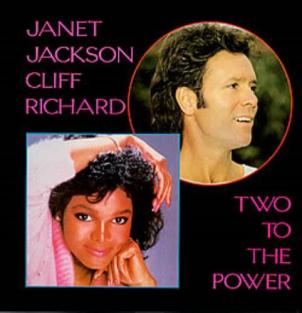
thumbnail_Outlook-g2j1xs2s

Terrible design (it doesn’t even get the full title on!), but also a harbinger of change? I know it’s a hell of a stretch, but little things do feed into bigger things and, well, I’m just putting the hypothesis out there… I do so wish it had been a better song, though.

(4) Freddie Mercury: Love Kills

When Moroder was working with David Bowie on the title song for the 1982 remake of classic 40s horror Cat People, talk naturally turned to the pair’s common love of European expressionist cinema. Both men harboured an ambition to find a suitable old silent film and put a modern soundtrack to it, and at this stage Bowie had been trying to get the rights to one film for years. Moroder’s project was already more advanced: he had, he enthused, found and acquired the rights to a movie nobody had heard of but which was ideal for his purpose: a 1927 dystopian epic called Metropolis. Bowie was a bit taken aback, but didn’t let on that this was the very same film he’d had his eye on. Maybe if he had mentioned it, there could have been a collaboration: Moroder and Bowie doing a full film score together, now there’s a dream team.

Moroder ploughed money into having the film restored, tinted, and re-edited to make sense (necessary because at the time large parts of it were still missing). And he wrote a full score with songs performed by some big names: Bonnie Tyler and Adam Ant were pretty big catches, as was Jon Anderson (coming off the back of Yes‘s US number one Owner of A Lonely Heart) but the biggest coup of all was getting Freddie Mercury, who brought with him a song idea he’d been kicking around for a few years, initially as a ballad before Moroder reworked it into the pulsating electropop groove heard here.

While most of the backing is played by session keyboardist Fred Mandel, many years later it emerged that all of the other members of Queen made contributions as well. This wasn’t entirely surprising and many people had already surmised as much, considering that it was taped during sessions for Queen’s own 1984 album The Works, which was recorded – as the last couple of Queen albums had been – at Moroder’s Munich studio Musicland with in-house producer Reinhold Mack. (Mandel is on The Works too – most memorably providing the wah-wah laden not-a-guitar solo on I Want To Break Free.)

Love Kills was the lead single from the soundtrack, a pretty substantial hit, a barnstorming club monster, and it goes down in history as Freddie Mercury’s first ever solo single – as long as you ignore the Larry Lurex episode, which luckily everyone does.

(5) Giorgio Moroder: The Duel

This one’s just plain fun. We’re back to Electric Dreams and one of the movie’s highlights. The first demonstration of Edgar’s newfound sentience comes when Miles goes out, the cello player downstairs starts practising – and Edgar joins in. So this is their duet, or duel. A word of warning: this track has full stereo separation with the cello in the left channel and the computer on the right. So you really do need to be listening in stereo for this one. If you’re on a single speaker / earbud / whatever, you’ll be missing half the duet and all of the point.

Side Two

(1) Giorgio Moroder and Paul Engemann: Reach Out

On my first Giorgio Moroder ICA, side two opened with a cheesy but suprisingly popular song performed by Paul Engemann. So with that precedent in mind, it was obvious what had to fill the spot this time.

If you give the Olympic Games to Los Angeles, you can hardly be surprised if they make it a bit showbiz. The LA Games arguably invented the even-more-modern-than-the-Modern Olympic Games, for which part of the masterplan was bringing music into the presentation – and with the world’s top film composers right there on their doorstep, naturally the Games were going to be scored like an action blockbuster. The likes of John Williams, Christopher Cross, recent Oscar winner Bill Conti, Philip Glass and Herbie Hancock all supplied pieces to the soundtrack, as of course did Giorgio Moroder, whose “Reach Out” was designated the “Track Theme” although it wound up as arguably the most-recognised sonic signature of the games, alongside John Williams’ “Olympic Fanfare and Theme” (the latter remains well-known in the US as it’s been NBC’s theme for its Olympics coverage ever since).

Is Reach Out a great song outside of that context? I wouldn’t say so, no, mainly because Tom Whitlock‘s “inspirational” lyric just grates too much. But it’s absolutely spot-on for that moment, in the same way that Together In Electric Dreams is exactly right for the climax of its movie. So much so, that it wouldn’t be the last time Moroder and Whitlock were commissioned to write the theme for a sporting event: they would also go on to write songs for the 1988 Seoul Olympics (Hand in Hand) and the 1990 FIFA World Cup (To Be Number One). Those are pretty cheesy too – but they certainly did the job.

(2) Melissa Manchester: Thief of Hearts

From the list of people involved in the Thief of Hearts soundtrack, you could be forgiven for thinking it must be another Moroder score: among the contributors were his frequent backing singers Beth Andersen, Elizabeth Daily, Joe Esposito and Joe Pizzulo, guitarist Richie Zito, lyricist Keith Forsey and programmer Brian Reeves. It was basically Moroder’s entire regular crew, and even recorded at his Beverley Hills studio, Oasis, but actually the man in charge was another recurring Moroder collaborator, his sometime protégé Harold Faltermeyer, who considers it the start of his own career in soundtracks. Moroder’s one contribution was writing the title song, and though he got a production credit as well, it seems he wasn’t exactly hands-on.

From Faltermeyer’s autobiography Where’s the Orchestra?:-

“Although Giorgio declined to score it, because he was busy with various projects, he agreed to contribute at least one song to the project. He quickly came up with a song called Thief of Hearts, and we needed to find a singer. We were lucky to sign Melissa Manchester for this […] I got busy working on a demo, which we sent over to Melissa. She was quite happy with it, so we were rockin’ and rollin’. Under one condition: Giorgio had to be present for the vocal session, because who was Harold Faltermeyer? Giorgio’s appearance was limited to a “Good morning boys”, or in this case: “Here she is!” With this he disappeared, and we did the rest. Once I got famous, her management asked me to produce her, typical Hollywood but at that point I didn’t even consider it!”

This particular version is the remix by John “Jellybean” Benitez, who at this point seemed to be the “soundtrack doctor”, sprinkling his remixing magic on movies like Breakdance, Footloose and… The Muppets Take Manhattan?! Yes, really. Variety is the spice of life!

(3) Giorgio Moroder: Rotwang’s Party (Robot Dance)

As well as the ten tracks featured on the Metropolis soundtrack album, there were further instrumentals hidden away on the B sides of the three singles. Bonnie Tyler‘s “Here She Comes” shares its vinyl with a confused slow-fast-slow piece called Obsession that I don’t rate all that highly; Jon Anderson‘s Cage Of Freedom has Workers’ Dance which lacks a real hook but would have made a decent theme for a TV technology show (and might still do even now); but the pick of the bunch is this one from the Love Kills single. The influence on known fans Daft Punk is evident particularly toward the end, and paired with Love Kills it made for a good value package.

(4) Limahl: L’Histoire Sans Fin

Although Giorgio Moroder is fluent in five languages, he tends not to write lyrics in any of them, preferring to pen the melodies and leave the actual words to his collaborators – if he’s working with a big name artist then they’ll often provide their own lyrics, while the rest of the time it falls to one of his regulars such as Pete Bellotte, Keith Forsey or the now late Tom Whitlock. Sure, he cares about the quality of the lyrics, but basically, the words in a Moroder song are first and foremost a medium for melodies. And that, combined with the notion that maybe it would be nice to offer something a bit less familiar, is my excuse for including this oddity on the ICA.

Of course in its English version (words by Forsey), The NeverEnding Story is one of Moroder’s biggest and most familiar hits. Since The NeverEnding Story was a German film – still the highest-grossing German film of all time, as it happens – it would make sense for the title song to also have a version in German, but actually the German version of the film didn’t use the song at all. It didn’t even use Moroder’s music – Moroder and Klaus Doldinger each wrote scores and the international release has a pick’n’mix from both, but the German cut went with Doldinger alone.

The French and Canadian single releases did however feature – as a B side – this version en Français, with a loose translation by prolific Francophone songwriter Pierre-André Dousset, and original co-lead vocalist Beth Andersen replaced by Parisienne A-list session singer Ann Calvert. To be honest, I rather miss “Show no fear / Or she may fade away…” and I’m so used to Andersen’s wailing before the instrumental break that Calvert’s imitation just doesn’t sound right. But the tune’s still hard to resist. I just wonder what this would have sounded like in German?

(5) Pat Benatar: Here’s My Heart

A lighters-in-the-air moment to finish. To my mind, this should have been the big breakout hit from Metropolis. It pops up twice in the movie and a third time as a triumphant reprise over the credits, but the version released on the soundtrack album is a weirdly stodgy remake with different lyrics. Which then wasn’t even issued as a single, so it wound up as a bit of a lost song, never performed live and not featured on a Pat Benatar album until it popped up many years later as the conclusion of her otherwise chronologically-sequenced career retrospective Synchronistic Wanderings.

However the actual movie version is much stronger, and it’s easy enough to find the full film score online, so a bit of fiddling about in Audacity et voila! You can find videos on YouTube where people have just run the three original variations together, resulting in an awkwardly-structured song that runs nearly eight minutes, but I’ve gone for a tighter edit that is pretty much the same length as the album version, give or take a few seconds, and I think could have worked as a single too. This could so easily have been a karaoke standard – it’s got the kind of chorus people would find it hard to resist having a go at. I don’t think many people could do it quite this well, though: I have to admit, basically only knowing Benatar from her growly rock hits, I hadn’t realised quite what a strong melodic vocalist she actually is.

So that’s Moroder’s 1984. I don’t think there will be a 1985 ICA because he just didn’t do all that much in ’85: apart from a dashed-off Giorgio Moroder & Philip Oakey album (which neither man rates highly, though I think it’s actually pretty good), his only other significant release was the odds-and-ends collection Innovisions, which I remember being a staple of the reduced-price racks for a very long time afterwards. And after that, well, there are stories later on but I’m not sure the music itself is quite so interesting. But of course Moroder’s career goes back in time from here as well as forward, so… watch this space!

Leon

SHAKEDOWN, 1979 (February)

79

Welcome to the second post of today.

All you need to do is read over the January 1979 posts for this new series to get an idea of how excited I was to be looking back at the 45s from 45 years ago.

February 1979 kind of dampens things down.  It was seeing the song Bat Out Of Hell by Meat Loaf enter the singles chart at #25 on 4 February which provided a reminder of what really dominated things. It’s not so much the single, which spent just eight weeks in the Top 75, peaking at #15.   It’s the parent album.  It had come into the charts on 11 March 1978.  It spent much of the rest of the year hanging around, but never getting into the Top 10.  By 6 January 1979, it was sitting at #73 and looking as it if would finally give us all much needed peace and quiet.  That’s when it got its second wind and started climbing up the charts again.  It would be in the Top 75 for 321 of the next 329 weeks.  There couldn’t have been too many houses that didn’t have a copy…..but mine was one of them!  It’s an album that has continued to enjoy the occasional revival, and according to wiki, it has spent 522 weeks on the UK album chart. Ten feckin’ years…..(cue joke about crimes and jail sentences).

But then again, there were these to enjoy for the first time the same month.

mp3: Elvis Costello & The Attractions – Oliver’s Army

It came in quietly at #45 on 4 February and stayed around the Top 75 for twelve weeks, finding itself stuck at #2 for three successive weeks, unable to dislodge The Bee Gees or Gloria Gaynor.   There are some who say it was only such a big hit as the piano part subconsciously  reminded record-buyers of Abba.

mp3: The Pretenders – Stop Your Sobbing

As I mentioned last time out, 1979 was a year in which many new bands emerged to enjoy success, much of which turned out to be fleeting. The Pretenders rather excellent debut single, offering a new take on a Kinks song from 1964, hit the charts at #60 on 4 February, and in due course would climb into the Top 40.  There was much much more to come from Chrissie Hynde & co throughout the remainder of the year, and beyond.

mp3: The Skids -Into The Valley

11 February was the chart in which The Skids made their first appearance of the year, having enjoyed a couple of minor hits in 1978.  Getting to perform on  Top of The Pops was a turning point in their career, thanks to Richard Jobson‘s mesmerising dancing that made you wonder if he’d been auditioning for the can-can girls in Paris.  Into The Valley, whose title reflects a rather rundown housing estate not far from the band’s home town of Dunfermline, would spend 11 weeks in the charts and peak at #10.  It’s still, all these years later, the walk-out tune for Dunfermline Athletic FC.

mp3: The Cars – Just What I Needed

Another new entry on 11 February.  And recently looked at in some depth on this blog, right here.

mp3: Lene Lovich – Lucky Number

Lene Lovich, an American-English songwriter and performer (she was born in Detroit but moved to Hull, aged 13) was on Stiff Records here in the UK.  A flop single in 1978 had thrown up an interesting b-side, which Stiff felt had potential.  Re-released in February 1979, Lucky Number proved to be all that the record label bosses had imagined. It entered the charts at #62, and following a Top of The Pops appearance after it had climbed into the Top 30, Lene’s unique look and sound temporarily found a bigger market with the single going Top 3.

Two weeks later, on 25 February, Sex Pistols enjoyed a chart entry with the double-A side of Something Else/Friggin’ In The Riggin’ that eventually also went Top 3.  Cartoon punk was now a thing….see also the fact that Generation X, fronted by BIlly Idol, were also riding high in February 1979. But at least Joe, Mick, Paul and Topper could save us…..

mp3: The Clash – English Civil War

The second 45 to be lifted from Give ‘Em Enough Rope came in at #39 and would end end spending six weeks in and around the environs of the chart, selling in decent enough numbers each week to offer up a chart run that nowadays could pass as a lottery ticket selection – 39 28 34 25 27 30.

The final week of February also saw the return of some of the original glamsters.

mp3: Roxy Music – Trash

Roxy Music had been away for a few years – the last original hit single had been in 1975 – with Bryan Ferry carving out a successful solo career.  This was the comeback 45.   One that I like, but it’s not regarded as being close to the band’s finest moments, as evidenced that it got no higher than #40.

There will be more of the same next month…..

JC

SOME LIFE-AFFIRMING EXPERIENCES (2)

Three more gigs last week.  I’m going to do my best to heap praise on each of them in approximately 120 words.

davidsean

(1) HiFi Sean/David McAlmont : St Luke’s Glasgow, Thursday 8 February

A full year after the release of the album Happy Ending, the duo finally perform live in Glasgow to a packed audience that had very few people under the age of 40 in attendance.  It made for a different sort of dynamic than usual, with appreciation rather than mania being the reaction to the show, which itself consisted half of songs from the album and half that have yet to be released.

Over now to our guest reviewer, Basil Pieroni of Butcher Boy:-

“McAlmont’s singing seemed effortless, which considering his range and soulfulness was incredible. And Sean Dickson is clearly a magician!”

My regular sidekick, Aldo, simply said:-

‘David McAlmost must be the best singer we’ve ever heard’

And he’s right.

mp3: HiFi Sean and David McAlmont – The Skin I’m In

adam

(2) Adam Stafford : Tolbooth Cafe, Stirling, Saturday 10 February

Adam Stafford, like many other musicians and performers, found it a real struggle having to remain so quiet and unable to perform during the lockdown periods of recent years. His last album in 2021 was fully instrumental, but he’s again found his voice and a new album is in the pipeline with the hope of a release later this year.

This free early afternoon gig, held in the café area of a popular performance space in Stirling, enabled some of the new tunes to be aired, along with some songs that he hasn’t performed live in the best part of a decade.  As a long-time fan, it was a privilege to be there.  I’m as excited as ever by what lies in store.

mp3: Adam Stafford – Vanishing Tanks

hh

(3) Hamish Hawk – Glasgow Barrowlands, Saturday 10 February

‘Where’s my big like?’ is the opening line of Hamish Hawk‘s song, Think Of Us Kissing.

A sold-out 2,000 strong audience provided him with the answer as we (and that includes myself and Mrs JC) cheered him and his talented band from the second they took to the stage all the way through to the final note of what was a jaw-dropping encore.  This was easily the biggest headlining show of his/their career to date, and just like Hinds some seven days earlier, it was a gig in which those on stage and those who are there to watch seemed to become a single entity.  Beaming smiles all round from start to end….and I’m still in disbelief at hearing how things were rounded off with a blistering cover of Debaser.

mp3: Hamish Hawk – Think Of Us Kissing

It really has been an astonishing start to 2024 on the live front.   Lack of time and energy prevented me getting along to catch Sea Power in Glasgow last night, and I’m kicking myself that I’ll have missed out, given that Adam was raving about their show in Manchester a few nights earlier.

Apologies for the less than perfect photos….I don’t have anything like a top of the range phone when it comes to a camera. My device is really all about calls/texts/messages and having enough capacity to store almost 50,000 mp3s.

Oh, and this set of short reviews are a bonus to what was intended on the blog today.  Come back at 12noon (UK time) for what was originally scheduled for 5am.

JC

THE WEDDING PRESENT SINGLES (Part Sixteen)

R-999452-1182517672

Monday 3 February 1992.   The quest to pick up a copy of the new Wedding Present single wasn’t as intense as the previous month.  I think we gave up after visiting the three shops closest to our office.

In due course, when the first of the compilation CDs were released in June 1992, I wasn’t all that bothered that I had missed out on this one as I felt at the time, and still do, that it was a rare misfire in terms of singles

mp3: The Wedding Present – Go-Go Dancer

There’s really not much of a tune and the lyric, while concerning itself with the dreams of a lovelorn individual, is a bit on the convoluted side.   

The b-side was a Neil Young song, originally released in 1975 on the album Zuma, which he had recorded alongside Crazy Horse:-

mp3: The Wedding Present – Don’t Cry No Tears

I only knew the song thanks to it having been covered by Teenage Fanclub as a b-side to Everything Flows, that had come out the previous year.   I thought the Weddoes version was better but in saying that, I would eventually discover that neither of them come up to the original when I became a very very very very very late convert to some of Neil Young’s material.

Go-Go Dancer entered the charts at #20, which was, at the time, the highest placing for any TWP 45.  There was no invite to Top of The Pops this time, but here’s the budget promo:-

This one was directed by Phil Taylor.

JC

SATURDAY’S SCOTTISH SONG : #391: THE ZIPS

A-1700309-1562817082-1297

From the booklet accompanying Big Gold Dreams, the 5xCD compilation covering Scottish independent music 1977-1989, issue by Cherry Red back in 2019.

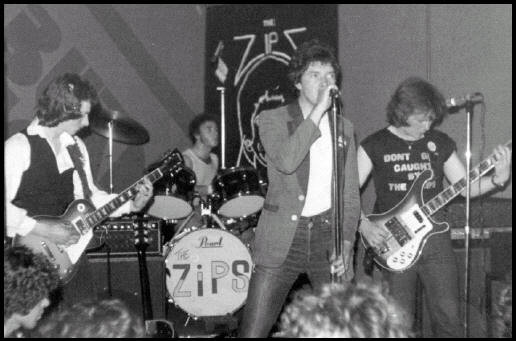
Saturday afternoons at Glasgow’s Custom House Quay beside the River Clyde were once enlivened by the sound of The Zips, whose poppy take on punk was exemplified by this lead track from a four-song EP released on the Black Gold label in April 1979

mp3: The Zips – Take Me Down

Formed by pub rock veterans John McNeil and guitarist Brian Jackson, with Phil Mullen on bass and Joe Jaconelli on drums, the Zips released a second single, Radioactivity, on their own Tenement Toons label, funded by Jackson’s granny in solidarity with the A-side’s anti-nuclear stance.  The Zips reunited in 2002, since when they have released numerous EPs and four albums.

JC

THE 12″ LUCKY DIP (3)

R-1362029-1279930369

The fact that this is another one picked up in Canada might give away the fact that these 12″ picks aren’t really the result of lucky dips.   It doesn’t make me a bad person.

Gang of Four were on EMI over here in the UK and on Warner Brothers in North America.

I Love A Man In Uniform was released in the UK as a single, on 7″ and 12″, in May 1982, just a week ahead of the album Songs Of The Free.   The single version was identical to the version on the album, and was backed by The World At Fault, an otherwise unavailable song.   There were no extra tracks made available on the 12″. It reached #65 in the singles chart, just the second time Gang of Four had breached the Top 75, a full three years after At Home, He’s A Tourist.

Things were a bit different over in North America.  Warner Brothers went with an extended and remixed version of Uniform as the a-side, while the b-side offered a dub version of the song along with another track which, as far as I know, was only made available initially via this release, although it would be added to compilation albums in future years.

mp3: Gang Of Four – I Love A Man In Uniform (remix)
mp3: Gang Of Four – Producer
mp3: Gang Of Four – I Love A Man In Uniform (dub version)

The drum sound is different on the remix, and the song ends up about 90 seconds longer than the original. The dub version is largely instrumental in nature and should be played loud.  Producer is a fine track, and I’m assuming was left off Songs Of The Free either for reasons of space or that the band members felt it wasn’t quite a good fit.

JC

AROUND THE WORLD : BARCELONA

map-barcelona

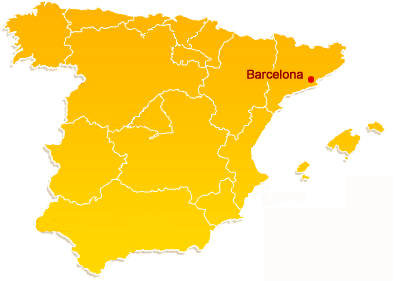
The second-largest city in Spain, with a population of approximately 1.6 million within its city limits, which expands to 4.8 million across a wider urban within the province of Barcelona. It is located on the coast between the mouths of the rivers Llobregat and Besòs, bounded to the west by the Serra de Collserola mountain range.  Founded as a Roman city, it has been through a lot ever since, fought over on countless occasions.  It is a city famed for live music and performances, and can count the Sónar Festival and the Primavera Sound Festival among its cultural highlights.

A-463056-1195329811

That there’s a picture of I’m From Barcelona, a pop group from Jönköping, Sweden, best-known for having up to 29 band members and the eclectic mix of instruments such as  clarinets, saxophones, flutes, trumpets, banjos, accordions, kazoos, guitars, drums, and keyboards among others. There were five albums between 2006 and 2015.  This can be found on the debut album, Let Me Introduce My Friends

mp3: I’m From Barcelona – We’re From Barcelona

It’s certainly not the sort of music you normally hear on this corner of t’internet.  The next city stop on our world tour will take us back to our comfort zones.  In the meantime, please just sit back and enjoy the journey.

JC

ONE HUNDRED AND ELEVEN SINGLES : #046

aka The Vinyl Villain incorporating Sexy Loser

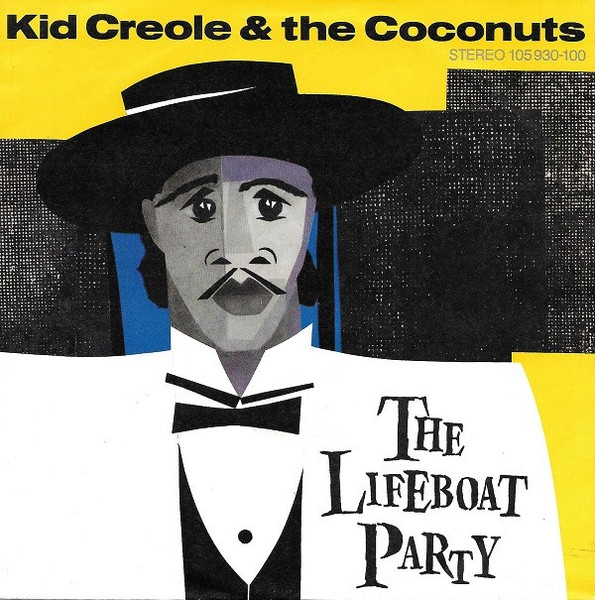
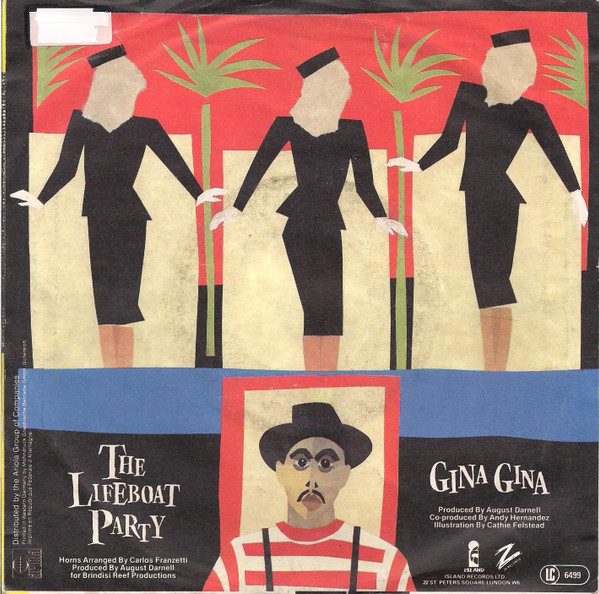
#046– Kid Creole & The Coconuts – ‘Gina Gina’ (Island/Ze Records ’83)

kc

Hello friends,

looking at the previous 45 posts, you surely wouldn’t believe that I would pay even the slightest attention to a combo described @ Wikipedia as thus:

“its music incorporates a variety of styles and influences, in particular a mix of disco and Latin America, Caribbean, and Calloway styles conceptually inspired by the big band era”.

Still, I did pay attention, and I did from a very early age on, because by sheer coincidence I happened to see the famous Rockpalast show on German television in 1982. I must admit I never knew much about Kid Creole before, by God – I was 14 then, so forgive me! But what I saw just blew me away – one of the last great performers, for sure! It’s a very good question why it was that I was so taken aback, not easy to answer for sure.

Why? Well, because the Rockpalast show certainly stood in marked contrast to the bands I usually listened to at the time – The Kid, Coati Mundi and The three Coconuts were by no means comparable to the sulky German post-punk bands, all dressed in black, not able to play any instrument halfway properly – which normally would have caught my attention. In hindsight, I think that exactly this difference made them so worthwhile to me, it was like entering another world. All the kitsch, all the moves, all the dancing, all the choreographies were so way over the top – you could easily tell that self-irony was a big part of the show. It isn’t easy to explain, as I said, but I really think – and thought – Kid Creole & The Coconuts were absolutely special because of that.

And, JC, I know what you are thinking right now: for me, it wasn’t just the Coconuts. Unlike what you witnessed, at the Rockpalast they wore long dresses all the time, not bikinis, as pictured above. Alas. So it was the show for me, nothing else. Only years later – through the internet – I found out what a clever and funny lyricist Kid Creole was, some great words in many great songs. This one always was one of my favorites:

R-811447-1575842136-5147

R-811447-1535361590-5036

mp3:  Kid Creole & The Coconuts – Gina Gina

Only a B-Side (again), to ‘The Lifeboat Party’ in fact, but what a song, ey!? If only someone could tell me – after 40 years – what ‘Saliva Gutz’ means, my life would be complete, honestly – so please please please: help me here!!

Thanks ever so much for an answer – and enjoy

Dirk

EVEN MORE SURPRISING COVERS

A guest posting by Leon MacDuff

400x400

Recently on these pages, if pages they be, Adrian Mahon offered up a selection of surprising and interesting originals of well-known covers, signing off with “I’m sure you’ll have a few of your own!”. Challenge accepted…

Let’s start with a couple of very well known 80s hits. Yazz and the surely fictional Plastic Population (and her real-life pals in Coldcut) made this one into a huge house-pop success in 1987, but the original goes back to 1980 (and a bit of a throwback even then; from the sound alone, I would have guessed about 1974). I’ve always reckoned that Yazz’s reading feels like false hope, but Clay actually makes it believable.

mp3: Otis Clay: The Only Way Is Up

Like most people, I knew this next one from the 1982 smash by Odyssey. And like most people, I associated its author Lamont Dozier pretty much exclusively with being a songwriter for the sixties Motown production line. But post Motown he went on to issue a string of solo albums, and this future classic arrived on his 1978 offering, Peddlin’ Music On The Side. I do prefer the Odyssey version though:

mp3:  Lamont Dozier: Going Back To My Roots

Nowadays no Sam and Dave compilation would be complete without this song, but without Elvis Costello it might well have remained just a little-known throwaway B side to a single nobody bought:

mp3: Sam and Dave: I Can’t Stand Up For Falling Down

Some songs come a long way from their originals. You definitely will know this one, but see how long it takes you to recognise it from the original 1948 version, in German…

mp3:  Horst Winter und die Swingsingers: Und jetzt ist es still

I always loved Dubstar‘s version of Not So Manic Now. A song with subject matter you don’t hear very often and full of words you would imagine had no business appearing in a pop song. I did notice the writing credit wasn’t for the regular band members, but it was a few years before I got to hear the original by fellow Novocastrians Brick Supply. It was the lead track on their 1994 release Somebody’s Intermezzo EP, which got some decent critical notices but basically went nowhere.

mp3: Brick Supply: Not So Manic Now

And finally, a bit of a mystery, and a bit of an investigation. For this one I’m going to share the cover as well, so from 1980 here is the debut single by It’s Immaterial, and from 1967 the original by The First Impression:

mp3:  It’s Immaterial: Young Man (Seeks Interesting Job)

mp3: The First Impression: Young Man Seeks An Interesting Job

It’s Immaterial are cult favourites of course, but weirdly, there’s practically nothing out there about The First Impression. What we do know is that they recorded two LPs for budget label Saga in 1967: the all-covers Beat Club, and the majority of an album called Swinging London which also included a scattering of Beatles covers by Russ Sainty (replaced on the second pressing with a handful of originals by The Good Earth, who subsequently morphed into Mungo Jerry). Young Man is from the Swinging London LP, the sleevenotes of which tell us only that The First Impression are “top discotheque favourites” (Beat Club is similarly unhelpful, offering no description beyond “top London beat group”) – and while some of the songs have appeared on subsequent compilations of 60s mod and psychedelia, the sleevenotes to those seem to just take Saga’s blurbs at their word and have nothing further to add.

Perhaps they were indeed a top London beat group, but even if they were, nothing about their one-and-two-thirds album discography suggests that they were engaged as anything other than a session band. Saga Records weren’t actually a “pop” label – their specialism was cheaply-recorded classical albums, plus bought-in jazz and folk LPs. And really, everything about “Beat Club” and “Swinging London” screams “cheap cash-in played by anonymous session musicians”. They can’t even manage to keep the name of the group consistent: while the back of the Swinging London LP, and the labels, credit The First Impression, the front names them as The First Impressions. My first impression is: oh dear.

So can we find out anything at all about this group? A line-up, for example? Apparently not. Or perhaps somebody’s shared memories of seeing this band playing at the time? Not that I can find. I was briefly led down a dead end by a suggestion that before recording for Saga, The First Impression were signed to Pye. But no, that was a group legitimately called The First Impressions, who in 1967 were recording their own original material for Parlophone, having changed their name in the meantime to The Legends. So I think we can rule them out.

The album credits someone called Britten as writer of the First Impression songs, maybe can we track him or her down? I was initially led astray by the Discogs entry for the It’s Immaterial single, where somebody’s linked the name Britten to Terry Britten. In 1967, Terry was playing in the Australian group The Twilights, and the following year he had one of his compositions recorded by Cliff Richard, opening up a successful career as a songwriter for others with hits including Devil Woman and Carrie for Cliff, and What’s Love Got To Do With It and We Don’t Need Another Hero for Tina Turner. That he also, even by accident, penned It’s Immaterial’s debut single would be an entertaining little factoid but alas, it’s not true – as I realised when I turned to a second line of enquiry.

Most of the First Impression tracks, including Young Man, credit Britten alone, but two bear a credit to Cumming / Britten – could I perhaps find this equally mysterious co-writer? That was easier: just a couple of minutes checking the various Cummings on Discogs (I didn’t bother clicking on Alan though, since while the theme song for The High Life may be a major earworm, 1967 was definitely going to be too early for him) and I was able to identify Britten’s collaborator as one David Cumming, a comedy scriptwriter with a sideline in songwriting who that same year not only supplied a B side to Kiki Dee, but even more interestingly, also released a single himself which was co-written by not Terry but John Britten. That’s our man! It looks very much like our tunesmiths are not people in a “top London beat group” – they are a producer of budget albums and a scriptwriter who both dabble in songwriting.

All of which means that honestly, I’m just not buying this “top discotheque favourites” line. I think Saga Records, looking to cash in on the mod scene, just put some session musicians in a studio and gave them a bunch of songs written to order by… well, hacks. But I still think “Young Man Seeks An Interesting Job” is a good one – even if it took It’s Immaterial to tease the quality out of it.

Leon

SOME LIFE-AFFIRMING EXPERIENCES (1)

stevemasonIGapproved-600x600

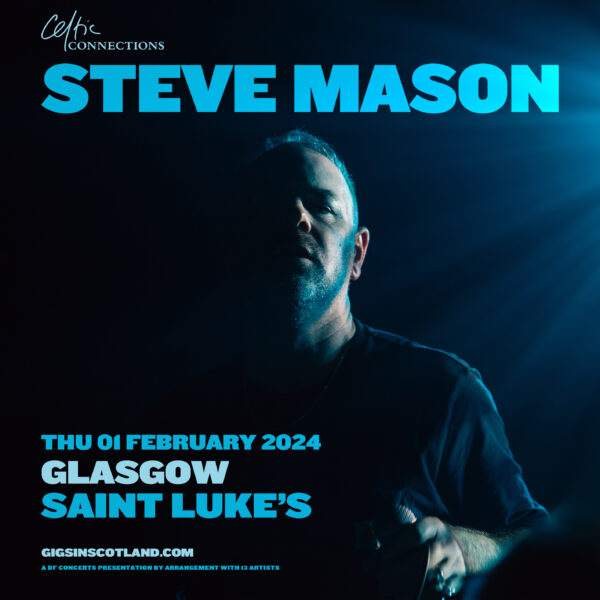
February 2024 was always going to be a busy time for gigs, and my intention had been to round everything up at the end of the month.  I’ve changed my mind on the basis of the first two shows, given that I’m so compelled to describe how they went.

First up, as you’ll see from the above promo poster, was Steve Mason on 1 February.   It was the second time in nine months that I’d seen him on stage, the previous occasion being Manchester last May when, with the aid of a full band and backing singers, he was touring in support of the album, Brothers and Sisters.  This time he had just two other colleagues on stage with him – Darren Morris on keyboards and Calie Hough on drums/percussion – which meant that there was some reliance on backing tapes/technological wizardry.

Any fears that the sound or show would somehow be diminished were very quickly removed and a packed audience inside St Luke’s, a converted church close to the famous Barrowlands in the east end of the city, was treated to an outstanding gig with a set-list which largely relied on songs from Brothers and Sisters, a record that I’m increasingly of the belief is up there in terms of quality with anything he’s issued throughout his now 28-year career as a musician, stretching back to the formation of the Beta Band.

Steve Mason doesn’t say much all evening other than variations on ‘thank you’, with the longest chat (until the encore) being to thank everyone for showing up and allowing him the opportunity to play in the live setting.  He is, however, a constant force of energy as a performer, always seemingly on the move as he sang, other than the occasions when he strapped-on an acoustic guitar or provided a bit of additional percussion to flesh out some songs.  The approach meant that the show never seemed to pause for breath.

With it being a home-gig (of sorts), he was always likely to get a rapturous welcome, but it really seemed that the appreciative roars and applause greeting the end of each song got increasingly louder as the night went on.  Actually, that’s a wee bit of a bending of the truth, as the loudest cheers came at the end of the three occasions when he aired Beta Band songs – Dog Got A Bone, Dry The Rain and Squares – all of which sounded every bit as fresh and indeed spiritual (maybe the venue played its part??) as they did back in the late 90s and early 00s.

mp3: The Beta Band – Dry The Rain

The encore was magnificence personified, with the one-two punch of the upbeat and incredibly danceable I Walk The Earth, released in 2000 when Steve Mason was using the King Biscuit Time nom de plume, and closing with a seven-minute rendition of The People Say, in which the audience very willingly played its part with the call-and-response elements.

mp3: Steve Mason – The People Say

I was there with my regular sidekick Aldo, and we both felt it might be a while before we had such an enjoyable time at a gig.  Turned out, we had just 48 hours to wait.

IMG_7227

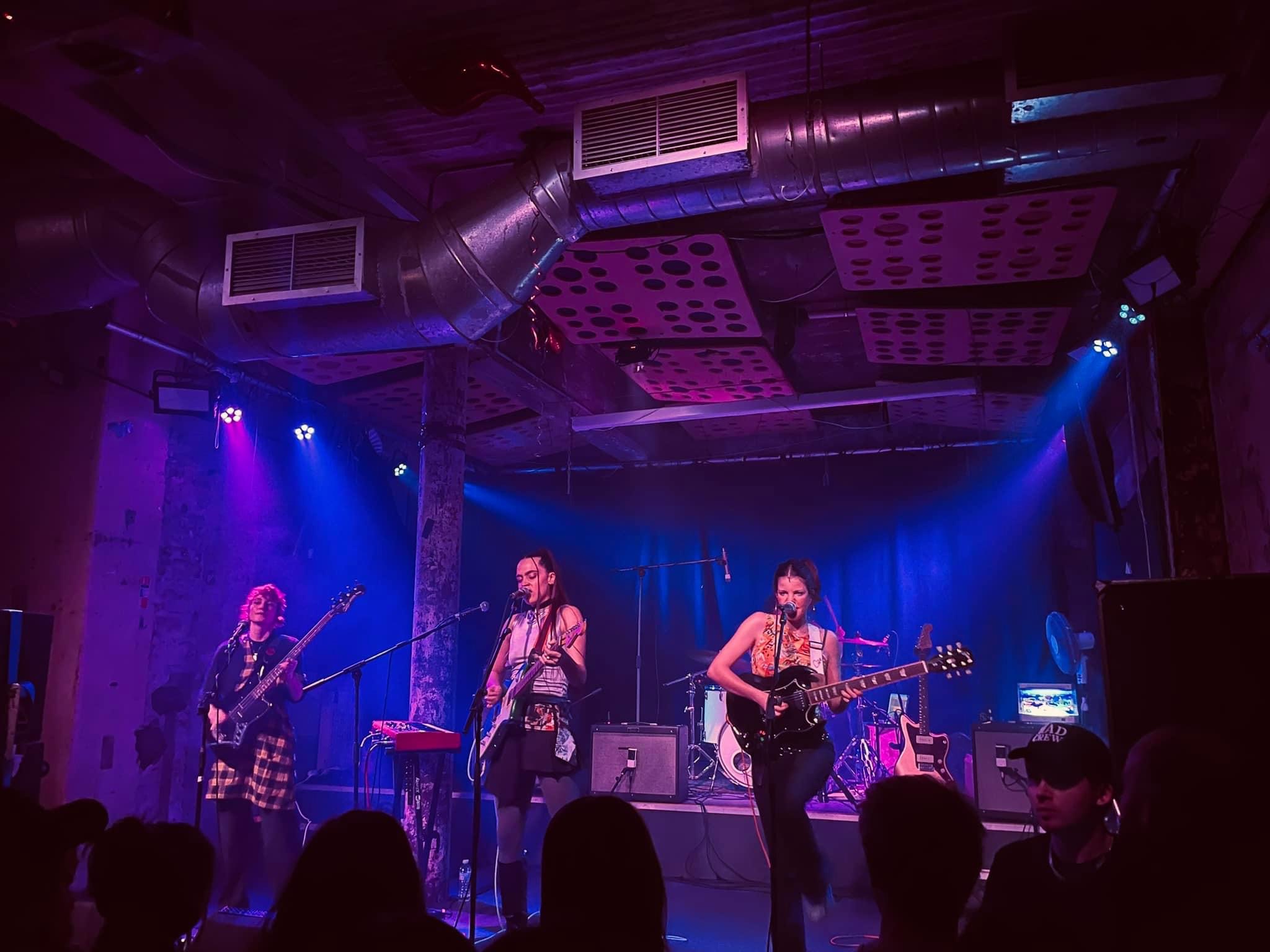
Saturday 3 February saw the two of us rock up to Stereo, a basement location in the city centre that was playing host to Hinds as part of the annual event known as Independent Venues’ Week held across a number of UK towns and cities.

I’ve long had a love of the Madrid-based indie-pop charms of Hinds, pulling together an ICA back in June 2021, but unlike Aldo, I’d never had the opportunity to catch them live – last Saturday was the fourth time he’d seen them.

I was particularly pleased to get the chance as it has been four years since Hinds last released any new music, and I had long assumed they had called it a day, perhaps frustrated by the inability to come together to write and perform while the world dealt with the COVID lockdown restrictions.  In the middle of last year, a long period of silence was broken, but only with the news that two of the band – bassist Ade Martín and drummer Amber Grimbergen – had some months previously chosen to quit after nine years. Although it was an amicable split, it did leave the guitarists/vocalists and principal songwriters, Carlotta Cosials and Ana García Perrote, with the dilemma of what to do next.

There was no record deal, management or support structure in place, but the decision was taken to keep things going.  New songs were written and demoed and in due course replacement musicians were found to enable shows to get back on the road  (the new bassist is Paula and the new drummer is Maria, but I don’t know their surnames).

Glasgow was the fifth show in a week-long UK tour of independent venues.  I know the city has a reputation among many musicians as having highly knowledgable and enthusiastic audiences whose responses to live music can border on the legendary – it’s a reputation that goes back, certainly in my lifetime, to the former Glasgow Apollo and that has been cemented by venues such as Barrowlands and King Tut’s, which are often name checked as being among the best that you could hope to play.

The Hinds show last Saturday seemed to confirm all of that, judging by what they posted the next day on Instragram:-

“historically the best hinds show ever. tears, blood, buckfast and sweat for and towards music. wow. we will be back”

I’m not going to argue.   I can’t judge against previous shows, but Aldo can, and he thought it was astonishingly good.  The set-list contained songs from all three studio albums, four new tunes (all of which sounded great) and a couple of covers, including their fabulous take on a Clash number (which was even better in the live setting):-

mp3: Hinds – Spanish Bombs

Carlotta and Ana were both moved to tears by the way the crowd was reacting to the show, loving the old and new material in equal measures.  Stereo is a hot and sweaty sort of venue, and the energy on display from the stage, and among the adoring audience, which was probably a 50/50 mix across the male and female genders, made for one of those nights where you just feel there can’t be anything better than live music when a band/performer and those who are there to watch become a single entity.  It was frantic from the opening notes all the way through to the encore, with the faster songs being welcomed and celebrated by a mosh-pit down the front, with myself and Aldo standing on its fringe and looking on with big smiles on our faces.

Retreating to a nearby pub afterwards, there was a chance to reflect on the night and to realise we had been really lucky to have been present.  Neither of us knew that the band were about to go on record as saying it was their best ever.

Reflecting a bit more as I pull this piece together, it’s easy to forget that the musicians who we admire and love are just like the rest of us and will go through the whole gamut of emotions as they live their lives.  Carlotta and Ana were at very severe lows not that long ago.  COVID halted the band’s momentum and ultimately led to what had been a closely-knit group of four kindred spirits seemingly coming to an end.  They weren’t sure if their audience would still be there for them if they kept going.  It was almost as if they had to start all over again from the beginning. The tears came in Glasgow as they reflected on the past four years – they weren’t of sadness, but an outpouring of relief and joy that it really had all been worth it.

The new songs have whetted my appetite for the next album, which hopefully will be sometime in 2024.  In the meantime, here’s the one from which the last album, The Prettiest Curse, title took its name:-

mp3: Hinds – Just Like Kids (Miau)

What’s next for myself and Aldo? That’ll be Hifi Sean and David McAlmont this coming Thursday, back at St Luke’s.  Regular readers will know just how highly I rate their music….so it too should be a belter of a show.

JC

THE WEDDING PRESENT SINGLES (Part Fifteen)

hitsJust before 1991 came to a close, The Wedding Present released details of an audacious plan that would, if successful, put them on a plateau with Elvis Presley.

The King had, since the late 50s, held the record of the most Top 30 hits in a calendar year.  TWP were determined to match this, and would do so by releasing a brand-new single, on the first Monday of each month.   Only 10,000 copies of each single would be pressed up, all on 7″ vinyl only (which must have had the RCA execs pulling their hair out in despair given that CD singles were becoming increasingly popular and profitable).  Each single, which would consist of a TWP original on the A-side and a cover on the B-side, would be deleted the following day, and the calculation was that the 10,000 copies selling out in the blink of an eye would be enough to ensure Top 30 status for one week only.

It was a great plan, but there were serious flaws as soon became evident on Monday 6 January as loads of fans were left unable to get their hands on a copy of the single with shops all only getting a small number.   I was working that day, in Edinburgh, and myself and Jaques the Kipper spent an extended lunch break going round everywhere we knew, chain stores and smaller shops alike, only to be constantly told that the stock had sold out.   The same thing happened the following month, which led me to abandon plans to get out to the shops each Monday.  Before the year was out, I did have three of the 12 singles – I had a couple of Mondays where I wasn’t working and could get to a shop in Glasgow for it opening, while towards the end the demand had eased a little bit, partly because CD compilations of the singles and the b-sides meant there were other ways to get your hands on the songs.

(Spoiler alert.   I’ve since procured copies of all the singles that I didn’t have at the time, and the original vinyl will be getting used to supply the music over the coming weeks).

The group also announced that each single would be accompanied by a video, all to be made at a really low cost of £3000 per promo, with the group asking young, independent filmmakers to submit ideas and storyboards. 

David Gedge has since said that, in an ideal world, he would have been able to use  a different producer for each single, but the expense and practicalities of doing so were prohibitive, and so they were recorded over four different sessions…..

I’m intending to also, for reasons of time, bundle up some of the 1992 singles, but with this being such a long and rambling intro/backstory, I’ll limit myself today to the first in the series.

R-999431-1182513006

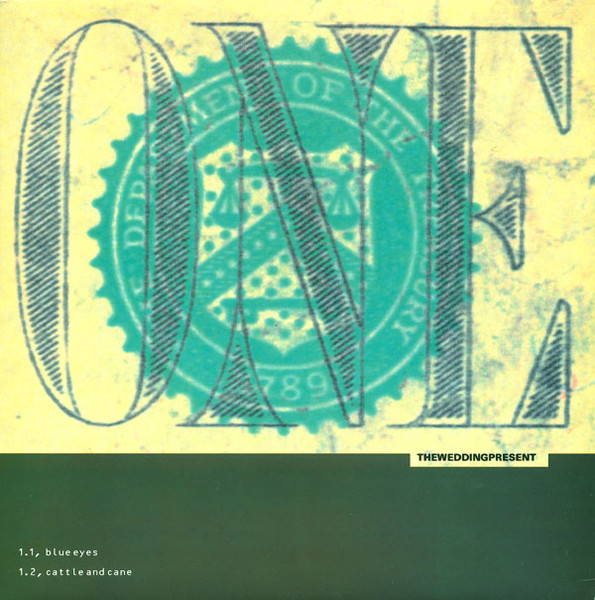
One of the things that really pissed me off about not getting this back in January 1992 were that the TWP original was a very fine song, taking up where Seamonsters had left off, albeit there was a new producer involved.  Chris Nagle was a legend to those of us who loved Factory Records, having worked alongside Martin Hannett on many of the seminal records.  He was part of the fabric at the famous Strawberry Studios in Stockport, and although no fans knew it at the time, he would be at the helm for the first three of the singles.

mp3: The Wedding Present – Blue Eyes

The other thing was not being able to listen to the b-side, a cover of one of my favourite records of all time.

mp3: The Wedding Present – Cattle and Cane

It’s a very decent take on things, which is high praise given how that I feel the original version by the Go-Betweens is so very special.  The Weddoes stick to the basics and don’t try and do anything flashy with it.  The one big difference being that the lyric is very much what had been sung by Grant McLennan back in 1982, and there was no attempt  to reproduce Robert Forster‘s spoken contribution.

Blue Eyes reached #26.   This would prove to be the worst chart placing across the next 12 months, so I’m assuming 10,000 sales in the first week in January had stiff competition with folk going out and spending Christmas money/gifts on singles that had been in the charts over the previous weeks.  It was the highest new entry in the charts that week.

It got them an appearance on Top of The Pops in which David sang ‘live’ over a backing track, but didn’t take his guitar playing all that seriously.

One peculiar thing to mention.  

Blue Eyes was still in the charts the following week, at #56.  This is perhaps an indication that the distribution hadn’t gone exactly accordingly to plan, and some shops were late in receiving their copies. But all 10,000 copies were sold….

Remember the bit earlier about the cheaply made promos?

This one was directed by Mark Turner.

Quick word re the quality of this one.  It was the hardest of the singles to track down online and the copy I’ve ended up with is less than pristine.  All the other singles (with one exception, which is a bit crackly in places) are in better condition and will sound much better.

JC

SATURDAY’S SCOTTISH SONG : #390: THE ZEPHYRS

zeph

From allmusic:-

“With a gentle balance of vintage folk-rock and British shoegaze influences, the Zephyrs emerged from Edinburgh, Scotland in the late ’90s. Sharing common collaborators with Glasgow’s Mogwai on early releases, they made their full-length debut in 1999 with It’s OK Not to Say Anything. The group made a subtle shift toward a more muscular sound on its still languid fifth album, 2010’s Fool of Regrets.

The sons of a rock musician, Stuart and David Nicol grew up playing music together before founding the Zephyrs, which they named after their father’s band from the ’70s. The brothers’ first album was recorded by Mogwai producer/engineer Michael Brennan, Jr. and featured Stuart on lead vocals and guitar, David on bass, and Gordon Kilgour on drums as well as guests including the Cowdenbeath Brass Band and Gordon’s brother Jonathan Kilgour on guitar. Titled It’s OK Not to Say Anything, it got a limited release on Edinburgh label Evol in 1999.

The album came to the attention of Mogwai themselves, and the Zephyrs were signed to the band’s Rock Action label, an imprint of SouthPaw Records. The label released their Stargazer EP in 2000 and sophomore LP When the Sky Comes Down It Comes Down on Your Head in 2001. The latter received very little promotion due to the label folding within days of its release.

The Madrid-based Acuarela label stepped in to issue the EP The Love That Will Guide You Back Home in 2002. The band then signed with Setanta for 2003’s Year to the Day, which saw the Nicols joined by both of the Kilgours, multi-instrumentalists Cian Ciárán and Michael Cochrane, and guests on various orchestral instruments. The Nicols assembled a completely different backing band for their fourth album, Bright Yellow Flowers on a Dark Double Bed. It followed on Acuarela in 2005. With the exception of a performance at a festival in Spain in 2008, the band was essentially inactive for the next four years,

The group eventually returned to the studio with Michael Brennan, Jr. to record Fool of Regrets, released by Club AC30 in 2010. It was accompanied by a tour of the U.K. The Zephyrs took more time off, then reconvened in 2014 with another new line-up to play some shows and start writing material for their next album. They eventually re-emerged in 2018 with the two-track release The Witches and The Crown Prince of Lies, issued by Acuarela, and earlier this year For Sapphire Needle, their sixth studio album was released.”

I’ve just one track of theirs.

mp3: The Zephyrs – Setting Sun

It’s from When The Sky Comes Down It Comes Down On Your Head, the 2001 album as it was later included on A Quiet Riot, a 34-track double CD compilation released that same year and featuring all sorts of names from the era.  Rachel Goswell of Slowdive offers a guest vocal on Setting Sun.

JC

AN IMAGINARY COMPILATION ALBUM : #357: UNCOMMON INSTRUMENTS (2)

RIPPING OFF THE IDEA FROM JONNY THE FRIENDLY LAWYER

various

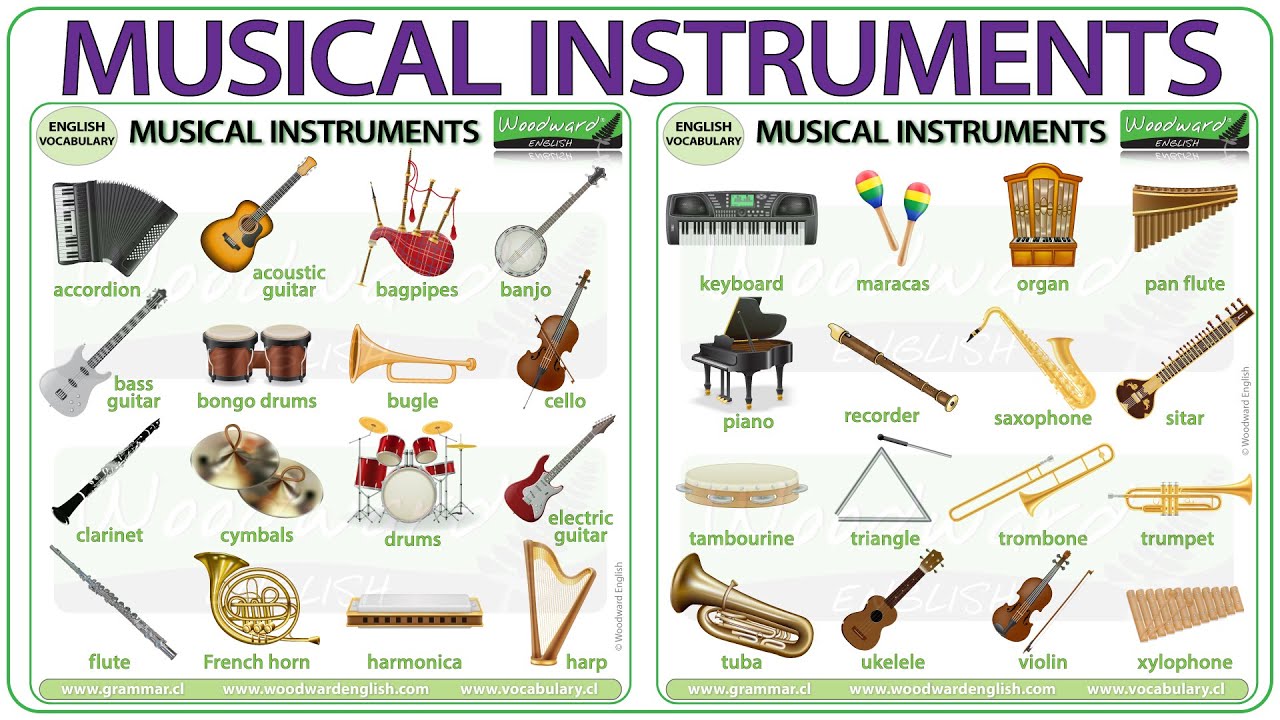
JTFL, having offered up some ICAs featuring Trumpets, then went one better with an ICA  made up of ten tracks in which uncommon instruments were used – Steel Drums, Theremin, Oboe, Musical Saw, Harp, Xylophone, Melodica, Spoons, Harpsichord and Mellotron.

The task I set myself was to come up with ten completely different instruments.  I’ve managed it, and while there’s a few more familiar instruments involved, they are not heard on recordings on a very frequent basis.  Oh, and I only had to look one of them up.   Let’s starts with something Scottish……

SIDE A

1. Bagpipes

Sleep The Clock Around – Belle and Sebastian

The pipes drone their way in at the end of this, the second track of the band’s third album, The Boy With The Arab Strap.   Credit is given to Ian Mackay for this one and appears to be the only song on which the piper is credited anywhere on Discogs.

2. Banjo

Sing – Travis

I’m not a musician and haven’t ever paid much attention to the origins of any instruments.  I’ve always assumed the banjo came out of one of the states of America, but have now been educated and finally know that the modern take on it derives from African-style instruments brought to that part of the word by enslaved people.

Sing was the first single to be lifted from the album The Invisible Band and, in reaching #3 in May 2001 turned out to be the most successful 45 released by Travis.  The banjo is played by their guitarist, Andy Dunlop.

3. Chapman Stick

I Don’t Remember – Peter Gabriel

This is the one I had to look up.   I had come up with nine instruments, but reckoned that a glance at the credits on Peter Gabriel 3, released back in 1980, would throw something different up.  And so it proved.

The Chapman Stick was developed in the early 70s by jazz musician Emmett Chapman.  It has ten or twelve individually tuned strings and is used to play bass lines, melody lines, chords, or textures, and unlike the electric guitar, it is usually played by tapping or fretting the strings, rather than plucking them. (you can tell I’ve looked this up!!).  Tony Levin, a proliic session and touring musician, was one of the first to specialise in playing the Chapman Stick and it’s his work you’ll hear on I Don’t Remember.

4. Glockenspiel

No Surprises – Radiohead

A rather beautiful number from OK Computer (1997) which was later released as a single and reached #4 in January 1998.  The single was accompanied by a brilliant but scary video that I’m sure all of you have seen.  If not, then head over to YouTube or the likes.  The glockenspiel on this one is courtesy of Jonny Greenwood.

5. Trombone

Hyperactive – Thomas Dolby

It seems that Thomas Dolby wrote this with the intention of having Michael Jackson record it.  Having sent the ‘King of Pop’ a demo version but hearing nothing back, he decided to have a go at it himself, and in doing so kind of throws the kitchen sink at it, including a trombone solo from Peter Thoms

SIDE B

1. Accordion

This Is The Day – The The

An instrument that makes me think of France, as it seems to accompany any first sighting of the Eiffel Tower in any feature film or documentary.   It’s use on this, one of my favourite songs of all time, made it a certainty for the ICA.  It is played by the then 24-year-old and largely unknown Wix, but who has since become a bit of a legend as part of Paul McCartney‘s touring band since 1989.

2. Mandolin

When I’m Asleep –Butcher Boy

Yet another song in which the accordion introduces proceedings, this time thanks to Alison Eales.  But its inclusion on the ICA is thanks to Basil Pieroni’s contribution via mandolin.  It was either this or Losing My Religion, but I reckon you’re being treated to a better song.

3. Harmonica

For Once In My Life  – Stevie Wonder

I wasn’t sure about including the harmonica in the ICA as it is quite common, relatively speaking.  There are hundreds of examples out there, but I’ve settled on this rather fabulous upbeat pop single from 1968.  Stevie Wonder‘s take on it is quite different from the original, as it was written as, and subsequently recorded as, a slow ballad by a number of different performers.

4. Bassoon

Flaming Sword – Care

I knew this single from 1983 contained an unusual instrument, but I couldn’t have told you what was making the sound.   But I’ve just finished reading Revolutionary Spirit: A Post-Punk Exorcism, the very enjoyable memoir penned by Paul Simpson, who among other things was one-half of Care, and he mentions, on Page 205, that it is bassoon-laden.  He doesn’t say, however, who played it.

5. Clarinet

Say Hello Wave Goodbye – Soft Cell

Not the version you all are most familiar with, either through the 7″ or 12″ singles that have been featured on the blog on many previous occasions.  This is the b-side of the 7″.  It’s an instrumental version.  It’s rather wonderful, thanks  to the two Daves – Mr Ball or synths and drum machine and Mr Tofani on clarinet.

Bonus Song

Tindersticks – No More Affairs (instrumental)

In keeping with the closing track of the ICA, here’s the b-side of a 1994 single, in which the voice of Stuart Staples is replaced by the magnificent Terry Edwards on trumpet.


JC

WELCOME…. TO NOTHING MUCH

Untitled

mp3: Various – Welcome to Nothing Much

First new day of the month has come to mean an hour-long mixtape round these parts.

Hope this one meets your approval.

The National – Apartment Story
Basement Jaxx – Red Alert
Magazine – Definitive Gaze
Buzzcocks – Ever Fallen In Love?
Sons & Daughters  – Dance Me In (album version)
Pet Shop Boys  – Domino Dancing
Working Men’s Club – Teeth
Dinosaur Jr. – Freakscene
dEUS – Suds and Soda (album version)
Brenda – Cease and Desist
Kirsty MacColl – Walking Down Madison (album version)
The Clash – The Magnificent Seven
Electronic – Feel Every Beat (7″ remix)
Album Club– The Hard Part
The Wedding Present – What Did Your Last Servant Die Of?

JC

IT REALLY WAS A CRACKING DEBUT SINGLE (76)

R-214328-1540287816-9038

This one has been inspired by Revolutionary Spirit : A Post-Punk Exorcism, a book published in late 2023 by Jawbone Press, a London-based independent publisher which specialises in music and popular culture.

It was written by Paul Simpson.  I’ll let the Jawbone Press folk say some things:-

“Part memoir, part social history, Revolutionary Spirit is the poignant, often hilarious story of a cult Liverpool musician’s scenic route to fame and artistic validation. If Morrissey was the Oscar Wilde of the 1980s indie scene, Paul Simpson was its William Blake, a self-destructive genius so lost in mystical visions of a new arcadia that he couldn’t meet the rent.

“Simpson’s career begins alongside fellow Liverpool luminaries Julian Cope, Ian McCulloch, Bill Drummond, Ian Broudie, Will Sergeant, Pete Wylie, Pete Burns, and Pete de Freitas at the infamous Eric’s club, where, in 1976, he finds himself at the birth of the city’s second great musical explosion. Along the way, he co-founds and christens the neo-psychedelic pop group The Teardrop Explodes, shares a flat with a teenage Courtney Love, and forms The Wild Swans, the indie band of choice for literary-minded teens in the early 1980s, who burn bright and brief, in the process recording one of the all-time great cult hit singles, ‘Revolutionary Spirit’.

“Marriage, fatherhood, and tropical illness follow, interspersed with artistic collaborations with Bill Drummond and members of The Brian Jonestown Massacre, among others. Following an onstage reunion with Cope at the Royal Festival Hall, Simpson discovers that seven thousand miles away, in the Philippines, he is considered a musical god. Presidential suites, armed guards, police escorts—you couldn’t make it up, and, incredibly, he doesn’t need to.

“Revolutionary Spirit marks the arrival of an original literary voice. It is the story of a musician driven by an unerring belief that artistic integrity will bring its own rewards—and an elliptical elegy to the ways it does.”

It really is a remarkable and engaging read.  It is not your typical rock bio, and is very much all the better for it.  The chapters on his childhood and upbringing are every bit as enjoyable as the years when he was such an integral part of the Liverpool ‘scene’, while the later years, which cover a long period when I was unaware that Paul Simpson was still involved in making music, are illuminating.  I can’t recommend it highly enough.

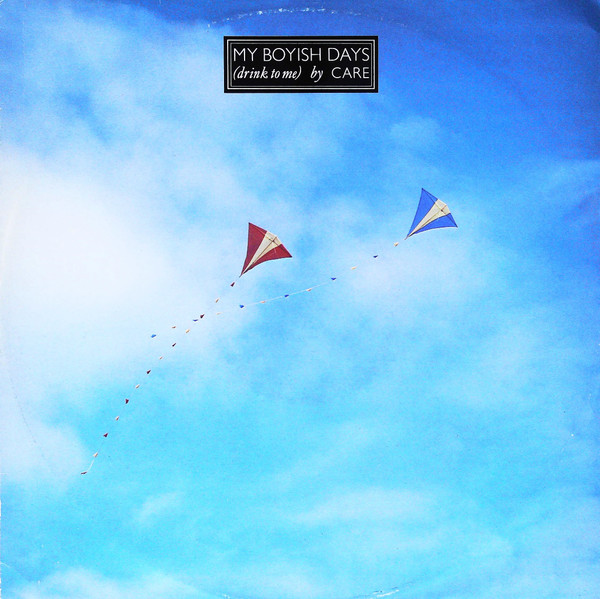
The chapters on his time with Care make for rather sad reading.   Without going into too much detail, he had been burned by the break-up of The Wild Swans and embittered by the success of The Lotus Eaters, who in effect were The Wild Swans with a different vocalist.  He hooked up with Ian Broudie, then trying hard to make it as a performer rather than merely as a producer, and they signed to a major label in the shape of Arista Records.  A debut single was recorded in the summer of 1983 with uber-producers Clive Langer & Alan Winstanley.

There was considerable airplay via the evening shows on Radio 1, which is where I heard it and fell heavily for its charms. But it didn’t make the A-list, and the single faded into obscurity.

The friends of the two musicians, and the book reveals there’s a huge cast who come into that category, suggested that maybe Ian Broudie should produce things from now on.  He was at the helm of the follow-up single, Flaming Sword, which got to #48 in November 1983.

Work got underway on a third single as well as songs intended for a debut album. The third single, Whatever Possessed You, hit the shops in early 1984 at which point Paul Simpson got cold feet and walked out on Care.

Ian Broudie was stunned by this, but his ambitions weren’t derailed, which is why, a few years later, he in essence went solo but under the guise of Lightning Seeds.  Paul Simpson went down a totally different path…..

Care really could have been and should have been contenders.  But it’s quite clear, from Paul Simpson’s own recollections, that they were more or less doomed from the outset.

All the music by Care that was either fully produced or in the process of being finalised was collated on a 1997 CD, Diamonds & Emeralds, which really only saw the light of day as something of a cash-in on the success of Lightning Seeds.  But let’s be grateful for small mercies.

Here’s the tracks from the 12″ version of the debut single, of which I’ve been a proud owner for 41 years!

mp3 : Care – My Boyish Days (Drink To Me)
mp3 : Care – An Evening In The Ray
mp3 : Care – Sad Day For England

The version that can be found on Diamonds & Emeralds is different in that it has a longer outro offering up an additional 40 seconds or so.

JC

SHAKEDOWN, 1979 (January, part three)

79

While lying on a beach in Barbados last month, it hit me that quite a few tremendous, or at the very least, interesting, singles from 1979 wouldn’t have made the charts and would therefore be missing from this series.  So, the plan is to consult one of my reference books – in this case the mighty tome that is The Great Indie Discography by Martin C. Strong (Canongate Books Ltd, 2003 edition) – and find some 45s which didn’t sell in great numbers.  These are from January 79.

mp3: The Cure – Killing An Arab

The band’s debut was released on 22 December 1978 on Small Wonder Records, and later in 1979 was given a re-release on Fiction Records.  Those lucky enough to have a Small Wonder pressing could get £150 upwards if they wanted to sell it.

mp3: Destroy All Monsters – Bored

Destroy All Monsters came to be in Detroit in the mid-late 70s.  The vocalist was Niagara, (real name Lynn Rovner), a former model and visual artist, while the musicians included, among others, Mike Davis (ex-MC5) and Ron Asheton (ex-Stooges). This was their debut single, released in the UK on a then newly-formed label, Cherry Red Records (Bored has the catalogue number Cherry 3).  I think it would be fair to say that Sonic Youth were influenced by them.

mp3: Fingerprintz – Dancing With Myself

Debut single, on Virgin Records, of a London-based band whose singer Jimmie O’Neill was from the Glasgow area.  Fingerprintz were perfectly described by Martin Strong:-

One of the earliest bands to translate the energy and anger of punk into a more accessible New Wave style, they were an obvious choice for Virgin.

mp3: Jilted John – True Love

The eponymous debut single had gone Top 5 in August 1978, but ultimately proved to be a one-hit wonder for the first alter-ego of Graham Fellows.  There was an album, True Love Stories, which was produced by Martin Hannett, from which this single was lifted without much fanfare in January 1979.  Twee-pop anyone?

mp3: The Ramones – She’s The One

This was the third single to be lifted from the Road To Ruin album, but if failed to trouble the charts.   Its b-side, which could also be found on the album, is probably the better known song:-

mp3: The Ramones – I Wanna Be Sedated

Bill Drummond has been around a long time. He’d been part of Big In Japan, whose debut (and only) single has been the first release on the Liverpool-based Zoo Records.  He was also part of the band which who released the label’s second 45:-

mp3: Those Naughty Lumps – Iggy Pop’s Jacket

Bill played lead guitar on this one.

JC

THE 12″ LUCKY DIP (2)

R-1268930-1667605890-5442

Another one that was picked up in Canada.

Absolute Beginners was only ever issued on 7″ in the UK. It was released in October 1981, and got to #4 in the singles chart.   The b-side, Tales From The Riverbank, is considered by quite a few fans to be the better song.  It’s certainly quite a contrasting effort, being a psychedelic-type of number where the a-side was a joyous and triumphant blast of soul/r’n’b.

I don’t know the exact date when this Canadian version was put into the shops.  It contains five tracks – the two sides of the UK single, along with two previous singles and one of the best-loved of the band’s b-sides.  All told, it would certainly make for a decent side of an ICA….

mp3: The Jam – Absolute Beginners
mp3: The Jam – Tales From The Riverbank
mp3: The Jam – When You’re Young
mp3: The Jam – Funeral Pyre
mp3: The Jam – Liza Radley

I’ve always loved the photo that was used for the picture sleeve of this single and wondered where it was taken.  There’s no info or credits offered up on either the UK or Canadian releases.

JC

THE WEDDING PRESENT SINGLES (Part Fourteen)

R-704402-1555515117-1791

I’d long believed that the executives at RCA were quite satisfied that Seamonsters reached #13 in the album charts the week after it was released on 27 May 1991. Turns out I was wrong, as will be evidenced at the end of this week’s musings.

 Nobody knew it at the time, but it would prove to be the second and final studio album that the group would record for the label, and indeed no studio album by The Wedding Present would ever again get into the Top 20 – compilation albums would do well in 1992, but that’s for upcoming parts of this series.

Two months after the album hit the shops, an edited version of one of its songs was released as a second single, or more accurately, the lead track of a new EP:-

mp3: The Wedding Present – Lovenest

It’s about a minute shorter, omitting the ‘beached whale’ guitar sounds that take up the opening 20 seconds of the album version, with the other 40 seconds being chopped off the lengthy outro, which on the album, segues majestically into the re-recorded version of Corduroy, a song that had been part of the 3 Songs EP.

There were no real obvious radio friendly songs on Seamonsters, and compared to previous singles, it was something of a low-key effort, issued on 12″ and CD only, with the same three new tracks made available on both releases:-

mp3 : The Wedding Present – Mothers
mp3 : The Wedding Present – Dan Dare
mp3 : The Wedding Present – Fleshworld

All three songs were engineered by Steve Albini, so I’m guessing it meant all the tracks recorded in Minnesota back in April were now in the public domain.

The first of them is a cover of song by the Jean-Paul Sartre Experience.  I have always been under the asumption that they was some sort of weird and underground 60s act, but it turns out they were an 80s/90s indie band from New Zealand, with Mothers being a track on a version of their 1989 album, The Size Of Food.    I’d love to tell you more, but I’d only be guessing.  One thing for sure, is that it does sound like a TWP original, with the anguished shouts of ‘you were going out with HIM!!!!!’

Here’s the original version:-

mp3: Jean-Paul Sartre Experience – Mothers

Dan Dare is a rare thing…..or was at that point in time….an instrumental.   It’s short and to the point, coming in at not much more than a minute-and-a-half.

Boring fact alert.  Dan Dare is the only song recorded in Minnesota that had more than a one-word title.  All ten songs on the album, plus the b-sides that were Niagara, Mothers and Fleshworld.  Talking of which…

……it’s another of the many excellent songs relegated to b-sides over the years.  This is one that I think must have come close to being included on Seamonsters, but then again, don’t ask me which of the tracks it would have taken the place of.

One final point to wrap up today. 

The sessions for Seamonsters weren’t all sweetness and light, and not long after the band returned to the UK, the decision was taken to sack Peter Solowka.  His place on the subsequent live dates was taken up by Paul Dorrington, which meant just two of the original members were now part of the group.  It was a sore one for ‘Grapper’ as can be seen from an answers he gave in an on-line interview in 2005:-

Q: Describe your time with The Wedding Present in five words:

A: “Thoroughly enjoyable life-changing journey”

Q: Tell us exactly why you left The Wedding Present?

A : ” I was kicked out! Officially this was for not being a good enough guitar player and not contributing enough to the song-writing (David still feels he needs to recite this story 14 years after the event). I’m not going to entertain this idea further by listing things that I’ve done. All I’ll say is that I know who I am and what I’ve been responsible for, and I can’t agree with this idea. 

“Reasons for actions such as this are complex but I am sure that it had a lot to do with the following. We had just recorded ‘Seamonsters’ – our (in RCA’s opinion) ‘very difficult’ third album. RCA needed something that would increase sales beyond our fanbase and although we were really happy with the album, it was clear to us that there was no ‘mega hit’ there. We knew we’d have to face their disapproval. Also, the Ukrainian music was still generating interest, at times deflecting interviewers from the current records we were trying to promote. As I was the Ukrainian link, they thought this problem would go away when I did. I feel I was made a bit of a scapegoat for the band’s failings.

“David, Simon and Keith did not consult me about any of my wishes or plans, even though we’d been on the same team for five years. I was especially disappointed with David as we’d been friends since school. After twenty years, I expected a lot more from him.”

———

Peter would continue to write, record and play music with The Ukrainians as a fully-fledged band, and would later become a science teacher in schools.    In due course, the wounds did heal to some extent, with The Ukrainians playing at the second staging of the annual Edge Of The Sea festival back in 2010 and the eleventh staging in 2019.

And with that, we are about to hit 1992 in which TWP again took the record label by surprise.

JC

SATURDAY’S SCOTTISH SONG : #389: ZED PENGUIN

736996_444218852300526_1086258612_o

Last week’s entry featured a singer via the 2013 Song, By Toad Sampler.  Today’s featured group, Zed Penguin, were also on that sampler, but I also have two further tracks, courtesy of them being part of a spilt 12″ on the same label in the same year. This is one of them:-

mp3: Zed Penguin – Wandering

There are four musicians in the Edinburgh-based group – Matthew Winter (vocals, guitar), James Metcalfe (bass), Casey Miller (drums) and Atzi Muramatsu (cello).  All the music I have dates from 2013, but there was, much later, a debut album A Ghost, A Beast issued on Song, By Toad in 2019. The reason for such a delay is sad and sickening, in that Matthew Winter was the victim of a serious assault one evening in Edinburgh, the effects of which were significant and long-lasting.   Not only was his physical and mental health impacted, but the inability to be in any paid employment meant that finances to work on the album weren’t there.

The album was one of the last to be released on Song, By Toad prior to the label coming to an end.  There’s still a Zed Penguin presence on Bandcamp and Facebook, but there’s been no signs of any new music being recorded or released.

JC

ONE HUNDRED AND ELEVEN SINGLES : #045

aka The Vinyl Villain incorporating Sexy Loser

#045– Joy Division – ‘Atmosphere’ (Factory Records ’80)

jd11

Dear friends,

„oh, bugger off:“, I hear you saying, “’bloody ‘Atmosphere’! Are you serious?! Why not ‘Transmission’? Or ‘Love Will Tear us Apart’?”.

Well, yes, you have a point there, I admit. Still, I think we can start a war upon what’s the best Joy Division song released on 7” – and probably no-one will ever win this war. I mean, yes – if I had a 7” copy of ‘Transmission’, I would perhaps even have chosen it instead. But those go for € 50,- these days – and that’s one reason why it’s ‘Atmosphere’ today.

Basically the same applies for not presenting something from ‘An Ideal For Living’, but a) it’s questionable whether ‘Leaders Of Men’ and/or ‘Failures Of The Modern Man’ are preferable to ‘Atmosphere’ (‘Warsaw’ and ‘No Love Lost’ certainly are not!) and b) the current value for a copy is € 8.000,-. So, perhaps after Christmas, who knows?

So its inclusion today is an objective of cheap in a way, if you want. Forgive me. And also I know that ‘Atmosphere’ is often considered as not being one of ‘the real things’, if you know what I mean … not in a ‘row’ along with ‘Transmission’, ‘Love Will Tear Us Apart’ and ‘She’s Lost Control’. Probably its fragility is one reason, it being overshadowed by ‘She’s Lost Control’ at the time of release another one.

Then again, perhaps you remember, on the US-release of the 12”, ‘Atmosphere’ was the A-Side and ‘She’s Lost Control’ was (only) the B-Side. A questionable decision perhaps, but then again Factory Records have never been famous for marketing wisdom, have they? They even had to hold back the UK release for half a year to avoid affecting the sales of ‘Love Will Tear Us Apart’.

This though was not a problem for the lucky ones who managed to get their hands on one of the 1578 copies of ‘Licht & Blindheit’, a 7” issued on a French label, Sordide Sentimental, which had ‘Dead Souls’ on the flipside. Why? Because those lottery winners (it’s now worth € 3.000,-) would have known the song since March ’80 – before ‘Love Will Take Us Apart’, in fact! Also it was already recorded in October of 1979, quite some time before ‘Love Will Tear Us Apart’.

So, the point I’m trying to make is: if you look closely, it’s a song which should not just be seen as a nice dessert served after a superb three-course-dinner. No, it actually had its (deserved) place in the ‘Joy Division sequence of things’: as far as I’m concerned, and I have never seen this differently, ‘Atmosphere’ simply is a brilliant song – and therefore it should not be neglected:

R-505332-1348506946-9330

R-505332-1649178870-5660

mp3: Joy Division – Atmosphere

If you remember, the links in this series always lead to a rip of mine of the actual 7” singles – depending on their age and the way they were recorded the sound quality may suffer a bit from time to time. It will probably do so even more than usual on this occasion, because ‘Atmosphere’ might well be the most quiet and frail one in all of the 111 songs.

Also, both of my copies of ‘Licht & Blindheit’ are currently in a bank safe in Switzerland (along with all my Misfits and early Postcard singles plus a copy of ‘God Save The Queen’ on A&M), therefore I had to rip the 1988 reissue which, confusingly enough, has ‘The Only Mistake’ as the B-Side – it’s the very same version as the original one though.

Still, I hope you enjoy it. I certainly do.

Peace,

Dirk