ONE HUNDRED AND ELEVEN SINGLES : #071

aka The Vinyl Villain incorporating Sexy Loser

#071: Pere Ubu – ‘Final Solution’ (Hearthan Records ’76

Hello friends,

the more ingenious of you will have realized that the singles in this series are featured in strictly alphabetical order. And therefore today’s tune should of course be ‘Box Elder’ by Pavement – which is one of the five finest songs in the history of the whole world ever, if you ask me. One copy of ‘Slay Tracks: 1933 – 1969’, the 7“ which contains the tune, is available on discogs. Now, I always said I gave away my beautiful daughters for a copy if one would ever become available. Now, at the time of writing this, one has become available, the thing is: the owner wants $ 700,- for it, which is okay, I suppose, but I don’t have any beautiful daughters to give away instead. To be precise: I don’t have any daughters (to give away), as opposed to: not just hideous ones!

So instead I have a record for you today which is important mainly for two reasons. I mean, all of the singles in this series are simply awesome, of course: if they weren’t, they wouldn’t be in my box, right? So quality isn’t one of the reasons, no, we’re on the educational path again, I’m afraid. Let me explain:

I may be wrong, but I can imagine that today’s tune isn’t as commonly known to you as many of the previous singles have been. Which is great, because it might give you the chance to experience something new. So don’t skip the tune, listen to it instead, please: it really is worth the effort, believe me! So, getting to know something new may – or may not – be the first educational effect for today, the second one is: this song was recorded in 1975, released in April one year later (although I only have a re-release from 2018 on Fire Records)! ‘So what?’, you might be thinking! Well, no one back then was making music that sounded even vaguely like this, and therefore this record is so groundbreaking, that’s why!

Pere Ubu (the group’s name is a reference to Ubu Roi, an avant-garde play by French writer Alfred Jarry) come from Cleveland, Ohio and when I say ‘come’ and not ‘came’, then it’s not me being stupid again, no: they are still performing today, although David Thomas, the singer, is the only original member left. ‘Final Solution’ was the band’s second single, ’30 Seconds Over Tokyo’ being the first, and it is highly recommendable as well. Pere Ubu coined the term avant-garage to reflect interest in both experimental avant-garde music (especially musique concrète (a type of music composition that utilizes recorded sounds as raw material. Sounds are often modified through the application of audio signal processing and tape music techniques)) and raw, direct blues-influenced garage rock.

But now, to the song: recorded in just three hours at the Suma studio, it’s a bleak and morbid worldview, still, despite the title, “Final Solution” was never intended to evoke memories of the Holocaust; it was actually Thomas’ play on a Sherlock Holmes story called “The Final Problem”. When some later punk bands employed Nazi imagery for shock value, Pere Ubu dropped the number from their repertoire to avoid any confusion.

I simply love everything this song offers; the bass guitar it begins with and the solid tempo it keeps throughout all of the song, the drums and the complex lead guitar, the hammering industrial synthesizer: great stuff! But then the solo ends and the singer enters: his voice is raucous, growly, squeaky, he is like no-one you’ve heard before: “the girls won’t touch me”, he protests, but you can’t be certain if it’s because he’s got a misdirection or a missed erection:

mp3: Pere Ubu – Final Solution

A real treat, I’m sure you agree – even more so when you played it good and loud! And especially when bearing in mind when this was written: post-punk before there was even punk to be post!

Enjoy,

Dirk

THE MOST DANCEABLE ANTI-WAR SONG OF ALL TIME?

R-99647-1277962664

Released just over 40 years ago, on 26 September 1980

mp3: Orchestral Manoeuvres In The Dark – Enola Gay

The spectre of nuclear war was all too real in 1980.   Membership of CND was on the rise, and would indeed increase very dramatically in the early 80s after Ronald Reagan became US President, give he seemed to have no concerns about using deadly weapons against the Soviet Union should it come down to it.

The release of Enola Gay was timely.  From a musical point of view, it was another signpost that electronica was becoming ever-increasingly important across pop music.  But for many of us of a certain age, it added to our knowledge base of what had happened in Japan back in 1945.

Yup. We were taught that two atomic bombs had brought an end to World War II, and that these weapons had been so deadly and devastating that they hadn’t been used over the next 35 years.  But Andy McCluskey‘s lyric added a poignancy and human element to the event.  The name of the plane that had carried the bomb dropped on Hiroshima would now be etched forever in the minds of a generation of music-lovers.   

It’s quite remarkable, and indeed ironic, that such a serious subject matter was accompanied by such a danceable and happy tune.  And in an era where chorus was king, OMD showed, again, as they had with Electricity, that there were different ways to make memorable 45s that will always stand the test of time.

The b-side wasn’t too shabby either, albeit it’s far less immediate or danceable than the a-side:-

mp3: Orchestral Manoeuvres In The Dark – Annex

Enola Gay reached #8 in the singles charts, and was the first of what proved to be seven Top 10 hits across the group’s career.

JC


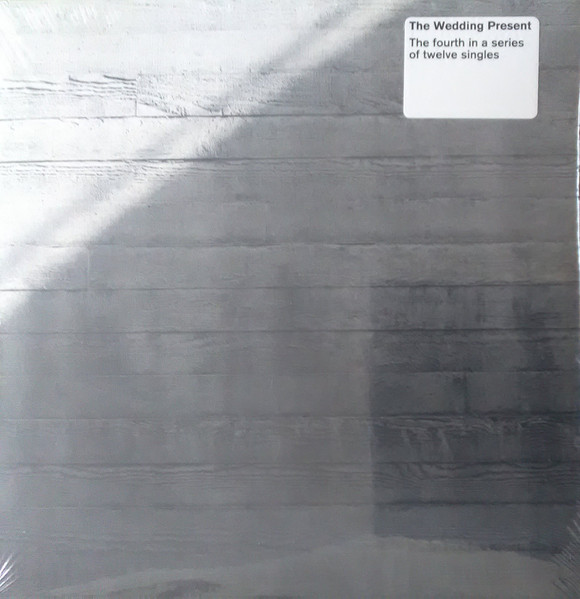
THE WEDDING PRESENT SINGLES (Part Forty-Seven)


Given how long he has been making music, I think David Gedge can be allowed the occasional moment of self-indulgence.

2016 had seen the release of Going, Going…., the ninth studio album by The Wedding Present.  It was an incredibly ambitious release, consisting of 20 tracks, as the frontman explained in media interviews at the time:-

I’d already decided [soon after the 2012 release of their last album] that I didn’t want to make the next release just ‘another album’ and so I came up with the idea of twenty ‘interconnected’ pieces of music. Then, in the summer of 2014, I travelled across the USA with photographer Jessica McMillan, and we made some atmospheric short films to accompany the tracks. Since then it’s been a case of progressing through the music, trying all sorts of ideas, seeing how they work set against the visuals.

The album opened up with four instrumental numbers. One reviewer (Simon Tucker, writing on Louder Than War), sums things up nicely:-

Going, Going… is an album that is full of left turns, sudden bursts of feedback-drenched guitars and luscious soundscapes. It is schizophrenic and unsettling yet full of beauty and melancholy. A hard album to grasp as it is constantly going through gear changes (even within the confines of one song) Going, Going… is the sound of a band throwing everything they have into the mix which has in turn created a work that is at once familiar yet progressive, homely and disturbing.

It was released on Scopitones on CD, but also on limited vinyl with additional bonus material via DVD, a 7″EP and a book.  A couple of songs were identified as ‘singles’, but were only promoted as such via videos and not with any separate physical release on vinyl or CD. 

It was all a bit strange, as some of the songs on the album were among the best that David Gedge had come up with in a very long time, with this being a particular favourite here in Villain Towers

mp3: The Wedding Present – Rachel

It took until May 2017 for an actual single/EP to hit the shops.  Here’s the promotional blurb:-

The Wedding Present release a four track instrumental EP called ‘Home Internationals’ on the El Segell del Primavera record label.

‘Wales’ is taken from The Wedding Present’s recent and critically acclaimed album ‘Going, Going…’ while the other three tracks have been specially written and recorded for this release.

David Gedge was inspired by the challenge of writing a number of instrumental tracks for ‘Going, Going…’ and decided to use ‘Wales’ as the starting point for an EP of further instrumental pieces.

Freed from the restriction of a lyrical narrative the music frequently becomes more experimental and delves deeply into David’s love of pop, rock and film scores for inspiration.

England also features poet, playwright and novelist Simon Armitage reading his poem The English. The EP was also inspired by the ‘Home Internationals’ which was an annual football competition between the United Kingdom’s four national teams: England, Scotland, Wales and Northern Ireland (the last of whom competed as Ireland for most of the competition’s history). It started in 1883 and is the oldest international football tournament in the world. The competition ended in 1983.

mp3: The Wedding Present – Scotland
mp3: The Wedding Present – Northern Ireland
mp3: The Wedding Present – England
mp3: The Wedding Present – Wales

All in all, it’s one of the more unusual offerings across the series.

Things do sort of return to normal next week in that the songs have lyrics.  But in keeping with all that was going on with TWP releases at this point in time, it will prove to be a bit different.

JC


SATURDAY’S SCOTTISH SONG : #424: THE BOY WHO TRAPPED THE SUN

All I have from today’s lot is one track as provided by Jacques the Kipper via a homemade compilation CD that he gave to me more than 10 years ago. It was an oversight on my part that The Boy Who Trapped The Sun was missed out in the original alphabetical run through of Scottish singers and bands who have at least one song on the laptop’s hard drive.

So, who are TBWTTS?

This is an edited take taken from a promo blurb back in 2010 to accompany the release of the album Fireplace, which came out on Polydor.

“The Boy Who Trapped The Sun is 25 year-old Colin MacLeod – the ‘Boy Who’ moniker, he says, ‘feels bigger and less lonely’. Originally from the Isle of Lewis, a windswept outcrop of the Outer Hebrides, MacLeod was discovered swinging round the rafters of an Aberdeen bar, dishing out Deep Purple covers and, he says, ‘generally acting like an arse’. Having smashed his guitar and knocked himself unconscious on stage, he set to cleaning up both the broken instrument and his act. Thus The Boy moved to London, to become a solo artist and an adult.

And so emerged “Fireplace”, with MacLeod playing all the instruments bar the strings himself. It is a  beautifully realised debut from an authentic new talent. Listen again and again.”

Here’s the song included on Jacques’ compilation CD, which turned out to be Track 2 from Fireplace

mp3: The Boy Who Trapped The Sun – Katy


JC

THE 12″ LUCKY DIP (15): Public Enemy – Fight The Power

R-1063410-1217694094

In effect this is a lengthy guest posting, as it would be impossible for me to even dream of bettering what was written by Dorian Lynskey back in 2019, for a lengthy piece within the Culture section of the BBC website.

———-

In the first episode of Ava DuVernay’s Netflix drama When They See Us, a couple of dozen black teenagers pour into Central Park on the night of 19 April, 1989. Five of them will end up spending years in jail for a rape they didn’t commit, but for now they’re having fun. They walk to the beat of Public Enemy’s unstoppable rebel song Fight the Power.

The choice of song may be anachronistic (it wasn’t released until June) but it’s perfect for a story about outrageous racial injustice in 1980s New York. That was a volatile decade for the city, with high-profile cases of African-Americans dying at the hands of racist mobs (Michael Griffith, Willie Turks) and police officers (Eleanor Bumpurs, Michael Stewart), all of which were on director Spike Lee’s mind when he wrote his third movie, Do the Right Thing. DuVernay’s selection doubles as a nod to Lee’s movie, which opens with Rosie Perez dancing and shadowboxing to Fight the Power in front of a row of Brooklyn brownstones with an expression midway between agony and defiance. Unusually, the song plays to the very end, when it is replaced by the strident blare of an alarm clock. Both Lee’s movie and Public Enemy’s song were designed to wake people up.

Lee knew that his of-the-moment movie needed a song that was defiant, angry and rhythmic, which made Public Enemy the obvious choice. Political hip hop was born in 1982 with The Message by Grandmaster Flash and the Furious Five, but even the people who made it couldn’t follow up that brilliant one-off. It took Public Enemy, formed in Long Island in 1986, to create a form of hip hop that was radical both politically and sonically, track after track. No group had ever had so much to say, with so much urgency.

Inspired by The Clash, the Black Panther party and football teams, frontman and ringleader Chuck D marshalled the disparate talents of Public Enemy into an irresistible force in which the music of the production team, the Bomb Squad, was as dense and relentless as Chuck’s vocals. Their formidable second album, 1988’s It Takes a Nation of Millions to Hold Us Back, led the NME to bill them as “The greatest rock’n’roll band in the world?!”

In the autumn of 1988, Lee took Chuck and two of his bandmates to lunch in Greenwich Village and asked them to write an anthem. At first he pitched them the idea of updating the civil rights hymn Lift Ev’ry Voice and Sing with jazz composer Terence Blanchard but, at a subsequent meeting, the Bomb Squad’s Hank Shocklee told him to stick his head out of the window and listen to the street. “Man, what sounds do you hear?” he asked. “You’re not going to hear Lift Ev’ry Voice and Sing in every car that drives by.” Lee relented and let them do their own thing, which Shocklee summed up with a line from the movie Network: “I’m mad as hell and I’m not gonna take it anymore.”

Chuck always wrote from the title down and he took this one from the Isley Brothers’ 1975 hit Fight the Power, which he remembered as the first time he had ever heard the word “bullshit” in a pop song. Ron Isley’s defence of the word – “It needed to be said” – was an apt sentiment for Public Enemy. Chuck wrote most of the lyrics in Europe, where Public Enemy were opening for Run-DMC. The tough work, he said, was compression, crunching his ideas down into a tight, hard grenade of information: “the rhymes designed to fill your mind”. He wanted the righteous immediacy of black talk-radio hosts like Gary Byrd and Mark Riley, who spoke out about the kind of racist outrages that inspired Lee’s movie. “I knew I had to step up to the plate and present an anthem that answered the questions from this film,” Chuck said

Unfolding on a single block on a single day at the height of a heatwave, Do the Right Thing climaxes with a riot that begins with an argument about the absence of black faces on the wall of the local pizzeria. Chuck ran with the idea of building a pantheon of black icons (“Most of my heroes don’t appear on no stamps”), which meant taking down some white ones. In his 1980 single Blowfly’s Rapp, the funk prankster Clarence “Blowfly” Reid had a Ku Klux Klansman provoke him by saying, “Motherfuck you and Muhammad Ali.” This led Chuck to wonder which sacred cows would have a similar effect on a white American: “Elvis was a hero to most/ But he never meant shit to me/ Straight up racist that sucker was simple and plain/ Motherfuck him and John Wayne.” Even Shocklee was taken aback when he heard those lines.

Not every message in Fight the Power was that direct. “Swinging while I’m singing” alluded to Malcolm X’s famous 1964 dismissal of We Shall Overcome (“It’s time to stop singing and start swinging”), with the implication that Public Enemy could do both at the same time. Chuck knew his history. Whether by directly quoting the Black Panther slogan “Power to the people” and James Brown’s Say It Loud – I’m Black and I’m Proud or making veiled references to Bob Marley and Frederick Douglass, he was staking Public Enemy’s place in the long tradition of black pride and dissent and steeling listeners to join the fight: “What we need is awareness, we can’t get careless.”

Even as an a cappella, Fight the Power would have been thick with meaning – but the Bomb Squad’s audacious production added another dimension to its black history lesson. Sampling was still in its Wild West phase, when you could take whatever you wanted and copyright be damned: this was the year of De La Soul’s 3 Feet High and Rising and the Beastie BoysPaul’s Boutique. While those sample collages were vibrantly playful, the Bomb Squad aimed for an intense, overwhelming ‘hailstorm’ of sound, pushing their equipment to its limits by cramming in so many samples that even they couldn’t remember them all: “loops on top of loops on top of loops,” said Chuck.

The WhoSampled online database lists 21 and counting, including speeches by civil rights activists (Jesse Jackson, Thomas ‘TNT’ Todd), classic soul (Sly Stone, Wilson Pickett), reggae, electro, R&B and even Public Enemy’s own Yo! Bum Rush the Show. The clamorous central loop alone, which Shocklee compared to war drums, was constructed from 10 different samples. Lee managed to get his beloved jazz in there via saxophonist Branford Marsalis, whom Shocklee asked to perform three solos in different styles and then surprised by weaving all three into the mix to intensify the sense of a city at boiling point. “I wanted you to feel the concrete, the people walking by, the cars that are going by and the vrroom in the system,” the producer said. “I wanted that grittiness, the mugginess, the hot, sticky, no-air vibration of the city.”

Summer seemed a long way off when Spike Lee shot the song’s video on a cold, wet spring day in Brooklyn. Holding up portraits of black heroes, the band and hundreds of volunteers staged a ‘Young Person’s March to End Racial Violence’, ending up on the Bedford-Stuyvesant block where Do the Right Thing had been filmed. By opening with footage of Martin Luther King’s 1963 March on Washington, the video, like the song and the movie, created a provocative dialogue between the past and present of the African-American experience to challenge the mainstream narrative of progress. How much had the US really changed?

When Chuck first saw a rough cut of Do the Right Thing he was stunned by how many times the song appeared. As well as opening with it, Lee had made Fight the Power the theme tune of Bill Nunn’s character Radio Raheem, who blasted it from his boombox every time he appeared (“I don’t like nothin’ else”), thus making it the heartbeat of the movie. Marsalis called the song’s placement “the greatest marketing tool in the world”. When Barack Obama and Michelle Robinson chose a movie for their first date, the first thing they saw was Rosie Perez dancing to Fight the Power.

Public Enemy were unable to savour their big moment because between the video shoot and the single’s release date, antisemitic comments by their ‘Minister of Information’ Professor Griff plunged the band into an existential crisis that almost proved fatal. Torn between loyalty to his group and a blistering media backlash, Chuck himself agonised over how to do the right thing. Accused of inciting violence, the film itself was controversial enough to merit a round-table debate in the New York Times, during which a white judge from the Bronx complained that it was too negative: “Why can’t we fight for power, rather than fight the power?”

But the song, which sold half a million copies despite being shunned by mainstream radio, took on a life of its own, from the black students in Virginia Beach who chanted the chorus at police during riots that September to Serbia’s dissident radio station B92, which turned it into an anti-Milošević anthem in 1991, playing it on repeat when banned from broadcasting news during an armed crackdown by the regime. That first summer, it could not have been more relevant. In August, New York’s racial unease came to a head with the murder of 16-year-old Yusef Hawkins, which provoked a real-life march through Brooklyn and contributed to the election of David Dinkins, the city’s first black mayor. Time magazine claimed that Fight the Power, more than any other track, proved that hip hop was “more than entertainment – more, even, than an expression of [fans’] alienation and resentments. It is a major social force.”

Chuck D continues to perform Fight the Power, both with Public Enemy and with his rock-rap supergroup Prophets of Rage. As Ava DuVernay recognised, it summed up its historical moment but its faultless alloy of intelligence, excitement, anger and empowerment still makes it a masterclass in hip hop’s potential to inspire and inform. Asked in 2014 how he felt about Fight the Power 25 years on, Chuck replied, with justification: “I feel like Pete Seeger singing We Shall Overcome.”

——-

I’d love to boast that I bought this 12″ single at the time of release, but instead it’s one that was picked up decades letter in a second-hand shop, but thankfully at a time before the prices started getting increasinglky stupid. I think this was one of the three for £5 deals on offer at the time…..

mp3 : Public Enemy – Fight The Power (extended version)
mp3 : Public Enemy – Fight The Power (radio edit)
mp3 : Public Enemy – Fight The Power (Flavor Flav meets Spike Lee)

A re-recorded version would appear on the 1990 album, Fear Of A Black Planet.

For all that Public Enemy were ground-breaking and hugely important back in the late 80s, and the song was associated with a hit film, it stalled at #29 in the singles chart.

JC

THE SHA LA LA FLEXI DISCS (005)

R-2631545-1598537867-1761

R-2631545-1598537868-7910

R-2631545-1598537868-9232

Now that I’m well on the way with this series, I’m assuming you all know the drill and no background explanation is needed.

The fifth of the Sha La La flexi discs wasn’t given any specific title, just sticking to names of the tracks.  This one was given away with five different fanzines – The Dream Inspires (Issue Unspecified), Searching For The Young Soul Rebels (issue #1), Turn! (Issue Unspecified), It All Sounded The Same (Issue Unspecified) and Baby Honey (Issue #4).

One of the bands came from West Bromwich in the English Midlands, and the other from Glasgow. Neither of them are strangers to this blog., so it’s another cut’n’paste alert!!

mp3: The Sea Urchins – Summershine

The initial line-up of The Sea Urchins was James Roberts (vocals), Simon Woodcock (guitar), Robert Cooksey (guitar), Mark Bevin (bass), Bridget Duffy (tambourine, organ), and Patrick Roberts (drums). Their first two releases were flexi discs given away with fanzines in 1987. Bevin soon left, to be replaced by Darren Martin. Their first two ‘proper’ singles were on Sarah Records, but with the label unwilling/unable to commit to an album, two of the members decided to quit. One more single for Sarah and one for Cherree Records would follow before they called it a day in 1991.

mp3: The Orchids – From This Day

The Orchids, consisting of James Hackett (vocals), John Scally (guitar), Chris Quinn (drums), Matthew Drummond (guitar) and James Moody (bass), formed in 1986 and were signed to Sarah Records, releasing a of singles as well as three albums, Lyceum (1989), Unholy Soul (1991) and Striving For the Lazy Perfection (1994).

They originally split in 1995 but reformed in 2004, since which time they have four further albums, Good to be a Stranger (2007), The Lost Star (2010), Beatitude#9 (2014) and Dreaming Kind (2022).

JC

SONGS UNDER TWO MINUTES (5): IN THE STREET TODAY

The-2-Minute-Rule

There’s not too many out there, if indeed anyone, who’ll make the claim that The Modern World, the second studio album by The Jam, is their finest body of work.  

It was all a bit rushed, being released in November 1977, just five months after the debut, In The City.   Twelve songs, one of which was a cover, all crammed into under 32 minutes of music.   It does, however, contain this gem.

mp3: The Jam – In The Street Today

The song is credited to Paul Weller/Dave Waller.   The latter was a founding member of The Jam when they were all in their early teens, but he left well before any record deals were signed as he wanted to pursue his interest in poetry.  The two remained close friends and 1980 saw the publication of Notes From Hostile Street, a collection of poems written by Dave Waller and issued through Riot Stories, a publishing outlet owned by Paul Weller.

Dave Waller died of a heroin overdose in 1982.  Paul Weller would later write A Man Of Great Promise, a track on the album Our Favourite Shop, in tribute.

JC


SHAKEDOWN, 1979 (October)

79

The first of the singles charts to be looked back at this time around covers 30 September–6 October.  The Top 3 positions were taken by The Police, Blondie and Gary Numan.  Quite a few of those mentioned over the past two editions of this series were still showing up well in the Top 50 – Buggles, Michael Jackson, Secret Affair, Madness, Squeeze, The Jags, The Skids, Roxy Music, XTC, The Stranglers, The Specials, Stiff Little Fingers and Siouxsie & The Banshees.

I’m mentioning all of this as it was a chart when the dull and boring started to fight back. There were 10 new entries in the Top 75, the highest of which came in at #51.  None of them (IMHO) are worth posting – The Nolans, Fleetwood Mac, The Chords, Viola Wills, Gloria Gaynor, Earth Wind & Fire, Cats U.K., New Musik, The Addrisi Brothers and Diana Ross.

I’m aware that some of you might be thinking that New Musik were seen as part of the growing new wave scene back in 1979.  I suppose it’s a matter of taste, but I thought they were awful.  It was the single Straight Lines that brought them into the chart in October 1979.  It entered at #70 and peaked at #53.  But they were another whose presence on a major label led to an invitation to appear on Top of the Pops.

Let’s quickly move on to 7-13 October.

The highest new entry, at #36, this week belonged to Sex Pistols with what felt like the 758th single lifted from the soundtrack to the film The Great Rock’n’Roll Swindle.  I won’t waste your time by linking anything.

Scrolling my way down through the chart proved to be a depressing experience.  There was a decent disco number courtesy of Chic in at #51, but My Forbidden Lover isn’t up there as one of their classics.  Just as I was thinking it was going to be two duffs week in a row, the new entries at #60 and #64 saved the day.

mp3: The Slits – Typical Girls
mp3: The Selecter – On My Radio

Debut singles for both bands…although some may disagree with that!

The Slits, as I mentioned in a posting back in June 2021, were an act that the 16-year old me didn’t get, and so I totally ignored this and indeed their debut album, Cut.  As I grew older, and my musical tastes developed/matured, I was able to see  them as truly astonishing and ground-breaking as nobody was making music like them back in the day. They were true punk/new wave pioneers.  Typical Girls was the only single of theirs to ever bother the chart compilers. It came in at #60 and then dropped out altogether within two weeks.

As this is the first time The Selecter have really been featured on the blog, please allow me to give a potted history.

It could be argued that On My Radio is not the debut single by The Selecter.  The evidence would be that the b-side to Gangsters, the debut hit by The Specials, was credited to The Selecter.

But my take on things is that particular b-side is the work of a precursor to the band we would come to recognise as The Selecter.  It was an instrumental, written by Neol Davies and John Bradbury that was originally called Kingston Affair.  It was re-titled The Selecter and credited to an act of the same name.  Its success led to Neol Davies wanting to put a new band together to capitalise on things (and who could blame him?), which he did by bringing together musicians who had long been part of the scene in Coventry and recruiting an unknown female singer.  The singer’s name was Belinda Magnus, and she worked as a radiographer in a Coventry hospital.  She wasn’t keen on her employer learning that she was getting involved in the music scene, and so she adopted the stage name of Pauline Black. She has enjoyed a long and successful career as a musician and actor, and is still going strong at the age of 70.

On My Radio, which in due course climbed all the way to #8, was the first of four hit singles in a 12-month period for The Selecter, while their 1980 debut album went Top 5.  That initial burst of success, however, wasn’t maintained and by 1981 they had disbanded.  There were various reunions from the early 90s onwards,  but as often is the case with such things, there were disagreements and more splits, leading in due course to there being two versions of the band on the go, one led by Neol Davies and the other by Pauline Black.

I think it’s time to move on and look at the charts for the rest of October 1979.

New singles from Abba and Queen entered the Top 40 on 14 October 1979 and both would still be hanging around when the new decade came around.  The third-highest new entry was one that came in at #40 proved to have no such longevity.

mp3: The Stranglers – Nuclear Device (The Wizard Of Aus)

Duchess had only dropped out of the Top 75 the previous week, and so this was something of a fast cash-in to maintain momentum.  I don’t think, despite having a sing-a-long chorus (of sorts) that it was an obvious choice as a single, which is maybe illustrated by it getting no higher than #36 and dropping out altogether after four weeks.

Now on to one that should have been a bigger hit than it turned out.

mp3: The Damned – Smash It Up

Some might have thought of them as cartoon punks, but I thought they were great, and this is their finest 45.  In at #43, but it only got as high as #35.

mp3: Public Image Ltd – Memories (#60)

PiL‘s first two singles had both gone Top 20.  John Lydon obviously decided this was unacceptable, and so the band’s third 45 was one that daytime radio wouldn’t go near.  Memories proved to be a great indicator of the direction the group was heading with their impending album, Metal Box that was released in mid-November.

mp3: The Undertones – You’ve Got My Number (Why Don’t You Use It) (#64)

This proved to be the second mid-position hit for The Undertones in 1979, reaching #32, which was two places higher than Here Comes The Summer.   The following year would see better returns for them, with My Perfect Cousin providing them with their only Top 10 hit, and it’s follow-up, Wednesday Week, reaching #11.

The chart of 21-27 October didn’t have any new entries at all in The Top 40, which probably made for a rather dull or least repetitive edition of Top of The Pops.  But this one came close.

mp3: The Specials – A Message To You Rudy

The fact that The Specials second 45, a double-A side effort, turned out to be a hit was further proof that the Two-Tone movement was of some significance, culturally and musically.  A Message To You Rudy was a cover version of a 1967 tune written and recorded by Dandy Livingstone, but the other A-side was an original.

mp3: The Specials – Nite Klub

Fun facts.  Both sides of the single were produced by Elvis Costello while Chrissie Hynde of The Pretenders offered a backing vocal on Nite Klub.  It would spend 14 weeks in the charts, peaking at #10.

mp3: Sparks – Tryouts For The Human Race (#74)

A third hit of the year for the brothers Mael, aided and abetted by Giorgio Moroder.  I remember one of the writers in one of the music papers being apoplectic with rage that a third single had been lifted from an album, No.1 In Heaven, that had just six tracks on it.  Tryouts…. would spend five weeks in the chart and reach #45.  And while Sparks would continue to release albums on a very regular basis throughout the 80s, they wouldn’t enjoy another hit single until 1994.

A bit of a mixed bag then, hits wise, for October 1979.  But if you care to come back in a couple of weeks time for Part 2 when I look at singles that weren’t hits, there will be a few of real interest.

JC

THE 7″ LUCKY DIP (24) : Go-Betweens – Man o’Sand to Girl o’Sea

First posted in May 2008 over at the old place.   Re-posted in May 2016.   It’s appearing in a slightly adapted form today to celebrate that Comrade Colin is currently in Australia, combining work, a family holiday and a pilgrimage to various sites and locations that are part of the story of the Go-Betweens.  I am, of course, insane with jealousy.

I think most people are surprised with my answer to the not-too-often posed question of ‘What’s Your Favourite Go-Betweens Song?’  It really is nigh-on impossible to  ignore the merits of the genius, majesty and sheer beauty of Cattle and Cane – the track that is probably their best-known and best-loved song? Not to mention the gorgeous vocal delivery of the much-missed Grant McLennan.  But the follow-up single just means an awful lot more to me.

It was at the age of 20, in August 1983, that I finally moved out from underneath my parents’ protection and branched out to a place of my own. It was a student residency flat on campus in Glasgow City Centre. It was a two-bedroom job, complete with kitchen, toilet and shower. I had the single room, while my two flatmates shared a larger space. The rent for each of us was £510 – for a full year including the summer months.

I had a reasonable record collection, but one of my other flatmates had a collection that I reckon was probably only second to that of John Peel (for instance, he had every single that had come out on Postcard Records). It was a time when my musical tastes broadened more than ever before, thanks to hearing some old stuff for the first time, but also on account of new and emerging bands throughout the early and mid 80s. This was where I first learned about, among others, The Go-Betweens.

The location of the flat was incredible, a mere stone’s throw from the student union where we seemed to spend most of our free time. We’d spend hours every weekend getting ready to go out, taking turns to play some of our favourite songs, often dissecting the lyrics and melodies in a way that seemed very important and meaningful.

Every Friday and Saturday, the set-lists for going out would change, but there was one single from October 1983 that always seemed to get played – as indeed was the b-side:-

mp3 : The Go-Betweens – Man O’ Sand To Girl O’ Sea
mp3 : The Go-Betweens – This Girl, Black Girl

Robert Forster’s manic delivery of the line ‘I feel so sure about our love I’ve wrote a song about us breaking up’ is one of the finest moments in pop history. As is the chorus that isn’t a chorus – ‘I want you baaaaaack.’ And don’t get me started in the great backing vocals.

But there’s something else…..

This was another 7” which was ‘lost’ in Edinburgh all those years ago, although I did still have copies of the songs on a double compilation LP called 1978-1990. However, by the early part of this century, it was all CDs or digital and I just couldn’t get my hands on a copy of the b-side.

But….there came a day when, after much humming and hawing, I plucked up the courage to ask a bloke called Colin who at the time (2006) had a great blog called Let’s Kiss And Make Up that had previously featured The Go-Betweens if he could post an mp3 of This Girl, Black Girl. He willingly obliged.

Colin also later replied to other e-mails from me in which I asked for advice in setting up my own blog – and without fail he was always courteous, charming, witty and hugely supportive, especially in the very early days when I was unsure of what I was doing and terrified that I was out of my depth, making a fool of myself and wasting my time.

Without him, and without this particular 45, I wouldn’t be doing this.

Thanks comrade. I’m proud to call you a mate. Real proud.  And I hope you’re having the time of your life in Australia right now.  Say hi to A & L from me if that part of the trip does come off.

JC


THE WEDDING PRESENT SINGLES (Part Forty-Six)


So…. Part 42 of this series had a 4-track 10″ EP on clear vinyl for Record Store Day in 2012 on which The Wedding Present played and David Gedge sang in French.  Part 44 had a 4-track 10″ EP on clear vinyl for Record Store Day in 2013 on which The Wedding Present played and David Gedge sang in German.

I think you can guess what’s coming next……….

I don’t actually have the EP for Record Store Day 2014, but digital versions of the tracks have been sent to me by my dear friend The Robster.  I had an idea that this was a release Rob might have in his collection, given that this time around, the songs were sung in Welsh. 

The EP was named the 4 Cân EP.   And Rob, in his accompanying e-mail, made sure I wouldn’t mess this up as the accent above the ‘a’ is crucial

“……the little accent above the a (known in Welsh as a ‘to bach’) is important as it extends the sound of the letter, so it’s pronounced like “carn” without accentuating the r, rather than as in a can of beer. Also, Welsh for 4 is pedwar. Cymraeg lesson over…

I can’t thank him enough for the files and for keeping me right.

mp3: The Wedding Present – 1000 Fahrenheit (Welsh Version)
mp3: The Wedding Present – Meet Cute (Welsh Version)
mp3: The Wedding Present – Journey Into Space (Welsh Version)
mp3: The Wedding Present – Can You Keep A Secret? (Welsh Version)

It turns out that this was the third and last time TWP went down the road of EPs for Record Store Day with the vocal being delivered in a language other than English.

The next two vinyl ‘singles’ released by the band will, I’m sorry to say, not be featuring in this series.  These took the form of EPs, and were given the titles of Hove Sessions 1 and Hove Sessions 2

They were only made available to anyone who purchased the complete bundles of the 2014 CD reissues of all the Wedding Present studio albums being issued by Demon Records.  Both EPs contained four acoustic tracks, with EP 1 having songs from George Best, Tommy, Bizarro and Seamonsters, while EP2 had songs from Hit Parade, Watusi, Mini and Saturnalia.  They are incredibly difficult to find on the second-hand market, and when they do come up for sale, the prices tend to be on the stupid side.

Instead,  I’ll be leaping forward to 2017, and a themed EP about the UK that was issued on a Spanish label connected to the annual Primavera Festival.  I hope you’ll tune in.

JC


SATURDAY’S SCOTTISH SONG : #423: BOTANY 500

R-1301836-1288261646

From the booklet with the Big Gold Dreams box set:-

Gordon Kerr was a key part of Edinburgh’s early 1980s music scene, and with involvement from the likes of Paul Haig and James Locke as The Juggernauts, released the magnificently titled ‘Come Throw Yourselves Under The Monstrous Wheels of the Rock’n’Roll Industry As It Approaches Destruction.’

He then teamed up with David Galbraith as Botany 500 for the glossy dancefloor pop of ‘Bully Beef’, the lead track on a three-track 12″ on Supreme International.

mp3: Botany 500 – Bully Beef

Minus Galbraith, Botany 500 became Botany 5, releasing the Into The Night album on Virgin  (and as featured previously away back in September 2016 as part of this series).

With Kerr also working as a producer and remixer, he went on to become senior lecturer and programme leader of the BSC course in music technology at the University of East London”

JC

THE SHA LA LA FLEXI DISCS (004)

R-2197121-1269270286

R-2197121-1385119288-5399

R-2197121-1385119298-1790

The first three in the Sha La La La flexi discs series had featured two tracks by different bands.

#4 in the series, given away with two fanzines – Are You Scared to Get Happy? (Issue  #6 ) and 373 miles is a very long way (Issue #1) – took a different tack and instead had four songs by one band – The Poppyheads –  and the title of the flexi disc was Postcards For Flossy EP.

mp3: The Poppyheads – Sun Shines Forever
mp3: The Poppyheads – Changes Yesterday
mp3: The Poppyheads – First Thing
mp3: The Poppyheads – On and On

The Poppyheads are making the debut appearance on this blog.  So here’s what I’ve been able to find out.

They were from Cambridge, and  the musicians were David Barbenel (vocals/guitar), Rob Young (guitar), Andrew Zurek (bass), Nigel Blackwood (drums) and Del Davies (tambourine and vocals). Just two records were ever made – this flexi disc EP foe Sha La La and a 7″ for Sarah Records called Cremation Town (mint copies of which fetch £100-£150 whenever it becomes available on the second-hand market).

The four tracks on the flexi disc are very short – the combined running time is just over six minutes.  It’s twee-pop.  It’s also very lo-fi (sourced from the original), and so you should have an idea of exactly what to expect.

JC

ONE HUNDRED AND ELEVEN SINGLES : #070


aka The Vinyl Villain incorporating Sexy Loser

#070: Paris Angels – ‘Perfume’ (Sheer Joy Records’90)

Hello friends,

if you are not yet fully awake, get yourself a strong coffee, because today it’s gonna get complicated … hopefully not too complicated for myself, so in case I mess it all up, don’t tell your friends, okay?

Paris Angels were a seven-piece from Manchester, frequent Hacienda visitors at the time, and thus they were right there when Madchester really got going. More or less all of the seven members listened to different music, which might or might not be the reason why the Paris Angels were so good:

Lead singer Rikki Turner, guitarist Paul Wagstaff and bassist Scott Carey were the group’s original members, writing songs in the style of Echo & the Bunnymen, but later additions to the band brought other influences, including backing singer Jayne Gill, who was a fan of the Velvet Underground, and Steven Tajti, who was interested in Moog synthesizers, and his addition to the band contributed to what Carey described as “that Donna Summer/Kraftwerk (in our minds) edge.”

As the group performed Velvet Underground and Bunnymen covers, they began listening to electro and early house music. Madchester caused the band to change direction and they began fusing acid house with indie music. Carey later said: “At first we listened to Television, 13th Floor Elevators, Doors, Magazine, Bunnymen etc. and we just copied that, but we also loved P-funk and it was seeing the Mondays that really had a big influence on us, they showed us you could be anyone and do twisted funk, when Wags got a wah-wah pedal that changed us, then all the Chicago house stuff at the Hacienda, at first we kind of shunned it, but it was Acid House with the synths that we ‘got’ and then it was like a new dawn happen and old dirty mac Manchester, lost the industrial edge and became more Day-Glo.”

So, in 1990, Paris Angels released their debut single, ‘Perfume’ – and this is where the trouble starts! I mean, it starts for me, not did it start for them – because ‘Perfume’ was a huge success: it was a Top Ten hit (in the indie charts), it was just loved by the music papers, and it’s still being considered as one of the greatest Madchester singles, with its melancholic/psychedelic combination of whooshing synths, glistening guitars and the vocals of Jayne Gill and Turner. So, what’s wrong with it then? Well, the band released more versions of the bloody tune than I can handle, that’s what’s wrong with it!!

In 1990 and 1991 there were 7” singles, 12” singles, CDs and cassette singles of:

‘Perfume’

‘Perfume (All On You)’

‘All On You (Perfume)’

‘Perfume’ (Version)

‘Perfume’ (Summer Version)

‘Perfume (Loaded Up)’

…. plus probably a dozen more, unbeknownst to me (thank God)!

If memory serves correctly, the third one is the one I first heard, to my best knowledge it was released on 12” only – and as these things go, the first version you hear sticks with you forever, you automatically compare it to versions you hear later. But somehow, secretly, it’ll always be superior – but perhaps that’s just me, who knows?

But either way, 7” singles it is in this series, so we go for this one, from June 1990 on Sheer Joy Records, not a version too shabby either, I would like to think. In fact it really grew on me, to be honest:

mp3: Paris Angels – Perfume

Sheer joy indeed, I trust you agree! Speaking of Sheer Joy, the label: the two follow-up singles were hugely successful as well, but apparently Sheer Joy put the money from them into the label, rather than sharing it with the band. So, mainly for financial reasons, they signed a six-album-deal with Virgin, and the first album, ‘Sundew’ was received very well. But then Virgin was bought by EMI and Paris Angels were quickly dropped by the new owners, so they had to stop the work on their second album, again because there was no money to proceed – and not very much later they disbanded. Recently the second album was made available via bandcamp though, should you be interested.

Lots of information, I hope I didn’t bore you too much. If so, just listen to the tune again (it’s worth it) …. and enjoy,

Dirk

HOLY SMOKE AND LAND SNAKES ALIVE, I NEVER THOUGHT THIS COULD HAPPEN TO ME

2753f695b073185f56c0230d77b86531.305x305x1

It begins with a speeded-up sample from an Elvis Presley song.  It’s a tale of chaos, mayhem and violence…lyrically and musically.

Yeah…………..it was midnight on the murder mile
Wilson Pickett’s finest hour
I was walking towards the flashing smile of the Crystal Palace Tower
Past the big old church where the hands of God were stuck on lucky 7
And the bells inside were limbering up for a sawn-off shotgun wedding

From the gas board to the fire brigade, there’s a dozen GPO’s,
There’s an all night chicken takeaway which is finger lickin’ closed
As I passed the wonder of good old Woolworths my travel card expired
It was midnight on the murder mile
O.K. let’s riot

In the avenues and alleyways, I took a short-cut to the throat
I was stitched up by the Boys Brigade, I was beaten to a pulp
I was marinaded, regurgitated, and served up as a cold meat
And as they shoved me in the blender, I remembered Johnny told me

If the concrete and the clay beneath your feet, don’t get you son
The avenues and alleyways are gonna do it just for fun
They’ll suck you in and spit you out and leave your family lonely
The telephones on sticks will tell you
999 calls only

But it’s too late to call the fire brigade, an ambulance or the cops
I need the father, son and holy coast guard
Operator, operator

Long distance information get me Jesus on the line
I need communion, confirmation, absolution for my crimes
I need a character witness Jesus I think I’m about to die
My whole life flashed before me when the night bus passed me by

It was 3 o’clock on the murder mile
When I came to my senses
And my only death wish was that I had a sockful of fifty pences
A public execution that the whole neighbourhood could watch
Or just a phone box, a phone box, my kingdom for a phone box

If the concrete and the clay beneath your feet don’t get you son
The avenues and alleyways are gonna do it just for fun
When they’ve sucked you in and spat you out and left your family lonely
The telephones on sticks will tell you
999 calls only

mp3: Carter the Unstoppable Sex Machine – Midnight On The Murder Mile

From the debut album, 101 Damnations, released on Big Cat Records back in 1989.  It came up while I was sitting on a train listening to one of the old monthly mixes and reminded me of how much energy I used to have when I went to gigs and threw myself about without a care or worry about what damage I might do to myself.  These days I want ideally to sit, failing which, enjoy a clear and uninterrupted view of the stage and have no bastard close to me talking their way through the set.

Holy smoke and land snakes alive, I never thought this would happen to me.

As my dear friend Dirk would say….

Take care.  And Enjoy.

JC


IT’S NOT ALL ABOUT THE BEER….

okt

mp3: Various – Oktoberfest 2024

Hifi Sean & David McAlmont :  USB – USC
Barry Adamson – Cut To Black
Nick Cave & The Bad Seeds – Jack The Ripper
The Wannadies – Skin
Ette – Attack of The Glam Soul Cheerleaders
Elvis Costello & The Attractions – Radio Radio
Wire – Practice Makes Perfect
The Twilight Sad – Don’t Move
Joy Division – She’s Lost Control (12″ mix)
The Teardrop Explodes – When I Dream (Peel Session)
Echo & The Bunnymen – All That Jazz
The Ting Tings – Great DJ
Ducks Ltd. – Hollowed Out
Dexy’s Midnight Runners – There There My Dear
Dead Kennedys – Too Drunk To Fuck
Working Men’s Club – A.A.A.A.
Duran Duran – The Chauffeur

A little bit less commercial or obvious this month.  Fingers crossed it meets with your approval.  And no apologies at all for featuring a much loathed band (for many) with the closing song……..

JC

SHAKEDOWN, 1979 (September, part two)

79

I’ve given this one a bit of a build-up…..I hope it’s justified as I open the pages of the big book of Indie music to get help in recalling what memorable non-chart singles were released in September 1979.

mp3: The B-52’s – 6060-842

Rock Lobster, the debut single, had been a hit, but it’s follow-up, also to be found on the self-titled debut album, didn’t breach the Top 75.

mp3: Buzzcocks – You Say You Don’t Love Me

The previous seven singles had been hits, as had the recent re-release of the debut Spiral Scratch EP.  You Say You Don’t Love Me was every bit as good as what had gone before, but the music press and daytime radio had turned their backs on Buzzcocks and this went nowhere.

mp3: Human League – Empire State Human

Pop with synths was beginning to make inroads as far as the charts were concerned. Everyone at Virgin Records must have been rubbing their hands in glee when this emerged from the studio, as it surely had ‘HIT’ stamped all over it.  Nope.

Fun fact: June 1980 saw the release of the single Only After Dark.  Virgin Records took advantage of this by adding in the now surplus copies of Empire State Human as a free 7″ giveaway with Only After Dark.

mp3 : The Mekons – Work All Week

The Mekons and Human League were two of the band who first came to prominence via the Edinburgh-based label, Fast Product.  Both ended up on Virgin Records, but while the electronic popsters would stay there for years to come (making millions in the process), the post-punk sounds of The Mekons didn’t make any inroads, and they were soon dropped and back in the land of indie-labels from where they carved out an extensive career, with Jon Langford still very much going strong all these years later.

mp3: The Members – Killing Time

Yet another 45 that was issued by Virgin Records.   The Members had tasted chart success with their first two singles – Sounds Of The Suburbs and Offshore Banking Business – but the debut album, At The Chelsea Nightclub, hadn’t sold all that well.  Hopes were pinned on the new material.  Killing Time, along with two later singles and the sophomore album, failed dismally.  Lead singer Nicky Tesco quit in mid-1980, and although the others soldiered on for a bit, everything ended by late 1983.

mp3: The Monochrome Set – The Monochrome Set

The band’s third single on Rough Trade Records. The band’s third indie-hit.  But the chart success they really deserved continued to elude them.

mp3: Scritti Politti – Doubt Beat

Another one issued by Rough Trade.  The self-released Skank Blog Bologna in late 1978 had piqued the interest of John Peel and a few indies reached out to Scritti Politti with offers.  They went with Rough Trade, and a four-track 12″ EP became their first release on their new label in September 1979.  It’s a long long way removed (and that’s an understatement) from the sort of polished soul/indie/pop that would be recorded for the 1982 debut album.

mp3: Teenage Filmstars – (There’s A) Cloud Over Liverpool

The Television Personalities, consisting of Dan Treacy (vocals), Ed Ball (keyboards), Joe Foster (guitar), John Bennett (bass) and Gerard Bennett (drums) had, in November 1978, been responsible for Part Time Punks, one of the greatest and most-enduring songs to capture the era.  They had been rather quiet ever since.

Teenage Filmstars, consisting of Ed Ball (vocals, organ), Joe Foster (guitar), Dan Treacy (bass) and Paul Damien (drums), emerged in September 1979 with this 45 issued on Clockwork Records, which had been founded by the afore-mentioned Ed Ball. Two more singles would follow over the course of the next 12 months before Ed and Dan would get really busy with The Television Personalities and Ed with his own band, Times.

I hope this has all, for readers of a certain vintage, stirred some happy memories, while maybe a few more of you will be happy to have maybe discover something ‘new’ to enjoy.

JC

THE WEDDING PRESENT SINGLES (Part Forty-Five)

R-5076734-1530281323-5714

R-5076734-1530281322-7644

At long last, the series emerges blinking and slightly bewildered from the many different limited edition/Record Store Day releases that accompanied the album Valentina.

Discogs has this one down as being released on 21 October 2013.  If so, and I’ve no reason to doubt the info, it makes perfect sense as the following day would see The Wedding Present go out on a UK tour taking in Wolverhampton, Cardiff, Leeds, Glasgow, Aberdeen, Newcastle, Liverpool, Leicester, Northampton and Liverpool to commemorate the 21st Anniversary of The Hit Parade LPs, which you might recall were two volumes compiling the 12 singles released throughout 1992.

As you can see from the artwork above, a new 7″ single had been recorded and made available for sale during the UK tour. I don’t recall seeing it for sale in Glasgow, but then again, I may have got myself to the merch stall a bit too late as the numbers each night were likely to have been limited as only 1000 copies were actually pressed up.  Many years later I would pick up a second-hand copy of the single housed in a blue sleeve, and I have read on-line (so it must be true!!!)  that every single copy has a different sleeve due to the printing proces that was used, with the variations in colour being due to ink running out.  “The colours vary from black to blue to red, orange, turquoise, green, brown and probably more in between.”

Oh, and the  Latin text on the sleeve front translates as ‘Thirty Years of The Wedding Present’.

Enough background stuff, what about the actual song?

mp3: The Wedding Present – Two Bridges

It’s a bit different, almost as if there are two and maybe three tunes with different tempos all battling for attention across its four minutes.  It starts off perhaps a bit derivative of the increasingly harder-sounding edge that the band had been bringing to their songs over the past few years. But then there’s some hand-claps and a sing-along chorus to make things kind of pop-like, before  a quiet section which is followed by a lengthy middle section that goes all sort of experimental for a bit and then segues into a fade-out that comes complete with a touch of feedback. It’s interesting enough and probably took a few fans out of their comfort zones.

There’s an indication that David Gedge may have had a bit of regret that he made Two Bridges available in such limited numbers, as he revisited it in 2016, and a re-recorded version was included on the album Going Going

The sleeve indicates that the b-side was called Whole Wide World.  And yup, it was a cover of the new wave classic recorded by Wreckless Eric back in 1977.

mp3: The Wedding Present – Whole Wide World

It’s up there with the usual high standards of TWP covers, although the sudden ending feels a bit premature.

JC

SATURDAY’S SCOTTISH SONG : #422: BOOTS FOR DANCING

R-1215750-1201351776

It’s a second appearance on the blog for Boots For Dancing.  Last time around was in June 2019 with the airing of the song Ooh Bop Sh’Bam, something of theirs that I’d picked up via its inclusion within the Big Gold Dreams box set that I’ve referenced on many a previous occasion.

The previous posting attracted no comments.  Better luck this time around?

A reminder……from wiki.

“The band was formed in late 1979 by Dave Carson (vocals), Graeme High (guitar), Dougie Barrie (bass), and Stuart Wright (drums). Showing influences from the likes of Gang of Four and The Pop Group, they signed to the Pop Aural label for their eponymous debut single, receiving airplay from John Peel.

In the next two years, the band had more line-up changes than releases, first with ex-Shake and Rezillos drummer Angel Paterson replacing Wright, to be replaced himself by Jamo Stewart and Dickie Fusco. Former Thursdays guitarist Mike Barclay then replaced High, who joined Delta 5. The band also added ex-Shake/Rezillos guitarist Jo Callis for second single “Rain Song”, issued in March 1981. Callis then left to join The Human League, with no further line-up changes before third single “Ooh Bop Sh’Bam” was released in early 1982. Barrie then departed, his replacement being ex-Flowers/Shake/Rezillos bassist Simon Templar and ex-Josef K drummer Ronnie Torrance replaced the departing Fusco and Stewart (the latter forming The Syndicate). The band split up later in 1982.

Between line-up changes, the band recorded two sessions for John Peel’s BBC radio show, in 1980 and 1981. In 2015 they reformed and released The Undisco Kidds, an album of recordings from the 1980s.”

Ooh Bop Sh’Bam was the first song of theirs that I picked up.  I’ve since done a bit of digging, which is why the song on offer today is the debut single.

mp3: Boots For Dancing – Boots For Dancing

It’s decent enough in an angular post-punk sort of way without being groundbreaking.  The wiki references to Gang of Four and The Pop Group certainly make sense.

JC

ONE HUNDRED AND ELEVEN SINGLES : #069


aka The Vinyl Villain incorporating Sexy Loser

#069: The 101’ers– ‘Keys To Your Heart’ (Big Beat Records’76)

EeXEU3UWkAIVh3o)

Hello friends,

those of you who have followed this series from scratch may or may not remember that the main rule is: only one single per band. And those of you who already were around when sexyloser, my former blog, was still up and going (which would make you very old indeed, it must be said), might remember that The Clash have always been my # 1 band. Now, as The Clash have already featured with ‘(White Man) In Hammersmith Palais’ @ No. 15), I was in a bit of a dilemma … but luckily Joe Strummer had a musical life before The Clash.

Whether it is worthwhile to delve much deeper into this life is questionable – there is a sort of compilation of this era called ‘Elgin Avenue Breakdown’. Now, as a Clash-completist, I have of course listened to it in its entirety, even to the ‘revisited’ issue with extra tracks on it …. I didn’t like most of it though.

Strummer had spent some time in Newport, South Wales and returned to London in the mid-70’s where he fell into the squatting lifestyle, ending up at 101 Walterton Rd. – hence the name of the band he sang for at the that time: The 101’ers, earlier line ups of which were low on talent but high on saxophones. At an early gig for Chilean refugees they were booed off stage not because of their musical incompetence but because of their choice of rock and roll classics which represented the worst of American imperialism to the refugees.

But, a few months later, and the band had solidified and improved – so much so that they started to accumulate interest from the press and venues throughout the Capital. They remained a pub rock band, but in his heart Strummer yearned for better things than just being the best pub band in West London. With his rocker’s haircut, rotting teeth and a suit appropriated from his conservative father, he was cutting quite a dash as the band’s front man and getting quite a bit of notoriety in the places that mattered.

And as a big player on such a small circuit they were being supported by up-and-coming bands which included The Sex Pistols. Apparently after seeing Lydon’s mob Strummer realized the writing was on the wall for a bunch of drop outs playing Rock and Roll. The band had just recorded the brilliant single ‘Keys To Your Heart’ but Strummer wasn’t going to hang around to promote it. He tried to no avail to persuade the band to go more in a punk direction, following this failure he was open to negotiations with Bernie Rhodes about starting a band with one of Rhode’s proteges: Mick Jones.

And so the Clash were born. But without the 101ers however there probably wouldn’t have been a Joe Strummer and without Joe Strummer punk would have been a lot poorer.

I mean, let’s face it: perhaps ‘Keys To Your Heart’ is all you ever need to know by The 101’ers. But one thing is certain – if you never heard this tune and you skip it now instead of listening to it, you do miss a treat indeed – it’s absolutely stunning:

R-681639-1343152078-2216

R-681639-1343152096-6206
mp3: The 101’ers – Keys To Your Heart

Take good care and enjoy, 

Dirk

AN IMAGINARY COMPILATION ALBUM : #379: THE WAITRESSES

A GUEST POST by LÉON MACDUFF 

Akron, Ohio, is a city built on rubber. Not literally of course (imagine that…), but during the twentieth century it became a boom town as the centre of the US tyre industry. Or as they say in Akron, the center of the US tire industry. Supposedly it also gave the world the hamburger. Wait, wasn’t that Hamburg? My whole life has been a lie…

Another thing Akron has been noted for is its musical exports, particularly in the late 70s and early 80s when the success of local lads Devo gave a boost to the city’s burgeoning new wave scene, and for me one of the best acts to break through from that was The Waitresses. As you can see, I’ve named this ICA “The Waitresses… not just for Christmas” because while I like the song, I do think it’s a bit of a shame that for a UK audience, Christmas Wrapping is the only thing we ever hear from them. Granted, it’s not as though they had a huge catalogue of hits anywhere else – I Know What Boys Like charted in a few places and really that was it. But they coulda been contenders, you know?

Side one

There are three key elements to The Waitresses’ appeal: firstly, there’s the witty songwriting of guitarist Chris Butler. Then there’s the fierce instrumental attack – particularly the stomping basslines of David Hofstra and Tracy Wormworth, and the demented sax of Mars Williams. And of course there’s Patty Donahue. Never a technically gifted vocalist, but the perfect frontwoman for Butler’s world-weary lyricisms and observations on sexual politics.

It didn’t start out that way: in the beginning, The Waitresses was basically just Chris Butler, then bassist for Akron blues-rock outfit 15-60-75,  a.k.a. The Numbers Band. In 1977, seeking an outlet for his own songs, he issued a solo single under the Waitresses name, only to be fired from The Numbers Band for taking time out to promote it. But by this stage Butler was well known within the local music scene, and it wasn’t long before he was recruited – on lead guitar this time – by the more New Wave-ish group Tin Huey, who also happened to be more open to indulging his quirky ideas.

Butler’s big idea was to write songs from a female perspective, and he set about expanding his solo project by finding a female vocalist to front them. In Butler’s telling, he stood up in a coffee bar one lunchtime to announce that he was looking for a female singer to record some funny, sassy songs, and would anyone be interested? From the far corner came a lone voice: “Uh-huh”… and that’s how Patty joined the band. Early live appearances took place as encores to Tin Huey gigs – at the end of a set, Butler would shout “Waitresses unite!” which was Donahue’s cue to join them on stage for a couple of numbers. Members of Tin Huey also helped out when Butler and Donahue recorded their first tracks together, one of which became purchaseable courtesy of the UK’s Stiff Records and its 1978 release The Akron Compilation:-

1 The Waitresses – The Comb

The Akron Compilation proved to be a springboard for many of its featured acts: off the back of it, Rachel Sweet and Jane Aire & The Belevederes got record deals in the UK, and punk groups Bizarros and Rubber City Rebels did so stateside. But the band seen as Akron’s “most likely to succeed” was Tin Huey, who hit the jackpot by signing to Warner Brothers – only to find that even major label money couldn’t turn their debut album Contents Dislodged During Shipment into a hit. By 1980 they’d been dropped, and were back on Akron’s own Clone Records, which at around the same time also issued the compilation Bowling Balls From Hell. This finally give an airing to a Waitresses track taped a couple of years earlier but left in reserve while Tin Huey pursued their misadventures. The world would come to know it as I Know What Boys Like, but at this stage it was saddled with a rather less obvious title.

2 The Waitresses – Wait Here… I’ll Be Right Back (Son of Comb)

With Tin Huey falling apart, Butler decided to make the most of his new industry contacts and try his luck in New York. And what luck! Not only had the New York underground scene taken to Tin Huey, but the tastemakers of the city’s cooler clubs had also loved what little they’d heard of The Waitresses. Michael Zilkha of ZE Records was keen to take the Waitresses on, so Butler wired Donahue fifty dollars for the bus fare from Akron to New York and set about forming a proper group. First on the agenda was a B-side for the remixed and retitled I Know What Boys Like, and a temporary line-up, including Tin Huey reedsman Ralph Carney, was assembled to record this rather fantastic break-up song, which would eventually also open the debut album:-

3 The Waitresses – No Guilt (It Wasn’t The End of the World)

Next on the “to-do” list was forming a permanent line-up, and between Butler’s contacts and Zilkha’s, he was able to assemble quite a formidable one. Drummer Billy Ficca came with a readymade pedigree as former sticksman for Television. Bassist David Hofstra and saxophonist Mars Williams both came from a jazz background and gave the Waitresses a bit of musical “edge”. The line-up was filled out with keyboard player Dan Klayman and second vocalist Ariel Warner (who couldn’t get used to recording in the studio and left partway through recording the debut album – she does appear in the concert film Pocketful of Change, filmed at the Hurrah Club in New York in May ‘81, but that must have been one of her last engagements with the band.)

The new NYC line-up taped a debut album and spent much of 1981 gigging extensively and trying to promote “I Know What Girls Like”. But before anything really came of that, we reach the one bit of the Waitresses story that does get trotted out pretty regularly. In the summer of 1981, Zilkha got in touch to request a contribution for a planned alternative Christmas compilation. Butler didn’t really want to do it but cobbled together a song from discarded riffs anyway, took the band – including new bassist Tracy Wormworth – into the studio, taped it quickly and sent it off. And then basically thought no more about it, until December when someone told him his record was going down a storm in the clubs. Butler was delighted – I Know What Boys Like was a success at last! – and was rather surprised to learn that the record in question was actually Christmas Wrapping. Which, having only recorded it as a throwaway, he and the band had to quickly go back and familiarise themselves with so that they could include it in their live set.

The UK release of A Christmas Record was handled by Polydor, who even saw fit to issue Christmas Wrapping on 45 as The Waitresses’ British debut. And while it may not have been an immediate smash, it did raise The Waitresses’ profile enough that expectations were high for the belated release of their album Wasn’t Tomorrow Wonderful? which was full of gems like this next one, bearing a pretty obvious influence from the 2 Tone scene which Butler got into after seeing Madness play in New York.

4 The Waitresses – It’s My Car

The delay added some potential confusion to proceedings with the album having David Hofstra on bass, but the band photo featuring the current line-up with Tracy Wormworth, who was credited for “Working Girl Bass”, code for “she’s in the band now, but she wasn’t when we did this”. Even more confusing, the venerable old classic I Know What Boys Like was reissued as the album’s lead single, with a video featuring the entire current band miming to the track – of whom only Butler and Donahue are actually on it. I’ve looked at a lot of stuff about the Waitresses online and can confirm that the confusion remains widespread to this day.

Regardless of any befuddlement regarding the line-up, the album was well-received, and we’ll end side one of this ICA with the album’s closing track and its call-and-response chorus.

5 The Waitresses – Jimmy Tomorrow

Side two

Such was the band’s growing reputation after Christmas Wrapping that they were commissioned to write the theme music for Square Pegs, a new sitcom starring the then-unknown Sarah Jessica Parker as one of a group of “unpopular” high schoolers trying to get in with the cool kids. The show was a one-season wonder but seems to be well-remembered – there’s a quite a few YouTube videos paying tribute to it, though there’s also several actual episodes there which leave this Brit thinking “really, you went wild for… that?” In any case, this is the full theme song, which unusually is credited as a group composition. Butler has hinted at its creation being a bit of a nightmare, but he hasn’t shared the gory details yet. Come on, Chris!

6 The Waitresses – Square Pegs

Discogs lists the 1982 release I Could Rule The World If Only I Could Get the Parts under “singles” while Wikipedia, where somebody twenty years ago made some bizarrely pedantic decision that everyone’s been forced to follow ever since, considers it an EP. You know what, I disagree with them both. To me, it’s a mini-album and the rest of you are freaks. Anyway, whatever you call it, it’s a pretty solid stopgap release, collecting the A and B sides of the Square Pegs 45 along with Christmas Wrapping and the title track (a live recording of an old Tin Huey number). Plus this, the one completely new song. It seems to have been considered for a single in its own right, as 12” mixes were promoed, but that never happened.

7 The Waitresses – Bread And Butter

We hit 1983, and you could guess that the writing was on the wall for the Waitresses when second album Bruiseology was issued without a supporting single… except in the UK, where December 1982 had seen a reissue of Christmas Wrapping come tantalisingly close to a top 40 placing, apparently indicating to someone at Polydor UK that the band might be marketable after all. Which as it turns out, they weren’t. But the effort did yield us a unique 7” edit of Make The Weather which I may as well share since it’s otherwise very hard to find online (a video was made for it which is on YouTube but is in mono). I’ll be honest, I think it’s a good new wave tune, but from the Waitresses it feels like they’re coasting a bit.

8 The Waitresses – Make the Weather (7” edit)

A major reason that Bruiseology didn’t get much of a promotional push was quite simply that the band were falling apart. Tensions came to a head during the recording sessions, resulting in Donahue walking out. Holly Beth Vincent from Holly and the Italians was drafted in as a replacement, but was dealing with her own personal problems at the time and only lasted two weeks, which were more productive in terms of photoshoots than actual music. Eventually Donahue was persuaded to return and completed the recording, more or less – the scars of a troubled production are still evident in the fact that the album had to be filled out with an instrumental and one track sung by Tracy Wormworth. It was nearly two songs sung by Wormworth, as she’d also tackled the title track during Donahue’s absence, and Butler reckoned her version was better – but Polydor insisted on the Donahue take so this version lay unreleased for 30 years.

9 The Waitresses – Bruiseology (alternative version, Tracy Wormworth vocal)

And the Waitresses story pretty much ends there. Butler left after Bruiseology and Donahue continued to front a version of the band for another year, but it had petered out by the end of 1984. Following the Waitresses, Donahue went into A&R, Williams played with The Psychedelic Furs for a bit, Butler has released solo material on-and-off, and Wormworth became an in-demand session bassist, known particularly for her work with Sting and The B-52’s (what a range!). Butler has made reference to the fact that he wrote a third, unrecorded album for The Waitresses, and – with Donahue having died in 1996 – has floated the notion of recording it with singers influenced by Patty, but nothing’s come of that yet and quite possibly never will.

But let’s go out on a high. Many reviewers found the second album a bit lacking compared to the first, but this track harks back to classic Waitresses – Butler writing about sexual politics from a female perspective, Williams going wild on the sax, and all wrapped up with a catchy chorus.

10 The Waitresses – A Girl’s Gotta Do

So, hopefully that all makes the case that The Waitresses are indeed not just for Christmas. 

the waitresses ica back

But for an encore, let’s hear THAT song anyway. It quickly became a regular part of their live set even outside of the Christmas period, and here’s a version recorded in concert for the King Biscuit Flower Hour radio show in February 1982.

Bonus track: Christmas Wrapping (live 13/02/82)

And that, I think, brings this ICA to a very happy ending…

Léon Macduff