A guest series by Fraser Pettigrew (aka our New Zealand correspondent)

#9: Low Fi – Stereolab (1992)
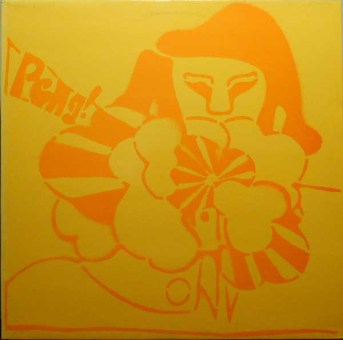
I wrote previously about how I discovered Stereolab in May 1992 with the release of their first album Peng! In some ways Peng! is untypical of their early period, or at least it presents a different version of their early sound, more fuzzy and shoegazey. Shortly after buying Peng! I found a copy of the Slumberland pressing of Switched On, which compiles their first two EPs and a single released during 1991. The sound of these early recordings is much louder and harder, as though several layers of gauze between you and the band on Peng! had been removed.
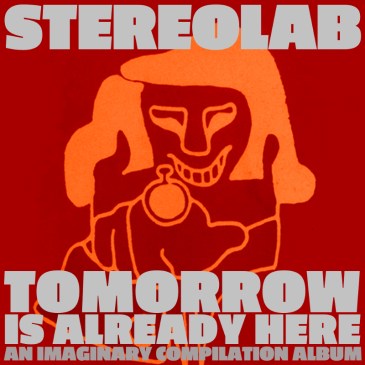
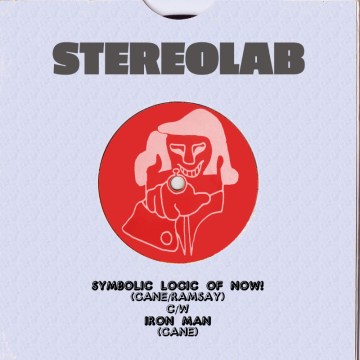
Switched On came out in October 1992 and it must have been around the same time that I picked up the 10” EP Low Fi which had been released in September. Despite post-dating Peng! Low Fi sounds a lot more like the older tracks collected on Switched On. I wasn’t initially aware of the release chronology, and kind of assumed that Low Fi sat alongside the other Switched On tracks, encouraged in that view by the repetition of the sleeve design across all these discs.
At any rate, it showed that it was more than mere surface texture that appealed to me in Stereolab’s music because I liked the louder stuff as much as the fuzz, the weird mash-up of Velvet Underground, krautrock and French pop.
One reason I might have a strong affinity for Stereolab is the close parallel between my formative musical experience and that of Tim Gane. Almost exactly one year younger than me, Gane reveals in an interview with Synth History website that the first LP he ever bought was Elvis Costello’s This Year’s Model. Apart from a couple of Beatles LPs, it was my second or third purchase, after This Is The Modern World and at the same time as Another Music In A Different Kitchen.
“In 18 months I’d gone from Elvis Costello and Buzzcocks to Throbbing Gristle and Cabaret Voltaire,” says Gane, which is pretty much true for me too. He then goes on to list a dozen ‘mainstay’ LPs he listened to in those days, off the top of his head, including Chairs Missing, This Heat, Metal Box, Marquee Moon, The Voice Of America, and The Scream, all of which blared frequently from my stereo or cassette player at the end of the 70s.
Turning to the subject of films, Gane adds, “When I first saw The Good, The Bad and the Ugly it really blew my mind,” with which I must agree, for its striking style and ground-breaking Ennio Morricone soundtrack. He also had a five-pin DIN plug lead with which to record from his TV, and I used one to tape John Peel off my parents’ old stereogram. So much in common – the music, the movies, the analogue tech!
The significant difference between me and Tim Gane, of course, is that I didn’t grow up to lead one of the most original and exciting alternative rock bands of the late 20th/early 21st century. My cultural output, despite these same cultural inputs, is precisely fuck all, while Tim Gane continues to produce wonderful music, with the first new Stereolab album in 15 years, and also through his Cavern of Anti-Matter project.
Enough of my creative inadequacy – back to 1992… Low Fi was the first Stereolab recording with Mary Hansen and Andy Ramsay on board. And it was the last on which New Zealander Martin Kean played bass, having been a constant on the early singles and first album. Ramsay drums throughout, while Hansen only contributes vocals to the title track and Laisser-Faire, no guitar or keyboards as she would over the coming years. As well as drumming, Ramsay is credited with a bouzouki part on (Varoom!). If it wasn’t written on the sleeve, you’d never know. Similarly, producer/engineer Robbs contributes piano to Low Fi and Elektro but he obviously didn’t big himself up when he got back behind the mixing desk.
All four tracks are drawn from the same well of inspiration that produced Super Electric and other mini-Sister Rays in Stereolab’s first phase, two-chord guitar riffs and dirty over-amped organ noise, mollified on Low Fi and Laisser Faire by Laetitia Sadier and Mary Hansen’s hymnal voices. The closing section of instrumental (Varoom!) jumps from one of these Velvety thrashers into a looping squall of electronic noise that refuses to end, the needle trapped in a run-off lockgroove. Contrastingly, Elektro switches mood to conclude with a gentle acoustic guitar and vocal passage.
For some reason the tracks on Low Fi evaded compilation on Refried Ectoplasm (Switched On Volume 2) which otherwise hoovered up all the other stray B-sides, split singles and concert giveaways from 1992-93. It wasn’t until 2022’s Pulse of the Early Brain (Switched On vol.5) that you could hear this music if you didn’t already own the vinyl, or the CD version released in 1993. The track timings on different versions (original vinyl, CD, compilation) seem to vary, sometimes by a couple of minutes on (Varoom!) and Elektro, with no clear explanation why.
Quite by chance, my copy of Low Fi is one of the 500 so-called ‘clear vinyl’ copies, although whoever described it as clear obviously comes from somewhere without an adequate purified water supply. I am fucking not drinking that! To be strictly accurate, I’d have to describe it as semen-coloured vinyl. On a swatch in your local paint store, it would be called Jizz Grey or Hand Shandy. Whatever, it seems to add about 20% to the resale value according to Discogs depending on how rabidly desperate your buyer is. Not that I’m selling, so put your wallets away. This one is a keeper.
Low Fi
(Varoom!)
Laisser Faire
Elektro (He Held The World In His Iron Grip)


 THE NEW VINYL VILLAIN