SHAKEDOWN, 1979 (November)

79

A slight deviation from the norm in that this instalment also happens to cover a few days from October 1979, with the first of the charts being recalled with much fondness today being that of 27 October – 3 November.  The first glance is enough to give anyone with good taste a bit of the dry boak as the Top 3 places really are easy listening hell with Lena Martell, Dr. Hook and Sad Cafe stinking the place out.  Thankfully, one of the year’s top songs did make its entry into the charts this week, coming in at #29.

mp3: The Jam – The Eton Rifles (7″ version)

The band’s third chart hit of 1979 following on from When You’re Young and Strange Town, both of which had been Top 20.  The Eton Rifles would take The Jam to the giddy heights of #3 in mid-November, confirmation that, for a certain age-group across Britain, they were becoming the biggest and most important band of their time.

Moving quickly on to the chart of 4-10 November, and it was still AOR hell across much of the Top 40.   I had to go a long way down to find something decent enough that was new this week:-

mp3: Madness – One Step Beyond

So, it’s now coming up for 45 years since those of us of a certain age, not only fell head-over heels for The Jam, but we all did the Chas Smash dance for the first time.  The Prince had been great fun to listen and dance to, but the band’s second 45 was truly something else.  In at #51, it would go on to enjoy a 14-week stay in the Top 75, not taking its leave until the end of February 1980.  The first Top of The Pop appearance for this one was memorable…..the audience had no idea what to make of it!!!

Sneaking in almost unnoticed at #75 was this:-

mp3: The Tourists – I Only Want To Be With You

As with The Jam, this was The Tourists third chart hit of 1979, and it would prove to be their biggest in their short existence. A cover of a Dusty Springfield hit from 1964, this would spend 7 weeks in the Top 10 throughout December and into the first few weeks of January 1980, thus gaining loads of sales in that crucial Christmas period.  It would peak at #4 which, coincidentally, was the same success that Dusty had enjoyed 15 years previously.

11-17 November was another that was short on quantity, but big on quality

mp3: Pretenders – Brass In Pocket (#57)

Another band enjoying a third chart hit of 1979, but where Stop Your Sobbing and Kid had barely dented the Top 40, Brass In Pocket was a different beast altogether. It’s one of those songs that gets lumped onto a fair number of ‘Alternative Hits of the 80s’ compilations, which is kind of understandable when you look at its chart trajectory.  In at #57….four weeks later in mid-December, it had crept up to #30.  Five weeks later, it reached #1 in mid-January, enjoying a two-week stay at the top, before eventually falling out of the Top 75 in March, a full 17 weeks after it had first come in.  A brilliant pop song that has aged superbly.

It was also a chart that delivered a cash-in.

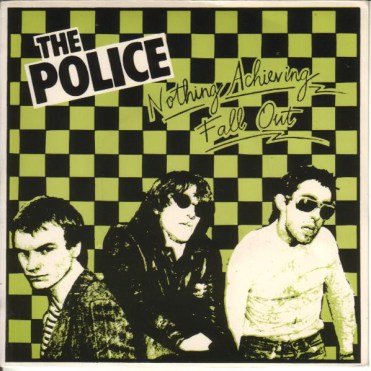
mp3: The Police – Fall Out (#70)

The past 18 months had delivered worldwide pop success for The Police, but here was a reminder of their new wave roots.  The debut single, originally released in May 1977 on Illegal Records. It had been written by Stewart Copeland and the guitarist was Henry Padovani as Andy Summers had yet to join.  Sting‘s role was just to look pretty and sing.  Fall Out had flopped on its initial release, but the demand for product was such, and even though the band’s sound have move a long long way from new wave, that this would reach #47 in due course.

Moving swiftly on to 18-24 November, it proved to be a chart with some intriguing new entries.

Hands up if you can recall and then sing along to Gary Numan‘s follow-up single to Cars.   I thought so….very few of you

mp3: Gary Numan – Complex (#15)

Where Are Friends Electric and Cars had been upbeat and jaunty numbers and very much on the synth-pop side of things, this one is slow, meandering, serious and of the type that has listeners stroking their chins.  It takes almost 90 seconds, half the duration of the song, before the lyric begins.  I’ve a feeling that if Gary Numan hadn’t been such a phenomena back in 1979 that this would not have had much airplay on daytime radio.  It did, however, get A-listed and in due course would peak at #6 the following week.

I’ve mentioned a few bands for whom November 1979 brought a third chart hit across the calendar year.  It’s time to give praise to a band that was having its fourth hit of the year

mp3: The Skids – Working For The Yankee Dollar

It had all started with Into The Valley in February, followed by Animation and Charade.   There is no doubt that the band’s sound evolved and changed a huge deal across the year.  The first hit was new wave personified but the final hit, with all sorts of keyboards has more than a hint of prog.  What hadn’t changed, however, was the catchy sing-along nature of the verses and chorus, albeit it was till nigh-on impossible to get all the words right!   Working For The Yankee Dollar came in at #34 and nine weeks later it reached its peak of #20 after an incredibly slow rise to that position, going 34, 32, 28, 27, 24, 24, 23, 21, 20.

One place below The Skids in the new chart was a song from another band, enjoying a fourth hit single of the year

mp3: Blondie – Union City Blue

In at #35 and eventually peaking at #13.   A relative flop given that Heart of Glass, Sunday Girl and Dreaming had been #1 or #2.  A sign that the halcyon days of Blondie were over???  Don’t be silly……normal service would be resumed in February and April 1980 with two more #1s.  Union City Blue did, however, prove that the band were more likely to have hits with pop or disco orientated songs rather than rock-type efforts.

Coming in at #55, was someone on the comeback trail.

mp3: Marianne Faithfull – The Ballad Of Lucy Jordan

Back in 1979, I only knew of Marianne Faithfull through her acting and the fact she had been romantically involved with Mick Jagger. I had no idea that she had enjoyed a number of Top 10 hit singles back in 1965 and then a minor hit in 1967.  November 1979 had seen the release of an album, Broken English, with the music press and broadsheet newspapers in particular highlighting it was the work of someone coming back from a long period in the wilderness that had included periods of drug addiction, homelessness and anorexia, all of which had messed with her voice.  It’s an album that gained great critical acclaim on its release, and has done so ever since.  But sales wise, it didn’t initially do all that much, only reaching #57 in the UK, albeit it sold in better numbers across Europe.

In an effort to boost sales, a single was lifted from it.  It was one of a number of covers recorded for the album, of a tune originally recorded back in 1974 by Dr Hook & The Medicine Show. I really have to share the review that was printed in Smash Hits magazine, none of whose targetted readership would have had a clue about Marianne’s past history:-

“The Debbie Harry of the sixties returns to vinyl with an honestly outstanding offering, a version of an old Doctor Hook number related over a swimming synthesiser. If you can handle this, it sounds like Dolly Parton produced by Brian Eno. Only better.”

Absolute genius!!!!!!!!!

With that, it’s time to move on to the chart of 24 November – 1 December.  I wasn’t expecting much, given that this is when record company bosses put the emphasis on the festive or novelty songs that are likely to curry favour rather than promoting anything serious or worthwhile.

mp3: The Police – Walking On The Moon (7″)

A first in this series, with a band enjoying two new chart entries in the same month.  A&M Records weren’t happy with the Illegal Records re-release of Fall Out, but given the band weren’t involved in any way with its promotion, and the fact that the next ‘proper’ single would come in at #5, before hitting the #1 spot, demonstrated that no damage to the brand had been done.

And here’s some more proof of why 1979 was, without any question, the best-ever in terms of delivering chart success for great/memorable/important singles.

mp3: Sugarhill Gang – Rapper’s Delight

This would have been the first time I ever heard a rap song.  I’d be fibbing if I said I took to it instantly.  I did love the fact it made great use of Good Times by Chic, but the fast-flowing and difficult to decipher lyric was something I didn’t ‘get’.  Looking back on things, I am happy to acknowledge, and not for the first time, that my tastes in music had yet to fully form at the age of 16.  I had no immediate reference points for this type of music but over the next few years, thanks in part to The Clash and Blondie referencing rap music and incorporating it into their own songs, it began to make a great deal of sense.  By the time Grandmaster Flash appeared on the scene in 1982 with The Message, I was more than ready to embrace things, albeit I would still only dip my toes into the water for a few more years before fully immersing myself.

Rapper’s Delight came in at #38.  Within two weeks, it was at #3, and it wouldn’t leave the Top 75 until February 1980.  It’s far from the greatest rap song ever written and recorded, but it must be one of the most important as it was a game-changer.

I should mention in passing that this was the chart in which Pink Floyd, to the chagrin of their fans who saw the band as being an albums-only outfit, saw a single, Another Brick In The Wall, come in at #26.  It was their first Top 40 single since 1967 and would, in reaching #1 a couple of weeks later, become their best known song.  I thought of it back then as a novelty hit.  Still do.

It was also the chart in which Paul McCartney first got to tell us of his Wonderful Christmas Time, and he hasn’t stopped doing so since.  It came in at #61, and eventually reached #6.   It has subsequently featured in the Top 75 in 2007, 2011, 2012, 2015 and every year since 2017 since teh dawn of digital downloads counting towards chart positions.

Part 2 of this feature, with 45s from November 1979 that didn’t chart, will be with you in a couple of weeks.

JC

SHAKEDOWN, 1979 (September)

79

I reckon you all know the drill by now.

I thought August 1979 had proven to be a bumper month for hit singles – and going by the comments last time around, many of you were in agreement. Will September hold up?

The Top 20 of  the first chart of the new month was playing host to Gary Numan, Roxy Music, The Specials, The Stranglers, Joe Jackson, The Jam, and Ian Dury & The Blockheads, and here’s a handful of new entries quite a bit further down.

mp3: The Ruts – Something That I Said (#45)

The quickly-released follow-up to the hit single Babylon’s Burning was another belter of a number, and while it didn’t quite match the sucess of its predecessor in that it peaked at #29 and spent just five weeks in the chart, it helped build a strong foundation for the soon to be released debut album, The Crack, which went Top 20.

mp3: Squeeze – Slap and Tickle (#53)

Their third hit single in the space of six months, but it would come nowhere close to the Top 3 success of Cool For Cats and Up The Junction.  It’s a bit of a strange one in that it’s reliant on synths, and Glen Tilbrook has cited Kraftwerk and Giorgio Moroder as influencing what he was trying to do, but it kind of sounds a bit primitive.  It did eventually reach #24 which was a more than decent showing given it had been taken from an album released five months earlier.

mp3: The Jags – Back Of My Hand (#70)

A power-pop classic from a band formed in the costal town of Scarborough in north England. Tailor-made for radio, it sold in increasing numbers of a couple of months, eventually peaking at #17 in late October.  It was The Jags one and only brush with fame in terms of chart success, and after some more flop singles and two albums that failed to dent the Top 100, they were dropped by Island Records after which they called it a day.

mp3: The Ramones – Rock ‘n Roll High School (#71)

A blink and you’ll miss it, minor hit. In at 71, up to 67 the next week, after which it disappeared.

mp3: The Tourists – The Loneliest Man In The World (#72)

As I mentioned back in June, The Tourists is where it all began for Annie Lennox and Dave Stewart, who would conquer the planet in the mid-80s as the driving force behind Eurythmics. This was their second hit of the year, taken from their eponymous debut album that had been released in June 1979.    It would go on to spend seven weeks in the chart, peaking at #29 in mid-October, by which point the band had already finished work on their second LP…..of which there will be further mention when November comes around.

The chart of 9-15 September 1979 had just two new entries in the Top 40, both of which were a bit on the unusual side as one was Since You’ve Been Gone, the first ever hit 45 by hard rockers Rainbow (who like many others in the genre normally ignored the singles market)  with the other being a live EP from Kate Bush (live music was never aired on daytime radio back in the late 70s).  In saying that about hard-rockers and chart singles, AC/DC were also in the Top 75 with Highway To Hell.

Coming in at #51 was a bona-fide disco classic from someone who was, at the time, just seen as perhaps the most-talented of his musical family, but not thought to be someone who would, in time, become arguably the most-famous pop star of his generation.

mp3: Michael Jackson – Don’t Stop Till You Get Enough

This would spend more than three months in the Top 75, peaking at #3.  This is another example of how things were done differently back in 1979.  ‘Dont Stop…’ had been released as a single in America back in July.   It took until early September for it to be issued in that way in the UK, and even then it was merely a piece of marketing to highlight that Michael Jackson‘s solo album, Off The Wall, was due for release in mid-late September.  Nobody, and I don’t care what anyone will say with the benefit of hindsight, anticipated it would sell 20 million copies worldwide, of which almost 2 million were in the UK, leading to an initial 61-week stay in the album charts, and an incredible 225 weeks all told over the subsequent years and decades.

There’s nothing else worth homing in on across the rest of the new entries, so I’ll quickly move on to 16-22 September.

Cars by Gary Numan went to #1, replacing Cliff Richard, whose We Don’t Talk Anymore had been holding down the top spot for the previous four weeks.  Gary’s stay at the top only proved to be very brief.   The song which landed at #8 this week would soon hit the top.

mp3: The Police – Message In A Bottle

It really was quite the remarkable turn-around. A year earlier, nobody in the UK had been interested in Sting, Stewart and Andy.  Three flop singles and an album that was in the bargain bins by Xmas.   But they did a bit better in America, and early-mid 1979 brought hits via re-releases.   The question was whether the new material would sustain the interest.  Message In A Bottle more than did that.  As I said, in at #8 prior to a three-week stay at #1, while the album from which it was taken, Regatta de Blanc, came straight in at #1 in early October.  It was the start of a genuinely remarkable run of success.

Nobody would have realised it at the time, but the single which would eventually replace Message In A Bottle at #1 also entered the charts this week

mp3: Buggles – Video Killed The Radio Star (#57)

There’s really not much to write about this song that hasn’t already been written.  It was slightly a slow-burner, in at 57 and taking four more weeks to reach #1 (where it stayed for just one week – I would have sworn it was at the top for a good deal longer).  Maybe it was just down to it never seeming to be off the radio for about the next five years.

mp3: XTC – Making Plans For Nigel (#63)

Life Begins At The Hop had given XTC a minor hit a few months earlier.  Making Plans for Nigel wasn’t a follow-up, but instead was issued to further support Drums and Wires, the band’s third studio album that had come in to the charts a few weeks earlier at #43.   It proved to be an inspired move, raising the band’s profile immensely and taking them firmly out of cult status into bona fide pop stars.  Not that it sat comfortably with them……

Nigel would, in due course reach #17, a position that band would better just twice in the coming years.

mp3: The Headboys – The Shape Of Things To Come (#68)

As featured in the long-running Scottish Songs on Saturdays series, away back in August 2018.  I mentioned that the Edinburgh-based power-pop outfit had been signed by RSO Records, one of the biggest labels in the world at the time, primarily on the back of the success of Saturday Night Fever by The Bee Gees.  Such connections got The Headboys a slot on Top of The Pops despite the single not being in the Top 40; indeed, it never got higher than #45 in a eight-week stay in the lower reaches of the chart and proved to be the only hit of any sort the band would enjoy.

And so, to the final week of September 1979.

mp3: Blondie – Dreaming (#7)

The album Plastic Letters had taken Blondie to the summit of the pop world, and all concerned were determined to remain there.  Dreaming was the first new song in some 18 months, and it was given a rapturous welcome.  This was an era when new singles entering anywhere in the Top 10 was seen as a triumph, and in many cases, it led to it hitting #1 the week after.  Blondie’s previous two singles – Heart of Glass and Sunday Girl – had been #1s.  Dreaming failed to match it, stalling at #2, unable to dislodge Message In A Bottle.  It was perhaps a sign that the baton in the race to be the world’s most popular group was being handed over from America to England.

As if to illustrate how hard it was in those days to have a high new entry in the singles chart, the second highest of the week came in at #45

mp3: The Skids – Charade

The third hit of the year for The Skids. This one didn’t go Top 20 in the same fashion as Into The Valley and Masquerade, peaking at #31; remarkably, the band would enjoy a fourth hist single before the new decade dawned on us.  Come back in November for more.

Here’s some more proof as to why 1979 is, in my opinion, the greatest year of all for chart singles

mp3: Siouxsie & The Banshees – Mittageisen (#58)

Metal Postcard (Mittageisen) was one of the standout tracks on the 1978 debut album The Scream.   A year later, the album Join Hands had been issued, with its lead single Playground Twist charting at #28.  Meanwhile, over in West Germany, Metal Postcard had been re-recorded with the lyrics sung in German, and had become a hit single.  Polydor Records, noticing that fans were purchasing it on expensive import, decided to release it in the UK. It proved to be a short stay in the chart of just three weeks, and it peaked at #47, but it was previously unthinkable that a German-language new-wave song by an English group would remotely be a commercial success.

Those of you who read Part 2 of this monthly feature, in which I highlight singles that didn’t make the Top 75, may recall me that back in May I made reference to Gotta Getaway, a quite brilliant 45 by Stiff Little Fingers that had been issued on Rough Trade.  A few months later, and after signing to Chrysalis, the boys from Belfast finally made the charts, coming in at #59.

mp3: Stiff Little Fingers – Straw Dogs

This move to a major would lead to more chart success in 1980 and help pave the way for the band to build up such a decent-sized fanbase that they are still very much a going concern in 2024

Talking of Part 2 of this series, I hope you’ll all drop in a few weeks time as there are some genuine classics, from really well-known groups, that have stood the test of time.

JC

SHAKEDOWN, 1979 (July)

79

My summer of ’79 saw me enter the big bad world of paid employment.  I actually told a few lies to land the job, the vacancy for which had been advertised in the local job centre.

I was legally able to leave school, but I was always planning to return after the summer holidays to go into 5th year to sit the exams that would count towards university admission.  But I wanted to earn a bit of money, and so I applied for, and landed, a job in the city centre branch of Halford’s, the UK’s biggest retailer of cycling and motor products.  I told the store bosses that I had no intention of returning to school, no matter how good the results of my O-Grades, and, yes, I did see myself as being very interested if the chance arose to train as a store manager once I turned 18 in a couple of years time.

I started the job a couple of days after my 16th birthday, and so the month of July was when I really settled into it.  It was a shop where the radio played in the background all day long, and with most of the staff being lads aged in their late teens/early 20s, the station of choice was BBC Radio 1, which means my ears were exposed to a lot of what was in the charts.

As you’d expect, there was a fair bit of rubbish regularly aired, but then again Tubeway Army, Squeeze, Blondie, The Ruts and The Skids were all still in the Top 40, while some cracking disco/soul classics from Earth Wind & Fire/The Emotions, McFadden & Whitehead, and Chic were also capable of putting a smile on my face.  The highest new entry in the chart in the first week of July is not one I can recall hearing on Radio 1:-

mp3: Public Image Limited – Death Disco (#34)

Jaysus, this was really weird sounding.  The 16-year-old me had a difficulty with it.  I bought it, but I can’t say I particularly liked listening to it.  So much so, that I gave it away to someone who handed me two of the early Jam singles in exchange (Eddie didn’t like that they were a pop band nowadays). It took me a few years to really appreciate Death Disco… till 1990 in fact, when I bought a CD copy of a Public Image Limited singles compilation.  As I wrote on this blog previously, by this point in my life I knew that great songs didn’t need hooks or memorable, hummable tunes, and that a cauldron of noise in which a screaming vocal fights for your attention alongside screeching guitars over a bass/drum delivery that on its own would have you dancing like a madman under the flashing lights could be a work of genius.  This spent seven weeks in the Top 75, peaking at #20.

While researching this piece, I discovered, to my shock/delight, that Death Disco had appeared on a Top of The Pops budget compilation – these albums featured uncredited session musicians/singers replicating the sound of current chart hits. I think there were about 100 or so of them released between 1968 and 1982, and they were stupidly cheap in comparison to a proper studio album, and from memory weren’t all that more expensive than a couple of singles.  This is really strange:-

mp3: Top Of The Pops – Death Disco

I’m thinking that John Lydon pissed himself laughing at the very idea of this, and as such was more than happy to give his blessing to it.

The next one of interest in the chart of 1-7 July is another I can’t recall hearing in Halford’s

mp3: Siouxsie & The Banshees – Playground Twist (#47)

The third of the S&TB singles wasn’t a commercial offering by any stretch of the imagination, but it did sell enough copies to reach #28 in a six-week stay.

Coming in a bit further down the chart was one that I recall hearing loads of times in the shop:-

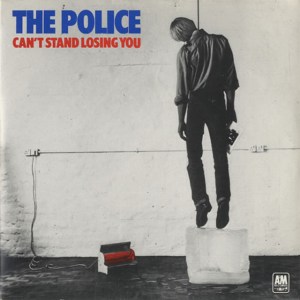
mp3: The Police – Can’t Stand Losing You (#60)

This had been a near smash-hit in late 1978, spending five weeks in the charts and reaching #42.  The Police had gone massive in the first half of ’79, and it was easy enough for A&M Records to press up more copies of the old singles to meet the new demand.  Where Roxanne had taken the band into the Top 20, this was the one that sealed the deal, getting all the way to #2 in mid-August.

The second singles chart of July ’79 was a strange one.  No ‘big’ entries, with the highest coming in at at #48, courtesy of Abba.  Many of other newbies are names I am struggling to recall – Chantal Curtis, Stonebridge McGuiness, Judie Tzuke, Vladimir Cosma, and Light of The World.  There was, however, one truly outstanding song which came in at #62:-

mp3: The Pretenders – Kid

It remains my favourite 45 of all that Chrissie & co ever put down on vinyl. Indeed, it is one of THE great records in what was, as this series is demonstrating, a great year for music; it spent seven weeks on the chart in July and August 1979, peaking at #33. Should have got to #1….but that feat for The Pretenders was just around the corner.

The third week of July saw an unusual song as its highest new entry at #15:-

mp3: The Boomtown Rats – I Don’t Like Mondays

Here’s the thing.  I more than liked the Boomtown Rats and owned copies of their first two albums.  I wasn’t at prepared for the new single…..it was all over the radio before it was actually released, and looking back at things now, it must be one of the first examples of a viral marketing campaign based on artificially creating a reaction to something that some folk declared to be ‘shocking’.  I can’t say that I cared much for the song, and it was conspicuous by its absence when I pulled together a Rats ICA back in October 2022.  The week after entering at #15, I Don’t Like Mondays went to #1, where it stayed for four weeks, and then another two weeks at #2. All told, it sold over 500,000 copies and was the 4th biggest selling single of 1979.

mp3: David Bowie – D.J.

Bowie followed up the success of Boys Keep Swinging with a second single from the album Lodger. This would have been heard in Halford’s but not all that often given that it came in at #29 in the third week of July but immediately dropped down the following week, and Radio 1 daytime DJs usually only gave spins to records that were on the up.

mp3: Sparks – Beat The Clock

This was very much all over the workplace radio….the sort of song that sounded great over the airwaves and made the individual DJs feel as if they were being a bit edgy.  A fantastic piece of disco-pop, thanks to the efforts of the brothers Mael and Giorgio Moroder.  A nine-week stay in the charts was the reward, with a best placing of #10.

mp3: The Undertones – Here Comes The Summer

Yup….July ’79 was the release date for this one.  Really doesn’t seem like 45 years ago, but there you have the facts presented before you, so there’s no denying it.  The other thing I’d have said about this was that it must have been a Top 20 hit, given how often I recall hearing it and that it lodged so easily into my brain.  But nope, in at #63 and peaking a couple of weeks later at #34, which was kind of a similar trajectory to this one:-

mp3: Buzzcocks – Harmony In My Head

The first 45 not to feature a lead vocal from Pete Shelley, the delivery from Steve Diggle made this just a little bit rougher round the edges than previous Buzzcocks singles.  But it was, and still is, a great listen.  In at #67 and peaking at #32…..and I’d have lost any bet offered on whether this or Here Comes The Summer had peaked highest.

And so, to the final singles chart of July 1979.

As with a couple of weeks previous, nothing came in fresh at any high position. #50 was the best on offer, and it was from Showaddyfuckingwaddy.  So no chance of it featuring here.

I was scrolling all the way through the Top 75 of 22-27 July, and just as I was concluding there wouldn’t be anything worth featuring, i noticed this was a new entry at #74:-

mp3: The Specials – Gangsters

One that I don’t so much associate with July 1979 and more about a period after I had finished at Halford’s and returned to school where I would take my first ever foray into DJ’ing.  It’s a tale I told when I wrote about Gangsters in the Great Debut Singles series:-

“1979/80 marked my first forays into DJing, if playing records on a single deck at a youth night in the school could be regarded as DJing. The senior pupils were encouraged to help the teachers at these nights, which were basically an effort to provide bored 12-15 year olds with something to do instead of hanging around street corners and picking up bad habits. There were three of us who brought along our own 45s to play while everyone ran around making lots of noise burning up all that excess energy. Very gradually over a matter of weeks, our little corner of the hall began to get a dedicated audience, and it was all driven by the fact they loved to do the Madness dance(s). In two hours of music, you could bet that more than half came through records on the 2-Tone label or its offshoots. And these kids were of an age when playing the same song two or three times in a night didn’t matter.”

Happy days indeed. Gangsters went on to spend 12 weeks in the charts, peaking at #6.

JC

SHAKEDOWN, 1979 (April)

79

I trust that the first three months of this series has helped to convince any of you who happened to be non-believers that 1979 was very much the greatest year for hit singles in the UK.  So, what did April shower upon us??

While I wasn’t overly keen on the Sex Pistols singles on which Sid Vicious took on the duty of lead vocals, (which is why Something Else was left out previously and C’Mon Everybody will not appear in future), the cash-in this month did hold some appeal.

mp3: Sex Pistols – Silly Thing

Virgin Records really didn’t care too much about facts when it came to Sex Pistols.   The info attached to the 45 states that it’s from the album The Great Rock ‘n’ Roll Swindle, when in fact it’s a totally different version.  The album track has Paul Cook on lead vocals and had been recorded in mid-1978.  The single version has Steve Jones on lead vocals, and had been recorded in March 1979, with Bill Price on production duties.

It entered the charts in the first week of April 1979 at #24, and in due course climbed up to #6 as part of what proved to be an eight-week stay in the Top 75.

mp3: The Members – Offshore Banking Business

The wonderful follow-up to Sound of The Suburbs was a reggae-tinged attack on white-collar crime.  Sadly, things have only got worse with the passing of time.

Offshore Banking Business was, in comparison to ‘Suburbs’, a minor hit, only reaching #31, and it would prove to be the last time that The Members troubled the chart compilers.

mp3: M- Pop Muzik

Some folk will argue that this was a novelty number and a bit of an annoyance.   I’ll accept that it did become over-exposed somewhat back in the day and became a bit of an irritant, but the passage of time has more than convinced me that it’s a bona-fide pop classic.

M was the recording name taken by Robin Scott, a man with a fascinating backstory in that he’d been in and around the creative industries for much of the 70s as a singer, recording artist and record producer, as well as being a friend of Malcolm McLaren and Vivienne Westwood. He also worked with the then emerging film director Julian Temple.

Pop Muzik came into the charts at #53, and would go on to spend 14 weeks in the Top 75, peaking at #2.  It was also a huge hit in many other countries, and probably sold enough copies that ensured its composer would never again have to have any financial concerns, and enabled him to indulge in various creative projects over the next forty-plus years.

mp3: Sparks – The Number One Song In Heaven

I’ve previously written at length about this song, back in December 2016. I summed it up by saying that it was where prog met glam met disco met film soundtrack on one piece of 7″ black vinyl. I also declared it as the celestial song which cleared the decks for the likes of Soft Cell, Pet Shop Boys, Human League and Heaven 17 (as well as many other inferior versions of electro-pop) to come along in the 80s and make a fortune.  The one difference from 2016 and now is that I have since picked up a second-hand copy of the 45, having been without one for more than 30 years.  This one entered the charts at #60 on 21 April 1979.  It peaked at #14 in June 1979 while spending a total of 12 weeks in the Top 75.

mp3: X-Ray Spex – Highly Inflammable

Highly Inflammable was the first new song from X-Ray Spex since the release of the debut album Germ Free Adolescents at the end of the previous year.  It turned out to be their last piece of music for almost 16 years, as the group came to an end when lead singer Poly Styrene announced her departure shortly afterwards.  They would reform for live shows in 1991 and a second and final album would appear in 1995.  Highly Inflammable was their fourth chart 45, but where each of The Day The World Turned Dayglo, Identity and Germ Free Adolescents had all hit at least the Top 30, the final single stalled at #45.

mp3: The Police – Roxanne

Yup, it’s now 45 years since Sting & co. first tasted fame.    If they had had their way, it would have been a full year earlier, as Roxanne was initially released in April 1978 to great indifference.  But America went nuts for the song in early 79 and this led to A&M Records giving it a re-release over here.  The rest, as you might say, is history.

Roxanne came into the charts at #42 on 22 April.   It hung around for 9 weeks and peaked at #12.  I bought the re-released version of the single and that same time, having convinced my parents that going to new wave/post-punk gigs at the Glasgow Apollo wasn’t as dangerous as some tabloid papers would have you believe, I bought a ticket for my first ever live show.

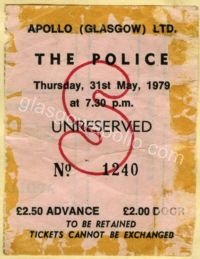
The Police.  Thursday 31 May 1979.  There were two support acts.  Bobby Henry, followed by The Cramps.   I haven’t kept count, but I reckon I’ve been to over 1,000 gigs all-told now.  I still very much remember the first time.

mp3: The Undertones – Jimmy Jimmy

Get Over You had been a flop, so there was quite a lot riding on the next single from Derry’s finest.  Thankfully, the radio stations and record-buying public really took to Jimmy Jimmy over the spring and summer of 79.  It came in at #57, spent 10 weeks in the chart, and peaked at #16.    For all that it’s such an upbeat and anthemic number, it really is a very sad lyric.  One of the band’s finest three minutes, if you don’t mind me saying.

mp3: David Bowie – Boys Keep Swinging

I wasn’t quite at the stage where I was acquainting myself with David Bowie albums.  For now, I was more than happy to make do with the singles.   I had liked most of what I heard on daytime radio, but had never actually bought anything of his until Boys Keep Swinging.  It’s one of those that I can’t quite really put my finger on exactly why this really appealed to the then 15-year-old me, but there’s no denying that seeing it performed on the Kenny Everett TV show proved to be what would now be described as a water-cooler moment, albeit in may case it was in a school playground the next day when a fair bit of homophobic language was involved.  Little did we know the official video would create even more of a buzz.

Boys Keep Swinging came in at #31 on 29 April.  It climbed all the way to #7, and in doing so, gave Bowie his first Top 10 hit since Sound and Vision some two years previously.

mp3: The Damned – Love Song

Another of the new entries on 29 April.  This was the sixth single by The Damned, but proved to be the first time they hit the charts, and is all the evidence you need that the post-punk/new wave sounds had really become part of the mainstream.  It came in at #44, and before too long it had cracked the Top 20.

As I said earlier, and the whole point of this series, 1979 was a great year for singles (albeit the really big sellers were dreadful).

JC

(BONUS POST) DON’T LOOK BACK IN ANGER (5)

11092687_0

My recollections of 1983 being as great a year as there has ever been in terms of the singles charts and the 45s truly standing the test of time must have, more or less, wiped out the fifth month of the year, certainly judging by the final chart of the last full week of the month, 22-28 May.

For the most part, the best of the songs were those that had featured in March and/or April and were thus on their way falling down or out of the charts – Heaven 17 (#4), Fun Boy Three (#9), Human League (#15), Tears For Fears (#18), New Order (#32), Kissing The Pink (#36) and David Bowie (#37).

Spandau Ballet‘s four-week run at #1 was ended by American pop/R’n’B act New Edition, whose Candy Girl was enjoying its sole week at the top.  It would be replaced at #1 in the chart of 29 May by this:-

mp3: The Police – Every Breath You Take

The highest new entry on 22 May 1983 at #7.  It’s one that has, to many, became annoying due to over-exposure both at the time and since, but I still reckon it’s a great and subversive piece of pop music, as evidenced by it being a much requested first-dance by new brides and grooms despite it being clearly unsuited for such a purpose.

Another mid-tempo tune with a melancholic subject matter was just one place below at #8:-

mp3 : Yazoo – Nobody’s Diary

The lead single from the duo’s second album would, in later weeks, provide them with their third Top 3 single after the success in 1982 of Only You and Don’t Go.  Nobody realised at the time that Vince Clarke and Alison Moyet had reached the end of their tethers in terms of working together, and Nobody’s Diary would prove to be their final 45, although the album, You and Me Both, would reach #1 on its release in July 1983, despite no second or further 45s to assist with promotion.

The rest of the Top 10 was made up by The Beat (with an appalling cover of an easy listening number originally released by Andy Williams in 1963), Wham!, Galaxy and Hot Chocolate, which makes the chart feel like some sort of visit to a sweet shop.

Just outside the Top 10 were a couple of 45s that I recall buying at the time:-

mp3: Bob Marley & The Wailers – Buffalo Soldier (#11)
mp3: The Style Council – Money Go Round (Part 1) (#12)

Bob Marley had passed away in 1981, and this was the first, but far from the last, posthumous single issued by Island Records. Buffalo Soldier would eventually climb to #4, which was the highest ever position any of the Wailers singles ever reached.

This was a new entry for The Style Council‘s second ever 45 but, unlike debut Speak Like A Child, it didn’t manage to crack the Top 10.

JoBoxers, a band that was largely made up of musicians who had previously been The Subway Sect, and backing band to Vic Godard, were enjoying their second hit 45 of the year:-

mp3:  JoBoxers – Just Got Lucky (#16)

The bottom end of the Top 40 was largely made up of songs/acts that I genuinely can’t recall – F.R. David, Forrest, D Train, Flash and The Pan, and MTune – or those I wish I could forget – Hall & Oates, Modern Romance, George Benson, Men At Work, Rush and Cliff Richard.

But down in the 30-somethings there were a couple of tunes that are well worth recalling:-

mp3: Big Country – In A Big Country (#34)
mp3: Robert Wyatt – Shipbuilding (#35)

Big Country‘s second hit single would eventually reach #17 and an extended version would be included on their debut album ,The Crossing, which went Top 3 and spent a remarkable 68 successive weeks in the Top 100 after its later release in August 1983.

Robert Wyatt‘s poignant and moving take on Elvis Costello‘s anti-war number had originally been released in August 1982 but had failed to trouble the charts, largely as it wasn’t aired on any radio stations. Come the end of the year, and most music papers had it listed high on the various lists of ‘single of the year’, and Rough Trade Records took the decision to reissue it in April 1983 to mark the first anniversary of the outbreak of the Falklands War, the event that had led to Elvis composing the song.  #35 was as high as it got in the charts, and it had taken four weeks to do so.  It was only the second time Robert Wyatt had enjoyed a solo hit single, and it came almost nine years after his cover of I’m A Believer had reached #29.

I’ll end today with a single from the month of May 1983 that didn’t hit the high end of the chart, but is one I really associate with the time as it was aired regularly at the alternative disco held each Friday and Saturday in the student union:-

mp3: The B52s – Song For A Future Generation

It was the third single to be lifted from the album Whammy!.  The two previous 45s, Legal Tender and Whammy Kiss, had been total flops, but Generation wriggled its way to #63 and helped the parent album briefly breach the Top 40.

But then again, this time 40 years ago, I was had a new 45, along with its b-side, on very very very heavy rotation. Not sure if I bought it on the actual day of its release on 13 May 1983, but it would certainly have been there or thereabouts.

mp3: The Smiths – Hand In Glove
mp3: The Smiths – Handsome Devil

The b-side has been recorded live at The Hacienda, Manchester on 4 February which was just a few weeks in advance of the studio session in Stockport at which the self-produced a-side was laid down.

It didn’t breach the Top 100, but it eventually reached the Indie Singles Chart where it hung around for many months, thanks to Rough Trade being happy enough to periodically order up more repressings, eventually peaking at #3.

Once again, R.I.P., Andy Rourke.  Just 19 years old when the band became a success.

JC

(BONUS POST): AN IMAGINARY COMPILATION ALBUM : #337: STEWART COPELAND

A GUEST POSTING by JONNY THE FRIENDLY LAWYER

stewartcopeland

Stewart Copeland with The Police: an ICA

Most of the Police’s great big hits (and duds) were written by StingStewart Copeland also wrote a number of songs for the Cops, but his contributions are few and far between.  Kinda like how Paul Weller let Bruce Foxton squeak a tune onto a Jam album once in a while.  Definitely not like the great Colin Moulding, XTC’s auxiliary songwriter, who didn’t get in as many tracks as Andy Partridge but still had his share of singles (see ICA #26).  I got to wondering if Copeland wrote enough Police songs for an ICA.  Turns out there are exactly 10, so here they are, in alphabetical order.

1.     A Sermon

B-side of the UK single “De Do Do Do, De Da Da Da.”  The chorus sounds like a Sting song, the verses are a little stilted.  A respectable choice for a b-side.  Better than the A-side anyway.

2.     Bombs Away

Album track from Zenyatta Mondatta One of the band’s best songs.  Lovely middle-eastern sounding solo (“phrygian mode,” says my lead guitarist) by Andy Summers.

3.     Contact

Album track from Reggatta de Blanc.  Hmm…I’d call this filler. It’s got the band’s trademark sound, but doesn’t do anything special.  Next.

4.     Darkness

Album track from Ghost in the Machine.  Here’s a good one.  Unrushed and moody, fits really well with the rest of the band’s fourth album, which I always thought didn’t get the recognition it deserves.  Well, it did, sales-wise, but I like it more than their other ones.

5.     Does Everyone Stare

Album track from Reggatta de Blanc.  The drummer got three solo credits on their second album, as well as three tunes co-written with his bandmates.  This one’s my favorite.  Police tunes don’t feature a lot of keyboards, and I like what Copeland does here on piano.

6.     Fall Out

The band’s debut single on Illegal Records, before Andy Summers joined the band.  Wiki says original guitarist Henri Padovani was too nervous in the studio to play anything but the solo, so Copeland played the rest of the guitar parts.  This non-album track was the only Police A-side Copeland ever got.

7.     Miss Gradenko

Album track from Synchronicity.  Great melody.  Summers does some beautiful finger-picking before peeling off another stellar lead.  Summers actually wrote a few tunes for the band, too, but they’re pretty weak.  Can’t touch his guitar playing, though.

8.     Nothing Achieving

B-side to Fall Out.  Co-written with big brother Ian.  Copeland’s playing the guitar parts again with Padovani on the solo, such as it is.  Meh.

9.     On Any Other Day

Album track from Reggatta de Blanc.  Copeland starts with the spoken words, “You want something corny?  You got it!”  Then the lyric is about the day of a hapless idiot, which I guess was meant to be funny.  Or corny.  Not sure—is ‘corny’ a word in the UK?  Does it excuse the homophobic dis in the chorus?  Probably not.  Maybe that’s why Sting didn’t sing lead on it.  Despite its daft lyrics, I love this song because it’s got such a great bass line.  Sting is noted as a songwriter and singer and heartthrob and actor and lutist.  But no one ever talks about his bass playing, which is outstanding. He always plays an interesting line that serves the song.  He doesn’t get fancy unless he has to.

10.  The Other Way of Stopping

Album track from Reggatta de Blanc.  On my bass forum there was a poll recently asking if you could play with any drummer who would it be?  Lots of folks picked Copeland and you can hear why on this instrumental.  His timekeeping is perfect.  His fills are fast and unpredictable.  He has great touch—he can smack away or brush gently.  Love or hate the Police, you can’t deny they were all awesome musicians.

Bonus Track.  Don’t Care

 Released under the pseudonym Klark Kent on Kryptone Records back in 1977.  I guess Sting was more interested in trying to nail down the Police sound so Copeland put it out himself.  It’s a great little new wave tune with Copeland singing and playing all the instruments.

Copeland made a hell of a lot of music after the Police.  Film and TV soundtracks, collaborations, solo projects, and as a member of Oysterhead—a supergroup including Les Claypool (Primus) on bass and Trey Anastasio (Phish) on guitar.  You can always tell it’s him drumming.  I’d be curious if anyone’s familiar enough to do a separate ICA drawn from his lengthy post-Police career.

JTFL

STRADLING NEW WAVE AND M.O.R.?

91zvRfiST0L._SL1500_

Having become highly popular in the first half of 1979 with an album and singles originally released back in 1978, there was a huge amount of interest in the new material that was going to be released by The Police.

In September 1979 they unleashed a single which somehow straddled new wave and M.O.R. rock and in doing so turned the band into a global product for mass consumption. In other words, this is the single that re-invented stadium rock, just as those who had fought in the punk wars had thought they were going to win.

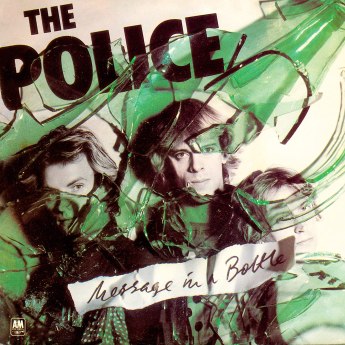
mp3 : The Police – Message In A Bottle
mp3 : The Police – Landlord

I’m not going to sit and here and say that this is a dreadful song. Far from it. It’s got a great tune and a catchy chorus to kill for. And the drumming from Stewart Copeland in particular the way he changes tempo all the way through it, is something to behold. Hell, even the bass playing of Sting is top-class stuff. As for Andy Summers on guitar…..well he’s not a million miles away from playing the same notes as can be heard on Don’t Fear The Reaper by Blue Oyster Cult which has long been regarded by rockists as a classic.

In fact, I shouldn’t restrict the love for ‘Reaper’ to the rockists as I’ve learned from attending dancing events with Glasgow hipsters of all ages that I am very much in a minority with my distaste for the song…

So, Message In A Bottle was a single tailor-made for sounding brilliant on the radio. Heavy rotation on BBC Radio 1 as well as across the ever-growing independent local stations in the UK meant it was a certainty to hit the #1 spot within a very short space of time. I’ve looked it up. It came in at #8 and the following week it was on top of the pile, eventually spending three weeks at #1.

I bought this single on green vinyl when it was released – just as I owned other earlier singles by the band on different coloured vinyl as part of the marketing ploy by A&M Records.

After the success of Message In A Bottle there would be no need for such gimmickry……

JC

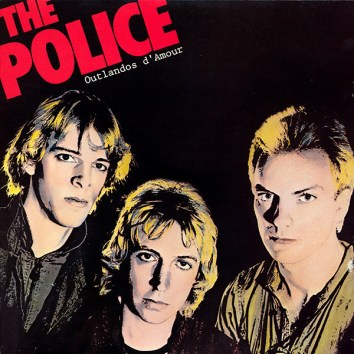
ALL OUR YESTERDAYS : OUTLANDOS d’AMOUR

Album: Outlandos d’Amour – The Police
Review: Rolling Stone, 14 June 1979
Author: Tom Carson

On the Police’s debut album, Outlandos d’Amour, lead vocalist/bassist Sting sings in a sleight-of-hand variety of styles: there’s a high-pitched quaver reminiscent of Ray Davies on the love songs, some Jamaican patois trotted out for the reggae cuts, a bit of Roger Daltrey’s phlegm-that-swallowed-Kansas howling for a big rabble-rouser like “Born in the 50’s.” Sting sounds like a guy who’s just made sergeant and is looking for a voice to back up his new stripes.

His band, too, offers a little something for everyone. If the flexible, jazz-influenced flourishes of drummer Stewart Copeland, a reggae beat and guitarist Andy Summers’ finely honed attentiveness to nuance lend the Police a stylish art-rock elegance, their music still sounds unpolished and sometimes mean enough to let them pass for part-time members of the New Wave—even though it’s a brand of New Wave sufficiently watered down to allow these guys to become today’s AOR darlings. And yet their hybrid of influences has been fused into a streamlined, scrappy style, held together by the kind of knotty, economical hooks that make a song stick out on the radio. Musically, Outlandos d’Amour has a convincing unity and drive.

It’s on the emotional level that it all seems somewhat hollow. Posing as a punk. Sting, as both singer and songwriter, can’t resist turning everything into an art-rock game. He’s so archly superior to the material that he fails to invest it with much feeling. Deft and rhythmically forceful though they are, the songs work only as posh collections of catchphrases (“Can’t stand losing you” or “Truth hits everybody”) thrown out at random to grab your attention: lyrical hooks to punch up musical hooks, with nothing behind them.

By trying to have it both ways—posturing as cool art-rockers and heavy, meaningful New Wavers at the same time—the Police merely adulterate the meanings of each. Their punk pose is no more than a manipulative come-on. For all its surface threat, there’s no danger in this music, none of the spontaneity or passion that punk (and reggae) demands. Even when Sting says, “There’s a hole in my life,” he can’t convince us it’s keeping him up nights—we know it’s just another conceit. And the larger the implied emotions, the tinnier he makes them sound. A gimmicky anthem manufactured out of whole cloth, “Born in the 50’s” reaches for Who-style generational myth-making (down to its ringing, Pete Townshend-like guitar line), but Sting can’t make us see that there’s anything special about this generation, because he knows there really isn’t.

The lack of emotional commitment becomes truly offensive in the minstrel-show Natty Dread accent that Sting puts on for the reggae numbers. The Clash’s great “(White Man) in Hammersmith Palais” works as white reggae because it’s all about Joe Strummer’s painful awareness that he can never claim this music as his own. Sting simply co-opts the style without acknowledging that such questions exist. The Police’s reggae is an infuriating and condescending parlor trick—a kind of slumming that isn’t even heartfelt.

As entertainment, Outlandos d’Amour isn’t monotonous—it’s far too jumpy and brittle for that—but its mechanically minded emptiness masquerading as feeling makes you feel cheated, and more than a little empty yourself. You’re worn out by all the supercilious, calculated pretense. The Police leave your nervous system all hyped up with no place to go.

JC adds…….

This was actually drafted for inclusion over the Festive period but having miscalculated how many I actually needed, I put it to one side, initially for a rainy day and then chose to have it come back as the first of what will be an occasional series given the positive fedback for this sort of thing.

It is fair to say that most of the 1979 reviews were far from favourable to The Police but Rolling Stone was a bit more vitriolic than most, with it damning with faint praise (and as it is an American review I’ve posted, I’ve chosen the more common album cover to be found over there rather than the one UK folk will be more familiar with.)

As time has gone by, there has been something of a rethink about Outlandos d’Amour, with many more than happy to talk up the strengths of the hit singles, albeit the way Sting has gone about his solo career and the high-profile rock star lifestyle he’s pursued has meant he’s remained fair game for many.

Even Rolling Stone has changed its tune. This is from December 2010 when it placed it at #434 in the greatest albums of all time:-

They would get bigger, but they never sounded fresher. The Police were punks who could play their instruments, absorbing reggae into the spare, bouncy sound of their debut album. “Roxanne,” “Next to You” and “So Lonely” proved that Sting was already a top-notch pop songwriter.

Almost the exact same was said in March 2013 during a feature on Best Debut Albums of All Time:-

They would get bigger, but they never sounded fresher. From Sting’s smoothly syncopated bass to Andy Summer’s prog-rock guitar and Stewart Copeland’s precision drumming, the Police were post-punks who could play their instruments, absorbing reggae and jazz into the spare, bouncy sound of their debut album, a record that didn’t sound quite like anything before it. The risque “Roxanne,” ”Next to You” and “So Lonely” proved that Sting was already a top-notch pop songwriter and these songs are in the DNA of everyone from No Doubt to U2.

Outlandos d’Amour came in at #38 in that particular rundown…..which, even for a fan like myself, seems embarrassingly high.

mp3: The Police – Roxanne
mp3: The Police – Next To You
mp3: The Police – So Lonely
mp3: The Police – Born In The 50s


NOT WHAT YOU WERE EXPECTING???

Now (v) will appear next Monday, the day that I actually fly back into Glasgow. Today’s post is all about a very significant anniversary.

It was 40 years ago today…….

I’ve written about this before, so what you’re getting is a based on a posting from February 2014.

I’ve mentioned a few times that my first live concert was on Thursday 31 May 1979 at the Glasgow Apollo. The headline act was The Police and support came from both Bobby Henry and The Cramps. The tickets, costing £2.50 in advance or £2 on the door, had gone on sale a few months earlier but such was the anticipated lack of interest in the headline or support acts that the promoters and venue management had made plans to open just the stalls area and for all tickets to be on an unreserved basis.

The fact that a re-released Roxanne began to storm up the charts changed things somewhat, but even then, it was something like just 48 hours in advance of the gig that tickets for the circle and upper-circle areas went on sale, leading to a last minute surge in demand.

The Apollo was an old traditional style venue, having first opened in 1927 as a theatre. It did have a very high stage which, as I was to learn in later years, made for a great gig from the perspective of bands as it was impossible to invade – but it gave fans down at the front a really sore neck looking up at their heroes and heroines. It had hosted thousands of gigs over the years, being the main venue in the city for all sorts of touring acts across all genres, but I’m not sure if it had ever hosted anything where the seating was totally unreserved while being a sell-out. Nobody was ready for what happened on the night.

Large groups of young people went along and having gained access at the front door, went where they wanted inside the building. Naturally, most gravitated to the stalls and this area filled up very quickly, albeit it was obvious most folk were using tickets for other parts of the venue. The upshot was that fans who had bought tickets some weeks or months ago found they were now being shunted to the upstairs parts of the venue and there was a huge amount of anger, especially among those who were so late in arriving that they were only allowed access to the Upper Circle, affectionately known as the nose-bleed seats, such was their height above ground.

Me? I did what I seemed to have done at just about every gig I’ve gone to over the past 40 years and that’s get there not long after doors arrive to make sure, if it’s a seated venue, that I see the support act, and it it’s a standing venue, I get a good spot somewhere in the middle, close to the front (although in later years, my definition of close to the front has become loose!!)

As for the music, I’ll have to hold hand o and admit that I can’t remember much of Bobby Henry who, gawd bless, will always be the first live musician I had the privilege of seeing. The Cramps were chaotic and confrontational and didn’t go down too well with the majority of the audience. Lux Interior didn’t help things by constantly challenging folk to invade the stage and fight with him – which, as I’ve indicated earlier, was a near impossibility given the height of the stage above the font of the stalls but what did become clear was that anyone crazy enough to jump down on to the stage from the circle area (it was a drop of about 20 feet) stood a chance…..and so a few of the bouncers were deployed to ensure this didn’t happen as Lux was, as the show went on, really antagonising most of the audience. I thought it was huge fun and enormously entertaining, and it was there and then that I made the menal note to make sure I’d see support bands, on the basis it would be easy enough to walk down into the foyer if they were dreadful (I assumed at this stage that all concert venues in the world were laid out like The Apollo).

By the time Sting, Stewart and Andy hit the stage, the place was rocking and absolutely roasting hot. And I was high with euphoria.

They opened with I Can’t Stand Losing You, the song which had first got be interested in the band. I don’t have details of the exact set list, but just six days previous, in Chicago, this is what they had played and it’s very likely the Glasgow set was identical:-

Can’t Stand Losing You
Truth Hits Everybody
So Lonely
Fall Out
Born in the 50’s
Hole in My Life
Be My Girl – Sally
Message in a Bottle
Peanuts
Roxanne
Next to You
Landlord
Encore – Can’t Stand Losing You

My memories are that the Outlandos d’Amour album featured heavily and that there were a couple of tracks that I hadn’t heard before – one of these would likely have been Message In A Bottle but I have a feeling Walking On The Moon may have been aired as there was a lengthy almost boring bit where Sting did his ‘yay-yo’ nonsense while asking the audience to respond to his calls. Andy certainly performed Sally as I can still picture him going off to the side of the stage and returning with a rubber doll, to the great delight of the many adolescents in the audience (myself included) who thought it the most outrageous thing we were ever likely to see in our entire lives.

The encore was more than one song, but I’m sure it was just the three singles from the album played for a second time. It lasted about an hour all told and it went by far too quickly.

The other passengers on the 62 bus home must have been in despair as the four strong group of us from school – all boys as the girls from the school who were going along that night wanted nothing to do with us!! – were still in hyper-mode and we didn’t or couldn’t shut up. And we talked a lot about Sally……..

mp3 : The Police – Be My Girl/Sally

40 years on, and I still get excited when I walk through the doors of live music venue. I’ve long lost count of how many shows I’ve seen – and I still kick myself that I didn’t think to keep ticket stubs – they were simply thrown away, often inside the venue itself as they no longer had any use or purpose.

The fact that The Police would eventually become just about the biggest act on the planet for a brief time in the early 80s, as well as Sting becoming the most self-righteous and pompous prick imaginable makes it all too easy to mock them. But as a 15 year-old lad, I thought they were as good as anything else that was emerging from the post-punk era that had been christened New Wave which is why I’m still proud that they were my first headline act. They say you never forget your first time, and that a small part of it lives with you forever. I’m no different…..and although I’ve been left embarrassed by an awful lot of the stuff that came out after the initial singles, I’ll never forget the part The Police played in developing my life-long love and affection for music and live gigs.

JC

IT REALLY WAS A CRACKING DEBUT SINGLE (19)

Hadn’t realised that it’s been well over two months since the last part of this occasiona series….how time flies when there’s an ICA World Cup to worry about.

I’m not sure everyone, or indeed anyone, will agree with me what I’ve come up with today.

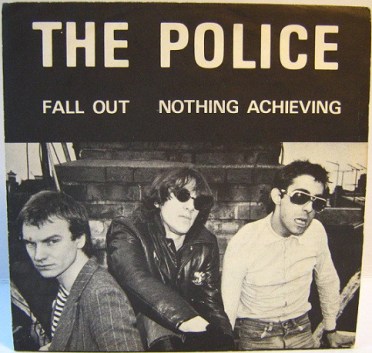
The flop debut single from May 1977 recorded and released before Andy Summers was part of The Police. It also has the distinction of being the only 45 that they would release not to be the work of Sting. This was a Stewart Copeland number, while its b-side was also his, in conunction with his brother Ian.

I mentioned when I put together the ICA for The Police that the band quickly disowned the 45 on the basis that it was recorded before they had even played live. It’s also the case that original guitarist Henry Padovani (pictured above on the right looking a bit like Ian Dury) was so nervous about being in the studio that his guitar solo was all he could manage and  Copeland had to play the other guitar parts as well as the drums.

It was released on Illegal Records in 1977 and sold dismally, even by the standards of punk songs on small labels.  It would be re-released in a different sleeve in 1979 when the band were enjoying chart success via A&M Records, and would sell enough copies to reach the Top 50.

I think I’m inclined to include it in the series, not so much for it being a ‘cracking’ debut single, but mainly as it proved to be so different from their records that would go on to dominate pop charts across the planet just a few years later.

mp3 : The Police – Fall Out
mp3 : The Police – Nothing Achieving

JC

A LAZY STROLL DOWN MEMORY LANE : 45 45s AT 45 (20)

ORIGINALLY POSTED ON MONDAY 28 APRIL 2008

The-Police-Cant-Stand-Losing-You

(The songs today were part of a recent ICA, so feel free to skip on past and come back tomorrow for the next single by The Clash…..)

The Police were the first band I ever saw play live, back at the Glasgow Apollo in May 1979. £2 a ticket, and they were supported by two other acts – Bobby Henry and The Cramps. Yup, the psychobilly nutters led by Lux Interior who did get his knob out on stage that evening. It certainly made Andy Summers‘ act of bringing on a blow-up doll to serenade during a rendition of Be My Girl/Sally look rather tame.

The fact that the band became the biggest act on the planet for a brief time in the early 80s, as well as Sting becoming the most self-righteous and pompous prick imaginable makes it all too easy to mock The Police. But as a 15 year-old lad, I thought they were as good as anything else that was emerging from the post-punk era that had been christened New Wave.

Not too many other bands were singing about prostitutes in 1979. These were the days when even the use of the word ‘damn’ was liable to get your song banned from the airwaves. The Police were actually regarded as a group that was a bit daring, cutting edge and subversive. You’ll have to trust me on that for I know its almost impossible to imagine.

But Roxanne wasn’t the first song that I ever heard by The Police. My first sighting of the band was in fact on The Old Grey Whistle Test in late 1978. They played two tracks that night, including what was their current single. A couple of days later I picked it up in the local record shop. The thing that I most remember was the sleeve – a picture of someone (turns out it was drummer Stewart Copeland) slowly hanging themselves by putting the noose around their neck and standing on a block of ice that was melted away by a three-bar electric fire. The back of the sleeve was a close-up photo of the ice block having melted…..and beside it was the photo that had been held by the hanging man.

I honestly had some nightmares about that sleeve. Is this what you were driven to when someone chucked you and broke your heart?? Surely not…(and it’s just occurred to me that perhaps a certain Ian Curtis might have glimpsed this sleeve at some point or other….)

But aside from the sleeve, it was a record that I played constantly hour-after-hour and day-after-day. I hadn’t been exposed to all the much reggae, so the song had a beat and rhythm that I thought was really unusual. I also loved the sound of Sting’s voice – it was so much sharper, clearer and tuneful than most other singers fronting new-wave bands. I was gutted when I realised the single wasn’t going to chart (it only made #42 on its first release):-

mp3 : The Police – Can’t Stand Losing You
mp3 : The Police – Dead End Job

The Police were one of a handful of bands that I was championing at school, but it was initially very difficult to get too many people interested. Then, all of a sudden, Sting began to get a lot of attention thanks to him having a main part in the movie Quadrophenia, and interest in his band exploded. Including from lots of folk in school. I think about 7 or 8 of us ended up going along to the Apollo gig – the tickets were unreserved seating so it didn’t matter when you bought them.

They say you never forget your first time, and that a small part of it lives with you forever. I’m no different…..and although I’ve been left embarrassed by an awful lot of the stuff that came out after the initial singles, I’ll never forget the part The Police played in developing my life-long love and affection for music and live gigs.

Sneer all you like. But this record deserves its place in the Top 20.


READ IT IN BOOKS – STEWART COPELAND

I found this old review in the files from the old blog. I thought it would make a good follow-up to yesterday’s post (without knowing what sort of feedback that was going to get…)

index
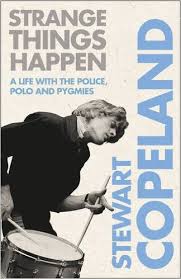
Strange Things Happen : A Life with The Police, Polo and Pygmies is a hugely enjoyable and unusual rock autobiography.

The dust jacket states the facts. Over 50 million records sold. 5 Grammy Awards. 2 Brits. Members of the Rock & Roll Hall of Fame. The Police were the biggest band in the world.

But what came before? What came afterwards? And what happened when, 23 years on, the band members reformed for one final tour? Stewart Copeland answers all these questions and more.

The book is a really easy read, not least for the fact that its 313 pages of narrative are spread over 43 chapters and one afterword, not one of which is more than 13 pages long – and even then, that particular chapter deals with the teenage years. The story of The Police from 1976-1984 are given the briefest of mentions in as far as it is told over a measly 11 pages. It is quite clear that their drummer considers what has happened in his life since to be of far more significance and far more interest to the casual reader.

Whether he’s composing operas, being part of an Italian twenty-piece orchestra, shooting movies in Africa, playing with some new rock stars who look upon him as a legend, taking part as a judge in a TV show or playing polo with the next King of England, the author does so with a sense of adventure and fun. He’s got enough fame and fortune to seemingly not worry about a single thing, and is therefore able to lead a full and hugely diverse life that takes him to places and puts him into situations which are often almost a state of self-parody.

But Copeland never ever leaves the reader feeling that he is boastful about anything. Far from it. His style of writing is often self-deprecating – one example being his realising that now he is no longer a high-profile pop star, there is very little in his everyday wardrobe that he can safely wear without looking or feeling ridiculous. And the tales he tells about his stint as a judge on Series One of the BBC show Just The Two Of Us which aired in February/March 2006 are enlightening in terms of the manipulation that goes on behind the scenes to make entertainment out of a mediocre show.

The final third of the book however, is when it really does come into its own as a rock memoir which is a cut above most, as it deals with the period from February 2007 when The Police get together and go on an ever-extending world tour that was seen by over 3 million fans. He doesn’t hide from the fact that for a while it was fun and enjoyable, but all too quickly the novelty wore off and it was just a job that had to be done. His description of some of the Stingo (his word) temper tantrums and pursuit for on-stage perfection are a real joy.

There are tales of missed cues, bum notes, vocal mishaps, near fights breaking out on stage……..despite which every gig was lapped up by an always-adoring audience of tens of thousands, no matter the city.

And then there’s the day that Stewart hung out with the boys from Rage Against The Machine. I won’t spoil it by revealing the outcome, but it shows up a fantastic and different side to the angry young men who spoiled Simon Cowell’s Christmas a few years back.

An articulate and funny man has written an articulate and funny book that is well worth investing in.

mp3 : The Police – Truth Hits Everybody
mp3 : Klark Kent – Don’t Care
mp3 : The Police – On Any Other Day

Enjoy

AN IMAGINARY COMPILATION ALBUM : #59 : THE POLICE

police
This is one that I’ve been giving some thought to for a few months as I know that putting the spotlight on The Police and attempting to justify them having an ICA will appal rather be of any appeal to most readers. But given that this was the first headline band for whom I ever bought a concert ticket (May 1979 – Glasgow Apollo) and that I’ve included one of their 45s in my list of my favourite ever singles it would be ludicrous not to make this effort.

There’s no doubt that the rapid growth in popularity of the band which saw them transform from post-punk new-wave wannabees into stadium rockers in the blink of an eye had a lot to do with how they have come to be acknowledged or otherwise by music fans of my generation. It is also nigh-on impossible nowadays to separate any feelings for the bland outpourings, musically and otherwise, of Sting over the past 30-plus years from much of the music that he and his two mates made when they were initially together between August 1977 and March 1984 (the dates of their first and last gigs as a trio). Having said that, they were a band who, for this fan, really came to represent the law of diminishing marginal returns in terms of quality – the bigger they got in terms of mainstream fans, the more bland the music they made; conversely, the more bland the music they made, the more units they shifted and the more money they made.

They were, for a while the biggest band on the planet. Five of their six studio LPs went to #1 in the UK and Australia. Their two final albums have picked up 11 platinum discs in the USA and it is estimated they have sold 75 million records the world over. And their final number one saw them deliver one of the most instantly recognisable pop singles of all time – albeit I cannot bring myself to include it in this ICA which unsurprisingly focuses very much on the earliest material.

SIDE A

1. Can’t Stand Losing You

The song that made me fall for the band, courtesy of seeing it performed live on the Old Grey Whistle Test in late 1978. Housed in one of the greatest single sleeves of all time, it limped to #42 on its initial release but reached #2 ten months later on its re-issue, kept off the top spot by I Don’t Like Mondays, the ode to mass shootings as recorded by The Boomtown Rats. Three minutes of pop magic with that hint of a reggae that was prevalent in many of the early singles and which seemed to offer something a little bit different; a jaunty tune over the black tale of a teenage suicide after being unable to cope with being chucked.

2. Dead End Job

I’m not going to make any grandiose claim that this is among the best the songs by the band but I feel it fits in really well at this early stage of the ICA. The b-side to ‘Can’t Stand Losing You’ is just a bit of new-wave noise that was partly reliant on a riff developed by the drummer but it demonstrates that the initial output of the band wasn’t that different from many of their contemporaries other than they clearly had a very talented guitarist (who was of course more than a decade older and experienced than most other new wave axemen).

3. Message In A Bottle

The band’s first UK #1 single and the proof that they were about to really make it big. There shouldn’t be too much argument that this is a tremendous bit of pop music however you look at it. It is driven along by a cracking riff and it also gives space to demonstrate that the rhythm section are quite talented. Bought on green vinyl by me on the day of its release in September 1979, the 7” take isn’t widely available as the album and all subsequent CD releases of greatest hits etc. have offered up the longer version in which ‘sending out an SOS’ goes on for just a wee bit too long.

4. Next To You (live)

The opening song on the band’s debut album was always one of their most popular; Sting would include it within his solo sets while it has also been given the cover version treatment by a number of other acts including Foo Fighters. It is that unusual beast from the new wave era – an unashamed love song. Such was my desire to get everything by the band baack in the days that I bought an import LP called Propaganda in late 1979 as it contained two live tracks recorded earlier in the year at the Bottom Line club in New York. Next To You was the second of those tracks and quickly established itself as my favoured version.

5. Roxanne

The breakthrough hit. It is worth recalling that this had been a huge flop in the UK in April 1978 when released as the band’s debut as much for the fact that our notoriously conservative radio stations would naturally shy away from airing any songs that were about sex never mind one that was so openly about using the services of a prostitute. It was only after the 45 became a hit in the US and Canada in Spring 1979 (hitting the Top 40 around the time the band were captured for the above mentioned Propaganda LP) that the UK stations decided to get behind the band and this led to A&M Records quickly re-releasing Roxanne to enjoy an eight-week residency in the Top 40. The red light that had stopped the band going anywhere had now totally changed colour….

SIDE B

1. Fall Out

The flop debut single from May 1977 recorded and released before Andy Summers was part of the band. It is also the only 45 not written by Sting. The band have been very self-deprecating about it and in many ways disowned it quite early on with the admission that it was recorded before they had done any live performances and that original guitarist Henry Padovani was so nervous about it all that he only played the guitar solo with Stewart Copeland (who had written the track) playing the other guitar parts as well as the drums.

It came out on the small label Illegal Records who took advantage of the band’s higher profile and re-released it in late 1979 where is sold enough copies to hit the Top 50 here in the UK at which time Stewart Copeland said the original release (which can fetch up to around £40-£50 if it is in mint condition) had sold “Purely on the strength of the cover, because of the fashion at the time. Punk was in and it was one of the first punk records – and there weren’t very many to choose from. “

It’s actually not all that bad if viewed as a punk record. It certainly gave no indication however, that the band would be all that special.

2. Invisible Sun

The one time where the trio courted controversy. By late 1981, they were one of the most popular bands in the world despite each of their three albums suffering from ever decreasing quality. They were popular not just because they had shown an ability to make catchy and radio-friendly pop songs but for the fact that their clean living, trouble-free approach to the job in hand, including playing the game of co-operating to the fullest extent with the media, made them a band that was appreciated by folk of all ages. For every snobby review that emanated from the pen of a music critic you could point to twenty or more sycophantic profiles in the pages of newspapers and magazines while broadcasters were falling over themselves to get the handsome and rugged frontman onto their stations.

So the release of a mournful sounding anti-war number, whose video never stood a chance of being aired in the UK thanks to it consisting solely of footage taken from news stories that dealt with the civil war underway in Northern Ireland, was a shock to the system. They didn’t have to do this and indeed a backlash could have set them back in the UK – but the fact that the single reached #2 (kept off the top spot by Adam Ant being Prince Charming) was proof that pop music could be effective in getting across a social and political message. Band Aid was just four years down the line…

3. The Bed’s Too Big Without You

I struggled to understand those who criticised the band for their efforts to deliver a blend of pop and reggae, particularly those whose gripes seem to be centred around ‘white men haven’t got the natural rhythm to make reggae’. The thing is, the music industry played along with the notion and were very happy to pigeon-hole singers and bands in ways that defined the sort of music listeners should expect from white musicians and what should be written, recorded and performed by black musicians – particularly in the 80s.

Sting and his mates absorbed a lot of influences – it’s worth remembering that prior to post-punk/new wave both of Andy Summers and Stewart Copeland had been in bands who encompassed R&B, psychedelia and prog – and therefore they could play a bit. If you want evidence, have a listen to this album track from 1979 , particularly the middle section where the vocals stop.

4. Voices Inside My Head

Here’s the problem I knew I was going to hit with this ICA. Eight songs in and I’m not convinced that there’s another two songs out there to complete the task in hand. Bu hey, every one of the band’s five albums had filler going back to the debut which in Be My Girl/Sally included a spoken word number about blow-up dolls (and on that tour ‘Sally’ would be brought on stage while Andy Summers did his free-form poetry. John Cooper Clarke it most certainly wasn’t!!)

This track from 1980s’s Zenyatta Mondatta has just two often repeated lines over an increasingly aggressive and catchy beat that turns into the ‘cha’ chant that would layer be taken up with great gusto by Stuart Adamson in the early songs of Big Country (see Fields Of Fire….or even better catch live footage of that band on you tune from hose days and you’ll catch what I’m on about).

Voices Inside My Head was a song that came to life in the live setting, often stretching out well beyond its standard four minutes, and seems to be a good fit at this point in the ICA.

5. Peanuts

This stood out as strange even back in the days The Police were searching for the formula that would take them to the top. It’s frantically fast with a ridiculously punky guitar solo (see also Landlord, the b-side to Message in A Bottle which was a candidate for this part of the ICA) but has the bonus of a twisted and strange sax part and a crazy chant of the song title seemingly coming out of nowhere after a lyric that was attacking pop stars who were not only living life to the full but making a career of singing songs about said lifestyle. It was seemingly aimed at Rod Stewart who had been one of Sting’s idols just a few years earlier….

I do love how the song comes to a spluttering and tired sounding end. Seems an appropriate way to close off this particular an ICA which I’m not myself completely convinced is worthy of inclusion in this what I think is proving a great series (thanks in the main to the guest contributors) but without whom etc……

mp3 : The Police – Can’t Stand Losing You
mp3 : The Police – Dead End Job
mp3 : The Police – Message In A Bottle
mp3 : The Police – Next To You (live)
mp3 : The Police – Roxanne
mp3 : The Police – Fall Out
mp3 : The Police – Invisible Sun
mp3 : The Police – The Bed’s Too Big Without You
mp3 : The Police – Voices Inside My Head
mp3 : The Police – Peanuts

Enjoy.

Only 48 hours till the next ICA…..it’s a guest posting from an old friend.

REMEMBERING MY FIRST EVER GIG

untitled

The Robster has been putting up some great stuff over at Is This The Life? including a great tale of his first ever gig which happened to be The Wedding Present.

I’ve mentioned a few times that my own first live concert was in May 1979 at the Glasgow Apollo.  The headline act was The Police and support came from both Bobby Henry and The Cramps.  It was a chaotic night in loads of ways.  The tickets, costing £2.50 in advance or £2 on the door, had gone on sale a few months earlier but such was the lack of interest in any of the bands that the promoters and venue management decided to close off all areas except the stalls. Nobody however, would anticipate that The Police would storm the charts shortly beforehand with a re-released Roxanne and be tipped by many as the ‘next big thing’, which led to a huge demand for tickets. I think it was 48 hours in advance of the gig that the circle and upper circle tickets went on sale and soon it was a total sell-out.

The problem for the venue was that all tickets were for unreserved seating and they just weren’t geared up for that…also the fact that groups of friends were coming along and demanding that they be allowed to sit together even when their tickets were for separate parts of the building (I can vouch for this from personal experience).  The upshot was that the stalls filled up very early while  those who had tickets for that area (ie had bought them ages in advance) were angry at finding themselves shunted to the nosebleed seats high up in the gods (which was a ridiculously long way up at the Glasgow Apollo).

I can’t remember much of Bobby Henry who, gawd bless, will always be the first live musician I had the privilege of seeing.  The Cramps were chaotic and confrontational and didn’t go down too well with the majority of the audience. Lux Interior didn’t help things by constantly challenging folk to invade the stage and fight with him – which was a near impossibility as the stage was a good 30 feet above the font of the stalls but was reachable if you were crazy enough to jump down 20 feet from the circle area – so instead the front man got his cock out while singing Human Fly.

The whole place was at fever pitch by the time the main act came on stage.   They opened with a song that I would later place at #20 in my 2008 45 45s at 45 series:-

mp3 : The Police – Can’t Stand Losing You

The fact that the band became the biggest act on the planet for a brief time in the early 80s, as well as Sting becoming the most self-righteous and pompous prick imaginable makes it all too easy to mock The Police. But as a 15 year-old lad, I thought they were as good as anything else that was emerging from the post-punk era that had been christened New Wave which is why I’m proud that they were my first headline act.

Not too many other bands were singing about prostitutes in 1979. These were the days when even the use of the word ‘damn’ was liable to get your song banned from the airwaves. The Police were actually regarded as a group that was a bit daring, cutting edge and subversive. You’ll have to trust me on that for I know it’s almost impossible to imagine.

I’d bought Can’t Stand Losing You a few months earlier after seeing the band play it live on The Old Grey Whistle Test.  I hid the record away from my folks cos I thought they would go crazy about the sleeve.  Pictured at the head of this post you can see it is an image of someone (turns out it was drummer Stewart Copeland) slowly hanging themselves by putting the noose around their neck and standing on a block of ice that was melted away by a three-bar electric fire. The back of the sleeve was a close-up photo of the ice block having melted…..and beside it was the photo that had been held by the hanging man.

I honestly had some nightmares about that sleeve. Is this what you were driven to when someone chucked you and broke your heart?? Surely not…(and it has since occurred to me that perhaps a certain Ian Curtis might have glimpsed this sleeve at some point or other….)

But aside from the sleeve, it was a record that I played constantly hour-after-hour and day-after-day. I hadn’t been exposed to all the much reggae, so the song had a beat and rhythm that I thought was really unusual. I also loved the sound of Sting’s voice – it was so much sharper, clearer and tuneful than most other singers fronting new-wave bands. I was gutted when I realised the single wasn’t going to chart (it only made #42 on its first release) but it made up for it when it was re-released in the summer of 1979 and reached #2.

They say you never forget your first time, and that a small part of it lives with you forever. I’m no different…..and although I’ve been left embarrassed by an awful lot of the stuff that came out after the initial singles, I’ll never forget the part The Police played in developing my life-long love and affection for music and live gigs.

Here’s the b-side

mp3 : The Police – Dead End Job

Enjoy.