WHEN THE CLOCKS STRUCK THIRTEEN (March Pt 3)

This would normally be Part 2 from March 1984, but I did of course, a few weeks back, spread the chart hits across two days worth of posts.

This is the usual half of the series looking at singles which failed to find much popularity with the record-purchasing public, but have proven to be of enough cultural significance to be recalled here on the blog.

mp3 : Crispy Ambulance – Sexus

A Manchester band who signed to Factory Records, albeit the two of their three singles and one album recorded and released between 1981 and 1984 came out on Factory Benelux, the Belgian imprint of the label.  Sexus was issued only on 12″ vinyl and is atypical of the band’s sound…..which many at the time (myself included) thought was too much like a cut-price early Joy Division in the days before Martin Hannett added his box of tricks to the sound. Indeed, lead singer Alan Hempsall stood in for Ian Curtis when he wasn’t well enough to perform the opening numbers of the set at what is now a very infamous gig in Bury on 8 April 1980, which ended in a riot among the audience and the band.

mp3: Danse Society – 2000 Light Years From Home

I’ve mentioned in earlier editions of this series that 1984 was a year in which goth, or variations of the genre, seemed to be everywhere.  Danse Society were from Barnsley, a blue-collar town in the north of England who formed in 1980 and by 1983 had signed with the major label, Arista Records.  The album Heaven Is Waiting, released in December 1983, had gone Top 40, but the subsequent release of this Rolling Stones cover, one which came with a touch of dance, made no impact on the singles chart.

mp3: Felt – Mexican Bandits

Felt may well have been a band, but to all intent and purposes it was the name under which the Birmingham-born Lawrence Hayward recorded and performed (albeit he never used his surname).  Signed to Cherry Red in 1981, there had already been two albums and four singles, all of which were critically acclaimed prior to Mexican Bandits which, like its predecessor 45s, would reach the indie chart but not come close to the mainstream chart.  But this really suited Lawrence who didn’t seem to want fame and all the hassle that comes with it.

mp3: Jasmine Minks – Think!

Originally from Aberdeen in north-east Scotland, the four-piece band relocated to London and signed to Creation Records, becoming a key part of that label’s early output and live scene centred around venues in central London.  Think! was the debut single, with the catalogue number of CRE 004, and it’s a belter.  In a previous mention of this 45, I said that I was waiting on either Edwyn Collins or James Kirk to start singing after that initial 20-second burst of energy.

mp3: Jazz Butcher – Marnie

The late Pat Fish (he passed away in October 2021 at the age of 63) was the one constant factor in the ever-changing line-up of Jazz Butcher.   The first single and album had come out in the Autumn of 1983, and Marnie, issued through the London-based indie Glass Records, was the first of the new material. For more on the life and times of Pat Fish, I’d like to refer you to the Friend of Rachel Worth’s wonderfully written guest ICA from back in March 2108.

mp3: The Pastels – Something Going On

Formed in Glasgow in 1982.  This was the band’s fourth single, but their first for Creation (it had the catalogue number of CRE 005).  Still very much on the go today, and while they have never had any meaningful commercial success, they have long been one of the most important and influential band to emerge from my home city given how much advice and support they have given to others who have come along in the subsequent decades.

mp3: Lou Reed – I Love You Suzanne

Don’t think any background info is required. The sole single issued in support of his thirteenth studio album, New Sensations.

mp3: R.E.M. – So. Central Rain (I’m Sorry)

Don’t think any background info is required. The band’s third ever 45, and the advance single for their second album, Reckoning,   Still sounds immense 40 years on.

mp3: The Pale Fountains – (Don’t Let Your Love) Start A War

See the January edition (Part 2) of this series for the background on The Pale Fountains.   I hope you’ll agree, it’s turning out to be a great month for flop singles……

mp3: The Wake – Talk About The Past

A Glasgow-band who signed to Factory Records.  Probably best known for the fact that Bobby Gillespie was their bassist for a while, he had been involved in the debut album Harmony (1982) and the later single Something Outside (1983).  By the time Talk About The Past (FAC 88) was released, he’d been asked to leave.

Happy listening.
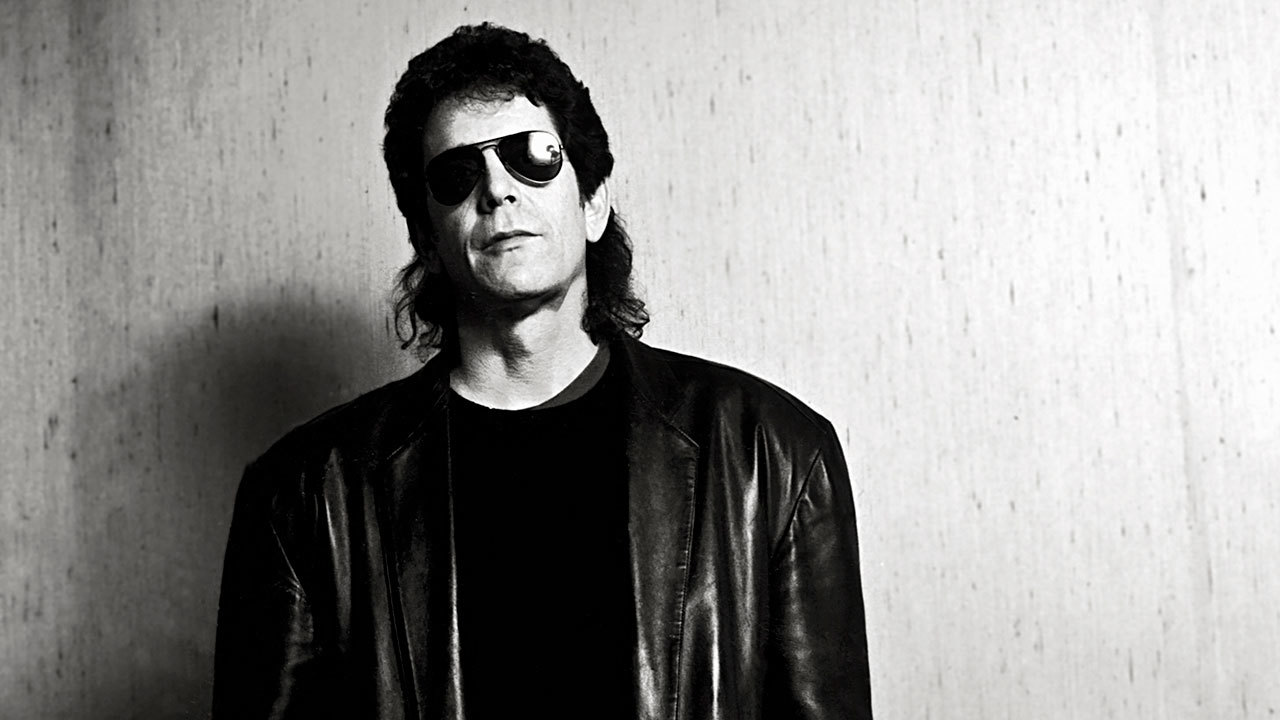
 

JC

AN IMAGINARY COMPILATION ALBUM : #383: LOU REED (2)

A guest posting by Walter (A Few Good Times In My Life)

JC writes……

It was at the tail end of last November that I lazily posted a Lou Reed ICA, basing entirely on a compilation album released by RCA Records in 1977.  Just a few days later, another of my dear friends from Germany, Walter, whose blog A Few Good Times In My Life has been such a consistently wonderful read for many years, send me an e-mail, which for some reason or other, I never saw.  The most likely explanation is that it likely found its way into a Junk folder and then was automatically deleted after a period of time.

Walter got back in touch yesterday, and kindly re-sent the e-mail.  I’m really pleased he did.

—————————————

Hi Jim,

I hope everything is well with you and your family.

I’ve been trying to put together an ICA of Lou Reed for several weeks now. But as you may know, a pensioner has many other things to do and it is difficult to choose ten songs from Lou Reed’s complete works. In the end, your ICA was the deciding factor in finalising my compilation.

Of his probably best-known albums, Perfect Day stands out because it is extremely quiet and introverted by his standards. To this day, it has not been conclusively clarified whether this is a glorification of drugs or not. Presumably it is – why else would it have made it onto the soundtrack of Trainspotting.

1. Perfect Day (from Transformer, 1973)

Reed released his first live album Rock ‘n’ Roll Animal in 1974. For many, it was too heavy at the time, but it also expressed his inner turmoil, the effects of his drug addiction and his separation from the Velvet Underground. A contemporary document of how he saw the song.

2 Heroin (from Rock ‘n’ Roll Animal , 1974)

Occasionally Lou Reed also recorded cover versions. Surprisingly, however, he did so with a song originally recorded by the Drifters. The song actually only consists of the plucked guitar and Lou’s vocals. In its radical reduction, it is the perfect soundtrack to David Lynch‘s movie.

3 This Magic Moment (from Lost Highway OST, 1997)

Towards the end of the 70s, his albums fluctuate between good and not so good. For me, his first album for Arista falls more into the first category, which with its final track still produced a highlight of his career. A dark atmosphere, a sawing guitar, reduced drums and vocals that have not been heard from him for a long time.

4 Temporary Thing (from Rock ‘n’ Roll Heart, 1976)

Lou Reed has always been a great storyteller for me too. Whenever he took on the events of the day, it was always terrific. Sentimental, of course, but also intense and believable. Songs that will outlast everything.

5 The Day John Kennedy Died (from The Blue Mask, 1982)

6 Halloween Parade (from New York, 1989)

Two albums from the 80s stand out, which had the old magic of him again. On The Blue Mask he returned to his roots and released an album full of guitars. Together with Robert Quine, he managed to give guitars new possibilities by mixing the guitars on two different channels. The best examples are these songs

7 Waves Of Fear (from The Blue Mask, 1982)

8 Underneath The Bottle (from The Blue Mask, 1982)

In 1989, he released New York. This album was well-received critically, thanks in part to it having a more straight-forward rock and roll sound. Reed said at the time he required simple music so that it would not distract from the frank lyrics.

9 Hold On (from New York, 1989)

10 Romeo Had Juliette (from New York, 1989)

Bonus Track

In 1990 he released a song cycle together with John Cale for their mentor Andy Warhol under his nickname Drella. There is also a lot of sentimentality here, but without falling into kitsch

11 I Believe (from Songs For Drella)

Enjoy

WALTER

AN IMAGINARY COMPILATION ALBUM : #381: LOU REED

I was thinking the other day that it had been a while since I came up with a contribution to the Imaginary Compilation Albums series, but was also thinking that, despite being retired and supposedly having loads more time on my hands, I just couldn’t take all the hours needed to listen to all sorts of songs, narrow a long list down to ten and then write some notes.

And then it hit me.   I can just rip off something that’s already out there, in this case an album that was released back in 1977.  There were 11 songs on it, but given that I featured New York Telephone Conversation a few weeks back as part of the songs under 2 minutes feature, it could be dropped. 

From wiki:-

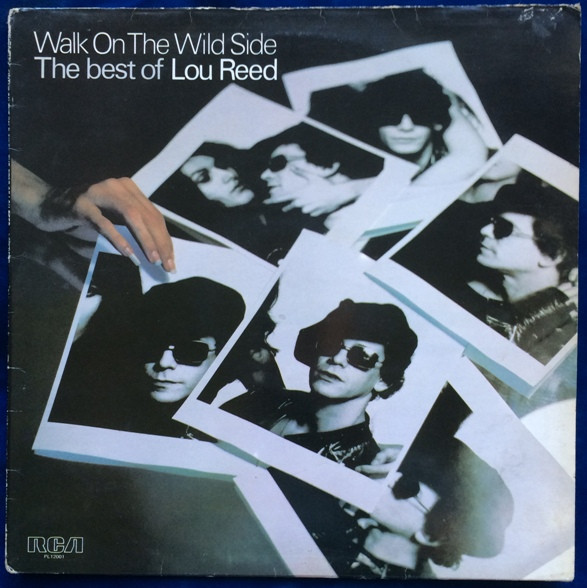
Walk on the Wild Side: The Best of Lou Reed is the first greatest hits compilation by Lou Reed, formerly of The Velvet Underground. It was issued by RCA Records after Reed’s first contract with them ended in 1976. Issued on Compact Disc on October 25, 1990, the album cover features photos by Mick Rock of Reed and then-girlfriend Rachel Humphreys.

Side A

1. Satellite of Love (from the album Transformer, 1972)

2. Wild Child (from the album Lou Reed, 1972)

3. I Love You (from the album, Lou Reed, 1972)

4. How Do You Think It Feels  (from the album, Berlin, 1973)

5. Walk On The Wild Side (from the album Transformer, 1972)

Side B

1. Sweet Jane (live) (from the album Rock’n’Roll Animal, 1974)

2. White Light/White Heat (live) (from the album Rock’n’Roll Animal, 1974)

3. Sally Can’t Dance (single version, 1974)

4. Nowhere At All (b-side of Charley’s Girl single, 1976)

5. Coney Island Baby (from the album Coney Island Baby, 1976)

The review over on allmusic, by William Ruhlmann, will make do as the blurb.

Walk on the Wild Side: The Best of Lou Reed was the standard record company “hits” compilation surveying Reed’s five-year, eight-album sojourn at RCA from 1972 to 1976. Its 11 songs included two from Lou Reed, three from Transformer (among them, of course, this album’s title track, Reed’s sole chart hit), one from Berlin, two from Rock N Roll Animal (one of which is “Sweet Jane” minus the introductory fanfare), and the title tracks from Sally Can’t Dance and Coney Island Baby, plus the previously non-LP B-side “Nowhere at All.”

It was a bulletproof selection, as unimaginative as it was dependable, which oddly was why it worked so well. Reed’s solo career had seen some extreme tangents, and this album caught them, from the Dylan-ish “Wild Child” to the glam pop of the Transformer material, and from the heavy metal rearrangements of old Velvet Underground songs on Rock N Roll Animal to the attempts at straightforward adult singer/songwriter rock on songs like “Coney Island Baby.” The regular albums had been uneven, but here Reed comes off as an accomplished dabbler in a variety of styles who really had something to say and said it, sometimes humorously, sometimes frantically, but always with conviction. Reed has been a prolific artist, and this album captures only a fraction of his catalog, but he is actually less eclectic as a rule than this collection makes him seem, so the result is an excellent introduction.

JC (with apologies for my laziness)

SONGS UNDER TWO MINUTES (6): NEW YORK TELEPHONE CONVERSATION

The-2-Minute-Rule

There’s a lot of love out there for Transformer, with many citing it as Lou Reed‘s finest solo record.  Among its 11 tracks, you’ll find the likes of Walk On The Wild Side, Satellite of Love and Perfect Day, all of which are cited as bona fide classics that have more than stood the test of time in the 52 years since the LP was released.

It’s an album with what I’d classify as a novelty song in its midst.  Side Two, Track Four.   It’s one which dates from the Velvet Underground days, having been aired live in 1970, albeit never recorded in a studio.  Like many novelty songs, it is catchy and annoying in equal measures. But I like it!!!  

mp3: Lou Reed – New York Telephone Conversation

I’ve read somewhere that it was written as a send-up of Andy Warhol‘s diaries.  If so, it was kind of careless of the artist to leave them lying about.

JC


TRANSFORMER

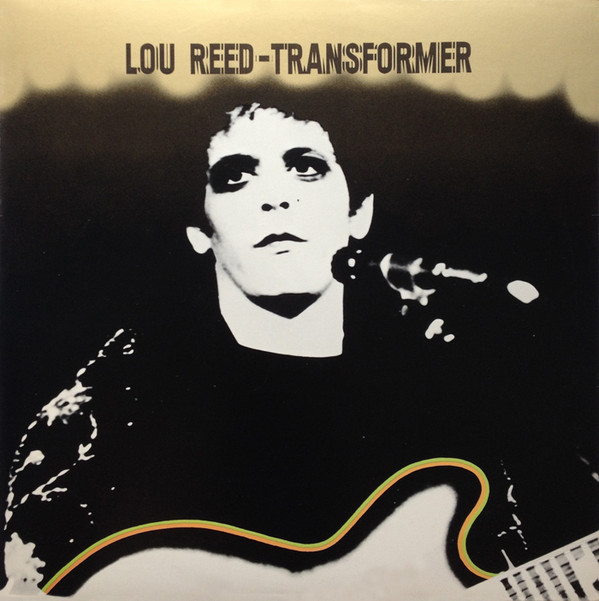
Transformer, the second solo album by Lou Reed was released in November 1972 and is nowadays considered a classic, being voted at reasonably high positions in all sorts of polls. Rolling Stone magazine has it just inside the Top 200 in its list of greatest albums of all time (#194 back in 2012), but it’s fair to say that the original reviewer wasn’t fully convinced:-

Nick Tosches, January 4,1973

A real cockteaser, this album. That great cover: Lou and those burned-out eyes staring out in grim black and white beneath a haze of gold spray paint, and on the back, ace berdache Ernie Thormahlen posing in archetypal butch, complete with cartoon erectile bulge, short hair, motorcycle cap, and pack of Luckies up his T-shirt sleeve, and then again resplendent in high heels, panty hose, rouge, mascara, and long ebony locks; the title with all its connotations of finality and electromagnetic perversity. Your preternatural instincts tell you it’s all there, but all you’re given is glint, flash and frottage.

Lou Reed is probably a genius. During his days as singer/songwriter/guitarist with the Velvet Underground, he was responsible for some of the most amazing stuff ever to be etched in vinyl; all those great, grinding, abrasive songs about ambivalence, bonecrushers, Asthmador, toxic psychosis and getting dicked, stuff like “Venus in Furs,” “Heroin,” “Lady Godiva’s Operation,” “Sister Ray,” “White Light/White Heat,” and those wonderful cottonmouth lullabies like “Candy Says” and “Pale Blue Eyes.” His first solo album, Lou Reed, was a bit of a disappointment in light of his work with the Velvets. Reed himself was somewhat dissatisfied with it.

Between that album and this one came the ascendancy of David Bowie, a man who had been more than peripherally influenced by the cinematic lyrics and sexual warpage of the Velvet Underground. Lou Reed, in turn, was drawn to Bowie’s music. Bowie included Velvet tunes such as “Waiting for the Man” and “White Light/White Heat” in his stage repertoire; Reed, last summer, made his first English appearance with Bowie. Now, on Transformer, Bowie is Reed’s producer.

David Bowie’s show biz pansexuality has been more than a minor catalyst in Lou Reed’s emergence from the closet here. Sure, homosexuality was always an inherent aspect of the Velvet Underground’s ominous and smutsome music, but it was always a pushy, amoral and aggressive kind of sexuality. God knows rock & roll could use, along with a few other things, some good faggot energy, but, with some notable exceptions, the sexuality that Reed proffers on Transformer is timid and flaccid.

“Make Up,” a tune about putting on make-up and coming “out of the closets/out on the street,” is as corny and innocuous as “I Feel Pretty” from West Side Story. There’s no energy, no assertion. It isn’t decadent, it isn’t perverse, it isn’t rock & roll, it’s just a stereotypical image of the faggot-as-sissy traipsing around and lisping about effeminacy.

“Goodnight Ladies” is another cliche about the lonely Saturday nights, the perfumed decadence and the wistful sipping of mixed drinks at closing time.

“New York Telephone Conversation” is a cutesy poke at New York pop-sphere gossip and small talk, as if anyone possibly gave two shits about it in the first place.

Perhaps the worst of the batch, “Perfect Day” is a soft lilter about spending a wonderful day drinking Sangria in the park with his girlfriend, about how it made him feel so normal, so good. Wunnerful, wunnerful, wunnerful.

And then there’s the good stuff. Real good stuff. “Vicious” is almost abrasive enough and the lyrics are great: “Vicious/You want me to hit you with a stick/When I watch you come/Baby, I just wanna run far away/When I see you walkin’ down the street/I step on your hands and I mangle your feet/Oh, baby, you’re so vicious/Why don’t you swallow razor blades/Do you think I’m some kinda gay blade?” It’s the best song he’s done since the days of the Velvet Underground, the kind of song he can do best (his voice has practically no range).

“Walk on the Wild Side” is another winner, a laid-back, seedy pullulator in the tradition of “Pale Blue Eyes,” the song is about various New York notables and their ramiform homo adventures, punctuated eerily by the phrases “walk on the wild side” and “and the colored girls go ‘toot-ta-doo, too-ta-doo.’” Great images of hustling, defensive blowjobs and someone shaving his legs while hitchhiking 1500 miles from Miami to New York that fade into a baritone sax coda.

“Hangin’ ‘Round” and “Satellite of Love” are the two remaining quality cuts, songs where the sexuality is protopathic rather than superficial.

Reed himself says he thinks the album’s great. I don’t think it’s nearly as good as he’s capable of doing. He seems to have the abilities to come up with some really dangerous, powerful music, stuff that people like Jagger and Bowie have only rubbed knees with. He should forget this artsyfartsy kind of homo stuff and just go in there with a bad hangover and start blaring out his visions of lunar assfuck. That’d be really nice.

——-

I think it’s fair to say there would be an outraged reaction if this was a newly released album and this was a contemporary review.  It’s quietly satisfying that we have come along way since 1973.

I’m way too young to remember Transformer, but as I mentioned previously, I have very vivid memories of Walk On The Wild Side, albeit I didn’t, as a ten-year old, buy the single.

It’s been a long long time since I listened to Transformer in its entirety….probably in the region of 35 years since my student days.  I don’t have a CD copy but Mrs Villain does own a vinyl copy that she bought in 1973 (it was the Bowie/Ronson connections that clinched it for her teenage self) and so, with my purchase of a decent turntable and amp a short time ago, it was given a spin.

Tosche’s review highlighted that four songs were classics.  He’s spot on about Vicious – it is still, after all these years, a tremendous song, and must be up there with the best opening tracks of any album in the history of pop music (the old blog had that as a regular feature and I’m often tempted to resurrect it).  Walk On The Wild Side is one of the most memorable tunes ever written and recorded.  Satellite of Love has stood the test of time but I’d argue that Hangin’ ‘Round has lost much of its initial impact from the fact that the tune became something of a template for years to come, but a template that later singers and bands were able to improve.

Of some the songs that Tosche finds unappealing, I find myself nodding in agreement but not for the vindictive and homophobic reasons he’s used in his review.

Goodnight Ladies might well have been fun to write and record, but its jazz persona offers a tune and style that does nothing for me.

He’s right about Perfect Day.  It’s a run-of-the-mill soppy ballad that far too many folk have tried to say, over the years (particularly after its inclusion in the film Trainspotting) that it has a deeper meaning around drug addiction.

He’s also right about New York Telephone Conversation and even if it is a song that does find favour, credit has to be given for the catty putdown that nobody really gave a toss about such whispering and gossip in the first place.

But he’s way wrong that Make Up has no energy and isn’t assertive nor rock’n’roll seems to simply highlight that he was let down by a lack of aggressive energy as it is a song full of assertion while being decadent and, in the early 70s, perverse in a way that would have shocked the majority of people.

The review makes no mention of three other songs – Andy’s Chest, Wagon Wheel and I’m So Free – but it is interesting to note that many later reviews that are available online, written when the album was reissued or when it was a significant anniversary, rarely mention the tracks either.  I actually like the first two but the third of them just jars as a sub-standard throwaway that when I heard it again had an opening that reminded me of Parklife by Blur.

If I was asked to come up with a one-word review of Transformer, it would be ‘patchy’.  There are some bits of magic that are offset by a bits of whimsy that are easily disposable and a number of bog-standard numbers. It’s one that I was never driven to own although I do fully get why it is seen by many as such an important album in the history of pop music, but I look on it in the same way as other ‘important or influential albums’ by The Beatles or Led Zepellin or The Beach Boys or Pink Floyd or Bruce Springsteen.

Feel free to take the mic and argue the toss.

Oh, and before I go, ripped from the vinyl bought by Rachel back in the day, well before the big hit single:-

mp3: Lou Reed – Vicious
mp3: Lou Reed – Walk On The Wild Side
mp3: Lou Reed – Make Up

JC

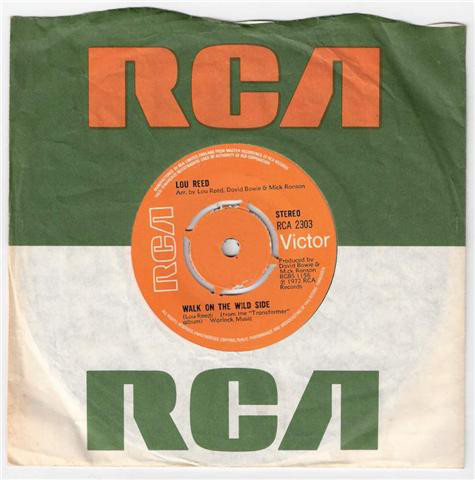
RCA 2303

My first known exposure to Lou Reed would have been just short of my tenth birthday in the summer of 1973. I can say this with some confidence as none of my parents or my aunts, uncles or cousins ever owned anything by The Velvet Underground….if I had ever clapped eyes on a record sleeve with a banana as its cover, I’d have remembered it vividly.

So, the fact that the sophisticated and enigmatic New Yorker was riding high in the charts at the same time as I was really gaining an awaremess about pop music, shaped almost entirely by whatever was being played on BBC Radio 1 and was being shown on Top of The Pops, was the reason this was the song to which I was being exposed:-

mp3 : Lou Reed – Walk on The Wild Side

I obviously had absolutely no idea what the song was about. The lyrics made no sense whatsoever, I just knew it was a great and memorable tune, and I couldn’t help but love and no doubt sing along to the bit that went doo doo doo doo doo doo doo doo doo…..

I would have been allowed to buy some singles with money and or record tokens for that particular birthday. Looking at the chart for the week in question, Lou Reed was sitting at #13, just beginning to drop down a bit having been in the Top 30 for the past five weeks and so it would have been one of the songs most known to me.

Like most kids my age, the simplicity and exciting of glam was hugely appealing, and so I would have bought the new stuff by Suzi Quatro (Can the Can was #1), Sweet (Hell Raiser was #21 but had been #2 a few weeks earlier) and Gary Glitter (Hello, I’m Back Again was just outside the Top 30 but had been a fixture of the chart for a couple of months). I’m sure I did want to buy Walk on The Wild Side but I was steered away in the direction of Rubber Bullets by 10cc, another of the quirky and bouncy tunes that was never off the radio….I certainly remember having all those singles in the house as a kid. Whether my mum and dad specifically stopped me getting my hands on Lou Reed’s 45, or whether the local shop just happended to be out of stock, I have no idea. But there’s no doubt a favour was done as I would have spent hours playing the song and learning it word for word, most likely singing it out loud absent-mindedly in front of my granny or one of my god-fearing aunties who would have been ashamed of my folks for allowing me to be so out of contraol.

I had no idea until looking it up in prepartion for this pithy piece that the b-side was another of Lou’s best known numbers:-

mp3 : Lou Reed – Perfect Day

Makes me wonder why the RCA bosses didn’t think to hold this back as a potential follow-up single. Then again, nobody, including the singer himself, ever anticipated that Walk on the Wild Side would even get played on radio far less become a smash hit.

Incidentally, one of the reasons the song ended up stalling at #10 was that Lou Reed didn’t fly over and make a Top of the Pops appearance, meaning his song wasn’t in the position to be aired on the one of the most popular TV shows in the UK, attracting some 15 million viewers, which was over 1 in 4 of the entire population. Having said that, the practice was to have such songs where the performer couldn’t be in the studio be the track to which the in-house dance group, Pan’s People, would stage a special performance. This probably did happen during the extended chart stay in May/June 1973, but there’s no footage available to confirm it.

JC