

Welcome to the second post of today.
All you need to do is read over the January 1979 posts for this new series to get an idea of how excited I was to be looking back at the 45s from 45 years ago.
February 1979 kind of dampens things down. It was seeing the song Bat Out Of Hell by Meat Loaf enter the singles chart at #25 on 4 February which provided a reminder of what really dominated things. It’s not so much the single, which spent just eight weeks in the Top 75, peaking at #15. It’s the parent album. It had come into the charts on 11 March 1978. It spent much of the rest of the year hanging around, but never getting into the Top 10. By 6 January 1979, it was sitting at #73 and looking as it if would finally give us all much needed peace and quiet. That’s when it got its second wind and started climbing up the charts again. It would be in the Top 75 for 321 of the next 329 weeks. There couldn’t have been too many houses that didn’t have a copy…..but mine was one of them! It’s an album that has continued to enjoy the occasional revival, and according to wiki, it has spent 522 weeks on the UK album chart. Ten feckin’ years…..(cue joke about crimes and jail sentences).
But then again, there were these to enjoy for the first time the same month.
mp3: Elvis Costello & The Attractions – Oliver’s Army
It came in quietly at #45 on 4 February and stayed around the Top 75 for twelve weeks, finding itself stuck at #2 for three successive weeks, unable to dislodge The Bee Gees or Gloria Gaynor. There are some who say it was only such a big hit as the piano part subconsciously reminded record-buyers of Abba.
mp3: The Pretenders – Stop Your Sobbing
As I mentioned last time out, 1979 was a year in which many new bands emerged to enjoy success, much of which turned out to be fleeting. The Pretenders rather excellent debut single, offering a new take on a Kinks song from 1964, hit the charts at #60 on 4 February, and in due course would climb into the Top 40. There was much much more to come from Chrissie Hynde & co throughout the remainder of the year, and beyond.
mp3: The Skids -Into The Valley
11 February was the chart in which The Skids made their first appearance of the year, having enjoyed a couple of minor hits in 1978. Getting to perform on Top of The Pops was a turning point in their career, thanks to Richard Jobson‘s mesmerising dancing that made you wonder if he’d been auditioning for the can-can girls in Paris. Into The Valley, whose title reflects a rather rundown housing estate not far from the band’s home town of Dunfermline, would spend 11 weeks in the charts and peak at #10. It’s still, all these years later, the walk-out tune for Dunfermline Athletic FC.
mp3: The Cars – Just What I Needed
Another new entry on 11 February. And recently looked at in some depth on this blog, right here.
mp3: Lene Lovich – Lucky Number
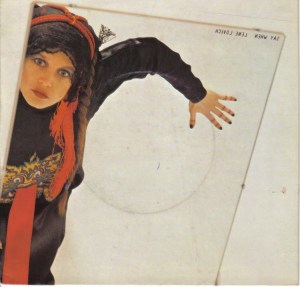
Lene Lovich, an American-English songwriter and performer (she was born in Detroit but moved to Hull, aged 13) was on Stiff Records here in the UK. A flop single in 1978 had thrown up an interesting b-side, which Stiff felt had potential. Re-released in February 1979, Lucky Number proved to be all that the record label bosses had imagined. It entered the charts at #62, and following a Top of The Pops appearance after it had climbed into the Top 30, Lene’s unique look and sound temporarily found a bigger market with the single going Top 3.
Two weeks later, on 25 February, Sex Pistols enjoyed a chart entry with the double-A side of Something Else/Friggin’ In The Riggin’ that eventually also went Top 3. Cartoon punk was now a thing….see also the fact that Generation X, fronted by BIlly Idol, were also riding high in February 1979. But at least Joe, Mick, Paul and Topper could save us…..
mp3: The Clash – English Civil War
The second 45 to be lifted from Give ‘Em Enough Rope came in at #39 and would end end spending six weeks in and around the environs of the chart, selling in decent enough numbers each week to offer up a chart run that nowadays could pass as a lottery ticket selection – 39 28 34 25 27 30.
The final week of February also saw the return of some of the original glamsters.
mp3: Roxy Music – Trash
Roxy Music had been away for a few years – the last original hit single had been in 1975 – with Bryan Ferry carving out a successful solo career. This was the comeback 45. One that I like, but it’s not regarded as being close to the band’s finest moments, as evidenced that it got no higher than #40.
There will be more of the same next month…..
 THE NEW VINYL VILLAIN