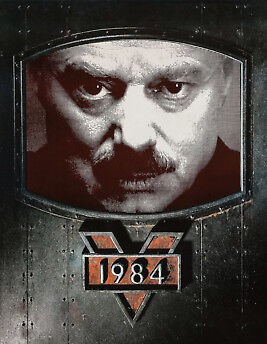
WHEN THE CLOCKS STRUCK THIRTEEN (November)

4-10 November

The highest new entry on the singles chart back in the first week in November 1986 belonged to Depeche Mode, a favourite of many TVV regulars but a band that your humble scribe has never taken to.  Which is why there’s no link today to Blasphemous Rumours or Somebody, a double-A sided single which came in at #29 en route to becoming their 11th successive chart single going back to Dreaming Of Me in early 1981, (of which five had gone Top 10)

I’ve had to go all the way down to #54 to find a new entry worth offering a listen to:-

mp3: The Kane Gang – Respect Yourself

The trio’s third hit of the year, thanks to a cover of 1971 R&B/gospel number originally written and recorded by the Chicago-based Staple Singers.  One of the highlights of the debut album The Bad and Lowdown World of The Kane Gang, which would reach #21 on its eventual release in March 1985.

Just two places further down the singles chart this week was another gang who often inhabited a bad and lowdown world, certainly in the eyes of the tabloid media:-

mp3: The Redskins – Keep On Keepin’ On (#56)

A real favourite in the student union discos among us who were of a left-wing persuasion.  The Redskins delivered a fine mix of pop, soul, blues, folk, punk and politics, who, if it hadn’t been for the fact that collectively the idea of a career in pop music was not their idea of fun, would surely have enjoyed a run of great albums beyond their sole offering, Neither Washington Nor Moscow, which would eventually appear in early 1986. Keep On Keepin’ On would eventually reach #46, and the offering today is the 12″ version as that’s a bit of vinyl I proudly still have all these years later.

mp3: Orchestral Manoeuvres in the Dark – Never Turn Away (#70)

Probably the least-remembered of the twenty-two singles released by OMD during the 80s, it was also the one which performed the worst as #70 in the first week in November 84 was as good as it got.  It’s one of those rare 45s on which Paul Humphreys rather than Andy McCluskey delivered the lead vocal.

11-17 November

The highest new entry on the singles chart back in the second week in November 1986 belonged to The Riddle by Nik Kershaw, someone who has his admirers among fans of 80s synth-pop.  I always felt he was synth-pop with a soft rock edge, and while he may perhaps feature via guest postings, he’s not showing up today. This one came in at #17 and would peak at #3. It was his fourth smash hit of the year, and his success would continue throughout the following year.

mp3: The Human League – Louise (#36)

I think it’s worth lifting some stuff about this one from wiki:-

The lyrical story telling of “Louise” superficially seems to be a story about a chance encounter between a man and a woman on a bus who seem to be on the verge of a lover’s reconciliation. But like much of Phil Oakey’s songwriting, what seems ‘sugary sweet’ on the surface actually has a much darker subtext. Oakey points out that the story is actually about the original protagonists from “Don’t You Want Me” meeting up 4 years later. In “Louise” the man sees his lost love again and still cannot deal with reality. The anger that drove the earlier song has dissipated, and is replaced with a hopeful fantasy that his ex-lover is drawn to him all over again. So “Louise” is really about self-deception, delusion and eternal sadness. Oakey says about “Louise” in interview:

It’s about men thinking they can manipulate women when they can’t, even conning themselves that they have when they haven’t.

However, like the less savoury premise of “Don’t You Want Me”, the darker side of the “Louise” story went over the heads of the record buying public, who misinterpreted the lyrics as “sweet and upbeat”.

Louise would eventually reach #13 and still features in the band’s setlists to this day.

mp3: Strawberry Switchblade – Since Yesterday (#63)

I can’t claim I came up with this description, but it is so accurate:-

“From the ominous shadows of Goth suddenly appeared two young girls in polka-dot dresses, flaming red lipstick, and hair ribbons. Looking like the brides of Robert Smith, Strawberry Switchblade made a brief splash on the U.K. charts and then abruptly vanished in the mid ’80s, leaving their fans with a handful of collectible singles and one LP of deceptively sweet-sounding dance pop.”

Jill Bryson and Rose McDowall were very well-known figures in Glasgow in the early 80s.  The look they had for their pop success was how they walked the streets of my homw city – everyone, while not knowing exactly who they were, certainly recognised them.  Since Yesterday is a very 80s sounding song, and there’s an argument could be made that it hasn’t dated brilliantly thanks to its rather lightweight production.  But I’ll always a have a soft spot for it….it’s just one of those songs which sound tracked the festive period of 84/85, eventually peaking at #5 in late January and spending an incredible 17 weeks in the Top 75.

mp3: Lloyd Cole & The Commotions – Rattlesnakes (#65)

The third and last single to be lifted from the debut album.  Maybe it was all down to all the band’s fans having bought the album the previous month that this single, a genuinely outstanding song, stalled at #65.

mp3: Scritti Politti – Hypnotize (#67)

The third hit single of the year for Green Gartside & co, but #67 was as high as it got, coming nowhere near the success of Wood Beez (#10) and Absolute (#17).  The band would bounce back in great style in 1985, with The Word Girl delivering a #6 hit and the album Cupid & Psyche ’85 going Top 5.

18-24 November

It was probably inevitable that after such a fine run of new singles the previous two weeks, the well would just about dry up completely this week.  You could tell the Xmas marketing campaign was getting into full swing as the novelty records began to make showings – yup, this was the week We All Stand Together by Paul McCartney and The Frog Chorus came into the charts at #50, going on to reach #3 and particularly annoy the hell out of me for the many months it was never off the bleedin’ radio.

Having said that, there’s probably many fans of the lovable mop top who would have got annoyed with this one:-

mp3: The Art Of Noise – Close (To The Edit) (#62)

The ZTT collective’s music hadn’t struck a chord with the record-buying public.  Debut single Beatbox had failed to chart in Aril 1984 and debut album Who’s Afraid Of The Art Of Noise had languished at the very lower end of the chart.  But for whatever reason, and I think a lot had to do with the imaginative video(s), Close (To The Edit) found favour. It was also released in a ridiculous amount of formats – standard and picture disc 7-inch versions, five 12-inch singles (one a picture disc) and a cassette single – and would enjoy a 20-week residency in the Top 75 right through to the end of March 1985, peaking at #8. It did lead to a Top of the Pops appearance that they wasn’t taken too seriously while illustrating the actual size of the synths that were required back in those days:-

Anne Dudley would later say:-

Top of the Pops was one of the worst experiences of my life. We’d done so many edits of the single I wasn’t even sure what its final structure was. We just stood there behind three keyboards. The director saved our bacon by cutting away to the animated video the record company had commissioned – they hadn’t liked the original one made by Zbigniew Rybczyński, featuring a punkette girl and three blokes in tails dismantling musical instruments with a chainsaw. It was the polar opposite of Duran Duran on a luxury yacht.

25 November – 1 December

The Art of Noise might not have been making much money for ZTT but this lot were:-

mp3: Frankie Goes To Hollywood – The Power Of Love (#3)

The Xmas single – not an obvious one but the nativity-themed video, which was being aired everywhere, even on news programmes, made it clear what the marketing campaign was. It was all set to spend umpteen weeks at #1 and confirm the band’s total dominantion of the singles charts on the back of Relax and Two Tribes.  It did reach #1 the following week, but then Band Aid came along………

Fun fact…..The Power Of Love was re-released just before Xmas 1993 and again went Top 10.

mp3: Big Country – Where The Rose Is Sown (#35)

The second single to be lifted from the #1 album Steeltown.  Kind of feels strange that the record label pushed out a new 45 at this particular time of year. It certainly didn’t do anything to lift the album back up the charts and in reaching just #29, became the poorest-performing 45 of what was ‘peak’ Big Country.

mp3: Tears For Fears – Shout (#45)

I may have mentioned previously in this series that I couldn’t for the life of me recall Mother’s Talk which had charted in August 1984.  But I certainly can’t say the same about Shout, which thanks to its boombastic chorus easily lodged into my brain.  I recall being very disappointed with this.  I had so much love and time for Tears for Fears when they emerged, and I still think the debut album The Hurting is a masterpiece.  But Shout felt like synth pop with a stadium-rock edge and not for me, but loads of others loved it and took it to #4 in January 1985.

mp3: Bronski Beat – It Ain’t Necessarily So (#53)

A lot different from the previous two hit singles of Smalltown Boy and Why?, this inventive cover of a song written in 1935 by George Gershwin for the opera Porgy and Bess would spend 12 weeks in the chart, reaching #16.  It helped further establish Bronski Beat as one of the best new arrivals in the UK music scene in 1984.

mp3: Dead Or Alive – You Spin Me Round (Like A Record) (#55)

I hadn’t, until now, appreciated that Pete Burns‘ biggest hit single actually dated from 1984.   Turns out it came into the chart at the end of November 1984 and then spent another 11 weeks stuck in the lower regions of the Top 75 before bursting into the Top 20 and eventually reaching #1 in early March 1985.  Say what you like about manufactured pop music and be as critical as you want to be, but this makes for a majestic, magnificent and memorable single. I will not tolerate any dissent!!!!  Wylie, Cope and McCulloch must have been looking on in bewilderment.

So there you have it.  November 1984.  A month in which the singles chart, certainly at the lower end of things, was worth recalling in some detail.  Keep an eye out later on for Part 2 looking at the new indie singles from the era.


JC

WHEN THE CLOCKS STRUCK THIRTEEN (June)

June 1984.  The month I turned 21 years of age.  I wish I had a photo or two to show you, but it was an era when nobody bothered too much with cameras. There was no huge celebration to mark the occasion, mainly as my birthday fell on a Monday, but much drink was consumed and I ended up playing Girl Afraid by The Smiths on constant rotation back in the flat, grateful to be indulged by my flatmates in such a manner.

Having been out all day, we missed seeing the TV news, which would have been full of one-sided reporting of a shameful day for Britain.

The soundtrack to this state-sanctioned police brutality?

3 – 9 June

One new entry in the Top 40, courtesy of Spandau Ballet, in at #5, with the utterly forgettable Only When You Leave.  I mean that, I cannot recall this one at all, despite it seemingly spending nine weeks in the charts and peaking at #3.

The next highest new entry was at #43, and is one featured previously on TVV:-

mp3: Scritti Politti – Absolute

The follow-up to Top 10 hit Wood Beez (Pray Like Aretha Franklin) was released a couple of weeks before the band’s debut album for Virgin Records.  Any initial disappointment at not cracking the Top 40 right away would have been dissipated quickly as Absolute spent ten weeks in the charts, peaking at #17 and getting Green & co another appearance on Top of The Pops where anyone who hadn’t been keeping up with things since the release of the scratchy Skank Bloc Bologna back in 1978 might have rubbed their eyes in astonishment:-

It is so 80s isn’t it?  (and I don’t mean that as a bad thing!!!!)

The Damned were still doing there thing a full eight years after New Rose had lit us all up:-

mp3: The Damned – Thanks For The Night

They were never really a band for hit single.  This was their 19th (by my reckoning) assault on the UK charts and only twice had they gone Top 40 (Love Song and Smash It Up, both in 1979). Thanks For The Night didn’t change things. In at #52 and peaking a week later at #43.

This week’s chart was responsible for the only time a single by Working Week ever made the Top 75:-

mp3: Working Week – Venceremos (We Will Win)

A jazz-dance band with something of a fluid membership, the single was a benefit record made to raise funds for the UK Chile Solidarity campaign, and had been inspired by the Pinochet junta’s brutal murder of political activisit Victor Jara (who had been namechecked by The Clash in Washington Bullets from the Sandinista! album). The vocalist are Claudia Figuerora, Robert Wyatt and Tracey Thorn.  This came in at #66 with the 12″ version, which comes in at just over ten minutes in length, being the easier to find in the shops than the 7″:-

mp3: Working Week – Venceremos (We Will Win) (Jazz Dance Special 12″ version)

10-16 June

A new #1 to bring an end to Wake Me Up Before You Go-Go‘s two-week stay at the top.  And a brand-new entry at that:-

mp3: Frankie Goes To Hollywood – Two Tribes

It’s worth recalling that there were some genuine fears that a nuclear war could erupt as the Cold War between the USA and the Soviet Union intensified, and FGTH’s take on things, including the controversial and violent video featuring a wrestling match between President Ronald Reagan (USA) and General Secretary Konstantin Chernenko, captured the zeitgeist.

Two Tribes would spent nine weeks at #1 and wouldn’t drop out of the singles chart until late October.

At the other end of the Top 40, a couple of TVV regulars show their faces:-

mp3: Orchestral Manoeuvres In The Dark – Talking Loud & Clear (#39)
mp3: Elvis Costello & The Attractions – I Wanna Be Loved/ Turning The Town Red (#40)

Worth mentioning that Locomotion by OMD was at #41 this week…..

Talking Loud & Clear is one that has grown on me a little bit over the years, albeit I wasn’t all that keen on it back in the day as mid-temp electro-pop wasn’t really my thing. It eventually reached #11, which illustrates I was out of touch with the record-buying public that summer.

Elvis’s record company went with a double-A sided single.  I Wanna Be Loved was a cover version of an obscure 1973 b-side by Teacher’s Edition, a little-known US soul group, and seemed a strange choice at the time.  A week or so later, the album Goodbye Cruel World hit the shops when it became clear that almost all of the Costello originals penned for the album were not exactly tailor-made singles.  The flip side was a stand-alone song that had been written as the theme tune for Scully, a seven-part drama/comedy series broadcast on Channel 4 in May/June 1984, set in Liverpool and in which Elvis Costello had a minor but re-occurring part as the brother of the main character. It probably helped sales to some extent as the single, which is far from one of Costello’s best, peaked at #25.

mp3: Associates – Those First Impressions (#52)

Two long and difficult years had passed since the Associates had seemingly come to an end when Alan Rankine quit.  Billy Mackenzie soldiered on under the band name, but to all intent and purposes, he was riding solo with a few session musician friends to help him out.  The record label weren’t happy with what was being written and recorded, and Billy was utterly miserable.  Those First Impressions got to #43. None of the subsequent singles ever got that close to the Top 40. The Top of the Pop era was well and truly over.

17-23 June

The height of summer. The single chart was a tad moribund. The highest new entry came from Pointer Sisters, in at #24 with Jump (For My Love).  Urgh.

It’s a chart that saw the return of Gary Glitter after a number of years away as he and his band hit the university circuit , cashing-in on the fact that much of his original pre-pubescent audience were now propping up student unions up and down the country.  I know this becuse he played Strathclyde a few times..  Urgh.

A couple of half-decent pop songs arrived further down the chart:-

mp3: The Bluebells – Young At Heart  (#54)
mp3: Alison Moyet – Love Resurrection (#55)

Young At Heart was the second hit of the year for The Bluebells.  It was radically different cover of a song that had originally been written and recorded by Bananarama for their 1983 debut album Deep Sea SkivingRobert Hodgens of the Bluebells had helped with the writing having, at the time, been the boyfriend of Siobhan Fahey. The Bluebell take on things, which was credited soley to Hodgens and Fahey – went onto reach #8 in late July, at which point I don’t think anyone would have imagined that nine years later, having been used to soundtrack a car commercial, it would be re-released and reach #1.

Alison Moyet was embarking on a solo career after Vince Clarke had called it a day on Yazoo.  It wasn’t anticipated that she would continue down the electro route, and it was no surprise that she was teamed up with songwriters whose main focus was the pop market, with a nod to AOR.  I’m not actually that fond of much that she did, and indeed continues to do, in her solo career, but I’ve always had a chuckle that her debut single, which went Top 10, deals with erectile dysfunction.

24- 30 June

I mentioned last month how there had been a negative recation to the Human League‘s comeback single The Lebanon.  The record label obviously felt that a rush-release of the follow-up might act as a bit of a distraction:-

mp3: The Human League – Life On Your Own (#29)

A bit more akin to the sound with which they had shot to fame and made much fortune, but there was still something of a muted response among the critics and the fans.  In time, this would reach #16, but this was a long way short of what everyone was expecting, given the enormous bills run uop in various studios over the years.  To illustrate how big the dip was in popularity, Dare back in 1981/82 sold not far short of 1 million copies.  Hysteria, which had now been in the shops for a month by the time Life On Your Own was released, would ship around just over 10% of that number.

mp3: Prince & The Revolution – When Doves Cry (#44)

After many years of critical acclaim but next to no commercial success in the UK, Prince had made a breakthrough with the album 1999, which spawned two huge hit singles via the title track and Little Red Corvette.  Two years down the line, and the industry was buzzing with what was coming next in the shape of an album/soundtrack to a much-anticiapted film, Purple Rain, based on the life and times of the musician and in which he would star.  When Doves Cry was the first single to be lifted from the new album, and by late July, it was sitting at #4 while the album was Top 20.  The film was released at the end of July – it had cost $7.2 million to make and it grossed $70.3 world-wide at the box office.  The album would go onto spend 63 weeks in the UK charts, sellling 600,000 copies.  Across the world, the album would sell 25 million copies, over half being in the USA.

It’s fair to say that Prince was a big a global superstar as anyone in the mid-80s, but he never was as big a favourite in Villain Towers as the frontman of our next song:-

mp3: The Mighty Wah! – Come Back (#53)

As mentioned earlier, Billy Mackenzie had gone through a misearble time with WEA Records in the mid 80s.  So too, had Pete Wylie.  He escaped to Beggars Banquet and wrote the sort of song those at WEA had been pleading for in vain.  It was the proverbial two-fingered salute. This is another that Dirk has included in his 111 singles series, doing so last July.  Click here for a reminder of what he had to say.

There was a ying to the yang that Wylie brought to this week’s chart.

Aga-fucking-doo came in this week at #66.  It would hang around the Top 75 for 30 weeks, right through over Christmas and into early 1985,  Maybe when people suggest that the 80s were among the worst decades for pop music, they are thinking of Black Lace.  I know I have something of a mantra that there is no such thing as shit music, just a difference in tastes….but for Agadoo and ‘party/novelty’ songs of its ilk, I have to make an exception.  It is music with any merits whatsoever.

My take on June 1984 is that I had a great time of it socially, and indeed I was gearing up to hit the railways of Europe over the summer months.  Musically, the charts were a bit shit with the odd exception while politically, it was a shambles; astonishingly, on both fronts, we hadn’t reached rock-bottom.

JC

WHEN THE CLOCKS STRUCK THIRTEEN (May)

The month of April hadn’t been too shabby, and indeed the first of the charts being looked at this time around (29 April – 5 May 1984) kind of illustrates this, with OMD, Blancmange, The Bluebells and New Order all sitting in the Top 20, where they were joined by another synth band with this week’s highest new entry at #19:-

mp3: The Human League – The Lebanon

It was their first new music in over a year, and was on the back of their past six singles all being Top 10 hits, including a #1 and two #2s.  What only became clear a short time later, when the album Hysteria was finally released in mid-May, a full two-and-a-half years since Dare, was just how less immediate and pop-orientated the band had become during what had turned out to be fraught times in the studio. My memories of this one still centre around the incredibly negative press reaction to the song, much of which centred on the seemingly trite lyrics.  It has to be said, it sounded back in 1984, and it hasn’t really aged well.

6 May – 12 May

The first thing I noticed about this chart was that nine of the Top 10 from the previous week were still up there in the higher echelons.  Duran Duran, Phil Collins, Queen, Pointer Sisters, OMD, Bob Marley & the Wailers, The Flying Pickets, Blancmange and Lionel Ritchie were keeping their major labels feeling good about life.  It must have meant the Top of the Pop programmes around this time were very much on the repetitive side.

Looking further down, it was a good week for lovers of dance-pop, or disco-lite, as I used to refer to it.  Somebody Else’s Guy by Jocelyn Brown, Let’s Hear It For The Boy by Deniece Williams, Ain’t Nobody by Rufus and Chaka Khan and Just Be Good To Me by the SOS Band, were all in the Top 20 and to do this day can still be heard regularly what now pass as the easy listening/nostalgia radio stations.  I can’t deny that I would have danced to these when they aired in the student union discos….iy wasn’t all Bunnymac and flailing raincoats y’know.

Highest new entry this week belonged to Marillion, in at #23 with Assassing, which is one that I genuinely cannot recall in any shape or form. Unlike the song which came in at #49:-

mp3 : Everything But The Girl – Each and Everyone

Tracey and Ben‘s first chart hit.  It would reach #28 later in the month.  But it wasn’t the best song to break into the Top 75 this week….

mp3: Orange Juice – What Presence?!

By now, the band had been reduced to a rump of Edwyn and Zeke, augmented by Clare Kenny on bass and Dennis Bovell on keyboards and production duties.  The record label had given up on them but in the midst of it all, they not came up with this memorable 45 but a ten-song album filled with brilliant moments.  What Presence?! eventually claimed to #47 when it deserved so much more.

13-19 May

The inertia at the top end of the charts was maintained, with yet again nine of the previous week’s Top 10 staying up there.  The highest new entry was at #29, and belonged to Ultravox whose Dancing With Tears In My Eyes made it eleven hit singles in a row stretching back to 1981. By contrast, the song coming in at #60 meant a debut hit for a group signed to one of the best independent labels in the UK at the time:-

mp3: The Kane Gang – Small Town Creed

This would be as good as it got for Small Town Creed, but Martin Brammer, Paul Woods and Dave Brewis and Kitchenware Records would enjoy bigger successes before the year was out, so stay tuned.

One more 45…..

mp3 : Public Image Ltd – Bad Life

I’ve always thought of this as the ‘forgotten’ PiL single.  For one, it was a flop, with its #71 placing this week being its peak, and secondly, it was later left off The Greatest Hits, So Far, which was supposed to have compiled all the band’s singles from 1978 to 1990 along with a new track, Don’t Ask Me.  It’s not the most obvious of memorable of the PiL songs, and it suffers from a typically OTT 80s style production, but there’s a fair bit of interesting bass slapping along with Gary Barnacle‘s contribution on sax to make it worth a listen.

20-26 May

I’m not a music snob.   Well, that’s a bit of a lie.  A bit of a big lie.  But sometimes a song so catchy and poppy and ultimately timeless, that it has to be given due recognition on the blog.  And so it is with the highest new entry this week, in at #4, eventually going on to spend two weeks at #1 and selling umpteen millions.

Just kidding.  And apologies for those of you desperate to hear Wake Me Up Before You Go-Go by Wham!

Not too far lower down was the new entry at #11, and that rare thing of a double-A sided single:-

mp3: The Style Council – You’re The Best Thing
mp3: The Style Council – The Big Boss Groove

The ballad had been one of the most well-received songs on the debut album Cafe Bleu, and for its release as a 45, a saxophone solo was added.  The more upbeat number was a brand-new composition, and one of the more obviously political numbers of the early TSC era.  Funny enough, the radio stations rarely played The Big Boss Groove, while You’re The Best Thing was omnipresent.

I’ve written before that Best Thing, without fail, takes me back to what was a very happy time, travelling with my girlfriend across Europe on cheap student railcards visiting cities that previously had only been figments of our imagination.  This was very much ‘our song’.  The relationship was a very happy one for a decent enough time but sadly it turned sour before 1985 was over.  I’ve always associated Best Thing was all about that particular relationship and so even when I’ve tried to woo subsequent girlfriends with the help of with compilation cassettes which showed off my musical tastes, I never once included this absolute classic on any of them.

It climbed to #5 the following week, which proved to be its peak position.

Passing mention of a few other new entries this week, most of whom are still going strong today (and I’ll leave that to you to judge if it’s a good thing or not).  Bruce Springsteen, Rod Stewart and Elton John with Dancing In The Dark, Infatuation and Sad Songs (Say So Much).  A slightly longer mention of the new entry at #71:-

mp3: Lloyd Cole & The Commotions – Perfect Skin

The debut single.  Perfect Skin was a genuine slow-burner.  It actually fell out of the Top 75 the week after making its initial entry, but then went on to enjoy placings of 54, 45, 40, 30, 26, 32, 44 and 57, thus ensuring it is another that I very much associate with the wonderfully romantic summer of 1984.

27 May-2 June

The chart which crosses over into the month in which I celebrated by 21st birthday.  In at #19 was a song I very much associate with the day and night of that event.

mp3: The Smiths – Girl Afraid

OK…..this didn’t actually chart, but Dirk just last week featured Heaven Knows I’m Miserable Now, so please indulge me as I recall and feature what I feel is that the far superior and danceable b-side.  A song that was very drunkenly played very loudly on repeat back in the flat after a few too many had been had while out in Glasgow.  Lots of hugging, lots of dancing etc, etc.

mp3: David Sylvian – Red Guitar (#21)

Not so much frantic dancing to this one, for the first solo hit single from the former frontman of Japan – his previous 45s had been collaborations with Riuichi Sakamoto – but there was a fair bit of posing to it down to the student union, which by now was incredibly quiet with so many folk returning home for the summer. It was just the diehards hanging around, especially on Thursdays, but that meant all requests tended to get played.  More happy memories.

This week’s chart also saw the appearance of what I have long believed to be one of the most important 45s of all time:-

mp3: Bronski Beat – Smalltown Boy (#35)

I again make no apologies for repeating myself. It is all too easy to forget, from the distance of more than 40 years, of the extent of the bravery of Jimmy Somerville and his bandmates for being so open about their way of life and their views. Their records, and those of such as Pet Shop Boys and Frankie Goes To Hollywood took the celebration of queer culture into the mainstream, and made many people realise, probably for the first time, that homophobia was every bit as distasteful as racism and apartheid.   A genuine came-changer in terms of altering a lot of attitudes, Smalltown Boy would reach #3 during what turned out to be a thirteen-week stay in the Top 75.

Two more before I sign off.

mp3: Siouxsie & The Banshees – Dazzle (#38)
mp3: Marc Almond – The Boy Who Came Back (#63)

A couple of ‘blink and you might miss them’ hits.  Dazzle was the fifteenth chart hit for The Banshees, but its stay in the charts was a mere three weeks.

Just three months after the final Soft Cell single, Marc Almond released his first solo effort.  With a lyric that possibly hinted at his thinking for wanting to leave Soft Cell behind him, the tune was less immediate and struggled for radio airplay, a big factor in it spending five weeks in the lower end of the hit parade – 63, 59, 54, 52 and 70.  Nobody knew it, but that would more or less be the story of the solo career until Marc went down the route of collaborations or cover versions.

Couple of things to mention. This morning sees me off on my travels again, back one more time to see some friends in the Greater Toronto area.  While I’ll do my best to drop in over the next week or so, there’s every chance the comments section in particular will get a bit messy with loads of anonymous/unattributed contributions that I’ll tidy up as best I can as and when I’m able.

And of course, Part 2 of the May edition of When The Clocks Struck Thirteen will be offered up over the next couple of weeks.


JC

SHAKEDOWN, 1979 (September, part two)

79

I’ve given this one a bit of a build-up…..I hope it’s justified as I open the pages of the big book of Indie music to get help in recalling what memorable non-chart singles were released in September 1979.

mp3: The B-52’s – 6060-842

Rock Lobster, the debut single, had been a hit, but it’s follow-up, also to be found on the self-titled debut album, didn’t breach the Top 75.

mp3: Buzzcocks – You Say You Don’t Love Me

The previous seven singles had been hits, as had the recent re-release of the debut Spiral Scratch EP.  You Say You Don’t Love Me was every bit as good as what had gone before, but the music press and daytime radio had turned their backs on Buzzcocks and this went nowhere.

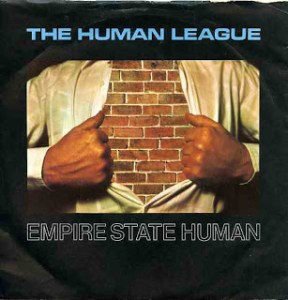
mp3: Human League – Empire State Human

Pop with synths was beginning to make inroads as far as the charts were concerned. Everyone at Virgin Records must have been rubbing their hands in glee when this emerged from the studio, as it surely had ‘HIT’ stamped all over it.  Nope.

Fun fact: June 1980 saw the release of the single Only After Dark.  Virgin Records took advantage of this by adding in the now surplus copies of Empire State Human as a free 7″ giveaway with Only After Dark.

mp3 : The Mekons – Work All Week

The Mekons and Human League were two of the band who first came to prominence via the Edinburgh-based label, Fast Product.  Both ended up on Virgin Records, but while the electronic popsters would stay there for years to come (making millions in the process), the post-punk sounds of The Mekons didn’t make any inroads, and they were soon dropped and back in the land of indie-labels from where they carved out an extensive career, with Jon Langford still very much going strong all these years later.

mp3: The Members – Killing Time

Yet another 45 that was issued by Virgin Records.   The Members had tasted chart success with their first two singles – Sounds Of The Suburbs and Offshore Banking Business – but the debut album, At The Chelsea Nightclub, hadn’t sold all that well.  Hopes were pinned on the new material.  Killing Time, along with two later singles and the sophomore album, failed dismally.  Lead singer Nicky Tesco quit in mid-1980, and although the others soldiered on for a bit, everything ended by late 1983.

mp3: The Monochrome Set – The Monochrome Set

The band’s third single on Rough Trade Records. The band’s third indie-hit.  But the chart success they really deserved continued to elude them.

mp3: Scritti Politti – Doubt Beat

Another one issued by Rough Trade.  The self-released Skank Blog Bologna in late 1978 had piqued the interest of John Peel and a few indies reached out to Scritti Politti with offers.  They went with Rough Trade, and a four-track 12″ EP became their first release on their new label in September 1979.  It’s a long long way removed (and that’s an understatement) from the sort of polished soul/indie/pop that would be recorded for the 1982 debut album.

mp3: Teenage Filmstars – (There’s A) Cloud Over Liverpool

The Television Personalities, consisting of Dan Treacy (vocals), Ed Ball (keyboards), Joe Foster (guitar), John Bennett (bass) and Gerard Bennett (drums) had, in November 1978, been responsible for Part Time Punks, one of the greatest and most-enduring songs to capture the era.  They had been rather quiet ever since.

Teenage Filmstars, consisting of Ed Ball (vocals, organ), Joe Foster (guitar), Dan Treacy (bass) and Paul Damien (drums), emerged in September 1979 with this 45 issued on Clockwork Records, which had been founded by the afore-mentioned Ed Ball. Two more singles would follow over the course of the next 12 months before Ed and Dan would get really busy with The Television Personalities and Ed with his own band, Times.

I hope this has all, for readers of a certain vintage, stirred some happy memories, while maybe a few more of you will be happy to have maybe discover something ‘new’ to enjoy.

JC

LUST’S JUST A DISTRACTION

R-74124-1368658414-5245

Today’s isn’t one for the TikTok generation or folk with short-attention spans. It’s more than ten minutes long and a total contrast to the new series that was launched a few days back.

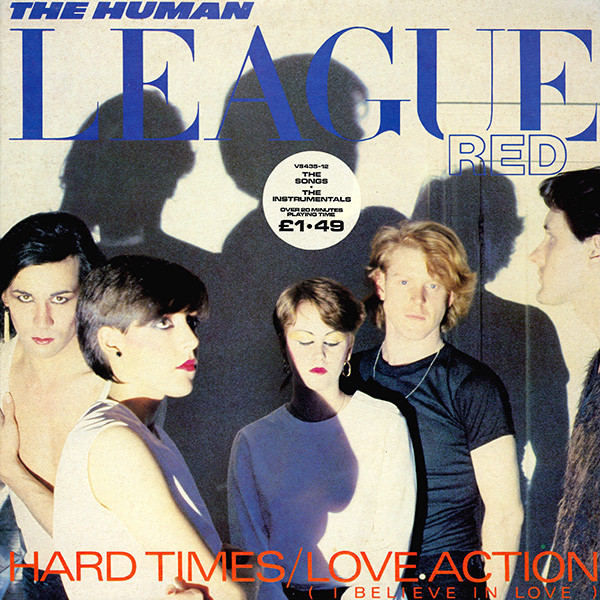
mp3: The Human League – Hard Times/Love Action (I Believe In Love)

Love Action was released in July 1981.   It climbed all the way to #3 and provided the group with its first Top 10 hit, building nicely on the success of previous single Sound of The Crowd which had got to #12.  At this stage, nobody was really sure if the success could be maintained or whether they would come to be regarded as a footnote in musical history, best recalled for having a frontman with a silly haircut and two backing singers whose appearances on Top of the Pops were a bit lacking in confidence.

Six months later, the success of the single Don’t You Want Me and the album Dare ensured that The Human League would be anything but a footnote….and fair play to them. Some of the band had long been at the vanguard of innovative synth music, and it was a bit of a eureka moment with the realisation that the addition of a pop element would take it out of the bedrooms of the geeks and into the living rooms, lounges and patio extensions of countless millions.

The 7″ version of Love Action is a brilliant four-minute pop single. The group were of course more than happy to have it pushed via the radio stations to become a big hit, but at the same time they were really keen to let people hear the fully extended version they had come up with in the studio with producer Martin Rushent, one which involved the song emerging from a near-instrumental track called Hard Times (which itself was made available as the b-side to the 7″).  

The marketing folk at Virgin Records were equally keen, possibly trying to avoid the group being pigeonholed at this juncture purely as pop-fodder, and so the 12″ was put into the shops at the cheap price of £1.49, thus offering up what in effect was more than 20 minutes of music at a cost that wasn’t that much more than the 7″.

mp3: The Human League – Hard Times/Love Action (I Believe In Love) (instrumentals)

Fun fact.   Lou Reed was a big influence on the lyric.   The song is not only named after I Believe in Love, as written and recorded for the 1976 album Rock and Roll Heart, but Phil Oakey would later reveal that the lyric “I believe what the old man said” was a specific reference to the gruff New Yorker.

JC


(BONUS POST) DON’T LOOK BACK IN ANGER (4)

11092687_0

The singles chart of the final week of April 1983 was slightly less poptastic than the previous month.

Quite a few of those featured last time around were still in the Top 40 – David Bowie (#6), New Order (#23),  JoBoxers (#19), Duran Duran (#27), Big Country (#29), Dexy’s Midnight Runners (#32), Eurythmics (#33) and The Style Council (#36).

The #1 slot was occupied by Spandau Ballet with True, an MOR-ballad that in later years would be revealed had been written a Gary Kemp who was infatuated at the time by Clare Grogan.

The Top 10 was actually a bit ‘meh’, but there were a couple of very decent electronic-pop tunes floating around

mp3: Human League – (Keep Feeling) Fascination (#4)
mp3: Eurythmics – Love Is A Stranger (#7)

Yup.   The record company had made a quick cash-in . Sweet Dreams (Are Made Of This) might have fallen to #33 after 11 weeks in the Top 40, but the re-release of an earlier single from November 1982 kept Annie and Dave’s profile very high.

Sitting at #14 was another electro-group, with the song that would eventually climb to #2 and thus provide their biggest hit.

mp3: Heaven 17 – Temptation

Two of the highest new entries are very much worthy of mentions.

mp3: Tears For Fears – Pale Shelter  (#22)
mp3: Fun Boy Three – Our Lips Are Sealed (#31)

I’ve a feeling Tears For Fears snagged themselves a Top of The Pops appearance that week as Pale Shelter went up to #5 the following week, which was where it peaked.  Fun Boy Three took a more leisurely meander up the charts, taking a further three weeks to hit its high spot of #7.

Goth, of sorts, was also in the singles charts this particular week.

mp3: Bauhaus – She’s In Parties (#28)
mp3: The Creatures – Miss The Girl (#37)

She’s In Parties had fallen two places from the previous week with what proved to be Bauhaus‘s biggest hit single that wasn’t a cover.  Miss The Girl would eventually reach #21 and was the first of two hit singles for  The Creatures in 1983.

One final song to highlight this week, for what proved to be a one-hit wonder.

mp3: Kissing The Pink – The Last Film (#24)

Kissing The Pink were a new wave/synth band from London.   They released three albums between 1983 and 1986, with later releases in 1993, 2015 and 2016.  The Last Film was the only time any single troubled the charts and it enjoyed a remarkably long stay that wouldn’t really be possible today.  It had crept into the Top 75 at the end of February 1983, and ten weeks later it got to #19 where it stalled for three successive weeks. It eventually fell out of the Top 75 in mid-June.

JC

ALL OUR YESTERDAYS (11/22)

Album : Various/Various
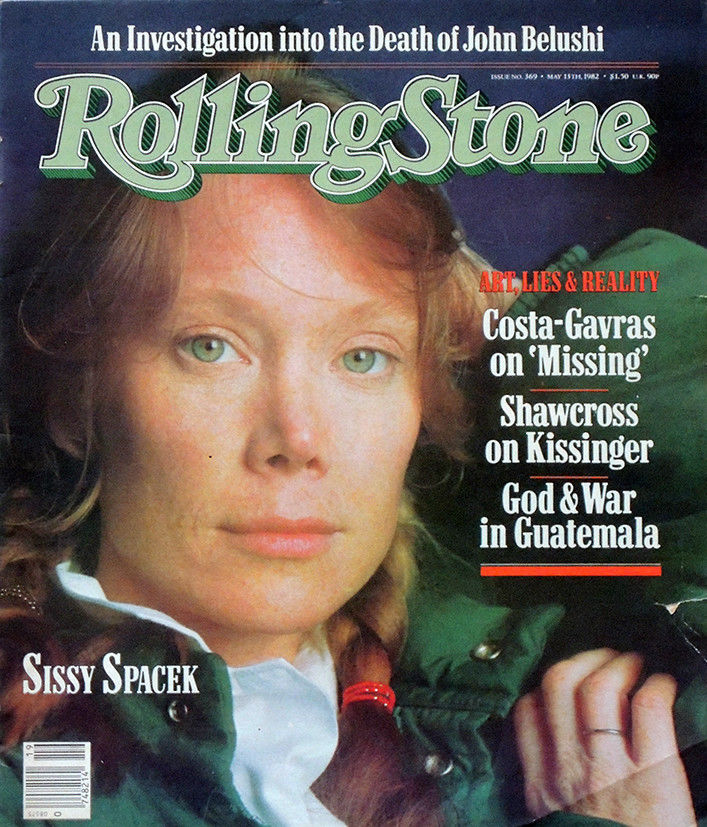
Review : Rolling Stone, 13 May 1982
Author : David Fricke

To English popmusic fans, there is nothing like a good six-month fad. The punk explosion, the warmed-over mods, the ska craze and the psychedelic revival–don’t look now, but you just missed the New Romantics–have come and gone (and in some cases, come again) with such confounding rapidity that it is hard to take most of them any more seriously than Hula Hoops or edible underwear.

The country’s latest rage is synthesizer music. Every hip, young Tom, Dick and Johnny B. Goode has traded in his guitar for a synthesizer and rhythm box, buying into future cool by applying the latest keyboard and computer appliances to the brisk melodic cheeriness of commercial pop and the bubbly beat of off-white funk. But far from bowing down to the great god of automation or passing off their microchip bubblegum musings on sex and energy as the stuff of a brave new world, these synthesizer bands have bestowed an almost mock-human quality upon their hardware. The beeping, farting and whooshing of the keyboards, combined with the psycho-Sinatra cabaret croon of the singers (Soft Cell’s Marc Almond and Orchestral Manoeuvres in the Dark’s Andy McCluskey, take a bow), creates a man-machine tension channeled into the vigorous dance beat of many of these songs. And by dancing, that does not mean the March of the Androids but no-holds-barred Soul Train swing.

The chart success of these digital dandies and their synthesizer pop – all four of the above LPs made the U.K. Top Five and are faring surprisingly well here – is somewhat out of proportion to their artistic worth. These are, after all, only pop songs in transistor drag. But if singing the same old song with newfangled noise is no great leap, selling the public on a package of postpunk do-it-yourself ingenuity, easy-to-play technology and Top Forty classicism certainly is.

The Human League is a perfect case in point. In the four years since the group’s first single, a home-recorded slice of angry young electronic New Wave called “Being Boiled,” the original quartet split in half and evolved into a six-piece, circa-2001 Abba. Singer Phil Oakey‘s lusty saloon styling is now lightly sugared with the twee harmonies of Joanne Catherall and Susanne Sulley. Such songs as the Euro-fizzy “Open Your Heart” and the bright motorfunk exercise “Love Action” (both on Dare) are delightful, swinging singles free of sci-fi pretensions and uncluttered by art-school cleverness. Producer Martin Rushent‘s warm widescreen production also takes the edge off the severe chill that typified the League’s earlier import albums.

Yet, more important, the League itself now strikes an appealing balance between modern technique and tuneful charm, epitomized by the hit single “Don’t You Want Me.” Alternating between a gray doomsday riff and a smart samba strut, the song is a tasty white-soul layer cake of competing melody and harmony lines whose orchestral possibilities are pared down to a sleek, glassy arrangement by the metallic breeze and regimented beat of the synthesizers. With all the knobs and buttons at their disposal, the Human League still goes for the hook. And with eight other songs as artfully grabby as “Don’t You Want Me,” Dare keeps reelin’ ’em in.

The problem with Orchestral Manoeuvres in the Dark is that they want to have their art and eat it, too. The awkward mix of dreamy romanticism and spatial, Pink Floyd-ian abstractions on Architecture and Morality, OMD’s second American album, suggests that Andy McCluskey and Paul Humphreys are acutely embarrassed by their ability to pen seductive moonlight sonatas like “Souvenir” and the eerie Parisian waltz “Joan of Arc (Maid of Orleans).” Why else gussy up the LP with ponderous music of the spheres, as in the title track’s construction-site rattle and the overlong “Sealand,” a nuclear beach concerto of drawn-out synthesizer drones? They even sabotage the album’s one decent party track, “Georgia,” with carnival organ and holy choir sound effects. Too much sincerity and not enough spunk on Architecture and Morality make for attractive but dull fare.

The Soft Cell twosome of Marc Almond and David Ball walks on a much wilder side, bringing the brainy bop of OMD down to a lurid red-light-district level on their debut album, Non-Stop Erotic Cabaret. Their hit single, “Tainted Love” (included here), neatly captured Soft Cell’s fetish for R&B; camp; the twelve-inch single even segued into a heavy-breathing version of the Supremes‘ “Where Did Our Love Go.”

Not surprisingly, then, the best tracks on Non-Stop Erotic Cabaret–“Frustration,” “Sex Dwarf,” “Secret Life” – bump and grind with vibrant, tawdry soul. Ball, employing a limited arsenal of synthesized keyboard effects, tarts up the meaty funk beat with multiple rhythm figures and steamy extended chords. Together, these complement singer-lyricist Almond’s passion for sexual deviation (“Sex Dwarf,” “Entertain Me”) and rather vampiric fear of open day-light (“Memories of the night before/Out in clubland having fun/And now I’m hiding from the sun,” from “Bedsitter”).

Compared to Soft Cell’s smutty pop, Depeche Mode‘s Speak and Spell is strictly PG-rated fluff. A group of fresh-faced, suburban lads from Britain, they have neither the ambition of Orchestral Manoeuvres in the Dark nor the overt commercial allure of the Human League. They simply drift aimlessly between the two, occasionally hitting a disco bull’s-eye with chirpy dance tracks like “Dreaming of Me” and “Just Can’t Get Enough.” Too often the synthesizers lock into dead-end grooves, and the group’s boyish caroling is anonymous at best.

There’s plenty more where all this synthesized Dream Whip came from: e.g., Simple Minds, Duran Duran, Heaven 17, the Far East fantasies of the group Japan. They’re not all completely synth, but they certainly sing the body electric. Still, the temptation is to dismiss English synth-pop as the chart’s flavor of the month. For all their undeniable pop attractions and the genuine innovative potential of electro-dominated rock, these bands so far have only bent the rules, not broken them. If this batch of records is any indication, the revolution will not be synthesized.

mp3 : The Human League – Open Your Heart
mp3 : OMD – Georgia
mp3 : Soft Cell – Secret Life
mp3 : Depeche Mode – Dreaming of Me

JC adds “The chart success of these digital dandies and their synthesizer pop is somewhat out of proportion to their artistic worth.”   Just fuck off will you?  It’s dicks like you that give music writers/journalists a bad name.

Happy New Year.  It’s great to start it off grumpy.


AN IMAGINARY COMPILATION ALBUM : #228 : THE HUMAN LEAGUE

The positive response to the recent musings on Don’t You Want Me, and in particular the unbridled enthusiasm of Post Punk Monk, has led to this very quick cash-in.

It’s awfully easy to forget that much of the new wave/electronica music and the sound of the underground here in the UK in the late 70s/early 80s was unable to travel very far, unless it either crawled into the mainstream or the singer/band in question was on a label that had the ability to have product issued on overseas subsidiaries or affiliates; even then, a would-be-listener, especially in North America, usually had to dig deep to find things in smaller record stores having, in all likelihood, heard the music on an obscure or college radio station.

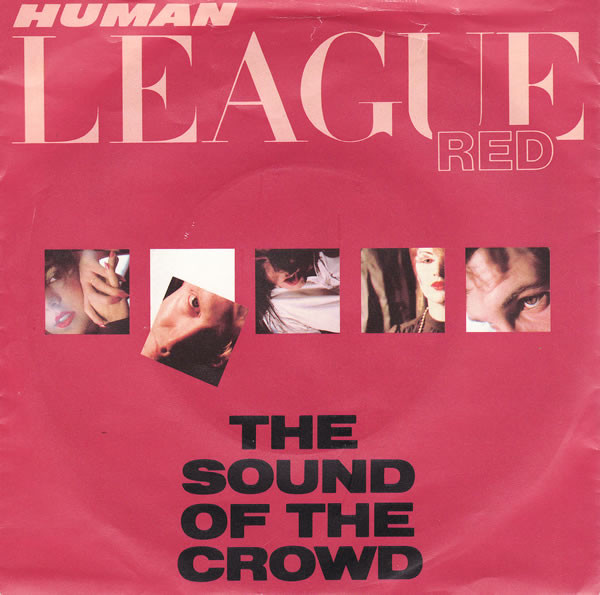
PPM mentioned that his first Human League purchase was The Sound of The Crowd EP, released by Virgin Canada in 1981 which very handily contained some tracks from the back catalogue, thus giving him a great insight as to how the band’s sound developed.

This ICA is quite narrow in its outlook. There aren’t necessarily the best ten tracks that the band ever recorded and everything is lifted from a short period in time, with nothing after 1983. There’s also no Don’t You Want Me or Seconds on it, on the basis that both songs featured a short time ago (both tracks would ordinarily have been shoo-ins).

Side A

1. The Things That Dreams Are Made Of

Even if had turned out that Dare wasn’t packed with unforgetable hit singles, the very existence of this, the album’s opening track, would have made it an essential purchase. It’s the perfect blend of art-house synth and pure pop in which Phil Oakey gets to go all Mary Poppins and sing all about a small number of his favourite things.

2. Being Boiled (John Peel Session)

It’s still amazing to think that this track has such a strong Scottish connection, originally being released (in mono) on Fast Product, an Edinburgh-based independent label which was run by Bob Last. The music for this one was composed by Martyn Ware and Ian Craig Marsh, both of whom would leave The Human League in 1980 and going on to form the equally successful Heaven 17.

It was released at different times in different forms to differing acclaim and sales, I thought for something different that it would be worth featuring the Peel session version that was broadcast in August 1978.

3. The Sound of The Crowd (complete)

The breakthrough hit that catapulted the band into the Top 20 for the first time, here it is in its full 12″ vinyl glory.

It was a real bolt out of the blue as just two month previously, they had released a single called Boys and Girls which was a real disappointment, offering little of merit and suggesting they had next-to-nochance of surviving the departure of Ware and Marsh. The decision to feature female vocals and to ask a more pop-orientated producer to get on board proved to be a masterstroke. It also got invited onto Top of the Pops on 30 April 1981, and would, over the ensuing weeks and months, lead to many a joke about a particular haircut.

4. Rock’n’Roll/Nightclubbing

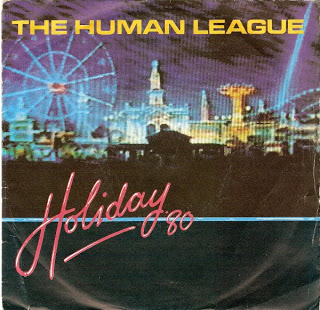
As featured on the Holiday 80 EP, which was released in the period between debut album Reproduction and its follow-up, Travelogue, and came from a period when the band had been working with John Leckie, who was also very heavily involved at the time with Simple Minds and Magazine.

The EP had a new version of Being Boiled on it, but the highlight for many was this six-minute effort that was a medley consisting of a cover of tracks by Gary Glitter and Iggy Pop, neither of which seemed obvious choice for the electronica treatment.

In what was a very unusual move, the producers of Top of The Pops invited the band to perform on the show in May 1980, even though the EP wasn’t in the Top 40. It proved to be the only time the original line-up would appear on the show:-

Ah…. the haircut was in place all that time before…..but when you don’t have hits, nobody pays attention!

5. Hard Times

Such was the depth and quality of material available during the sessions for Dare that this, largely instrumental number was only made available as the b-side to Love Action (I Believe In Love). The 12″ version of the single came with a 10-minute effort in which the b-side segued seamlessly into the a-side….but that’s for another occasion.

Side B

1. Black Hit of Space

A song that should provide a stonewall defence should anyone accuse early-era The Human League as being po-faced and without humour. The opening track on Travelogue in which a shit-faced Phil Oakey gets home after a night on the piss and proceeds to play a futuristic looking and sounding record that proves to be so big and popular that it takes over everything. Some said at the time that he was looking enviously at Gary Numan……

2. Mirror Man

The first new song to emerge after the success of Dare, almost a full year after Don’t You Want Me had been the world-wide smash. It’s reminiscent of the Motown sound, having the same sort of beat as so many of the big hits of the 60s; worth noting too that the the female members of the band, while being very integral to the song, don’t actually have any lyrics beyond ooh-ing and ahh-ing to great effect.

3. (Keep Feeling) Fascination

There are days when I think this could very well be my favourite of all the hit singles. It was the follow-up to Mirror Man and it felt as if the band were throwing the kitchen sink at it. From it’s jarring and nearly out-of-tune opening synth notes to the fact that all three main vocalists get a solo turn (as indeed does the mostly unheralded Jo Callis), it was the signal that, from now on, The Human League were going down the pop route and to hell with anyone who pined for the days of the Being Boiled/Reproduction era.

OK….there wasn’t all that much that I loved afterwards as the sound degenerated largely into the sort for which the 80s became loathed, with the synths bordering on soft-rock at times (exhibit #1 being the album Crash which was released in 1986), but that spell from April 81- April 83, which was bookended by Sound of the Crowd and Fasination was triumphant.

4. Empire State Human

My first exposure to the band and one of the first electronica singles that I ever bought, back in June 1980 when it was given a re-release by Virgin Records some nine months after first flopping. I wasn’t the tallest of teenagers and I was envious (a bit) of the lads who could hold their own at centre-half in the football team. It was easy to sing-along to this one.

5. WXJL Tonight

The closing track on Travelogue and a sort of sci-fi fable in which radio DJs have become a thing of the past and music is played on an automated basis. Might have seemed a tad far-fetched in 1980, but with Spotify and its ilk becoming the choice of millions the world over………………..

JC


THE UNDERSTANDABLE POPULARITY OF A FOURTH SINGLE FROM THE ALBUM

Here’s the dates when The Human League released material in 1981:-

20 April: The Sound of the Crowd (single)
27 July: Love Action (single)
28 September: Open Your Heart (single)
16 October: Dare (LP)

All the singles had been major hits, with the latter two going Top 10. The parent album entered the charts at #2 and took the top spot the following week. It would spend 22 successive weeks in the Top 10 of the album chart, and it wouldn’t drop out of the Top 100 until 19 February 1983, some 70 weeks after its release.

The reason for the longevity? The popularity of the fourth single which was released on 27 November 1981 at the insistence of Virgin Records and very much against the wishes of the main principal in the band:-

mp3 : The Human League – Don’t You Want Me

Not counting a particular charity release a few years later, it is, arguably, the most recognisable song of the 80s (at least here in the UK). It is everything you are looking for in a perfect pop single – hooks, rhythm, beats and a chant-along chorus. It came with the added bonus of the verses being similarly ear-wormy, and, in an era when music videos were beginning to be an essential part of the package, the promo was memorably different and watchable, for at least the first 50 viewings or so.

Don’t You Want Me had a difficult birth. Phil Oakey had initially thought of it as a song that he would sing on his own, considering it not an ode to lost love but, in his own words in an interview many years later, as a nasty song about sexual power politics. It was while in the studio working on all the songs that would appear on Dare that he realised it could also work as a duet, and this led to Susan Ann Sulley, one of the two backing singers in the band, being asked to become co-lead for the first time. Seemingly, the initial duet version was quite dark and harsh, reflecting the bitter feelings of the male and the exasperation of the female. Producer Martin Rushent, with whom Oakey had already had a number of rows about the way the songs on the album were turning out, remixed things (with the help of Jo Callis from the band) to the singer’s horror who felt it now sounded limp and was by far the weakest of the new material, which goes someway to explaining why it ended up as the last song on Side 2 of the album.

As mentioned earlier, the album had enjoyed immediate success, but it had slipped off the #1 spot after just one week which led the label bosses to float the idea of a fourth single to boost sales, particularly in the run-up to Christmas when sales are traditionally at their highest levels. The fact the bosses wanted to issue Don’t You Want Me did not go down well with Oakey – partly as he felt it was substandard to the earlier 45s and that he felt its pop-feel would alienate many long-standing fans. He must have been amazed when, just two weeks after its release, it gave the band its first #1 single, holding on to the top spot for five weeks, including over Christmas, fending off all the novelty stuff and one-offs that often dominates the singles charts at that time of year.

It’s to his credit that Phil Oakey went along with things, playing the role of pop star to perfection and making sure all promotional activities around the song were realised. Six months later, the song went to #1 in the USA and he, and his bandmates, were made for life.

Don’t You Want Me is fast approaching its 40th anniversary but shows no signs of losing its popularity. Indeed, it is better loved nowadays than even at its height when it sold in its millions, with fans of an age when it was first released now joined by millions across the world who only know it a retro-hit or as a bona-fide karaoke classic. Yes, most of those who get up and grab the mics during drunken nights out with friends and/or work colleagues probably do think they are singing a doomed love song and aren’t acting out the tale of sexual power politics, but so what? It’s a great, instantly recognisable tune that only the hardest and coldest of people can say they have no time for.

The b-side was also lifted from Dare, indicating that The Human League had all but exhausted their seam of material for now. It’s one of the tracks that harked back to the harder-edged sound of earlier material, and probably the song that Phil Oakey would have been happy see released as the a-side to any fourth single:-

mp3 : The Human League – Seconds

As with the earlier singles from Dare, the 12” version contained an extended dance mix which stretched out to more than seven minutes

mp3 : The Human League – Don’t You Want Me (extended)

Quite experimental in some places, it’s impossible to deny its influence on so many pop tunes that followed in its wake – the Pet Shop Boys were most certainly tuning in!

Almost 1.6 million copies of the 7” and 12” were sold in the UK. It also went to #1 in Belgium, Canada, Ireland, New Zealand, Norway and, as mentioned earlier, the USA. It also enjoyed Top 10 success in Australia, Italy, the Netherlands, South Africa, Spain, Sweden, Switzerland and West Germany.

JC

SOUNDS

It is now more than 37(!!!) years since the April 1981 release of the 45 which took the new-look The Human League into the charts and onto our television screens via Top of the Pops. Synth-pop had duly arrived with a bang.

The Sound of The Crowd was an extraordinary single that still sounds superb all these years on. It was full of catchy little chants such as ‘Get Around Town’ and ‘Arse Around’ (sorry that should read ‘Pass Around…but I’m sure the way it was put down on record was deliberate) and yet it was impossible to fully sing along to without making an idiot of yourself thanks to phrases like ‘Make a shroud pulling combs through a backwash frame” which I’m sure is one that Ian McCulloch has always wished he’d come up with.

This was the first release in which Susanne Sulley and Joanne Catherall featured as backing vocalists to Phil Oakey. There can be no argument that their contributions were every bit as vital as the tune itself in creating the pop hooks which made it such a natural tune for daytime radio.

The visual element they brought with them was also a huge factor in raising the profile of the band – if you want evidence for that claim then just look at the fact the first TOTP appearance came when the band was sitting outside the Top 50 ; the show’s producers obviously believed that the contrast between these two young and attractive teenagers and the bloke with the funny haircut would get people talking.

Further evidence that TOTP saw the band as naturals for the show? The second appearance came a few weeks later when the single was at #15….having dropped down from #12 the previous week, thus breaking the rule-of-thumb on the show in those days that you would only be invited to perform if your song was rising up the charts.

I’m sure that many who had been interested in the band from the early days would have been appalled at the apparent sell-out. The Sound of The Crowd was a million miles away from Being Boiled and about half that distance from Empire State Human but there were no grumbles from me as the song became part of the soundtrack of my final few weeks at school and its follow-ups were aired at the student union disco nights as I found my feet at University.

Here’s some cuts straight from the 12″ vinyl:-

mp3 : The Human League – The Sound Of The Crowd (Complete)
mp3 : The Human League – The Sound Of The Crowd (Instrumental)

JC

HOLIDAY 80

Back in 1980, this was the review penned in Sounds which was then one of the main weekly music UK papers:-

Too much, too late, but too good to be missed. Eighteen months ago The Human League stood on the brink of altering the course of British pop music. Their humour and conviction combined to create an aura of (until then) unknown commercial excitement. Had the Sheffield funsters swallowed their hip pride and attacked the singles charts, they would have created a devastating impact on the British pop music(k) scene.

But as always seems to happen to the originals, they failed because of their own foolish move towards dignity and ‘below ground’ obscurity. They stood back for a moment allowing the empty and dull Gary Numan to ruin their market with his one and only flash of excellence. As soon as ‘Are Friends Electric’ hit that number one spot it became clear that The Human League had lost the gamble. And the stakes were high.

So, now in the midst of ska silliness, the finest electronic band of all time finally release the goods. A double single that clearly defines to all four angles of synthesised madness. The soft beauty of ‘Marianne’, the weirdness of ‘Dance Vision’, the perfect semi-harsh statements of ‘Being Boiled’ (new version) and finally the absurd pap-poppity of Gary Glitters ‘Rock And Roll’ and Iggy’s ‘Nightclubbing’. To be taken in large doses. To be played to life.

Nobody then could have predicted that within 12 months, The Human League would be the band to redefine British music in a way that no-one else had done since the era of The Beatles as synthesisers replaced guitars as the instrument of choice on the attack on the pop charts. Listening to Holiday 80, which is as excellent a release as the Sounds critic indicates, it really is hard to imagine what would unfold in the months ahead:-

mp3 : The Human League – Marianne
mp3 : The Human League – Dancevision
mp3 : The Human League – Being Boiled
mp3 : The Human League – Rock’n’Roll/Nightclubbing

But 37 years ago???? Noooooooooooooooooooooooooooooooo.

JC

PS : This is an apt posting as I’m off to Lanzarote for a few days with Mrs V.  The rest of the week will be guest postings of a far higher quality than the rubbish that’s been here in recent times.

TALL TALL TALL

R-439290-1126257781

It was the summer of 1980 when I heard this in a local record shop not far from where I lived with my parents and brothers. It was in the box of singles marked ‘Just In’ and I remember thinking that I was dead clever at picking up so quickly on something so utterly quirky, mesmerising and unique. It was a single I bought with money for my 17th birthday.

My bubble got burst about three days later when my mate’s big brother, who was very much into weird electronica music and hated, with a passion, the new-wave guitar bands that I was such a fan of, took immense pleasure in pointing out that I’d bought a re-released single and that if I really thought I was cool in my choice of music and wanted to stay ahead of the game, I had to be a bit sharper.

And while I wasn’t among the first to pick up on The Human League, I’m still proud that I knew a bit about them before the the astonishing success they enjoyed from late 1981 onward when they unleashed the magnificent pop opus that was Dare.

Empire State Human is a magnificent record. I cannot to this day understand why it failed to chart on its original release in September 1979. It wasn’t as if radio stations were totally adverse to electronic pop as Gary Numan was riding high in the charts throughout that year. It’s one of those songs that sticks with you when you play it and you just cant get it out of your head. And its not an unpleasant feeling.

mp3 : The Human League – Empire State Human

It also added to my fascination with NYC, a city that as a teenager seemed to be the most exciting, exotic and vibrant on the planet.  But it may as well have been on the moon such was the cost and ability to visit there back in the early 80s. Changed days for young folk nowadays.


MY FRIENDS ELECTRIC (21)

formalcontents

It’s now coming up to 8 years since I started up TVV during which time many very fine bloggers have come and gone, many of whom now concentrate their efforts on podcasts or other more instant forms of social media.

It has become increasingly rare to find new kids on the blogging block – particularly those who decide to focus in on that punk/new wave era which was so exciting – and so you can imagine how delighted I was to find my way onto For Malcontents Only, particularly given that it is a place which looks back at the scene in and around Glasgow.

This excellent blog kicked off back just 12 months ago.  Judging by some of the postings, I’m hazarding a guess that Jamie (I’ve only just learned his name thanks to his e-mail address!) is maybe a couple of years older than me given that he is able to reminisce about gigs in pubs at a time when I was dreaming of being able to shave on a regular basis… or maybe unlike me he didn’t have a baby face and a great fear of knock-backs from bouncers.

As you’d imagine, it’s a place heavy with nostalgia but there’s also a tremendous selection of posts concentrating on the here and now.  One of the most unique aspects of FMO is that it features interviews with some of the lesser-known artists who were part of the punk/new wave scene and brings their stories bang up to date.  In short, it is the sort of blog that I had dreams TVV would look like when I set out all those years ago!!

Here’s an example of what I’m talking about from May when Jamie looked back at a single released on a small Scottish label:-

The Human League: Being Boiled (1978) Fast Product

In a Melody Maker interview back in February 1979, Martyn Ware of The Human League mentioned that the band were more influenced by films than by they were rock, claiming he’d rather see a good film than a good rock band. In the cinema, ‘You’re part of the experience. Whereas, watching a rock band, it’s just some guys up on a stage.’
When a tour (due to take in Edinburgh and Aberdeen) was later announced supporting Talking Heads, it became apparent that The Human League didn’t see themselves as your standard guys up on a stage kinda band.

Their idea for the show was a multimedia extravaganza, utilizing their new synchronization units that meant they could operate slides in sync with each song. The problem with the plan as far as Talking Heads (not exactly backwards looking dinosaurs themselves) were concerned was the fact that while each member of The Human League would be at the gig, rather than being the centre of attention, they would supposedly be in the audience, hopefully discussing the automated events on stage and signing autographs.

The idea got the band dropped from the tour although they wanted to press ahead with the concept and even expand it.

As their manager Bob Last explained to NME: ‘It’s cost us a lot of money to set up and now we have audio-visuals, tape memory banks – in fact, the whole gist of the show – just sitting in boxes and waiting to go.’

Last outlined the potential of the show and spoke of creating a version for discos rather than rock concerts. ‘There are various other avenues to be explored. For example, I think it would be the ideal support for Alien, or a film of that nature.’

After the comparative failure of second album Travelogue, tensions within the band increased; eventually singer Phil Oakey decided that he wanted to sack Ware, Ian Craig Marsh wasn’t keen on the idea and the pair quit and teamed up on a new project to be known as the British Electric Foundation (BEF).

Remaining members Oakey and Philip Adrian Wright retained The Human League name, although they had to be convinced by Bob Last to do so. The music press didn’t see much of a future for a band with only a singer and director of visuals (even if Wright had started playing incidental keyboards). And you could hardly blame them.

Oakey, though, came up with a possible solution to enable a forthcoming European tour to still go ahead. His plan to fill in the gap left by Marsh and Ware revolved largely around the recruitment of two schoolgirls, Suzanne Sulley (17) and Joanne Catherall (18), who he’d spotted on the dancefloor at the Crazy Daisy’s ‘Futurist’ night in Sheffield although he also additionally employed a professional keyboard player, Ian Burden.

Neither girl had any kind of remarkable singing voice and neither was that great at dancing either. If the pair had time-travelled thirty odd years forward and showed up at an X-Factor audition, they would likely be dismissed as no-hopers.

Luckily the pop buying masses of 1981 didn’t require performers with touching ‘backstories’ on Saturday night TV, neither did they require anyone to have been coached by professionals to perform pointless vocal gymnastics or to display a look that had been (supposedly) ‘styled’ to perfection by somebody with no sense of originality or indeed style.

Having seen the new look League on Top of the Pops miming to Sound of the Crowd, the pop buying masses decided they actually liked the caked-on mascara, beauty spots and lippy and the slightly awkward and un-coordinated dance routines. Generally, girls identified with them while boys fancied them.

Joanne and Suzanne soon became the poster girls for synth-pop but Bob Last, in particular, judged the band could be improved further by the addition of one final and vital ingredient, another professional musician, after Ian Burden temporarily left post-tour.

It might have appeared that the ex-guitarist of the retro obsessed Rezillos and the futuristic Human League had little in common bar sharing the same manager but in April 1981, Jo Callis was invited to become a permanent member, the idea being even stranger if you bear in mind Callis’ confession that he had never been near a keyboard in his life.

The first Human League album with the new line-up, Dare was released in October, 1981 and quickly made its way to the top of the UK album charts. By Christmas it had gone platinum in Britain, its number one status equalled by a single that Phil Oakey hadn’t wanted released, Don’t You Want Me – he only agreed finally on the condition that a large colour poster accompanied the 45, otherwise, he felt, fans would feel ripped off by the ‘substandard’ single alone.

Co-written by Callis, Oakey and Wright, the ‘substandard’ single went on to become one of the UK’s biggest ever selling songs*, the British Christmas number one of 1981 and also later an American #1 too and a worldwide smash.

And here I finally get round to the Scottish independent labels part of the post. Due to the success of Don’t You Want Me, the first ever Human League single, Being Boiled, which had been originally released during the summer of 1978 on Bob Last’s Edinburgh based Fast Product label, was made available again and this time entered the top ten of the singles charts, where it should have been first time around. For me it’s a much better record than Don’t You Want Me. See what you think:

mp3 : Human League – Being Boiled

And if anybody is wondering, this is only the first of a number of entries in this series looking at Fast Product, so I will get round to writing more on the actual label in the future. Honestly.

* It even re-entered the charts here a couple of months ago after being taken up by Aberdeen fans in the run up to their team winning the Scottish League Cup.

———————————————-

I’ve never met Jamie…not knowingly anyway…..but there’s no doubt that over the past 35 years, we have been in the same place at the same time on many an occasion…we might even have nodded to one another in passing and noot realised!!

The last of this particular Friends Electric series will be tomorrow. TVV should, all being well, begin to return to normal next week.