
A guest series by Steve McLean
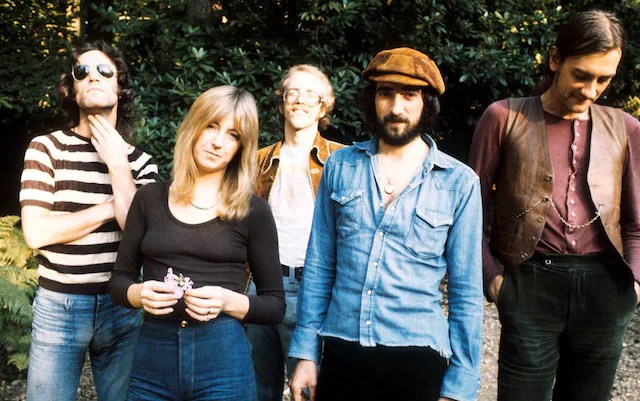
First up…..the Prelude
In October last year, I sat down to write a blog for this site about the story of The New Deep Purple, a band that toured in 1980, causing much controversy with the fans.
As I pulled more at the thread of the story, it became apparent there were multiple tales like this dotted around the music world. “Oh great” I thought. I’ll do a series of blogs. I always wanted to do a series of blogs with a common theme.
I started finding all sorts of murky tales involving bands like The Zombies, Steppenwolf, Iron Butterfly and even Frankie Goes To Hollywood.
By the end of May..2025 I’d written about 80,000 words, but most of the story was about Deep Purple, I’d accidentally written a book*. Which is lovely, but I didn’t know what to with the rest of the work.
So I’ve decided to ask the lovely JC to carry the blogs as a series after all…what follows, across today and each of the next three Wednesdays, will be posts which are a lot longer than what you would normally find on TVV.
JC and I, very much, beg your indulgence…..
Stealing…. Fleetwood Mac
Most music fans are aware of the nostalgia circuit; One member of the Bill Haley’s Comets supported the Original Herman’s Hermits featuring the drummer with the show opened by one of The New Seekers billed as The New New Seakers . There has always been a market, not a massive one, but a market nonetheless for bands who will keep a name alive with only the flimsiest connection to the original group.
On paper, Fleetwood Mac are probably the biggest band ever to have the ‘New’ prefix. It’s worth keeping in mind though that Fleetwood Mac have been multiple different bands during their existence; The blues rock pioneers, cult favourites, the 1970s and 80s cocaine fuelled behemoth, the 90s Dave Mason led version that played Butlins (probably) and finally the We-Love-Money-More-Than-We-Hate-Each-Other festival headliners that featured Tim Finn of Crowded House. Tim Finn! Truly the glory years. On a side note, whenever Lindsey Buckingham has left Fleetwood Mac he’s been replaced by two people, make of that what you will.
In 1973 Mac fit very snuggly into the second category, attracting college students and die-hard blues fans who remembered the hits like Oh Well and Rattlesnake Shake. Christine McVie and Bruce Welch had done a lot to drag the band into the radio friendly mid-70s but it’s safe to say that most people didn’t care about Fleetwood Mac. That aside, the song Hypnotised from 1973 was something of a radio hit and might be considered the start of FM’s 1970s ascendancy.
mp3 : Fleetwood Mac – Hypnotised
The current Mac roster consisted of Mick Fleetwood, John McVie, Christine McVie plus Bob’s Weston and Welch. Weston was the relative newcomer. He’d replaced Danny Kirwan and had contributed to both albums they’d recorded in 1973, Penguin and Mystery to Me. His most visible musical contribution was probably dueting with Christine on Did You Ever Love Me.
mp3 : Fleetwood Mac – Did You Ever Love Me
But his biggest contribution to the legacy of the band is without a doubt his shrewd career move to have an affair with Mick Fleetwood’s wife, Jenny Boyd.
“Bob Weston had an affair with Mick’s wife and Mick found about it and just left. He was absolutely distraught, their marriage wasn’t going very well. Mick was really in a bad way for a while” Christine McVie, Off The Record, 1986
Fleetwood and Boyd had been on and off childhood sweethearts for fifteen years and had been married since 1970 (they would divorce, re-marry and divorce a second time). In the 1980s she married King Crimson drummer Ian Wallace. Honestly, marrying one drummer can seem like a mistake but two? At some point you have to just assume the lady had a thing for mopping up drool.
Once Fleetwood found out about the affair the group soldiered on for a few weeks, but ultimately they fired Weston and went on hiatus. The band cancelled the rest of the dates and had binned the upcoming US tour in the new year. Cliff Davis, Mac manager and former Brian Epstein apprentice went fucking nuts. He would be liable for a hefty legal bill, and his reputation would be in tatters with promoters.
“The manager said do you realise what you’ve done, “we’re gonna be sued for millions.” I mean we wouldn’t have been. The way Mick wasn’t it wouldn’t have been possible for him to play. He was really in a bad way. So we all went back home again” Christine McVie, Off The Record, 1986
Cliff Davis decided that he alone owned the name to Fleetwood Mac and set about putting together a new band.
“I want to get this out of the public’s mind as far as the band being Mick Fleetwood’s band, this band is my band. This band has always been my band.” Clifford Davis, manager of Fleetwood Mac. Fleetwood Mac Flak: Manager Takes Name, Not Members, On Tour, Rolling Stone February 28, 1974
While it’s true that Mick Fleetwood was the only remaining member of the band that recorded their first single as John McVie joined after their debut release, it was often assumed that the Fleetwood and the Mac in the band name was due to the ownership group. Not according to Davis;
A lot of people over the years have misconstrued the Fleetwood Mac as Fleetwood and McVie. ‘Fleetwood Mac’ was a song written by Peter Green when he was with John Mayall.” Clifford Davis, manager of Fleetwood Mac. Fleetwood Mac Flak: Manager Takes Name, Not Members, On Tour, Rolling Stone February 28, 1974
What happened next is where the tale gets murky, depending on who you talk to. Davis did this with Mick Fleetwood’s consent or Mick Fleetwood had absolutely no knowledge of this happening. Davis hired former Curved Air member Kirby Gregory and built a group around him and vocalist Elmer Gantry from Elmer Gantry’s Velvet Opera.
Both Kirby and Gantry (real name Dave Terry) had recently been in a band called Legs, their single So Many Faces is something of a lost freakbeat classic.
mp3: Legs – So Many Faces
According to the new members, the legalities of the band at this point were certain, Davis had the paperwork and the contracts and Fleetwood was on board. They were told that while Fleetwood wasn’t going to start the tour with them, he would join them partway through after he had rested.
“I just decided it was time to change the band, certainly onstage, and that’s what I did. I’ve always been sort of the leader. I’ve always sort of picked who was going to be in it and who wasn’t. I decided to keep Mick.” Clifford Davis, manager of Fleetwood Mac. Fleetwood Mac Flak: Manager Takes Name, Not Members, On Tour, Rolling Stone February 28, 1974
The members of the new band all corroborate the story; they were told that Fleetwood would be in the band eventually, even claiming to have met them beforehand
“Mick Fleetwood came to our house and we talked through the new band, and it all seemed fine. Mick said, well, I can’t actually come and rehearse with you, it was fairly imminent going to America to tour, but if you get [a temporary] drummer, I’ll join you for the tour.” Elmer Gantry, The New Fleetwood Mac Member, BBC Radio 2017
As with a lot of these stories, multiple versions are told and there are various versions of truth, Legend has it that the band played poorly and the audience were upset with the shows, but this doesn’t quite line up with some first-hand accounts.
“[The New Fleetwood Mac] were really good. I don’t know if the crowd was just really stoned or didn’t know what Fleetwood Mac looked like,” Rich Engler, Promoter ‘Behind the Stage Door,”
While you would expect such a quote from a show’s promoter, press reviews were mixed. Once again, the negative shows rise to the top. The band and their peers were happy with their output;
“Joe Walsh told me at one gig in Florida that despite Mick Fleetwood not being there, he thought we were rockin’ with the best of ’em. I don’t recall any major hostility towards us either. Elmer and I just thought: ‘We are stuck with this so let’s make the most of it’ – and we gave it all we had.” Paul Martinez, The New Fleetwood Mac bass player, Classic rock Classic Rock 168, in March 2012.
When Davis’ Mac where on the road they were sometimes billed as The New Fleetwood Mac or Fleetwood Mac’s New Band but there’s a lot of evidence to suggest it wasn’t the con that history has declared it to be. A prefix of ‘THE NEW’ on a band poster rarely means original members but it doesn’t necessarily affect the quality of the performance. just ask the New Yardbirds. This isn’t the case for The New Kids on the Block, who were definitely shit. It should be noted that ‘THE NEW’ was doing some pretty covert work on some of the Fleetwood Mac posters
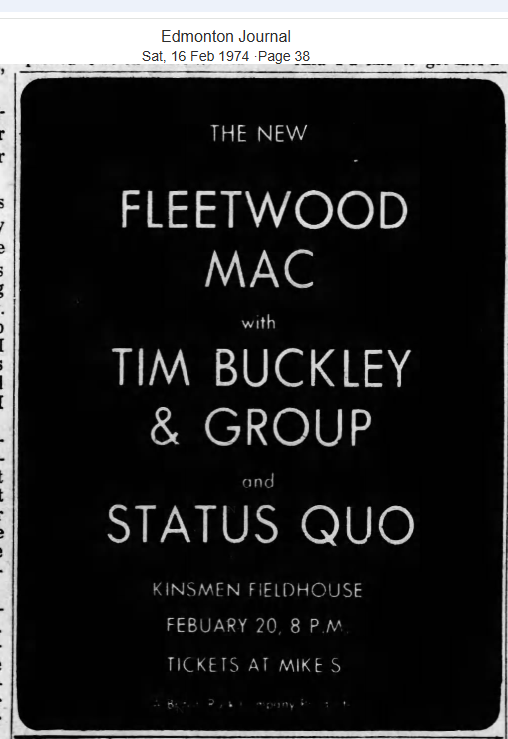
(Advert for The New Fleetwood Mac.. spot ‘The New’)
Eventually the tour starts to break down. As news of the stunt spreads around the music press, the shows suddenly start to suffer. In a self fulfilling prophecy, the band who were playing well, start playing badly when a crowd turns up and expects them to play badly. That’s the problem with the court of public opinion, it rarely changes its mind after the initial decision.
At this point Mick Fleetwood starts to decry the actions of the Davis & Co, at least publicly. However, it was Bob Welch who took the lead and flew back to England to meet Fleetwood and the rest of the actual members.
“It is a rip-off. The manager put together a group real fast using the name Fleetwood Mac before we had a chance to do anything about it.” Bob Welch, Fleetwood Mac Member, Fleetwood Mac Flak: Manager Takes Name, Not Members, On Tour, Rolling Stone February 28, 1974
Welch stepping up to the plate is a weird move. He wasn’t an original member of the group and he was pretty burned out from the constant tour-album-tour regime. Could it be that Welch was the focal point for the legal action because he was the least informed member of Davis’ plans. Davis and The New Fleetwood Mac have always claimed that Mick knew and approved of his plans. It would be naïve to believe that at least the McVie’s didn’t also. According to Bob Brunning’s book Rumours and Lies, John McVie sent Clifford Davis a postcard from Haiti saying ‘Good luck with the new band’.
“I was making practical arrangements for auditions and rehearsals for the ‘New’ group in the middle of December 1973. I met John in a pub in Chelsea. John asked me whether or not Cliff would ‘get away with’ what he was doing. I asked him what he meant and he said ‘Putting completely different names on stage and calling them Fleetwood Mac’ I said I did not think he’d be wasting his time doing so if he thought it would not succeed’ Phil McDonnell, Bob Brunning, Rumours and Lies.
Regardless, if the band had agreed to the plan and then later changed their mind or if Davis was making a grab for the name, lawfully it was a murky water.
The problem for the group was the precedent set with multiple line-up changes plus Davis involvement in the band’s formation. He might actually have a legal case. The law generally considers a band as a company rather than a work of art and doesn’t care too much about who the founding members are or who has been in the band the longest. It tends to just notice who signed the contracts and who holds the purse strings. To make matters worse, it seemed that the band’s record label where none-the-wiser as to who exactly that it was that they had a record contact with; Fleetwood and McVie or Davis.
“I’m in the midst of trying to find out who has exclusivity on the name,” Don Schmitzerle, executive director, Warner Bros label management,
One major issue, when a band is treated as a brand or a franchise it that the Brand Manager could hire different musicians every single show and not care about the quality of the performance. They may not even be too concerned about the songs the outfit played or the style they are played in. In other words, the people who paid to see Fleetwood Mac may well end up seeing a Jazz Trio playing under the name Fleetwood Mac. That would be an issue for a court to consider. Welch summed it up neatly;
“To the band’s thinking that’s kind of beside the point. If he [Davis] has the rights to the band’s name, theoretically he can put anybody there. He can put four dogs barking on a leash and call it Fleetwood Mac. Basically what it boils down to is the manager flipped his lid. We’re going to take legal action as soon as we know where we can take it from.” Bob Welch, Fleetwood Mac Member, Fleetwood Mac Flak: Manager Takes Name, Not Members, On Tour, Rolling Stone February 28, 1974
To play devil’s advocate for Davis’ plans; he was seemingly convinced that the band were breaking up and not just going on hiatus. Christine McVie was starting a solo project, John McVie was making noises about going to LA and Fleetwood was making noises about moving to Kenya. Clifford had contracts that needed fulfilled before the band wound up, or the lot of them would be in financial ruin for years. As a reputation saving move, it would seem like an okay idea
The legally dubious point comes if the hypothetical Jazz Trio include a musician who is recognised to be Fleetwood Mac and has given their blessing. It appears the legal case against Davis hinged on whether or no Mick Fleetwood was actually involved in the project.
“For a while we believed that Mick would show. However, when he never appeared and we were later branded in the press as imposters, I felt a rage towards him that has taken decades to subside – even slightly. We desperately wanted out, but we were convinced that we had to do the gigs or end up in court in the States, so we carried on.” Elmer Gantry, ‘The New Fleetwood Mac’ Classic Rock Magazine 168, in March 2012.
The closing bell tolled for The New Fleetwood Mac after only about 15 shows. The band were due to perform to the assembled press at Howard Stein’s Academy of Music. Stein had decided to offer refunds to anyone not satisfied with the show as long as they left within the first fifteen minutes. It was announced that Mick Fleetwood wouldn’t be there and the band would be playing an instrumental only set. It seems Elmer Gantry’s voice decided not to play ball that evening, so the band played a set full of vocal-free boogie-woogie numbers, much to the crowd’s annoyance.
The Welch led legal case proved fruitful. Eventually the high court in England found in favour of the Mick Fleetwood and co for an injunction, but not before Davis himself had pulled the plug on the tour. He couldn’t stop the avalanche of bad press, regardless if the band played well or not. Eventually Davis Vs Fleetwood Mac was settled out of court with neither side being too keen to comment on who got what and how much… and importantly it’s never been revealed as to who in the Fleetwood Mac camp knew what and when they knew it.
“Davis split with the original band of course, and I believe an ‘accommodation’ was reached. Cliff certainly didn’t seem to be any poorer for the experience.” Elmer Gantry, ‘The New Fleetwood Mac’ Classic Rock Magazine 168, in March 2012
It seems strange that Davis was keen to protect his reputation as a manager and music industry professional and yet would risk throwing it all away with a stunt like this. It could have been ego but it also could have been that he believed himself to be telling the truth. Certainly, Gantry is still convinced that the band had official blessing from Fleetwood;
“If Mick had at any point said to us that he had changed his mind, or simply didn’t want to do it, we would never have gone to the States, I don’t know what his motives were and I’m not going to guess, but I can say, despite all the lurid claims, we never were required to go to court.” Elmer Gantry, ‘The New Fleetwood Mac’ Classic Rock Magazine 168, in March 2012
Gantry wasn’t alone in this assessment;
“I think Mick Fleetwood, in a moment of despair over his wife’s infidelity, agreed to do something that he later regretted, and to save face with his fellow bandmates he denied having made any agreement. It’s regrettable that he was not man enough to admit his mistake and come clean with everyone. So as far as I am concerned, he not only lost his wife, he lost his honour too – not to mention his hair!” Paul Martinez, The New Fleetwood Mac Bass Player, Classic Rock Magazine 168, in March 2012
The aftermath of the event was notable for both parties. The members of The New Fleetwood went on to form a funk rock band Stretch who hit the charts with the song ‘Why Did You Do It?’ reportedly about Mick Fleetwood agreeing to hire them.
mp3: Stretch – Why Did You Do It?
“The line that says: ‘The only ones who know the truth/Man that’s him, me and you,’ was about the fact that me, Elmer and Mick sat in our Tooting flat and discussed the new Fleetwood Mac” Kirby Gregory , The New Fleetwood Mac, Classic Rock Magazine 168 in March 2012
While Mick Fleetwood’s stance has remained consistent and one of total denial;
“To this day, I don’t know the names of the musicians involved and I don’t wanna know.” Mick Fleetwood; in the book ‘Fleetwood’ (1990)
Which to anyone familiar with the Watergate story, it sounds a little like a ‘non-denial denial.’ Indeed it seems to be a tone that the whole band followed, a ‘party line’ as it were’;
“Mick had no thought of going back to America with this whole bogus band” Christine McVie, Off The Record, 1986
The whole chapter could have been considered closed until in 2012 Classic Rock Magazine published an excerpt from the court case that seemed to imply that Fleetwood had at least met with Gantry and Kirby;
“On 13 November, as the plaintiff’s own evidence discloses, the plaintiff Fleetwood alone went to see the third and fourth defendants [Gantry and Gregory] and discussed the position and did not object”. Court Transcript
This comment has since been repeated by Gantry on the record;
“It wasn’t until about three years ago that somebody sent me anonymously some court papers where in court in the seventies Mick admitted he’d been to our house and discussed Fleetwood Mac” Elmer Gantry, The New Fleetwood Mac, BBC Johnny Walker’s Sounds of the Seventies 2017
The April 1974 confidential settlement that saw Davis relinquish his rights to his name may have actually been a canny bit of business, if you ignore what Fleetwood Mac would go on to become later in the decade.
In the early autumn of the same year, the band were back on tour. Listings found the line up Welch, McVie, McVie and Fleetwood listing them as ‘The Real Fleetwood Mac’
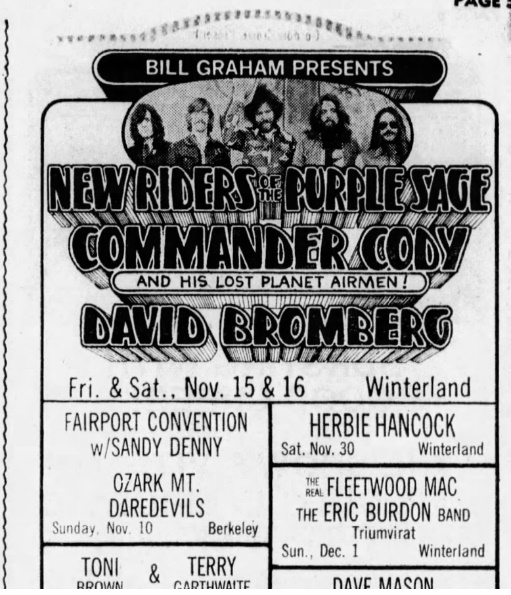
(Gig listings for The Real Fleetwood Mac)
Mick Fleetwood or any other member of Fleetwood Mac haven’t spoken about the event in years. Give the passage of time and the clouding of memories plus the fact that we all carve out our own reality from the truths we tell ourselves, who are the mere onlookers to call anyone a liar? But since no one from the official Fleetwood Mac camp seems to want to acknowledge the existence of The New Fleetwood Mac, it’s seems only fair to give the last word to Gantry;
“It’s not been contested because it’s absolutely true and it’s in court papers”Elmer Gantry, The New Fleetwood Mac, BBC Johnny Walker’s Sounds of the Seventies 2017
If taken on his word then it seems that Elmer and the rest of The New Fleetwood Mac were all victims, either of a duplicitous scam or a bad idea going wrong. However, Kirby and Gantry weren’t the only victims in this affair. The ripples of the venture touched a lot more people than just the main players. The band Silverhead supported The New Fleetwood Mac on a few dates before the ill-fated tour was brought to an early end.
“The gigs got pulled one by one. We had to go back to LA to regroup and find another tour maybe, but it was too late as everyone had schedules already out on the road. So, we sat in LA for weeks and all the money we earned was used up on fees and travel and we had to go home.” Pete Thompson, Drummer, Silverhead
Silverhead were signed in 1972 to the record label set up by Deep Purple called Purple Records. Unfortunately, the group weren’t just dropped from the tour though. Purple Records were desperate for the band to ‘break America’ and to do that they needed to be playing high profile shows. Since they were not able to promote their album via their Fleetwood Mac support slots, the label found it hard to bankroll them.
“(The tour collapsing) led to Purple records dropping us. Silverhead broke up soon after sadly and set me on the road to severe depression along with others in the band.” Pete Thompson, Drummer, Silverhead
Pete did eventually make a name for himself, becoming one of the most sought-after rock drummers around. He worked with (among others) Robert Plant and Robin Trower. His colleague Nigel Harrison would later join Blondie. Eventually, in Pete’s own words ‘It all worked out’.
For Fleetwood Mac, everything was set to go back to normal. Two albums a year and near constant gig schedule with respectable crowd numbers in the high hundreds and albums that straddle to US top 50. It was a very good living. Welch recorded one last album and performed one last tour. The Heroes Are Hard to Find album saw the band crawl ever closer to what they were about to become.
mp3: Fleetwood Mac – Heroes Are Hard To Find
As often the case, there was an unintended outcome to the event. Bob Welch, is often referred to as the man who saved Fleetwood Mac, found the whole affair incredibly draining and mentally taxing so he eventually quit the band. It had been one hurdle too many for a band that had been delivering on a punishing schedule of eight albums in five years and near-constant touring with only relative success to show for it. His marriage was breaking down and he was tired of essentially ‘running the band’. He managed to see out the rest of the year and jumped ship for a solo career at the end 1974.
The court case had been instrumental in convincing Fleetwood Mac that they needed to move to the USA (that and the fact they couldn’t get arrested in the UK). With Welch gone they needed a new guitarist and front person, so they turned to Lindsey Buckingham and Stevie Nicks. and superstardom was on the horizon.
It’s strange to think that that Bob Weston’s poor life choices would ultimately give the world some of the best rock music ever produced. In honour of that wonderous period of clouded judgement I’d like to close this blog with a salute to his solo career…… HAHAHAHA nope….
mp3: Fleetwood Mac – Monday Morning
I’d like to thank Pete Thompson for answering my emails.
STEVE McLEAN
* JC adds
Steve is far too modest to push his book on to you, but I’m more than happy to do so. Click here to order.
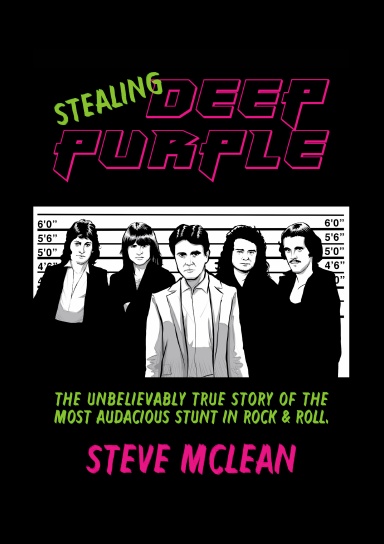
I’ll admit to not knowing the foggiest about Deep Purple, far less the tale of how there was a counterfeit band on the go for a bit, and so I’ve already put in my order. Might end up being reviewed on the blog in due course….
 THE NEW VINYL VILLAIN