A guest posting by Leon MacDuff
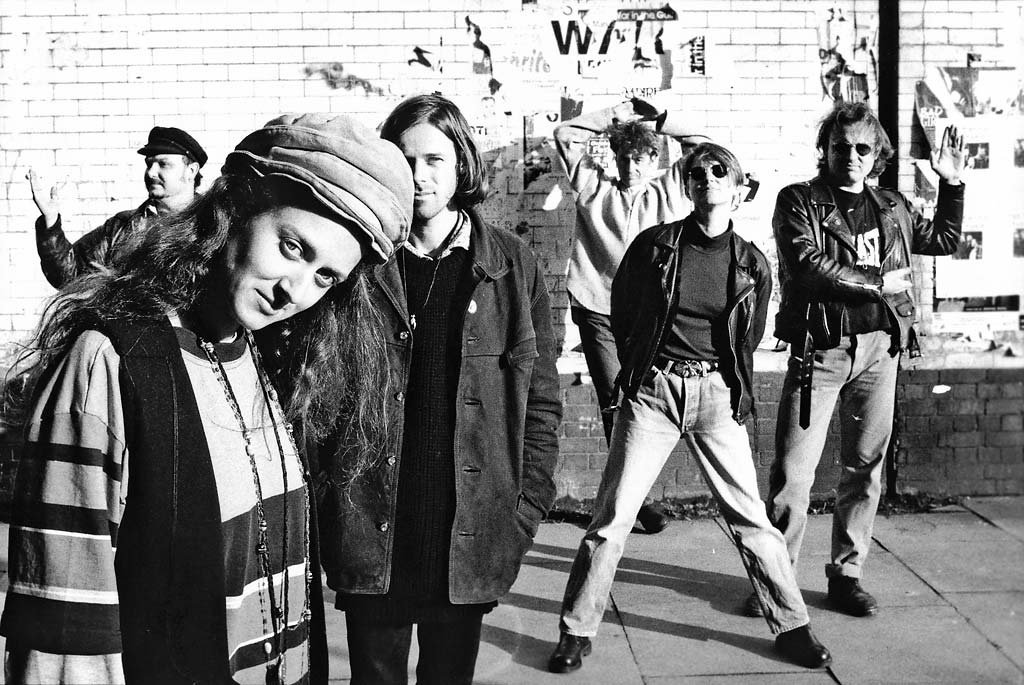
Given that Sarah Records didn’t release singles from existing albums, it feels almost too easy to pick out LP tracks that ought to have been given a chance of singular glory. But it simply wasn’t a label that was trying to appeal to the mass market, even if some of its acts seemed to have the potential. Because of this, it’s hard to shake the sense that admirable though their loyalty to Sarah was, The Orchids might well have been a hit making act if only they’d been on Creation instead. Or a slicker marketing machine might have made Heavenly into a household name. And that one way or another, there really ought to have been a place on Top Of The Pops for Even As We Speak.
Formed in Sydney, Australia, in 1986, EAWS didn’t start out as secret pop geniuses. Their first Sarah release, 1990’s Goes So Slow, was a five-track EP combining two of their previous Australian singles, and it sounded exactly like the sort of thing that would appeal to fans of other Sarah bands like Blueboy, Brighter and Boyracer, but it didn’t scream “crossover potential”. But this sudden and unexpected interest from the other side of the world, along with a newly stable line-up after years of constant change, emboldened the group to start trying out different styles. According to the band’s website bio,“The band stopped “editing” in the sense that no formal decisions were made by the band as to whether its output was consistent with any one vision or even any good. The band adopted the attitude that if they thought it, they would make it, and if they made it, they would release it.”
I’m not sure I quite buy that (everything they tried got released? Surely not) but there was certainly a new experimental edge to Even As We Speak’s first original Sarah material, and in many cases an ear-catching commerciality too. Albeit at times it felt like they were writing radio-friendly pop songs and then deliberately finding creative ways of sabotaging them: the 1991 single Beautiful Day had Mary Wyer’s enthusiasm about the weather being cut into by a waltz-time middle section in which the slowed-down voice of Matt Love intones an apparently unrelated verse about a man who drinks himself to death. That was never going to make the Radio 1 A-list, but it was certainly marking EAWS out as ones to watch, and it all came together on their 1993 album Feral Pop Frenzy. It was a title that would have come off as sarcastic from any other act on the label, but from Even As We Speak it was a statement of intent on which they maybe didn’t fully deliver, but they sure gave it a damn good try.
Presented with the tapes of Feral Pop Frenzy, any other label would have immediately earmarked Falling Down The Stairs and Drown as future singles, but this is Sarah we’re talking about, so of course they didn’t. I could see either or both of these as breakout hits in the vein of Strawberry Switchblade’s Since Yesterday or Crash by The Primitives.
mp3: Even As We Speak – Falling Down The Stairs
mp3: Even As We Speak – Drown
Both are short enough to leave you wanting more: the jangly Falling Down The Stairs is two and a half minutes (and if I’m being picky, it could stand to lose another ten seconds from the intro for radio play), the Barry White-sampling indie disco track Drown is a smidgen under three. Both disguise their melancholy in catchy choruses: I’m not sure, but I think Falling Down The Stairs may actually be a grief song, while Drown’s “I feel I could hold you in my arms and still not know where you are” is as fine a line as was ever written about romantic disconnection. Drown even had a colourful video made for it, perfect for Saturday morning kids’ TV. That’s right: it had a video but no single release. So near, and yet so far.
I have to admit that even if either of these notional singles caught the public’s imagination, I’m not sure Sarah Records were really set up to cope with a proper hit. Even As We Speak becoming actual pop stars wasn’t a crazy idea though; they were starting to pick up mainstream airplay and bigger labels than Sarah were expressing real interest – but it would mean relocating to the UK, which was too much of an upheaval for band members with young families, so their rise to fame rather petered out. But when Sarah issued its farewell compilation There And Back Again Lane two years later, it was Drown which had the honour of closing the album and bringing the curtain down on the entire label. In another universe, it might have been Sarah’s biggest hit..
 THE NEW VINYL VILLAIN