WHEN THE CLOCKS STRUCK THIRTEEN (November)

4-10 November

The highest new entry on the singles chart back in the first week in November 1986 belonged to Depeche Mode, a favourite of many TVV regulars but a band that your humble scribe has never taken to.  Which is why there’s no link today to Blasphemous Rumours or Somebody, a double-A sided single which came in at #29 en route to becoming their 11th successive chart single going back to Dreaming Of Me in early 1981, (of which five had gone Top 10)

I’ve had to go all the way down to #54 to find a new entry worth offering a listen to:-

mp3: The Kane Gang – Respect Yourself

The trio’s third hit of the year, thanks to a cover of 1971 R&B/gospel number originally written and recorded by the Chicago-based Staple Singers.  One of the highlights of the debut album The Bad and Lowdown World of The Kane Gang, which would reach #21 on its eventual release in March 1985.

Just two places further down the singles chart this week was another gang who often inhabited a bad and lowdown world, certainly in the eyes of the tabloid media:-

mp3: The Redskins – Keep On Keepin’ On (#56)

A real favourite in the student union discos among us who were of a left-wing persuasion.  The Redskins delivered a fine mix of pop, soul, blues, folk, punk and politics, who, if it hadn’t been for the fact that collectively the idea of a career in pop music was not their idea of fun, would surely have enjoyed a run of great albums beyond their sole offering, Neither Washington Nor Moscow, which would eventually appear in early 1986. Keep On Keepin’ On would eventually reach #46, and the offering today is the 12″ version as that’s a bit of vinyl I proudly still have all these years later.

mp3: Orchestral Manoeuvres in the Dark – Never Turn Away (#70)

Probably the least-remembered of the twenty-two singles released by OMD during the 80s, it was also the one which performed the worst as #70 in the first week in November 84 was as good as it got.  It’s one of those rare 45s on which Paul Humphreys rather than Andy McCluskey delivered the lead vocal.

11-17 November

The highest new entry on the singles chart back in the second week in November 1986 belonged to The Riddle by Nik Kershaw, someone who has his admirers among fans of 80s synth-pop.  I always felt he was synth-pop with a soft rock edge, and while he may perhaps feature via guest postings, he’s not showing up today. This one came in at #17 and would peak at #3. It was his fourth smash hit of the year, and his success would continue throughout the following year.

mp3: The Human League – Louise (#36)

I think it’s worth lifting some stuff about this one from wiki:-

The lyrical story telling of “Louise” superficially seems to be a story about a chance encounter between a man and a woman on a bus who seem to be on the verge of a lover’s reconciliation. But like much of Phil Oakey’s songwriting, what seems ‘sugary sweet’ on the surface actually has a much darker subtext. Oakey points out that the story is actually about the original protagonists from “Don’t You Want Me” meeting up 4 years later. In “Louise” the man sees his lost love again and still cannot deal with reality. The anger that drove the earlier song has dissipated, and is replaced with a hopeful fantasy that his ex-lover is drawn to him all over again. So “Louise” is really about self-deception, delusion and eternal sadness. Oakey says about “Louise” in interview:

It’s about men thinking they can manipulate women when they can’t, even conning themselves that they have when they haven’t.

However, like the less savoury premise of “Don’t You Want Me”, the darker side of the “Louise” story went over the heads of the record buying public, who misinterpreted the lyrics as “sweet and upbeat”.

Louise would eventually reach #13 and still features in the band’s setlists to this day.

mp3: Strawberry Switchblade – Since Yesterday (#63)

I can’t claim I came up with this description, but it is so accurate:-

“From the ominous shadows of Goth suddenly appeared two young girls in polka-dot dresses, flaming red lipstick, and hair ribbons. Looking like the brides of Robert Smith, Strawberry Switchblade made a brief splash on the U.K. charts and then abruptly vanished in the mid ’80s, leaving their fans with a handful of collectible singles and one LP of deceptively sweet-sounding dance pop.”

Jill Bryson and Rose McDowall were very well-known figures in Glasgow in the early 80s.  The look they had for their pop success was how they walked the streets of my homw city – everyone, while not knowing exactly who they were, certainly recognised them.  Since Yesterday is a very 80s sounding song, and there’s an argument could be made that it hasn’t dated brilliantly thanks to its rather lightweight production.  But I’ll always a have a soft spot for it….it’s just one of those songs which sound tracked the festive period of 84/85, eventually peaking at #5 in late January and spending an incredible 17 weeks in the Top 75.

mp3: Lloyd Cole & The Commotions – Rattlesnakes (#65)

The third and last single to be lifted from the debut album.  Maybe it was all down to all the band’s fans having bought the album the previous month that this single, a genuinely outstanding song, stalled at #65.

mp3: Scritti Politti – Hypnotize (#67)

The third hit single of the year for Green Gartside & co, but #67 was as high as it got, coming nowhere near the success of Wood Beez (#10) and Absolute (#17).  The band would bounce back in great style in 1985, with The Word Girl delivering a #6 hit and the album Cupid & Psyche ’85 going Top 5.

18-24 November

It was probably inevitable that after such a fine run of new singles the previous two weeks, the well would just about dry up completely this week.  You could tell the Xmas marketing campaign was getting into full swing as the novelty records began to make showings – yup, this was the week We All Stand Together by Paul McCartney and The Frog Chorus came into the charts at #50, going on to reach #3 and particularly annoy the hell out of me for the many months it was never off the bleedin’ radio.

Having said that, there’s probably many fans of the lovable mop top who would have got annoyed with this one:-

mp3: The Art Of Noise – Close (To The Edit) (#62)

The ZTT collective’s music hadn’t struck a chord with the record-buying public.  Debut single Beatbox had failed to chart in Aril 1984 and debut album Who’s Afraid Of The Art Of Noise had languished at the very lower end of the chart.  But for whatever reason, and I think a lot had to do with the imaginative video(s), Close (To The Edit) found favour. It was also released in a ridiculous amount of formats – standard and picture disc 7-inch versions, five 12-inch singles (one a picture disc) and a cassette single – and would enjoy a 20-week residency in the Top 75 right through to the end of March 1985, peaking at #8. It did lead to a Top of the Pops appearance that they wasn’t taken too seriously while illustrating the actual size of the synths that were required back in those days:-

Anne Dudley would later say:-

Top of the Pops was one of the worst experiences of my life. We’d done so many edits of the single I wasn’t even sure what its final structure was. We just stood there behind three keyboards. The director saved our bacon by cutting away to the animated video the record company had commissioned – they hadn’t liked the original one made by Zbigniew Rybczyński, featuring a punkette girl and three blokes in tails dismantling musical instruments with a chainsaw. It was the polar opposite of Duran Duran on a luxury yacht.

25 November – 1 December

The Art of Noise might not have been making much money for ZTT but this lot were:-

mp3: Frankie Goes To Hollywood – The Power Of Love (#3)

The Xmas single – not an obvious one but the nativity-themed video, which was being aired everywhere, even on news programmes, made it clear what the marketing campaign was. It was all set to spend umpteen weeks at #1 and confirm the band’s total dominantion of the singles charts on the back of Relax and Two Tribes.  It did reach #1 the following week, but then Band Aid came along………

Fun fact…..The Power Of Love was re-released just before Xmas 1993 and again went Top 10.

mp3: Big Country – Where The Rose Is Sown (#35)

The second single to be lifted from the #1 album Steeltown.  Kind of feels strange that the record label pushed out a new 45 at this particular time of year. It certainly didn’t do anything to lift the album back up the charts and in reaching just #29, became the poorest-performing 45 of what was ‘peak’ Big Country.

mp3: Tears For Fears – Shout (#45)

I may have mentioned previously in this series that I couldn’t for the life of me recall Mother’s Talk which had charted in August 1984.  But I certainly can’t say the same about Shout, which thanks to its boombastic chorus easily lodged into my brain.  I recall being very disappointed with this.  I had so much love and time for Tears for Fears when they emerged, and I still think the debut album The Hurting is a masterpiece.  But Shout felt like synth pop with a stadium-rock edge and not for me, but loads of others loved it and took it to #4 in January 1985.

mp3: Bronski Beat – It Ain’t Necessarily So (#53)

A lot different from the previous two hit singles of Smalltown Boy and Why?, this inventive cover of a song written in 1935 by George Gershwin for the opera Porgy and Bess would spend 12 weeks in the chart, reaching #16.  It helped further establish Bronski Beat as one of the best new arrivals in the UK music scene in 1984.

mp3: Dead Or Alive – You Spin Me Round (Like A Record) (#55)

I hadn’t, until now, appreciated that Pete Burns‘ biggest hit single actually dated from 1984.   Turns out it came into the chart at the end of November 1984 and then spent another 11 weeks stuck in the lower regions of the Top 75 before bursting into the Top 20 and eventually reaching #1 in early March 1985.  Say what you like about manufactured pop music and be as critical as you want to be, but this makes for a majestic, magnificent and memorable single. I will not tolerate any dissent!!!!  Wylie, Cope and McCulloch must have been looking on in bewilderment.

So there you have it.  November 1984.  A month in which the singles chart, certainly at the lower end of things, was worth recalling in some detail.  Keep an eye out later on for Part 2 looking at the new indie singles from the era.
 

JC

WHEN THE CLOCKS STRUCK THIRTEEN (September)

2-8 September

The month of August 1984 did offer up some gems, including what I have long held to be the greatest 12″ release of all time, William It Was Really Nothing/Please Please Please Let Me Get What I Want/ How Soon Is Now?, issued on Rough Trade Records and which, in the first week of September 1984, peaked at #17 in the UK singles charts.  Turned out it would be another two years before The Smiths experienced another Top 20 single.

So here’s a few other things that were happening forty-one years ago.

The highest new entry was a re-release, and one that wasn’t all that old.  We Are Family by Sister Sledge had been a #8 hit in May 1979, and here it was, just five years later, coming back in at #32, and before the month was over it would peak at #4. It does seem the 1984 edition of the song was different from the original in that it was a remix by Nile Rogers.

The second and third-highest new entries at #39 and #43 are again examples of songs I genuinely cannot remember a single not of.  Torture by The Jacksons and Heaven’s On Fire by Kiss.  There’s actually only two new entries in the Top 74 worth posting here, and even then, the first of them, as far as I’m concerned, is far from this particular synth-pop duo’s finest 45s

mp3: OMD – Tesla Girls (#48)

The second, and I think I’m right in saying this, was the only hit single on which keyboardist and main songwriter, Jerry Dammers, took the lead vocal, and he does so with a falsetto.

mp3: Special AKA – What I Like Most About You Is Your Girlfriend (#72)

The former would reach #21 and give OMD a ninth Top 30 hit in four years. The latter, in reaching #51, was the last single released on 2 Tone to reach the charts.

9-15 September

Dare I post the highest new entry this week, knowing that it’ll be met mostly by sneers and snorts of derision?  Mind you, my young brother likes it, and he pops his head in almost every day

mp3: U2 – Pride (In The Name Of Love) (#9)

The lead-off single from the soon-to-be released album The Unforgettable Fire.  This, more than any of their songs, was the one which suggested their future lay in arena-rock. It would, in due course, reach #3, and remain their biggest hit single through till 1988 when Desire became their first #1.

The rest of the new entries really are like a roll-call of Smooth Radio computer generated playlists.  It was painful enough being reminded of them again without actually typing them out.

16-22 September

David Bowie’s new single was the highest new entry this week.

mp3: David Bowie – Blue Jean (#17)

1983 had been Bowie’s best year ever, in terms of the actual sales/success of hit singles with Let’s Dance (#1), China Girl (#2) and Modern Love (#2).  There had also been Serious Moonlight, a hugely successful world tour of arenas and stadia which brought on board millions of new fans, but had left fans of old wondering why their hero had sold out to the shiny pop world. This brand-new song won’t have done too much to put smiles on the faces of the older fans, while the newer ones might have been less than impressed, as it was nowhere near as immediate as the offerings from the previous year.  Time hasn’t been kind to Blue Jean, or indeed the parent album Tonight.  Blue Jean would climb to #6 the following week before experiencing a rapid tumble out of the charts.

Queen had the next highest new entry at #22 with Hammer To Fall, another song from 1984 that I can’t recall.  Unlike the song coming in at #22:-

mp3: Bronski Beat – Why?

An absolute floor-filler at the student discos, and quite possibly the discos where the girls in white stilettos danced around their handbags, but I wouldn’t know as I never went near such places.  Too many pounds, shillings and pence were required to gain entry, while the drinks were way more expensive than any student union.  Smalltown Boy had only just fallen out of the Top 75 after a 13-week stay, so it was great that Why? kept Bronski Beat’s name prominently featured on the radio and TV stations of our nation.  It would eventually reach #6 around the same time as debut album Age of Consent entered the charts at #4.

Another interesting song came in at #25.

mp3: Prince & The Revolution – Purple Rain

Not one of my favourites, but loved by so many others. This single, its parent album and the film of the same name truly made a superstar out of Prince.  This would also, like Why?, peak at #6.

I mentioned up above that Queen had a new entry at #22. The band’s lead singer, Freddie Mercury, saw his first ever solo single also chart this week. Love Kills came in at #27.  Two weeks later, it peaked at #10 which meant it had outsold and outperformed the band’s new 45.  I wonder if any tension was created from such an outcome.

And finally from this week’s chart, a prime example of a slow burner

mp3: Giorgio Moroder and Phil Oakey – Together In Electric Dreams (#74)

There is a very interesting and telling background to this one, as recalled by the director of the film Electric Dreams, for which this was written as the theme song:-

“Giorgio Moroder was hired as composer and played me a demo track he thought would be good for the movie. It was the tune of “Together in Electric Dreams” but with some temporary lyrics sung by someone who sounded like a cheesy version of Neil Diamond. Giorgio was insisting the song could be a hit, so I thought I’d suggest someone to sing who would be as far from a cheesy Neil Diamond as one could possibly go. Phil Oakey. We then got Phil in who wrote some new lyrics on the back of a fag packet on the way to the recording studio and did two takes which Giorgio was well pleased with and everybody went home happy”

The song would spend 13 weeks on the chart, taking six of them to reach its peak of #3, all of which made it feel as if the song had been around forever, and even worse, was never going to go away

23-29 September

Big Country had been one of the UK’s breakthrough bands in 1983, and the band’s willingness to be seemingly constantly out on the road was a huge factor in how their fan base continued to grow.  There had been one ‘stopgap’ single, Wonderland, earlier in the year which had provided a third Top 10 hit, and hopes were very high for the lead off 45 from what was soon to their sophomore album:-

mp3; Big Country – East Of Eden (#27)

To the consternation of the band and the record label, East of Eden would stall at #17, which was maybe an indication that the new material was less radio-friendly and a tad more rock-orientated than had come before.  The big consolation was that the album, Steeltown, would enter the charts at #1 in early October.

And finally, in what it has to be said, really is something of an underwhelming month in this series:-

mp3: XTC – All You Pretty Girls (#69)

XTC released loads of great singles over the years.  This, I’m afraid to say, wasn’t one of them.  It would peak at #55.

The good news is that Part 2 of this feature will have a bundle of non-hit singles that have proven to be absolute classics.


JC

WHEN THE CLOCKS STRUCK THIRTEEN (May)

The month of April hadn’t been too shabby, and indeed the first of the charts being looked at this time around (29 April – 5 May 1984) kind of illustrates this, with OMD, Blancmange, The Bluebells and New Order all sitting in the Top 20, where they were joined by another synth band with this week’s highest new entry at #19:-

mp3: The Human League – The Lebanon

It was their first new music in over a year, and was on the back of their past six singles all being Top 10 hits, including a #1 and two #2s.  What only became clear a short time later, when the album Hysteria was finally released in mid-May, a full two-and-a-half years since Dare, was just how less immediate and pop-orientated the band had become during what had turned out to be fraught times in the studio. My memories of this one still centre around the incredibly negative press reaction to the song, much of which centred on the seemingly trite lyrics.  It has to be said, it sounded back in 1984, and it hasn’t really aged well.

6 May – 12 May

The first thing I noticed about this chart was that nine of the Top 10 from the previous week were still up there in the higher echelons.  Duran Duran, Phil Collins, Queen, Pointer Sisters, OMD, Bob Marley & the Wailers, The Flying Pickets, Blancmange and Lionel Ritchie were keeping their major labels feeling good about life.  It must have meant the Top of the Pop programmes around this time were very much on the repetitive side.

Looking further down, it was a good week for lovers of dance-pop, or disco-lite, as I used to refer to it.  Somebody Else’s Guy by Jocelyn Brown, Let’s Hear It For The Boy by Deniece Williams, Ain’t Nobody by Rufus and Chaka Khan and Just Be Good To Me by the SOS Band, were all in the Top 20 and to do this day can still be heard regularly what now pass as the easy listening/nostalgia radio stations.  I can’t deny that I would have danced to these when they aired in the student union discos….iy wasn’t all Bunnymac and flailing raincoats y’know.

Highest new entry this week belonged to Marillion, in at #23 with Assassing, which is one that I genuinely cannot recall in any shape or form. Unlike the song which came in at #49:-

mp3 : Everything But The Girl – Each and Everyone

Tracey and Ben‘s first chart hit.  It would reach #28 later in the month.  But it wasn’t the best song to break into the Top 75 this week….

mp3: Orange Juice – What Presence?!

By now, the band had been reduced to a rump of Edwyn and Zeke, augmented by Clare Kenny on bass and Dennis Bovell on keyboards and production duties.  The record label had given up on them but in the midst of it all, they not came up with this memorable 45 but a ten-song album filled with brilliant moments.  What Presence?! eventually claimed to #47 when it deserved so much more.

13-19 May

The inertia at the top end of the charts was maintained, with yet again nine of the previous week’s Top 10 staying up there.  The highest new entry was at #29, and belonged to Ultravox whose Dancing With Tears In My Eyes made it eleven hit singles in a row stretching back to 1981. By contrast, the song coming in at #60 meant a debut hit for a group signed to one of the best independent labels in the UK at the time:-

mp3: The Kane Gang – Small Town Creed

This would be as good as it got for Small Town Creed, but Martin Brammer, Paul Woods and Dave Brewis and Kitchenware Records would enjoy bigger successes before the year was out, so stay tuned.

One more 45…..

mp3 : Public Image Ltd – Bad Life

I’ve always thought of this as the ‘forgotten’ PiL single.  For one, it was a flop, with its #71 placing this week being its peak, and secondly, it was later left off The Greatest Hits, So Far, which was supposed to have compiled all the band’s singles from 1978 to 1990 along with a new track, Don’t Ask Me.  It’s not the most obvious of memorable of the PiL songs, and it suffers from a typically OTT 80s style production, but there’s a fair bit of interesting bass slapping along with Gary Barnacle‘s contribution on sax to make it worth a listen.

20-26 May

I’m not a music snob.   Well, that’s a bit of a lie.  A bit of a big lie.  But sometimes a song so catchy and poppy and ultimately timeless, that it has to be given due recognition on the blog.  And so it is with the highest new entry this week, in at #4, eventually going on to spend two weeks at #1 and selling umpteen millions.

Just kidding.  And apologies for those of you desperate to hear Wake Me Up Before You Go-Go by Wham!

Not too far lower down was the new entry at #11, and that rare thing of a double-A sided single:-

mp3: The Style Council – You’re The Best Thing
mp3: The Style Council – The Big Boss Groove

The ballad had been one of the most well-received songs on the debut album Cafe Bleu, and for its release as a 45, a saxophone solo was added.  The more upbeat number was a brand-new composition, and one of the more obviously political numbers of the early TSC era.  Funny enough, the radio stations rarely played The Big Boss Groove, while You’re The Best Thing was omnipresent.

I’ve written before that Best Thing, without fail, takes me back to what was a very happy time, travelling with my girlfriend across Europe on cheap student railcards visiting cities that previously had only been figments of our imagination.  This was very much ‘our song’.  The relationship was a very happy one for a decent enough time but sadly it turned sour before 1985 was over.  I’ve always associated Best Thing was all about that particular relationship and so even when I’ve tried to woo subsequent girlfriends with the help of with compilation cassettes which showed off my musical tastes, I never once included this absolute classic on any of them.

It climbed to #5 the following week, which proved to be its peak position.

Passing mention of a few other new entries this week, most of whom are still going strong today (and I’ll leave that to you to judge if it’s a good thing or not).  Bruce Springsteen, Rod Stewart and Elton John with Dancing In The Dark, Infatuation and Sad Songs (Say So Much).  A slightly longer mention of the new entry at #71:-

mp3: Lloyd Cole & The Commotions – Perfect Skin

The debut single.  Perfect Skin was a genuine slow-burner.  It actually fell out of the Top 75 the week after making its initial entry, but then went on to enjoy placings of 54, 45, 40, 30, 26, 32, 44 and 57, thus ensuring it is another that I very much associate with the wonderfully romantic summer of 1984.

27 May-2 June

The chart which crosses over into the month in which I celebrated by 21st birthday.  In at #19 was a song I very much associate with the day and night of that event.

mp3: The Smiths – Girl Afraid

OK…..this didn’t actually chart, but Dirk just last week featured Heaven Knows I’m Miserable Now, so please indulge me as I recall and feature what I feel is that the far superior and danceable b-side.  A song that was very drunkenly played very loudly on repeat back in the flat after a few too many had been had while out in Glasgow.  Lots of hugging, lots of dancing etc, etc.

mp3: David Sylvian – Red Guitar (#21)

Not so much frantic dancing to this one, for the first solo hit single from the former frontman of Japan – his previous 45s had been collaborations with Riuichi Sakamoto – but there was a fair bit of posing to it down to the student union, which by now was incredibly quiet with so many folk returning home for the summer. It was just the diehards hanging around, especially on Thursdays, but that meant all requests tended to get played.  More happy memories.

This week’s chart also saw the appearance of what I have long believed to be one of the most important 45s of all time:-

mp3: Bronski Beat – Smalltown Boy (#35)

I again make no apologies for repeating myself. It is all too easy to forget, from the distance of more than 40 years, of the extent of the bravery of Jimmy Somerville and his bandmates for being so open about their way of life and their views. Their records, and those of such as Pet Shop Boys and Frankie Goes To Hollywood took the celebration of queer culture into the mainstream, and made many people realise, probably for the first time, that homophobia was every bit as distasteful as racism and apartheid.   A genuine came-changer in terms of altering a lot of attitudes, Smalltown Boy would reach #3 during what turned out to be a thirteen-week stay in the Top 75.

Two more before I sign off.

mp3: Siouxsie & The Banshees – Dazzle (#38)
mp3: Marc Almond – The Boy Who Came Back (#63)

A couple of ‘blink and you might miss them’ hits.  Dazzle was the fifteenth chart hit for The Banshees, but its stay in the charts was a mere three weeks.

Just three months after the final Soft Cell single, Marc Almond released his first solo effort.  With a lyric that possibly hinted at his thinking for wanting to leave Soft Cell behind him, the tune was less immediate and struggled for radio airplay, a big factor in it spending five weeks in the lower end of the hit parade – 63, 59, 54, 52 and 70.  Nobody knew it, but that would more or less be the story of the solo career until Marc went down the route of collaborations or cover versions.

Couple of things to mention. This morning sees me off on my travels again, back one more time to see some friends in the Greater Toronto area.  While I’ll do my best to drop in over the next week or so, there’s every chance the comments section in particular will get a bit messy with loads of anonymous/unattributed contributions that I’ll tidy up as best I can as and when I’m able.

And of course, Part 2 of the May edition of When The Clocks Struck Thirteen will be offered up over the next couple of weeks.


JC

STEVE BRONSKI

Flimflamfan added this to his comment to today’s earlier posting about 10,000 Maniacs:-

“Can I hijack this post. To add my enduring thanks to Steve Bronski who died recently. Without courageous people like Steve many young LGB peoole (as they were known at the time) may have forever led hidden, oppressed lives. The Age of Consent is a landmark LP in agit-pop. Three openly gay men heralding their rights-led manifesto via the LP art work. Momentus. Thanks, Steve.

It got me thinking that it might be  a nice tribute to re-post something from 19 September 2019. It’s up there with some of the pieces I’m most proud of in all the years I’ve been writing stuff for this blog:-

MIXING POP AND POLITICS, THEY ASK ME WHAT THE USE IS

Billy Bragg famously related the tale of him being asked said question, by a cynical fanzine writer, within the lyric of Waiting For The Great Leap Forward. If only the writer had been brave enough to ask a similar question of Jimmy Somerville…….

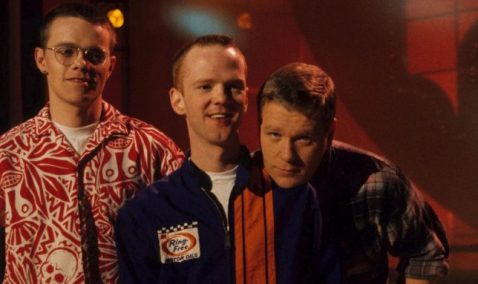
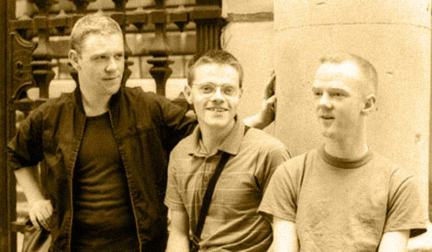
It will be 35 years next month since Age of Consent, the debut LP by Bronski Beat was released. The trio of Somerville, Steve Bronski and Larry Steinbachek had already tasted chart success earlier in the year with their first two singles, Smalltown Boy and Why?, going Top 10 in many countries across Europe. They weren’t the first to make wonderfully catchy synth-pop that was aimed at the dance floor, nor were they the first to link the genre with gay culture; but they were the first pop stars to get up on a soapbox and demand that folk listened and took action on the inequalities of life that had to be endured if you were of a gay persuasion.

Nobody should be in any doubt that the band took huge risks with such an agenda. The early 1980s was not the most tolerant of periods, with some of the most right-wing and conservative political administrations governing the UK and the USA. It was a period when the cultural world of performing and visual artists did voice their concerns in a concerted way about some injustices happening within society, not least the horrors of the apartheid system in South Africa, but nobody was willing to really stand up and shout about homophobia and the dangers faced daily by, in particular, young people the world over. The promo video to Smalltown Boy had been a revelation, being, in effect, a short film that showed a gay man seemingly finding some happiness, only to have it ruined, firstly by the vicious fists and boots of a violent mob and secondly by the vicious rejection of his family. The line ‘mother will never understand why you had to leave’ is one of the saddest lyrics you’re likely to find in any uptempo tune.

The single certainly raised awareness of the fact that attitudes, particularly among those living in traditional working-class communities, had much to do with the fact that young gay people felt the need to run away from the security of their home and upbringing. Many parents felt stigmatised and regarded themselves as failures if their son or daughter had turned out to be queer, with the situation exacerbated by the shame of knowing their offspring was breaking the law. (I should, and indeed must, point out that Jimmy Somerville’s own Glaswegian parents did not disown their son at any point in time, albeit he did indeed leave home and head to London, but only as a result of frustration he felt at the narrowness and limited appeal of a ‘gay scene’ in his home city and elsewhere in Scotland)

The hit singles had created the circumstances that the Bronski Beat debut album was likely to enjoy a fair amount of commercial success. It offered the perfect platform to say and do something of huge significance and to the delight of what seemed like the entire gay community, and those standing outside who were appalled by homophobia, the band didn’t disappoint.

Forget, for a moment, that the vinyl contained ten tracks of high-class music, some of which burst and bristled with energy while others were mournful and thought-provoking. Forget too, that one of its highlights introduced the work of the Gershwin brothers to a whole new audience and instead take a few minutes to study the artwork.

The inner sleeve and the label on the vinyl is dominated by a pink triangle, the symbol used by the Nazis in concentration camps to identify homosexual prisoners. Originally conceived as a badge of shame, the pink triangle had, from the 70s onwards, began to be reclaimed as a positive symbol of self-identity. The inner sleeve also set out, plainly and simply, the different international ages of consent for males to engage in gay sex, drawing attention to, and ridiculing, the fact that there were huge inconsistencies, with the UK being amongst the worst examples in declaring the age to be 21.

The so-called swinging 60s has been an era in which the UK establishment began to relax its attitudes across a whole swathe of societal issues with new and more liberal laws covering divorce, abortion, race relations and fairness in the workplace. Homosexuality had gone from being wholly illegal but was still seen as a huge taboo, causing all sorts of outcries and scaremongering within the powerful media circles, particularly across tabloid newspapers where so many agendas were set and led to millions of readers forming opinions and holding attitudes. Oh, and the churches didn’t help things either, choosing to focus on very narrow and literal interpretations of scriptures as an excuse to uphold bigotry, hatred and prejudices.

Nothing had changed much in the best part of 20 years and indeed there was a feeling at large that the right-wing nature of the Thatcher government was going to make things worse. Indeed, in 1988, things did take a turn for the worse with the passing of the outrageous and scandalous ‘Section 28 Amendment’ to local government legislation that made it illegal for schools and teachers to promote the idea that homosexuality could be a stable and harmonious way for a family relationship.

The thing was, for many people, this was closing the stable door long after the horse had bolted as attitudes, particularly among young people had changed dramatically. Bronski Beat had shown up the insanity of the UK’s approach to homosexuality and had done so with grace, dignity and some fabulous music. In their wake followed many, not least The Pet Shop Boys, Erasure, Culture Club, Holly Johnson and, of course, Communards, the group formed by Jimmy Somerville just a year after the success of Bronski Beat, all of whom not only enjoyed #1 hits and sell-out tours, but did so to an incredibly mixed audience.

The social and political outcomes of The Age of Consent must never be underestimated, but I’ve no doubt in my mind that it needed the music to be of top quality and mass appeal to succeed on these fronts. Indeed, if the album had been duff, there would have been a danger of setting things back somewhat, giving strength to those (and there were many) who felt that dance music was only good for clubs and discos and not for promoting any meaningful messages.

Bronski Beat would enjoy two more hit singles lifted from the album, both of which were covers. Indeed, for the final hit single, they revamped the closing song of the album by introducing a guest singer, Marc Almond, who had to overcome all sorts of homophobic media coverage as his fame increased to before himself, and his attitudes, were accepted increasingly by the mainstream.

No embarrassment or the usual excuses. A copy of The Age of Consent should be in every pop fan’s collection.

JC

MIXING POP AND POLITICS, THEY ASK ME WHAT THE USE IS

Billy Bragg famously related the tale of him being asked said question, by a cynical fanzine writer, within the lyric of Waiting For The Great Leap Forward. If only the writer had been brave enough to ask a similar question of Jimmy Somerville…….

It will be 35 years next month since Age of Consent, the debut LP by Bronski Beat was released. The trio of Somerville, Steve Bronski and Larry Steinbachek had already tasted chart success earlier in the year with their first two singles, Smalltown Boy and Why?, going Top 10 in many countries across Europe. They weren’t the first to make wonderfully catchy synth-pop that was aimed at the dance floor, nor were they the first to link the genre with gay culture; but they were the first pop stars to get up on a soapbox and demand that folk listened and took action on the inequalities of life that had to be endured if you were of a gay persuasion.

Nobody should be in any doubt that the band took huge risks with such an agenda. The early 1980s was not the most tolerant of periods, with some of the most right-wing and conservative political administrations governing the UK and the USA. It was a period when the cultural world of performing and visual artists did voice their concerns in a concerted way about some injustices happening within society, not least the horrors of the apartheid system in South Africa, but nobody was willing to really stand up and shout about homophobia and the dangers faced daily by, in particular, young people the world over. The promo video to Smalltown Boy had been a revelation, being, in effect, a short film that showed a gay man seemingly finding some happiness, only to have it ruined, firstly by the vicious fists and boots of a violent mob and secondly by the vicious rejection of his family. The line ‘mother will never understand why you had to leave’ is one of the saddest lyrics you’re likely to find in any uptempo tune.

The single certainly raised awareness of the fact that attitudes, particularly among those living in traditional working-class communities, had much to do with the fact that young gay people felt the need to run away from the security of their home and upbringing. Many parents felt stigmatised and regarded themselves as failures if their son or daughter had turned out to be queer, with the situation exacerbated by the shame of knowing their offspring was breaking the law. (I should, and indeed must, point out that Jimmy Somerville’s own Glaswegian parents did not disown their son at any point in time, albeit he did indeed leave home and head to London, but only as a result of frustration he felt at the narrowness and limited appeal of a ‘gay scene’ in his home city and elsewhere in Scotland)

The hit singles had created the circumstances that the Bronski Beat debut album was likely to enjoy a fair amount of commercial success. It offered the perfect platform to say and do something of huge significance and to the delight of what seemed like the entire gay community, and those standing outside who were appalled by homophobia, the band didn’t disappoint.

Forget, for a moment, that the vinyl contained ten tracks of high-class music, some of which burst and bristled with energy while others were mournful and thought-provoking. Forget too, that one of its highlights introduced the work of the Gershwin brothers to a whole new audience and instead take a few minutes to study the artwork.

The inner sleeve and the label on the vinyl is dominated by a pink triangle, the symbol used by the Nazis in concentration camps to identify homosexual prisoners. Originally conceived as a badge of shame, the pink triangle had, from the 70s onwards, began to be reclaimed as a positive symbol of self-identity. The inner sleeve also set out, plainly and simply, the different international ages of consent for males to engage in gay sex, drawing attention to, and ridiculing, the fact that there were huge inconsistencies, with the UK being amongst the worst examples in declaring the age to be 21.

The so-called swinging 60s has been an era in which the UK establishment began to relax its attitudes across a whole swathe of societal issues with new and more liberal laws covering divorce, abortion, race relations and fairness in the workplace. Homosexuality had gone from being wholly illegal but was still seen as a huge taboo, causing all sorts of outcries and scaremongering within the powerful media circles, particularly across tabloid newspapers where so many agendas were set and led to millions of readers forming opinions and holding attitudes. Oh, and the churches didn’t help things either, choosing to focus on very narrow and literal interpretations of scriptures as an excuse to uphold bigotry, hatred and prejudices.

Nothing had changed much in the best part of 20 years and indeed there was a feeling at large that the right-wing nature of the Thatcher government was going to make things worse. Indeed, in 1988, things did take a turn for the worse with the passing of the outrageous and scandalous ‘Section 28 Amendment’ to local government legislation that made it illegal for schools and teachers to promote the idea that homosexuality could be a stable and harmonious way for a family relationship.

The thing was, for many people, this was closing the stable door long after the horse had bolted as attitudes, particularly among young people had changed dramatically. Bronski Beat had shown up the insanity of the UK’s approach to homosexuality and had done so with grace, dignity and some fabulous music. In their wake followed many, not least The Pet Shop Boys, Erasure, Culture Club, Holly Johnson and, of course, The Communards, the group formed by Jimmy Somerville just a year after the success of Bronski Beat, all of whom not only enjoyed #1 hits and sell-out tours, but did so to an incredibly mixed audience.

The social and political outcomes of The Age of Consent must never be underestimated, but I’ve no doubt in my mind that it needed the music to be of top quality and mass appeal to succeed on these fronts. Indeed, if the album had been duff, there would have been a danger of setting things back somewhat, giving strength to those (and there were many) who felt that dance music was only good for clubs and discos and not for promoting any meaningful messages.

mp3 : Bronski Beat – Why?
mp3 : Bronski Beat – Need A Man Blues

Bronski Beat would enjoy two more hit singles lifted from the album, both of which were covers. Indeed, for the final hit single, they revamped the closing song of the album by introducing a guest singer, someone who had overcome all sorts of homophobic media coverage as his fame increased to find himself, and his attitudes, accepted increasingly by the mainstream:-

mp3 : Bronski Beat – It Ain’t Necessarily So
mp3 : Bronski Beat feat. Marc Almond – I Feel Love/Johnny Remember Me

No embarrassment or the usual excuses. A copy of The Age of Consent should be in every pop fan’s collection.

JC

SATURDAY’S SCOTTISH SONG :#43 : BRONSKI BEAT

I’ve featured the singles on many an occasion in the past, both here and on the old blog.

Bronski Beat were a hugely important group.  They weren’t, by definition, a Scottish act.  But frontman Jimmy Somerville is from these parts and I’m always happy to feature them here.

From the incredibly brave and groundbreaking LP The Age Of Consent:-

mp3 : Bronski Beat – No More War

Still resonates 30+ years later.

A LAZY STROLL DOWN MEMORY LANE : 45 45s AT 45 (27)

ORIGINALLY POSTED ON WEDNESDAY 17 APRIL 2008
AND AGAIN ON SATURDAY 7 SEPTEMBER 2013

R-224051-1361220335-5419

I’ve written about Bronski Beat before. And I make no apologies of repeating what I said then – it really is all too easy to forget how brave Jimmy Somerville and Bronski Beat were for being so open about their way of life and their views. Their records, and those of such as the Pet Shop Boys and Frankie Goes To Hollywood took the celebration of queer culture into the mainstream, and made many people realise, probably for the first time, that homophobia was every bit as distasteful as racism and apartheid.

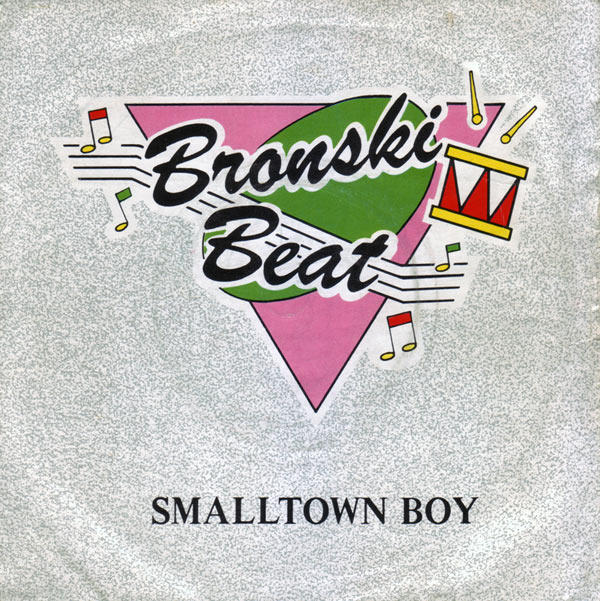
This was a band that came from out of nowhere. They inked a deal with London Records after a mere handful of gigs, and the debut single, Smalltown Boy, sold by the barrowload, hitting #3 in the UK charts in May 1984. It also made the Top 50 in the USA and Top 10 in Australia.

A trio of follow-up singles and the debut LP all sold in great quantities and the band seemed set for a long and successful career. But out of the blue, vocalist Jimmy Somerville (and acknowledged by everyone as the band spokesman) announced he was quitting the band to pursue an outlet that would allow him to be ‘more political.’ In due course, he would find massive success, including #1 records, with Communards. He also became part of Red Wedge, the conglomeration of musicians who campaigned for the Labour Party at the 1987 UK general election.

As for Bronski Beat – they did manage a couple of hits with new vocalist John Foster (who in retrospect sounds awfully like Andy Bell who would later come to prominence with Erasure), but they were very much overshadowed by the success of Communards. They soldiered on for a few more years, ever more fading into obscurity from the mainstream.

There’s just something about the early Bronski Beat records that make them sound so special. There’s a bit of the inventiveness of Giorgio Moroder in there, along with the pop-savvy touch of Human League and Heaven 17. There’s also the choir-boy falsetto vocals of Somerville that recalled, in some ways, Russell Mael from Sparks. Theirs were records that struck a chord with so many people, from the hard-core gay militants to the indie-kids and the disco-divas with their handbags and stiletto heels.

The look adopted by Jimmy Somerville for the video to the debut single is one that has become synonymous with young gay men in the early 80s. If you want proof, look no further than the recent BBC cop/sci-fi series Ashes to Ashes which was set in 1981, but in an episode centring on a young gay man, that particular character was dressed straight out of a Bronskis video from 1984.

That’s the impact and legacy of this one song –

mp3 : Bronski Beat – Smalltown Boy (extended version)


BITEX 1, BITEX 2, BITEX 3

NPG x87636; Bronski Beat (Steve Bronski; Jimmy Somerville; Larry Steinbachek) by Eric Watson

The title of today’s posting refers to the catalogue numbers given to the 12″ versions of the first three singles released back in 1984 by Bronski Beat.

It is impossible not to write about this band without acknowledging how groundbreaking they were in terms of using pop music to make salient and hard-hitting points about homophobia. Tom Robinson a few years earlier during the post-punk new wave era had openly come out and indeed had somehow managed to get his anthem Glad To Be Gay played on BBC Radio 1, but it was still an era when pop stars more or less hid their ‘sordid secrets’ (copyright every tabloid newspaper of the era), so when Steve Bronski, Jimmy Somerville and Larry Steinbacheck put their queer lifestyle and culture right into the heart of the mainstream it was something to behold.

They, along with the likes of Marc Almond of Soft Cell, Holly Johnston and Paul Rutherford of Frankie Goes To Hollywood and Andy Bell of Erasure, were at the forefront of driving home a message that homophobia was every bit as unacceptable as those causes such as racism and apartheid that brought millions onto the streets to march in protest.

One of the most remarkable things about Bronski Beat is how quickly they rose from seemingly nowhere. They inked a deal with London Records after less than ten gigs and a matter of months after forming they found their debut single, Smalltown Boy – the tale of a gay teenager having to flee his family and hometown on account of nobody accepting him for what he was) went Top 3 in the UK, The song which has all the inventiveness of Giorgio Moroder along with the pop-savvy touch of Human League and Heaven 17, had huge cross-over appeal and was loved by the hard-core gay militants, the indie-kids and the disco-divas with their handbags and stiletto heels in equal numbers.

As a follow-up, the band went real HI-NRG as Why? lyrically asked questions about anti-gay prejudices across society on the top of a tune that was tailor-made for radio and clubs. It reached #6 in the charts and still sounds remarkably fresh and lively more than 30 years on.

The third single was a cover version that was came after the release of the debut LP Age of Consent, a record that reached #4 in the album charts. It Ain’t Necessarily So originally dated back to 1935 having been co-written by George and Ira Gershwin as part of the opera Porgy and Bess. A lyrical attack on the authenticity of the stories in the bible, it certainly made for an interesting pre-Xmas single from Bronski Beat but still managed to climb to #15 in the charts and so round off a stunning year for the band who just 12 months earlier were complete unknowns.

And here’s all three of those single in their 12″ glory plus their b-sides:-

mp3 : Bronski Beat – Smalltown Boy
mp3 : Bronski Beat – Infatuation/Memories

mp3 : Bronski Beat – Why?
mp3 : Bronski Beat – Cadillac Car

mp3 : Bronski Beat – It Ain’t Necessarily So
mp3 : Bronski Beat – Close To The Edge
mp3 : Bronski Beat – Red Dance

Some of the production tricks to extend the tracks out into extended territory now sound a bit naff but I hope nonetheless that you’ll still enjoy them

A NOVEL WAY TO CELEBRATE YOUR 45th BIRTHDAY

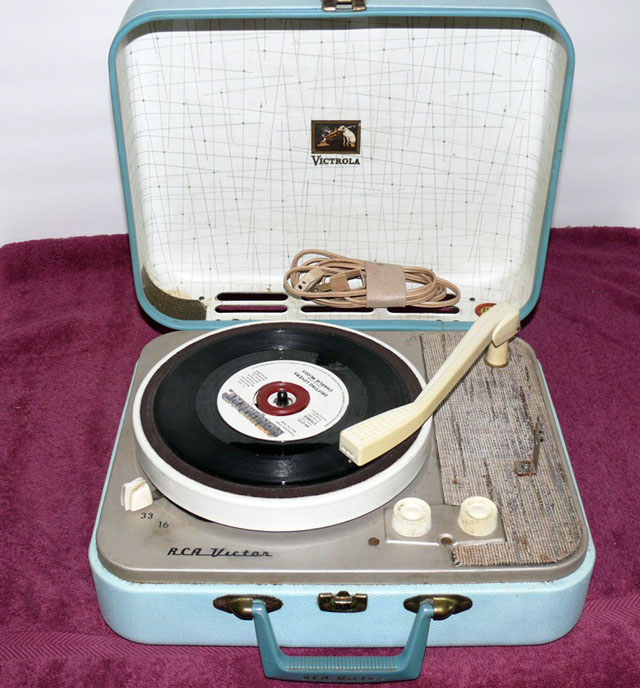
RCA-Portable-Record-Player1

A guest posting from long-time reader Jim Chambers

So… the vinyl villain inspired me – he didn’t know it but I can’t thank him enough for planting this particular seed in my mind and he is indirectly reaponsible for my hangover a few weeks ago. It was his 45 45s series that got me thinking…

I’ve just celebrated my 45th birthday so I’m of the generation when a 7″ single really meant something. I threw a party – the first house party since I was a student I think. (You know the way you get slightly precious about the carpet and all that.)

I invited 45 people to my house. The only condition was they had to bring their favourite 7″ single. I hired decks, a smoke machine and strobes (it was a package – honest I didn’t get carried away)…

Everyone got into the spirit of it, bringing along some absolute classics. And everyone is a secret DJ – given the chance. Even if they want to play Remember You’re A Womble. My mates spoke about what they were going to play in their ‘set’ as if they were headlining the dance tent at Glastonbury, which was all quite amusing. The night got a little hazy after the third round of sambucas but I can remember a good friend of mine and me dancing away and shouting all the words to Lost Weekend at each other much to the astonishment of everyone else. If only I’d remembered my schoolwork as well as I could remember lyrics…

There was serious drinking, dancing, grown men hugging each other and much laughter.

And obviously when you get to ‘a certain age’ it’s unusual to see so many of your friends in the same room – it’s normally reserved for weddings etc so personally the night was a sheer delight. It wasn’t without its moments… The occasional row etc but nothing too serious. The carpet didn’t get ruined, nothing got damaged and the neighbours didn’t complain so all in all a great, memorable night.

The records I’ve chosen are all Scottish (in honour of JC) and all went down well on the night.

mp3 : Lloyd Cole & the Commotions – Lost Weekend
mp3 : Bronski Beat – Smalltown Boy (12″ version)
mp3 : Big Country – In A Big Country (LP version)

So thanks JC for inspiring me and thanks for allowing me to share the story. My friends are now all looking forward to a 78s party which I expect will be a much more sedate affair.

JIM

SATURDAY’S SCOTTISH SINGLE (Part 26)

Back on 8 October 2011, I started a series called ‘Saturday’s Scottish Single’.  The aim was to feature one 45 or CD single by a Scottish singer or band with the proviso that the 45 or CD single was in the collection. I had got to Part 60-something and as far as Kid Canaveral when the rug was pulled out from under TVV.

I’ll catch up soon enough by featuring 5 at a time from the archives..except that the single which was Part 26 is so important it is being featured on its own with words I had penned back in April 2008 when It was part of the 45 45s at 45 rundown:-

R-224051-1361220335-5419
I’ve written about Bronski Beat before. And I make no apologies of repeating what I said then – it really is all too easy to forget how brave Jimmy Somerville and his bandmates were were for being so open about their way of life and their views. Their records, and those of such as Pet Shop Boys and Frankie Goes To Hollywood took the celebration of queer culture into the mainstream, and made many people realise, probably for the first time, that homophobia was every bit as distasteful as racism and apartheid.

This was a band that came from out of nowhere. They inked a deal with London Records after a mere handful of gigs, and the debut single, Smalltown Boy, sold by the barrowload, hitting #3 in the UK charts in May 1984. It also made the Top 50 in the USA and Top 10 in Australia.

A trio of follow-up singles and the debut LP all sold in great quantities and the band seemed set for a long and successful career. But out of the blue, vocalist Jimmy Somerville (and acknowledged by everyone as the band spokesman) announced he was quitting the band to pursue an outlet that would allow him to be ‘more political.’ In due course, he would find massive success, including #1 records, with Communards. He also became part of Red Wedge, the conglomeration of musicians who campaigned for the Labour Party at the 1987 UK general election.

As for Bronski Beat – they did manage a couple of hits with new vocalist John Foster (who in retrospect sounds awfully like Andy Bell who would later come to prominence with Erasure), but they were very much overshadowed by the success of Communards. They soldiered on for a few more years, ever more fading into obscurity from the mainstream.

There’s just something about the early Bronski Beat records that make them sound so special. There’s a bit of the inventiveness of Giorgio Moroder in there, along with the pop-savvy touch of Human League and Heaven 17. There’s also the choir-boy falsetto vocals of Somerville that recalled, in some ways, Russell Mael from Sparks. Theirs were records that struck a chord with so many people, from the hard-core gay militants to the indie-kids and the disco-divas with their handbags and stiletto heels.

The look adopted by Jimmy Somerville for the video to the debut single is one that has become synonymous with young gay men in the early 80s. If you want proof, look no further than the recent BBC cop/sci-fi series Ashes to Ashes which was set in 1981, but in an episode centring on a young gay man, that particular character was dressed straight out of a Bronskis video from 1984.

That’s the impact and legacy of this one song –

mp3 : Bronski Beat – Smalltown Boy (12″ version)

And here’s the b-sides:-

mp3 : Bronski Beat – Infatuation

mp3 : Bronski Beat – Memories

PS to last week’s Scottish singles ‘effort’

I messed up with links to the Bloomsday single.  So sorry.

mp3 : Bloomsday – Strange Honey

mp3 : Bloomsday – Night Storm