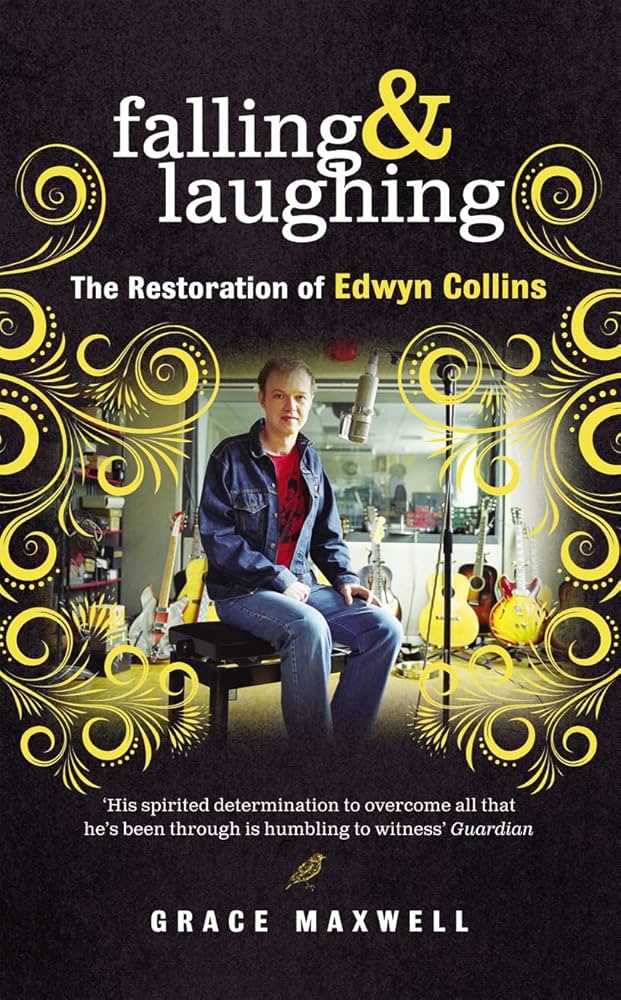
BOOK OF THE MONTH : DECEMBER 2025 : ‘FALLING AND LAUGHING – THE RESTORATION OF EDWYN COLLINS’ by GRACE MAXWELL

The blog is in the middle of a celebration of all the singles Edwyn Collins has released across what has been an unbelievable career.  I thought I’d delve into the vaults for a review that I originally penned in July 2009 when the hardback edition of the book was published, and which I then re-posted in February 2015 with an update of what had happened during the intervening six years.  I now want to bring it right up to date, and to make a very strong recommendation to everyone in the TVV community – if you don’t own a copy of Falling & Laughing, then ask someone to gift it to you this coming Christmas.  I’ll provide a link at the foot of this post.

– – – – –

After reading this compelling 310 pages, I was left with quite a number of impressions, one being that I couldn’t possibly cope with being married to Grace Maxwell. She herself acknowledges that she is a nagging, dominating, sharp-tongued and single-minded individual who has difficulty ever admitting that she ever gets something wrong. But one thing is for sure…..if she wasn’t like that, her partner would most likely be dead, or at best locked away from the world, dependent on specialist round-the-clock treatment. So without any question at all, Edwyn Collins is very blessed to have Grace Maxwell by his side…

Falling and Laughing – The Restoration of Edwyn Collins is a truly astonishing and eye-opening book. It’s also a very very frightening bit of work, and not the sort of thing you really want to be reading if someone close to you is lying ill in hospital with a life-threatening condition.

I’m sure most regular TVV readers are familiar with the basic facts, but here’s a quick resume of what I knew before picking up the hardback.

In February 2005, Edwyn Collins suffered a stroke which left him seriously ill in a London hospital. He was in a coma and required major brain surgery to stop internal bleeding which threatened to kill him. His recovery was hampered by him contracting MRSA, but in the fullness of time, he got back home, and thanks to some fantastic TLC from his partner Grace, their son Will and many other members of his family and his close friends, not to mention many hours of therapeutic treatment, he made a remarkable recovery which allowed him to get back on stage again in late 2007 and to then go on tour in the summer of 2008.

If only it had been that simple……

Opening with a very short prologue that asks the reader to imagine you not having any more thoughts, the book then looks back at the early part of Edwyn’s career with Orange Juice and the circumstances which brought him and Grace together for the first time in 1980, leading to them deciding to live together some five years later. From the outset, Grace was an essential part of Team Edwyn – she was his full-time manager before they got together as a couple, and she shared his woes and worries as he went out of fashion post-Orange Juice but never ever giving up on his immense talent, even when his records were selling to almost no-one.

The world-wide success of the single A Girl Like You in 1994/95 changed everything, setting them, and new son Will, up for life in terms of financial security. It also gave Edwyn the opportunity to make and produce music as and when he liked from the comfort of his own and much-in-demand studio. By early 2005, life seemed quite uncomplicated. Edwyn was 45 years of age, an elder and much respected statesman in music, still recording new songs but under no pressure to come up with the hits. Indeed, there was a great deal of satisfaction with the new songs recently recorded and about to go into the post-production for a new LP which would be followed by the inevitable tour and other promotional work.

But then Grace came home on at around 7pm on the night of Sunday 20th February 2005 after picking up her car that had been left at a friend’s house after a party she and Edwyn had attended the night before – and discovered him lying semi-conscious and distressed on the living room floor….

Much of the book deals with the next few months as Edwyn tries to battle back from the stroke. Grace writes with a directness and clarity that is utterly refreshing, and she is never over-dramatic about events. She gives a great deal of praise to the medical and nursing staff involved in saving Edwyn’s life, but without ever making them appear as saints. At the same time, she also paints a very distressing picture of a medical system that contributes more to a crisis than it does resolve it.

Grace was fortunate in having some immediate family members who work in medicine, and so she could often talk to someone and try to get an alternative view. Grace was also able to devote 100% of her own energy to be with Edwyn over an extended period of time – a luxury very rarely afforded to most wives/husbands/partners. If she had been in a position where she had taken all the medical opinions totally at face value, and had been unable to spend as much time by Edwyn’s side in the very early days, it is quite likely that everyone would have given up the fight…but they battled through all the obstacles and barriers placed in their way, and slowly his recovery began.

But just as Edwyn was about to be moved out of general care into a specialist unit where his therapy would be intense, there was a setback that made the original stroke seem a bit like a pleasant Sunday stroll in the sunshine round – the contraction of the superbug MRSA. What follows really is the stuff of nightmares……

I’m not spoiling anything by revealing that in the fullness of time, Edwyn faced up to and defeated death for a second time. His rehabilitation is covered in great depth and compassion. Grace doesn’t hide from the fact that this was an immense strain on her and Will, and describes some unpleasant family exchanges with an admirable honesty that brought a lump to the throat of this particular reader. I’m sure most of us by now have been in difficult circumstances when someone close is being treated for an illness, and reading many of Grace’s lines brought back a lot of memories of watching loved ones painfully tear themselves up trying to work out what course of action is the best way forward.

As a long-time fan of Edwyn Collins, I would love to have discovered that his recovery turned out to be a smooth and straight-forward process, with him taking his medicine and undergoing his therapy without complaint or giving anyone any cause for concern, and indeed Grace could have easily painted such a rosy picture with very few of us being any the wiser. That she doesn’t is testament to just how good a book this is, and helps the reader gain a much better understanding of just how remarkable it is that Edwyn has the ability nowadays to take to the stage and entertain us.

Having been lucky enough to see him perform three times over the past 12 months I thought that Edwyn – not withstanding the very clear mobility and speech difficulties he still has – was almost completely rehabilitated. Grace’s book reminds everyone that there is still a long way to go. It also reminds us that what Edwyn and so many others close to him have achieved over the past couple of years is quite miraculous – but it has all been through grit, graft and guts, not to mention a lot of Grace.

2025 Postscript

Just over twenty years later, and Edwyn has released a new album and completed a UK tour for which there was nothing but love and praise from fans and critics alike.  There are three shows scheduled to take place in Austria at the end of next month, after which he should be able to take a well-earned retirement from live performances.  There’s now been five studio albums since the near-death experience, although the first of them, Home Again (2007), had seen much of its work completed before he took ill.

There have been numerous live shows almost each and every year, including lengthy tours in each of 2008, 2010, 2011, 2013, 2015, 2019 and 2025, while he has travelled all over Europe and played in America and Australia.  All the while, he has been closely supported by Grace and Will, both of whom were selling the merch on the recent UK tour, while Andy Hackett, Sean Read and Carwyn Ellis have been constant companions in the studio and out on the road, with many others, too many to mention, helping, assisting and contributing along the way.

There was also a documentary film, The Possibilities Are Endless, released in 2014 which sought to tell the story of his recovery and comeback – and if you want to know why the film has that particular title, well you can find out through the book (albeit typing the phrase into any search engine will reveal all).

I know that Edwyn Collins is not everyone’s cup of tea, and that there are many who have always found his vocal mannerisms and delivery to be an acquired taste.  But you don’t need to be a fan of the music to appreciate the story that’s told within the pages of this book. At times, it is not an easy or comfortable read, but ultimately, it’s a true tale about love, sheer bloodymindedness, resilience and courage, and one which comes with a happy ending.

mp3: Edwyn Collins – Searching For The Truth (from the album Losing Sleep, 2010)

The book can be bought in many places, but I’d recommend doing so direct from Edwyn and Grace’s online store.  Click here for info.

Thank You.


JC

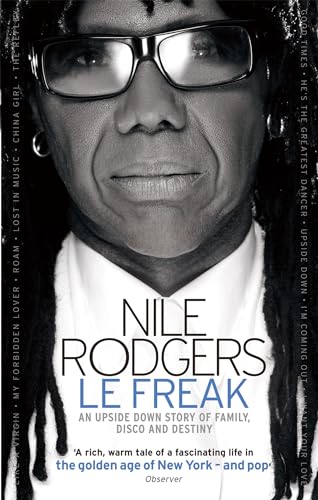
BOOK OF THE MONTH : NOVEMBER 2025 : ‘LE FREAK : AN UPSIDE DOWN STORY OF FAMILY, DISCO AND DESTINY’ by NILE RODGERS

Book reviews were an occasional part of the old blog, the original Vinyl Villain, hosted by blogger between 30 September 2006 and 24 July 2013.  I have been known to dive into what’s left of the vaults and re-post some things that kind of feel timeless but until now, have refrained from doing so with any of the book reviews.

Until today.

It’s partly to do with that I’ve been a tad busy in recent weeks and while I’ve managed to keep up with some reading, I haven’t been able to make the time to sit down and type up my thoughts about any music bio.  So, in order to keep the monthly series going, I’m reaching back to Friday 3 February 2012.  What follows is the review posted at that time, but augmented with a couple of additional sentences/snippets that emerged from the comments section (my thanks to Swiss Adam and Craig McAllister), which also influenced the mp3s and the video footage.

– – – – – – – –

“I asked Santa to bring me this as it had received quite a number of excellent reviews towards the end of 2011. I’m pleased I did.

Nile Rodgers is best known as one of the founding fathers of disco, thanks in part to the songs he wrote and recorded with Chic and the songs he wrote and recorded with others acts such as Sister Sledge and Diana Ross. What I hadn’t realised until picking up this immensely satisfying 300 pages was his contribution to the careers of so many others, including David Bowie, Madonna and Duran Duran.

He was also a big influence on Johnny Marr, to the extent that he named his firstborn after him as well as ripping-off the Chic sound – hook, line and sinker-for the second verse of The Boy With The Thorn In His Side.

OK. Nile Rodgers’ musical career is not one your average indie-kid will confess an undying love for. And to be honest, outwith the Chic songs, I don’t have much else in either the vinyl or CD collections. And if this had been a book in which all Nile did was talk about music and musicians, I don’t think I’d have been impressed.

What makes this such a cracking read is the life he has lived…..particularly his childhood and formative years. For once, it is easier to just crib from the dust jacket.

Born into a mixed-race family of dope fiend bohemians, he learned – at a very early age – everything he needed to know about love, loss, fashion, art, music and the subversive power of underground culture. The stars of the scene were his glamorous teenage mum and heroin-addicted Jewish stepfather…..

His upbringing is a genuinely astonishing tale as he went from east coast to west coast and back again (more than once) living sometimes with mum, his grandparents, with hippies and members of the Black Panther organisation. The first third of the book is genuinely unputdownable.

The middle part is a bit less interesting – just a wee bit too ‘rags to riches to excess’ for my liking. Loads of sex, loads of drugs and loads of dancing and not too much humility. But to a large extent, given how wild an upbringing Nile Rodgers had experienced, it’s not hard to understand why he went off the rails so easily. To be fair, parts of the middle section of the book are a great read when he’s telling you about his family rather than tales of how great it was to work with the rock and pop gods of the 80s.

The final part of the book deals pretty quickly with the last 15 years. There’s a fair bit of death and tragedy in here, with the author acknowledging that but for the grace of god…and there are things you learn about what he’s now doing with his life and the fortune he has amassed.

I’m fairly sure that the story that Nile has set down is like a 7″ version of his life….and the extended 12″ version would be well worth getting your hands on. For instance, I’m sure he’s got loads more tales from his childhood – it really does seem as if that alone could have been a 500-page volume.

The positive reviews are merited. And you don’t need to be a disco king or dancing queen to get a lot of pleasure from this book.”

mp3 : Chic – Good Times
mp3 : The Smiths – The Boy With The Thorn In His Side


JC

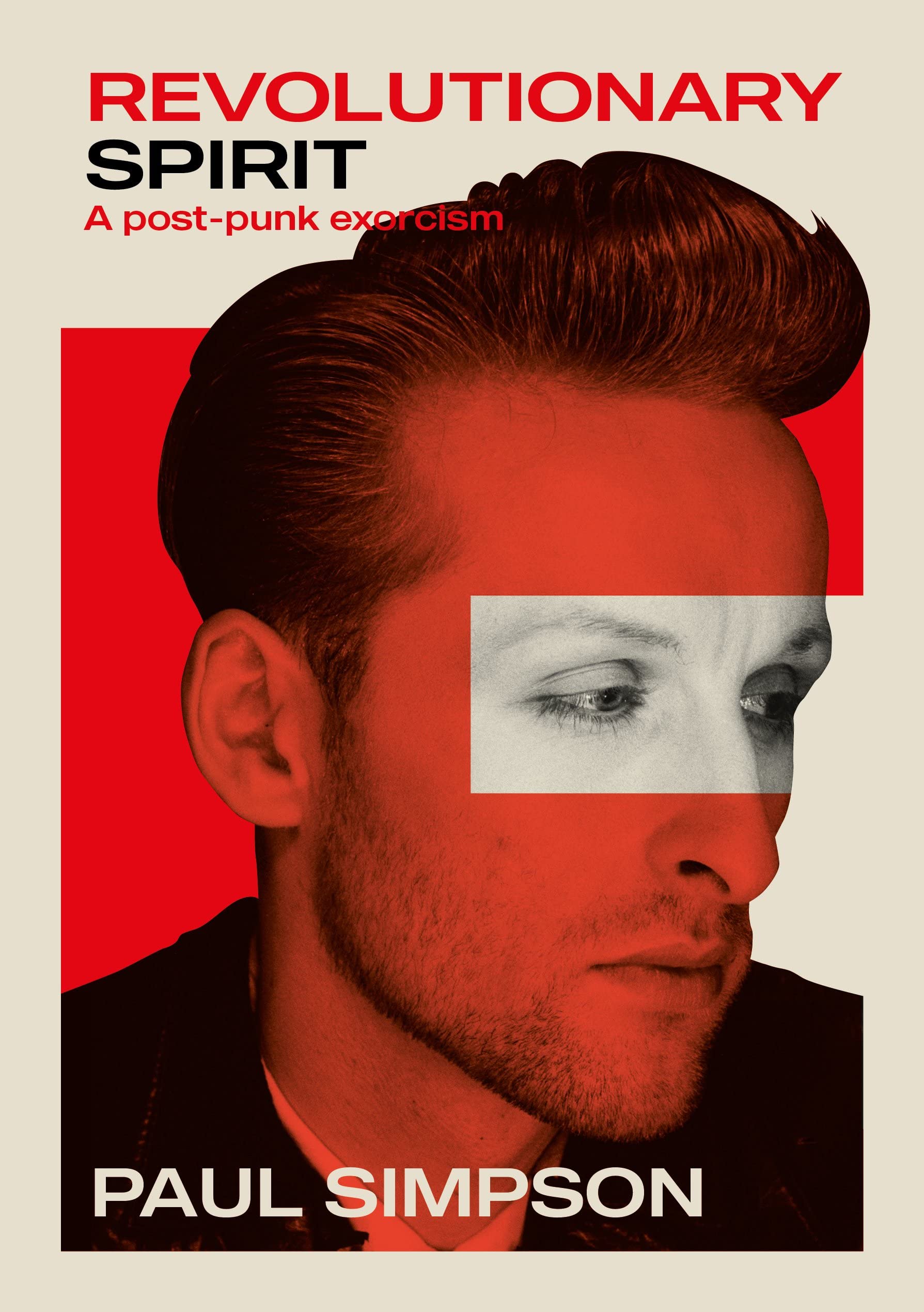
BOOK OF THE MONTH : OCTOBER 2025 : ‘REVOLUTIONARY SPIRIT : A POST-PUNK EXORCISM’ by PAUL SIMPSON

“Paul Simpson is one of the great underappreciated and underrated figures from the late 70s post punk scene in Liverpool. I highly recommend his book Revolutionary Spirit to anyone curious about that unique and fertile time frame in music. It is a perfect companion read to Julian Cope’s Head On.”

The words of drskridlow last month when responding to Dirk‘s posting of the Wild Swans 45 from which the book takes its name.  And while I agree that it is a perfect companion to the earlier autobiography by Julian Cope, it is a book that more than stands on its own merits.  Indeed, I’d be happy enough to say that is one of the best of any rock autobiographies……but it’s a story that I was a bit wary of reviewing, as I’ll explain a bit later on.

In many ways and across many of its pages, Revolutionary Spirit is a love letter to Liverpool, and more specifically, to the Liverpool of the 1980s. And yet the book begins, rather unexpectedly, in Manila, the capital city of the Philippines, in September 2011 where Paul Simpson and one of the bands he played in, The Wild Swans, are feted as superstars. The band is on a nine-day trip and is due to appear on national television and play two gigs that, with the hoped for/anticipated accompanying merch sales, will finally give this impoverished musician a small degree of financial security.  The only problem is that their arrival coincided with the city and country being hit by a massive cyclone, which throws everything into a state of chaos and uncertainty.   It sets the scene perfectly for all that follows, as Paul takes us on an epic ride from his 60s’ childhood to the completion of the book in 2022.

There is a great deal of self-deprecating humour, much of it drawn from the fact that Paul in later years came to acknowledge just how ridiculous it was that he so often self-sabotaged his career:-

“I’d been living in a bubble for so long that I hadn’t realised that I had acquired a reputation. In 1979, I’d left the band most likely, The Teardrop Explodes, to work in a city-centre tearoom. In 1984, I’d walked out of Care, my collaboration with Ian Broudie, after a hit single. And as far as the world was concerned, The Wild Swans had had their moment and blown it. Twice. What I had viewed as perfectionism in myself was interpreted by the industry as a self-destructive streak.”

But there is also a huge amount of poignancy and pathos, which reveals itself early on when Paul writes about his family, and in particularly his fraught relationship with his father, which is more than compensated for through the love and encouragement offered by his mother. By his late teenage years, and having been friends from a very early age with Les Pattinson, he begins to meet those with whom he would later play such a significant role in the musical renaissance of his home city.  Like so many other people, he begins to properly form emotionally and intellectually once he has left school and, in his case, gone to a Further Education college to ‘study’ advertising and exhibition design, and where he falls in love for the first, but not the last time, all the while becoming something of a music and clothes obsessive.  All of this across what really is a rivetting 88 pages of prose taking us up to December 1976 and his first visit to Eric’s in Matthew Street, the venue making a name for itself as the place in the city for those with an interest in the emerging punk rock scene.

And from there the book rolls along at an incredible pace, with a cast of dozens, many of whom have been mentioned frequently and lovingly on this blog over the past 19 years.  What is most striking is just how many people become close friends with Paul, which is a fair indication of how affable, amenable and approachable a person he genuinely comes across as.   Or maybe the drugs that he and everyone indulged in had a lot to do with it…..

His recollections of his response to the news that his ex-flatmate Pete de Frietas had died in a motorcycle accident will resonate with anyone who has lost a dear friend unexpectedly and at a tragically young age.  His tales of the way that Courtney Love caused absolute havoc when she arrived unannounced and unexpectedly in Liverpool will resonate with anyone who has been in the orbit of a disruptive force whose levels of self-awareness are next to non-existent.  And maybe that’s what lies at the heart of why I really fell for the charms of this book – it is very much the tale of a man and his place in a musical scene of a city at a particular point in time, but there is much in his life that we can all relate to, no matter how seemingly mundane, dull or ordinary our own existence may appear on the surface.

Paul Simpson should have been a superstar in so many other places other than the Philippines.  His book offers up explanations as to why it never came to pass, and at no point in time does he ask readers to feel sorry for him.  This is a frank, honest and above else, hugely engaging autobiography.

mp3 : The Wild Swans – God Forbid
mp3 : Care – Flaming Sword

From an appearance by Care on the BBC’s Oxford Road Show, which was broadcast direct from Manchester between 1981-1985.  I’ve a copy of this on VHS tape somewhere, and a huge thanks to parkhill62 for taking the time to transfer his copy across to youtube.

Oh, and the reason I was wary or indeed reluctant to review the book stems from the fact that Adam, from Bagging Area, did so in September 2024, and I can only dream of matching his way with words.  Adam called Revolutionary Spirit ‘a delight…..that he can’t recommend highly enough.’.   I’m more than happy to echo those sentiments.


JC

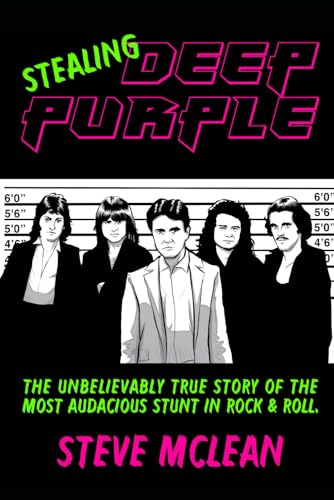
BOOK OF THE MONTH : SEPTEMBER 2025 : ‘STEALING DEEP PURPLE’ by STEVE McLEAN

The past four Wednesdays on the blog have been given over to Steve McLean during which he has informed and educated many of us (and probably all of us!!), on how each of Fleetwood Mac, The Velvet Underground, MC5 and Cactus had occasions when their identities were not all that they seemed to be.  All four pieces were spin-offs from a book that Steve has written, ‘Stealing Deep Purple : The Unbelievably True Story of The Most Audacious Stunt in Rock & Roll’.  

I’ll be the first to hold my hand up and say that for most of my life, I’d struggle to name any Deep Purple song other than Smoke On The Water.  Actually, I don’t even know that song…..I’m aware of the riff! The Britpop era introduced me to a second of their songs, Hush, when it was covered by Kula Shaker and taken to #2 in the singles chart in 1997.  Now, I have to say that I thought it was a Kula Shaker original given it sounded just like the rest of their output, and I had was a sort of ‘rubs eyes in disbelief’ moment when learning it had been a 1968 Top 5 hit single in America for the hard rock giants, and indeed that the Deep Purple version itself was a cover as the song had been written by Joe South and recorded in 1967 by his fellow American, Billy Joe Royal.

It was the very success of Hush that ultimately led to a chain of events in the late 70s/early 80s into which Steve delves and picks through in forensic detail, thanks to what must have been many hundreds, if not thousands of hours of research as well as seeking out and getting responses from some who were in and around the periphery of said events.

The crux of the tale centres around Rod Evans, the original singer of Deep Purple, and whose vocal is on their version of Hush.  Evans recorded three studio albums with the band before being fired in 1969.  The other members of the band – Ritchie Blackmore (guitars), Jon Lord (keyboards) and Ian Paice (drums) – felt Evans’ largely pop/mod vocal style wasn’t compatible with the sort of music they were increasingly wanting to make, and he was replaced by Ian Gillan.  It wasn’t just Evans who was booted out of Deep Purple MkI, as bassist Nick Simper was replaced by Roger Glover.

Deep Purple MkII lasted till 1973 when Gillan and Glover were removed to be replaced by David Coverdale and Glenn Hughes.   Two years later, Blackmore quit to pursue what was going to be a solo career, but which ultimately became the band Rainbow.    This meant we were onto Mk IV of Deep Purple, with Tommy Bolin being hired as Blackmore’s replacement, but by 1976, the band had torn itself asunder, albeit a number of them would end up working together in Whitesnake.

Rod Evans had long drifted out of the music industry and by the end of the 70s was working in medicine at a hospital in California, which is the point in time where the book really begins.  An idea was hatched to relaunch Deep Purple and undertake a tour of America. Mexico and Canada, and possibly further afield, depending on the success or otherwise of the initial venture.  Rod Evans would front the band, but the other musicians in this version of Deep Purple would have had would have had no prior involvement in any of the Mks I-IV line-ups.

The question of who owned the actual name ‘Deep Purple’ wasn’t seen as an important issue; and, if you recall Steve’s blog posts on other bands over the past few weeks,  this was an era when quite a few bands went out on the road caring little about legacies or who had the actual right to claim the rights to a name.  Indeed, in this instance, there is some suggestion that Rod Evans may have had grounds to believe that the other members of Deep Purple weren’t too fussed about it all, especially as they were at the height of their fames with new bands, and that it would all go smoothly.  Others in and around Deep Purple, and in particular the management side of things, believed very differently……

The tour did go ahead.  Some shows went well, but most didn’t, with underwhelming performances and poor sound quality leaving some fans feeling incredibly short-changed and/or cheated.  Some shows ended in riots, and others ended with the band members fighting among themselves.  Inevitably, the whole thing ended up in court.

As I said, I know next to nothing about Deep Purple. I also have a loathing for heavy metal bands such as Rainbow, Whitesnake etc, and as such this book should have been of little appeal to me.

But the book isn’t really anything to do with the actual music, as it’s more about the machinations of the industry.  Steve’s style of writing is akin to it being the script for a six-part documentary on the events of 1979/80.  He keeps his own personal opinions out of proceedings, and early on he accepts that, despite his very best efforts involving more than 200 printed sources (many of them contemporary and long-forgotten) as well as dozens of interviews he carried out himself, the book is, essentially, an incomplete jigsaw puzzle.

Hardcore Deep Purple fans, the ultras if you like, quite a few of whom weren’t around when these events took place, will argue vigorously that Rod Evans stole the name of the band, took a second-rate group of musicians out on the road and knowingly acted out a massive fraud on the paying public.  In short, a scam of the highest order.

There are others, the miniscule minority view if you like, who feel Evans didn’t steal the name as he was an original member and in 1979/80, Deep Purple didn’t exist as a recording or touring band; he simply took something out on the road that didn’t meet people’s expectations leading to a horrible backlash that shouldn’t have been on him alone.

The book does offer a great deal of context to events, particularly through what press coverage there was back in the day. It also, towards the end, goes into some depth about the eventual court case, and while this does briefly threaten to take the prose into dry legal-speak, Steve, to his huge credit, finds a way to make it all understandable to those of us without a law degree to our name.

Stealing Deep Purple isn’t available (as far as I know) in the shops, and the publisher, Lulu Books, is involved in printing ‘on-demand’.  In other words, if you fancy reading this in full, and I really do recommend it very highly, then you use this link and let the publisher do the rest.

mp3: Deep Purple – Hush

I’ve known Steve McLean for quite a few years now, but our friendship has nothing to do with my take on this book.  If it had been poorly written, or been boring or had in any shape or form failed to hold my attention, then this post would not have been pieced together.


JC

PS : Steve has fired over a few more of his theft essays, and I’m delighted to say that these will feature, probably on a monthly basis for at least the rest of 2025. Keep your eyes peeled.

BOOK OF THE MONTH : AUGUST 2025 : ‘YOU AND ME AGAINST THE WORLD : 2 WOMEN, 5 BANDS, ’80s EDINBURGH by SASKIA HOLLING

I don’t have too many regrets in life.  I’ve been incredibly lucky with every big decision I’ve ever had to make, personally and professionally, and as I move disgracefully into my 60s, I grow increasingly grateful for everything with each passing day.  But, as I turned the pages of this wonderfully written newly published book about the growth, development and the death of the indie-music scene in Edinburgh in the 80s, I did get the occasional pang of ‘what if?’

Please allow me to explain.  I moved to Edinburgh to live and work, at the age of 22, in the summer of 1985, eventually moving back to Glasgow in early 1990.  I arrived in the capital with a love of music that had been with me all my life, but really ignited by the arrival of post-punk and further nurtured by meeting like-minded souls throughout my university years.  I was convinced that Glasgow was still the place to be for music, particularly the live scene, and I spent many weekends travelling back west doing my best to keep up with things, but before too long, I got tired of this and looked around Edinburgh for things to get involved in.

In due course, I hooked up with some lovely people who were hoping to make a name for themselves in the creative arts through acting, dancing and stand-up comedy, and soon found myself immersed in the world of community theatre. It was great fun, and I can look back with pride on some of the shows I was involved, including being part of the Edinburgh Festival Fringe, and ‘acting’ alongside people who would in due course make a name for themselves in film, TV and professional theatre.

No regrets at all about how I spent my leisure time in my adopted city, but as You and Me Against The World details across more than 400 hugely enjoyable pages, my short time as a luvvie coincided with Edinburgh experiencing a vibrant music scene of the type that was really up my street, if only I’d been paying attention.  The ‘what if’ stems from wondering what might have happened if I’d met up socially with the musicians rather than the actors?

I’ve actually long been aware of what I missed out on, thanks in part to a friendship with Jacques the Kipper who, not long after we met in 1989, began to fill me in on what I’d been missing across the indie-scene in Scotland and further afield.  Gaps in my music collection were gradually filled in, but have been accelerated greatly in recent years from the release of a number of compilation albums and box-sets whose liner notes offer some excellent background.  The growth of the internet, and in particular blogs and fan-based sites, has also been a godsend.

There’s loads of info out there, and Saskia Holling has done a remarkable job in knitting this particular story together, and the book goes way beyond what it is suggested via its title.  I make no apologies now for pinching a few paras from Saskia’s introduction. as there’s no better way to explain her achievement:-

“So, here he have the story of five bands whose fates were reliant on each other: Rote Kapelle, the Shop Assistants, Jesse Garon & The Desperadoes, The Fizzbombs and The Motorcycle Boy. The story is told through Margarita Vazquez Porte and the late Alex Taylor, whose voice I have attempted to make heard via extracts from music papers and other media interviews. These two women were musically involved, sometimes only briefly, with four out of these five bands. Both dealt with the experiences that involvement brought in different ways.

“This book is also the story of Margarita and Alex’s bandmates: Ian Binns, Chris Henman, David Keegan, Malcolm Kergan, Michael Kerr, Katy Lironi, Angus McPake, Johnny Muir, Fran Schoppler and Andrew Tully, along with Janie Nicholl and Allison Young of another Edinburgh-based band alive for a short burst in the 80s, The Vultures. These stories take us on a journey from school days to post-punk teenage years, to people meeting and making music in a small local independent scene.  Along the way, we uncover the ‘shambling’, ‘anorak’, ‘cutie’ and ‘blonde’ representations of the national DIY independent music scene in the UK press and how that played into each band’s story”

The extent of Saskia’s research can be measured by her ‘References section’ with more than 100 articles from the contemporary music press quoted in some shape or form, and a further fifty online sources, including print, audio and visual, being sourced along the way.  Oh, and on top of that, there’s the extensive interviews she did with many of the protagonists.

The thing that comes across more than anything, certainly for me, is that across a discography of more than 30 singles or albums released during the decade, you could count on the fingers of one hand the number which were commercially successful.  All the bands at some point in their careers had their champions in the music press, albeit the same publications would, as happens with all singers and bands who are around for any length of time, come to disown or dismiss them as irrelevant, often on a whim.  The sinister thing that comes through, however, is how sexism and misogyny, particularly within the UK music press of the era, played a significant and horrific part in things; even worse, but unsurprisingly, is that record label moguls were equally guilty of such behaviours.

You and Me Against The World really did give me a great deal to think about, but at the same time, it made me want to put aside all other music playing here in Villain Towers and listen again to the bands and musicians whose stories are so well told. I’m not going to claim that every record was wonderful and should be in the collections of anyone serious about indie music, but there’s more than enough to warrant the sort of Imaginary Compilation Album with which this blog has been associated with for many years. But maybe for another day.  In the meantime, here’s a few singles:-


mp3: Rote Keppelle – These Animals Are Dangeroos (In Tape Records, 1986)
Andrew Tully (vocals), Margarita Vasquez-Ponte (vocals), Chris Henman (guitar), Ian Binns (keyboards), Malcolm Kergan (bass), Jonathan Muir (drums)

mp3: Shop Assistants – Safety Net (53rd & 3rd Records, 1987)
Alex Taylor (vocal), David Keegan (guitar), Sarah Kneale (bass), Ann Donald (drums), Laura McPhail (drums)

mp3: Jesse Garon & The Desperados – The Rain Fell Down (Narodnik Records, 1987)
Fran Schoppler (vocal), Andrew Tully (guitar/vocal), Kevin McMahon (guitar), Stuart Clarke (guitar), Angus McPake (bass), Margarita Vasquez-Ponte (drums)

mp3: The Fizzbombs – Sign On The Line (Narodnik Records, 1987)
Katy Lironi (vocal), Margarita Vasquez-Ponte (guitar/backing vocals), Ann Donald (bass), Angus McPake (drums)

mp3: The Motorcycle Boy – Big Rock Candy Mountain (Rough Trade, 1987)
Alex Taylor (vocals), Michael Kerr (guitar), Dave Scott (guitar), Eddie Connelly (bass), Paul McDermott (drums)


The book is available direct from Spinout Publications for £17.99 plus P&P.  Click here to do so.   Trust me, you’ll have a fine time, not just reading all that Saskia has to offer, but going down the inevitable rabbit holes listening to the music.


JC

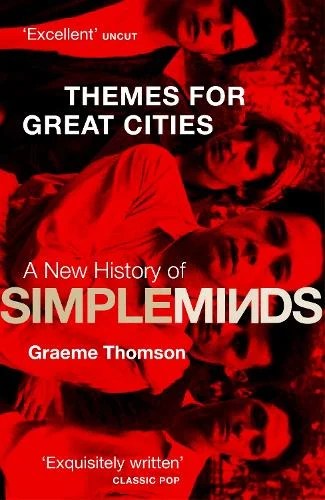
BOOK OF THE MONTH : JULY 2025 : THEMES FOR GREAT CITIES by GRAEME THOMSON

JC writes……

I know, I know.  You wait ages for a post about Simple Minds, and two come along in very quick succession.  These things happen…..

I thought I’d try and be smart with this one.  Knowing that Jonny the Friendly Lawyer was a huge fan of Derek Forbes, the original bass player with Simple Minds, I thought he’d like to read the band biography, written by Scottish author Graeme Thomson, and so I took a copy over as one of a number of gifts that myself and Rachel wanted to pass onto him and Goldie as our way of saying thanks for inviting us to their home in Santa Monica for an extended stay. I did suggest that, if he wanted, he could submit a review for inclusion as part of this monthly series, and he has very kindly done so.

Here’s Jonny………

JC asked me to write a review of ‘Themes for Great Cities, A New History of Simple Minds‘ by Graeme Thomson. My one word review is: unreadable. I like Simple Minds okay, or did for the first few albums. I was definitely an admirer of bassist Derek Forbes. But I do NOT recommend this book because of the hopelessly overwrought writing. It contains passages like the following:

Page 1: “I hear the otherworldly pulse of ‘In Trance as Mission’, with its ‘holy backbeat’ and the hopscotch skip of the bassline, like a loved-up heart murmur, or a dog running on three legs, forever slipping off the pavement edge.” (Italics in original.)

Page 120: “In this band, everybody is playing a different part. They’re like a succubus for the music, it is just flowing through them. They are doing what the unit they have formed demands of them. When you’re a band you become some weird symbiotic organism. You recognize body language, you start looking at each other’s books and magazines, you start noticing what part of the papers you all read. You find each other. When a band clicks you just know it, and it’s beautiful.”

Page 193: “Large parts of the two albums are simply beautiful, opening out slowly like long sunsets, dark orange and charcoal.”

Page 256: “The core bass line is, in some respects, the logical destination of Forbes as a bass player – from maximalist ‘X’ and ‘Y’ shapes to one minimalist ‘D’ note repeating ad infinitum. Rhythm pared back to its essence, the eternal cosmic throb.”

Dancing about architecture, to say the least. I don’t know if Thomson is a frustrated poet, or a starstruck fanboy, or is simply given to flights of extravagant, unnecessary prose, or what.

I guess the book includes subjects like how the band got together and recorded and performed, but it’s buried underneath endless steaming piles of superfluous verbiage. Simple Minds are a pretty popular band–there’s got to be a better written biography out there than this one.

Jonny

Oh dear……the song selected doesn’t quite fit.

mp3: Simple Minds – Book of Brilliant Things

From Sparkle In The Rain, released in February 1984, and the last studio album from the early era to which Derek Forbes contributed.

Finally, for today.  You’ll recall that I ran a competition for two folk to win a copy of the June Book of the Month, the rather fabulous You’re Doing It All Wrong : My Life As A Failed Rock Star (In The Best Band You’ve Never Heard) by Michael M. 

Thanks to everyone who entered. The two names drawn out of the hat were mnfennell and papa stew.  My huge thanks to everyone who entered.  I’ll likely run another competition of some sorts towards the end of the year.

JC

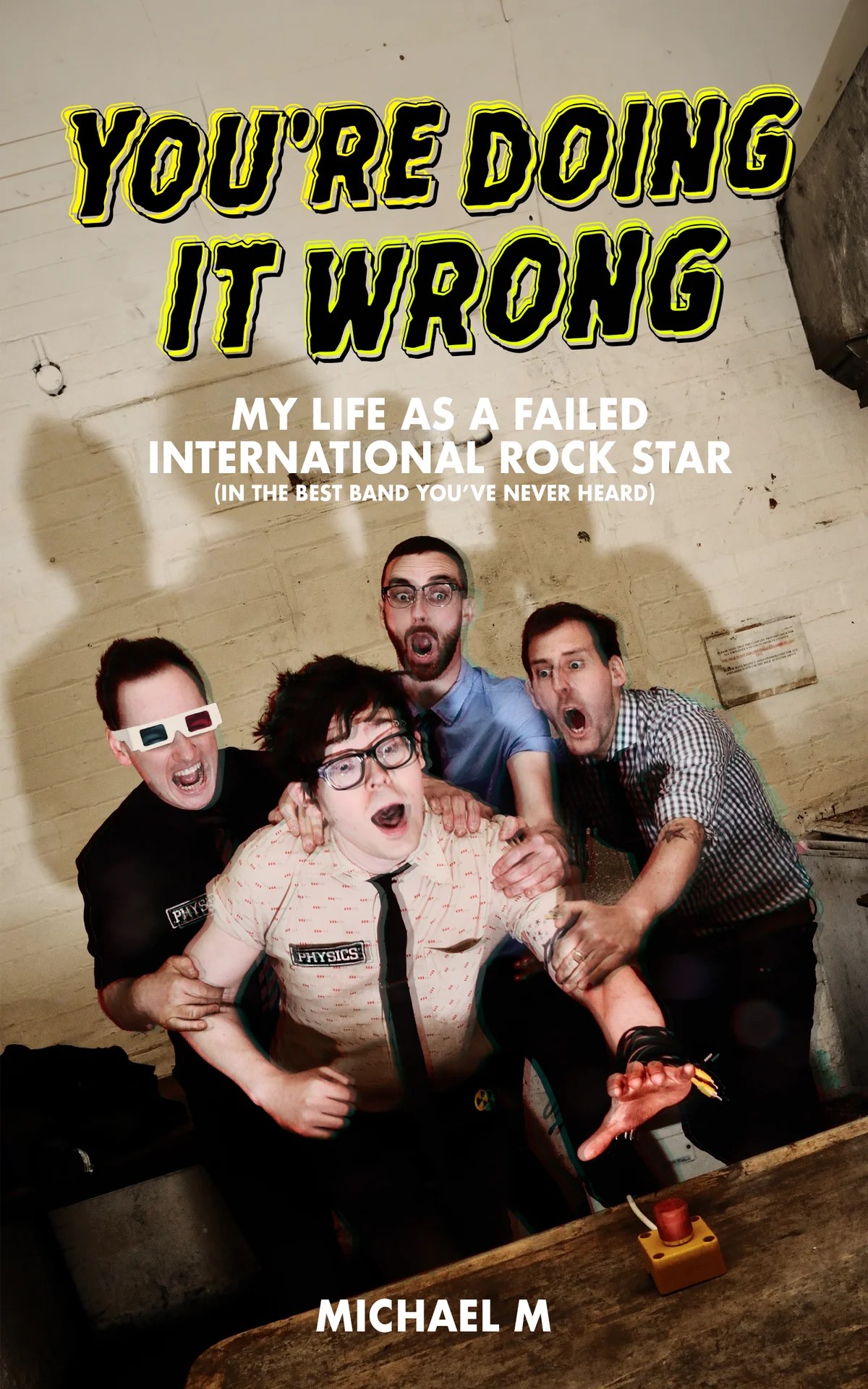
BOOK OF THE MONTH : JUNE 2025 : ‘YOU’RE DOING IT WRONG’ by MICHAEL M

The sub-title of this book is ‘My Life As A Failed Rock Star (In The Best Band You’ve Never Heard) which I’m pretty sure is the case for maybe 99.99% of TVV regulars as  We Are The Physics, haven’t, until now, featured on the blog.

The thing is, if this book wasn’t any good, I wouldn’t be using today to offer up my thoughts and opinions, as I wouldn’t want to waste anyone’s time.  The thing is, this book isn’t just good, but is, at least in my very humble opinion, one of the best and most honest autobiographies I’ve had the pleasure of reading. It has a huge amount of laugh out loud moments, mixed in with tales of happenings and events that would make the casual reader question the sanity of anyone who wishes to embark on a career in the music industry, be that as a performer, manager, promoter, roadie, stage/lighting technician or whatever, as every single role seems to be a thankless task with next to no financial reward or job security on offer.

The book emerged late last year from the stable of Last Night From Glasgow, the not-for-profit label that has done so much to energise the music scene here in my home city.  The on-line description prior to publication gives you some idea of the thinking:-

“Occasionally we embark upon projects with absolutely no idea of the pitfalls and processes. We did so a couple of years ago when we decided to publish Craig McAllister’s biography of Trashcan Sinatras. The funny thing is that publishing books is considerably easier than pressing records, but unlike pressing records, publishing books throws up many possibilities that are best left open – in the short term at least.

Later this year, we will bring you a very limited run of Michael M’s auto biographical tour de force – You’re Doing It Wrong. The purpose of this limited run is to show the bigger publishers that there truly is a demand and market for this work, and thus provide a platform for Michael’s justified world domination.”

Michael then added a few paragraphs to set the scene:-

‘From 2005–2015, I was Michael M, the singer, bass player, and songwriter of an indie rock band from Glasgow, Scotland called We Are The Physics. Never heard of them? I wouldn’t have either, if I hadn’t been in them.

We were a band who launched ourselves on MySpace in the burgeoning days of social media and were hurtled into the musical mainstream limelight for fourteen brief minutes of fame, then disappeared. Not in any cliched rock ’n’ roll implosion, but because most people just stopped looking for us.

I’m not welcoming you to a chronological memoir of my existence as if any of it mattered, but a series of vignettes and anecdotal tales of failure, chronic mundanity, and ridiculous dismay that document the architecture of my band’s demise, unravelling me and my catalogue of personal defeats. A Twilight Zone for the last gasps of the music industry before streaming took over, amplifying just how wrong we did it, and why you’ve never heard of us.

Unlike most music autobiographies, this isn’t an ode to sex, drugs, and rock ’n’ roll. It’s an ode to budget hotels, grim backstage boredom, the claw grabbing machines at service stations, and the unhinged and unspoken workers who made the machinations of touring without fame function.

This is a celebration of the middling, the mediocre, the jobbing bands who never got on Top of the Pops, the almost almost famous. Set against a background of the dour, perpetual rain of Glasgow and beyond, this poignant story moves from childhood dreams, to adolescent shame, through triumph and grief to tragic pathos, all with an acerbic (and Scottish) sense of self-deprecating humour.’

Twenty-three chapters….which aren’t in any sort of chronological order, plus an intro and an outro over 375 pages, all of which contain sentences and paragraphs that will make you go Hmmmm…..but in a really good way.

Michael M is a gifted storyteller and raconteur, be it him recalling his tough upbringing in the east end of Glasgow and later on in one of Scotland’s new towns (but not the one from which Roddy Frame and the Jesus and Mary Chain had emerged), or the many genuinely bonkers things that happened to him and his bandmates over their ten years together.

For all that We Are The Physics never enjoyed any commercial success, this tale recounts the triumphs of shows in Europe and Japan, of being the support to Hollywood superstar Jared Leto‘s band, Thirty Seconds To Mars and their role as jobbing musicians in a film directed by Stuart Murdoch of Belle and Sebastian.  Shows at T In The Park and Glasgow Barrowlands are fondly recalled, but again in ways that are incredibly self-deprecating, while the chapter on the recording of the debut album in a slum studio in the arse-end of Glasgow, all for the sake of trying to save some money that would sustain them while they are out on the road, is eye-opening, jaw-dropping and rib-tickling in equal measures.

It’s a book that, for the most part and like the band itself, doesn’t take things too seriously, as evidenced by the way they went about recording a unique and impromptu take on a cover of Fireworks, the Katy Perry song which went out live on a BBC radio show on Bonfire Night.

But amid the laughs, there are a couple of moving vignettes which only illustrate the brilliance of Michael M’s writing, one being about his father and the other, towards the end of the book, when his own life unravels in a sudden and unexpected way.

I’d like to think that many of the folk who are regular visitors to the blog are the type to care a great deal about music and musicians, and tend to be on the lookout for something beyond the superficial and mundane.  You’re Doing It All Wrong certainly ticks all the boxes in that regard. At the risk of repeating myself, it’s a music memoir unlike any other I’ve ever read, and that’s me taking into account many hundreds going back five decades.

Do yourselves a big favour and buy yourself a copy from here. It’s also available as a digital download.

mp3: We Are The Physics – This Is Vanity


JC

To celebrate my impending 62nd birthday, I’ve bought an additional two copies of the book to give away free in a competition.

All you have to do is tell me which famous Croatian tennis star, and the winner of Wimbledon in 2001, did We Are The Physics later immortalise in song.  (further hint – the video for the single can be viewed on YouTube).

Leave your answers in the comments section…..and that way, everyone can copy whoever gets in first correctly!!  Come 30 June, I’ll randomly draw out two winners and post the book out to the lucky recipients.

Sorry to say that, to avoid any excess P&P and/or customs charges, the competition is only open to UK readers.  Again sorry!

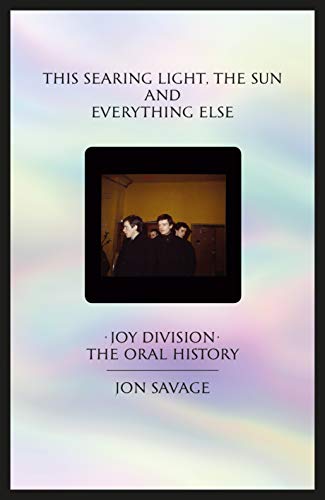
BOOK OF THE MONTH : MAY 2025 : ‘THIS SEARING LIGHT, THE SUN AND EVERYTHING ELSE’ by JON SAVAGE

This isn’t a review of a new book.  Indeed, it isn’t even a new review of an old book. I stumbled across it when I was piecing together the list of ICAs, and was very pleasantly surprised at how positive the reactions were via the comments section.  It was posted on 13 January 2020, and it is appearing again today five years on, in a slightly edited form, to mark the upcoming 45th anniversary of the suicide of Ian Curtis.

———————–

The vast majority of the substantial collection of my books taking up space in Villain Towers are music and sports related, consisting in the main of biographies in some shape or form. Among these are something in the region of 20 25 books related to Factory Records/Joy Division/New Order/The Hacienda, with the latest two additions coming via Christmas presents, one of which was the wonderfully entertaining first volume of autobiography by Stephen Morris, whose often self-deprecating effort far surpasses those of his bandmates Hooky and Barney, as much for the fact that he doesn’t use the book to rant about old grievances – but given that Record Play Pause only goes up to the formation of New Order, it may well be that a further and much anticipated volume will go down that path (which of course proved to be the case when Fast Forward was brought out in late 2020)

The other new book for Xmas 2019 was This Searing Light, The Sun and Everything Else: Joy Division – The Oral History, whose author is Jon Savage.

The book was published in April 2019 and received great reviews, but I refrained from buying it at the time as I thought it would be more or less a cut’n’paste effort consisting of a re-hash of the tales told elsewhere in books by so other authors over the years. It was only when I re-read the author’s review of  Unknown Pleasures review which appeared in Melody Maker back in 1979  did I realise that he was someone who really did get to the heart and soul of the band and was probably the most qualified to undertake the task and do it properly.

This Searing Light…. duly arrived on 25 December and I began to read it that evening, on the basis that it would be an easy enough book to dip in and out of while also turning my attention to some of the other books that had ended up under the tree. I spent hours engrossed in its contents and ended up not going to bed until some ungodly hour, which set the tone for a stupid sleep pattern right through until my return to work on 6 January. As soon as I woke up, my nose was back in between its wonderful looking hardback cover and plans to watch or do other things were put on hold as what I was devouring and enjoying immensely was the definitive story of Joy Division that hasn’t been bettered.

For the most part, there was very little I didn’t already know – but the new snippets of information were invaluable and, in one particular case, a real game-changer in terms of how I’ve always thought about things over the past almost 40 years since Ian Curtis took his life. The author lets others do the talking, and offers a mixture of new interviews with those still living as well as dipping into archives to enable the voices of people such as Tony Wilson, Martin Hannett and Rob Gretton to be heard. It’s very clear that the questions Jon Savage has posed to everyone while carrying out the work involved to piece the book together were far from run-of-the-mill, and there’s a sense that everyone responding has been able to be wholly open and transparent about things, secure that what they say will be written down and then put in print, even if it those words are at odds with one of the other contributors or indeed are different from what has been said by them before.

One of the most fascinating things about this book is that it gives much more space to Peter Saville and Annik Honore than any previous publications, enabling them to fill in some gaps and to also offer up a sense of what really went on when so many others, over the years, have mythologised many of the events and happenings.

There’s also some incredibly reflective words throughout from the late Tony Wilson, many of which feel as if they were provided in what must have been one of the last of the detailed interviews he gave before his death. It is entirely fitting that the book is dedicated to Wilson, a lifelong hero of mine. My memory of the one time we met and spoke briefly for all of 45 seconds will never leave me. It’s also worth mentioning that the book’s seemingly strange title is taken directly from one of the quotes he provided to the author.

This Searing Light…. also benefits from being exactly what it says on the cover. There’s just a few reflections into the early lives and upbringings of everyone in the band and it comes to a halt just after Ian Curtis’s funeral, with no mention of what was still to come for Factory or the emergence of New Order. It is the story of a band whose fans at the time could never ever have imagined the impact they would make or the legacy they would provide, so much so that more than 40 years on, there is still much to be fascinated by.

One thing it did remind me of was just how young and largely inexperienced the other band members were at the time. The infamous Stiff/Chiswick challenge took place on 14 April 1978….all four members were 20-22 years old. They had yet to have Gretton, Wilson or Hannett come into their lives to help shape things. Just two years and one month later, it was all over.

So much transpired between April 78 and May 80 that even now it feels overwhelming, so it must have been nigh on impossible to deal with first-hand.

The book also provides a stark reminder that Joy Division, being on a largely unheralded and small label in Manchester, didn’t ever really find too much fame, beyond the pages of the music papers, until they were no more. The biggest shows they ever played was as the support act on a UK tour by Buzzcocks and nobody was getting rich from any of it, with life seeming to be not far off a hand-to-mouth existence for the most part. There was little glamour and a lot of hard slogging.

The onset of the singer’s epilepsy does seem to have been beyond the belief and understanding of all concerned – including the university-educated Wilson – and it wasn’t helped by the fact that the treatment on offer from the medical professions seems to have been haphazard and involved a lot of guesswork – it certainly got me re-assessing my own long-held views that if the others around him had been more understanding or proactive back in the day, then the suicide could have been prevented.

mp3 : Joy Division – The Eternal


JC

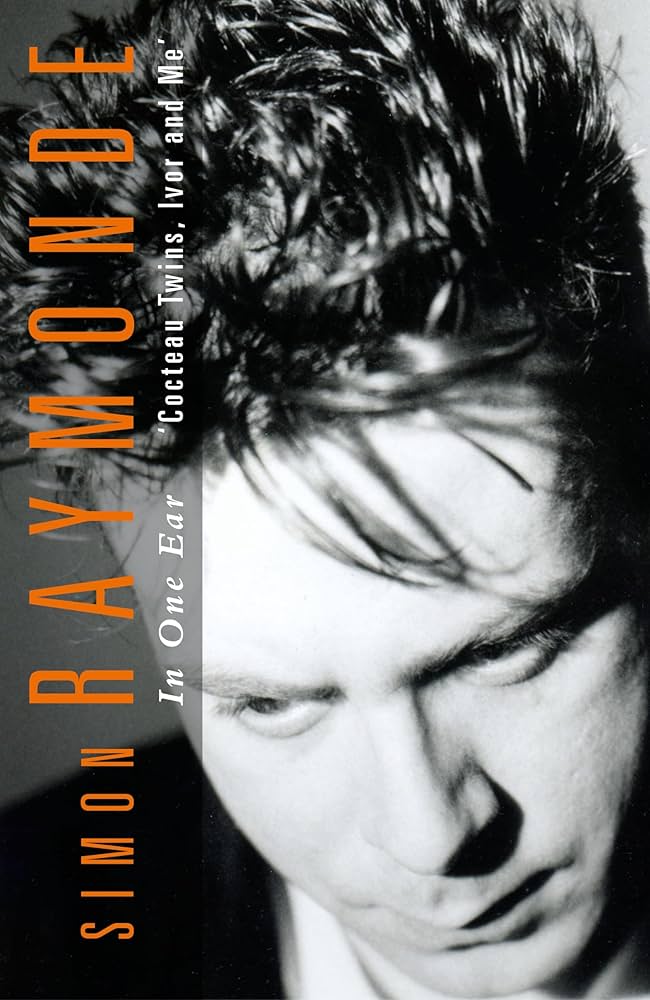
BOOK OF THE MONTH : APRIL 2025 : ‘IN ONE EAR : COCTEAU TWINS, IVOR AND ME’ by SIMON RAYMONDE

Another music autobiography that was purchased, for the most part, on the back of reading some very favourable review, but also because I hoped to learn a great deal more about the Cocteau Twins.

The PR blurb for the book, which was published in September 2024, has been heavily used on the various websites from where it can be published, and I’m not going to buck the trend:-

“The page-turning memoir of Cocteau Twins’ Simon Raymonde, charting his life and legacy in music. As one-third of seminal band Cocteau Twins, Simon Raymonde helped to create some of the most beautiful and memorable albums of the ’80s and ’90s – music that continues to cast a spell over millions. This is the story of the band, in his words.

Beginning with Simon’s remarkable childhood and exploring his relationship with his father, Ivor Raymonde (the legendary producer, musician and arranger for acts such as the Walker Brothers and songwriter for artists including Dusty Springfield), the book will journey through the musician’s rise to prominence and his time with Cocteau Twins and This Mortal Coil.

It will also chart the successful career he has forged running his own label, Bella Union, for the past twenty-seven years, discovering and developing globally renowned artists like Beach House, Fleet Foxes, Father John Misty and John Grant.

And the narrative will lead us back to the present day, reflecting on Simon’s most recent experiences in the music industry – all while going deaf in one ear.

A must-read for music fans, this is the incredible tale of Simon’s life and legacy.”

It really is the case that the 368 pages of text contain some incredible tales, from all aspects of Simon’s life, with quite a few of them being genuinely jaw-dropping.  I have, however, got to get something off my chest right away before getting into the meat of this review, namely that some of the stories/events/happenings feel as if they should be taken with a huge pinch of salt – I am particularly thinking of him attending a football match in Glasgow in the mid 80s and his night in a Las Vegas casino in 1991, along with the events over the next 24 hours as he made his way unaccompanied to the band’s next gig in Phoenix.

These, and a couple of other passages irritated me more than they should have, and put me in such a mood that I almost put the book to one side, vowing never to pick it up again.  But I persisted, often returning a day or two later after in the meantime read some pages of another book that was on the beside table or spent my daylight hours listening to music or blogging, and am really grateful that I did, but not for the reasons I was anticipating.

The PR blurb is, as is often the case, a tad misleading as ‘In One Ear’ is not the story of the Cocteau Twins, and at no point does Simon ever claim it is meant to be.  He is at pains to point out that he wasn’t involved in the formation of the band, and more than once reminds readers that, due to him being heavily involved with the work of This Mortal Coil, he wasn’t part of the recording of Victorialand, the Cocteau Twins’ fourth studio album, released in 1986.  He is very discreet about a number of things, not willing to going into great detail about things which were pertinent only to Elizabeth Frazer and Robin Guthrie, but he reveals just enough about life in the studio, on tour and dealing with the various aspects of the record industry to make that part of the book a fast-flowing and entertaining read.

I kind of got bogged down a bit with much of the Bella Union story, mainly as it’s a label whose acts have never really been among my favourites.  Over the years, I have paid attention to ‘end of year’ lists and gone out and bought CDs by the likes of Fleet Foxes, Father John Misty, Midlake and John Grant, only to find that they end up gathering dust up on the shelves after one or two listens.  But I am clearly in a minority given that the label, founded in 1997 and initially intended as a vehicle for Cocteau Twins releases after the group’s unhappy time with Fontana, is very much still on the go all these years later, bringing a great deal of pleasure to millions of music fans all over the globe.

The book’s greatest strength, I feel, is when Simon veers away from the shenanigans of the music industry and writes about himself and his family, and in particular his relationship with his parents.  There is a superb 40-page interlude in the second half of the book which is devoted to telling the story of his father, Ivor Raymonde, a famous musician, songwriter and arranger back in the 60s and 70s.  I knew Ivor was famed for his work with Dusty Springfield, but had no idea he was involved in the work and successes of many others from the era, including Joe Meek, Scott Walker and Marty Wilde, among others.  Ivor would pass away in 1990, at the young age of 63, and many years later his son would pay tribute by compiling and issuing two volumes of songs on Bella Union.

The closing chapters reintroduce his mother, who for the most part has been a peripheral figure in the book, with Simon admitting they were never close when he was growing up.  It took until her later years for them to really form a happy relationship, and the most moving parts of the book come with his description of her final few months of life.  This was another occasion when I had to put the book down, but not for the previously cited reasons.

As these types of books go, there aren’t too many examples of name-dropping within the actual text, but it is very clear that Simon has met an incredible number of people throughout his life to whom he is grateful.  There is possibly the most-packed acknowledgements section at the end I’ve ever come across, which runs to four-and-a-half tightly spaced pages with what must be some 500 people mentioned, all of whom he says has at one time left a lasting impression on him, even if they had no idea why.

Overall impressions?  A more than decent read, let down by what feels like the occasional flight of fantasy; but then again, very few, if any, autobiographies ever offer up a straightforward and totally truthful account of events, so I shouldn’t be too harsh.

mp3: Cocteau Twins – Frou-Frou Foxes In Midsummer Fires

The closing track on Heaven or Las Vegas (1990), with the book revealing that Simon wrote the music the day after his dad’s funeral, having come into the studio early as he couldn’t sleep.


JC

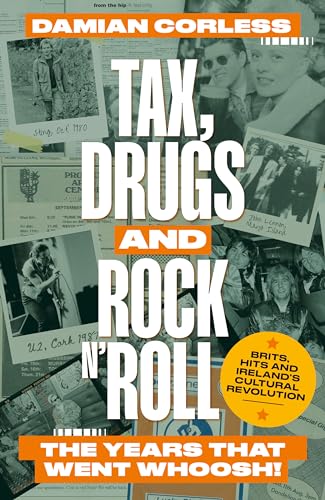
BOOK OF THE MONTH : MARCH 2025 : ‘TAX, DRUGS AND ROCK’n’ROLL’ by DAMIAN CORLESS

A good friend of mine spent time last year touring much of the coast of Ireland in a camper van.  He drove from Scotland to Cork to get things underway, and while in the city he picked up the book, Tax, Drugs and Rock’n’Roll to accompany him on the journey, having come across it in a store and reading the back page blurb:-

“How did an influx of British pop stars in the early 1980s kick-start a cultural transformation in Ireland?  The stars hadn’t come for the atmosphere or the creature comforts. They’d come for the tax breaks, to endure a ho-hum year of exile beyond the grasp of the UK taxman. What they found exceeded their expectations.”

Having read the book during the three-and-a-bit weeks he was on the road, my friend passed the book to me, saying that he’d be interested to hear what I thought of it.  Crucially, he didn’t say whether or not he had liked its contents…..

The author is Damian Corless, a Dublin-born music journalist, author, part-time bass player in bands and occasional writer of comedy sketches for TV programmes in Ireland and the UK. He begins the book with a prologue dating back to February 1981 when a newly emerging star of the Irish scene called Bono crashed his car into a telegraph pole outside the Corless family home, a random accident which changed the course of Damien’s life, and just four years later he landed a job on Hot Press, a monthly music and politics magazine based in Dublin.  There is no question that he’s very well-placed and connected to tell this story.

The book doesn’t just look at the musicians who came for the tax breaks in the 80s.  Indeed, its early chapters go back in time to John Lennon buying an island off the coast of Mayo in 1967, and the reasons why actors such as Peter Sellers and Robert Shaw set up home in Ireland in the 70s, before spending many pages describing how live music and culture was organised across Ireland, with constant reminders of how very rural and underdeveloped the country was for much of the 20th century.  In due course, we reached the point in time where the stories of how Phil Lynott and The Boomtown Rats came to be well-known are told, before a diversion into the tale of John Lydon ending up in jail after a fight in a Dublin pub in 1980.

It was all interesting stuff, but a long way removed from what the premise of the book was meant to be, but I suppose the scene had to be set and the context for what happened in the 80s had to be laid out, but it did feel like I was reading it under false pretences.

It took until Chapter 6 before we reached the part the blurb had promised.  A chapter called ‘Frances Rossi: The Rocker Who Set The Ball Rolling’.  It turned out that the Status Quo frontman, having intended to spend a year in Dublin in 1979 to reduce his UK tax bill, ended up falling for the city and staying there for a number of years.  The chapter was based on lengthy interviews with Rossi, and I have to say that I found it a bit of a chore, as I found his stories and anecdotes to be dull.  It was also a sobering reminder that the remainder of the book was going to celebrate rich tax-dodgers……..

Sting and Andy Summers of The Police soon followed Frances Rossi’s move to the Emerald Isle, but unlike the pony-tailed rocker, they never settled and moved away almost as soon as the time had come when there was no longer any tax gains to be had.  Members of Spandau Ballet, The Thompson Twins, Frankie Goes To Hollywood and Def Leppard were among those who arrived in later years, and while some of the anecdotes recounted in the book did bring the occasional smile (Holly Johnson accidentally finding himself as a shopkeeper for day in a small village shop primarily selling pottery), it was all just a tad self-indulgent.

Having said that, by Chapter 10 and Page 131, it was back to telling the story of how Ireland itself was beginning to change.  The remainder of the book looks at politics, censorship, the opening of a swanky Dublin nightclub (complete with VIP section for musicians and actors), the rise of U2, the successes of the Irish football team under an English manager, the decreasing influence of the Catholic Church in Irish society, the emergence of a new breed of Irish comedians and the vast physical regeneratuion of much of Dublin city centre.

The author brings his book to an end in 1995 when a peace process with the north of the country begins to become a reality.  The closing chapter brings together the various strands that had been explored, and makes the very valid point that Ireland had, over the course of less than two decades, undergone something of a cultural and social revolution.  But I have to say, that I found very little evidence that any of it was kick-started by UK musicians seeking tax breaks.

All in all, a frustrating read as it wasn’t the book I imagined it to be based on the back page blurb, with the British pop stars taking up a very small part of its overall contents.  And while it proved to be a worthy read for its wider context, it is not really a book about music or musicians.

mp3: A House – Here Come The Good Times

And yes, today was deliberately chosen to offer up this review.

JC

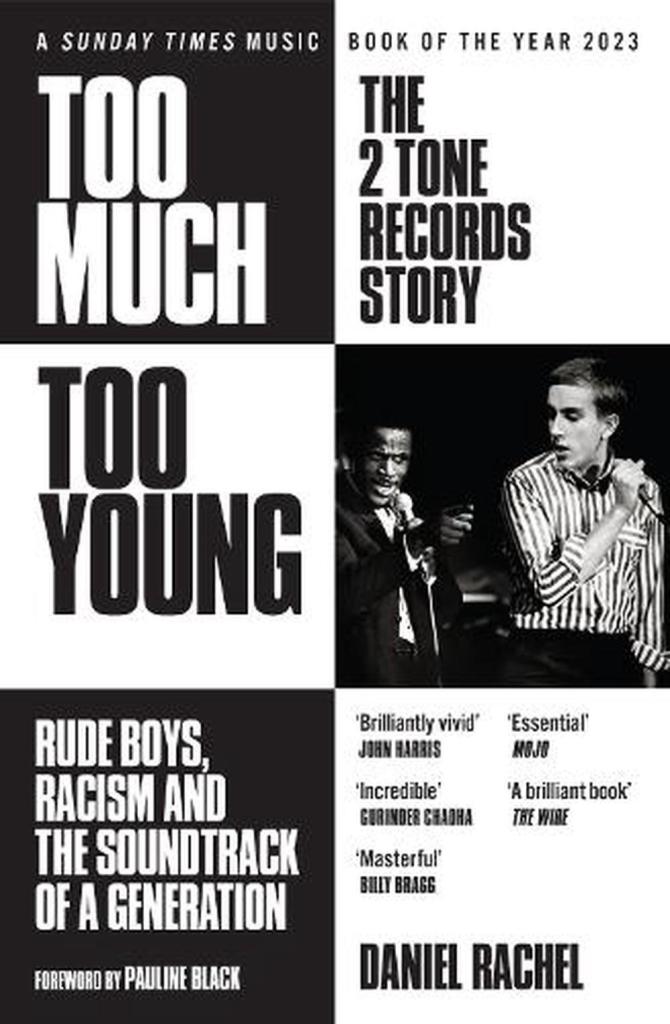
BOOK OF THE MONTH : FEBRUARY 2025 : ‘TOO MUCH TOO YOUNG : THE 2 TONE RECORDS STORY’ by DANIEL RACHEL

First published, to much acclaim, in hardback in 2023, an updated paperback edition was printed and issued by White Rabbit Books in April 2024.  Here’s the blurb from the publishers:-

In 1979, 2 Tone exploded into the national consciousness as records by The Specials, The Selecter, Madness, The Beat, and The Bodysnatchers burst onto the charts and a youth movement was born.

2 Tone was black and white: a multi-racial force of British and Caribbean island musicians singing about social issues, racism, class and gender struggles. It spoke of injustices in society and took fight against right wing extremism.

The music of 2 Tone was exuberant: white youth learning to dance to the infectious rhythm of ska and reggae; and crossed with a punk attitude to create an original hybrid. The idea of 2 Tone was born in Coventry, masterminded by a middle-class art student raised in the church. Jerry Dammers had a vision of an English Motown. Borrowing £700, the label’s first record featured ‘Gangsters’ by The Specials’ backed by an instrumental track by the, as yet, unformed, Selecter. Within two months the single was at number six in the national charts. Dammers signed Madness, The Beat and The Bodysnatchers as a glut of successive hits propelled 2 Tone onto Top of the Pops and into the hearts and minds of a generation. However, soon infighting amongst the bands and the pressures of running a label caused 2 Tone to bow to an inevitable weight of expectation and recrimination.

Still under the auspices of Jerry Dammers, 2 Tone entered in a new phase. Perhaps not as commercially successful as its 1979-1981 incarnation the label nevertheless continued to thrive for a further four years releasing a string of fresh signings and a stunning end-piece finale in ‘(Free) Nelson Mandela’.

Told in three parts, Too Much Too Young is the definitive story of a label that for a brief, bright burning moment, shaped British culture.

So…the question that arises.  Is it the definitive story?

I think the answer has to be a resounding ‘Yes’, and indeed none other than Pauline Black, the lead singer with The Selecter says the same thing in her foreword to the paperback edition.   She describes the book, the hardback edition of which appeared when a remastered copy of the 1981 film Dance Craze, along with its accompanying soundtrack had been released as a ‘….comprehensive, cautionary, but nonetheless celebratory saga of the 2 Tone label.’

It rightly focusses on the life and work of Jerry Dammers, but it really benefits from giving voice to a cast of many dozens who were involved, be they musicians, producers, band management, promotors, tour organisers, fans, journalists or record company execs. It also benefits from fantastic research by the author with countless quotes given at the time to the various music papers and magazines being used to shape the narrative.

The book, despite being almost 500 pages in length, rattles along at a fast pace.  2 Tone was an instant success, with Gangsters by The Specials reaching #6 in the summer of 1979, and before the year had ended, each of Madness, The Selecter and The Beat would also hit the charts with singles released on the label.

As the publisher states, the book is in three parts, the first of which will be the best known, taking in those early hits, the subsequent departures of Madness and The Beat as well as the signing of The Bodysnatchers.  It genuinely is incredible to be reminded of just how much happened in that short period of time, not just in terms of a new and highly successful record label emerging out of nowhere, but that it was all done against a troubling background where the idea of mixed-race bands didn’t go down well with many elements of society, while the punk element of the music, also attracted the wrong sort of attention.

The story of the 2 Tone Tour, in which The Specials, Madness, and The Selecter crisscrossed the UK from September through to December (during which time all three appeared on the same edition of Top of The Pops) seems beyond belief, not least how the musicians and their entourage faced up to the constant fear and worry of crowd violence from racist right-wing thugs, all of which sadly came to a terrifying crescendo at gig in Hatfield on 27 October.  It was reading about such violence that led to me deciding not to use the ticket I had for the show in Glasgow the following month – a decision I came to regret as the show passed without incident and by all accounts was one of the best nights that the now long-closed venue of Tiffany’s had ever seen.

The second part, which takes in events from late 1979 through to the autumn of 1981 when Terry Hall, Lynval Golding and Neville Staple left The Specials to form Fun Boy Three, was the section of the book I found to be most fascinating. The mix of contemporary quotes/ interviews given to the press and subsequent recollections from many of those involved paints a complex picture of the issues and problems facing the label, its bands and indeed the individuals within the bands, along with the increasingly- thorny relationship with parent label Chrysalis Records.  The deliberate effort by Jerry Dammers to move away from what was the atypical 2 Tone sound, culminating in the songs to be found on More Specials, the band’s second album released in September 1980 and the single Ghost Town, released in June 1981, caused all sorts of friction, and while some think it was just bloodymindedness on his part, others believe it was the mark of his unique talent and genius.  The author leaves it to the individual reader to make their own mind up.

The final part, with a satisfying and welcome amount of detail, covers the final five years of 2 Tone’s existence, with chapters devoted to Rhoda Dakar, The Appollinaires, The Higsons and The Friday Club.   It might well be a long way removed from the happy times of the opening chapters – I certainly had a feeling of melancholy as I turned the pages –  but again, praise has to be given to the author for the skilful way he navigates his way through the turbulent waters.

The 2 Tone legacy is far greater in quality than quantity.  There were just 29 singles, 6 studio albums and 2 compilations across the six years.  Just twelve of the singles were released between 1982 and 1986, and only one of them was a chart hit.  But it’s the voices of the people involved that make this such great, engrossing and essential read.  The author, in his acknowledgements at the end, offers ‘an enormous thank you to all the contributors who generously gave their time to talk to me’.  It’s a list which runs to over 100 names all told, which in itself tells you how deep the research has been.

I’ll just about leave the last word to Suggs.

‘Daniel Rachel has bagged the whirlwind of 2 Tone with joy, honesty and compassion.’

He sure has.

mp3: The Specials – Ghost Town (12″ version)

JC

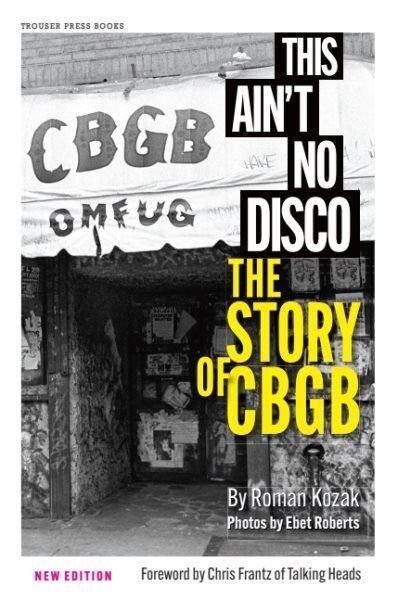
BOOK OF THE MONTH : JANUARY 2025 : ‘THIS AIN’T NO DISCO’ by ROMAN KOZAK

I’m hoping I can make this a monthly feature.

The idea is to give you some thoughts on a book, associated with music, that I’ll have recently just finished reading. Who knows, if I can get my act together, it night even become a bit more frequent….and as with all TVV series, the door is very firmly open if anyone who wants to submit a guest posting.

This was one which was on the Xmas wishlist.  I’ll set the scene by quoting how Amazon sold it to me in terms of it being added to said wishlist.

Originally published in 1988 and out of print for decades, This Ain’t No Disco tells the real story of CBGB, the birthplace and incubator of American punk and new wave music. The Ramones, Blondie, Television, Talking Heads and many other rock greats all got their starts there. Written by a club regular well before the legend overtook the reality (while CBGB was still open and most of its principals alive), this is an honest, opinionated, outrageous, hilarious document of 15 years of late, loud nights at CBGB, with memories, stories and gossip from dozens of people who played, worked or just hung out in the long, dark club on the Bowery in New York City.

This new edition (published on 15  October 2024) adds a new foreword by Chris Frantz of Talking Heads, a new selection of photographs by the acclaimed Ebet Roberts and archival reporting by Ira Robbins about the club’s closing in 2006.  It contains exclusive interviews with Hilly Kristal (CBGB founder), Joey Ramone and Dee Dee Ramone (Ramones), Clem Burke and Chris Stein (Blondie), David Byrne (Talking Heads), Jim Carroll, Willy DeVille (Mink DeVille), Annie Golden (Shirts), Richard Hell and Richard Lloyd (Television), Lenny Kaye (Patti Smith Group), Handsome Dick Manitoba (Dictators), Wendy O. Williams (Plasmatics) and many others.

As a teenager, I was fascinated by America, and in particular New York City.  It was a place I never imagined I’d get to see as, until the late 1970s/early 80s, transatlantic air travel was very much the preserve of the well-heeled and/or famous.  Besides, the newspapers didn’t sell the city too well, and so the fascination was something which always felt as if it would be a pipe dream.  In terms of music, I really was only aware of five venues – Madison Square Gardens, Greenwich Village, Max’s Kansas City, Hurrah’s and CBGB – with the latter three being down to reading about them in the UK music papers or seeing them as locations where some of the new wave acts had made live recordings for b-sides and/or for use on compilation albums.

Blondie was one of the first groups that this late-teen fell for, and almost all the interviews and/or background pieces in the music papers made many references to how their development had centred around loads of gigs at CGGB.  My first ever trip to New York wasn’t until a time when my job took me there, and such was the packed schedule that there was no time at all to try and visit the venue – indeed, much to my frustration, I couldn’t even free up any time to take in any sort of live music while I was in thercity.  I’ve only been back to NYC on two more occasions – the first again being on business, and the second being when I had one overnight stay to break up a return trip from a Caribbean, and the day was spent doing the whistle-stop touristy stuff on a bus.  As such, and much to my annoyance, I’ve still never been to a gig inb New York.

So, the idea of reading This Ain’t No Disco was to have an imaginary visit to the esteemed venue back in the day, ideally on a night when one of my favourites happened to be playing.   I have to say that I thoroughly enjoyed Roman Kozak‘s account of things, and he really did bring to life the sights, sounds and personnel who made it such a success, very much against the odds.  I knew that the club was in a far from luxurious or even welcoming part of the city, but had no idea that it was actually beneath an establishment called the Palace Hotel, which was the largest flophouse for homeless men on the streets of Manhattan, and that 315 Bowery was a notorious address.

There was so much I either learned or was reminded of.  I knew that CBGB was short for ‘Country, Bluegrass, Blues’ as the idea when it had opened up was to concentrate on those types of music – the fact it ended up being at the heart of the new wave scene in New York wasn’t part of the original plan, but then again I had long forgotten that the second part of the venue’s name was ‘OMFUG’ which was short for ‘Other Music for Uplifting Gourmandizers;, so it was always a likelihood that Hilly Kristal would open its doors to whoever was capable of drawing a crowd.

And while Hilly is at the heart of much of the book, the author really does draw on the thoughts and memories of unsung heroes who worked at the club in all sorts of capacities from bartending, security, finance, kitchen staff, sound technicians and so on, as well as members of the Kristal family.  The famous musicians (or those who became famous) are well-quoted, but so too are those from bands who never made it, but were very much part of the scene in and around the club.  Those who wrote about what has happening are given space to offer their own recollections.  I learned about Merv Ferguson, a Scotsman who was integral to the operations of the venue, and indeed is described as ‘the heart, soul and glue that held CBGB together’ prior to his death, in his early 40s, after succumbing to cancer of the colon.  I found out more about bands such as the Dead Boys who I only vaguely knew of in passing and read, for the first time, about acts such as Tuff Darts and The Shirts, of whom my knowledge beforehand was zilch.

It’s an oral history as told by many different people, and as such, some incidents and events are recalled in ways that can seem contradictory.  But I think this is one of the book’s strengths.  Roman Kozak, who himself died at the age of 40 just after the book was originally published, doesn’t put his voice above anyone else’s to offer his take on things.  His trade and profession was as a writer/editor, initially in newspapers and later at Billboard magazine, which is primarily a trade paper for the music industry, and he seems more than happy to let those who wrote for the likes of Village Voice, Trouser Press and Soho Weekly News to provide a more astute take on things.

I hadn’t appreciated how the club had evolved in the wake of the new wave/post-punk era coming to an end. The book’s original publication in 1988 came at a time when it was increasingly home to a scene around metal/hardcore, with the pogo dancing of the 70s being replaced by body slamming. I’m not entirely sure that if I had made it to NYC in the mid-20s whether or not a visit to CBGB would have thrilled me.

The newly published version of This Ain’t No Party is interesting for the fact that nobody has come in to try and offer a take on things between 1988 and 2006 when the club was forced to close its doors after a long-running dispute with the landlord ended with the lease not being renewed. It simply offers up a couple of magazine pieces – one of which was written in 2005 when it became increasingly clear the club was seriously under threat, and the other being an article written for a New York newspaper the day after the final gig, which had been a three-hours long set by Patti Smith, with all sorts of alumni on stage or in the audience.

There was a much to enjoy about the book.  As the blurb on the back page says, ‘written long before the legend overtook the reality – while the club was still open and most of the principals still alive – this is the real story’.

And it’s a really good one at that.

mp3: Patti Smith – Kimberley
mp3: Television – Friction
mp3: Blondie – X-Offender
mp3: Talking Heads – Life During Wartime

JC