ON THIS DAY : THE FALL’S PEEL SESSIONS #12

A series for 2025 in which this blog will dedicate a day to each of the twenty-four of the sessions The Fall recorded for the John Peel Show between 1978 and 2004.

Session #12 was broadcast on this day, 31 October 1988, having been recorded on 25 October 1988.

To herald the release of ‘I Am Kurious Oranj’, and the collaborative show with Michael Clarke, The Fall repaired to Maida Vale for this exceptionally sprightly recording.  The clear production of ‘Kurious Oranj’ really emphasises the brio in the skank. The group’s two interchangeable romps, ‘Deadbeat Descendant’ and ‘Cab It Up; follow.  ‘Cab It Up’ rocks along like, if you will, the purr of a diesel engine. ‘Squid Lord’ is a revelation, and one of the hidden gems of this (box set) collection. Buried on the frankly unlistened-to-for-years ‘Seminal Live’, the direction of ‘Extricate’ and the Fontana years had their roots in this track

DARYL EASLEA, 2005

mp3: The Fall – Deadbeat Descendant (Peel Session)
mp3: The Fall – Cab It Up (Peel Session)
mp3: The Fall – Squid Lord (Peel Session)
mp3: The Fall – Kurious Oranj (Peel Session)

Produced by Mike Robinson

Mark E Smith – vocals; Brix Smith – guitar, vocals; Craig Scanlon – guitar; Steve Hanley – bass; Marcia Schofield – keyboards, vocals; Simon Wolstencroft – drums;

JC

THE 7″ LUCKY DIP (38) : Siouxsie & The Banshees – Happy House

Here’s what a few other folk have said at different times about this rather splendid single:-

“The band almost invented a new sound with this single: It was Banshees – phase two” : SIOUXSIE -INTERVIEW ON GERMAN TV, 1999

“It is sarcastic. In a way, like television, all the media, it is like adverts, the perfect family whereas it is more common that husbands beat their wives. There are mental families really, but the projection is everyone smiling, blond hair, sunshine, eating butter without being fat and everyone perfect” : SIOUXSIE – INTERVIEW ON DUTCH TV, 1983

“With Slits drummer Budgie giving the band a new rhythmic groove and Magazine guitarist John McGeoch providing greater musicality, the Banshees tore up their plans and reinvented themselves. In came pianos, drum machines and reggae polyrhythms, as they began a gradual shift to twisted pop, Happy House finds Siouxsie poking macabre fun at the mirage of happiness of the family unit in a consumer society. By the time the group took it on to Top of the Pops, Kohl-eyelinered Siouxsie clones were a feature of many British high streets. As she transformed the role of a female frontwoman into something powerful, mysterious and dominant, teenage fans were painting their bedroom walls black, and acquiring the singer’s deeply-held interest in the supernatural. Yup, the Banshees had invented goth.” : GUARDIAN NEWSPAPER – OCTOBER 2014

With the single “Happy House,” it felt like Siouxsie and The Banshees had opened up the curtains and let in the light. It was still very dark (the song is about a madhouse), but compared to the earlier “Mittageisen” and the epic takedown of “Drop Dead/Celebration,” it was walking on freaking sunshine” : PROGROGRAHY.COM – OCTOBER 2019

Siouxsie has a very distinct, unique voice and this song layers her vocals, as well as echoes, to create an eerie auditory atmosphere. Her voice, combined with the loud and haunting instrumentation, creates lots of texture for a relatively simple song. Even if you are unfamiliar with the original, the guitar riff has been sampled repeatedly by popular artists, including Mindless Self Indulgence and The Weeknd. The hypnotic instrumental is arguably more iconic than the song as a whole. : ELLI BATCHELOR, COLLEGE OF CHARLESTON BLOG, APRIL 2023

“Despite this having long been one of my favourite 45s by the band, it has never before featured on the blog, so let’s give thanks to the 7” lucky dip series.  It spent eight weeks in the UK singles chart between March and May 1980, peaking at #17 in early April.  : JC , THE NEW VINYL VILLAIN BLOG, OCTOBER 2025

mp3: Siouxsie & The Banshees – Happy House

The b-side, as mentioned above, has a frighteningly dark lyric and tune to match.  Really surprised that it hasn’t yet been picked up by the darker elements of the TikTok generation

I hate you, I hate you!I hate you, I hate you!
Drop dead!You stinking little creepDrop dead!With your emotions so cheapYour poisoned mind,It’s disgusting everyoneWe don’t care if you vanish in thin air!
Drop dead!It’s a dead dropYou’re a dead lossDrop dead
You should be pushed downDown into the ground amongst the wormsAnd other spineless thingsDon’t you see you’re embarrassing to meI can’t stand that phony way you banter!
Drop dead!It’s a dead dropYou’re a dead lossDrop dead!
You’re so patheticAn insipid, dried up slugKeep your mouth shut, you impotent little slutI’m so ashamed to be connected with your nameYou’re so lameI wish you’d never been to blame
Drop dead!It’s a dead dropYou’re a dead lossDrop dead!
Those wordsTight-lipped and mealy-mouthedIt wasn’t hard to realize that they were liesJudging from the flies you’ve attracted from the skiesSo just get lostFuck off!And disappear into the compost!
Drop deadStinking little creepDrop deadDrop dead
Celebration

mp3: Siouxsie & The Banshees – Drop Dead/Celebration

You’re unlikely to experience as an intense four minutes and twenty-two seconds of time elsewhere today.


JC


MORE ‘STEALING’: THE GUEST SERIES IN BOOK FORM : #7 : STEPPENWOLF

A guest posting by Steve McLean
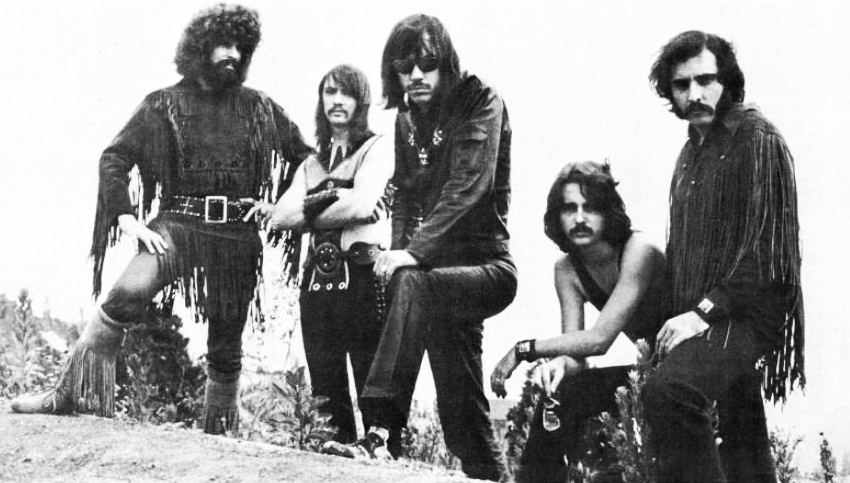
I’ve been having trouble deciding whether or not I should write this blog. The tale forms a large part of the back story for my book Stealing Deep Purple (DeepPurpleBook.com).

The problem is when I started the book I was so much more certain of the Steppenwolf story than I am now. I have spent months researching things like tour dates, gig guides and reviews. The more I find out, the less I know.

The many members of The New Steppenwolf band(s) seemed to increase every time I turned on my laptop or another story would emerge often contradicting the previous narratives… so I’ll try to be brief.

When Steppenwolf broke up in 1976 they had been reduced to two original members with various hired guns making up the numbers. Singer John Kay and drummer Jerry Edmonton were the last men standing.

In late 1976, founding member and Keyboardist Goldy McJohn reached out to his former bandmate, Nick St. Nicholas, to tell him that that a promoter had expressed an interest in putting together a new line up of the mighty ‘Wolf. Steve Green of Advent Talent Associates out of Phoenix, Arizona was a promoter who specialised in band reunions. The acts on his roster were often only loosely connected to the actual bands they purported to be. Green hatched the idea to ‘reform’ a Steppenwolf band with as many original members as he could.

“It was Green who got the idea to reunite a Steppenwolf band. Steve contacted Kent Henry first, then Nick St. Nicholas and Goldy McJohn…Steve essentially formed a Wolf revival band around me. Kent, Nick and Goldy had never met Steve Green.” Tom Pagan, Wolf Sightings Website

McJohn and St Nicholas would join up with Tom Pagan and Kent Henry, the former Blues Image member who had been in Steppenwolf for one album in 1971 (For Ladies Only) The band would be filled out by Jamie James on Guitar, Tony DeSanti on drums.

“I got this flurry of calls from Steve Green, promoters, attorneys. (They said) ‘Nick you gotta do this thing, it’s legit. We’re in touch with John and Jerry. What are you waiting for?” Nick St Nicholas, Magic Carpet Ride: The Autobiography Of John Kay And Steppenwolf by John Kay and John Einarson (Quarry Press, 1994)

By the start of 1977 the Steppenwolf ‘reunion’ tour was on the road. Green and Goldy figured they had at least partial rights to the name and the inclusion of Henry and St Nicholas would only consolidate that. John Kay did not agree.

Kay consulted legal advice but despite selling a shit load of records in the 1960s, he wasn’t exactly a rich man. John Kay didn’t have the money for legal action;

” They (lawyers) said we’d be well served by listening to what they wanted, which was to use the name and be left alone. We reluctantly allowed Goldy and Nick to lease the use of the name from us for a percentage of their gross earning, payable at regular intervals. (Steve) Green had apparently convinced Nick and Goldy that they were going to make millions. It was a small price to pay, they figured.” John Kay, Magic Carpet Ride: The Autobiography Of John Kay And Steppenwolf by John Kay and John Einarson (Quarry Press, 1994)

Also in the contract that Kay presented to McJohn and St Nicholas was the clause that they’d lose the rights to their royalties if they should default on the agreement. A contract like that in 2025 might well be illegal but they both happily signed it. This might seem like an inept move, but with the promise of majority percentage of the profits in an arena-headlining act with the possibility of a new recording deal, it’s easy to see how McJohn and St Nicholas were persuaded to continue.
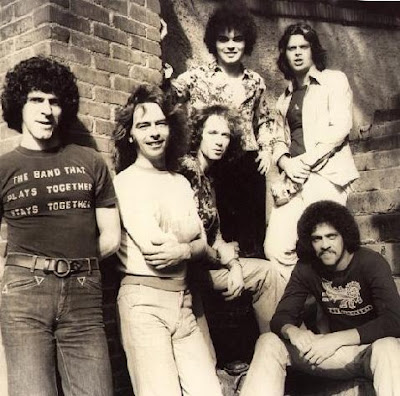
(The New Steppenwolf 1977 L – R : Goldy McJohn, Kent Henry, Nick St Nicholas, Jamie James, Tony DeSanti, Tom Pagan)

The agreement gave the reconstituted band a certain amount of confidence, they were supposed to be billed as The New Steppenwolf but often the ‘New’ prefix would be ignored. On occasion they’d be called the Original Steppenwolf.
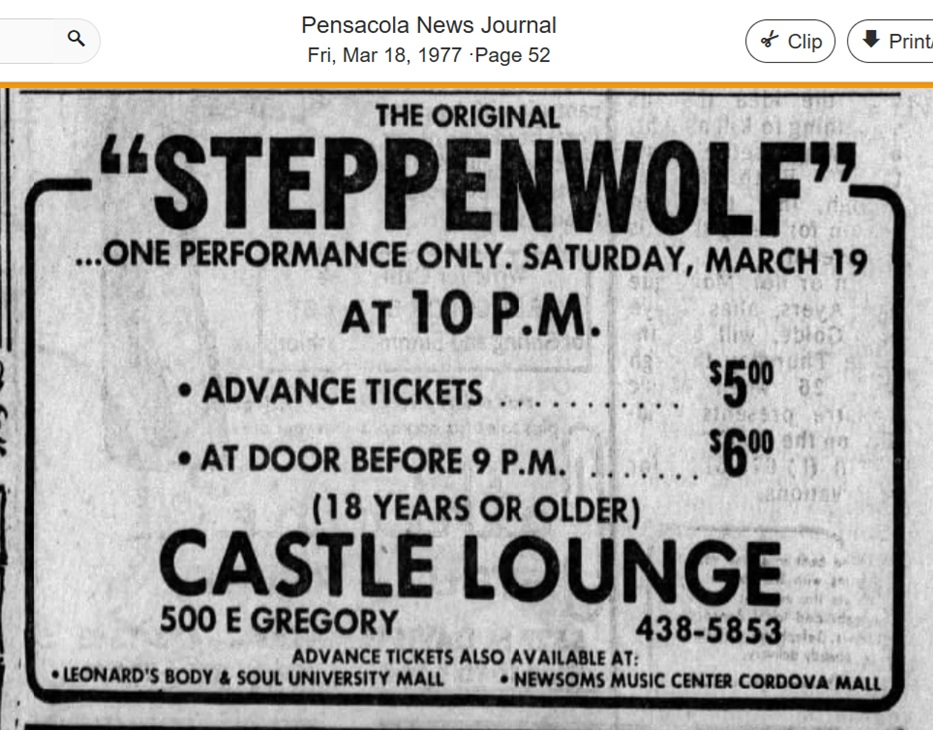
(The “Original” Steppenwolf)

It wasn’t too long before Henry “quit” the group and was replaced by Tony Flynn. Over the next few months there’d be multiple comings and goings, with Henry and Goldy both in and out of the band. Both would perform with backing groups billed as Steppenwolf.
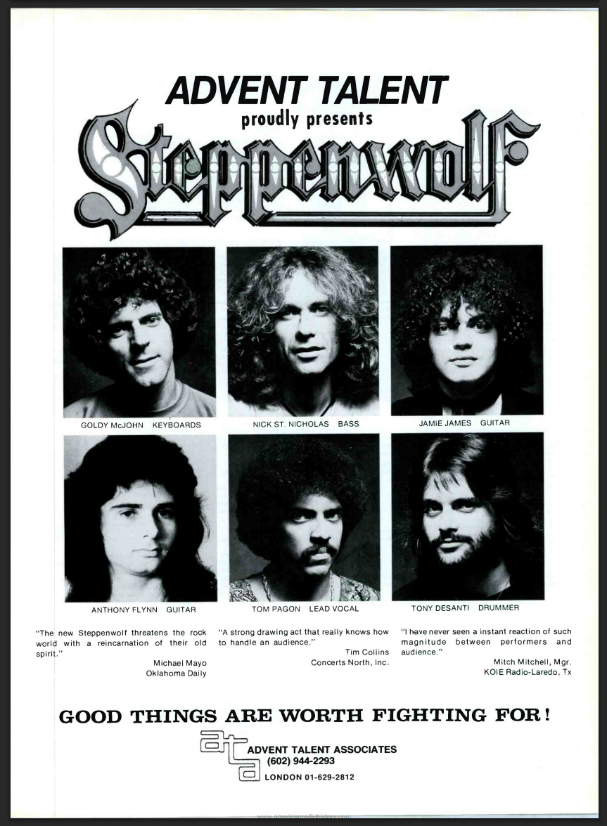
(Advert in Cashbox September 1977 – Enter Tony Flynn)

I’ve documented multiple instances of two Steppenwolf bands performing at the same time.. There have also been multiple stories about the members of The New Steppenwolf eventually fracturing and taking their own versions of the band out on tour. It seems this practice was in place pretty much from the start. An advert for a Kent Henry led Wolf band was posted as early as Spring 1977
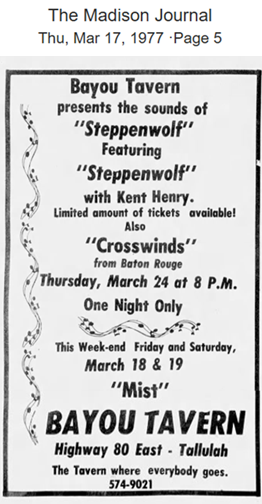
(Steppenwolf Featuring Kent Henry)

Given that Henry’s involvement for the proper Steppenwolf lasted for only around a year, the brass neck involved in this is shinier than Donald Trump‘s ring piece after an interview with Piers Morgan.

What I can’t work out is how much of the multiple bands were part of the plan and how much of it was the individual members, who had signed Kay’s contract, thinking that they had open season on the name Steppenwolf.

It’s probably safe to say that the various McJohn and St Nicholas’ versions of Steppenwolf were operating in cahoots. The Kent Henry version of the band was perhaps more of a rogue element, although they seemed to be also promoted by Green.

However, they never seemed to stumble over each other, playing shows in different parts of the states, even if at the same time. A combination of the band’s profile and the state of the mass media in the US at the time meant that a Steppenwolf band could comfortably play in two states at the same time with little in the way of news of either show leaving their respective towns of the gig. When Steppenwolf were booked to play shows in Germany they were also booked to be playing shows in Canada.

The best I can make out is that there would be at least one version of the band on the road at all times with another version ready to pick up the touring commitments when the first one was knackered. Add into that I think there was also a ‘pool’ of Steppenwolf musicians who would play ‘one-off’ type shows at festivals or tour different countries (usually Canada but sometimes Mexico). A 1996 interview with Steve Green in the Kokomo Tribune has him refer to these kind of shows as ‘soft seaters’, they were characterised as “fairs, festivals, rib fests, car shows’.

Then there were ‘the big shows’. Steppenwolf’s back catalogue would mean that they could still be a popular draw with the right branding. So, it wouldn’t be uncommon to see them on a ‘package’ bill with other Steve Green bands like Iron Butterfly or Cactus. The right concert line up could sell enough tickets to fill up three quarters of a 5,000 capacity arena, either in a remote location or on a party day like Labor Day or New Years Eve. People love a ‘Greatest Hits’ band on the right day of the year. I think these ‘big’ shows were reserved for the ‘main’ band whoever that might be at the time.

“I was in the band from the winter of late ’77 (tour in Europe), through New Years Eve at the Orlando Sports Arena, through the beginning of ’78 when Goldy took out a new band for Steve Green. Our Nick St Nicolas/Kent Henry version resumed touring in the summer of ’78 with Jim Hunter on drums, when I originally joined the previous fall I replaced Goldy” Evan Smith, Wolfsighting Website 2011
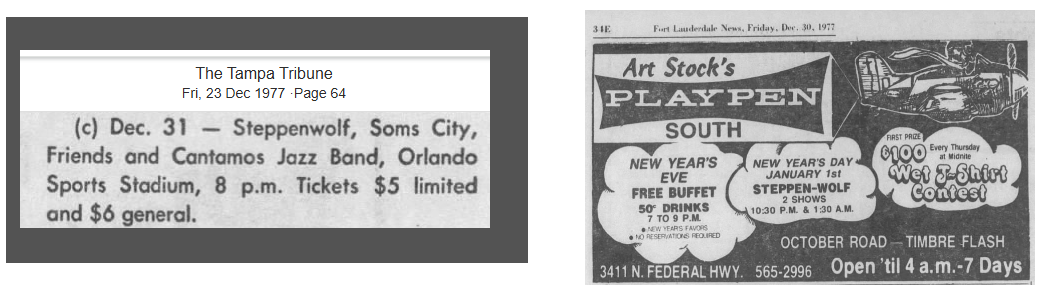
(The plight of a reconstituted band. One night you’re headlining 5000 capacity sports stadium

and the next you’re playing second fiddle to a buffet and wet t-shirt contest)

On one hand it makes perfect sense. Assuming most members apart from McJohn, St Nicholas and maybe Henry were on wages, leaving the licensee holders on profit share, then booking more than one group at once would maximise the amount of money the core members would receive.

As mentioned above, It was possible to do because news travels slowly in the 1970s small town America. Most newspapers have syndicated showbiz stories and it wasn’t uncommon for a music related article that ran in say a December issue of a Florida newspaper to be still running in a Californian publication by March. Gig reviews didn’t tend to travel. If a punter had heard of a Steppenwolf reunion and then Steppenwolf Featuring Kent Henry shows up at their local venue, they’d almost certainly assume that both were the same product.  The dedicated music press like Rolling Stone magazine didn’t really care about Steppenwolf in the late 1970s and this worked to the band’s advantage.

By 1978, the pretence of a reunion tour had faded. Steppenwolf were now being booked like a bar band. If they have a booking for New York one evening and then the next they’re supposed to be in Texas, so be it. This is where the multiple versions of the band comes in handy…. And adds substance to my theory that it was less of a band and more of a franchise.

From 1977 until mid 1980, there was a band called Steppenwolf on the road somewhere in the world. Germany, Holland, Canada, Mexico and of course, the USA. I count over two dozen members to have appeared in the line ups over the course of three years. One Henry-led band also featured original Steppenwolf bass player Rushton Moreve. There were four members of Steppenwolf spread out over many different groupings.
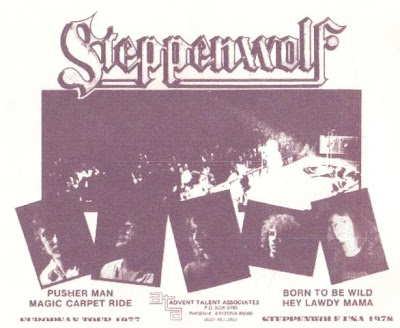
 

(Rushton Moreve, Bob Simpson, Kent Henry, drummer Jerry Posin and keyboard player John Hall.)

In 1979 there was at least one version of a Steppenwolf band with absolutely no members who had been in the group during their original run. Tony Flynn and Geoff Emery had found themselves with the name and some tour commitments to fulfil between 1979 and 1980. The problem of no original members was only a problem if the audience knew about it.

“One night Flynn even introduced himself on stage as Michael Monarch (the original Steppenwolf guitarist). Each night they’d say, ‘Who’s gonna play the original member this time?’ ” Lor Kane, Steppenwolf lead singer, Los Angeles Times, August, 1980

In 1979 John Kay had had enough. His patience for the various Steppenwolf’s ran out around about the time the band had stopped sending his licence fees, make of that what you will. The bad press reports of a name that he was associated with were mounting up. I should take this time to point out that not every show that the New Steppenwolf played were poor. As with all of these stories, history has a habit of deciding one thing or another. There are plenty of great reviews for Steppenwolf between 1977 and 1980, including an excellent one for a Kent Henry led version in Anchorage in January, 1980.

When the actual Steppenwolf broke up in 1976 they were still big enough to headline festivals and play small arenas. By mid-1979 they were reduced to dive bars and small theatres (albeit venues that held around 800 people). One of Kay’s main bugbears was the damage being done to Steppenwolf’s name.

The various versions of the band would turn up in various states of sobriety and play to various levels of ability. Steppenwolf’s reputation was in the toilet. It may have taken a couple of years, but the public were now asking questions about the membership.
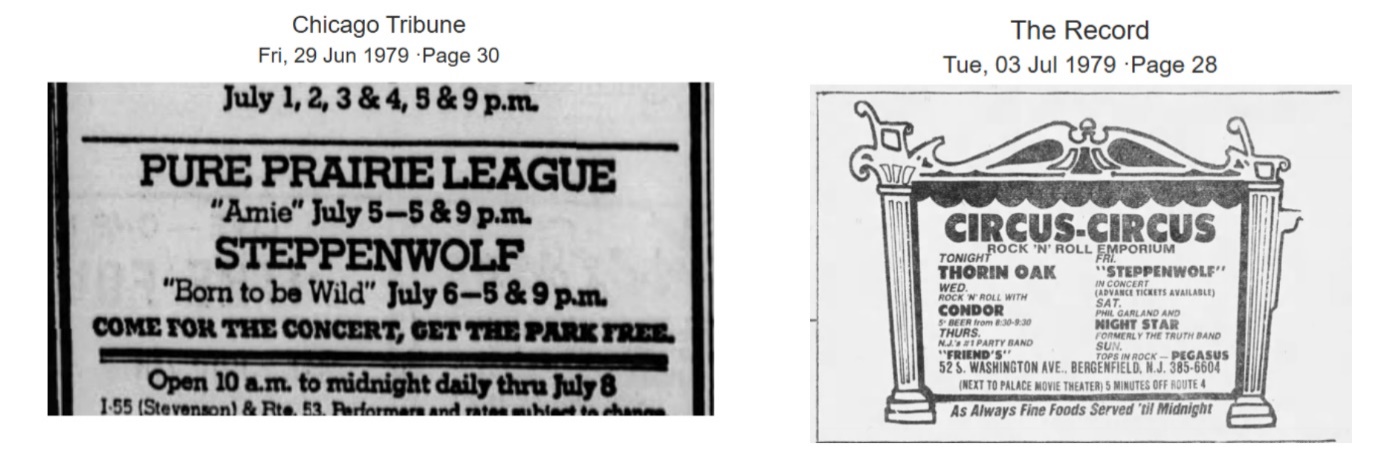
(Adverts for two Steppenwolf shows on Friday July 6th 1979, one in Chicago and one in New Jersey. A 12 hour drive away from each other)

Before Max Allen Collins wrote Road To Perdition he was a member of a bar band called Cruisin in the Iowa area, playing the same venues at the same time to that of the various Steppenwolfs. In an email to me he was able to shed some light on the kind of venue The New Steppenwolf had found themselves playing. He remembers The Moody Blue in Iowa.

“(It’s) Hard for me to believe Steppenwolf would play such a medium-size club/bar. The Moody Blue was on the grungy side, if I recall correctly, two adjacent rooms open to each other, with one that had a fairly high stage and the other was (I believe) the bar area.  So you could dance in one area and drink in the other. There was an upstairs with dressing rooms, again grungy, and a large parking lot.” Max Allen Collins, Cruisin Member Via Email, 2025

For a band that reportedly commanded a $100,000 per show at their peak, this was a hell of a comedown.

Kay’s lawyers started to pursue the various ‘Wolfs for their failure to uphold their contractual obligations. In retrospect it’s hard to tell if Kay’s licensing contract was all part of a cunning plan or just a lucky stroke. Certainly, Kay will claim he was playing a long game because he knew that a contract dispute was a shorter and cheaper court case than a trademark dispute.

“(We) assumed correctly that Nick, Goldy and Steve would inevitably have a falling out. There were certain people involved in this scam who, by reputation, were questionable at best.” John Kay, Magic Carpet Ride: The Autobiography of John Kay and Steppenwolf by John Kay and John Einarson (Quarry Press, 1994)

If it was all a long-game then it wouldn’t be hyperbole to suggest that Kay’s contract amounted to a very clever honey trap. If there’s a written agreement to pay a regular percentage and that payment stops at any point, it that can be easily proved. Bank statements are simple things to produce.

“At some point cracks would start to show, and when that occurred, they would be in default. Then we would have them by the balls. Failure to live up to the conditions of the agreement would result in complete forfeiture of the name forever and continued use would be illegal.” John Kay, Magic Carpet Ride: The Autobiography Of John Kay And Steppenwolf by John Kay and John Einarson (Quarry Press, 1994)

The problem for McJohn and St Nicholas was that ultimately they were the ones left holding the baby. While there were many members of their Steppenwolf bands, it was their name on the licensing agreement.

“The guys behind the whole thing were heavy duty. They screwed me so hard and fast that I didn’t know where I was coming from. But once I signed off on the whole thing, I thought I’d get my royalties back.” Nick St Nicholas, Magic Carpet Ride book

While Goldy shouldered much of the burden of the legal case, Henry and St Nicholas may be seen as hapless fall guys or they could be viewed as wilful collaborators. What can’t be denied is that they were both adults in full control of their faculties who made the decision to align themselves to this project.

According to Kay’s biography, due to the frequent actions that were deemed to go against the signed contract, Kay and his legal team sent licensee holders notification of a breach and when there was no response or action with a specific amount of time, he sued for an injunction on the basis of a failure to meet contractual obligations. A judge ruled in Kay’s favour and as a result the other members had to give up their claims to the band name. As per the contract, Goldy McJohn and Nick St Nicholas also lost their royalty payments for previous work. A harsh punishment, perhaps.

“They knew what they were signing. We gambled that they would default and that sooner or later they would turn on each other, they did not disappoint.” John Kay, Magic Carpet Ride: The Autobiography of John Kay and Steppenwolf by John Kay and John Einarson (Quarry Press, 1994)

In late 1979 John Kay took the name back and spent the next decade returning to the venues that the New Steppenwolf had played, eventually returning them to an arena band under the name John Kay and Steppenwolf.

For a while this would mean yet another version of Steppenwolf were on the road and sometimes Kay’s band would just be billed without his moniker at the start.

From the 1980s onward Goldy, Nick and to a lesser extent Kent Henry would find themselves in various bands with names like The Wolf or Starwolf or Magic Carpet Ride or a multitude of other bands that gained their passage under the Steppenwolf banner.

Kent Henry passed away in 2009. He had a lifetime of drug issues and in the 1990s started to suffer from seizures and developed the early stages of Alzheimer’s disease shortly before his death. During the late 1970s into the 80s he fronted a new version of the Blues Image.

Goldy passed away in 2017 of a heart attack. After a stint in the reformed Humble Pie he went on to front Goldy and Friendz, which was a de-facto New Steppenwolf band and they became The Magic Carpet Ride.

Nick St Nicholas is still alive as of September 2025. He’s involved in a ‘supergroup’ that play Las Vegas called The World Class Rockers that feature the likes of Aynsley Dunbar (Journey, Whitesnake), Greg Walker (Santana),  Michael Monach (Steppenwolf) Randall Hall (Lynard Skynyrd, but the 90s Skynyrd) and Fran Cosmo (….nope, me neither).. Playing if fast and loose with the word ‘supergroup’…. They’re probably okay if you need a break from the cocaine and gambling.

In 2018 John Kay decided to retire Steppenwolf.  He still plays the occasional solo blues shows.

As late as 2024 the Steppenwolf name was still being misused. A tribute show called “Revisit Steppenwolf” claimed to feature some people who’d been in Goldy McJohn’s band ‘Goldy and Friendz’ plus members of The New Steppenwolf and John Kay and Steppenwolf.  It’s not entirely clear how much of this is true since an advert for the show also promoted the fact that Kent Henry was in the band…. Kent died 10 years before the advert was placed.
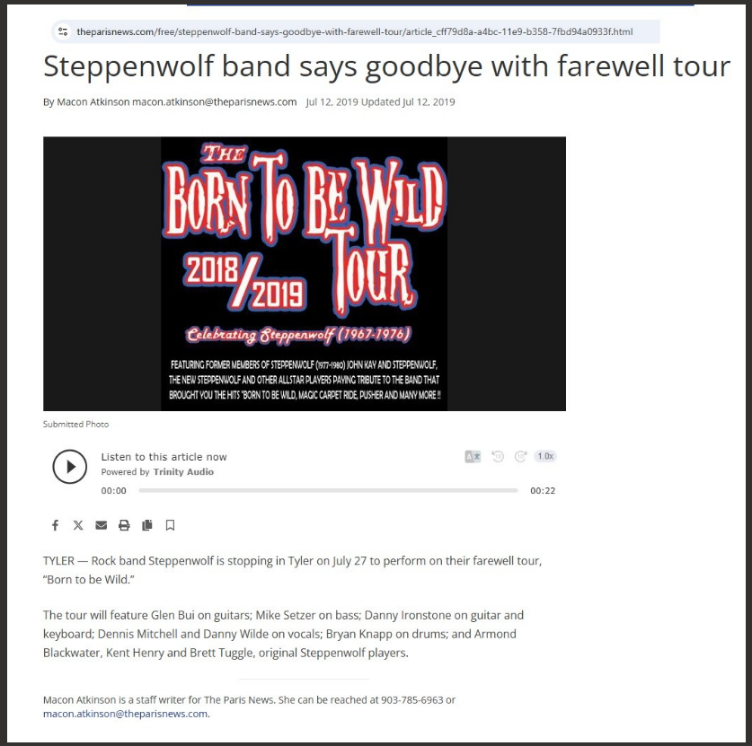
(Revisit Steppenwolf; Born To Be Wild tour – who says an intern can’t design a good logo)

The singer is a chap called Danny Wilde who was apparently a survivor of the 1980s LA Rock scene. In 2019 Revisit Steppenwolf (which at times found itself just billed as Steppenwolf) announced a final tour. One pandemic and four years later and Danny Wilde is advertising himself as the “Former frontman for multi platinum selling band Steppenwolf”. 

This info was posted in Steppenwolf Facebook fan group and it was countered with the fact that John Kay’s manager monitors the group for such things and it will now get ‘sorted out’. Although at this point it feels like two bald men fighting over a comb (to Scottish football fans this is also known as The Old Firm Derby).

Following this up was a post from someone who had briefly been in the original Steppenwolf, The New Steppenwolf and was a performer on the Steppenwolf Revisited tour.  It seems that the threat of Kay’s manager might carry some weight.

“I played keys with many variations of Wolf since I replaced Goldy after John fired him in 1975. Glen Bui’s Steppenwolf Revisited was the last iteration I played in. Fans would ask and Glen Bui (Former Goldy and Friendz member) would launch into a long history lesson on band mates, court actions and Federal judge rulings. I wound up regarding Goldy as a dear friend through a series of conversations we shared until his untimely death. Goldy was one of my greatest influences on Hammond organ. I loved his crunchy sound and his percussive Jon Lord approach. We had many lead singers over the years but the only Danny I’ve ever heard of was my B3 brother Danny Ironstone.”  Armond Blackwater, Steppenwolf Member 1975, New Steppenwolf Member 1978 speaking in the Friends of Steppenwolf Facebook Group 2025.

This could well be true, everything was such a long time ago and certainly any show advertising a deceased guitarist can’t be trusted. However a musician that Armond tagged in his post, Glen Bui, had previously tagged Danny Wilde and Armond in some gigs together.

It seems that nearly fifty years after John Kay first chose to franchise the band, that there’s still call for a group called Steppenwolf. In a perverse way, that’s not actually too bad of a legacy.

Thanks for reading this. The problem with this story is that the devil is in the detail. Once I’ve managed to document all of the band members that I can, I’ll start work on making sense of the whole shebang. There’s a book in this, or at least several other blogs.

I’ve not picked any songs to go along with this blog as I didn’t want to interrupt the flow of an already condensed story. But it’s well worth recognising that Steppenwolf did produce some killer heavy rock. Born to be Wild is the obvious call but I think it has been overplayed. Magic Carpet Ride is still an absolute classic.

mp3: Steppenwolf – Magic Carpet Ride

From the mid 1970s, John Kay had a strong desire to be recognised as a solo artist but it sadly never really happened for him. All of his most successful work was done between 1967 and 1972.  He did have a great career, headlining arenas up until his retirement. It seems fitting to enjoy a lost John Kay classic; The minor hit, Moonshine (Friend of Mine) is from his 1973 album My Sporting Life (Steppenwolf were on their first break at the time)

mp3: John Kay – Moonshine (Friend Of Mine)

I’ll repeat here in closing; I think that the New Steppenwolf needs to be seen as less of a band and more of a team orchestrated by the promoter and the main-men of the group. Like a musical version of Mission: Impossible where the leader chooses who’s right for the gig and by right I mean who’s available and who’s cheapest. “Jim, we need two teams (bands) to do two separate missions (gigs)? Did I say two? I meant four”

Incidentally, three of the musicians in the New Steppenwolf, Tony Flynn, Geoff Emery and Dick Jurgens (who sounds like an STD) went on to be involved in The New Deep Purple…. But that’s another story.

I’d like to thank Max Allen Collins for answering my email.


STEVE McLEAN
WHEN THE CLOCKS STRUCK THIRTEEN (October Pt 2)

October 1984.  As we have previously seen, a seriously underwhelming month in respect of decent songs making the Top 75 of the UK singles chart.  Hopefully, the indie labels offered up a few things that were more palatable.

mp3: The Brilliant Corners – My Baby’s In Black

The third single of the year from one of Bristol’s finest ever combos.  Commercial success would evade them throughout their career, which lasted until 1993.  Lead singer and principal songwriter Davey Woodward is still very much on the go today, and his latest album Mumbo In The Jumbo, which is a very fine collection of tunes, was released earlier this year on Last Night From Glasgow.  Click here for more info.

mp3: Dali’s Car – The Judgement Is The Mirror

This should have actually appeared in the chart show edition of this series, as it had come in at #69 in the final week of October before peaking at #66.  Big things were expected of Dali’s Car, whose three members were Pete Murphy, Mick Karn and Paul Vincent Lawford, with the first two named having been in Bauhaus and Japan, respectively.  But they split after this, their only single, as well as subsequent album The Waking hour, sold poorly.

mp3: Devo – Are You Experienced?

In which the American new-wavers offer their take on a 1967 song written and recorded by Jimi Hendrix.  And here was me thinking that their earlier 1977 take on Satisfaction by the Rolling Stones offered a different take on the original….

mp3: The Fall – No Bulbs 3

The Fall again defy convention by insisting that the record label, Beggars Banquet, issue a new album along with a new single.  But not just in any bog-standard way, as the new single was to come out on 12″ vinyl, accompanied by a free 7″ single.  The new album was called The Wonderful and Frightening World Of….and it contained nine tracks with a running time of just over 40 minutes.

The 12″ goes by the title Call For Escape Route, and contains three songs – Draygo’s Guilt, No Bulbs and Clear Off!.  The bonus 7″ contains No Bulbs 3 and Slang King.  I could happily have selected any of the five songs, but in the end No Bulbs 3 won out in what was a lucky draw.  The full version of No Bulbs extends to a few seconds short of eight minutes while the edited down version, given the title of No Bulbs 3, is around four-and-a-half minutes long.

mp3: Hurrah! – Who’d Have Thought

One of the first bands to sign to Kitchenware Records, this was their third single for the label, and it made it to #7 in the Indie Chart.  It’s kind of indie-by-numbers and quite different from their better known label mates Prefab Sprout, The Daintees and The Kane Gang.  I saw them a few times back in the day, and while I really wanted to fall for their charms as I loved the label they were on, they never quite ticked all my boxes.

mp3: The Men They Couldn’t Hang – The Green Fields of France

A folk/punk band who kind of emerged from the busking scene.  They were initially closely aligned with The Pogues, playing gigs alongside them, with bassist Shanne Bradley having been in The Nipple Erectors alongside Shane McGowan. There’s also the possibility that the group name The Men They Couldn’t Hang emerged from one of McGowan’s early ideas for what eventually became The Pogues.

The Green Fields of France was the debut single, a song written by Eric Bogle, whose And The Band Played Waltzing Matilda had earlier in the year been covered by The Pogues.  It was a version much championed by John Peel, and despite being released quite late on in the year, it still gained enough votes to make #3 in the Festive Fifty of 1984, just behind How Soon Is Now? by The Smiths and Pearly Dewdrops Drop by the Cocteau Twins.

mp3: The Pastels – Million Tears

The band’s second 45 for Creation Records is a fabulous jingly-jangly number. It was released on 12″ vinyl, and copies fetch a decent price on the second-hand market these days.  I don’t have a copy, sadly.  Million Tears is one of two songs on the A-side of the 12″.  The best-known track, at least nowadays, was tucked away on the b-side.

mp3: The Pastels – Baby Honey

Running to almost 7 minutes in length, it’s a song that has featured on quite a few indie compilations over the subsequent years.  An absolute gem of a track.

mp3: Yeah Yeah Noh – Beware The Weakling Lines

A band who featured on the September one-hour mix thanks to the guest posting on In Tape Records from Leon MacDuff.  As Leon said, “Yeah Yeah Noh really ought to have a post to themselves at some point. Leicester’s finest musical export of the era (well OK, maybe tied with The Deep Freeze Mice), their time as an active group was brief but mighty: In Tape issued a string of EPs and a full album of their witty, lyrical lo-fi “unpop”, and their self-deprecating “Bias Binding” (“Yeah Yeah Noh, so full of ourselves / Not a real band, done no video elpee”) made JP’s Festive Fifty. They were ace.”

This was their second single of 1984, with the catalogue number of IT 010.  And given I missed out back in June with their debut, and it’s catalogue number of IT 008, I’ll take this opportunity to rectify matters:-

mp3: Yeah Yeah Noh – Cottage Industry

And that, my friends, wraps things up for this month.  It wasn’t too shabby, was it?


JC

THIS ONE’S FOR THE EAST WING OF THE WHITE HOUSE

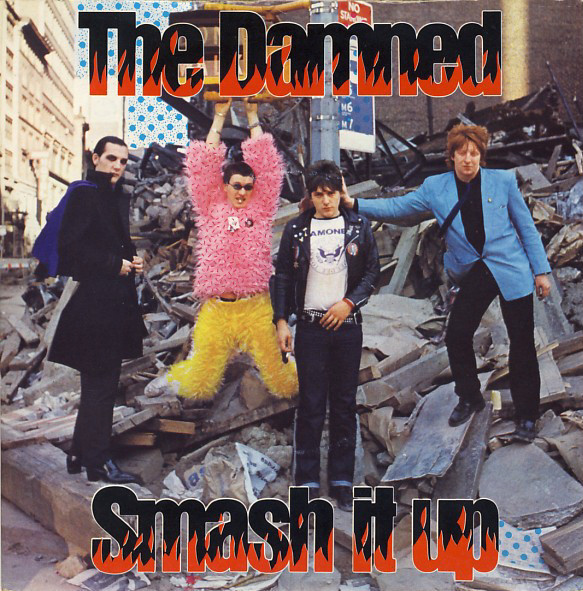
I’m gonna scream and shout till my dying breath
I’m gonna smash it up till there’s nothing left

mp3 : The Damned – Smash It Up

Most politicians are prone to lying.  But Trump takes it to a completely new level.

As I wrote when this previously appeared on the blog back in 2017, this was banned by the BBC in the 1979 on the basis of its title, despite it not really being an anarchistic call to arms. It made #35 in the charts but deserved so much better.

JC

THE TESTIMONIAL TOUR OF 45s (aka The Singular Adventures of Edwyn Collins)

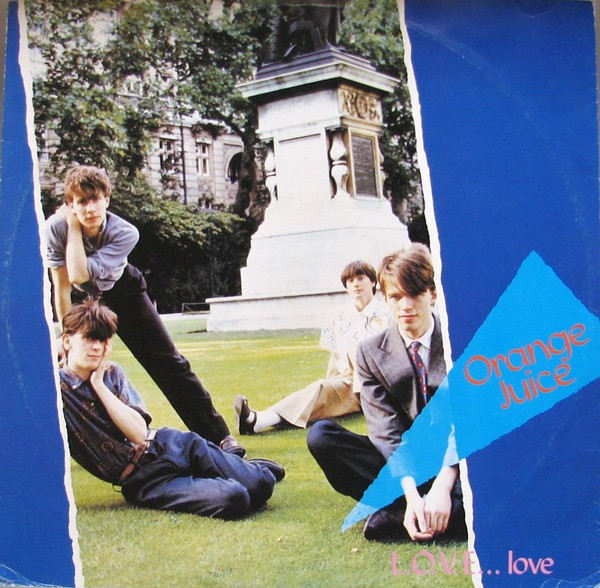
#5:L.O.V.E. Love : Orange Juice (Polydor, POSP 357, 1981)

As featured just a few months ago on the blog as part of the random 7″ singles feature….and prior to me coming up with the idea of this particular series.

The summer of ’81 and the news that Orange Juice had signed to Polydor.

They had actually, with the connivance of manager Alan Horne, who had a long-time dislike of Geoff Travis of Rough Trade, taken an advance from Travis to fund recording sessions in London in the summer of 1981, working with Adam Kidron who had also been producing Scritti Politti‘s debut album. The plan, as far as Rough Trade knew, was for the Orange Juice album to be distributed by them but to appear as if it was a Postcard album with full control being given to the band.

Instead, in what wasn’t the nicest of moves, Orange Juice took the tapes to Polydor, and the bosses at the major label made them an offer that couldn’t be turned down, even if it came with the loss of overall control that the indie label was proposing.

The last week of October 1981 saw the debut 45 for the major.

mp3: Orange Juice – L.O.V.E. Love

A cover of an Al Green song.

The 7″ single came with a fantastic b-side:-

mp3: Orange Juice – Intuition Told Me

Both had been recorded with Adam Kidron, but the wish of the label, backed by Edwyn Collins, to go with the cover as the new single was the final straw for James Kirk and Steven Daly as they had grown increasingly disillusioned with life in the band, notwithstanding they had been fully involved in the forthcoming debut album.

One of the decisions that had caused ructions was Edwyn Collins’ wish to recruit Malcolm Ross into the band.  You’ll hopefully recall from previous parts of this series that Malcolm had been involved in production duties with some early singles, and now that his band Josef K had come to an end, he was on the lookout for something new to get involved on.  It led to Edwyn and Malcolm, along with bassist David McClymont, undertaking tours in late 1981, with stand-in drummers to support the release of the debut single for Polydor and to showcase the album. By all accounts, the shows were shambolic……

Taking into account that copies of Falling and Laughing were already beginning to shift for considerable sums on the second-hand market, the decision was made to add its b-side Moscow as the extra track on the 12″ release of L.O.V.E. Love, albeit really is Moscow Olympics in a cleaned up and more polished version:-

mp3: Orange Juice – Moscow (alt version)

L.O.V.E, Love entered the charts at a rather underwhelming #68, climbing three places the following week before dropping out of the Top 75 altogether.

JC

SATURDAY’S SCOTTISH SONG : #476: GOLDEN GRRRLS

Golden Grrrls were part of the scene between 2011 and 2013.  Signed to Glasgow-based Night School Records, the trio of Eilidh Rodgers, Ruari MacLean and Rachel Aggs released three singles and an eponymous debut album, the latter being a joint effort with Slumberland Records.

They would have performed at the 2012 Indietracks Festival as the one song I have of theirs comes from the digital compilation issued to celebrate that year’s festival. Looking over at Discogs, it seems to haved also been their debut single, released the previous years:-

mp3: Golden Grrrls – Beaches

After Golden Grrrls broke up, Eilidh and Rachel would continue to work together as Sacred Paws, whose debut Strike A Match won the 2017 Scottish Album of The Year, and whose third album Jump Into Life was released earlier this year.

JC


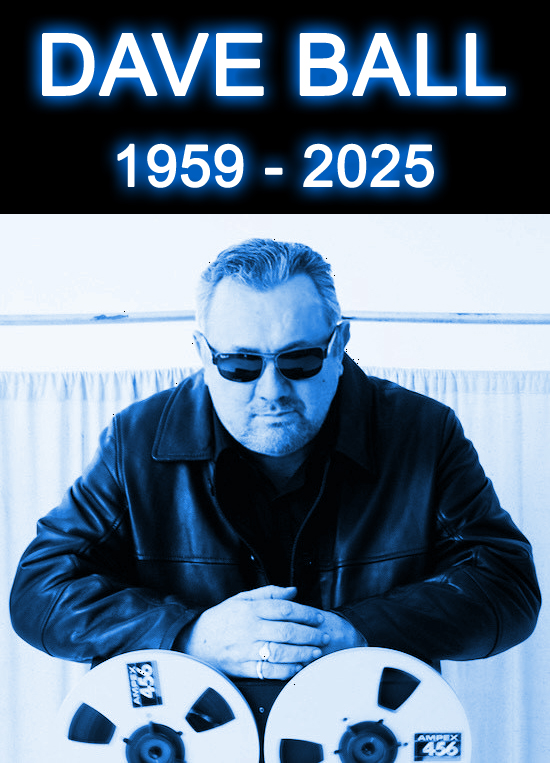
DAVE BALL R.I.P.

I was on the train back from Manchester yesterday afternoon, having gone down to see and enjoy Emma Pollock playing live, as well as meeting up with Adam from Bagging Area, where I was able to pass on a gift from Jonny the Friendly Lawyer that I’d brought back with me from the trip to Los Angeles back in June.

I was in a great mood, albeit a bit tired with the journey being sound tracked by a random selection from the tunes on the i-phone, a couple of which game me a couple of ideas for future blog posts.  A text message arrives from Jacques the Kipper.

‘You spotted that Dave Ball has left the building?’

Fuck was the only word I could come up with.

It wasn’t too much of a secret that, despite working hard in recent months on a new Soft Cell album, Dave had been quite unwell for some time, and the sad day when he would pass away was inevitable. But it still came as a huge shock.  Last night, I began to jot down a few words to pull together a tribute, but this morning, thanks to the fact that I follow the author on Facebook, I came across something penned on another blog which I reckoned will be as well-written a piece as you’ll find anywhere out there.

It’s the work of Ash Loydon who was part of the team who put together the Simply Thrilled club nights a few years back.  While Robert and Hugh were the main DJs and myself and Carlo helped out at the beginning of the nights, the amazing visuals and animations in the room were courtesy of Ash who describes himself as an ‘autastically minded bequiffed illustrator, animator of strangeness, balloon twister & lover of bad cinema.’  

He is also the biggest Soft Cell fan I know.  This is taken from here.  I’m hoping he doesn’t mind me ripping off his work, but it really is worth sharing.

– – – – –

“Absolutely fucking gutted here today, was waiting for Amelia to finish college and found out via X that Dave Ball had died at the tragically young age of 66, so I spent a fair bit of the afternoon sitting on the steps of the Glasgow Museuem of Modern Art listening to Soft Cell on my headphones whilst trying to process the news.

And yes, I’ll admit there were tears.

You see, as folk who know me (and who’ve read this blog) will attest, Soft Cell are my favourite band – and Marc Almond is my hero.

But that’s for another day.

I’ve already posted about the importance of Marc and Dave way back in 2022 but wanted not just to repost it but add a little more Dave to the mix.

A kinda text remix if you will.

I hope he’d approve.

Being the awkward Autistic artsy teen constantly picked on in school, obsessed with horror films, sci-fi and Warhol, Marc and Dave were a lifeline and Soft Cell’s dark electropop perfectly encapsulated everything I felt…and everything that terrified me too….

They also seemed to like the same things as I did (a song about a George A Romero movie? result!) – it was Marc and Dave introduced me to Truman Capote, Scott Walker, neon lighting and electronica among many other things and in one way or another have sound tracked the best (and worst) parts of my life.

When the band finally split in 1984 I continued to obsess over Marc (in that way only a creepy stalker or Autistic teen can) and his output – my art school days (and nights) were scored by Mother Fist and Vermine in Ermine….I journeyed out into the big bad world to The Stars We Are….you get the idea.

But that’s not to say I’d forgotten Dave.

His solo output was nothing if not eclectic and whereas Marc went the bittersweet torch song route Dave was showing his playful – and sometimes dark side first with his debut solo album In Strict Tempo (featuring the fabulous Rednecks and the Warhol diary inspired, funky faux-film soundtrack genius of American Stories).

From there Dave formed a new band, Other People with his then-wife (and ex-Mambas member) Gini Hewes and Band of The Holy Joy’s Andy Astle,releasing one single, the Stelvio Cipriani inspired (well I think so) Have a Nice Day before forming another (short lived) band, the amusingly monikered English Boy on the Loveranch, who released two camp as Christmas hi-NRG classics, The Man in Your Life and the slightly saucy Sex Vigilante both of which feature that sly, almost Carry On-esque humour that continues well into his work with The Grid, a band he formed (and had huge chart success with) with Richard Norris, who he met whilst working with agi-art pop terrorists Psychic TV.

And this is why I get annoyed when people say that Dave and Marc are only known for Tainted Love.

The cult of Soft Cell (and the friendship ‘tween Marc and Dave) never waned tho’ and in 2001 the dynamic duo of dark disco reunited for a tour and a brand spanking new album Cruelty Without Beauty.

They continued to work together (as well as concentrating on their solo projects which in Dave’s case included his band Nitewreckage (with releases including Solarcoaster) and a collaboration with classical pianist Jon Savage on the experimental electronic album called Photosynthesis.

In 2018 tho’, Soft Cell decided to call it a day and reteamed for a final live show, celebrating the 40th anniversary of the band.

But all good things don’t need to come to an end and in 2022 they unleashed a new album – Happiness Not Included – on an unsuspecting public.

But not only that, the album was to feature on Tim Burgess’ fantastic online listening party which had helped entertain everyone during lockdown.

Remember that whole pandemic?

Routines and schedules shot to fuck by Covid….everyone fighting over pasta and toilet rolls showing the best – and worst – of people in one huge raging mess.

Yes I tried my best to put new routines in order for my Autistic podlings to make it bearable for them but totally forgot to do it for myself.

To be honest it was a wee bit tricky.

And a year on from it in 2022, everything had changed – We’d started lockdown with 15 year old twins and ended up with 18 year olds looking forward to college and Cassidy started talking over lockdown, randomly and out of the blue.

Madness!

Everything is (or was) awesome (as the great song goes) but I found living in a world that maked no sense.

It was like I’d woken up in a place where everything was different and they’d forgotten to give me a handbook.

Imagine waking up in the (other) ending of Army of Darkness but with less beards and without a rousing Joseph LoDuca theme but like everyone else I did my best.

Anyway enough scene setting, let’s jump forward to 10th May, the listening party (as mentioned) is featuring the new album…I have it but I’ve decided to hold off listening (it’s still sealed) until that day….my first time will be with Dave and Marc listening too….

The result?

I said at the time I usually tweet quite eloquently during the listening parties but that night I was just tearfully and joyfully losing myself in my favourite band and feeling 15 again.

But more that that (and this may sound really silly) the fact that there was a new Soft Cell album that sounded just so perfectly right appearing just when it turned out I needed it seemed to kick start my brain.

Especially this song:

mp3: Soft Cell – * Happiness Not Included

It started playing and I just cried tears of pure joy and relief.

Dave and Marc just got it.

From that moment I knew I could survive this strange new world because Marc Almond and Dave Ball were there to score it for me.

So – and not for the first time – Soft Cell came to my rescue as they always did.  I’ve said it before and I’ll say it again, I genuinely wouldn’t be here if it weren’t for Soft Cell, seriously Dave and Marc saved my life during my awkward Autistic teens and as I mentioned earlier, have been there for me ever since.

And now the world, well mine at least, is a little less friendly and a whole lot darker.

That gaudy neon coloured light hanging outside the Pink Flamingo bar has gone out for good.

And the moral of this story?

Music is great? 

Autistic folk over analyze stuff? 

I need to get out more? 

I’ve no fucking idea so I’ll finish up by just say thank you Marc and thank you Dave.

For everything. 

Dave Ball : 3 May 1959 – 22 October 2025

“My candle burns at both ends
It will not last the night;
But ah, my foes, and oh, my friends –
It gives a lovely light.”

Ash

JC adds………

Feel free to leave comments here, but I’d encourage you, if you’re so inclined, to do so over at Ash’s place.  I provided a link a bit earlier, but here it is again.  Click here.

I had about 20 minutes of the train journey left when Jacques’ text came through. Having digested the news, I played one more song and put the headphones away.

mp3: Soft Cell – Torch

RIP Dave.  I’m just very grateful that I got to see you one last time on stage a few years back when you and Marc brought the Non-Stop Erotic Cabaret 40th Anniversary Tour to Glasgow in November 2021 on what proved to be a memorable night.


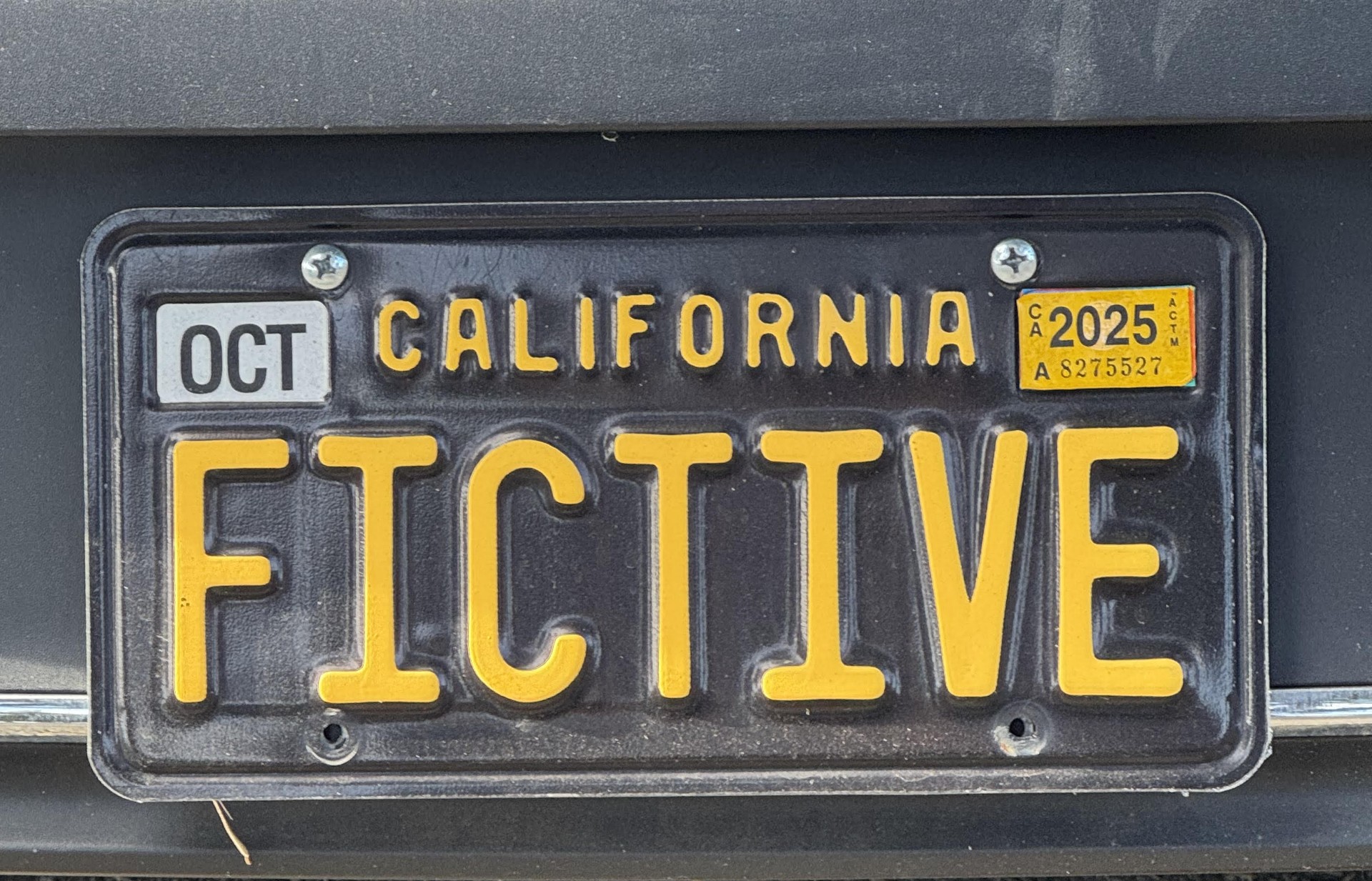
FICTIVE FRIDAYS : #2

a guest series, courtesy of a very friendly lawyer

The Song Retains The Name

Blur’s debut Leisure helped kickstart Britpop. I couldn’t help but notice that many of its song titles were shared by classic pop releases, and I wondered if that was deliberate. Specifically, Bowie had a song called ‘Repetition’ on the Lodger LP. The Carpenters had an international hit with ‘Sing.’ And ‘Come Together,’ ‘Birthday’, and ‘Slow Down’ are all songs recorded by the Beatles. I was thinking about an ICA based on those vintage nuggets when it occurred to me that TVV isn’t the best forum for ancient history. Nope–I’m so freakin’ old that it’s the next generation of musicians I should be looking to. So, let’s go back to Blur.

Repetition. Blur (1991).

This song probably qualifies as a shoegaze number, with its droning, sludgy guitars and Damon Albarn doing nothing to disguise his Essex twang. Graham Coxon would eventually emerge as a guitar god while Mr. Albarn morphed into 2-D and countless other personas. But Leisure, with its killer second single ‘There’s No Other Way’, put the boys on the map.

Repetition. TV on the Radio (2011).

From the Brooklyn band’s fourth LP, Nine Types of Light, the last to feature bassist Gerard Smith, who sadly died a few days after its release. TVOTR‘s song is a little artier, and fades out with Tunde Adebimpe cheekily chanting “My repetition, my repetition is this” a la Dream WarriorsMy Definition of a Boombastic Jazz Style. A great live act if you get a chance to see them.

Crazy – Pylon (1983).

Pylon were a criminally overlooked band from Athens, Georgia. They released a couple of great records in the early 80’s and, at the urging of Michael Stipe, reformed to release one last LP in 1990. This song is from the band’s second album, Chomp. Knowledgeable folks like The Robster will remember R.E.M.’s cover version as the b-side of ‘Driver 8’, and as the lead track on their compilation album Dead Letter Office.

Crazy – Gnarls Barkley (2006).

Cee-Lo Green is from Atlanta, but his Georgia roots are the only thing he had in common with Pylon. He ditched hip hop outfit Goodie Mob and hooked up with Danger Mouse and the rest is history, as the saying goes. ‘Crazy’, the first single released by the duo as Gnarls Barkley, won a Grammy, was the first ever single to top the UK charts purely on downloads, and was eventually included in Rolling Stone’s list of the top 500 songs of all time, for what that’s worth. I like that the two performed the song at the 2006 MTV Movie Awards dressed as characters from Star Wars.

Wrong Way – The Undertones (1979).

The Derry pop/punk merchants’ eponymous debut was one of the top albums from The Best Ever Year For Music, 1979. ‘Wrong Way’ is an irresistible album track that is distinctive for being one of the few written by the band’s drummer, Billy Doherty.

Wrong Way – Sublime (1996).

From Sublime’s own eponymous album, although it was their third release. I like Eric Wilson‘s bouncy Madness/Specials-style bass, but I really love Jon Blondell‘s trombone solo. Singer/guitarist Brad Nowell sadly died of a heroin overdose in May 1996; the album was released two months later and went platinum five times over.

Alright – Supergrass (1995).

Another single from another debut. Supergrass arrived on the scene fully formed with their own distinct sound. Like, say, Vampire Weekend or Arctic Monkeys. Wiki tells me that I Should Coco was Parlophone’s best-selling debut release since the Beatles’ Please Please Me back in 1963. I was too dim to recognize that the album title was cockney rhyming slang.

Alright – Kendrick Lamar (2015).

To Pimp a Butterfly was a monumental success, the album of the year for many opinionated people and publications. I don’t know about that, but ‘Alright’, the fourth single from the LP, did win a couple of Grammys. Produced by Pharrell Williams, who sang background on the track along with monster LA bassist Thundercat.

Dreaming – Blondie (1979).

First single from the band’s fourth LP Eat to the Beat, which followed Parallel Lines to the top of the UK charts that same year. Kind of a bummer that the last great Blondie album was also from the magic year, followed by the good-but-not-great Autoamerican (1980) and the career ending disaster The Hunter (1982). This song features the legendary Ellie Greenwich singing background, one of the most successful of all the ‘Brill Building’ songwriters.

Dreaming – Mac DeMarco (2014).

There are too many songs called ‘Dreaming’ to count, but I chose this one from DeMarco‘s debut album because it’s got such an easy, trippy vibe. Probably had a lot to do with that $20 Teisco guitar dripping with reverb. Plus, it’s a DIY song as DeMarco played all the instruments on the album which he recorded in his apartment in Montreal, purportedly in his underwear.


Jonny


SLIGHTLY BORED BY IT NOW? (2)

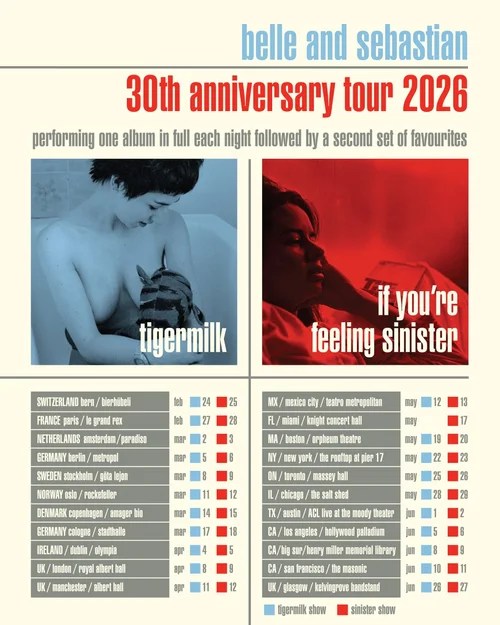
The nostalgia industry has always been a money spinner, so there’s no point in exhaling a big sigh and throwing out criticism of Belle and Sebastian‘s plans for 2026 around the 30th anniversary of Tigermilk and If You’re Feeling Sinister.   Beginning in Berne in mid-February and, for the time-being, ending in Glasgow in late June, with stops in Paris, Amsterdam, Berlin, Stockholm, Oslo, Copenhagen, Koln, Dublin, London, Manchester, Mexico City, Miami, Boston, New York, Toronto, Chicago, Austin, Los Angeles, Big Sur and San Francisco en route.  It really will be quite the adventure.

On hearing of the plans, Rachel asked, other than Glasgow where I’d most like to try and get tickets for and if successful, to then make plans for train journeys/flights and accommodation.  She was really surprised when I told her that I wasn’t the least bit interested in going to see any of the shows.  My logic being that I’ll always be content thanks to the last B&S show I went to, one in which they really redeemed themselves.

This all stems from one of the worst gigs I’ve ever had the misfortune of attending when the band played the 12,000 capacity Glasgow Hydro in May 2015.  A small orchestra, dancing girls, balloons galore, and t-shirts being fired into the crowd made for a homecoming gig like no other.  And it sucked.  Big Time.  Their music certainly doesn’t fit the idea of an atypical rock band stadium gig, and the band members looked distinctly uncomfortable throughout….other than Stuart Murdoch, who seemed to be living out his wildest fantasies.

Just over a year later, B&S returned to Glasgow, this time to play three nights at the Glasgow University Union Debating Chamber.  Despite its name, it is a 650-capacity venue which over the years has proved more than capable of hosting excellent live shows, and indeed in recent years has become the venue for the annual two-day weekend Glas-Goes Pop Festival which takes place each July.   I was at two of the B&S shows in July 2016, and they were among the most enjoyable nights I’ve ever had seeing any band, mainly as the set lists leaned more on the earlier material rather than the albums of the current century, none of which have truly landed with me.  I did say to a few folk afterwards that the gigs were so good, I thought it unlikely that I’d ever go see them again.

mp3: Belle and Sebastian – Like Dylan In The Movies (from If You’re Feeling Sinister, 1996)

I might have changed my mind if any of the subsequent albums had manage to float my boat.  Putting aside Days of The Bagnold Summer (2019) which was a soundtrack to a film, we’ve been treated to A Bit Of Previous (2022) and Late Developers (2023).   The best I can say about both records is that they both have a few songs that are as good as anything they’ve written and recorded over the many decades they’ve been around; but, for the most part, once the albums had been listened to a few times just after purchase, they were put away on the shelves destined to gather some dust.

So, I will make the admission that I have become bored with Belle and Sebastian.  But as one person might say to the other as they try to explain the reasons for a break-up, ‘it’s not your fault, it’s all down to me’.   The band meant an awful lot for the best part of a decade, then they made some records that were a bit ‘meh’.  They showed, in 2016, that they were still a fabulous live act, certainly in the right sort of environment.  I know I’m in the minority, as the band has retained a fiercely loyal fan base who lap up everything – even the toe-curling solo projects which flirt dangerously between self-indulgence, pretentiousness and mind-numbingly boring.

There’s every possibility, next June, when loads of folk I know have come away from the two Glasgow gigs talking about them being life-affirming experiences, that I’ll have a few pangs of regret.  But all in all, I can rest easy that I didn’t pursue any tickets when they went on sale…. particularly when the asking price was £60 to sit outdoors on concrete benches!


JC


SHOULD’VE BEEN A SINGLE ?(10 and 11)

A guest posting by Leon MacDuff

Given that Sarah Records didn’t release singles from existing albums, it feels almost too easy to pick out LP tracks that ought to have been given a chance of singular glory. But it simply wasn’t a label that was trying to appeal to the mass market, even if some of its acts seemed to have the potential. Because of this, it’s hard to shake the sense that admirable though their loyalty to Sarah was, The Orchids might well have been a hit making act if only they’d been on Creation instead. Or a slicker marketing machine might have made Heavenly into a household name. And that one way or another, there really ought to have been a place on Top Of The Pops for Even As We Speak.

Formed in Sydney, Australia, in 1986, EAWS didn’t start out as secret pop geniuses. Their first Sarah release, 1990’s Goes So Slow, was a five-track EP combining two of their previous Australian singles, and it sounded exactly like the sort of thing that would appeal to fans of other Sarah bands like Blueboy, Brighter and Boyracer, but it didn’t scream “crossover potential”.  But this sudden and unexpected interest from the other side of the world, along with a newly stable line-up after years of constant change, emboldened the group to start trying out different styles. According to the band’s website bio,“The band stopped “editing” in the sense that no formal decisions were made by the band as to whether its output was consistent with any one vision or even any good. The band adopted the attitude that if they thought it, they would make it, and if they made it, they would release it.”

I’m not sure I quite buy that (everything they tried got released? Surely not) but there was certainly a new experimental edge to Even As We Speak’s first original Sarah material, and in many cases an ear-catching commerciality too. Albeit at times it felt like they were writing radio-friendly pop songs and then deliberately finding creative ways of sabotaging them: the 1991 single Beautiful Day had Mary Wyer’s enthusiasm about the weather being cut into by a waltz-time middle section in which the slowed-down voice of Matt Love intones an apparently unrelated verse about a man who drinks himself to death. That was never going to make the Radio 1 A-list, but it was certainly marking EAWS out as ones to watch, and it all came together on their 1993 album Feral Pop Frenzy. It was a title that would have come off as sarcastic from any other act on the label, but from Even As We Speak it was a statement of intent on which they maybe didn’t fully deliver, but they sure gave it a damn good try.

Presented with the tapes of Feral Pop Frenzy, any other label would have immediately earmarked Falling Down The Stairs and Drown as future singles, but this is Sarah we’re talking about, so of course they didn’t. I could see either or both of these as breakout hits in the vein of Strawberry Switchblade’s Since Yesterday or Crash by The Primitives.

mp3: Even As We Speak – Falling Down The Stairs
mp3: Even As We Speak – Drown

Both are short enough to leave you wanting more: the jangly Falling Down The Stairs is two and a half minutes (and if I’m being picky, it could stand to lose another ten seconds from the intro for radio play), the Barry White-sampling indie disco track Drown is a smidgen under three. Both disguise their melancholy in catchy choruses: I’m not sure, but I think Falling Down The Stairs may actually be a grief song, while Drown’s “I feel I could hold you in my arms and still not know where you are” is as fine a line as was ever written about romantic disconnection. Drown even had a colourful video made for it, perfect for Saturday morning kids’ TV. That’s right: it had a video but no single release. So near, and yet so far.

I have to admit that even if either of these notional singles caught the public’s imagination, I’m not sure Sarah Records were really set up to cope with a proper hit. Even As We Speak becoming actual pop stars wasn’t a crazy idea though; they were starting to pick up mainstream airplay and bigger labels than Sarah were expressing real interest – but it would mean relocating to the UK, which was too much of an upheaval for band members with young families, so their rise to fame rather petered out. But when Sarah issued its farewell compilation There And Back Again Lane two years later, it was Drown which had the honour of closing the album and bringing the curtain down on the entire label. In another universe, it might have been Sarah’s biggest hit..


Leon

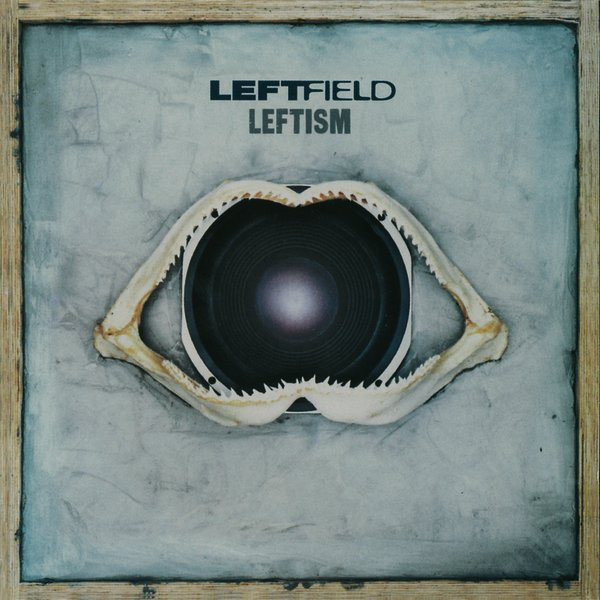
THE LP LUCKY DIP (4) : LEFTFIELD : LEFTISM (1995)

Bought on CD in 1995 and upgraded in October 2023 when 3000 copies were pressed onto white and black marbled vinyl as part of something called National Album Day.

I don’t have a huge amount of dance records across the collection, and what I do have tends to veer towards the commercial/popular aspect of the genre.  My first exposure to Leftfield was hearing Open Up, the collaboration with John Lydon released as a single in late 1993.   I was blown away bit it, thinking it was easily the best thing Lydon had done in the best part of a decade, certainly since the PiL album Happy? back in 1986 – it wasn’t that I had disliked any of the subsequent late 80s/early 90s material, but they kind of were Johnny’s take on what was contemporary sounding and for the first time he didn’t appear to be fussed about being cutting edge.

Open Up was one that made me sit up and pay attention. I think it is Lydon’s best delivery of a vocal across his entire career and back in 1995, I’d have been willing to say that the song was one of the greatest dance songs ever made.  In 2008, as part of the 45 45s@45 series, I had this one at #19 in the rundown.  If this year I were to do 62 45s@62 (which I won’t!!!!), it would still be in and around the Top 25.

My love for Open Up led me to buy the debut album Leftism the week it was released and discovering, to my great delight, that Toni Halliday of Curve was a guest vocalist.  Her track, Original, very quickly became the highlight of the album – the only reason it wasn’t eligible for the 45s@45 series was I didn’t buy the actual single a few weeks later.  Other than that, I found the album a bit difficult to get my teeth into, sort of confirming that I find it hard to take entire albums of dance music.

But that was 1995.  As time has moved on, and I’ve been able, thanks to listening to things posted across other blogs (with a particular shout-out to Swiss Adam, Ctel and Khayem for their efforts at Bagging Area, Acid Ted and Dubhed), to better appreciate the genre. The CD purchase had been ideal in that the skip function could be utilised, but as the years passed, I was using it less and less.  Now that vinyl is the preferred choice for listening purposes, I, will, without fail, listen to it in order across its four sides.

One of the interesting things for me is reading that Paul Daley and Neil Barnes were scathing about the album’s first take back in 1995.  Daley said “It sounded shit […] It seemed to have no cohesion, the tracks just didn’t seem to hang well together” with Barnes adding “We did all the tracks, listened to them and decided it sounded a fucking mess […] we went back, messed around with the running order and chopped a lot of things out. Hopefully now it sounds complete, something that can be listened to in one go”

Whatever they did worked wonders, as fans and those paid to be critics responded positively.  Leftism came in at #3 on the week of its release, spending 40 weeks in the Top 100 through to late November, and then returning for a further 38 weeks between January and September 1996, partly due to the success of later singles. It was nominated for the 1995 Mercury Music Prize and featured prominently in most end-of-year lists in music papers and magazines.

mp3: Leftfield – Afro-Left
mp3: Leftfield – Open Up (album version)

The former was the follow-up single to Original, and reached #22 in the charts in August 1995.  It’s an example of a song that I just didn’t get 30 years ago, but I regard it as one of the highlights of the album.

The latter is some three minutes longer than the Vocal Edit single version, with its closing section offering a trippy, slowed-down take on things which, again, I’ve really only appreciated fully many years later.


JC


ROBERT FORSTER AND HIS SWEDISH BAND @ ST LUKE’S GLASGOW

Let’s begin things by recalling this #13 hit single from 2006

mp3: Peter Bjorn and John – Young Folks

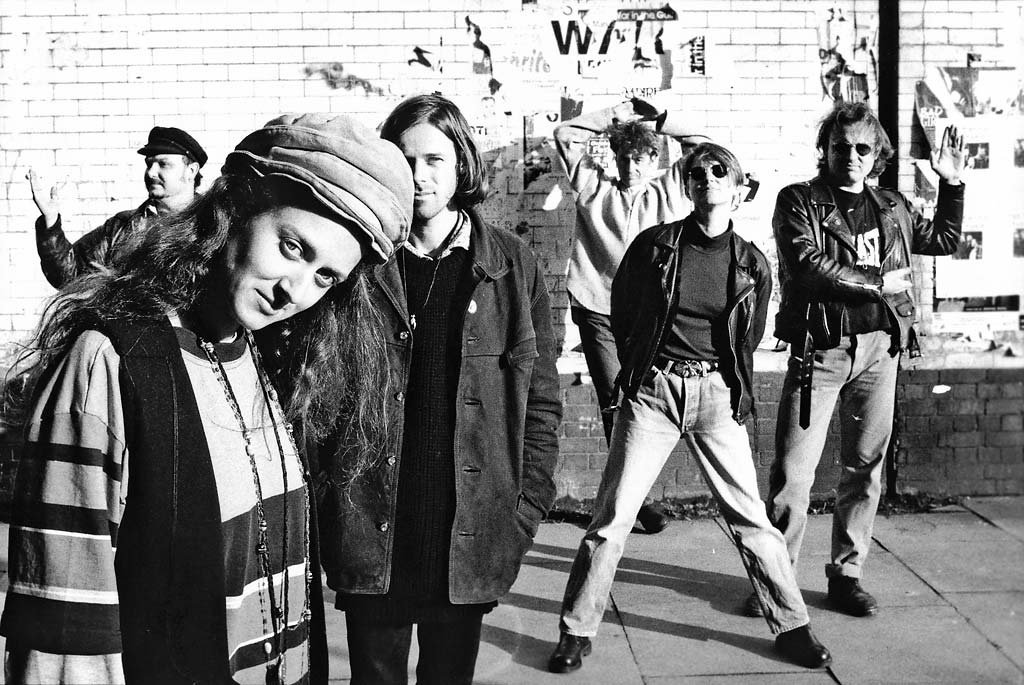
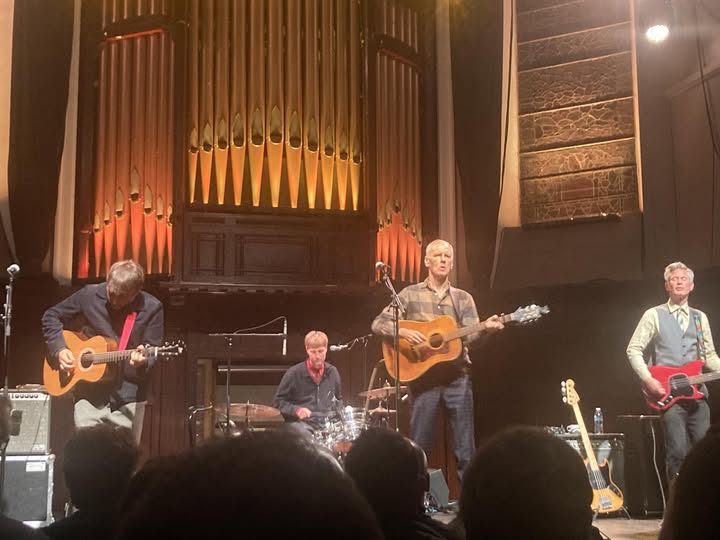
One third of that trio is in the above picture, playing acoustic guitar. He is Peter Morén, and together with Jonas Thorell on bass and Magnus Olsson on drums, they are The Swedish Band who have just played an 18-date European tour with Robert Forster which took in Stockholm, Copenhagen, Hamburg, Berlin, Dresden, Vienna, Linz, Landsberg, Frankfurt, Cologne, Brighton, Cardiff, London, Manchester, Dublin, Edinburgh, Glasgow and Leicester.

The Glasgow venue was St Luke’s, a converted church in the east end of the city which is now up there with the Barrowlands as my favourite location in my home city, and the gig took place last Saturday.  And in a year when I’ve been at numerous live shows, with a few more lined up between now and the end of December, this will prove to be the most enjoyable and fun.

Fun?  At a Robert Forster gig?   Surely not, given this is a man who over the decades has regularly had the word ‘aloof’ used by numerous writers and journalists to describe his personality.  I prefer to look on him as being an intellectual with a dry sense of humour that often borders on the deadpan to the extent that you can’t be sure if he is being serious or satirical, all of which was very much on display during a show that lasted not too far short of two hours.

Robert Forster is now 68 years old and has been making great music since 1978, when the members of his Swedish Band were either not born or were mere infants.  The Australian is no stranger to Glasgow, having come here back in 1980 to stay for a short time and release a single with the Go-Betweens on Postcard Records, and he repeatedly expresses his love for the city.  As such, he always seems to come here whenever he goes out on tour, whether he is playing solo, as a stripped down duo with his son Louis, or with a fully fledged band. And even though there was the occasional moment when the great man, who doesn’t use any sort of prompts, got a line or two wrong and, in one instance, forgot the lyric altogether, I will not hesitate in saying that this time round, it was as good as it’s ever been,

This is down to a couple of things.  One being the quality of songs that were played and the other being how tight and talented the backing trio were.

The Swedish Band came together in 2017 when Peter, Jonas and Magnus played five shows, as Robert’s backing band, in Scandinavia, the idea having been hatched by Peter.  The shows were a huge success, and Robert has since said that it gave him a whole new impetus for recording and touring in the future.  Then came COVID….and then came the diagnosis of cancer for Robert’s wife, Karin Baumler.   The cancer was beaten, and while Karin was recuperating, Robert wrote and recorded a new album, The Candle and The Flame (2023), with many of its songs reflecting on that difficult time for his family.  As part of the tour for the album, Robert was looking to return to Stockholm in August 2023 for what would be a solo acoustic show.  Peter got in touch and suggested that the 2017 band get together again as a one-off.  The show proved to be such a success and such a memorable experience for Robert that he flew home to Australia with a new plan hatching away in his head.

In September 2024, he returned to Stockholm, this time to record a new album with The Swedish Band, and a handful of other locally based musicians on keyboards and wind instruments, while additional vocals would be added later by Karin Baumler in a studio in Brisbane.

The fruits of their labours were released as the album Strawberries earlier this year, with this September/October tour being part of its promotion.  Robert had said prior to going on the road  “I am enormously excited to be touring with a rock band again. The first time in six years. And not just any rock band – these are the genius Swedish players from my new album ‘Strawberries’, recorded in Stockholm. I love the album and I wanted to bring the group with me out on the rock and roll highway. We are wanting to impress.”

Well, Robert (not that you’ll be reading this!!), as a collective you most certainly did.

The set consisted of 21 songs, of which six can be found on the new album. Five others were from earlier solo albums, while the remaining ten came from the Go-Betweens era – four from 16 Lovers Lane (1988), one from Spring Hill Fair (1984), two from The Friends of Rachel Worth (2000), one from Liberty Belle and The Black Diamond Express (1986), one from Bright Yellow, Bright Orange (2003) before finishing the night off with a magnificent rendition of 1978 single, People Say.

It was everything that a long-time fan could ever have hoped for.  The Swedish Band were, as you’d expect, magnificent on the songs you’ll find on Strawberries, but they more than did justice to the past members of The Go-Betweens throughout the night, as well as bringing a fresh energy and vibrancy to Robert’s other solo material.  It all added up to a night that will live long in the memories of those of us lucky enough to have been there, including quite a few members of the Glasgow indie cognoscenti who came along to pay tribute to our rock and roll friend.

Highlights?   All 21 songs.  From the new album, there’s this near eight-minute opus, whose origins were revealed to be when Robert last came to Glasgow, arriving on a train from London….and then the next day finding himself in Edinburgh while an international rugby match was being played between Scotland and Ireland.

As for the ‘cover’ versions….an impossible task in many ways to narrow it down to one, but when I closed my eyes during this one, I could have sworn The Go-Betweens had, by way of a miracle, reformed for a few minutes.

mp3: The Go-Betweens – Spring Rain

I took my leave of the venue and offered up a silent prayer to a non-existent god that Robert Foster and His Swedish Band will be working together and touring again next year. Fingers and toes are crossed.


JC


THE TESTIMONIAL TOUR OF 45s (aka The Singular Adventures of Edwyn Collins)

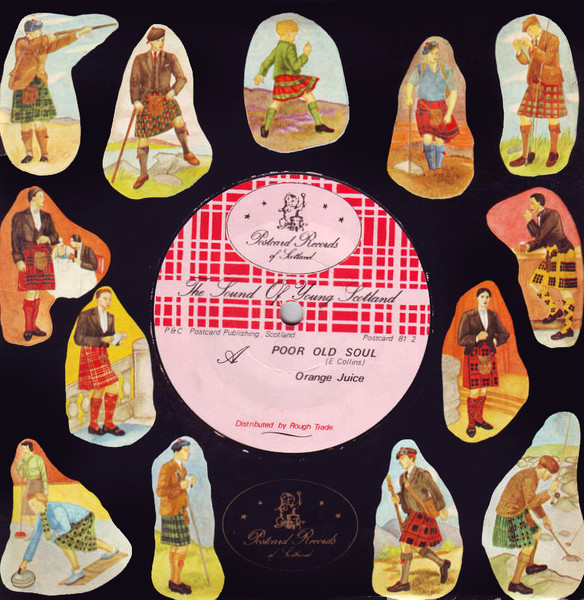
#4: Poor Old Soul : Orange Juice (Postcard 81-2, 1981)

mp3 : Orange Juice – Poor Old Soul
mp3 : Orange Juice – Poor Old Soul (Pt 2)

Quite often, when a band releases a song in two parts, it’s down to the fact that it is too long to fit onto one side of a 7″ single, and so as part one fades out, you have to flip the single over and part two usually fades in.

Not in this case.

Poor Old Soul is about two-and-a-half minutes in length.  As is Poor Old Soul (Pt 2).   It’s a tune propelled in the main by its bass line, albeit there’s the sort of guitar ‘solo’ that was beginning to be associated with the band.  The ‘A’ side also has a wee bit of piano in the middle.  The biggest difference however is that Edwyn Collins, having written the song, fancied contributing the bass line rather than rhythm guitar, and so he and David McClymont swapped instruments for the take which became Part 2, with the other more distinguishing factor being that inclusion of the chant ‘no more rock and roll for you’. 

Did anyone feel cheated?  I don’t think so, although it was unusual not to have a distinct b-side as opposed to a different take, recorded in the studio on the same day.  It was released in February 1981, and included on the back of the newly designed company sleeve was info on the upcoming releases, which were set out as

81-3:  Aztec Camera : Just Like Gold/We Could Send Letters
81-4:  Josef K: Sorry For Laughing/Revelation (recorded in Bruxelles for Les Disques de Crepuscule (TWI 023) 
81-5:  Josef K  Chance Meeting/Pictures of Cindy 
81-6 : Orange Juice – Wan Light/You Old Eccentric

The first three would be issued, but before the summer was over, Orange Juice had signed to a major label, Polydor Records.  The big-time beckoned…..or did it?


JC

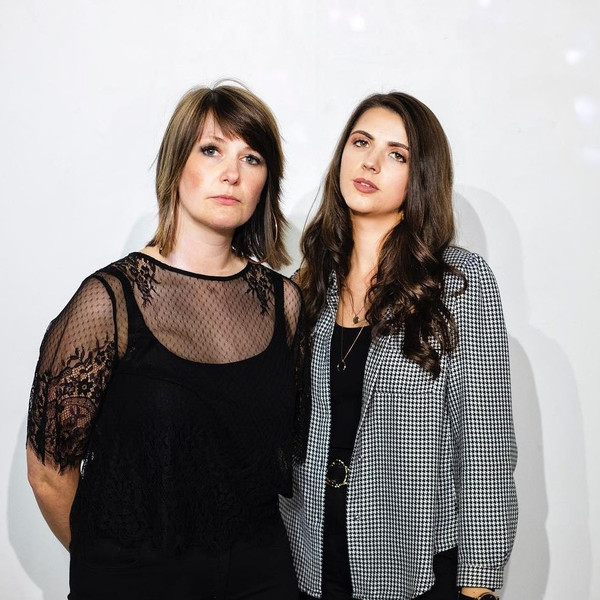
SATURDAY’S SCOTTISH SONG : #475: THE GIRL WHO CRIED WOLF

Tiny bit of a cheat this week, as all I have on The Girl Who Cried Wolf is are two digitals download, from all the way back in 2020, which I later picked from the vaults via  my membership of Last Night From Glasgow.

The duo of Audrey Tait and Lauren Gilmour have been involved in the local music scene for many a year.  I first became aware of Audrey when she was part of Hector Bizerk, a Glasgow-based hip-hop act whose debut Nobody Seen Nothing was shortlisted for the Scottish Album of the Year in 2014, although the record itself wasn’t one that appealed to me.  She was later to become the drummer with Broken Chanter, playing on the first two albums and being part of the touring band between 2018 and early 2022.  She took her leave of Broken Chanter when she was asked to become the new drummer for Franz Ferdinand, replacing the founding member of the band, Paul Thomson.

Lauren Gilmour is a singer-songwriter and producer who I first noticed when she was part of Broken Chanter’s six-piece touring band in 2021/22 for the album Catastrophe Hits.  What I never knew until looking further into these downloads is that the two were The Girl Who Cried Wolf, whose intention in making music together was to ‘combine a love of fierce female vocalists and anthemic production to create their own brand of powerful alt pop.’

There were a number of digital releases in 2019 with this being the third single:-

mp3: The Girl Who Cried Wolf – Oops!

I’m wondering if their plans, like those of many others, were affected by the COVID pandemic, as it would certainly have put an end any thoughts of live shows to promote the music.  And with Audrey now ridiculously busy with FF, I’m guessing there is no time available to revisit things.


JC


SONGS UNDER TWO MINUTES (20): CAREER OPPORTUNITIES

There’s been a few lengthy pieces these past few days…this series allows a bit of breathing space.

A great all-time song under two minutes in length has to be Career Opportunities, one of the many classics to be found on the debut album by The Clash. For a wee change, I thought I’d offer up the demo version, as included on the box set The Clash on Broadway

mp3: The Clash – Career Opportunities (demo)

Back in the late 70s, there were far fewer places available to enable school-leavers to go into further or higher education.  The offer of the office or the shop or factory was what came the way of most….the luckier ones may have got an apprenticeship.   No wonder so many ‘kids’ of a certain age listened to this and came to the conclusion that The Clash ‘got it’.


JC

FOUR TRACK MIND : A RANDOM SERIES OF EXTENDED PLAY SINGLES

A guest series by Fraser Pettigrew (aka our New Zealand correspondent)

#8: Spiral Scratch – Buzzcocks (1977)

While a series on EPs would not be complete without it, what can I possibly write about Spiral Scratch that hasn’t already been said? It is probably the subject of more column inches than any other EP in music history, weighted with significance that puts a price of more than £200 on some copies offered for sale. To those who still hold an original purchase from 1977 it is almost priceless.

I do not possess an original copy. Mine is the 1979 reissue, by which time the record had already acquired legendary status. Its reputation was built primarily on its self-published status: not the first punk single, but the first to be released on a newly-created, independent label with no distribution deal with a major company. It was seen to embody a quintessential DIY ethos in punk by rejecting conventional music industry pathways. The music seemed almost secondary.

To those of us who were Buzzcocks fans, however, the reissue was a worthwhile purchase because it was the band’s first release and the only record of Howard Devoto’s involvement as lead singer (apart from the similarly hard to find Time’s Up demo bootleg). By early ’79, Devoto had of course long-since departed the band and built his own place in the history of post-punk as the lead singer of Magazine, an altogether different project already onto its second album.

Buzzcocks without Devoto had also produced two albums by this time for major label United Artists, working in the studio with seasoned producer Martin Rushent, all a far cry from the circumstances in which Spiral Scratch was recorded. The Buzzcocks sound that I was familiar with was therefore rather different from that of Spiral Scratch which is understandably rougher and cruder than the albums.

I recently came across an article on the making of Spiral Scratch that, whilst it’s nearly ten years old, may be unfamiliar to some and is worth a read, even if you’re not a hardcore audio tech buff like the site’s primary readership. It’s also worth reading the brief memoir by engineer Phil Hampson on which the Sound on Sound article is based.

Hampson was the engineer at Indigo Studios in Manchester responsible for recording the epoch-defining EP on 28 December 1976. He is uncredited, while Martin Hannett (as ‘Martin Zero’) is listed as producer, but Hampson’s account makes clear that Hannett’s contribution was far from expert and more in keeping with the amateur DIY ethic that Spiral Scratch came to represent. Hannett’s experimental curiosity carried through into his subsequent production career, but it was more of a hindrance than a help in getting the Buzzcocks down on tape.

Hampson’s story reveals the tragi-comic fate of the master tape. The band couldn’t afford to buy it (and possibly didn’t appreciate its future worth) so it was simply put back in the rack to be re-used. Indigo Studios were directly across the road from the old Granada TV studios and were frequently used by various comedians and variety acts from Granada shows to record songs, skits and novelty tunes. Nobody knows who finally recorded over one of rock’s most famous master tapes, but Hampson offers up the prospect of Little and Large as the notional agents of bathos.

The other interesting viewpoint from Hampson is that the supposedly ground-breaking innovation of the EP’s independent release is somewhat overstated. Hampson says he himself worked on many self-published and pressed records in the years prior to Spiral Scratch and that the practice was not uncommon. I can see his point, but from his description it would seem that most of these ‘independent’ recordings were either private or vanity pressings and rarely if ever intended for commercial release and sale. Spiral Scratch was made to be sold like a ‘proper’ record, and it was the catalyst for dozens of similar ventures in the years that followed. In that respect its reputation is safe.

The enduring popularity of lo-fi indie guitar bands has helped to prevent Spiral Scratch sounding dated after nearly fifty years. The witty sophistication of Devoto’s lyrics contrasts with the stereotype of punk oafishness, and Pete Shelley’s enthusiasm for krautrock bands like Can and Neu married to The Ramones’ buzz-saw guitar sound undoubtedly helps the compositions avoid the clichés of fast and dirty rock’n’roll or the gormless crudity of many contemporaries.

Well, that’s another 700 words to add to the ledger. Time’s never up for this EP and people will still be writing about it in another fifty years’ time, but I won’t be around to read it.

Breakdown

Time’s Up

Boredom

Friends Of Mine


Fraser

MORE ‘STEALING’: THE GUEST SERIES IN BOOK FORM : #6 THE BYRDS

A guest posting by Steve McLean

In 1973, The Byrds broke up just so they could reform. The original line up of the Byrds were working together once again, all five founding members in the same studio for the first time since 1966. Gene Clark, Roger McGuinn, David Crosby, Chris Hillman and Michael Clarke. McGuinn had continued the band after all the other members had drifted away. No less than 11 full time musicians had passed through their ranks.

While the reunion was in the planning stages, a makeshift version of the band was finishing touring commitments. Consisting of McGuinn, Hillman (who had returned to replace bass player Skip Battin, who had replaced John York, who had originally replaced Hillman), guitarist Clarence White and session drummer Denis Dragon (Beach Boys alumni). The touring group had come to be known as The Colombia Byrds, which was the name of the record label to which they were signed. The reunion album was to be released on David Geffen’s Asylum Records who pulled an interesting copyright swerve by crediting the release to the individual members and was given the title ‘Byrds’ (clever work David).

Perhaps the last thing that the Colombia Byrds recorded in the studio was a track on Skip Battin’s solo record. Captain Video was actually a petulant swipe at Roger McGuinn, made even more cheeky by Battin asking McGuinn to play on it.

The song is a lovely slab of 1970s rock. During his time in the Byrds, Battin had taken a few lead vocals, if the record company had the foresight to market this as a Byrds song, it could have been a hit.

mp3: Skip Battin – Captain Video

Imagine now that you’re watching a movie… It’s a sequel and at the start of that movie there’s a montage of everything that happened in the last film. Well, that montage goes like this; The reunion album flops, the band go their separate ways, Gene Clark records the finest Cosmic American Music album of all time called No Other. McGuinn pals around with Dylan, Crosby pals around with Stills and Nash and cocaine, Hillman thinks ‘I’ll have some of that’ and forms the Souther, Hillman and Furay band. When everyone stops laughing at Hillman he teams up with McGuinn and Clark for some live shows. The shows are well received, not least because promoters sometimes bill them as The Byrds or From The Byrds. This leads to McGuinn, Hillman and Clark recording a couple of records together….. The records aren’t amazing but do give us Gene Clark’s stellar Backstage Pass

mp3: McGuinn, Hillman and Clark – Backstage Pass

And while we’re here we should also take in Souther, Hillman and Furay’s Safe At Home. A banging stand-out from a couple of otherwise meh albums.

mp3: Souther, Hillman and Furay – Safe At Home

Back to the montage; Clark’s drinking gets in the way of McGuinn and Hillman being average and after one record without Gene they all go back to middling solo careers. Gene Clark starts to see his name mentioned by the likes of the Bangles and other 80s jangle populists.

1985 finds Gene Clark a little washed out artistically. His latest album, Firebird had dubious re-recordings of two Byrds songs that even sound dated at the time of release.  Although Blue Raven can’t be ruined by the ropey 80s production…

mp3: Gene Clark – Blue Raven

After the Byrds reunion, a stint in Firefall and then a temporary retirement, Michael Clarke found himself drumming in Gene Clark’s backing band. Billed as Gene Clark and the Firebyrds, they land a gig, supporting a reconstituted version of The Band.

It was during the Band tour that Clark and Clarke hit on the idea of putting the Byrds back together for a 20th Anniversary celebration.

McGuinn, Crosby and Hillman weren’t interested…. But do you know who was up for it? John York And Carlos Bernal! Bernal had replaced Hillman on tour before York joined full time. Why have one bass player when you can have two!

Joined by Rick Roberts, who was Gram Parson’s replacement in the Flying Burritos, Blondie Chapman, who had been in the Beach Boys and Rick Danko of the Band (that makes THREE BASS PLAYERS!), they went out billed as A 20th Anniversary Tribute to the Byrds.

Now, that might be a long title but promoters were honest and didn’t just shorten it to the Byrds and advertise it as a reunion. Jokes, of course that’s what they did.  To be fair, the press and promoters didn’t always bother with the distinction between the Byrds and the McGuinn, Hillman and Clark band so why should this be any different?

Certainly this TV Telefon appearance doesn’t care to acknowledge them as anything other than the Byrds; The line up here is Clark, Clarke, York and Bernal with Billy Darnell on lead guitar.

Although it should be pointed out that some outlets did advertise the group correctly. Not that anyone cared….

(Poster for a show in 1985)

Regardless how they were billed, that’s a pretty stellar line up. Some nights Richard Manuel of the Band would also join in. When they were supported by the Flying Burrito Brothers there was a tendency for the gig to become a massive jam as Skip Battin, former Byrd and then current Burrito would play with both bands (FOUR BASS PLAYERS!)

For clarity, John York would play a 12 string Rickenbacker guitar… just for the sound recreation and definitely not to try to fool people into thinking that Roger McGuinn was on stage.

The group played multiple dates over the next year or so, with a fluctuating line up of everyone mentioned plus Gregg Harris (Burritos) Jim Goodall (Burritos) and Nicky Hopkins (Quicksilver Messenger Service)… Plus whoever else from the old scene who dropped by.

It seems the concerts would start with duos or trios of performers playing sets from their respective Beach Boys, Band, Burrito careers before finally swelling into a Byrdsian tribute that included a brief solo set by Gene. On paper that that sounds awesome, right?  However, reviews were mixed and I don’t say that to be kind, some nights the band could be absolutely knock out and the next they were total dogshit. That’s what happens when you put alcoholics together; Poetry or Puking.

Since the project was a live tribute act there was never really any plans to record and album. However the nucleus of the band would record some demos together; Gene Clark along with York, Darnell, Hopkins and a chap called Pat Robinson went on to record together in an outfit called CRY.  These songs were issued in 2001 as Under the Silvery Moon.

The pick of these tracks is probably the York penned (and co-vocal) You Just Love Cocaine

mp3: Gene Clark (with John York) – You Just Love Cocaine

There’s a few live albums, bootlegs and such that have turned up on youtube over the years. A semi official DVD just credited to The Byrds; Never Forgotten was released. It seems the band were decent when they weren’t drunk.

The official word from McGuinn and Crosby was that they weren’t happy, however McGuinn was diplomatic saying ‘Gene has to earn his living as a musician.’  After a few more months of touring, Clark recorded the amazing So Rebellious a Lover with Carla Olson. Their take on John Fogerty‘s Almost Saturday Night is probably the definitive version.  In spite of the cult success, he kept up the Byrds shows. By 1986 Mike Clarke had quit the group; his departing comment is noteworthy;

 “We tried it for a year and it didn’t really ever approach the big time. It’s kind of a copy band. I think the band should be put to rest. I think Gene should do something else. He’s very talented, he deserves something of his own to be successful.” Michael Clarke 1986.

In 1988, Gene had to have surgery due to a serious ulcer issue, it was around this time that he stopped using the Byrds moniker for his shows. It was also around this time that Tom Petty covered “Feel A Whole Lot Better” on his 5x Platinum solo album Full Moon Fever. It’s probably a coincidence that the sudden increase in royalties coincided with Gene giving up the nostalgia circuit.  Interestingly Clark was also rather despondent about using the name The Byrds for five years continuously.

“I really wasn’t comfortable having it be the Byrds. When I got things back on the road for my own solo career, I figured if the other guys don’t want me to use the name, then I don’t think it’s the right thing to do.” Gene Clark 1989.

A recuperated Clark went out on the road once more as Gene Clark and The Firebyrds, it seemed like the legacy of the ‘not really’ Byrds would come to an end.

Steve Green, of Artists International Management in Boca Raton is a name you’ll hear in connection of a lot of ‘New’ bands; including The New Steppenwolf and various line-ups of Iron Butterfly. Green and Michael Clarke became acquainted in early 1988 and by the summer The Byrds Featuring Michael Clarke were on the road (probably just a coincidence).

(Press shot for The Byrds Featuring Michael Clarke)

McGuinn’s patience was tested to the limit (although that’s some brass neck from the man that gave the world Moog Raga).

“First Gene went around with a very, very bad band, calling it the Byrds. Well, okay. Gene was one of the original writer/singer guys and I thought that, though the band was awful, he had as much right to claim the essential part of the Byrds as anybody else. But when it gets to be Michael Clarke the drummer who never wrote anything or sang anything, going out there with an even worse band, and claiming to be the Byrds, at times even advertising themselves as the ‘original’ Byrds, and they can’t play the stuff. What they were was a bunch of drunks out there trying to make enough money to get to the next bus stop. It was dragging the name in the dirt.” Roger McGuinn, Spin Magazine 1991

For the bloke who signed off on a cover version of ‘We’ll Meet Again’ he’s got a pretty strange take on dragging names in the dirt.

But Clarke couldn’t give much of a shit. Once again recruiting the likes of Skip Battin or Carlos Bernal or John York, they were titled many things including The Original Byrds; The Byrds, A Celebration or Michael Clarke’s Byrds. Newcomers Terry Jones Rogers and Jerry Sorn filled out the ranks.. Again, reviews were mixed. They did put on some very good shows.  Sometimes local promoters would leave the E off of Clarke’s name to create confusion as to who was in the band.

In 1990, Do-It Records put out a live album in Germany called Eight Miles High, Live in Germany 1989. The record was simply titled The Byrds. Some versions had the 1970s line up on the sleeve. In later years the band dismissed it as a bootleg but the sound quality is above average for such a venture.

McGuinn, Hillman and Crosby tried to take matters to the court. A band-name trademark dispute is a hard one to win. A defendant would have to prove that punters didn’t know that they were buying tickets for Michael Clarke’s Byrds. Plus the law would need multiple examples not to consider any wrong billed shows as a ‘mistake’. Then they’d have to prove that the shows were so bad that they somehow damaged the trademark AND reputation. They’d also have to prove their rights to the trademark. Yikes!

Judges aren’t too good at recognising artistic arguments, they tend to see bands as a business partnership. Clarke’s legal defence was simple; He was a founder member who was hired to be a face in the band because he looked a little like Brian Jones of the Rolling Stones. When he left the band’s sales had dropped significantly (this is true since Sweetheart of the Rodeo bombed). McGuinn had used the name The Byrds for years long after the other original members departed and the name had been abandoned after the 1973 reunion.

Cruicially, Gene Clark (with Clarke) used the name with little or no detriment to the brand between 1984 and 1988. District Judge William Castagna didn’t take long to rule against the preliminary injunction that McGuinn and co sought mainly on that point. Namely, they couldn’t prove that Clarke’s actions would harm them artistically or financially.

The remaining Byrds concluded that it would be a large dollar outlay for a trial they couldn’t be sure they’d win. To make sure they had some legal rights to the name; McGuinn, Hillman and Crosby played some shows as ‘The Byrds’ and recorded some new stuff for a boxset while Michael Clarke registered various Byrds trademarks. All five members would appear together at the Rock and Roll Hall of Fame in 1991 and shortly after that Gene Clark passed away from ‘natural causes’ (throat cancer, drinking, drugs, bleeding ulcer… Take your pick)

Clark kept his version of the band on the road pretty much solidly for the next two years or so and then followed his old pal Gene into the afterlife due to liver problems from years of sustained alcohol abuse.

And here ends the tale.

JOKE! The Byrds became the brand that just wouldn’t die…. Like WH Smiths or Wimpey.  In 1994 Skip Battin along with Terry Jones and Scott Nienhaus got back out there, now being billed as The Byrds Celebration. They licensed the name from Michael Clarke’s Estate and their press release rather ironically spoke about ‘Keeping Michael Clarke’s legacy alive’.

“We lost the legal rights to the band name about five years ago, when we sued Michael Clarke’s band, and the judge favored him because he was using it and we weren’t. Then he (Michael Clarke) died and left it to somebody. I don’t know who has got it now, but they have the legal name . . . which is, you know, stupid, but that’s the way it is.  “ Roger McGuinn – Guitar News Weekly 2000

On the surface calling the band The Byrds Celebration absolutely makes it clear that this band was not the Byrds but a tribute to the band. However, promoters (and perhaps the band themselves) knew that this would be open to interpretation. If written in a specific way on a poster it could indeed look like it was The Byrds;

(Poster for The Byrds Celebration Tour… sneaky!)

The poster, which includes press materials provided by the band is at odds with the party line that was towed in interviews

“We just try to bring Byrds music to the people. We don’t pretend to be the original band.” Terry Rodgers, Full Circle Fanzine May 1996

According to an issue of Pollstar from 1998, Byrds Celebration were still being represented by Steve Green’s Artists International….  Gene Parsons, who was in the Byrds between 1968 and 1972 was a member of the Celebration for a while and adds a little more legitimacy to the group. They tour internationally, recording a decent sounding gig for Dutch cable TV.   Click here for a link to an hour-long footage.

Before long Parsons was replaced by Vince Barranco. Once again the band would be erroneously billed as just The Byrds. Battin retired in 1997 but even then the remaining members carried on.  In 2002 David Crosby, the Byrd member with the most money, purchased the legal rights from Clarke’s family and forbade the Byrds Celebration from using the name. Terry Jones and Scott Nienhaus saw the error of their ways…… For about a week and a half….. By 2001 they were touring a show called Younger Than Yesterday, Featuring former members of The Byrds. Their website prints this legend;

“Terry Jones Rogers was invited to join The Byrds when they reformed in 1988, by Michael Clarke, the original drummer. This led to a long association with The Byrds, as Terry fronted the group on its national and international tours.” Younger Than Yesterday Website

While it’s clearly bullshit it’s also not a lie. Language is weird. As of today, Rogers and Nienhaus still tour as YTY and once again it should be stated that they put on good shows. Probably better shows than they did with the unpredictable Michael Clarke on drums. Battin died in 2003, Crosby died in 2023. With Crosby’s passing, the rights to the Byrds name is reportedly in the hands of McGuinn.

There’s one last postscript to the stolen Byrds. Well actually, it’s a side script. In the mid 1990s there was a selection of budget CDs released as The New Byrds. It was mainly assumed that they were the product of the Byrds Celebration members but all things come out in the wash. Danny McCulloch was a member of Eric Burden’s Animals in the 1960s. In the 1980s he re-recorded Animals songs for the budget record label, K-Tel. Packaged under the name The Animals. It proved to be relatively lucrative. Then he offered the public an album of Mott The Hoople songs, claiming to be re-recorded versions by the original members. K-Tel supposedly paid 75k for the Mott album. He also did it with Steppenwolf and The Byrds. In the end K-Tel got done under the Trades Description Act but not before making a good few quid out of drunks who bought CDs from all-night-garage-windows at 4am in the morning. It’s literally what Half Man Half Biscuit were singing about.

mp3: Half Man Half Biscuit – 24 Hour Garage People

K-Tel would reissue McCulloch’s Steppenwolf / Mott / Animals / Byrds songs as soundalike albums under the banner the Trybe. McCulloch would return to the Animals in the mid 2000s with John Steel’s band; Animals and Friends.

A lot of time has passed and the fans seem to be no longer in their entrenched camps of the Byrds vrs Byrds saga…… So much so, even the band of the 80s is now remembered with fondness (like those Rolling Stones fans who hanker for the glory of the Steel Wheels tour). Personally, I’d have loved to have seen Clark, Clarke, York, Bernal, Battin, Danko, Chaplin, Manuel and Roberts’ Byrds band. What a show!


STEVE McLEAN

WHEN THE CLOCKS STRUCK THIRTEEN (October)

30 September – 6 October

As a peace-loving lefty, I’m a bit of a sucker for anti-war songs.  However, I’ll always make an exception for this effort by Culture Club, which entered this week’s chart at #3.

Moving quickly on.

mp3: The Stranglers – Skin Deep (#32)

There’s a quite hysterical fan review of this one out there on t’internet.

Jet Black doesn’t even play on this. No shit, you say. Only too aware – as you’ve always been – of that hideous midi drum sound, that cripplingly leaden and synthetically even rhythm section. Doesn’t even feel like JJ’s there either. And although Dave does fiddle and twiddle, all we’ve really got is a vehicle to resolve a massive cocaine tab run up in the preceding X number of years. Gross. Cornwell croons, crunes and krewnes away to himself about the lack of loyalty friends show us. For “friends” read “fans.” They were deserting the band by the thousands at this point. Not that it stopped them having some minor chart success, however. No – the damage was done elsewhere. At gigs, mainly. God they sucked ASS live at this juncture. Brass. Haha!! A fucking BRASS section though. GMAFB, asshats.

The other new entries this week belonged, among others whose names now mean nothing, to Paul McCartney, Bruce Springsteen, Meat Loaf and ZZ Top.  Thankfully, Ben and Tracey, with a little help from Johnny, helped ease the pain

mp3: Everything But The Girl – Native Land (#73)

The duo’s third and best Top 75 single of 1984, but their poorest-performing in terms of sales.

7-13 October

Another week in which the highest new entry, Freedom by Wham!, came in at #3, which only goes to show how many people were still buying the truly atrocious I Just Called To Say I Love You which was spending a sixth week at #1.

Paul Weller had clearly decided, in terms of the way pop music was sounding in 1984, that if you can’t beat them, then join them.

mp3: The Style Council – Shout To The Top (#13)

I’ve always had a lot of time for The Style Council, and this anthemic, upbeat politically-charged number remains a favourite from the era.

The next highest new entry at #20 came from Paul Young, trying really hard to prove that his annus mirabilis of 1983 hadn’t been a fluke. I’m Gonna Tear Your Playhouse Down, whose title sounded like some sort of threat to Edinburgh’s premier concert venue of the era, was a cover of an early 70s soul song.  It would peak at #9, which after the three Top 5 hits of the previous year, was an indication that his star was on the wane.

There genuinely is nothing elsewhere that was new in this week’s Top 75 worth mentioning.

14-20 October

Back in 1984, I didn’t mind the two highest entries this week, but time hadn’t been kind whatsoever to I Feel For You by Chaka Khan and Love’s Great Adventure by Ultravox, but both seem to remain staples of the type of radio stations specialising in the songs from yesteryear.

Spandau Ballet and Lionel Ritchie were the two other who cracked the Top 40.  There really was a distinct lack of guitar-based pop songs. Thank gawd for the goths

mp3: Sisters of Mercy – Walk Away (#49)

This turned out to be the lead single from their debut album, First and Last and Always, albeit the LP didn’t hit the shops until five months later in March 1985.

21-27 October

I’m going to start at the bottom end of the chart this week as it feels appropriate

mp3: Orange Juice – Lean Period (#73)

The farewell single.  One that will be covered in due course as part of the new(ish) series on the singular adventures of Edwyn Collins.  Elsewhere, the airwaves of the nation’s radio stations continued to pump out all sorts of aural pollution.  I’ll make an exception for this new entry:-

mp3: Status Quo – The Wanderer (#23)

As if.

28 October – 3 November

The highest new entry came from Duran Duran whose Wild Boys tested the water at #5 when everyone involved with the band – musicians, management and record label alike –  were very confident, thanks in part to the spectacular and expensive promo video, of it coming in at #1 and staying there.  In the end, it stalled at #2, unable to shift Chaka Khan from the top spot in mid-November.

Iron Maiden had the next highest new entry with Aces High (#32).  Not a song I have knowingly ever heard.

Don’t know about the rest of you, but it stunned me to realise that this new entry at #32 was the thirteenth Top 40 hit since 1979 for Gary Numan.  When I looked at the chart rundown in preparing this post, I assumed it was some sort of comeback single after a few years away.

mp3: Gary Numan – Berserker

There was another Top 50 hit, their sixteenth all told, for Siouxsie & The Banshees when The Thorn EP came in at #47 in last week’s chart and found itself at #48 this week. It’s an EP I can’t recall from back in the day.  Here’s wiki:-

The purpose of the EP was three-fold: Siouxsie stated that she wanted to induct new guitarist John Valentine Carruthers into the Banshees, to try out some string arrangements, and to simply re-record tracks that had evolved on tour. The Thorn features four of the band’s tracks recorded with orchestral instrumentation: “Overground” originally appeared on the Banshees’ debut album The Scream; “Placebo Effect” was a song from their second album Join Hands, while “Voices” and “Red Over White” were previously released as B-sides from the singles “Hong Kong Garden” and “Israel”, respectively.

mp3: Siouxsie & The Banshees – Overground (Thorn EP version)

I’ll finish things off with the song which sneaked, almost unnoticed, into this week’s single chart at #62:-

mp3: Eurythmics – Sex Crime (Nineteen Eighty-Four)

The logo for this series is taken from the film poster for the film of the George Orwell novel.  The movie was released in October 1984, having been filmed in April-June 1984 which was the exact time that Orwell had set the story.  Eurythmics, one of the biggest selling pop bands of the era, came on board to compose a soundtrack album for the film, totally against the wishes of the film’s director, Michael Radford who was keen to use the orchestral score that had already been written and recorded by Dominic Muldowney.

The dots are easy to join.  The film was a Virgin Films production.  Eurythmics were on Virgin Records (fake news!!!!…as Conrad points out, they were on RCA).

The duo of Annie Lennox and Dave Stewart were kind of caught in the cross fire of the subsequent row between the director and the production company.  They had to issue a statement which said they had no knowledge of prior agreements between Virgin and Radford/Muldowney and that they had accepted the offer to compose music for the film in good faith.  The soundtrack album (on Virgin, despite the dup being contracted to RCA) did go Top 30 and this single went all the way to #4.

JC

SHOULD’VE BEEN A SINGLE ?(9)

I thought that with the most recent midweek posts having come from New Zealand, Germany and the USA, I better get my arse in motion and offer up something of my own.  Been sitting on this one for a wee while, just waiting on an appropriate Monday morning to post it.


Sometimes an album is such a bona fide classic that the temptation is there for the artiste and record label to issue almost all the songs as singles.  Michael Jackson and Epic Records never had any qualms – Off The Wall (1979) contains ten songs, of which seven were made available in the USA either as A or B sides of single releases, while its remaining three songs happened to be issues in the UK as A or B sides of singles; follow-up album Thriller (1982) had nine songs, with seven of them being issued as singles, all of them going Top 10 in the USA.

Fast-forward to 1995-96 and the era of Different Class, the fifth studio album from Pulp.

The band had taken a long time to get any sort of commercial success – the debut single dated from 1983 and it had been fully ten years before they had anything break into the Top 50 of a singles or albums chart.  Things changed a bit with Lipgloss (#50), Do You Remember The First Time (#33) and the Babies EP (#19) along with His’n’Hers, an album which entered the charts at #9 in the first week after its release in April 1994,but in what would prove to be a 55-week stay in the charts would enjoy just one more week inside the Top 30.

Common People, released on 22 May 1995 was one of the things that took the band into a new stratosphere.  It came in at #2, denied the top spot by Robson & Jerome‘s cover of Unchained Melody  – another in a long line of examples of TV actors enjoying huge success when turning to music.

The other was on the evening of Saturday 24 June 1995 when Pulp headlined Glastonbury, having only been booked late on to replace Stone Roses who had to pull out when guitarist John Squire broke his collarbone in a cycling accident.  Those at the festival, and the millions watching on BBC TV, saw a performance for the ages and after years of struggle, Jarvis Cocker et al. were an overnight success.

A double-A side follow-up, Sorted For E’s and Whizz/Mis-Shapes, released on 25 September 1995, also came in at #2, kept off the top by one of Simply Red‘s abominations.  The album Different Class was in the shops in late October and the new chart in the first week of November 1995 saw it at #1, and it would spend the next 28 weeks in the Top 20.

Another of the album’s most popular songs, Disco 2000, was issued as a single in late November 1995 and reached #7.  Four months later, in late March 1996, Something Changed became the fifth song from Different Class to be released as a single – and it was backed by a remix of F.E.E.L.I.N.G.C.A.L.L.E.D.L.O.V.E., yet another song to be found on an album that was now ten months old – and still it went to #10.

In an era of multi-formatting, with singles coming out on vinyl, cassette and at least 2 x CDs, of the twelve songs to be found on Different Class, seven could be found in some shape or form on a single (Underwear had been the b-side to Common People).  But such was the popularity of Pulp in that era, that any of those five remaining songs would likely also have gone Top 10 if issued as a single, as none of them could be classed as ‘filler’.  Especially the one that was packed with catchy moments and finished off with a dramatic crescendo:-

mp3: Pulp – Monday Morning

But with Jarvis increasingly unhappy with all the attention that was coming with this new-found fame, it’s not really a surprise that the tap was switched off after Something Changed, nor that there would be a dramatic switch of musical direction when the next single came out in November 1997.


JC