ONE HUNDRED AND ELEVEN SINGLES : #107

aka The Vinyl Villain incorporating Sexy Loser

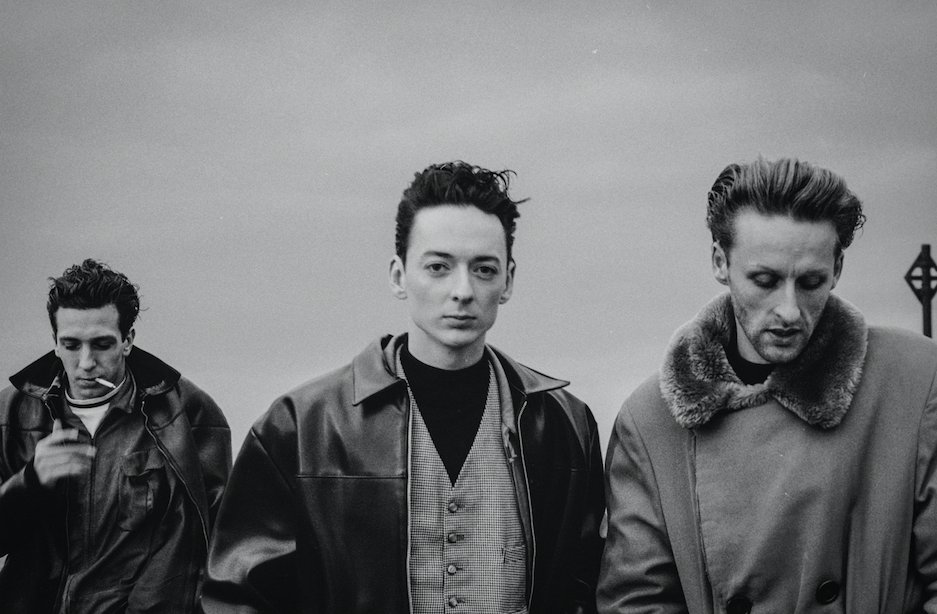
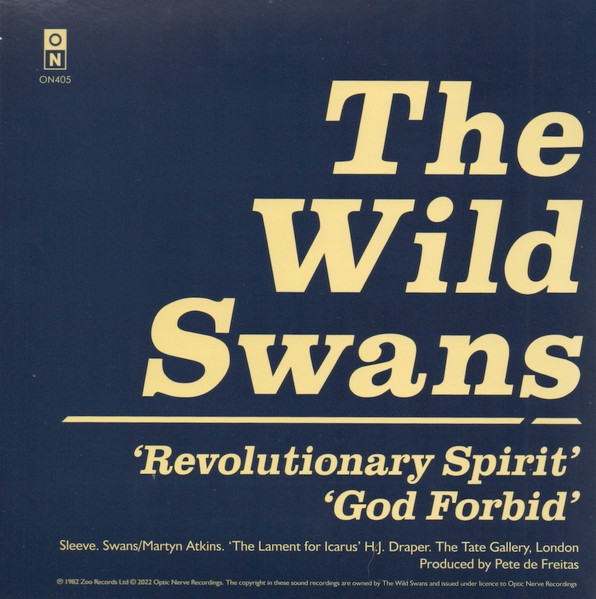
# 107: Wild Swans – ‘Revolutionary Spirit’ (Zoo Records ’82)

Hello friends,

a cult classic for you today – originally recorded in mono, with an inaudible bass and muffled guitars plus vocals which sound like they were sung through a sock. Still, this tune is exquisite beyond belief, so perhaps you should not be put off too easily, even though it might sound a bit ‘amateurish’ to you at first sight! I mean, I’m willing to bet a considerable sum of money that you will already know it by heart of course, but again: if there is at least one young soul reading this to whom this song is still new, I have achieved enough.

Right, let’s explain: the song was first issued as the last ever record on Zoo Records from Liverpool in 1982 as a 12” only. Apparently Peel was rather fond of the record, so much so that a session followed shortly afterwards, and luckily it was amongst those that got released on Strange Fruit Records back in 1986. All of this may be known already, but perhaps this is new:

a. some quite big names were in the band at various times, Paul Simpson (Teardrop Explodes), Alan Wills (Lotus Eaters), Ian McNabb (Icicle Works), Ian Broudie (Big In Japan), Rolo McGinty (Woodentops), also Pete De Freitas from Echo & The Bunnymen, who did drums on the record, also he produced and financed it.

b. If you think ‘Revolutionary Spirit’ is ace, then I urge you to listen to ‘No Bleeding’ from the aforementioned Peel Session: it’s even better … by a hundred miles!

I have never really been able to put a finger on what it is that makes this record so very special, and – mind you – if I had, I probably wouldn’t be able to describe it even halfway properly. But for sure there’s a feeling of strangeness to what is going on in this song, as if something is not quite right, but a bit off rather by a very small number of degrees – still you can’t tell exactly pin those degrees down. In a way, listening to it always drove me a bit nuts, but perhaps that’s just me.

It was re-released three years ago on the (then) ever reliable Optic Nerve Recordings label (which, alas, has gone bankrupt by now, so it seems) as a 7”, and as a band-approved stereo mix as well for that matter, so thanks to the label – because otherwise it wouldn’t have found its way into the 111 singles box.

Someone once described ‘Revolutionary Spirit’ as “the perfect blend of melancholy and hope”. Well, that’s not too far from the truth, as far as I’m concerned …

mp3: The Wild Swans – Revolutionary Spirit

Take good care, enjoy,


Dirk

JC adds……..

Dirk did mention it

mp3: The Wild Swans – No Bleeding (Peel Session)

Passen Sie gut auf sich auf und genießen Sie es.

JC


WHEN THE CLOCKS STRUCK THIRTEEN (September)

2-8 September

The month of August 1984 did offer up some gems, including what I have long held to be the greatest 12″ release of all time, William It Was Really Nothing/Please Please Please Let Me Get What I Want/ How Soon Is Now?, issued on Rough Trade Records and which, in the first week of September 1984, peaked at #17 in the UK singles charts.  Turned out it would be another two years before The Smiths experienced another Top 20 single.

So here’s a few other things that were happening forty-one years ago.

The highest new entry was a re-release, and one that wasn’t all that old.  We Are Family by Sister Sledge had been a #8 hit in May 1979, and here it was, just five years later, coming back in at #32, and before the month was over it would peak at #4. It does seem the 1984 edition of the song was different from the original in that it was a remix by Nile Rogers.

The second and third-highest new entries at #39 and #43 are again examples of songs I genuinely cannot remember a single not of.  Torture by The Jacksons and Heaven’s On Fire by Kiss.  There’s actually only two new entries in the Top 74 worth posting here, and even then, the first of them, as far as I’m concerned, is far from this particular synth-pop duo’s finest 45s

mp3: OMD – Tesla Girls (#48)

The second, and I think I’m right in saying this, was the only hit single on which keyboardist and main songwriter, Jerry Dammers, took the lead vocal, and he does so with a falsetto.

mp3: Special AKA – What I Like Most About You Is Your Girlfriend (#72)

The former would reach #21 and give OMD a ninth Top 30 hit in four years. The latter, in reaching #51, was the last single released on 2 Tone to reach the charts.

9-15 September

Dare I post the highest new entry this week, knowing that it’ll be met mostly by sneers and snorts of derision?  Mind you, my young brother likes it, and he pops his head in almost every day

mp3: U2 – Pride (In The Name Of Love) (#9)

The lead-off single from the soon-to-be released album The Unforgettable Fire.  This, more than any of their songs, was the one which suggested their future lay in arena-rock. It would, in due course, reach #3, and remain their biggest hit single through till 1988 when Desire became their first #1.

The rest of the new entries really are like a roll-call of Smooth Radio computer generated playlists.  It was painful enough being reminded of them again without actually typing them out.

16-22 September

David Bowie’s new single was the highest new entry this week.

mp3: David Bowie – Blue Jean (#17)

1983 had been Bowie’s best year ever, in terms of the actual sales/success of hit singles with Let’s Dance (#1), China Girl (#2) and Modern Love (#2).  There had also been Serious Moonlight, a hugely successful world tour of arenas and stadia which brought on board millions of new fans, but had left fans of old wondering why their hero had sold out to the shiny pop world. This brand-new song won’t have done too much to put smiles on the faces of the older fans, while the newer ones might have been less than impressed, as it was nowhere near as immediate as the offerings from the previous year.  Time hasn’t been kind to Blue Jean, or indeed the parent album Tonight.  Blue Jean would climb to #6 the following week before experiencing a rapid tumble out of the charts.

Queen had the next highest new entry at #22 with Hammer To Fall, another song from 1984 that I can’t recall.  Unlike the song coming in at #22:-

mp3: Bronski Beat – Why?

An absolute floor-filler at the student discos, and quite possibly the discos where the girls in white stilettos danced around their handbags, but I wouldn’t know as I never went near such places.  Too many pounds, shillings and pence were required to gain entry, while the drinks were way more expensive than any student union.  Smalltown Boy had only just fallen out of the Top 75 after a 13-week stay, so it was great that Why? kept Bronski Beat’s name prominently featured on the radio and TV stations of our nation.  It would eventually reach #6 around the same time as debut album Age of Consent entered the charts at #4.

Another interesting song came in at #25.

mp3: Prince & The Revolution – Purple Rain

Not one of my favourites, but loved by so many others. This single, its parent album and the film of the same name truly made a superstar out of Prince.  This would also, like Why?, peak at #6.

I mentioned up above that Queen had a new entry at #22. The band’s lead singer, Freddie Mercury, saw his first ever solo single also chart this week. Love Kills came in at #27.  Two weeks later, it peaked at #10 which meant it had outsold and outperformed the band’s new 45.  I wonder if any tension was created from such an outcome.

And finally from this week’s chart, a prime example of a slow burner

mp3: Giorgio Moroder and Phil Oakey – Together In Electric Dreams (#74)

There is a very interesting and telling background to this one, as recalled by the director of the film Electric Dreams, for which this was written as the theme song:-

“Giorgio Moroder was hired as composer and played me a demo track he thought would be good for the movie. It was the tune of “Together in Electric Dreams” but with some temporary lyrics sung by someone who sounded like a cheesy version of Neil Diamond. Giorgio was insisting the song could be a hit, so I thought I’d suggest someone to sing who would be as far from a cheesy Neil Diamond as one could possibly go. Phil Oakey. We then got Phil in who wrote some new lyrics on the back of a fag packet on the way to the recording studio and did two takes which Giorgio was well pleased with and everybody went home happy”

The song would spend 13 weeks on the chart, taking six of them to reach its peak of #3, all of which made it feel as if the song had been around forever, and even worse, was never going to go away

23-29 September

Big Country had been one of the UK’s breakthrough bands in 1983, and the band’s willingness to be seemingly constantly out on the road was a huge factor in how their fan base continued to grow.  There had been one ‘stopgap’ single, Wonderland, earlier in the year which had provided a third Top 10 hit, and hopes were very high for the lead off 45 from what was soon to their sophomore album:-

mp3; Big Country – East Of Eden (#27)

To the consternation of the band and the record label, East of Eden would stall at #17, which was maybe an indication that the new material was less radio-friendly and a tad more rock-orientated than had come before.  The big consolation was that the album, Steeltown, would enter the charts at #1 in early October.

And finally, in what it has to be said, really is something of an underwhelming month in this series:-

mp3: XTC – All You Pretty Girls (#69)

XTC released loads of great singles over the years.  This, I’m afraid to say, wasn’t one of them.  It would peak at #55.

The good news is that Part 2 of this feature will have a bundle of non-hit singles that have proven to be absolute classics.


JC
AN IMAGINARY COMPILATION ALBUM : #394 : BANDS NAMES AFTER GOOD SONGS

A guest posting by Jonny the Friendly Lawyer (aka fiktiv)

There are hundreds of bands named after songs, but not necessarily bands named after good songs. Following is an ICA of great songs that bands took their names from. Have a listen and reply if you think there’s a song/band that should have made the top 10.

Radio Head – Talking Heads

True Stories might be the worst Talking Heads album, but the film of the same name is worth a look. It doesn’t hold together that well, but it features the unfortunate Spaulding Gray and you get to see an extremely awkward David Byrne in a cowboy hat. I’ve heard that Big Country took their name from ‘The Big Country‘, a song on Talking Heads’ second LP, but I couldn’t find any corroborating evidence.

Seether – Veruca Salt

I don’t know a whole lot about South Africa’s Seether, other than they took their name from Veruca Salt‘s killer debut single. (Actually, VS’s ‘Seether’ should be considered for the cracking debut series.) Wiki tells me the Pretorian group got together 20+ years ago and are still at it, having released multiple platinum albums in the US. I like that Veruca Salt got their own name from the bratty rich girl in Charlie and the Chocolate Factory.

Baby Lemonade – Syd Barrett

I only learned from the readers of this venerable blog that there are two Baby Lemonades: a Scottish one and the boys from my adopted hometown of Santa Monica, California. Not too surprising as Syd Barrett was an iconic legend and loads of other bands have named themselves after his songs, notably Gigolo Aunts and Dolly Rockers.

Shakespeare’s Sister – The Smiths

Siobhan out of Bananarama named her band after the Mancunian foursome’s 1985 single. Another band named themselves after Pretty Girls Make Graves, from the Smiths‘ first album, but this is the better song.

Kooks – David Bowie

A charming tune from Hunky Dory about Dave and Angie’s baby son. I like the band Kooks okay, especially because they don’t sing in fake American accents. The UK folks will know that Simple Minds took their name from the lyrics of Bowie’s Jean Genie (and the Scottish folks will know that Cocteau Twins took their name from a song by Simple Minds predecessors Johnny & the Self-Abusers).*

Bad Brain – The Ramones

Bad Brains were the best hardcore band ever and they got their name from the best punk band ever. Second to last track on the classic Road to Ruin album.

Velocity Girl – Primal Scream

I love this 80-second gem from when Primal Scream were a jangly C86 band. For the life of me, I don’t know how they became so popular–Bobby Gillespie can’t sing and their songs are so derivative. They’re like the Glaswegian Tom Petty or something. The band Velocity Girl was a DC outfit that released three really listenable pop albums in the early 90’s. Try “Crazy Town” or “Sorry Again” if you’re not familiar.

Slowdive – Siouxsie & The Banshees

The unmistakable Miss Ballion, backed by the best line up of the Banshees. Damn, I wonder how much great music John McGeoch would have made in the last 20 years. Slowdive were perhaps unfairly labelled a shoegaze band, but they made a lot of pretty recordings over the years.

Spoon – Can

I like the band Spoon so much I wrote an ICA about them (#104), to mixed reviews. Can are also not for everyone, but when you’re in the mood there aren’t a lot of bands like them. And like Spoon, there’s a Can song for everyone. This is from 1972’s Ege Bamyasi, which, of course, the German band with a Japanese singer named after a Turkish vegetable.

Ladytron – Roxy Music

Also from way back in ’72, featuring maybe the best use of oboe in a rock song until Julian Cope got a hold of one. Early Roxy was exciting and different and experimental and showy. The Liverpool outfit named after this song from the eponymous debut are…showy.


Jonny

* JC ADDS………

I had long forgotten that Cocteau Twins took their name from a new wave song by the predecessors of Simple Minds.  I recall dismissing the tale as an urban myth when I was first told it, and I can’t recall actually mentioning it on the blog when I’ve written about either band before.  The song was never actually recorded, but t’internet being what it is, I’ve managed to get my grubby paws on a version.

mp3: Johnny and The Self-Abusers – Cocteau Twins

Later re-worked as No Cure and included on the 1979 album, Life In A Day


SUPER FURRY SUNDAYS (aka The Singular Adventures of Super Furry Animals)

A guest series by The Robster

#28: Inaugural Trams (2009, Rough Trade)

In a parallel Super Furry universe, there is a utopian European town that has just opened a new public tram system. The authorities have dubbed it a day of celebration and a public holiday has been announced. Yes, of course, it’s an obvious subject for a song. Well, it is if you’re Super Furry Animals, anyway!

mp3: Inaugural Trams [edit]

The first track released from the band’s 9th studio album ‘Dark Days/Light Years’ is a blinder. There’s a real krautrock feel to it, supplemented by some spoken German from special guest Nick McCarthy of Franz Ferdinand. His rap in the middle is, as far as I can make out, quite nonsensical, but that might just well fit the general SFA aesthetic. Let’s face it, there really haven’t been many songs written about trams, and certainly none with such a brilliantly unique chorus:

It’s a secular day and it will be even better tomorrow
It’s the first day of the integrated transport hub
Let us celebrate this monumental progress
We have reduced emissions by seventy-five per cent

The inspiration behind the song seemingly comes from an event involving one of Gruff Rhys’ family: “My great-grandmother was run over by a tram in the Mumbles*. But I’m still very much in favour of trams as a low-emission inner-city transport solution. The song is about commemorating the opening with a secular holiday. It’s a celebration of living with science rather than religion.”

Inaugural Trams was a sign that the new album was going to be a little more elaborate than its stripped-back predecessor. Also, in comparison to ‘Hey Venus!’ being the band’s shortest album, ‘Dark Days/Light Years’ is their longest, weighing in at a full hour. It showcased a real mixed bag of styles and was described by Gruff as having a “biblical sound”, with songs that couldn’t be played indoors!

“There are not a whole lot of chords in these songs; they’re not as song-based in the conventional song-writing way. They’ve been developed out of band jams, but it turned out sounding like songs pretty much anyway.” In fact, many of the songs on ‘Dark Days/Light Years’ had evolved from jams, riffs and grooves the band had been working on for a number of years. Some had originally been mooted for the previous album, but ended up being held over.

I think Inaugural Trams kind of sounds how Gruff described – there are only two chords, by-and-large, but it has a great melody and a compelling groove. There are a few songs on the album that follow this trend – the psychedelic odyssey Pric probably being my fave of the lot. That said, there’s a sequence of songs in the second half of the record that show the poppiest side of the band we’d ever heard before, which is ironic considering ‘Hey Venus!’ was a deliberate attempt to make a straight-up pop album. Helium Hearts in particular has “massive chart smash!” written all over it. Maybe if it had been performed by some teen heartthrob of the period, I’ve no doubt it would have fulfilled its potential. It wasn’t a single, but it’s the most obvious single the band ever wrote.

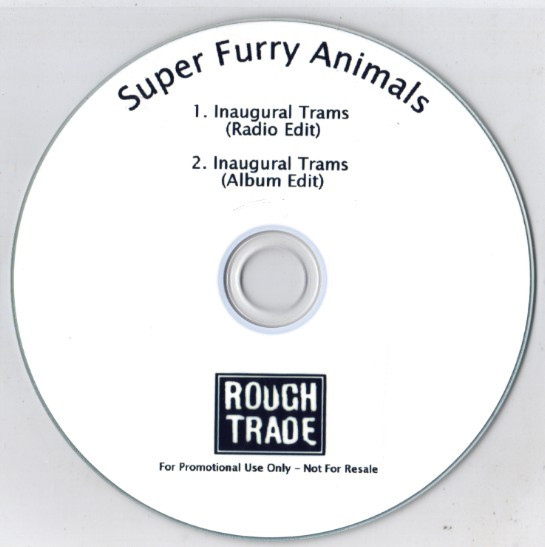
There were no physical formats of Inaugural Trams made available, but promo CDs featured two edits – a radio edit and an album edit, so-called because it is the album version, but it doesn’t crossfade into the next track. It’s also about 15 seconds shorter than the version that would appear on the 2016 compilation ‘Zoom! The Best Of Super Furry Animals’.

mp3: Inaugural Trams [album edit]

While there was no official tour to promote the album, they did still play some shows. So with there being a distinct lack of b-sides, I’m going to give you some live versions of ‘Dark Days/Light Years’ songs taken from a bootleg of the band playing in New York City in 2009.

mp3: Inaugural Trams [live at the Highline Ballroom, NYC]
mp3: The Very Best Of Neil Diamond [live at the Highline Ballroom, NYC]

If you cast your minds back a few weeks (to the Slow Life post, to be precise), you’ll remember I posted a few links to an interview with my friend Graham of Goldie Lookin Chain. In one of the clips, he spoke about his disbelief on learning that SFA had a new song called The Very Best Of Neil Diamond.

“I texted Cian and said ‘If you’ve written a song called The Very Best Of Neil Diamond…’ I think I offered to chop my bollocks off, but I changed it [to] ‘You owe me a pint’. Lucky old bollocks!” I mean, it’s an utterly brilliant song title that only a band like Super Furry Animals are worthy of, if you ask me. According to Gruff: “[It’s] about how you can’t choose the soundtrack to your life.”

Hmm, maybe not, but if a film was made about my life, I’d want Super Furry Animals to soundtrack much of it.

Next week, a single with something of a new voice…

* For those unfamiliar with this part of the world, Mumbles is a headland just to the southwest of Swansea. The most famous person from Mumbles is Catherine Zeta-Jones.


The Robster

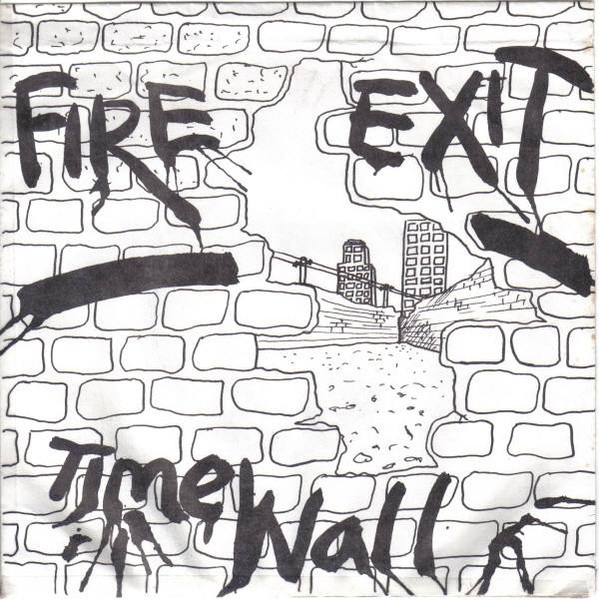
SATURDAY’S SCOTTISH SONG : #469: FIRE EXIT

It’s a return to the Big Gold Dreams box set for this week’s edition of the Scottish song, and it’s one from 1979 that would also qualify for the ‘One Song On The Hard drive’series but is just 18 seconds too long in length for the ‘Songs Under Two Minutes’ series

mp3; Fire Exit – Time Wall

From the BGD booklet:-

‘Recorded with assistance from Vibrators bass player Pat Collier, this piece of street-smart dystopian desire to get beyond the punk era’s all-pervading sense of urban dread marked the arrival of Gerry Attrick‘s much lauded combo who are still going strong.  With three albums released since 2004, a compilation, Religion Is The Biggest Cause of War, arrived in 2013. This was followed by 40 Years of Punk Rock, a 2CD collection of assorted demos, scraps and unreleased recordings. Now in their fifth decade, Fire Exit are growing old disgracefully, and are probably coming to a punk festival near you soon.’


JC


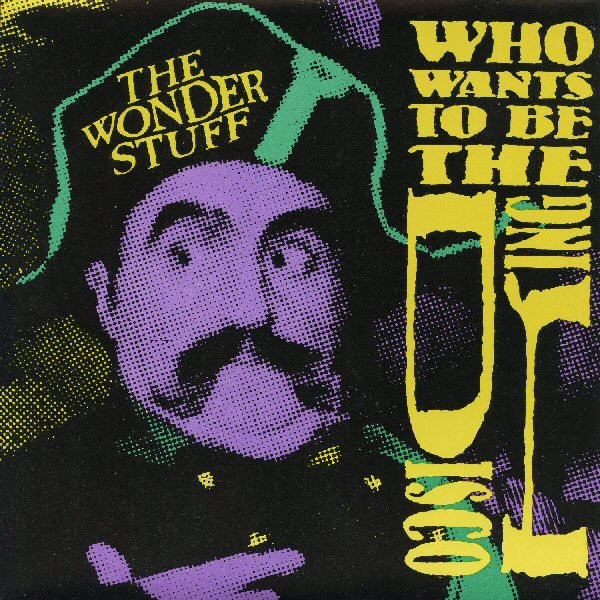
THE 7″ LUCKY DIP (37) : The Wonder Stuff – Who Wants To Be The Disco King?

The Wonder Stuff hadn’t quite come totally out of nowhere, but their ascendancy was very rapid.  Formed in March 1986, they would release a self-financed EP within six months, after which Polydor Records came calling, which meant they bypassed all indie labels from the outset.  It didn’t seem to do much damage to their credibility with the UK music press, with plenty of column inches devoted to their live shows, while frontman Miles Hunt seemed to be on speed dial with a few journalists.

The constant touring was a big factor in building up their fan base, with each of their first four singles for Polydor, in 1987/88, charting higher than the previous.  Debut album, The Eight-Legged Groove Machine, went into the Top 20 in its first week of release in August 1988, and it was further promoted by a sell-out 19-date tour of the UK in October.

A test for any band that gets early hype is how good the follow-up material proves to be

mp3: The Wonder Stuff – Who Wants To Be The Disco King?

The growth in popularity continued, with this one providing their first Top 30 hit in March 1989.  Before the year was out, they would have a Top 20 single with Don’t Let Me Down Gently, while their second album, Hup, would go Top 5.

The b-side to Disco King was a live version of debut single Unbearable, as recorded at the London show during the October 1988 tour.  The difference being it was a stripped-back, acoustic take, which must have taken the capacity audience by surprise.

mp3: The Wonder Stuff – Unbearable (live)

Having said that, there were clearly plenty of cheers when the song ended.  Looking now at some of the published set lists from 1988, it appears, the band had a habit of playing Unbearable in this acoustic fashion early on but would then play the more frantic and familiar version of the song towards the end of the show.

Apologies for the crackly nature of the tracks, but this was a 7″ single picked up second-hand for not a great deal of money.


JC

ONE HUNDRED AND ELEVEN SINGLES : #106

aka The Vinyl Villain incorporating Sexy Loser

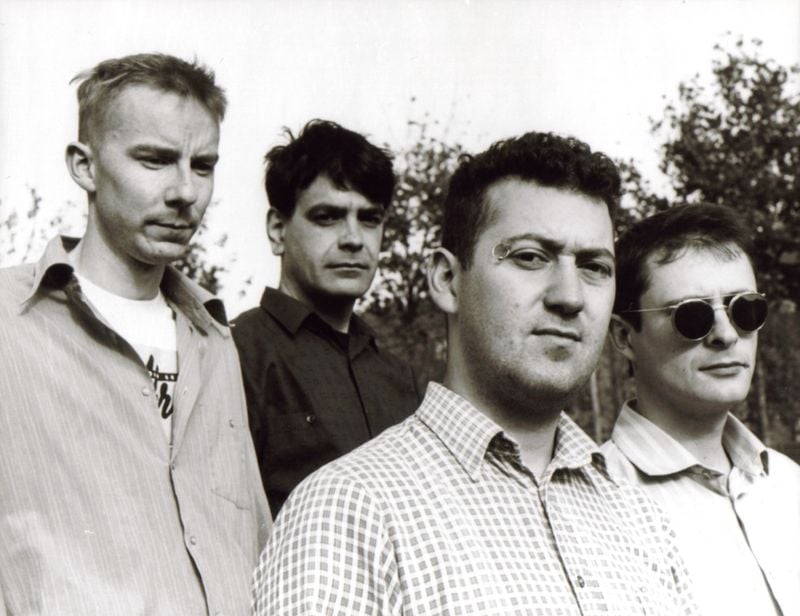
# 106: The Wedding Present – ‘Once More’ (Reception Records ’85)

Dear friends,

‘Don’t Try And Stop Me, Mother’ was a 12“ compilation of the first two 7“ singles by The Wedding Present, their A-Sides and B-Sides. Also, it was the first record by the band that I managed to get my hands on in 1985.

You know, I really made a long pause before starting this second paragraph, contemplating whether there has been another record in 1985 which spent nearly as much time on my turntable as this one did. I did not come up with a satisfying answer, which might or might not show you how outstandingly brilliant this 12“ was. And still is, of course! I played it to death, believe me, frantically trying to figure out what the hell the lyrics might mean in detail – to no great avail, of course. I mean, the boy Gedge certainly was not really ‘Abba-esque’, that much I could understand, in fact his lyrics quite profoundly seemed to mirror me and my unmet teenage desires … something I could instantly cope with, of course.

But back to the 12“, the B-Side, confusingly enough, featured the first single, ‘Go Out And Get ‘Em Boy!‘ plus ‘(The Moment Before) Everything’s Spoiled Again’ whereas the A-Side had the second single on it, which was ‘Once More’ backed by ‘At The Edge Of The Sea’. I’m pretty sure all of you know all these tunes by heart and as great as both 7“ B-Sides are, the A-Sides are even better.

Now, from 1985 to 2025 is 40 years, even it’s hard to believe. But still, and I am brutally honest, in those 40 years, even up to this very day, I never, never, never have been able to decide whether ‘Go Out’ is better than ‘Once More’ … or vice versa! To me, both songs are total killers, always were – and they were the reason why I followed The Wedding Present quite religiously in the earlier stages of their career. Well, this 12“ and the fact that the band played my home town Aachen a year or so later, shortly after ‘George Best’ had been released. It was a tiny little venue, I was there early, and I stood right in front of the stage (which was just a few inches in height anyway, but let’s call it ‘stage’ nevertheless, shall we?) – and I was fully, completely and utterly blown away by this gig!

Musically and/or song-wise it really had everything you’d wish for, but in hindsight there was another thing which astonished me most: the sheer velocity Gedge and Salowka (but mostly Gedge) managed to strum their guitars with: I remember that I stood there literally open-mouthed, my eyes were not capable to follow Gedge’s hand, it moved just so damn quickly when he started playing … you’d see him placing his plectrum correctly – and then, all of a sudden, his hand exploded above the strings!

Perhaps my battered brain likes to believe that he was even faster with this when doing ‘Once More’ in comparison to ‘Go Out’, I don’t know. But as there can only be one single in the box by a band, I had to make a choice:


mp3: The Wedding Present – Once More

Mind you, on a different day it could well have turned out to be ‘Go Out’, I’m still unsure! Or, for that matter, basically anything they put out before ‘Kennedy’. Or ‘Kennedy’ itself, for what it’s worth …

Fun fact: some twenty years ago I was in a Peel-related Yahoo forum and out of the blue I got a private mail from Gedge, asking about some CD I had of some specific Peel show – I must have mentioned it in said forum. I could be wrong, but I think it was the last broadcast before his death. Anyway, I posted a copy of this CD to Gedge and he – very kindly – asked me whether he could send me something from ‘Cineramaland’ (his words, not mine) in return. I politely declined and told him about the above gig, saying that with this experience – and of course everything he did with The Wedding Present – he made my life rich enough. What a prick, me, right? I’d like to think that this statement was the reason for him to reform The Wedding Present, but hey, I might be wrong here … oh, I’m a friend of the stars!

Enjoy,


Dirk


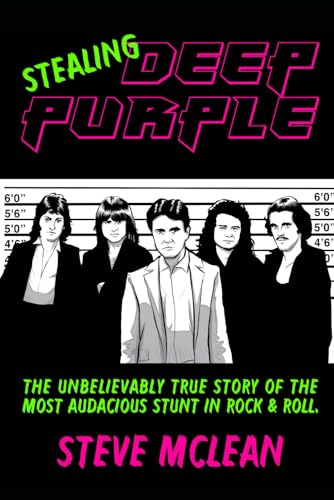
BOOK OF THE MONTH : SEPTEMBER 2025 : ‘STEALING DEEP PURPLE’ by STEVE McLEAN

The past four Wednesdays on the blog have been given over to Steve McLean during which he has informed and educated many of us (and probably all of us!!), on how each of Fleetwood Mac, The Velvet Underground, MC5 and Cactus had occasions when their identities were not all that they seemed to be.  All four pieces were spin-offs from a book that Steve has written, ‘Stealing Deep Purple : The Unbelievably True Story of The Most Audacious Stunt in Rock & Roll’.  

I’ll be the first to hold my hand up and say that for most of my life, I’d struggle to name any Deep Purple song other than Smoke On The Water.  Actually, I don’t even know that song…..I’m aware of the riff! The Britpop era introduced me to a second of their songs, Hush, when it was covered by Kula Shaker and taken to #2 in the singles chart in 1997.  Now, I have to say that I thought it was a Kula Shaker original given it sounded just like the rest of their output, and I had was a sort of ‘rubs eyes in disbelief’ moment when learning it had been a 1968 Top 5 hit single in America for the hard rock giants, and indeed that the Deep Purple version itself was a cover as the song had been written by Joe South and recorded in 1967 by his fellow American, Billy Joe Royal.

It was the very success of Hush that ultimately led to a chain of events in the late 70s/early 80s into which Steve delves and picks through in forensic detail, thanks to what must have been many hundreds, if not thousands of hours of research as well as seeking out and getting responses from some who were in and around the periphery of said events.

The crux of the tale centres around Rod Evans, the original singer of Deep Purple, and whose vocal is on their version of Hush.  Evans recorded three studio albums with the band before being fired in 1969.  The other members of the band – Ritchie Blackmore (guitars), Jon Lord (keyboards) and Ian Paice (drums) – felt Evans’ largely pop/mod vocal style wasn’t compatible with the sort of music they were increasingly wanting to make, and he was replaced by Ian Gillan.  It wasn’t just Evans who was booted out of Deep Purple MkI, as bassist Nick Simper was replaced by Roger Glover.

Deep Purple MkII lasted till 1973 when Gillan and Glover were removed to be replaced by David Coverdale and Glenn Hughes.   Two years later, Blackmore quit to pursue what was going to be a solo career, but which ultimately became the band Rainbow.    This meant we were onto Mk IV of Deep Purple, with Tommy Bolin being hired as Blackmore’s replacement, but by 1976, the band had torn itself asunder, albeit a number of them would end up working together in Whitesnake.

Rod Evans had long drifted out of the music industry and by the end of the 70s was working in medicine at a hospital in California, which is the point in time where the book really begins.  An idea was hatched to relaunch Deep Purple and undertake a tour of America. Mexico and Canada, and possibly further afield, depending on the success or otherwise of the initial venture.  Rod Evans would front the band, but the other musicians in this version of Deep Purple would have had would have had no prior involvement in any of the Mks I-IV line-ups.

The question of who owned the actual name ‘Deep Purple’ wasn’t seen as an important issue; and, if you recall Steve’s blog posts on other bands over the past few weeks,  this was an era when quite a few bands went out on the road caring little about legacies or who had the actual right to claim the rights to a name.  Indeed, in this instance, there is some suggestion that Rod Evans may have had grounds to believe that the other members of Deep Purple weren’t too fussed about it all, especially as they were at the height of their fames with new bands, and that it would all go smoothly.  Others in and around Deep Purple, and in particular the management side of things, believed very differently……

The tour did go ahead.  Some shows went well, but most didn’t, with underwhelming performances and poor sound quality leaving some fans feeling incredibly short-changed and/or cheated.  Some shows ended in riots, and others ended with the band members fighting among themselves.  Inevitably, the whole thing ended up in court.

As I said, I know next to nothing about Deep Purple. I also have a loathing for heavy metal bands such as Rainbow, Whitesnake etc, and as such this book should have been of little appeal to me.

But the book isn’t really anything to do with the actual music, as it’s more about the machinations of the industry.  Steve’s style of writing is akin to it being the script for a six-part documentary on the events of 1979/80.  He keeps his own personal opinions out of proceedings, and early on he accepts that, despite his very best efforts involving more than 200 printed sources (many of them contemporary and long-forgotten) as well as dozens of interviews he carried out himself, the book is, essentially, an incomplete jigsaw puzzle.

Hardcore Deep Purple fans, the ultras if you like, quite a few of whom weren’t around when these events took place, will argue vigorously that Rod Evans stole the name of the band, took a second-rate group of musicians out on the road and knowingly acted out a massive fraud on the paying public.  In short, a scam of the highest order.

There are others, the miniscule minority view if you like, who feel Evans didn’t steal the name as he was an original member and in 1979/80, Deep Purple didn’t exist as a recording or touring band; he simply took something out on the road that didn’t meet people’s expectations leading to a horrible backlash that shouldn’t have been on him alone.

The book does offer a great deal of context to events, particularly through what press coverage there was back in the day. It also, towards the end, goes into some depth about the eventual court case, and while this does briefly threaten to take the prose into dry legal-speak, Steve, to his huge credit, finds a way to make it all understandable to those of us without a law degree to our name.

Stealing Deep Purple isn’t available (as far as I know) in the shops, and the publisher, Lulu Books, is involved in printing ‘on-demand’.  In other words, if you fancy reading this in full, and I really do recommend it very highly, then you use this link and let the publisher do the rest.

mp3: Deep Purple – Hush

I’ve known Steve McLean for quite a few years now, but our friendship has nothing to do with my take on this book.  If it had been poorly written, or been boring or had in any shape or form failed to hold my attention, then this post would not have been pieced together.


JC

PS : Steve has fired over a few more of his theft essays, and I’m delighted to say that these will feature, probably on a monthly basis for at least the rest of 2025. Keep your eyes peeled.

FOUR TRACK MIND : A RANDOM SERIES OF EXTENDED PLAY SINGLES

A guest series by Fraser Pettigrew (aka our New Zealand correspondent)

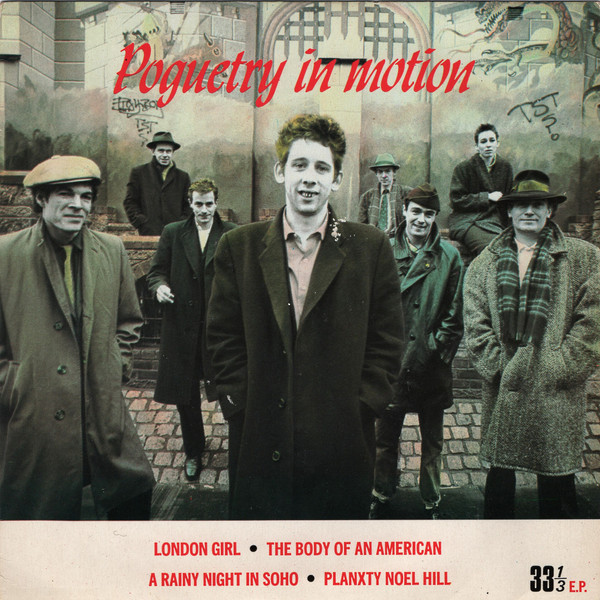
#5: Poguetry in Motion – The Pogues (1986)

In the mid to late 1980s, as I’ve mentioned before, my taste in music took a folky turn as I drifted away from a rock and pop scene that for me had lost its post-punk vibrancy. Through listening to John Peel since the late 70s I had come to share his enjoyment of traditional Irish folk music like The Chieftains, whom he played regularly, alongside occasional outbursts of Shetland fiddle orchestras, and I was also drawn to folk-influenced acts like The Proclaimers.

The Pogues had erupted on the scene in 1984, puncturing the façade of New Romanticism, an irrepressible pimple forcing its ruddy irritation through pop’s inch-thick mask of foundation and blusher. Punk’s spirit of anarchy was tossed into a barrel with the elemental appeal of traditional Irish music, given a good shake and poured onto the stage like a farmer’s protest on the town hall steps. ‘Genuine’ folk fans were appalled and revolted, rebels looking for a cause mobbed the mosh pit and drank it down by the pint.

Frontman Shane MacGowan snarled his songs from a mouth like a vandalised graveyard. An unlikely looking pop star, his features were already familiar to punk fans from a series of infamous photos taken at a Clash concert in 1976 where he was seen splattered in blood (from his own ripped earlobe, it turned out, rudely relieved of its safety-pin earring by the bass player of The Modettes).

Not just a pretty face, however, MacGowan rapidly gathered accolades for his songwriting after The Pogues’ second album Rum, Sodomy and the Lash provoked positive reviews in August 1985. Their first album, Red Roses for Me, had also been greeted as welcome refreshment, but it had passed me by, I confess. The second album slightly dialled down the frantic, showing that The Pogues weren’t just cracking a joke by playing folk tunes at Ramones tempo. Songs like The Old Main Drag and A Pair of Brown Eyes were an authentically original take on the Irish exile experience, and to close the album The Pogues wrung every last drop of bitter pathos out of Eric Bogle’s classic And the Band Played Waltzing Mathilda.

The Poguetry in Motion EP was released in late February 1986 on Stiff Records, the first new material after Rum, Sodomy and the Lash. Three singles from that album, the aforementioned Pair of Brown Eyes, Sally MacLennane and a cover of Ewan MacColl’s Dirty Old Town, had all failed to reach the UK top 40, but Poguetry finally cracked it, peaking at 29. If this was on the merits of the opening track London Girl I’d be surprised as it’s not especially good. It feels like rather a conventional pop song draped in Pogue-like stylings, but it’s neither a ripping Irish tune nor a winning pop hit. MacGowan’s lyrics are fine, with some characteristic poetic touches, but the arrangement races through them with hardly time to breathe.

The second song, Rainy Night In Soho, however, is undoubtedly the lead track on the EP (there’s a video for it), an all-time Pogues classic, and one of MacGowan’s most poignant ballads, confirming him as rock’s most romantic, sentimental old drunk. Lines that might sound hopelessly cliched on anyone else’s lips become scenes from a lover’s tender dream in his gruffly slurred melancholic reverie. Strings and brass elevate the song to a stirring conclusion, the repetitive refrain anchoring it in a century-old Irish popular tradition.

The string and brass conclusion, however, ultimately proved the catalyst for The Pogues and their producer Elvis Costello to part ways. Two versions were recorded, one with a flugelhorn solo over the finale, one with an oboe. Costello insisted on the oboe, but MacGowan was prepared to die in a ditch for the flugelhorn. MacGowan got his way on this, the UK version, the oboe had its day on the Canadian and US releases.

Fans of David Simon’s HBO police series The Wire will be well familiar with the first track on the flip side, The Body of an American, which features at several wakes for deceased officers in the Sidebar Tavern, the Irish bar near the Baltimore police HQ. Even without this immortalisation, it’s another Pogues classic, formed in the mould that made The Sick Bed of Cuchullain.

A slow intro in 3/4 time sets the scene of small boys hanging around the wake for big Jim Dwyer, a ‘Yank’ deceased in some Irish location. Then suddenly the tempo doubles into a rollicking jig with the memorable verse: “But 15 minutes later we had our first taste of whiskey / There was uncles giving lectures on ancient Irish history / The men all started telling jokes and the women, they got frisky / By five o’clock in the evening every bastard there was piskey”. The chorus refrain of “I’m a free-born man of the USA” ensured the song’s instant appeal to the Irish-American diaspora, fictionally in The Wire, for real in every St Paddy’s Day party ever since. The final chorus gives way to a long and delicious fade-out led by guest musician Tommy Keane’s irresistible uileann pipes.

I always took the final track, Planxty Noel Hill, as some sort of tribute to the folk group of that name, assuming Hill to have been one of its members. He was, very briefly, as a stand-in, but the gesture to him is of the two-fingered variety as it turns out. ‘Planxty’ apparently means something like ‘cheers’ in Irish, so has nothing directly to do with the group, and Hill made a bit of a tit of himself by very publicly denouncing The Pogues’ music as a “terrible abortion” on Irish radio. In an Irish context you can imagine how language like that went down. Jem Finer’s lively, cheeky instrumental was The Pogues’ musical flick of the Vs in Hill’s general direction.

My copy of Poguetry in Motion is the 7” 33rpm version. The 12” version has exactly the same tracks but plays at 45, of course.

London Girl

Rainy Night in Soho

The Body of an American

Planxty Noel Hill


Fraser

ONE HOUR OF ‘IN TAPE’

A guest posting by Leon MacDuff

As much as I love doing the monthly mixes (and there were actually a couple lined up for today that will be held over), I really enjoy when another member of the TVV community comes up with something.  A huge thanks, therefore, to our good friend Leon MacDuff who continues his stellar guest contributions with a mix featuring songs that were released on In Tape Records.

Here’s Leon to explain a bit more:-

“I can’t claim any great purpose with this one, I just fancied doing a mix and decided to focus on a particular label, so here it is. The label I alighted on was In Tape, the Manchester-based indie originally created by Marc Riley and his manager as an outlet for his work with The Creepers, which went on to clock up around 70 releases between 1983 and 1990.

It’s odd how little attention this label gets – we have all heard of it, but it doesn’t feel like it has the cult following you might expect. There’s no fan site, no Facebook group, not even a Wikipedia article. But since it had a roster of acts I already know and like, such as Yeah Yeah Noh, Rote Kapelle, Asphalt Ribbons and Frank Sidebottom (though I’m well aware that Frank is one of those acts you either “get” or you don’t), I made it my mission to listen to every scrap of In Tape material I could find, and while some of it truly is quite scrappy, overall it’s a decently solid catalogue – so here’s an hour of it, with dodgy transitions courtesy of yours truly (though from Life With Patrick into Eva is a pretty good one, even if I say so myself).”

mp3: Various – One Hour of ‘In Tape’

Robert Lloyd & The New Four Seasons – Something Nice
Whipcrackaway – The Horse’s Tale
The Membranes – Everything’s Brilliant
Terry & Gerry – Pizza Pie & Junk
The Weeds – China Doll
Heart Throbs – Toy
Zor Gabor – Vigilante
Yeah Yeah Noh – Starling Pillowcase, And Why
Stitched-Back Foot Airman – Invented By Robots
Marc Riley & The Creepers – Polystiffs (live in Amsterdam)
Asphalt Ribbons – Over Again
Rote Kapelle – San Francisco Again
Life With Patrick – Something From Nothing
Eva – Unquenchable (the untouchable mix)
June Brides – Just The Same
The Waterfoot Dandy – 14 Days
Frank Sidebottom – I Am The Champion

Leon