
A guest ICA by Fraser Pettigrew (aka our New Zealand correspondent)
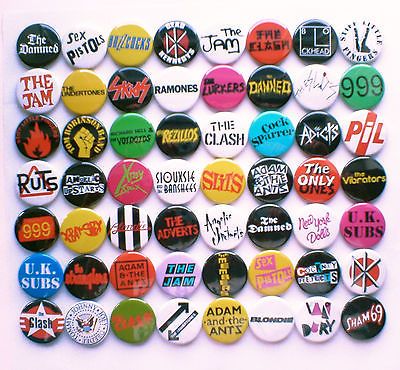
If there was a dominating manifesto principle for British punk, then it is perhaps best summed up by the phrase ‘do it yourself’. Knocking up your own fashions from ripped t-shirts and bin-bags, decorated with marker pen and safety-pin jewellery, or writing and photocopying your own fanzines were two characteristics of the moment. Starting your own record label and ultimately your own band, regardless of whether you could actually play an instrument, also had a defining impact on the early history of the genre.
The creative emphasis was very much against appearing derivative in any way, either visually or musically, even though there was, of course, an immense amount of copy-cat styling in both clothing, hairstyles and sound. Influences could be flaunted, but the end product earned its cred from not leaning too heavily on the invention of someone else, least of all the old-wave musical establishment of the time.
Cover versions are therefore understandably rare in the canon of early punk and new wave releases from 1977 and 1978. Writing your own stuff was self-evidently more original than plundering the past you wanted to break with. The covers that did make it onto the official releases of new wave bands at this time come from an interestingly diverse list of artists and reveal a range of different approaches that kind of sum up all the main reasons why any band chooses a particular song to cover. All, that is, barring the most obvious reason, as we’ll see.
Homage is a good place to start. For the punk artist there was a fairly short list of formative influences that could be publicly praised, amongst whom were the kings of the Detroit garage scene, MC5 and The Stooges. The songs were suffused with nihilism, teenage boredom and drug abuse, and housed in rudimentary rock riffs that even the most musically incompetent guitarist could just about master. Not that Brian James of The Damned was musically incompetent, but I Feel Alright from The Stooges’ second album Fun House (titled 1970 in the original), was the perfect accompaniment to the nihilism, teenage boredom and punchy riffs of the other eleven self-penned tracks on Damned Damned Damned.
For The Clash, it was the rude boys of Jamaican music that deserved acknowledgement, and the choice of Junior Murvin’s Police and Thieves on their first album was a pointedly political one. Despite the contrast in style and tempo, the song sits proudly alongside the band’s own rugged compositions, drawing a seamless comparison between authoritarian policing in Kingston and the vindictive racism of the Met in Brixton and Notting Hill.
From the beginning Paul Weller wore his influences on his sleeve, quite literally in the form of The Jam’s three-button mohair suits. The Jam’s recorded catalogue, as well as Weller’s solo output, is peppered with homages to various heroes, and includes several of the r’n’b standards beloved by the original mid-60s Mods. Amongst these was Slow Down, a hit for Larry Williams in the late 50s, later described as a proto-punk adrenalin-fuelled raver and a perfect fit on side one of In The City.
I might have been describing Mark Perry in my opening paragraph above, as the creator of the Sniffin’ Glue punk fanzine and then founder of the band Alternative TV. ATV chose to pay tribute to Frank Zappa with their cover of Why Don’t You Do Me Right? by The Mothers of Invention. Zappa was one of very few artists associated with the hippy era who could be safely revered in 1978, largely because he was perceived to be weird as f and didn’t give a shit about commercial success. In fact, this song is amongst the most accessible things he ever did and makes for a great anti-romantic rant on The Image Has Cracked.
I’m not entirely sure whether The Stranglers’ version of Walk On By is a homage or not. There’s nothing much else in the band’s early repertoire that suggests they were big Burt Bacharach fans, nor would Bacharach be high on the list of punk-friendly composers. But the recording that appeared on a free white vinyl single with the first 75,000 copies of their third album Black and White is about as respectful a rendition as you could imagine from such disreputable oafs.
At any rate, it certainly doesn’t come across as parody, a category that comfortably embraces The Lurkers’ attempt to take the piss out of The Beach Boys.
Then I Kicked Her is a typically boorish transmogrification of Then I Kissed Her, a clean-cut tale of Californian sun and snogging, reduced to a coarse and ugly encounter in a Fulham backstreet by the simple substitution of a single consonant. Nobody thought The Beach Boys were still admirable in 1978, so The Lurkers probably thought they could get away with it, but they didn’t take the judgement of posterity into account.
The notion of covering a Fleetwood Mac song in 1978 without similar corruption might seem inconceivable. Part of the British blues revival alongside the likes of The Yardbirds, Rolling Stones, Them and The Animals, Fleetwood Mac had recently reinvented themselves as a soft-rock supergroup and their adult-oriented album Rumours had become a massive hit, polluting (to our ears) the turntables of every household in the land. Edinburgh punk band The Rezillos didn’t let this stop them exhuming an obscure 1969 b-side on their debut album, but then Somebody’s Gonna Get Their Head Kicked In Tonite had a certain ring to it, illustrating how a cover might have an unlikely source but carry the right sentiment for a punk band.
Another example of this is the Sex Pistols’ version of (I’m Not Your) Steppin’ Stone, best known as a b-side hit for those confected pseudo-Beatles, The Monkees. I’m breaking my own rules here because the Pistols’ version wasn’t released until 1980, long after the event, but it was a staple of their live sets and was recorded in October of 1976 during their first studio sessions for A&M. There’s no irony in their rendition – despite The Monkees’ squeaky-clean comedy personality, the song’s sneering put-down of a wannabe celebrity social climber might have been written for John Lydon.
For someone who is so evidently the sum of multitudinous influences, Elvis Costello didn’t actually release a cover version until My Funny Valentine on the b-side of Oliver’s Army in February 1979. That is, if you don’t count the live version of The Damned’s Neat Neat Neat issued on a free single with This Year’s Model in early 1978. Costello and the Damned were briefly label-mates and the recording comes from a Live Stiffs tour, though The Damned didn’t feature. The flip side of the free single was the Costello composition Stranger in the House, whose country and western arrangement was so alien and provocative to new wave fans that it seems like a cover of an entire genre. A curiosity disc indeed.
Another example of new wave playing it safe by covering one of their own is Penetration’s version of Nostalgia, a Pete Shelley tune that glowed on their Moving Targets debut (luminously!) almost in the same week that it appeared under the Buzzcocks name on their second album Love Bites.
The final category of cover version is what I’d call deconstruction. This is where a song is lifted from an ‘uncool’ artist and made appealing to new wave taste by a radical restyling. It’s neither parody nor homage, but might seem like either depending on your point of view. To be fair, Helter Skelter was an atypical Beatles song, heavy and discordant and so it wasn’t that much of a stretch for Siouxsie and the Banshees to refashion it on The Scream. The song’s infamous association with Charles Manson’s deranged killing spree also helps to distance it from Beatlemania and the cross-generational adoration of the Fab Four.
All Along The Watchtower by XTC is sort of a cover of a cover. As Mr Tambourine Man was for The Byrds, Dylan’s song is far better known in Jimi Hendrix’s version than his own. Either way, these were not favourable associations for a new wave artist in January 1978, and the only way to carry this off was to smash it to bits. XTC took a sacred cow and led it straight into the slaughterhouse, the lyrics unintelligible in Andy Partridge’s contorted staccato yelp and the melody almost imperceptible in the eerie dub-funk arrangement. My brother, a faithful devotee of the old school, found the sacrilege unbearable and was almost moved to violence by it. And yet the end effect captures the song’s bleak and unsettling sense of malaise perfectly, a faithful interpretation in shattered form.
What none of these cover versions did was make money – the oldest and most obvious reason for singing someone else’s already successful song. It wasn’t until Sid Vicious staggered down a glittering staircase in an ill-fitting tuxedo, drunkenly slurring My Way, the cover of all covers, that punk, such as it was by then, finally sought to shift units by singing a song that everyone loved and everyone else had already sung. It was the capstone on Malcolm Maclaren’s edifice of the Great Rock and Roll Swindle. Leonard Cohen, that famous old punk, said he never liked the song except when Sid Vicious sang it. It made number 7 in the singles chart in July 1978.
The Damned – I Feel Alright (The Stooges)
The Clash – Police and Thieves (Junior Murvin)
The Jam – Slow Down (Larry Williams)
Alternative TV – Why Don’t You Do Me Right? (Frank Zappa)
The Stranglers – Walk On By (Burt Bacharach)
The Lurkers – Then I Kicked Her (The Beach Boys)
The Rezillos – Somebody’s Gonna Get Their Head Kicked In Tonite (Fleetwood Mac)
The Sex Pistols – (I’m not your) Steppin’ Stone (The Monkees)
Elvis Costello – Neat Neat Neat (The Damned)
Penetration – Nostalgia (Buzzcocks)
Siouxsie and the Banshees – Helter Skelter (The Beatles)
XTC – All Along the Watchtower (Bob Dylan)
 THE NEW VINYL VILLAIN
Great piece. Great ICA. Nicely done.
Honorary mention for The Slits’ take on I Heard It Through The Grapevine, which they were performing from ’77 onwards. Arguably Siouxsie’s better cover was Dylan’s This Wheel’s On Fire, but then that was ten years after punk.
Enjoyable read.
I own just three of those. My favourite has to be Siouxsie and the Banshees with Helter Skelter. The Rezillos are placed a close second.
Flimflamfan
I’ve always felt The Stranglers rendition of Walk On By is one of the greatest ever cover versions…
I’m not … … The Monkees
https://en.wikipedia.org/wiki/(I%27m_Not_Your)_Steppin%27_Stone
I owe all of those too but The Stranglers version of “Walk on by” owes an awful lot to The Doors’ “Light my fire”, As Graham Day would agree. The Sex Pistols use to cover mod classics by The Creation, The Who, Small Faces and The Kinks when The Jam were still doing Chuck Berry covers.
Terrific read, sir! Could hear them all playing in my head as I worked through it. That ending to All Along The Watchtower on White Music was something else…