ALL OUR YESTERDAYS (21/22)

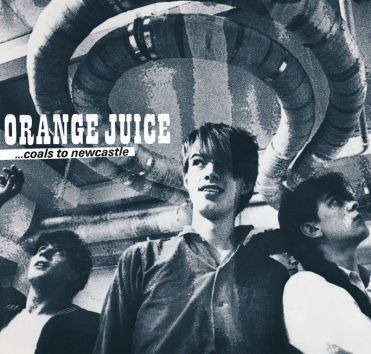
Album : Coals to Newcastle – Orange Juice
Review : Drowned in Sound, 9 November 2010
Author : Aaron Lavery

Over the last decade Orange Juice have been cited as a key influence by all manner of acts. Unfortunately the casual punter has for some time had difficulty in discovering what the big deal is. The Glasgow band’s key components – their spindly, DIY take on soul, Edwyn Collins’ unusual croon, their joy with an absurb lyric – were clear to see as an influence on everything from their Eighties contemporaries right up to modern indie adventurers such as Wild Beasts, but there was never any sense of completeness for anyone really wanting to get their teeth in. To see the sleeve of 1982’s You Can’t Hide Your Love Forever proudly displayed on the sleeve of a Belle & Sebastian DVD but not be able to go out and listen was perhaps the indiest cock-tease available.

For anyone wishing to fully delve into the strange of world of Orange Juice, the drip-drip availability of compilations and reissues was both alluring and frustrating. However, the itch can now be comprehensively scratched with Coals To Newcastle, a seven disc box set that gathers together Orange Juice’s complete discography, including radio sessions, B-sides and a collection of videos and live performances that couldn’t be more of their time if they came on VHS.

Like a lot of box sets, this sudden torrent of material can initially be overwhelming. Although Orange Juice come from an era when the B-side could be just as impressive as the main event, it can still be a struggle to maintain enthusiasm when listening in massive stretches. But then again, it’s probably not designed to be devoured that way – Orange Juice were such a strange beast, changing their line-up and musical leaning so quickly, that the only real mainstay was Collins’ absurd, cocky but vulnerable voice at the heart of it all. Instead, Coals To Newcastle works as a series of Postcards (arf!) showing how Orange Juice morphed from a gangly, awkward bunch of boys who should know better into a more widescreen but ultimately frustrated group.

The first disc on Coals To Newcastle is actually a bit of a misstep, as it’s already been released as 2005’s The Glasgow School. Appearing here with some changes to the track listing and a couple of interesting additions, it essentially serves up an initial taster of Orange Juice #1. This is the Orange Juice that felt they had the world at the feet, that had the London music scene scrabbling up past Hadrian’s Wall to find ‘the sound of young Scotland’, only to find it dressed like “a member of the aristocracy down on its luck”.

This era of Orange Juice, the one that has probably caused the most ripples in indie circles since, is encapsulated by discs one and two, the latter of which contains You Can’t Hide Your Love Forever plus myriad extra tracks. Together, they encapsulate what made the band so exciting at the time, and what has intrigued certain sensitive types ever since.

To suggest that the band’s ability never quite matched up to their ambition here might sound cruel, but it’s meant as a compliment. The likes of ‘Falling And Laughing’ and ‘Simply Thrilled Honey’ are solid gold classics, a rush of adolescent feeling wrapped in furiously strummed guitars. Elsewhere, the band’s almost punkish belief that they can do anything – write grandiose reflections on catching your reflection in a mirror, or imaginings of retribution to local bully boys – is rendered more human by the slight missteps the band make, words packed in like an overstuffed suitcase and rhythms discarded mid-song before being picked up again later on. The giddy sense of abandon can still be heard today, and is still infectious for the listener.

The benefit of the box set is captured in the first track of Coals To Newcastle’s third CD, ‘Rip It Up’, easily the most recognisable Orange Juice song and their only real hit. It’s a shock here as it marks such a change from the earlier discs, with the first incarnation of the group dissolved and Orange Juice reconstituted as a pop-funk curiosity, and most significantly joined by Zimbabwean drummer Zeke Manyika. To hear the Rip It Up LP, full of sax solos, squelching keyboards, and Manyika’s multi-layered rhythms is quite jarring, but the juxtaposition underlines the similarities with the earlier Juice.

Collins’ unmistakable voice is still there, and so is his grand ambition. Opening the album with their perfect pop single, the band follow it with ‘A Million Pleading Faces’, an afro-beat inspired shake-up of proceedings, and then follow that with ‘Mud In Your Eye’, a slice of blue-eyed soul that wouldn’t sound out of place on a Style Council LP. Elsewhere, Collins resurrects an old b-side that opens with him proclaiming “breakfast time! Breakfast time!!” over a slouching reggae rhythm.

Rip It Up is full of enough strange stuff to keep us intrigued today, and plenty of genuine pop moments – the Motown homage ‘I Can’t Help Myself’ for instance – that should have fired it to big success. That it didn’t perhaps explains Orange Juice’s next move.

Discs four and five are based around the band’s next official releases, mini-album Texas Fever and their swansong, The Orange Juice, both released in 1984. The contrast between the two is intriguing as it shows a side of the band that hasn’t really been captured in the Orange Juice compilations released so far. It’s clearly still from the same minds that concocted the jittery, excitable early act and the smoother, shades-wearing Orange Juice that appeared on Top Of The Pops, but it’s somehow a bit harder, musically speaking.

This is where Coals To Newcastle really earns its spurs. To hear Texas Fever is to find a band stripped of the musical excess of ‘Rip It Up’, replacing it with a Sixties-inspired world of close harmonies and even – shock horror corduroy fans – guitar solos. It still finds time for Collins to fit in a ridiculous ‘scary’ voice on ‘Craziest Feeling’, but it wouldn’t be Edwyn if it didn’t slide towards the ludicrous on occasion.

Listening to The Orange Juice, made when the band was officially just Collins and Manyika, again underlines the benefit of the box set. Overshadowed by the more popular and more influential parts of the back catalogue, here it can be judged on its own merits. Thankfully, it stands up well. Its mood is captured on ‘A Little Too Sensitive’, on which Collins turns his trademark cynicism inward, and seems to analyse just why he’s been left standing (almost) alone whilst the music he helped to create has gone on to soundtrack the early part of the decade.

It’s a reflective end to the band’s discography, albeit enlivened by the track ‘What Presence?!’, an early indicator of the guilty pleasure silliness Collins would bottle on ‘A Girl Like You’, and ‘Salmon Fishing In NY’, a heavier number that ends the record in a blizzard of guitar feedback. Accompanied here by numerous b-sides, live tracks and, believe it or not, dub mixes, plus that extra disc of radio sessions, it means Coals To Newcastle lacks a real finale, but that’s a problem of box sets in general, not just this one.

So what to make of the whole thing? Well, as an introduction to the band, it won’t work, simply because of its size. For that, you can get The Glasgow School and hear the influence of that early Orange Juice. For those that want to delve deeper however, this is pretty much darned essential. It confirms Orange Juice as more than an influential indie band – it shows up their ridiculousness, their ambition, their open-mindedness, their limitations, their self-reliance. It leaves you converted to their cause, whatever it is and however foolish it may be. It’s also something you can see yourself returning to, rather than keeping on a shelf for posterity. You can’t really ask for more than that, can you?

mp3 : Orange Juice – Falling and Laughing (Peel Session, 1980)
mp3 : Orange Juice – Mud In Your Eye
mp3 : Orange Juice – Craziest Feeling
mp3 : Orange Juice – What Presence?! (Kid Jensen session, 1984)

JC adds : You really should delve.  It’s bloody marvellous.  And I still can’t quite get my head round the fact that I got a thank you in the credits within the accompanying booklet.
 

ALL OUR YESTERDAYS (20/22)

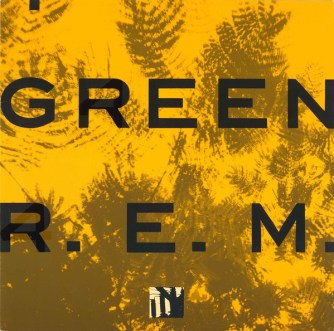
Album : Green – R.E.M.
Review : Rolling Stone, 12 January 1989
Author : Michael Azerrad

On Green, R.E.M. dares to think positive. Songs like “Stand,” “Get Up,” “World Leader Pretend” and “The Wrong Child” are a continuation of the upbeat call to arms sounded on Document‘s “Finest Worksong.” It was no coincidence that such a hopeful record was released on an election day whose outcome was a foregone conclusion. Now is not the time for despair, R.E.M. seems to be saying, but for a redoubling of efforts.

Having made the leap from a small label, I.R.S., to a monolithic major one, Warner Bros., R.E.M. hasn’t sold out; rather, the band has taken the opportunity to crack open the shell it’s been pecking at since it recorded its first album. On Green, R.E.M. acknowledges the outside world with a slew of musical references and some relatively pointed lyrics.

As Michael Stipe’s vocals get more distinct, so does his message – instead of meaning almost anything you want them to, his noticeably improved lyrics seem to be about at most two or three different things. Stipe even makes an effort to enunciate. And perhaps more remarkable, this is the first R.E.M. album with printed lyrics – actually, it provides the lyrics to just one song, “World Leader Pretend,” but with this band you take what you can get.

Green reveals a much wider range than previous efforts, including a playfulness that wasn’t there before. Some songs have a downright bubble-gummy feel: on “Stand,” Peter Buck lets fly with a ridiculously wanky wah-wah guitar solo. Still others reveal more emotion than the band has shown in the past; “You Are the Everything” and the untitled track that closes the album are frank love songs with few strings attached.

Except for those tender ballads, R.E.M. has completely lost its folk inflections. A heavy guitar sound has replaced the old Byrdsy jangle (which scores of college bands continue to ply). The trademark asymmetrical song structures are gone, too; now, verses are repeated for maximum catchiness.

The band’s last two albums – Life’s Rich Pageant and Document – seemed very much of a piece, but Green is a distinctive record with a new feel, at once slightly synthetic and deeply felt, with Stipe conveying strong conviction without shouting and subtle emotion without disappearing into the woodwork. (Green was coproduced by Scott Litt, who also coproduced Document, the band’s commercial breakthrough.)

“Turn You Inside-Out” includes percussion by former Sugar Hill Records house drummer Keith LeBlanc, but it’s no rap jam – rather, it’s the heaviest rock these guys have yet recorded. R.E.M. won its reputation as a great rock & roll band as much with its live shows as with its earnest, evocative records, and this album begins to approach the concert experience – not necessarily in its visceral impact, but in its stunning contrasts: the song that follows “Turn You Inside-Out,” the mandolin-laden “Hairshirt,” is the most delicate and affecting thing the band has ever done. “I am not the type of dog who could keep you waiting for no good reason,” Stipe fairly croons.

Musically, Green quotes a lot of sources. Listen closely and you can hear references to the Doors, Led Zeppelin, Sly Stone and others. If R.E.M. were any more calculating, one might suspect this is the band’s sneaky way of squeezing into tightly formatted AOR radio, with its emphasis on classic rock bands.

Just as it’s fascinating to watch elder statesmen like Keith Richards reconcile rock & roll with middle age, it’s fascinating to see how R.E.M. handles fame and commercial success. On paper, this looks to be the band’s biggest album ever – strong singles material (“Get Up,” “Stand” and “Orange Crush”), a major label, a more accessible sound. So it’s not for nothing that the album is titled Green, although environmental concerns, naivete and the generally positive attitude of the record must also have something to do with it.

R.E.M. may be dangerously close to becoming a conventional rock & roll band, but Green proves it’s a damn good one.

mp3 : R.E.M. – World Leader Pretend
mp3 : R.E.M. – Turn You Inside Out
mp3 : R.E.M. – Orange Crush

JC adds : Given that nobody had any idea just how massive R.E.M. would become, not quite with Green but the following two albums – Out of Time and Automatic for the People – then this review is very clairvoyant.


ALL OUR YESTERDAYS (19/22)

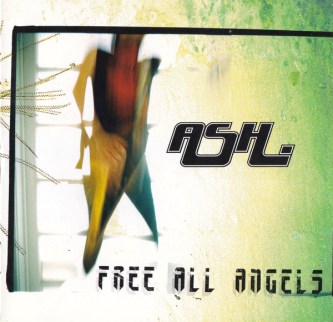
Album : Free All Angels – Ash
Review : The Guardian, 20 April 2001
Author : Betty Clarke

Nowadays it’s not cool to be young and enjoy it. Instead, adolescence is surrounded by negativity and teenagers just bemoan the fact that they have their whole lives in front of them. Fun without responsibility has been diluted by the likes of Wheatus, who celebrate the poor personal hygiene and dodgy taste in music that youth entails, by Westlife and their middle-aged, middle-of-the-road sentiments, and by dismissive declarations of “my generation” from the greying Limp Bizkit. Where are the head-spinning thrills, the heart-stopping lust, the celebration of golden summer holidays that seem to last for ever?

Step forward Ash, who (while they themselves wrestle with the complexities of mid-20s angst) have crystallised the pleasure and pain of being a teen. Back in 1996, when they kicked up some punk-pop dust with the single Kung Fu, Tim Wheeler, Mark Hamilton and Rick McMurray were the naughtiest kids in the Britpop class. Juggling a record deal with their A-levels, they hit the charts with the adrenaline-filled debut album 1977. Spawning indie classics Girl from Mars and Oh Yeah, 1977 conjured up playground longings and Kodak memories and set them to lush melodies and spiky guitars. Ash held on to their innocent exuberance, their Star Wars fixation and the knowledge that girls were an unknown but desired quantity.

Following a foray into soundtracks with A Life Less Ordinary, Ash acquired a new guitarist in Charlotte Hatherley and released their second album, Nu-Clear Sounds. But the joy had evaporated into thrash and an affection for the Jesus and Mary Chain that vanquished the optimism and fun of the past. Personally, things weren’t so great either. After two years of non-stop pop, the sweetness of success turned bitter for Wheeler, who gradually retreated into depression. Cue 18 months of suffering, silence and recovery.

But with Free All Angels, Ash have rediscovered their enthusiasm, and Wheeler – not just the singer but the band’s chief songwriter – has a smile on his face. From the beginning, you know it’s going to be good. Walking Barefoot has that trademark sense of nostalgia for a time you’re still experiencing. A great festival song, it’s about relishing a perfect moment while knowing it’s about to come to an end. “Remember when the sun was hot, remember when the days were long,” Wheeler sings, a homage to both lazy days and golden years.

The perfect pop ethic of simple, epic singalong songs continues with Shining Star, Ash’s greatest single since Girl from Mars, a celebration of someone special in sixth-form prose. World Domination is another call to arms to kids everywhere to kick off their trainers and jump up and down. With its “we don’t give a fuck how we’re meant to be” feelgood factor, plus count-in intro, speeding drums and rock guitars just distant enough from Status Quo to be cool, it’s destined to be an Ash anthem.

But Wheeler knows life isn’t all about good times, and Free All Angels has its share of sadness. New single Burn Baby Burn initially sounds joyful, but listen closer and you’ll hear how the nagging guitar really captures the sound of confusion in an ode to the slow death of a relationship. “You’re all I have in this teenage twilight,” Wheeler sings, while admitting that the bitter words and anger characterise the death of what was once his lifeline.

The obsession with stars is still apparent in many of the songs – from There’s a Star to the winsome hymn Sometimes, which blames the realignment of the stars for the loss of love – and so too are the layered harmonies and Beach Boys sound. Pacific Palisades in particular is very like the Barracudas, a fantastic melody rising like a wave before crashing into scrunched-up pop.

There’s some unlikely stuff too. On Nicole, Wheeler adopts a deranged serial-killer persona as he shouts: “I said no, I killed my baby, but I love her.” He gives the impression that the blood is still on his hands. The weirdness continues in Submission, which would find a suitably seedy home on Soft Cell’s Non-Stop Erotic Cabaret: a wannabe homage to S&M that doesn’t work because Wheeler’s voice is too thin to be scary. It’s like discovering your little brother’s secret stash of porn mags – it just makes you giggle.

Frothy, bizarre but beautiful, Candy is the most interesting song on the album. Wheeler does Dusty as the string section from the Walker Brothers’ Make It Easy on Yourself meets the sparse keyboards of Dr Dre‘s Next Episode in a song of sweetness and reassurance. Some unnecessary guitar messes up the ending, but it’s a brave and confident fusion of genres.

Free All Angels is simply great. Sometimes introspective, a bit strange, but most of all fun, it’s what being young is all about.

mp3 : Ash – Walking Barefoot
mp3 : Ash – Shining Light
mp3 : Ash – Candy
mp3 : Ash – World Domination

JC adds : As this series has demonstrated, there’s been a severe lack, over the years, of female writers when it comes to music reviews of the sort of stuff I’ve a love for, and it is interesting that I had to go to a broadsheet newspaper to dig this one out.  It’s a review that would make me want to buy the album, rightfully acknowledging that a very fine debut effort had been followed up with something of a mishap, but passing on the news that the boys and new girl were back on track again.

I listened again to Free All Angels in its entirety for the first time in ages on the back of reading this review and found myself falling for its charms all over again.  It certainly doesn’t feel or sound like an album that is not far short of 20 years old, and arguably deserves to be thought of as one of the best releases by a UK band from the period in question.


ALL OUR YESTERDAYS (18/22)

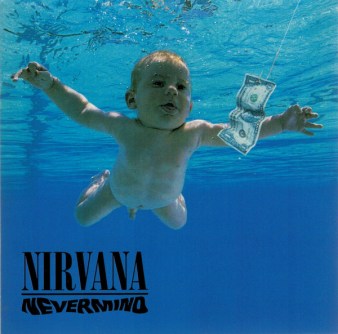
Album : Nevermind – Nirvana
Review : NME, 21 September 1991
Author : Steve Lamacq

Nirvana do here what Sonic Youth did so emphatically with ‘Goo’ last year – making the move from cult indie to major label with not as much as a hiccup. In fact, just as the Sonics impressed and outstripped the sceptics’ expectations, Nirvana have made an LP which is not only better than anything they’ve done before, it’ll stand up as a new reference point for the future post-hardcore generation.

For starters, this makes a refreshing change from the recent crop of groups – both British and American – who’ve used the Dinosaur Jr/Husker Du sound as their base starting point. Nirvana’s rawk, instead, draws upon their roots in Sub Pop grunge, but also takes in chunks of heavy ’70s bass/guitars and ideology.

Normally, this would spell the sort of appalling disaster you’d usually associate with ITV’s autumn schedules, but Nirvana, in their defence, have attacked rock and changed the format. This is monstrous in the sense of a good drama series, rather than a cheap US thriller. While various American grunge bands seem content to slosh around in their respective hardcore genres – albeit with some success and lucidity – Nirvana have opted out of the underground without wimping out of the creative process.

‘Nevermind’ is a record for people who’d like to like Metallica, but can’t stomach their lack of melody; while on the other hand it takes some of the Pixies‘ nous with tunes, and gives the idea new muscle. A shock to the system. Tracks like the excellent ‘In Bloom’ and best of the lot, ‘Come As You Are’, show a dexterity that combines both a tension and a laid-back vibe that work off each other to produce some cool, constructed twists and turns.

‘Come As You Are’ has something eerie about it, while opening track (and forthcoming single) ‘Smells Like Teen Spirit’ has a ‘Goo’ey feeling inherent in its lurching structure. At other times, the threesome lean into thrashier territory with the berserk ‘Territorial Pissings’ and screaming-pop of ‘Breed’.

This is the natural progression from their debut LP ‘Bleach’, exploring different avenues. They are less specific lyrically than SY, sometimes annoyingly so, but yet they still produce these vivid moods with ‘Drain You’, ‘Polly’ and the closing, quieter ‘Something In The Way’.

‘Nevermind’ is the big American alternative record of the autumn. But better still, it’ll last well into next year.

mp3 : Nirvana – Come As You Are
mp3 : Nirvana – In Bloom
mp3 : Nirvana – Something In The Way

JC adds : For a man who would become, thanks to his BBC Radio 1 Evening Session shows, so closely associated with the rise of Britpop just a few years later, credit has to go to Steve Lamacq for such a concise and well-thought review of an album that nobody could have predicted, at the time of its release, would later become so omnipresent.  His prediction that the impact of Nevermind would last a year or so was likely what everyone thought, not least the trio of musicians who made the album.


ALL OUR YESTERDAYS (17/22)

Album : Mezzanine – Massive Attack
Review : Rolling Stone, 28 May 1998
Author : Barney Hoskyns

Elder statesmen of the moody dance genre that used to trade under the facile name of trip-hop, Massive Attack like to take their time making albums – so long, indeed, that they perpetually run the risk of being overtaken by the very people (Björk, Tricky, Portishead, et al.) they’ve influenced.

One of Massive Attack’s strengths, though, is their indifference to passing fads. In a field where career longevity is a contradiction in terms, the assiduously anonymous trio from Bristol, England, give themselves the time and space to create music that lasts. And Mezzanine, their third album proper after Blue Lines (1991) and Protection (1995), shows that their creative edge is far from dulled.

Like its forebears, the record is a richly eclectic, unpigeonholeable artifact – king dubby meets the rockers uptown, with funk and jazz and hip-hop and even kraut rock all showing up for the party. Like its forebears, too, Mezzanine demonstrates exemplary taste in guest singers: no husky Tracey Thorn (who sang on Protection) this time, but an admirable substitute in the shape of Cocteau Twins siren Liz Fraser, together with the unearthly high tenor of Jamaican veteran Horace Andy.

Andy, who appeared on both Blue Lines and Protection (and who has his own marvelous anthology, Skylarking, on Massive Attack’s Melankolic label), is the star of two high points here. The opener, “Angel,” starts like some lean and mean R&B; track, then builds slowly through Andy’s haunted vocal to explode in a guitar-heavy chorus. Even better is the ominous “Man Next Door,” a troubled tale of urban angst that brilliantly evokes the pressure-cooker intensity of modern-day Kingston, Jamaica.

There are weaknesses on the album: Sometimes rhythm and texture are explored at the expense of memorable tunes, and the absence of the bizarre Tricky (who appeared on Blue Lines and Protection) only highlights the flat, monotonous rapping of the group’s 3-D. But Mezzanine remains a splendidly mercurial record, packed with amazing sounds and mesmeric grooves – a trip, in fact.

mp3 : Massive Attack – Angel
mp3 : Massive Attack – Teardrop
mp3 : Massive Attack – Man Next Door
mp3 : Massive Attack – Mezzanine

JC adds : I’ve long admired Barney Hoskyns as a writer and I was genuinely surprised to discover that he had contributed in the past to Rolling Stone.  It’s great to see that the prejudices previously on show in that publication (and highlighted in an earlier part of this series) had been swept away come the late 90s.


ALL OUR YESTERDAYS (16/22)

Album : Unknown Pleasure – Joy Division
Review : Melody Maker, 21 July 1979
Author : Jon Savage

“To talk of life today is like talking of rope in the house of a hanged man.” Where will it end?

The point is so obvious. It’s been made time and time again. So often that it’s a truism, if not a cliche. Cry wolf, yet again. At the time of writing, our very own mode of (Western,advanced, techno-) capitalism is slipping down the slope to it’s terminal phase: critical mass. Things fall apart. The cracks get wider: more paper is used, with increasing ingenuity, to cover them. Madness implodes, as people are slowly crushed, or, perhaps worse, help in crushing others. The abyss beckons: nevertheless, a febrile momentum keeps the train on the tracks. The question that lies behind the analysis (should, of course, you agree) is what action can anyone take?

One particular and vigorous product of capitalism’s excess has been pop music, not so much because of the form’s intrinsic merit (if any) but because, for many, bar football, it’s the only arena going in this country, at least. So vigorous because so much has to be channeled into so small a space: rebellion, creation, dance, sex energy, and this space, small as it is, is a market ruled by commerce, and excess of money. It’s as much as anyone can do, it seems, to accept the process andcarefully construct their theatre for performance and sale in halls in the flesh, in rooms and on radios (if you’re very lucky) in the plastic. The limits imposed especially as far as effective action goes) by this iron cycle of creation to consumption are as hard to break as they are suffocating.

“Trying to find a clue/trying to find a way/trying to get out!” “Unknown Pleasures” is a brave bulletin, a danceable dream; brilliantly, a record of place. Of one particular city, Manchester: your reviewer might very well be biased (after all, he lives there) but it is contended that “Unknown Pleasures,” in defining reaction and adjustment to place so accurately, makes the specific general, the particular a paradigm.

“To the centre of the city in the night waiting for you…” Joy Division‘s spatial, circular themes and Martin Hannett‘s shiny, waking-dream production gloss are one perfect reflection of Manchester’s dark spaces and empty places: endless sodium lights and hidden semis seen from a speeding car, vacant industrial sites – the endless detritus of the 19th century – seen gaping like rotten teeth from an orange bus. Hulme seen from the fifth floor on a threatening, rainy day… This is not, specifically, to glamourise; it could be anywhere. Manchester, as a (if not the) city of the Industrial Revolution, happens only to be a more obvious example of decay and malaise.

That Joy Division’s vision is so accurate is a matter of accident as much as of design: “Unknown Pleasures,” which together with recent gigs captures the group at some kind of peak, is a more precise, mature version of the confused anger and dark premonitions to be found (in their incarnation as Warsaw) on the skimpy “Electric Circus” blue thing, the inchoate “Ideal For Living” EP, and their unreleased LP from last year. As rarely happens, the timing is just right.

The song titles read as an opaque manifesto; “Disorder,” “Day Of The Lords,” “Candidate,” “Insight,” “New Dawn Fades” – to recite the first, aptly named, “Outside”. Loosely, they restate outsider themes (from Celine on in): the preoccupations and reactions of individuals caught in a trap they dimly perceive – anger, paranoia, alienation, feelings of thwarted power, and so on. Hardly pretty, but compulsive.

Again, these themes have been stated so often as to be cliches: what gives Joy Division their edge is the consistency of their vision – translated into crude musical terms, the taut danceability of their faster songs, and the dreamlike spell of their slower explorations. Both rely on the tense, careful counterpoint of bass (Peter Hook), drums (Stephen Morris) and guitar (Bernard Dickin): Ian Curtis‘ expressive, confused vocals croon deeply over recurring musical patterns which themselves mock any idea of escape.

LIve, he appears possessed by demons, dancing spastically and with lightning speed, unwinding and winding as the rigid metal music folds and unfolds over him. Recording, as ever, demands a different context: Hannett imposes a colder, more controlled hysteria together with an ebb and flow – songs merge in and out with one another in a brittle, metallic atmosphere. The album begins unequivocally with “Disorder”: “I’ve been waiting for a guide to come and take me by the hand”; the track races briskly, with ominous organ swirls – at the end, Curtis intones “Feeling feeling feeling” in the exact tone of someone who’s not sure he has any left.

Two slower songs follow, both based on massively accented drumming and rumbling bass – in their slow, relentless sucking tension, they pursue confusion to a dreamlike state: “Day Of The Lords” is built around a wrenching chorus of “Where will it end?” while the even sparser “Candidate” fleshes out the bare rhythm section with chance guitar ambience. In a story of failed connection and obscure madness, Curtis intones: “I tried to get to you” – ending with the pertinent “It’s just second nature/It’s what we’ve been shown/We’re living by your rules/That’s all that we’ve known.”

The album’s two aces are “Insight” and “She’s Lost Control”; here, finally, Gary Glitter meets the Velvet Underground. Both rely on rock-hard echoed drumming and bass recorded well up to take the melody – the guitar provides textural icing and thrust over the top.

The former leads out of “Candidate” with a suitable hesitation: whirring Leslie ambience leads to a door slamming, then a slow bass/drum fade into the song. The attractive, bouncing melody belies the lyrics: “But I don’t care anymore/I’ve lost the will to want more” – at the end Curtis croons, his voice treated, ghostly: “I’m not afraid anymore” to drown in a flurry of electronic noise from the synthesised snare.

“She’s Lost Control”, remixed to emphasise guitar and percussion, is a possible hit single: it’s certainly the obvious track for radio play. Deep and dark vocals ride over an irresistible, circular backing that threatens to break loose but never does: the tension ends in a crescendo of synthesised noise.

On the “Inside,” three faster tracks follow – mutated heavy pop, all built around punishing rhythms and riffs it’d be tempting to call metal, except control is everywhere. “Shadowplay” is a metallic travelogue – the city at night – with Curtis fleeing internal demons; the following couple, “Interzone” and “Wilderness,” wind the mesh even tighter.

“Wilderness” externalises things into Lovecraftian fantasy,all echoed drumming and sickening guitar slides, while “Interzone” moves through a clipped, perfect introduction to guitar shrills and “Murder Mystery” mumbles: “Down the dark street the houses look the same trying to find a way trying to find a clue trying to get out! Light shine like a neon tune no time to lose no place to stop no place to go…”

Both sides, finally, end with tracks – “New Dawn Fades” and “I Remember Nothing” – so slow and atmospheric that alienation becomes a waking dream upon which nothing impinges: “Me in my own world…”

Leaving the 20th Century is difficult; most people prefer to go back and nostalgise, Oh Boy. Joy Division at least set a course in the present with contrails for the future – perhaps you can’t ask for much more. Indeed, “Unknown Pleasures” may very well be one of the best  white, english, debut LPs of the year.

Problems remain; in recording place so accurately, Joy Division are vulnerable to any success the album may bring – once the delicate relationship with the environment is altered or tampered with, they may never produce anything as good again. And, ultimately, in their desperation and confusion about decay, there’s somewhere a premise that what has decayed is more valuable than what is to follow. The strengths of the album, however, belie this.

Perhaps it’s time we all started facing the future. How soon will it end?

mp3 : Joy Division – Disorder
mp3 : Joy Division – Shadowplay

JC adds : No matter how you look at it, this is an extraordinary review.  It opens with a quote from Raoul Vaneigem, a Belgian writer closely associated with the Situationist movement, that refers to suicide by hanging, the ultimate fate of Ian Curtis less than a year later. It also quotes the lyrics extensively, hinting at the troubled mind of the songwriter, and yet in the period after his death his bandmates would state constantly that they weren’t aware of what exactly was being sung, that they paid no attention and as such weren’t aware of the mental state of their friend. It does beg a few questions, not least whether any of the musicians of Joy Division actually read the album reviews…..

It’s now more than 40 years since the release of Unknown Pleasures and it still gets millions of words devoted to it on a yearly basis as fans, old and new, try to make sense of it all.  I don’t think, however, anyone has ever written anything as chilling as ‘Joy Division are vulnerable to any success the album may bring’.


ALL OUR YESTERDAYS (15/22)

Album : To Bring You My Love – PJ Harvey
Review : Rolling Stone, 9 March 1995
Author : Barbara O’Dair

“Call me Lazarus,” growls Polly Jean Harvey on the astonishing To Bring You My Love. It’s funny, it’s impressive, and we should take her at her word. Never a shrinking violet on record — and perhaps tired of being called a slip of a girl — Harvey bawls and shouts and moans her way through a set of blues-inspired tunes that are strange, skewed and solitary. “It’s my voodoo working,” she declaims elsewhere, and there’s nothing to say but “Yes, yes!”

On her first three albums, the heralded Dry (1992), the more problematic Rid of Me (1993) and the Rid of Me spinoff, 4-Track Demos (1993), Harvey rocked and roiled her way through female traumas and triumphs. While working traditional thematic turf — the body and soul of the suffering woman — she ripped to shreds staid truths about femininity. Such paradoxes generate power.

Harvey reckons with more than that, too: She has ambitions to remake rock & roll and its myths in her own guise. In the process she stretches her musical references. Her covers of such classics as Bob Dylan’s “Highway 61 Revisited” (on Rid of Me) and Willie Dixon’s “Wang Dang Doodle” (on John Peel’s British radio program) show an abiding interest in taking on the past, more particularly its male legends. In the same spirit in which Liz Phair answered the Rolling Stones on Exile in Guyville — but to a very different end — Harvey dive bombs the canon on To Bring You My Love.

She may get her sense of play from Captain Beefheart and her sense of drama from Patti Smith, but it’s the blues and blues-schooled greats whom Harvey transfigures — John Lee Hooker, Howlin’ Wolf, Jagger-Richards, Hendrix, Zeppelin. Nevertheless, listeners will probably find To Bring You My Love a relief after the beating producer Steve Albini gave the occasionally glorious Rid of Me. This time, Harvey co-produces (with U2 producer Flood and percussionist John Parish) for a result that combines Dry‘s ecstasy with Rid‘s agony. Harvey plays organ on every cut — along with singing and playing some guitar — adding still more dimension. The other musicians — guitarist Joe Gore, percussionists Jean-Marc Butty and Joe Dilworth, plus a string quartet on three tracks — help fuel the fire.

To Bring You My Love, full of portents, searching for grace, pulls its themes straight from the mythological terrain of the blues. Harvey forces personae to fit this music; her imagery is highly symbolic — not personal but essentially private. On the title track, over a chugging bass riff, she sings: “I was born in the desert/I’ve been down for years/Jesus, come closer/I think my time is near…. I’ve lain with the devil/Cursed God above/Forsaken heaven/To bring you my love.” On a hissing, rubbery blast called “Long Snake Moan,” a raw-voiced Harvey warns: “Bring me, lover/All your power…. In my dreaming/You’ll be drowning…. You oughta hear my long snake moan.”

On “The Dancer,” Harvey feelingly sings: “He came riding fast/Like a phoenix out of fire flames/He came dressed in black with a cross bearing my name/He came bathed in light and the splendor and glory/I can’t believe what the Lord has finally sent me.” And then she gives a few toy shrieks: it’s so over the top that you’re not sure her vision of a male savior on a horse isn’t a put-on.

So what’s this young, white, bluesdrenched woman doing? In attempting to create a sexual landscape as charged as the Midnight Rambler’s, Harvey envisions a teeming underworld where she is victim, aggressor and accomplice, song by song. The sexual menace, the left-behind woman, allegories about a son, a daughter, a “blue-eyed whore” — all these are put in the service of a primal vision on To Bring You My Love: Harvey’s bitter struggles with her demons and her wicked, wanton sympathy for the devil.

mp3 : PJ Harvey – To Bring You My Love
mp3 : PJ Harvey – Long Snake Moan
mp3 : PJ Harvey – The Dancer

JC adds : Try as I might, it was near impossible to find old album reviews by female journalists that are easily accessed on-line, certainly of the records that mean something to me.  I loved reading this and thinking back to everything that accompanied it, particularly the seemingly overnight and jaw-dropping change in PJ Harvey as she donned tight dresses, wore wigs, applied lurid shapes of lipstick and acted all seductive in the promo videos, styles she would then adopt when she made her return to the live setting.

Barbara O’Dair’s review captures the energy on show throughout the album, quietly acknowledging that after the disappointments associated with Rid of Me, the singer had taken full control of the entire process, dispensing with her old band, getting involved on the production side of things and determining that this new souped-up, aggressive and powerful sound required a look and style to match.  It’s the album that ensured PJ Harvey could leave behind the indie-circuit forever and provided the foundations for a career that has remained consistently outstanding.


ALL OUR YESTERDAYS (14/22)

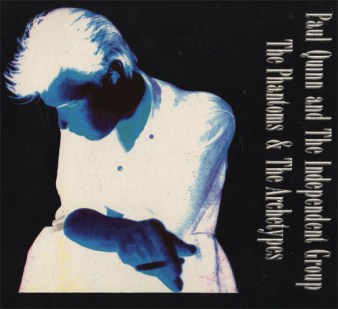
Album : The Phantoms & The Archetypes – Paul Quinn and The Independent Group
Review : NME, 12 November 1993
Author : John Mulvey

Paul Quinn had one of the great lost pop voices of the ‘80s, a mannered, expressive croon that recalled Bryan Ferry and, especially, ‘Young Americans’ –era Bowie. It allowed him to get away with the sort of soulful postures that made so many of his Glaswegian contemporaries look ridiculous. But oddly, for someone at the centre of the ‘Sound of Young Scotland’ creative whirl, Quinn’s career never really took off. A great debut single fronting Bourgie Bourgie, a nice flit through ‘Pale Blue Eyes’ with Edwyn Collins, a mismatch with Vince Clarke….and then nothing.

Until now and, appropriately, the relaunch of his spiritual home, Postcard. ‘The Phantoms & The Archetypes’ is the album Quinn always threatened to make; a cool, moody collection of torch and twanging, of songs that aren’t quite the classics they brazenly aspire to be, and with an acute understanding of soul that puts the final nail in the coffin of all the style charlatans and arch-wankers like Hue & Cry.

It’s all very late-night, low-key knowing stuff, of course. But the sheer panache and audacity of Quinn’s voice- he occasionally sounds like Scott Walker and Gene Pitney, and is terrific throughout – coupled with slick songs, mainly written by Quinn, Robert ‘Bobby Bluebell’ Hodgens and Postcard maestro Alan Horne, ensure the album’s style never cripples its content. The title track is an exemplary exercise in self-conscious languor, ‘Should’ve Known By Now’ very nearly breaks into a sweat and ‘Punk Rock Hotel’ is a brilliant, sassy fragment from a lost movie that was one of Horne’s myriad half-assed ‘80s projects.

The ubiquitous Edwyn – who stole a fair number of his throaty mannerisms from Quinn – produces with a deal more crispness than on the recent Frank & Walters album and The Independent Group play like a Scottish pop fan’s wet dream, featuring as they do Orange Juice’s James Kirk, Aztec Camera’s Campbell Owens and The Commotions’ Blair Cowan.

There is no doubt that the whole package is something of a hangover from another time, but when it’s from a time so maverick, exciting and too often forgotten, and when it gives a talent like Quinn’s a belated showcase, then living in the past can be wholeheartedly forgiven/ On this evidence, The Sound Of Early Middle-Aged Scotland will be far from the disgusting concept it may appear.

mp3 : Paul Quinn and The Independent Group – The Phantom & The Archetypes
mp3 : Paul Quinn and The Independent Group – Should’ve Known By Now
mp3 : Paul Quinn and The Independent Group – Punk Rock Hotel

JC adds : John Mulvey’s excellent review really takes me back.  The release of this album, and the later single Stupid Thing, provided real hope that the mighty Quinn was finally about to hit payola, but history records that it wasn’t to be.  It remains one of life’s great mysteries.

I used to sneer at articles/pieces in the 80s and 90s which mused on the unsung genius of a long-forgotten and/or under-appreciated singer or musician from decades previously, thinking that if they really were that talented/brilliant/ground-breaking then they wouldn’t be so unknown. It was only the sadness and anger that I felt when the same fate befell Paul Quinn that I understood why such articles were so important.  There are some lights that don’t deserve ever to go out.


ALL OUR YESTERDAYS (13/22)

Album : 50,000 Fall Fans Can’t Be Wrong – The Fall
Review : Pitchfork, 8 July 2004
Author : Alex Linhardt

The Fall have seen so many compilations and reissues of their work during the course of their 26-year career that they named their latest full-length The Real Fall LP for clarification. Given the reputation of these numerous shoddy anthologies, however, and the fact that, with the exception of the excellent 2002 Rough Trade release, Totally Wired, there has never been any truly “definitive” Fall retrospective, the best a potential convert could hope for was to pick whichever disc bore the prettiest packaging.

While other Fall comps pride themselves on monochromatic slabs of cover design more appropriate for Rothko retrospectives than tumultuous punk albums, 50,000 Fall Fans Can’t Be Wrong instantly has one thing going for it: Its artwork is absolutely hilarious, keenly referencing Elvis Presley‘s billion-selling 50,000,000 Elvis Fans Can’t Be Wrong. With its image of countless self-replicating Elvises hailing down in dashing suits, that original cover was a perfect embodiment of pop music’s narcissism and weirdness– incidentally also the two subjects of nearly every song Mark E. Smith ever laid to tape.

As the first legitimate career-spanning compilation, 50,000 Fall Fans begins at the band’s inception in 1977. Smith was a mere 20 years old, weaned on garage rock, kraut-rock, and a one-year stint as a dock worker. Like all young adults, he named his band after a Camus novel, quickly releasing a series of singles before 1979’s full-length debut, Live at the Witch Trials. Represented by “Repetition”, the pre-Witch Trials band consists of simple angular guitars, teen-pop rhythms, and drunken charm without any of the complexity or chaos that would later become integral to their work.

Around 1980’s Grotesque, The Fall began to seriously investigate other genres, channeling spiraling rodeos (“How I Wrote Elastic Man”), steely noise-pop (“Totally Wired”), and rhythmic shrapnel (“New Face in Hell”). 50,000 Fall Fans spends its leisurely time in this nascent stage, but the brunt of the album is understandably spent exploring The Fall’s near-perfect run of albums in the mid-80s, from 1982’s Hex Enduction Hour to 1986’s Bend Sinister. A staggering 13 tracks from this era find their place on this two-disc set, forging a truly brilliant sequence. Ranging from the blustering, seismic noise of “The Classical” to the schizophrenic death-rattle of “The Man Whose Head Expanded”, the album provides a convincing case that The Fall were the most uncompromisingly progressive and reliable band of the 1980s, whether they assumed the guise of punk heavyweights or sweet electro-divas (with the assistance of Smith’s wife, Brix).

With this sort of lead-in, even the most questionable song of the band’s notorious early-90s phase seems challenging and substantive. Considering that this anthology’s second disc includes the band’s stab at Europop/ska-rap (“Why Are People Grudgeful?”), this is truly a feat. As a general rule, this disc pulls one song from every album released from 1990 to the present, distilling each allegedly mediocre release to one stunning single. If anything, however, these selections compel listeners to return to the band’s 90s output with their tranquilized synths (“Masquerade”) and brash genre-blenders (the Cocteau Twins-vs.-AC/DC dynamics of “The Chiselers”).

Of course, with a career that’s spanned four decades, 50,000 Fall Fans inevitably winds up omitting some of the most crucial songs in their canon, including “Oh! Brother!”, “Slang King”, “Bombast”, and “Oleano”. Still, the songs represented are consistently fascinating and invigorating, many standing as among the finest of the last quarter-century, chaotically navigating punk through ever more adventurous territory, from Countrypolitan to house music.

As a result of this willed diversity and comprehensiveness, 50,000 Fall Fans has finally stepped up to assume its rightful position as the most successful and essential Fall compilation in existence– a convenient summary for fearful neophytes reluctant to dip their toe into the black hole of the band’s discography, as well as die-hard fans seeking a distillation of choice cuts from the group’s more wayward 90s efforts. Smith is never less than inspiring on any of these 39 tracks, flaunting his confrontational sneer and leering sarcasm over some of the most erratic, riled riffs in punk. In his oft-ignored later period, Smith sounds even more unhinged, furious and battered, cloaking criticisms of governmental policies in lunatic poetics that the most pretentious high-school fanzine dadaists would cower before. Smith quite literally sounds as if his mouth has been pierced full of gaping holes leaking bile and cancer.

Incidentally, this is also the fundamental difference between Smith and Elvis. Elvis was pure sexual dynamite, basking in his own libidinal juices; in sharp contrast, Smith is the ugliest, grimiest beast of Lucifer to ever drag his expanding head from a pub’s water closet. Elvis may have drooled sex, but it was artificial, manipulative, cheap. The Fall, like all truly great sex, climaxes in rage, regret and release– the three criteria for all utterly essential rock music. 50,000 Fall Fans Can’t Be Wrong chronicles more than two decades of those climaxes, perhaps to one day be held in similar regard to the album its artwork parodies.

mp3 : The Fall – New Face In Hell
mp3 : The Fall – The Classical
mp3 : The Fall – The Man Whose Head Expanded
mp3 : The Fall – The Chiselers

JC adds : I wasn’t sure whether to look out for any reviews of compilation albums, but I couldn’t resist this genuinely warm, appreciative and occasionally LOL piece from Alex Lindhart.  There are still folk out there who sneer and claim that real journalists can only be found through print media, in the same way that those of us who write about music via blogs aren’t nearly as qualified as those who have contracts with publishing moguls.  This review on its own should puncture those self-righteous bubbles.

Besides, 50,000 Fall Fans Can’t Be Wrong is the starting point to where I would direct anyone who remains unsure about the unbridled genius of Mark E Smith and the quality of the music he made during his lifetime.

The fact it got a positive mention in this review means I’ve included The Classical as one of the four tracks today…..it is one of the greatest bits of music that The Fall ever recorded, but I’ve always been uneasy about the lyric ‘Where are the obligatory n*****s? Hey there, fuck face!’  I don’t think MES was being racist, but he certainly was being confrontational and combative, ensuring that the tune wouldn’t get aired on radio.  I hope nobody is offended…..

ALL OUR YESTERDAYS (12/22)

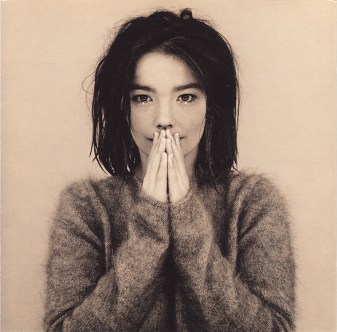
Album : Debut – Björk
Review : NME, 3 July 1993
Author : Johnny Dee

LET’S ADMIT it, the Sugarcubes resided in a border town south of Obscure and just north of Wacky. They juddered and lurched like difficult children, throwing toys against walls, scratching non-existent itches. They were the Euro B-52’s. But there was, above everything, that voice, an alien screech that coughed up puffin feathers, cracked, screeched and soared like nothing you’d heard before.

Five years on and ‘Birthday’ still sounds ridiculously stark and extraordinary because of it. But, then, as you found yourself consumed by its strange beauty, in walked Einar The Irritant barking a bizarre psycho-babble rap, bringing even the most goo-goo eyed back down to earth with an ugly bump.

Is should, therefore, come as some relief to find Björk left to journey alone without the ideas of a group cluttering up the landscape. The surprise, though, is that she has fashioned an album as elaborate, unique and fresh as ‘Debut’. It’s hard not to bellyflop straight into the deep end, cry, “Album of the year, end of story”, and float off on a sea of hyperbole. ‘Debut’ takes you to strange, uncharted places. No group could make an album like this – too many ears to please. But, although this is very much Björk’s album (you get the impression that these are songs she’s carried in her mind, like secrets, for years), the contribution of producer Nellee Hooper is vital. The man behind Soul II Soul‘s symphonies, he has managed to throw manifold ideas into this exotic soup without making it sound cluttered and overdone.

With his involvement and Björk’s previous solo dalliance with 808 State it would be easy to assume she’s become a fully fledged house diva. Not so; ‘Debut’ may walk the same side of the street but it wanders into jazz, film soundtracks, pop too. Heck, there’s even a couple of songs Babs Streisand wouldn’t blink at covering. And then there’s the just plain weird (natch).

The first three tracks are built from hypnotic loops. On ‘Human Behaviour’ a swampy kettle drum jazz vibe circles around Björk’s rasping larynx, trying to find a melody but eventually settling for the search. ‘Crying’ swims on a niggling piano riff, while the wonderful ‘Venus As A Boy’ creates an Arabic mantra. Here, as on most of the album, the tonsil gymnastics are kept to a minimum, but it’s still a vastly disarming sound: a voice only a lifetime of Marlboro abuse or a guttural foreign language where people have names like Gudmundsdottir could create.

There’s a bonkers part in ‘There’s More To Life Than This’, though, where she sounds positively possessed. Allegedly recorded live in the Milk Bar toilets, a muffled house beat chunders away somewhere in the distance amid giggling chatter, then a door is closed and Björk is left to sing alone about nicking boats and sneaking off into the night. This woman is quite patently barmy.

But even this is ill preparation for ‘Like Someone In Love’. Accompanied only by 80-year-old harpist Corki Hale, it’s the kind of tearful ballad you’d expect to find in the sad interlude of some crackly old black and white Judy Garland film. More fun, madness and surprise follows – the pulsating grind of ‘Big Time Sensuality’ and ‘Violently Happy‘ plus the sweet unearthly breeze of ‘One Day’ which ripples along to baby gurgles and ambient fizzes.

This is an album that believes music can be magical and special. It will either puzzle you or pull you into its spell. And if you fall into the latter category, ‘Debut’ will make every other record you own seem flat, lifeless and dull by comparison.

mp3 : Björk – Venus As A Boy
mp3 : Björk – Like Somone In Love
mp3 : Björk – Big Time Sensuality

JC adds : Anyone who is familiar with my own past postings on this album will be more than aware that my thoughts very much echo those of Mr Dee.

There you go, the grumpiness from yesterday has been forgotten already.


ALL OUR YESTERDAYS (11/22)

Album : Various/Various
Review : Rolling Stone, 13 May 1982
Author : David Fricke

To English popmusic fans, there is nothing like a good six-month fad. The punk explosion, the warmed-over mods, the ska craze and the psychedelic revival–don’t look now, but you just missed the New Romantics–have come and gone (and in some cases, come again) with such confounding rapidity that it is hard to take most of them any more seriously than Hula Hoops or edible underwear.

The country’s latest rage is synthesizer music. Every hip, young Tom, Dick and Johnny B. Goode has traded in his guitar for a synthesizer and rhythm box, buying into future cool by applying the latest keyboard and computer appliances to the brisk melodic cheeriness of commercial pop and the bubbly beat of off-white funk. But far from bowing down to the great god of automation or passing off their microchip bubblegum musings on sex and energy as the stuff of a brave new world, these synthesizer bands have bestowed an almost mock-human quality upon their hardware. The beeping, farting and whooshing of the keyboards, combined with the psycho-Sinatra cabaret croon of the singers (Soft Cell’s Marc Almond and Orchestral Manoeuvres in the Dark’s Andy McCluskey, take a bow), creates a man-machine tension channeled into the vigorous dance beat of many of these songs. And by dancing, that does not mean the March of the Androids but no-holds-barred Soul Train swing.

The chart success of these digital dandies and their synthesizer pop – all four of the above LPs made the U.K. Top Five and are faring surprisingly well here – is somewhat out of proportion to their artistic worth. These are, after all, only pop songs in transistor drag. But if singing the same old song with newfangled noise is no great leap, selling the public on a package of postpunk do-it-yourself ingenuity, easy-to-play technology and Top Forty classicism certainly is.

The Human League is a perfect case in point. In the four years since the group’s first single, a home-recorded slice of angry young electronic New Wave called “Being Boiled,” the original quartet split in half and evolved into a six-piece, circa-2001 Abba. Singer Phil Oakey‘s lusty saloon styling is now lightly sugared with the twee harmonies of Joanne Catherall and Susanne Sulley. Such songs as the Euro-fizzy “Open Your Heart” and the bright motorfunk exercise “Love Action” (both on Dare) are delightful, swinging singles free of sci-fi pretensions and uncluttered by art-school cleverness. Producer Martin Rushent‘s warm widescreen production also takes the edge off the severe chill that typified the League’s earlier import albums.

Yet, more important, the League itself now strikes an appealing balance between modern technique and tuneful charm, epitomized by the hit single “Don’t You Want Me.” Alternating between a gray doomsday riff and a smart samba strut, the song is a tasty white-soul layer cake of competing melody and harmony lines whose orchestral possibilities are pared down to a sleek, glassy arrangement by the metallic breeze and regimented beat of the synthesizers. With all the knobs and buttons at their disposal, the Human League still goes for the hook. And with eight other songs as artfully grabby as “Don’t You Want Me,” Dare keeps reelin’ ’em in.

The problem with Orchestral Manoeuvres in the Dark is that they want to have their art and eat it, too. The awkward mix of dreamy romanticism and spatial, Pink Floyd-ian abstractions on Architecture and Morality, OMD’s second American album, suggests that Andy McCluskey and Paul Humphreys are acutely embarrassed by their ability to pen seductive moonlight sonatas like “Souvenir” and the eerie Parisian waltz “Joan of Arc (Maid of Orleans).” Why else gussy up the LP with ponderous music of the spheres, as in the title track’s construction-site rattle and the overlong “Sealand,” a nuclear beach concerto of drawn-out synthesizer drones? They even sabotage the album’s one decent party track, “Georgia,” with carnival organ and holy choir sound effects. Too much sincerity and not enough spunk on Architecture and Morality make for attractive but dull fare.

The Soft Cell twosome of Marc Almond and David Ball walks on a much wilder side, bringing the brainy bop of OMD down to a lurid red-light-district level on their debut album, Non-Stop Erotic Cabaret. Their hit single, “Tainted Love” (included here), neatly captured Soft Cell’s fetish for R&B; camp; the twelve-inch single even segued into a heavy-breathing version of the Supremes‘ “Where Did Our Love Go.”

Not surprisingly, then, the best tracks on Non-Stop Erotic Cabaret–“Frustration,” “Sex Dwarf,” “Secret Life” – bump and grind with vibrant, tawdry soul. Ball, employing a limited arsenal of synthesized keyboard effects, tarts up the meaty funk beat with multiple rhythm figures and steamy extended chords. Together, these complement singer-lyricist Almond’s passion for sexual deviation (“Sex Dwarf,” “Entertain Me”) and rather vampiric fear of open day-light (“Memories of the night before/Out in clubland having fun/And now I’m hiding from the sun,” from “Bedsitter”).

Compared to Soft Cell’s smutty pop, Depeche Mode‘s Speak and Spell is strictly PG-rated fluff. A group of fresh-faced, suburban lads from Britain, they have neither the ambition of Orchestral Manoeuvres in the Dark nor the overt commercial allure of the Human League. They simply drift aimlessly between the two, occasionally hitting a disco bull’s-eye with chirpy dance tracks like “Dreaming of Me” and “Just Can’t Get Enough.” Too often the synthesizers lock into dead-end grooves, and the group’s boyish caroling is anonymous at best.

There’s plenty more where all this synthesized Dream Whip came from: e.g., Simple Minds, Duran Duran, Heaven 17, the Far East fantasies of the group Japan. They’re not all completely synth, but they certainly sing the body electric. Still, the temptation is to dismiss English synth-pop as the chart’s flavor of the month. For all their undeniable pop attractions and the genuine innovative potential of electro-dominated rock, these bands so far have only bent the rules, not broken them. If this batch of records is any indication, the revolution will not be synthesized.

mp3 : The Human League – Open Your Heart
mp3 : OMD – Georgia
mp3 : Soft Cell – Secret Life
mp3 : Depeche Mode – Dreaming of Me

JC adds “The chart success of these digital dandies and their synthesizer pop is somewhat out of proportion to their artistic worth.”   Just fuck off will you?  It’s dicks like you that give music writers/journalists a bad name.

Happy New Year.  It’s great to start it off grumpy.